
The Black and Grey Living Room That Finally Made My Home Feel Like Me
There’s a moment — maybe you’ve had it too — when you walk into a room and something just clicks. Not because it looks like a magazine spread, but because it feels like you. That’s exactly what a black and grey living room can do when it’s done right, and honestly, it took me years to understand why this color combination hits differently than any other.
—
1. Why Black and Grey Isn’t “Cold” — It’s Actually the Warmest Thing You Can Do
The very first thing people say when I mention a black and grey living room is, “Won’t it feel depressing?” And I completely understand that instinct. We’ve been conditioned to associate color with warmth and neutrals with sterility. But here’s what nobody tells you: warmth isn’t a color. It’s a feeling created by texture, light, proportion, and intention.
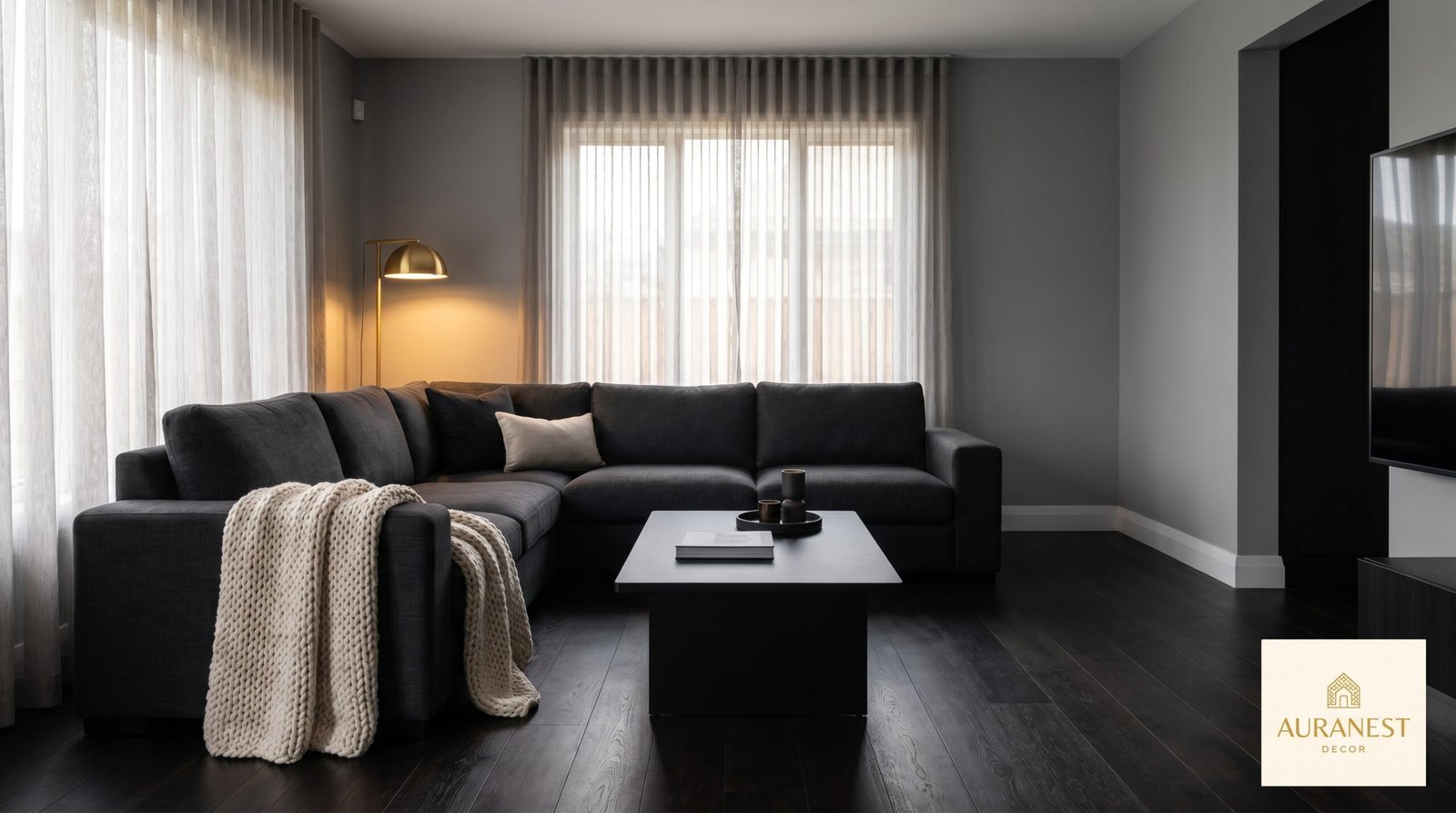
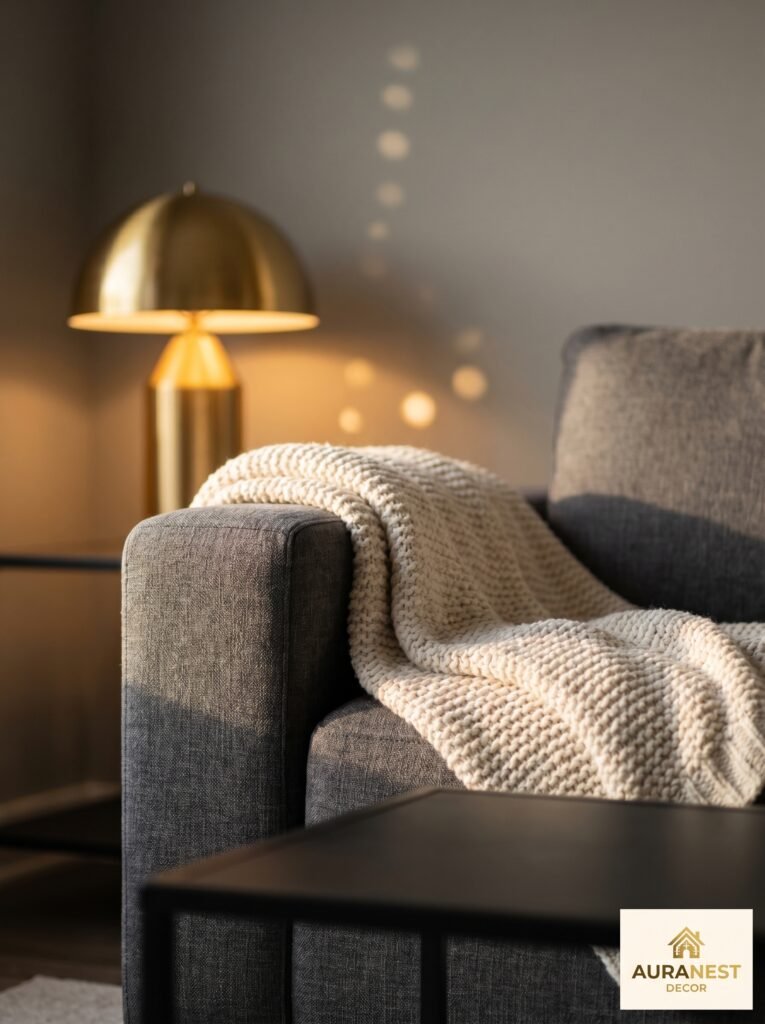
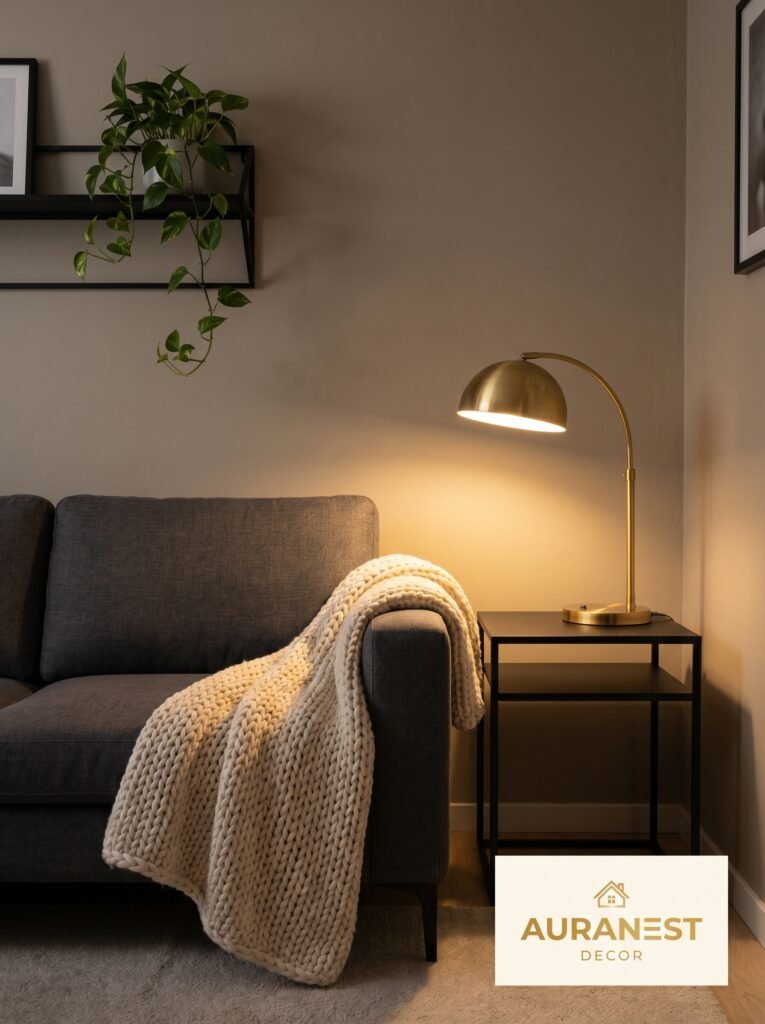
A charcoal linen sofa next to a matte black coffee table — with a chunky cream throw tossed over the arm and a brass lamp throwing golden light into the corner — is one of the coziest, most inviting vignettes you’ll ever encounter. The grey absorbs the light softly. The black grounds the space so it doesn’t feel like it’s floating. And suddenly, you’re not looking at a cold, minimalist cube. You’re looking at a room that feels anchored, intentional, and deeply, quietly sophisticated.
“Warmth isn’t about color. It’s about how a room makes you feel when you cross the threshold.”
The psychology of grey is actually fascinating. Interior designers refer to certain shades — warm greys with undertones of taupe or beige — as “greige,” and they’re among the most emotionally neutral colors you can use. They don’t demand attention. They don’t shout. They create a canvas that lets everything else — your art, your plants, your people — become the story.
—
2. The Secret to Getting the Right Shade of Grey (It’s Not What You Think)
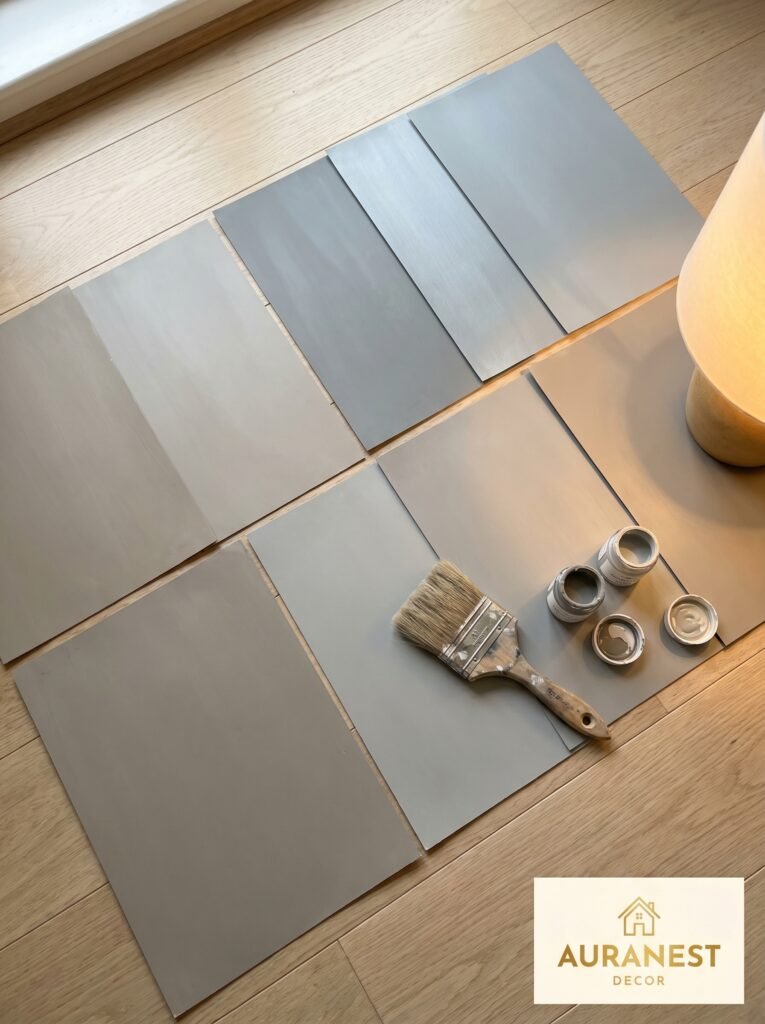
Here’s something that trips up almost every first-time decorator: grey is never just grey. Pull out a paint chip labeled “Soft Grey” and hold it next to a chip called “Steel Grey” and you’ll immediately see how wildly different two greys can look — and how dramatically they’ll shift depending on the light in your specific room.
Natural light reveals the undertones hiding in every grey. A grey that looks clean and silvery in a north-facing room might turn purple or blue in afternoon sun. A grey with warm brown undertones can look almost greige in low light but feel refreshingly cool and modern in a bright, south-facing space. Before committing to any shade, paint large swatches — at least 12 by 12 inches — and observe them at different times of day. Morning light, noon light, lamplight in the evening. The grey you choose at 10am might look entirely different at 7pm, and that matters enormously for how the room feels during the hours you actually live in it.
—
3. How Black Anchors a Room Without Swallowing It Whole
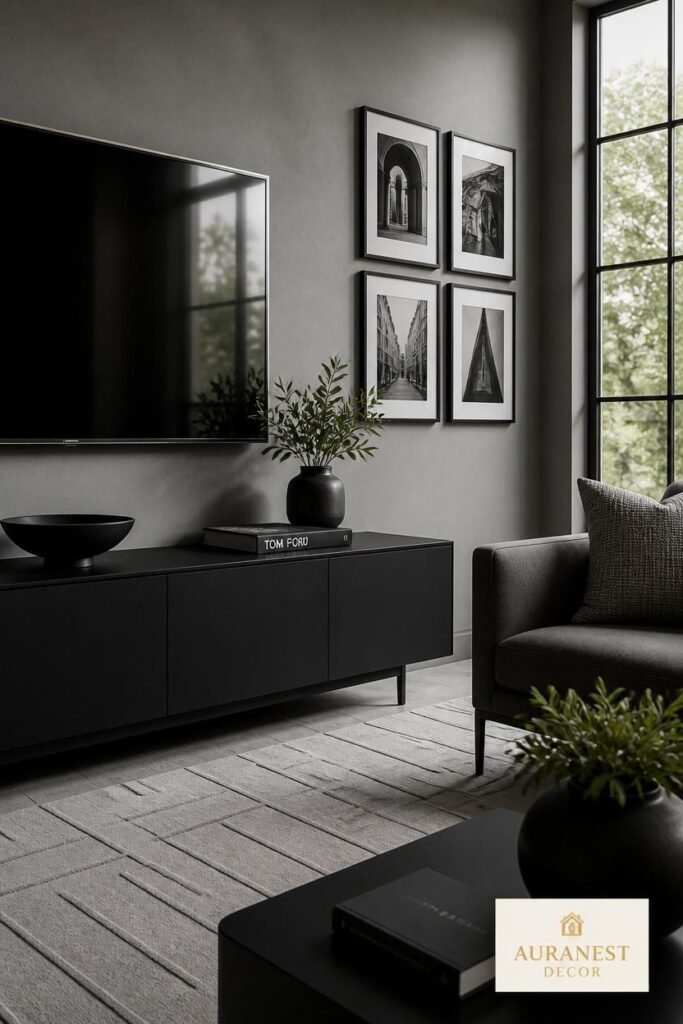
Black in interior design works the way punctuation works in writing — it stops the eye, creates emphasis, and gives everything around it more meaning. A room without any black can feel unfinished, somehow soft in a way that lacks definition. But when you introduce black thoughtfully — a matte black media unit, black window frames, a bold black-framed gallery wall — the whole room snaps into focus.
The key word here is thoughtfully. Black used in large, flat expanses without texture can feel heavy and oppressive. But black used in architectural details, furniture legs, light fixtures, and accent objects? That’s a completely different story. It creates what designers call “visual grounding,” pulling the eye downward and giving the room a sense of stability. Think of it as the bass note in a piece of music — you might not consciously notice it, but you’d feel its absence immediately.
—
4. The Layering Method That Makes Black and Grey Feel Luxurious
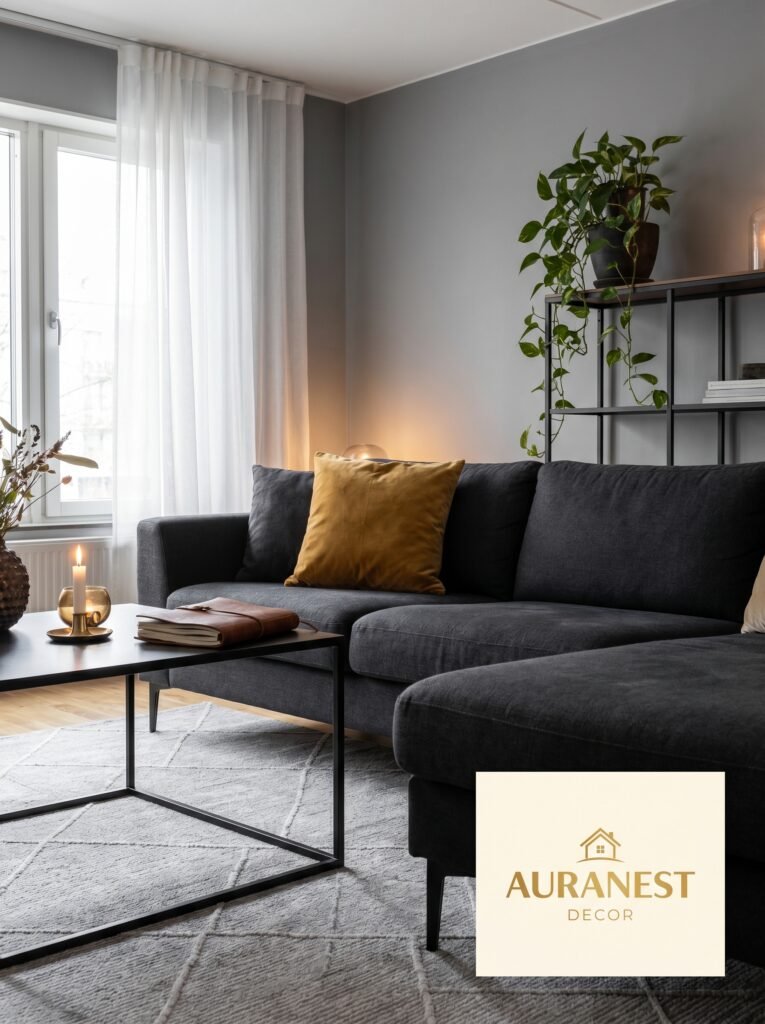
The difference between a black and grey living room that looks like a moody, beautiful sanctuary and one that looks flat and forgotten comes down entirely to layering. Layering is the designer’s secret — and once you understand it, you’ll see it everywhere.
Start with your foundation layer: walls, floors, and large furniture. In a black and grey scheme, this might be medium grey walls, a charcoal sectional, and dark hardwood floors. Then comes your mid-layer: rugs, curtains, and secondary furniture pieces. A light grey geometric rug and sheer curtain panels here begin to lift the room. Finally — and this is where the magic happens — your texture layer: cushions, throws, ceramics, books, plants, candles, and artwork. This top layer is where you introduce warmth, personality, and contrast. A mustard velvet cushion, a worn leather journal on the coffee table, a trailing pothos on a black iron shelf. Suddenly the room breathes.
“Layering is how a room goes from decorated to alive.”
—
5. Accent Colors That Work Beautifully With Black and Grey
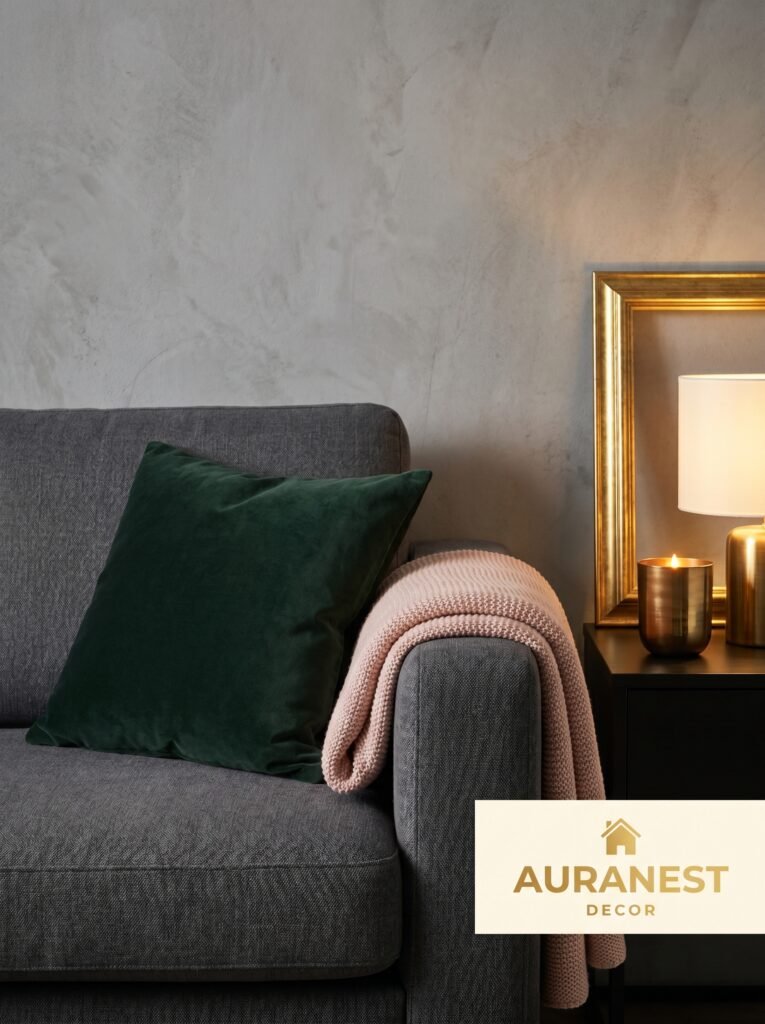
One of the most beautiful things about a black and grey base is its extraordinary versatility as a backdrop for accent colors. Because both grey and black are essentially neutral, they don’t compete with your chosen accent — they elevate it.
Warm gold and brass accents are perhaps the most popular pairing for good reason. Against charcoal and black, gold lamp bases, brass candle holders, and gilded picture frames glow with an almost otherworldly warmth. Blush pink is another surprisingly powerful pairing — soft enough not to disrupt the sophistication, but warm enough to keep the room from feeling austere. Forest green brings in a natural, organic element that prevents the space from feeling too industrial. And for those who want drama, a deep burgundy or rust orange woven through cushions and artwork creates a richly layered room that feels like autumn in the best possible way.
—
6. Furniture Shapes That Elevate the Entire Aesthetic
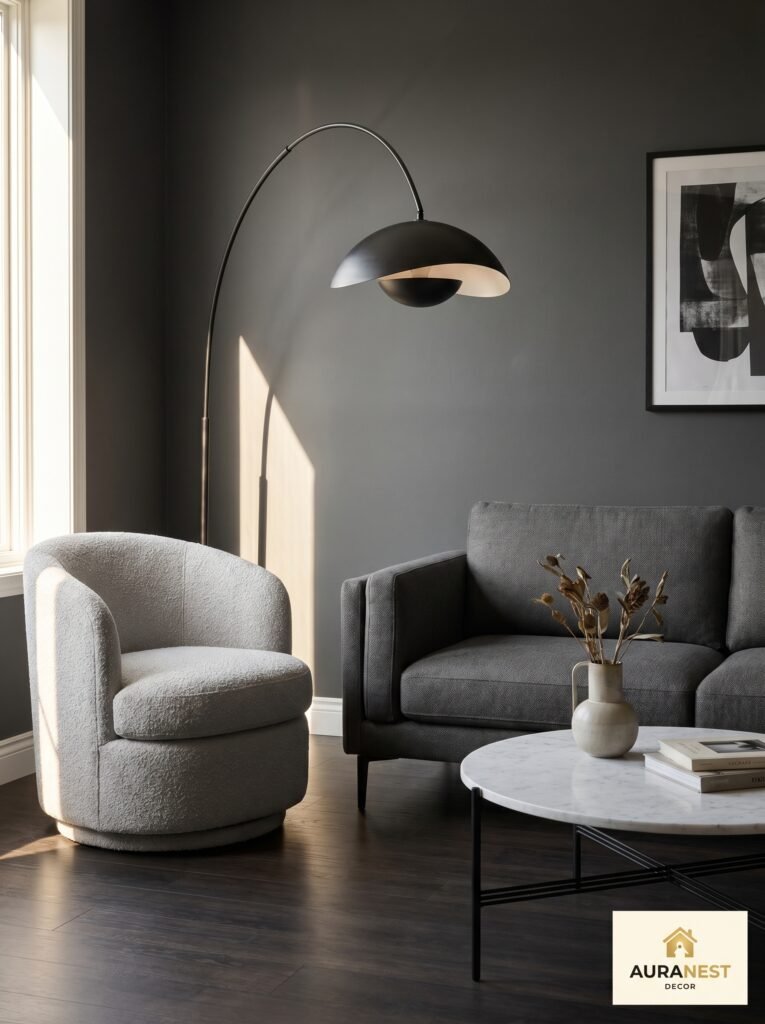
In a black and grey living room, the shapes of your furniture matter more than you might expect. Because the color palette is relatively restrained, the eye is drawn to silhouette and form. Angular, clean-lined furniture — low-profile sofas, rectangular coffee tables with metal legs, structured armchairs — reinforces a modern, architectural feel. Curved furniture — a round coffee table, a barrel chair, a boucle sofa with soft edges — softens the palette and makes the space feel more inviting and less sharp.
Neither approach is wrong. But mixing both is often the most interesting choice. A clean-lined charcoal sofa paired with a round marble coffee table and a curved floor lamp creates tension between the geometric and the organic, and that tension is what makes a room feel designed rather than just decorated.
—
7. Lighting: The Element That Changes Everything After Dark
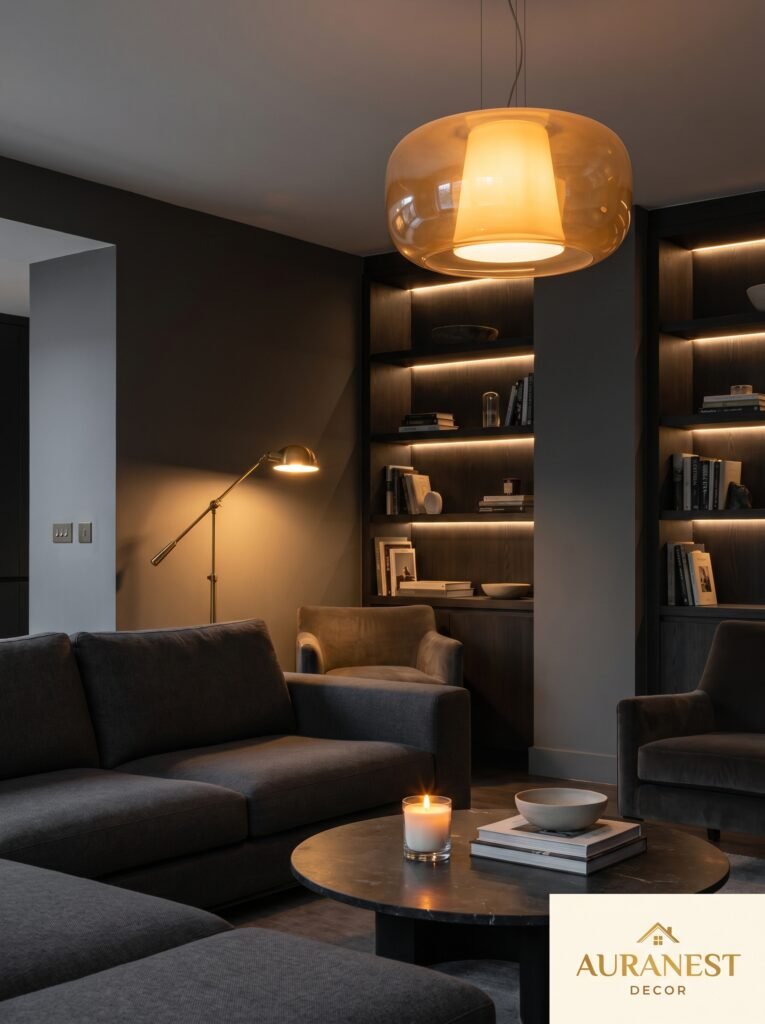
If there’s one area where black and grey living rooms rise or fall, it’s lighting. In bright daylight, a grey room feels airy and calm. But in the evening, a grey room without thoughtful lighting can feel flat and dingy in a way that’s hard to put your finger on. The solution is layered lighting — the same principle that applies to decor.
You need ambient light (overhead), task light (reading lamps, desk lamps), and accent light (candles, LED strips behind shelving, a backlit piece of art). Warm-toned bulbs — 2700K to 3000K — are essential in any grey space. Cool white or daylight bulbs will strip the room of warmth and make your beautiful grey palette look institutional. Dimmer switches are your best friend here: the ability to bring the lights down in the evening transforms a grey and black room into something that feels genuinely intimate and restorative.
—
8. Textiles That Add Soul to a Monochromatic Scheme
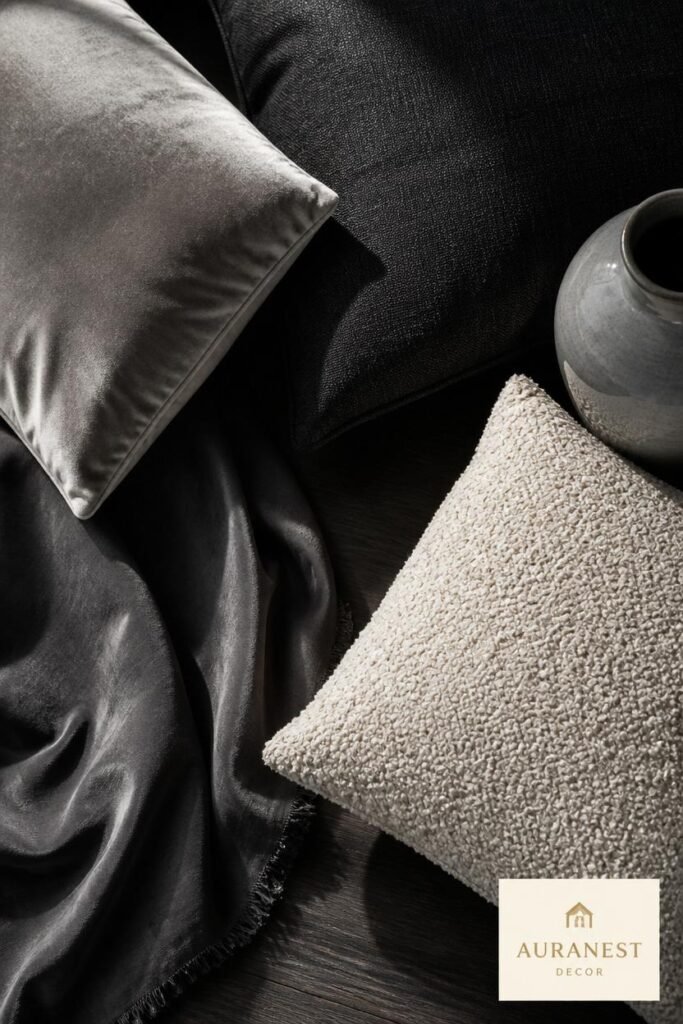
If color is the room’s vocabulary, textiles are its tone of voice. In a black and grey living room, textiles do the emotional heavy lifting. They’re the difference between a room that photographs well and a room that makes you want to sink into the sofa and never leave.
Think about contrast in texture: smooth grey velvet against rough black linen, a glossy ceramic lamp base next to a matte plaster wall, a silky throw over a nubby boucle cushion. Contrast keeps the eye moving and the senses engaged. Layer a faux fur throw over the arm of your sofa for winter. Swap it for a lightweight cotton waffle blanket in summer. The palette stays the same — your textiles carry the season.
“A room without textiles is a room without a heartbeat.”
—
9. Black and Grey in a Small Living Room: What Actually Works
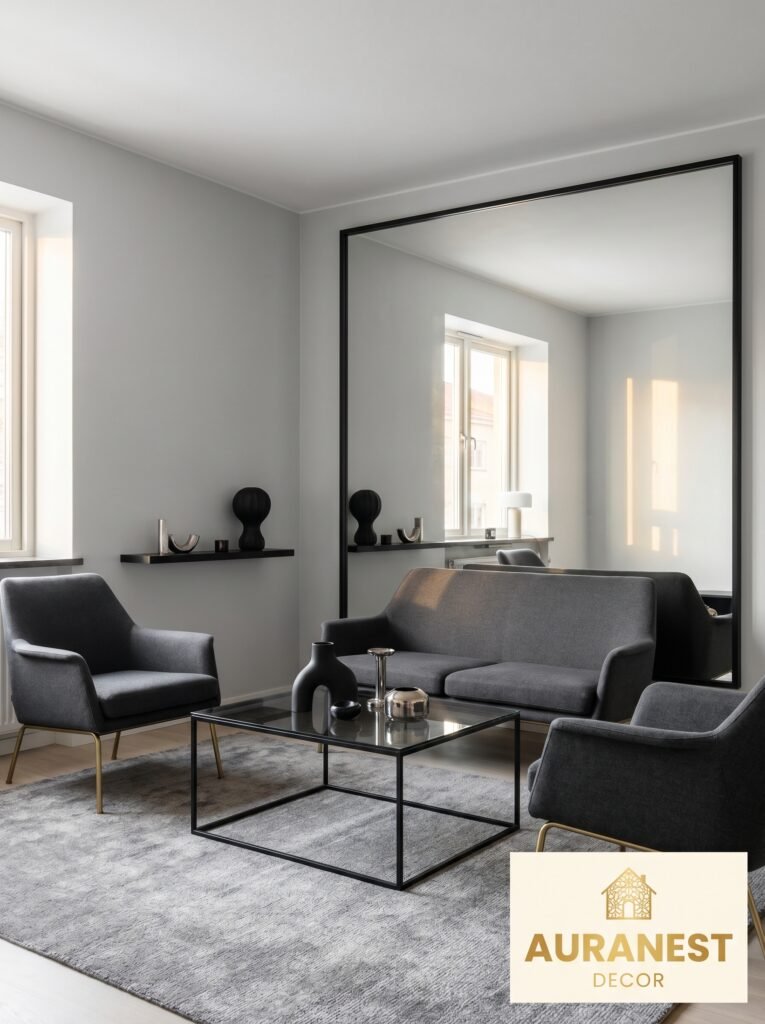
Many people assume that a dark color scheme will make a small living room feel cramped and suffocating. And while this can be true if handled carelessly, a well-executed black and grey scheme can actually make a small room feel more dramatic and intentional — like a jewel box rather than a shoebox.
The trick in a small space is contrast and light reflection. Use lighter greys on walls and choose furniture that sits on legs rather than directly on the floor, which allows light to pass underneath and creates the visual impression of more space. Mirrors in black frames do double duty: they reflect light to brighten the space while reinforcing the color scheme. Keep the floor as clear as possible, and be selective with accessories — a few deliberately chosen objects in a small grey room create far more impact than a crowded collection.
—
10. Art and Gallery Walls in a Black and Grey Living Room

Art is where a black and grey living room gets to tell its most personal story. Because the backdrop is so beautifully restrained, artwork pops with exceptional clarity. Black and white photography looks utterly striking against grey walls. Abstract art with warm tones — ochre, rust, blush — creates a gorgeous focal point. Even line drawings in thin black frames carry significant visual weight in this kind of space.
For gallery walls, consider keeping your frames consistent — all matte black, or all thin metal in a warm brass — while allowing the artwork itself to vary. This creates cohesion without rigidity, and gives the wall a curated, collected-over-time feeling rather than something purchased all at once from the same store.
—
11. The Cozy Factor: How to Make Black and Grey Feel Hygge
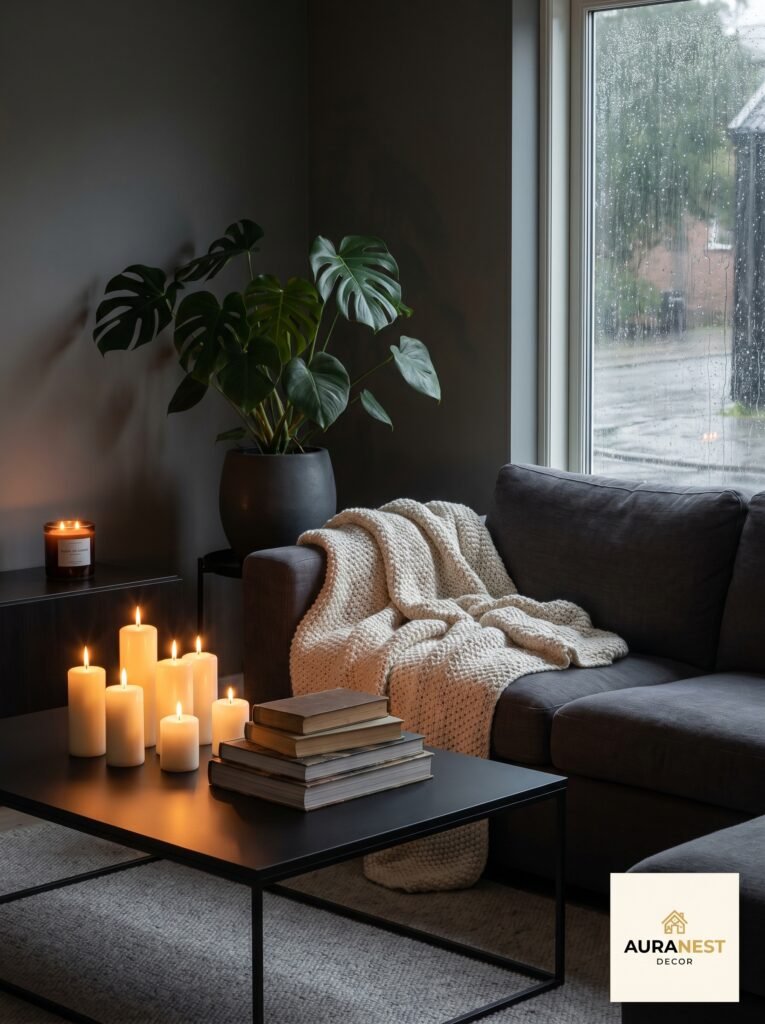
The Danish concept of hygge — that untranslatable feeling of coziness, comfort, and quiet wellbeing — might seem at odds with a black and grey color scheme at first glance. But it doesn’t have to be. Hygge is about atmosphere, not color, and a black and grey room layered with warmth can be one of the most genuinely cozy spaces imaginable.
Candles are non-negotiable — the flickering of warm candlelight against dark walls is a deeply primal kind of comfort. Soft, oversized cushions and throws signal that this is a space for rest, not performance. A stack of well-loved books on the coffee table. A houseplant or two — a fiddle leaf fig, a monstera, trailing ivy — bringing organic life into the composed, geometric palette. Scent matters too: a cedar and amber candle burning in a dark grey room on a rainy afternoon is practically its own kind of meditation.
—
12. Common Mistakes to Avoid in a Black and Grey Living Room
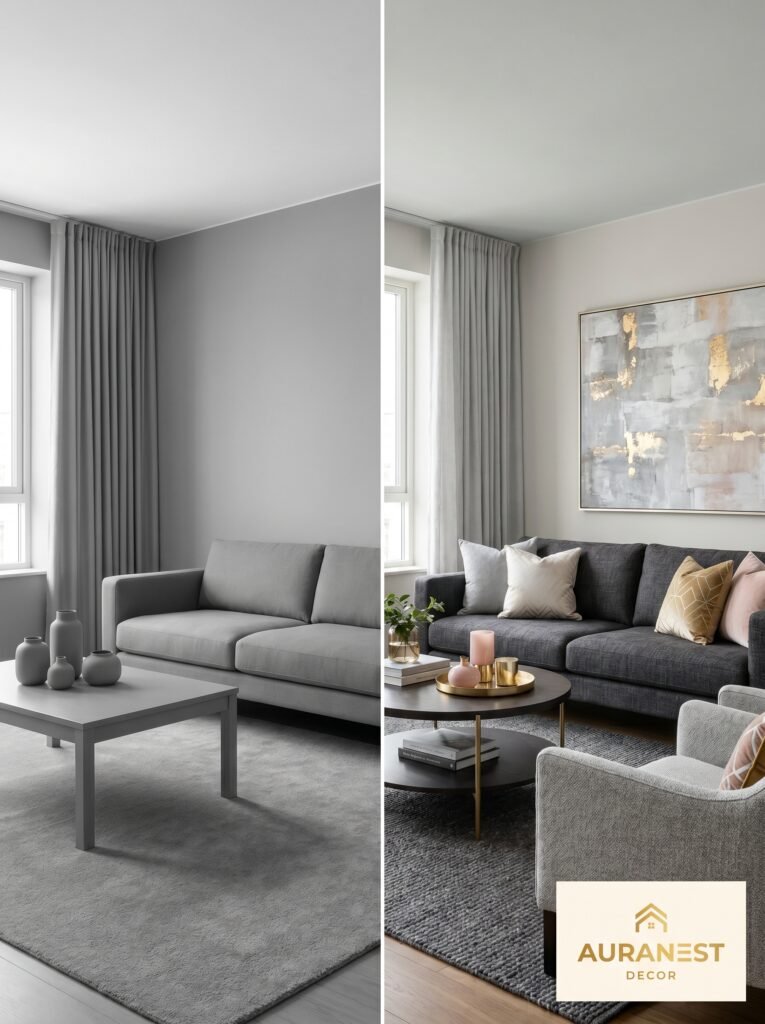
Even with the best intentions, certain pitfalls can undermine what should be a stunning scheme. The most common? Using only one shade of grey. A room where the walls, sofa, rug, and curtains are all the same grey tone will feel flat and featureless, no matter how beautiful any individual piece might be. You need variation — light grey, mid grey, charcoal — to create depth.
Another frequent mistake is introducing too many accent colors at once. One or two accent colors, used consistently, create a intentional, layered look. Five different accent colors create chaos. Pick your warmth — gold, blush, green — and commit. Finally, don’t neglect the ceiling. Painting the ceiling a very light grey instead of stark white warms the room considerably and prevents the jarring contrast that a brilliant white ceiling creates against dark walls.
—
🌿 How to Take Care of Your Black and Grey Living Room
Keeping a black and grey living room looking its best doesn’t require constant effort — just a few smart, consistent habits.
Dust your dark surfaces regularly. Black furniture shows dust far more readily than lighter pieces, and a quick weekly pass with a soft microfiber cloth makes an enormous difference. For grey upholstery, invest in a quality fabric protector spray — especially if you have children or pets — and spot-clean spills immediately before they set into the fibers.
Keep your metals polished. Brass accents will develop a natural patina over time, which is either charming or frustrating depending on your preference — either leave them to age naturally or wipe periodically with a brass cleaner to keep the bright finish.
Rotate your textiles seasonally. Because your black and grey foundation stays constant, refreshing your throws, cushions, and even a decorative tray every few months keeps the room feeling alive and current without requiring any significant investment or redesign.
Finally, let natural light in whenever possible. Grey rooms thrive in daylight. Pull back curtains fully during the day, keep windows clean, and if you have the opportunity, add a mirror opposite a window to double the natural light in the room. A grey room in sunshine is a completely different experience from a grey room under artificial light alone.
—
❓ FAQ
Q: Will a black and grey living room make my space feel smaller? A: Not necessarily — it depends on how you use the tones. Lighter greys on walls combined with strategic mirrors and furniture on legs can actually create a sense of depth and drama that makes a space feel more intentional and even larger. The key is avoiding a single, unbroken dark tone across all surfaces.
Q: What flooring works best with a black and grey living room? A: Warm-toned hardwood in medium to dark shades — think walnut or warm oak — creates a beautiful contrast against grey walls and black accents. Light oak adds an airy, Scandinavian feel. If you’re working with a lighter grey palette, even a warm beige tile or light concrete-look floor can work beautifully, as long as your rug brings in some texture and additional warmth.
Q: How do I add personality to a black and grey living room without ruining the scheme? A: Personality comes through your layer of accessories and art rather than your base colors. Books, ceramics, plants, candles, and carefully chosen artwork carry your story without disturbing the palette. Choose one or two meaningful objects — a piece of pottery you bought on a trip, a photograph you love — and let those tell your story against the clean grey backdrop.
—
💭 Final Thought
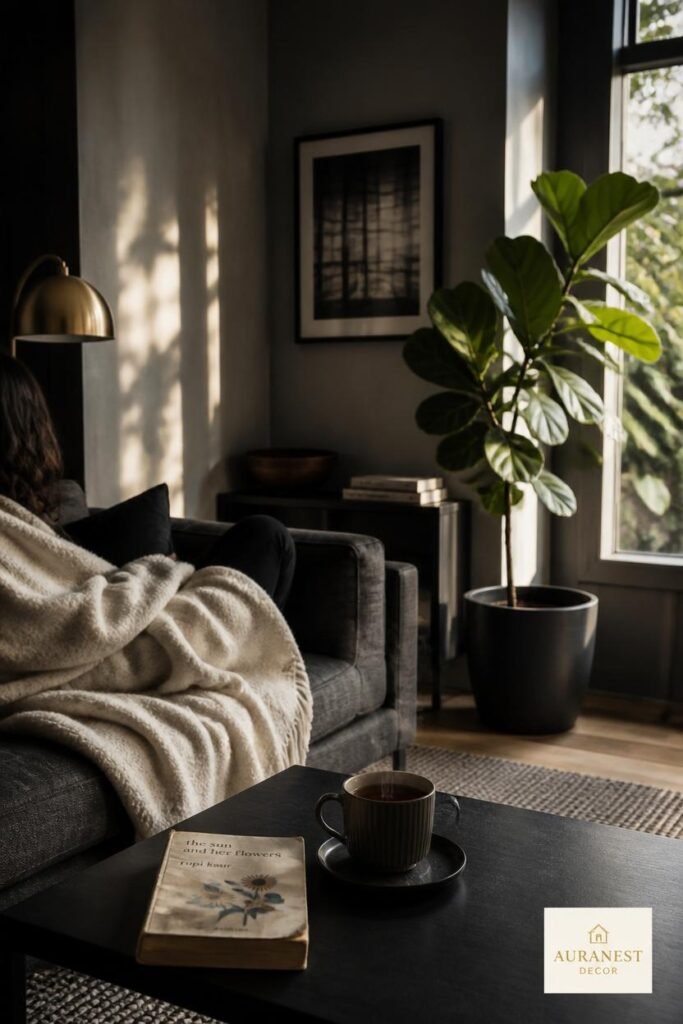
A black and grey living room isn’t a trend. It isn’t a design statement made to impress visitors or photograph well for social media — though it does both of those things beautifully. It’s a commitment to a kind of quiet, grounded beauty that deepens over time as you layer in pieces that matter to you. It’s the room that holds your Saturday mornings, your late-night conversations, your quiet moments with a book and a cup of tea. So here’s a question worth sitting with: what would it feel like to come home to a room that finally, completely felt like you?