TV on Wall Ideas for Your Living Room That Actually Make It Feel Like Home
There’s a moment — maybe you’ve had it too — when you walk into someone’s living room and everything just feels right. The TV doesn’t dominate the room. It belongs there. That’s the goal, and these ideas will help you get there.
—
1. Why Mounting Your TV on the Wall Changes Everything About a Room
Before we get into the beautiful details, let’s talk about why wall-mounted TVs have become the defining feature of modern living rooms everywhere you look on Pinterest. It’s not just about saving floor space — though that matters enormously, especially in smaller homes. It’s about the feeling a wall-mounted television gives a room.
When your TV sits on a bulky entertainment stand, it anchors everything around it in a way that feels heavy, almost accidental — like the furniture just ended up there. But the moment you lift that screen onto the wall, something shifts. The room breathes differently. The sightlines open up. Suddenly your floors are visible, your furniture feels intentional, and the whole space reads as curated rather than cobbled together.
There’s also a practical magic to it. A properly mounted TV, placed at the right height and the right angle, is simply more comfortable to watch. No neck strain. No glare bouncing off at an awkward angle. Just clean, easy viewing from your favorite spot on the sofa.
“The best living rooms aren’t designed around the TV — they’re designed so the TV disappears into the room.”
Interior designers have known this for years. The wall-mounted TV is one of the most powerful and underrated transformations you can make in a living room, and it doesn’t require a full renovation to pull off beautifully.
—
2. The Gallery Wall Approach: When Your TV Becomes Part of the Art
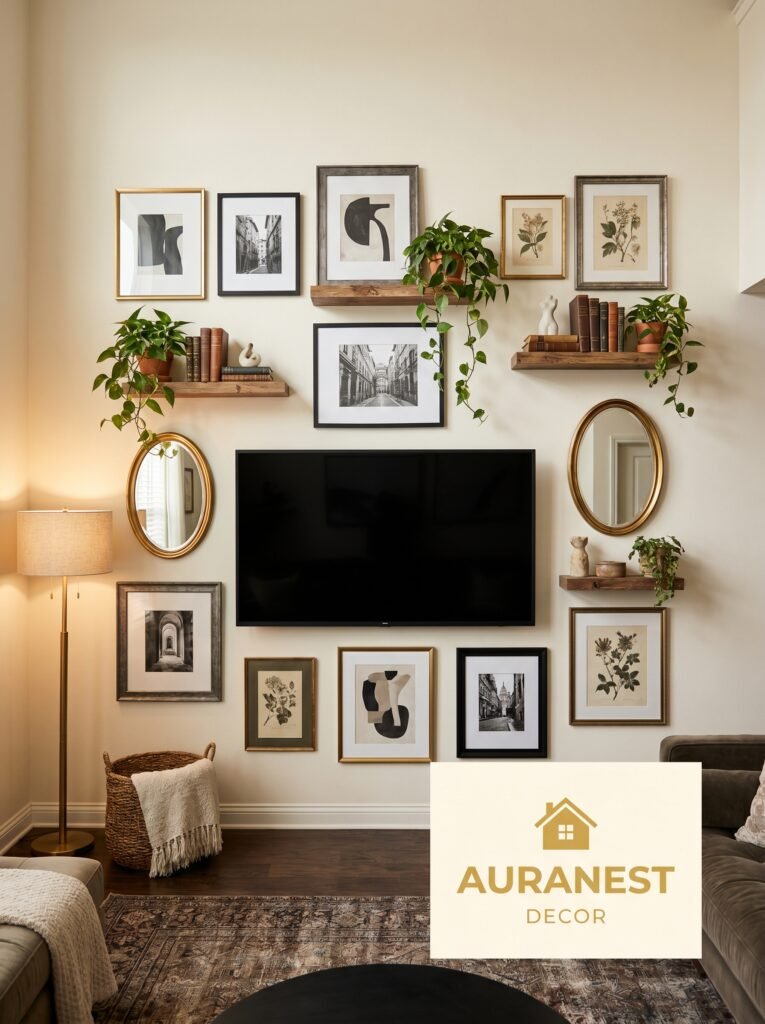
One of the most Pinterest-saved approaches to living room TV placement is treating the television as one element within a larger gallery wall. The idea is elegant in its simplicity — instead of letting the TV sit alone on a blank expanse of wall, you build a thoughtful arrangement of framed artwork, photography, mirrors, and decorative objects around it.
When the TV is off, it reads almost like a dark, minimalist art piece — a large matte rectangle surrounded by intentional color, texture, and meaning. When it’s on, it’s the star of the show. This dual-purpose approach is the sweet spot between function and beauty that so many living rooms are missing.
The key is proportion. Your gallery arrangement should extend generously on both sides — and ideally above — so the TV doesn’t feel like the anchor point but rather one voice in a larger conversation happening on the wall. Use frames in mixed metals, varying sizes, and a consistent but not rigid color palette. Add a small shelf below for a trailing plant or a stack of coffee table books, and suddenly what was a technology installation has become a genuine design moment.
—
3. The Floating Media Console Combination That Looks Like a Magazine
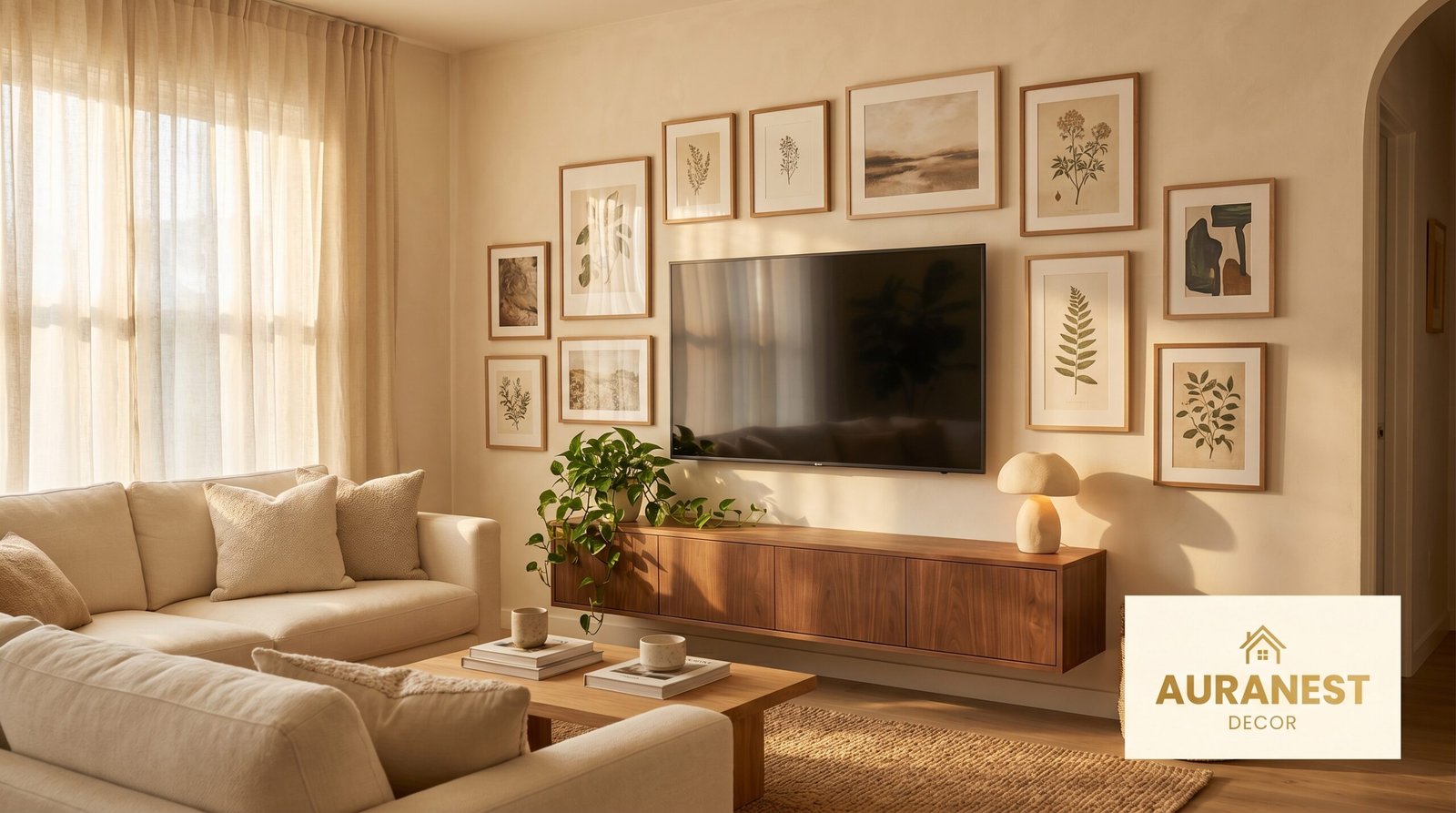
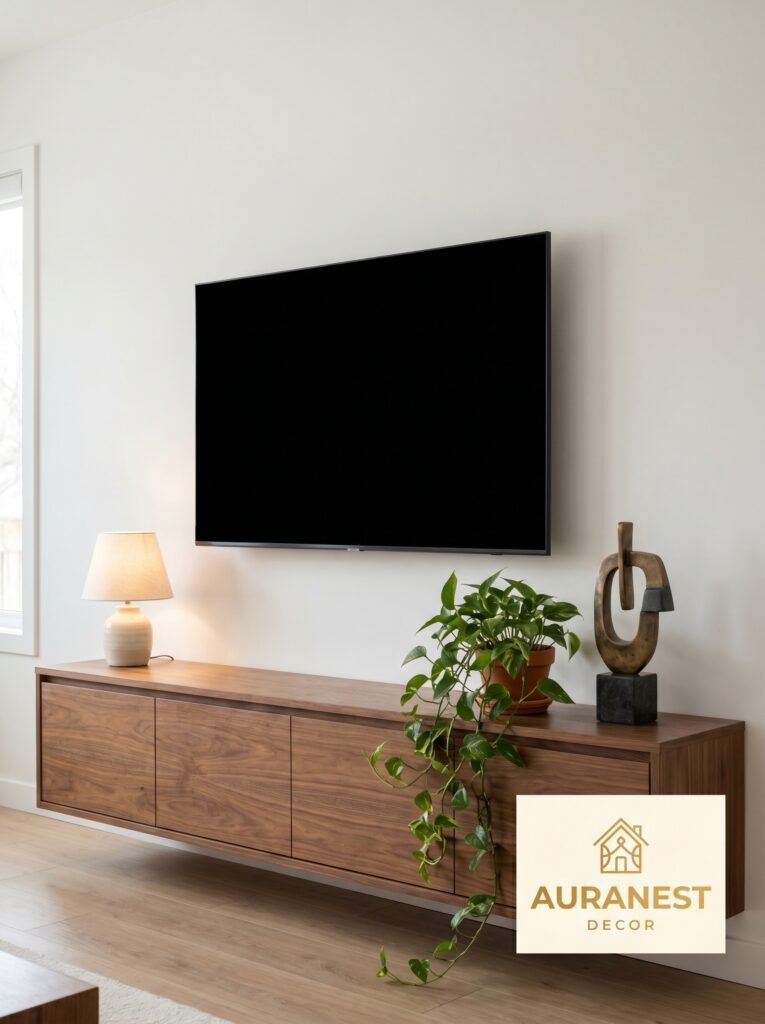
If a full gallery wall feels like too much commitment, the floating media console paired with a wall-mounted TV is your answer. This combination is everywhere in high-end interior design for a reason — it delivers that clean, intentional look without requiring you to fill an entire wall with art.
A floating console — wall-mounted itself, hovering just below the TV — serves double duty. It provides storage for remotes, streaming devices, and cables, while also giving the TV a visual “base” so it doesn’t look like it’s just floating in space with nothing beneath it. That visual grounding matters more than people realize.
The best floating consoles for this look are low-profile and long, often in warm walnut, white oak, or matte black depending on your overall palette. Add a small lamp on one end, a decorative object on the other, and a trailing pothos or fiddle-leaf branch in between. The result is effortlessly styled and endlessly pinnable.
—
4. Recessed TV Niches: The Built-In Look That Feels Custom Without the Price Tag
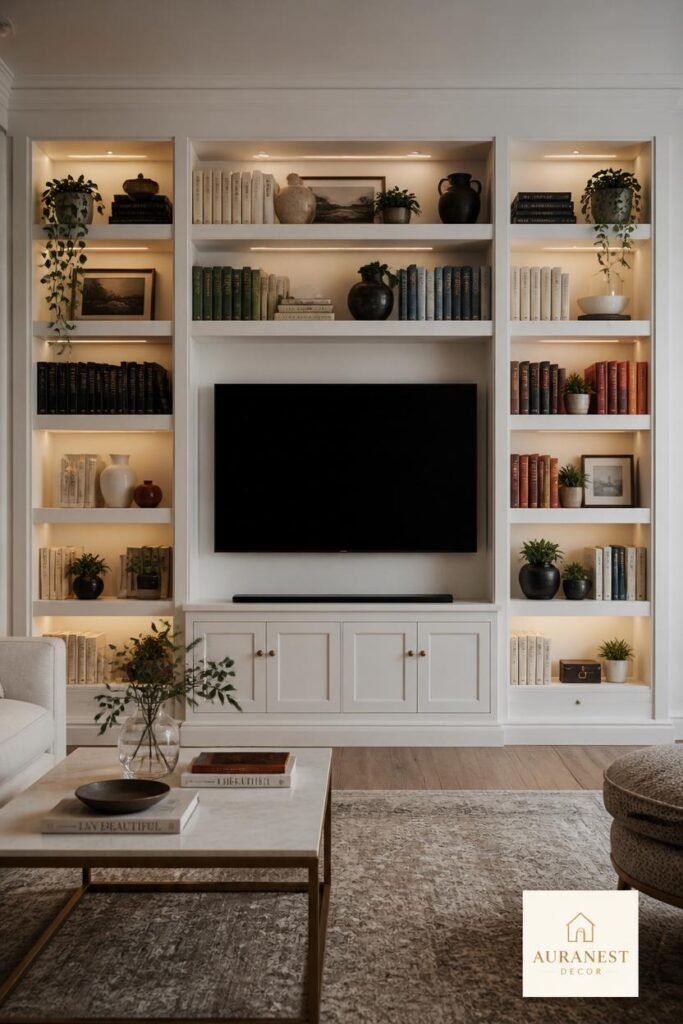
Have you ever walked into a living room and seen a TV nestled inside a built-in niche — surrounded by shelving that goes floor to ceiling — and immediately wanted to move in? That’s the power of the recessed TV niche, and it’s one of the most dramatic transformations possible in a living room.
True built-ins do require a contractor and a budget, but the visual payoff is enormous. The TV becomes completely integrated into the architecture of the room. Flanking shelves hold books, plants, art objects, and personal collections — suddenly the technology is contextualized by the life being lived around it.
For those who want that look without a full renovation, several furniture companies now make modular shelving systems that achieve a convincingly built-in appearance when styled correctly. Paint the inside of the unit the same color as your wall for that seamless, architectural feeling.
—
5. Above the Fireplace: Beautiful When Done Right, Problematic When Done Wrong
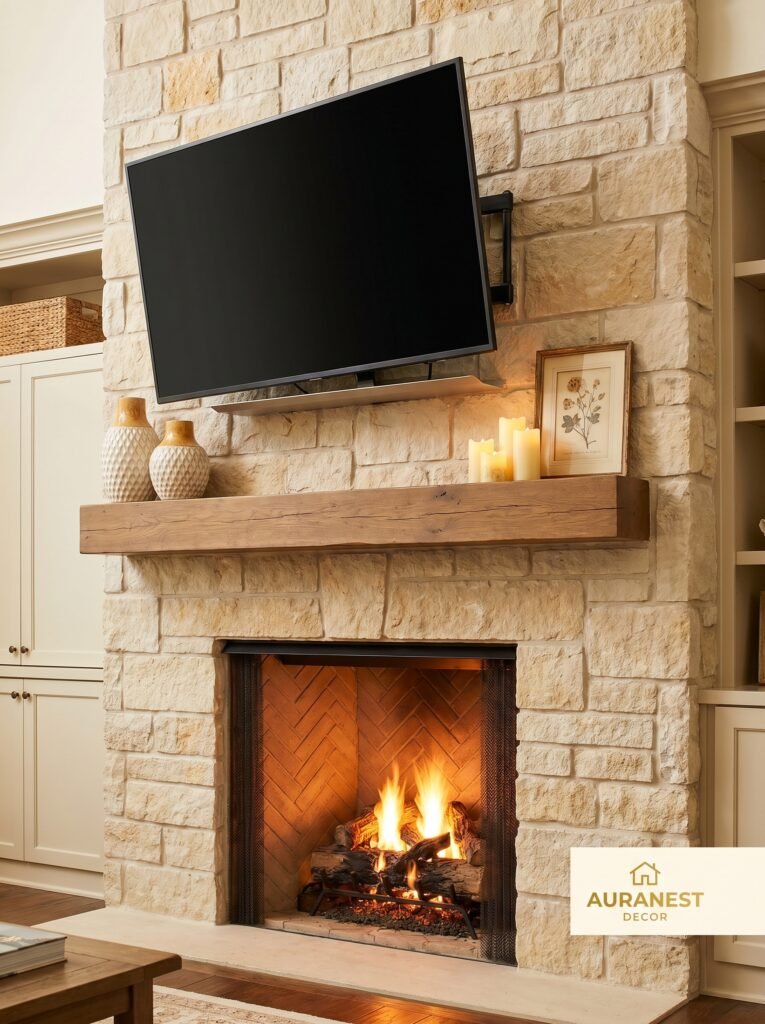
Let’s be honest about the fireplace debate, because it comes up constantly and the answer isn’t simple. Mounting a TV above a fireplace is one of the most common choices in living rooms — and also one of the most controversial among interior designers.
The appeal is obvious. The fireplace is often the natural focal point of the room, and placing the TV there creates a single, unified center of attention. In rooms where space is limited, it’s also a genuinely practical solution that avoids crowding the room with multiple focal points competing for attention.
The challenges are real, though. Heat and soot rise from a working fireplace and over time can damage electronics. More importantly, looking up at a high screen for extended periods causes genuine neck discomfort — most designers recommend your TV be mounted so the center of the screen sits at seated eye level, which above a mantel is rarely possible.
“A beautiful TV installation isn’t just about what you see — it’s about how your body feels after two hours on the sofa.”
If you love the fireplace wall and want your TV there, consider an articulating arm mount that can tilt the screen downward at a comfortable angle, and ensure you have a proper heat shield if your fireplace is wood-burning.
—
6. The Dramatic Dark Accent Wall That Makes Your Screen Invisible
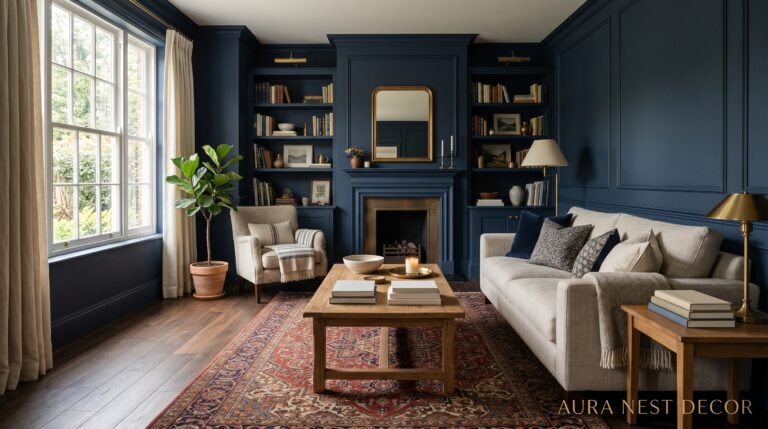
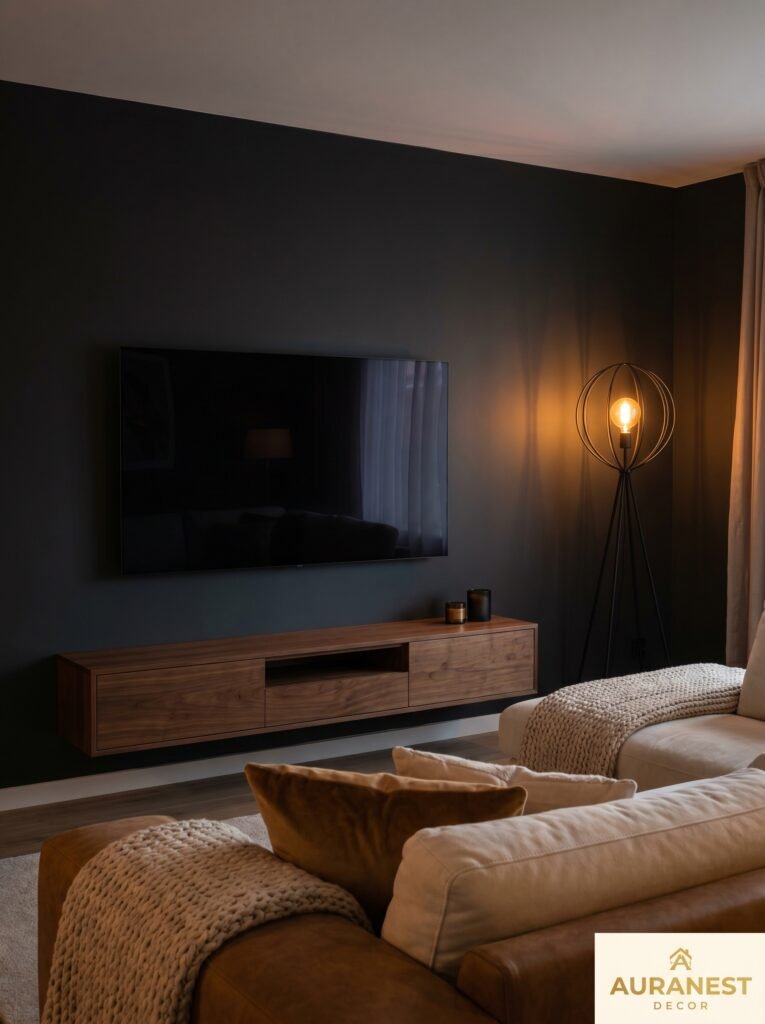
Here’s a color psychology trick that interior designers use and homeowners rarely consider: paint the wall behind your TV a deep, dark color — charcoal, forest green, navy, or rich terracotta — and watch what happens to the television.
A dark screen against a dark wall essentially disappears when the TV is off. The visual weight of the television drops dramatically because there’s no stark contrast between the black panel and a light wall. Instead of your eye jumping immediately to the TV when it’s off, it travels around the room, taking in the whole space.
This approach works especially beautifully in living rooms with warm lighting. The deep accent wall creates a sense of depth and intimacy — like a private cinema that also happens to be your favorite place to read on Sunday afternoons.
—
7. Hiding the Cables: The Detail That Separates a Styled Room from a Messy One
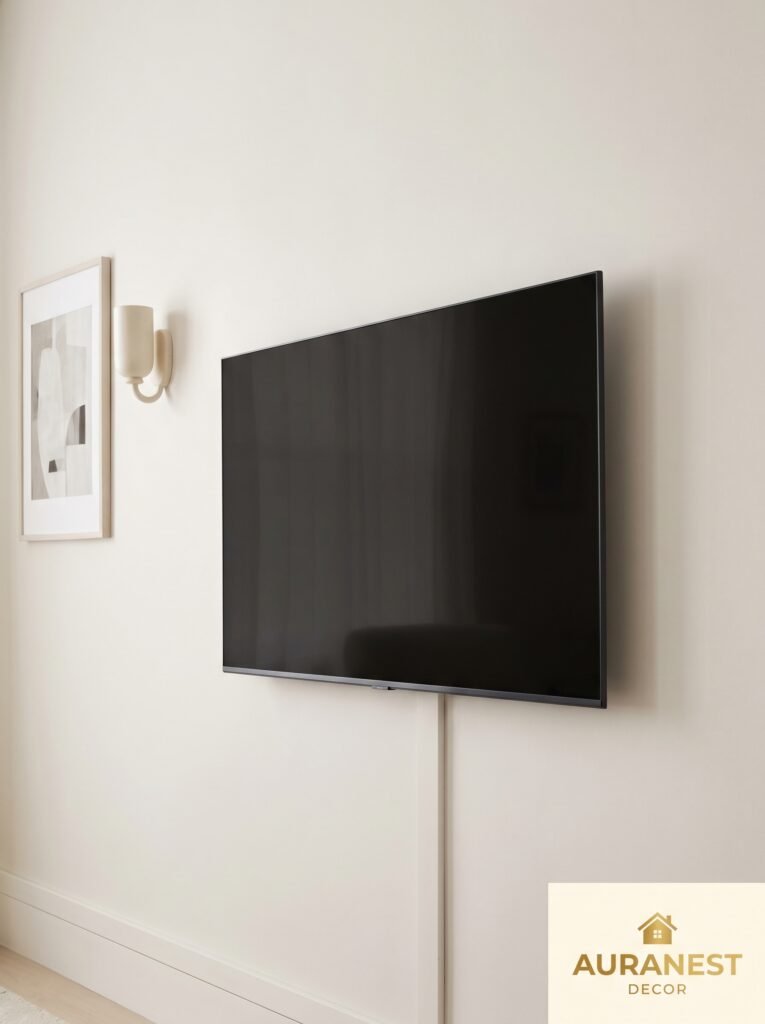
No matter how beautiful your TV wall concept, trailing cables will undercut every single design decision you’ve made. This is the unsexy but absolutely essential part of any TV wall installation, and it’s worth taking seriously.
The cleanest solution is running cables inside the wall — either through an in-wall cable management kit (available at hardware stores for relatively little cost) or through a professional installation that leaves the wall completely smooth. When no cables are visible at all, the TV appears to float effortlessly, almost magically, against the wall.
If in-wall routing isn’t possible in your rental or your construction type, cable raceways painted to match your wall are a significant improvement over loose cables. Choose a raceway in the same color as your wall paint, run it along the baseboard or wall edge, and the eye simply doesn’t register it.
—
8. Framing the TV Like Artwork With a Samsung Frame TV (And What to Do If You Don’t Have One)
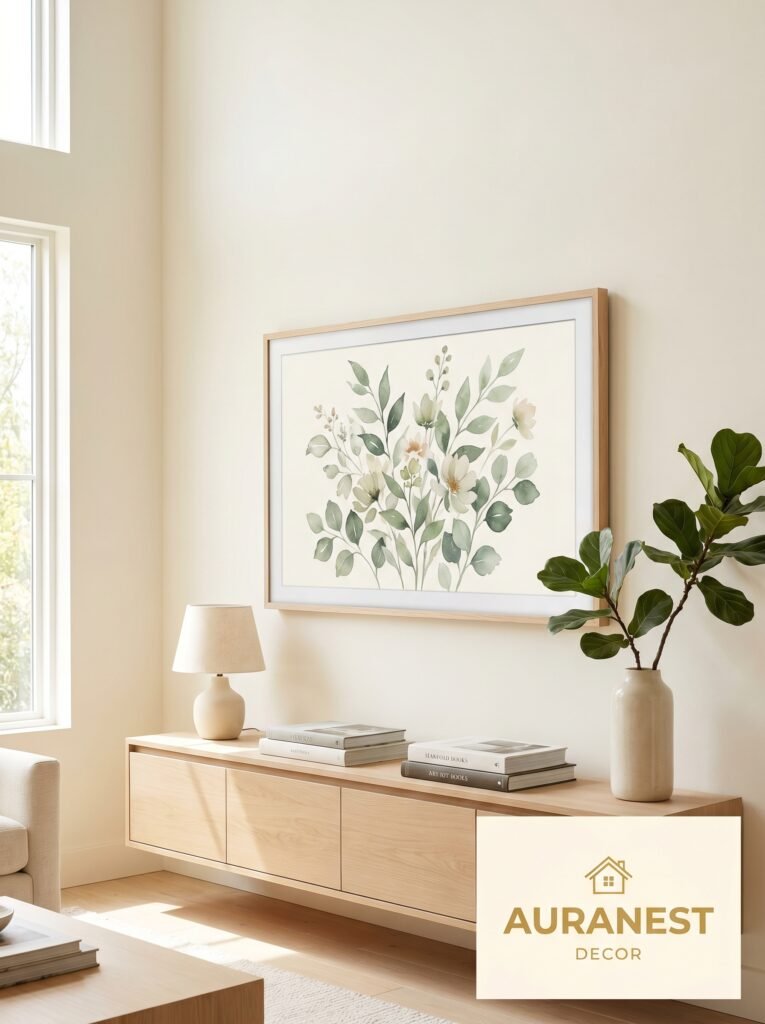
The Samsung Frame TV — the television that displays artwork when it’s not in use — has become genuinely iconic on Pinterest, and for good reason. It closes the gap between technology and art in a way that feels almost like cheating. The bezel is customizable, the display is matte and non-reflective, and when it’s showing a Monet or a botanical illustration, most guests don’t immediately register that it’s a screen at all.
But even without the budget for a Frame TV, you can achieve a similar effect by surrounding your existing television with a custom or DIY frame — many woodworkers sell TV surrounds on Etsy, or you can build one yourself from trim pieces and paint. Add a simple art-mode screensaver to your existing smart TV, and the transformation is surprisingly convincing.
“The difference between a TV wall and a designed wall is whether the screen enhances the room or competes with it.”
—
9. Styling the Space Around the TV Without It Looking Overdone
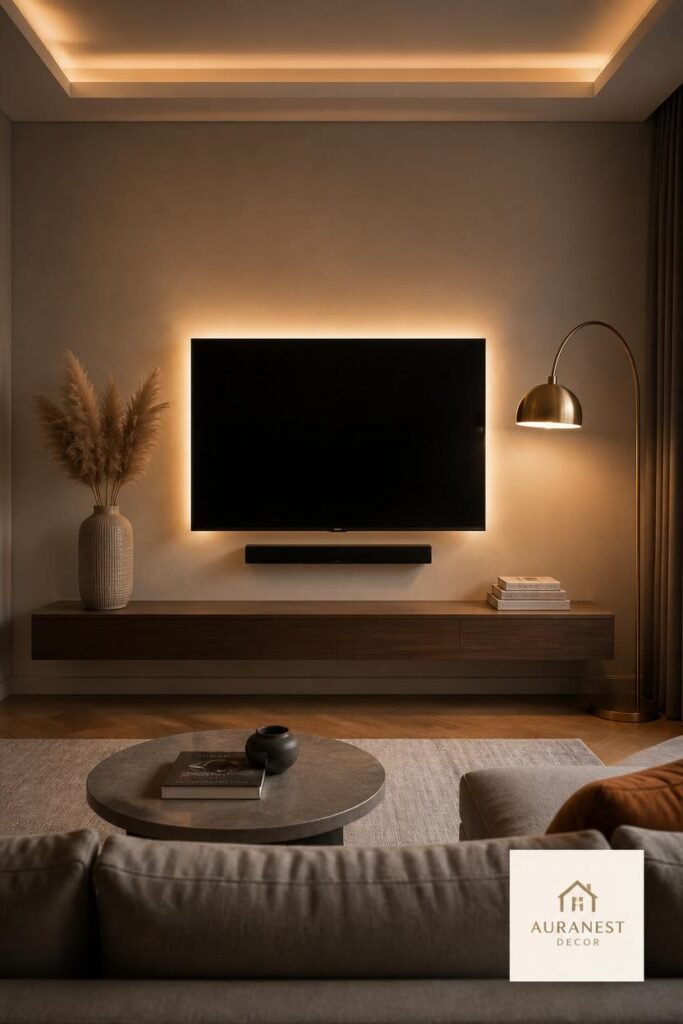
The shelving, the objects, the lighting around your TV — these are the details that give the installation soul. But there’s a fine line between thoughtfully styled and overwhelmingly cluttered, and Pinterest is full of examples on both sides.
The golden rule of TV wall styling is negative space. For every object you place, leave deliberate empty areas. A single ceramic vase beside a stack of books reads as intentional. Three vases, two candles, a plant, and a framed photo reads as anxious. Edit ruthlessly, and then edit once more.
Lighting is the element that elevates everything. LED bias lighting behind the television creates a soft ambient glow that reduces eye strain and makes evening viewing feel cinematic. A floor lamp beside the media area — something sculptural with a warm bulb — adds warmth and visual interest that the TV alone cannot provide.
—
10. Small Living Room TV Wall Ideas That Don’t Sacrifice Style
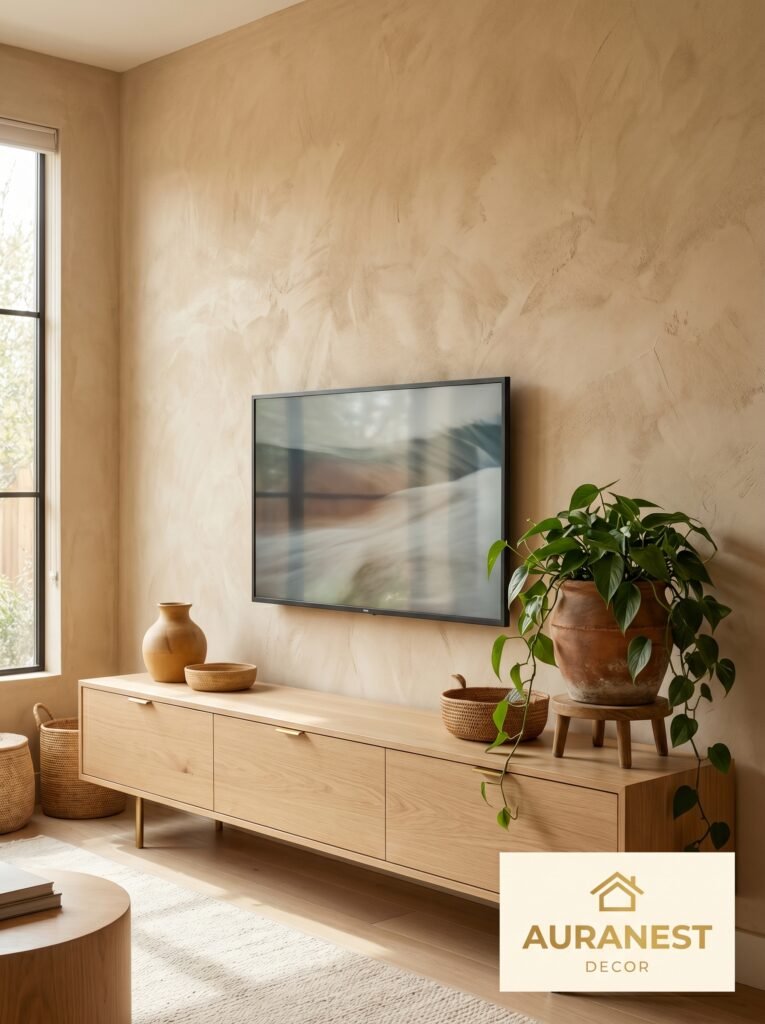
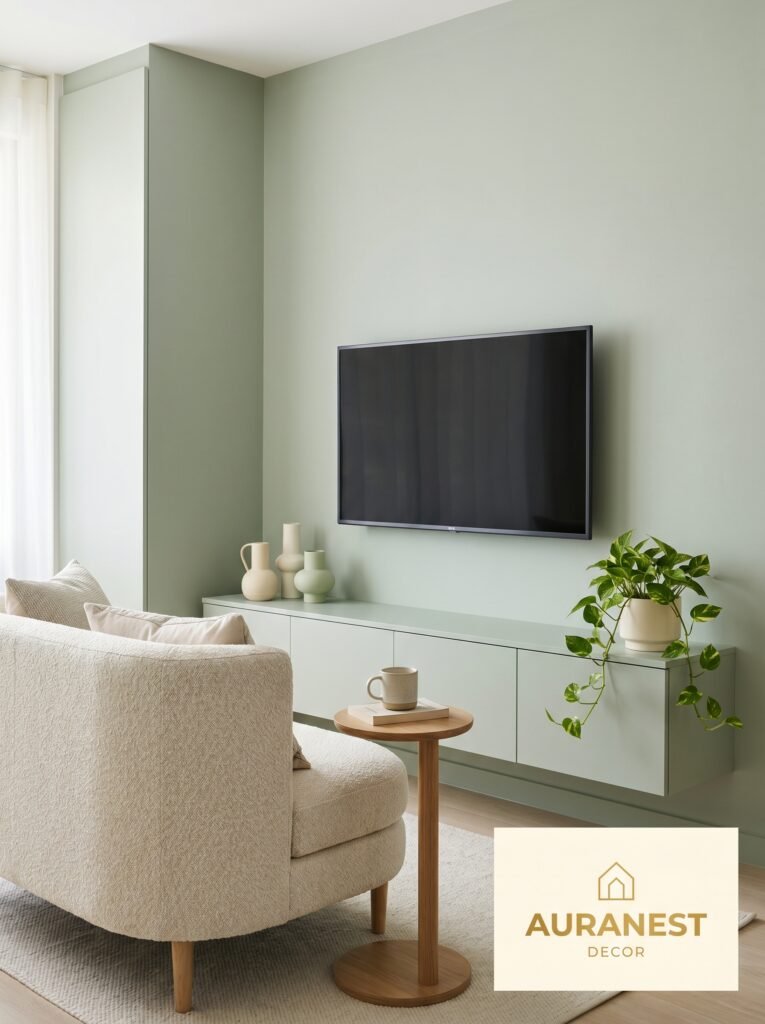
Small living rooms deserve beautiful TV walls just as much as larger spaces — arguably more so, because in a smaller room every decision has greater visual impact. The challenge is creating a TV wall that feels intentional rather than cramped.
In a small space, resist the impulse to go smaller with your TV. A properly proportioned screen — not undersized for fear of overwhelming the room — actually reads better than a tiny screen that looks lost on a large wall. Mount it at the right height, keep the surrounding styling minimal, and let the wall breathing room do the work.
Color matters enormously in small living rooms. A monochromatic approach — wall, console, and accessories all in the same color family — makes the space feel larger and more cohesive. Choose one or two textures to add interest without adding visual noise.
—
11. Trending TV Wall Styles on Pinterest Right Now
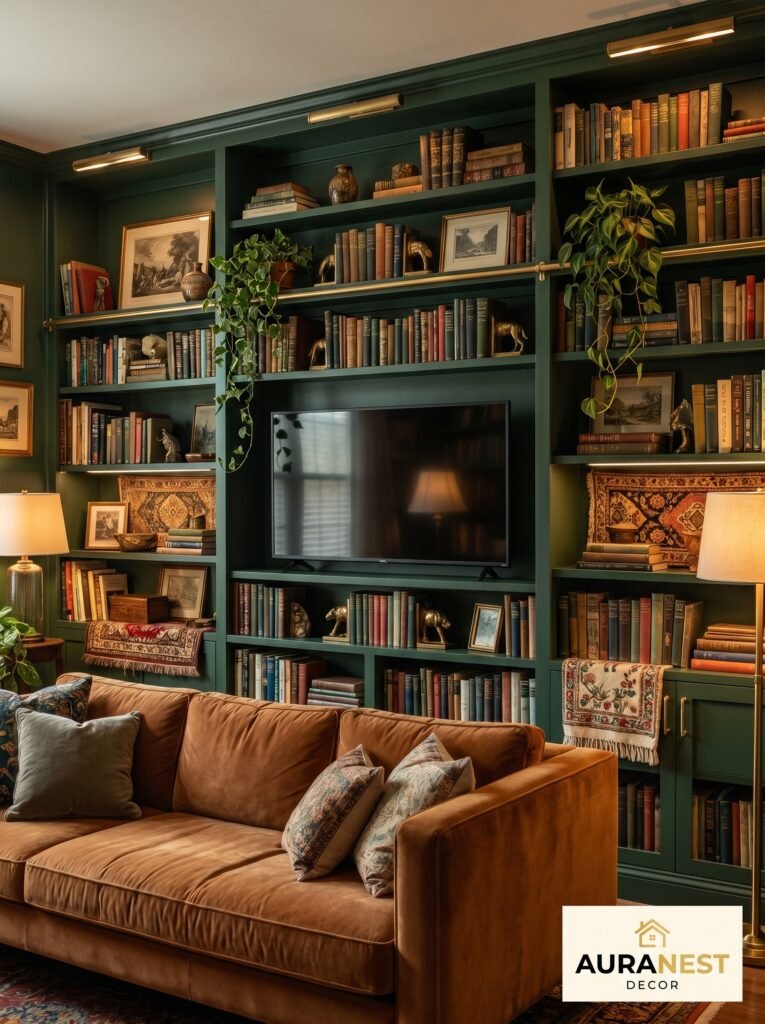
Pinterest boards in 2025 are heavily favoring a few distinct TV wall aesthetics, and it’s worth knowing what’s resonating so your own inspiration-gathering feels current.
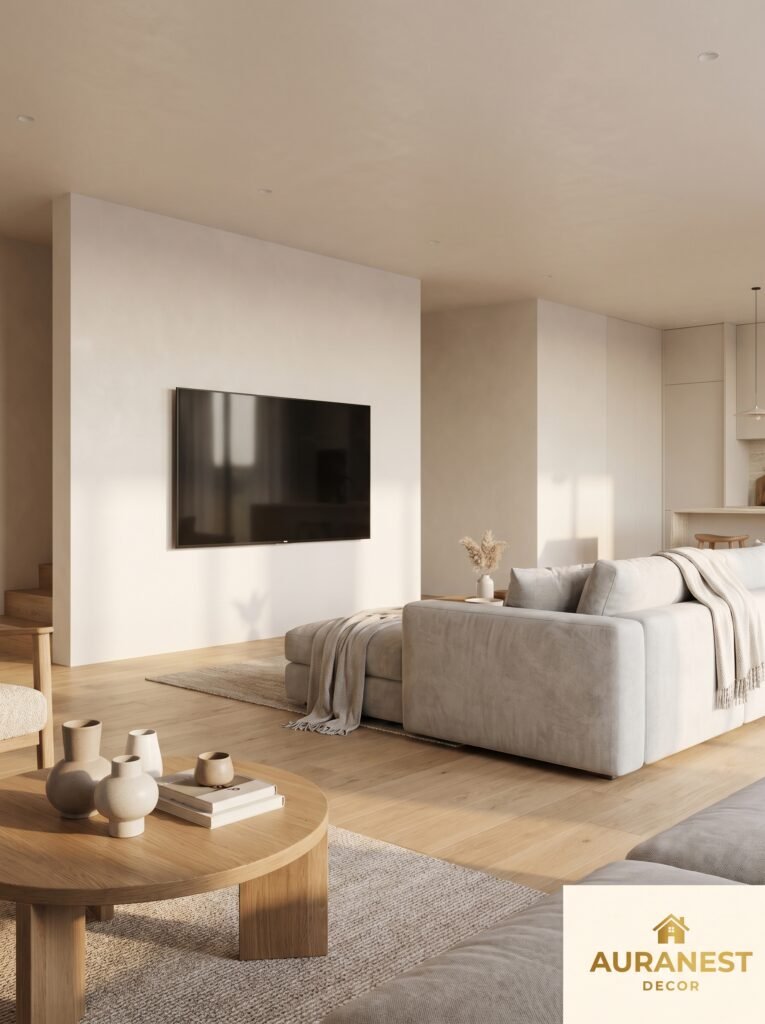
The warm minimalist look — white oak floating console, limewash plaster wall, simple black TV frame, one trailing plant — continues to dominate and shows no signs of slowing. It photographs beautifully, works in almost any home size, and ages gracefully without feeling trend-dependent.
The maximalist bookcase wall is surging in popularity, particularly in library-style living rooms where the TV is just one element among floor-to-ceiling books and curated objects. Dark paint, brass details, and layered textiles make these spaces feel rich and livable.
Earth-toned gallery walls — warm tans, terracotta, ochre, and clay — are replacing the grey-dominated palettes of recent years, bringing warmth and personality back into TV wall design.
—
12. The Emotional Home: Why Your TV Wall Matters More Than You Think
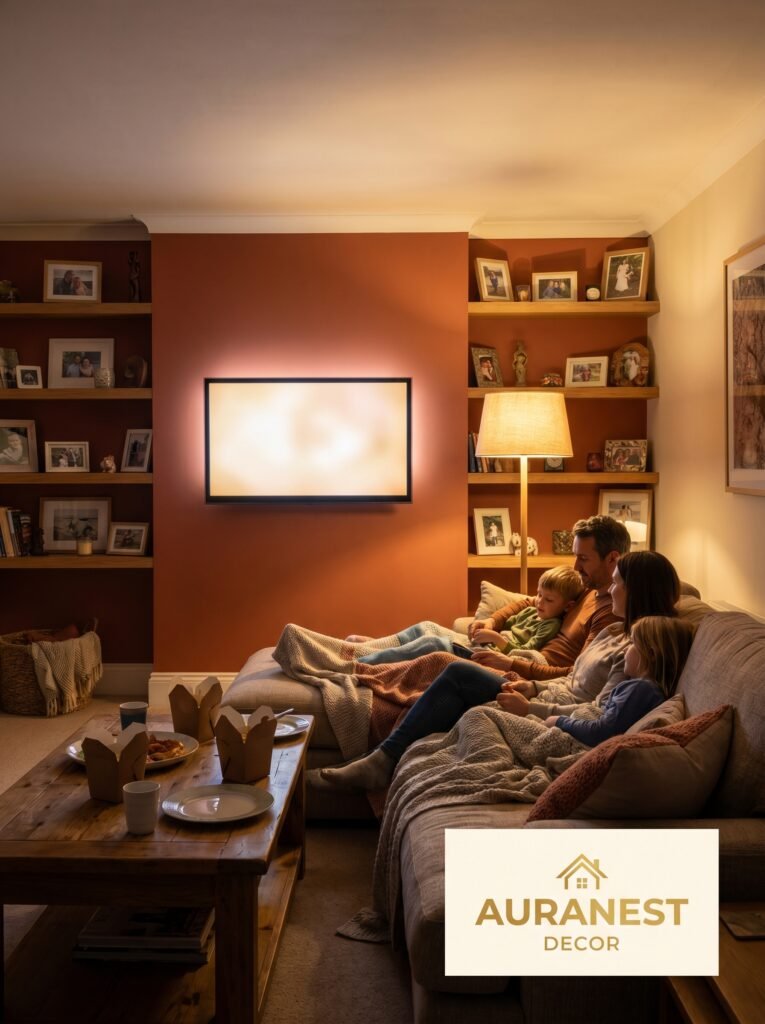
Here’s the thing nobody says aloud but everyone feels: the living room is where your life actually happens. It’s where your family falls asleep during movies, where you eat takeout on a Tuesday night and feel, inexplicably, like everything is okay. It’s where guests sit for the first time and form their first impression of how you live.
Your TV wall is the backdrop to all of it. When it’s designed thoughtfully — when the screen fits the room rather than competing with it, when the styling reflects who you are rather than what a showroom told you to buy — that backdrop becomes something that quietly supports every moment that happens in front of it.
Getting a TV wall right isn’t about expensive equipment or professional installation, though both can help. It’s about making intentional choices — about height, about cable management, about the objects you surround it with, about the color behind it. Each of those choices is an act of care for the people who will live and gather in that room.
—
🌿 How to Make Your TV Wall Look Intentional and Styled
Making your TV wall look genuinely designed comes down to a handful of habits that anyone can adopt regardless of budget. First, always mount at seated eye level — measure from your sofa, not from the floor. Second, address cables before anything else, because no amount of beautiful styling survives visible wire clutter. Third, add ambient lighting around the TV — bias lighting behind the screen and a warm lamp nearby make the area feel designed rather than installed. Fourth, leave breathing room in your styling — negative space communicates confidence and intention. Fifth, treat the TV wall as part of the whole room, not a separate installation, so your color palette, textures, and objects feel continuous with the rest of the space.
—
❓ FAQ
Q: What is the ideal height to mount a TV on the wall? A: The center of your TV screen should sit at eye level when you’re seated on your sofa — typically between 42 and 48 inches from the floor for most standard sofa heights. Mounting too high is one of the most common mistakes in living room TV installation and leads to neck discomfort over time.
Q: How do I hide the cables from a wall-mounted TV? A: The cleanest solution is an in-wall cable management kit, which routes cables through the wall itself and is available at most hardware stores for under $30. If in-wall routing isn’t possible — for example in a rental — cable raceways painted to match your wall color are a very effective and budget-friendly alternative.
Q: Can I mount a TV above a fireplace safely? A: Yes, but with important precautions. Ensure the area above your specific fireplace doesn’t exceed safe operating temperatures for electronics, use an articulating arm mount so you can tilt the screen to a comfortable viewing angle, and if it’s a wood-burning fireplace, install a proper heat deflector shelf above the firebox before mounting.
—
💭 Final Thought
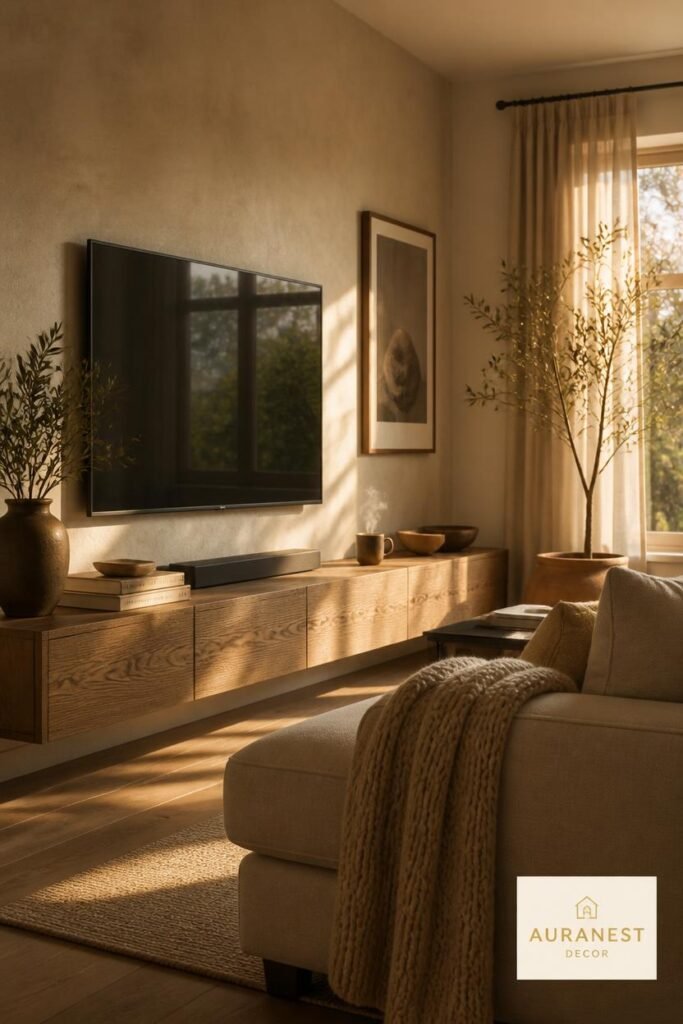
Your living room tells a story about how you live, who you love, and what makes you feel at home — and the TV wall is one of its most visible chapters. When you approach it with intention rather than default, something shifts in the whole room, and in the way the room feels to be inside. So before you reach for the mounting bracket, take a moment to ask yourself: what do I want to feel every time I walk into this room?