This Living Room Trend Is Quietly Taking Over — And It’s the Coziest Thing I’ve Seen in Years
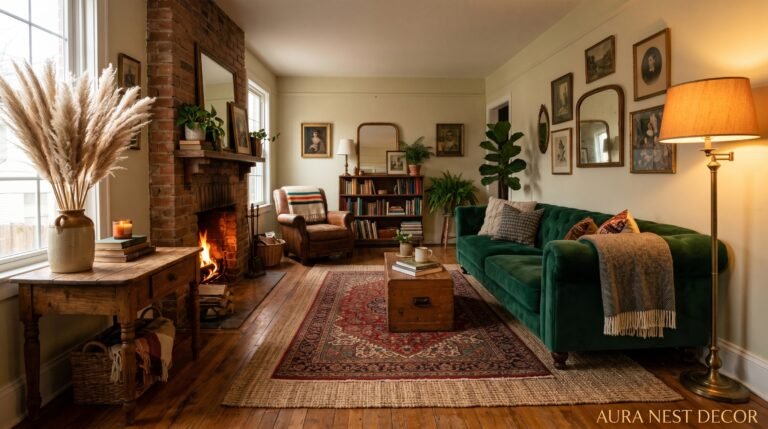
You know that feeling when you walk into someone’s house and immediately think I want to live here? Not because it looks like a showroom. Because it feels like someone actually lives there. That’s modern traditional, and honestly, it’s the design moment I didn’t know I was waiting for.
—
1. What “Modern Traditional” Actually Means (Because Pinterest Gets It Wrong Half the Time)
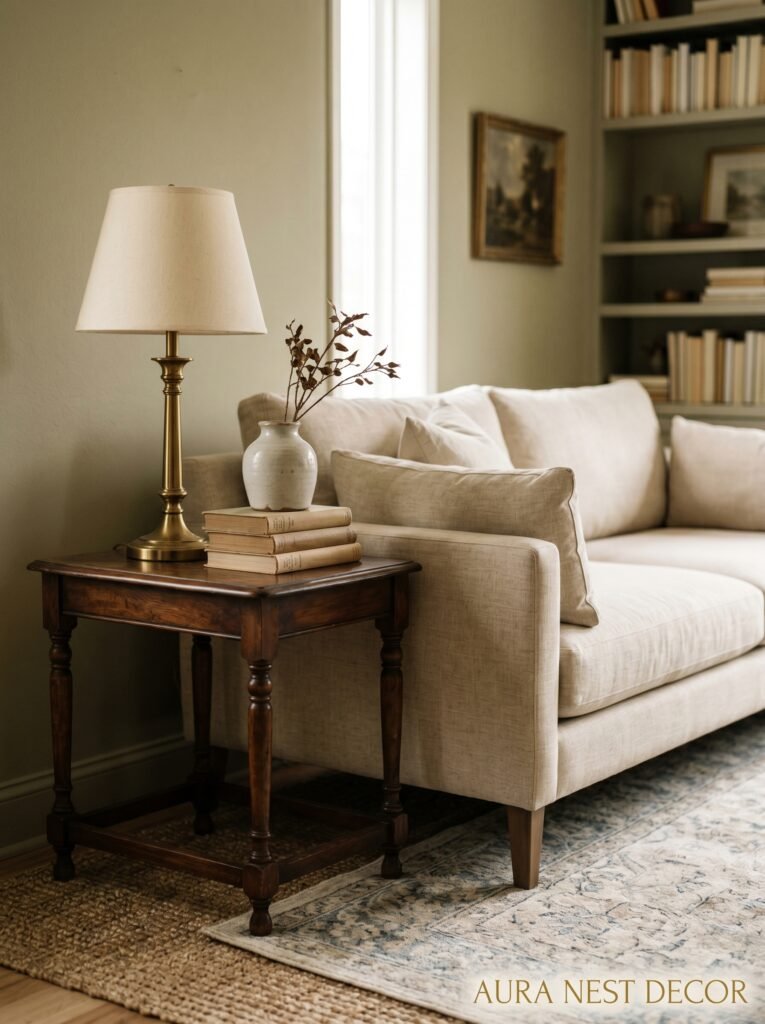
Okay so here’s the thing — modern traditional isn’t a single aesthetic. It’s not “farmhouse with a velvet sofa” or “grandma’s front room but darker.” It’s a specific tension between two things that shouldn’t work together but completely do.
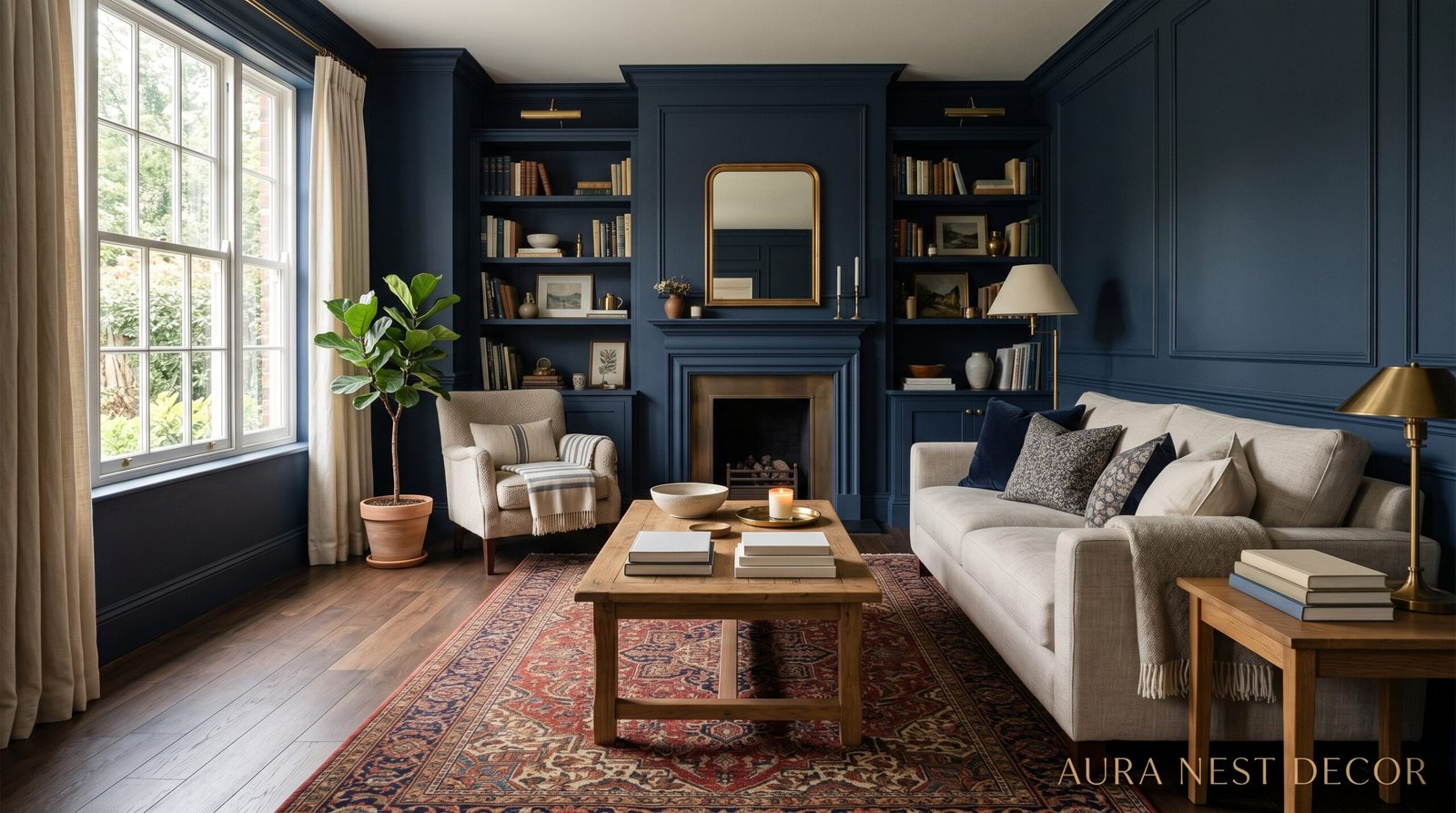
Think: clean lines from contemporary design sitting next to a fireplace with an ornate mantel. A neutral linen sofa with cabriole legs. Wood panelling — the kind that looks like it’s been there for a hundred years — painted in a colour that’s unmistakably right now. The bones of the room are classic. The way it’s been put together? That’s current.
What I love about it is that it doesn’t ask you to throw everything out. You don’t have to gut your living room. A lot of people start with a traditional space and just… stop apologizing for it. They lean in. They add a sculptural table lamp that looks slightly too modern for the room, and somehow that one thing makes the whole space feel intentional instead of dated.
The British design scene has been living in this space for years — Farrow & Ball colours on Victorian terracotta, Georgian cornicing in a room with a very plain, very contemporary sofa. Americans are catching up fast, and the results are genuinely beautiful.
It’s not a formula. That’s what makes it interesting.
“The best modern traditional rooms look like they’ve been accumulating slowly, not decorated all at once.”
2. The Paint Colour That Keeps Coming Up in Every Room I’m Obsessed With Right Now
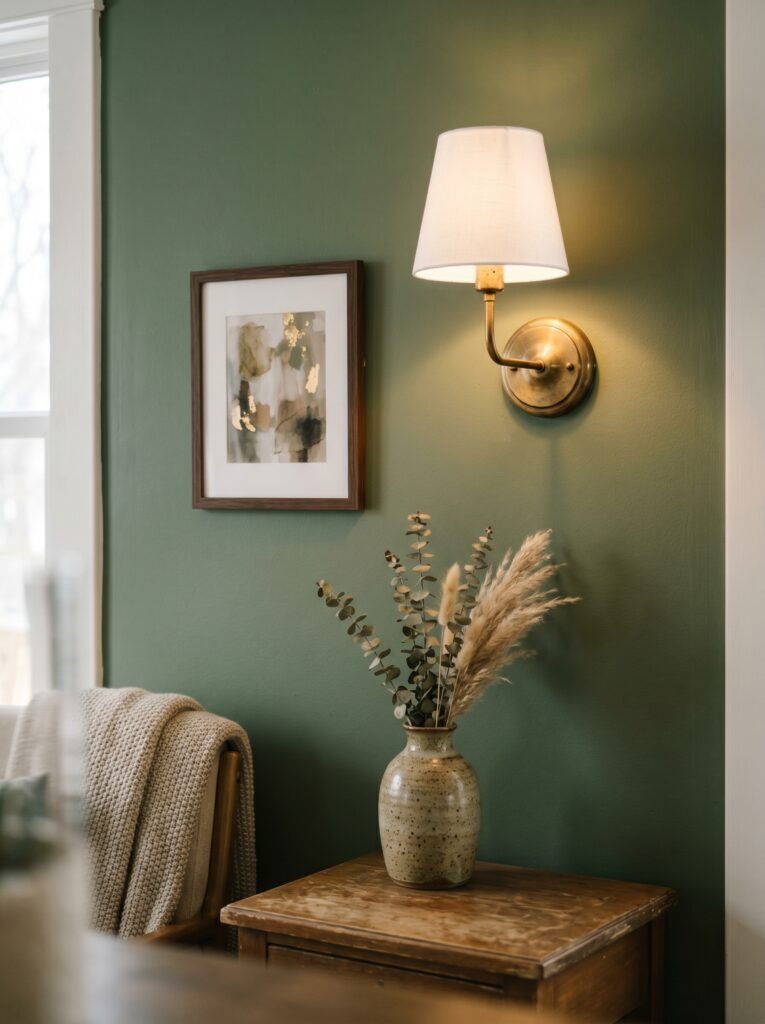
Not gonna lie, I’ve been down a rabbit hole of saved pins lately, and the same thing keeps appearing. Deep, warm, almost-dark wall colours. Not black. Not charcoal. Something in between — rich forest greens, warm tobacco browns, that particular dusty blue-green that looks completely different depending on the time of day.
These shades do something extraordinary in a traditional space. They make the room feel smaller in the best possible way. More contained. More theirs.
British homeowners have known this forever. A dark sitting room with low lighting and warm wood is basically its own category of cosy. But what’s shifted is the way these colours are being paired now — with white plaster ceilings instead of painted ones, with unlacquered brass hardware, with curtains that are just one shade lighter than the walls and create this soft, envelope feeling when you pull them closed at dusk.
Farrow & Ball’s Studio Green, Railings, and Mole’s Breath get a lot of attention, and yes they deserve it. But if you’re in the US and want something similar without the import pricing, Benjamin Moore’s Newburyport Blue and Caliente are doing similar work. Dark, saturated, warm. Not cold, not clinical. The opposite of that.
Side note — light matters so much here. These colours look wildly different at noon versus 8pm. If you’re testing, test at the time of day you’re actually IN that room most. Always.
3. The One Furniture Move That Makes a Traditional Room Feel Current Without Losing Its Soul
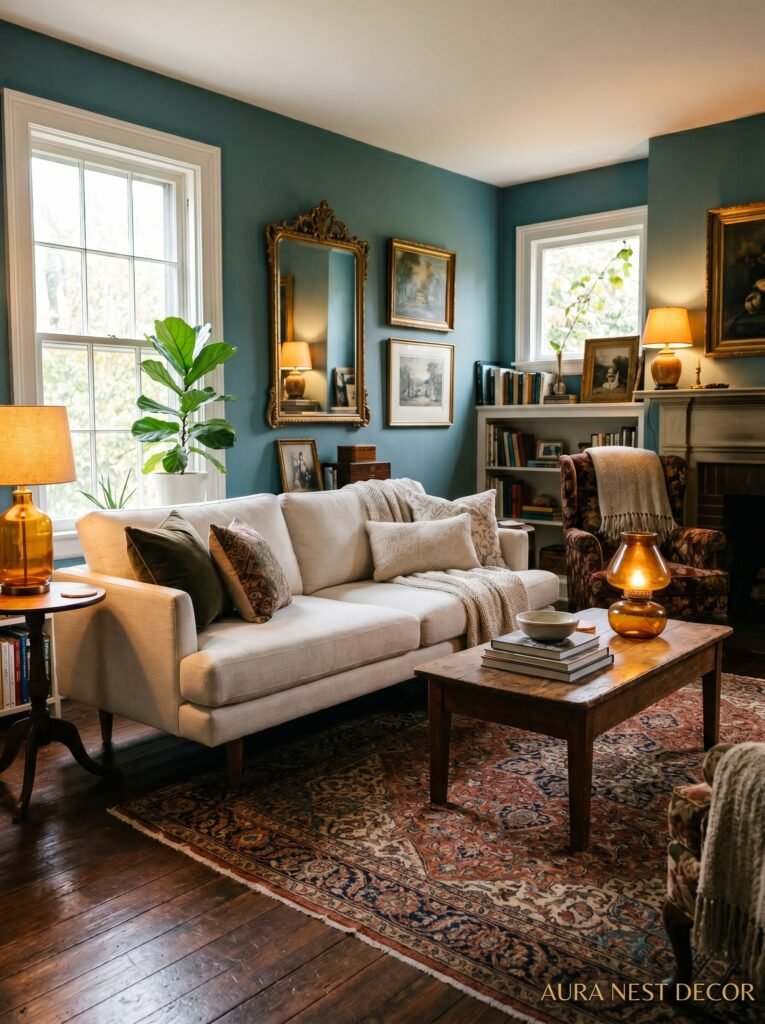
Here’s something I’ve noticed: the rooms that feel most alive in the modern traditional style almost always have one piece of furniture that doesn’t quite belong. On purpose.
A swooping curved sofa in an otherwise very upright, symmetrical room. A low, Japanese-influenced coffee table in a room with tall ceilings and heavy drapes. Or the reverse — a very structured, almost architectural accent chair placed in a room full of soft, rounded forms.
That friction. That’s the thing.
It sounds risky and it kind of is, which is maybe why I love it. You have to trust your instincts a bit. The safer route is to make everything match in period and proportion, and that produces a perfectly nice room that no one ever saves to their boards. The braver route is the one where you put your grandmother’s wingback chair next to a coffee table that looks like it came out of a design studio, and somehow the whole room sighs with relief.
Sofas with deep seats and low backs are doing a lot of heavy lifting right now. They look current without screaming “trend.” They read as modern next to an antique sideboard. And they’re actually comfortable, which, honestly, sometimes feels like a radical concept in beautiful rooms.
Don’t be scared of mixing eras. That’s what every interesting room in the world has in common.
4. Window Treatments That Look Like They Cost More Than They Did
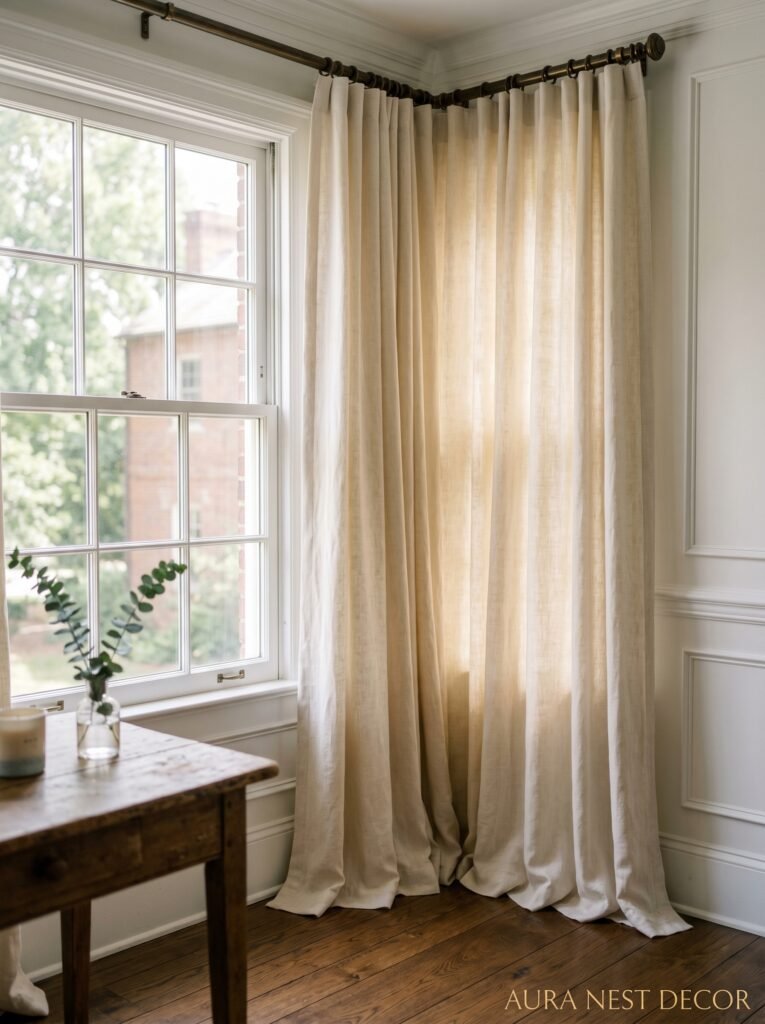
Curtains are where modern traditional either sings or completely falls apart. Bad curtains — too short, too sheer, too thin, hung wrong — will undo everything else you’ve done. Good curtains will make people think you had a decorator.
The current look is very specific: full-length, hanging from as close to the ceiling as possible, in a fabric that’s either very simple (linen, cotton velvet, plain wool) or very classic (a restrained stripe or a small-scale traditional pattern). No sheers underneath — or if you do want privacy, layer with a proper lining instead.
The key thing with modern traditional is that the curtain rod hardware matters more than people think. Unlacquered brass, matte black iron, or simple antique bronze finials all work. Brushed nickel or chrome? Not in this room. Too cold, too corporate feeling.
And the pooling. Oh, the pooling. Even a tiny bit of extra length — curtains that just barely kiss the floor or have a small break — changes the register of the whole room. It says: someone considered this. Someone wanted this room to have a certain feeling.
“Hang your curtains higher than feels normal. Then a little higher than that.”
5. Why the Fireplace Is the Most Important Object in the Room and Most People Are Styling It Wrong
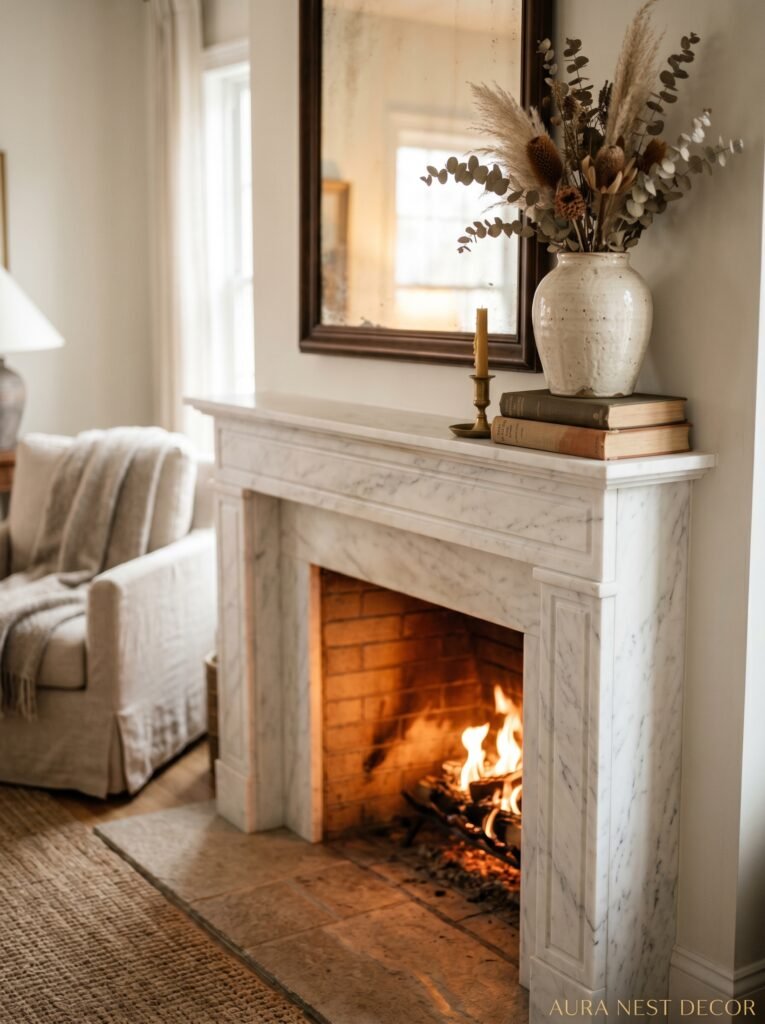
If you’ve got a fireplace, that mantel is the centrepiece. Full stop. Everything else in the room is in conversation with it.
The mistake I see most often — and I say this gently because I’ve made it too — is over-styling the mantel. Big symmetrical mirror, matching candlesticks on each side, a fern in the middle. It’s the default. It’s also kind of… done?
What actually works better is an off-centre arrangement. One large object — a painting that leans rather than hangs, an oversized clock, a single dramatic piece of ceramic or stone — placed to one side. Then a small grouping on the other, slightly lower, slightly looser. It feels considered but not staged. Like you put it there on a Tuesday and liked how it looked so it stayed.
Vintage and antique objects are brilliant on mantels because they have weight and history. A stone or terracotta bust. A candlestick that’s clearly been somewhere. Books laid on their sides. These things ground the whole room.
And please — if you’ve got an original Victorian or Georgian fireplace surround, don’t paint it white. Or don’t, I don’t know your life. But dark marble or the original stone left as-is reads so much better in 2025 than the white-painted-everything approach.
6. The Lighting Situation That Actually Makes a Room Feel Cosy (Not Just “Ambient”)
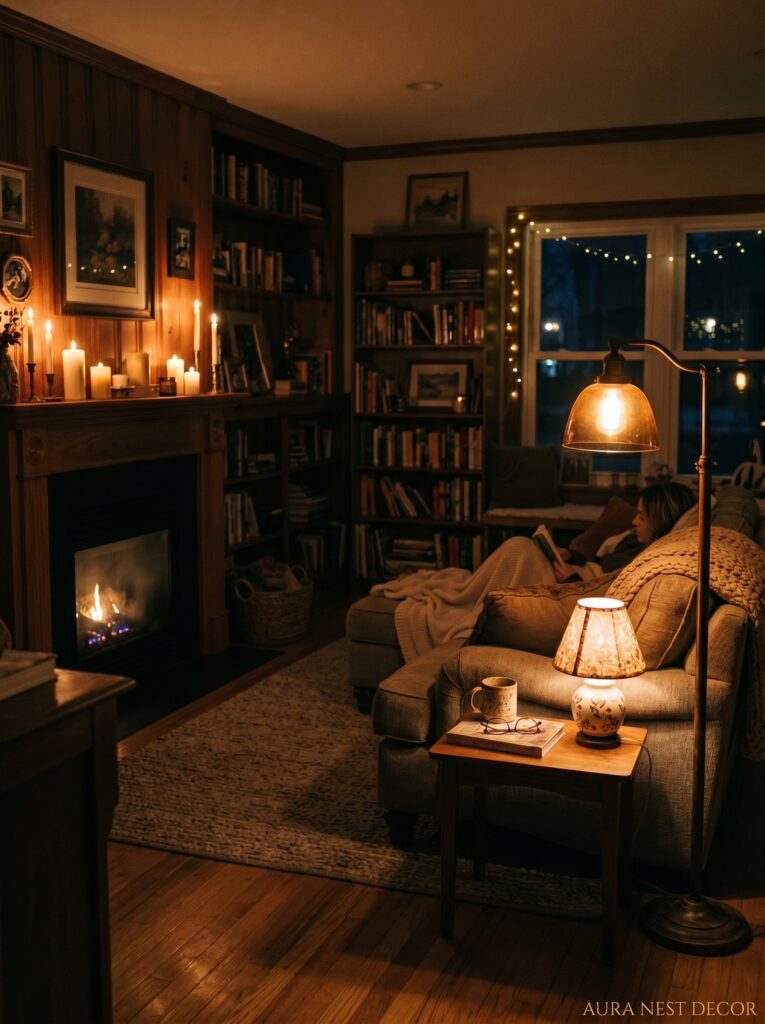
Here’s something nobody tells you: cosy isn’t about having soft lighting. It’s about having NO overhead lighting.
Okay, that’s slightly extreme. But the rooms that feel genuinely warm and welcoming almost always have their main overhead light turned off, and instead run off a combination of table lamps and floor lamps at different heights. The light sources are lower. They’re closer to people. They’re pointing at things — a painting, a bookshelf — rather than flooding down from above.
In a modern traditional living room, you want light that has colour. Not just warmth on a dimmer (though dimmer switches are non-negotiable, just get them, I’m serious). An antique brass table lamp with an off-white shade throws a completely different quality of light than a ceramic lamp with a drum shade, even at the same bulb temperature. The first one feels like a rainy Sunday. The second one is fine.
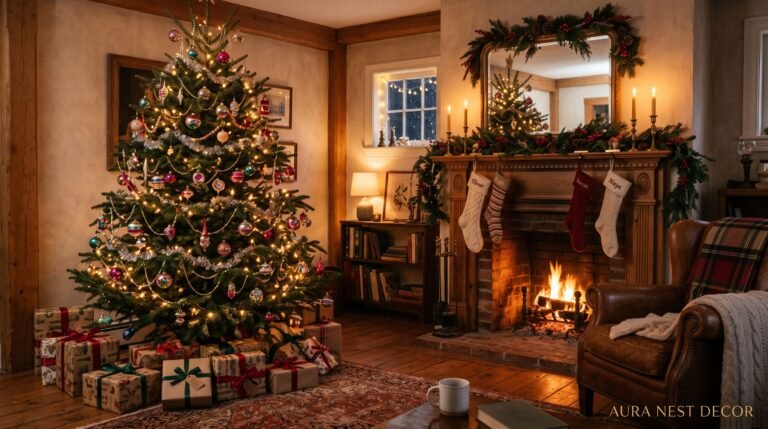
Firelight, when you’ve got it, does things no lamp can match. That flicker. The way it makes everyone in the room look slightly mysterious. You can sort of approximate it with candles and I do, very aggressively, all winter long.
Edison bulbs, by the way — I still love them. I know they’re “over” apparently but the amber glow of an Edison bulb at 7pm in a dark-walled room? Over nothing.
7. Rugs That Make the Whole Room Make Sense
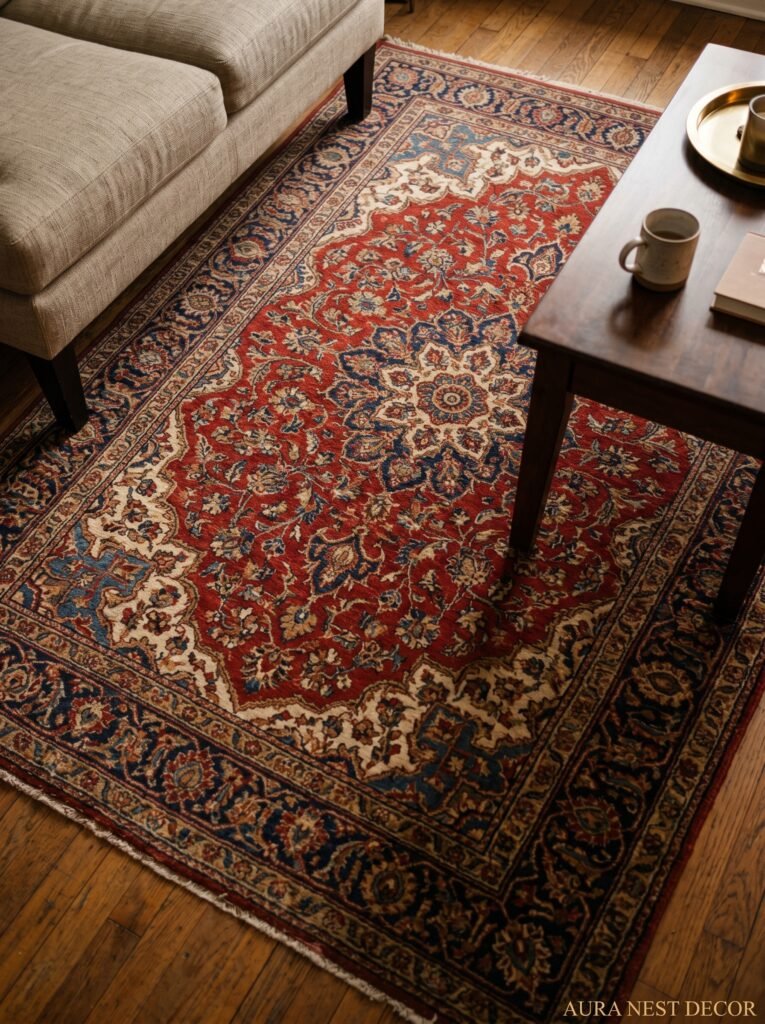
The rug is doing more work than any other element in a modern traditional room. It’s the thing that ties the contemporary pieces to the classic ones. Get it wrong and the room feels pulled apart. Get it right and suddenly everything looks like it was always meant to be together.
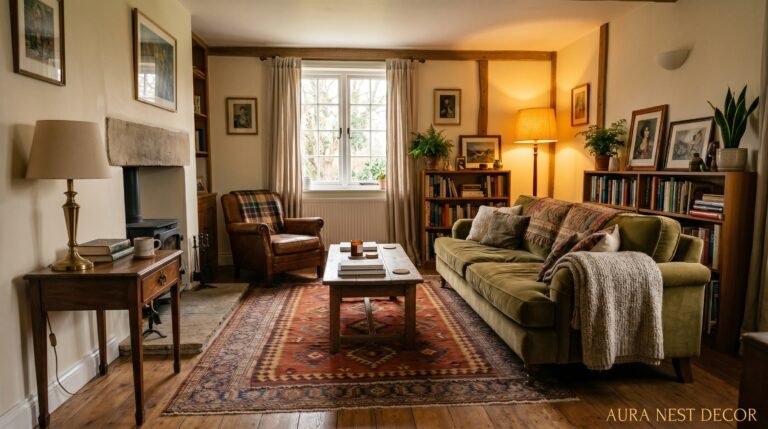
Persian and Turkish-style rugs are everywhere right now and they genuinely work. Not the bright, almost-new-looking versions — the faded ones. Worn in the middle. The kind with a bit of history. You can find reproductions that do this beautifully if originals are out of budget, and honestly at the right pile height they’re hard to tell apart.
But here’s the thing that doesn’t get said enough: a plain rug in a very specific shade can do just as much. A deep moss green wool rug. A caramel-coloured jute with a subtle texture. These anchor a room without fighting with the other patterns. And in a modern traditional space where you’ve already got a patterned cushion and a striped curtain, a simple rug is sometimes the most sophisticated choice in the room.
Size matters. Always go bigger than you think. The rug should be under the front legs of every piece of furniture in the seating area, at minimum. A small rug floating in the middle of a big room is one of the saddest things in interior design. I don’t make the rules.
“A rug that’s too small is just an expensive mistake in the middle of your floor.”
8. The Bookshelf Styling Approach That Feels Lived-In Without Looking Like a Mess
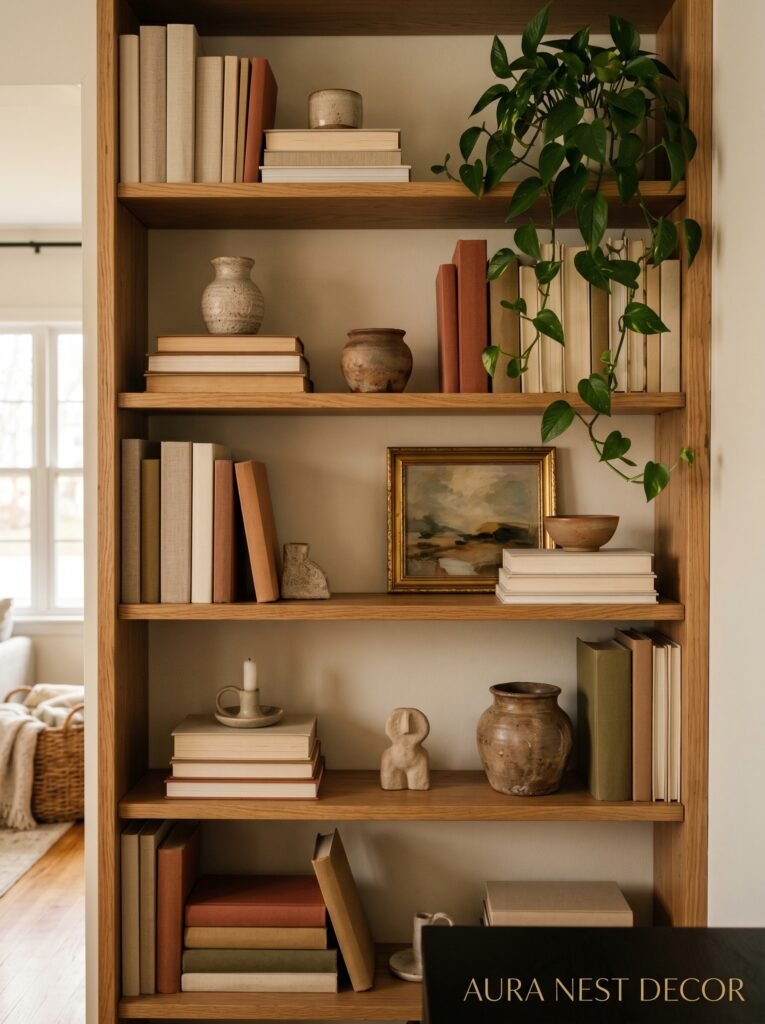
Books first. Always books first. Because a bookshelf styled primarily with objects and very few books looks like a set. It looks like someone who doesn’t actually read lives there, which is maybe true and none of my business, but it reads wrong in a traditional space.
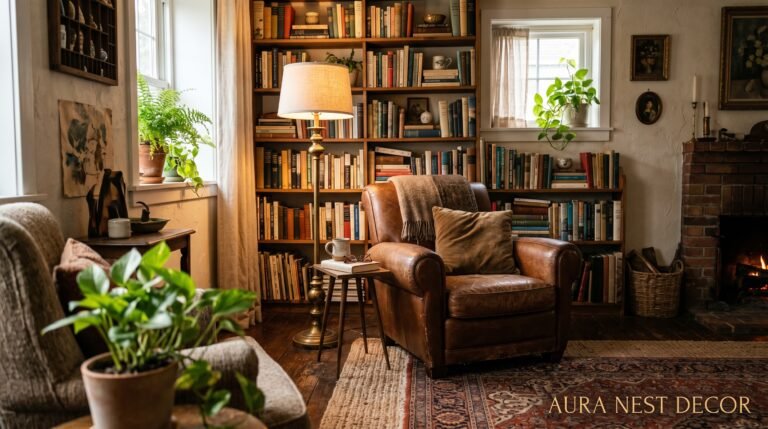
For modern traditional, the shelves should have real books — mixed sizes, some turned spine-in if you want the calm neutral look, some facing out if they have beautiful covers. Then objects between and around them. Not too many objects. The restraint is the point.
Odd numbers. Small groupings of three or five — wait, no, I said no three-item lists. Let me try again. Groups of objects feel better when they vary in height and texture and come in odd numbers. A tall vase, a short stack of books, something small and interesting on top of the books. That kind of layering.
Antique finds work brilliantly here. A marble egg. An old magnifying glass. A small framed print that’s slightly too small for the wall but perfect on a shelf. Don’t be precious about it — the shelf should evolve, things should move around, it shouldn’t feel finished.
9. Cushions and Throws: How to Layer Without Looking Like a Pinterest Cliché
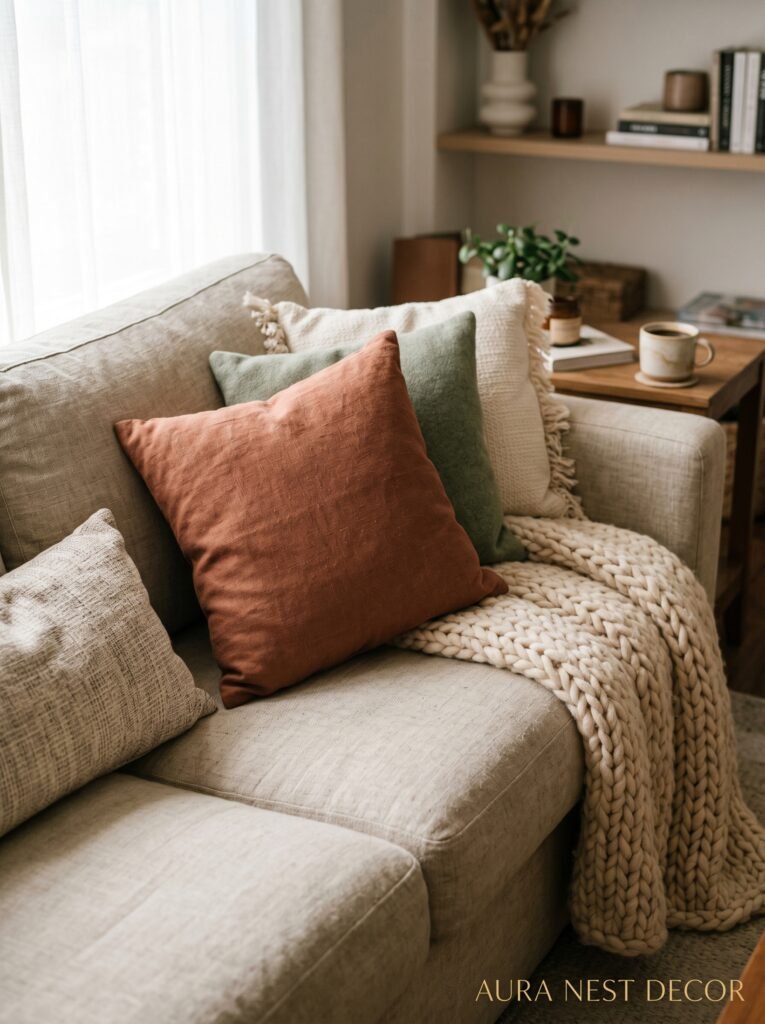
Okay this is where I have strong feelings. The throw-casually-draped-over-the-arm-of-the-sofa-at-a-perfect-angle look is done. We’ve all seen it. We all know it took seventeen attempts to look effortless. It doesn’t feel authentic anymore.
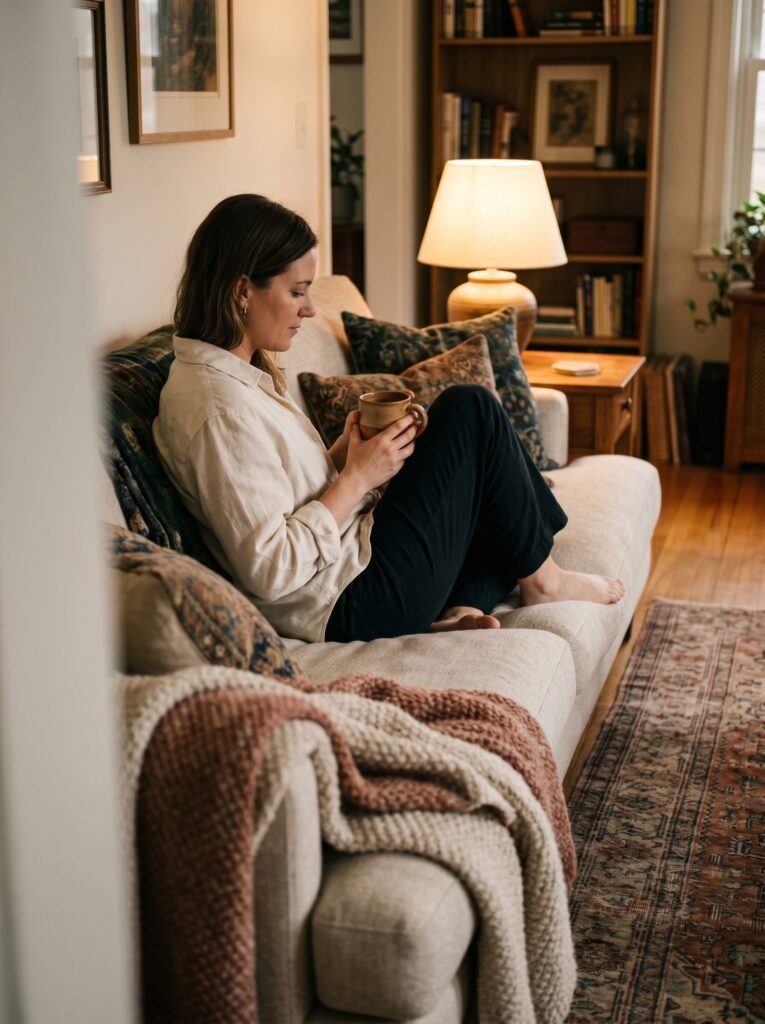
What feels right now is a throw that’s actually folded. Neatly, slightly imperfectly, sitting in the corner of the sofa like it was used last night and folded up this morning. That’s actually cosy. That’s a room someone lives in.
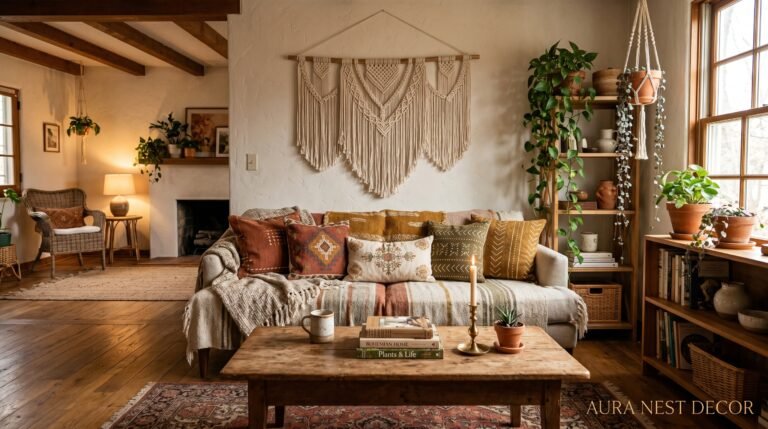
For cushions, texture is everything. A linen cushion and a velvet cushion and a woven one all catch light differently and that variation makes a sofa look rich without being fussy. Avoid matching sets. Avoid the word “coordinate” when shopping for cushions. You want things that get along but don’t match — like friends, not uniforms.
Proportions matter too. Two large cushions (around 22-24 inches) at the back, one or two smaller accent cushions in front. Don’t stack more than you can comfortably sit on the sofa. A sofa that’s so cushioned you can’t actually use it is just furniture you’re maintaining.
10. How to Bring In Traditional Architectural Details Without Buying a New House
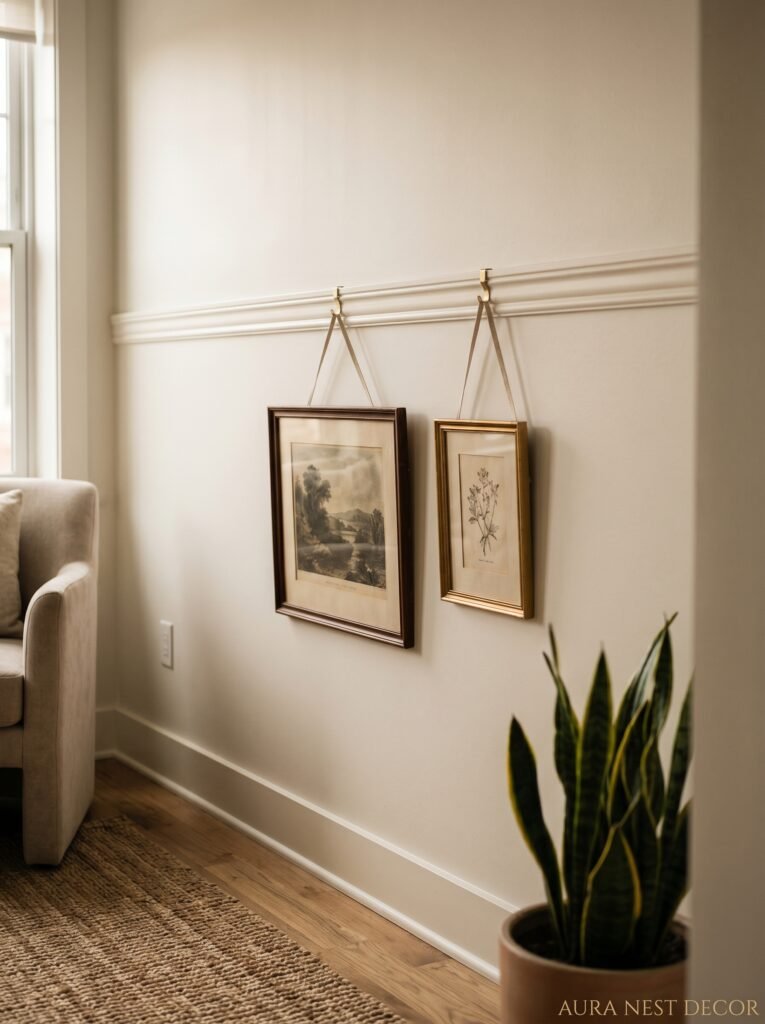
This one’s for the people in newer builds — or anyone whose flat doesn’t have the original Georgian cornicing and panelled walls. Because you can absolutely fake it.
Peel-and-stick dado rail moulding is better than it used to be. So are picture rails, panel moulding kits, and simple wooden battens painted the same colour as the wall to create a Shaker-style panelling effect. These details make a box room feel like a proper room. They give walls character and shadow and something to look at.
Ceiling roses and cornicing are available in lightweight plaster alternatives and are genuinely hard to distinguish from originals when painted. If you’re renting, some of these can even be installed temporarily with appropriate adhesives.
In American homes, adding simple board and batten to a plain wall can shift the entire feeling of a room from “new build neutral” to “thoughtful and considered.” Especially when painted in that dark, saturated shade we talked about earlier. The contrast between the moulding and the wall disappears and you just get this beautiful depth and texture.
It’s the kind of thing that makes people say, “Was this room always like this?” Which is exactly what you want them to say.
11. The Small Objects That Make a Room Feel Like It Belongs to Someone
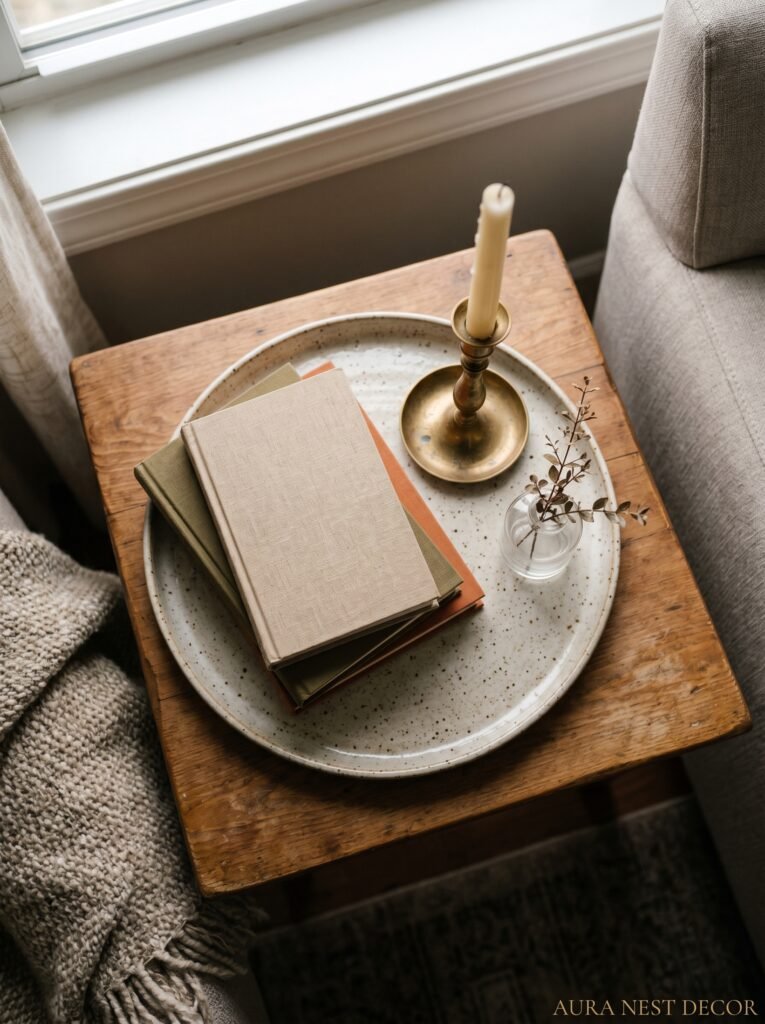
Design is the big stuff — architecture, furniture, colour. But character is the small stuff. And this is where modern traditional living rooms either feel genuinely personal or feel like a very convincing showroom.
Ceramics are doing so much of this work right now. A handmade vase with an uneven glaze. A small bowl that someone brought back from somewhere. These aren’t precious or expensive necessarily — they just feel made by human hands and that matters in a room full of manufactured things.
Books left open. A candle that’s been burned. A plant that’s not completely symmetrical. These are signals that someone lives here, not someone performs living here. There’s a difference and rooms know it.
Don’t buy all your accessories at once. That’s my biggest advice here. A room that’s been accessorized in one shopping trip always reads that way. Give yourself permission to leave things empty and fill them slowly with things that actually mean something.
12. The Room That Feels Like a Hug — How to Get the Layered Cosy Effect Without Overdoing It
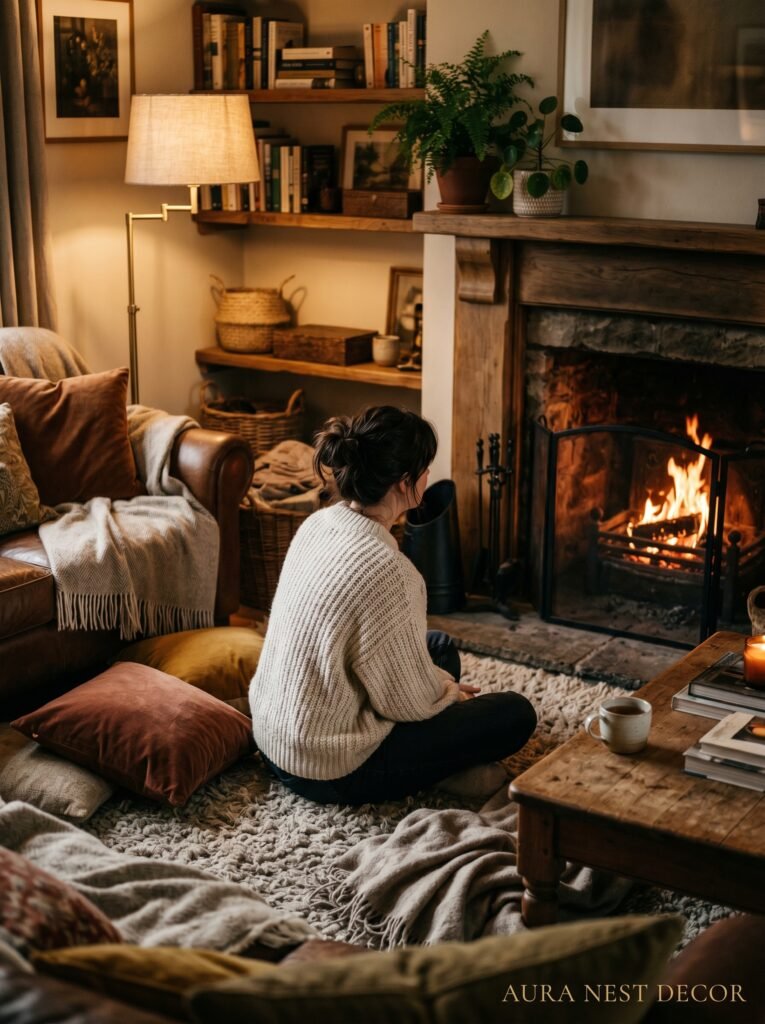
So all of this comes down to one feeling: you want to walk into your living room and immediately feel like the outside world got quieter. That’s cosy. Not just warm, not just pretty. Quieter.
The way to get there without overdoing it is restraint plus texture. You’re not cramming every surface. You’re choosing fewer, better things and making sure they feel varied against each other. Smooth stone next to rough linen. Dark walls next to pale wood. A very simple sofa next to an ornate mirror.
And then the softness. Rugs, curtains, throws, cushions — these are the room’s acoustic panels, basically. They absorb sound and they absorb anxiety. A room with all hard surfaces and no fabric is a room that echoes, and echoing rooms feel unsettled.
The perfect modern traditional living room isn’t achieved in a weekend. It kind of can’t be. It’s the result of small decisions made over months, things kept and things given away, and a growing confidence in trusting what feels right over what looks correct on a mood board.
That’s what makes it worth it.
—
❓ FAQ
Q: What’s the difference between modern traditional and transitional decor? A: Transitional leans heavily neutral — it splits the difference between modern and traditional without fully committing to either. Modern traditional is more confident. It lets classic elements (ornate details, heritage colours, antique objects) be themselves, and adds modern pieces as a counterpoint rather than a compromise.
Q: Can I do modern traditional in a small living room? A: Yes, and honestly small rooms are sometimes better for it. The dark walls that feel bold in a big room feel genuinely enveloping in a small one. Keep furniture lower and less bulky than you’d think, go tall with curtains, and don’t try to fill every surface — restraint works better in a small space than abundance does.
Q: How do I start if my living room is very plain and modern right now? A: Start with one traditional element and see how it feels. A Persian-style rug is the easiest entry point — it doesn’t require any commitment to anything structural. Then add a table lamp with an antique-feeling base. Those two things alone will shift the energy of the room more than you’d expect.
—
💭 Final Thoughts
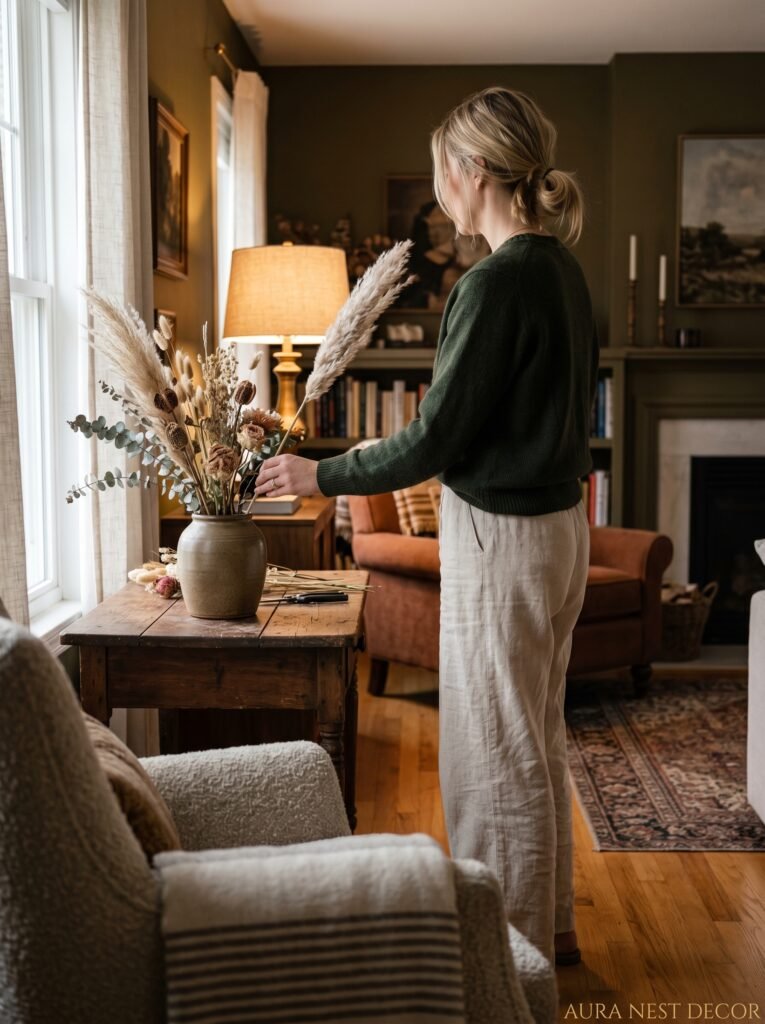
Modern traditional is, at its heart, about not throwing everything away in pursuit of something newer. It’s a way of decorating that believes old things and new things can share space — and that a room doesn’t have to choose between being beautiful and being liveable. There’s something deeply satisfying about that, especially right now.
The rooms I keep going back to on Pinterest aren’t the ones that look the most expensive. They’re the ones that look the most like someone’s actually there.
What’s the one piece in your living room you can’t imagine getting rid of?