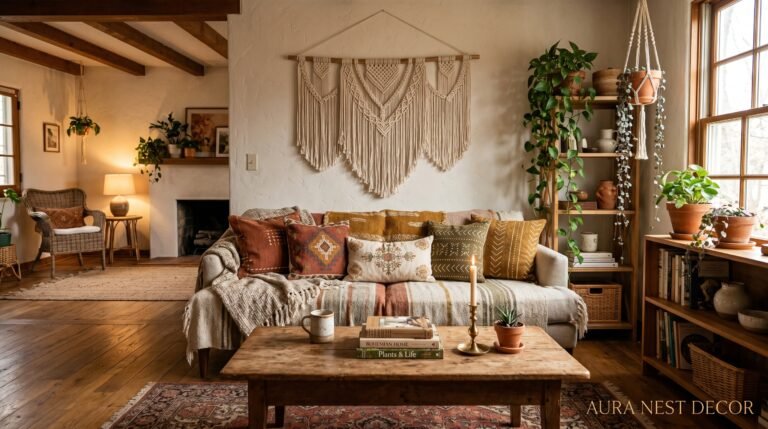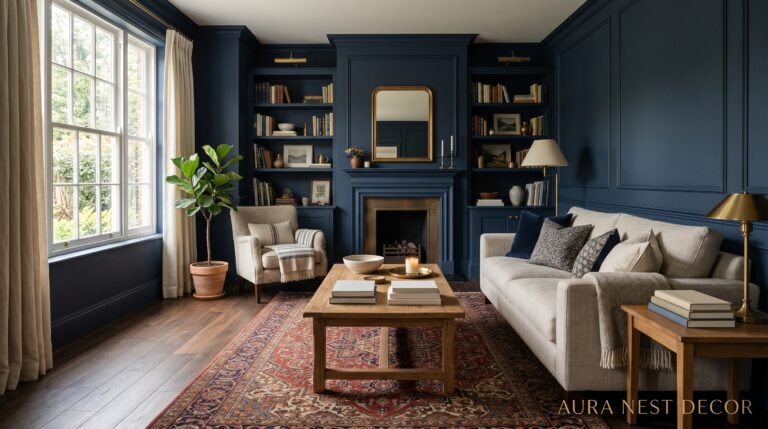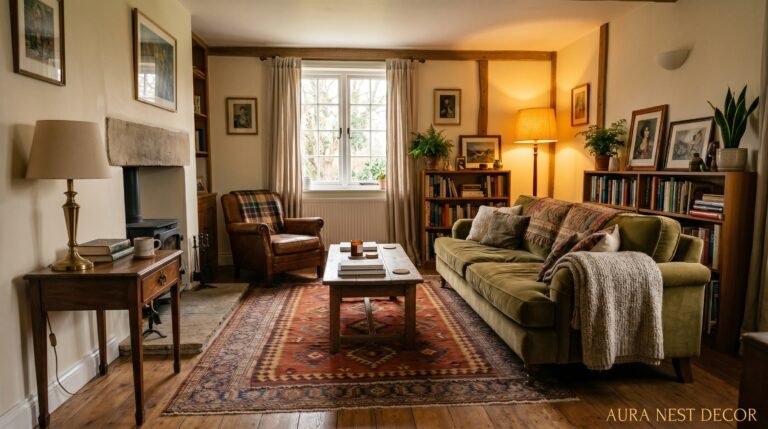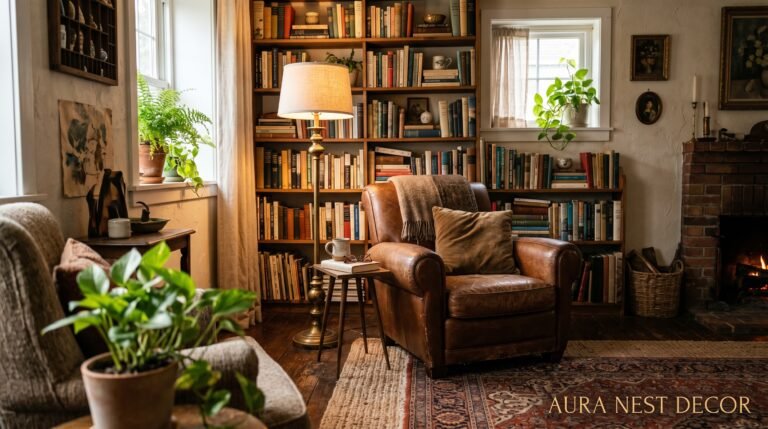
The Vintage Christmas Living Room That Actually Feels Like a Memory, Not a Mood Board
You know that specific feeling when you walk into someone’s house at Christmas and it just feels right? Not decorated. Not styled. Just — right. That’s what vintage decor does when it’s done well. And I’m going to show you exactly how to get there.
—
1. Why Vintage Christmas Hits Different Than Anything You’ll Find at Target This Year
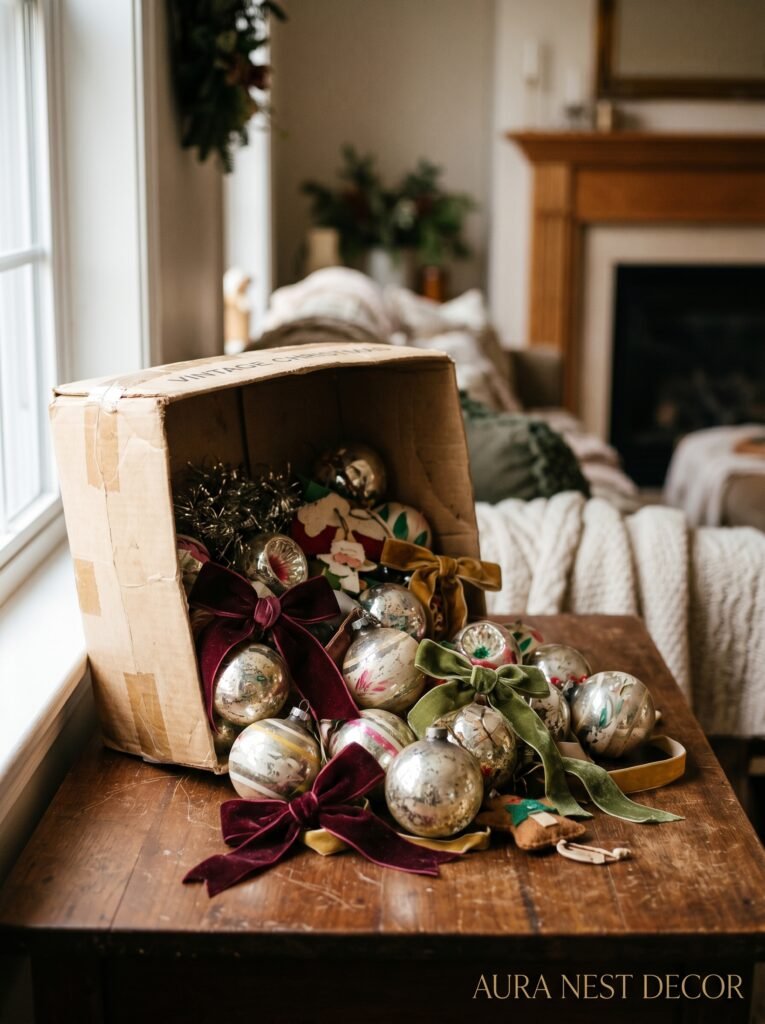
There’s something happening in living rooms right now that I find genuinely exciting. People are stepping back from the perfectly curated, matching-set Christmas aesthetic and reaching for something with a little more soul. Old blown-glass ornaments with the silver worn off in one spot. A wreath that looks like it spent forty years in someone’s attic. A Santa figurine that’s slightly terrifying and absolutely perfect.
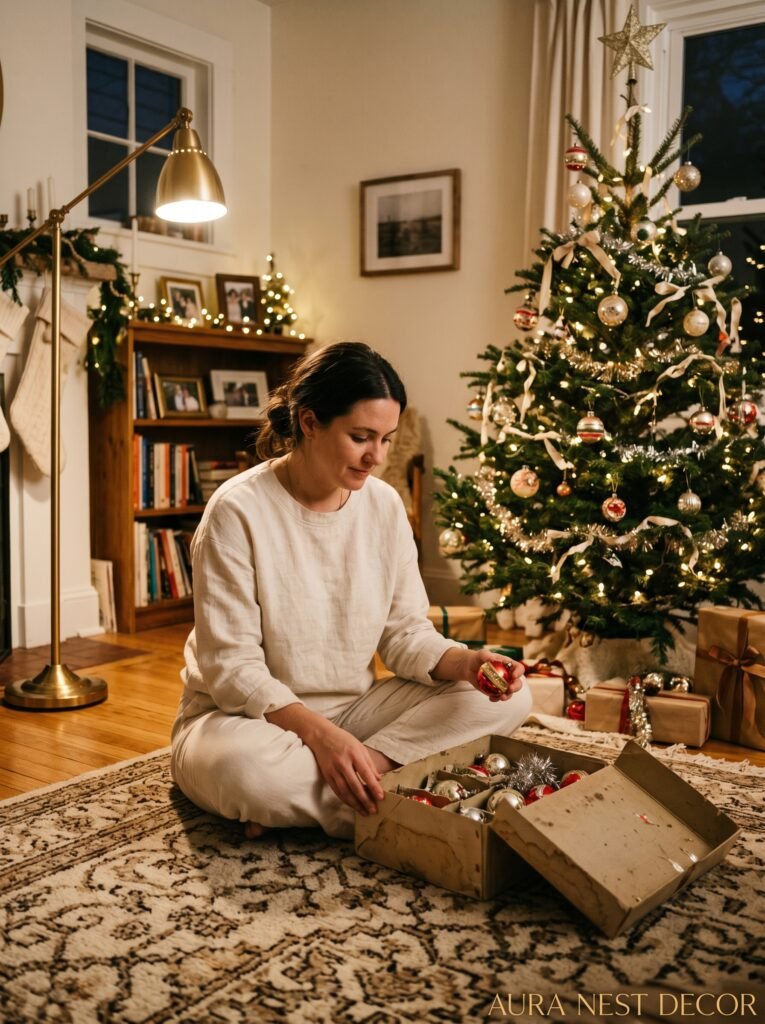
Vintage Christmas decor works because it carries weight. Not literal weight, though some of those old mercury glass pieces are surprisingly heavy. I mean emotional weight. When you place a spun-cotton ornament from the 1950s on a branch, you’re hanging someone’s whole Christmas morning on that tree. There’s a story already baked in, and your living room borrows it.
The secret that no one tells you: you don’t need authentic antiques to get this feeling. You need the language of vintage — muted colors, natural textures, imperfect finishes. Once you understand that, you can thrift, DIY, and mix freely without it ever looking cheap or random. The cohesion comes from the palette and the mood, not the price tag.
“Vintage Christmas isn’t a style. It’s a feeling with a specific vocabulary — and once you learn it, you can speak it anywhere.”
—
2. The Color Palette That Makes Every Vintage Living Room Look Like a 1950s Christmas Card
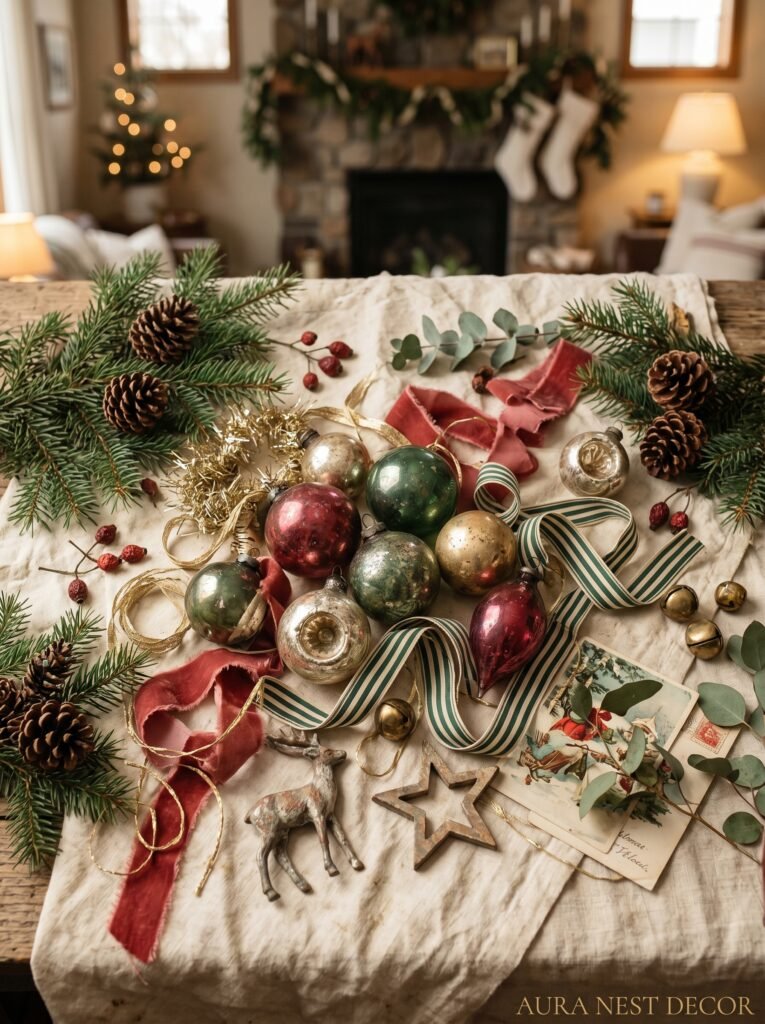
Here’s where most people go wrong. They grab “vintage-inspired” ornaments in red and gold and wonder why it looks like every other Christmas display. Real vintage Christmas had a completely different color story.
Think forest green. Deep, almost-black green, not the bright kelly green you see everywhere in November. Burgundy instead of red — like dried cranberries, like old velvet, like the cover of a hardback book. Cream and ivory rather than white. Dusty gold, not shiny gold. And then these beautiful, faded versions of colors that are slightly gray underneath — a dusty rose, a soft teal, an aged silver.
Add in the naturals: the warm brown of dried cinnamon sticks, the pale yellow of old beeswax candles, the chalky terracotta of old clay ornaments. British homeowners especially have this instinct already, I think — there’s something about that whole “Cotswolds at Christmas” palette that’s incredibly vintage-aligned without even trying. Americans sometimes have to give themselves permission to walk away from the bright red-and-green combo, but once you do, the whole room sighs in relief.
Don’t try to use all of these at once. Pick three or four tones, let them repeat throughout the room, and you’ve got your palette.
—
3. The Tree That Looks Like It Was Decorated Over Twenty Years, Not Twenty Minutes
This is the most important piece of the whole room and also the most fun to get wrong the first time.
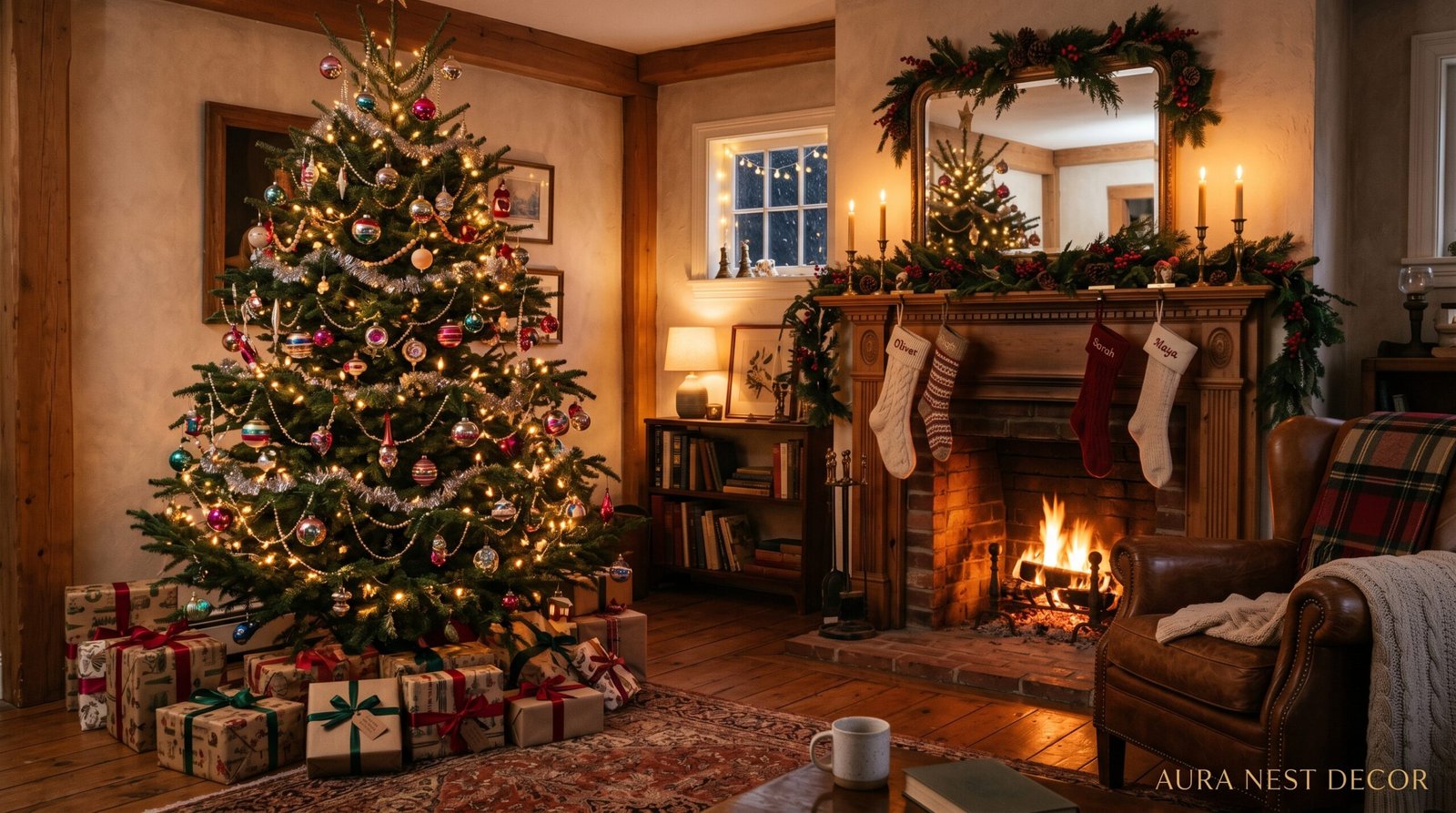
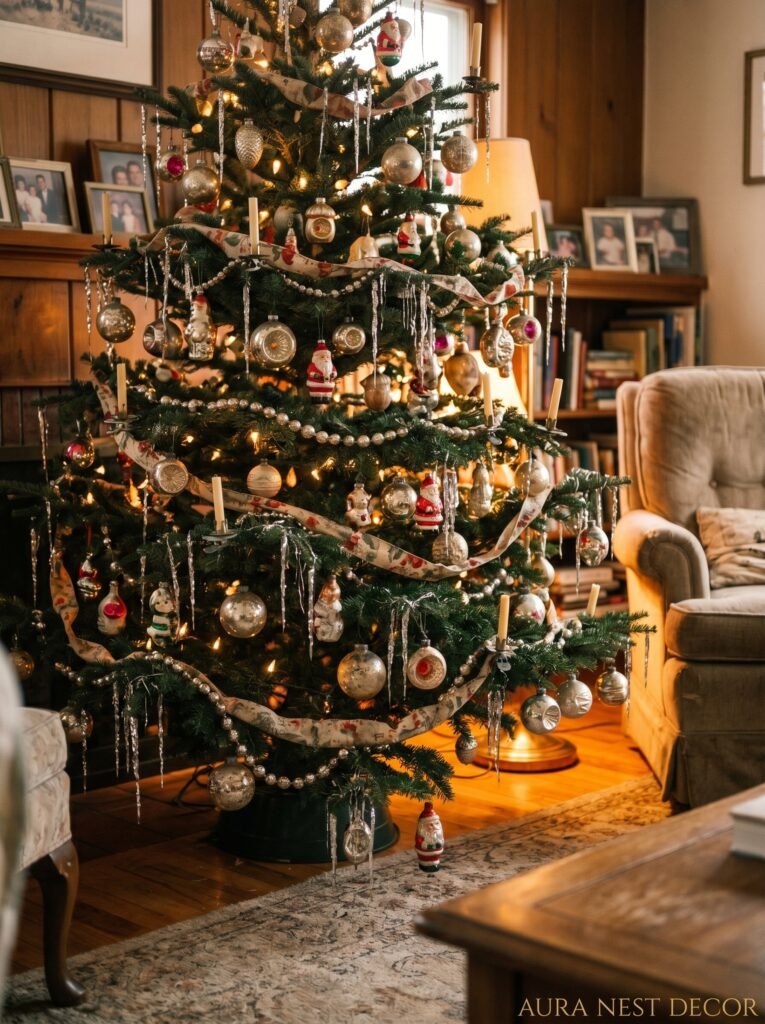
The goal isn’t a Christmas tree. The goal is a Christmas tree that looks like it has history. And that requires intentional imperfection. So: no matching ornament sets. None. If you walked into a vintage shop and bought twelve matching red satin balls, leave them in their little box. That’s not what we’re doing here.
Instead, you want a mix — different sizes, different materials, different eras. Some old glass ornaments with a slightly foggy finish. Some hand-knitted or crocheted ones if you can find them. Wooden shapes. A few little Shiny Brite-style striped ornaments, which you can still find at estate sales or on Etsy for very reasonable prices. Clip-on candle holders even if you never actually put candles on them. A few odd little vintage Santa or snowman ornaments that don’t match anything else. That mismatch IS the aesthetic.
For the tree itself: flocked is gorgeous for this look, especially a slightly uneven flock. Or a full green tree with visible gaps — trees in the 1940s and 50s weren’t full and perfect. Tinsel is non-negotiable for me. Not the thick modern icicles. The old thin silver kind that you drape strand by strand.
—
4. Lighting That Makes the Whole Room Feel Like a Candle Is Doing All the Work
Good lighting is doing ninety percent of the emotional heavy lifting in any cozy room. At Christmas, this is even more true.
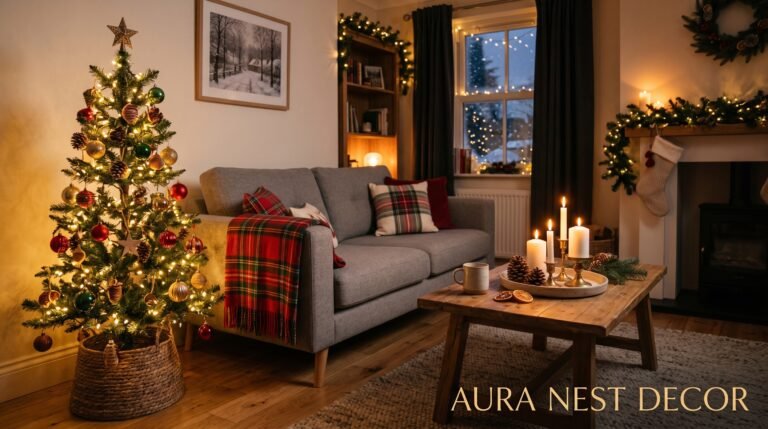
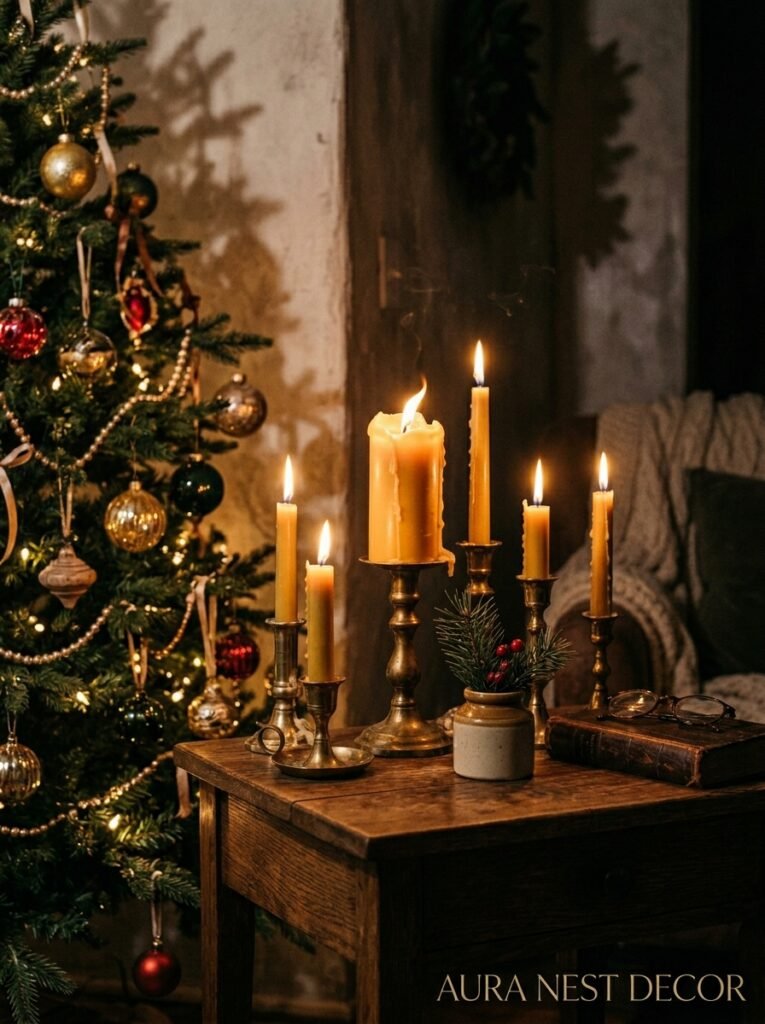
Vintage Christmas lighting means warm. Very warm. The amber you’re looking for is closer to candlelight than it is to “warm white” LED, which tends to read as slightly yellow in a cold way. Real candles are obviously the dream — and if you’re comfortable with them, use them everywhere. On the mantelpiece in old brass holders. In window sills in hurricane lanterns. On the table in advent arrangements.
But if candles aren’t practical (kids, cats, general chaos), battery-powered flicker candles have gotten genuinely good. The key is choosing ones with a warm amber bulb and a flicker setting, not a steady glow. Steady battery candles look fake. Flickering ones cross some threshold in your brain where it just reads as real enough.
“The difference between a Christmas room that photographs beautifully and one that FEELS beautiful is almost always the lighting. Almost always.”
String lights: I want you to go small. Tiny fairy lights, not the big globe Edison strings which, gorgeous as they are, don’t read as vintage. Look for rice lights or miniature lights with a warm gold tone. Weave them through a garland on the mantelpiece, tuck them inside a lantern, let a loose strand drape over a mirror frame. The point is warmth and scatter — little points of light everywhere that make the room feel like it’s glowing from the inside.
—
5. A Mantelpiece That Looks Like Someone’s Grandmother Actually Styled It (Meant as a Compliment)
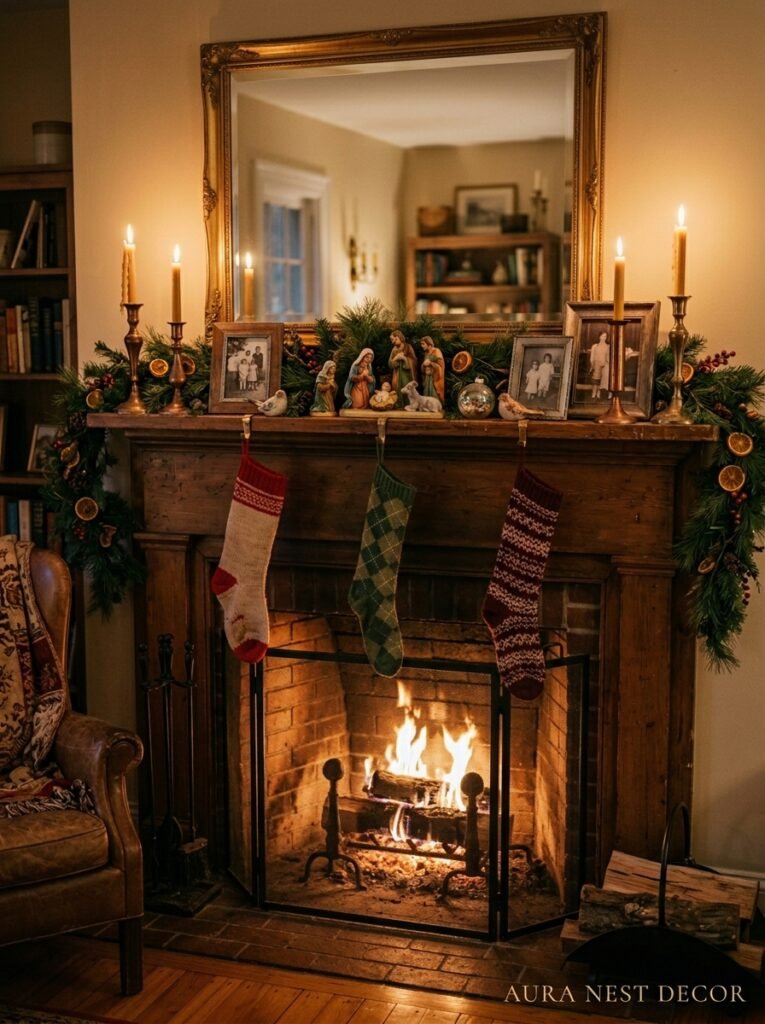
The mantelpiece is your hero moment. It’s the first thing people look at when they walk into a living room, it photographs beautifully, and it’s where you can go a little maximalist without it overwhelming the space.
For a vintage Christmas mantelpiece, I’d build it like this. Start with a real garland — fresh or very convincingly faux. Not a pre-lit LED garland. Something loose and imperfect, with visible gaps if it’s real, draped casually rather than pinned into symmetry. Layer in dried elements: orange slices, cinnamon sticks tied with twine, dried cranberries on a string, pine cones that you’ve maybe dusted with a tiny bit of fake snow spray.
Now the objects. A mix of heights is crucial. An old mercury glass vase or two. A vintage Santa or Father Christmas figurine — the more character on his face, the better. Old Christmas cards propped against the wall (your own family’s or estate sale finds, doesn’t matter). A few pillar candles in brass or old pewter holders. A small framed piece of vintage Christmas art, even just a postcard in a simple frame.
And then, somewhere in there, one thing that’s slightly unexpected. A small stack of old books with Christmas-adjacent titles. A single antique ornament hanging from the garland at eye level. A tiny sprig of holly in an old inkwell. The unexpected detail is what makes it look curated rather than assembled.
—
6. What Thrift Shops Actually Have Right Now (And What You’ll Never Find There)
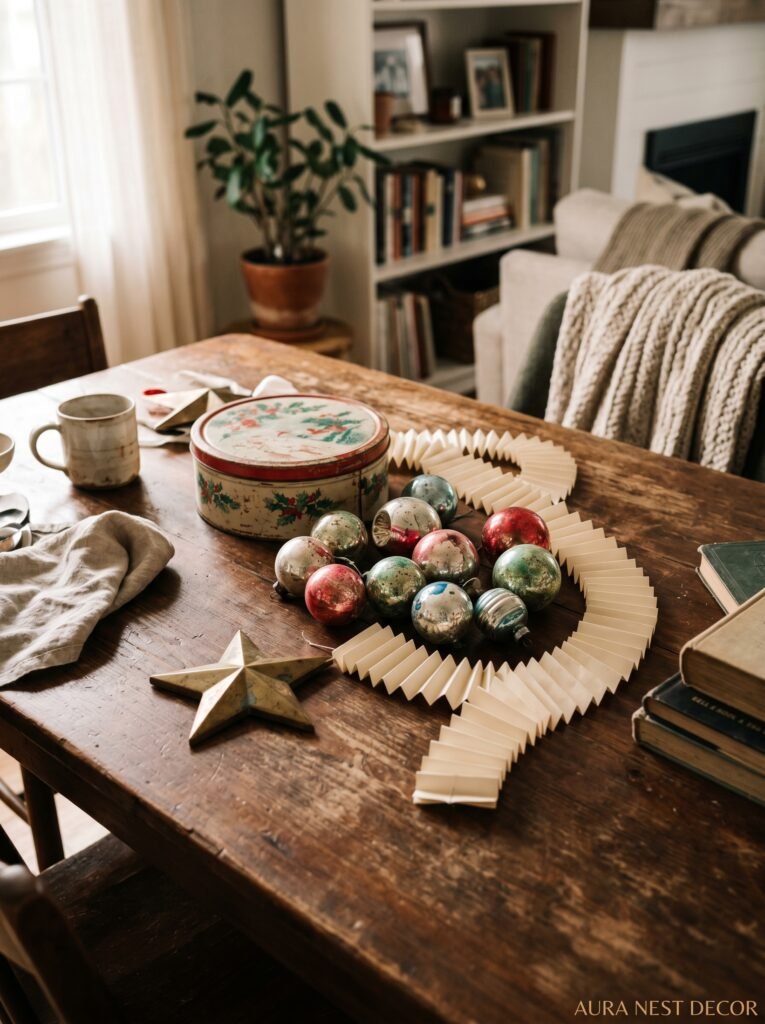
Let me be real with you for a second because I see so much advice about vintage decor that makes it sound like thrift shops are overflowing with perfect mid-century Christmas treasures. They’re not, at least not consistently.
What you WILL reliably find: brass candlesticks in every size, old tin trays and cookie tins with holiday graphics, wooden items (Santa figures, nutcrackers, ornament boxes), cotton batting or wool felt items from the 70s and 80s, vintage tablecloths and napkins in holiday prints, and ceramic mugs or plates with charming, slightly faded Christmas scenes. Also, quite often: old Christmas cards and wrapping paper, which are genuinely beautiful and useful.
What you probably won’t find without serious luck: original Shiny Brite glass ornaments in good condition, early 20th century spun-cotton ornaments, early celluloid items. Those have been picked over by dealers for years and they know what they’re worth.
So: go to thrift shops for the bones. Go to Etsy or specialist dealers for the hero pieces that anchor the look. And honestly? eBay still has incredible vintage Christmas lots, especially in September and October before the season hits.
—
7. The Unexpected Textiles That Make a Living Room Feel Like Christmas Has Actually Arrived
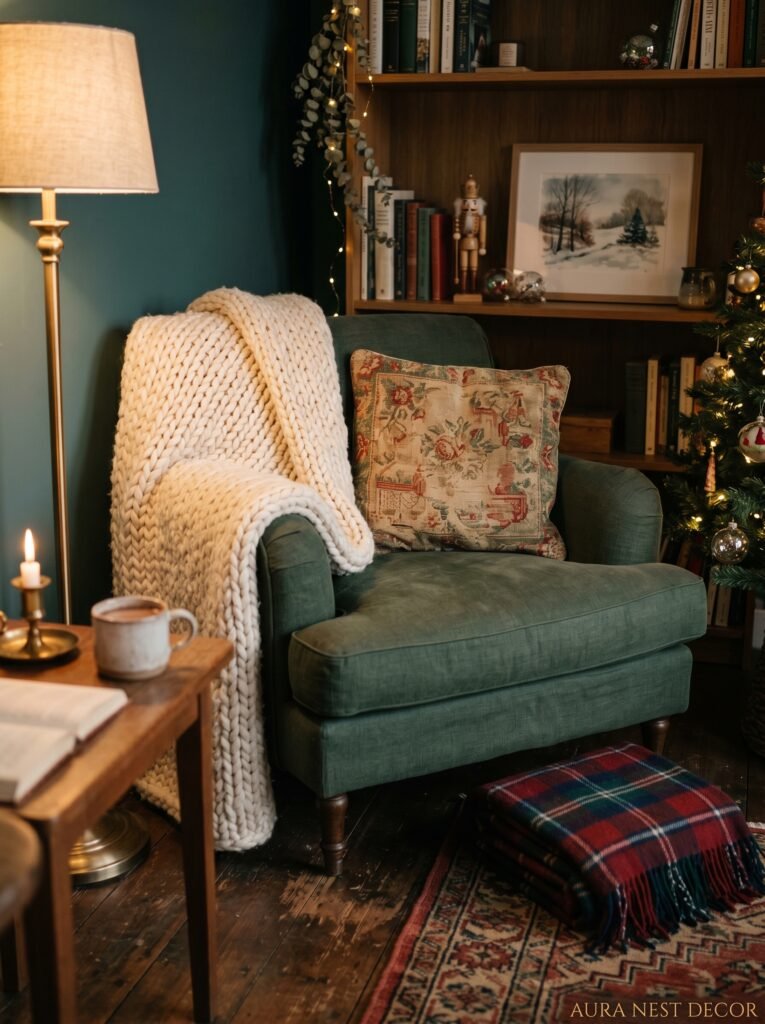
People obsess over ornaments and garlands but completely underestimate what textiles do to a room in winter.
Bring in every heavy, nubby, warm thing you own. Wool blankets. Velvet cushions — deep burgundy or forest green, obviously, but a dusty old gold velvet also fits this palette perfectly. A faux fur throw, honestly. Old quilts that have that slightly worn patchwork quality. And then, specifically for Christmas: embroidered or needlepoint cushions if you can find them, because nothing says vintage Christmas like a slightly amateur looking cross-stitched Santa or Christmas tree on a pillow.
“A pile of blankets on the sofa isn’t decoration. But three blankets in the right colors, folded just so? That’s your whole mood board in one corner.”
For curtains and windows: if you don’t have heavy curtains already, this is the time to put up temporary velvet drape panels. Even inexpensive ones add SO much visual weight and warmth to a room that would otherwise look cold and thin in December. Red or deep green velvet panels are extremely vintage Christmas. Don’t overthink it.
—
8. The One DIY That Looks Expensive and Takes About Twenty Minutes
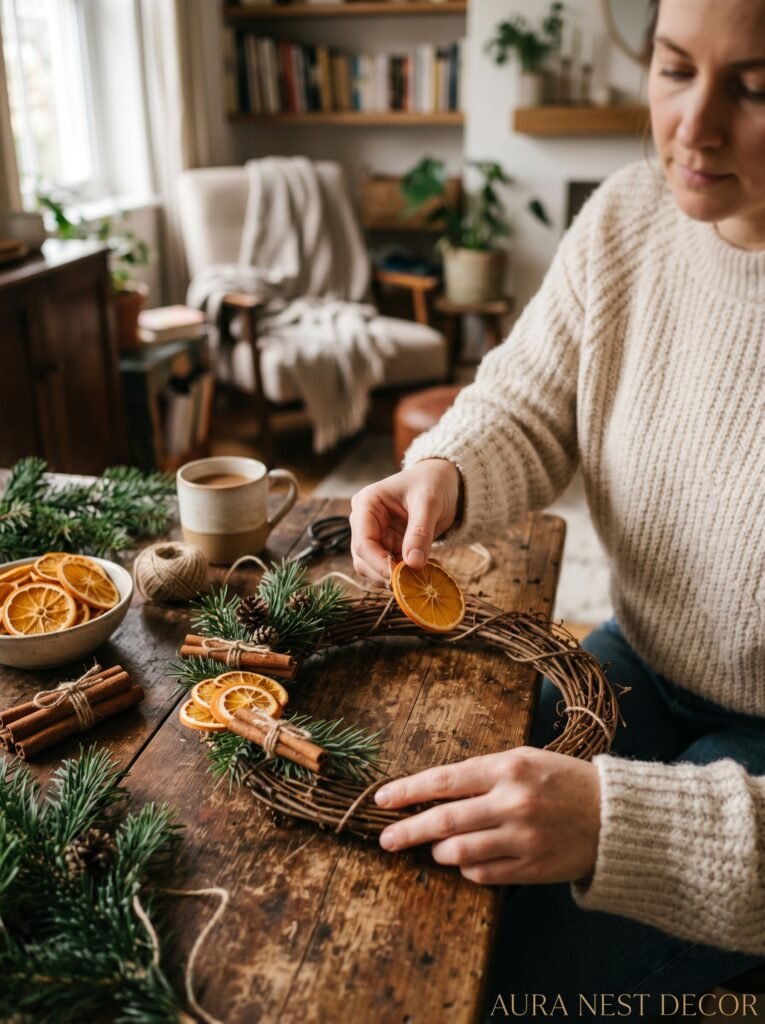
I’m not usually a big DIY person — I don’t have the patience for projects that require more than a trip to one shop and about half an hour. But this one I come back to every year because it genuinely looks incredible: a vintage-style bottle brush tree cluster.
You’ve seen bottle brush trees. Little flocked miniature trees that come in all different sizes. On their own, they’re sweet but a bit generic. Grouped together on a tray or a wooden board, mixed with a few vintage-looking accessories, they become this whole little scene that looks like it came straight from a 1955 department store display.
Get five or six in different heights — the variation matters. Stick to white, cream, and green rather than colored. Arrange them on an old wooden tray or a piece of slate. Scatter tiny deer or rabbit figurines between them, a few small mushroom ornaments if you can find them, maybe a vintage-style “Noel” or “Joy” sign. Add a small pile of fake snow around the bases.
That’s it. That’s the whole thing. It takes about fifteen minutes and photographs like you spent a weekend on it.
—
9. British vs. American Vintage Christmas: The Tiny Differences That Actually Matter
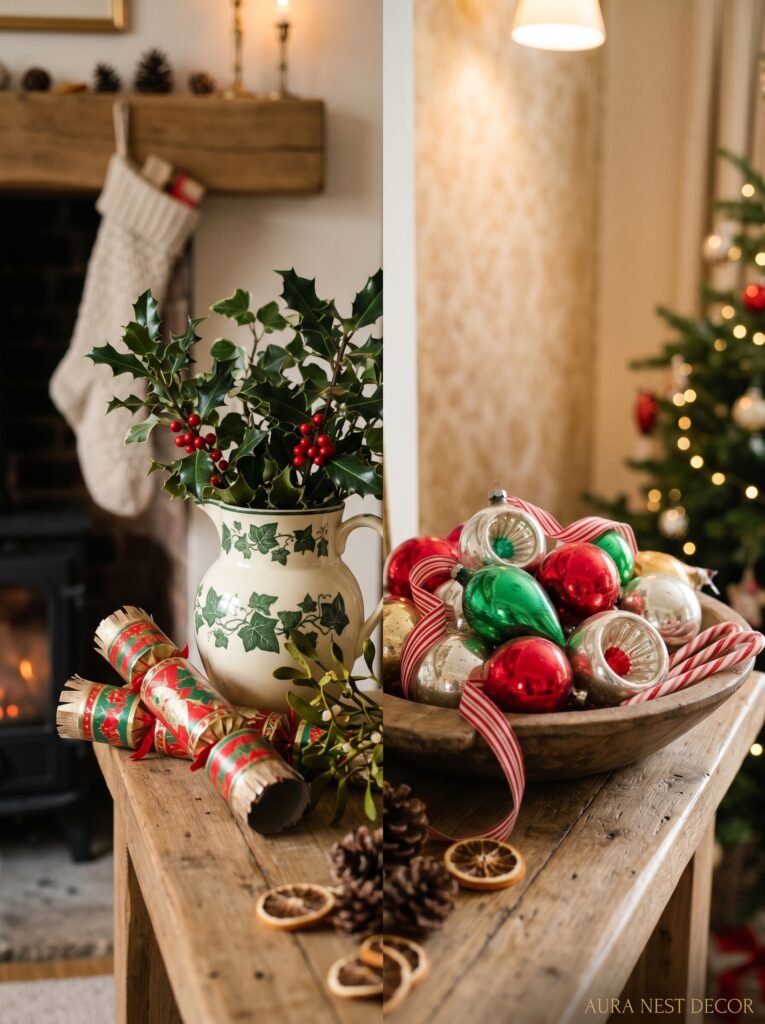
Not gonna lie, I find this genuinely fascinating. British and American vintage Christmas traditions draw from slightly different visual wells, and if you’re going for a specific era feel, it’s worth knowing.
American vintage Christmas, particularly mid-century, is heavier on Shiny Brites, aluminum trees, bubble lights, and a slightly more commercial, candy-colored aesthetic. Think Coca-Cola Santa, big department store windows, Life magazine covers. Bright, cheerful, optimistic. 1950s America-at-Christmas energy.
British vintage Christmas is darker, in the best way. Deeper colors. More Father Christmas rather than Santa — that long-robed figure with a more mysterious quality. Robin redbreasts on everything. Holly and ivy in serious quantities. Crackers on the table. A heavier, older, almost Victorian undertone even in post-war British Christmas imagery. Think old Woolworths decorations, old John Lewis adverts before they existed, old Royal family Christmas cards.
Both are gorgeous. Both work in the same room if you let them. But if you’re leaning into one or the other, knowing the difference helps you make more intentional choices when you’re shopping.
—
10. The Smell You’re Completely Forgetting About
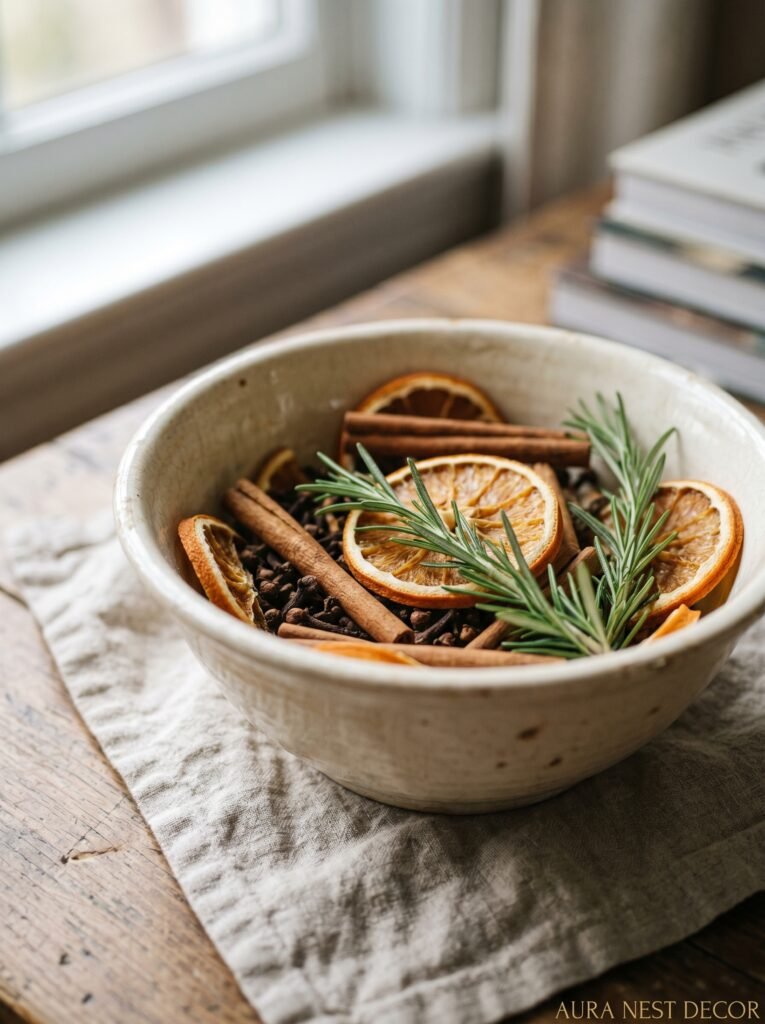
I’m going to say something and I want you to sit with it for a second: you can style the most beautiful vintage Christmas living room in the world and if it smells like nothing or, worse, like a Yankee Candle “Christmas Cookie” scent, the whole effect is partially lost.
Smell is doing invisible decorating. This is just true.
For vintage Christmas, you want: beeswax candles, which have a faint honey smell that is completely unlike paraffin. Clove and orange. Cinnamon. Real pine, from fresh greenery or a real tree if you have one. A wood fire if you’re lucky enough. Old books, sort of — I know that sounds odd but a warm, slightly dusty note in a scented candle reads subconsciously as “old” and “library” and “memory.”
Make a stovetop simmer pot while you’re decorating: a few cinnamon sticks, orange peel, cloves, and a star anise in a pot of gently simmering water. Your house will smell like Christmas 1962 in about ten minutes. It costs almost nothing.
—
11. The “Too Much?” Question and How to Actually Answer It
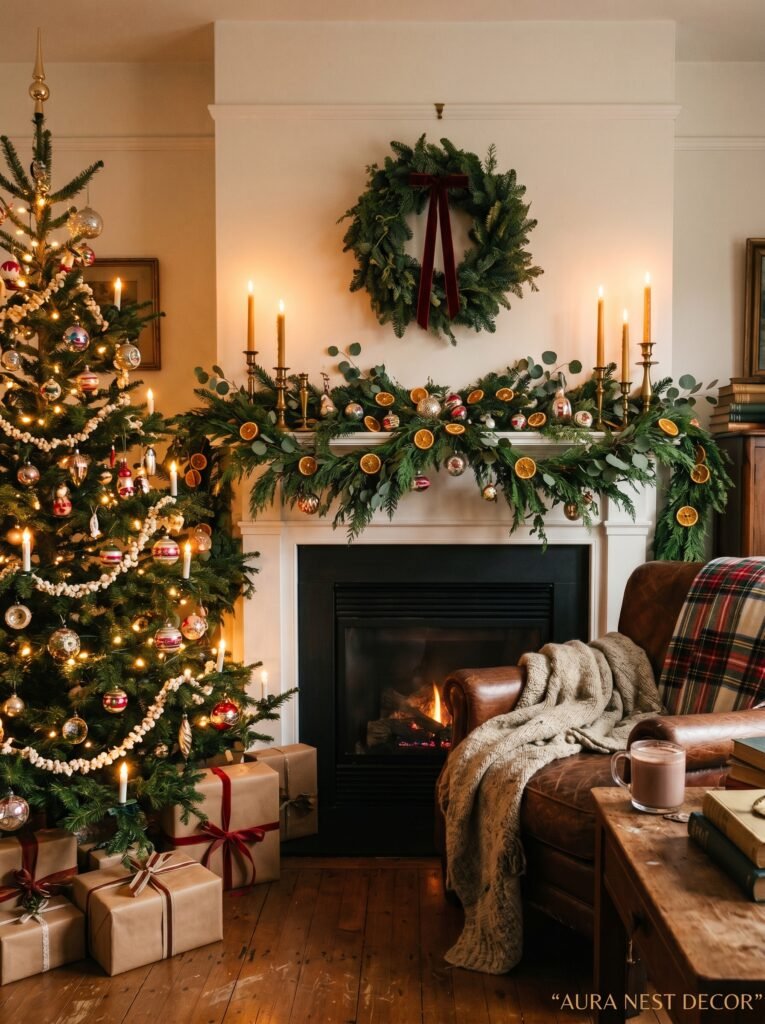
At some point when you’re decorating, you will step back and think: is this too much? And I want to give you a real answer, not a “trust your instincts!” non-answer.
Here’s the honest rule I use. If everything in the room is competing equally for attention, it’s too much. If there are clear heroes and supporting elements — the mantelpiece is the hero, the tree is the co-star, everything else is the ensemble cast — it’s probably fine even if it looks full.
The other thing that makes a full room work versus a chaotic room: repetition. If your burgundy shows up on the cushions AND in the ornaments AND in the garland berries AND in the candle holders, all that burgundy creates a visual through-line that holds chaos together. A room with twelve things in twelve different colors will always look like too much. A room with twelve things that share a color story will look curated.
So the answer to “too much?” is almost always: not too much, just not enough repetition.
—
12. The Corner Literally Everyone Overlooks (And How It Becomes the Most-Photographed Spot in Your House)
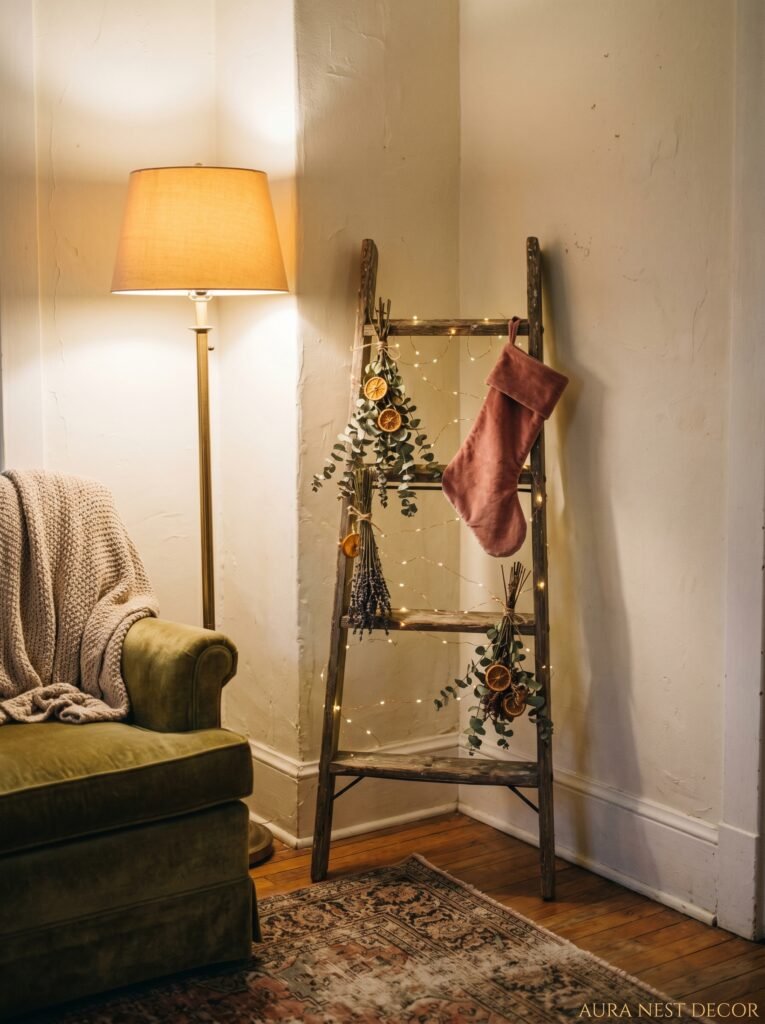
Every living room has a neglected corner. Behind an armchair. Beside the fireplace. That weird dead zone between a window and a bookshelf. In December, these corners become your secret weapon.
Here’s what I do with a spare corner for vintage Christmas: I put in a small side table or an old wooden stool. On it, I stack two or three vintage-looking hardback books — doesn’t matter what they are, just remove any modern jackets and you’ve got beautiful cloth-bound spines. I add a small lamp with a warm bulb, or a lantern with a candle. A small bottle brush tree arrangement. Maybe a tiny vintage bowl or dish with a few walnuts or dried pomanders.
That’s it. That corner suddenly looks like a still life painting. And because it’s slightly surprising — no one expects that corner to be styled — it actually photographs better than the mantelpiece sometimes. People always ask me about it.
The principle: give unexpected spaces intentional moments. It makes a house feel DEEPLY lived-in and thought-about, which is the whole goal of cozy vintage decorating.
—
❓ FAQ
Q: Where’s the best place to find affordable vintage Christmas ornaments in the US and UK? A: Etsy has genuinely excellent vintage lots, especially if you search specifically for “Shiny Brite lot” or “vintage glass ornaments mixed.” In the UK, eBay and Vinterior are worth bookmarking. Charity shops and car boot sales in October are genuinely the best for surprise finds before dealers get to them.
Q: Can I mix vintage Christmas decor with a more modern or Scandinavian-style home? A: Absolutely, and it often looks better than a full vintage room because the contrast gives both styles room to breathe. Keep your vintage pieces warm and textural and let the modern elements stay clean and simple. The key is a shared color palette — bring the same muted, earthy tones into both.
Q: How do I make cheap vintage-inspired ornaments look more authentic? A: Two tricks that genuinely work. First: choose matte or frosted finishes over shiny ones — shiny reads as modern and cheap, matte reads as aged. Second: don’t hang them in groups of the same ornament. One beautiful glass teardrop next to a tiny wooden star next to an old-looking bell will always look more authentic than three matching ornaments clustered together.
—
💭 Final Thoughts
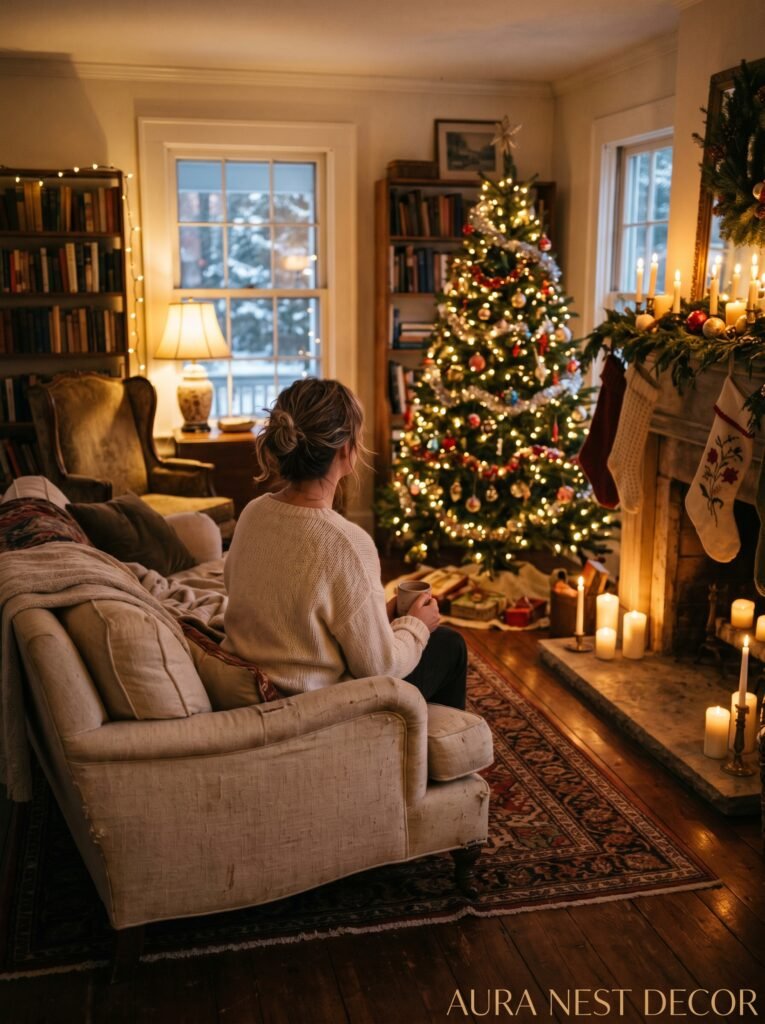
Vintage Christmas isn’t about getting everything right. Some years my living room looks exactly how I imagined it and some years I put up the tree and stand there feeling like something’s slightly off and I just can’t figure out what. That’s part of it, honestly. The imperfection is sort of the whole point.
What I love most about this particular approach to Christmas decorating is that it gives you permission to keep things that don’t match, to buy the weird Santa figurine that makes you laugh, to use your grandmother’s old tinsel even if it’s gone a bit flat. It rewards accumulation over time rather than a single shopping trip. Which means every year it gets a little more yours.
So — what’s the one vintage piece you already own that you’ve been underestimating?