The Vintage Living Room Glow-Up That Doesn’t Require Tearing Down a Single Wall
You walk into someone’s living room and immediately think: how. It’s small, it’s packed with stuff, but somehow it feels like the coziest place you’ve ever been. Not cluttered. Cozy. There’s a difference, and vintage decor is basically the cheat code for getting there.
This is everything I know about making a small living room feel intentional, layered, and genuinely beautiful — using pieces that have actually lived a life.
—
1. Why That One Thrifted Chair Is Doing More Work Than Your Entire IKEA Sectional
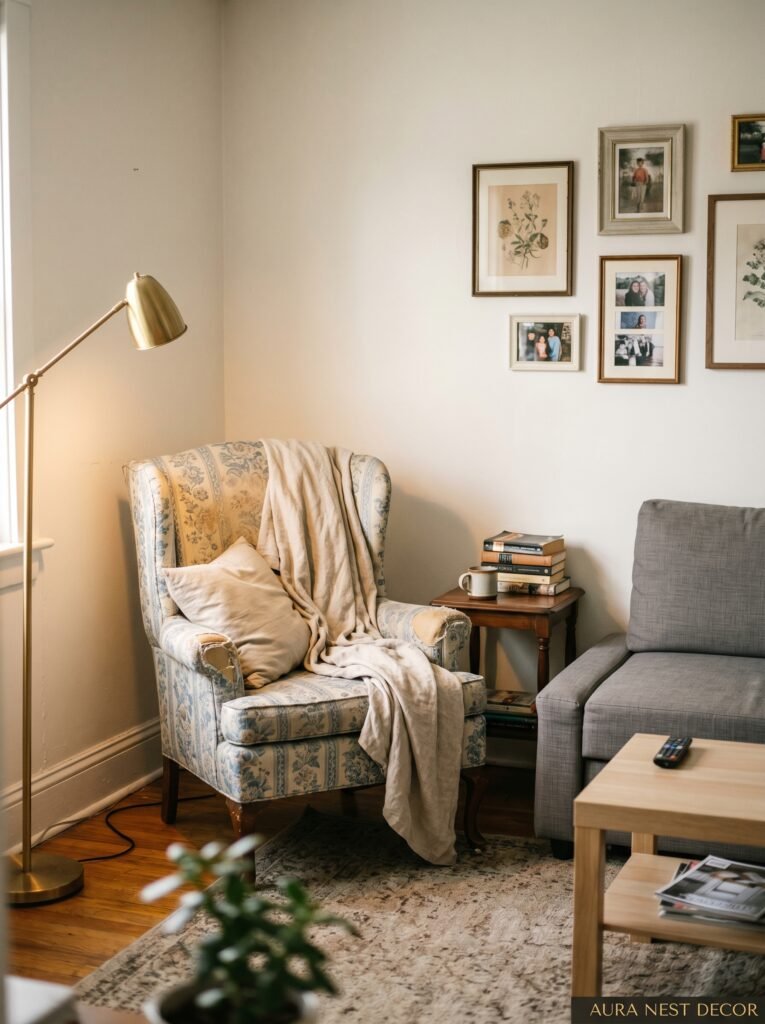
Here’s something I noticed after years of trying to make small spaces feel good. One GREAT vintage piece does more for a room than six perfectly-matched modern ones. I’m serious.
There’s a reason we’re drawn to those Pinterest living rooms that feel like a vintage bookshop collided with a Sunday afternoon. It’s not the quantity of stuff. It’s the WEIGHT of it. Old things have weight — visual weight, emotional weight, the kind of presence that makes a room feel like it was assembled by a person and not a warehouse.
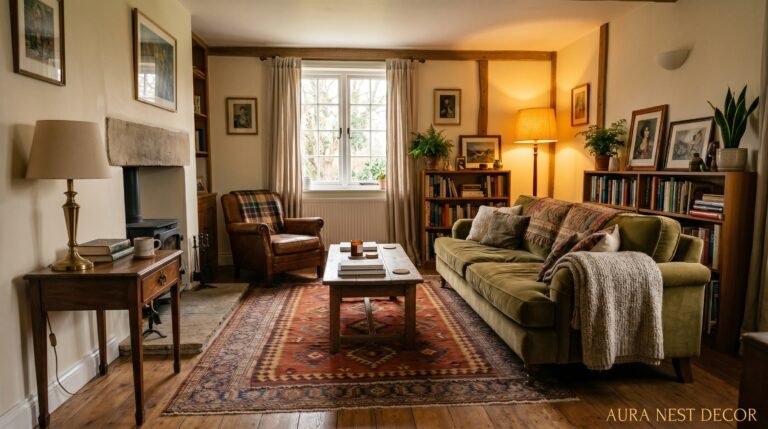
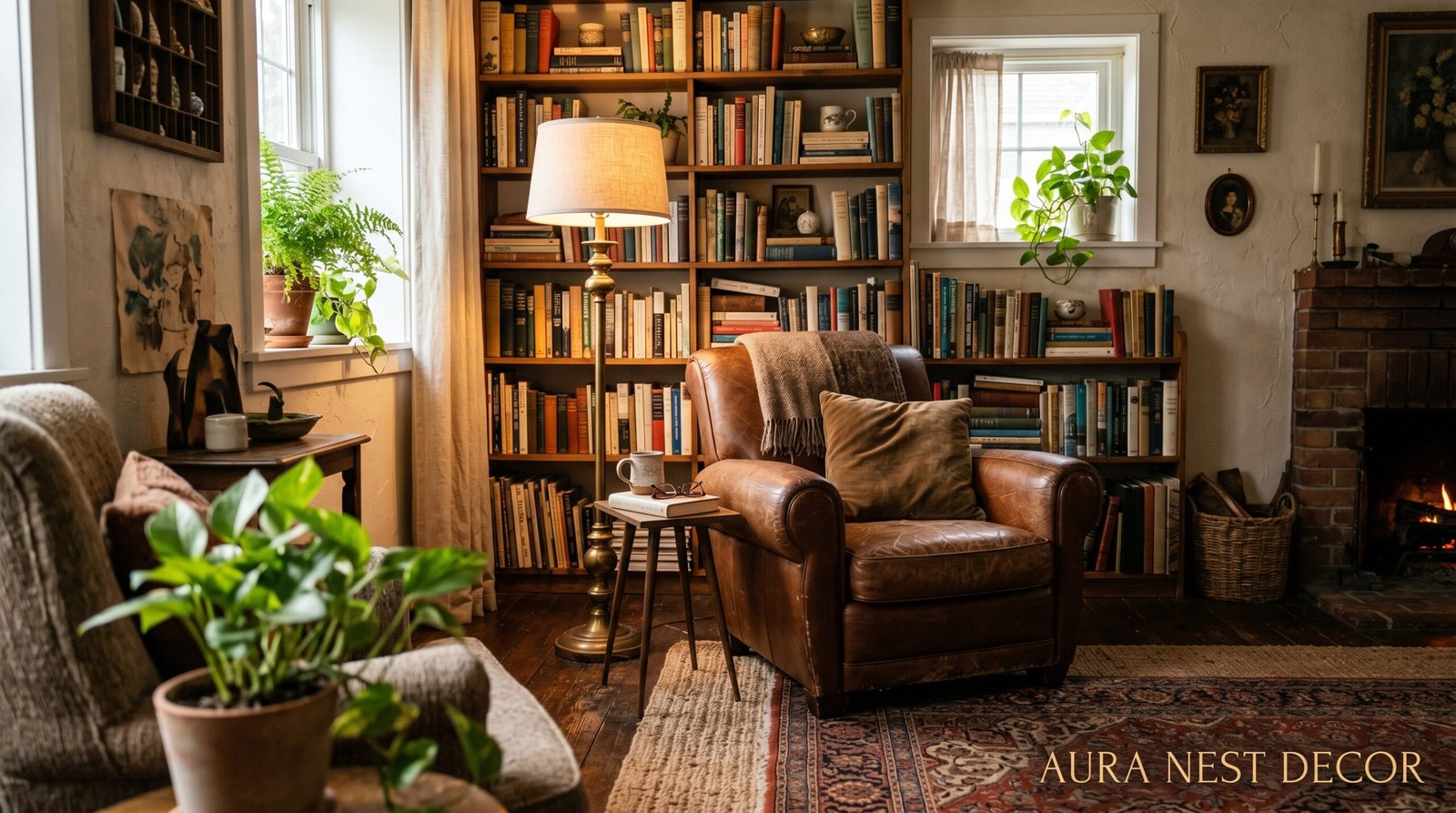
A worn leather club chair. A 1960s rattan side table. Even just a stack of old hardbacks with interesting spines. These things anchor a room in a way that new furniture honestly can’t. Not gonna lie, when I swapped out my flat-pack coffee table for an old wooden trunk I found at a car boot sale, the whole room just… clicked. Everything that felt slightly off suddenly made sense.
And in a small space? One strong vintage piece becomes the focal point. You don’t need much else.
“A single worn leather chair can make a tiny room feel like it has a story. New furniture just makes it feel like it was assembled yesterday.”
2. The Paint Color That Old Houses Already Know About (And New Builds Are Finally Catching Up To)
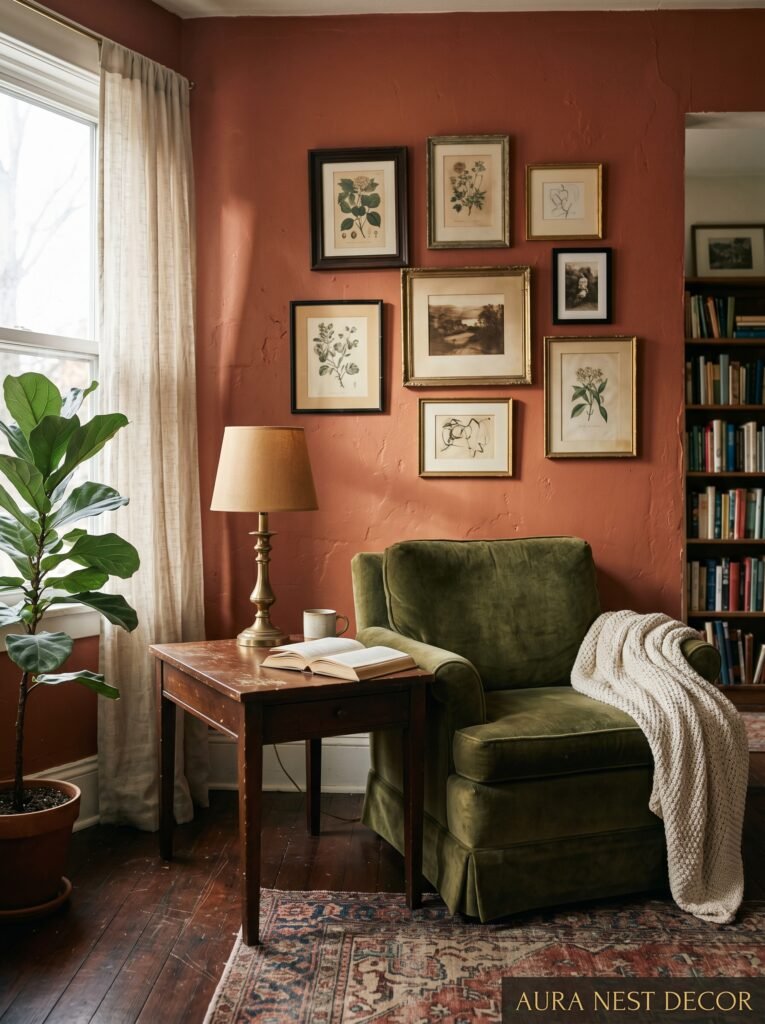
Okay I’m going to name a specific color family here: warm, slightly-muddy off-whites and creamy yellows. Not bright white. Not greige. Think old library walls. Think aged plaster. Think the inside of a farmhouse in the Cotswolds or a New Orleans shotgun house.
These colors do something extraordinary in small rooms. They make the light feel amber and soft, like every lamp is an Edison bulb even if it’s not. They make vintage wood tones look INTENTIONAL instead of mismatched. And they give the room a kind of pre-existing calm that no “designer white” has ever managed in my experience.
Benjamin Moore’s White Dove, Farrow & Ball’s Steps (honestly, almost any of the Farrow & Ball Whites will do this), or just going a bit warmer than you normally would — you won’t regret it. The room will feel instantly older, in the best possible way.
The lighting changes at different times of day in a way that bright white walls never do. At 7am it’s pale and quiet. By 4pm in winter it’s golden. That’s not an accident. That’s what happens when your walls have some yellow in them.
3. Stacking Rugs on Rugs Like It’s 1975 and Nobody Told You to Stop
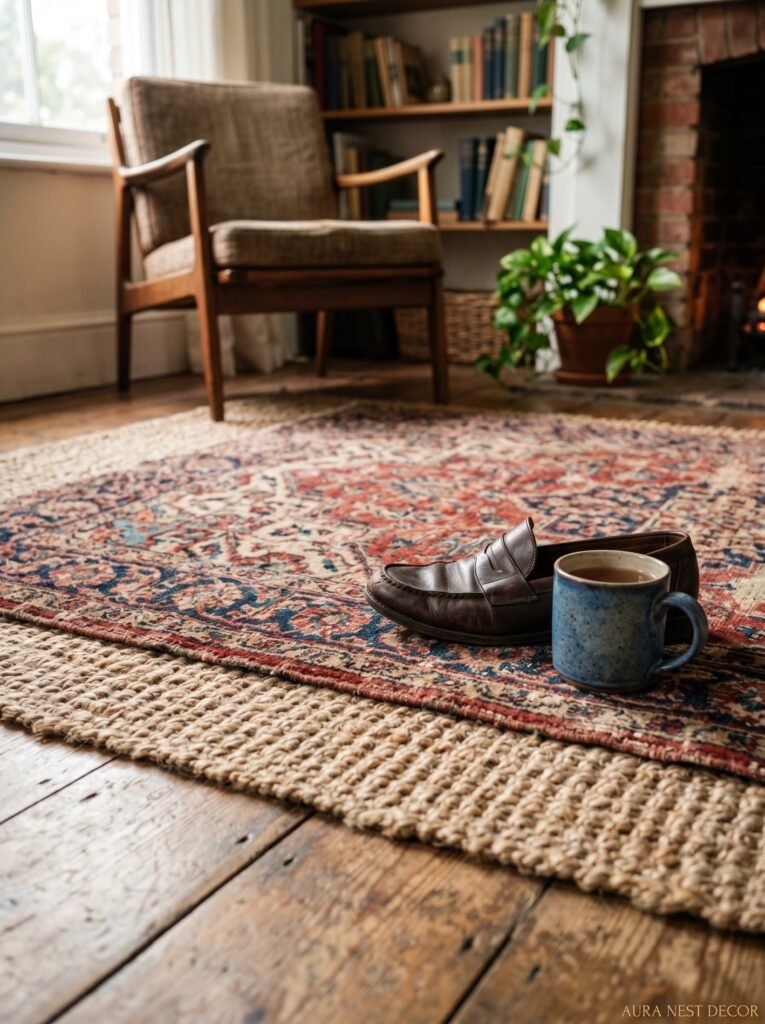
You’ve seen this and you weren’t sure if it was too much. It’s not too much. Layered rugs might be the single most effective trick in small vintage living rooms, and here’s WHY it actually works instead of looking chaotic.
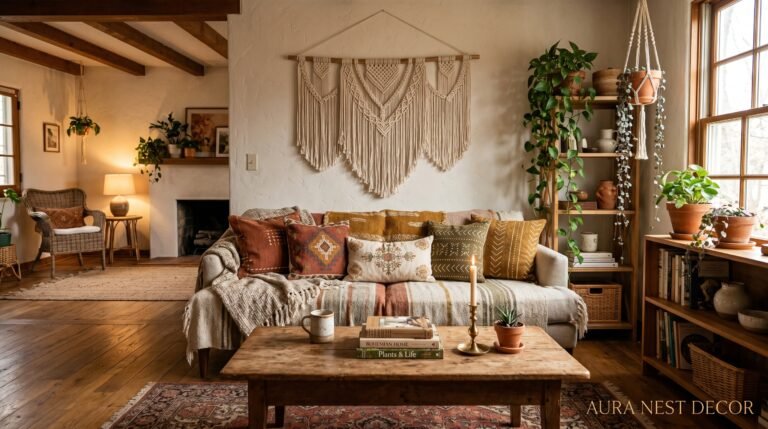
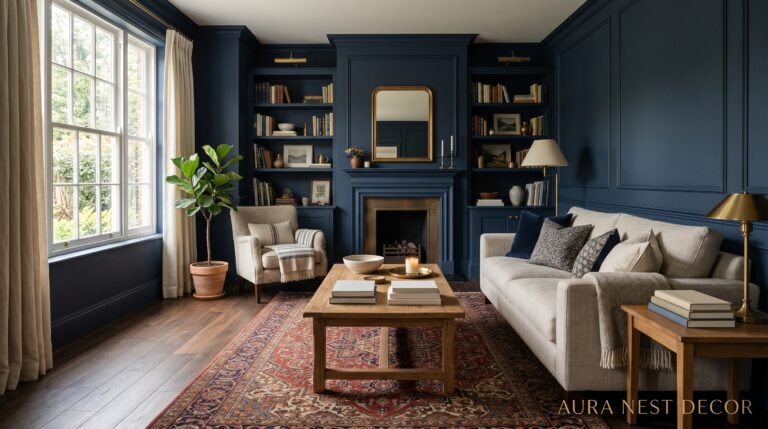
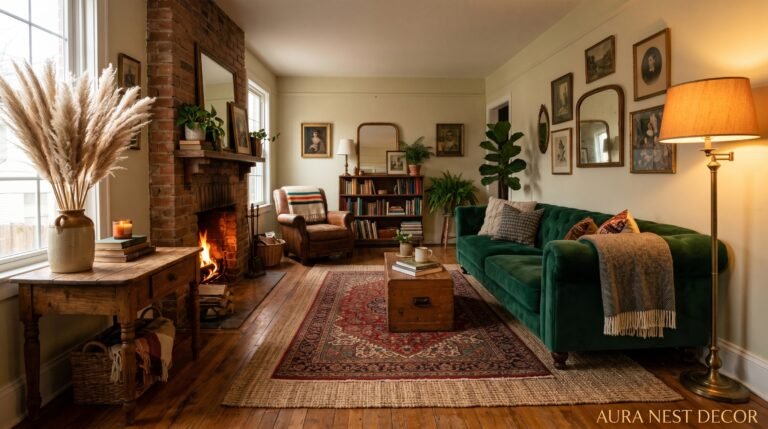
The base layer should be bigger — a jute or sisal, something neutral and flat. The top layer is your personality: a Turkish kilim, a faded Persian, a small wool rug in a pattern that probably cost about $40 at a vintage market. The base grounds it. The top layer floats.
In a tiny living room, this does something smart: it visually breaks the floor into a zone rather than just… floor. The seating area becomes its own little universe. Which makes the room feel like it has multiple layers of intention even if it’s 10 feet by 12 feet.
Side note — I always look for rugs with some red or rust in them because they anchor every other warm tone in the room automatically. You don’t have to match. The rug just has to belong to the same color FAMILY as something else in the room. One thread of connection is enough.
4. The Most Convincing Fake “I’ve Had This Forever” Living Room Trick
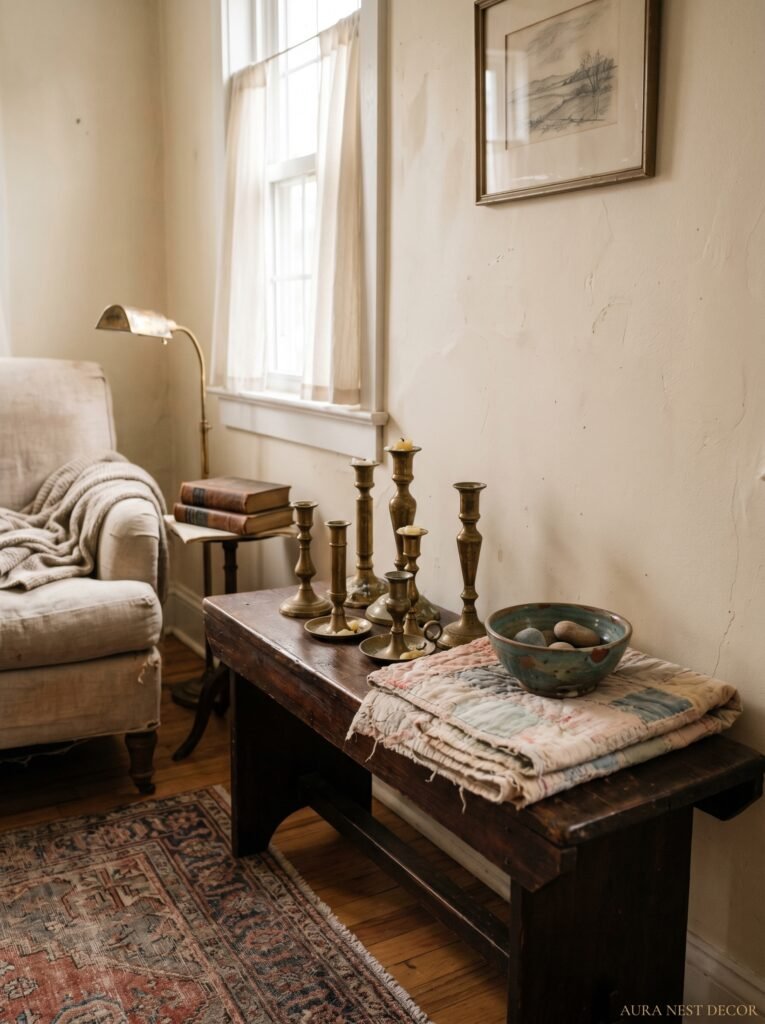
You don’t need actual antiques. You need things that look like they’ve been there forever, and honestly — a lot of that is styling.
Here’s what I mean. Take any slightly boring shelf. Now add: a small framed print with an aged paper look, a ceramic jug (not a vase, a JUG), a small stack of old books with the spines facing out, and one plant that’s slightly too big for its pot. You’ve just made something that looks like it’s been accumulating for 20 years.
This is why I love the phrase “collected, not decorated.” Decorated rooms look finished. Collected rooms look like they’re still going. And still-going rooms are the ones that feel alive.
Charity shops, estate sales, eBay — all of it is fair game. You’re not looking for perfect pieces. You’re looking for pieces that have a face. The slightly chipped mug on the shelf. The oil painting with a crack in the frame. The old brass candlestick that someone else polished so many times the pattern wore away on one side.
Those imperfections aren’t problems. They’re exactly the point.
“Decorated rooms look finished. Collected rooms look like they’re still going.”
5. What Small Rooms Actually Need From Furniture (Hint: It’s Not ‘Less’)
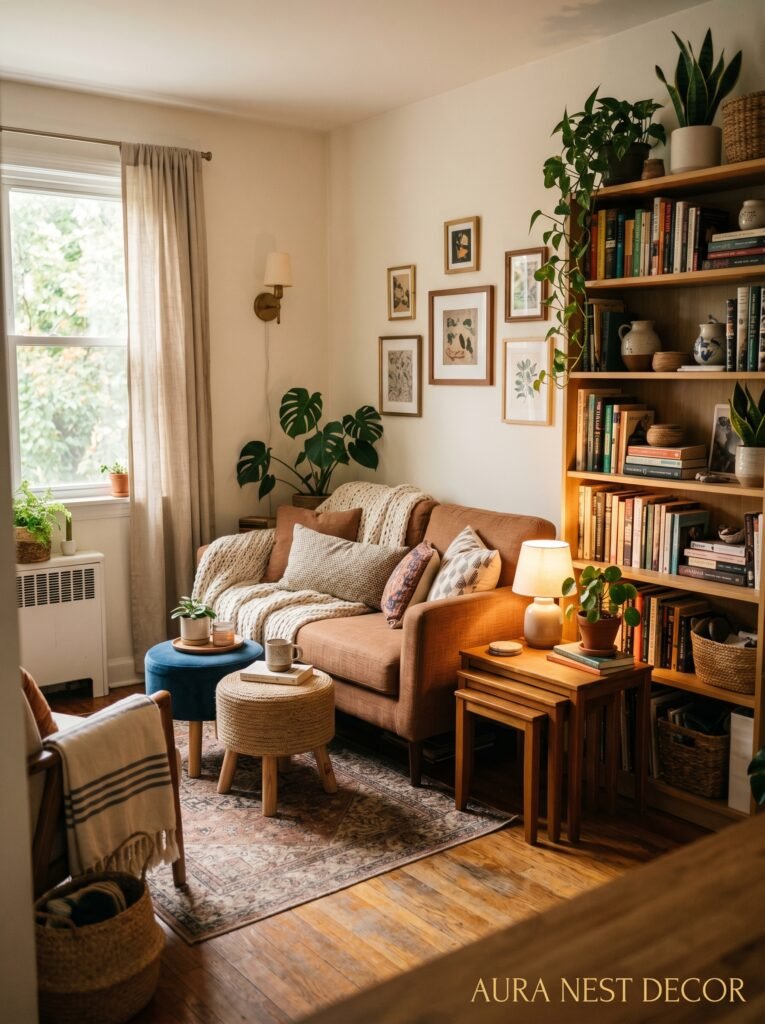
Everyone says “less furniture in small rooms.” And sure, don’t cram in a sectional and three armchairs. But the real answer isn’t LESS, it’s LOWER and LEGGIER.
Low-profile furniture makes ceilings feel higher. Furniture with legs (rather than big blocky sofas that sit on the floor) lets light travel under and through — the room breathes. A vintage daybed. A mid-century sofa with tapered legs. A spindly little side table. These create visual space even when there isn’t much physical space.
Also — and this is underrated — mirrored or glass pieces. An old foxed mirror leaned against a wall does more spatial work than any floor-to-ceiling mirror from a home store. The slightly imperfect reflection makes the room feel deeper without the hard, clinical feeling of a perfect modern mirror. There’s a warmth to slightly distorted reflected light that I can’t fully explain but I’ve never met a small room that didn’t benefit from it.
One thing to avoid in small vintage spaces: too many DARK heavy pieces at the same height. It reads like a wall. Mix heavy with light, low with slightly taller, solid with see-through.
6. The Gallery Wall Rule Nobody Actually Tells You
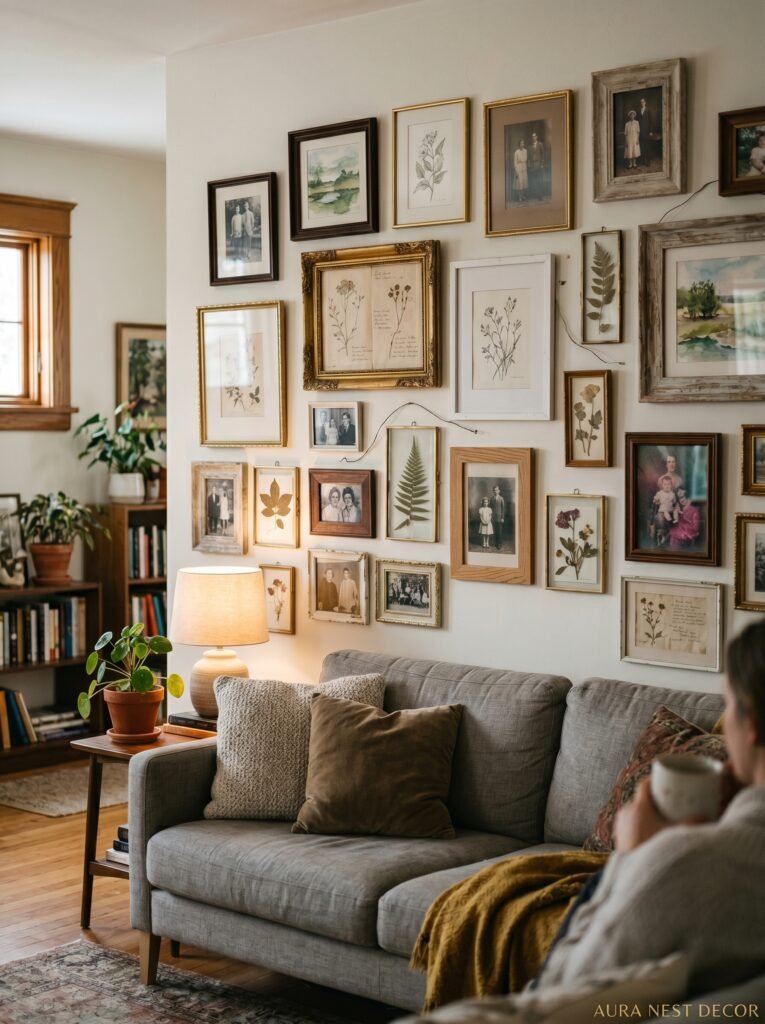
Gallery walls in small rooms work best when they go HIGH rather than wide. Most people center their gallery walls at seated eye level, which means the whole composition is competing with the furniture. Boring.
Push it UP. Start the gallery wall higher than feels comfortable, almost like you’re surprised it’s that high, and let it nearly reach the ceiling. What happens? The eye travels upward. The room feels taller. And the vintage frames — which are ALWAYS the best part, because old frames have that wonderful variation in gold and wood tone — start to feel like a collection in an old house rather than a feature wall in a new build.
Mix frames properly. Not “mix” like the same frame in four different sizes. Mix like: a chunky gilt frame, a thin black one, a dark walnut one, a pressed metal one. The only rule is that they have to feel like they came from different decades, because that’s EXACTLY what makes it look like the real thing.
Prints? Old botanical illustrations (free to download from public domain sites, worth knowing), vintage maps, old postcards blown up slightly, black-and-white photos with a tiny bit of grain. Don’t over-curate the content. What you’re going for is accumulated meaning, not a theme.
7. Lighting Is Not Decorative. It IS the Decoration.
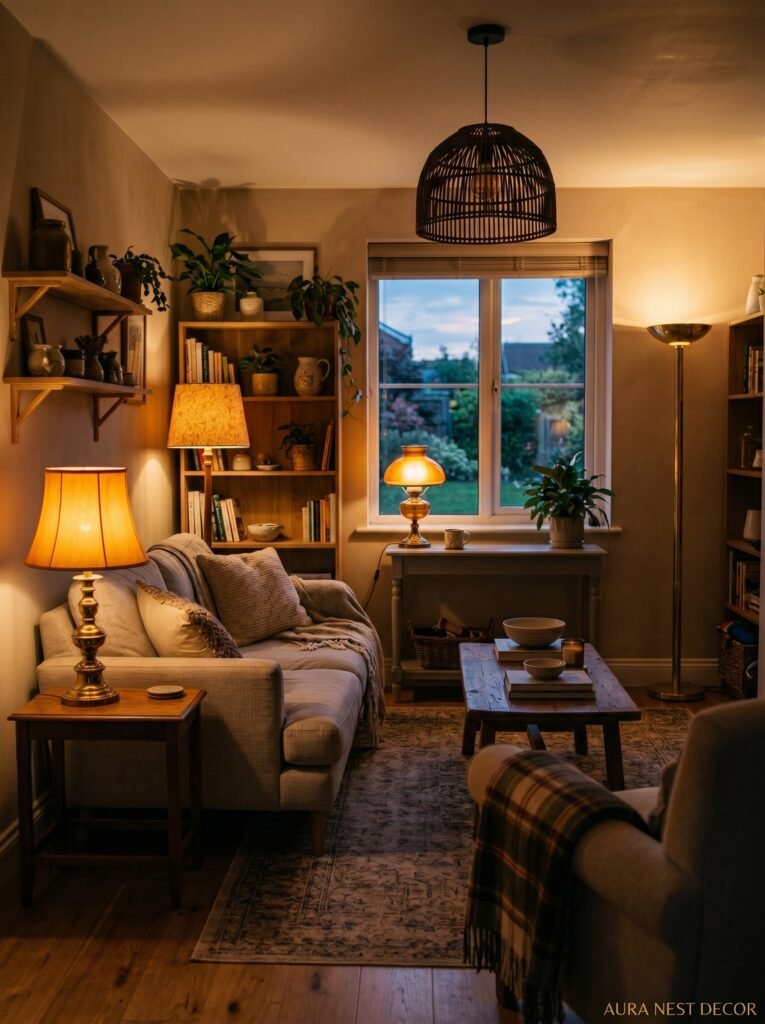
I’ll say it plainly: you can have all the right furniture and the wrong lighting and the room will feel like nothing.
Vintage living rooms live and die by lamplight. Overhead lighting is the enemy of cozy. If you’re renting and can’t change the ceiling fixture, just don’t USE it. Seriously — plug-in wall sconces, table lamps, floor lamps, even battery-operated candlesticks on the bookshelf. Layer sources of light at different heights. The room starts to feel like it has corners and pockets, which makes it feel BIGGER and more interesting simultaneously.
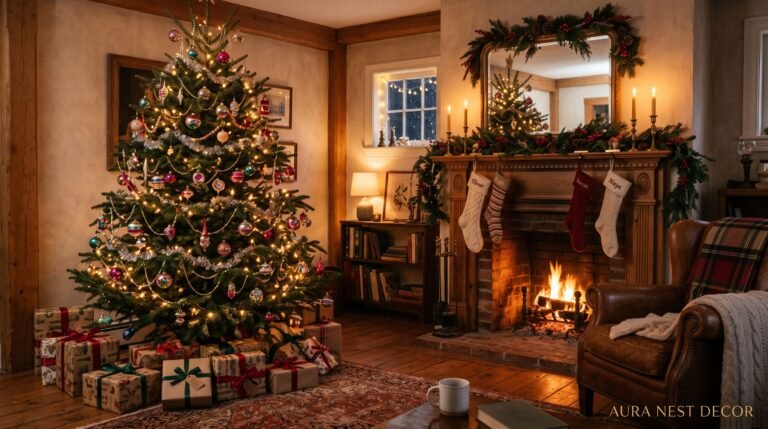
For a vintage look: amber bulbs, low wattage, warm tones. Not bright. Not “daylight” anything. You want the room to glow at 8pm like someone left a fire on low.
“Overhead lighting is the enemy of cozy. Turn it off. Your living room will thank you immediately.”
Old lampshades are having a moment right now — the fabric ones with a slightly pleated edge, the opaque cream-colored linen ones, the ones with a fringe that you weren’t sure about and then couldn’t stop looking at. They filter light in a completely different way than a modern shade. Softer. Warmer. The difference is NOTICEABLE.
8. The “Wrong” Curtain Length That Actually Makes Tiny Rooms Feel Enormous
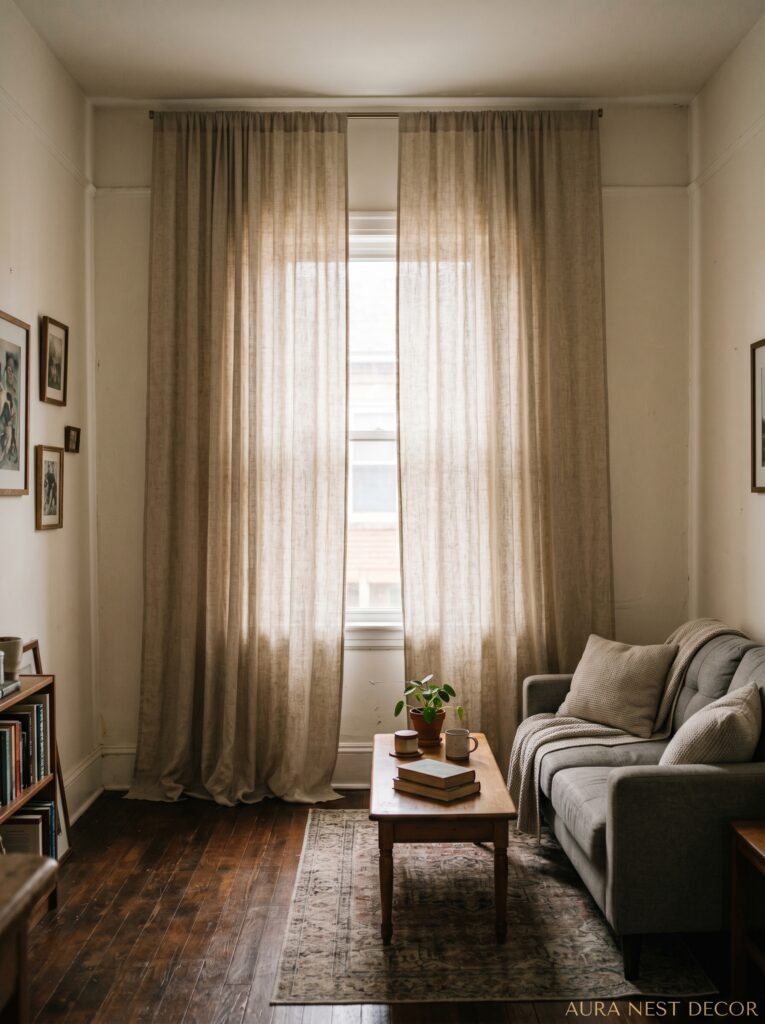
Floor-length curtains hung from just below the ceiling. Not from the window frame. Not from midway up the wall.
I know. It sounds excessive. But this single move makes ceilings feel maybe a foot taller than they are, and in a small room, that vertical height is everything. The curtains don’t even have to be expensive — plain linen ones from a home store, a vintage velvet pair from a thrift shop, even a heavy cotton will do — as long as they puddle slightly at the floor and start from VERY high up.
For vintage rooms specifically, I’d lean towards: cream or warm white linen, mushroom-toned velvet, or even a washed floral that feels a bit worn. Avoid anything that looks brand new and stiff. The curtain should look like it’s been in that window for a while.
And if you can only afford curtains on ONE wall — do the wall with the window, obviously, but hang the rod wide. Wider than the window. Pull the curtains to the side so the window is fully exposed and the curtains frame it like a painting. The room will feel like it has a proper view even if what you’re actually looking at is a car park or a neighbor’s fence.
9. Old Books Are Not Decor. (Except They Absolutely Are.)
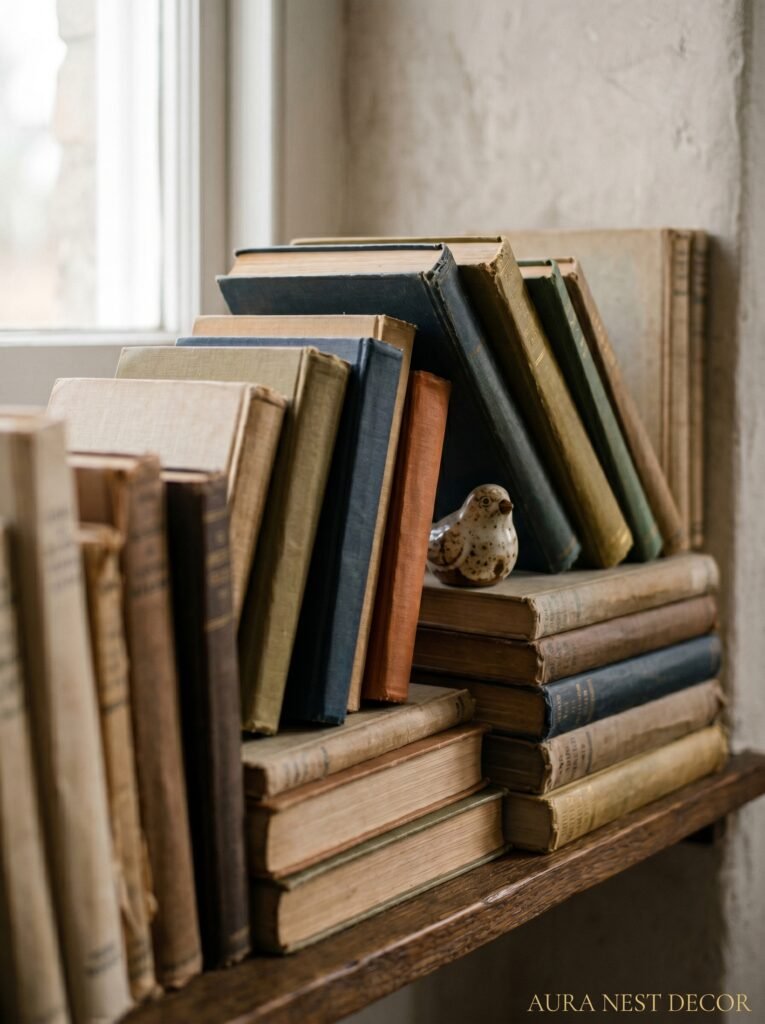
The spine-out bookshelf is fine but honestly a little expected at this point. Try page-out. Face a few books backwards so only the aged cream pages are visible. It looks like something out of an old European apartment, like someone lived there for decades and never thought about whether it was Pinterest-worthy.
Actually — that feeling of not-trying-too-hard is exactly what you want in a vintage space. The moment it looks styled it loses something. The goal is to look like you just… live here. Like you’ve always lived here.
Real vintage books are everywhere. Car boot sales in the UK, thrift stores and estate sales in the US — you can fill a whole shelf for practically nothing. Look for old Penguin paperbacks with the orange spines, old hardback travel books, old children’s picture books with worn cloth covers. National Geographic from the 60s and 70s. Old recipe books. Old books about birds.
Pile them. Stack them horizontally in groups. Let them overflow onto the floor next to a chair. Cozy is not tidy. Cozy is lived-in.
10. Plants That Look Like They’re from Your Grandmother’s Greenhouse (Not Your Local Garden Center)
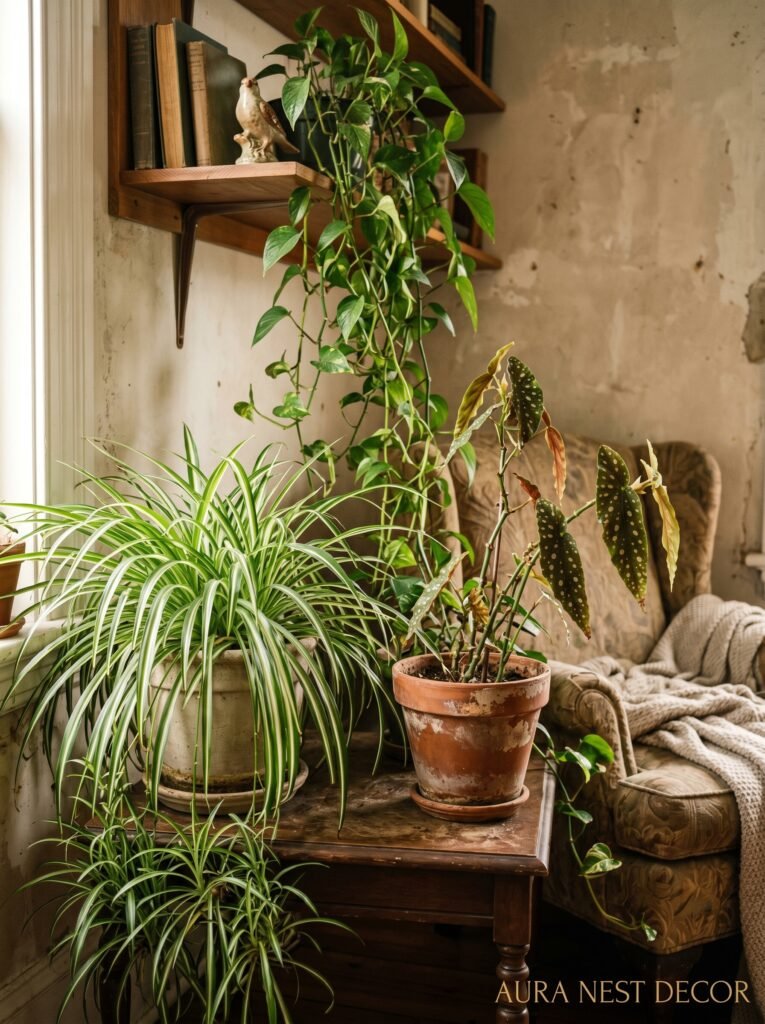
There are plants that say “I bought this six weeks ago” and plants that say “this has been in the family.” For a vintage living room you want the second kind, and it’s not always about the plant itself — it’s about the pot.
Terracotta. Always terracotta, with salt stains on the outside from years of watering. Dark green glazed vintage pots. Wicker plant stands. A big ceramic jardinière with a slight crack in the rim. These make even a very new plant look like it’s been there for years.
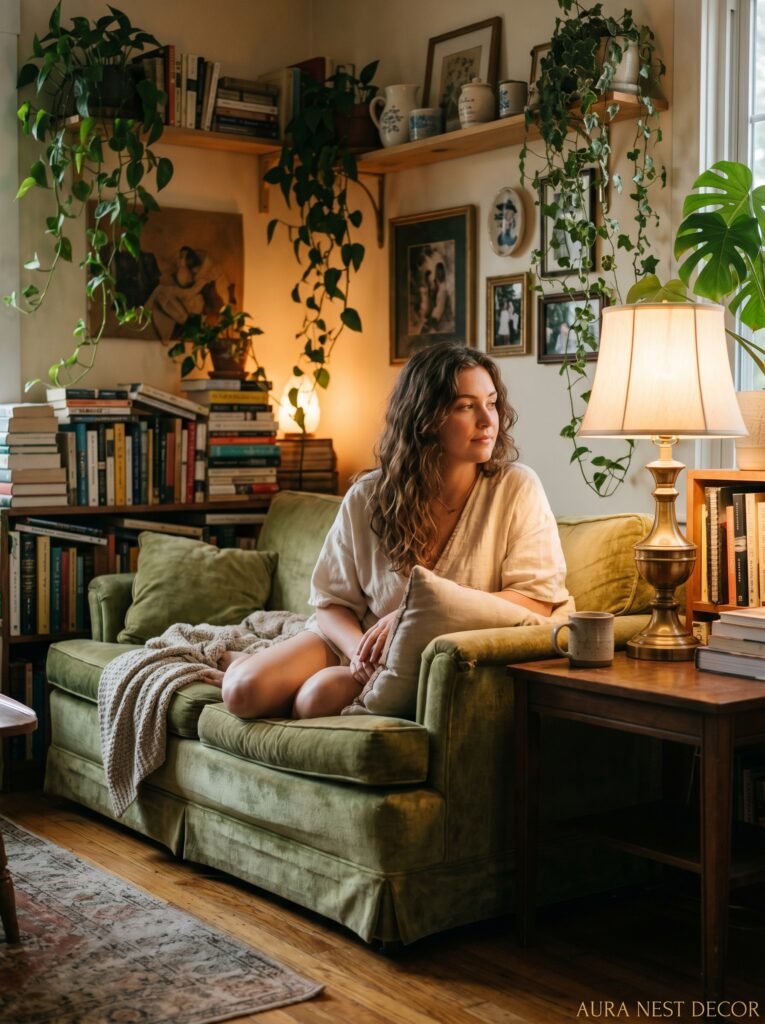
As for the plants themselves: cast iron plants (literally can’t kill them), trailing pothos in a high pot that drapes down, a big rubber plant in the corner, succulents in a cluster of mismatched terracotta. The trailing ones are especially good in small spaces because they draw the eye DOWN and across, which makes the room feel like there’s more horizontal distance than there is.
11. The Thing About Vintage Textiles That No One Mentions Until You’re Already Obsessed
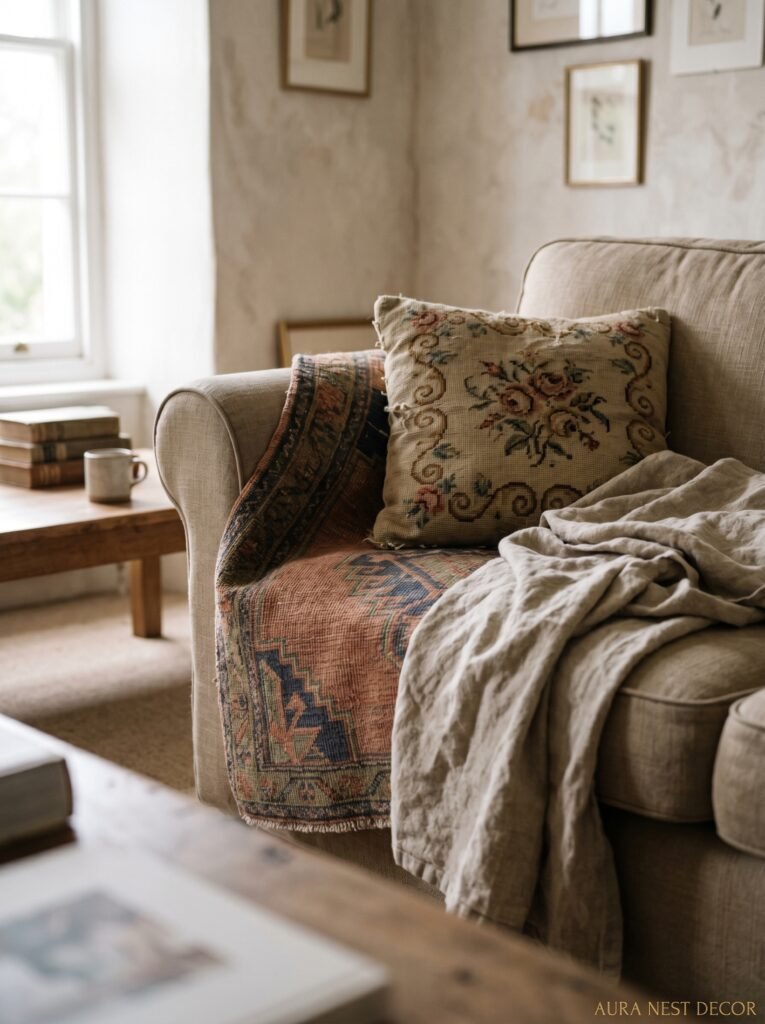
A linen cushion cover from an antique fair. A wool throw that’s slightly scratchy. A crocheted blanket draped too casually to be staged. An embroidered pillow with a tiny fox on it that serves no purpose except being completely wonderful.
Vintage textiles do something that new ones can’t. They’ve been TOUCHED. They’ve been through washes. They have a softness that isn’t manufactured softness — it’s real, and you can feel it, and somehow you can SEE it too, which is why layering them in a living room makes everything feel genuinely intimate in a way that new throws from a chain store simply don’t.
Look for: wool tapestry cushions, linen in muted colors, anything slightly faded, anything with a natural texture. Mix scales — a big simple linen cushion next to a smaller intricately patterned one. Three different textures on the sofa and it stops looking like a sofa-in-a-shop and starts looking like someone’s actual sofa.
12. The Last Small Space Secret: Leave One Thing That Doesn’t Quite Fit
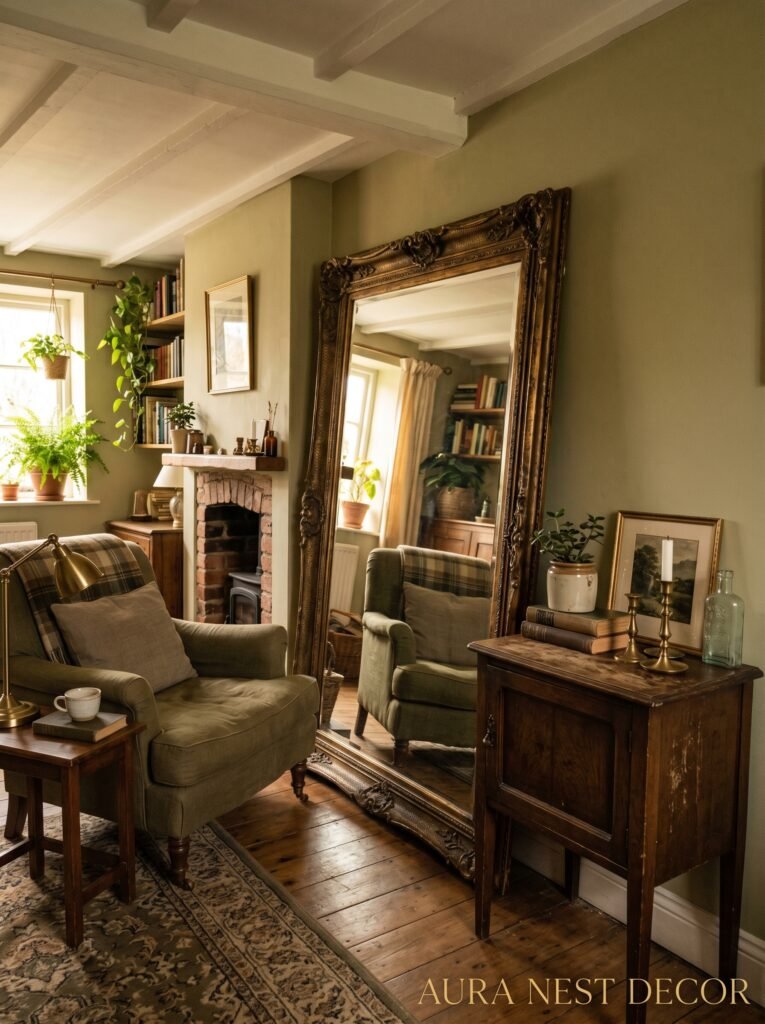
This sounds counterintuitive but stay with me.
In every room that feels genuinely interesting — not just styled, but INTERESTING — there’s something that’s a bit too big, or a bit too weird, or not quite right in an obvious way. An oversized painting that nearly touches the ceiling. A floor lamp that’s slightly in the way. A huge basket in a corner that you technically don’t need.
These “mistakes” are what make a room feel like a real person lives there. Perfect scale, perfect proportion, every piece making obvious sense — that’s a showroom. Real homes have friction. They have the chair you kept because you love it even though it doesn’t match, and the lampshade that was a gift and isn’t quite your taste but you’ve grown to love it.
Don’t edit all of that out. In a vintage room especially, those slightly-wrong pieces are often the ones that make the whole thing. They give you something to look at. Something to wonder about.
A room that explains itself immediately is a room you stop noticing by the second visit.
—
❓ FAQ
Q: How do I make a vintage living room look cozy and not just cluttered? A: The key is that every piece needs to feel like it belongs — not because it matches, but because it has presence. Start with one strong anchor piece (a rug, a chair, a large vintage print), then build around it. If you can’t explain why a piece is in the room, it’s probably clutter. If it makes you feel something, it stays.
Q: Where’s the best place to find affordable vintage decor in the US and UK? A: In the US: Facebook Marketplace, estate sales, thrift stores, and eBay are genuinely excellent. In the UK: car boot sales, charity shops (especially outside of big cities where prices haven’t been “curated”), and Vinterior for better-quality finds. Don’t sleep on freecycle sites either — people give away incredible things.
Q: Can vintage decor work in a very modern apartment, like one with white walls and clean lines? A: Yes, and honestly the contrast can be really striking. The trick is to not fight the architecture — lean into the contrast deliberately. One or two VERY good vintage pieces against clean white walls can look more intentional and interesting than a room full of vintage items competing with each other.
—
💭 Final Thoughts
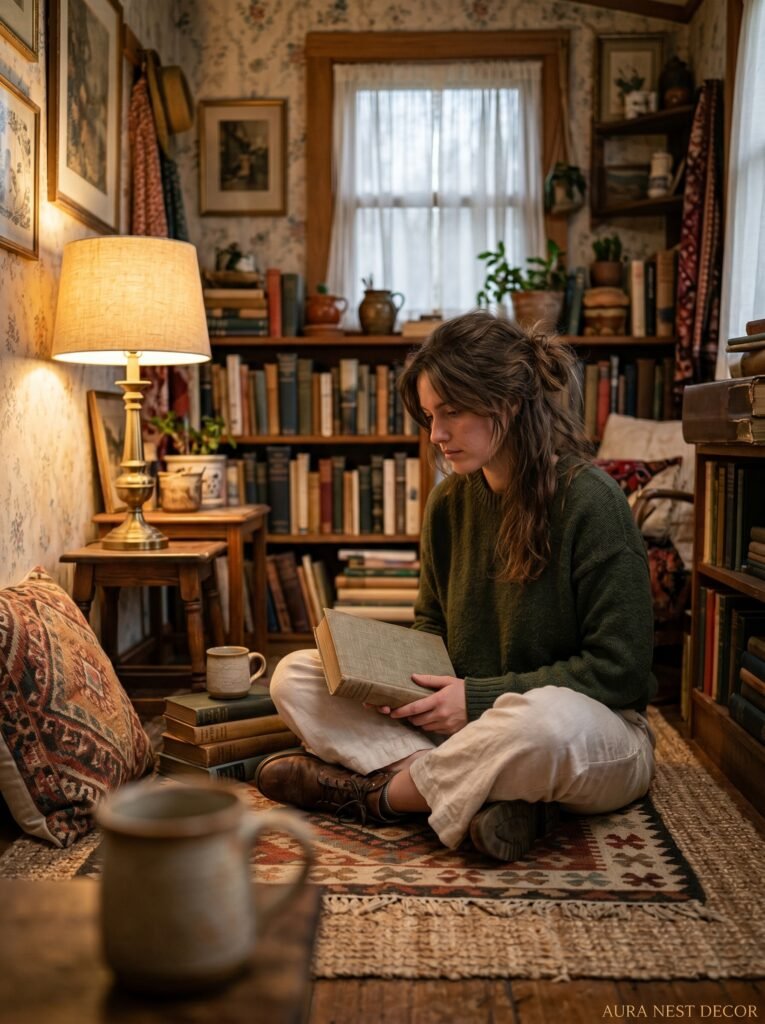
Small spaces don’t need to apologize for being small. With the right vintage pieces, the right light, and a willingness to trust that imperfection is often exactly what a room needs — they can be the most beautiful rooms in the house. The ones you actually want to spend time in. The ones other people walk into and immediately feel something.
The question worth sitting with is: does your living room feel like somewhere a real person lives, or somewhere a person is trying to live?