The Eclectic Living Room: How to Mix Everything You Love Into a Space That Actually Works
There’s a certain kind of living room that stops you cold the moment you walk in — not because it’s perfectly coordinated, but because it feels unmistakably alive. That’s the eclectic living room, and once you understand what makes it work, you’ll never look at “matching furniture sets” the same way again.
—
1. What “Eclectic” Actually Means — and Why Most People Get It Wrong
Let’s clear something up right away: eclectic does not mean cluttered. It does not mean throwing mismatched furniture into a room and hoping for the best. The word comes from the Greek eklektikos — meaning “selecting the best.” That’s the real heart of it. An eclectic living room is curated, not chaotic. Every piece has been chosen with intention, even when — especially when — those pieces come from wildly different eras, aesthetics, and price points.
The reason so many people struggle with this style is that they confuse freedom with randomness. True eclectic design has rules, they’re just more forgiving and personal than the rigid guidelines of minimalism or mid-century modern. Think of it like jazz — there are still notes, still rhythm, still structure. But the musician brings something entirely their own to every bar.
“An eclectic room isn’t where rules go to die — it’s where rules finally learn to breathe.”
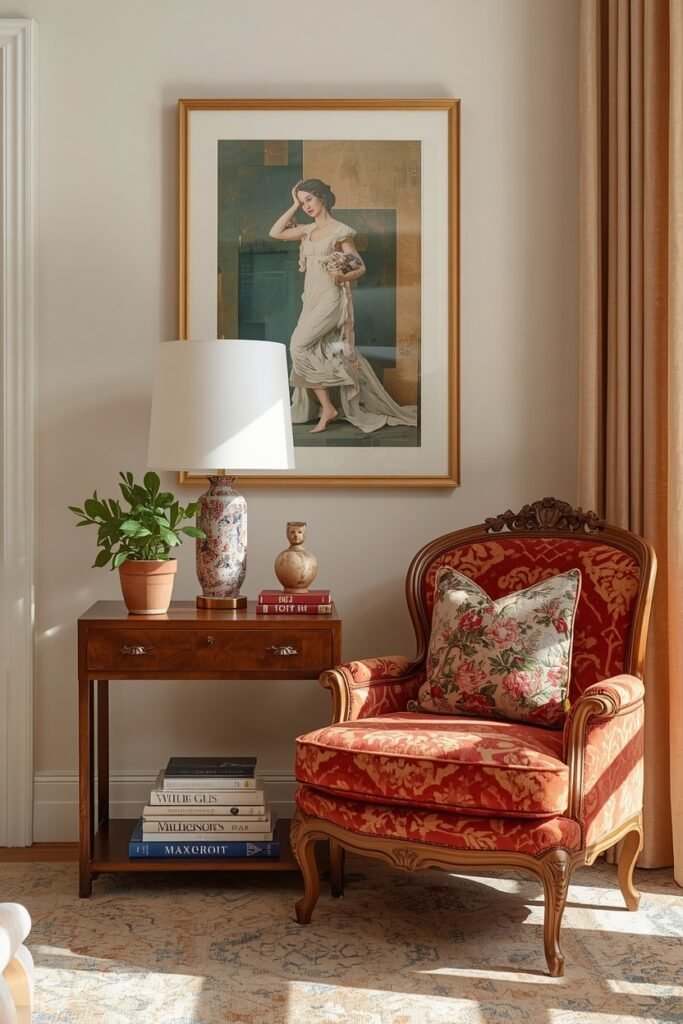
When you walk into a well-designed eclectic living room, you sense immediately that someone real lives there. Someone who’s traveled, or inherited a piece from a grandmother, or fell in love with a vintage velvet armchair at a flea market and simply had to have it. That sense of human story layered into a space is exactly what Pinterest users respond to so powerfully — and it’s exactly what we’re going to help you create.
2. The Secret Ingredient Every Eclectic Room Needs: A Unifying Thread
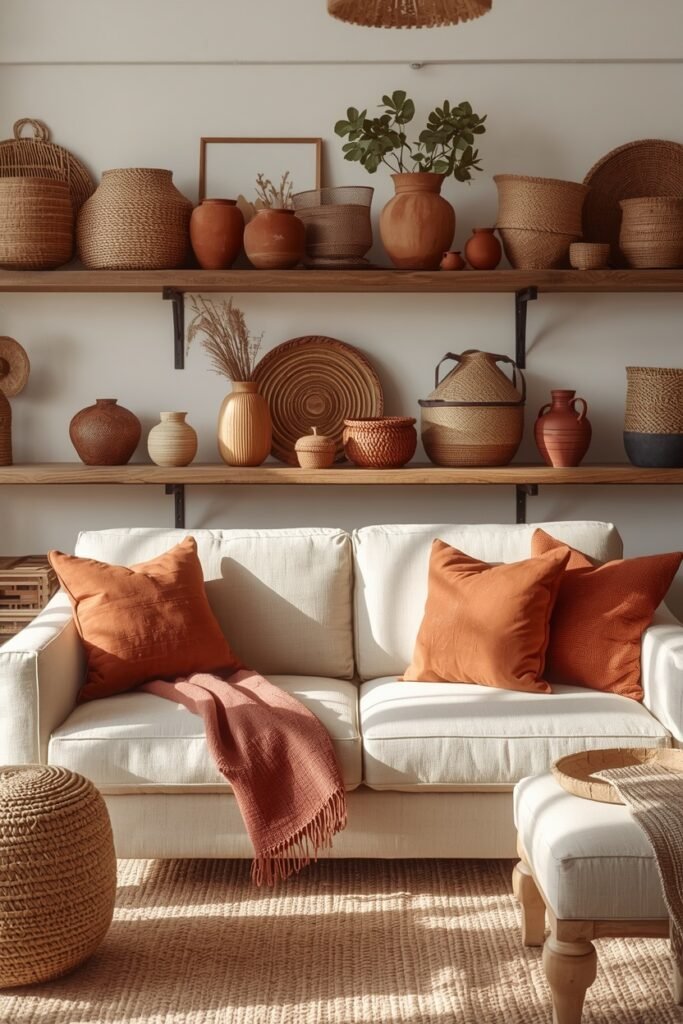
Here’s the thing nobody tells you when you start building an eclectic space: you need at least one invisible thread that ties everything together. Without it, the room tips from “intentionally layered” to “accidentally messy,” and there’s a meaningful difference between the two.
Your unifying thread can be a color. Maybe every piece in the room — no matter how different in style — carries a whisper of warm terracotta or dusty sage. It can be a material, like natural wood tones appearing in your coffee table, your picture frames, and your woven basket storage. It can even be a feeling — every item you bring into the room must evoke a specific emotional quality, whether that’s warmth, wanderlust, or creative energy.
Pick your thread before you shop. Write it down. Ask yourself with every potential purchase: does this belong to the story I’m telling? That single discipline is the difference between an eclectic room that feels intentional and one that simply feels confused.
3. Starting With a Statement Piece — and Building Outward
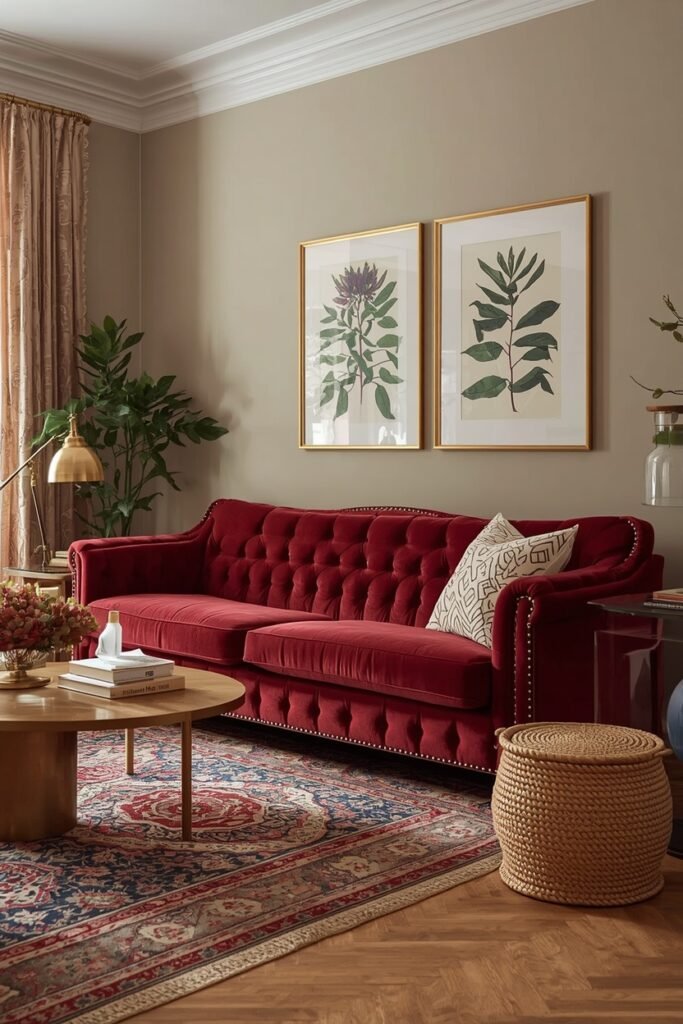
If the unifying thread is the soul of your eclectic room, the statement piece is its beating heart. Every great eclectic living room has one — a single object so compelling, so full of character, that the rest of the room organizes itself around it almost naturally.
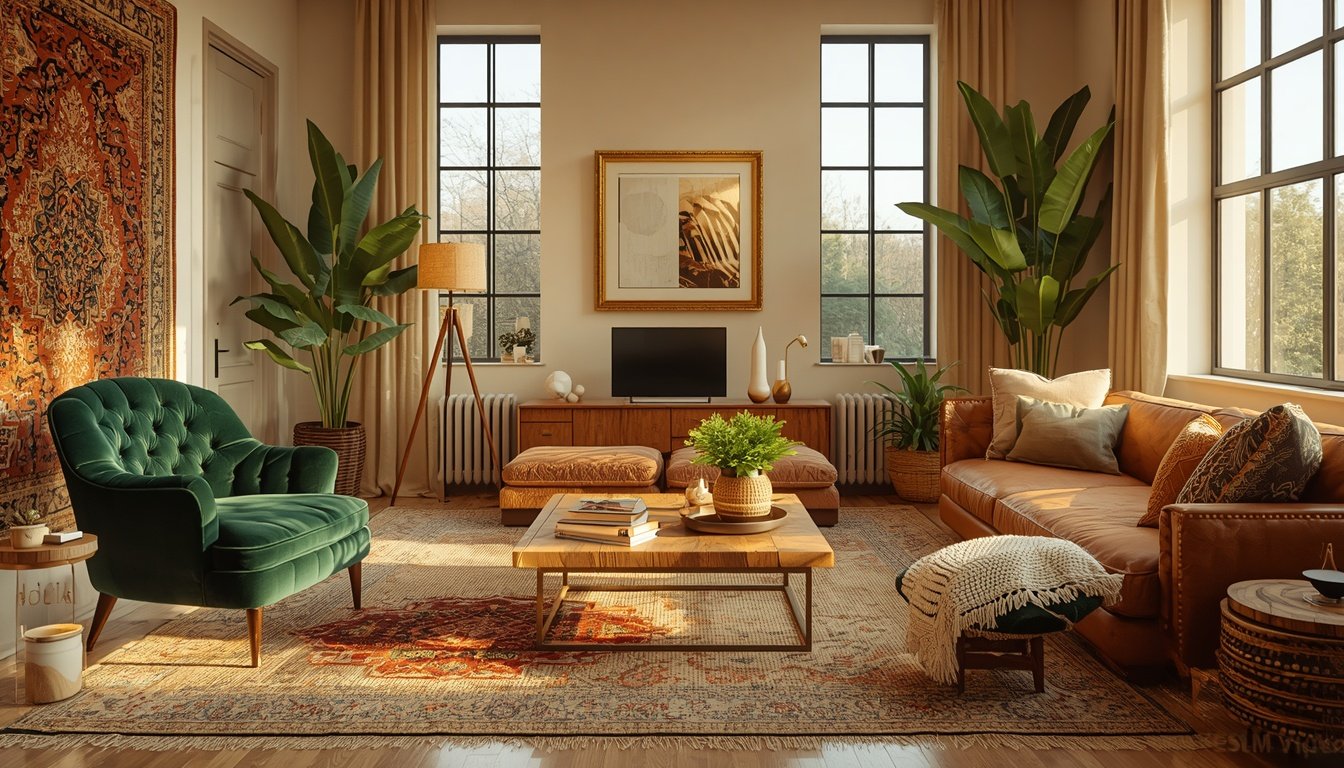
It might be a Victorian-era chaise lounge in emerald velvet. A massive abstract painting with raw, expressive brushstrokes. An ornate Moroccan rug with geometry so intricate it becomes its own meditation. A bold, sculptural light fixture that makes visitors tilt their head and smile. Whatever it is, this piece should be the first thing you decide on — and the last thing you compromise on.
Once your statement piece is in place, the rest of the room becomes a conversation between that anchor and everything you bring in to complement it. A rustic wooden side table beside that velvet chaise? Perfect tension. A clean-lined modern sofa that lets the rug do the talking? Exactly right. You’re not matching — you’re responding.
4. How to Mix Furniture Styles Without Creating a Visual Disaster
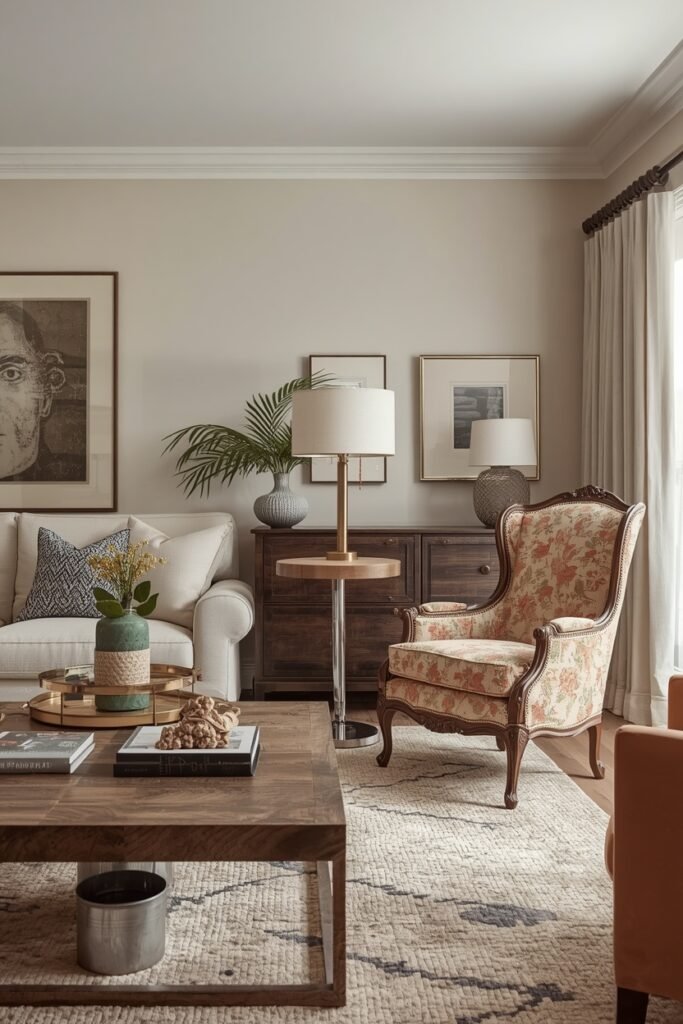
This is the question everyone asks, and it deserves a real answer rather than vague advice like “just trust your eye.” There are three practical principles that make mixing furniture styles work beautifully.
First, vary the visual weight. If you have a substantial, chunky sofa, balance it with lighter, leaner pieces — a slim console table, delicate accent chairs with thin legs. Visual weight is the gravitational pull each piece has on your eye, and balancing it creates harmony even when styles clash.
Second, repeat shapes. Curved lines in one piece should echo curved lines somewhere else. Sharp angles in your coffee table can reappear in the geometry of your throw pillows or a piece of wall art. The eye finds comfort in repetition, even subtle repetition, and it creates cohesion without requiring you to match styles outright.
Third, leave breathing room. The temptation in an eclectic space is to fill every corner, every wall, every surface — because you love so many things and they all want to come home with you. Resist this. White space, empty wall, open floor — these aren’t failures of imagination. They’re what makes everything else visible.
5. The Color Palette: Rules for People Who Hate Color Rules
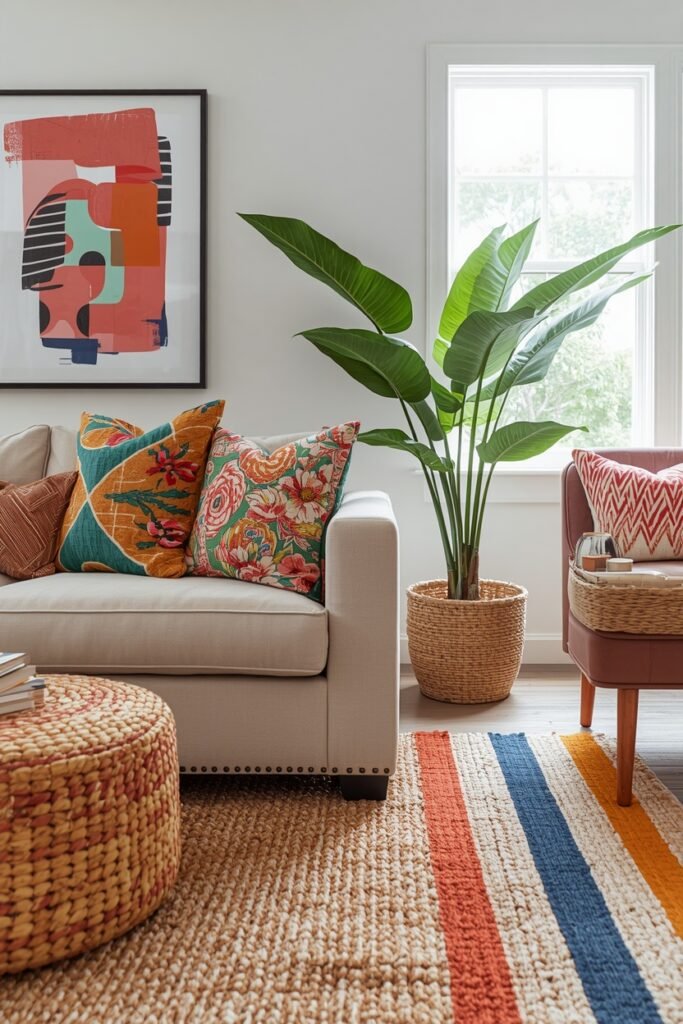
Color is where most eclectic decorators feel the most freedom — and the most fear. The good news is that eclectic style doesn’t require a strict palette. The better news is that a few simple guidelines make the color conversation much easier.
Start with a neutral foundation. This doesn’t mean beige walls and white ceilings by default — though those work beautifully. It means choosing your dominant backdrop colors to be relatively quiet so that your collected, expressive pieces get to speak. Think warm whites, soft greiges, deep charcoal, or muted terracotta. These are backdrops, not personalities.
Then layer in your expressive colors through textiles, art, and accessories. Rich jewel tones — sapphire, emerald, amber, plum — tend to play beautifully in eclectic spaces because they carry historical and emotional weight. Earth tones ground a space and make it feel collected over time rather than purchased all at once.
“Color in an eclectic room isn’t decoration — it’s vocabulary. Choose your words carefully.”
If you’re nervous about clashing, use the 60-30-10 rule: 60% dominant neutral, 30% secondary color, 10% accent. This gives you a framework flexible enough for eclectic expression but structured enough to prevent chaos.
6. Textiles Are Your Best Friend — Here’s How to Layer Them Like a Pro
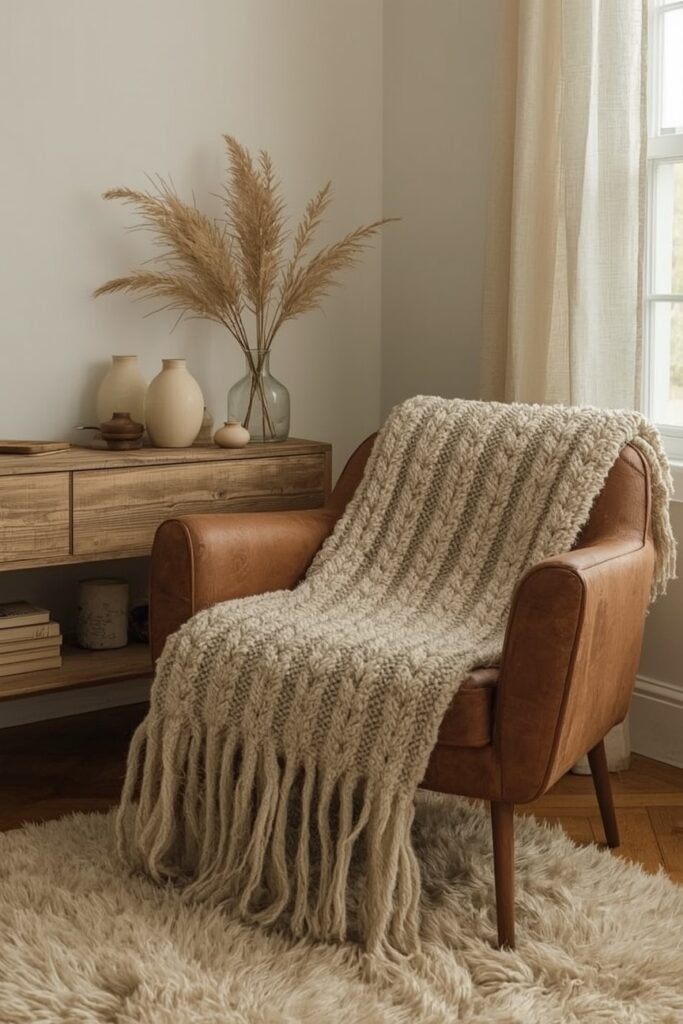
Nothing transforms a living room like layered textiles — and in an eclectic space, this is where you get to be the most adventurous. Rugs, throw pillows, blankets, curtains, upholstery: each one is an opportunity to add pattern, texture, and personality without committing to permanent changes.
The key to layering patterns in an eclectic room is scale. Mix a large-scale pattern with a medium-scale and a small-scale — they’ll coexist comfortably because they’re not competing for the same visual frequency. A bold geometric rug, medium-sized floral pillows, and a small-print woven throw can absolutely share the same sofa and the same room without fighting each other.
Texture matters as much as pattern. Velvet beside linen beside jute beside chunky-knit wool — this sensory richness is the hallmark of an eclectic space done right. Run your hand across a well-layered eclectic room and you’ll feel the story before you even read it with your eyes.
7. Vintage and New: The Magic Ratio You Need to Know
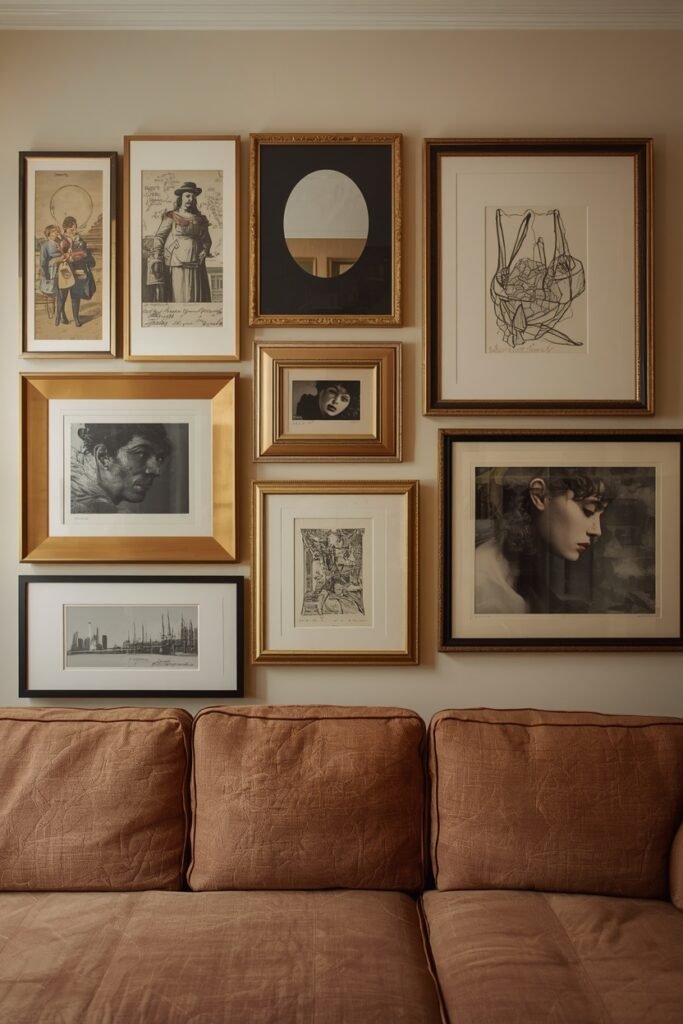
The tension between old and new is the engine that drives eclectic style forward. But how much of each? Most experienced interior stylists land somewhere in the 60-40 or 70-30 zone — meaning roughly 60 to 70 percent of your pieces lean contemporary or neutral, while 30 to 40 percent are vintage, antique, or visually aged.
This ratio works because too many new pieces make a space feel like a showroom — polished but lifeless. Too many vintage pieces and it starts to feel like a museum or, worse, a storage unit. The minority of older pieces brings soul and specificity; the majority of newer pieces provides the clean, functional framework those vintage treasures need to shine.
Where do you find affordable vintage pieces? Estate sales, thrift stores, Facebook Marketplace, local antique markets, and secondhand apps are gold mines if you shop with patience and a clear sense of what you’re looking for. The best finds rarely announce themselves loudly — they ask you to look closely.
8. Wall Art in an Eclectic Living Room — Go Big, Go Personal
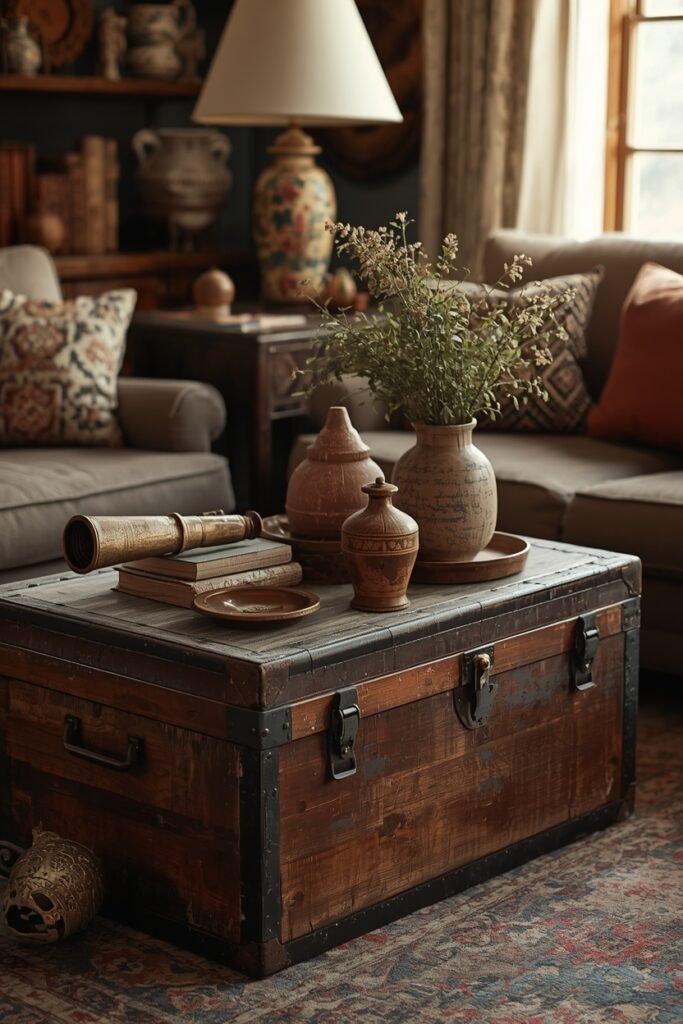
Bare walls are the single most common mistake in otherwise beautiful eclectic living rooms. Walls are vertical real estate, and in an eclectic space, they’re your greatest opportunity to display the layers of your taste and life experience.
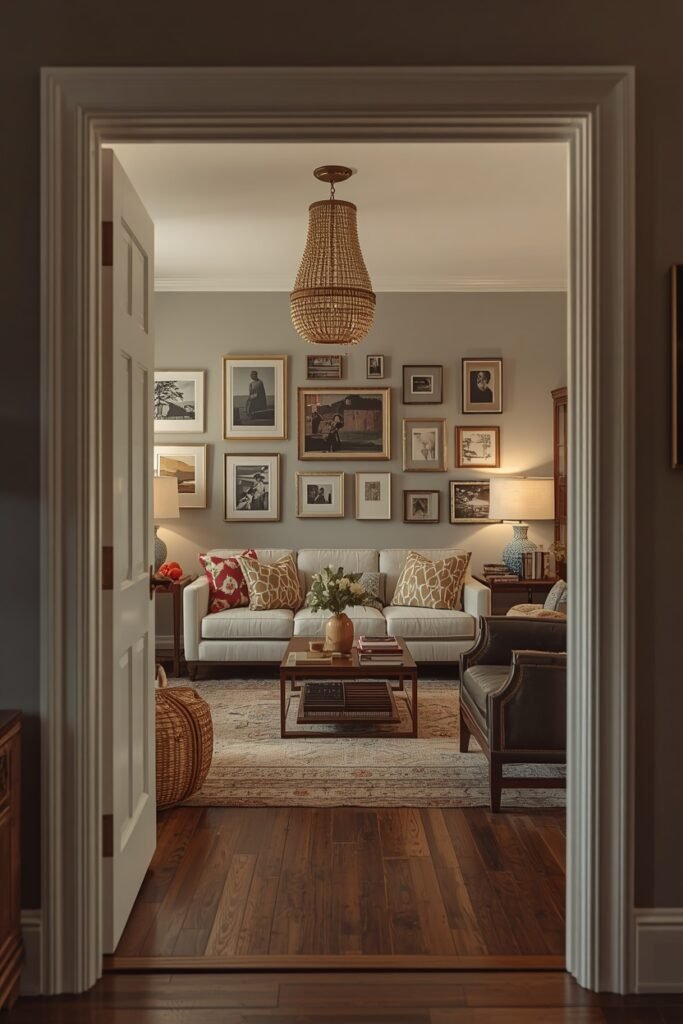
Gallery walls work exceptionally well here — but an eclectic gallery wall looks different from a curated minimalist one. Mix frame styles and finishes: black metal beside natural wood beside ornate gold. Mix artwork types: an oil painting beside a photograph beside a child’s drawing beside a textile hanging. The diversity IS the point.
If a full gallery wall feels overwhelming, a single oversized piece of art can anchor an entire wall and give the room its emotional center. Abstract works tend to be the most eclectic-friendly because they can simultaneously evoke multiple aesthetics and moods without committing to one specific era or style.
9. Plants, Books, and Objects That Tell Your Story
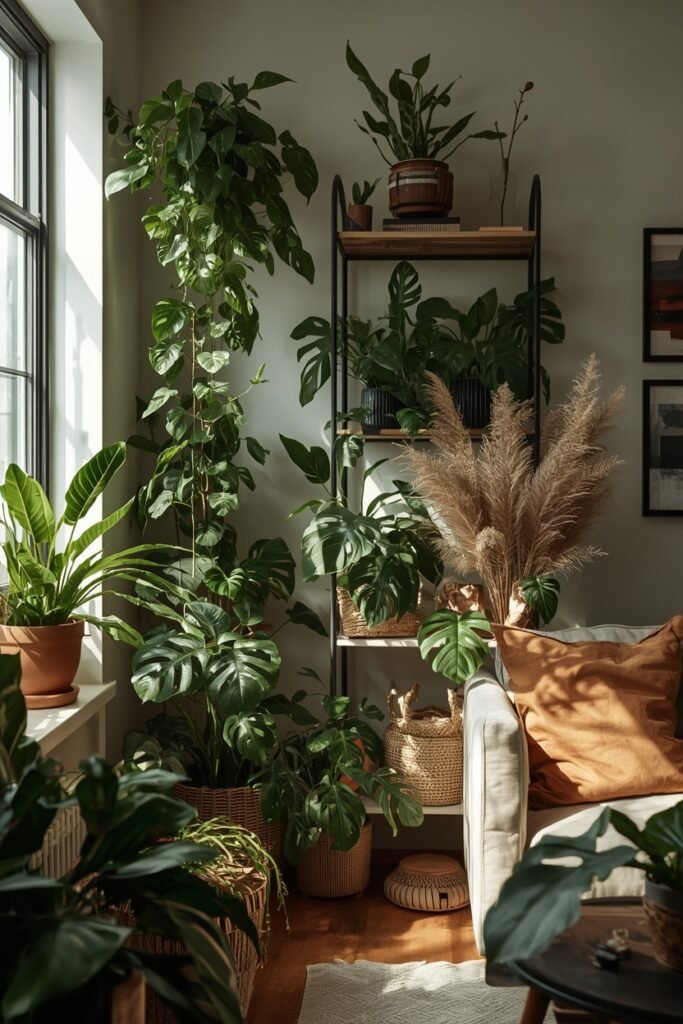
The accessories in an eclectic living room aren’t decorations — they’re autobiography. Every plant, every book stack, every travel souvenir and inherited object is a sentence in the story of who lives in this space.
Plants are among the most powerful eclectic accessories because they bring life, softness, and a sense of natural abundance that no manufactured object can replicate. A trailing pothos on a high shelf, a dramatic fiddle-leaf fig in a corner, a cluster of small succulents on a windowsill — green is the one color that somehow makes everything around it more beautiful.
“A room without plants is just furniture. A room with plants is a home that breathes.”
Books, stacked or shelved, add intellectual texture and warm color without any design effort required. Travel objects — even small ones, even inexpensive ones — carry genuine emotional charge because of what they represent. Display the things that have meaning. Edit out the things that don’t. In an eclectic space, every surface should be worth a second glance.
10. Lighting That Sets the Mood Without Stealing the Show
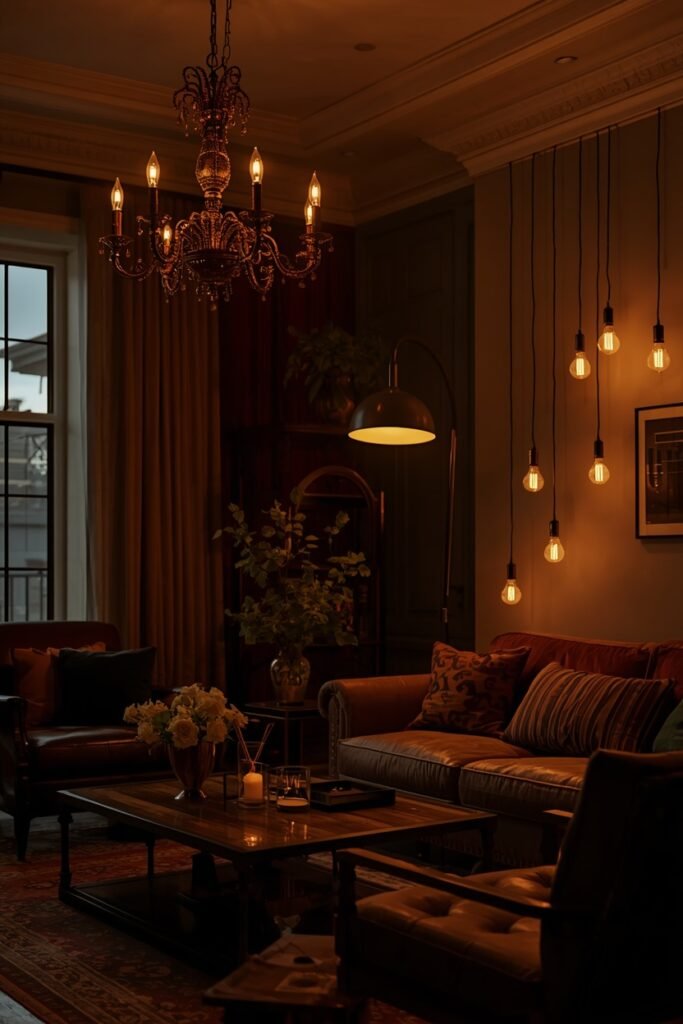
Lighting in an eclectic living room serves two purposes: functional illumination and atmospheric storytelling. And the best eclectic lighting schemes do both at once.
Layer your light sources. A statement overhead fixture — perhaps something sculptural in brass, or a vintage-style pendant — establishes the room’s personality from above. Floor lamps beside seating areas create pools of warm, intimate light that make reading and conversation feel like events worth showing up for. Table lamps on side surfaces add warmth at eye level. And candles — real ones, if you can — add a flicker that no LED bulb has ever successfully replicated.
Warm-toned bulbs (2700K to 3000K color temperature) are your ally in an eclectic space. They make wood tones glow, they make textiles look richer, and they make the entire room feel like a place someone has lived in and loved for years.
11. The Small Eclectic Living Room: Making Every Square Foot Count
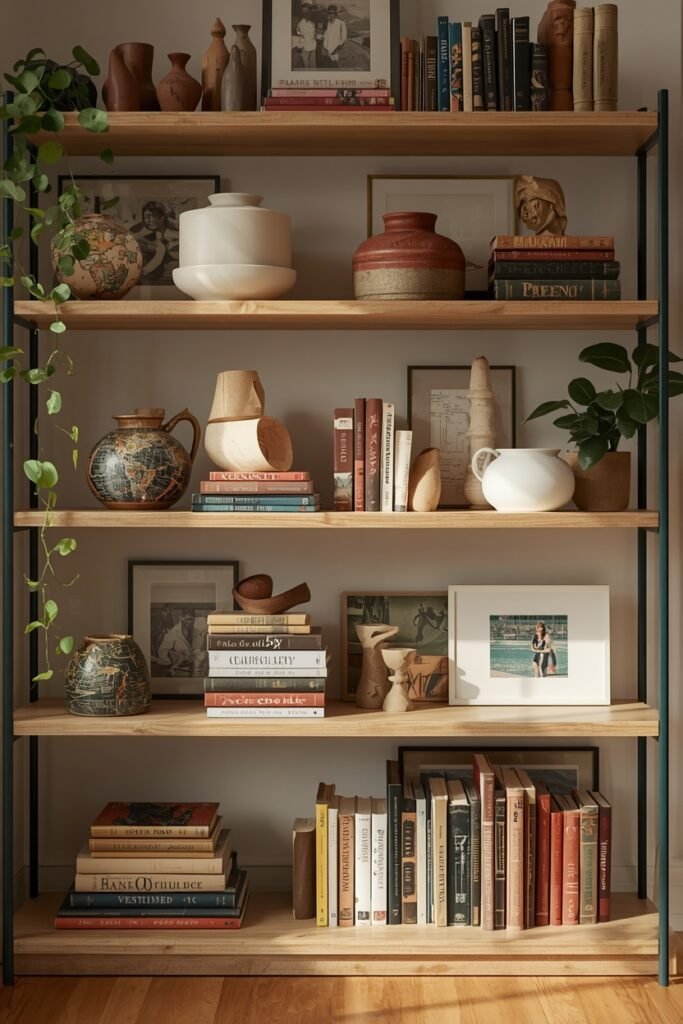
Not every eclectic living room comes with generous proportions — and honestly? Smaller spaces can be among the most charming and expressive. The compressed scale of a small room means every piece has more visual impact, and the resulting intimacy often feels more personal than a large, sprawling space.
In a small eclectic living room, edit ruthlessly. Choose fewer pieces, but make each one count. A single extraordinary vintage rug can do more for a small room than six mediocre accessories. Scale down your furniture — a loveseat instead of a full sofa, a slim-profile coffee table, wall-mounted shelving instead of a bulky bookcase.
Use vertical space intentionally. Tall bookshelves, high-hung artwork, and floor-to-ceiling curtains all draw the eye upward and create the feeling of height and spaciousness. And mirrors — strategically placed — can effectively double the visual space while adding a decorative element of their own.
12. How to Keep an Eclectic Room Feeling Intentional as It Evolves Over Time
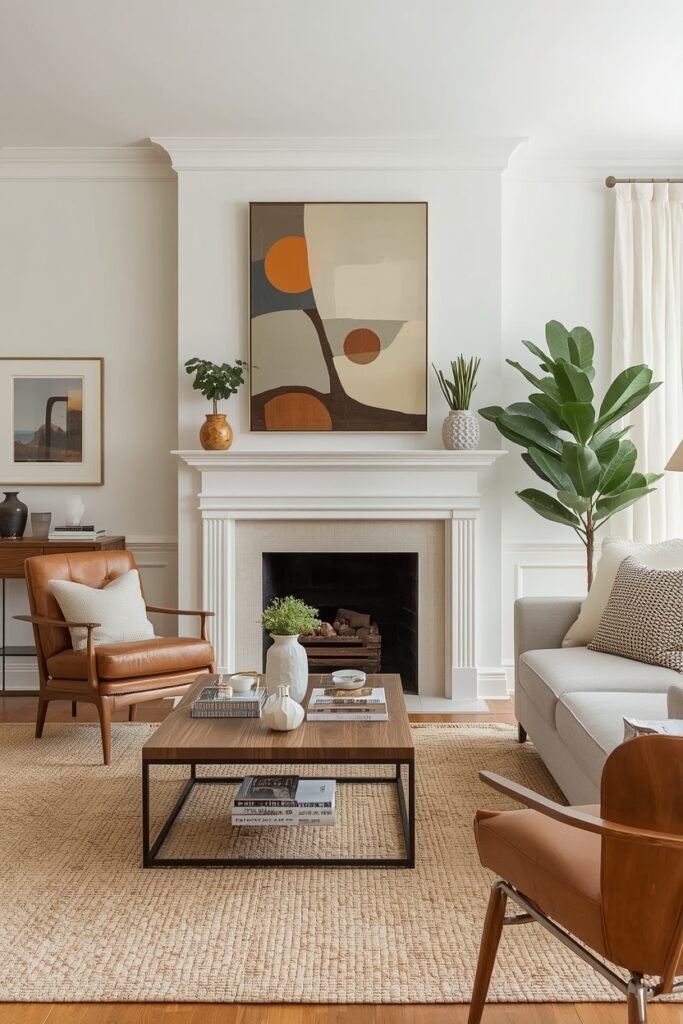
Here’s something beautiful and slightly terrifying about eclectic living rooms: they’re never truly finished. They grow with you. A piece you bring home from a trip next year, an heirloom that comes to you unexpectedly, a painting you fall in love with at a local art fair — these will all find their way in, and your room will shift and deepen as a result.
The key to managing this evolution gracefully is editing as you add. Every time something new enters the room, ask what it’s replacing or complementing. Be willing to retire a piece that no longer fits the story you’re telling, even if you once loved it. Style evolution is healthy; visual accumulation is not.
Take photos of your room periodically. Looking at it through a camera lens — or your phone screen — reveals balance and imbalance that your habituated eye misses when you’re sitting in the room every day. Small adjustments, made consistently over time, are how a merely interesting eclectic room becomes a genuinely extraordinary one.
—
🌿 How to Take Care of Your Eclectic Living Room
Maintaining an eclectic space is really about maintaining its intentionality — making sure the room continues to feel curated rather than accumulated. Here’s how to do that in practice.
Rotate accessories seasonally. Bringing in different textiles, plants, and small objects with the changing seasons keeps the room feeling fresh without requiring a full redesign. Swap heavy wool throws for light linen ones in summer; add deep-toned candles and dried botanicals in autumn.
Dust and clean with attention. Eclectic rooms, by nature, have more surfaces and objects — which means more to maintain. Make it a habit to dust decorative objects rather than working around them, and periodically take everything off a shelf, clean it, and put only the most meaningful pieces back.
Re-evaluate annually. Once a year, stand in the doorway of your living room and look at it with fresh eyes. What’s earning its place? What’s just taking up space? Give yourself permission to evolve the room as you evolve — an eclectic living room that still looks exactly like it did five years ago may be a room that’s stopped listening to the person who lives in it.
Invest in quality for the pieces you’ll keep forever. The thrifted finds, the impulse buys, the seasonal accessories — these can be affordable. But your sofa, your rug, your lighting fixtures — invest here, because they’re the bones everything else hangs on.
—
❓ FAQ
Q: Where do I start if I want to create an eclectic living room from scratch? A: Start with your statement piece — the single item you love most, whether that’s a rug, an armchair, or a piece of art. Then build your unifying thread (a color, a material, or a feeling) and let everything else respond to those two anchors. Resist the urge to buy everything at once; an eclectic room that develops over time always looks more authentic than one assembled in a weekend.
Q: How do I make sure my eclectic living room doesn’t just look messy? A: The secret is editing and intentionality. Every piece should have a reason to be there — visual, emotional, or functional. Maintain a consistent unifying thread across different styles, balance visual weight across the room, and leave deliberate empty space so that the pieces you do include have room to breathe and be noticed.
Q: Can I do an eclectic living room on a tight budget? A: Absolutely — in fact, budget decorating and eclectic style were practically made for each other. Thrift stores, estate sales, Facebook Marketplace, and secondhand apps are treasure troves for the unique, characterful pieces that eclectic rooms thrive on. Pair these finds with a few quality foundational pieces (a good sofa, a sturdy rug) and let your patience and eye do the work that money doesn’t need to.
—
💭 Final Thought
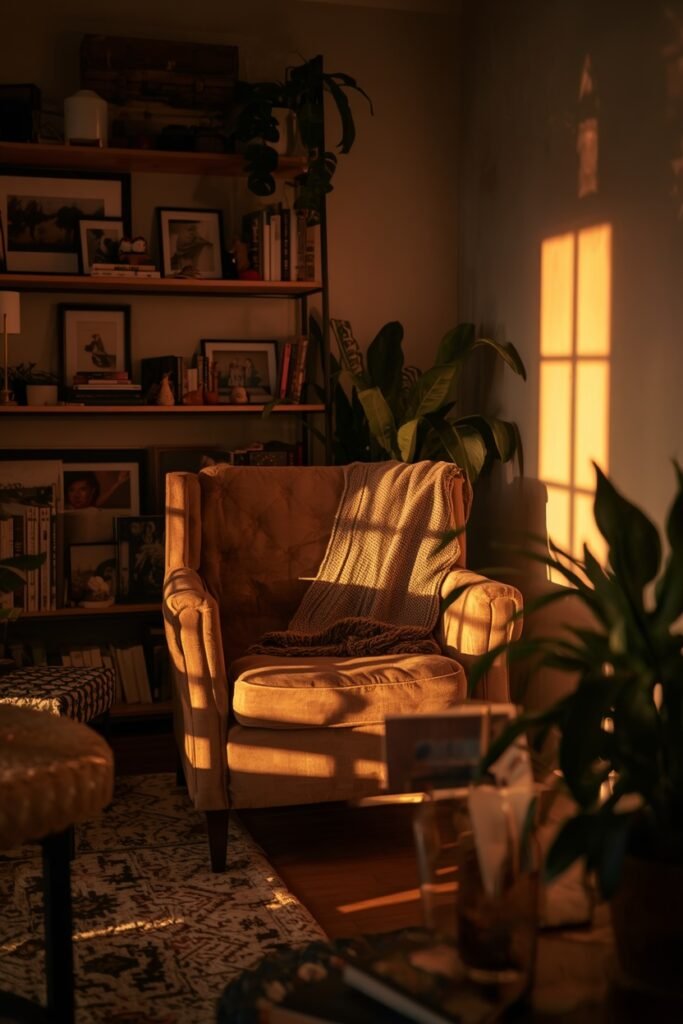
An eclectic living room is, at its core, an act of radical self-expression — a room that refuses to choose between the person you’ve been, the places you’ve traveled, and the things you’ve come to love along the way. It’s one of the few spaces in modern design that rewards authenticity over conformity, and storytelling over trend-following. The best eclectic rooms don’t look like they were designed — they look like they were lived.
So as you look around your own living room today, ask yourself this: does this space tell your story, or someone else’s?