The Garage Tool Wall That Finally Made My Weekend Mornings Make Sense
I couldn’t find the drill. The drill — the one thing I needed. It was somewhere in that garage, behind the folded-up beach chairs and under a tarp that had no business being there, probably laughing at me. That was the morning I decided something had to change.
—
1. Why the “Just Shove It In There” Method Has a Hidden Cost
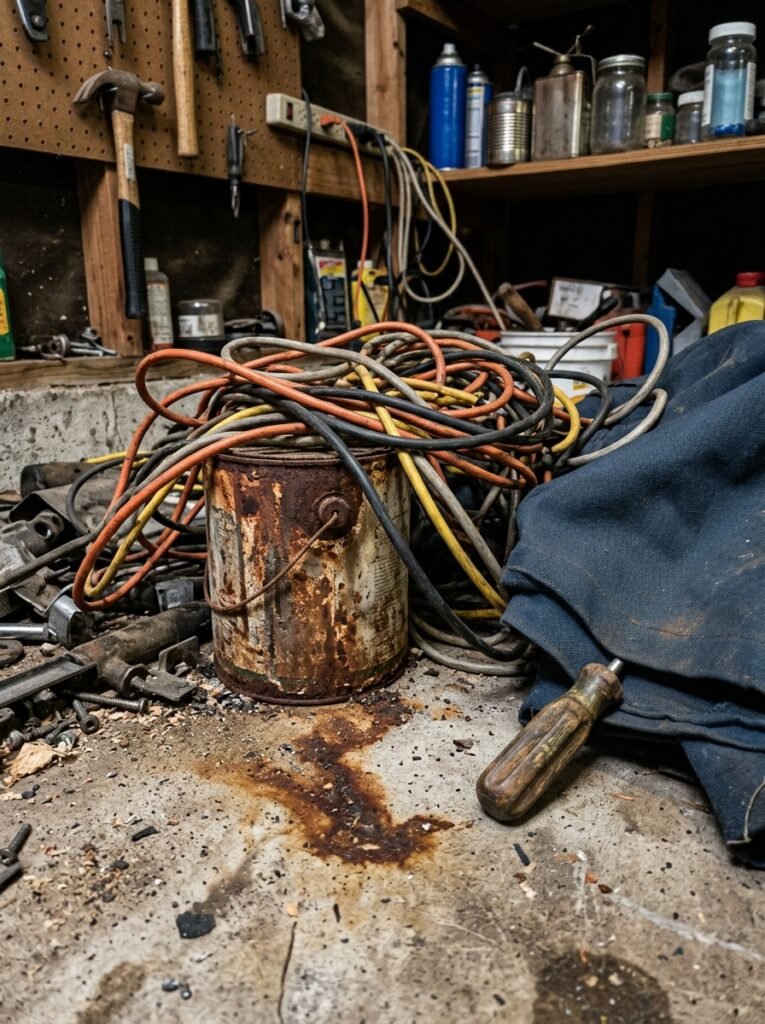
Here’s what nobody tells you about a disorganized garage: it doesn’t just cost you time. It costs you money. How many times have you bought a second set of Allen keys because the first set was just… gone? Or picked up another pack of sandpaper because you couldn’t see what you already had?
Not gonna lie, I did this for YEARS.
The real problem with a chaotic garage isn’t the chaos itself — it’s that the chaos becomes invisible after a while. You stop seeing it. You step over the same extension cord every single day and your brain files it under “normal.” And then you spend twenty minutes hunting for a tape measure every time you need one, and somehow that doesn’t feel connected to the mess, it just feels like bad luck.
It’s not bad luck. It’s a system problem. And system problems have system solutions.
2. The Wall That Does More Work Than You Think It Does
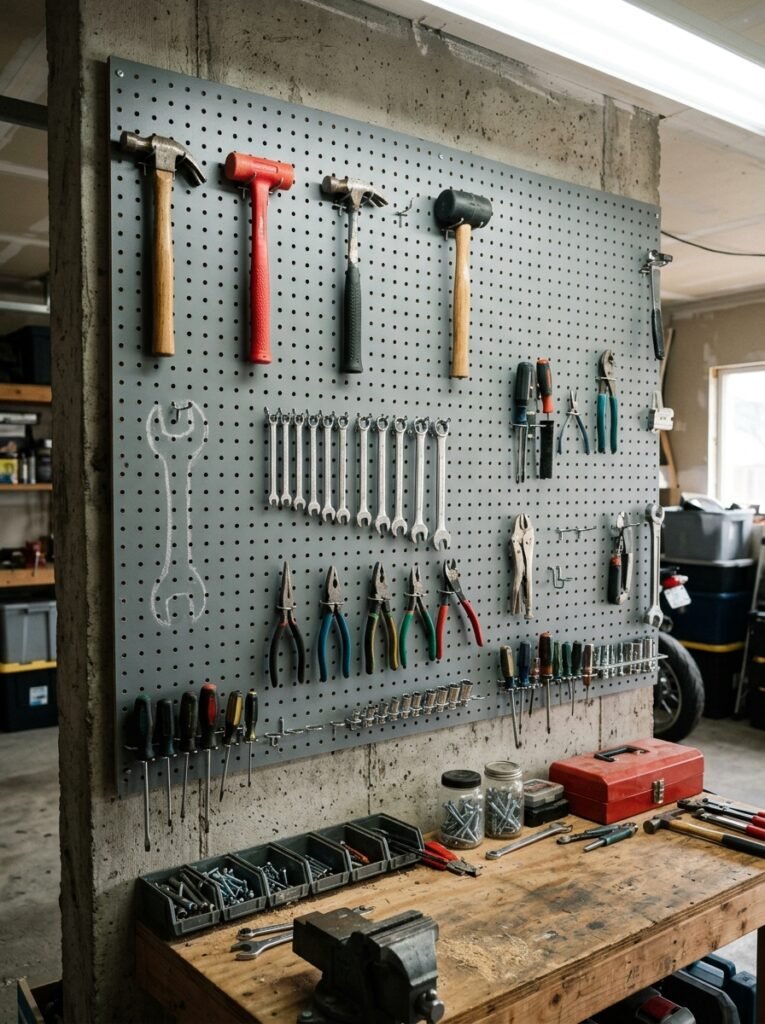
The single most impactful change you can make in a garage — before any bins, before any labels, before anything else — is turning at least one wall into a vertical storage surface.
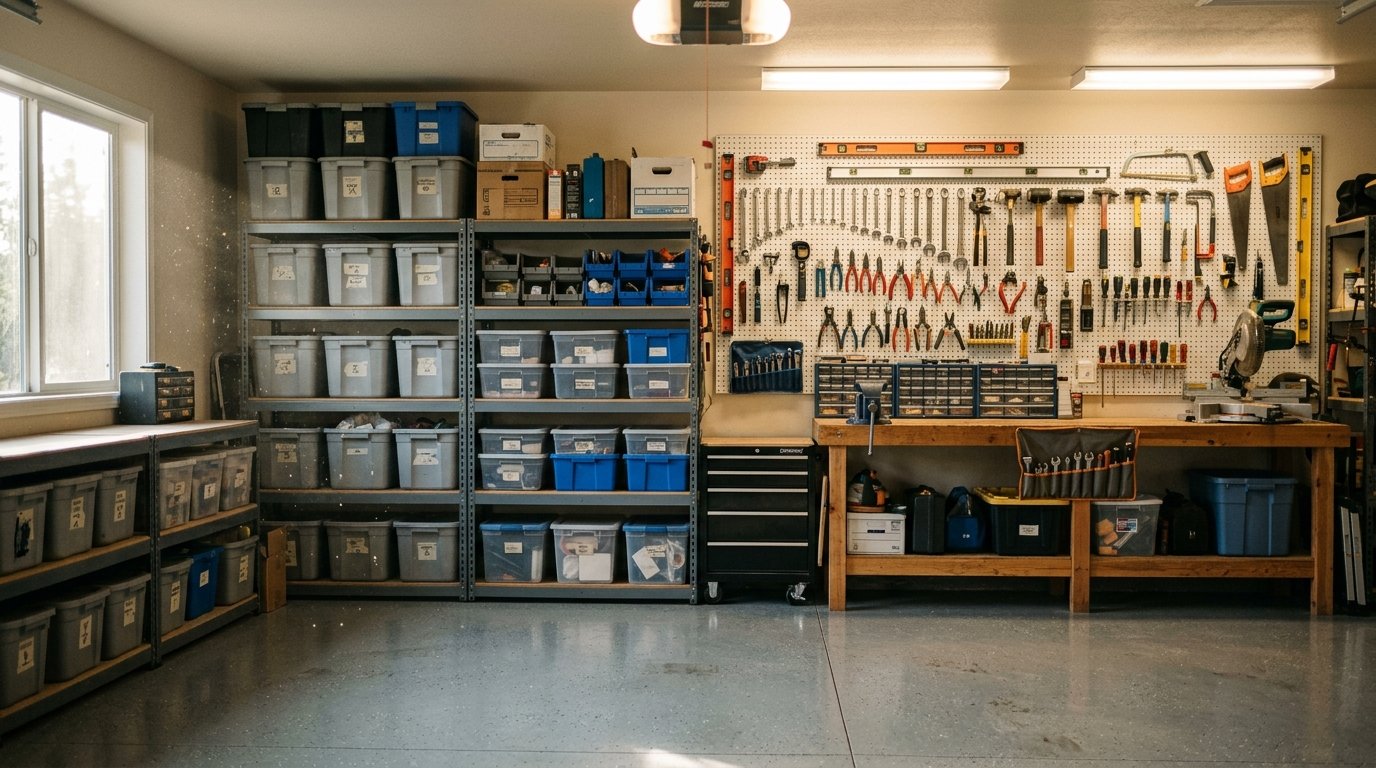
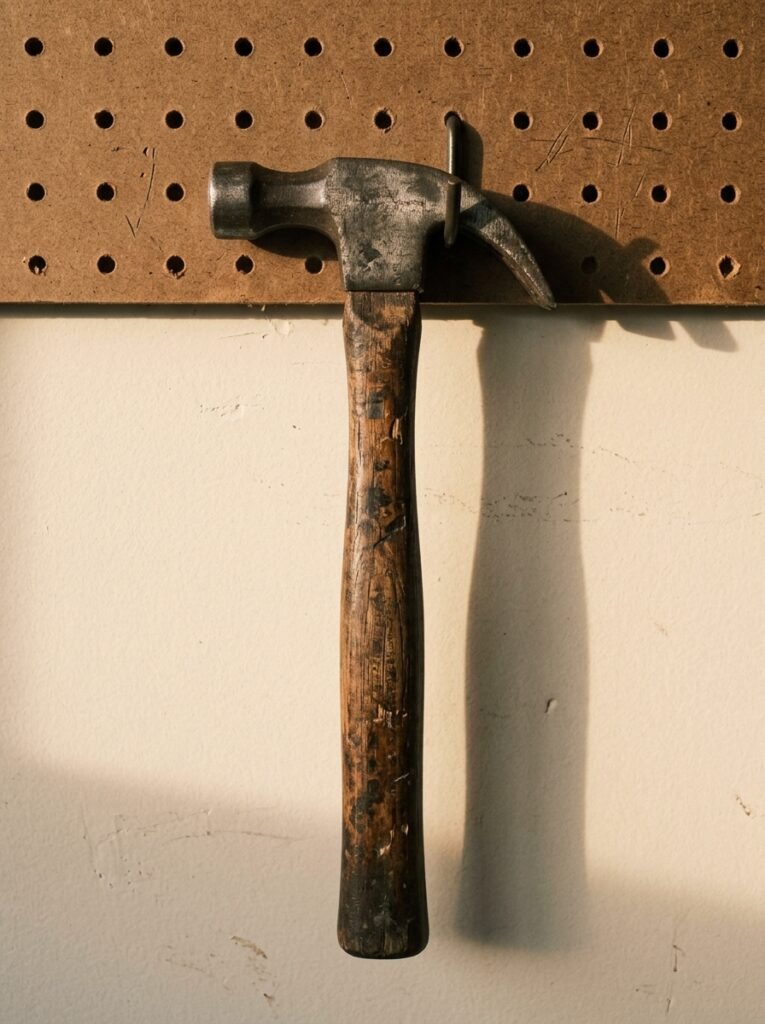
Pegboards are the obvious answer, and honestly they’ve earned their reputation. A sheet of pegboard hung along your main wall changes the entire dynamic of the space. Tools that were stacked in a drawer or piled in a bucket are suddenly visible, reachable, and — this is the part that actually matters — back in the right spot after you use them.
“Visible storage is the only kind of storage that actually works in a garage. If you can’t see it, it doesn’t exist.”
The key thing with pegboard is not to use it for everything. I know that sounds counterintuitive but stay with me. Use it for the tools you reach for most — the hammer, the level, the screwdrivers, the pliers. The stuff you grab once a year can live somewhere less prime. Give your pegboard the good real estate and don’t clutter it up with the drill bit extension you’ve used twice.
And one more thing: paint the wall behind the pegboard before you hang it. A deep charcoal or a warm white makes the whole setup look intentional instead of like a hardware shop exploded in your house.
3. The Satisfying Math of Matching Hooks to Tools
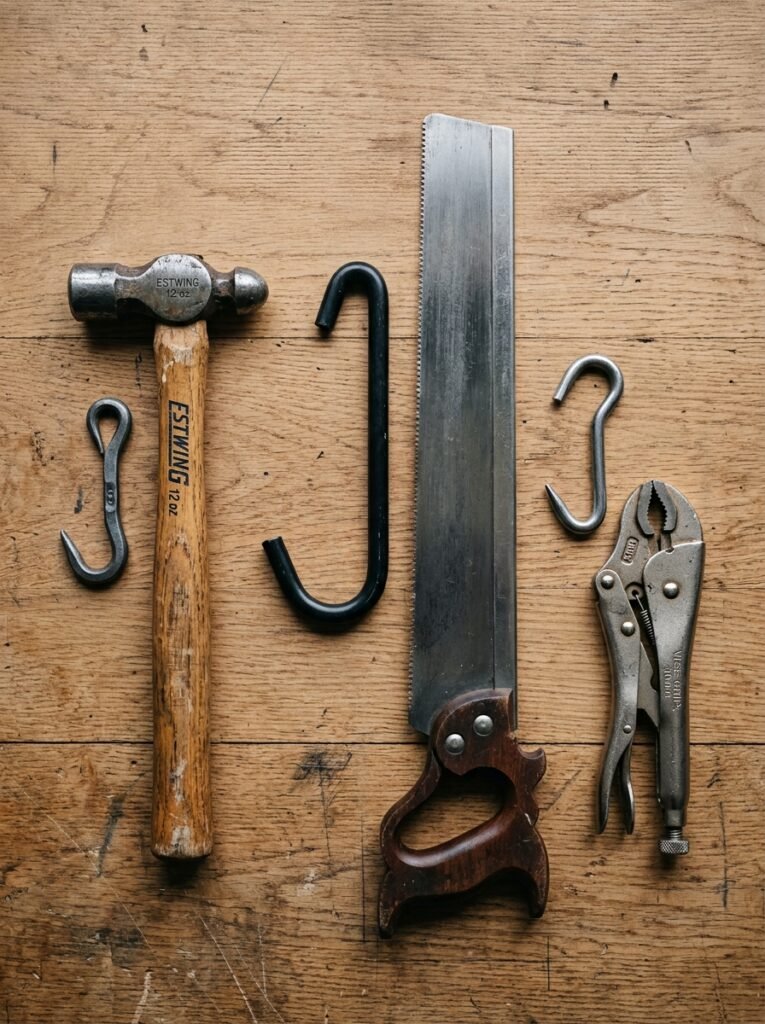
Pegboard hooks are not all the same. This is something I had to learn the hard way after buying a bulk pack of generic hooks and spending an afternoon watching my circular saw slowly slide itself off the wall.
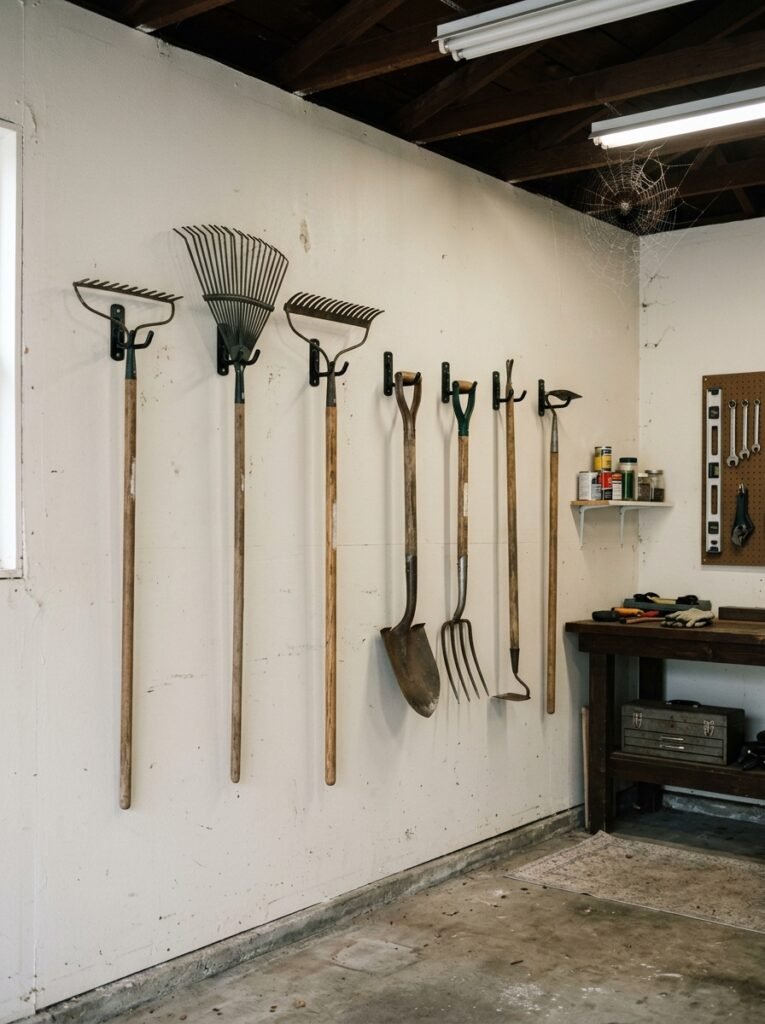
Different tools need different hooks. Long-handled tools — rakes, brooms, shovels — want two-pronged hooks spaced far apart, not a single J-hook that lets the handle spin and fall at 11pm when you’re trying to sleep. Heavier power tools want reinforced double hooks. Coiled items like extension cords and garden hoses do brilliantly on large round pegs where they can hang in neat loops.
There’s something genuinely satisfying about matching the right hook to the right tool. It’s a small thing. But when everything has a hook that actually FITS it, the whole system holds. You stop fighting the garage and the garage starts working with you.
One tip I don’t see mentioned enough: put two small pegs close together and hang a dustpan over them crossways. The dustpan always has a home, never falls behind anything, and you’ll wonder why you didn’t do it sooner.
4. The Color Principle That Sounds Silly Until It Works
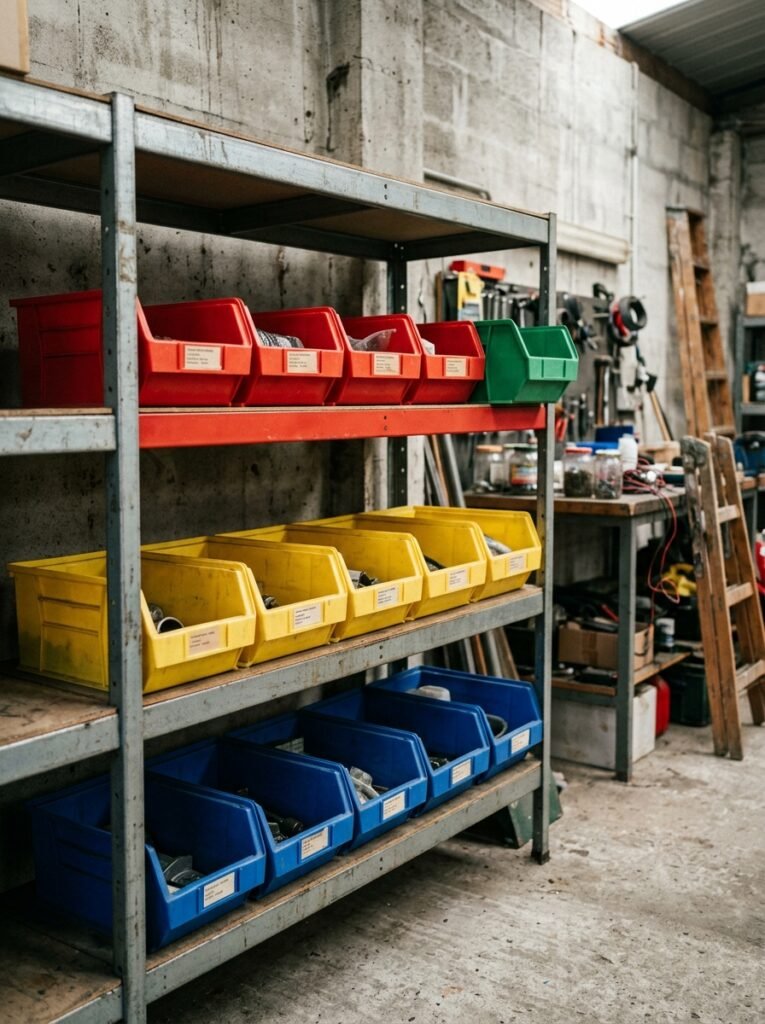
Color-coding your garage storage isn’t an Instagram aesthetic thing. Or — okay, it’s a little bit that. But it also genuinely helps.
The idea is simple. Pick a color (tape, paint, a cable tie, anything) for each category of tool. Garden tools get green. Electrical stuff gets yellow. Plumbing gets blue. Doesn’t have to be elaborate. A wrap of colored tape around the handle of a tool takes about four seconds.
Side note — this is ESPECIALLY useful if multiple people are using the garage. It removes the “where does this go” question entirely. The answer is: wherever the matching color is. Even kids can help return things when the system is that obvious.
“Four seconds of colored tape around a handle saves ten minutes of searching. Do the math.”
It also helps at a glance when you’re doing a tool audit — which, yes, you should do about once a year, pull everything out, see what’s broken, what’s duplicated, what you haven’t touched since 2019. The color system makes it much easier to notice if your electrical category has somehow exploded into twice the space of everything else, which means you’ve been accumulating and not editing.
5. What to Do With the Floor (Hint: As Little As Possible)
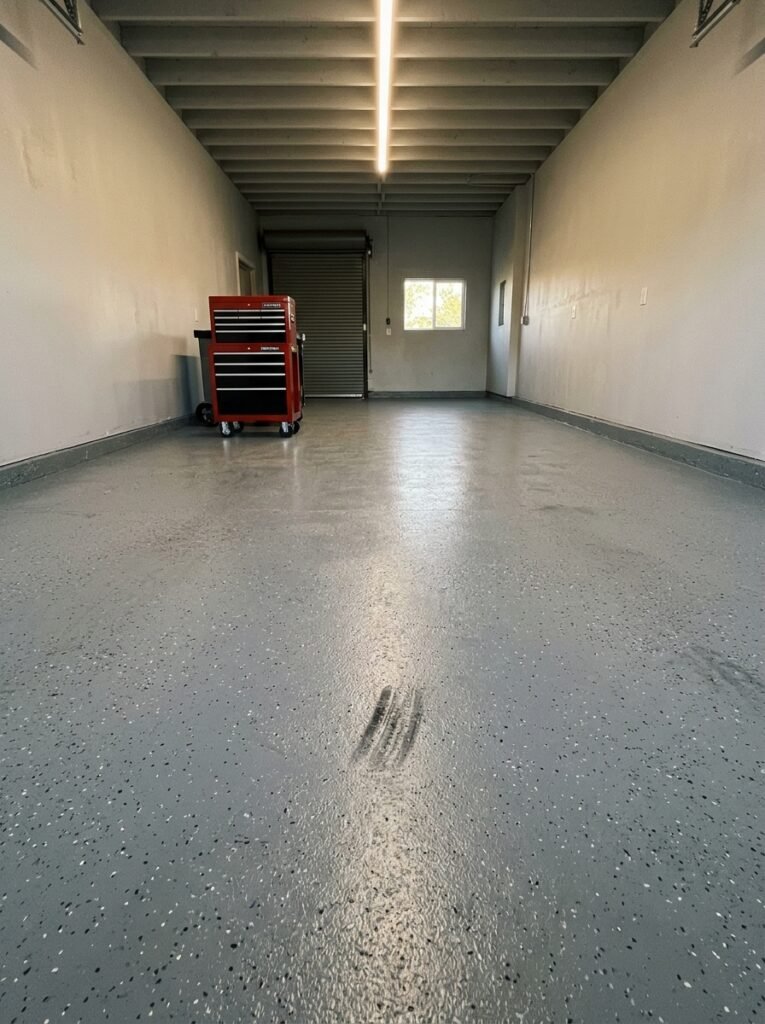
The floor is where garage organization goes to die.
Every time you put something on the garage floor — just temporarily, just for now — you’ve started a new pile. It’s basically a law of physics at this point. The floor absorbs clutter like it’s magnetic.
The goal is to get as much as possible off the floor. Not just tools — everything. Cabinets with legs, wall-mounted shelving, hooks at different heights, ceiling-mounted overhead storage for the bulky seasonal stuff (holiday decorations, camping gear, the sledge that comes out twice a British winter). Whatever gets things up off that concrete surface is a win.
What SHOULD live on the floor? Things with wheels — a tool chest, a rolling bin for sports equipment, maybe a small fridge if that’s your vibe. And even those should have a defined spot, a piece of tape or a painted outline on the floor if you need to make it official.
The floor clears, the garage breathes. It really is that simple.
6. The Small Parts Problem (Nobody Talks About This Enough)
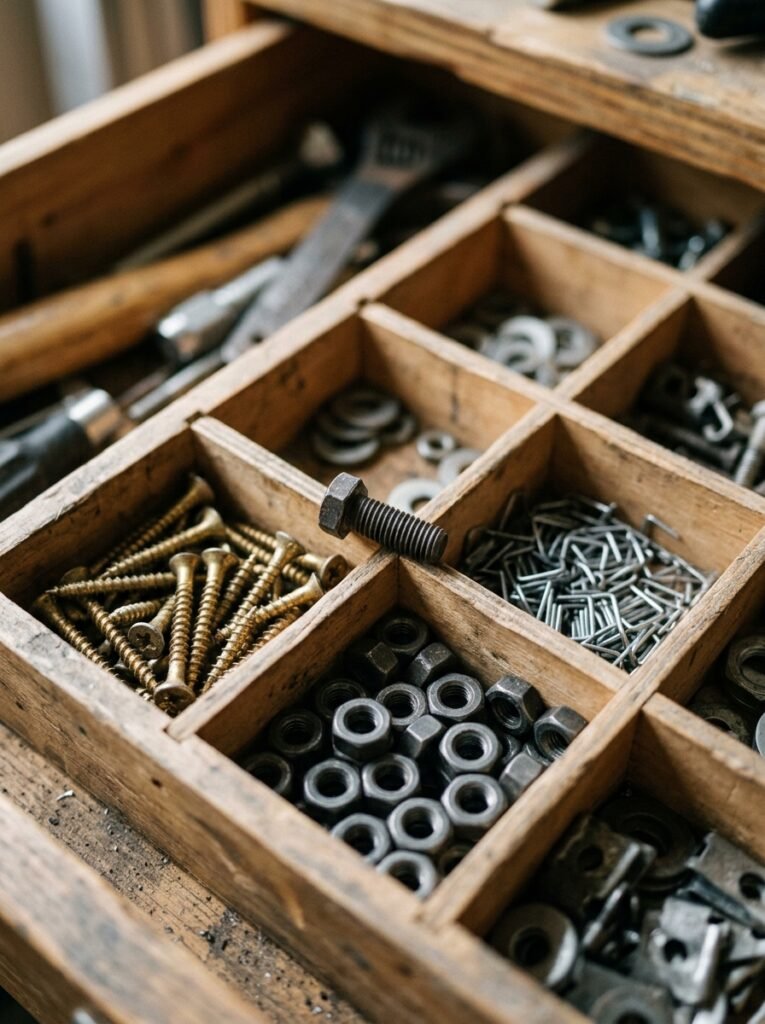
Here’s where most garage organization projects fall apart. Big tools? Great, put them on the pegboard. Rolling bins for the garden stuff? Sorted. But what about the seventeen loose screws, the three mystery keys, the box of mixed nails, the picture hooks, the rawl plugs, and the random collection of nuts and bolts that have been in a coffee tin since 2014?
Small parts will defeat you if you let them.
The solution is a dedicated small parts station — a set of small transparent drawers, each labeled with what’s inside. Not a junk drawer, not a coffee tin. An actual system where M4 bolts live with other M4 bolts and wood screws are separated from drywall screws. This sounds obsessive but it saves genuine time. You stop buying hardware you already own because you couldn’t find it.
Magnetic parts trays bolted to the wall are fantastic for this too. Anything metal — loose screws, drill bits you pull out frequently, zip ties with their metal fasteners — just sticks there and stays visible.
7. The One Thing Tall Shelving Gets Wrong
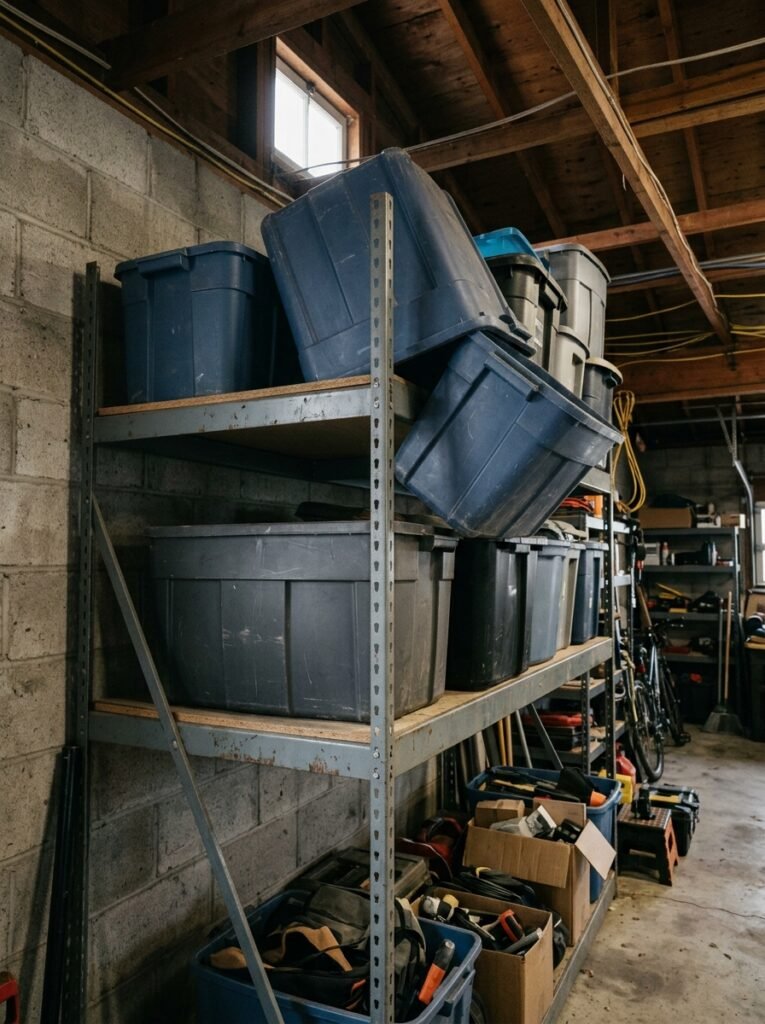
Tall shelving units along the garage wall look great in the photos. And they ARE useful. But there’s one way people consistently get them wrong, and it’s this: putting heavy things on the top shelf because there’s room there.
Heavy bins, heavy tools, heavy anything — bottom shelf. Always.
The logic is obvious once you think about it. Heavy things at the top make the unit top-heavy and potentially dangerous. But also — who wants to wrestle a heavy bin down from above their head? Things that go up high should be things you don’t use often AND that are light. Think: seasonal decorations, spare bulbs, the paint tins for colors you’re probably never using again but can’t bring yourself to throw out.
Medium-weight, medium-frequency items go in the middle. And the stuff you grab all the time — WD-40, spare batteries, the good torch — lives at eye level or just below. Easy to grab, easy to put back.
8. The Garage Workshop Corner That Doesn’t Need a Lot of Space
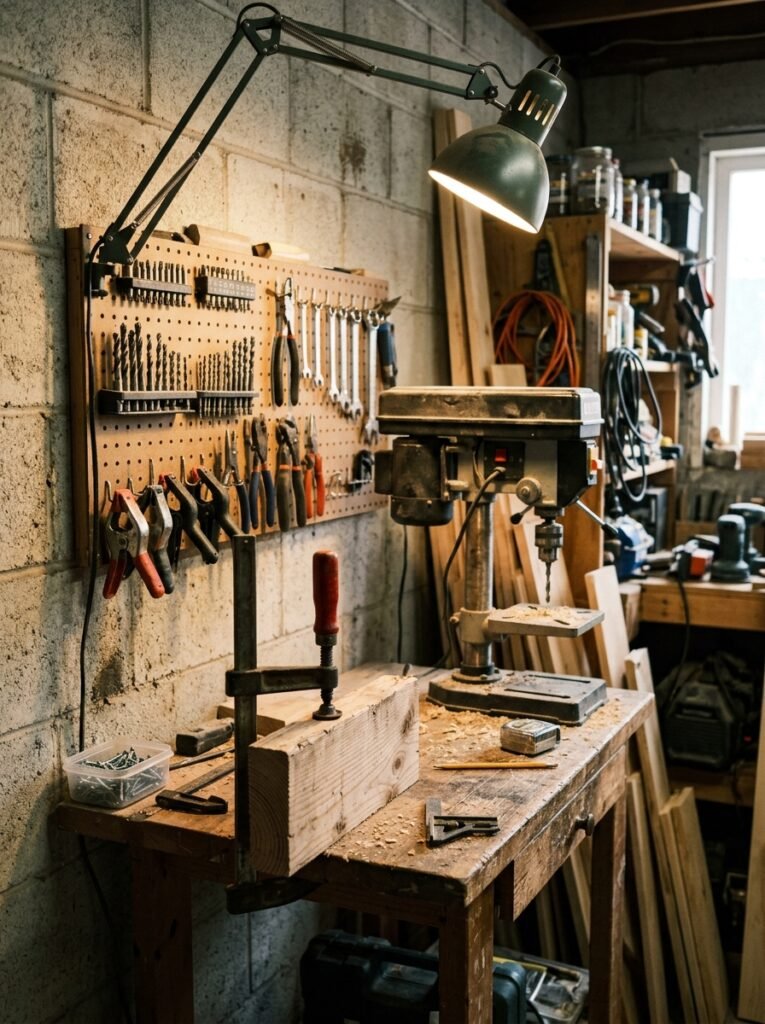
You don’t need a full workshop to have a proper place to work. Even a three-foot run of wall with a simple workbench surface underneath some pegboard does the job.
What makes a workbench area actually functional is what’s above and around it. The pegboard directly overhead — within arm’s reach — should hold only the tools you use while working at that bench: measuring tape, pencil holder (yes, a dedicated spot for pencils, don’t @ me), safety glasses, a small set of screwdrivers, maybe a power strip for charging tools. Everything else lives elsewhere.
“A workbench with everything you need within arm’s reach and nothing else is worth more than a whole room of cluttered storage.”
Lighting matters here too. Not the single fluorescent strip overhead — that works fine for general light but it’s too far away and creates shadows exactly where you’re trying to see. A small task light clamped to the edge of the bench, the kind that has a flexible arm, changes everything. You can actually see what you’re doing.
And a power strip with surge protection under or beside the bench means you’re not running extension cords across the floor every time you need to charge a tool or plug in a sander. Which goes back to rule one about the floor.
9. Labeling Systems That People Actually Maintain
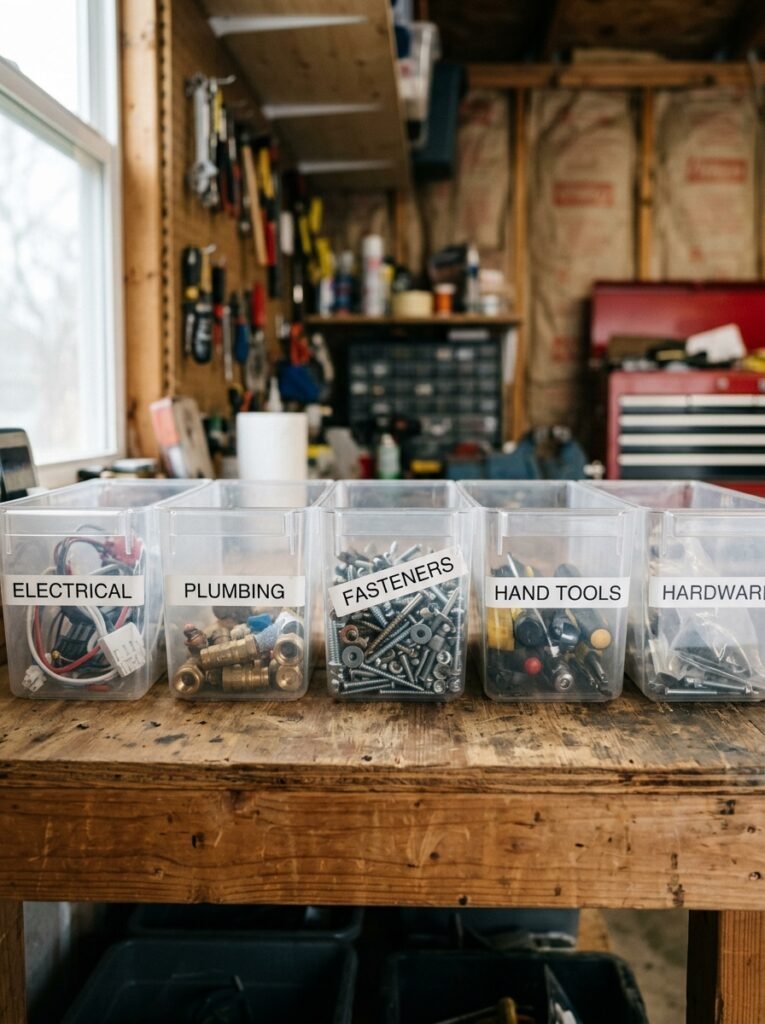
The label maker dream is real and I fully support it. But here’s the thing — complicated labeling systems don’t get maintained. The beautifully printed label becomes meaningless when it’s on a drawer that now holds something completely different because life happened.
Keep your labels broad enough to survive some evolution. “Drill Bits” will stay accurate longer than “3mm–6mm HSS Drill Bits.” “Garden Fixings” works better than “Fence Bracket Hardware.” Give categories room to breathe.
For bins and boxes on high shelves, big bold handwritten labels in marker are fine. More than fine, actually. You can read them from across the garage, they take ten seconds to update, and there’s something kind of pleasingly utilitarian about them that honestly looks good in that raw garage setting.
What doesn’t work: no labels at all (you know what’s in there now, you won’t in eight months) and labels so specific that the whole system becomes annoying to maintain.
10. The Seasonal Rotation Nobody Does But Everyone Should
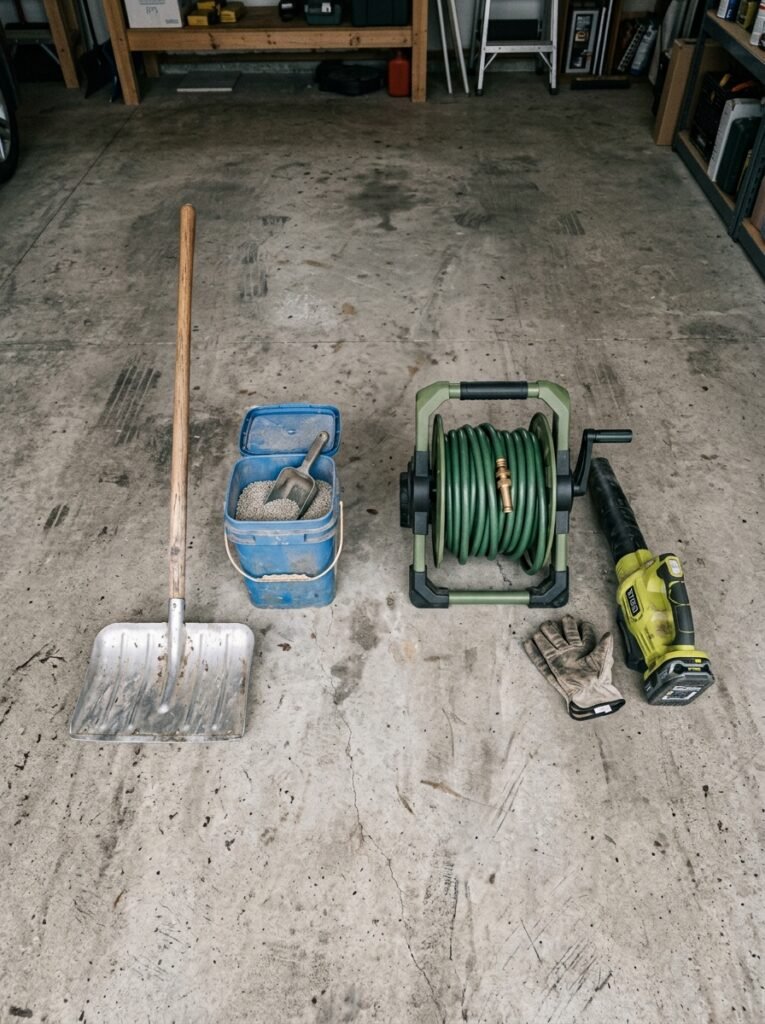
Spring is not the same garage as autumn. And if you’re treating yours like it is, you’re storing summer gear right where you need winter gear, and wondering why the garage feels like a puzzle every time you go in there.
The overhead and far-back storage is for whatever season you’re NOT in. Everything that needs regular access moves to the front, the bottom, the prime pegboard real estate. A lawnmower shouldn’t be blocking a snow shovel in December. The paddling pool shouldn’t be in front of the football in September.
Twice a year — spring and autumn — do a full garage rotation. It takes maybe an hour and it transforms how useable the space feels for the next six months. It’s genuinely one of the highest-return things you can do for a garage.
11. The Garage Door Wall People Forget About
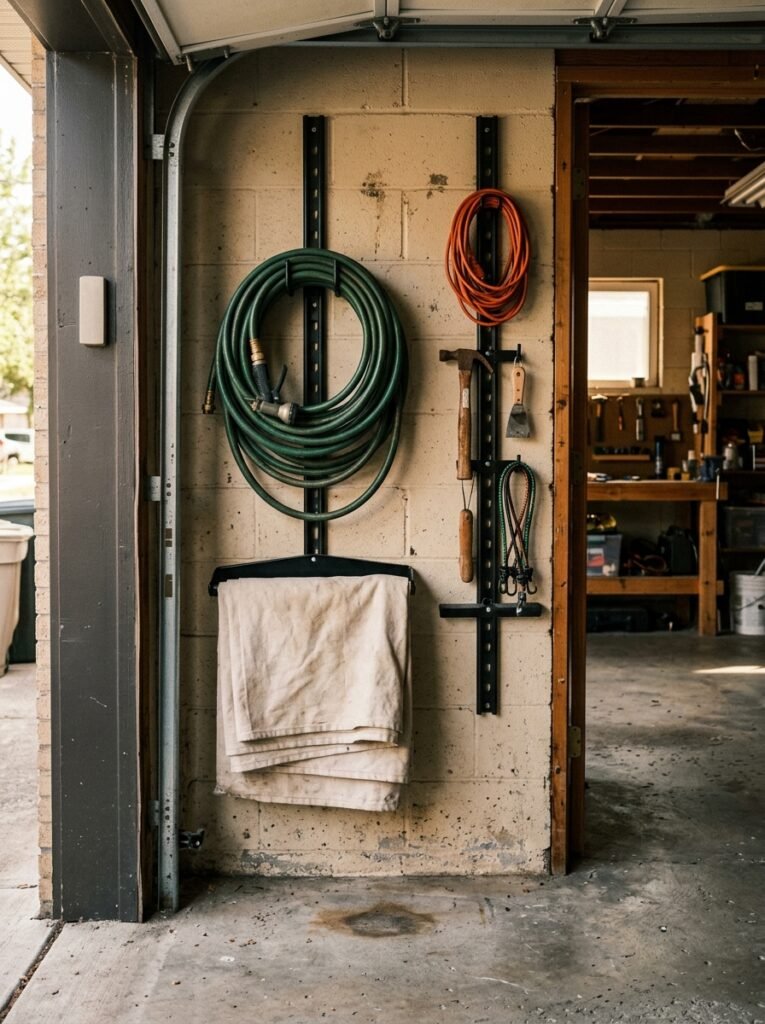
The wall beside the garage door — or in some garages, the back of the garage door itself — is almost always wasted space. And it’s some of the best vertical real estate you’ve got.
Slim wall-mounted racks on that side wall are perfect for long flat items: levels, straightedges, lengths of trim or moulding waiting for a project. The back of the garage door (if it’s solid and not full-panel glass) can take lightweight hooks for thin items like bungee cords, jump leads, or a snow brush.
None of this requires major investment or a weekend project. It’s often just a few screws and a rail, or some hooks, and suddenly a wall you weren’t using is quietly solving three small problems at once.
12. What a Finished Garage Actually Feels Like
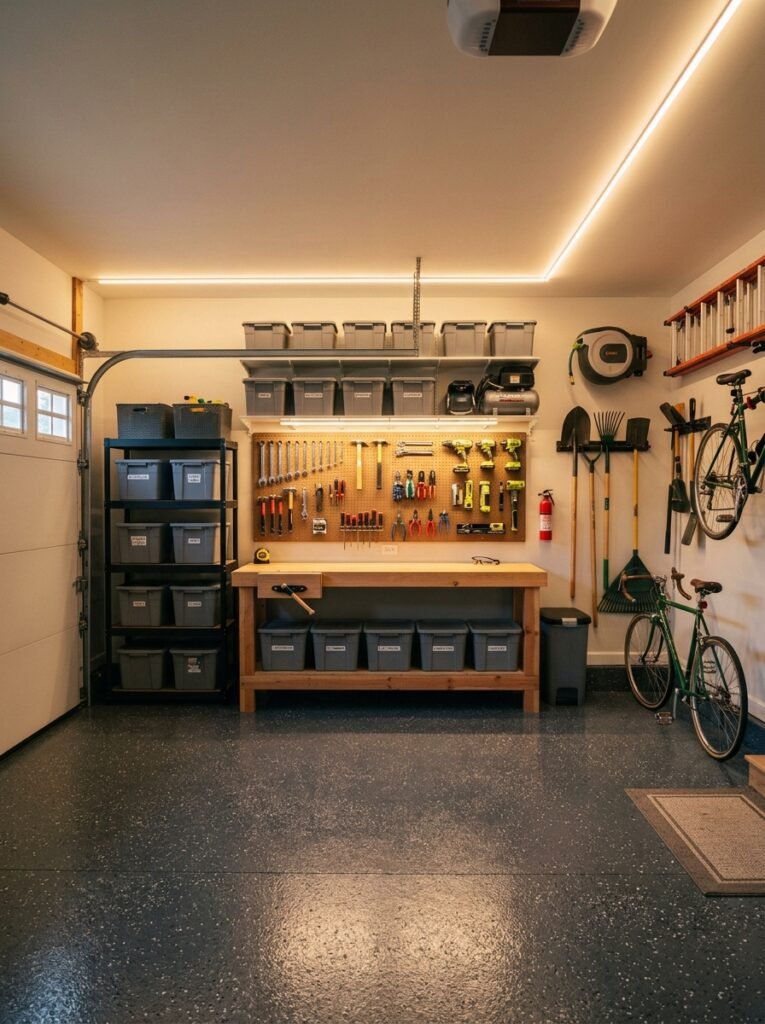
Here’s the thing nobody says about an organized garage: it changes how you feel about the projects you’ve been putting off.
When the drill is where it’s supposed to be, and you can see your sandpaper options at a glance, and the extension cord is coiled on its hook instead of tangled under a bag of compost — you actually WANT to fix that fence panel. The barrier was never the time or the skill. It was the friction. Ten minutes of hunting for tools before you even start kills the motivation completely.
Fix the friction and the momentum comes back. I genuinely didn’t expect this when I started organizing mine. I thought I was just tidying a space. I ended up doing about six deferred projects in one month because the garage stopped being a place I dreaded walking into.
It’s not a small thing to have a space that works. It’s actually kind of enormous.
—
❓ FAQ
Q: What’s the best first step if the garage is completely chaotic? A: Empty it out completely before you do anything else. I know that sounds extreme but sorting things into categories when they’re still spread across random shelves doesn’t work. Pull everything out, sort into piles on the driveway (keep, donate, bin, put-elsewhere), and then you’re working with a clean slate and you actually know what you’re storing before you decide where.
Q: How do I organize a garage when I share it with someone who doesn’t care about organization? A: Make the system so effortless that it’s easier to use it than not. Labeled open bins rather than closed drawers. Large hooks that things drop onto without precision. The system has to work for the least motivated person using the space, not just the most enthusiastic one. Also: dedicated zones so each person’s stuff is clearly theirs.
Q: Do I need to spend a lot of money to get a properly organized garage? A: Genuinely, no. Pegboard is inexpensive, a set of hooks costs almost nothing, and a label maker is optional if you’ve got a marker. The highest-impact changes — getting things off the floor, going vertical, labeling clearly — cost almost nothing. Spend money on a solid workbench surface if you use your garage for projects. Everything else can be budget-friendly and still work brilliantly.
—
💭 Final Thoughts
An organized garage isn’t about perfection. It’s about a space that stops arguing with you every time you walk in. The amber light clicks on, everything’s where it should be, and you can just — get on with things.
That’s the dream, right? A garage that feels like it’s on your side.
What’s the one tool in your garage that’s never, ever where it’s supposed to be?