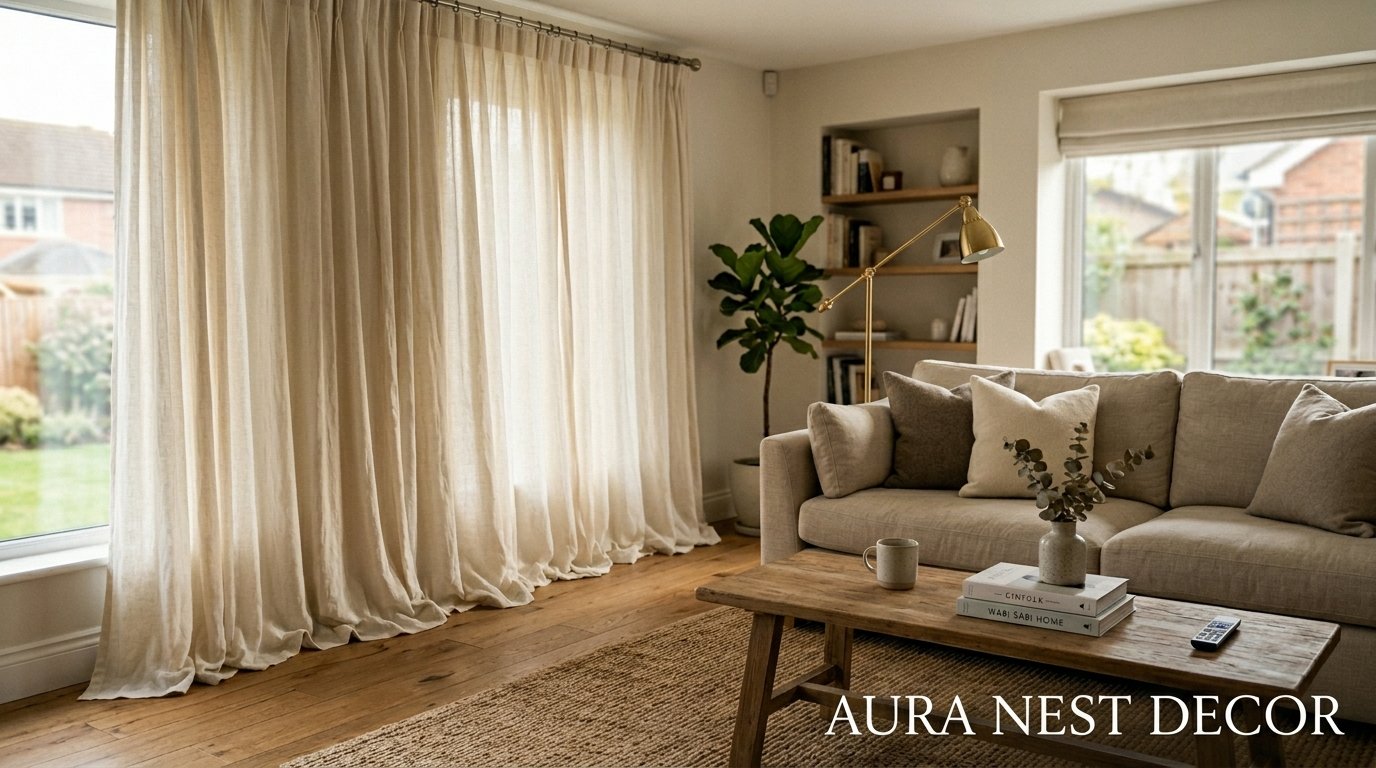
The Curtain Decision That Changes Everything About Your Living Room (And Most People Get It Wrong)
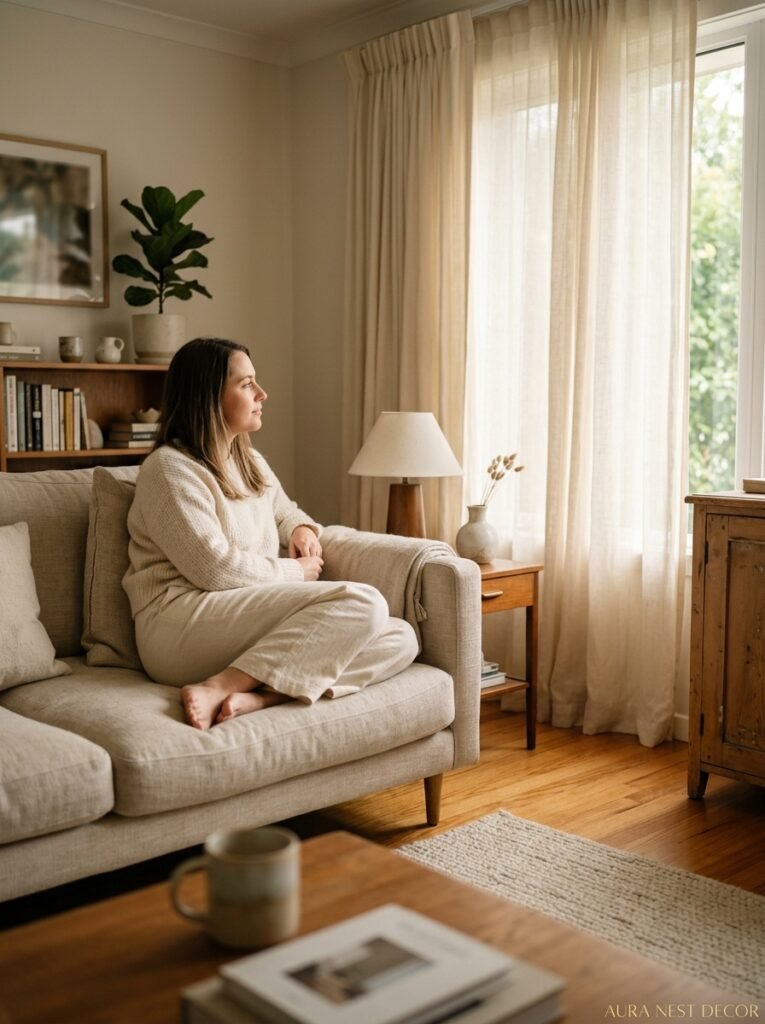
You pull them closed at 6pm on a dark November evening and suddenly the whole room shifts. Or you don’t — and the window looks naked and slightly sad, and somehow the entire space feels unfinished no matter what else you’ve done. Curtains aren’t decoration. They’re the thing that decides whether a room actually feels like a place someone lives in.
—
1. Why the Wrong Curtains Make an Expensive Sofa Look Cheap
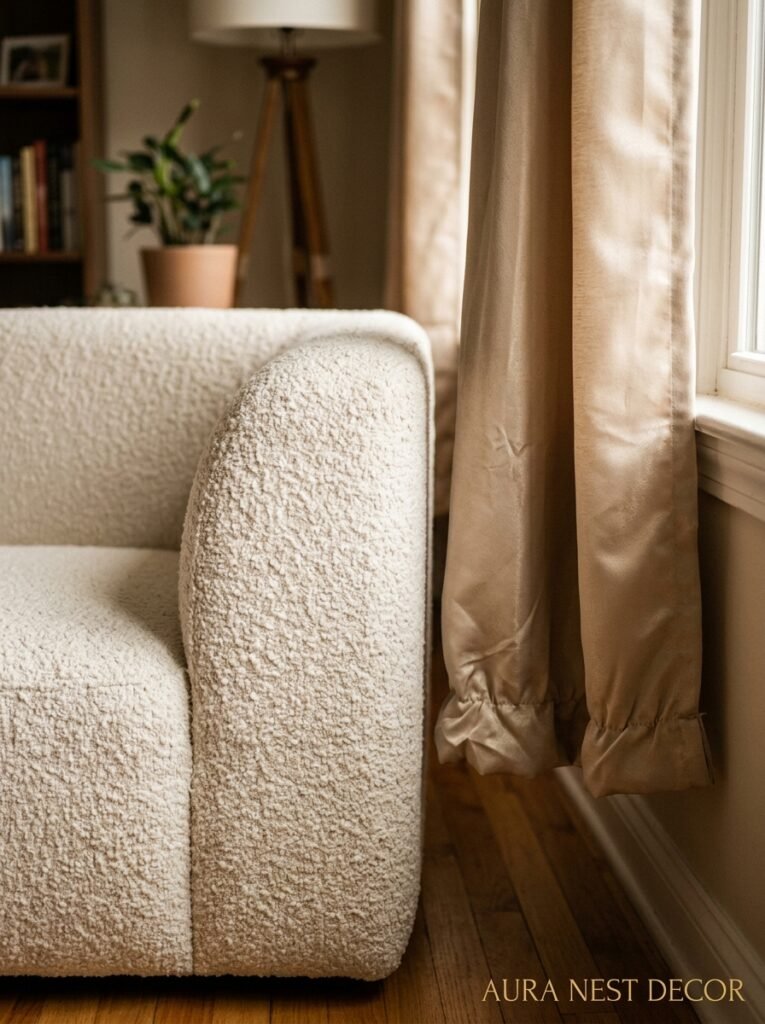
I’ve seen it so many times. Gorgeous sectional, beautiful rug, great light fixtures — and then curtains from a big-box store, hung at exactly window height, looking like an afterthought. And honestly? It tanks everything else.
Here’s the thing nobody tells you when you’re starting out: curtains are the single most visual thing in a living room. They cover vertical space. They frame the window, which frames the light, which is basically the star of any room. So when they’re wrong, they’re VERY wrong.
Short curtains are usually the culprit. If your curtains end at the windowsill, or hover a few inches below it, the whole room reads as squashed — even if your ceilings are actually pretty decent height. The eye wants curtains to travel. It wants to follow a long vertical line from somewhere near the ceiling all the way to the floor, and when that line gets cut short, something just feels off. You might not even know why the room bothers you, but it’s that.
So before anything else — before fabric, before pattern, before colour — you need to decide where the rod goes and where the hem lands. Everything else builds from those two decisions.
—
2. The Hanging Height Secret That Interior Designers Won’t Shut Up About
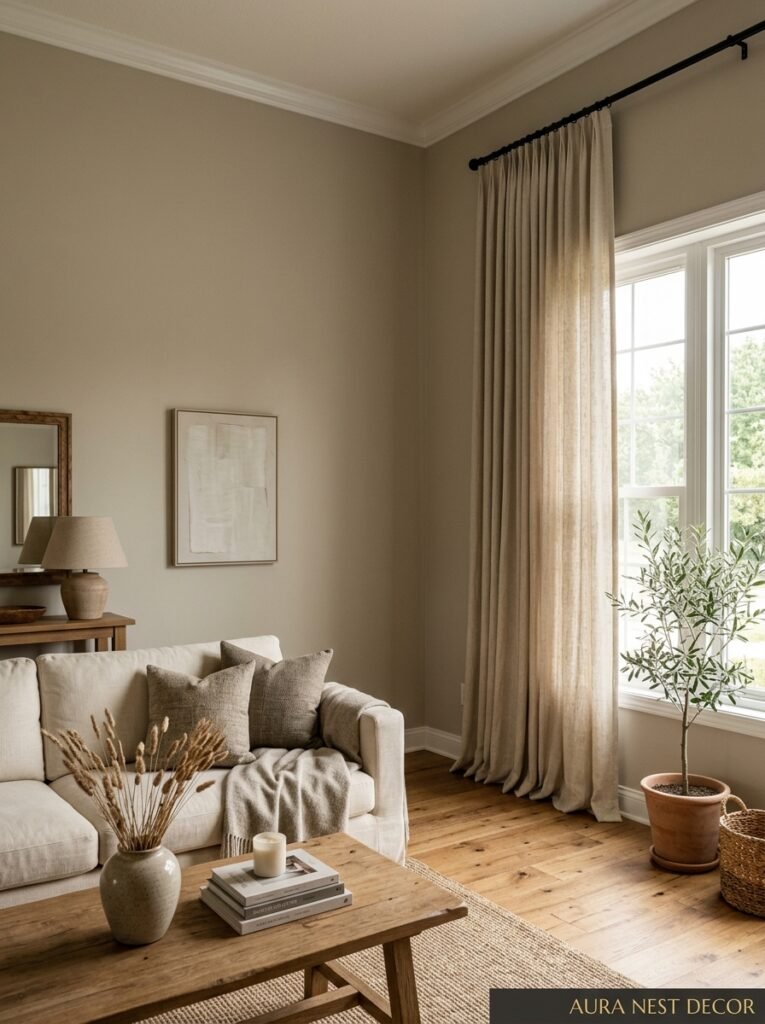
Hang them high. Higher than you think. Then go a bit higher still.
The general rule — and it’s a good one — is to mount your curtain rod 4 to 6 inches below the ceiling, not above the window frame. If you’ve got high ceilings, go even closer to the top. The idea is to create the illusion that the window stretches almost floor to ceiling, which makes the whole room feel taller and more considered.
And then: the hem should just graze the floor. Not pool dramatically (that’s a whole separate conversation, and honestly? I love a puddle, but it’s not for everyone). Not hover two inches above. Just a gentle kiss of fabric on the floor, or a half inch of break at most.
This single change — rod high, hem low — will do more for your living room than almost any furniture purchase. I say that with confidence. People spend £800 on a new coffee table and don’t notice the difference, then they rehang their curtains and feel like they got a new room. That’s not an exaggeration.
“Mount your rod near the ceiling, not the window. That one inch of change buys you a foot of visual height.”
—
3. The Width Problem: Why Your Curtains Look Flat Even When They’re Open
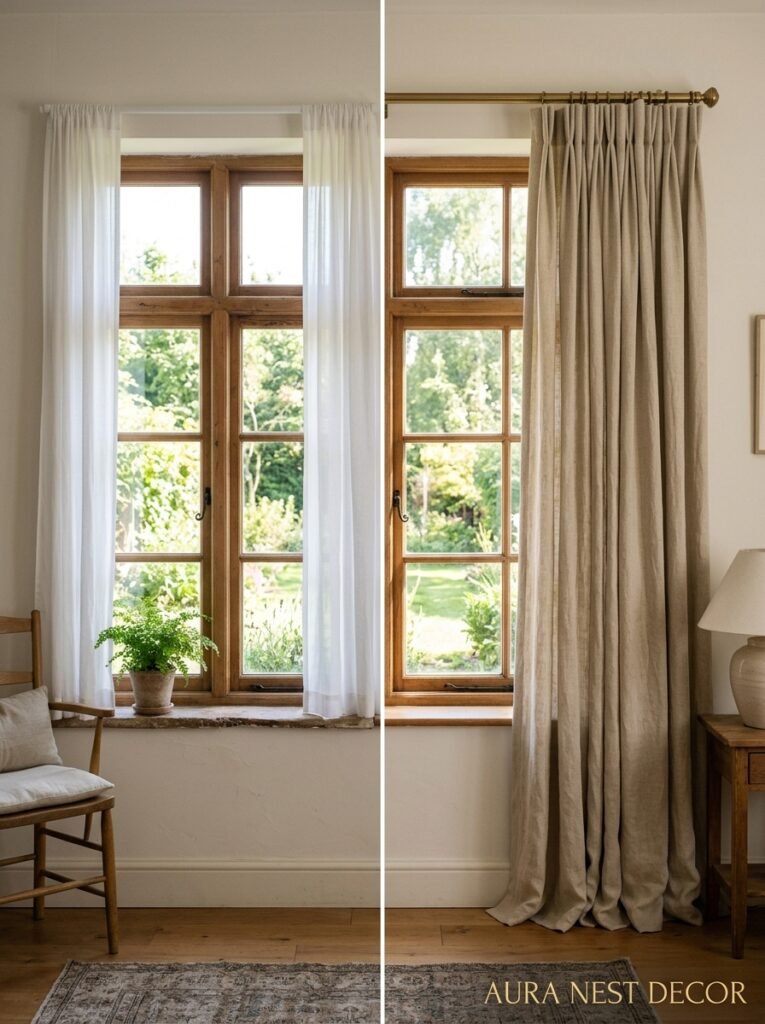
So you’ve got the height right. Great. But here’s another mistake I see constantly, and it makes curtains look almost worse than doing nothing — curtains that, when open, sit right on top of the window glass.
Your curtains should extend past the window on each side when they’re pulled back. By a decent amount — we’re talking 6 to 12 inches on either side if you can manage it. When curtains are pushed back and they’re covering part of the wall rather than the window, two things happen: the window looks bigger (more glass showing), and the curtains look full and intentional rather than thin and sad.
The width of the actual curtain panels matters too. A window that’s 48 inches wide doesn’t need curtains that are 48 inches wide. You want fabric that, when gathered, has actual volume and drape. As a rough guide — and this is rough, so take it with a grain of salt — you want your total curtain fabric width to be about 2 to 2.5 times the width of the window. Anything less and they’ll look flat, like a bedsheet nailed up there.
And please, I beg you, don’t hang one panel on each side and call it done if those panels are thin polyester. They’ll just hang there limply, slightly see-through, doing nothing for anyone.
—
4. Linen Versus Velvet Versus Sheer: The Honest Answer
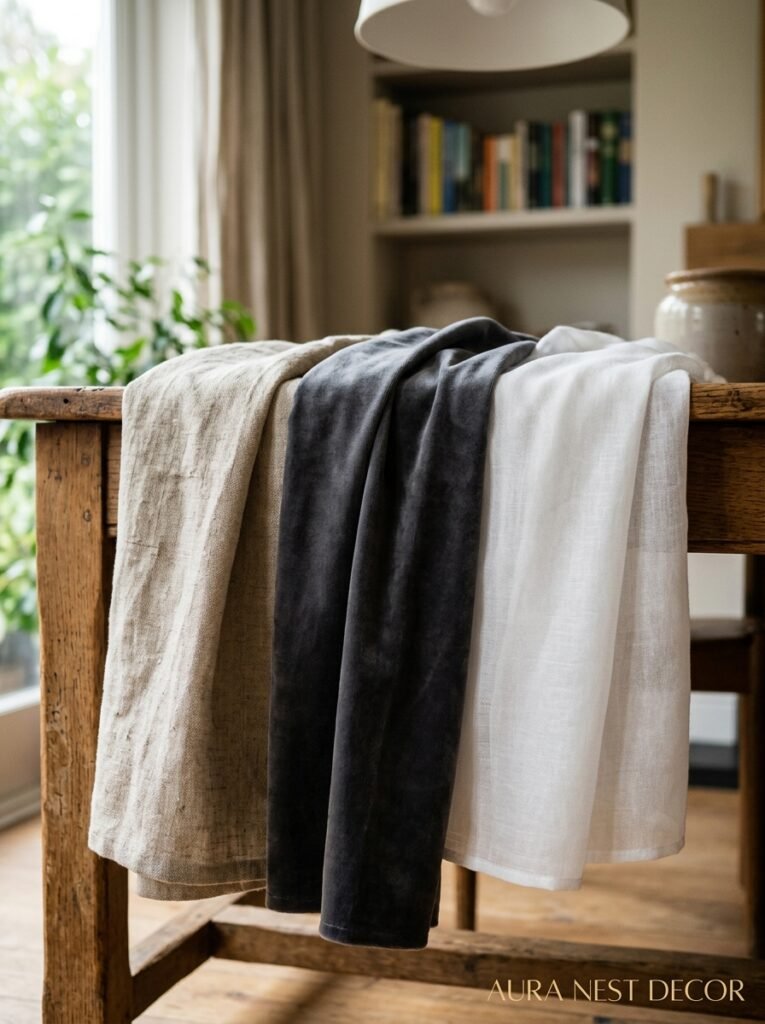
People get so stressed about fabric. And I get it — it’s a real decision with real money attached to it. But let me cut through it.
Linen (and linen-look fabric) is currently having the longest “moment” in the history of interior trends. It’s been dominant for about four years now and shows absolutely no sign of going anywhere. It’s relaxed, it’s textural, it works in modern homes and in older Victorian terraces and in everything in between. Natural linen wrinkles — that’s a feature, not a flaw. It gives the room life.
Velvet is for evenings. If your living room gets afternoon sun, velvet can look a bit heavy and dark until the light shifts — but at 7pm with a lamp on, it’s extraordinary. Deep teal, forest green, chocolate brown velvet curtains in a warm-lit living room? Hard to beat. It also insulates really well, which matters in older British homes particularly.
Sheers are underrated. Not as your only curtain, but layered in front of a solid panel so you can have diffused light during the day and full privacy at night. The trick is to hang them on a second rod close to the window, with the heavier curtains on the rod closer to the ceiling. When both layers are visible, it looks genuinely luxurious without costing a fortune.
“The fabric doesn’t have to be expensive. It has to hang right.”
—
5. The Colour That Keeps Appearing in Every Beautiful Living Room on Pinterest Right Now
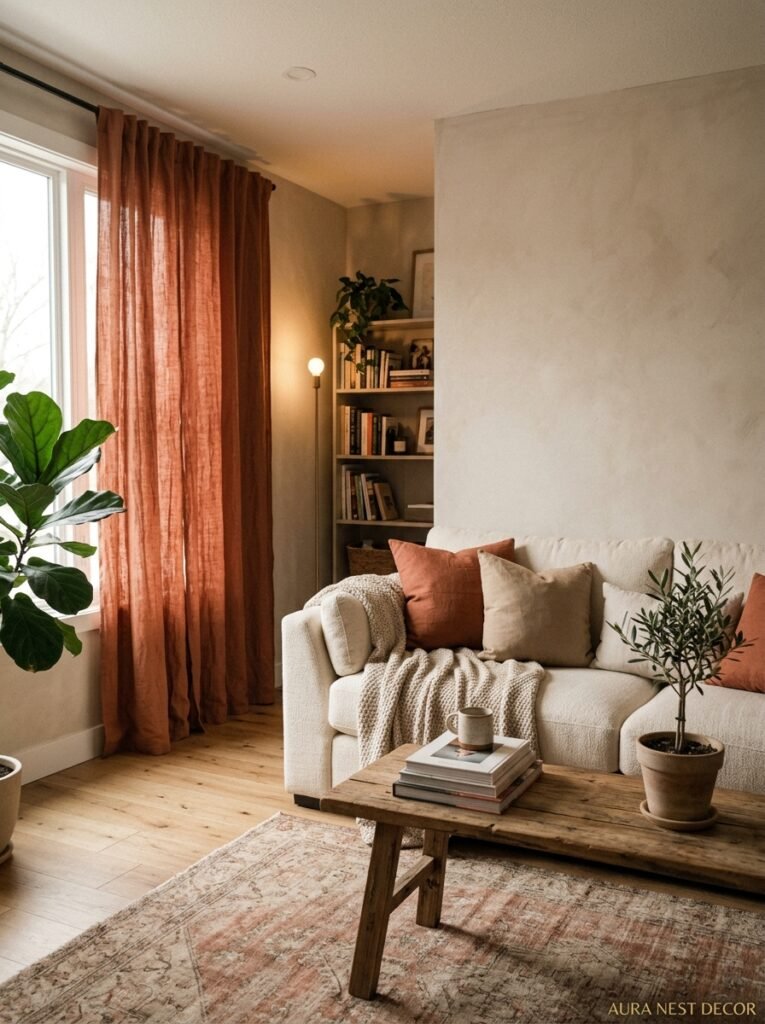
It’s warm white. But not stark white — a creamy, slightly warm white, sometimes called natural or off-white or greige-adjacent. And I know that sounds boring. Hear me out.
The reason this colour keeps winning is that it doesn’t compete. Your sofa, your rug, your art, your plants — they get to exist without a curtain colour fighting for attention. Meanwhile, soft white curtains bounce light around beautifully, make the ceiling feel higher, and look clean and airy all year round.
That said, I’d push back on the idea that curtains always need to be neutral. A room with a neutral sofa and a neutral rug NEEDS something with a pulse, and deep curtains can be that thing. I’ve seen rich terracotta curtains in a room of beiges and taupes and honestly it looked like someone finally exhaled. The room finally breathed.
The mistake is patterned curtains in busy rooms. If your walls have wallpaper, if your sofa has a print, if your rug is anything other than a solid — solid curtains, please. Save yourself the headache. Patterns compete in ways that look exhausting rather than layered.
—
6. The One Rule for Small Living Rooms That Actually Works
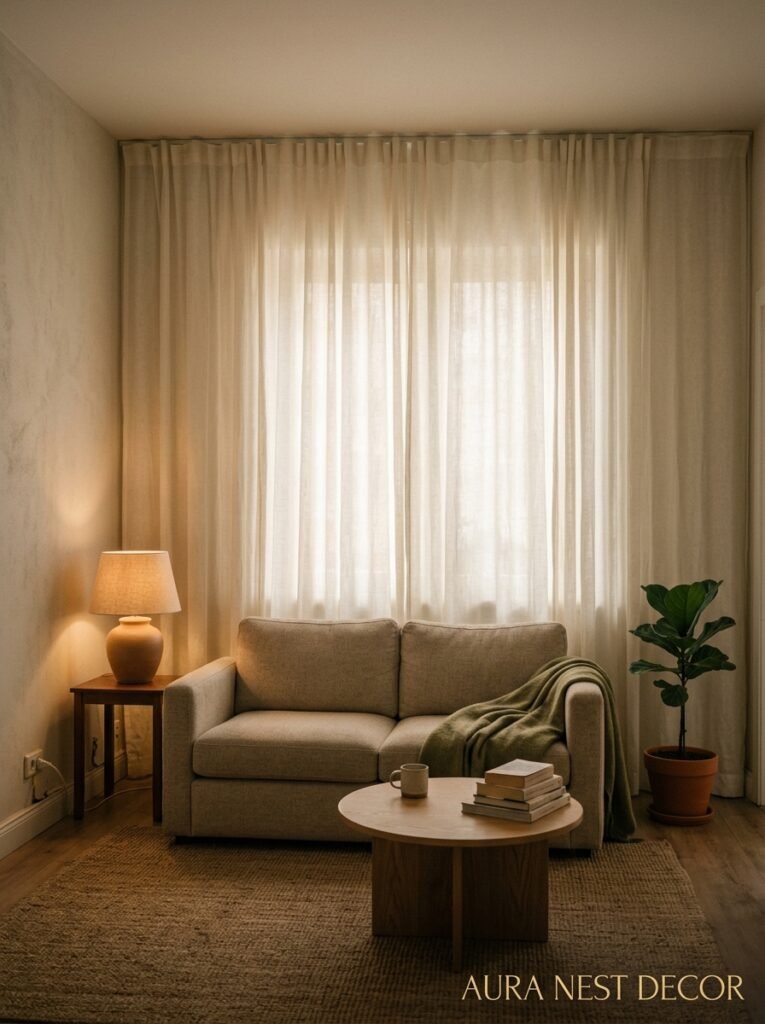
Match your curtains to the wall colour. As close as you can get.
This sounds counterintuitive — wouldn’t that make them disappear? Yes. That’s the point.
When a curtain blends into the wall, the window reads as an extension of the wall rather than a separate element that fragments the room. The eye doesn’t get snagged on the curtains, it just… flows. The room feels bigger and calmer and somehow more put together, even if it’s not much to work with square-footage wise.
I tried this in a small sitting room — walls were this dusty sage green, and I found linen curtains in a colour so close it was almost identical. The difference was immediate. The room stopped feeling like it was trying too hard to have things in it.
Side note — this trick works best when the curtains have some texture. A flat, shiny fabric in a wall-matching colour can look like you ran out of paint and kept going. A matte linen or cotton in a similar tone looks intentional and genuinely stylish.
—
7. Curtain Tracks vs. Rods: The Debate That Splits British and American Decorators
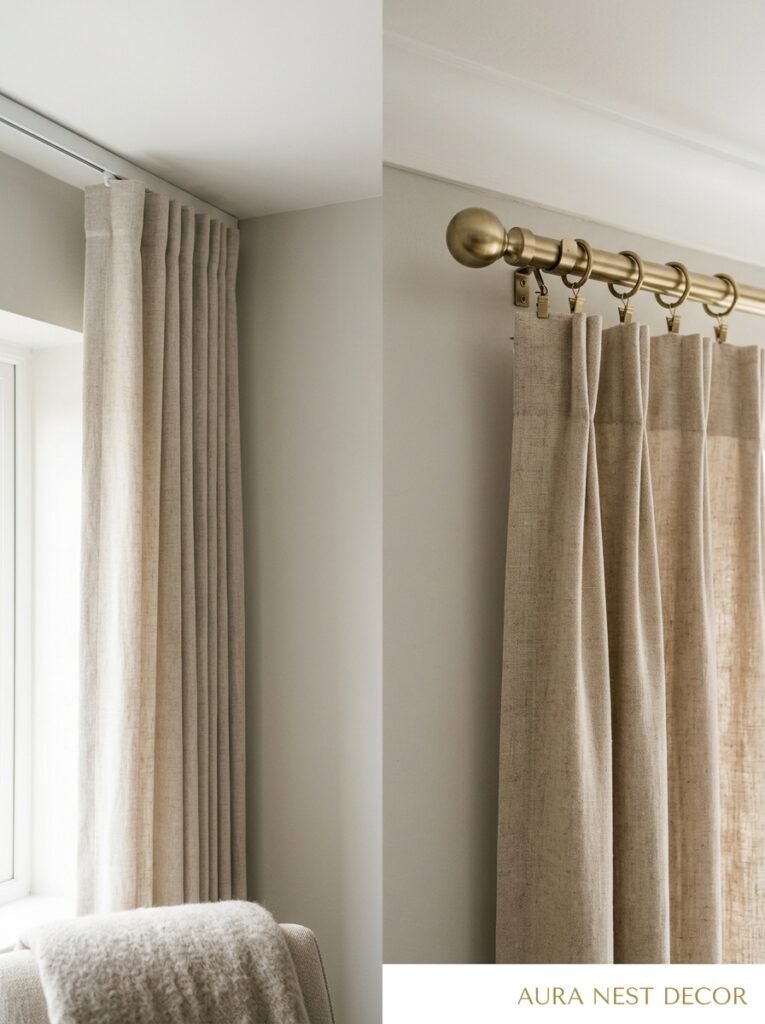
This one’s genuinely interesting because the US and UK genuinely default to different systems, and both have valid reasons.
In the UK, curtain tracks — especially ceiling-fixed ones — are the norm in older and more traditional homes. They’re discreet, they slide smoothly, and they allow curtains to pull all the way back without bunching. Modern bay windows almost always look better with a track that follows the shape of the bay rather than a rigid rod.
In the US, the curtain rod is almost universal and is treated as a design element in itself. A thick brass rod with oversized rings, or a matte black rod with simple hooks — these add to the aesthetic rather than hiding. The rod IS part of the look.
Honestly? I think both are right depending on the room. A modern, minimal living room looks great with a sleek track that disappears into the ceiling. A room with warm wood tones and layered fabrics looks great with a chunky brass rod you can actually see. Don’t let anyone tell you one is definitively better.
“The rod or track you choose is part of the design. Make it on purpose, not an afterthought.”
—
8. The Ring vs. Rod Pocket Debate (And Why Rod Pockets Are Mostly a Trap)
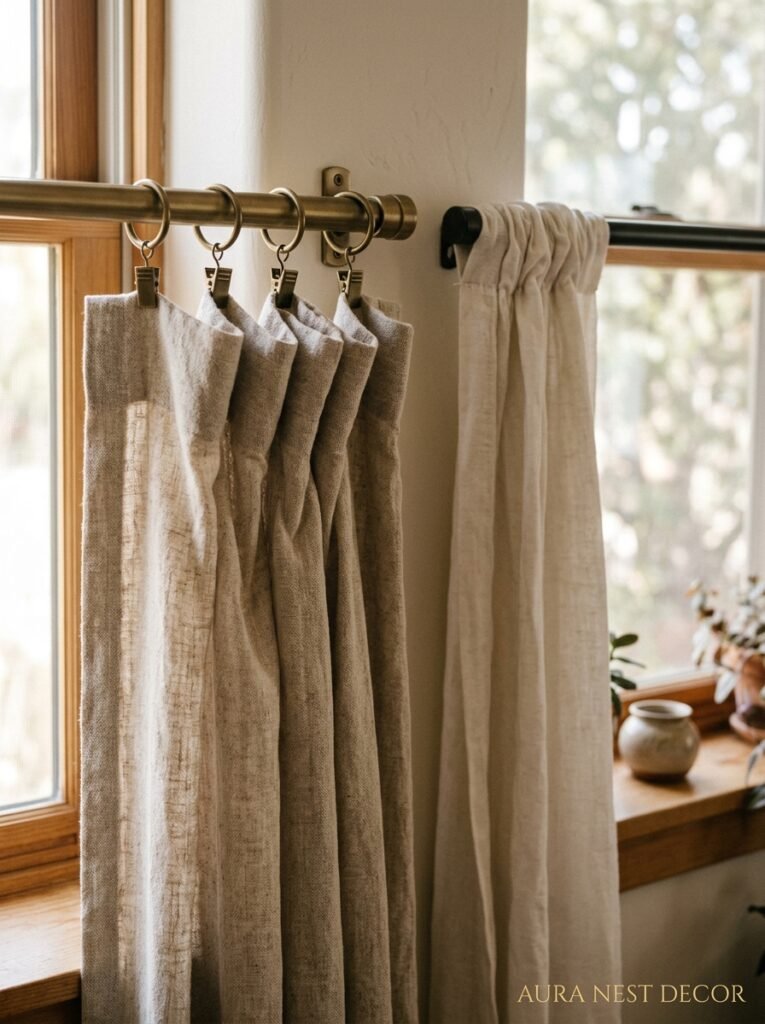
Rod pockets look charming in photos. In real life, they’re a nuisance. The fabric gathers unevenly, the curtains don’t pull back cleanly, and over time the pocket stretches and the whole thing starts to sag in the middle.
Curtain rings — whether clip rings or rings with hooks — are genuinely better for almost every living room application. They slide. They glide. When you grab them to pull the curtains open in the morning, they cooperate. There’s something satisfying about that motion when it works properly.
Eyelet curtains (the kind with the metal grommets punched through the top of the fabric) are a middle ground that works really well for heavier fabrics like velvet or thick linen. The drape they create is more geometric and structured. Not everyone loves that, but for a more contemporary room it can be exactly right.
But rod pockets? Save them for a country cottage bedroom where you’re never really going to open them. In a living room where curtains actually get used — opened every morning, closed every night — you want hardware that actually functions.
—
9. What Nobody Tells You About Blackout Curtains in a Living Room
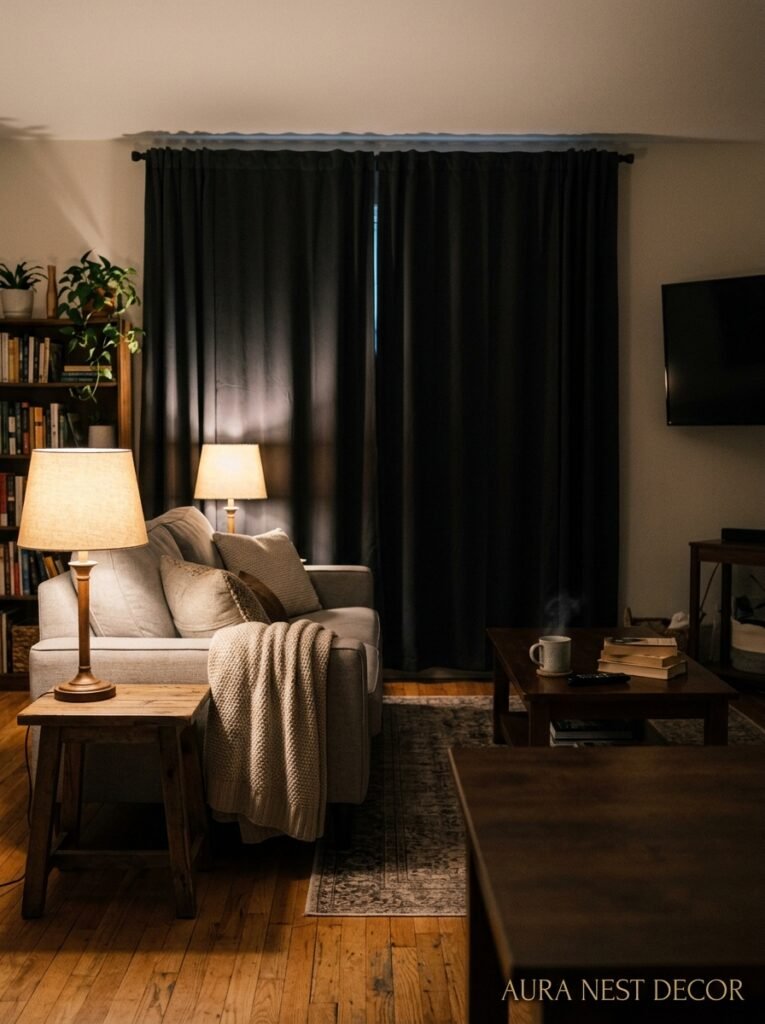
People assume blackout means ugly. They think of those thin, stiff hotel room curtains with the slightly clinical feel. But blackout technology has genuinely improved, and you can get gorgeous thick linen-look curtains with a blackout interlining sewn in that you’d never know were blackout unless you sat in the dark.
For living rooms that face east or west, blackout or at minimum a good blackout lining makes a real difference in afternoon or morning glare. If you watch television in a room that gets low afternoon sun, you already know. That horizontal glare that makes the whole screen unwatchable by about 4pm in winter — a lined curtain solves it.
The compromise I’d suggest: get regular curtains you love the look of, and have a blackout lining added. Many fabric stores and curtain specialists offer this service, and in the UK particularly it’s common enough that you can get it done without it being a big production. In the US, retailers like Pottery Barn offer blackout-lined versions of their standard curtains, which is an easier route if DIY alterations aren’t your thing.
—
10. The Puddle, the Break, and the Float — and Which One’s Actually Right for You
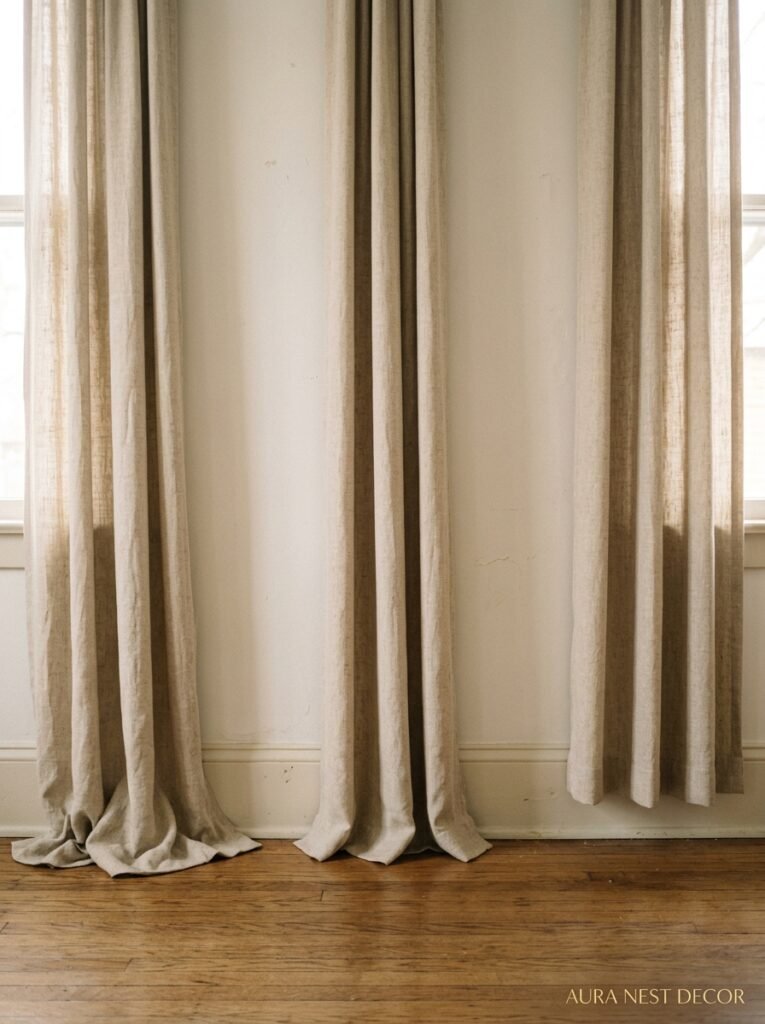
So. The hem situation.
There are basically three options: the float (about half an inch above the floor, very clean), the break (a half inch to an inch of fabric sitting on the floor, casual and relaxed), and the puddle (several inches of extra fabric pooling on the floor, which is either the most romantic thing you’ve ever seen or a complete dust trap, depending on your perspective).
The float looks crisp and works well in modern spaces. But it’s unforgiving — if your floors aren’t level, if the curtain shrinks after washing, if the rod drops even slightly, the whole thing looks off. You’ll know the second it’s a centimetre too short.
The break is forgiving, warm, and works in almost any style of room. It’s probably the most functional option.
The puddle is a commitment. It looks incredible in photos. In a room that doesn’t get a lot of foot traffic and that you’re not running through with dogs and kids, it can stay looking beautiful. But be honest with yourself about your life before you add eight extra inches of fabric to every panel.
—
11. The Styling Details That Make Curtains Look Thought-Out Rather Than Bought and Hung
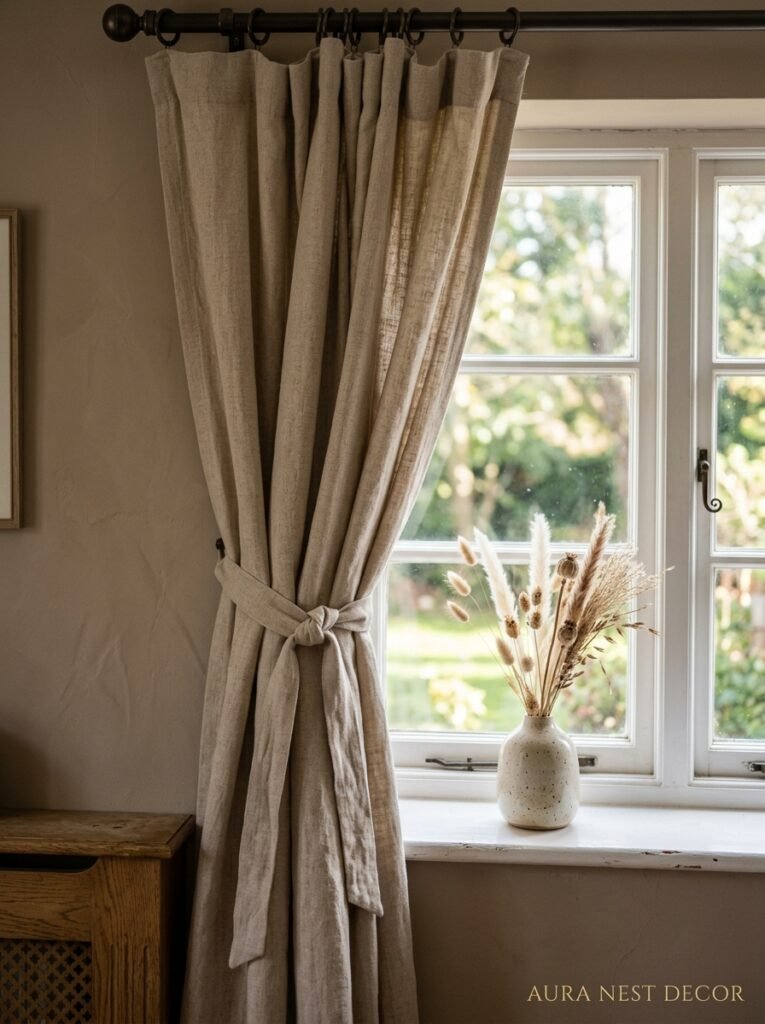
Little things. They matter a lot.
Curtain ties and holdbacks — the hardware that holds your curtains open during the day — are worth actually choosing carefully. A tassel tie in warm jute for a natural linen curtain. A matte gold ring holdback for a velvet panel. These things cost almost nothing comparatively and make the whole window look deliberate.
Steaming your curtains after hanging them is non-negotiable. They will have creases from being packed or folded, and those creases make even expensive curtains look cheap. A handheld steamer costs about £25 to $35 and will be the most-used home styling tool you own.
And — this is the one people skip — train the pleats. After you hang them, fold the fabric into even pleats by hand and then tie a piece of ribbon or fabric loosely around the middle of each panel for 24 to 48 hours. When you remove it, the curtains have learned how to fall. They drape properly. They look like they’ve been there for years.
—
12. The Curtain Mistake That Makes Designers Actually Wince
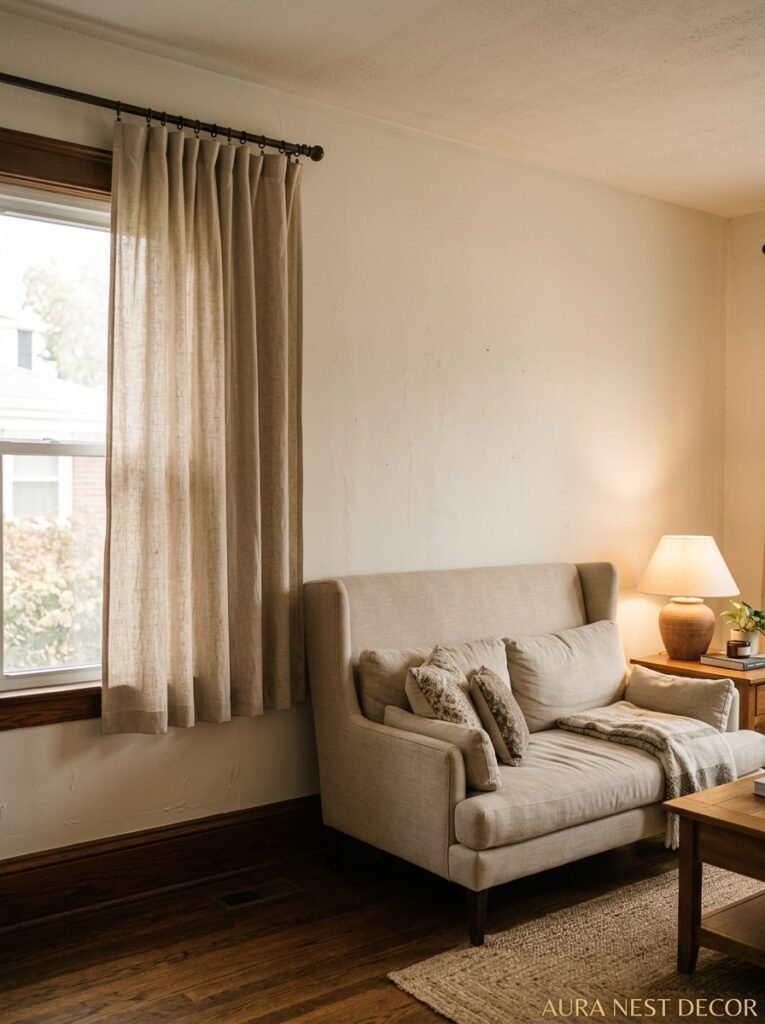
Hanging two panels on a single-window window that don’t have enough fabric between them to ever actually close properly.
You see it constantly. Two narrow panels, one on each side, that when you try to close them at night leave a three-inch gap of cold window right in the middle. Or that, when closed, are see-through because there’s just not enough fabric.
Curtains have to actually work. They need to close. They need to block light if that’s the ask, create privacy when it’s dark outside and your lights are on inside. A beautiful curtain that doesn’t function is just an expensive problem.
Measure. Buy more fabric than you think you need. If you’re between sizes, go wider. The extra fabric can only help — it creates more fullness, more drape, better light control. Going too narrow is the one curtain mistake there’s no good solution to once they’re up.
—
❓ FAQ
Q: How long should curtains be in a living room? A: Floor length is almost always the right answer — panels that graze or gently break at the floor. Anything shorter tends to make the room feel unfinished and the ceilings feel lower. The only real exception is if you’ve got a radiator directly under the window, in which case a break just below the sill can work, but you’ll need to compensate elsewhere to make the room feel tall.
Q: Should living room curtains match the sofa or the walls? A: Neither, necessarily. They work best when they coordinate with the overall room tone rather than directly matching any single piece. A room with a grey sofa, warm oak floors, and cream walls might look best with warm white or soft terracotta curtains — not grey, not cream, but something that bridges everything. Think of curtains as the room’s finishing layer, not its matching accessory.
Q: Can I use bedroom curtains in a living room? A: Technically, yes — curtains are curtains. But bedroom curtains are often designed for smaller windows, so check the dimensions carefully. What you’re really asking is whether a curtain works for the specific use — does it provide the privacy, light control, and visual weight your living room needs? If it does, the “bedroom” label on the package is irrelevant.
—
💭 Final Thoughts

Curtains are the decision that gets left to last and thought about least — and they’re probably doing more work than anything else in the room. Get the hanging height right, get the width right, and let the fabric do the rest. That’s really the whole thing.
There’s something about a room with good curtains that just feels intentional. Settled. Like someone actually thought about it. Is that what you want your living room to say?