Why a Blue Sofa Might Be the Best Design Decision You Haven’t Made Yet
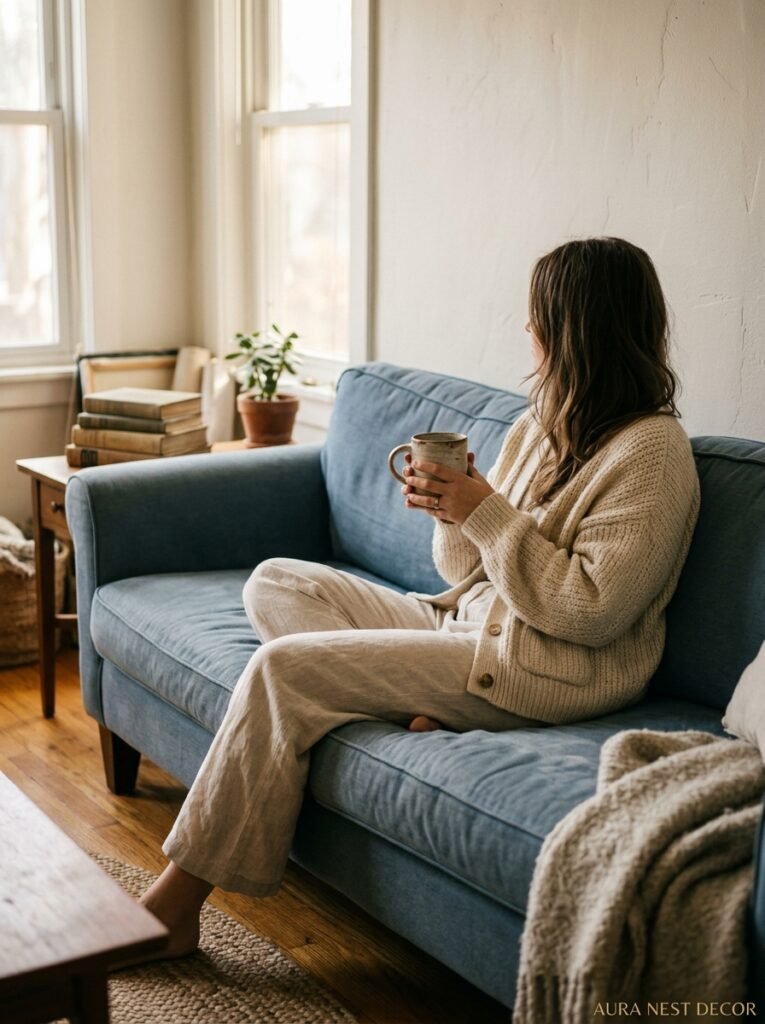
You walked past it in the shop, or maybe you saw it scroll past on Pinterest at midnight, and something made you stop. A blue sofa. Deep navy, or that particular dusty teal that doesn’t quite have a name, or maybe a bold cobalt that felt a little terrifying and a little thrilling at the same time. And then you talked yourself out of it.
This is about changing your mind.
—
1. The Reason Blue Sofas Are Everywhere Right Now (And Why That’s Actually a Good Thing)
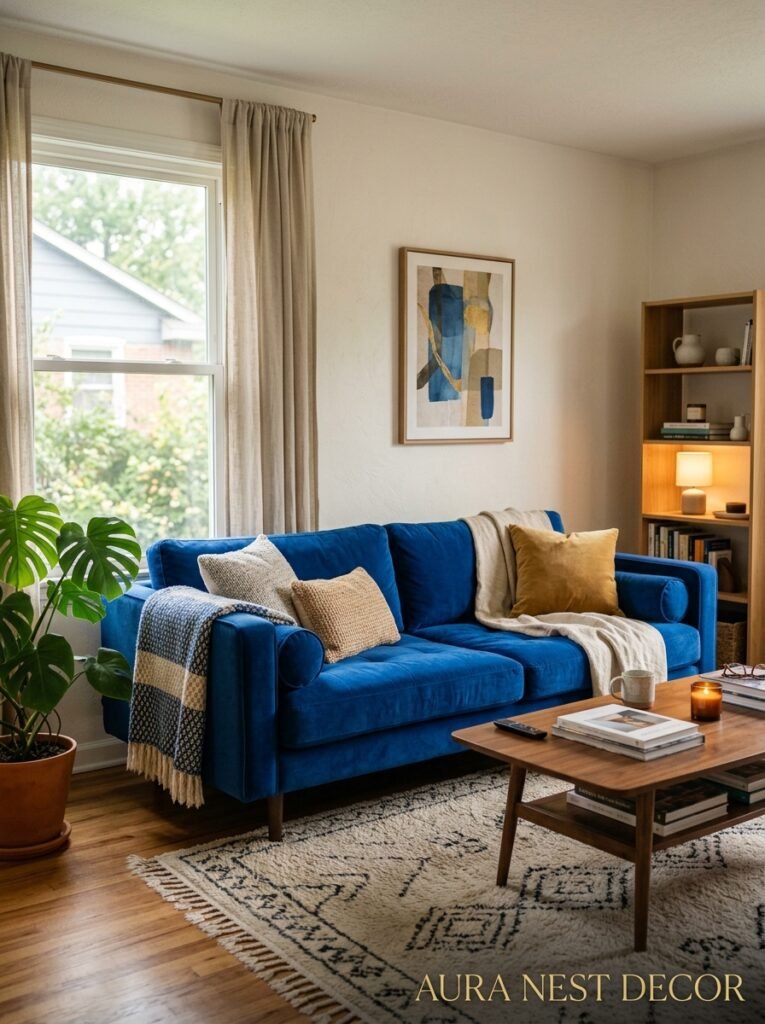
Let me be clear: trends make me nervous. I don’t want a living room that looks like it expired in 2026. But blue sofas aren’t a trend in the way shiplap was a trend, or those open shelves everyone ripped out their upper cabinets for. Blue is one of those colors that keeps cycling back because it genuinely works in a living space — it’s got this weird ability to read as calm AND confident at the same time, which is honestly rare.
Right now you’re seeing it everywhere because designers sort of rediscovered that blue doesn’t fight with anything. It doesn’t compete with warm wood tones the way a red sofa might. It doesn’t make a room feel colder the way a stark white sofa can. It just… sits there looking good. Infuriatingly good.
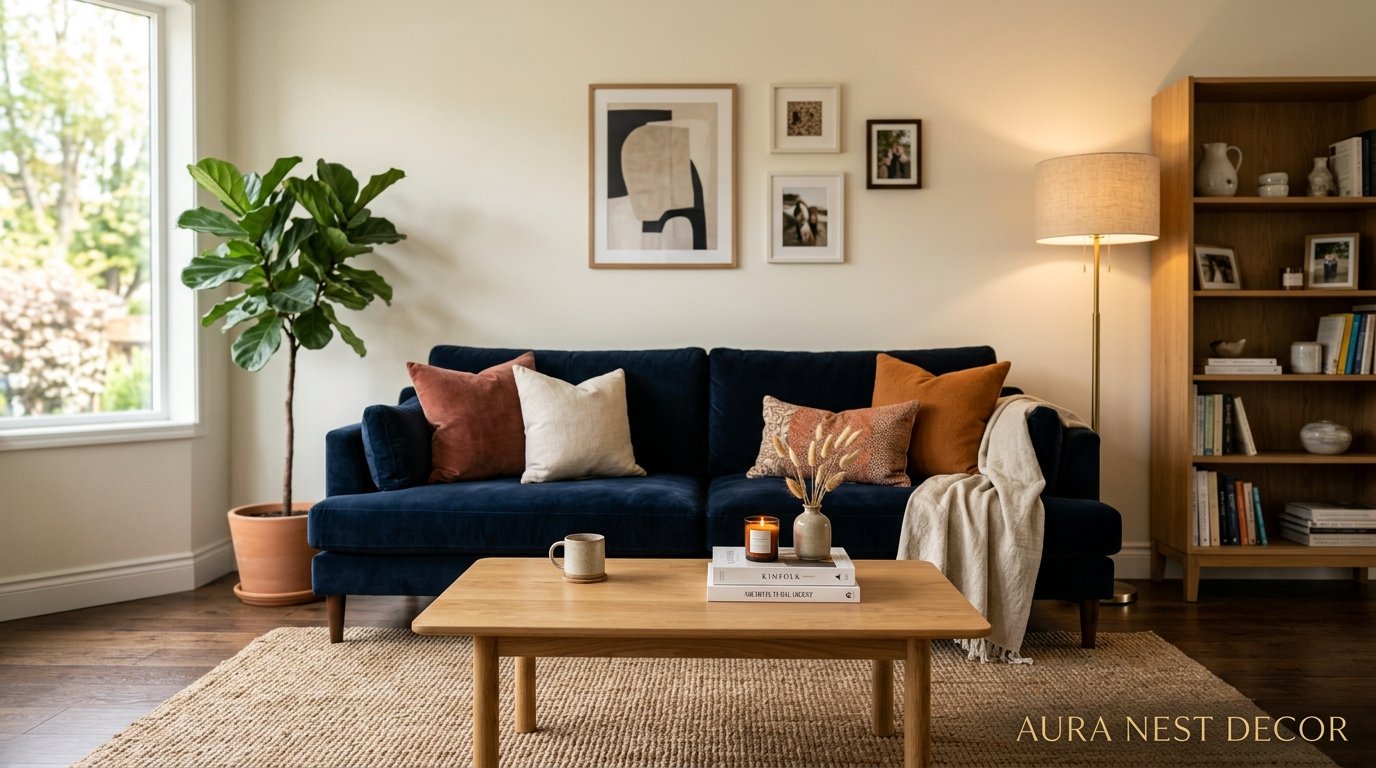
And there’s a range that’s showing up specifically that I can’t stop thinking about — inky, almost-black navy in velvet. The kind that looks black in dim light and then catches the afternoon sun and you realize it’s actually deeply, beautifully blue. That specific version is having a moment and I completely understand why.
“Blue doesn’t fight with your room. It just quietly makes everything around it look more considered.”
—
2. Navy vs. Cobalt vs. Teal — How to Know Which Blue Is Actually Your Blue
This is where people freeze up. There are so many blues. And they’re not interchangeable — not even a little.
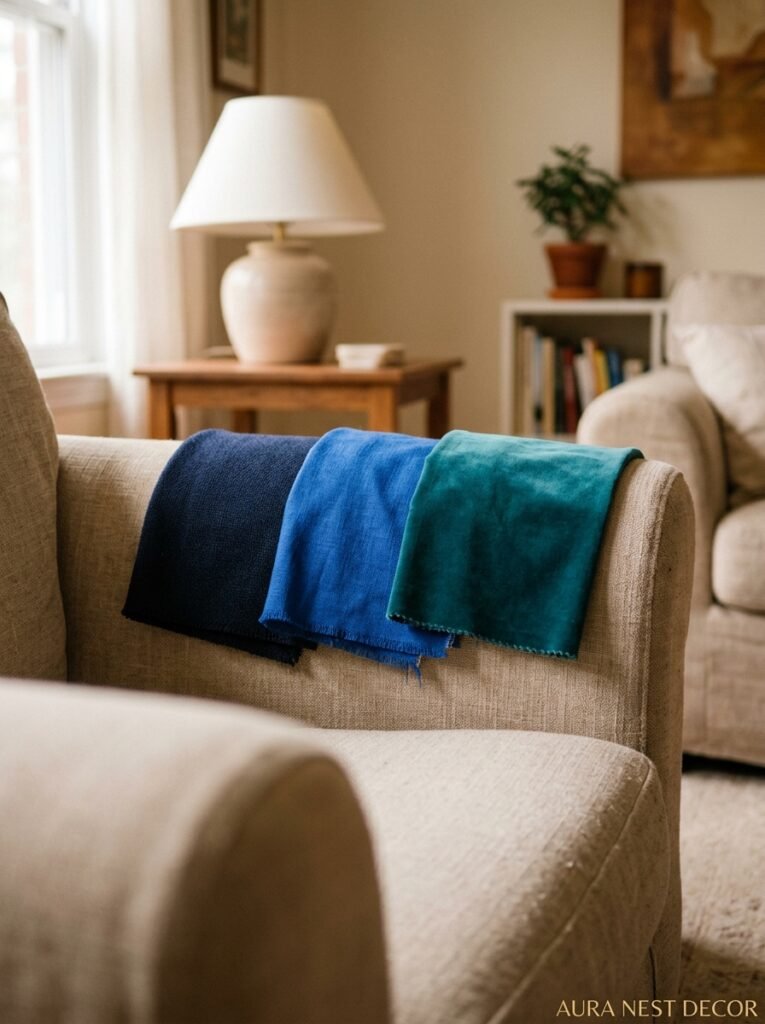
Navy is the safe one, but “safe” is not an insult here. Navy acts like a neutral in a lot of spaces. It pulls in the blues of denim cushions, the dark tones of walnut furniture, the depth of a vintage Persian rug. If you’ve got warm cream walls, navy velvet on a sofa is going to look like something out of a Georgian townhouse in Edinburgh. In the best possible way.
Cobalt is a commitment. A cobalt sofa in a bright, white-walled room with light oak floors? Stunning. Genuinely bold. But it doesn’t hide. If you’re someone who redecorates every three years or gets bored easily, maybe think twice. Or don’t, and just enjoy the ride.
Teal is its own personality entirely. It leans green in some lights, blue in others. Sort of impossible to pin down, which is exactly why I love it. Teal sofas work incredibly well in rooms with plenty of natural light and botanicals — the sofa almost looks like it belongs outside, except more luxurious.
The test I always use: hold up a paint swatch in the blue family you’re considering and set it on your floor next to your existing furniture. See what it does. Does it fight? Does it settle in? Give it ten minutes in different lights. The right blue will look like it was always supposed to be there.
—
3. The Floor-to-Sofa Relationship Nobody Talks About Enough
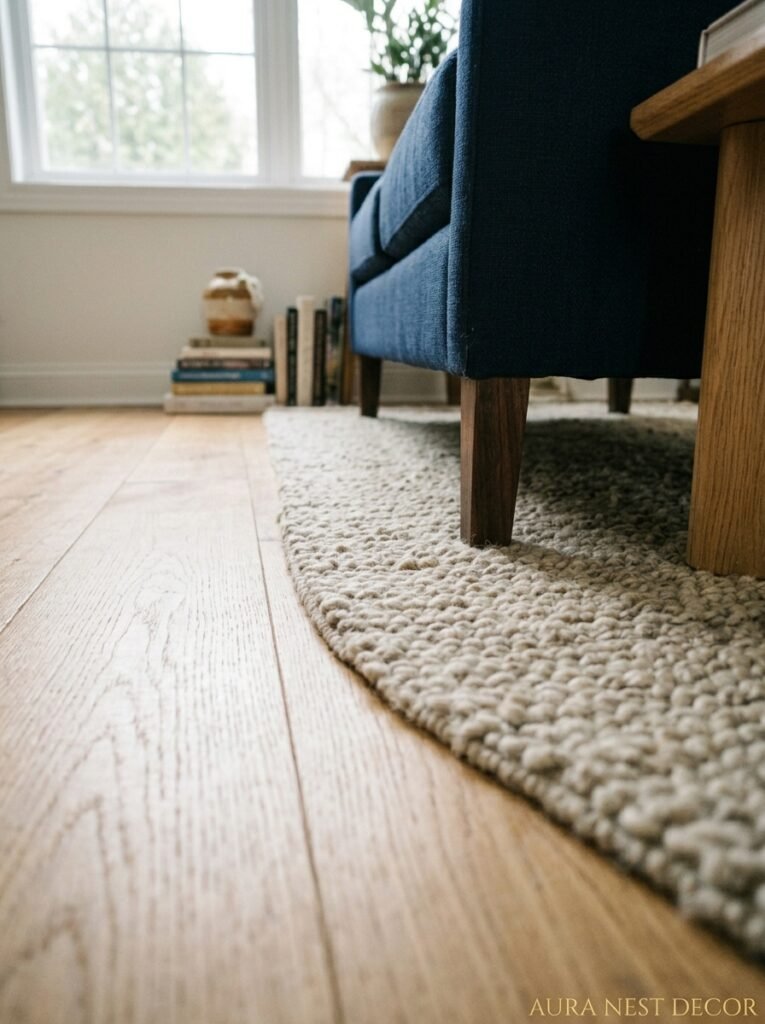
Your flooring is going to make or break this. Full stop.
Light oak or blonde hardwood floors? You’re in luck — almost every blue works. The contrast is fresh and Scandi-ish without trying too hard, and it photographs beautifully for anyone who cares about that (no judgment, I absolutely care about that).
Dark hardwood is a different story. Deep walnut with a navy sofa can tip into feeling a bit heavy if you’re not careful. You’ll want to bring in something light — a cream or oatmeal area rug, some lighter throw pillows, maybe pale linen drapes. Give the room somewhere to breathe.
Gray carpet, which is in SO many living rooms in the UK right now, actually plays brilliantly with most blues. I know gray-on-blue sounds like it’d be flat and lifeless but it isn’t. It’s actually kind of sophisticated in a way that surprises people.
Terracotta or brick-toned tiles? Oh, this is the combination. If you’ve got terracotta floors, even just terracotta-toned rugs, and you put a dusty blue sofa on top of it, you’ve accidentally created the most Pinterest-able room of your life. The warm-cool contrast does something almost magical. Sort of the same reason sunsets work.
—
4. What to Put on Either Side of It (This Is Where Most People Go Wrong)
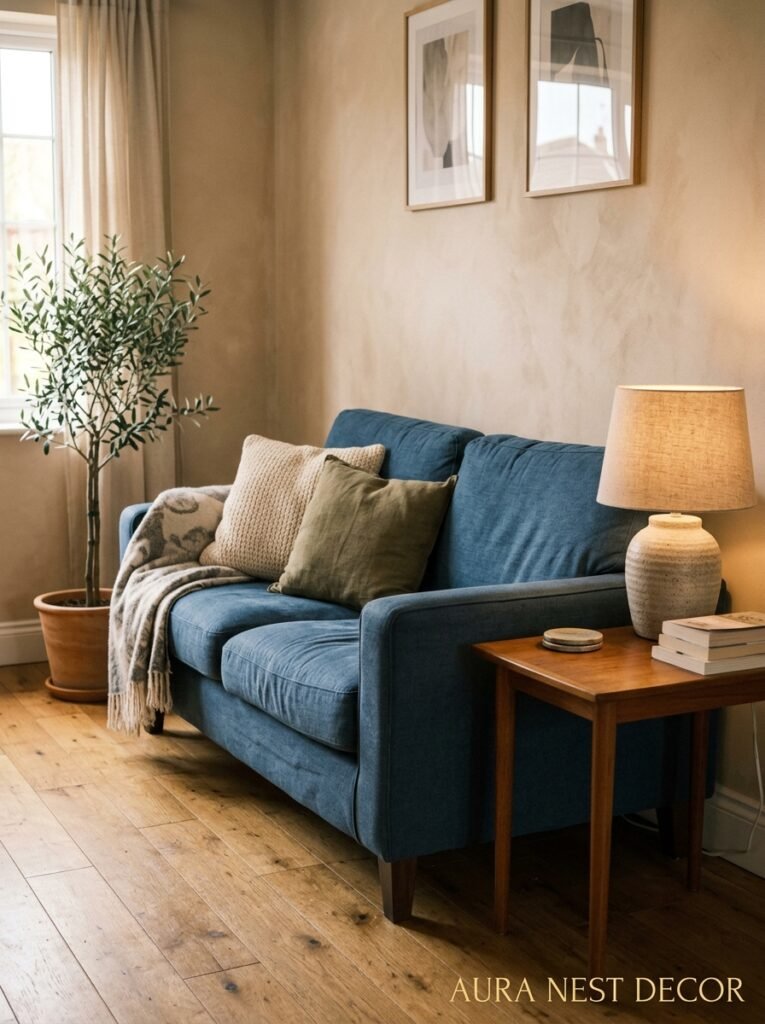
People buy the blue sofa. Then they panic about the rest of the room. I’ve seen this happen in real life — the sofa arrives and suddenly everything that was fine before looks wrong.
Here’s the thing: you don’t need a matching blue armchair. You don’t need a blue-and-white “coastal” room unless you actually want one. The blue sofa is already doing the work. The rest of the room just needs to respond to it, not match it.
Side tables in natural materials — rattan, light oak, unlacquered brass — sit next to a blue sofa without any awkwardness. A vintage wooden coffee table in walnut or teak grounds the whole thing. Honestly, a beat-up antique trunk as a coffee table next to a velvet navy sofa is one of my favorite combinations and it costs less than you’d think if you’re willing to check secondhand shops.
Lamps. This is critical. You want the warmest bulbs you can find — that amber 2700K glow that makes everything look like a painting. A blue sofa under cold white light looks almost clinical. The same blue sofa under warm lamplight at 8pm looks like somewhere you’d actually want to spend a Sunday.
Don’t overthink the art. A large, warm-toned piece above the sofa — terracotta, ochre, cream — does more for a blue sofa room than a carefully curated gallery wall ever will.
“The blue sofa doesn’t need a blue room. It just needs a room that knows it’s there.”
—
5. The Cushion Situation: How to Get This Right Without Spending a Fortune
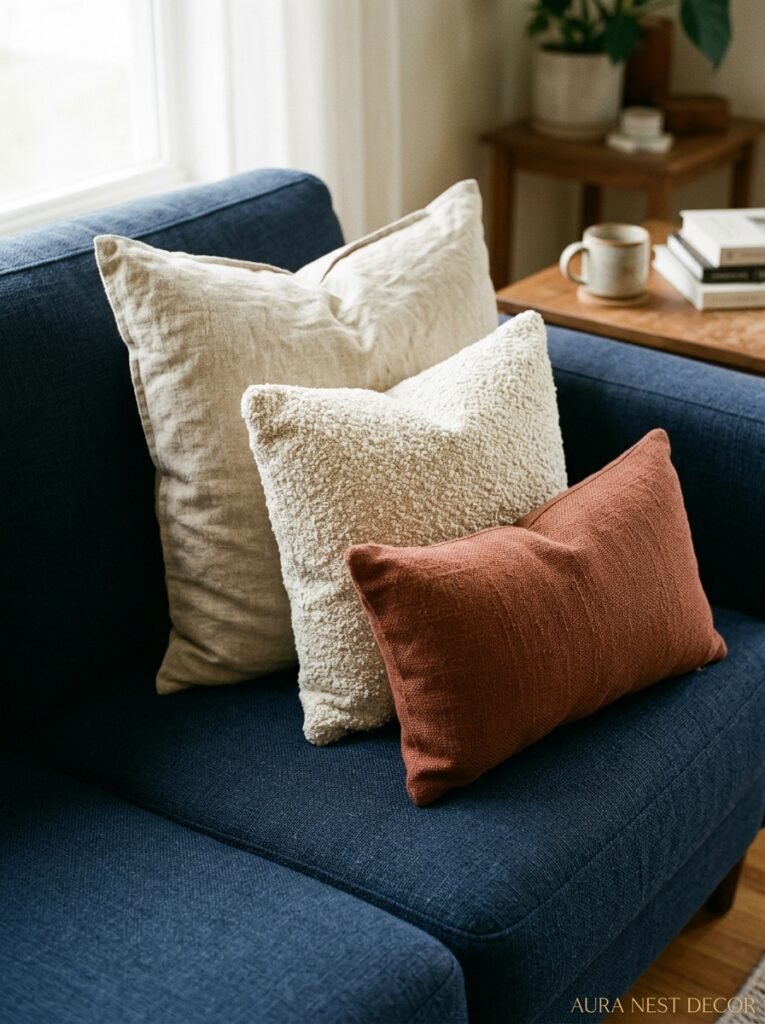
I’m going to say something slightly controversial: don’t buy cushions that were designed to go with your sofa. The coordinated sets always look a little too finished. A little department-store-showroom. Real, lived-in rooms have cushions that accumulated over time.
For a blue sofa, terracotta and rust tones are an obvious win — warm against cool, zero effort. Cream and oatmeal linen cushions give it that quiet, undone quality. Forest green velvet next to navy velvet is incredibly rich and actually works in almost any room. Mustard yellow is bold but it works if you commit.
What doesn’t work: too many cushions in varying shades of blue. The whole thing goes monotone and flat. One blue cushion on a blue sofa is fine if it’s a very different texture. Three different shades of blue cushion is a problem.
Mix textures aggressively. Smooth cotton next to chunky boucle next to worn velvet — that layered texture is what makes a sofa look styled rather than staged. And honestly, you can find beautiful cushion covers for a few pounds or dollars on Etsy or in charity shops, so this doesn’t need to be expensive. Treat cushion covers like you treat candles — replace them when the mood changes.
—
6. Why a Blue Sofa Actually Hides More Than You’d Expect
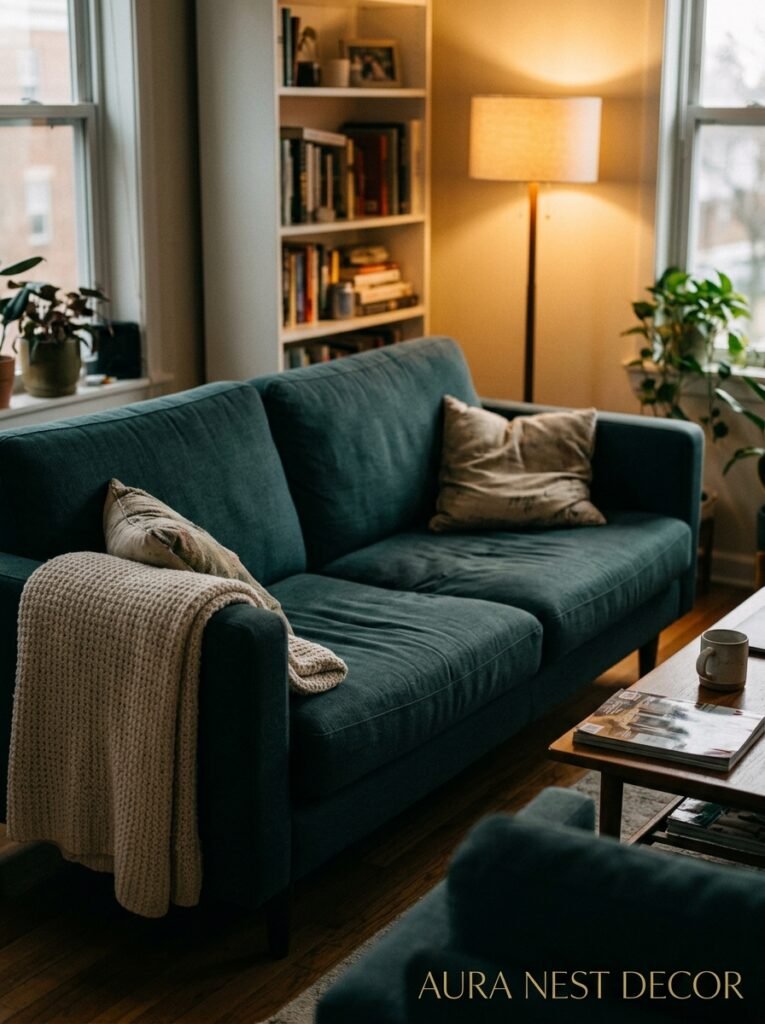
This is the practical section and it’s important.
People worry that a blue sofa — especially a deep blue — will show every cat hair, every crumb, every mystery smear that appears when you have children or honestly just when you live a normal life. The reality is sort of the opposite, depending on the shade.
Navy and deep teal are incredibly forgiving. Crumbs disappear. Everyday wear reads as texture rather than dirt. I’ve had a navy velvet sofa for two years and I genuinely clean it less often than I cleaned the light gray one before it. The gray showed everything. EVERYTHING.
Where you do need to be careful: watermarks on velvet. Velvet and water are complicated. If you’ve got kids or pets who make spills a daily occurrence, consider a performance fabric in your chosen blue rather than traditional velvet. Performance velvet specifically has come a long way — it looks almost identical and it handles spills in a way that used to feel impossible.
Sunlight fading is the other thing to think about. Blues can fade if they’re in direct, prolonged sun. If your sofa is going in front of a south-facing window in your living room, either go for a fabric that has UV protection or think about light filtering curtains. Not a dealbreaker, just something worth knowing before you commit.
—
7. The Rooms Where Blue Sofas Work Hardest
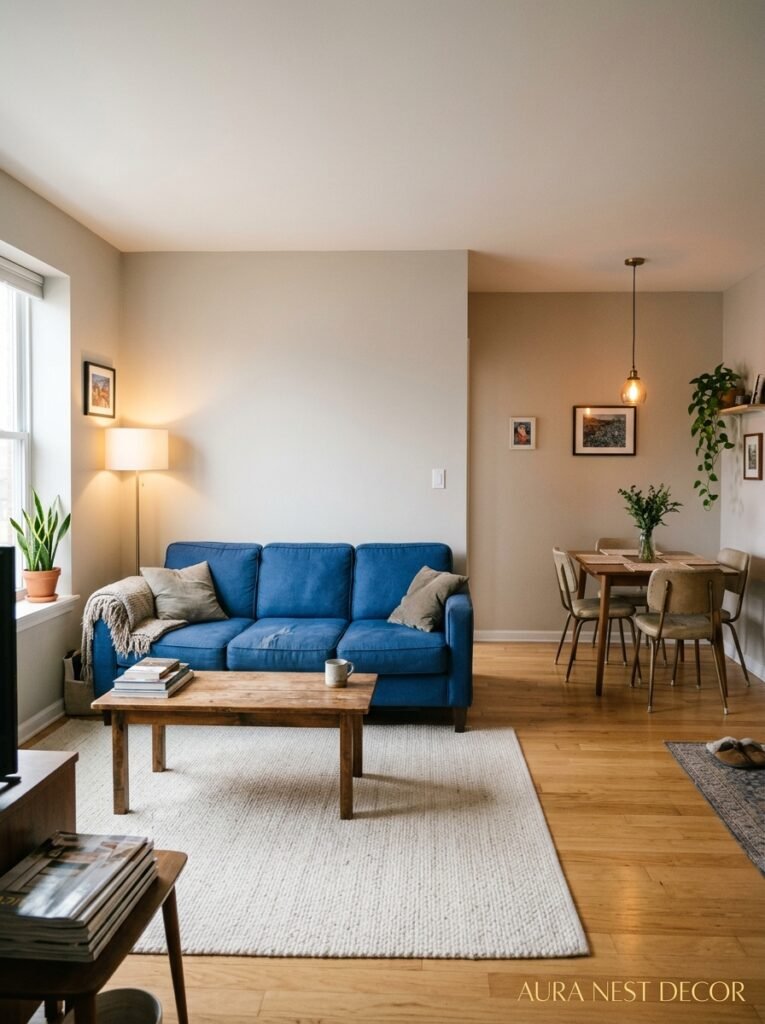
Not every room is the same and the blue sofa does different things in different contexts.
In an open-plan kitchen-living space — which is basically the standard layout in UK new builds and a lot of American homes now — a blue sofa actually helps define the “living zone” without needing a rug or a room divider. The color itself creates a boundary. It says: this is where you sit. It’s a visual anchor in a way that a neutral sofa just isn’t.
In a formal sitting room or front room, a blue sofa in velvet can look genuinely elegant. Pair it with dark bookshelves, some vintage brass hardware, and heavier drapes in cream or deep ochre and you’ve got something that looks collected over time.
In a smaller flat or apartment — and there are a LOT of these in London and in cities across the US — a blue sofa can be a way of making a small room feel intentional rather than cramped. It creates a focal point. The eye goes there and the room feels designed, not just furnished.
“A blue sofa in a small room doesn’t shrink the space. It gives the space a reason to exist.”
—
8. What Blue Sofas Do to Natural Light (This One Surprised Me)
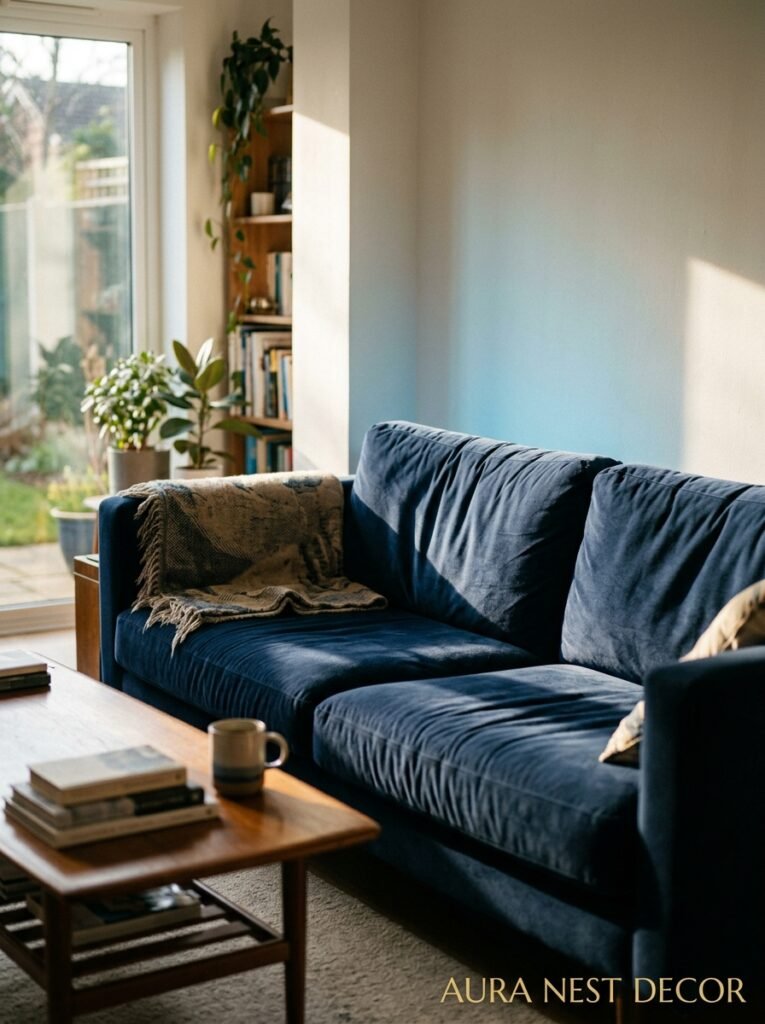
Here’s something I didn’t fully understand until I had one. Blue sofas absorb light differently than neutral ones — they can make a room feel slightly cooler in tone. In a south-facing or west-facing room that gets plenty of warm afternoon light, this is actually genuinely welcome. The sofa brings the temperature of the room down a notch, visually. It’s like a cooling effect, which sounds weird but translates to “this room feels airy and comfortable.”
In a north-facing room, which can already run a bit dark and cool — and so many UK living rooms are north-facing, it’s almost a cliché at this point — you need to compensate. Warm metals, warm lighting, warm wood tones. Layering those elements creates enough warmth that the blue reads as rich rather than cold. It’s doable, it just takes a little more thought.
The size of your windows also matters more than you’d think. Big windows, lots of light, blue sofa: tends to look great. Tiny windows with limited daylight and a deep blue sofa can tip a room into something that feels a bit cave-like. Not always — it depends on what else is in the room — but worth thinking about before you click buy.
—
9. The Exact Wall Colors That Make a Blue Sofa Look Incredible
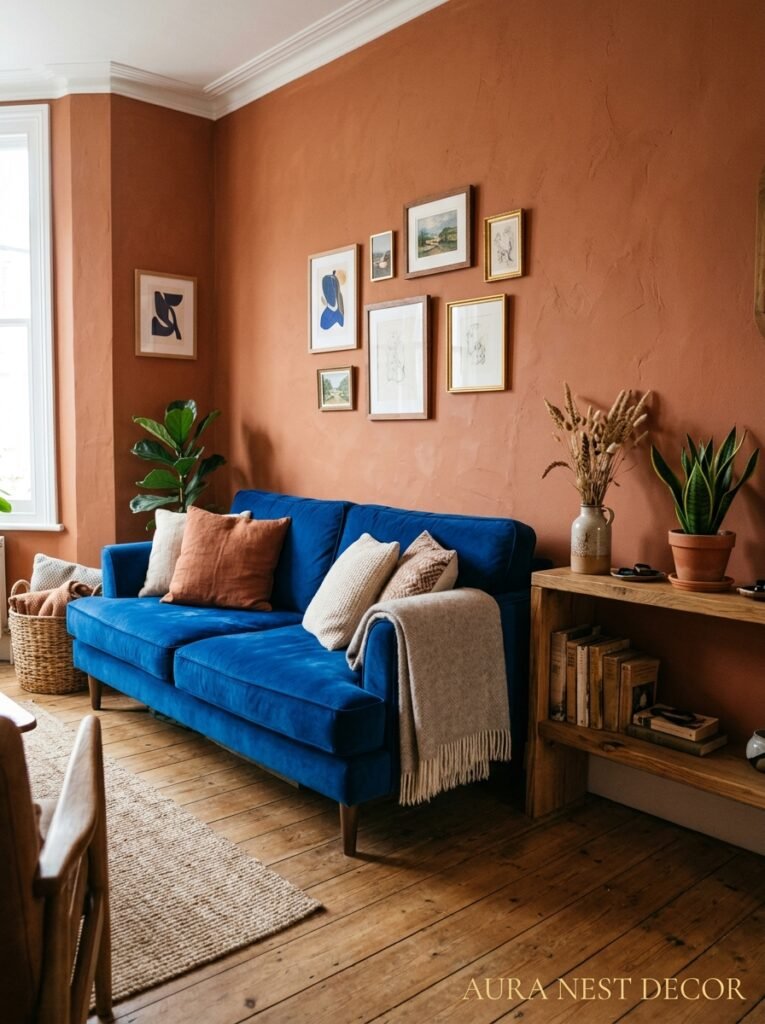
This is the question I get asked constantly. And I get why — it’s the relationship people are most nervous about.
Warm white is probably the most foolproof. Not cold white, not blue-white, but the slightly creamy, slightly warm white you see in Farrow & Ball’s “All White” or Sherwin-Williams “Alabaster.” Against a blue sofa, warm white walls feel fresh but not sterile.
Earthy terracotta is the maximalist choice and it is BOLD but I love it. A deep terracotta or rust wall behind a navy or teal sofa? That’s a room that has an opinion. Not for everyone, but for the right person it’s everything.
Warm greens — the sage and olive family — sit beautifully with blue. There’s something almost botanical about the combination. Particularly if you’ve got a teal sofa; sage walls and a teal sofa can feel like you’re sitting in a very stylish greenhouse, which is a good thing.
What to avoid: cool gray walls with a cool-toned blue sofa. It all flattens out. You end up with a room that’s technically fine but has no life in it. Everything needs a little contrast to sing.
—
10. Styling a Blue Sofa for Winter vs. Summer (Because Your Room Shouldn’t Look the Same Year-Round)
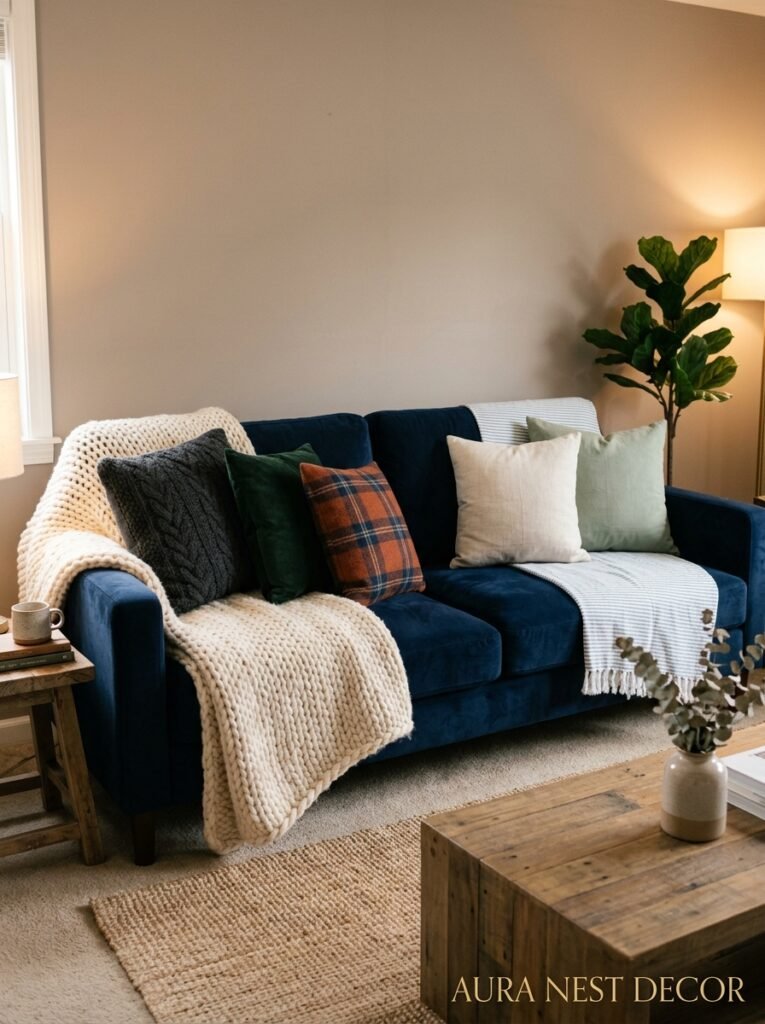
This is something I feel strongly about. A room that looks exactly the same in January and July hasn’t been thought about enough. Your blue sofa can anchor both seasons if you let it.
Winter: lean into the richness of the blue. Deep rust cushions, chunky knit throws in cream or oatmeal, candles everywhere, a sheepskin draped over one arm. Add a stack of books on the coffee table, an amber-toned lamp. The sofa becomes a den. Something to burrow into.
Summer: strip it back. Linen cushion covers in faded coral or warm white. No heavy throw. Maybe a lightweight cotton blanket in a stripe. Fresh flowers or a plant on the coffee table. Pull the curtains back fully. The blue looks completely different with summer light flooding in — lighter, almost Mediterranean.
You don’t need to buy all new things. Swap the cushion covers. Add or remove the throw. Change the flowers. It’s a fifteen-minute refresh that makes the room feel responsive to the season, which is honestly one of the best things a well-chosen sofa can do.
—
11. The One Thing I Wish Someone Had Told Me Before I Bought Mine
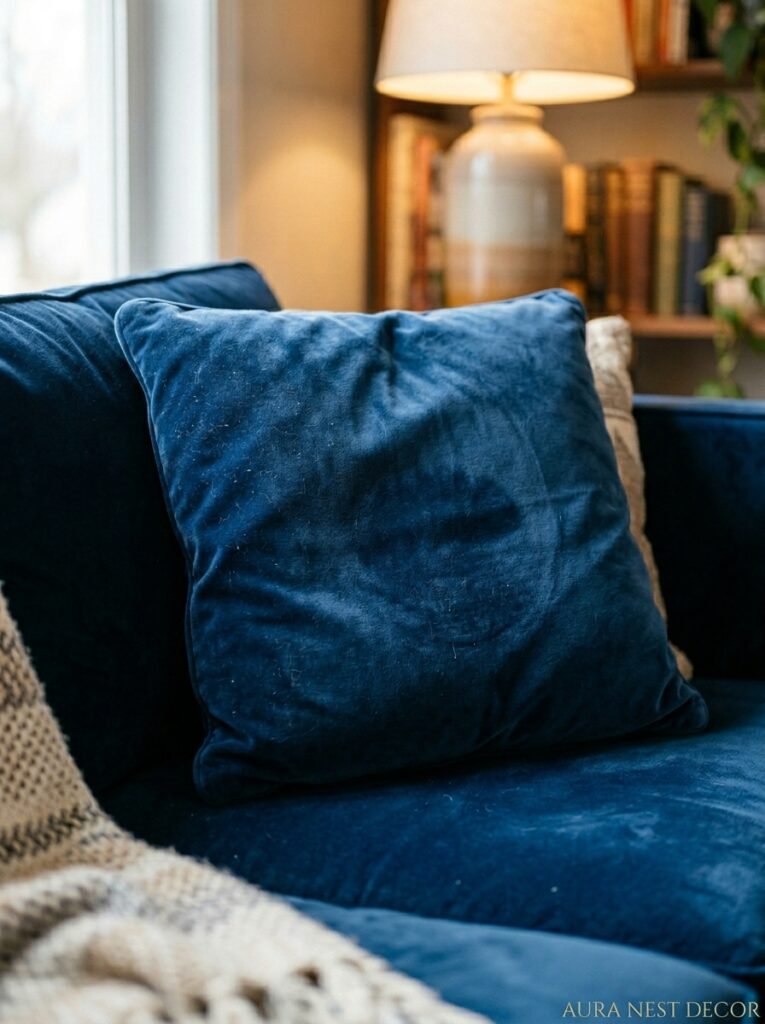
Sit on it first. Obvious, I know, but hear me out.
I almost bought a gorgeous cobalt blue sofa online — perfect shade, perfect dimensions, within budget. And then I found the same model in a showroom and sat on it and it was hard. Not firm. Hard. Like sitting on a very stylish park bench. The return process for large furniture is awful and expensive, so this matters enormously.
Blue velvet sofas in particular can sometimes prioritize aesthetics in a way that the seat depth and cushion firmness gets a little compromised. You want something you can sink into. You want to be able to actually lie down on it for a Sunday afternoon film and not feel like you’ve made a decorating decision that punishes you physically.
If you can’t try it in person because you’re buying online — and a lot of people are — check the dimensions carefully. Seat depth under 22 inches tends to feel uncomfortably shallow for most adults. Look for reviews that mention comfort specifically, not just appearance. And check the return policy. Thoroughly.
—
12. The Blue Sofa Rooms I Keep Saving on Pinterest (And What They Have in Common)
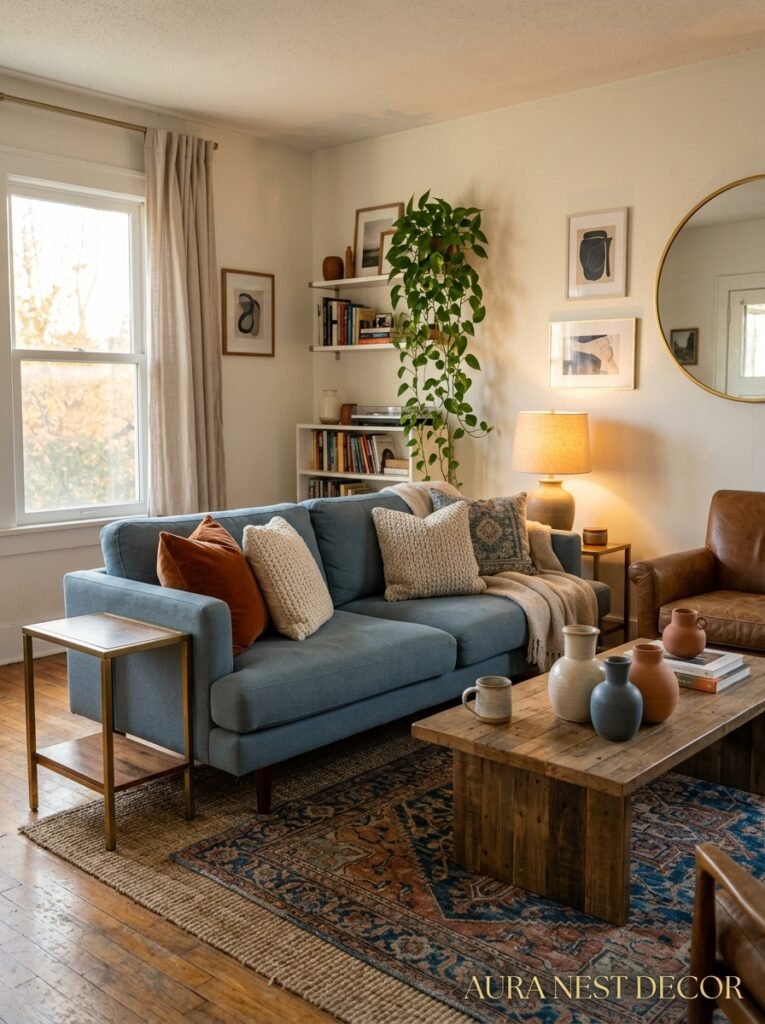
I’ve been saving blue sofa rooms to a secret board for longer than I’d like to admit. And looking back at all of them, there’s a pattern that I didn’t consciously notice until recently.
Every single one of them has a warm light source. Not overhead lighting — lamps, candles, or both. The warm light is what makes the blue glow rather than just sit there.
Almost all of them have something organic in the frame — a plant, a wooden bowl, a linen throw, dried pampas grass. Something that softens the structured color of the sofa with texture and life.
And basically none of them are styled with the cushions perfectly symmetrical. They’re a little askew, one extra cushion tossed into a corner, a throw half-unfolded. That slight undone quality is what reads as real and desirable rather than a showroom photograph.
The ones I keep coming back to aren’t the most expensive rooms. They’re the ones that feel like someone actually uses them.
—
❓ FAQ
Q: Will a blue sofa make my living room feel smaller? A: Not necessarily, and often the opposite. A bold color like blue creates a focal point that actually gives a small room a sense of intention and design. The key is keeping walls lighter and making sure there’s warm lighting so the blue reads as rich rather than heavy. A blue sofa in a small room often looks more considered than a beige one.
Q: What’s the easiest color scheme to build around a blue sofa if I’m not confident with color? A: Start with warm whites and natural wood tones — you genuinely can’t go wrong. Add cushions in terracotta or warm rust for contrast and a soft cream or oatmeal throw for texture. That combination works in almost every blue shade, from pale teal to deep navy, and it’s forgiving enough to adjust as you go.
Q: How do I clean a blue velvet sofa without ruining it? A: Use a soft brush attachment on a low-suction vacuum regularly to lift dust and debris. For marks, blot with a barely damp cloth — never rub — and let it air dry naturally. Water can leave marks on traditional velvet, so if spills are a genuine concern in your household, look for performance velvet or a stain-resistant fabric treatment you can apply at home.
—
💭 Final Thoughts

A blue sofa is one of those decisions that sounds riskier than it actually is. Once it’s in the room, most people wonder what they were so afraid of. It grounds a space, gives it a point of view, and honestly makes everything else around it look better just by existing.
Don’t wait until the room is perfect to bring it in. The sofa can be the thing that makes the room make sense.
What’s the one thing holding you back from going for it?