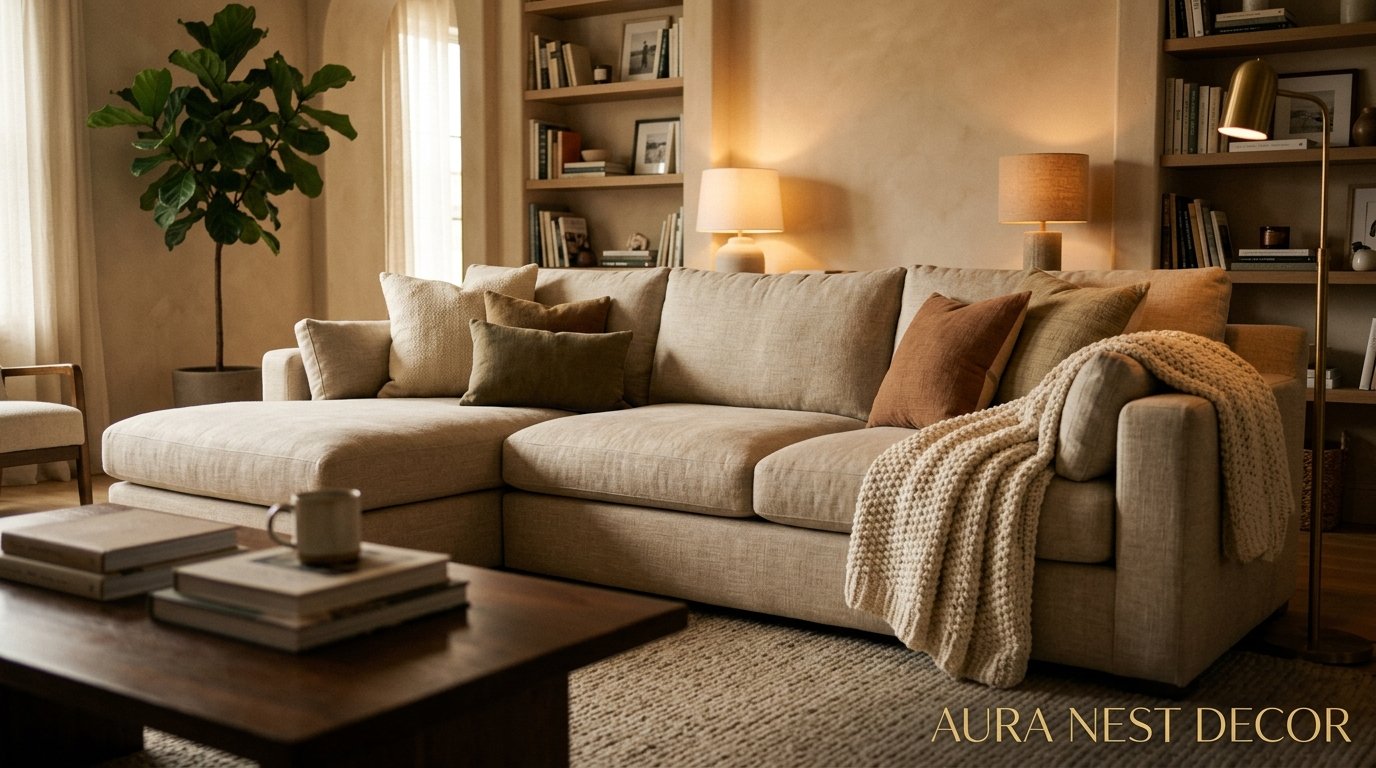
The Couch You Pick Will Either Make or Break Your Entire Living Room (No Pressure)
You know that moment when you walk into someone’s home and their living room just feels right? Nine times out of ten, it’s the couch. Not the art. Not the rug. The couch — where it sits, what it’s made of, how it makes you want to stay.
This is everything I’ve learned about picking one that you won’t regret in six months.

—
1. Why the Couch Is Actually the Most Important Furniture Decision You’ll Ever Make
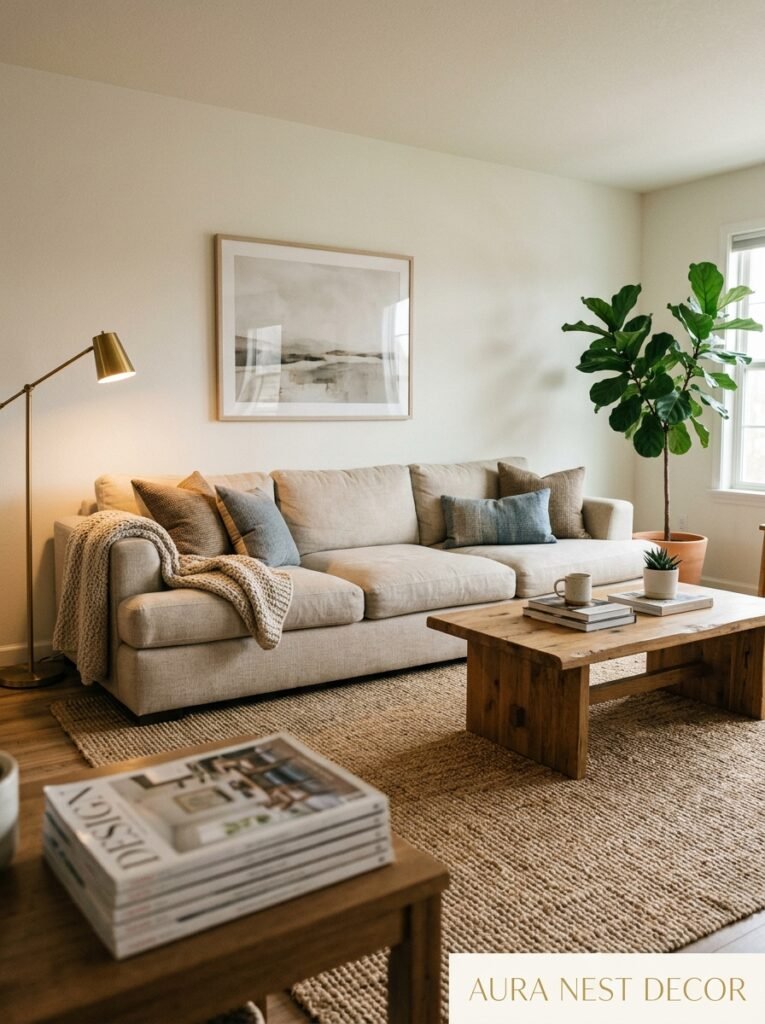
I don’t say that lightly. Your couch is the gravitational center of your living room. Everything else orbits it — the coffee table, the rug, the TV stand, the throw pillows you’ll spend way too long choosing. Get the couch wrong, and the whole room fights you. Get it right, and styling the rest feels almost effortless.
But here’s what nobody tells you in all those “how to furnish your living room” articles: the couch isn’t just furniture. It’s the piece that carries more actual time than anything else in your house. Think about it. You sleep on it occasionally. You argue on it. You have the best lazy Sunday mornings of your life on it. You cry at TV shows on it at 11pm with a blanket over your head.
So why do so many of us walk into a store, sit on a couch for thirty seconds, think “yeah, comfy,” and buy it in a panic?
Don’t do that. You deserve better. Your living room deserves better.
“The couch doesn’t just fill the room. It sets the emotional temperature of your entire home.”
—
2. The Size Mistake That Haunts Every Open-Plan Living Room
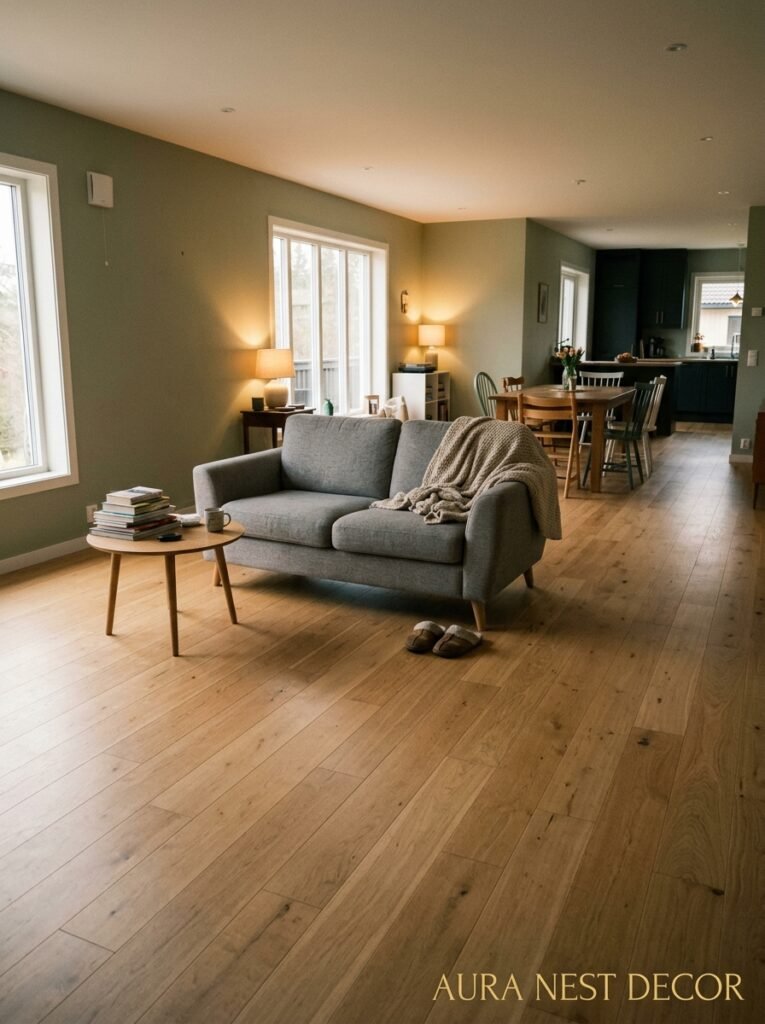
Too big. Almost every first couch purchase is too big. It’s such a common mistake that furniture stores genuinely rely on it — you walk in, everything looks proportionate in the showroom because the ceilings are twelve feet high and the floor is endless, and you don’t realize until it’s sitting in your actual living room that you now can’t open the patio door properly.
Measure obsessively. I’m serious — tape measure, then painter’s tape on the floor in the exact footprint of the sofa you’re considering. Live with that taped outline for a day. Walk around it. Does the room still breathe? Can you pull back from the coffee table without your legs bumping the edge?
The general rule in the UK and US both is that your sofa shouldn’t take up more than two-thirds of the wall it’s against. And in open-plan spaces — which are everywhere right now — you want the couch to define the living area without accidentally eating the dining space too.
Also: check your hallway width before you order. Because the number of people who’ve had a dream sofa stuck halfway through the front door of a Victorian terrace is genuinely staggering. Measure twice, cry once — or not at all if you’re sensible about it.
—
3. The Color That Keeps Showing Up in Every Pinterest Living Room Right Now

Warm stone. Not beige exactly — deeper than that, with a little yellow or green undertone that shifts depending on the light. Sometimes it reads almost caramel at golden hour, and then in the morning looks more like fresh linen. It’s the color that photographers keep accidentally finding in the most-saved home images, and it makes sense.
But I’d also argue for one slightly contrarian option: a deep forest green sofa. Not everyone can commit to it, which is exactly why the ones who do have living rooms that look absolutely confident and intentional. Forest green with warm wood tones, a terracotta accent cushion, natural jute underfoot — it’s a combination that photographs incredibly well and feels even better in person.
Neutrals aren’t safe, by the way. A badly chosen greige sofa in the wrong undertone will look dirty against white walls and washed out against warmer ones. The “safe” choice is only safe if you do the undertone work. Pull swatches. Look at them in your actual light, not the store’s light.
And honestly? Don’t rule out pattern. A wide, low sofa in a subtle boucle or a soft chenille stripe can carry more character than a plain piece in a forgettable color ever could.
—
4. Fabric vs. Leather: What They Don’t Put in the Product Description
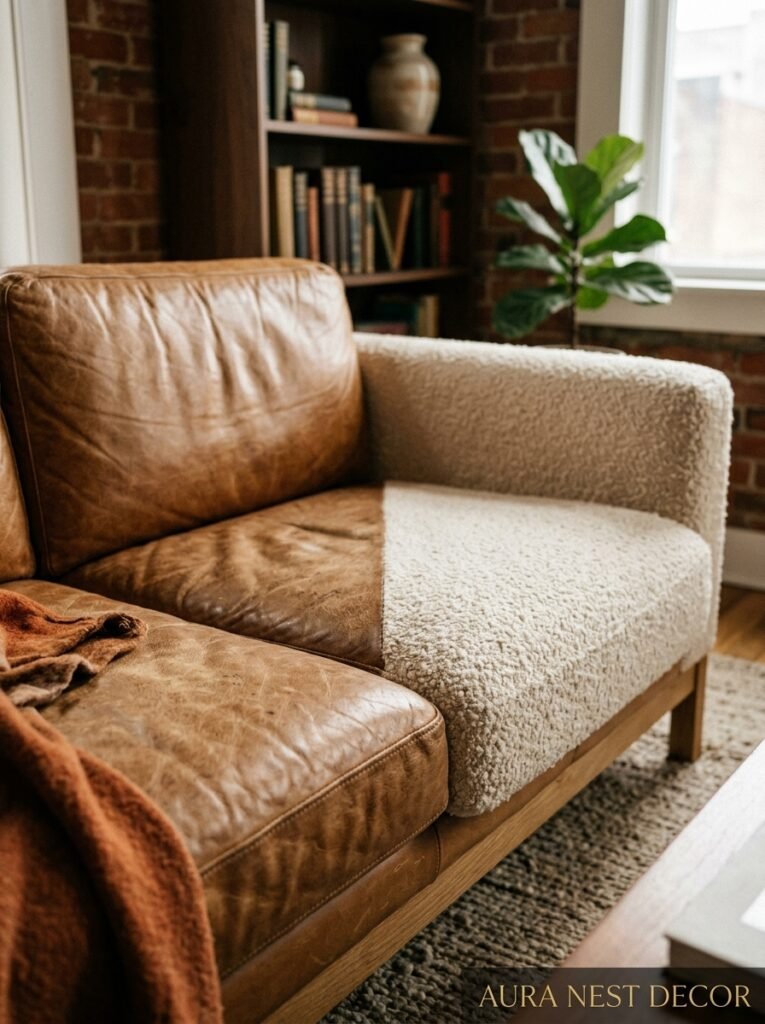
Leather looks incredible for about three months. Then it either gets better (genuine leather that develops a patina) or worse (bonded “leather” that peels at the seams in a genuinely upsetting way). If you’re buying leather, go real or go fabric. Bonded leather is not your friend.
Fabric sofas — and there are SO many kinds — each have their own personality. Velvet is gorgeous, picks up pet hair like it’s got a personal vendetta, but cleans up better than you’d expect. Boucle is the darling of Instagram right now, and yes, it’s beautiful, but anything with texture will snag. Linen-blend is my personal favorite for everyday living: it’s breathable, looks expensive when it wrinkles slightly (and it will wrinkle, that’s fine, that’s the look), and gets softer over time.
If you have kids or pets, performance fabric is not a compromise — it’s just sense. Brands like Crypton and Sunbrella make sofas now that genuinely resist stains and still feel like regular fabric, not like you’re sitting on a reusable shopping bag.
“Buy leather for looks or buy fabric for life, but don’t buy bonded leather for anything.”
—
5. The One Sofa Style That Works in Rooms That Are Awkward Shapes
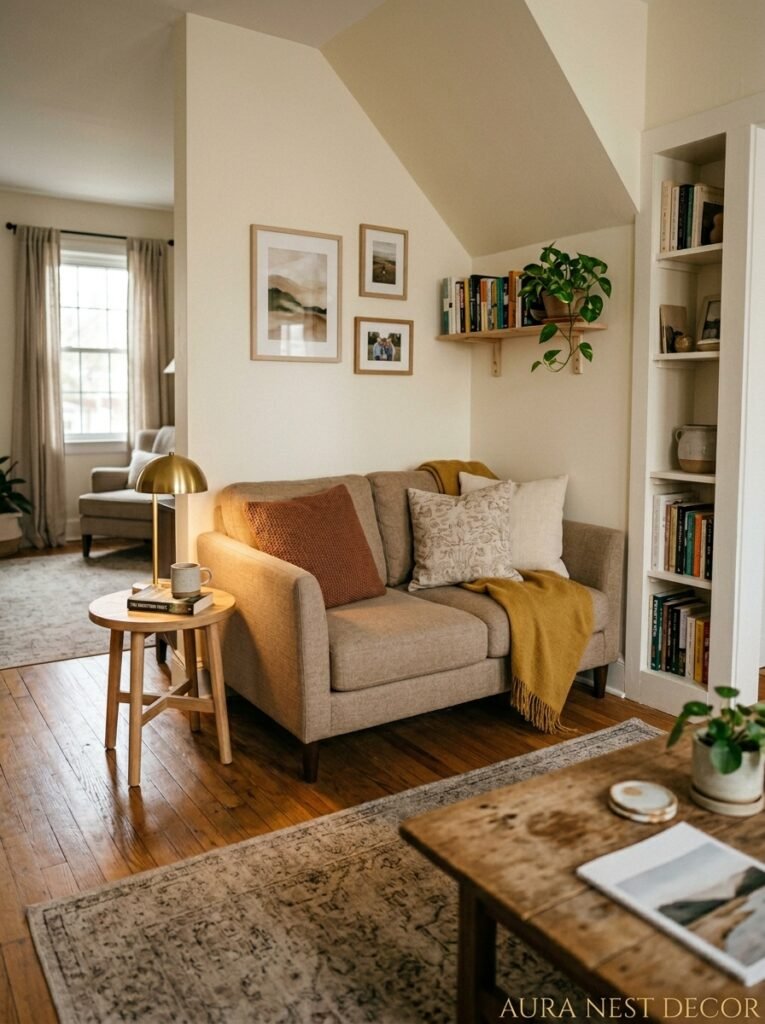
Corner sofas — but not the giant L-shape you’re picturing. Smaller, modular corner sofas that let you configure around the room’s quirks rather than fighting them. Got an alcove? A fireplace offset from center? Doors that open at strange angles? A modular sofa adapts. You can add a chaise on the left, swap it to the right two years later, add a corner piece when you move to a bigger place.
The flexibility of a good modular is underrated in a huge way. I’ve seen a 3-seater + corner + chaise configuration transform an L-shaped living room that previously had no clear focal point into a room that suddenly made total sense. The furniture was defining the space rather than bumping up against its limits.
In the UK specifically, where Victorian and Edwardian houses have all sorts of charming but genuinely awkward proportions, modular is often the most practical answer. Wide chimney breasts, shallow alcoves, bay windows that take up half the wall — modular seating works WITH these things.
Bonus: they tend to be easier to get up narrow stairs and through small doorways because they come in sections.
—
6. The Leg Height Detail That Changes How Your Room Looks on Camera (and in Real Life)
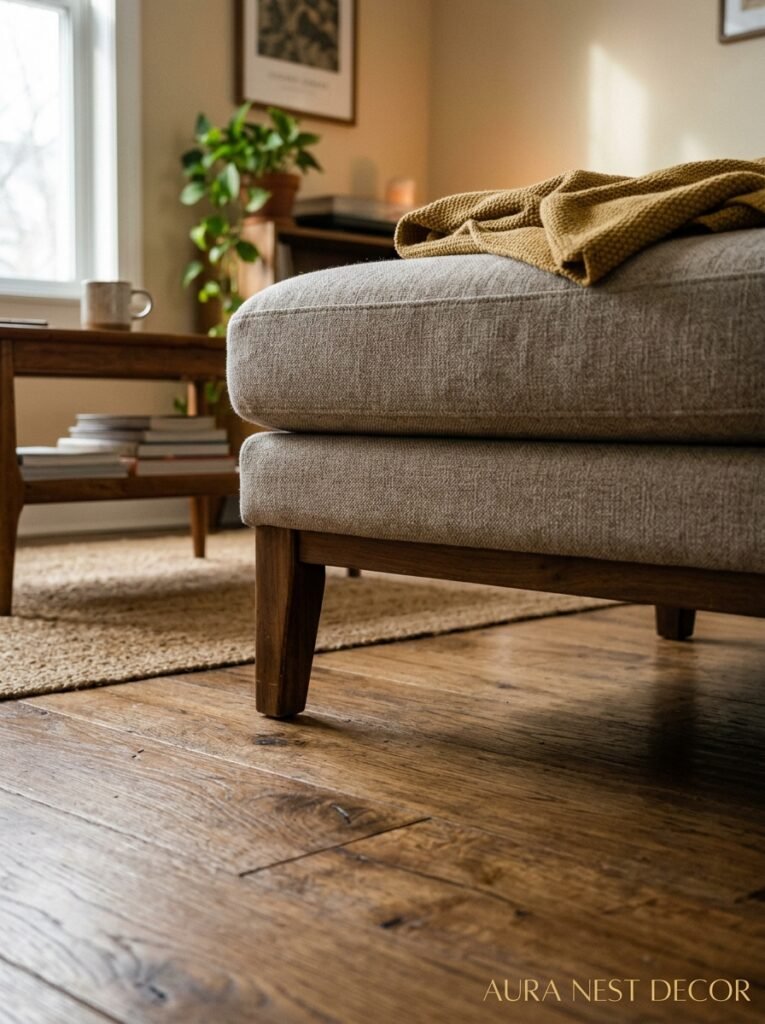
Sofa legs. People barely think about them. But they change everything about how a room reads, especially in photos.
High legs — six inches or more — make a room feel airier, lighter. You can see the floor underneath, which visually expands the space. In a small or dark living room, high-legged sofas are genuinely one of the easiest ways to create the illusion of more room. They also make vacuuming dramatically easier, and I will not apologize for finding that deeply satisfying.
Low-to-the-ground, skirted sofas — the kind that are basically floor-level with a fabric skirt hiding the base — feel heavier, cozier, more traditional. They suit a room that already has height and good bones, where you want to bring the eye down and make things feel anchored.
Leg material matters too. Tapered wood legs on a mid-century-style sofa are doing something very specific and they’re doing it deliberately. Sleek black metal hairpin legs read as industrial-cool. Brass-tipped legs are having a real moment and pair beautifully with that warm stone upholstery I mentioned earlier.
These are not small details. These are the details that separate a Pinterest-worthy living room from a perfectly fine one.
—
7. How Many Cushions Is Too Many Cushions (Asking for a Friend)
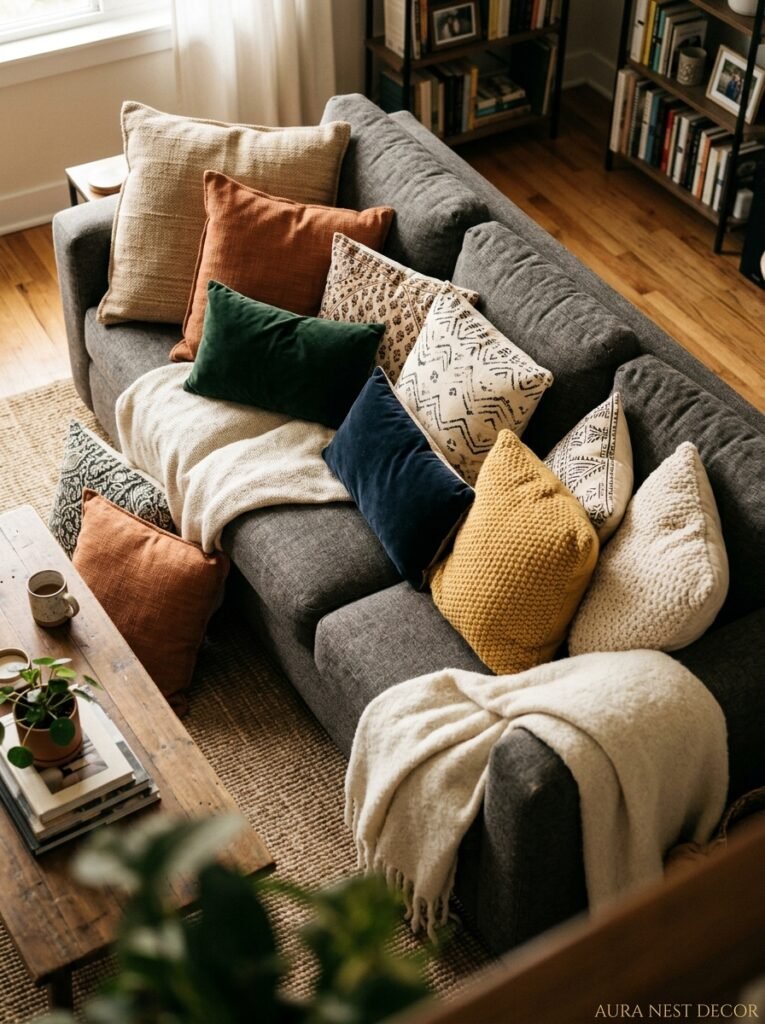
There’s a law in interior design, unwritten but widely understood, that says you’re probably using too many throw pillows. Not because throw pillows are bad — they’re wonderful — but because past a certain point they stop adding warmth and start making the sofa look like a pillow STORE.
The magic number tends to be odd. Three on a three-seater, or five if you’re really committing. And the sizes should vary — one larger lumbar or oversized square, a couple of medium ones, maybe one smaller one that’s purely about texture.
What you don’t want: twelve identical cushions in a straight row. It looks staged, not lived in. And Pinterest may have created this problem slightly, not gonna lie.
The other thing: cushions should connect to the rest of the room. Pull a color from your curtains, or the undertone in your rug, or even something in a piece of artwork. The pillow that seems random when you buy it will actually read as intentional if it echoes something else in the room.
“Three perfect cushions will always beat eight matching ones. Always.”
—
8. The Couch Position Nobody Tries (But Should)
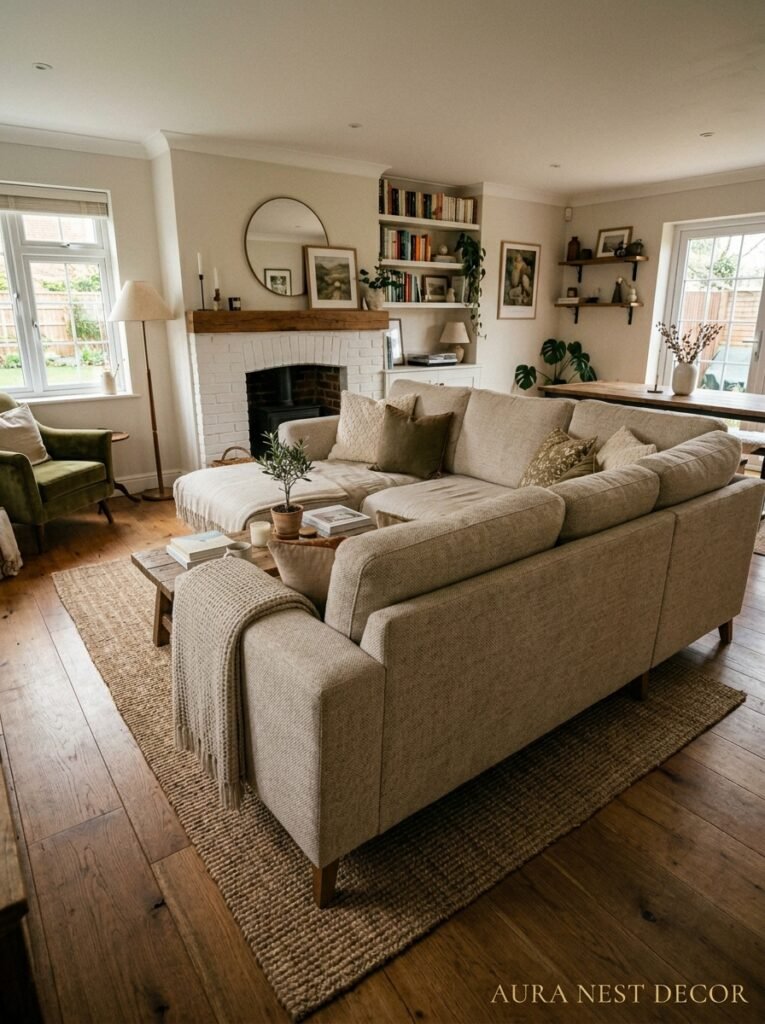
Floating. Pull the sofa away from the wall.
In the UK especially, there’s this deeply embedded habit of pushing every piece of furniture against the perimeter of the room, as if the center is sacred ground. The result is a living room that feels like a waiting room — all the seating arranged defensively around the edges, a vast empty space in the middle, the coffee table stranded in no man’s land.
Float your sofa. Pull it forward six inches. Then a foot. Then maybe two feet. Create a real conversation zone where the furniture comes together toward the center of the room rather than retreating to the walls.
Yes, you’ll have some wall space behind the sofa. That’s fine. Put a console table back there with a lamp. Put a trailing plant. Put nothing — not every surface needs furniture against it.
The floating sofa is the number one trick that interior designers do in rooms that feel stuck, and it works almost every time.
—
9. Why a “Timeless” Sofa Isn’t Always the Boring Option
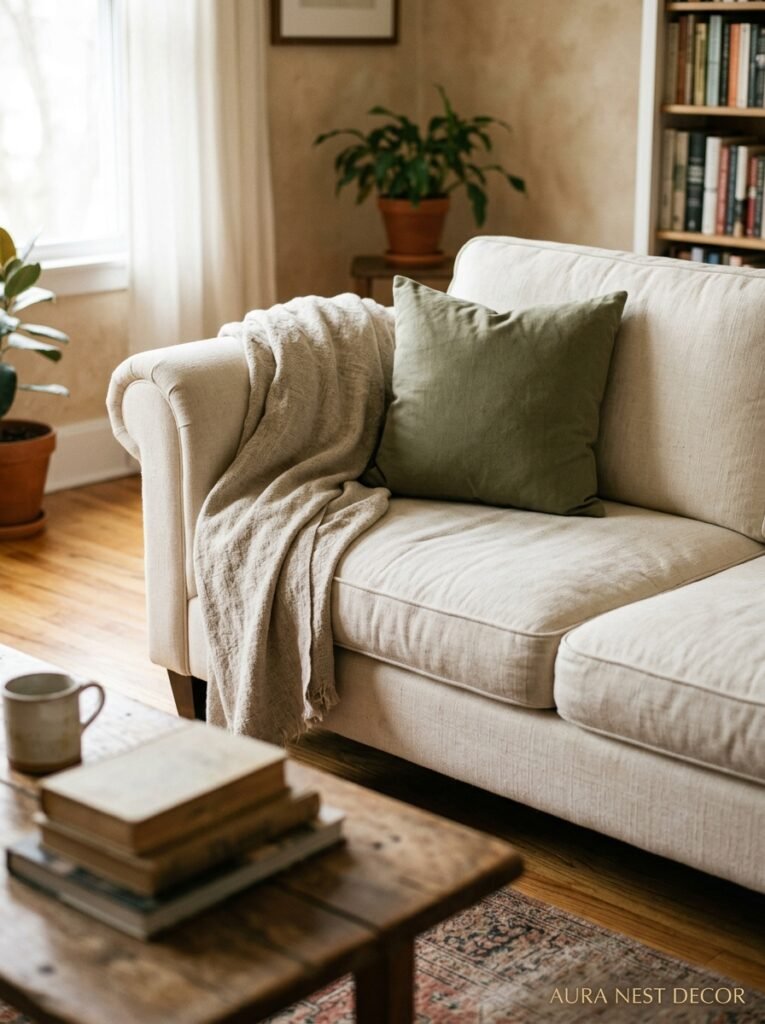
There’s a version of “timeless” that means beige, clean lines, nothing remarkable. And then there’s actual timeless, which means a sofa that has enough design integrity to look intentional in ten years, not dated.
Chesterfields. Mid-century low-profile sofas with tapered legs. Clean Scandinavian three-seaters in oatmeal boucle. These aren’t boring — they’re classic in the same way a well-cut coat is classic. They don’t follow the trend, so they can’t fall behind it.
The pieces that age badly are the ones that chase a very specific moment. That chunky, oversized cloud sofa that’s everywhere right now? Beautiful today. I’d think carefully about whether you want to be looking at it in 2032. Same with anything too heavily influenced by one single design era — it peaks fast and then looks like a costume.
The test: does this sofa look like it belongs in a room, or does it look like it’s announcing a statement? Rooms, not statements, is almost always the more liveable choice.
—
10. What Nobody Mentions About Buying a Sofa Online vs. In a Showroom
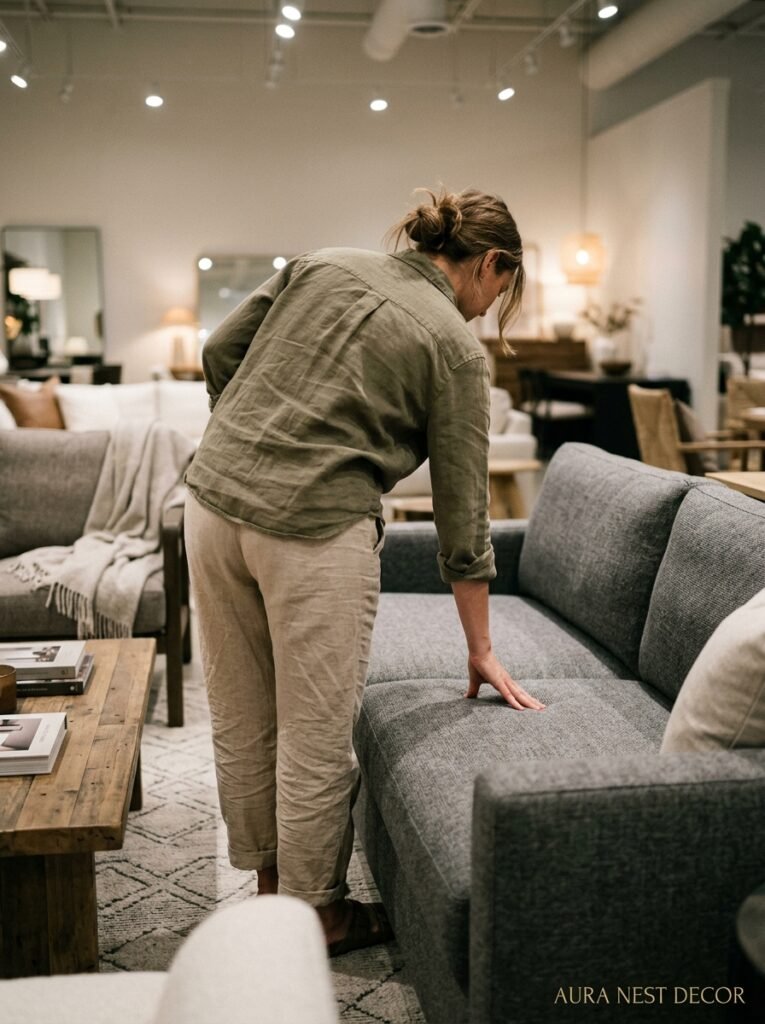
Online sofas have gotten shockingly good. Made.com (RIP, though some of the ranges carried on), IKEA, Article, West Elm — there are genuinely beautiful sofas available without ever setting foot in a showroom. But you’re taking a gamble on three things that are almost impossible to judge from a screen: seat depth, cushion firmness, and fabric texture in real light.
Seat depth is huge. A sofa that’s too deep forces you to sit upright or perch on the edge — fine for some people, uncomfortable for shorter people, awful for anyone with back problems. Most sofa listings give you the dimensions but not the seated feeling.
If you’re buying online, look obsessively for video reviews, not just photos. Photos can lie. Video shows you how the cushions compress, whether the fabric is actually that color, whether the legs wobble. And check whether the company offers free fabric samples — the good ones do, and it’s worth using that service.
In-store, you’re allowed to actually sit there for five minutes. Sit in your sofa position. The way you actually sit, not the “testing a sofa in public” polite perch.
—
11. The Styling Trick That Makes Any Living Room Feel More Put-Together
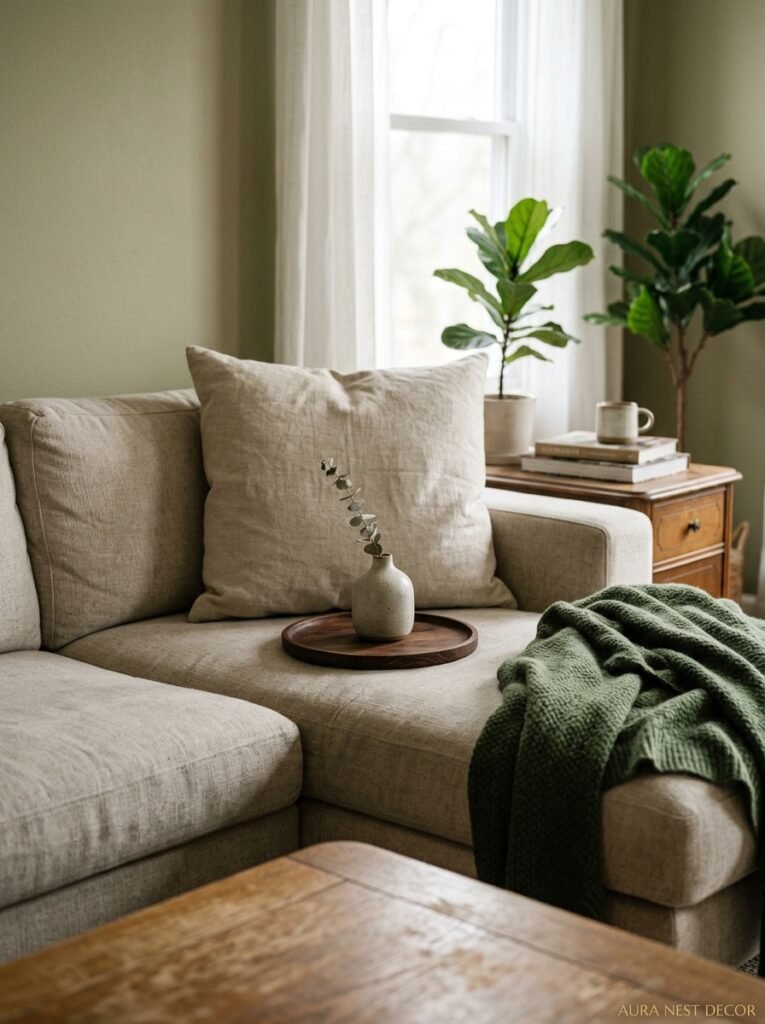
A throw. One throw, not three, draped casually over one arm of the sofa — not folded into a perfect square and placed in the exact center like a hotel cushion.
The trick with a throw is that it should look like someone just got up. Slightly rumpled, corner trailing down. It adds life and texture and the suggestion that the room is actually lived in rather than staged for a photo shoot, even though this IS slightly staged and we all know it and that’s fine.
Texture-wise: a chunky knit in autumn and winter, a lighter cotton weave for spring and summer. In the UK, layering a warm wool throw over a linen sofa for the five months of the year when you genuinely need it is both practical and lovely. In the US — depends entirely on where you live, but the same principle holds.
One other thing: a tray on the coffee table in front of the sofa immediately makes the whole scene feel more considered. Candles, a small book, maybe a plant. It gives the eye somewhere to land other than the sofa itself, which paradoxically makes the sofa look better.
—
12. When You Should Just Trust Your Gut and Not the Algorithm
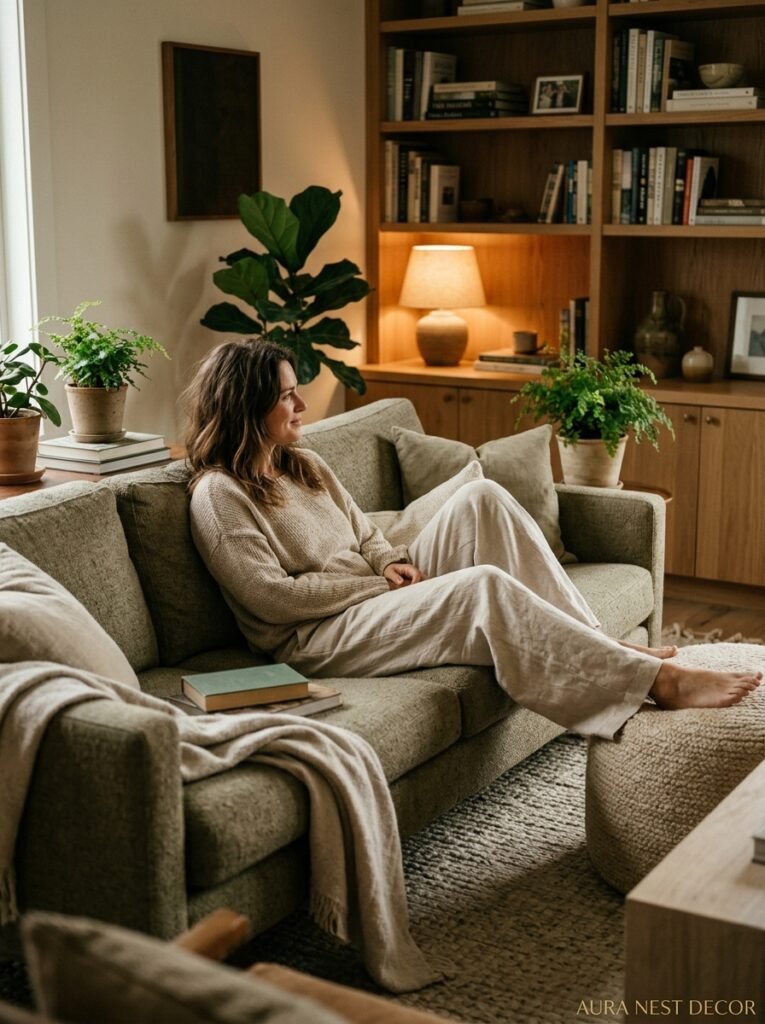
Pinterest boards are wonderful tools and also slightly dangerous ones. You can build a perfectly curated board of 200 living room images, identify every trend, find the exact sofa that appears in seventeen of them — and still end up with a room that doesn’t feel like YOU.
Because the algorithm doesn’t know that you run hot and will roast in velvet. It doesn’t know your dog has a standing appointment on the left-side cushion and no amount of training will change this. It doesn’t know you actually love a bit of clutter and a “perfect” minimalist sofa will make you feel like a guest in your own home.
The best living rooms I’ve ever sat in — the ones that felt genuinely good, not just photogenic — belonged to people who made at least one choice that was entirely personal. A weird color they loved. A piece that was technically wrong for the scale of the room but felt right. Something inherited, something impractical, something they couldn’t explain.
Trust the gut sometimes. The algorithm doesn’t have to live there.
—
❓ FAQ
Q: How long should a good quality sofa actually last? A: A well-made sofa with a hardwood frame and high-density foam cushions should give you somewhere between eight and fifteen years, sometimes more. Budget sofas tend to start sagging in the cushions around the three-to-five year mark. The frame quality is what really determines longevity — look for kiln-dried hardwood rather than particleboard.
Q: What’s the best sofa color if you have pets? A: Medium tones in performance fabrics tend to hide the most — not too light that every hair shows, not so dark that light fur reads as a carpet. A warm medium grey or a earthy taupe in a microfiber or performance fabric is genuinely the most practical choice. But honestly, if you love the cream sofa, get it — a good lint roller and a washable cover go a long way.
Q: Is it worth spending more on a sofa or better to save money and replace it more often? A: Spend more once if you can. Buying a £400 / $500 sofa every four years is more expensive over time, worse for the environment, and significantly more annoying than buying a £1,200 / $1,500 sofa that lasts twelve years. The mid-range is genuinely where the sweet spot is — you don’t need to spend designer prices, but avoiding the very cheapest options usually pays off.
—
💭 Final Thoughts
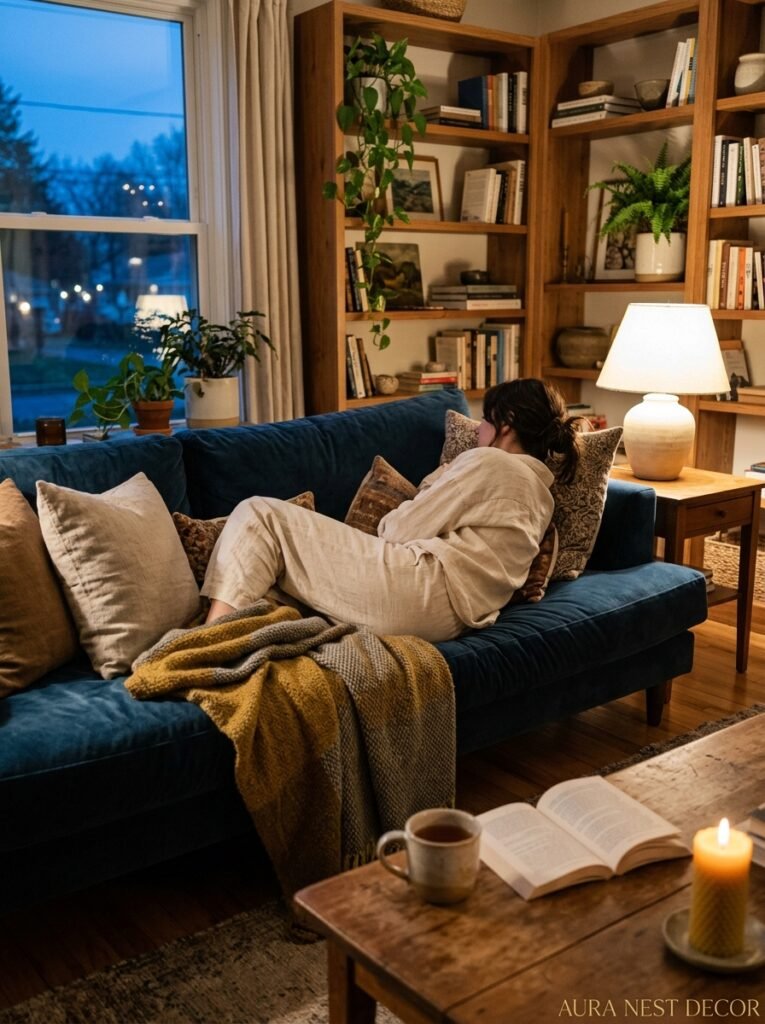
Your living room couch isn’t just furniture — it’s the place where your actual life happens. The sick days, the celebrations, the evenings you don’t want to end. It deserves more than a thirty-second sit-test and a panic purchase.
Get the size right, trust your instincts on color, and pick something that feels like home — not just like a beautiful object someone else would want.
And when you finally get it right, you’ll know. You’ll walk into your living room and just… exhale. Isn’t that what we’re all actually after?