The Wooden Sofa Glow-Up Nobody Warned You Was Coming
You walked past it at the furniture market, probably. Dismissed it as too stiff, too “grandma’s front room,” too much like sitting on a park bench. And then you saw that living room photo on Pinterest and suddenly you couldn’t stop thinking about it.
Wooden sofas are having a MOMENT. And it’s not a trend that’s about to evaporate.
—
1. Why Everyone Who Said “Too Uncomfortable” Is Quietly Changing Their Mind

Here’s the thing about wooden sofas that design blogs don’t really explain properly — the discomfort reputation is about twenty years out of date. Modern wooden sofa frames, the good ones anyway, aren’t designed to punish you. They’re designed as a structure for cushions that you actually choose yourself. And that changes everything.
Think about it. When you buy a standard upholstered sofa, you get whatever cushion fill the manufacturer decided on, for better or worse. With a wooden frame sofa, you’re buying a skeleton and then dressing it yourself. Thick foam with a feather wrap. Pure down. High-density latex. You decide how firm, how deep, how sink-in-and-never-leave. So the whole “it looks beautiful but I’d never sit on it for six hours watching TV” argument kind of falls apart when you realize you’re the one choosing how comfortable it is.
The frames are gorgeous, obviously — that’s why we’re here. But the functional argument is actually stronger than people give it credit for. And once you have cushions you love on a frame you love, the combination is genuinely hard to beat.
“You’re not buying a sofa. You’re buying a frame — then building the sofa you actually want.”
—
2. The Wood Tones That Are Showing Up in Every Stunning Living Room Right Now

Not all wood is doing the same work. There’s a real split happening in interior design right now between the warm honeyed tones — oak, ash, pine in its lighter moods — and the deeper, more dramatic notes of walnut and dark teak. Both are beautiful. They’re just having completely different conversations with the rest of your room.
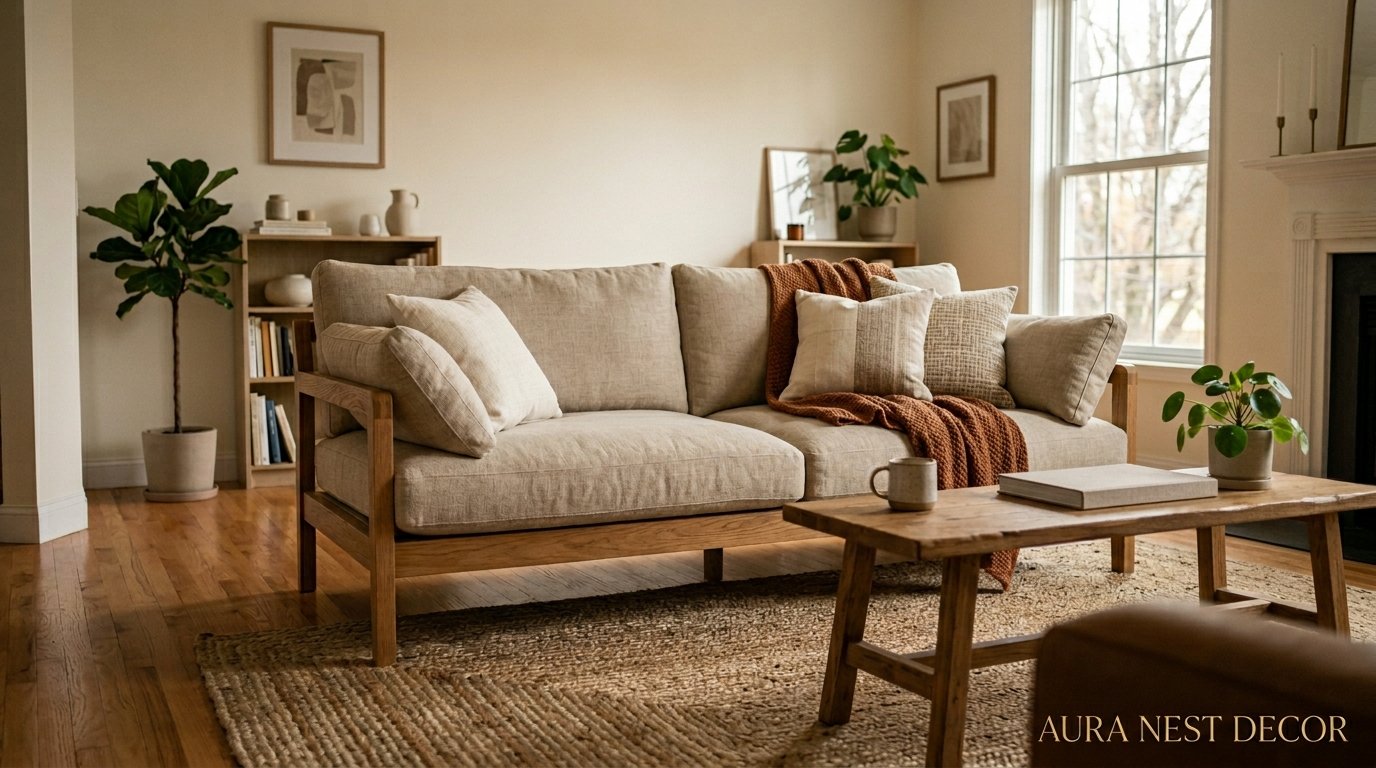
Light oak frames feel Scandinavian, airy, and honestly a bit optimistic. They work brilliantly in rooms that get decent natural light, and they make a small living room feel like it’s exhaling. Pair them with white or cream linen cushions and you’ve got something that photographs incredibly and also just feels really calm to live in. UK homeowners especially seem drawn to this look right now — probably something to do with making the most of every bit of grey-day light.
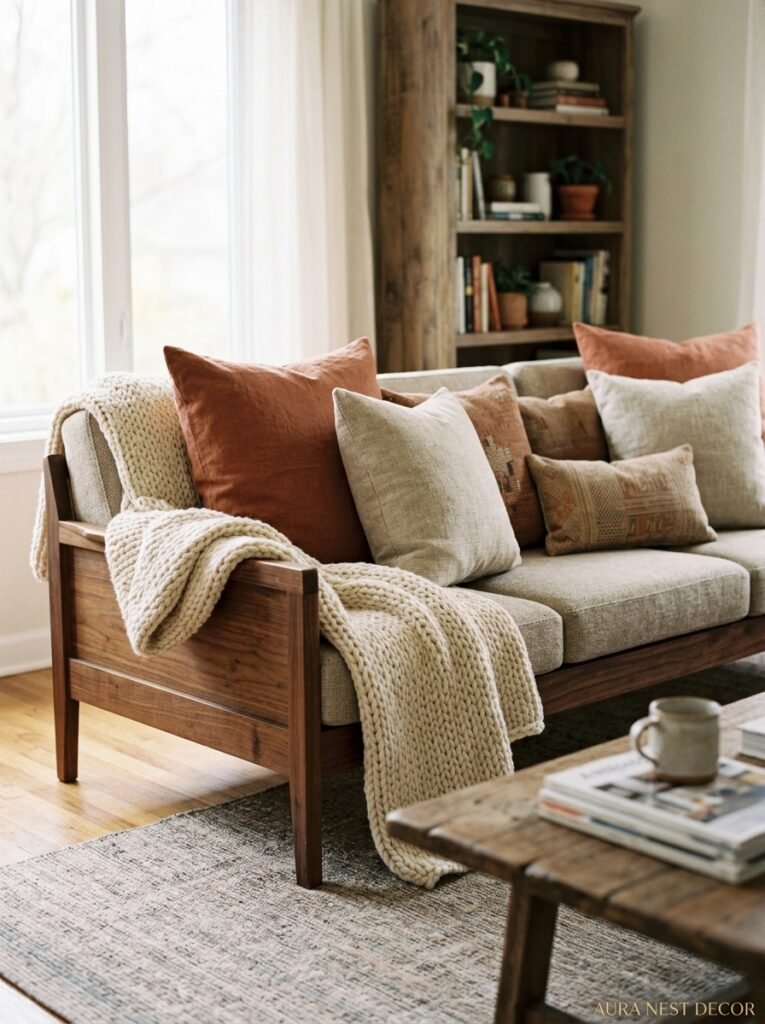
Walnut is doing something different entirely. It’s warmer, richer, more serious. A walnut sofa frame in a room with olive green or rust cushions looks like someone actually thought about it. Not in a cold showroom way — in a “this person knows what they like and isn’t apologizing for it” way. American living rooms have been eating this up, especially in homes with exposed brick or concrete floors where that dark warmth grounds everything.
Teak is worth mentioning separately because it’s an outdoor material that migrated indoors and somehow felt completely right. There’s a slight roughness to good teak that linen and boucle sit against beautifully.
—
3. The Cushion Pairing That Takes a Wooden Frame From “Interesting” to “Incredible”
Okay this is where I have strong opinions. Very strong opinions.
Boucle on wood. That’s it. That’s the whole paragraph. But let me explain why it works so well — the textural contrast is just doing so much heavy lifting. You’ve got a hard, structured, linear thing (the wood) sitting next to something that’s almost offensively soft and curly and touchable. They shouldn’t work. They completely work.
The key with boucle cushions on wooden sofas is going THICK. Not those thin little floor-cushion-depth pads. Deep, generous cushions that feel abundant. When boucle gets thick enough, it starts to look almost sculptural sitting in a wooden frame, and the whole piece becomes genuinely interesting furniture rather than just seating.
If boucle isn’t your thing — maybe you’re in a warm, moody room rather than a light Nordic one — then heavy linen in a slightly wrinkled, un-precious way is fantastic. Not stiff, pressed linen. The kind that looks like it got tumble dried and you loved it more for it. That casual quality actually works harder than something that looks overly styled.
What I’d avoid: velvet. I know, I know — velvet on everything has been huge. But velvet cushions in a wooden sofa frame sometimes look a bit like the cushions are trying to escape. The formality of velvet competes with the rawness of the wood in a way that linen and boucle don’t.
—
4. Small Living Room? Here’s the Wooden Sofa Trick That Makes Any Tight Space Feel Deliberate
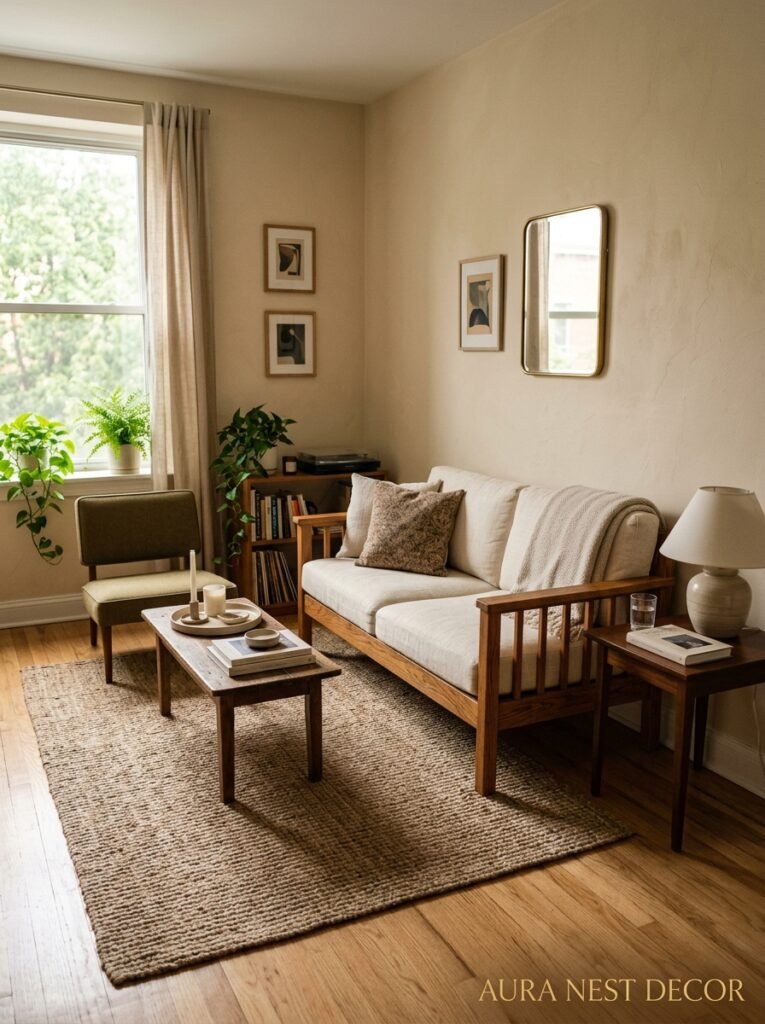
The instinct when you’ve got a small living room is to buy small furniture. Low-profile pieces, glass coffee tables, anything that “doesn’t take up visual space.” And look — some of that isn’t wrong. But here’s what that approach misses: a small room with one genuinely beautiful, confident piece of furniture will always feel better than a small room filled with safe, forgettable things that happen to be small.
A wooden sofa, particularly a two-seater with clean lines and exposed legs, does something really specific in a tight room. It lifts the eye. Furniture with visible legs (especially wooden ones) makes the floor feel bigger because you can see under and through the piece rather than having it sit on the floor like a brick. This is actually a well-known visual trick but it’s one thing knowing it and another seeing it in a real room.
The other thing wooden sofas do brilliantly in small rooms is they don’t demand visual simplicity. You’d think a busier piece would overwhelm a small space but the joinery details — the mortise and tenon joints, the subtle curves on armrests, the grain patterns — give the eye things to rest on without adding bulk. A plain upholstered sofa in a small room just sort of… sits there. A wooden frame sofa gives the room some architecture.
“The right wooden sofa doesn’t fill a small room — it organizes it.”
—
5. The Modern Styles That Actually Work (Not Just the Ones That Photograph Well)
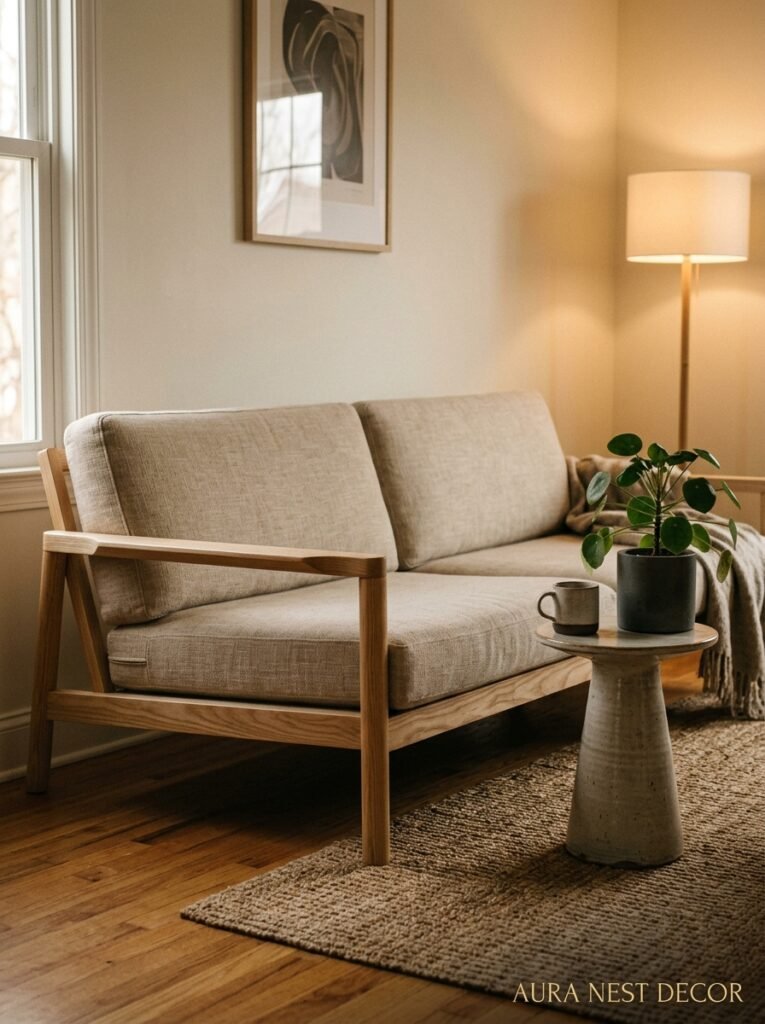
Pinterest has a way of making things look liveable that aren’t. I love Pinterest, obviously — but there are definitely wooden sofa styles that are serving pure aesthetics and not much else. So here’s my honest take.
Mid-century modern wooden frames are the safest entry point and they’re safe for a reason — they genuinely work in most living rooms. The slight splayed legs, the clean horizontal lines, the way they sit low and relaxed. A walnut MCM frame with wool cushions is about as close to a guaranteed win as this category gets. It’s been popular for a while but it’s not done, not even close.
Japanese-inspired tansu-style wooden sofas are having their moment and they’re more interesting to look at. Lower, chunkier, with a kind of deliberate simplicity that feels both ancient and incredibly modern. These suit rooms that commit to the aesthetic — the rice paper pendant, the wabi-sabi ceramics, the absence of clutter. Half-committed? It looks odd. Fully in? It’s breathtaking.
Rattan-and-wood combinations deserve more attention than they get in mainstream design coverage. Not the coastal-grandmother rattan. The tighter-woven, dark-framed rattan that feels more Parisian apartment than beach house. That’s the one.
Avoid: chunky farmhouse-style wooden sofas with too much decorative detail. Turned legs, excessive spindles, anything that reads as rustic-trying-too-hard. The more carving and detail, the further you get from modern and the closer you get to a furniture catalogue from 2003.
—
6. What to Put Next to a Wooden Sofa So the Room Looks Considered and Not Chaotic
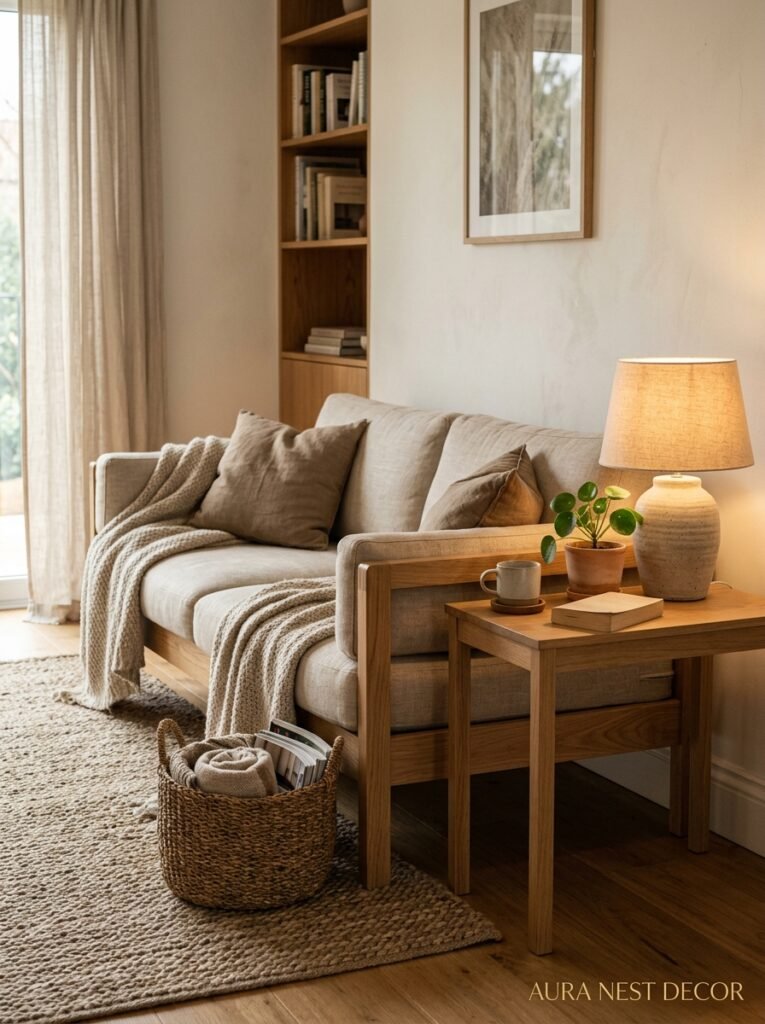
The biggest mistake I see in living rooms built around wooden sofa frames is mismatched wood tones that haven’t been thought through. Not different wood tones — that’s actually fine and often beautiful. Mismatched tones that fight each other without any deliberate reason behind them.
If your sofa frame is light ash and your coffee table is dark mahogany and your shelving is mid-toned pine, the room starts to feel accidental. But if your sofa is light oak and your coffee table is also light oak and you’ve introduced a dark walnut side table as a deliberate contrast? That’s designed. Same number of wood tones, completely different feeling.
Side tables with wooden sofas work best when they’re either clearly complementary or clearly intentional contrast. A thin-legged brass side table next to a wooden sofa is perfect because the metal is doing something completely different — it’s not competing, it’s just coexisting. Marble tabletops on wooden frames are the same logic.
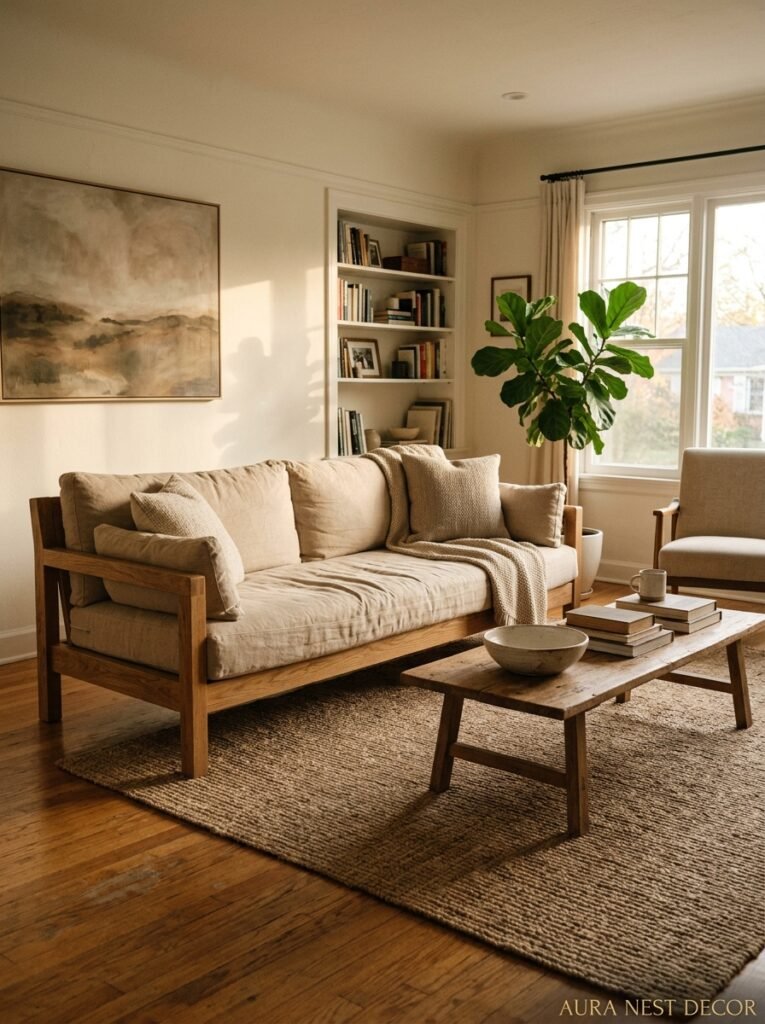
For rugs: natural fibers under a wooden sofa tend to look incredible. Jute, sisal, a thick wool flatweave. They ground everything. And the color palette stays cohesive because you’re essentially staying in the earthy, organic world that wood already lives in.
Plants, obviously. I feel like this barely needs saying at this point but a wooden sofa without a plant nearby is missing its natural conclusion.
—
7. Styling It for That Specific Kind of Light — The 5pm Living Room Feeling
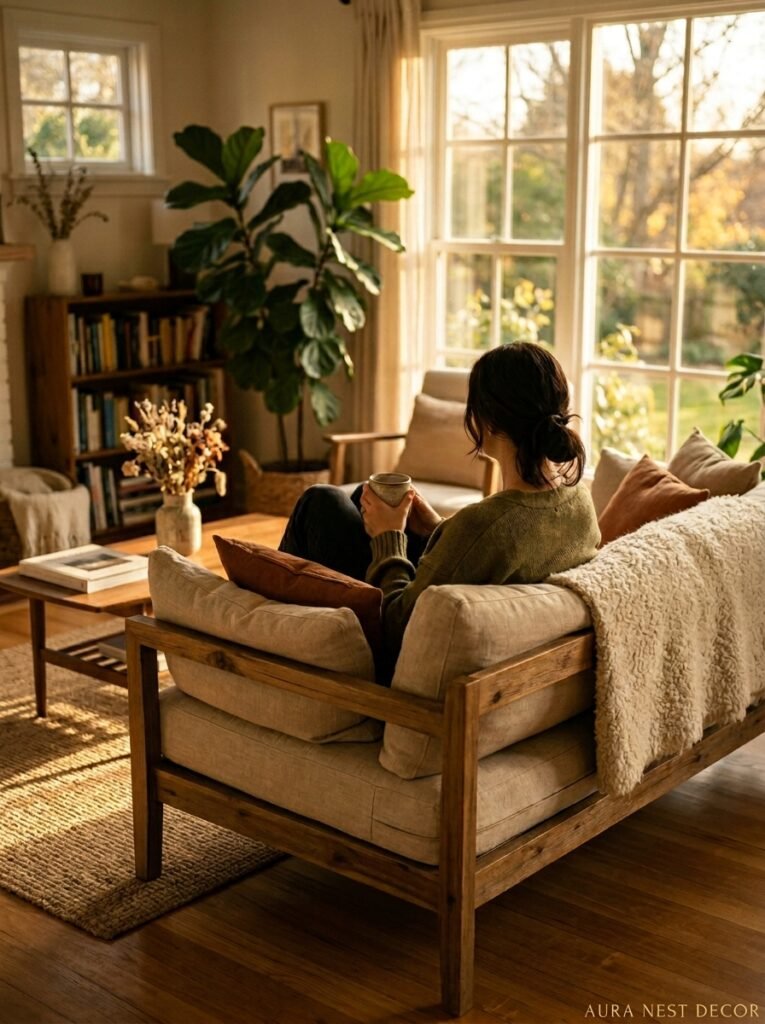
There’s a quality of light that happens in a living room around 5pm in autumn. The sun is low, coming in sideways, catching the grain in wooden furniture in a way that’s almost amber, almost golden. This is the light wooden sofas were MADE for.
Designers sometimes talk about “designing for the room’s best moment” and this is genuinely good advice. A wooden sofa frame catches that raking afternoon light differently than an upholstered sofa does. The grain shows. The joints show. The whole piece gets more interesting.
If you’re choosing between two wood finishes and you’re not sure — go to the showroom or the website at 5pm, or hold a sample in that light. The difference between a flat, matte finish and one with a bit of oil in it is stark when the light goes low. Oiled wood in autumn evening light is sort of unreasonably beautiful, not gonna lie.
Layer your lighting around this. Plug-in sconces. A floor lamp behind the sofa that throws a warm pool upward. Maybe something low and directed like a small table lamp with a warm-toned bulb. Not overhead lights — overhead lighting is the enemy of the 5pm living room feeling in any season.
“Oiled oak in October afternoon light is doing something that no mood board fully captures.”
—
8. The “Is It Practical?” Conversation Nobody Wants to Have But Everyone Needs To
Kids. Pets. Red wine. I’m going to address this and then stop being sensible.
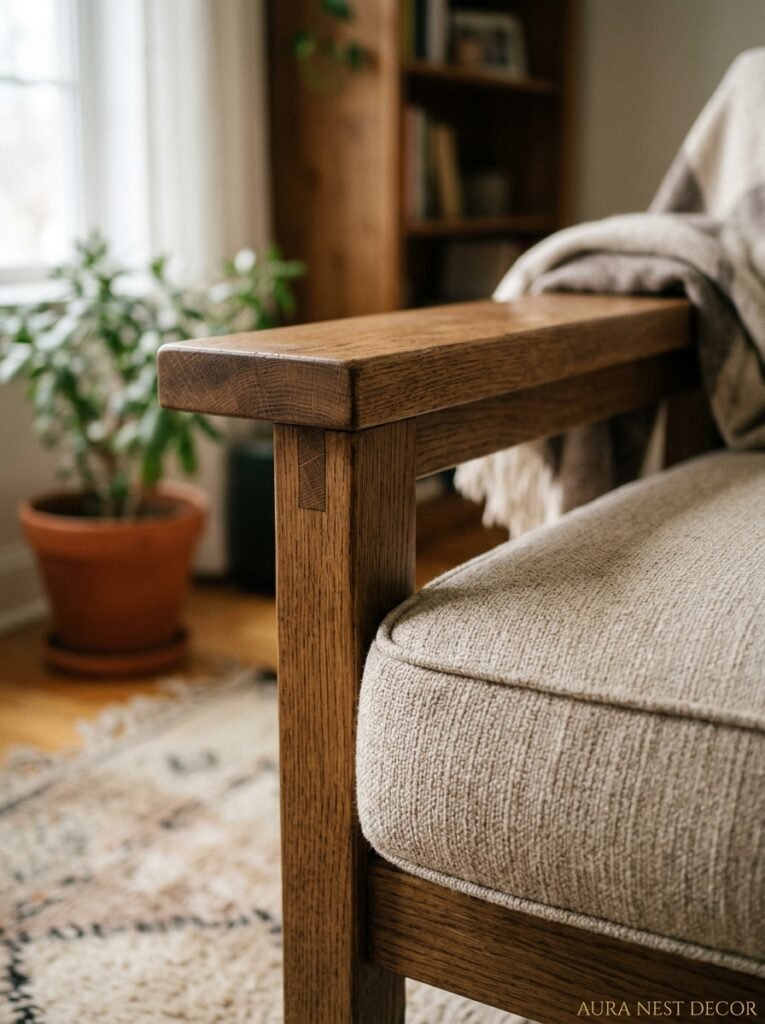
Wooden frames are extremely practical from a durability standpoint — this isn’t in question. A solid hardwood frame will outlive most upholstered sofas by decades. Actual decades. If you take a crack or scratch, a light sand and re-oil and you’re mostly there. Can’t do that with a fabric sofa.
The cushion covers are where practicality gets more complicated. Wooden sofas live and die by cushion cover quality. Get covers that zip off. Get them in a fabric that machine-washes. This rules out some of the most beautiful options, admittedly — dry-clean-only boucle being the main casualty. But there are really good quality removable covers available now in fabrics that feel lovely and clean easily.
If you have dogs who think your sofa is their sofa — and I am not judging, my dog thinks exactly this — lighter wood frames show paw prints less than darker ones. Counter-intuitive but true. Darker teak or walnut shows every dusty pawprint, while lighter ash kind of absorbs them into the grain pattern.
One thing that’s actually underrated for wooden sofas in households with kids: they don’t absorb smell the way upholstered sofas do. After a couple of years, a fabric sofa has absorbed every snack and sweat and damp dog smell you’ve ever encountered in your life. Wood doesn’t do that.
—
9. The Room Colors That Make a Wooden Sofa Look Even More Expensive
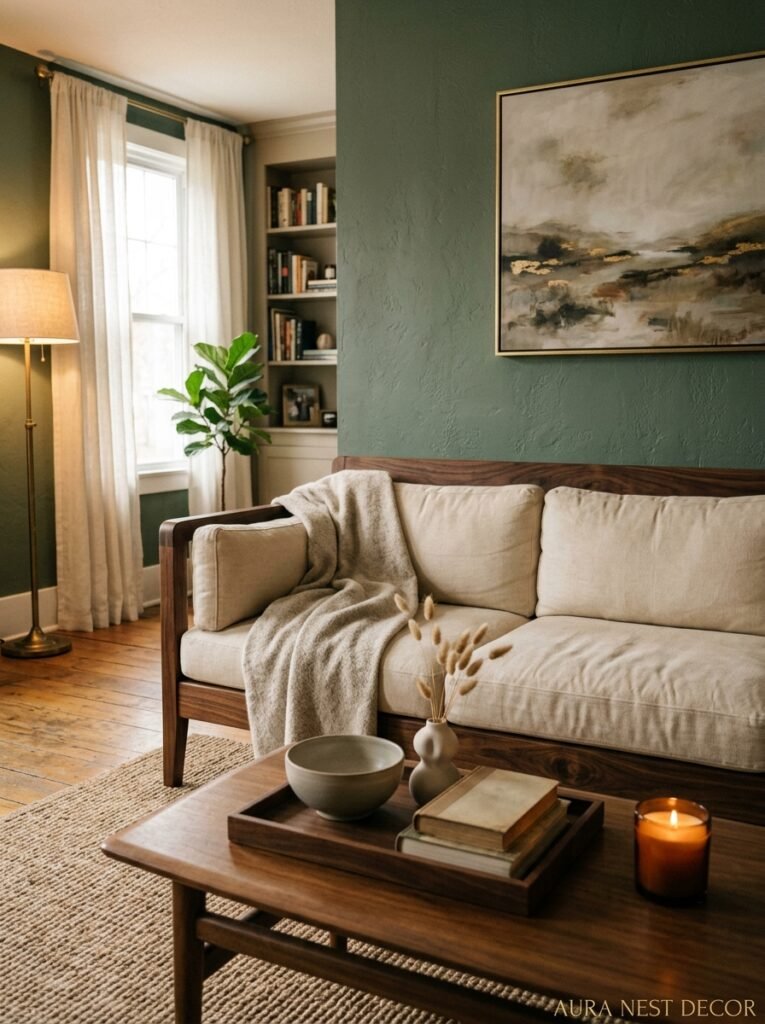
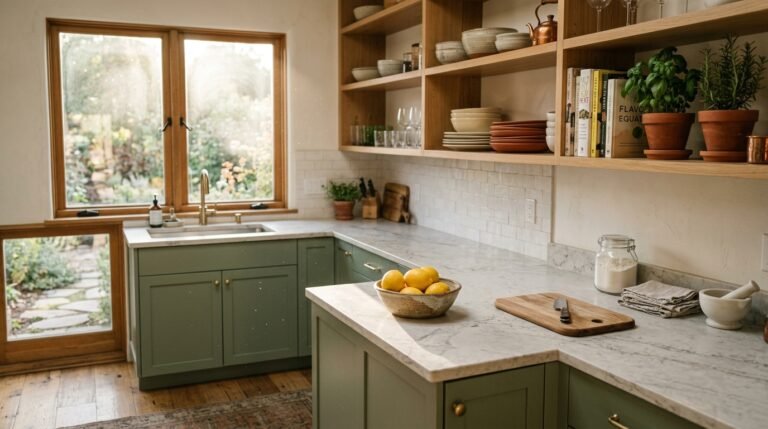
Sage green walls with a light oak sofa. I know everyone says sage green. It’s everywhere. But it’s everywhere for a reason — that slightly muted, slightly grey-green tone does something genuinely special against warm wood grain. It creates a room that feels grown-up without feeling cold.
Terracotta is doing equally interesting work. Warm-toned walls in that burnt orange-pink range that’s somewhere between clay and blush — against a walnut or teak frame, this reads like you designed a room instead of assembled one. The warmth compounds. Americans especially are embracing this palette right now.
What surprised me: dark navy walls with a natural wood sofa. The contrast is higher than the previous examples — much starker — but the wood grain against that deep blue is almost like art. The organic quality of the wood becomes much more visible because the background is so strong.
What I’d be careful about: pure white walls. Not because white is wrong — plenty of beautiful white-walled rooms have wooden sofas in them. But pure brilliant white tends to flatten the grain of lighter wood tones. An off-white, a warm white, a white with some pink or yellow in it — those work. The cold, stark white doesn’t give the wood enough to lean against.
—
10. The Unexpected Rooms Where a Wooden Sofa Feels More at Home Than in the Living Room

Not strictly a living room topic but I can’t not mention this because the best wooden sofa rooms I’ve seen aren’t actually living rooms.
A reading nook or home library. A wooden sofa frame — small, maybe a loveseat — tucked under sloped ceiling shelving with books everywhere is almost disturbingly cozy. The wood on wood situation, the warm lamp, the textile cushions against the frame. You know the aesthetic. You’ve saved the Pinterest board. A modest two-seater wooden sofa would feel completely at home there.
A sunroom or garden room. UK homeowners especially have this space, often — a glazed extension or conservatory that traditionally gets filled with “outdoor” furniture. A proper wooden sofa frame with sturdy cushions in a sunroom, with plants pressing against the glass and natural light coming in from three directions, is so much better than the sad rattan sets that usually end up there.
A home office with a sofa area. This is very “I have definitely thought too much about my home office” territory, but — a small wooden sofa in a home office gives the space a quality that’s both professional and relaxed. Somewhere to think away from the desk. Somewhere to have a work call that looks good on camera without looking staged.
—
11. The Budget Question — What You Actually Get for Your Money at Each Price Point
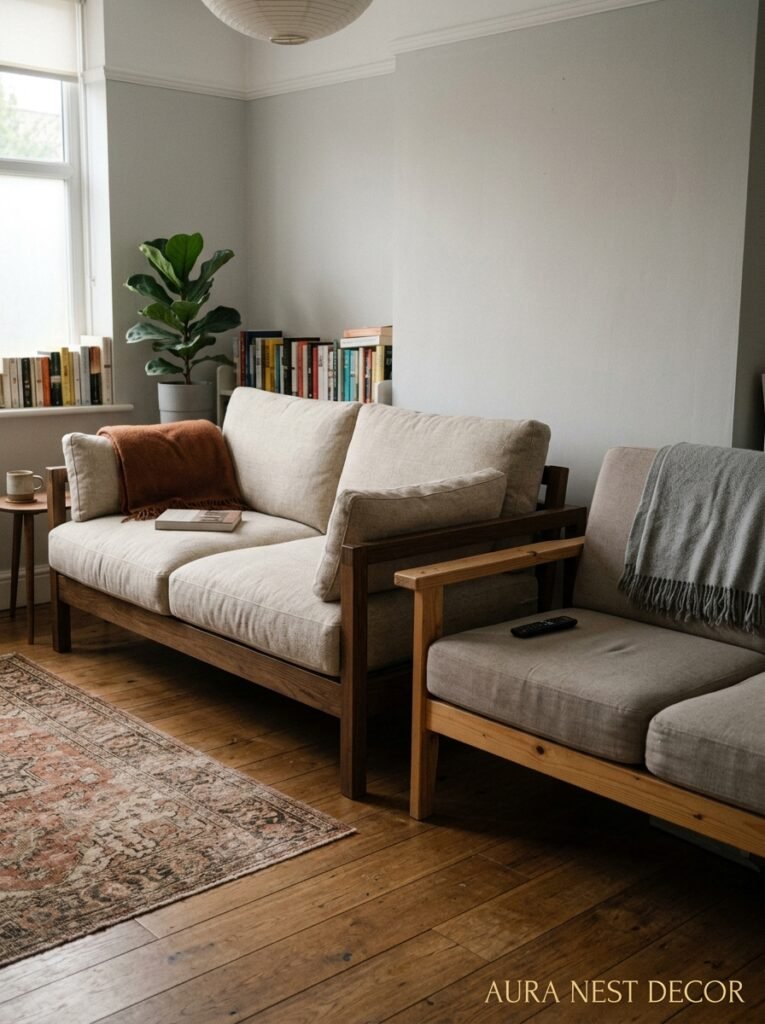
Let me be blunt. A very cheap wooden sofa frame is a bad investment. Below about $400 / £300 for a two-seater, you’re looking at pine that will dent and scratch and warp, joints that won’t hold for more than a few years, and cushion foam that will collapse quickly. I know that sounds snobby but it’s just what the economics of manufacturing mean at that price point.
The interesting zone is $600–$1,200 / £450–£900. This is where you start getting solid hardwood frames — real oak, real teak, sometimes real walnut at the lower end — with decent joinery. This is where you actually buy. The cushions in this range are sometimes mediocre but that’s almost fine because you can swap them out, and cushions are much cheaper to replace than a whole sofa.
Above $1,500 / £1,100, you’re getting into hand-crafted, often made-to-order territory, and this is where the really beautiful things live. The grain selection will be better, the finish will be hand-applied, the joinery will be the kind that lasts forty years. If that’s your budget, it’s absolutely worth it. You’ll never need to buy another sofa.
—
12. The Detail That Separates a Well-Styled Wooden Sofa from a Showroom One

It’s the throw. But not just any throw.
A wooden sofa with immaculate cushions and no throw looks like it’s waiting to be sold. A wooden sofa with one good throw — casually draped over an armrest, slightly imperfect, maybe a bit overlong — looks like someone lives there and has feelings about their home.
The throw should not match the cushions exactly. Close-ish in color family? Fine. Exact match? Too coordinated, too staged. A cream boucle cushion can sit next to a warm caramel woven throw and those two creams not quite being the same is actually better than if they matched perfectly.
Texture matters enormously here. A thin throw from a fast-fashion homeware store just lies flat and reads as cheap. A chunky knit, a heavy cotton herringbone, a mohair blend — something with body and visual interest. It’ll drape better, photograph better, and feel genuinely nice to pull over yourself on a Sunday afternoon, which is sort of the entire point.
One throw. Draped, not folded. That’s the difference between “designed room” and “room from a catalogue” and it’s basically free advice.
—
❓ FAQ
Q: Are wooden sofas actually comfortable enough for everyday use? A: Yes — if you invest in good cushions. The wood frame itself isn’t what you’re sitting on; you’re sitting on whatever cushions you choose. High-density foam with a feather or down wrap is the standard recommendation for everyday comfort, and you can always upgrade the cushions separately without replacing the whole sofa.
Q: How do I maintain a wooden sofa frame to stop it from drying out or cracking? A: Oiling is your friend. A light application of teak oil or furniture oil a couple of times a year keeps the wood from drying and cracking, especially if you have central heating running through winter months. Avoid direct sunlight for prolonged periods if possible, and wipe up spills quickly before they have a chance to sit in the grain.
Q: Can wooden sofas work in a modern or contemporary home, or do they only suit rustic styles? A: Completely compatible with modern and contemporary rooms — the key is in the frame style. Clean lines, minimal ornamentation, and a smooth or lightly oiled finish rather than heavily carved or turned details will keep the look current. Mid-century modern and Japanese-inspired frames in particular sit beautifully in contemporary interiors.
—
💭 Final Thoughts
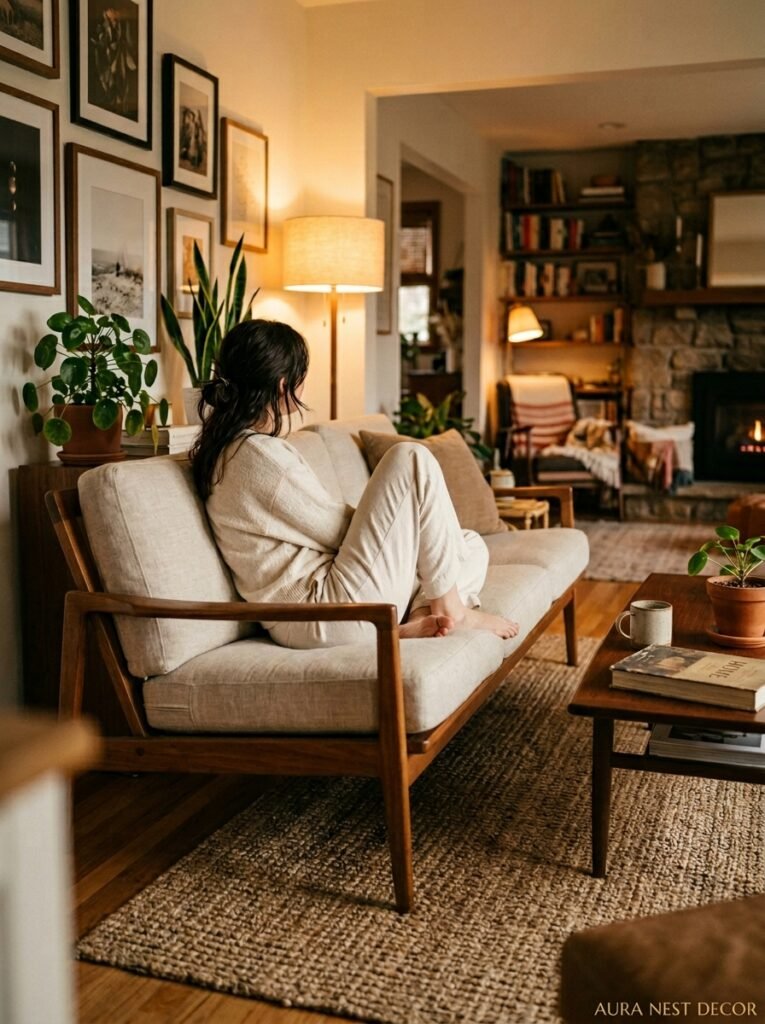
A wooden sofa isn’t a compromise or a styling challenge to overcome — it’s a commitment to a certain kind of living room that has some genuine substance to it. It feels different from the throwaway furniture cycle. More permanent. More considered, maybe.
If you’ve been on the fence, the honest answer is probably just go and sit in one with cushions you’ve chosen and see what you think. The idea of it and the reality are very different in the best possible way.
What kind of room are you imagining it in?