The Light Grey Couch That Goes With Everything (And How to Actually Prove It)
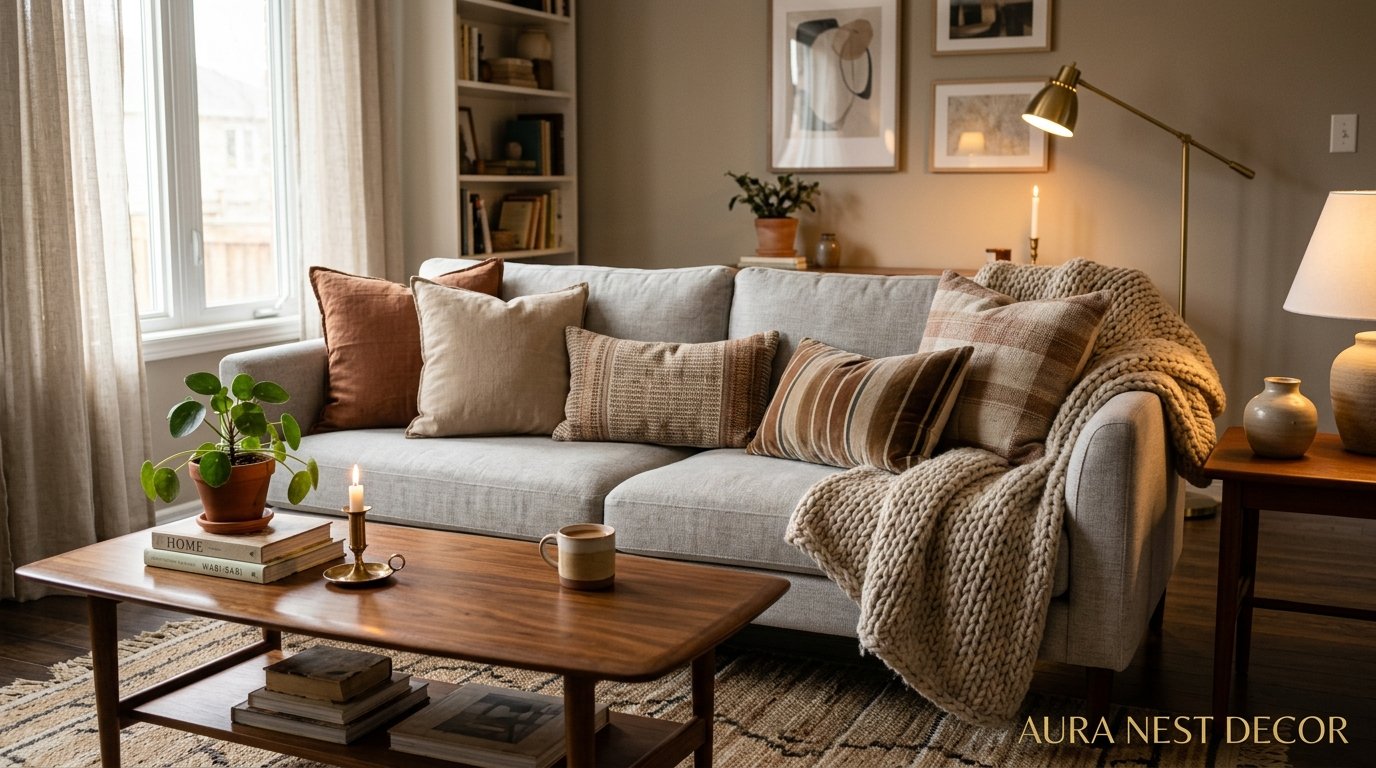
You bought the light grey couch — or you’re about to — and now you’re staring at it thinking, okay, now what? Same. It’s the most neutral thing in the world and somehow the hardest to style. But here’s the thing: that’s not the couch’s problem. It’s an opportunity, and a genuinely good one.

—
1. Why Light Grey Feels So “Safe” — And How to Make It Feel Brave Instead
Here’s what happens. You pick light grey because it’s supposed to go with everything. And then you surround it with more grey, maybe some white, a little beige, and suddenly the whole room feels like a very expensive waiting area.
Don’t do that.
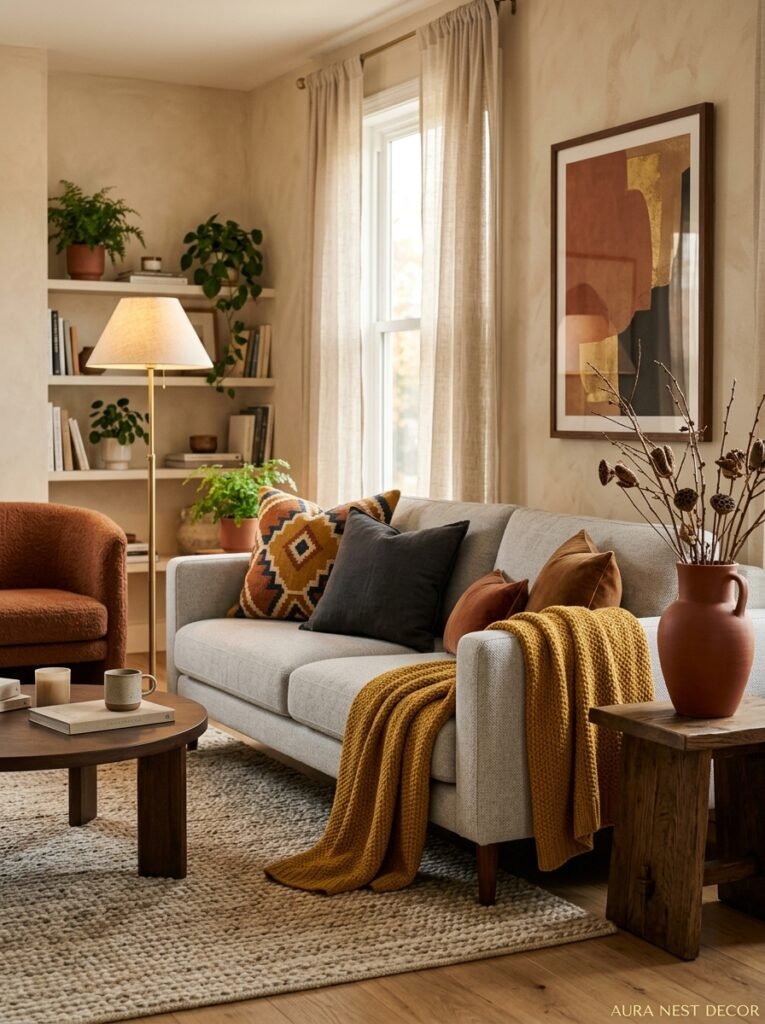
Light grey is a backdrop, not a palette. The couch is already doing the quiet, foundational work — your job is to throw something at it that actually surprises you. Think about what you genuinely love but never thought you could pull off. A terracotta accent wall? A deep navy bookcase? An oversized botanical print in rust and sage? These things don’t fight with a light grey sofa. They SING next to it.
The grey holds space. It doesn’t compete. That’s rare in a piece of furniture that size and it’s worth treating like the gift it is rather than an excuse to keep everything safe and beige. I’ve seen light grey couches styled with deep jewel-toned velvet cushions, with rattan, with black iron side tables, with warm oak floors — and honestly, none of it looks wrong. It’s kind of unfair how forgiving this color is. So stop hedging and commit to something.
“A light grey sofa isn’t playing it safe — it’s giving you the loudest permission slip to be bold everywhere else.”
—
2. The Rug Mistake Almost Everyone Makes in a Light Grey Living Room
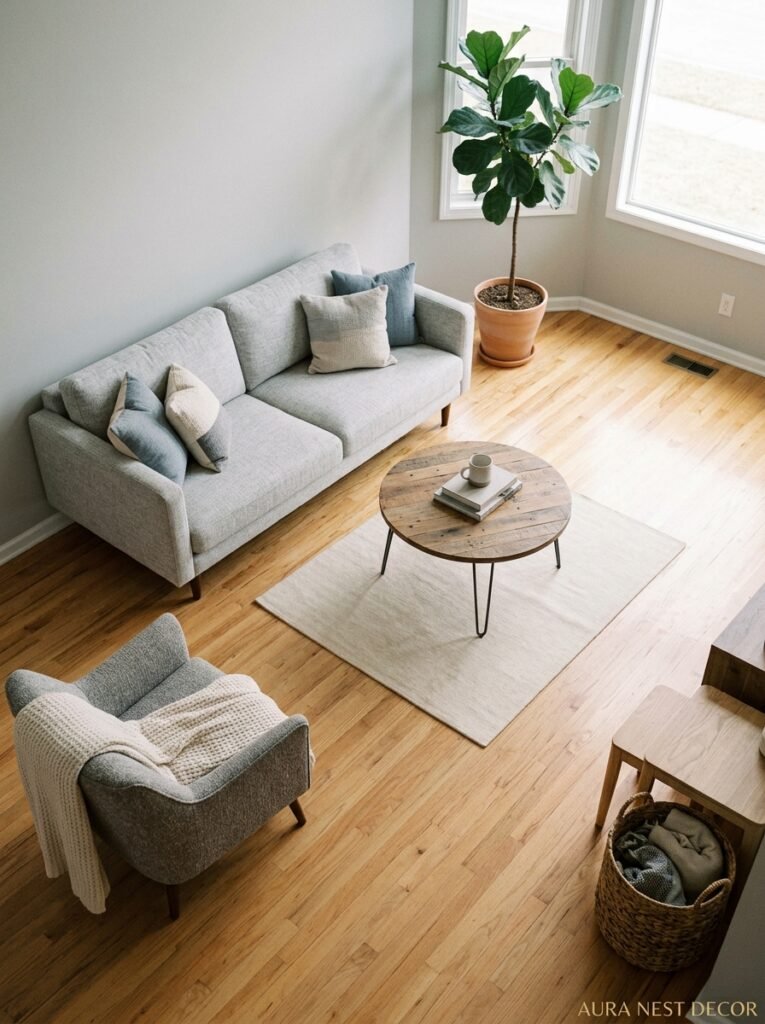
No rug. Or worse — a light rug.
I get it. You don’t want anything that clashes. But putting a pale grey couch on a white or cream rug is one of the fastest ways to make a room feel washed out and vaguely sad, like a really nice hotel room that nobody’s stayed in yet. You need contrast underneath.
A dark jute or sisal rug grounds the whole thing and adds texture that reads as warmth even without being warm in color. A deep olive or faded terracotta Persian-style rug will make your grey couch look intentional in a way that I genuinely can’t explain except to say — go look at it on Pinterest and you’ll know immediately. A charcoal or ink-blue abstract flatweave works too, especially in rooms with a more modern lean.
The rug is doing more work in this room than you think. It’s anchoring the seating area, adding a layer of pattern or color the couch deliberately leaves out, and warming the floors so the whole space feels lived-in rather than staged. Aim for something that goes at least 8×10 feet if your room allows — you want the front legs of the sofa sitting ON the rug, not hovering awkwardly near the edge of it.
—
3. The Throw Pillow Formula That Doesn’t Look Like a Formula
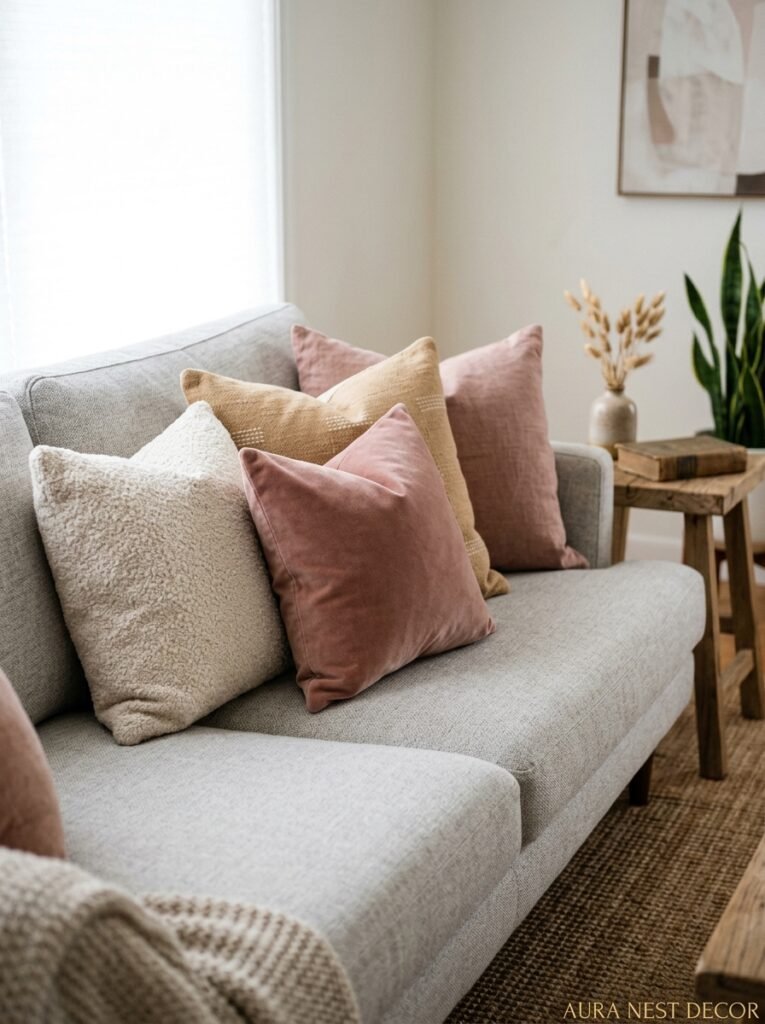
Okay so throw pillows are where people either NAIL the grey couch or completely lose the plot. Here’s what I actually do, because I’ve tried every combination imaginable at this point.
Start with one anchor pillow — something large, textured, and in a color you’d never put on a wall but love anyway. Burnt orange, dusty mauve, deep teal, warm mustard. One of those. Then build around it, not away from it. A second pillow in a complementary texture (think bouclé, linen, velvet — not all three, just pick one) but pull a secondary color from the anchor pillow rather than introducing a new one.
Then — and this is the bit people skip — add one that’s nearly neutral but not quite. An oatmeal linen pillow, a warm white waffle-knit, a cream faux sheepskin. This is your resting place. It keeps things from feeling like a color exercise.
Don’t match everything. Side note — matching sets of pillows are genuinely one of the saddest things you can do to a sofa. Your eye needs somewhere to travel, some small moment of surprise, or the whole thing just reads as “decorated” rather than “lived in.” And one of those is cozy. The other is a show home.
—
4. What Kind of Wood Actually Works (And What Looks Weirdly Cheap)
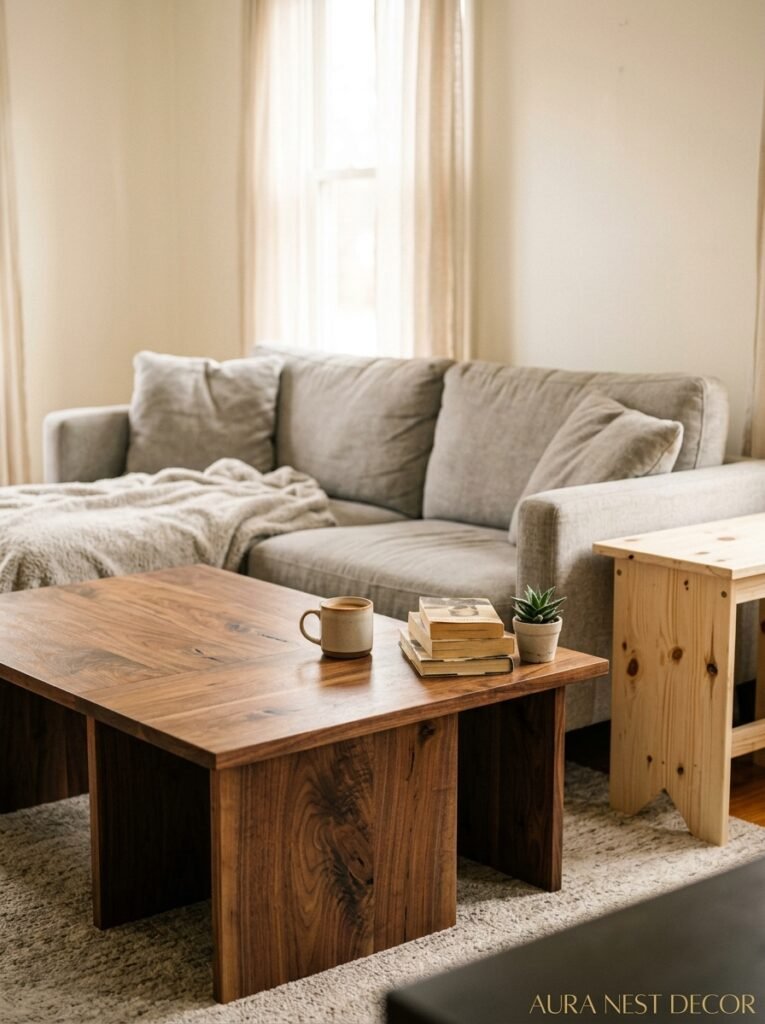
Not all wood tones play well with light grey. I’ll just say it.
Very orange or very red-toned woods — certain mahoganies, some cheap pine finishes — can look jarring next to a cool grey couch, almost like they’re arguing with each other. And light blonde woods like very pale Ikea birch can wash out entirely if the room doesn’t have enough contrast going on elsewhere.
What works? Warm medium tones. Honey oak is having its very justified moment right now, and it looks genuinely beautiful beside a light grey sofa — there’s enough warmth to stop things feeling clinical, but enough depth to read as substantial. Walnut is fantastic too, especially in darker rooms or with a more moody palette. Driftwood or weathered gray-brown wood (think reclaimed or limed oak finishes) creates a tonal harmony that feels coastal and calm without being cliché.
“Medium honey oak next to a light grey couch is the design equivalent of getting the proportions exactly right on the first try.”
The coffee table matters most here. Because it’s the piece closest to the couch, the one your eye travels to immediately after landing on the sofa. Get the wood tone right on the coffee table and everything else can be more flexible. Get it wrong and no amount of gorgeous cushions will fix it. Worth taking a swatch or even a phone photo of your couch fabric into a furniture shop if you’re unsure.
—
5. The Lighting Secret That Makes a Light Grey Room Feel Warm Instead of Cold
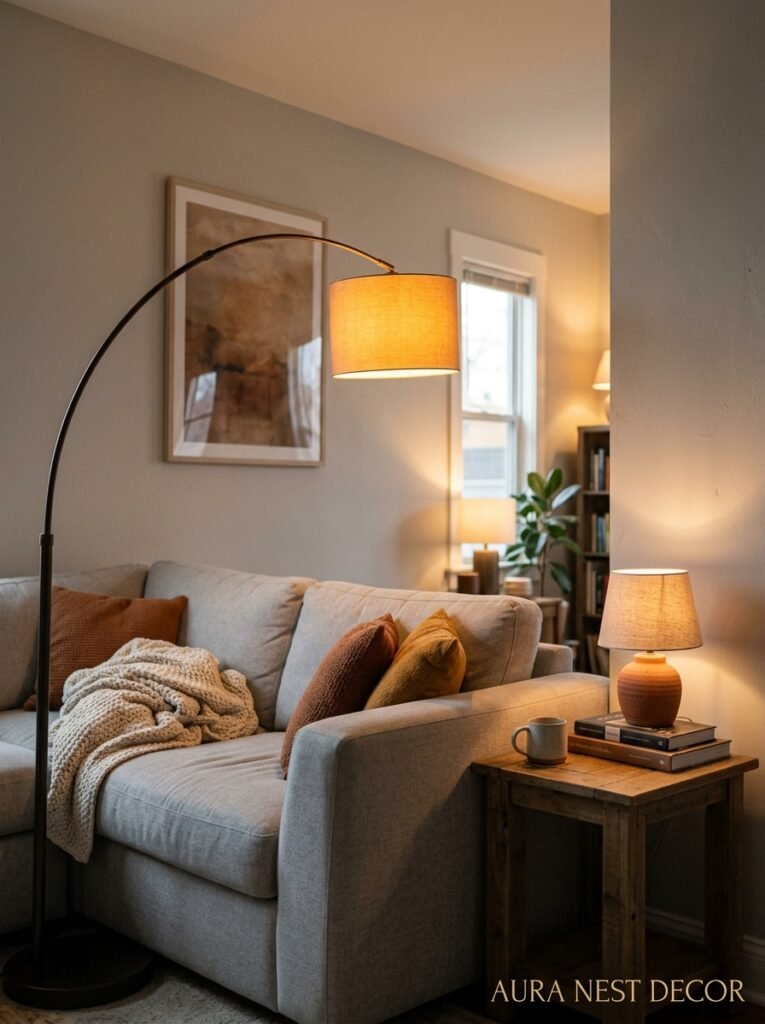
Here’s something nobody says clearly enough: light grey is chameleon-colored. Under cool white overhead lighting, it goes stark, almost blue-toned, and the whole room starts feeling like a Monday morning. Under warm, low lighting — around 2700K if you’re buying bulbs and want to get specific — that same grey softens into something that almost reads as greige. Cozy. Intentional.
This means your light bulb choices and lamp placement matter MORE in a light grey room than in, say, a warm-toned room, where everything already reads as cozy regardless. You have to work for it a little here.
Floor lamps at the sides of the couch rather than overhead lighting only. Table lamps with warm amber shades — actual amber, not just cream or white, because those still go quite cool. Candles, obviously. Not just for the aesthetic, but for the actual quality of light, which is softer and more directional than anything you can buy at B&Q or Home Depot.
And if you’ve got recessed ceiling lights? Put them on a dimmer. Non-negotiable. The difference between 100% and 60% brightness in a light grey room is the difference between a doctor’s office and a Sunday afternoon.
—
6. The Plant Situation: What Actually Looks Good vs. What’s Just On-Trend
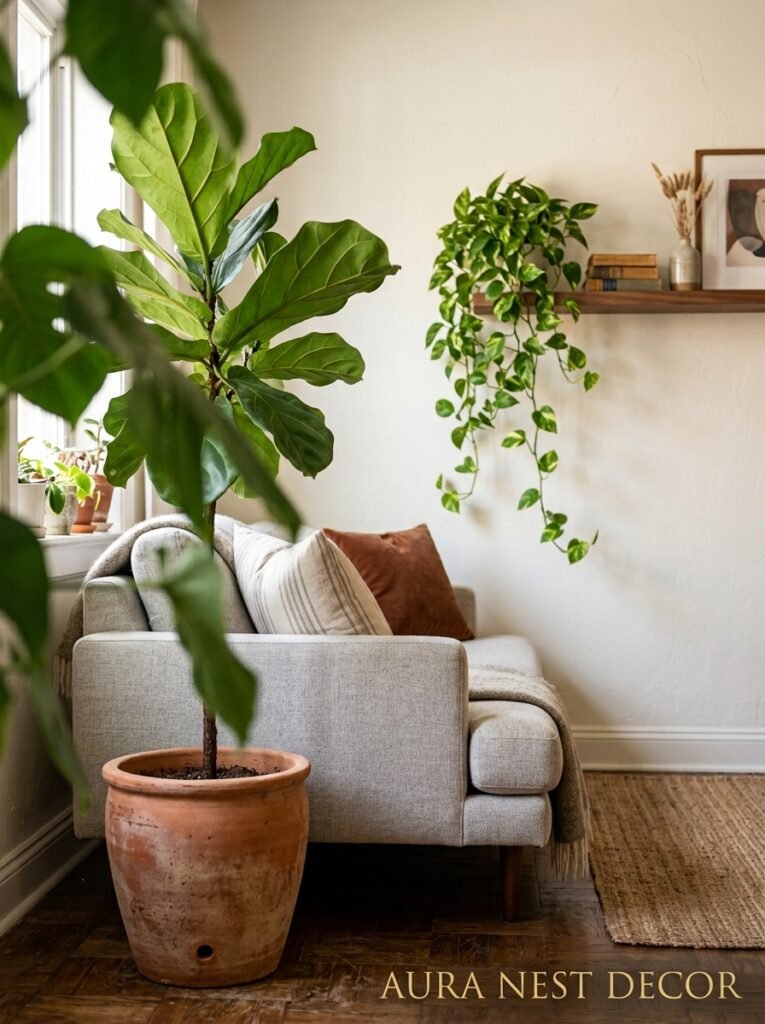
Not gonna lie, I’ve killed so many plants in the name of aesthetics. But having SOME greenery near a light grey couch is genuinely worth the effort because it solves a specific problem: grey, especially light grey, can look slightly inert without a living element nearby.
Big, architectural plants work best. A fiddle leaf fig in a woven basket. A tall olive tree if your room gets decent light — they’re having a massive moment in UK homes especially right now. Monstera, obviously, because that never really goes out of style no matter how many times people say it has. In lower light rooms, a large snake plant or a ZZ plant in a matte black pot.
What DOESN’T work as well, in my experience: tiny individual succulents scattered around. They disappear visually and they kind of read as an afterthought. Also over-styled trailing vines on every shelf — at a certain point it looks like the plants are trying too hard and the room starts feeling like a botanical garden gift shop rather than someone’s actual living room. One or two genuinely impressive plants beats eight small forgettable ones every time.
—
7. Bold Accent Walls Behind the Sofa — The Colors That Actually Deliver
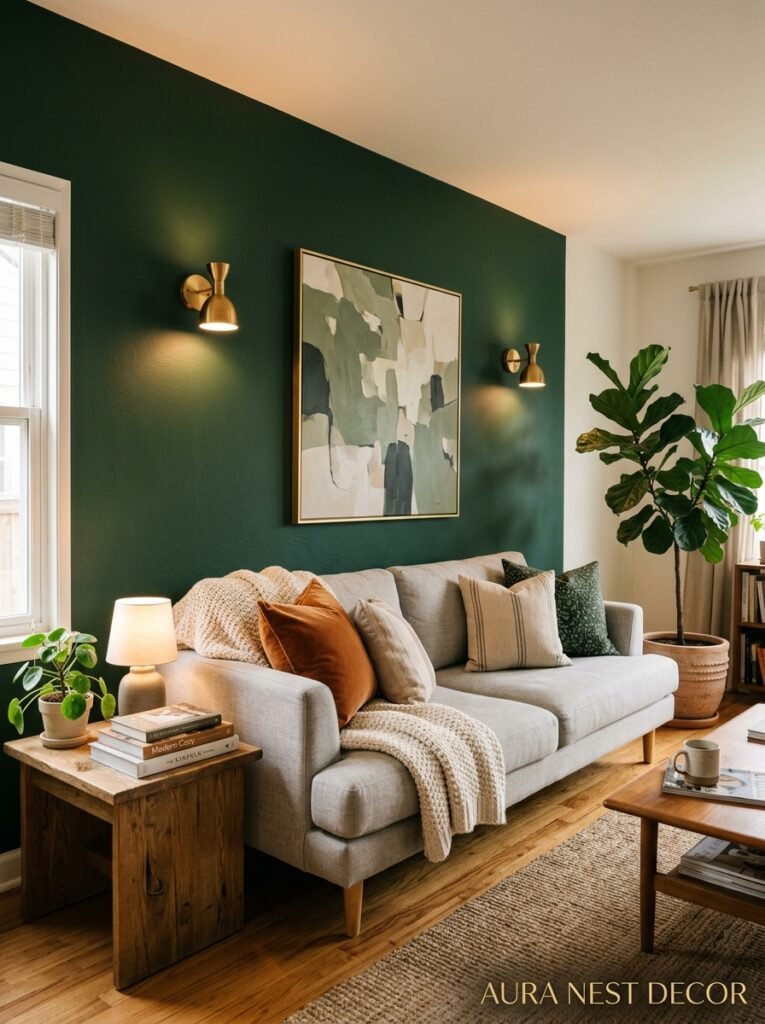
The wall behind the sofa. That’s the one. The decision that will make or break the whole room’s vibe, and the one people spend the most time paralyzed over.
Here’s what I know works: deep, moody colors work INCREDIBLY well behind a light grey couch. Forest green. Navy. Warm charcoal. Even a deep terracotta or clay. Because the couch is doing all the light, neutral work, you don’t need the wall to be restful too — you need it to have presence. To make the sofa pop rather than disappear against a pale backdrop.
Dusty pink actually works surprisingly well too, especially in smaller rooms or rooms with a lot of natural light. It creates this quiet contrast that feels very calm and very considered without being dramatic. I’d specifically go for a pink with a warm brown or grey base rather than anything too bubblegum or bright.
“Don’t paint the wall behind your grey couch the same grey as your couch. That’s not a design decision, that’s just avoidance.”
What’s harder to pull off: very bright yellows, orange-reds, or anything too vibrant. Not impossible, but you’d need the rest of the room to be extremely stripped back and confident, and most rooms aren’t. Safer to go moody and deep if you want impact.
—
8. How a Coffee Table Book Stack Is Actually Doing More Than You Think
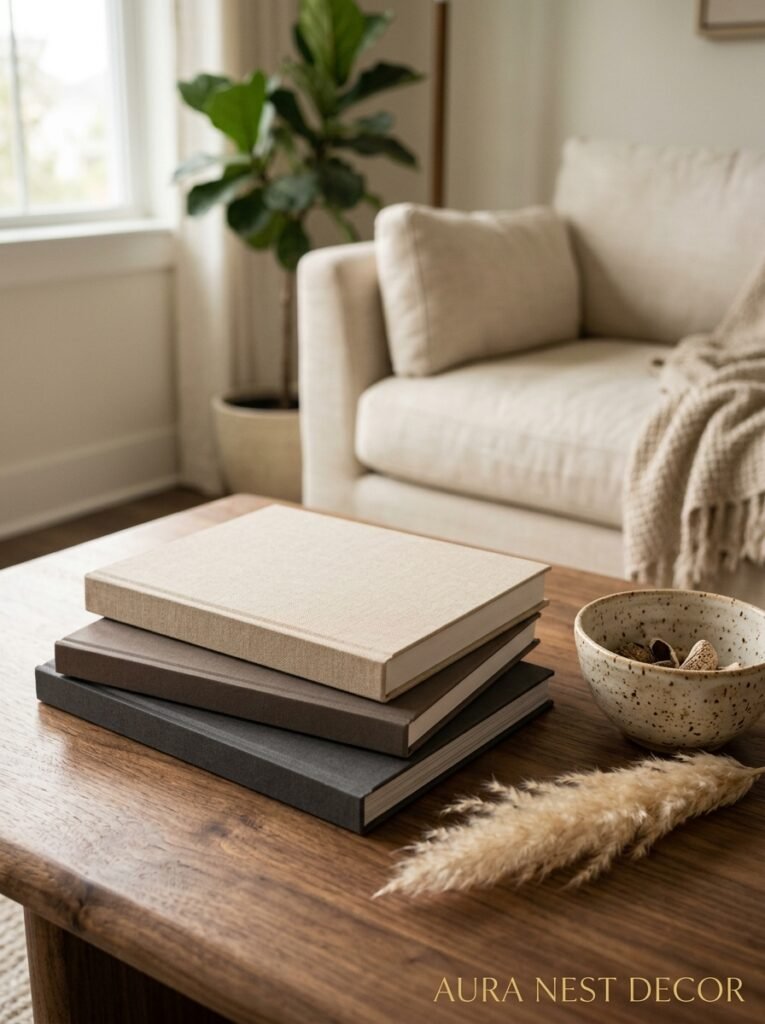
Okay this is going to sound slightly ridiculous but stay with me.
The styling on and around your coffee table is doing a lot of emotional work in a light grey living room. Because the couch itself is understated, your eye naturally drifts to the coffee table as the “personality” of the space. And a bare or badly styled table can make the whole room feel like nobody actually lives there.
A stack of three coffee table books — with genuinely interesting spines, not just whatever was on sale — adds color, height, and tells you something about the person who lives there. Top it with a small object: a concrete candle, a sculptural piece, something with a bit of weight and intention. Add a tray if the table tends to collect clutter because a tray makes clutter look curated and that’s an actual design principle, not just a Pinterest myth.
The vibe you’re going for is “someone interesting lives here and occasionally puts their feet on that table.” Not “this was staged for a photoshoot.” The light grey couch actually helps you land there if you let the surrounding pieces do their job.
—
9. The Mirror Placement That Opens Up the Whole Room
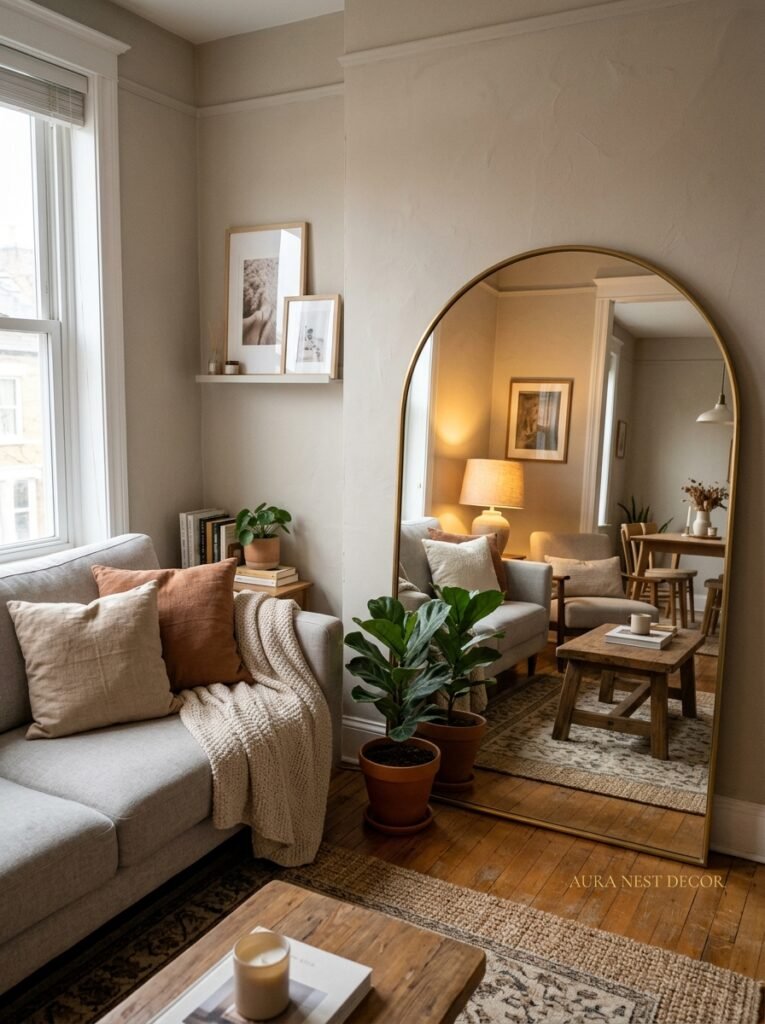
Mirrors near a light grey sofa do something really specific: they bounce whatever light and color IS in the room rather than adding their own. Which means if you’ve got a beautiful plant in the corner, warm lamp light, and a deep-toned rug, a mirror will double all of that visually. Free square footage. Free depth.
Lean a large mirror against the wall rather than hanging it if you want it to feel relaxed rather than formal. An arched mirror over a console behind the sofa. Or a round brass-framed mirror on the wall beside the couch — not centered over it, but offset slightly, like it was placed by feel rather than a tape measure.
Don’t go too small. A small mirror in a big room next to a large sofa just looks slightly apologetic. Go big, or group a few interesting mirrors together at different heights.
—
10. Curtains That Make the Room Feel Taller Without a Single Renovation
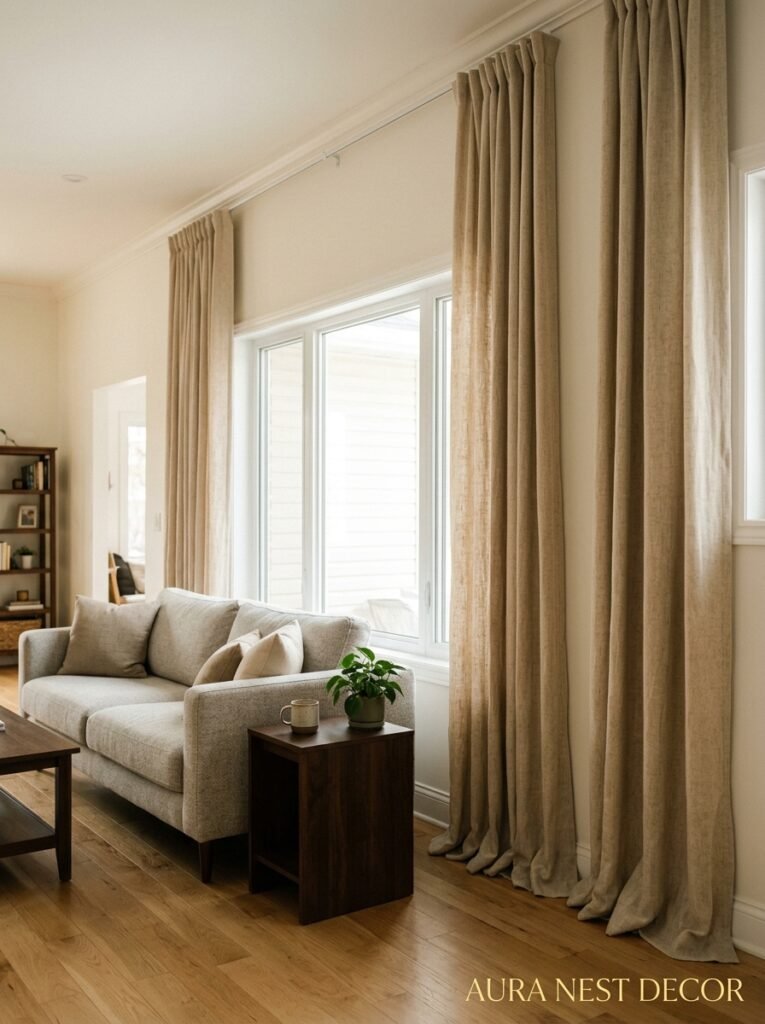
Hang them high. Hang them WIDE.
This is the oldest trick and people still don’t do it consistently enough. Your curtain rod should be as close to the ceiling as possible, and your curtains should extend 6-12 inches beyond the actual window frame on each side. What this does is make the window look enormous, the ceiling look taller, and the whole room feel more expensive.
For a light grey living room: linen curtains in a warm white or ivory are very soft and lovely. Terracotta linen can be stunning. Deep green velvet curtains are a whole MOOD and they work unbelievably well with a grey sofa — rich, dark, slightly theatrical. Avoid curtains that match the couch in tone too closely or the whole wall will disappear.
And let them puddle slightly on the floor if the fabric allows for it. Just a little. It’s the detail that reads as “designer” without costing any extra.
—
11. The Unexpected Texture Combination That Pinterest Can’t Stop Showing Right Now

Boucle and rattan. In the same room. With your grey couch.
I resisted this for a while because it seemed almost too on-trend, like one of those combinations that’s everywhere in June and looks dated by October. But honestly? It’s everywhere because it WORKS. The softness of boucle (a boucle chair, a boucle ottoman, even just boucle cushions) next to the raw, organic weave of rattan creates this genuinely interesting textural conversation that keeps the eye interested without adding visual chaos.
Throw in the light grey sofa as the calm, smooth center of it and you’ve got three completely different textures playing nicely off each other. Add a raw linen cushion and some matte ceramic objects and the room starts to have this layered, collected-over-time feeling that’s almost impossible to fake but surprisingly easy to achieve if you just start pulling in natural, imperfect textures.
—
12. The One Color People Forget and Then Immediately Wonder Why the Room Looks Flat
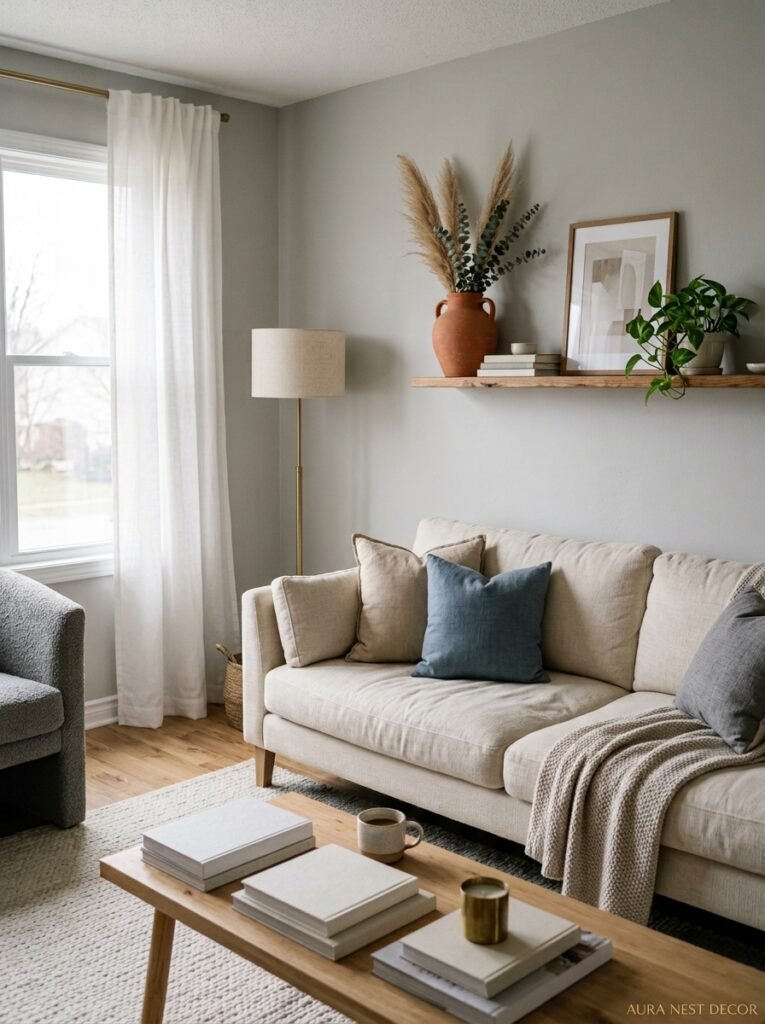
Black. Just a little.
Not a lot. You don’t need to go industrial or Scandi-minimal. But without even a touch of black or very dark tones in a light grey room, things start to feel vaguely unfinished. Like the room has no punctuation. A black picture frame. Matte black lamp base. Black iron candle holders. Dark-spined books on the shelf. Even a black throw draped over the arm of the couch.
Black creates anchoring. It gives the eye somewhere to land decisively so it isn’t floating around in all that grey and warm tone trying to find a resting point. And next to a light grey sofa, it creates the crispest, most satisfying contrast you can get without doing anything drastic to the room at all.
It’s almost always the thing that was missing.
—
❓ FAQ
Q: What colors go best with a light grey couch? A: The colors that work best are warm, earthy tones — terracotta, mustard, warm white, olive green — or deeper, moodier shades like navy, forest green, and warm charcoal. Light grey is genuinely one of the most flexible sofa colors, so don’t be afraid to go bolder than you think you should.
Q: How do I stop my light grey living room from looking cold? A: Swap out any cool-white bulbs for warm-white LEDs around 2700K, add a warm-toned rug (jute, sisal, or a muted terracotta weave), and layer in natural textures like linen, rattan, and wood. Cold-looking grey rooms are almost always a lighting problem first, not a color problem.
Q: Can you mix patterns with a light grey sofa? A: Yes — actually easier than with a patterned sofa because grey doesn’t compete. Keep patterns in different scales (one large, one smaller) and pull a color thread that connects them. You don’t need everything to match, just to rhyme a little.
—
💭 Final Thoughts

A light grey couch done right doesn’t look cautious. It looks considered. It gives you room to be yourself in the rest of the space — bold, warm, a little eclectic — without the furniture fighting back. The rooms that feel the most alive around a grey sofa are the ones where someone stopped second-guessing and just committed to a feeling.
What feeling do you want to walk into at the end of the day?