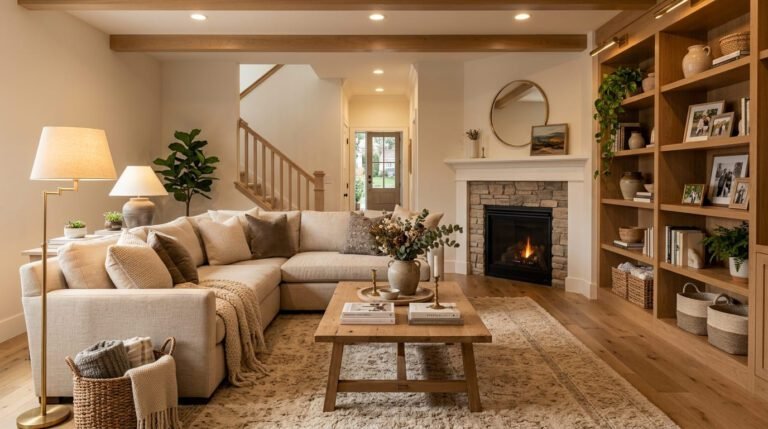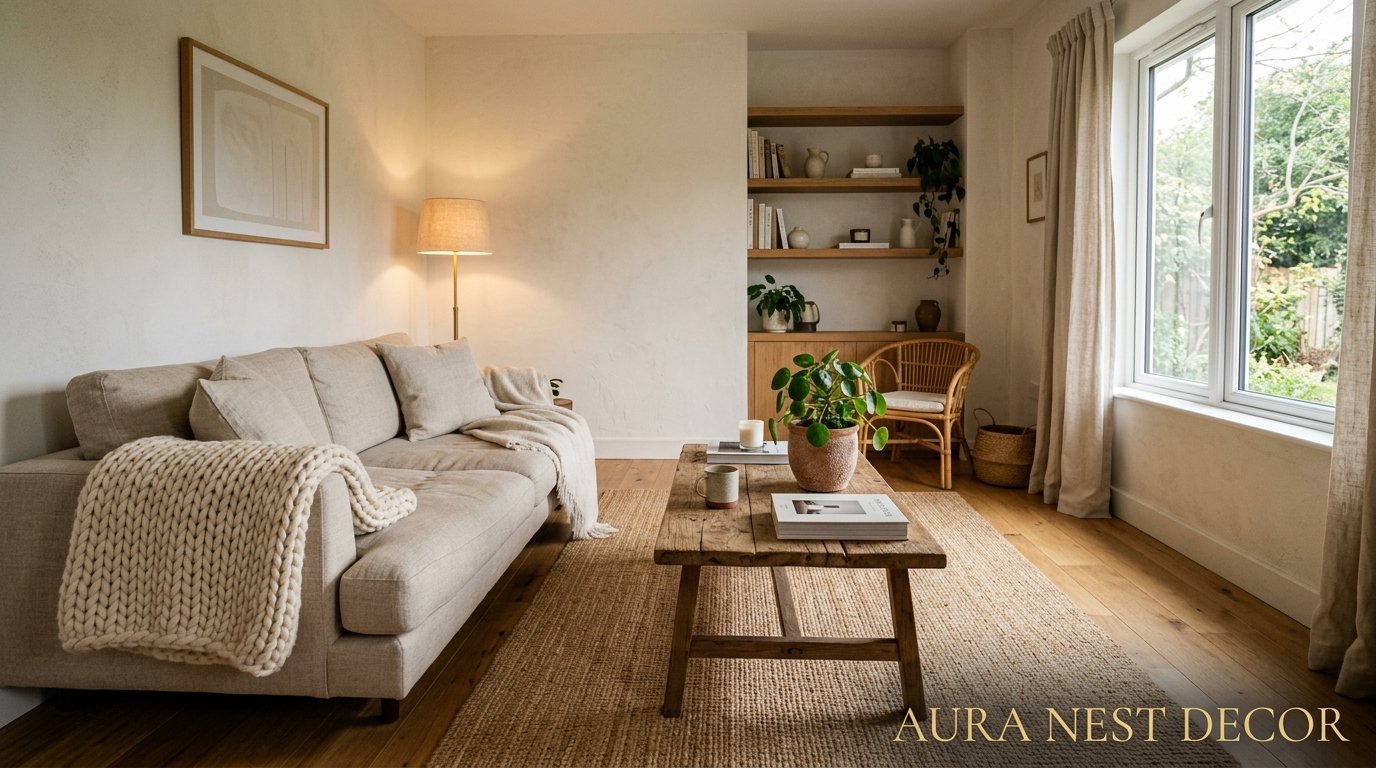
The Warm Minimalist Living Room That Actually Feels Like Home (Not a Hotel Lobby)
You know that feeling when you walk into someone’s house and everything is calm and considered, but you still want to kick your shoes off and stay for three hours? That’s it. That’s the whole goal. And it’s harder to pull off than it looks.
—
1. Why “Minimalist” Went Wrong for So Many of Us — and What Warm Minimalism Actually Fixes
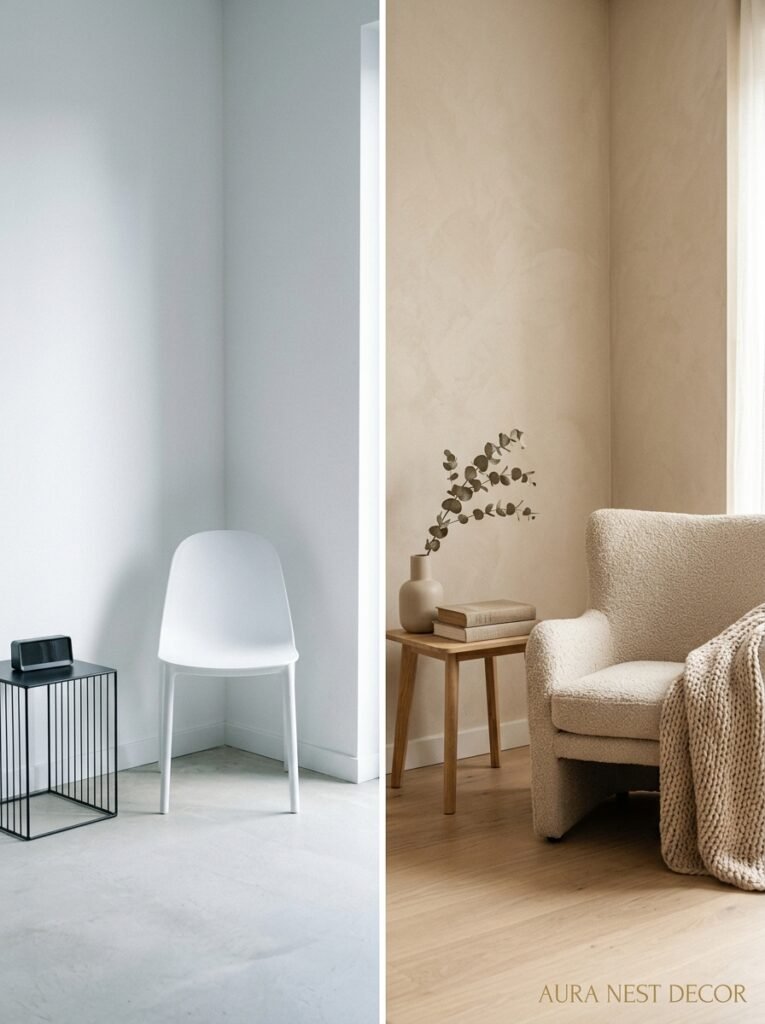
Cold minimalism traumatized a generation of homeowners. I’m only half joking. The all-white rooms, the absence of anything soft, the floating shelves with literally three objects on them — it looked incredible on Instagram and felt like living inside a dentist’s waiting room.
Warm minimalism isn’t that. It’s not a rejection of simplicity, it’s a correction of it. The idea is that you strip away the clutter and the visual noise, but you put the warmth back in — through material, texture, light, and really careful object choices. You keep the breathing room. You lose the chill (the bad kind).
The thing that trips people up is thinking warm minimalism means adding MORE stuff. It doesn’t. What it means is that the stuff you DO keep needs to have weight to it. A chunky linen throw. A ceramic lamp with a visible hand-thrown wobble. A single worn wooden bowl on the coffee table that you actually use for keys and random batteries. Real life, but edited.
And here’s what nobody tells you: the warmth usually comes before anything you buy. It comes from how the light moves through the room at different times of day, and whether you’ve set things up to let it do its thing.
“A warm minimalist room doesn’t need more objects. It needs better ones.”
—
2. The Color Palette That Does All the Heavy Lifting Without You Noticing
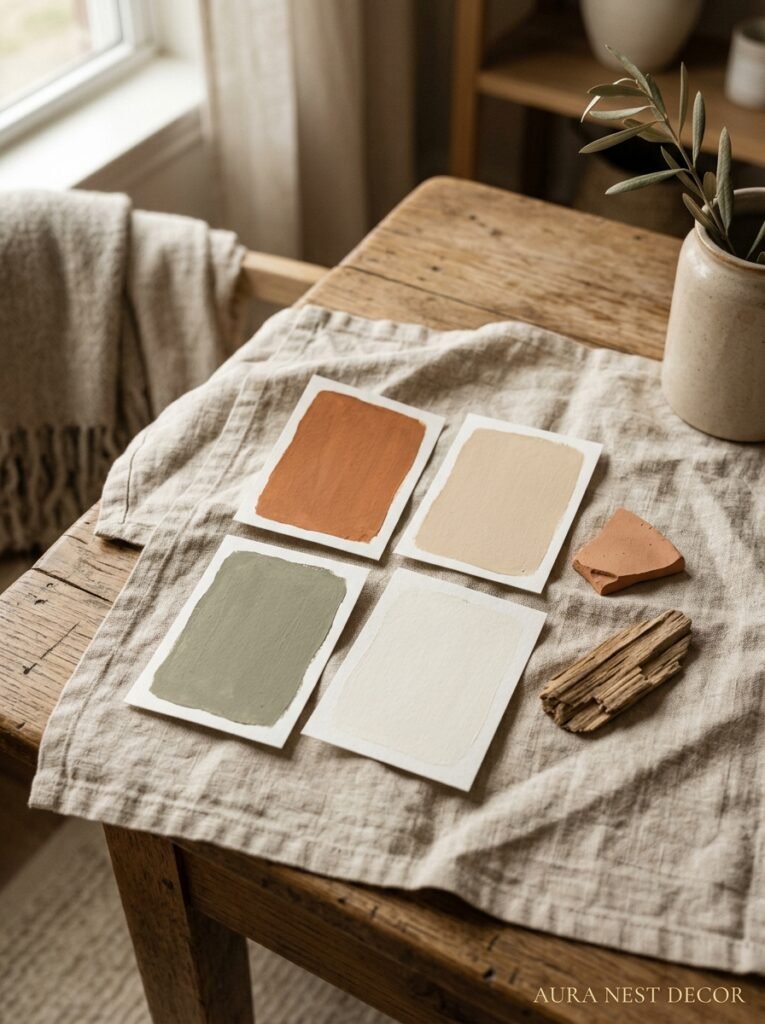
Stop reaching for white. Or at least, stop making it your ONLY neutral.
The rooms that really nail warm minimalism — the ones you screenshot and save and come back to six months later — they’re almost never pure white. They’re warm white, or they’re a very soft greige, or there’s a wall in aged linen or clay or a muted sage that grounds the whole space. There’s a dirtiness to the palette, in a good way. Like the colors have been lived in already.
Right now I keep seeing this particular warm mushroom tone everywhere, and I don’t think it’s going away anytime soon. It’s not beige. Not grey. It sits somewhere in between and it works with literally every natural material you can put next to it. Oak? Yes. Terracotta? Yes. Jute? Obviously.
For UK homes in particular — especially older Victorian or Edwardian terraces where natural light can be limited — warm off-whites and mid-tone neutrals do a lot more work than stark whites, which can look almost blue-grey in northern light. Something in the Farrow & Ball “String” or “Elephant’s Breath” family, or the Dulux equivalent if you’re watching the budget. (No shame, Dulux is genuinely excellent.)
American homes with more square footage can take a slightly deeper version — a warm sand or a low-saturation terracotta on one wall. Just one. Don’t go overboard, let the rest breathe.
—
3. The One Furniture Rule That Makes a Small Living Room Feel Like a Decision, Not a Compromise
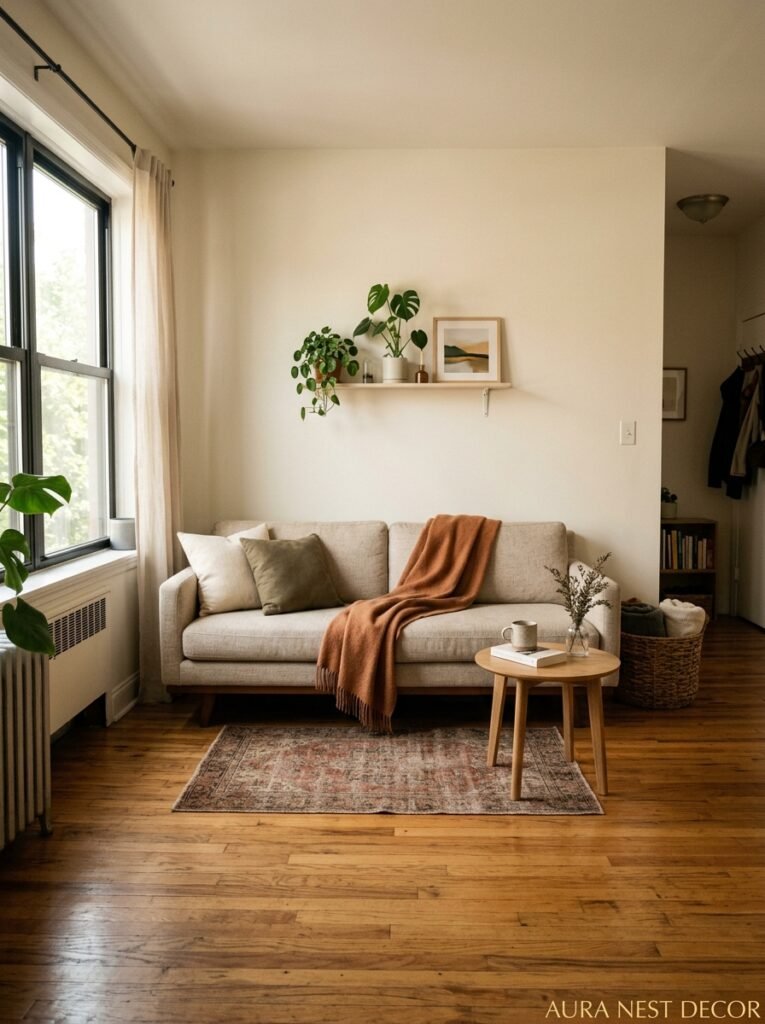
Scale. Get it wrong and nothing else matters.
In warm minimalism, you don’t fill every corner. You actually resist the urge to use every corner, which sounds simple and is HARD. There’s this instinct when a room feels small to add furniture to make it feel “complete,” and it almost always makes it feel smaller.
The rule I come back to constantly: choose fewer pieces, but make them count. One sofa that’s genuinely the right size for how you live — not too precious to sit on, deep enough to actually curl up in — is worth more than a matching suite that technically fits but turns the room into a showroom. Side note — showroom is the enemy. We’re going for “someone actually lives here and they have good taste.”
If you’re in a smaller British living room (and lots of us are — terrace houses, converted flats), a loveseat plus one good armchair is often a better combination than a three-seater you’re constantly navigating around. Leave actual space between things. That space isn’t empty, it’s working.
In bigger American living rooms, the temptation goes the other way — filling all that square footage. Don’t. Let it be generous. An oversized jute rug anchoring a carefully chosen handful of pieces will look a hundred times better than a room that’s fully furnished.
—
4. Textures That Read as “Cozy” on Camera and Feel Even Better in Person
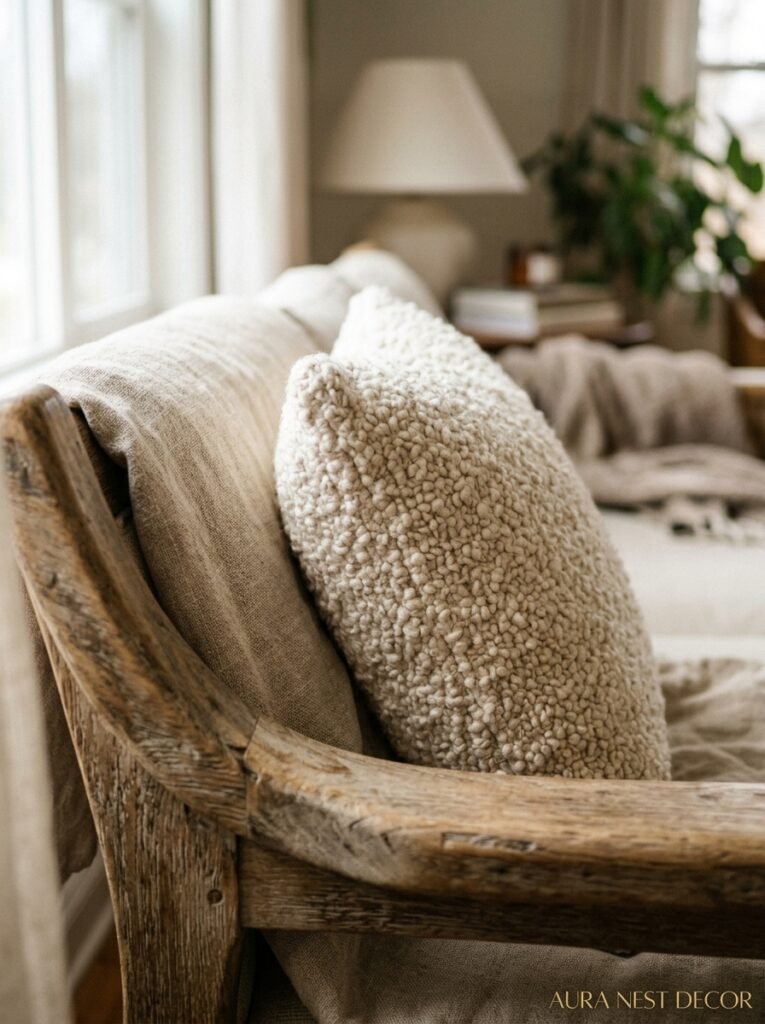
This is where warm minimalism earns its name.
When you keep the furniture minimal and the palette neutral, texture becomes the thing that stops the room feeling flat. Not pattern — texture. Linen pillows that wrinkle slightly. A boucle throw that photographs beautifully and feels even better on a Sunday morning. A jute rug underfoot that makes a slight sound when you walk on it.
The key is layering materials that are all in the same tonal family but have completely different surface qualities. So: a matte clay wall, a slightly shiny ceramic lamp base, a matte linen sofa, a rough-woven throw, a smooth worn-wood coffee table. Every surface handles light differently, and the room becomes interesting without being busy. That’s the magic trick.
“Texture is what stops a minimal room from going cold on you.”
What I’d avoid: mixing too many “statement” textures. Boucle AND chunky knit AND macramé in the same room starts to feel like a texture showdown. Pick two that you love most and let them lead.
—
5. The Lighting Setup That Makes Everything Look Better After 4pm
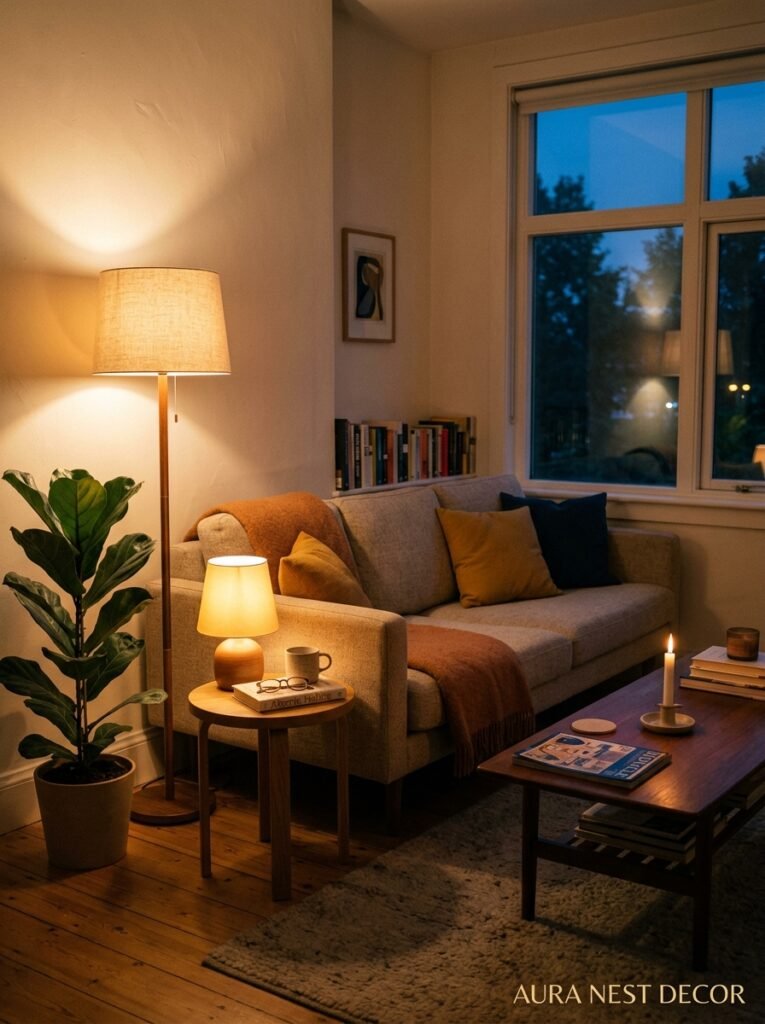
Bad lighting ruins perfect rooms. Good lighting rescues imperfect ones.
In winter — and British winter especially is long and dark and unforgiving — the overhead light is your enemy. That flat, bright, top-down light strips all the warmth out of whatever you’ve carefully put together. Turn it off. Or at the very minimum, get a dimmer switch installed (genuinely one of the best £80 you’ll spend on your home).
Warm minimalism depends on layered light from LOW sources. Floor lamps with a warm-toned bulb around 2700K. Table lamps on side tables and shelves. Even a few candles on the coffee table. The goal is amber and low and directional, the kind of light that pools in certain spots and leaves other bits in soft shadow.
Edison bulbs are maybe slightly overexposed at this point but honestly? They work. The amber glow of one at 7pm in the corner of a room with white plaster walls is exactly the vibe we’re going for. You can’t argue with it.
If you’re American and you’ve got recessed ceiling lights throughout — very common in newer builds — pair them with dimmer switches and always run them low in the evenings. Then add floor lamps to the mix. You’re not replacing the recessed lights, you’re just making them the backup rather than the main event.
—
6. What Actually Goes on the Shelves (And What Stays Off Them)
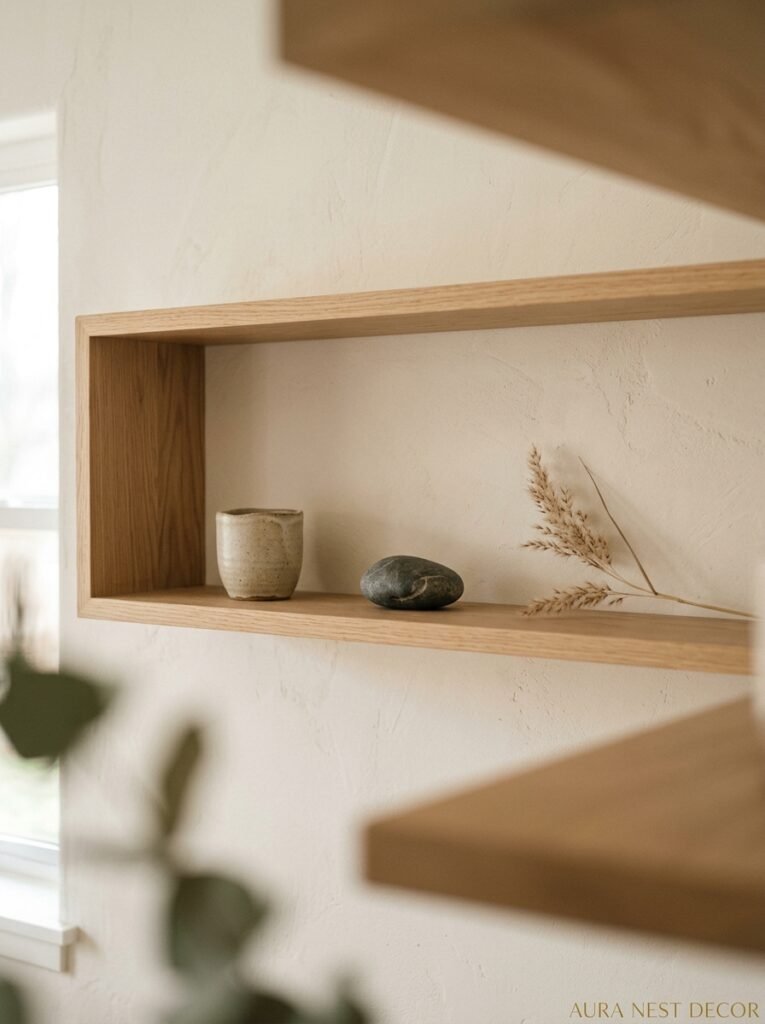
This is where most people struggle most. And honestly, that makes sense.
The shelf styling in warm minimalist rooms looks effortless and it is absolutely not effortless. Someone made a decision about every single thing on those shelves. They also made the decision about the thirty things NOT on those shelves, and that second decision is the harder one.
Here’s my honest take: the objects that work best are ones with a story or a material you love. A bowl you bought at a market. A book with a spine color that happens to work with your palette. A small plant — trailing or architectural, not a random succulent stuck in there because it felt like you “should” have a succulent. A piece of pottery. Maybe one framed piece propped casually rather than hung.
What doesn’t work: collections displayed all at once, too many frames, anything that matches too perfectly (it looks like it came as a shelf styling kit), and anything that doesn’t mean something to you personally. Those rooms look polished but they don’t feel alive.
Less is genuinely more here. Leave gaps. The gaps are part of it.
—
7. The Sofa Decision That Determines Everything Else in the Room
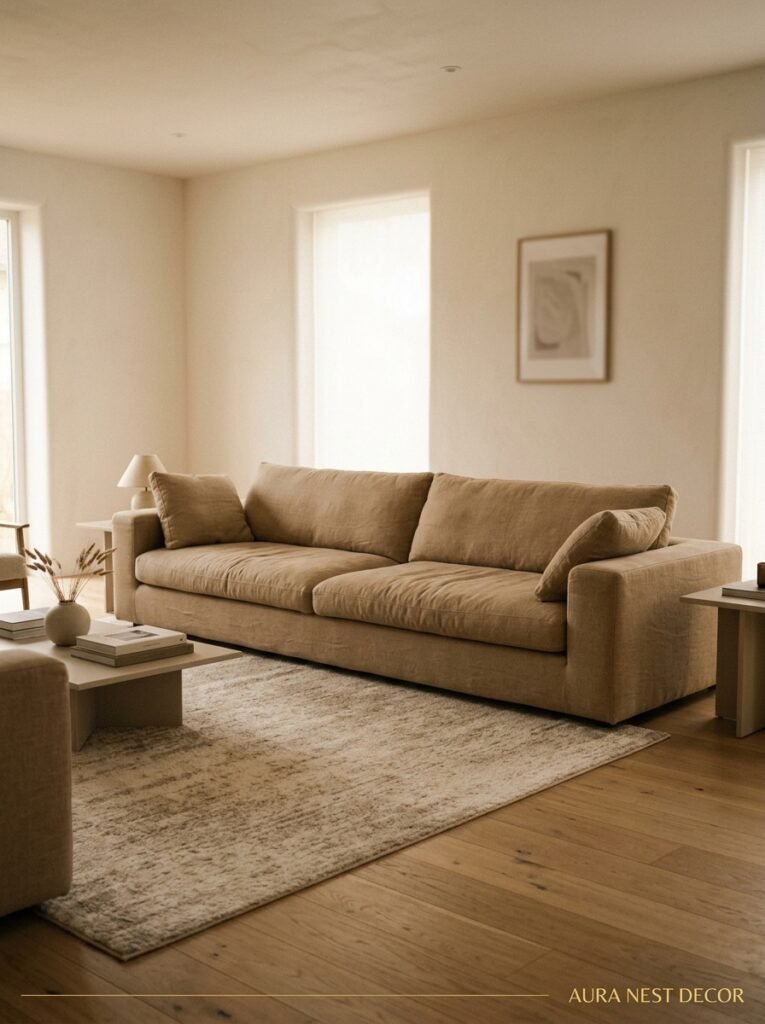
Pick the sofa first. Then build the rest.
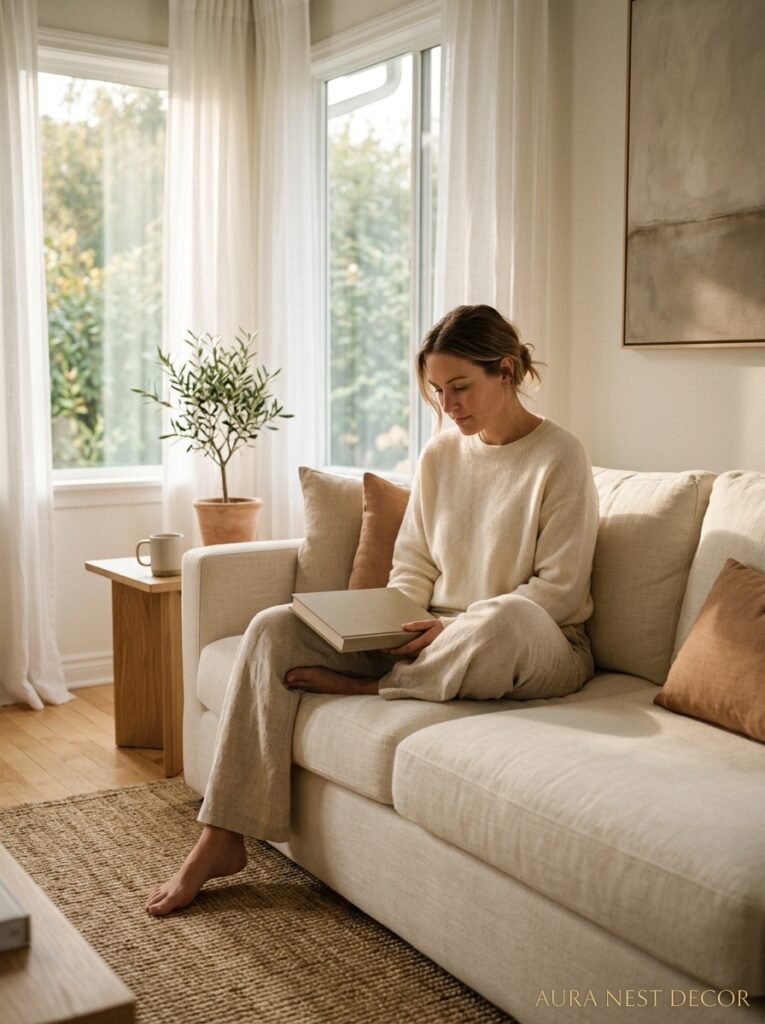
Not color. Material. In warm minimalism, the sofa’s material is the most important decision you’ll make in that room because it’s the biggest surface, the thing your eye always goes to first, and the thing that sets the texture tone for everything else.
Linen works beautifully — wrinkles and all, that’s actually the point. Boucle is having a moment and it earns it, though it needs a bit more maintenance than the aesthetics suggest. Natural cotton canvas in a warm off-white ages really well and feels genuinely laid-back. Velvet can work if it’s a muted, dusty tone rather than anything bright or jewel-toned.
“The sofa doesn’t have to be a neutral, but it does have to feel warm.”
What I’d steer clear of: cool grey fabric (pulls the whole room cold), anything too shiny, and — this is personal but I feel strongly about it — button-tufted Chesterfields in beige. They’re not warm minimalist, they’re just beige Chesterfields. The vibe is completely different.
And please: don’t panic-buy the sofa. Take fabric samples home. Live with them for a few days. Look at them in your actual morning light and your actual evening light. You’re going to be sitting on this thing for a decade.
—
8. Plants That Belong in a Warm Minimalist Room (Because Not All of Them Do)
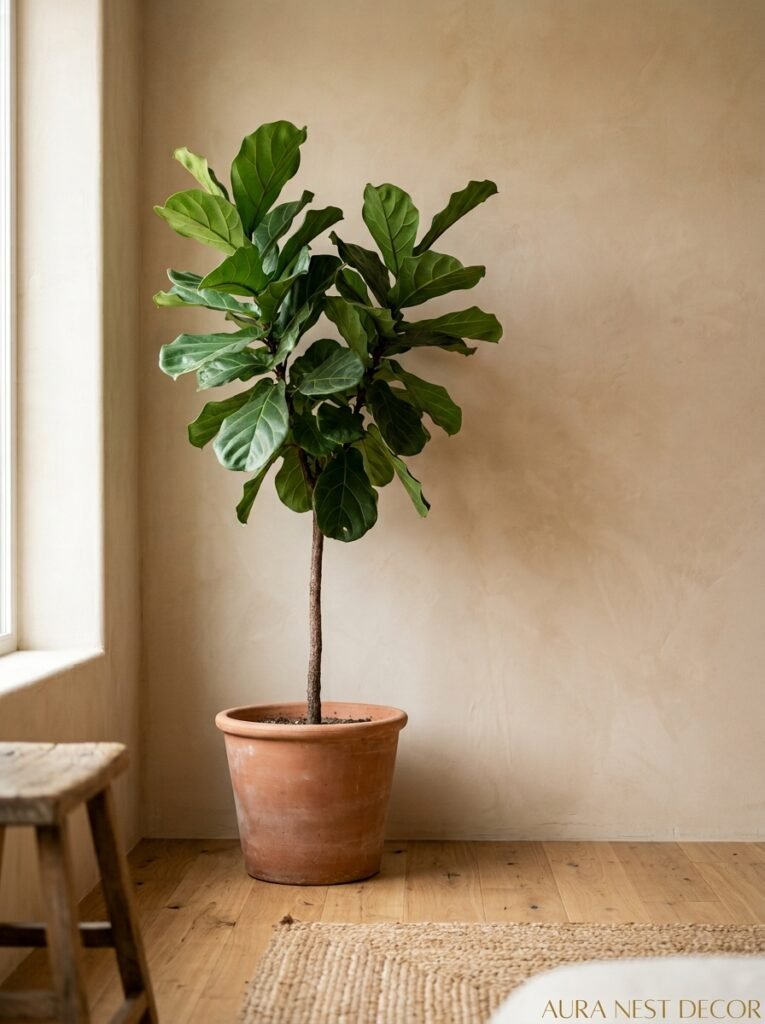
Not every plant works. I know that sounds harsh but it’s true.
The rooms that look right with warm minimalism tend to have plants that feel intentional and slightly architectural. A large fig tree or rubber plant in a clay pot. A single trailing pothos on a shelf. An olive tree by the window if you’ve got the light for it (and UK readers — you can pull this off with a south-facing window, I promise, though it takes some patience).
What tends to look wrong: too many small plants lined up on windowsills, or anything that feels like it’s there to “add life” without being considered. The plant should feel like it belongs in the specific spot you’ve put it in, not like it got placed wherever there was room.
Pot choice matters hugely. Terracotta is almost always right. Matte ceramic in a warm neutral works. Anything shiny or brightly colored will fight with the whole palette.
—
9. The Floor Situation: Rugs, Wood, and the Question of How Much Bare Floor to Leave
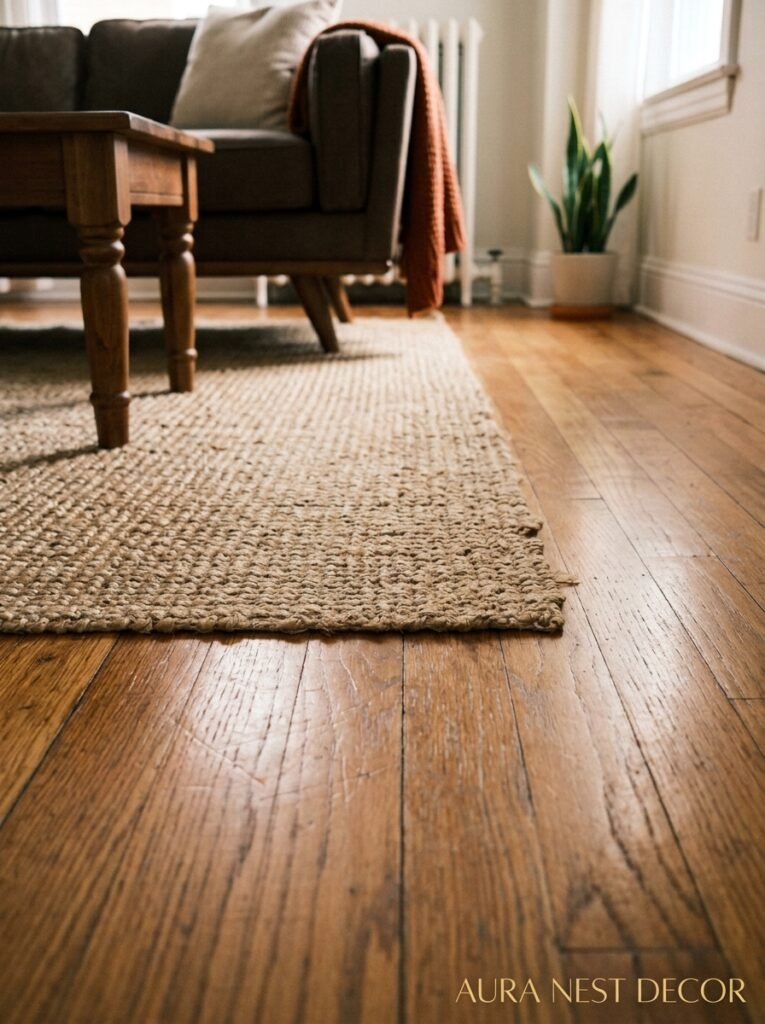
Bare wood floors in warm minimalist rooms are beautiful. But only when they’re actually warm-toned — honey oak, oiled walnut, reclaimed timber with a bit of wear to it. If your floor is cool grey laminate (no judgment, it’s everywhere in rental properties and new builds), you need the rug to do a lot of corrective work.
A jute or sisal rug in a large size is the most reliable choice. Large meaning actually large — bigger than you think you need, so the sofa legs can sit on it or at least the front two legs can. The rug shouldn’t look like an island floating in the middle of the room with furniture parked off the edges. That’s a very specific way to make a room feel smaller.
Wool rugs work too, especially for UK homes where warmth underfoot is less of a luxury and more of a necessity from October through April. A flat-weave wool in a warm cream or oatmeal tone, or something with a very subtle texture — not a bold pattern, nothing geometric — reads as simple and considered without being bare.
—
10. Windows: Why What You DON’T Put There Matters More Than the Curtains You Choose
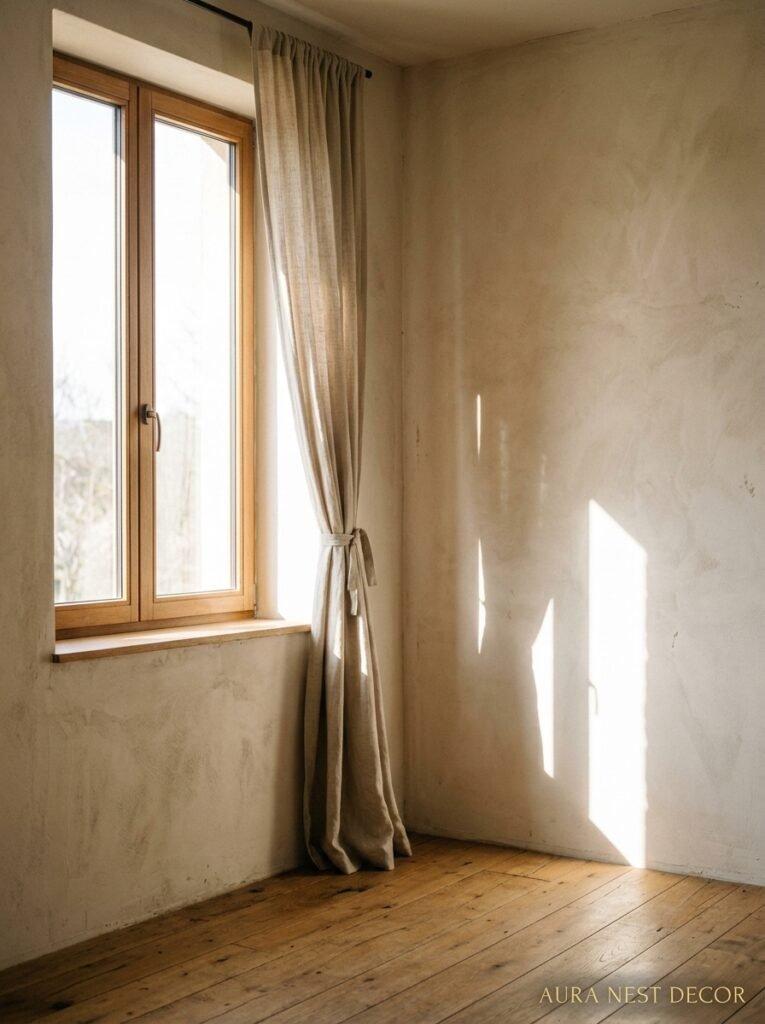
Let the light in. That’s step one, before anything else.
Heavy drapes block natural light and visual warmth both at once, and in warm minimalism that’s doubly damaging. What tends to work much better are simple linen curtains in a warm off-white, hung close to the ceiling (higher than the window frame, ideally) and wide enough to pool slightly at the sides without blocking the glass.
The height trick is not a trick, it’s just physics. Curtains hung from a rod close to the ceiling make the ceiling feel higher and the window feel taller. It costs nothing except a few minutes repositioning the rod.
In UK homes with original sash windows — genuinely one of my favorite architectural features in British housing — sometimes the best choice is minimal dressing, or none at all. A single Roman blind in linen. The window itself is beautiful, you don’t want to cover it.
—
11. Coffee Tables, Side Tables, and the Art of Purposeful Emptiness
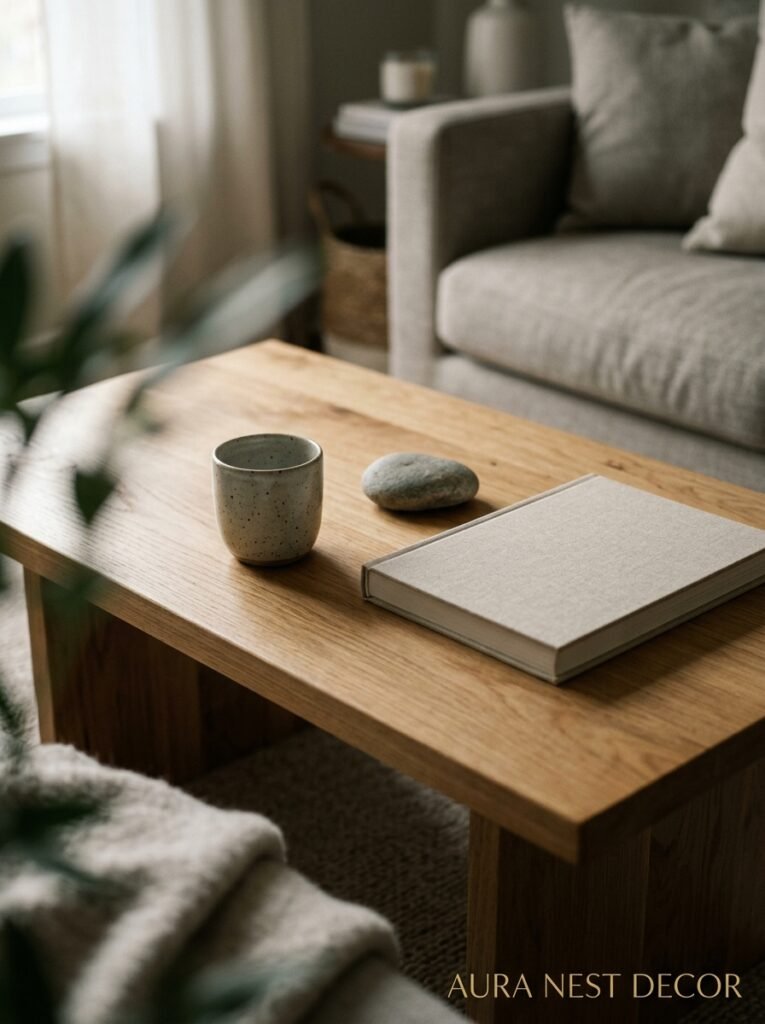
The coffee table is where minimalism gets tested every single day.
Because real life accumulates there. Remotes. Mugs. Books you’re midway through. A candle. Maybe a houseplant you moved one day and then left. The warm minimalist coffee table acknowledges real life while putting it through a very gentle edit.
One tray helps contain everything and makes randomness look deliberate. A stack of two or three books (not seven, not one) with something small on top — a candle, a small stone, a single dried stem. And then actual empty surface around it. That empty surface is doing work. Don’t fill it.
Side tables can be smaller and more eclectic. A different material from the coffee table is actually better — mix a warm wood coffee table with a black metal side table, or a marble-top side table with a rattan one. It feels collected rather than matched, and collected is always the goal.
—
12. The Finishing Details That Are So Small You Might Miss Them — But Won’t Once You Notice
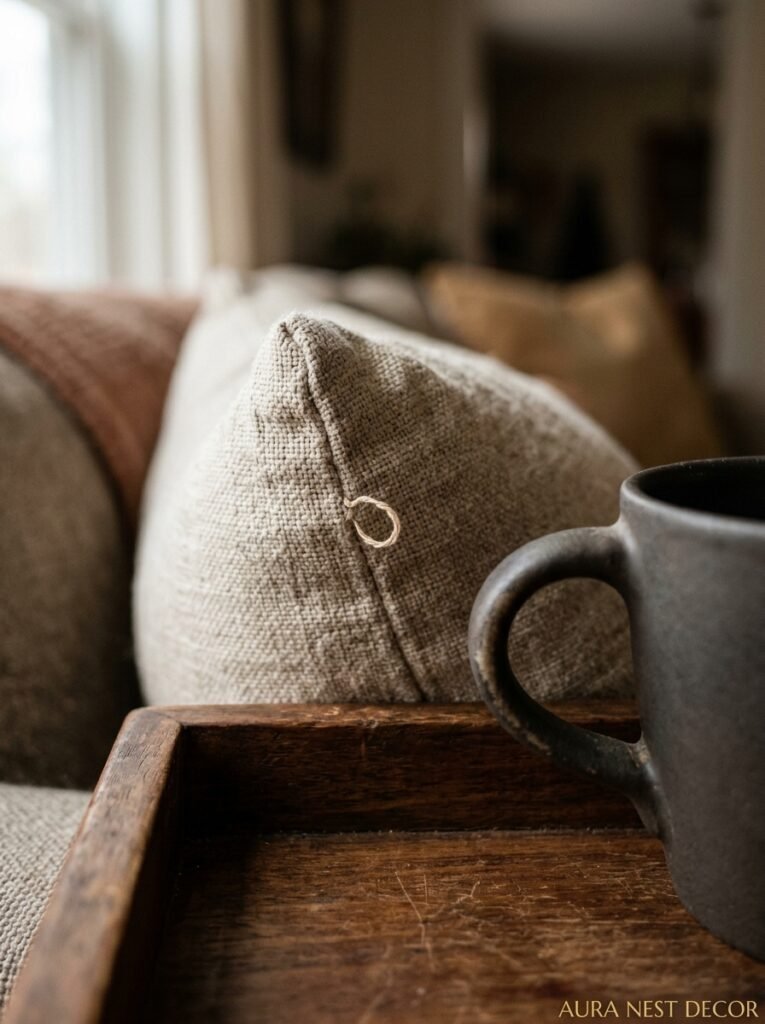
There’s a specific quality to rooms that feel finished versus rooms that feel like they’re almost there. And usually it comes down to a handful of tiny decisions.
Light switch plates — replace plastic with brushed brass or matte black if your hardware is consistent with that. It’s a £20 change that sounds absurd until you do it and can’t believe you lived with the plastic ones. UK readers, Forbes & Lomax are worth looking at. American readers, look at Rejuvenation.
Door handles. Same deal. Same logic.
The inside of a bookshelf painted a contrasting tone — that soft clay or warm terracotta used as an accent on the back panel. It makes the shelf look designed.
And finally: smell. Warm minimalist rooms have a scent. Not an overwhelming one — just a slight background warmth. A candle burned an hour ago, wood, something faintly smoky or botanical. It completes the experience in a way nothing you can photograph actually captures.
That detail is for you. Not for Pinterest. And I think that’s exactly right.
—
❓ FAQ
Q: Can warm minimalism work in a rental where I can’t paint the walls? A: Yes, genuinely. The palette and warmth come as much from what you bring into the space — textiles, rugs, lamps, objects — as from wall color. Lean into large warm-toned rugs and layered lighting, and the white rental walls will recede.
Q: How do I make a warm minimalist room feel cozy in winter without it feeling cluttered? A: Swap out lightweight throws for heavier wool ones seasonally, add a floor lamp if you haven’t got one, and burn candles more liberally. You’re not adding visual clutter, you’re adding sensory warmth — and that distinction matters a lot.
Q: Is warm minimalism the same as Japandi? A: They overlap a lot but they’re not identical. Japandi tends to go slightly darker, slightly more restrained, with more Japanese-influenced design elements. Warm minimalism is a bit looser and more personal — it can include slightly more decorative objects and warmer tones without losing the aesthetic.
—
💭 Final Thoughts
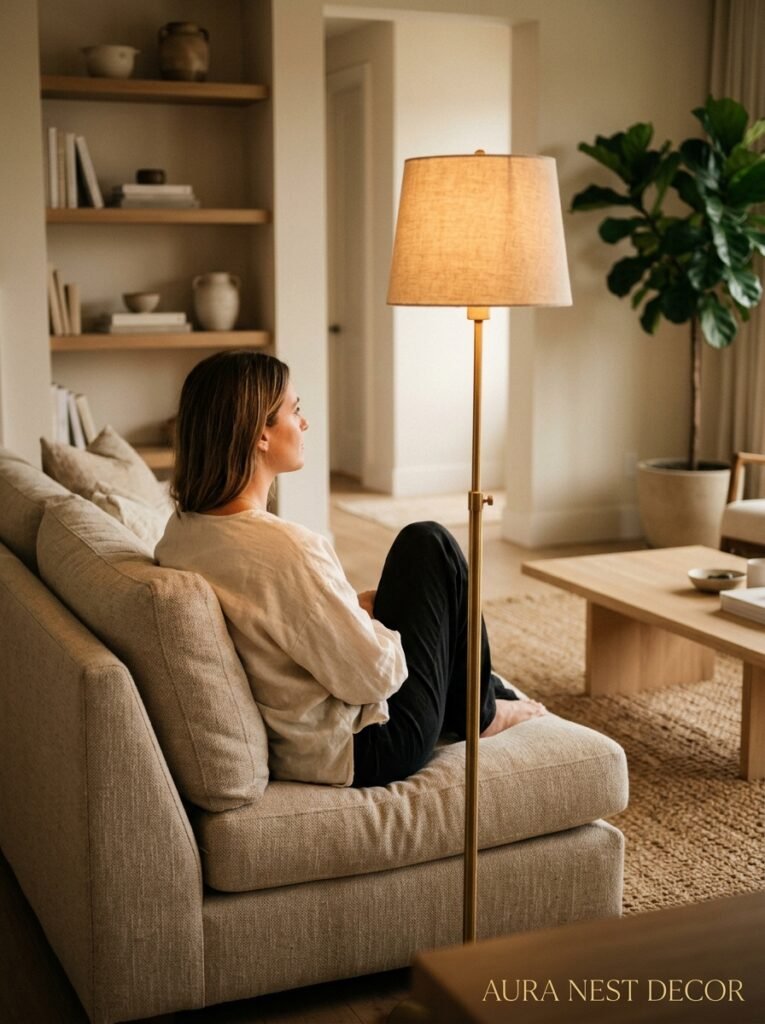
The thing about warm minimalism that keeps drawing people back to it is that it doesn’t ask you to live like nobody actually lives there. It just asks you to be a little more deliberate. A little more honest about what genuinely makes you feel calm. And if you get it even half right, it pays you back every single day — in how you feel when you walk in the door, in the way the evening light moves across your walls, in the slightly irrational but completely real sense that your home is yours. So — what’s the one thing in your living room right now that’s fighting against that feeling?