The Recliner Glow-Up: How to Make the Most Comfortable Chair in Your Home Look Like It Belongs There
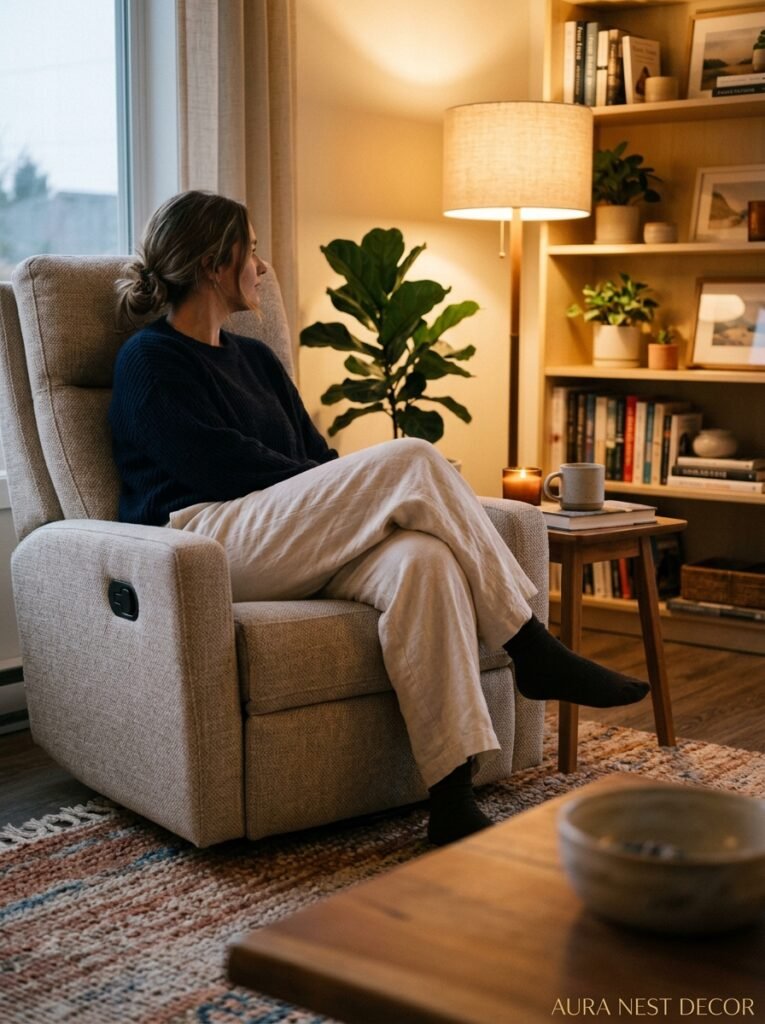
You know that feeling when you finally sink into a recliner after a long day and every muscle just… releases? Yeah. That feeling is worth designing around. Because here’s the truth: recliners have gotten a bad reputation in the interior design world, and it’s mostly undeserved.
—
1. Why Recliners Got Unfairly Kicked Out of “Nice” Living Rooms
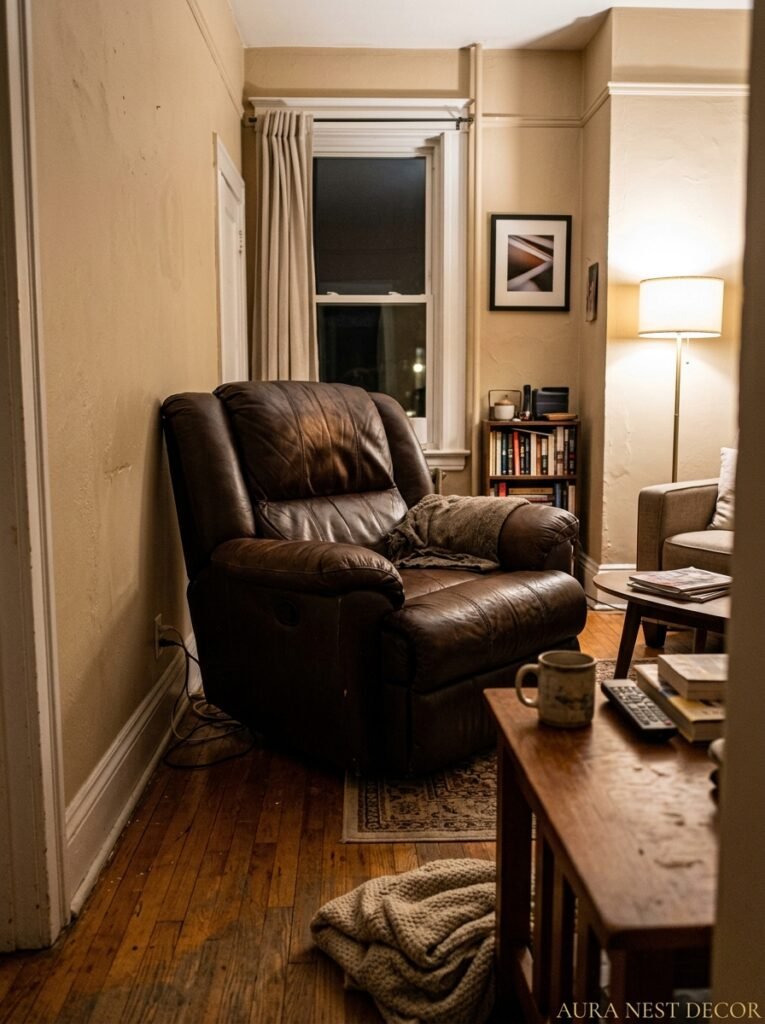
Let’s be honest about where this started. Somewhere in the early 2000s, the beige La-Z-Boy recliner became a punchline — the chair that screamed “I stopped trying.” Design magazines started treating comfort furniture like an embarrassing relative you hide in the back bedroom. And a whole generation of homeowners started apologizing for their recliners.
But that narrative is SO outdated it hurts.
The recliner landscape has completely changed. We’re talking sleek barrel chairs with hidden reclining mechanisms, performance fabric recliners in deep forest greens and cognac leather, mid-century modern silhouettes that recline without looking like they’re about to swallow you whole. The chair that designers kept telling you to throw out? It’s back. And this time it doesn’t look like it belongs in a sports bar.
The problem was never the recliner. The problem was the styling. A gorgeous sofa looks terrible in the wrong room too — we just don’t blame the sofa for it.
So let’s actually fix this.
“The chair didn’t fail the room. The room failed the chair.”
2. The Size Trap That Makes Even Expensive Recliners Look Wrong
Here’s the thing nobody tells you when you’re buying a recliner: the footprint matters more than the front view. Everyone stands in front of it in the showroom and thinks, yeah, that works. And then they get it home and recline it and suddenly it’s eating half the living room.
Measure the reclined length. Not the seated length. The FULL extended length from the back of the chair to where the footrest ends when it’s all the way out. In most average recliners, that adds 18 to 24 inches. In a small British terrace living room or an American apartment-sized space, that’s the difference between the chair fitting and the chair becoming the room.
A smaller scaled recliner in a tight space will always look more intentional than a massive one you had to angle awkwardly into a corner because it didn’t fit. Scale is everything. I know that sounds obvious but I can’t tell you how many gorgeous rooms I’ve seen derailed by one oversized chair.
Also — wall clearance. Traditional recliners need at least 12 to 15 inches behind them. If you don’t have that, look into wall-hugger recliners. They exist specifically for this problem and they’re not a compromise, they’re just smarter engineering.
3. The Color That Keeps Showing Up in Every Beautiful Living Room With a Recliner Right Now
Cognac. Warm cognac leather or leather-look fabric. I’ve been noticing it everywhere — and not just in obviously styled rooms. Real people’s homes. British sitting rooms with original Victorian fireplaces. American craftsman living rooms with wood beam ceilings. Loft apartments.
The reason cognac works is that it reads as intentional in a way that beige never does. Beige says “I didn’t want to commit.” Cognac says “I picked this on purpose.” And it bridges the gap between traditional and contemporary styling in a way that’s genuinely useful when you’re designing a real room that has to live in, not just photograph.
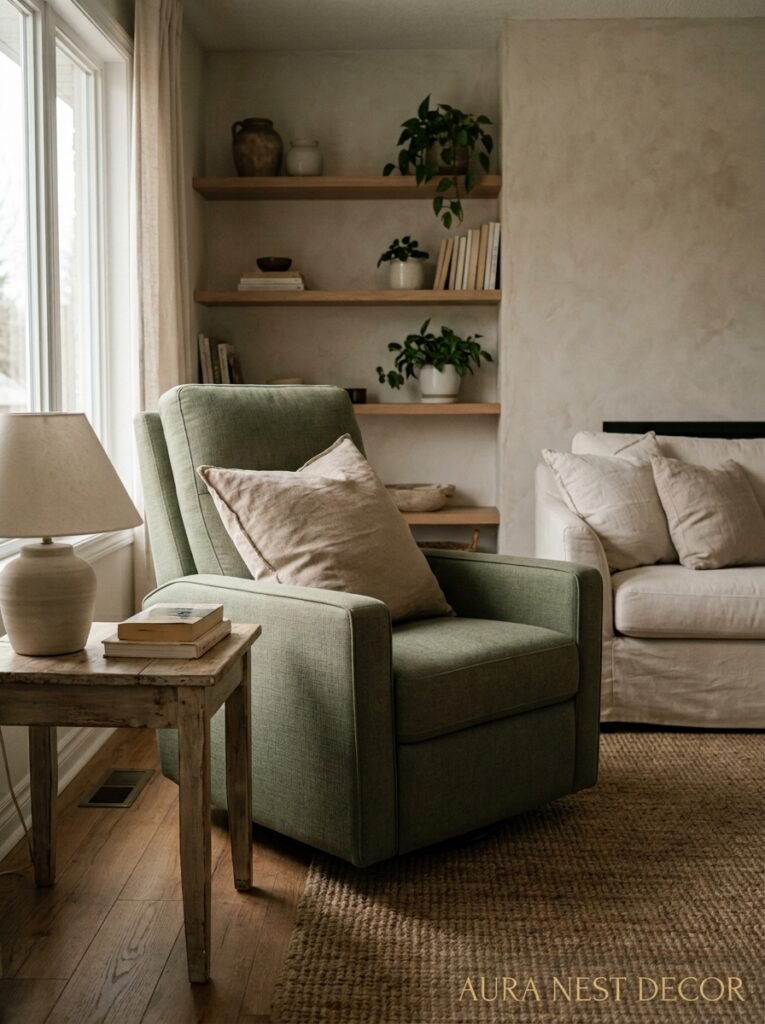
That said — deep green velvet recliners are having a serious moment. A forest green recliner in a room with warm wood tones, cream walls, and some brass accents looks absolutely editorial. Not “trying too hard” editorial. Actually good. Same goes for a warm charcoal.
What tends to look the worst? A recliner that’s slightly off from everything else in the room — like a greige recliner in a room with warm whites, or a cool grey in a room full of earthy tones. It’s not the color itself that fails, it’s the disconnect.
4. Where You Actually Put It: The Positioning Rules Designers Use
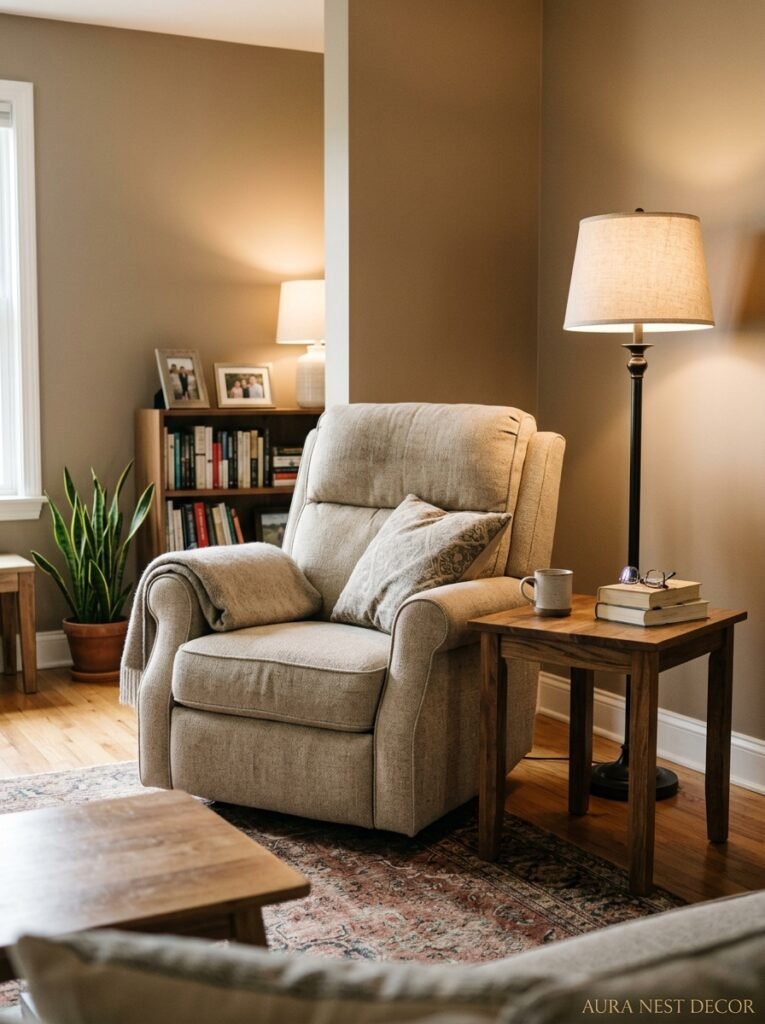
A recliner shoved into a corner facing the TV isn’t a styled room, it’s a watching station. And that’s fine if that’s literally all you need — but if you want the space to feel designed, placement is where it all comes together.
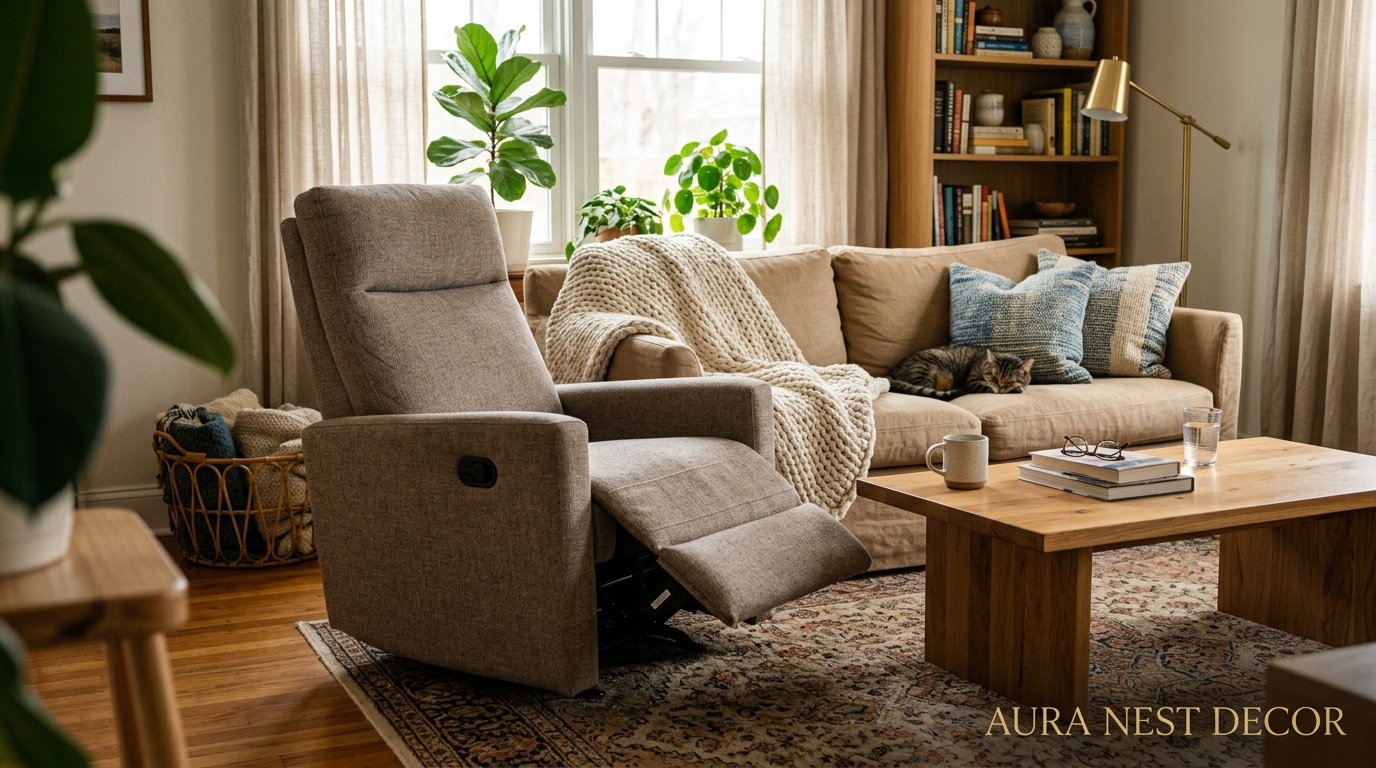
The positioning rule I keep coming back to: the recliner should have a clear relationship with at least one other piece of furniture. Not just proximity. An actual visual relationship — angled toward the sofa slightly, or positioned so it’s part of a conversational grouping, or placed with a side table that gives it visual anchoring.
A recliner floating alone in a room with nothing beside it looks like it’s waiting to be moved. Give it a companion. A small side table, a floor lamp positioned just behind and to one side, a pouf or footstool nearby. These things tell the eye “this belongs here.”
In British homes especially, I see recliners tucked at weird angles because of bay windows or chimney breasts. Lean into the architecture. A recliner in the curve of a bay window with a little table beside it and a good reading lamp? That’s a destination. That’s a corner people fight over.
“A recliner without a side table is a chair without a reason to stay.”
5. The Fabric Question: What Actually Holds Up Versus What Just Looks Good in Photos
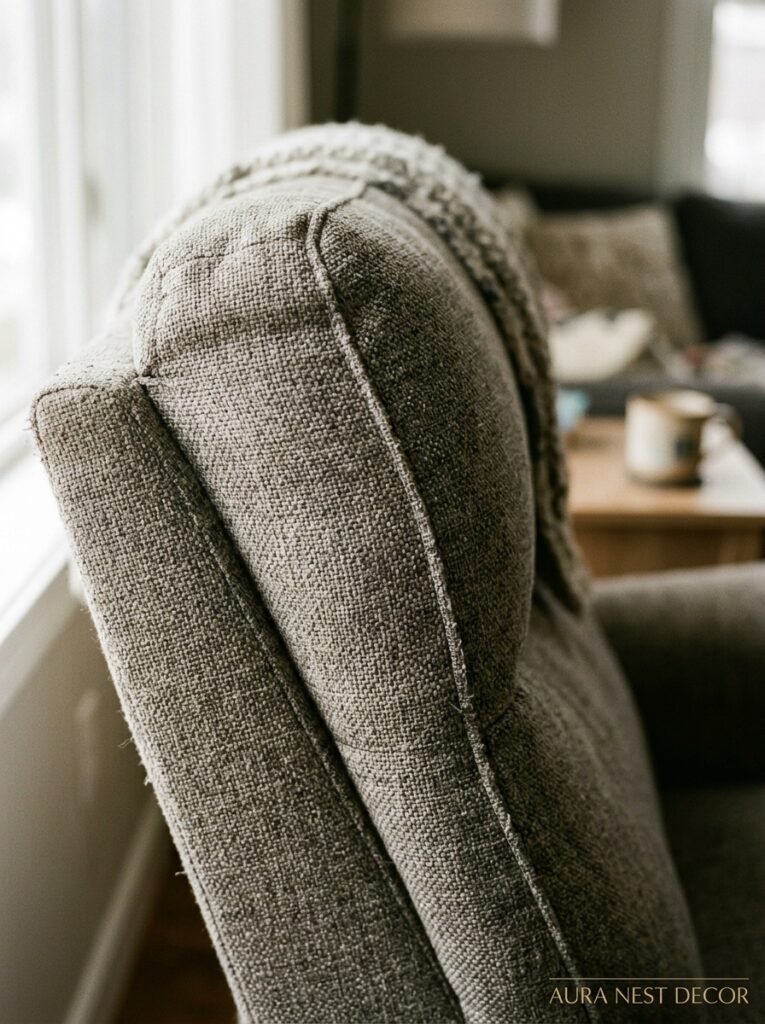
Not gonna lie, this is where I have opinions. Strong ones.
Genuine leather recliners are beautiful and they last, but they need maintenance — conditioning, keeping them out of direct sun, accepting that they’ll creak and that in British winters they’ll feel cold until they warm up. If you’ve got kids or pets, real leather is either bulletproof or a disaster depending on the quality you buy. Full-grain leather? Worth every penny and it actually improves with wear. Bonded leather? Avoid. It peels within a few years and looks terrible when it does.
Performance fabrics are genuinely good now. Like, really good. Crypton, Sunbrella, and similar weaves resist stains, hold their shape, and come in colors that don’t look like hospital furniture. If someone tells you performance fabric is a budget compromise, they haven’t looked at the options recently.
Velvet recliners are gorgeous. They’re also high maintenance in homes with direct sunlight (it fades unevenly) and they attract every bit of pet hair within a fifteen foot radius. I’m not saying don’t do it. I’m saying know what you’re signing up for.
The one I’d probably choose for a family home? A tight-weave performance fabric in a warm mid-tone. Something that looks good in a room but doesn’t make you anxious when someone sits in it with snacks.
6. The One Rule That Makes a Recliner Look Intentional in Any Room
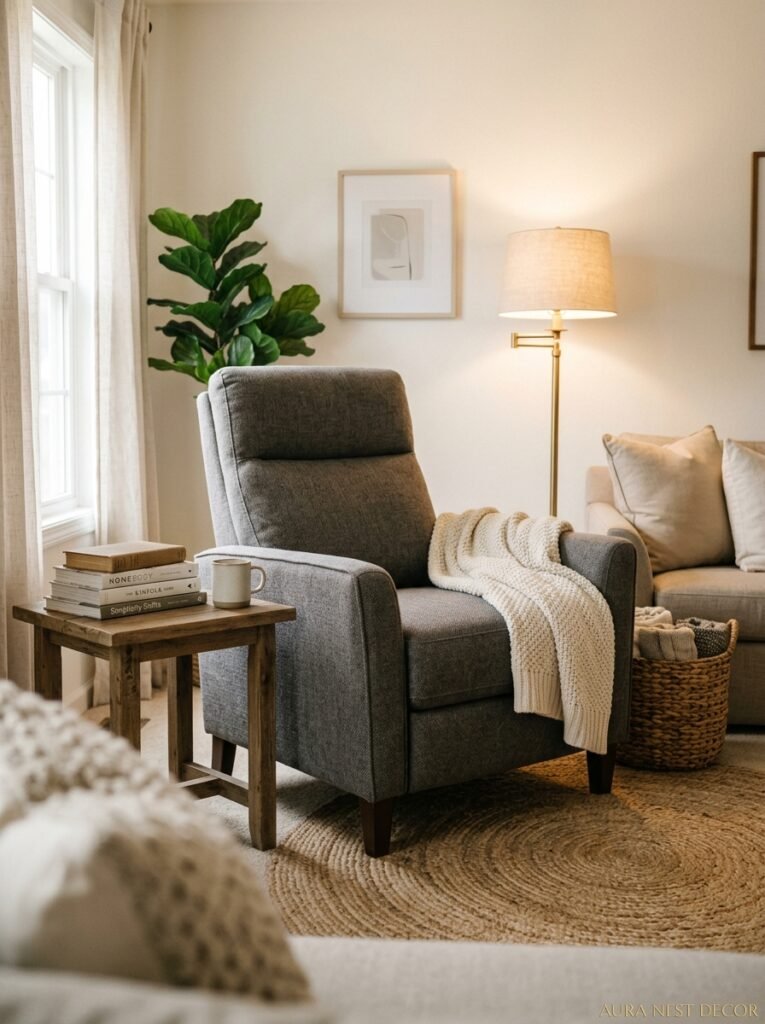
Repetition. Seriously, that’s the rule.
When a recliner looks out of place, it’s usually because it’s the only thing in the room doing what it’s doing — either in color, material, or shape. Introduce that element somewhere else in the room and suddenly the recliner looks planned.
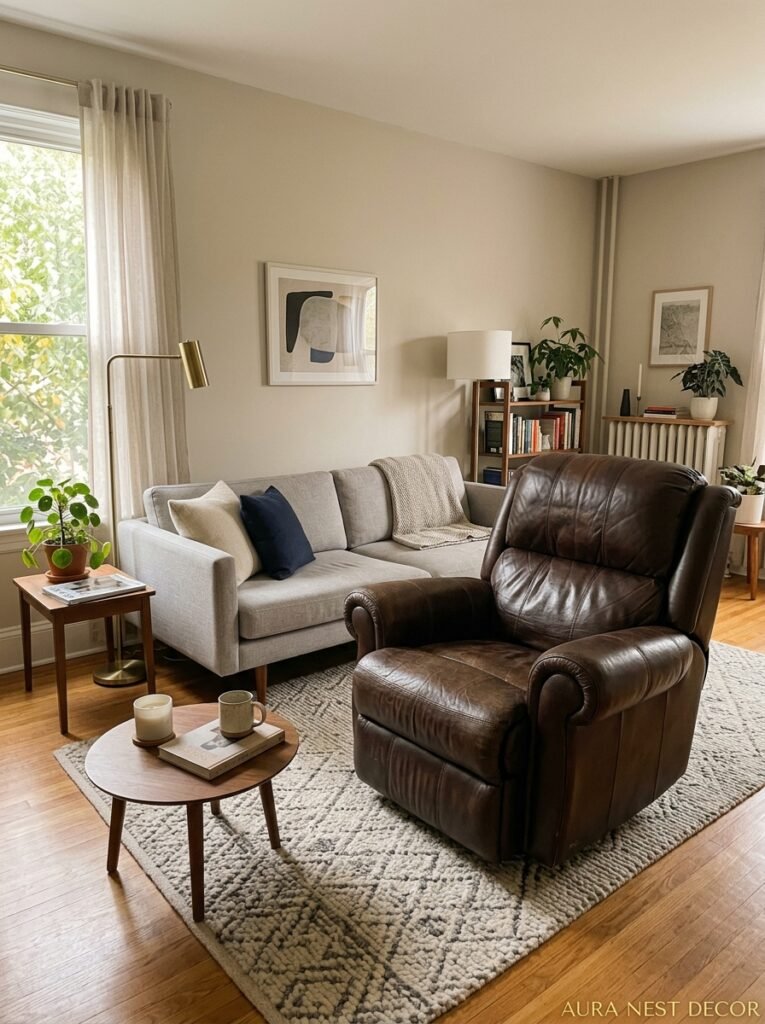
Dark brown leather recliner in an otherwise light room? Add dark brown or cognac in the lamp base, in a throw, in a small tray on the coffee table. The recliner stops being a foreign object and starts being part of a scheme. Same with an unusual color — if you’ve got a green velvet recliner, a green in the throw pillows on the sofa (even a different shade) pulls it into the room.
This works with shape too. Rounded, soft silhouette recliner? Make sure something else in the room has curved lines — a round coffee table, a curved sofa cushion edge, round picture frames. Angular minimalist recliner? Let the room have some clean lines too.
It sounds almost too simple. But the rooms that look effortlessly designed are almost always doing this and doing it consistently.
7. Can Two Recliners Actually Work? (Yes, But Here’s the Exact Situation Where It Gets Weird)
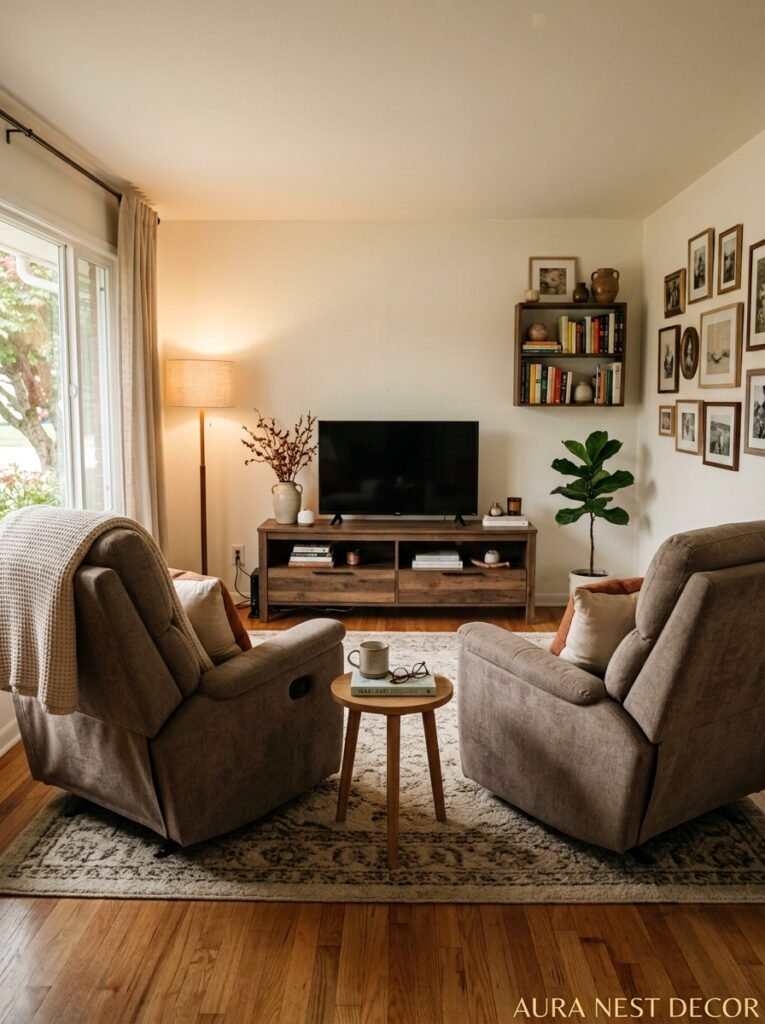
Two recliners can absolutely work. In fact, a pair of matching recliners flanking a fireplace or anchoring either end of a room can look genuinely deliberate and great. Symmetry is a design tool and it works.
The weird situation? A sofa-recliner combo that’s three seats wide placed next to a separate single recliner. That’s usually too many reclined seats in one room unless the room is genuinely large. The eye reads it as “they just kept adding chairs they liked” rather than a cohesive plan.
If you love recliners and want multiples, either go for a matching pair (intentional, looks planned) or separate them enough in the room that they read as two distinct seating zones. Two recliners in the same room that are too close together but not a pair just create a slightly chaotic energy.
Side note — sofa-recliners, where the ends of a sofa recline, are a genuinely good solution for this. You get the reclining function without the visual interruption of separate chairs. They’ve improved a lot in terms of how they look too. Worth considering.
“Two recliners that match are a design choice. Two recliners that almost match are a mistake.”
8. What to Put Next to a Recliner (That Isn’t Just a Drink Holder)
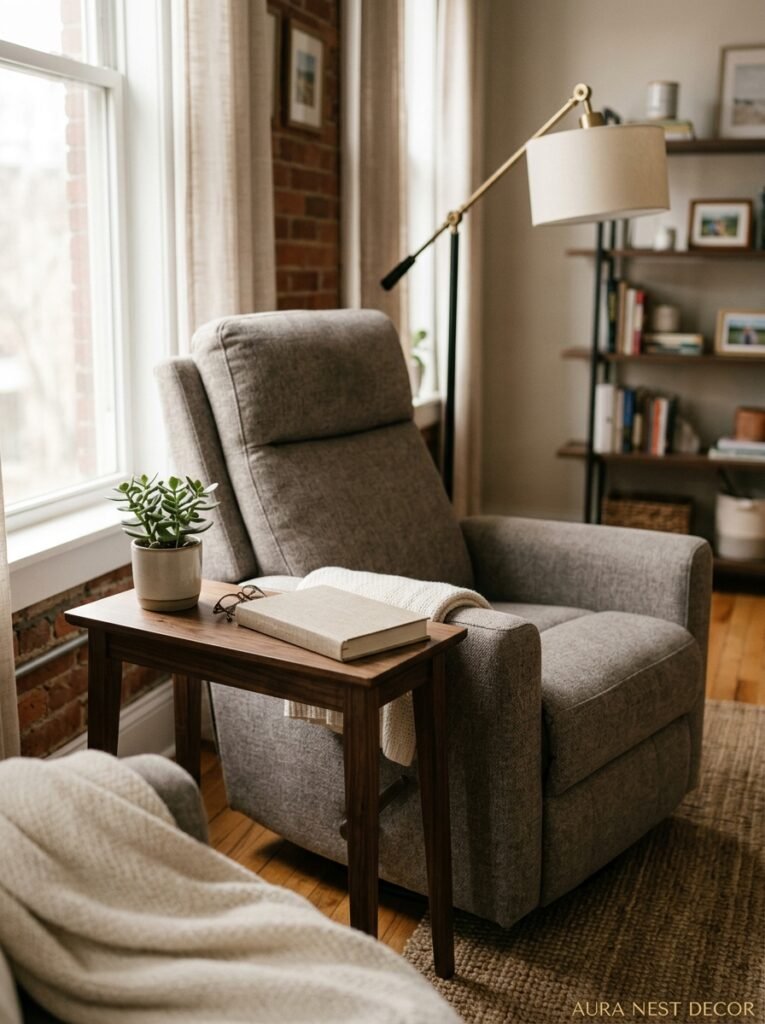
Okay, the obvious answer is a side table and yes, absolutely, get a C-shaped side table that slides under the recliner arm — it’ll change your life. But let’s talk about the rest.
Floor lamp placement is crucial for a recliner, especially if it’s a reading spot. You want the light source positioned behind and slightly to the side, not in front of you where it creates glare. An arc floor lamp works beautifully here — it reaches over the recliner and casts light downward without you having to arrange anything awkward.
A small tray on a side table next to a recliner does a lot of design work. It corrals the inevitable stuff (remote, glasses, book, the cup of tea you made and forgot about) so it looks curated rather than cluttered. Tray, small plant, one candle, and that’s it. Don’t overload it.
Throw placement on a recliner is something I’ve seen done badly SO many times. Don’t drape a throw over the back like a grandma’s armchair. Either fold it neatly over one arm, or loosely pool it on the seat. The second one looks more casual and lived-in, which is right for a recliner.
9. The Living Room Layouts That Actually Work With a Recliner (And the One That Doesn’t)
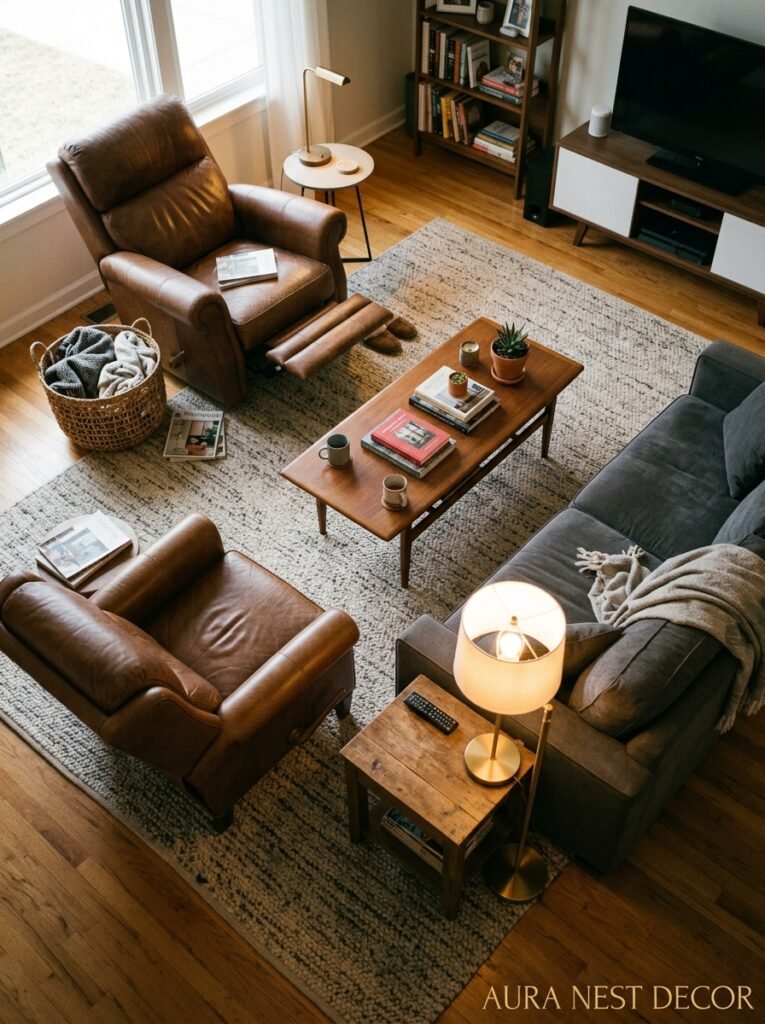
Layout that works brilliantly: recliner perpendicular to the sofa, both facing a shared focal point (fireplace, TV, window). This is the classic L-shaped arrangement and it’s classic because it actually functions. People can talk to each other. The recliner doesn’t feel isolated.
Also works: recliner as a standalone reading chair in a corner with its own lighting zone, slightly apart from the main TV-watching setup. This reads as intentional because it’s clearly a different purpose.
Works in bigger rooms: two recliners facing each other across a coffee table, no sofa. Unusual but genuinely cool in the right space. Very library-in-a-manor-house if you do it right.
The layout that doesn’t work: recliner positioned so it blocks natural traffic flow through the room, especially when reclined. You end up never actually reclining it because someone always needs to walk past. Recliners need protected space — they can’t sit in a thoroughfare.
10. How British and American Living Rooms Call for Different Recliner Styles
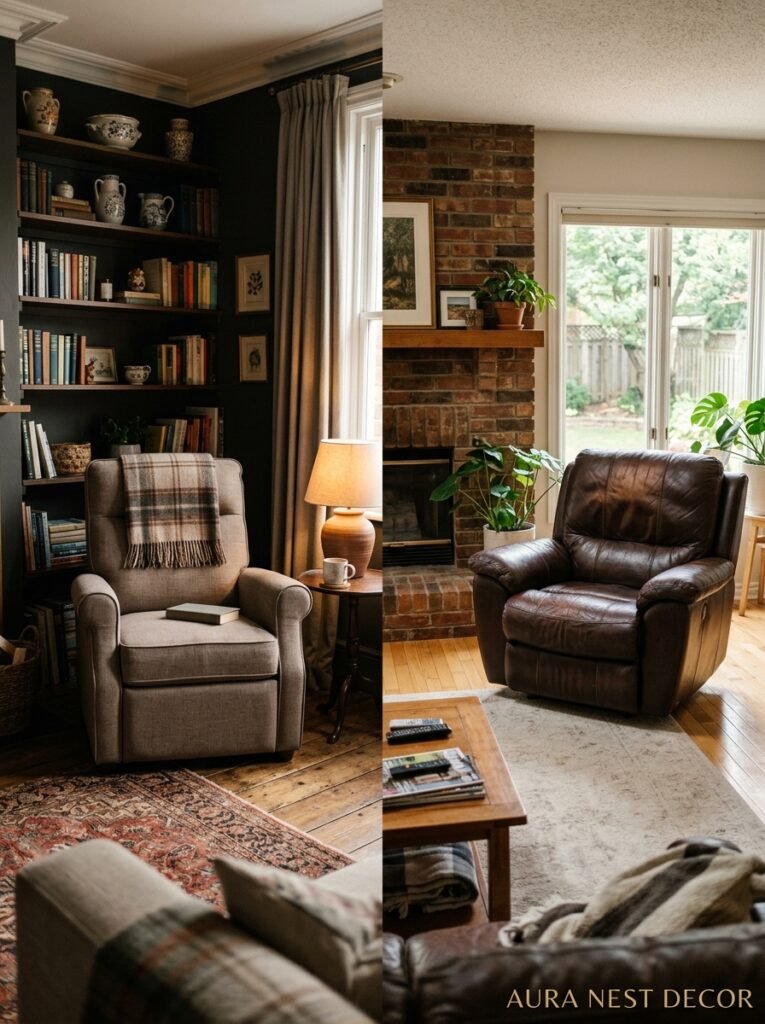
This is something I find genuinely interesting and don’t see discussed enough.
British living rooms — especially in older homes — tend to have more architectural character. Cornicing, picture rails, original fireplaces, smaller windows. In those rooms, a recliner with cleaner lines and a less aggressive silhouette tends to work better. Something that doesn’t compete with the room’s existing personality. A barrel-back recliner or a channel-tufted style with a restrained footrest mechanism fits a Victorian terrace much better than a big American-style power recliner with cup holders.
American living rooms, especially in newer builds, tend to have higher ceilings, more open floor plans, and a different sense of scale. There’s more room to go bigger. Power recliners with lumbar support and extended footrests work here in a way they just can’t in a cottage sitting room.
That said — both audiences are increasingly interested in the same thing, which is a recliner that doesn’t look like a recliner from ten feet away. The hidden mechanism, the tight silhouette, the fabric that reads more like a proper armchair. That’s the direction the market’s going and I’m here for it.
11. The Styling Detail That Pulls Everything Together (And Costs Almost Nothing)
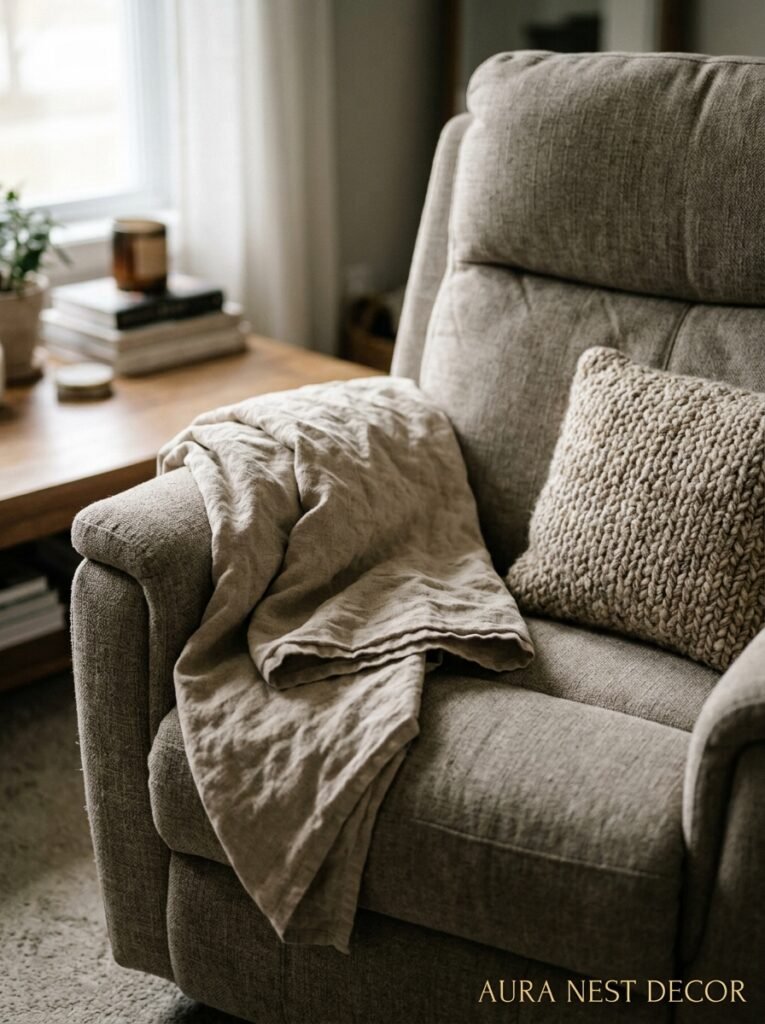
Throw pillow placement on a recliner is different from a sofa because you’ve got one surface to work with and it needs to stay accessible. Don’t do what you’d do on a sofa.
One pillow. Maybe two if the recliner is large. That’s it. And here’s the thing — the pillow should connect the recliner to the rest of the room, not just look good on its own. If your sofa has warm terracotta in its cushions, put a terracotta pillow on the recliner. If your main color story is navy and cream, use that. The pillow is a small visual bridge and it does an outsized amount of work.
Texture matters more on a recliner pillow than color, honestly. A chunky knit or a velvet pillow on a leather recliner creates contrast that feels considered. A plain cotton cushion on a fabric recliner just looks like it came with the chair.
This single detail — one well-chosen pillow and a folded throw — is the quickest and cheapest thing you can do to make a recliner look like it was always meant to be there.
12. The Recliners Worth Actually Buying Right Now (Categories, Not Just Names)
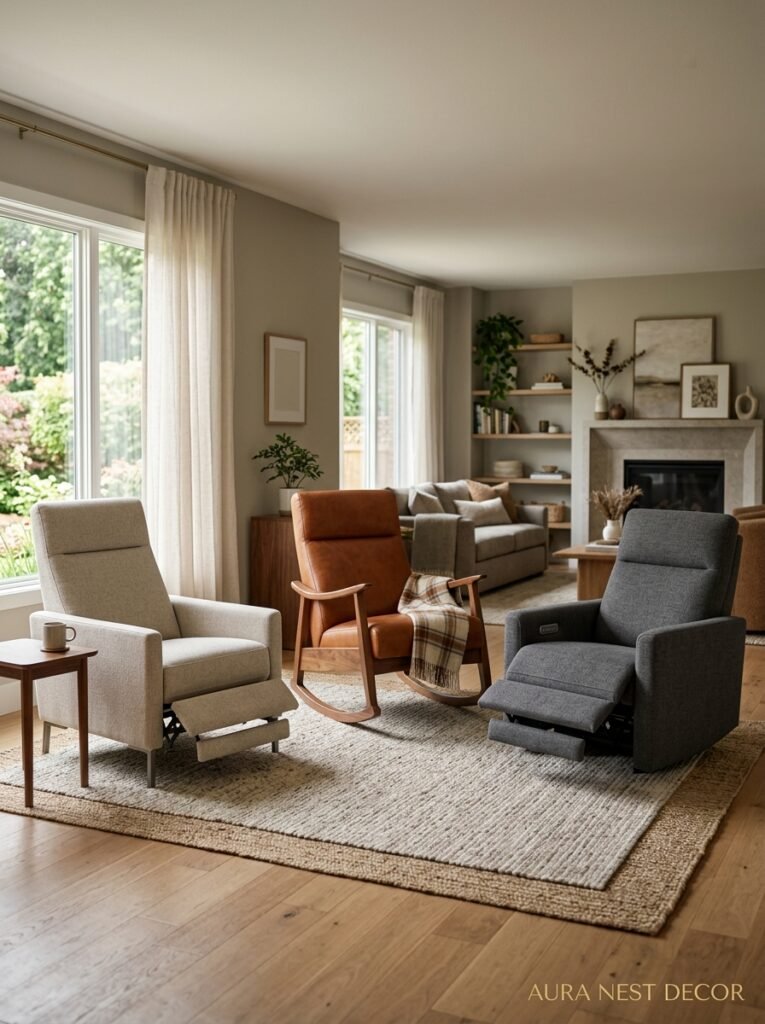
I’m not going to pretend I know your exact budget or room, but here’s what I’d actually look for.
If you want something that looks like a proper chair: search “barrel recliner” or “club chair recliner.” These have a much more compact visual profile and they’re doing everything right now in the design world. They often have a manual recline mechanism that’s invisible from the front.
If you want power reclining and you don’t want it to look clinical: look for power recliners with track arms (those are the flat, straight arms) rather than the padded rolled arms. Track arms read much more contemporary and they’re usually slimmer in profile.
If budget is the priority: honestly, a good second-hand recliner in a classic silhouette that you reupholster or simply style well will beat a cheap new recliner every single time. The bones of older recliners are often better than newer budget options. Find one with a solid mechanism and dress it up.
The thing I keep telling people: don’t buy a recliner that you’ll only sit in. Buy one you’d also want to look at from across the room. Because most of the time, that’s exactly what you’ll be doing.
—
❓ FAQ
Q: Can a recliner work in a small living room? A: Yes, but you need to be strategic about it. Measure the full reclined depth before you buy anything, and look specifically for wall-hugger recliners if you’re working with tight space. In small rooms, a single well-placed recliner often does more for a space than trying to fit a full sofa set.
Q: How do I stop a recliner from looking cheap or out of place? A: Styling is almost always the answer — specifically, connecting the recliner to the rest of the room through repeated color, material, or texture. One well-chosen throw and pillow that pull from your existing color palette can do it. The recliner doesn’t have to match; it has to relate.
Q: Are fabric or leather recliners better for everyday use? A: Depends entirely on your household. Leather (genuine, full-grain) is incredibly durable and wipes clean easily, which is great for messier homes. High-quality performance fabrics are softer, warmer to the touch, and come in more colors — and modern versions are surprisingly stain-resistant. Avoid bonded leather entirely; it looks fine for about eighteen months and then deteriorates fast.
—
💭 Final Thoughts
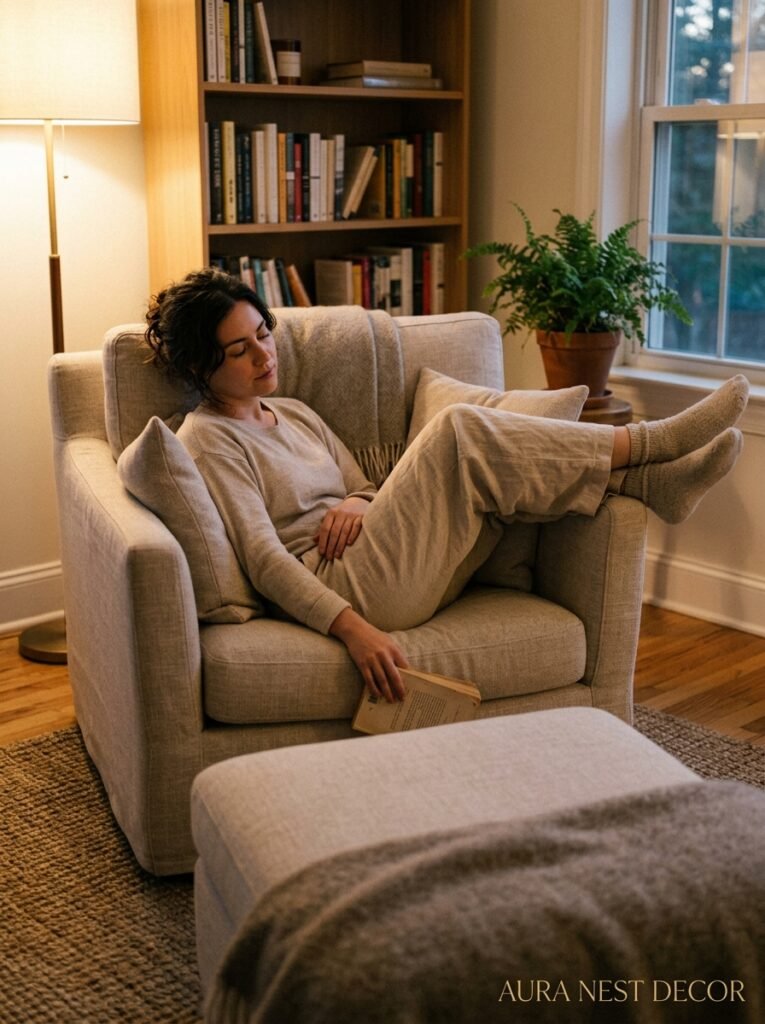
The recliner has earned its place in a well-designed living room — it just needs someone to actually design around it instead of treating it like the odd one out. A little attention to scale, placement, and connection to the rest of the room goes further than most people realize. And at the end of the day, a room that genuinely feels good to be in will always beat a room that only looks good in photos. So — is your recliner the problem in your living room, or has the room just never fully committed to it?