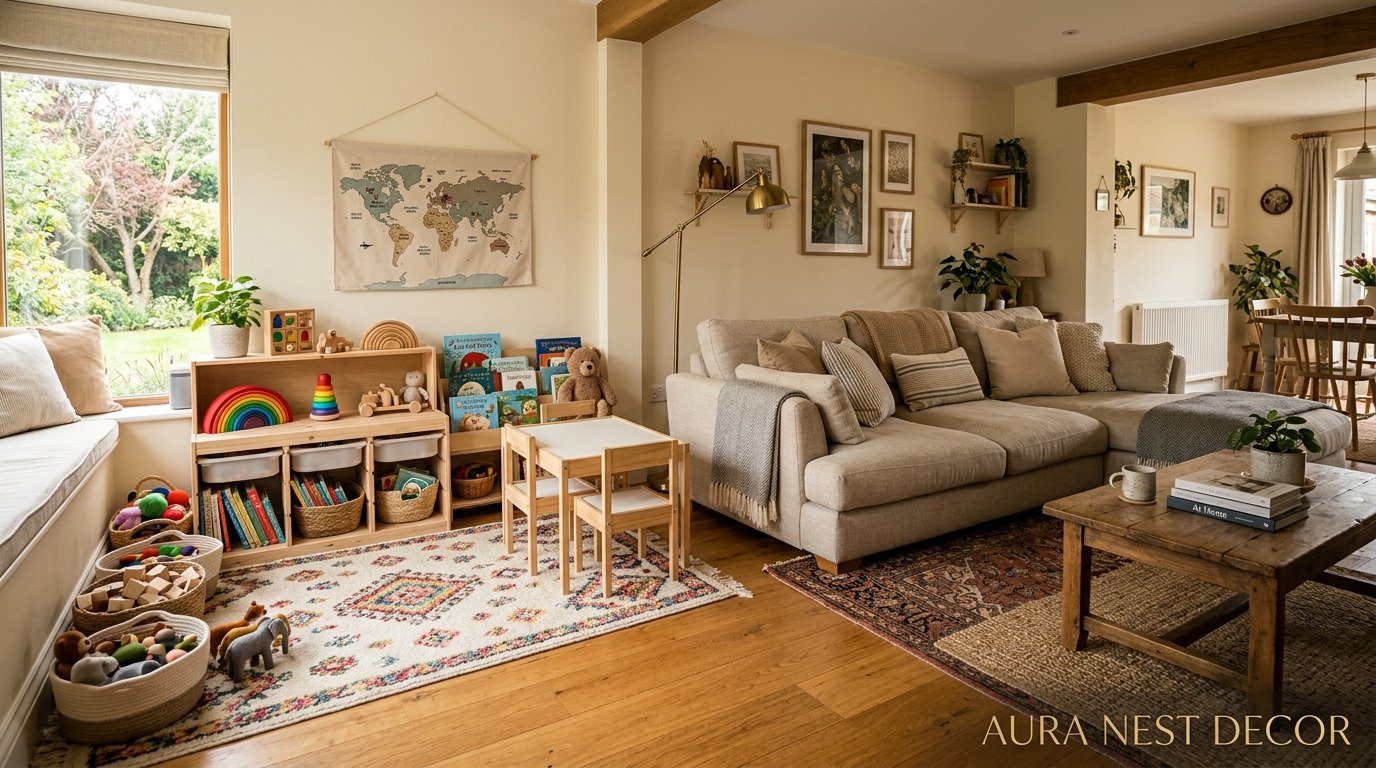
The Living Room Playroom That Doesn’t Look Like Either One (And That’s the Whole Point)
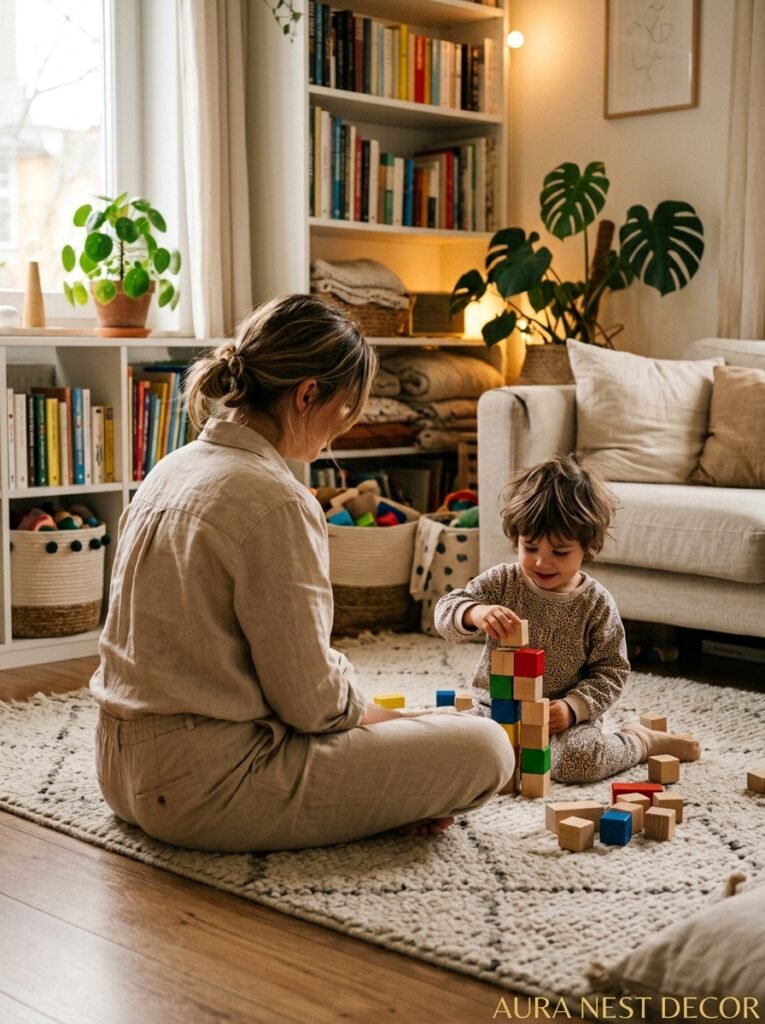
You know that specific kind of tired — where you’ve tried to make the living room “work” for the kids and somehow ended up with neither a functional playroom NOR a living room you actually want to sit in? Yeah. That’s what we’re fixing today.
—
1. Why Most Living Room Playroom Combos Feel Like a Compromise (And How to Stop Treating Them Like One)
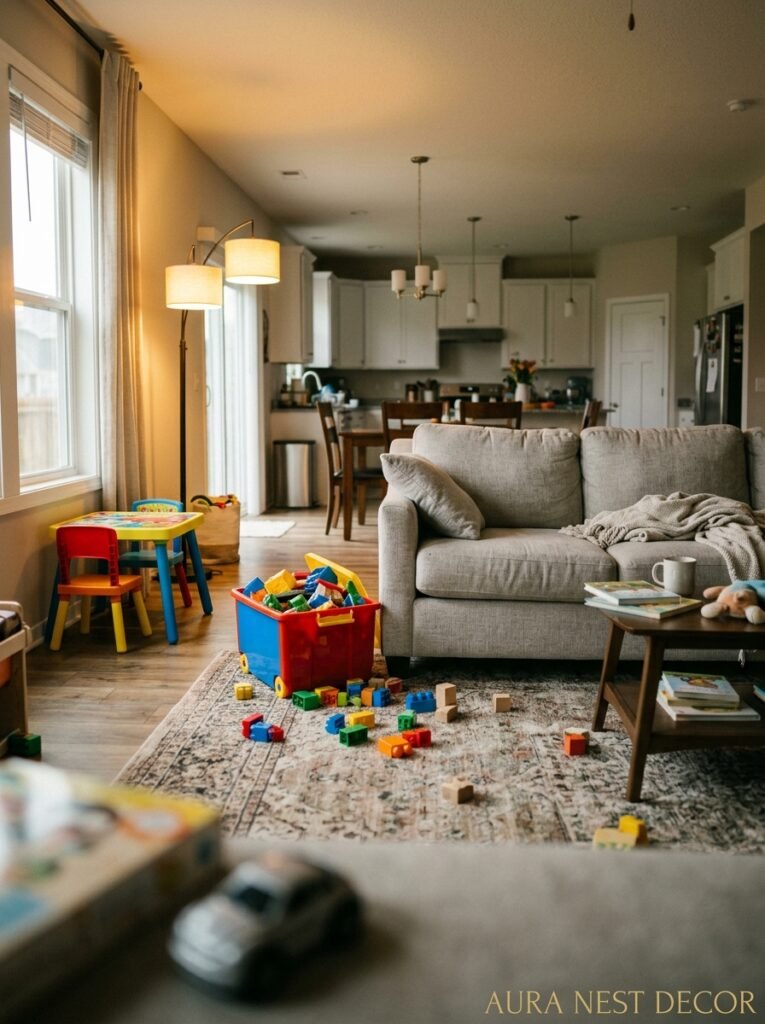
Here’s the thing nobody tells you: the reason most combo rooms feel like a disaster is because you went in trying to subtract. You tried to hide the kid stuff. You tried to make the adult space “survive” the toys. That whole approach is backwards.
The rooms that actually look good — the ones you see on Pinterest and think how do they live like that — they didn’t minimize the kids’ presence. They DESIGNED for it. There’s a difference, and once you see it you can’t unsee it.
Stop thinking of the playroom element as something to apologize for. A low wooden shelf full of beautiful wooden toys near a linen sofa? That’s not a compromise. That’s a design choice. A basket big enough to swallow a hundred LEGO pieces sitting at the end of a coffee table? Intentional. Styled. Fine.
The room doesn’t need to look like a nursery catalogue or an interiors magazine. It needs to look like your family lives there — and someone with taste also lives there. Both things are true. Both can coexist.
So before you do anything else, just decide: you’re not hiding. You’re designing.
“You’re not hiding the kids. You’re designing around them — and there’s a version of that which is genuinely beautiful.”
—
2. The Zoning Trick That Actually Works in an Open Plan Space
Zoning. Everyone says it. Very few people do it in a way that holds up past Thursday.
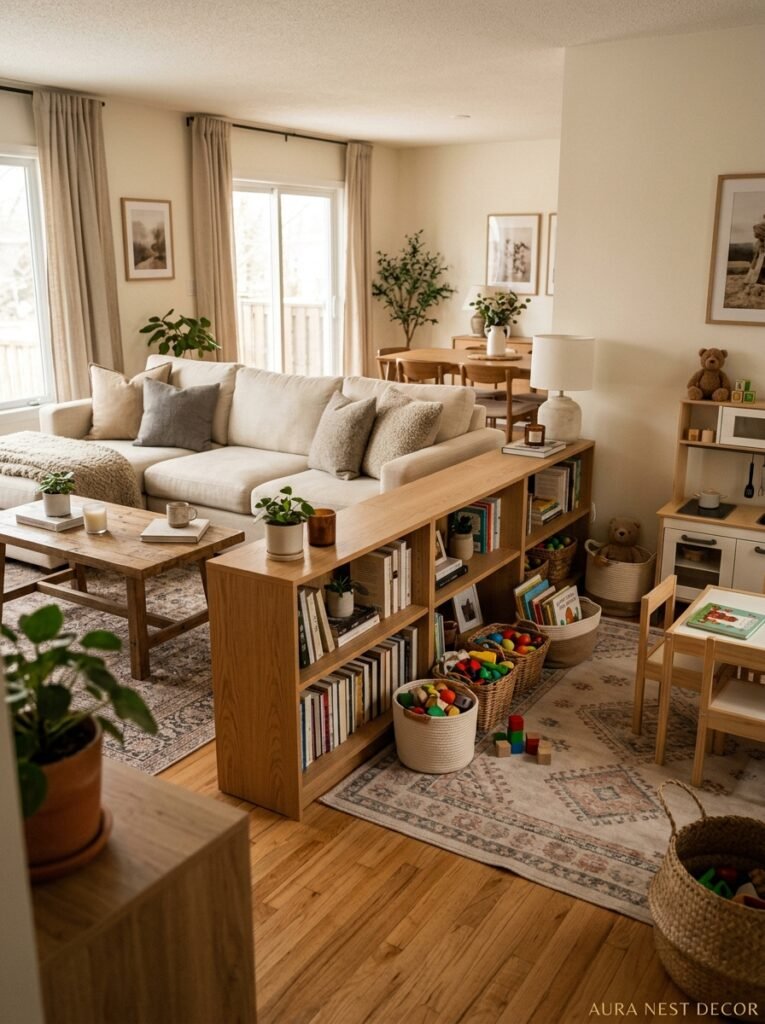
The thing is, zones don’t have to be physically separated. They just have to feel different. A rug — one good, oversized rug on the kids’ side — does more work than any shelving unit or room divider you could buy. It signals to the brain: this part is for playing. The sofa side, with a different (or no) rug? That’s the adult side.
In open plan spaces especially — and so many British terraces and American ranch homes have this layout — visual boundaries are everything. A low bookshelf placed perpendicular to the wall, facing INTO the play zone, keeps toys corralled without blocking light. This is huge. You’re not building a wall. You’re just drawing a line.
And honestly? The zones shift. Morning might be all floor toys and mess. By 7pm, those zones look completely different. Design for the 7pm version and the 8am version will take care of itself because you’ve built in the bones.
Think about traffic flow too. Where do the kids drop everything when they walk in? Design the play zone to intercept that chaos before it reaches the sofa side. Put hooks low, put a basket right there, make it EASY to dump stuff in the right spot.
—
3. The Color That Keeps Showing Up in Every Beautiful Combo Room Right Now
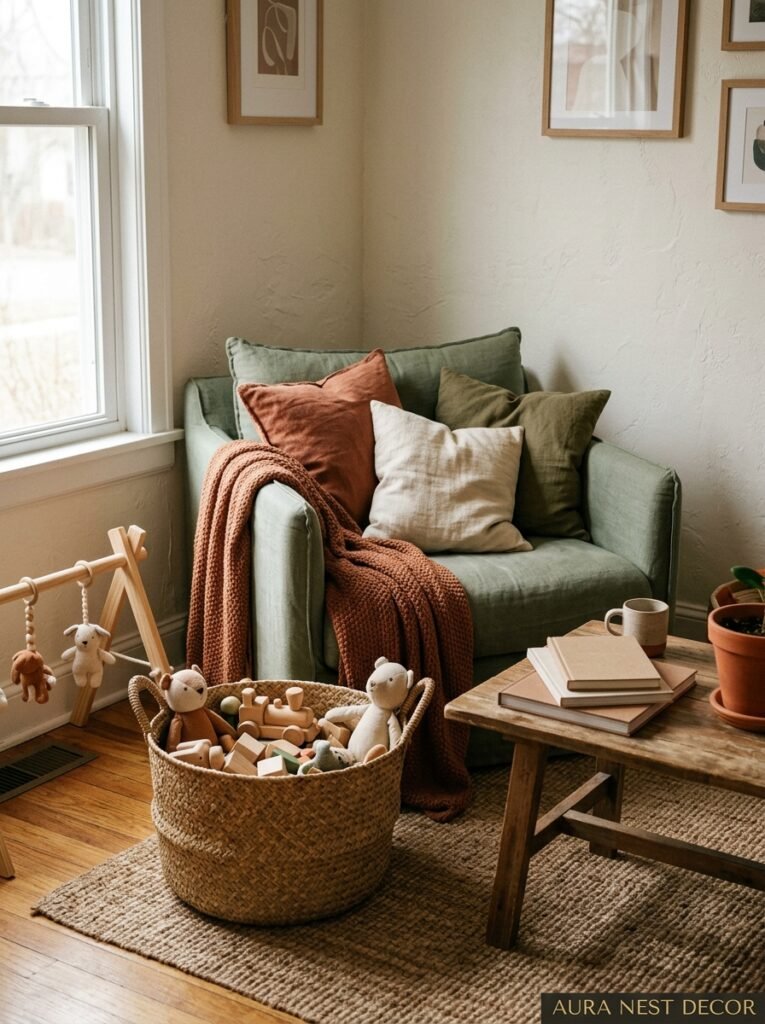
Warm white. But not cold bright white — I want to be specific here because there’s a version of white that makes a room feel like a doctor’s office and a version that makes it feel like you want to curl up in it.
The warm whites — Farrow & Ball’s All White, Benjamin Moore’s White Dove, even just a warm greige — they’re doing something important in these rooms. They’re acting as a neutral that makes BOTH the adult furniture AND the brightly colored kids’ toys look intentional. A cobalt blue toy storage box against a warm white wall? That’s a vibe. That same box against a cool grey wall? It looks like an accident.
Color in these spaces tends to work best when it comes from the kids’ stuff rather than the furniture. Neutral sofas. Neutral rugs (mostly). And then you let the play side add all the color it wants, because kids’ things are naturally colorful and you can’t fight that. Work with it.
The other thing I keep seeing is forest green used in the adult section — a green linen cushion, a dark green throw — which somehow reads as earthy and calm even right next to a shelf of primary-colored board games. It shouldn’t work. But it does.
—
4. Toy Storage That Looks Like Furniture (No, Really)
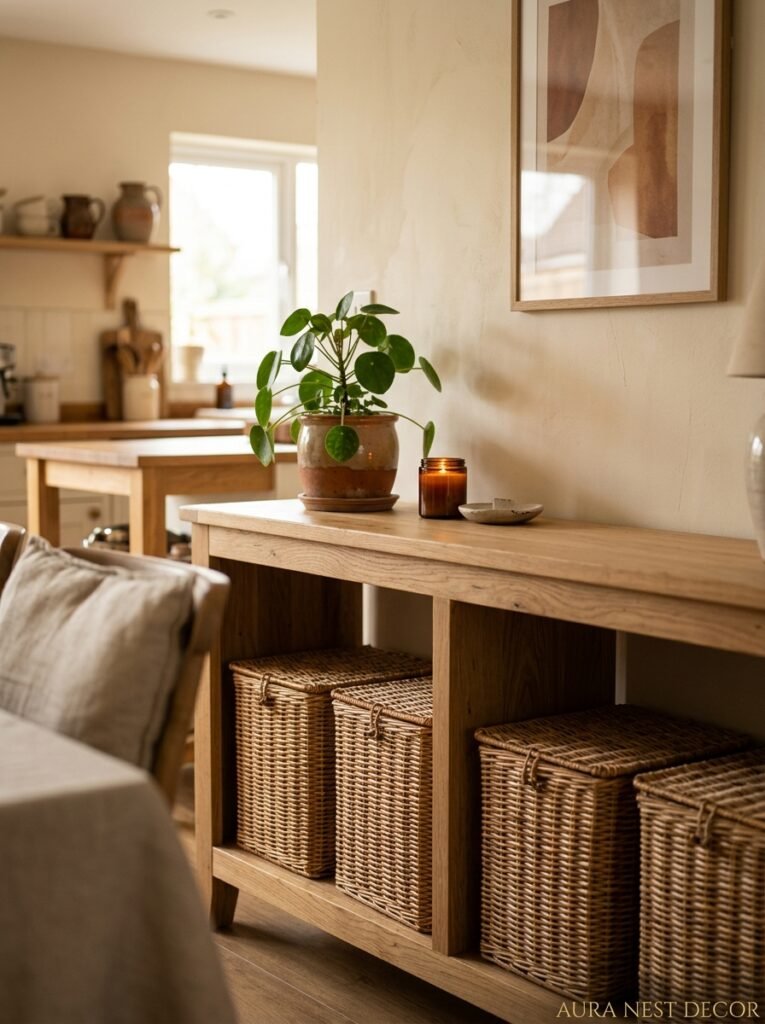
This one matters so much. Because “toy storage” has this image — you’re picturing plastic bins in a primary color rainbow, right? Or those cartoon-character shelving units. And look, no judgment, those WORK for storage. But they don’t work for a combo room that also has to function as your actual living room.
The goal is storage that reads as furniture first.
Wooden crates with rope handles. Linen baskets big enough to actually hold things (not those tiny decorative ones that fit exactly six things). Built-in bookshelves painted to match the wall — this is huge in UK homes, especially Victorian and Edwardian houses where you’ve got the alcoves. Paint the inside of the alcove shelves, put toys on the lower two shelves, books and plants and candles on the higher ones. It looks intentional because it IS intentional.
IKEA’s Kallax unit — controversial opinion incoming — is genuinely one of the best pieces for this. Especially the smaller 2×2 or 2×4 configurations. Use fabric cube inserts for the toy sections, leave some cubes open for books or plants, and suddenly it reads less like “children’s furniture” and more like “shelving unit that happens to also store children’s furniture.”
“The storage that works hardest in a combo room is the storage nobody clocks as being there for the kids.”
—
5. The One Rule That Makes a Tiny Room Feel Like It Was Planned This Way
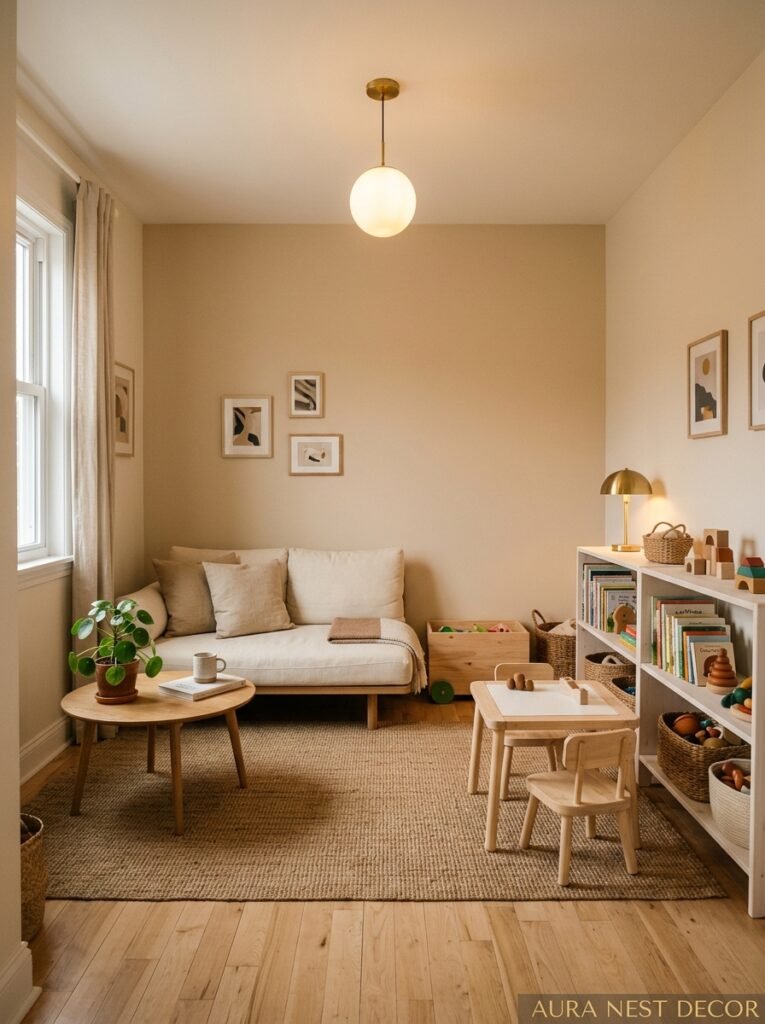
Everything needs a home before it’s bought.
That’s it. That’s the rule. Before anything enters the room — a toy, a piece of furniture, a throw blanket, a book — it needs an assigned spot. Not a “we’ll figure it out” spot. An actual, specific spot.
This sounds so obvious I almost didn’t include it. But I’ve seen so many combo rooms fall apart not because of design failure but because things accumulated without intention and the room just… filled. Slowly. Chaotically. And then one day you’re surrounded and you don’t know how you got there.
So when you’re setting up the space: everything has a home. Puzzles go in this basket. Duplo lives in this cube. The three stuffed animals that actually get played with live in this basket — not seventeen stuffed animals, the three. The rest are somewhere else.
Editing is a design skill. Choosing what DOESN’T stay in the room is as important as what does.
—
6. Sofas That Survive Children (I Tested This So You Don’t Have To)
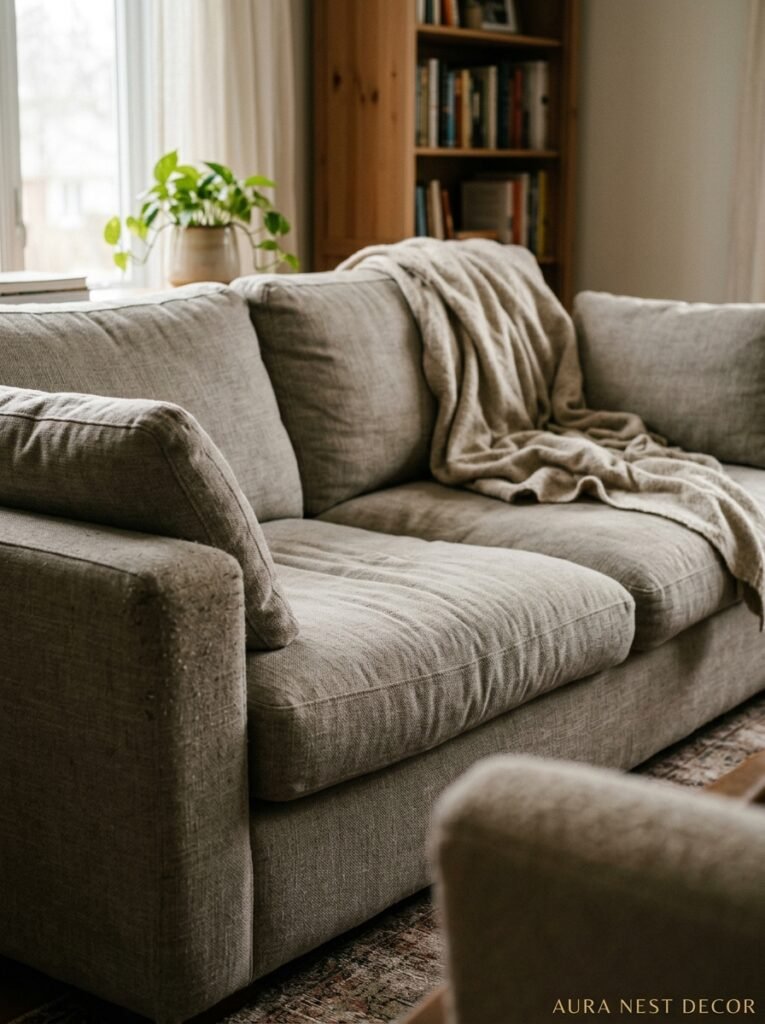
Performance fabric. I know, I know — it sounds very boring and practical. But there is now a generation of performance fabrics that genuinely look good. Not “good for a wipe-clean sofa.” Just good.
Bouclé, for instance, has this texture that actually hides a lot of sins — crumbs, light marks — better than a flat woven fabric. Velvet sounds like a bad idea but mid-tone velvet (a dusty blue, a warm sage, a mushroom-y taupe) hides fingerprints way better than pale velvet or dark velvet. Not gonna lie, I was skeptical about this one.
In the UK, sofas from places like Loaf, Arlo & Jacob, or the higher-end Next ranges have improved dramatically on performance. American brands like Article, Albany Park, and Benchmade Modern have some solid options too. Look for anything marketed as “pet-friendly” — because if it survives a dog, it’ll survive a five-year-old.
And honestly? A slipcover sofa is underrated. The kind with removable, washable covers. Yes, they require occasional re-tucking. But you can WASH THE WHOLE SOFA. That matters more than I can adequately express.
—
7. Flooring Choices That Don’t Make You Choose Between Beautiful and Functional
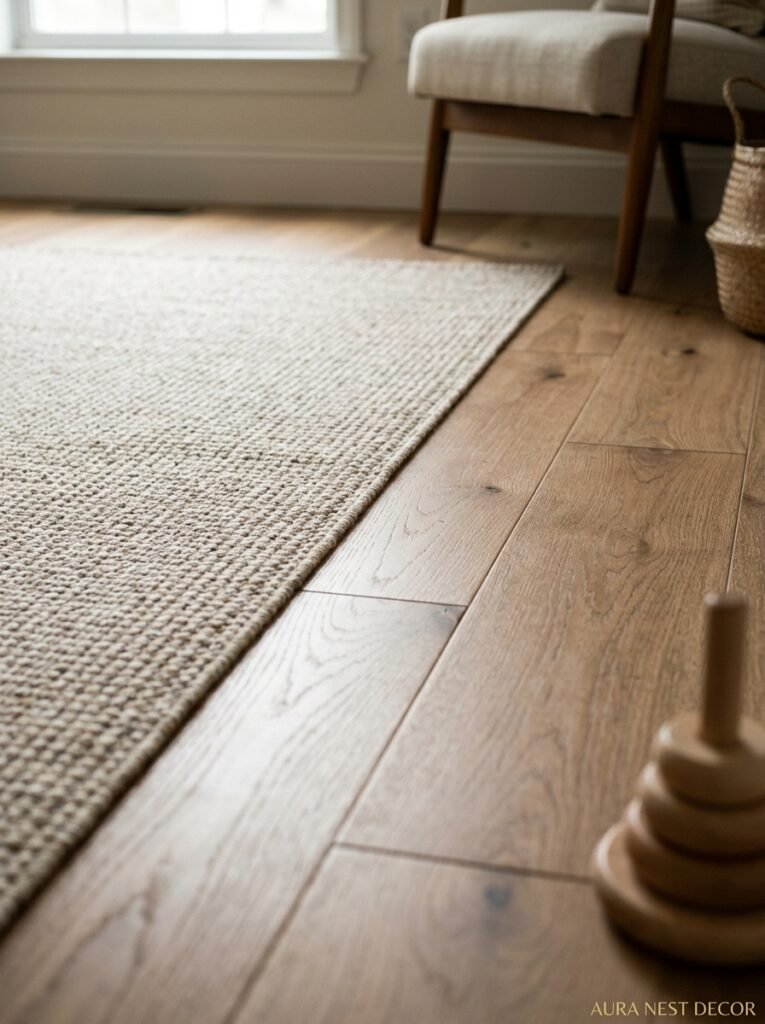
Hard flooring in a playroom section, soft in the adult section. This is the combination that keeps coming up and for good reason — hard floors (engineered wood, LVT, even a good quality tile) are easy to wipe and don’t trap crumbs or glitter the way carpet does. But hard floors are cold and loud for playing on.
So you add a rug. A big, ACTUALLY BIG rug. Not a rug that fits under the coffee table. A rug that defines the whole play zone, that kids can roll around on, that acts as the soft surface for floor play.
The rug needs to be washable. This is non-negotiable. Ruggable has become almost a cliché in these conversations, but it became a cliché because it works — you can actually put it in the washing machine. There are UK-based alternatives now too (Brita Sweden, some IKEA options) that do the same.
In homes where carpet is throughout — which is still really common in British bedrooms and living rooms — consider a low-pile carpet in the main living area and a playmat or foam tile system in the designated play corner. Foam tiles get a bad reputation aesthetically but the wood-grain printed ones are genuinely fine and they protect the carpet underneath.
“The rug isn’t decoration in this room. The rug is infrastructure.”
—
8. What Actually Stays on the Coffee Table (And What Needs to Go Somewhere Else)
This one’s going to sting slightly for some people.
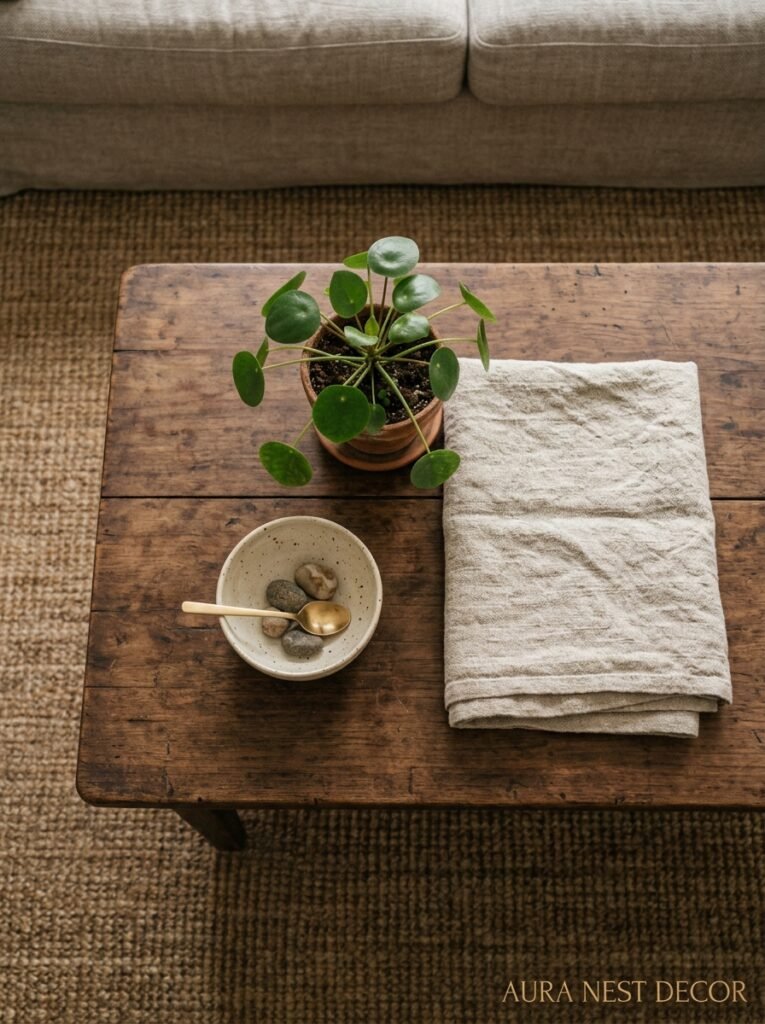
The coffee table is contested territory. Kids see it as a staging area, a drawing surface, a launch pad. Adults see it as — well, a coffee table, with a candle and a stack of nice books and maybe a small plant.
The version that works in a combo room is a coffee table that acknowledges both. Which means: low to the ground (safer, easier for kids to see and reach), rounded corners if possible, and surfaces that wipe clean. A tray — one good tray — keeps the adult elements contained and actually makes them look more curated, not less.
The candle stays. But it lives in the tray. The books stay, but it’s two books, not a tower. And the surface has room for a kid to put their drink down without it feeling like a crime against interior design.
What needs to go: anything fragile, anything precious, anything that can’t be nudged by a flying arm without consequence. That stuff deserves a different room.
—
9. Lighting — Because Overhead Lights Are Ruining the Vibe at Night
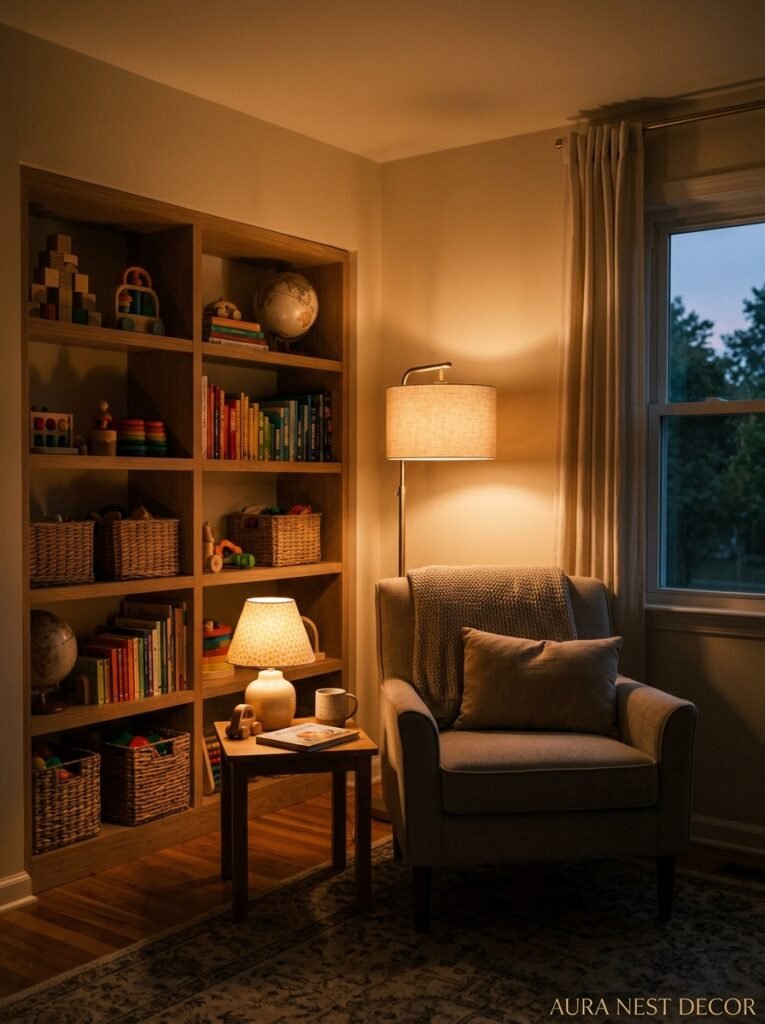
One of the quickest ways to accidentally make a space feel institutional is to rely entirely on overhead lighting. And in a combo room, overhead lights after dark make the toys look more prominent, not less. Everything looks a bit sad and exposed.
Lamps. Multiple lamps. Floor lamps in the adult corner, a small lamp on a side table, maybe a plug-in wall sconce if you want something a bit different. The amber glow of an Edison bulb at 7pm changes the whole character of a room. The toys in the corner are still there but they’re in soft shadow and somehow the sofa area looks like an actual living room again.
In the UK, most older homes don’t have the outlet placement that makes this easy. Extension cords with cord covers (the ones that clip along the skirting board) are your friend here. Worth doing.
Smart bulbs, if you’re into that, let you drop the color temperature in the evenings — warmer, dimmer — and the room FEELS like it’s switched into a different mode. Kids calm down faster. Not making that up.
—
10. The Art on the Walls — How to Make It Feel Cohesive When Half the Room Is for Kids
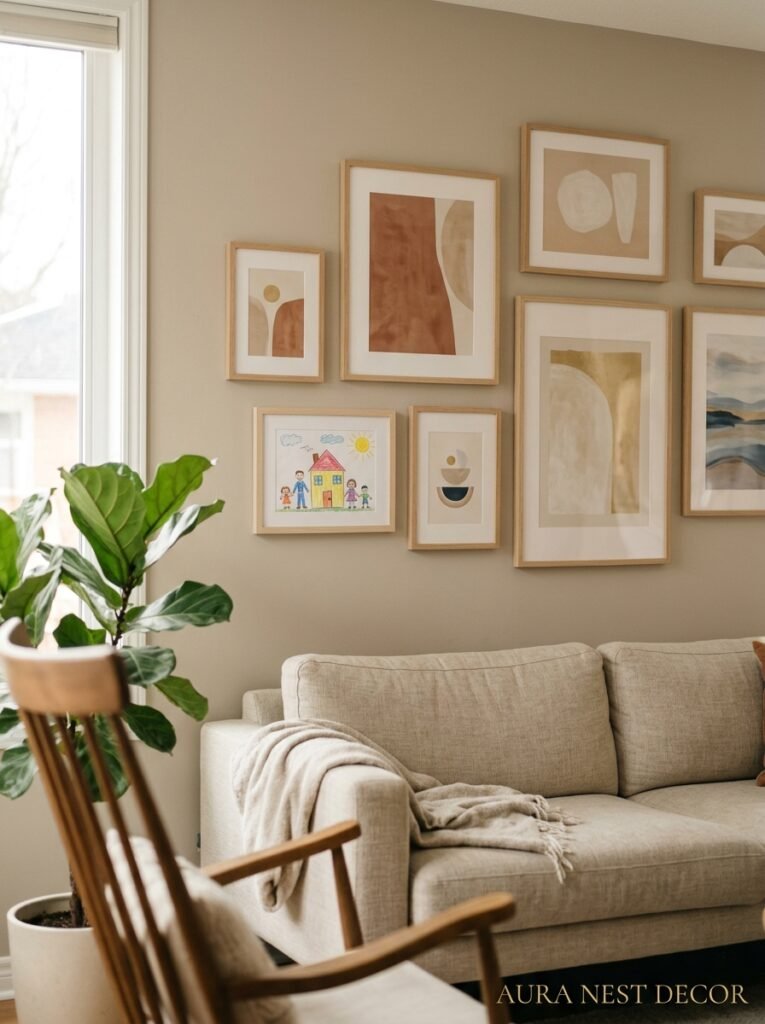
Framed kids’ art. I will die on this hill.
Your kid’s drawing, properly scanned, printed on good paper, put in a decent frame — that is LEGITIMATELY good wall art for a space like this. It’s personal, it’s colorful, it ties the room together, and kids absolutely light up when they see their stuff treated as real art.
But beyond that: the art on the walls shouldn’t change dramatically between the adult and kids’ sides of the room. That’s what makes a combo room feel designed rather than patched together. If you’ve got a botanical print above the sofa, maybe a child’s drawing of a tree — framed, printed big — works on the other side. You’re not matching exactly. You’re echoing.
One large-format print on the biggest wall in the room (the adult side, usually) acts as an anchor. Everything else can be a bit more casual and collected-feeling.
—
11. The Evening Reset Ritual That Keeps the Room from Feeling Like a Permanent Mess
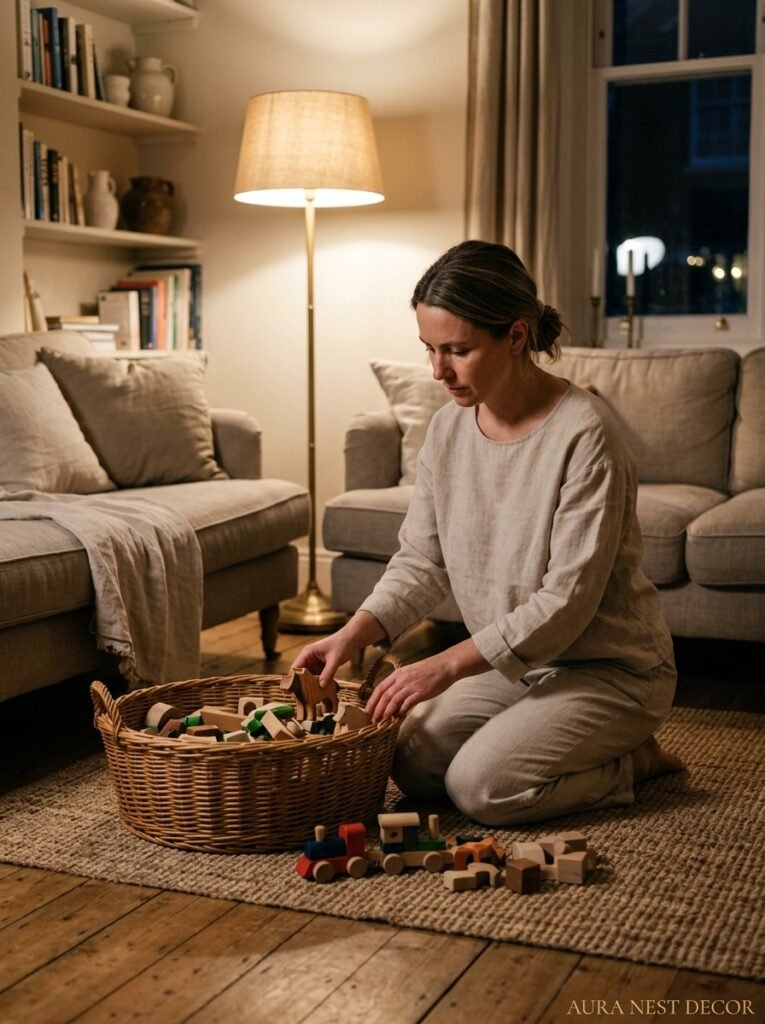
Here’s something that none of the design articles talk about because it’s not technically about design: the reset.
Fifteen minutes, every evening. That’s all. Everything goes back to its assigned spot (see section 5), throws get folded, cushions get fluffed, surfaces get cleared. This is the system that makes a combo room WORK long-term, not just look good in photos.
Without a reset, the design doesn’t matter. The storage doesn’t matter. The carefully zoned rug doesn’t matter. Stuff just accumulates and within three days you’re back to the chaos.
Some families make this part of the kids’ routine — which is genuinely good for kids anyway, and also genuinely useful for the adults. A ten-minute tidy before bath time, every day, keeps the room at a level where a quick adult reset takes almost no effort.
The rooms that look good consistently are NOT rooms where nothing ever gets messy. They’re rooms where the mess is reversed regularly.
—
12. The One Detail That Makes the Whole Room Feel Considered (And Nobody Can Tell Why)
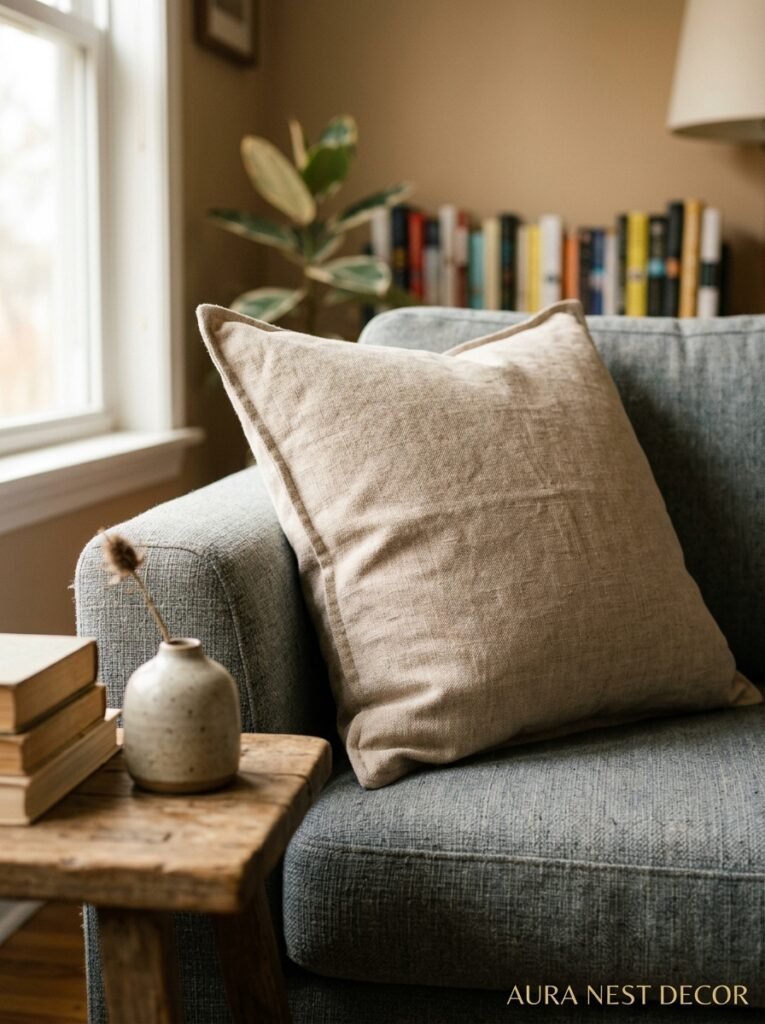
Plants.
Not a shelf of seventeen plants. One or two good plants placed at adult height, where kids can’t easily reach them, in pots that match the room’s color palette.
A fiddle leaf fig or a monstera in the adult corner does something quiet but important: it signals that an adult who cares about their space lives here too. It sounds almost too simple. But plants are one of those things that never reads as “playroom.” They always read as “someone’s home.”
Choose something robust — pothos, snake plants, ZZ plants if your light isn’t great — because you’re not going to have a lot of time to fuss over something temperamental. And go for a pot that costs a bit more than you think you should spend on a pot. A beautiful ceramic pot in a color that echoes something in the room. That detail lands.
—
❓ FAQ
Q: How do I stop living room playroom combos from feeling chaotic all the time? A: It’s almost always a storage problem before it’s a design problem. Assign a specific home to every item that lives in the room, and build in a daily reset (even 10–15 minutes) to return things to those homes. Chaos accumulates when stuff doesn’t have a place to go back to.
Q: What’s the best toy storage that doesn’t look terrible in a living room? A: Wooden or linen storage that reads as furniture first — think Kallax units with fabric cube inserts, large woven baskets, or painted built-in shelving. The key is that it doesn’t advertise itself as toy storage from across the room.
Q: Can a living room playroom combo actually look good, or is it always a compromise? A: It can genuinely look good — not “good considering there are kids” but actually good. The rooms that work treat the play zone as a design decision, not a concession. Choose storage that looks intentional, zone the space with rugs and furniture placement, and keep the color palette cohesive across both sides of the room.
—
💭 Final Thoughts
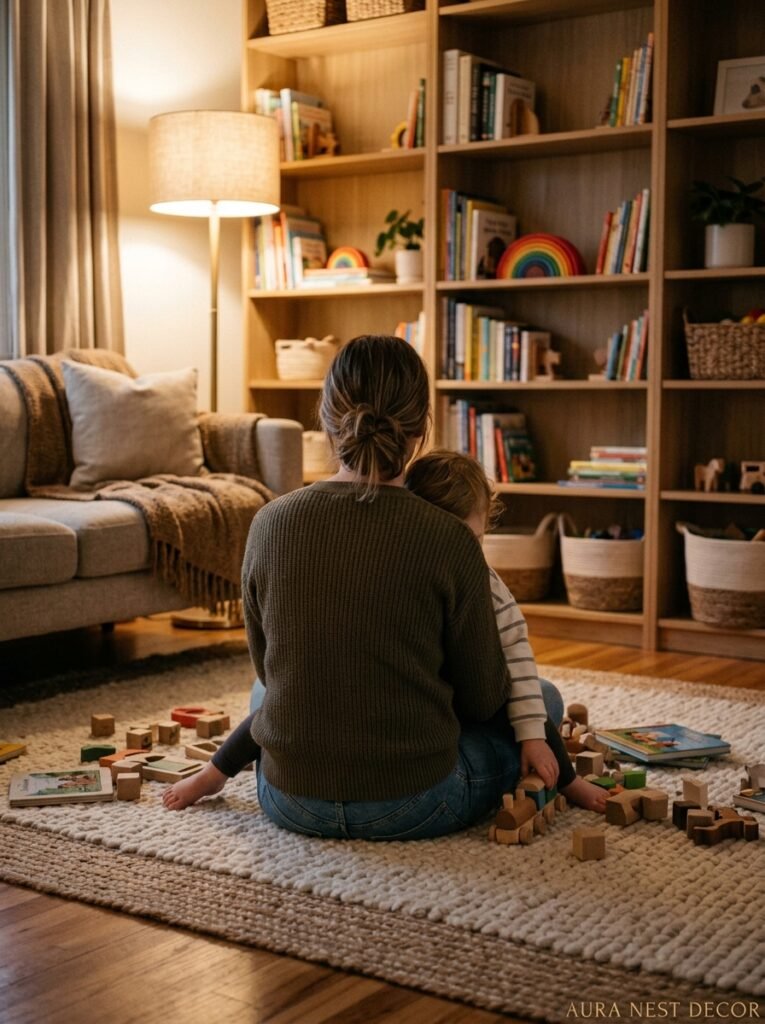
The living room playroom combo that you actually love — the one you don’t feel quietly ashamed of when guests come over — is completely possible. It’s not a myth people made up for Pinterest. But it takes deciding upfront that you’re designing the whole room, not just managing the kids’ section of it.
That shift in intention changes everything about the choices you make.
So — where in your living room would the play zone actually make the most sense? Start there.