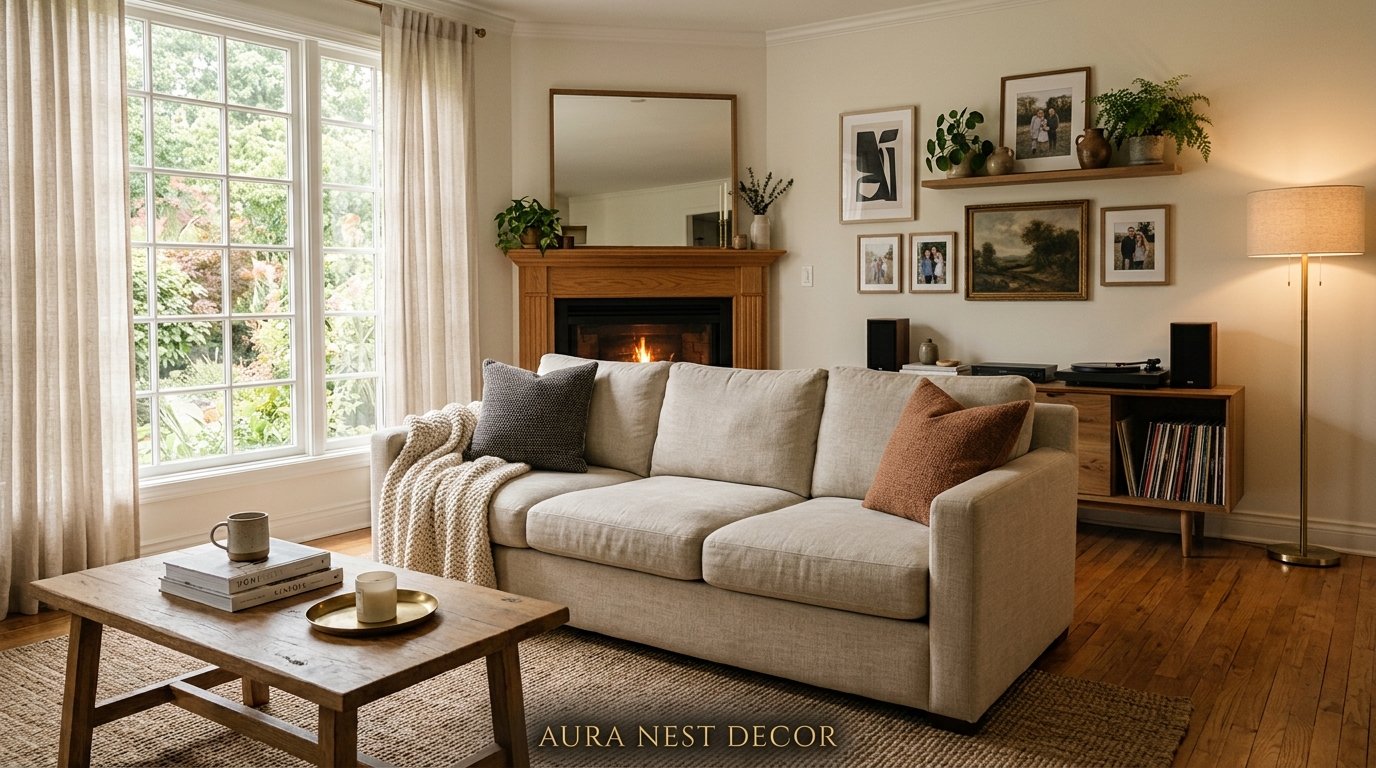
The Sofa You Pick Will Define Your Entire Living Room (No Pressure)
My friend Jamie said something to me last year that I haven’t been able to shake. We were rearranging her living room for the third time in two months and she went, “I think the sofa is the problem.” Not the color on the walls. Not the rug. Not the sad little side table she’d had since university. The sofa. And she was absolutely right.
Everything else in a living room kind of orbits the sofa. Get it wrong and you’ll spend years buying throw pillows hoping they’ll fix something that can’t be fixed with throw pillows.

—
1. Why the Sofa Feels So Hard to Buy (and Why That’s Not Your Fault)
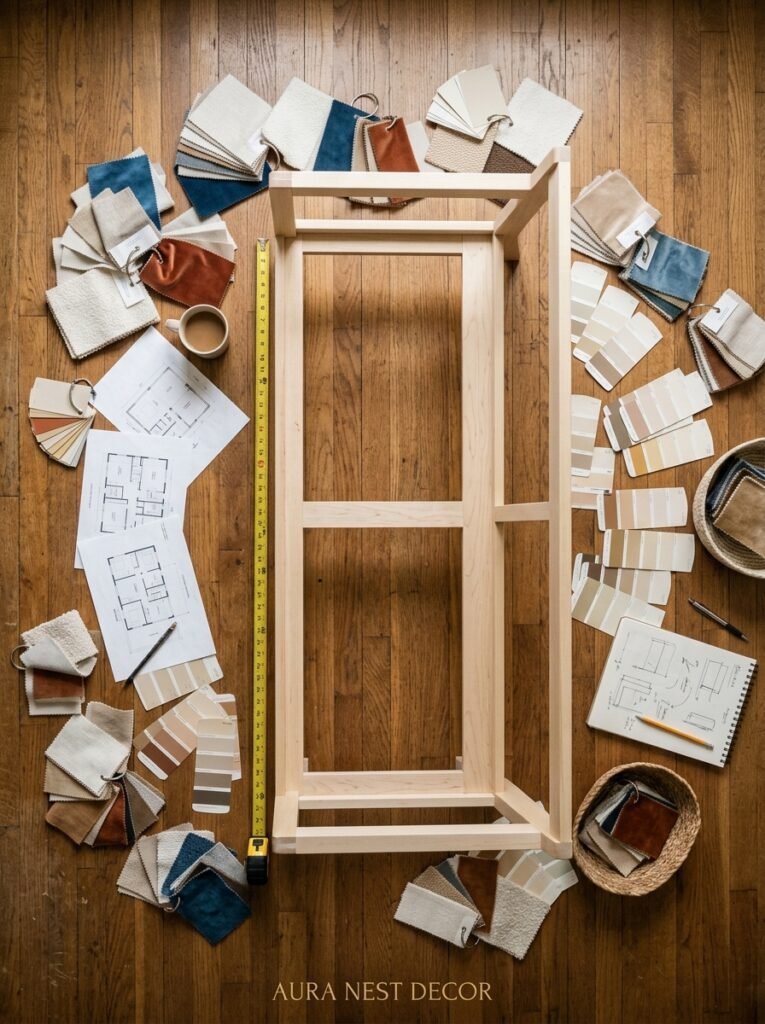
There’s so much pressure on this one piece of furniture. It’s where you watch TV for three hours on a Sunday when you’ve earned it. It’s where guests sit, where kids eat cereal when they’re not supposed to, where the cat will immediately claim the best corner regardless of what you paid.
So yeah, the stakes are high.
And the market doesn’t help. Walk into any furniture store — or, worse, start scrolling online — and it’s just an overwhelming wall of sofas that all look vaguely similar in the photos but cost wildly different amounts with no obvious reason why. You’re supposed to make a decision that’ll last a decade, in a store, under fluorescent lighting, probably on a Saturday when you’re already a little frazzled.
It’s genuinely a lot. But there IS a way to cut through it. It starts with getting honest about how you actually live, not how you’d like to live in theory.
—
2. The Question You Should Ask Before You Even Look at Styles
Not “what color sofa do I want?” Not “should I get a sectional?” The first question is: who is actually sitting on this thing, and HOW?
Because a sofa for a couple who eats dinner at the table every night, entertains occasionally, and uses the living room mostly for reading is completely different from a sofa for a family with three kids and a Labrador who uses it as a trampoline. Different foam density. Different fabric. Different shape, probably.
“The sofa you WANT and the sofa you need aren’t always the same thing — and buying the want when you need the need is how you end up with a beautiful, ruined sofa in eighteen months.”
Be honest about your life. Do you actually sit upright or do you semi-recline like a Victorian invalid the moment you get home? Do you curl up with your legs underneath you? Does someone in your house sleep on the sofa regularly? These things matter more than whether you like the look of a low-profile mid-century frame.
—
3. Cushion Fill: The Thing Nobody Talks About Until They’re Sitting on a Bad One
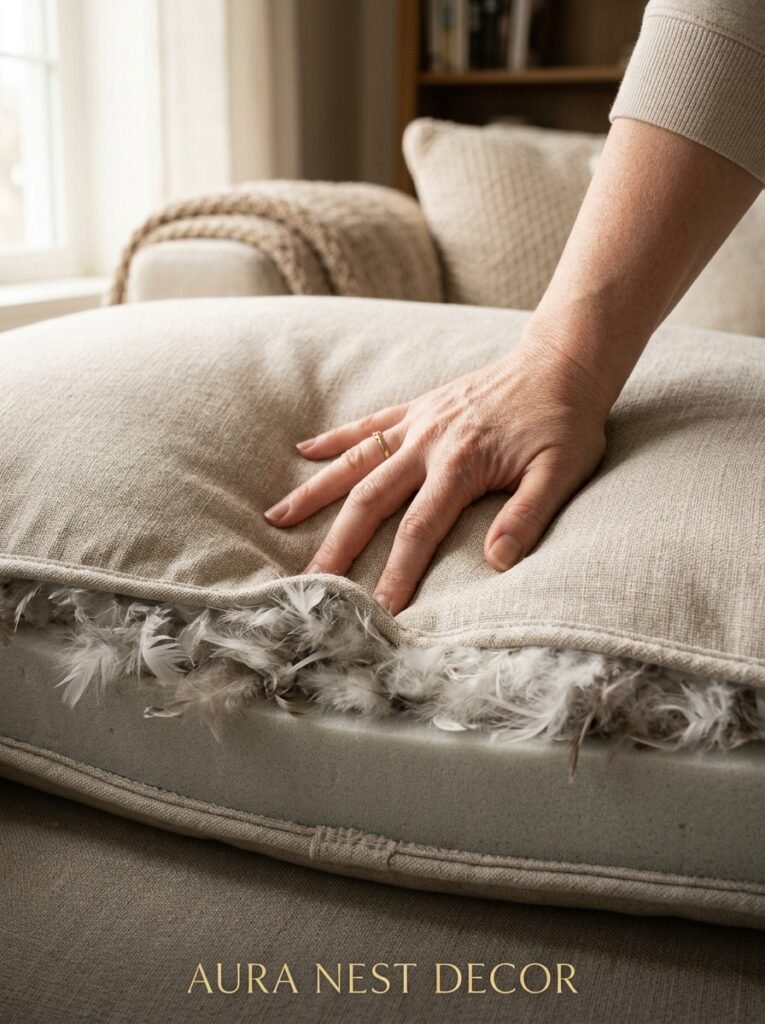
Foam. Feather. Foam-wrapped feather. These aren’t interchangeable.
Pure foam holds its shape and looks neat. That’s great. But it can feel stiff and over time it compresses, so the sofa that felt firm and structured in the showroom feels flat and slightly sad after four years. If you go with foam, you want high-density foam — at least 1.8 lbs per cubic foot. Don’t let the salesperson gloss over this number.
Feather-filled cushions are DREAMY to sit on. Genuinely. That sink-into-it softness is real. But you’ll be plumping them every single day or your sofa will look like it’s been through something. Some people find that charming. Others find it maddening after about a month. Know thyself.
Foam-wrapped feather (sometimes called feather-wrapped foam) is sort of the best of both, which is why it’s what most good-quality sofas use at the mid-to-high price range. The foam core keeps the shape, the feather wrap gives you that softness. It’s not cheap but it earns it.
—
4. The Color That Keeps Coming Up in Every Beautiful Living Room Right Now
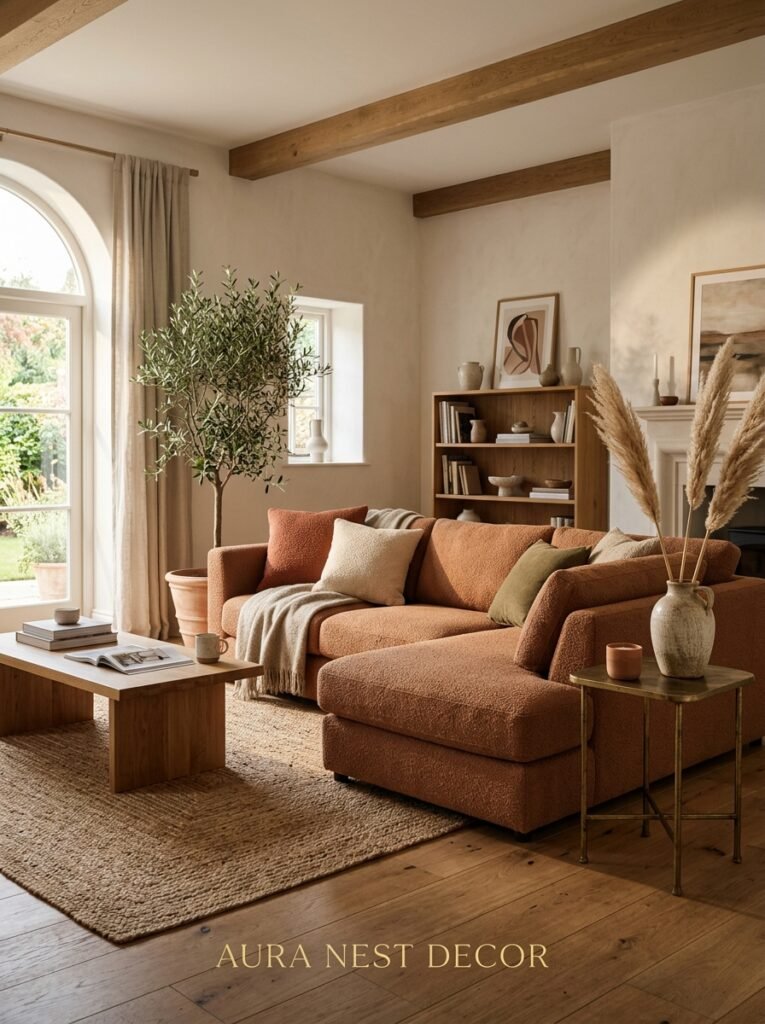
Warm neutrals. But not beige — or not JUST beige. I mean the ones that read as almost a color. That particular greige that shifts slightly green in certain light. Or the deep putty that looks almost blush at golden hour. There’s also a clay/terracotta situation happening right now that I’m slightly obsessed with, somewhere between rust and nude.
What these shades do is hold warmth without committing too hard. A white sofa is high stakes — beautiful but stressful. Navy reads sophisticated but can make a small room feel like a cave. These warm in-between tones feel current without being trendy, which means they’ll still feel right in six years.
That said — if you want color, GET color. A soft sage green velvet sofa is one of the genuinely best decisions I’ve ever seen anyone make for a living room. A deep forest green chesterfield in a British terrace house looks like it was placed there by someone with actual vision. Don’t let anyone talk you into a beige sofa if you actually want something interesting.
“There’s a version of playing it safe that just makes your living room forgettable.”
—
5. The Shape Conversation Nobody Wants to Have About Sectionals
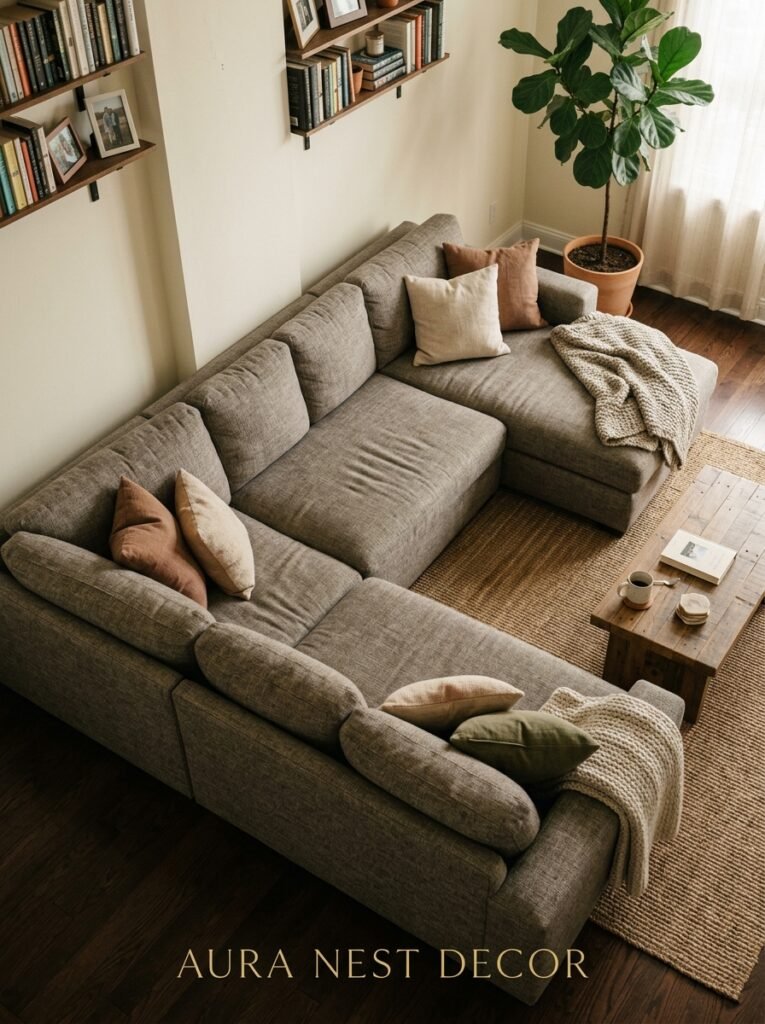
Sectionals are POLARIZING. People love them or they think they make a room look like a furniture showroom.
Here’s my honest take: a sectional works brilliantly in a large, informal living room where the whole point is sprawling out and having everyone in one general area. A wide-open open-plan space, a basement media room, a big American living room with actual square footage to play with. In those situations? Incredible. You’re not going to run out of sofa.
But in a smaller British sitting room or a cozy apartment living room? A sectional can eat the ENTIRE room. Like you open the door and it’s just sofa. There’s no flow, no breathing room, and adding any other furniture feels impossible.
A classic three-seater or a loveseat-plus-accent-chair combo often does more interesting things visually in a smaller space. There’s negative space. The room can exist around the sofa rather than being defined entirely by it.
And then there’s the L-shape, which lives somewhere in the middle. Done well, with the right proportions, an L-shape sofa grounds a room without consuming it. Done poorly, it just sort of awkwardly divides the space and you’re always sitting in the corner bit where the cushions meet.
—
6. The One Measurement Most People Get Wrong Before They Buy
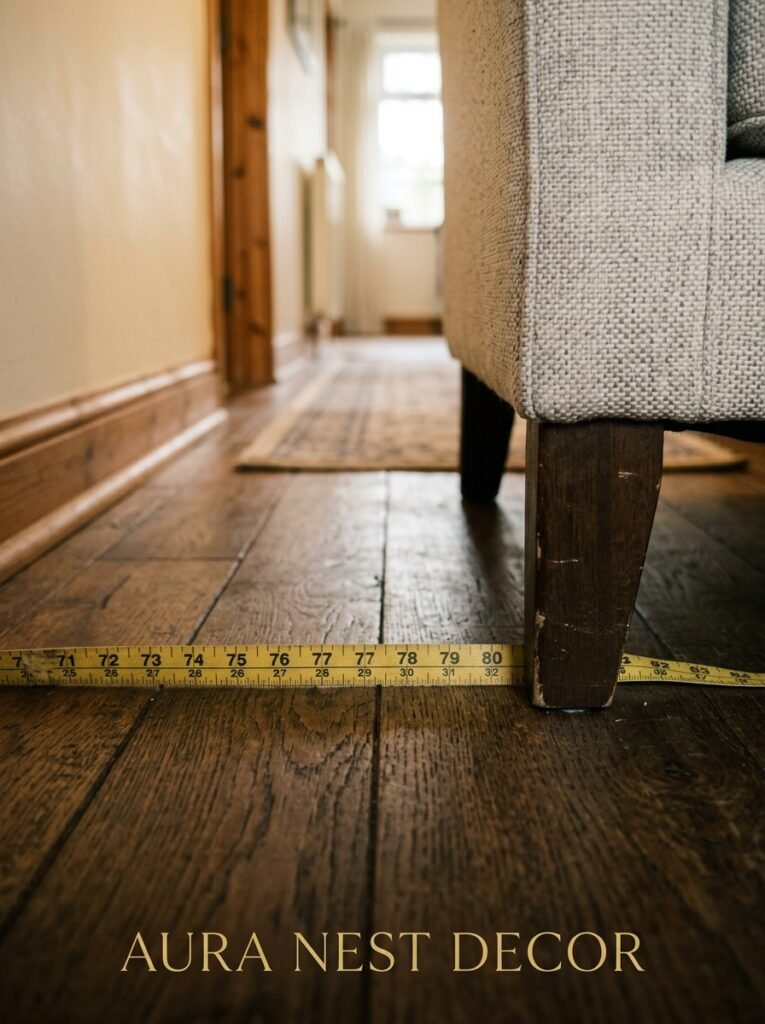
It’s not the width. Everyone measures the width.
It’s the depth.
Sofa depth — front to back — is what determines whether this sofa is actually comfortable for YOUR body. Standard depth runs somewhere between 33 and 38 inches. A sofa at 36 inches or deeper starts to feel almost like lounging. If you’re short — and I mean under 5’5″ — a very deep sofa can actually be uncomfortable because your back doesn’t reach the cushions properly while your feet still reach the floor. And then you’re sort of perching forward, which defeats the entire purpose.
Conversely, if you’re tall and you like to stretch out, a shallow 32-inch sofa is going to feel weirdly upright and eventually your back will let you know about it.
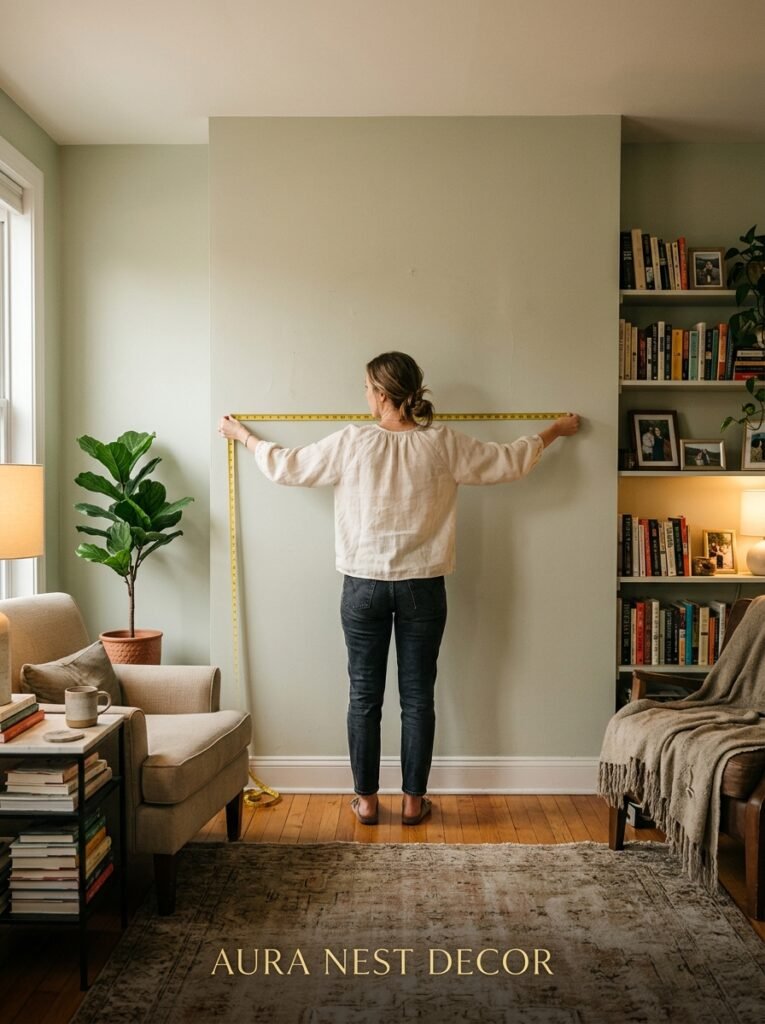
Measure your body as much as you measure your room. That’s not said nearly enough.
—
7. Fabric Wars: Velvet vs. Linen vs. Boucle vs. Performance Fabric
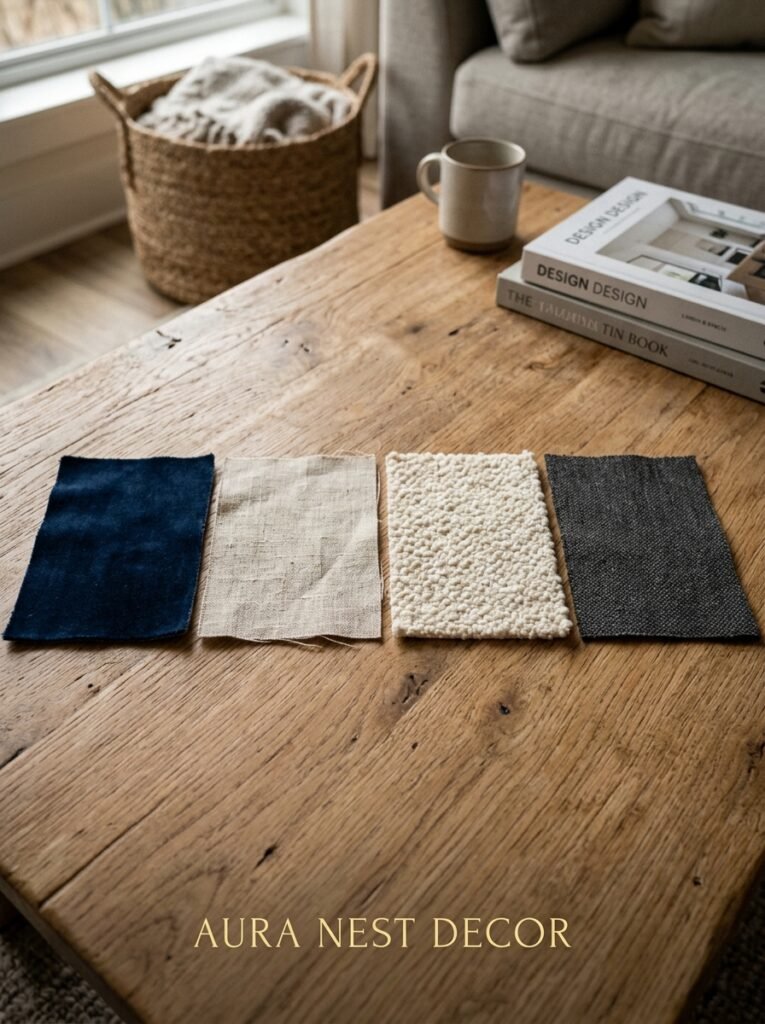
Right. Here’s where I’m going to have opinions.
Velvet is stunning and I will die on this hill. It photographs beautifully, it feels incredible, it has this slight color shift depending on how light hits it. A good quality velvet sofa looks expensive even when it wasn’t. The downside is that it marks — pet claws, heavy bags, kids digging their knees in. And it can pill over time with heavy use. So: velvet for a low-traffic, adult-primarily room. Not for chaos.
Linen and linen-blends are everywhere right now and for good reason. They’re breathable, they read as relaxed and airy, they’re very on-trend without being costumey. They do wrinkle and they can stain more easily than you’d think, so unsealed natural linen probably isn’t the call if your living room sees a lot of action.
Boucle has had its moment, is still having its moment, and I think will continue having its moment because it’s genuinely lovely. That curly, textured weave adds warmth and interest. The texture hides small sins. It’s not the most durable option and snags are a concern, but it photographs SO well. Side note — it tends to collect dog hair like it’s trying to build a collection.
Performance fabrics (sometimes branded by things like Crypton or Sunbrella, or proprietary versions from furniture brands) are the unsexy but correct choice if you have children, pets, or are just a messy person who’d like to be able to eat on the sofa without consequences. They repel liquid, they clean up with mild soap, and honestly the quality of them has gotten SO much better in the last five years. Some are genuinely soft now. Not quite velvet, but close.
—
8. Legs: The Detail That Quietly Determines Whether Your Sofa Looks Expensive
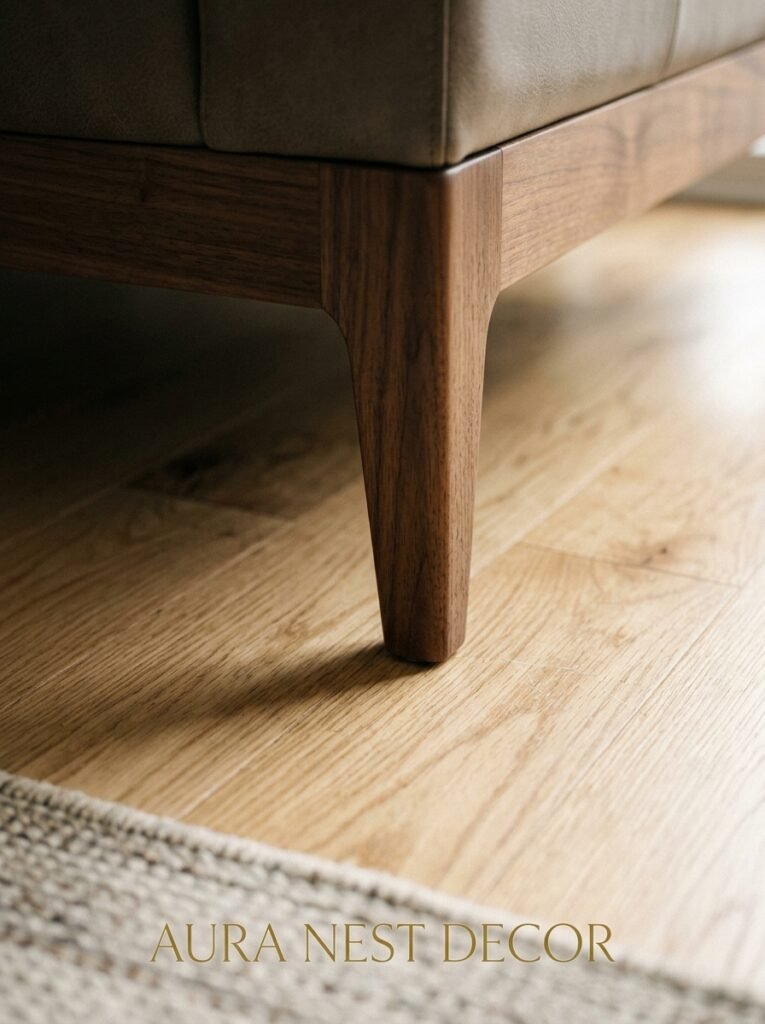
Nobody warns you about this. The legs matter enormously.
Short, stubby legs close to the corners give a sofa a heavy, planted look — sometimes intentional (hello, English roll-arm sofa), sometimes just awkward. Tapered mid-century legs that lift the sofa off the floor create lightness and make the room feel less crowded. High, slender legs on a slim-profile frame look almost architectural.
Here’s the practical bit: legs that raise the sofa higher off the floor make it dramatically easier to vacuum underneath. This sounds boring. After two years of trying to maneuver a vacuum under a 3-inch clearance, you’ll think about it.
Also — and this is a very specific tip — dark legs on a sofa in a light room can look a little heavy and disconnected. Natural wood legs that coordinate with other wood tones in the room tie everything together in a way that reads as designed rather than assembled.
“The legs are doing twenty percent of the aesthetic work and getting zero percent of the credit.”
—
9. The British Sofa Tradition That American Buyers Are Starting to Discover
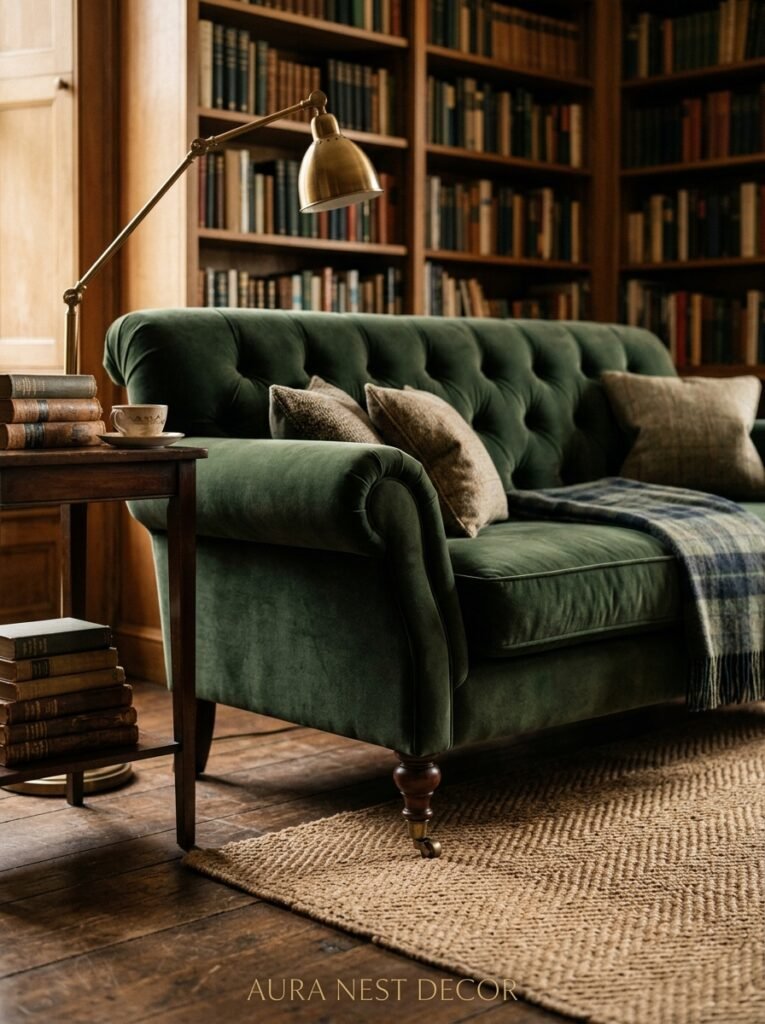
The made-to-order British sofa — companies like Loaf, Arlo & Jacob, Sofas & Stuff — operates on a totally different philosophy than the mass-market buy-it-now approach. You wait. Sometimes 8 to 14 weeks. You choose your fabric from a swatch, your feet from a set of options, your seat cushion fill. It arrives and it fits your life rather than a showroom concept.
American buyers are increasingly catching on to this, and it’s influenced a wave of US brands offering similar customization. Not cheap. But the durability difference between a made-to-order sofa with a hardwood frame and eight-way hand-tied springs versus a fast-furniture sofa on sale is actually significant over a decade.
Eight-way hand-tied springs, by the way, are worth asking about specifically. It’s how the seat cushion suspension is built — traditional, labor-intensive, and genuinely better than sinuous (S-shaped) springs for long-term comfort and shape retention. Most budget sofas don’t have them. Most good sofas do. Worth knowing the question exists.
—
10. Small Room Rules That Actually Work (Not Just “Use a Mirror”)
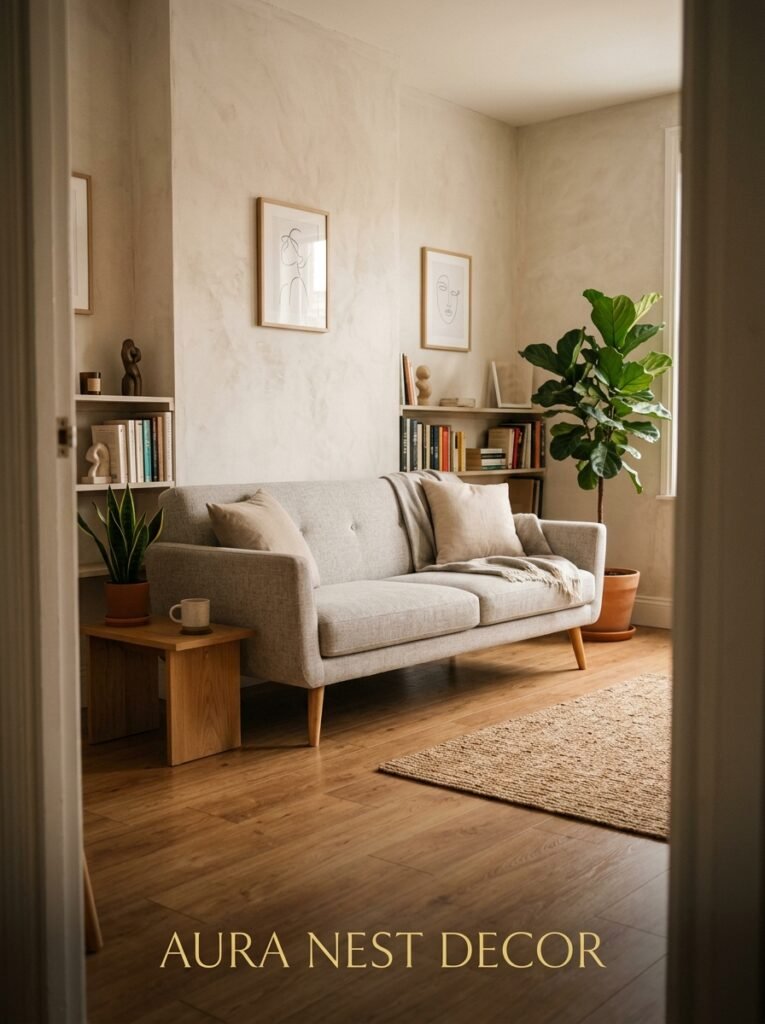
Don’t buy a sofa that fights the room. That’s really the whole thing.
In a smaller space, a sofa with exposed legs and a higher clearance from the floor visually opens the room up — your eye can travel underneath it and the room feels less blocked. A sofa that goes nearly to the floor creates a wall effect.
Avoid overly puffy, voluminous back cushions in a tight room. A slim, tight-back sofa (where the back cushion is attached or very compact) reads as less bulky, even at the same width. It’s a real effect, not just a styling trick.
Color-wise, a sofa that’s in the same general tonal family as your walls kind of disappears in the best way — the room reads as more spacious because there’s less visual interruption. A sofa that dramatically contrasts with everything around it becomes the dominant feature, which can work but makes the room feel smaller.
And honestly? If the room is really small, one good sofa and one great armchair often work better than a full three-seater plus loveseat. Leave some floor. Let the room breathe.
—
11. The Budget Breakdown Nobody Gives You Honestly
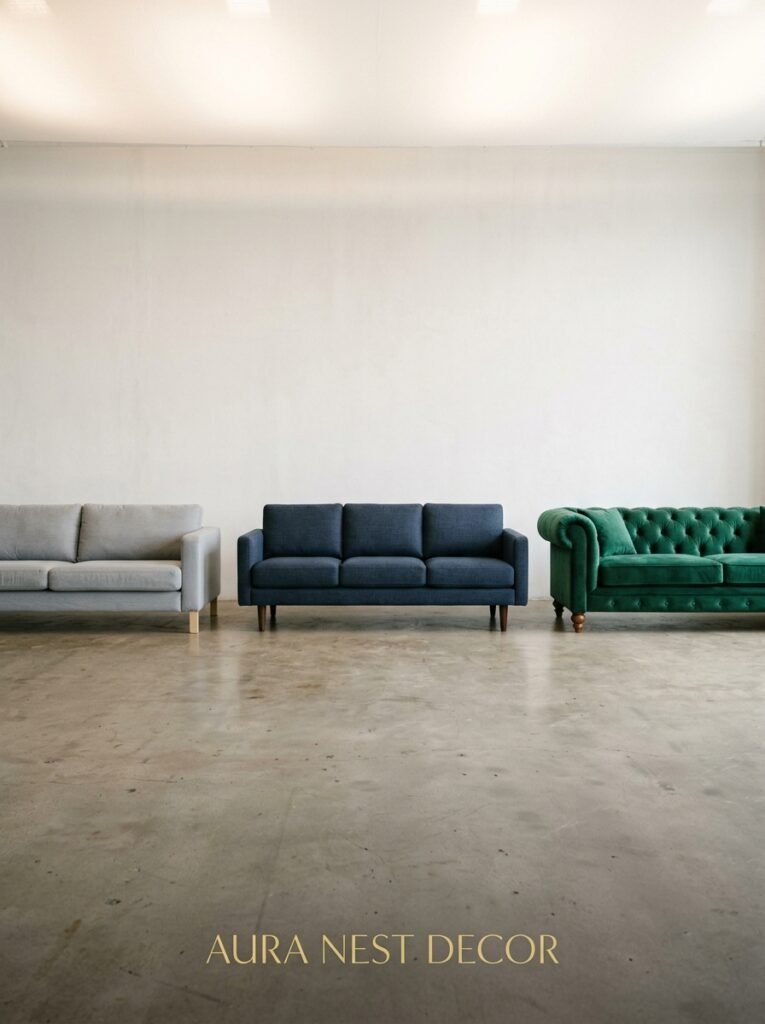
You can buy a sofa for $400. You can buy one for $4,000. Both are “sofas.” They’re not the same thing.
Budget under $800 is fast-furniture territory — IKEA, Wayfair, similar. You can find decent pieces here. The IKEA Kivik is genuinely fine and the covers are washable, which counts for a lot. But you’re looking at a 3-5 year lifespan with regular use, frame sagging likely, cushions compressing. Fine for a first flat or a room that doesn’t see heavy use.
$800-$2,000 is a middle range where quality varies wildly. This is where you really need to research. Some brands in this range make excellent sofas. Others are charging for the branding and delivering budget-sofa construction. Look for hardwood frames (ask specifically — not “wood” or “engineered wood,” but hardwood), look for high-density foam, check reviews specifically for longevity, not just immediate satisfaction.
Above $2,000 is where you should start expecting real quality — better frame construction, better fill, better fabric quality, proper joinery. Not guaranteed — some brands charge this and underdeliver — but you have a right to ask and the brand should be able to answer.
Buy the best sofa you can actually afford. Sounds obvious. It’s the truest advice in here.
—
12. The Two Things to Do Before You Hit “Add to Cart”

First: get a fabric sample. Almost every decent brand will send them free. Hold it in your actual room under your actual lighting at different times of day. That ivory linen that looked so clean on the website? Might read yellow under your warm-toned bulbs. The grey that looked sophisticated? Might look cold and a bit grim in a north-facing room with limited natural light. You cannot judge fabric color from a screen. You just can’t.
Second: check the delivery situation before you fall in love. Measure your front door, your hallway, your staircase if it’s going upstairs. Measure the tightest turn. Many people order a sofa, wait weeks for it, and then find out it doesn’t fit through the door and have to either disassemble a doorframe or return it. Some sofas come in sections specifically for this reason — worth asking. Some don’t.
The boring logistical stuff feels like a buzzkill when you’re in the fun part of choosing. Do it anyway.
—
❓ FAQ
Q: How long should a good-quality sofa last? A: A well-made sofa — hardwood frame, good cushion fill, durable fabric — should realistically last 10 to 15 years with normal use. Budget sofas in the under-$800 range typically show significant wear in 3 to 5 years. If someone’s promising you “lifetime durability” at a low price point, that’s a marketing phrase, not a warranty.
Q: Is it worth buying a sofa without sitting on it first? A: If you can sit on it first, do it. But lots of great sofas are only available online, and plenty of people buy them successfully — the key is reading reviews specifically for comfort over time (not just first impressions), checking return policies carefully, and ordering fabric samples. Some brands also have showrooms in major cities even if they’re primarily online retailers.
Q: Can I put a large sofa in a small room or does it always look wrong? A: It doesn’t always look wrong, but proportions matter a lot. A large sofa with slim legs, a tight back, and a color close to your wall tone can work in a smaller room. The problem is usually a big AND visually heavy sofa — thick arms, puffy cushions, dark contrasting color. That’s when it takes over. Scale the sofa to leave at least 18 inches of walkable space around it wherever possible.
—
💭 Final Thoughts
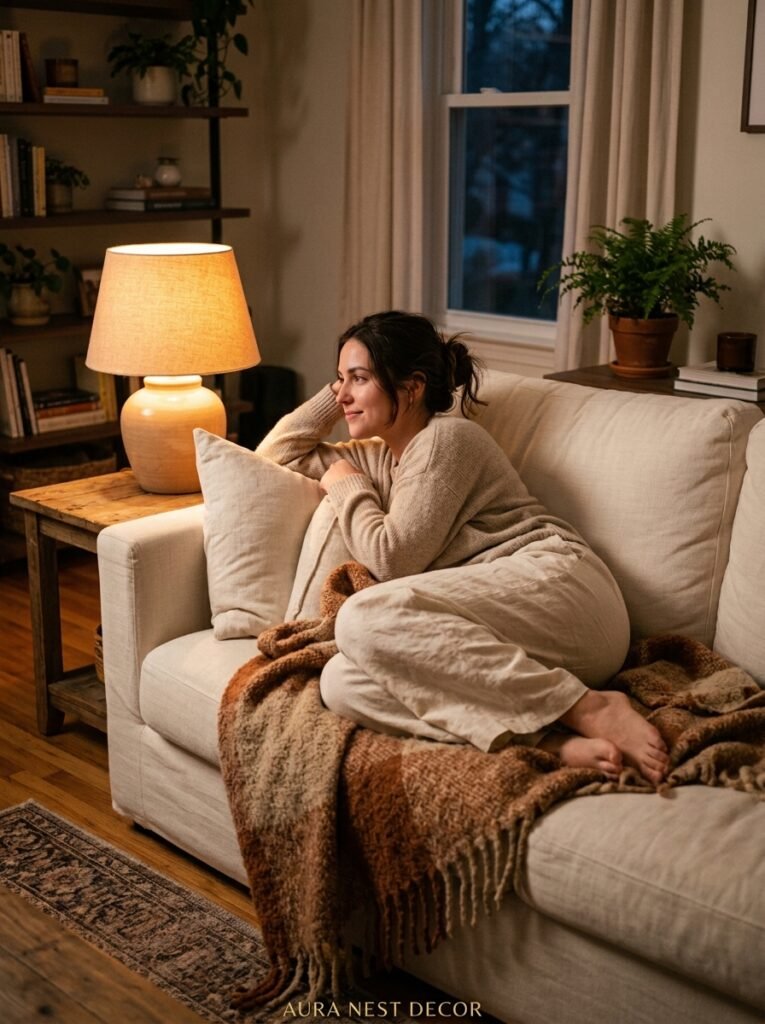
Honestly, the right sofa isn’t about trends or what looked good in someone else’s Pinterest board. It’s about the specific rectangle of space you have, the actual humans who are going to use it, and the way the light hits your living room at 6pm on a Tuesday. Get those three things right and almost anything can work.
Take your time. Get the sample. Sit in the showroom longer than feels normal.
What would change about your living room if the sofa was finally, actually right?