
The Contemporary Living Room Rules Nobody Actually Talks About (But Everyone Follows)
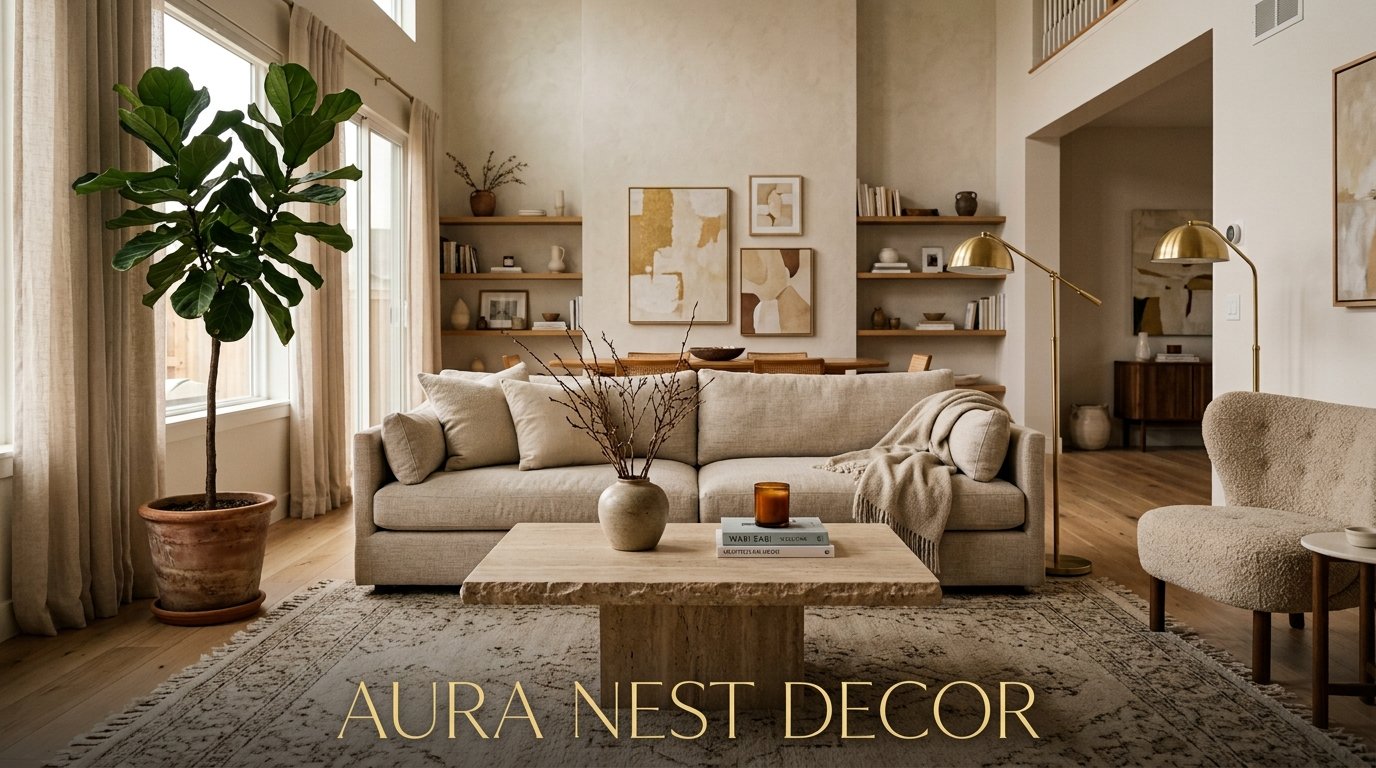
My neighbor knocked on my door last spring, phone in hand, showing me a screenshot. “This is what I want,” she said. It was a living room — stunning, spare, somehow warm — and she had absolutely no idea how to get there from where she was standing.
I’ve been thinking about that conversation ever since.
—
1. The Furniture You’re Buying Is Probably Six Inches Too Big
This is the one. This is the mistake that derails more contemporary living rooms than anything else I’ve seen, and I’ve seen a LOT of them — in person, on Pinterest, in the homes of friends who spent serious money and still felt something was off.
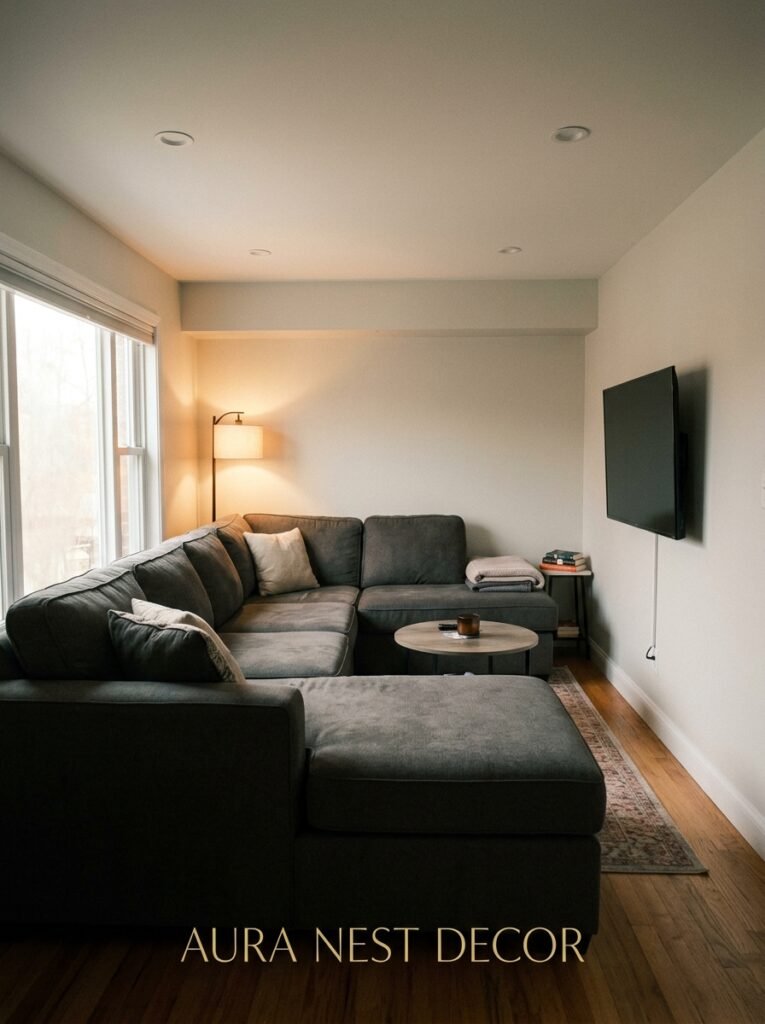
Contemporary spaces are built on proportion. Not minimalism exactly, just… breathing room. That sofa you’re eyeing? Measure it. Then measure your room. Then subtract the space you’ll need to walk around it comfortably (18 inches minimum, front and back), the side table, the rug, and whatever you’re planning for opposite the sofa. If you do the math honestly, most of us need furniture that’s smaller than we think.
The trick that nobody tells you: low-profile furniture doesn’t just look sleek, it actually makes the room feel taller. A sofa with arms that sit at 26 inches instead of 32 changes the whole visual field. The ceiling suddenly has more presence. The room starts breathing.
Buy smaller than your instinct says. You can always add more later. You almost never can take back a sectional that’s eating your room alive.
“The room started breathing the moment I got rid of the furniture that was three inches too tall.”
—
2. Every Beautiful Contemporary Room Has One Thing That Shouldn’t Be There
Stay with me.
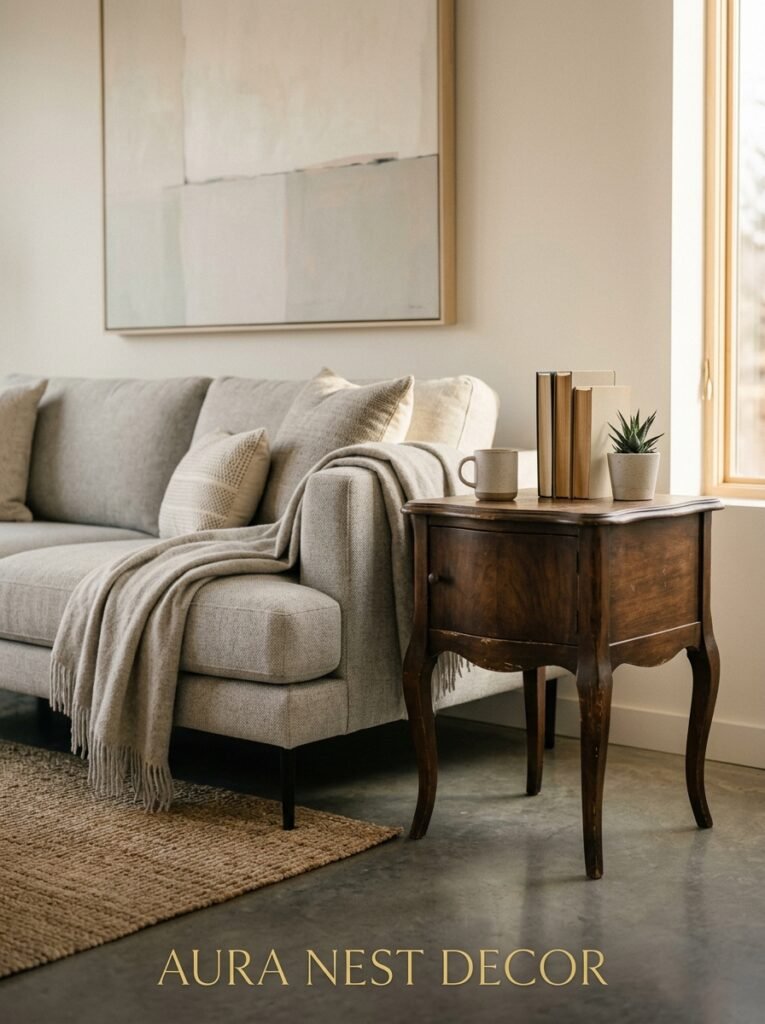
The best contemporary living rooms I’ve ever seen — in magazines, in real houses, on tours through open homes in London and Nashville alike — all have one element that technically breaks the rules. An antique side table next to a modern sofa. A really old rug under crisp, white furniture. A piece of art that leans slightly maximalist in a room that’s otherwise restrained.
This isn’t an accident. Designers do this on purpose, and once you see it, you can’t unsee it.
A room that’s 100% contemporary reads as a showroom. Perfect but lifeless. The “wrong” element is actually what gives the room personality. It’s the thing that makes you look twice, that makes the room feel like a person lives there — someone with history, with taste that didn’t develop overnight.
So when you’re decorating, don’t throw out the inherited lamp or the slightly worn leather chair just because it doesn’t fit the mood board perfectly. It might be the best thing in the room.
—
3. The Color That Keeps Showing Up in Every Beautiful Contemporary Room Right Now
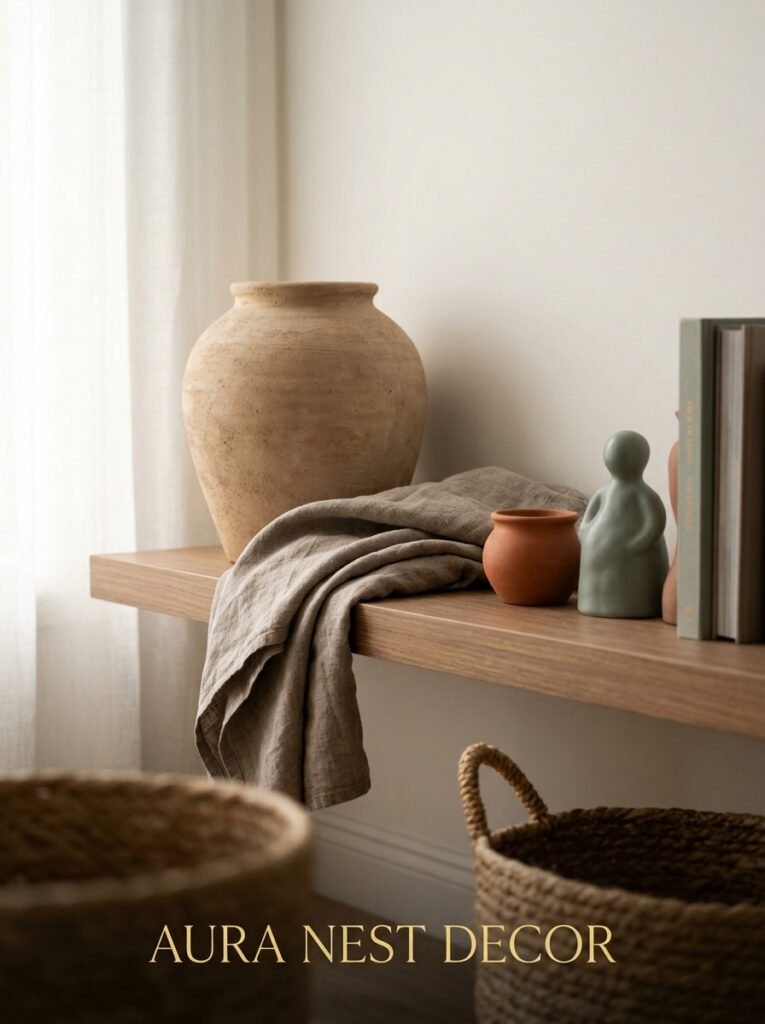
Warm white isn’t white. I want to say that louder.
The rooms that are stopping people mid-scroll right now — the ones getting saved and re-saved on Pinterest, the ones where someone always comments “what wall color is this?” — they’re almost never painted in a true, cold white. They’re painted in warm whites, soft creams, greiges that shift in different light.
Here’s what I’m seeing constantly in both US and UK interiors right now: a kind of putty-meets-cream. Think Benjamin Moore’s White Dove, or Farrow & Ball’s Elephant’s Breath (which sounds alarming but photographs spectacularly). These are colors that feel neutral but actually have WARMTH baked into them. And in a contemporary room — where the furniture is clean-lined and the accessories are spare — that wall warmth is doing a huge amount of heavy lifting.
Cool gray had its moment. It’s not over exactly, but the rooms that feel fresh right now are warmer. Earthier. Almost like the wall itself is cozy, if that makes sense.
Side note — if you’re renting and can’t paint, a large warm-toned rug does about 60% of the same work. I’ve seen it transform a room with cold white walls into something that actually feels livable.
—
4. The Rug Conversation Nobody Wants to Have
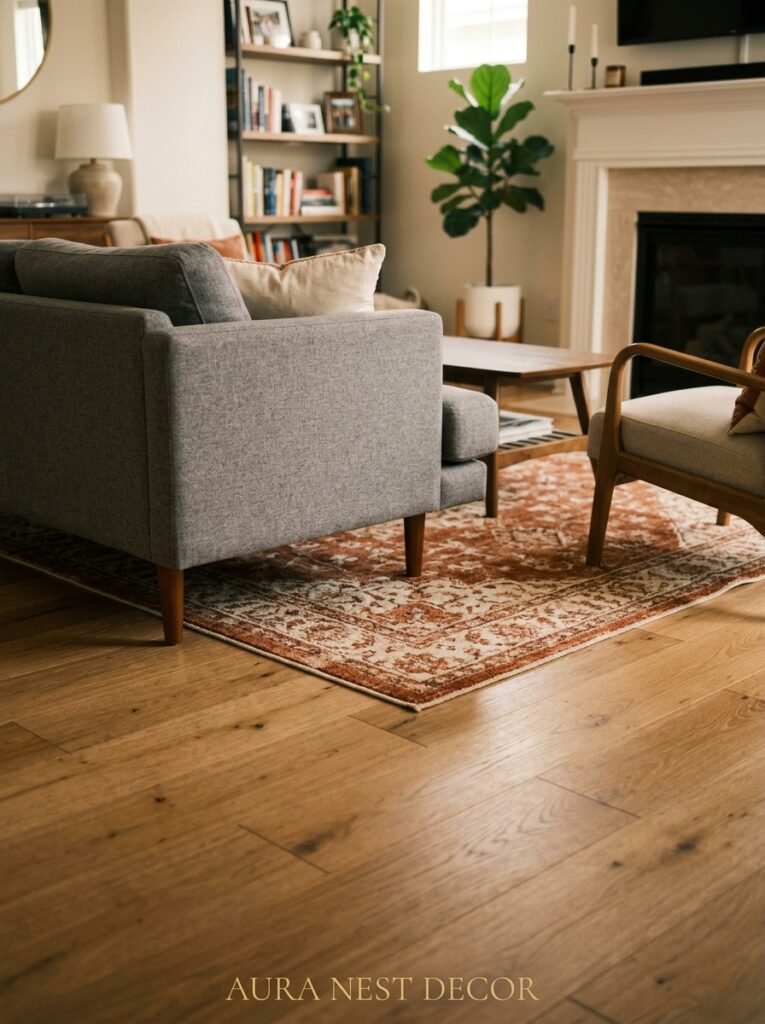
You’ve sized it wrong. Almost certainly.
The most common rug mistake in a contemporary living room is going too small. A rug that only lives under the coffee table — floating in the middle of the room, not connecting to the sofa — makes the whole space feel unanchored. Uncomfortable in a way you can’t quite name.
In a contemporary living room, the rug should be big enough that at least the front legs of every sofa and chair are ON it. Ideally all four legs, if your budget allows. This creates a unified conversation zone, makes the seating feel intentional, and grounds everything.
For most standard living rooms, that means you need a 8×10 or a 9×12. Most people buy a 5×8. I don’t know why. Budget, probably. But if you have to choose between a cheaper, larger rug and a nicer, smaller rug, in a contemporary room the larger one almost always wins. Because proportion is the whole game.
—
5. What “Cozy Contemporary” Actually Means (It’s Not What You Think)
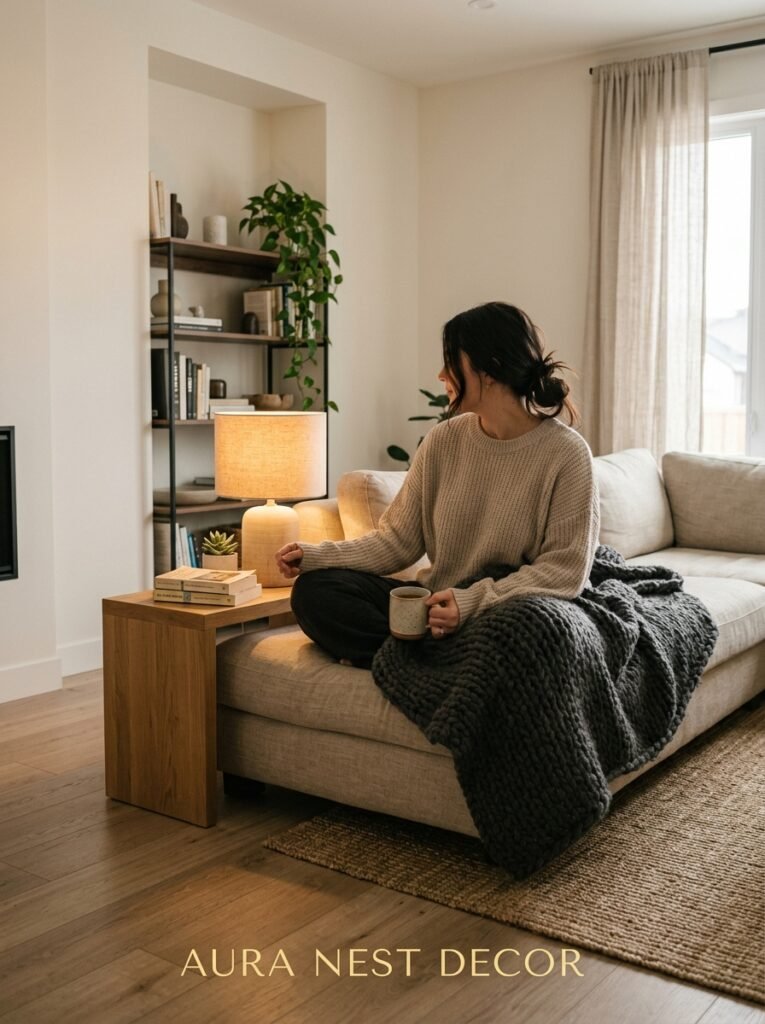
There’s this idea that contemporary means cold. Sterile. The kind of room where you’re afraid to sit down.
It doesn’t have to be.
The cozy contemporary look — which is absolutely everywhere right now and isn’t going anywhere soon — is about pairing clean architecture with organic texture. So yes, the sofa might have straight lines and a low profile. But the throw folded over the arm is chunky wool. The cushions are linen, slightly rumpled. There’s a ceramic lamp that looks slightly imperfect, hand-thrown. A wooden bowl on the coffee table that’s clearly not perfectly round.
The lines are clean. The materials are not.
This is the balance. And honestly, once you understand it, it’s kind of fun to shop for, because you’re deliberately mixing precision with imperfection.
“Clean lines, imperfect materials. That’s the whole secret, written in six words.”
—
6. The Lighting Situation Most People Don’t Fix Until It’s Too Late
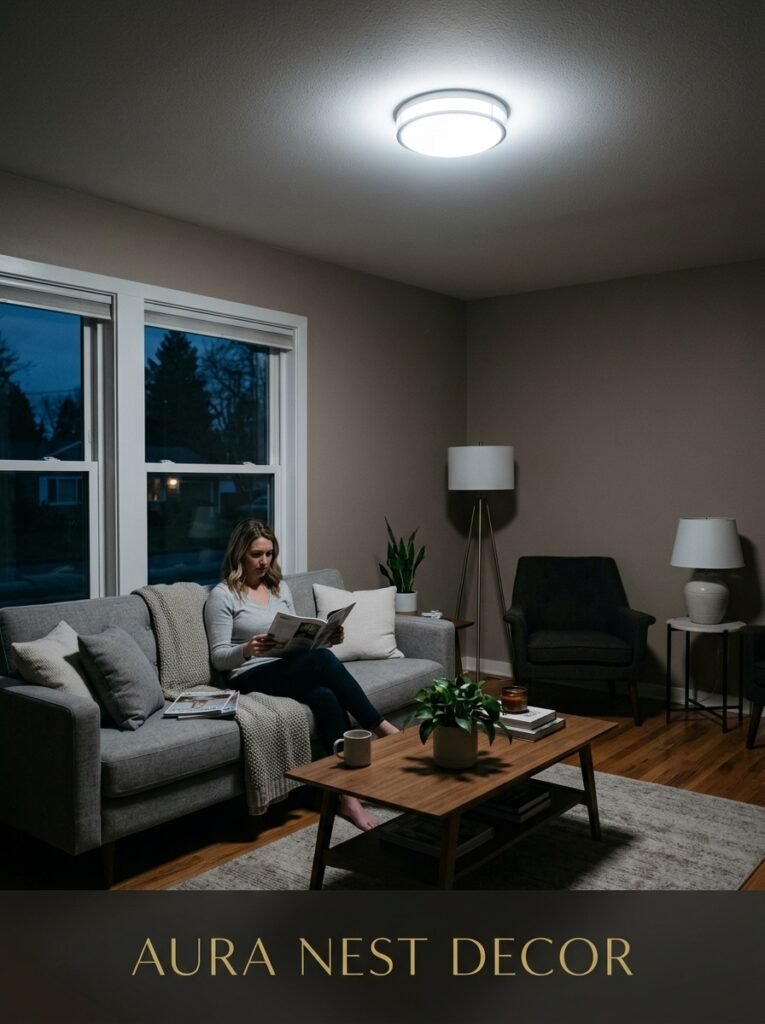
Overhead lighting is ruining your room. I’m going to be a little blunt about this.
In most homes — UK or US, doesn’t matter — the living room has one overhead light in the center of the ceiling. Maybe a nice fixture, maybe a sad contractor-grade flush mount. And people rely on it as the primary light source. Then they wonder why the room, which looks great in photos from Instagram, feels slightly wrong when they’re actually sitting in it at 8pm.
Contemporary rooms need LAYERS. Not a lot of them — this isn’t about having fourteen lamps — but you need:
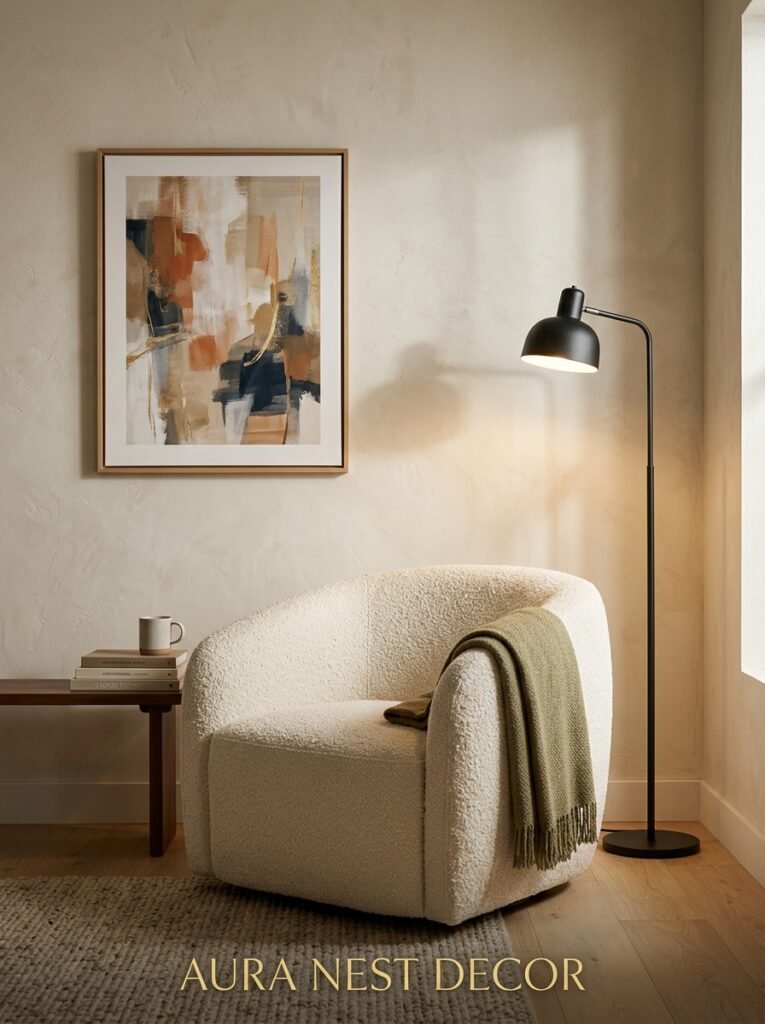
- A low light source (floor lamp, preferably with a linen shade)
- A warm point of interest (a table lamp on a console or side table)
- Possibly some ambient accent (candles, or a plug-in sconce if you can’t hardwire)
The overhead stays off most evenings. Or goes on a dimmer set to very low. The room should feel lit from inside, not from above. It’s the difference between a room that looks like a waiting area and one that feels like a place you want to stay.
—
7. The One Rule That Makes Any Contemporary Gallery Wall Not Look Insane
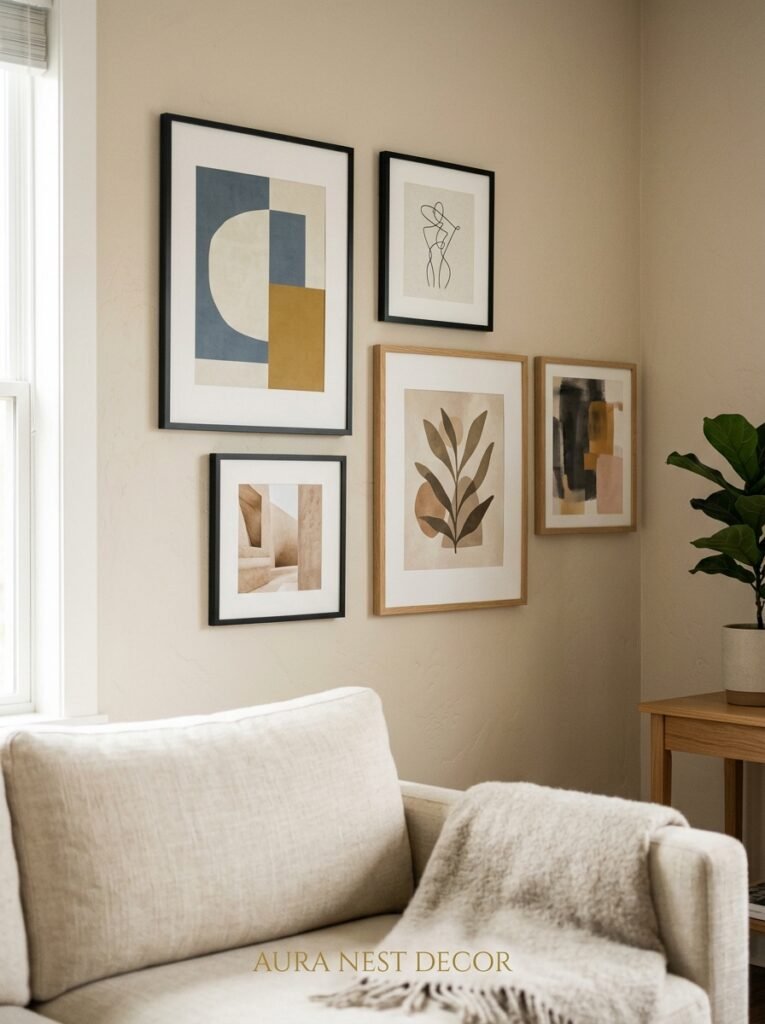
Gallery walls in contemporary spaces only work if there’s a reason the pieces are together.
Not a color story necessarily. Not matching frames (though matching or closely toning frames do help). I mean a REASON. A unifying thread. Black and white photography. Works on paper. Botanical prints. Architectural sketches. Something that gives a viewer a sense of curation rather than accumulation.
The all-black-frame approach is reliable for a reason — it works. IKEA’s Ribba frames in black, filled with art you actually love, hung in a loose grid? It’s a look that’s still holding up because the simplicity is the point. The frames disappear and the art shows up.
What doesn’t work in a contemporary living room: every frame in a different style and finish. Mixed golds, silvers, naturals, blacks — it reads as chaotic in a space that needs at least some visual quiet.
Pick one frame finish. Let the art do the talking. That’s it.
—
8. The Coffee Table Everyone Is Getting Wrong Right Now
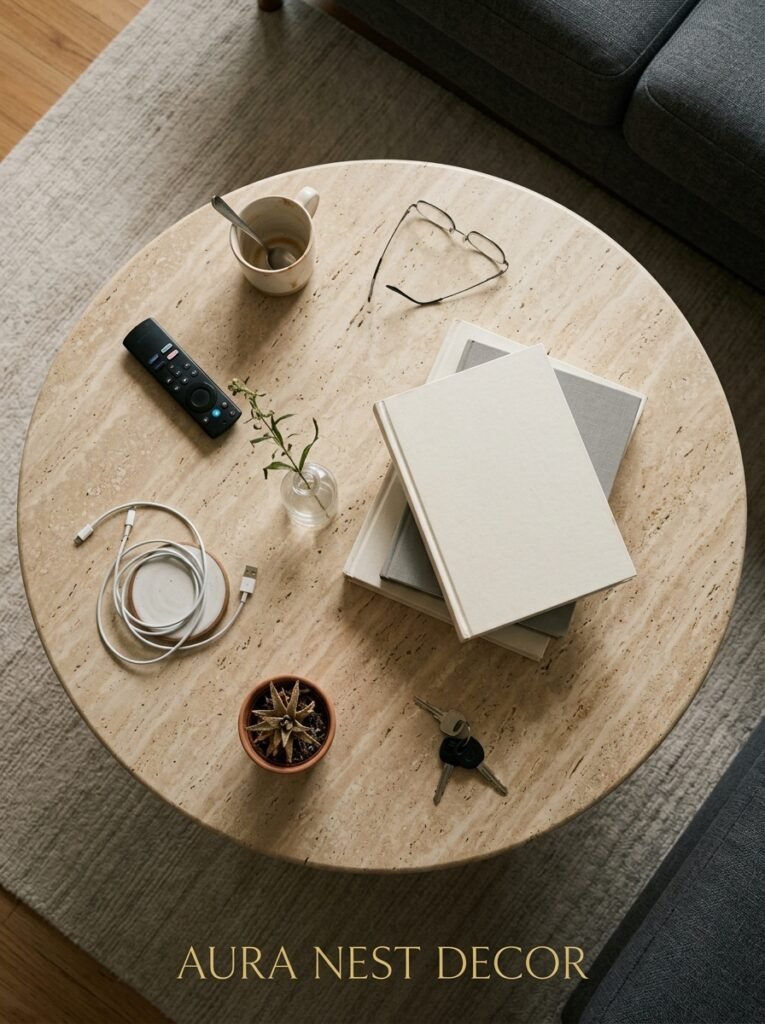
Matching your coffee table to your sofa is the old way of doing it. The newer approach — the one that makes a room feel more considered — is contrast.
If your sofa is light (cream, oatmeal, soft gray), your coffee table should add weight. Dark wood, matte black metal, dark stone. If your sofa is a deep tone — emerald, terracotta, charcoal — the table can afford to be lighter. Pale oak, travertine, natural rattan.
And shape matters more in contemporary rooms than in traditional ones. Round or oval tables do something interesting in contemporary spaces — they soften all those clean lines without being in conflict with them. A round coffee table in front of a straight-lined sofa creates an intentional contrast. It’s not an accident, and it shows.
I’d also push back on the oversized coffee table trend. A smaller table — or even two small tables you can move — gives the room more flexibility and honestly photographs better because you can actually SEE the rug.
—
9. Why Your Plants Aren’t Working As Hard As They Should Be
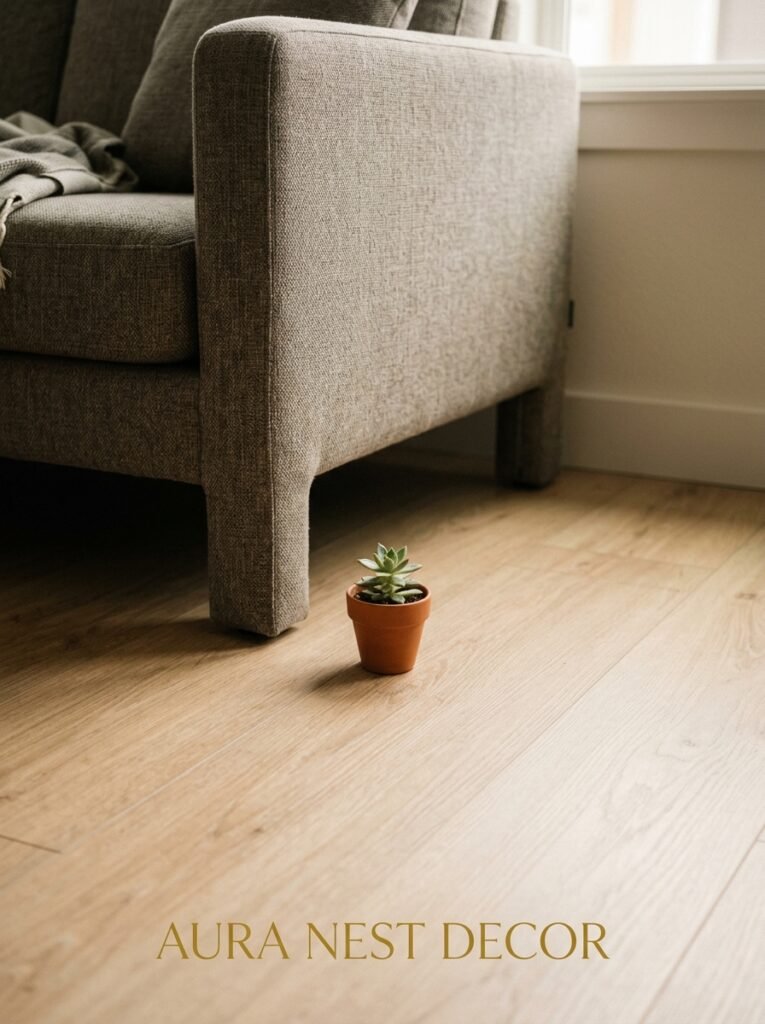
Plants in a contemporary living room aren’t decoration. Or they shouldn’t be treated that way.
The mistake is putting a small plant on a shelf or side table and calling it done. In a contemporary space, plants need to make a statement — or they don’t register at all.
One large-format plant in the right corner does more than six small ones scattered around. A fiddle leaf fig (yes, still), a tall snake plant, a monstera that’s actually gotten big — these things anchor a room. They bring the kind of irregular, organic shape that no piece of furniture can replicate. And in a room that’s deliberately spare and geometric, that irregular shape is EXACTLY the contrast you need.
The corner next to the sofa, behind the reading chair, against a blank wall — these are plant spots in a contemporary room. Not the mantle (usually). Not the coffee table. Think vertical. Think scale.
—
10. The Sofa Color Decision That’s Actually Not That Complicated
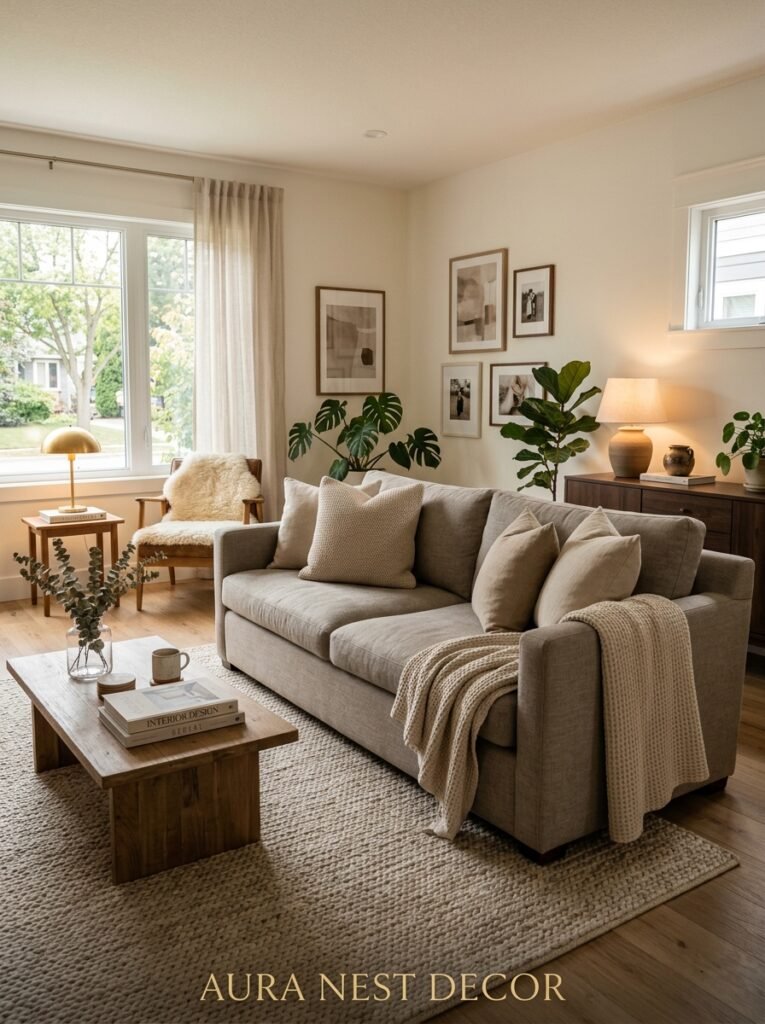
People agonize over sofa color like it’s the most permanent decision of their lives. And look — it’s a big investment, so I get it. But the contemporary living room sofa color conversation is simpler than you think.
Neutral is safe because it’s flexible. But not all neutrals are equal right now.
Cream and oatmeal are having a serious moment, especially in natural fabrics. They’re warm without being dark, they photograph beautifully, and they work against basically any wall color. The concern about them getting dirty is real, but performance fabrics have genuinely gotten so good in the last few years — if you’re choosing cream, look for a tightly woven fabric rather than anything chunky or bouclé if you have kids or pets.
Alternatively: a warm gray-green. Or a deep terracotta if you’re feeling it. A colored sofa in a contemporary room works when everything else is quiet. The sofa as the ONE bold element, surrounded by soft walls, simple rug, restrained accessories.
What to avoid right now: cool blue-gray sofas. They’re not wrong but they’re reading a little tired. The market is saturated with them.
“The sofa doesn’t have to be neutral. It just has to be the only thing in the room that isn’t.”
—
11. The Accessory Edit That Always Makes a Room Look More Intentional
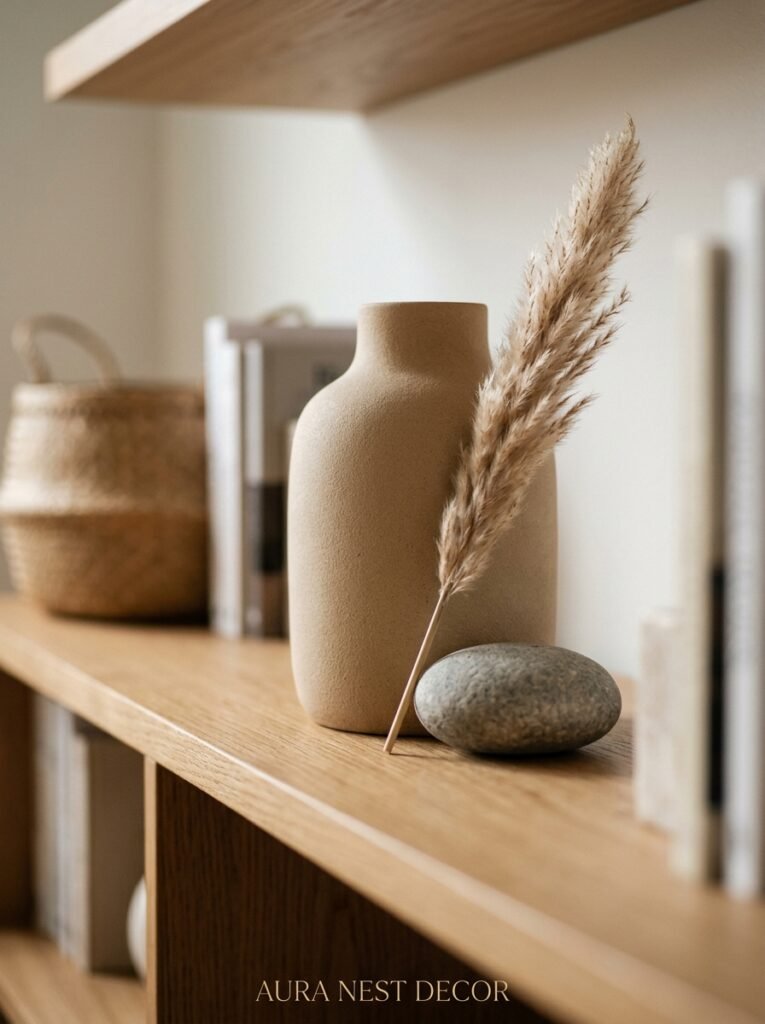
Here’s the part where I sound harsh but I genuinely mean this kindly: most living rooms have too much stuff on the surfaces.
Contemporary styling is about edited abundance. Not emptiness — plenty of warmth, texture, life — but nothing there that isn’t earning its place. Go around your living room right now and pick up everything that’s on the coffee table, shelves, and side tables. Everything. Put it somewhere else temporarily.
Then put back HALF of it.
Live with it for a week. I promise you that in most cases, the room will feel more relaxed, more intentional, and more like the rooms you’re saving on Pinterest. The pieces that remain will actually be seen. That ceramic you love? Now it’s visible. Before it was just… part of the noise.
This isn’t minimalism. It’s editing. There’s a difference, and it’s an important one.
—
12. What a Contemporary Living Room Actually Feels Like to Live In
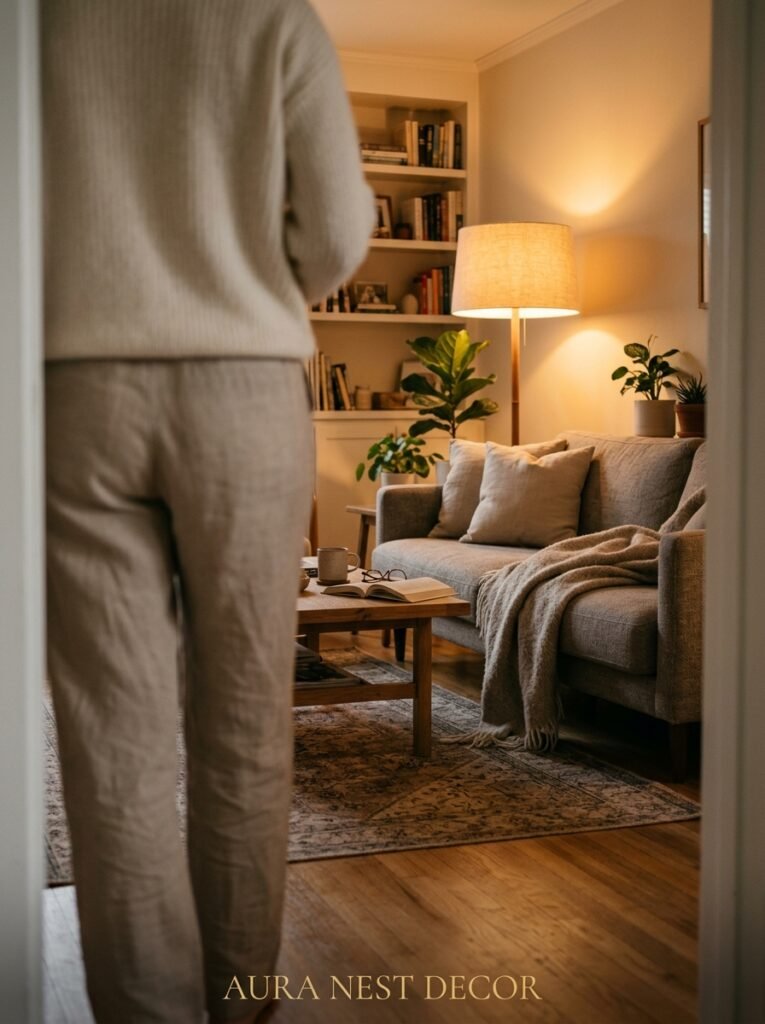
This is maybe the thing I want to say most.
The rooms that genuinely work — that feel good to sit in at the end of a long day, that guests walk into and immediately relax, that photograph well but also just FEEL right — they weren’t built to look contemporary. They were built to feel lived-in, comfortable, and considered. The “contemporary” part is almost a side effect.
So if you’re staring at your living room and feeling like something isn’t working, start with comfort. Sit in the room. Is the sofa where you actually want to sit? Is the light right at the times of day you’re actually in there? Can you reach a surface from where you usually sit to put down a drink?
Fix the comfort stuff first. The look tends to follow.
And don’t be afraid of the thing that’s “wrong” — the inherited lamp, the too-colorful cushion, the weird shelf that came with the house. Sometimes those are the most interesting parts of a room. Sometimes they’re what makes it yours.
—
❓ FAQ
Q: How do I make a contemporary living room feel warmer and less cold? A: Texture is your fastest route there — layered rugs, linen cushions, wool throws, anything with tactile variation. Warm-toned lighting is the other big one. Switch any cool or daylight bulbs to warm white (2700K–3000K) and you’ll feel the difference within seconds of turning the lamp on.
Q: What’s the difference between contemporary and modern style? A: Modern technically refers to mid-century modern — a specific design period (roughly 1940s–1960s) with its own signature features like tapered legs and organic shapes. Contemporary just means what’s current right now, which is always evolving. In practice, the two overlap a lot, but contemporary tends to be more flexible and less historically fixed.
Q: Can I do contemporary style on a budget? A: Absolutely yes, but prioritize proportion and editing over buying new things. A secondhand sofa in good condition with new cushions, correct-sized rug, and edited accessories can read as very contemporary. The biggest budget mistake is buying lots of cheaper pieces to fill space — fewer, better-placed pieces almost always look more intentional, regardless of price.
—
💭 Final Thoughts
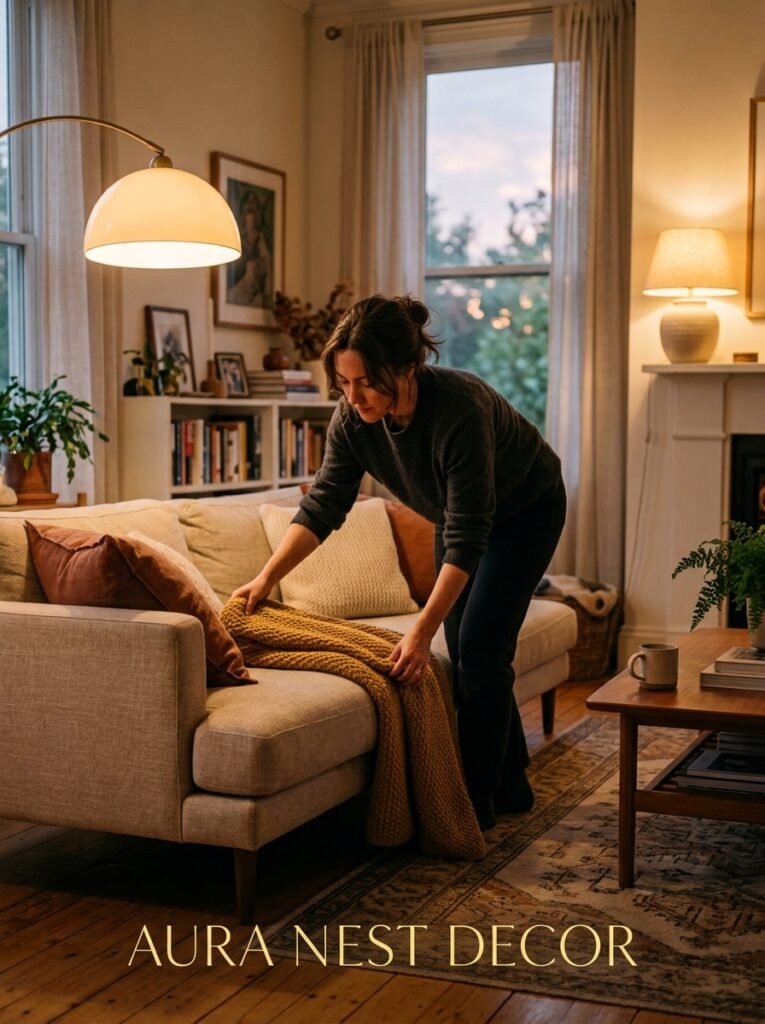
The living rooms that stay with you — the ones you think about days after seeing them — they all have something specific about them. Not just “contemporary” in a general way, but a very particular version of it. A scent of personality.
That’s what’s worth chasing. Not a trend, not a look from a magazine, but a room that’s unmistakably yours while also being genuinely beautiful to sit in.
What’s the one thing in your living room right now that you’ve been meaning to change — and what’s actually stopping you?