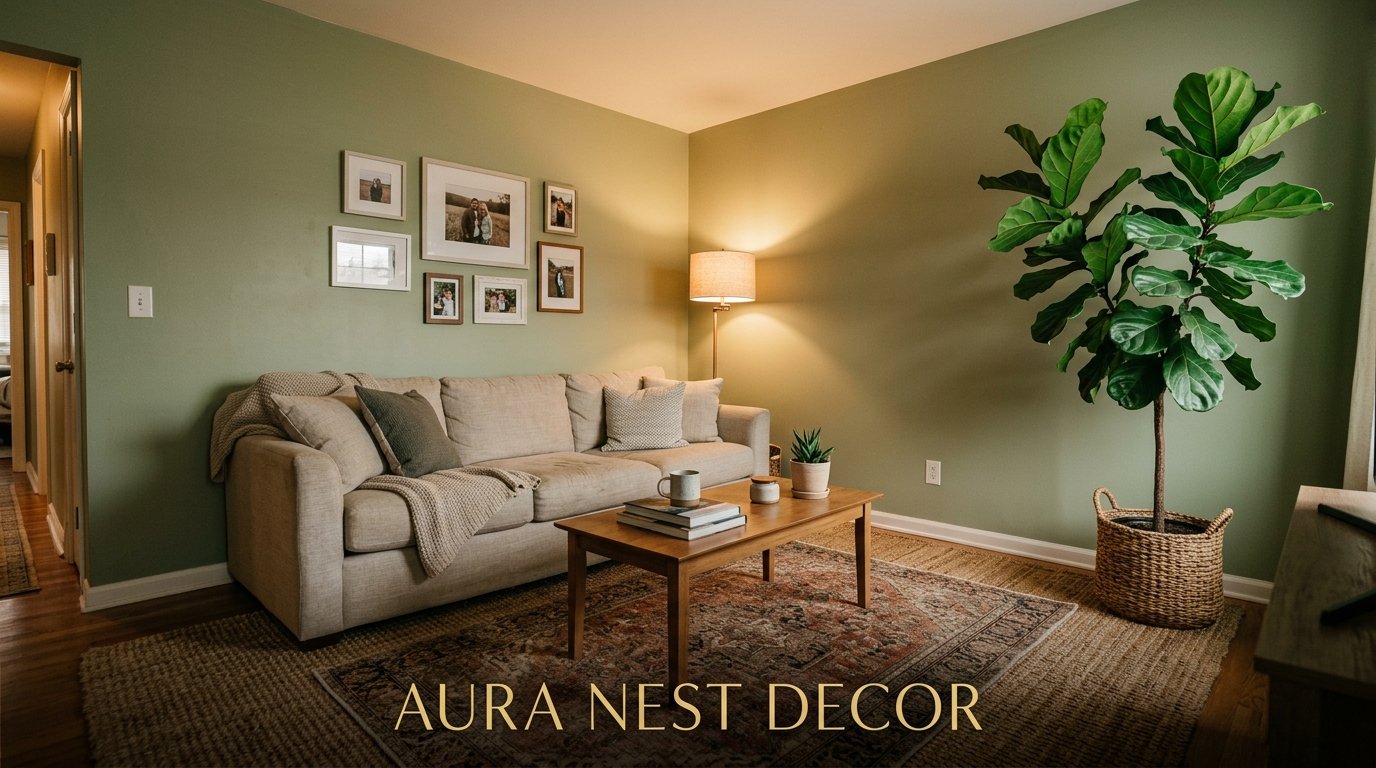
The £20 Living Room Glow-Up That Made Me Stop Apologizing for My House
My neighbor knocked on the door last spring, looked past me into the hallway, and said — “did you hire someone?” I hadn’t. I’d spent maybe $60 total and a weekend being slightly obsessed.
That moment is why I’m writing this.
—
1. The Wall Color Rule Nobody Tells You Until You’ve Already Painted Wrong
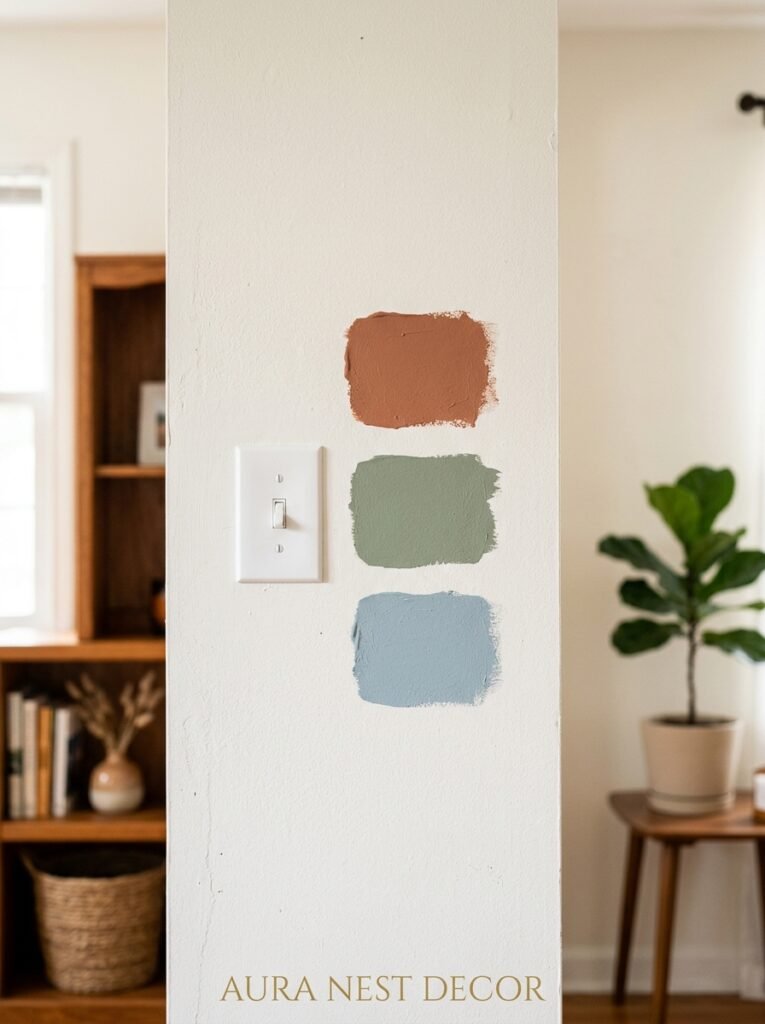
Here’s the thing about wall color: it doesn’t work the same way in photos as it does in your actual house with your actual light. I learned this after buying what the swatch called “Warm Sand” and ending up with what I can only describe as a hospital corridor vibe. Not cozy. Not warm. Just… beige in the worst way.
The rule that actually changed everything for me? Don’t pick a color — pick a color in the WORST light your room gets. Usually that’s around 2pm in winter, when your north-facing room looks like a cave. If the paint looks good then, it’ll look stunning in the morning and genuinely beautiful at golden hour.
Budget painters in the US swear by Benjamin Moore’s Pale Oak or Revere Pewter as the greats, and honestly, fair. But in the UK, Farrow & Ball gets all the attention while Little Greene does the same quality at about 60% of the price. Clay (LG168) is my current obsession. It reads warm without looking orange and it changes completely depending on what you put against it.
And don’t sleep on tester pots. Buy three or four, paint actual A3 squares on the wall, live with them for a week. This costs maybe $10 total. It will save you from making a $200 mistake.
2. The Secondhand Sofa Situation (And Why You’re Probably Overthinking It)
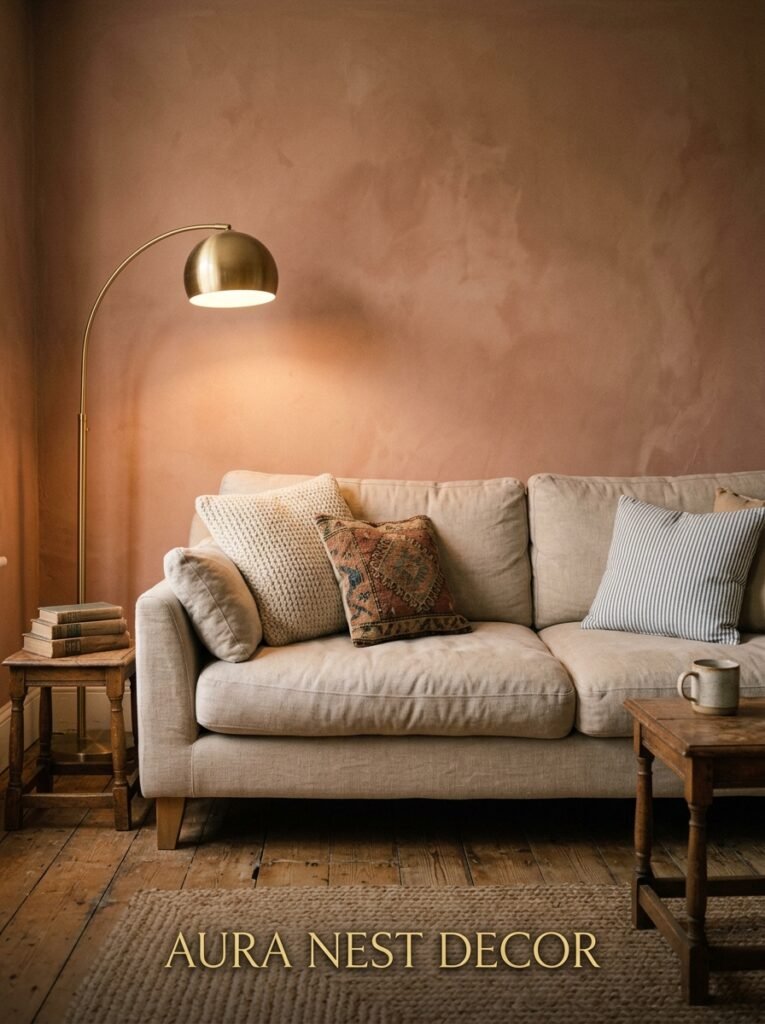
Everyone panics about buying a used sofa. I get it. But I promise, if you’re on a budget and you skip the secondhand market, you’re leaving the best stuff on the table.
Facebook Marketplace, Craigslist, Vinted (huge in the UK now), and local charity shops all have sofas in genuinely good condition from people who are moving, divorcing, downsizing, or just redoing their living room. Often they’re desperate to get rid of them.
What you’re looking for: solid frame (push on the corners, it shouldn’t flex), cushions that bounce back when you press them, and fabric that’s not shiny or pilling. Steer clear of anything with a smell you can’t identify, and obviously check for stains. But a slightly tatty frame with great bones? That’s just a slipcover opportunity.
“A sofa with great bones in an ugly fabric is the best deal in secondhand furniture. You’re paying for the structure, not the color.”
Slipcovers have gotten SO much better in the last few years. IKEA’s Ektorp range has proper fitted ones. Bemz (UK) and Sure Fit (US) both do made-to-order versions that look like you reupholstered the thing. For $80 or £60, you can turn a beige grandma sofa into something you’d actually pin.
3. The Color Accent Trick That Feels Way More Expensive Than It Is
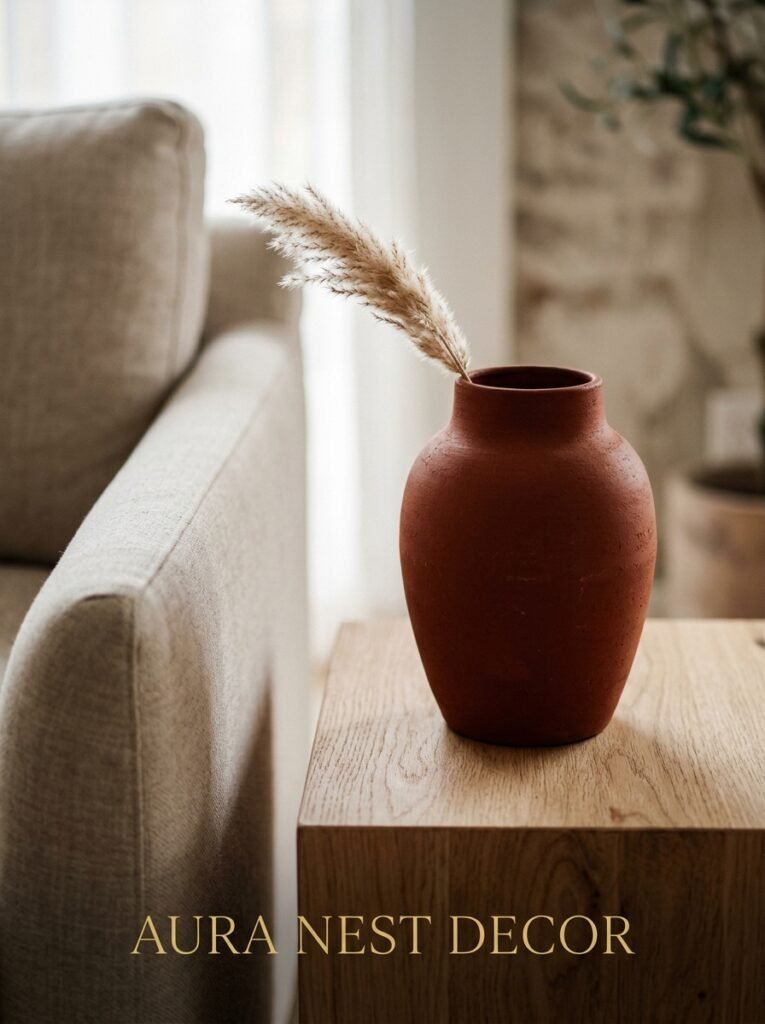
Pick one color. Just one. Not a whole palette, not a “color story” (ugh, that phrase) — one color, used in three different places in the room.
I did terracotta last year. Terracotta throw on the sofa, terracotta vase on the windowsill, terracotta candle on the coffee table. That’s it. Everything else was neutral. And the room looked completely intentional in a way that rooms with fifteen different accent colors never do.
The reason this works is something designers call visual triangulation — your eye travels between the three points and it reads as a deliberate choice rather than a collection of random objects. Which honestly is the entire difference between a room that looks curated and one that looks like you bought things without thinking.
In terms of which colors are doing this well right now — terracotta is still going strong, especially in the US. In the UK, deep sage and warm rust are everywhere. Honestly, both work. Anything in that warm, earthy territory photographs beautifully and doesn’t date as quickly as something trendier like mustard or millennial blush.
4. Why Bad Lighting Is Destroying an Otherwise Decent Room
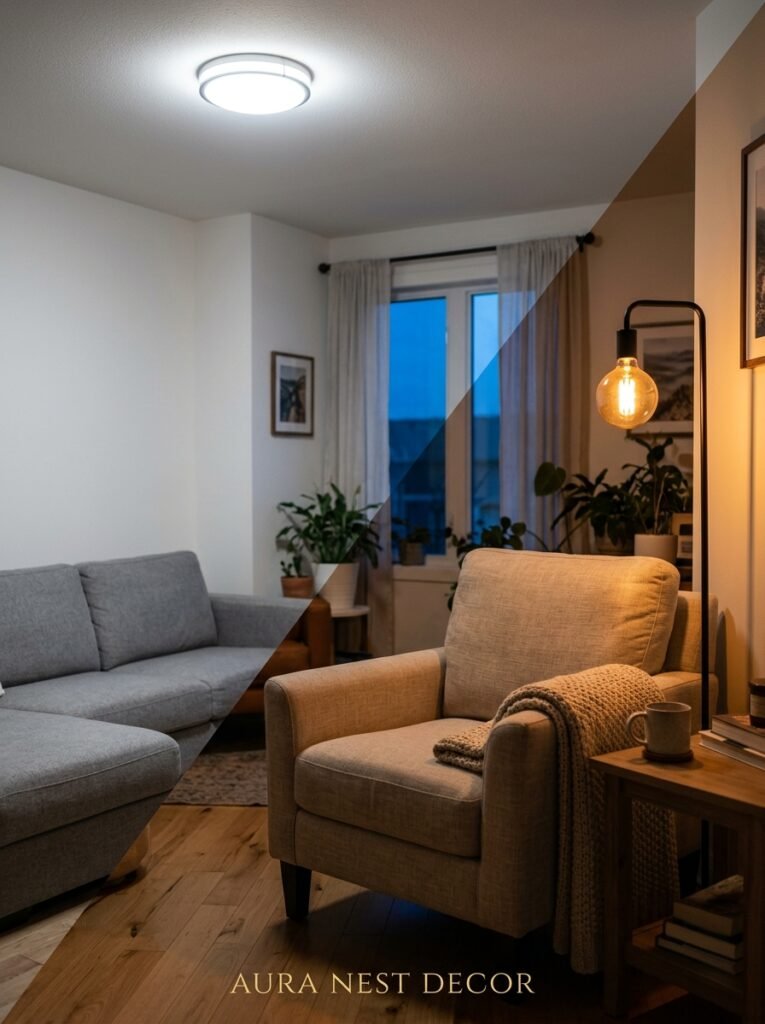
I genuinely believe bad lighting ruins more living rooms than bad furniture does. And people spend a fortune on new sofas when they should be spending $40 on lamps.
Overhead lighting is almost always a problem. That single bulb in the center of the ceiling flattens everything, makes your room look like a fast-food restaurant after hours, and does nothing for the atmosphere. Turn it off. Seriously — just unscrew it and see what happens.
Replace it with layers. A floor lamp in the corner, a table lamp next to the sofa, maybe a small LED strip behind your TV if you’re into that. The goal is pools of light at different heights, not one big even wash of it.
The amber glow of an Edison bulb at 7pm changes a room completely. That’s not an exaggeration. I switched out my cool-white bulbs for warm 2700K ones across the whole living room — cost me about $15 — and three separate people asked if I’d repainted. I hadn’t touched the walls.
“Turn off your overhead light right now and add a lamp in the corner. Just try it. I’ll wait.”
Budget picks that actually look good: IKEA Ranarp for the floor lamp, any simple brass or black table lamp from Amazon or the charity shop, and Philips warm-white bulbs throughout. Don’t buy anything that has “cool” or “daylight” on the box for a living room. That’s for kitchens and dentist offices.
5. The Gallery Wall Mistake That’s Making Rooms Look Cluttered
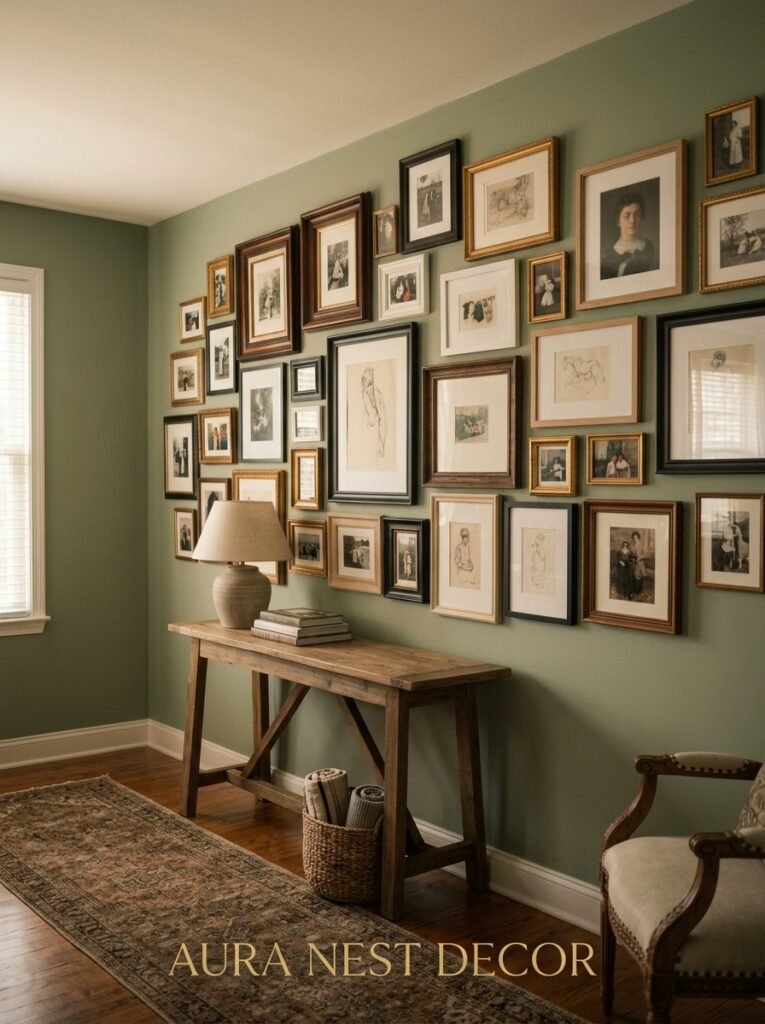
Gallery walls are everywhere on Pinterest and most of them look amazing. But I’ve seen a lot of real-life attempts that end up looking like someone sneezed frames at a wall and called it art.
The mistake is almost always the same: too many different frame styles, photos in too many sizes, no consistent thread running through it. Your eye doesn’t know where to go, so it goes nowhere.
The fix is so simple it’s almost annoying. Pick ONE frame color — all black, all natural wood, all white, all gold — and let the art inside vary. You can mix prints, personal photos, pressed flowers, plain colored paper in a frame, whatever. The consistent frame color does all the work of making it look cohesive.
Budget-wise, black frames from IKEA (Ribba, if you know you know) have held their own for years. Charity shops in the UK regularly have gorgeous old gilt frames for £2 that you can spray paint whatever color you want. Spray paint costs like $5. That’s a complete custom gallery wall for practically nothing.
And one more thing: leave more space between the frames than feels right. When you practice on the floor and it looks slightly too spread out? That’s probably exactly right for the wall.
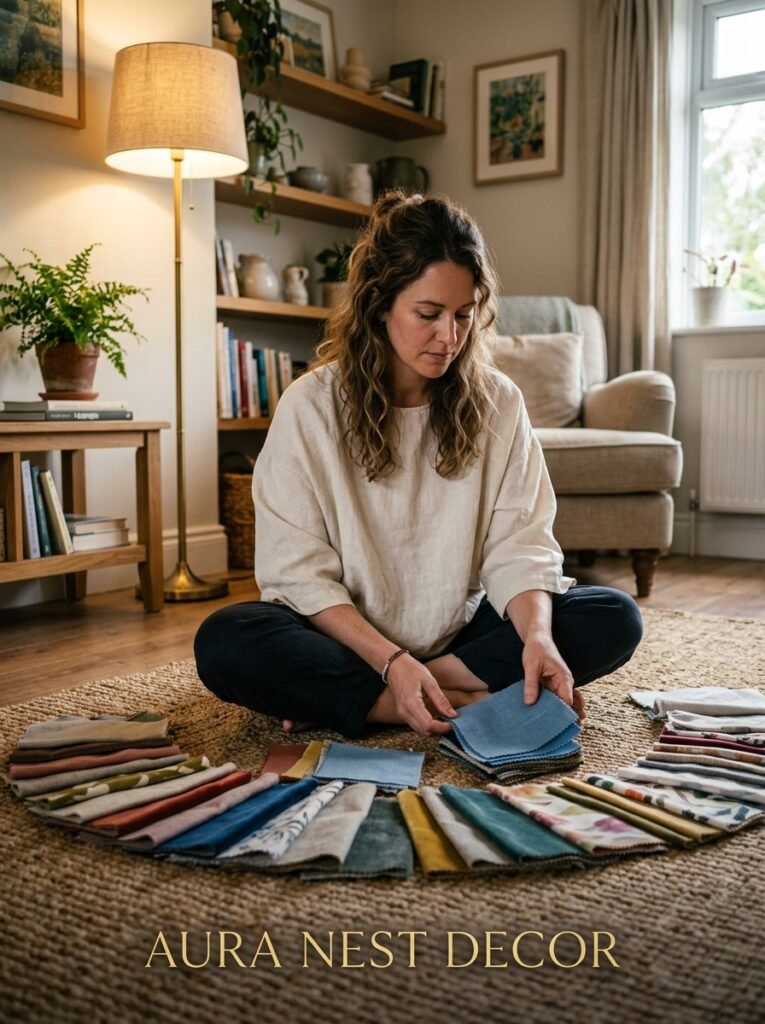
6. What Textile Layering Actually Means (and It’s Not Just “Add More Throw Pillows”)

I used to think layering textiles just meant buying more cushions until the sofa looked full. It doesn’t mean that. Or, well, it sort of does, but there’s more to it.
The actual goal is texture variation. You want something smooth, something nubby or woven, something a bit soft. If all your cushions are the same polyester fabric, they’ll all read as one flat blob from across the room no matter how many you add.
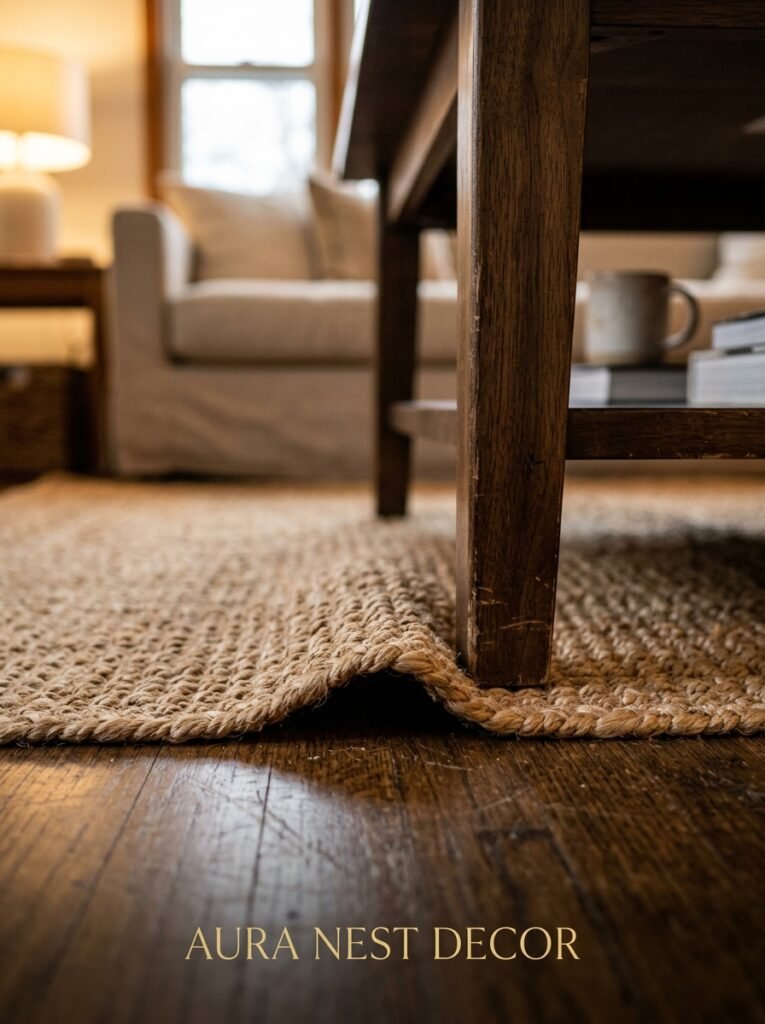
Real-world breakdown: a plain linen cushion, a chunky knit throw, a velvet pillow. That trio costs well under $80 if you shop smart — TK Maxx and HomeGoods are genuinely brilliant for this, especially in the autumn when everyone’s restocking. And then a jute rug underneath to ground the whole thing.
Rugs. Oh, rugs. They’re the most underrated budget tool in home decor and people always skip them when money’s tight. But a rug defines the seating area in a way that makes a room feel planned rather than just… furniture in a space. Amazon Basics and Dunelm (UK) both have decent flatweave options under $100 and £60 respectively.
7. The One Plant That Makes a Living Room Look Like It Belongs in a Magazine
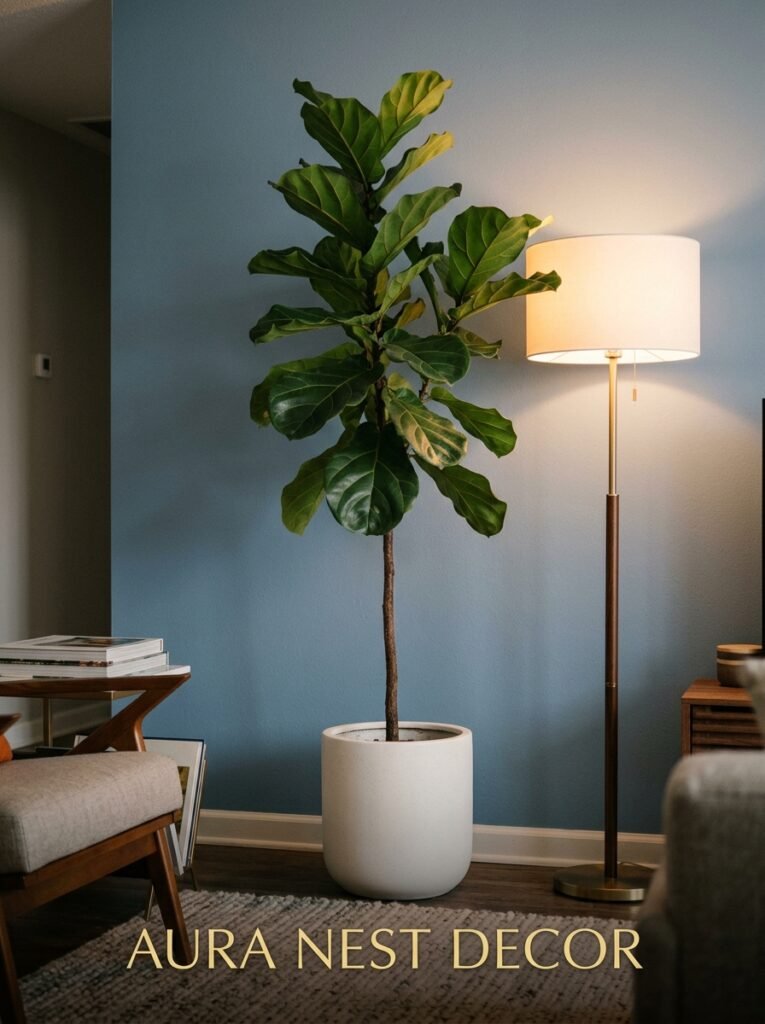
Not every plant. One specific type of plant.
I’m talking about a large, leafy statement plant — not a fern, not a succulent collection on a shelf — but something that actually takes up space and commands attention. A fiddle-leaf fig is the classic answer, though they’re admittedly fussy. A Birds of Paradise is more forgiving and grows bigger. A large Swiss Cheese Plant (Monstera) is the most budget-friendly and honestly the most dramatic.
Side note — I’ve killed three fiddle-leaf figs. They’re not as easy as Instagram makes them look.
One big plant in the right corner does more visual work than ten small plants scattered around. Put it where it gets indirect morning light if possible, in a pot that’s in your accent color (see section 3), and water it less than you think you should.
In terms of cost: a decent Monstera runs maybe $30–$50 in the US, or £25–£35 at most garden centres in the UK. That’s a lot of visual impact for the money. And if you can’t do live plants for whatever reason — travel, dark apartment, black thumb tendencies — there are silk plants now that genuinely don’t look fake from a normal viewing distance. The key is buying ones that come in weighted pots and have some color variation in the leaves. The perfectly uniform green ones always give it away.
8. Budget Shelving That Doesn’t Look Like Budget Shelving
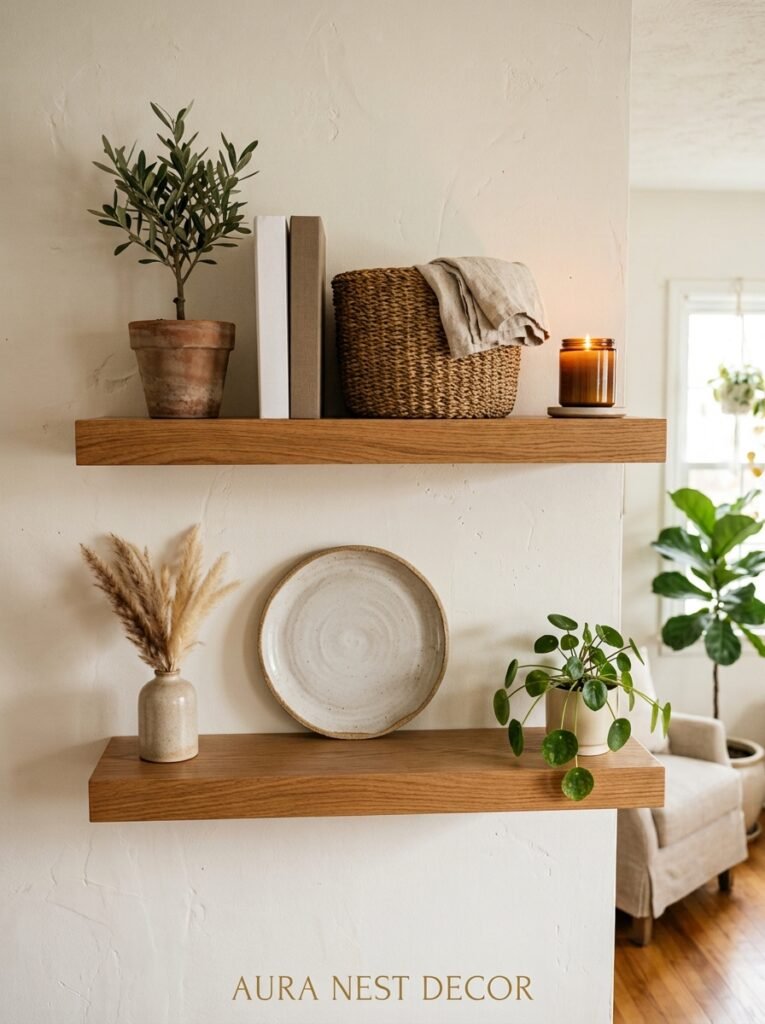
IKEA Lack shelves built the internet. We all know them. But the way you style them is what separates a room that looks good from a room that looks like a showroom in 2014.
The current approach that actually photographs well: vary the height of objects significantly, leave deliberate empty space (this is the hard part — resist filling every inch), and mix books, objects, and at least one piece of natural material like a small piece of wood, a stone, or a plant.
Books. Real books. Not just the spines out but maybe a small stack with an object on top. I know book-spine facing away is a whole aesthetic, but personally? I like seeing the titles. It feels like a person lives there.
Budget-wise: floating shelves from Amazon or Dunelm, installed properly with the right wall plugs (don’t skip this step — I’m speaking from the experience of a shelf that pulled clean out of a plaster wall at midnight, taking a large ceramic pot with it). Style what you already own first. Rearrange rather than rebuy.
9. The Coffee Table Rethink That’s All Over Pinterest Right Now
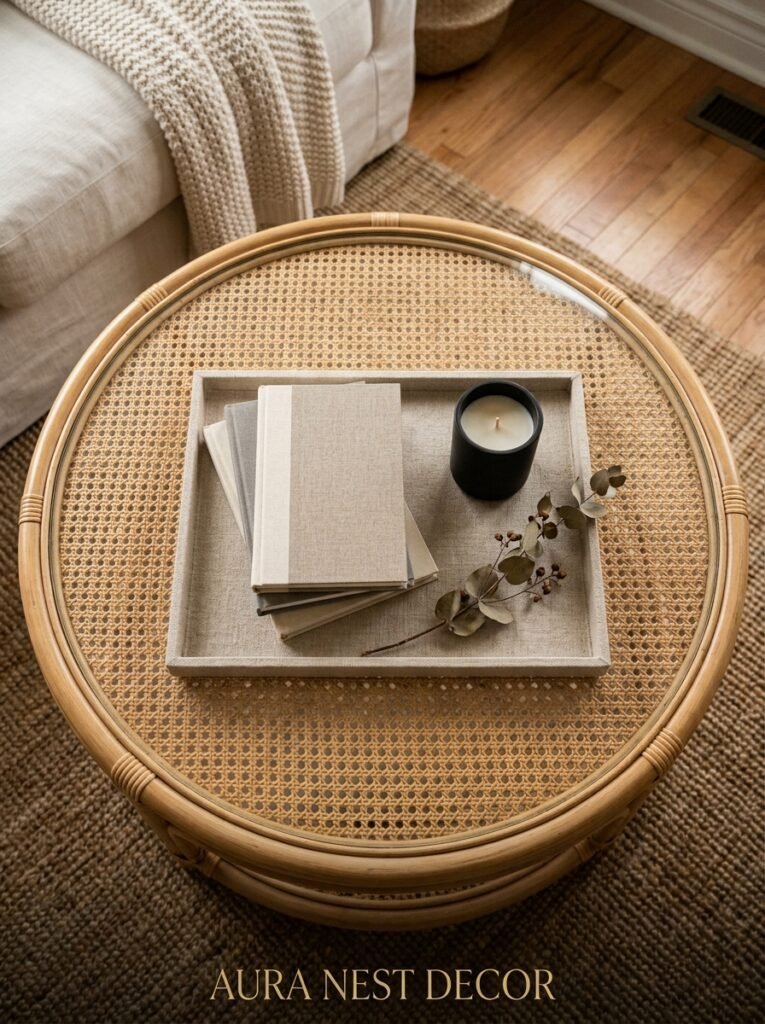
Ottomans as coffee tables. That’s it. That’s the whole section, almost.
But seriously — a large square or round ottoman in the center of your seating area does everything a coffee table does but it’s softer, safer if you have kids or sharp-cornered everything else in the room, and often cheaper for what you get. You can store blankets inside if it’s a storage ottoman, which is honestly a miracle in a small living room.
Add a tray on top to give it a flat surface for drinks. Done.
If you want an ACTUAL coffee table but can’t spend real money: thrift stores almost always have solid wood ones that just need sanding and a coat of stain or paint. I did mine in ebonizing stain from Rustoleum — it looks like a $400 table and it cost $30 total.
“The living rooms that feel most expensive aren’t the ones with the most stuff — they’re the ones where every single thing looks like it was chosen.”
10. Mirrors: Where to Put Them, Where Not To
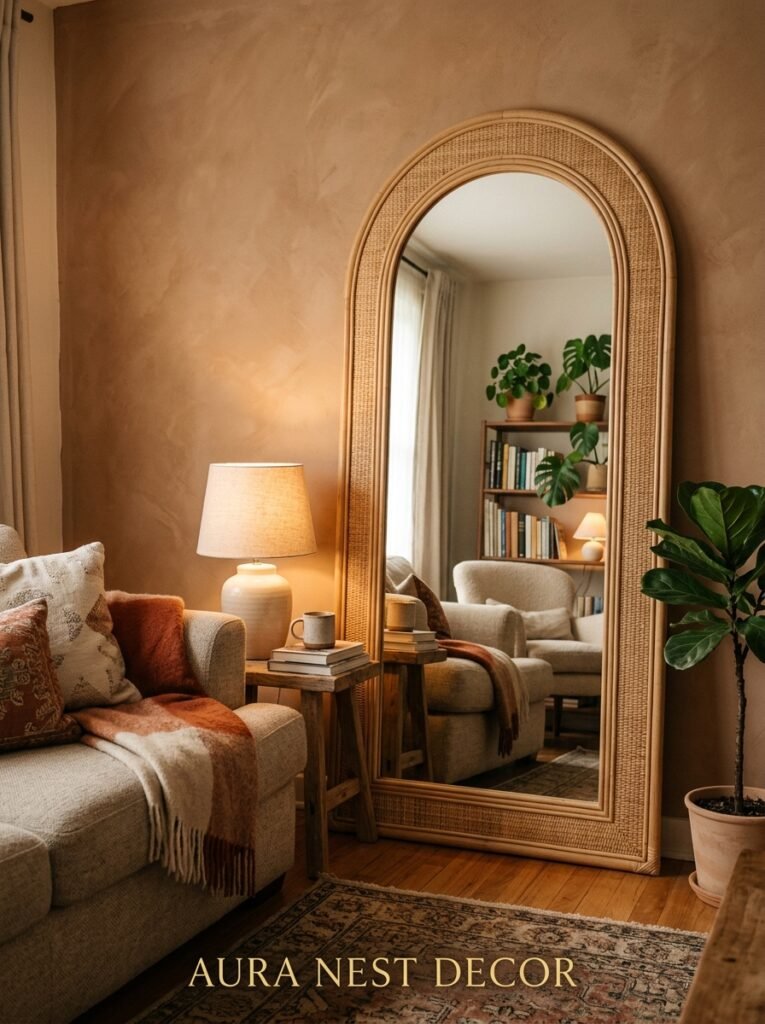
A well-placed mirror in a living room makes the room feel bigger, bounces light around, and adds something visually interesting to a wall that might otherwise need expensive art.
A badly placed mirror shows you your own face every time you sit on the sofa. Avoid that.
The classic rule: position a mirror so it reflects something beautiful — a window, a lamp, a nice view into the room. NOT a blank wall, NOT directly toward the sofa. The angle matters more than the placement.
In terms of style: arched mirrors are massive right now and for good reason, they’re architectural without being heavy. Large round ones feel less formal. Ornate gold frames work in maximalist rooms. For a budget pick, the IKEA Lindbyn round mirror is genuinely one of the best buys in the whole store, and it photographs beautifully.
11. The Color Formula for a Living Room That Actually Feels Calm
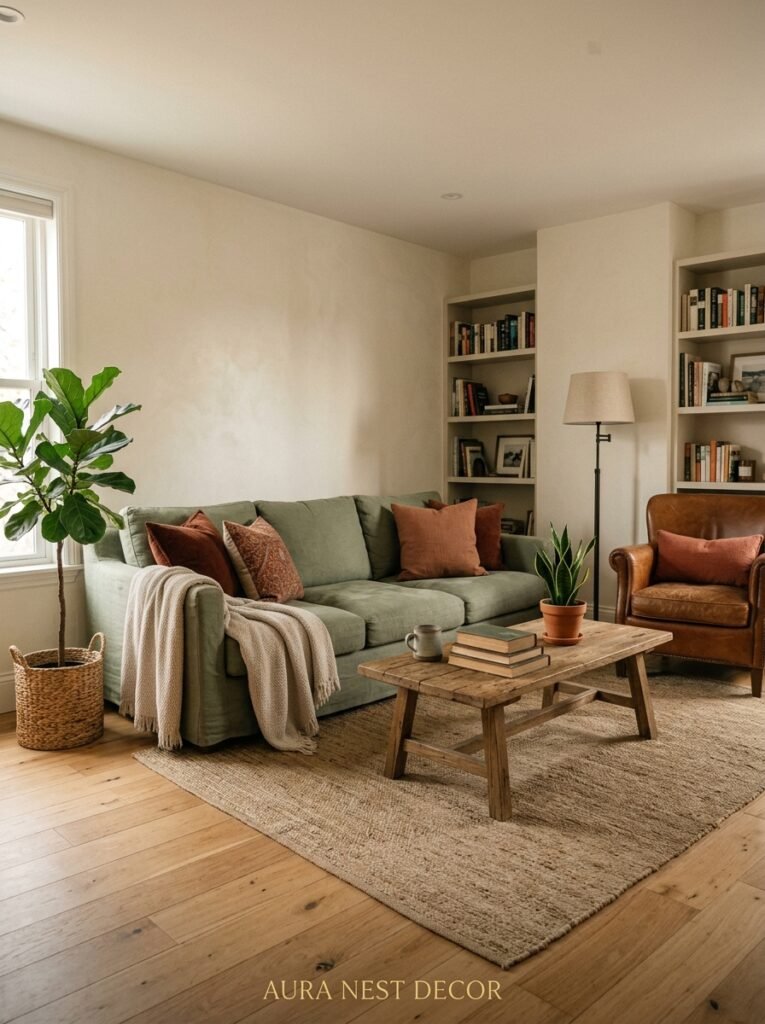
There’s a formula. I didn’t invent it, designers have known it for decades, but it’s not talked about in plain language often enough.
60-30-10. Your dominant color covers about 60% of the room — walls, large furniture. Your secondary color is about 30% — rugs, curtains, the sofa if it’s different from the walls. Your accent is 10% — cushions, vases, that one candle.
In practice: imagine pale warm white walls (60%), a warm gray linen sofa and natural jute rug (30%), and terracotta accents (10%). That room will feel calm, complete, and photographically gorgeous every single time.
The mistake people make is bumping the accent color up too high. The moment it hits 20 or 25% it stops being an accent and starts competing with everything else, and the room feels chaotic even though nothing’s technically wrong.
You can apply this with ANY color combination. Cool tones, warm tones, bold or neutral. The proportions are what do the work.
12. The Final Cheap Thing That Changes a Room More Than It Should
Candles. Specifically: a cluster of candles at different heights, in your accent color, on a tray on your coffee table or ottoman.
This is so obvious it’s almost embarrassing to include. But I have been in houses with beautiful furniture, great lighting, lovely rugs — and zero candles — and something always feels slightly unfinished. Like a table set for dinner without the glasses out.
Candles at different heights create micro-architecture on a surface. They add warmth — real warmth, the literal kind — and they smell good, which is something no amount of repainting will give you. In the US, Trader Joe’s and Target have genuinely excellent cheap candles. In the UK, Aldi and Lidl’s home ranges are frequently incredible, as are Primark Home’s pillar candles.
You don’t need a lot. Three candles, one tray, one match. That’s it.
—
❓ FAQ
Q: What’s the cheapest change that makes the biggest difference in a living room? A: Lighting, without question. Switching from a single overhead bulb to two or three warm-toned lamps at different heights costs $30–$60 total and changes the feel of a room more dramatically than almost any other single change. It’s the thing interior designers do first and homeowners do last.
Q: How do I make a rented living room feel like mine without losing my deposit? A: Command strips, removable wallpaper, and freestanding furniture are your best friends. You don’t need to drill or paint — layering rugs, adding lots of textiles, and bringing in plants and lamps does most of the work. The goal is covering or softening what’s there rather than changing it permanently.
Q: Can I really pull off a budget living room makeover without it looking cheap? A: Yes, and the key is restraint. Cheap rooms look cheap when they’re trying to hide their budget by filling every surface. Rooms that look expensive on a budget tend to be edited — fewer things, more intentional, every item placed with a reason. Buy one good thing when you can, rather than five mediocre things to fill space.
—
💭 Final Thoughts
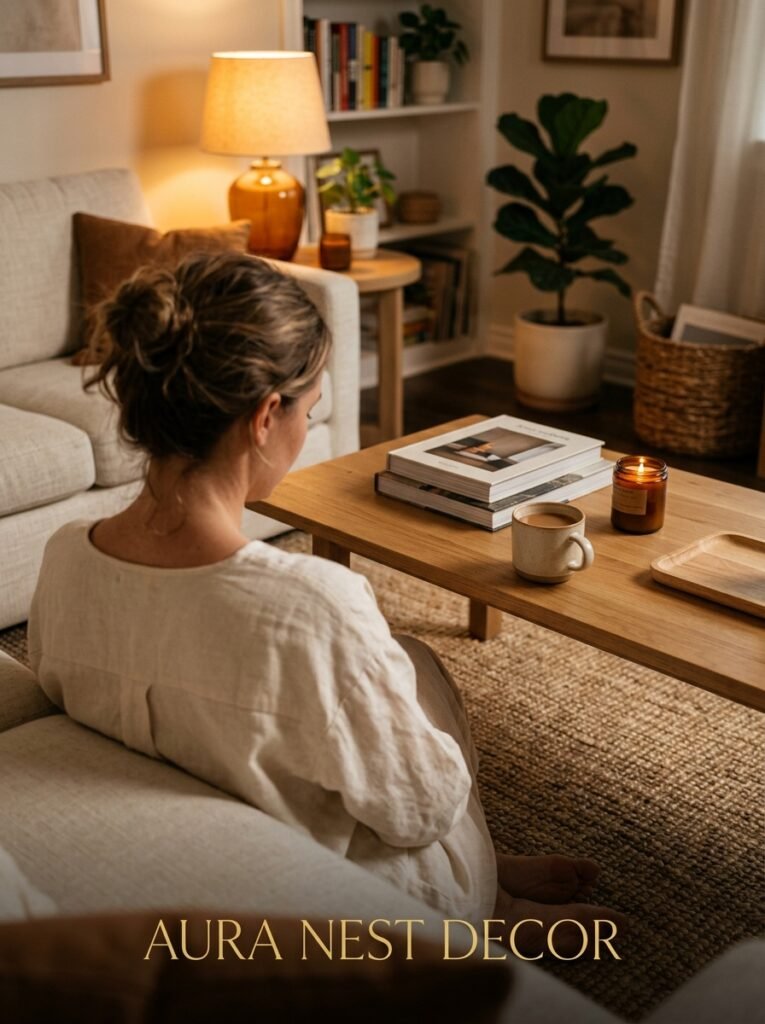
None of this has to happen at once. The best living rooms I’ve ever been in were built slowly — a lamp here, a better cushion there, a plant that finally survived winter. There’s something nice about that, actually, rooms that grow with you rather than being finished all at once.
What’s the one thing in your living room right now that you’d change first if you had $50 and a free afternoon?