The Living Room Plant Glow-Up That Actually Works (No Green Thumb Required)
My friend Jess walked into my living room last spring and said, “It feels like a different house in here.” I hadn’t repainted. Hadn’t bought new furniture. Hadn’t done anything expensive. I’d just spent a weekend rearranging plants and swapping out a few ugly plastic pots for ones that actually made sense with the room.
That’s the thing about plants in a living room. Done right, they don’t just add greenery — they change the FEEL of everything around them.
—
1. Why Most People’s Plant Corners Look Like an Afterthought
Here’s the honest problem. Most of us buy a plant because it’s pretty at the garden center, bring it home, plop it in whatever pot it came in, and set it on the windowsill. Done. Except it doesn’t look done. It looks like a plant sitting on a windowsill.
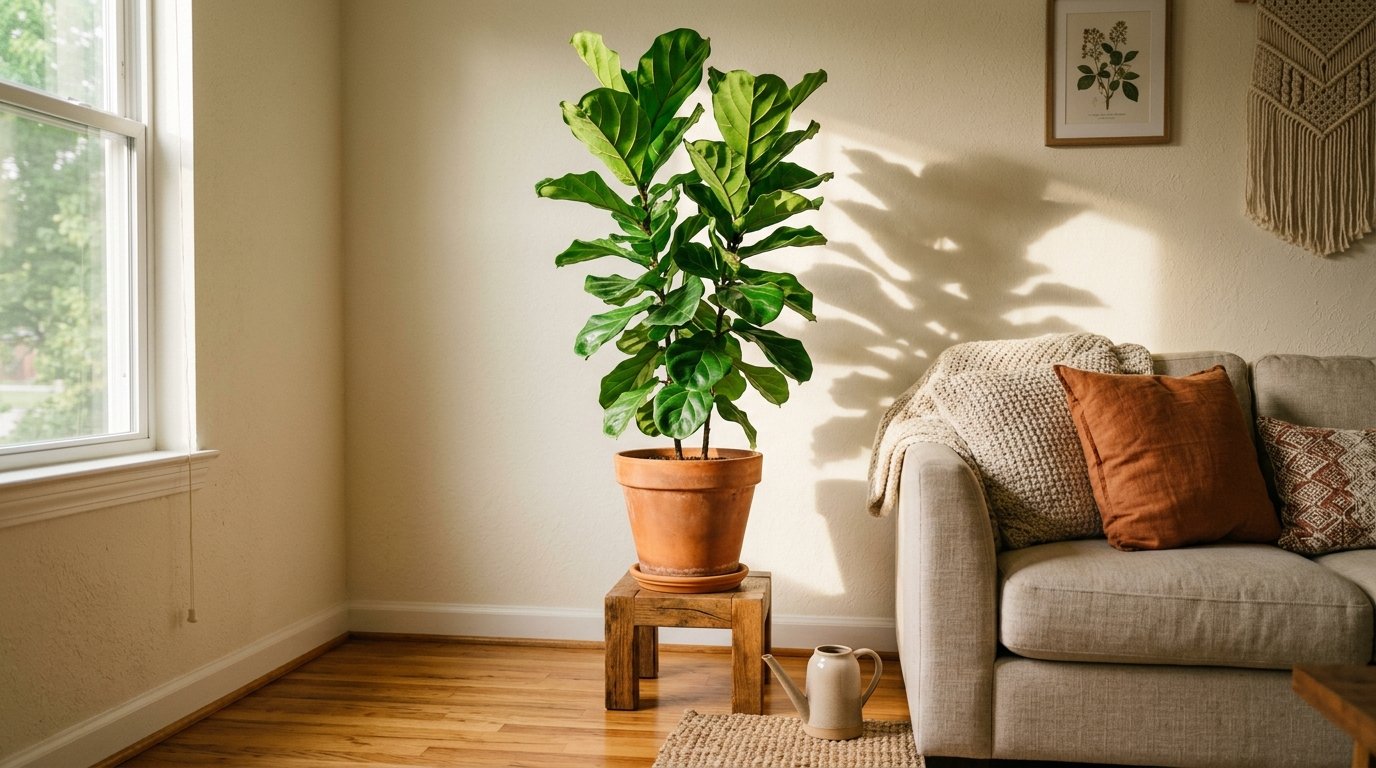
The difference between a living room that looks styled and one that looks like a waiting room isn’t the number of plants. It’s the intention behind where they live and what they’re sitting in. A single fiddle-leaf fig in a beautiful terracotta pot on a wooden stand does more for a room than six sad little succulents in a row on a shelf. And the fiddle-leaf doesn’t even have to be thriving — kind of just has to exist with confidence.
So before you buy anything, take a photo of your living room. Scroll past it fast. What’s missing? Usually it’s height, or texture, or something with a bit of LIFE in the bottom third of the room near the floor. That’s your starting point.
“The difference between a styled room and a sad plant corner is intention — not the number of plants.”
—
2. The Pot Material That Changes Everything (And the One to Avoid)
Terracotta. Genuinely, terracotta. I know it’s not a hot take, but there’s a reason every beautifully decorated living room you’ve saved on Pinterest has at least one terracotta pot sitting somewhere. It’s warm. It’s earthy. It looks expensive when it’s not, and it photographs like a dream in natural light.
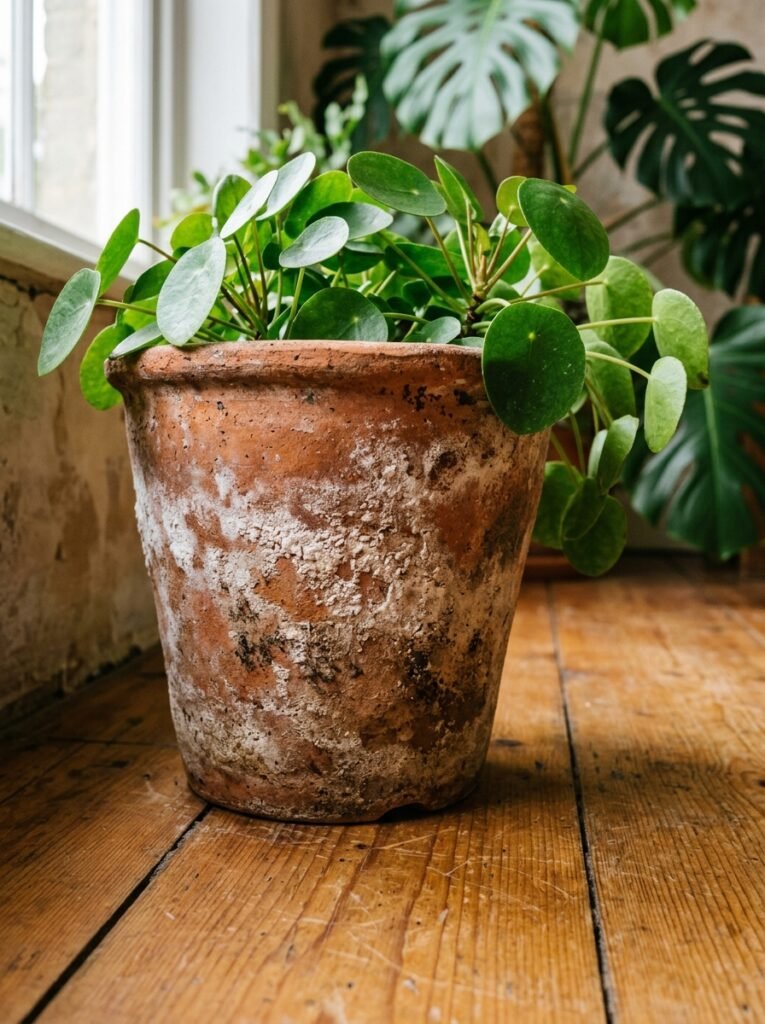
But here’s what’s actually interesting — it’s not just the terracotta, it’s the AGED terracotta. The slightly weathered ones, the ones with a bit of salt bloom on the outside, feel like they’ve lived somewhere and loved something. Brand new shiny terracotta can look a bit clinical in a home setting. If yours are too new, leave them outside for a week or rub a tiny bit of plain yogurt on them and let nature do its thing. Sounds odd, works brilliantly.
The one to avoid? Shiny white ceramic with no texture, especially in a small-to-medium size. It looks like a dentist’s office prop. Go matte, go textured, go interesting — or go terracotta.
—
3. The Plant That Actually Earns Its Place on the Floor
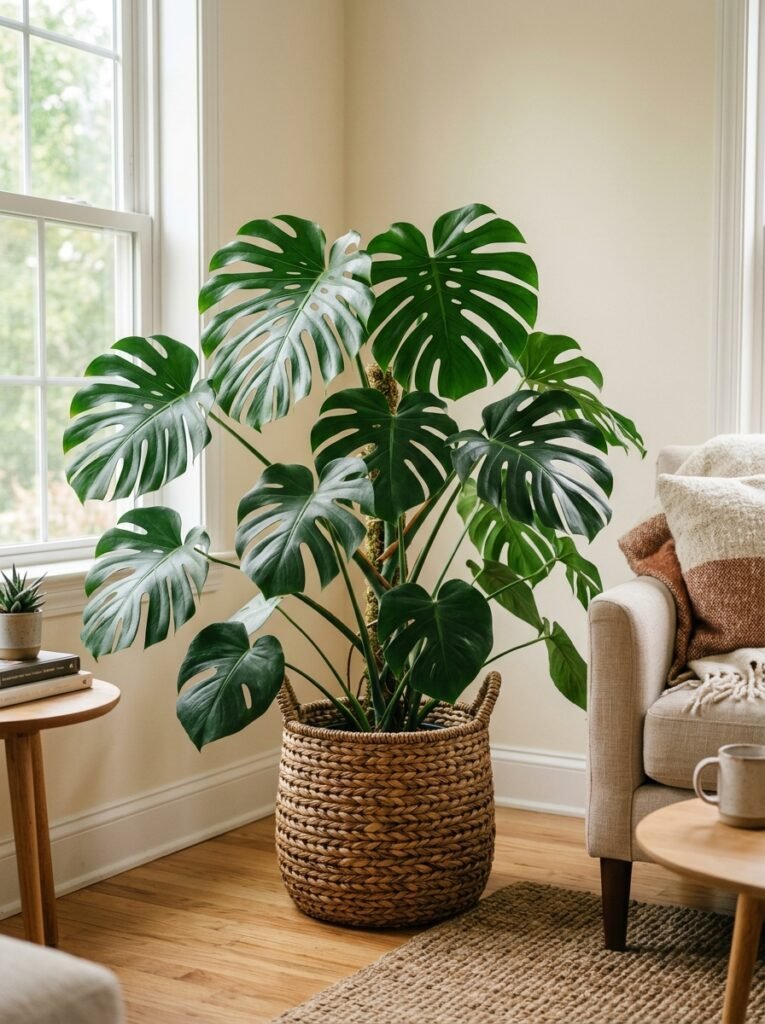
Okay so floor plants. People either love them or completely forget they’re an option.
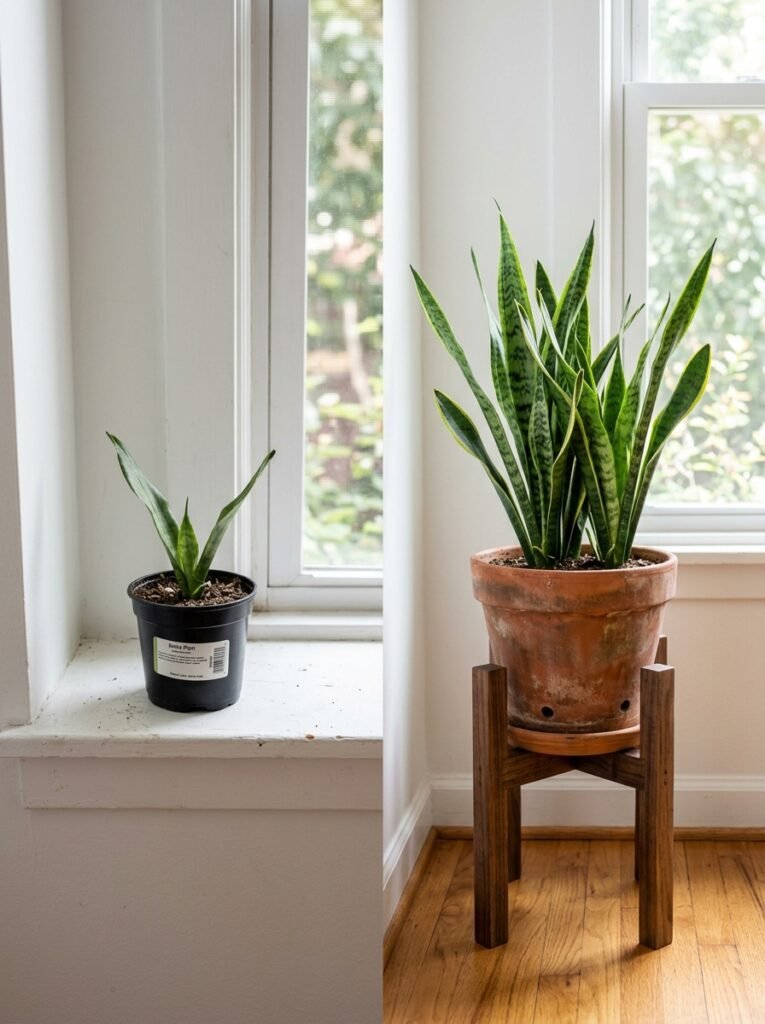
A tall plant on the floor — something like a monstera, a large snake plant, or a rubber plant — anchors the whole room. Literally anchors it, the way a big sofa or a bookshelf does. It fills vertical space without taking up floor area the way furniture does, and it softens whatever hard corner or awkward gap you’ve been ignoring since you moved in.
The pot for a floor plant matters enormously. Too small and the plant looks like it’s falling over. Too tall and it competes with the plant itself. You want a pot that hits roughly a third of the plant’s total height — that’s the rule of thumb that designers actually use, by the way, and it works across every style from maximalist jungle to clean Scandinavian. Woven seagrass baskets are a brilliant option here because they’re lightweight, they don’t scratch floors, and they give you a bit of texture that ceramic can’t. Bonus: you can drop your plain plastic nursery pot straight inside one. No repotting drama.
—
4. Hanging Things From Your Ceiling Without It Looking Like a Dorm Room
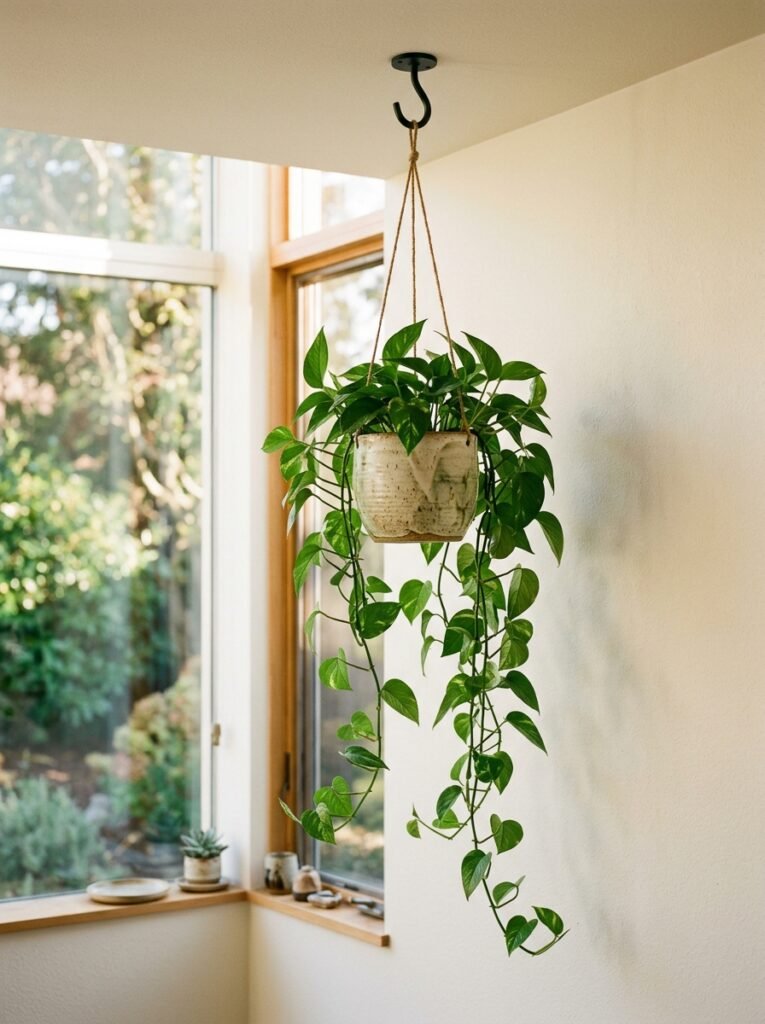
I avoided hanging plants for years because every time I tried, it looked like I’d just moved in and hadn’t bought proper furniture yet. That stringy, slightly chaotic look. Not great.
What changed things: using one hang instead of three. Just one. A single trailing pothos or string of pearls in a handmade ceramic or woven pot, hung at eye level or just above, near a window. That’s it. One well-chosen hanging plant reads as intentional. Three hanging plants reads as a phase.
The hook matters too. A plain silver ceiling hook is fine but a matte black one, or even a small brass hook, makes it feel like you thought about it. And you did. That’s the whole game, really — making it look like you thought about it.
—
5. The Color That Keeps Showing Up in Every Beautiful Plant Shelfie Right Now
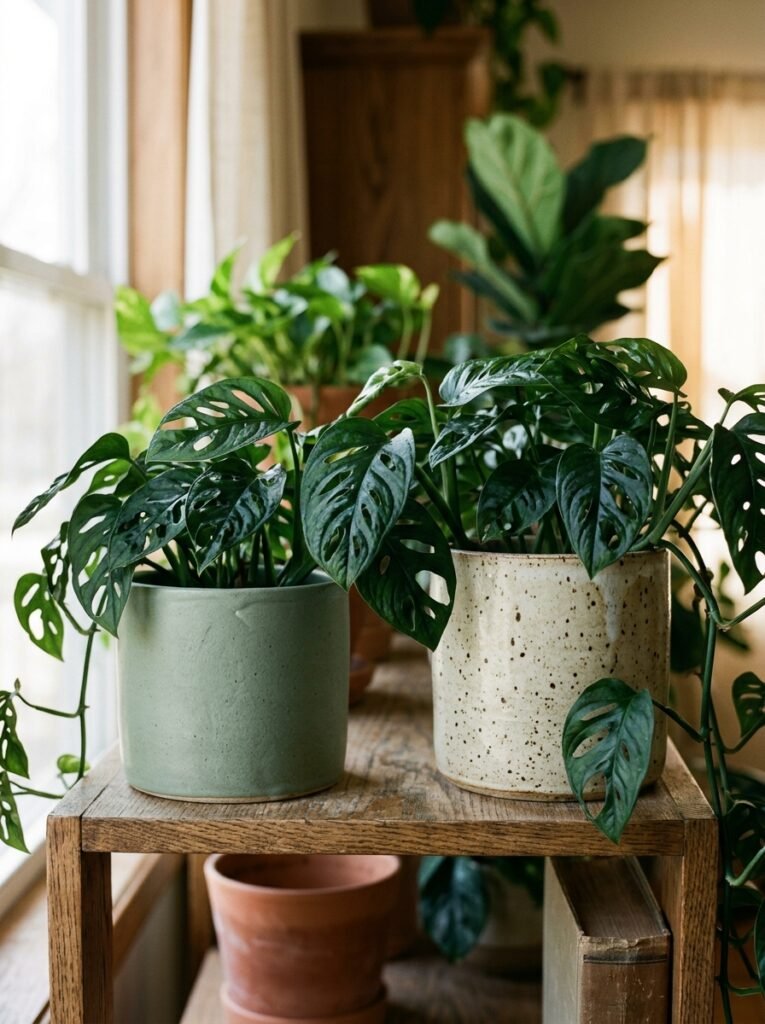
Warm sage green pots. Or deep, dusty olive. Not bright kelly green — that clashes with actual plant foliage in a very unfortunate way. But a muted, slightly grey-green ceramic or stoneware pot? That’s the thing. It blends with the plant AND it blends with the room because it reads as a neutral.
I’ve also been seeing a lot of creamy off-white with a slight speckle — that mottled stoneware finish that looks hand-thrown even when it’s not. Very satisfying next to dark green leaves. Put a speckled cream pot next to a dark monstera leaf and tell me that’s not a Pinterest image waiting to happen.
“Muted, slightly grey-green pots read as neutrals — they work with the plant AND the room without trying.”
If you’ve got a neutral living room — grey, white, beige — almost any earthy pot color works. If your room has warm wood tones, lean terracotta and ochre. If you’ve got a cooler, more modern palette with lots of white and black, go speckled stoneware or matte charcoal. The pot is part of your color story.
—
6. The One Rule That Makes a Small Living Room Feel Intentional
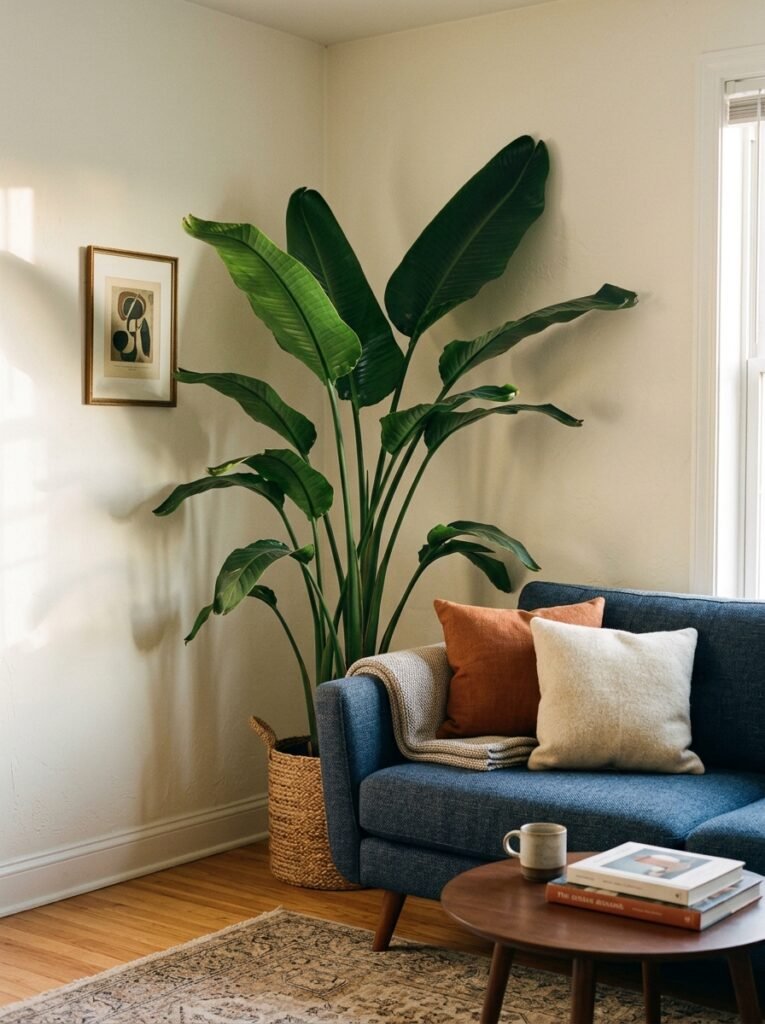
Go bigger than you think. With the plant, and with the pot.
This is counter-intuitive because in a small space the instinct is to scale everything down. Don’t. A tiny plant in a tiny pot in a small room just looks timid. One large, confident plant — a proper statement one — makes the room feel curated rather than cramped.
The other trick? Put that large plant in an unexpected spot. Not the windowsill. Not the coffee table. The corner behind the sofa. The space beside the fireplace. Somewhere the eye doesn’t expect to find something alive, and then finds something gorgeous there instead.
Side note — if you’ve got a very small living room and feel like you can’t fit a floor plant, a tall plant stand changes everything. Gets the plant off the floor and up into the light without taking up more footprint than the pot itself. Total game-changer.
—
7. Grouping Plants Without Making It Look Cluttered
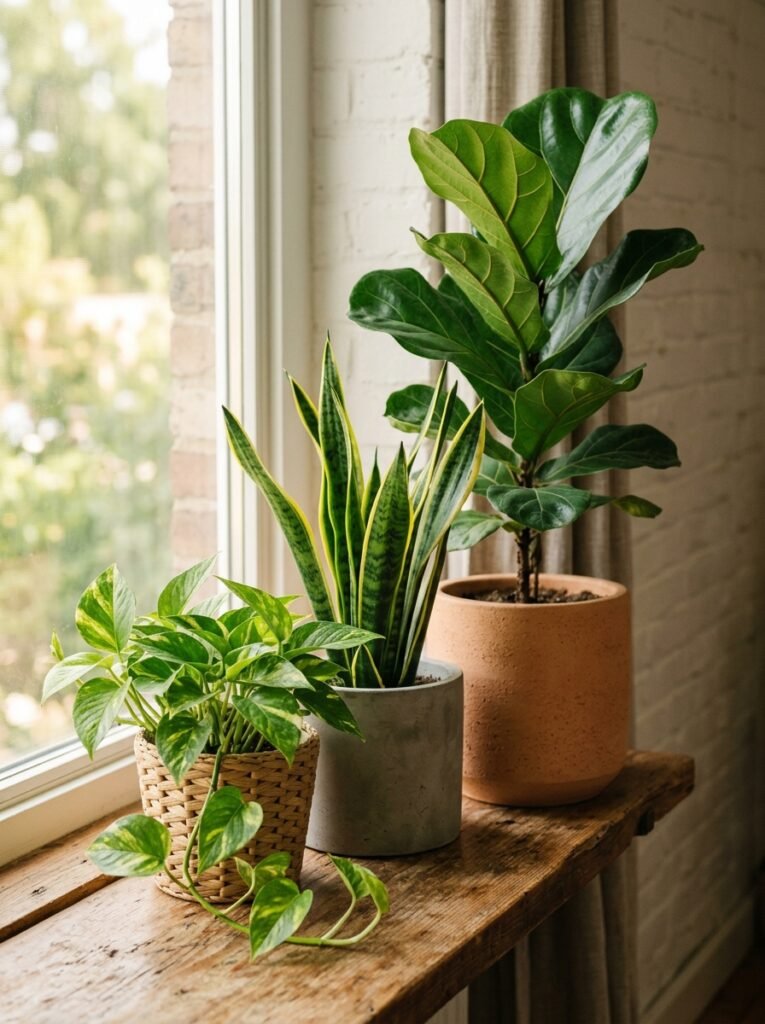
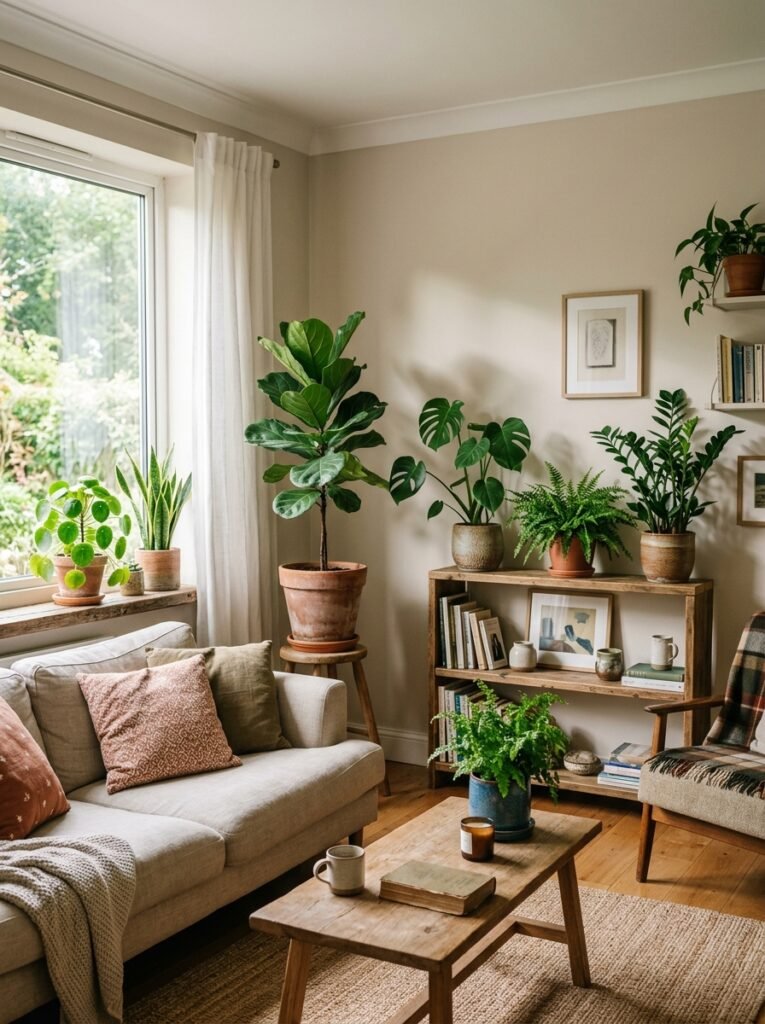
Three plants together is usually too symmetrical. Two is perfect, five can work if the heights are wildly different. The groupings that look best have at least two different pot materials (terracotta and ceramic, say), at least two different heights, and at least two different leaf textures.
Contrast is doing the work here. A big glossy-leafed plant next to a spiky one next to something soft and trailing — that’s interesting. Three similar-sized leafy plants in matching pots is just a collection. Collections are fine! But they don’t create a moment the way a considered grouping does.
Oh, and don’t line plants up in a row. Even a slight stagger — one pot slightly forward, one slightly back — makes it look composed rather than arranged. It’s a tiny thing that makes a huge difference.
—
8. Shelf Plants and the Mistake Almost Everyone Makes
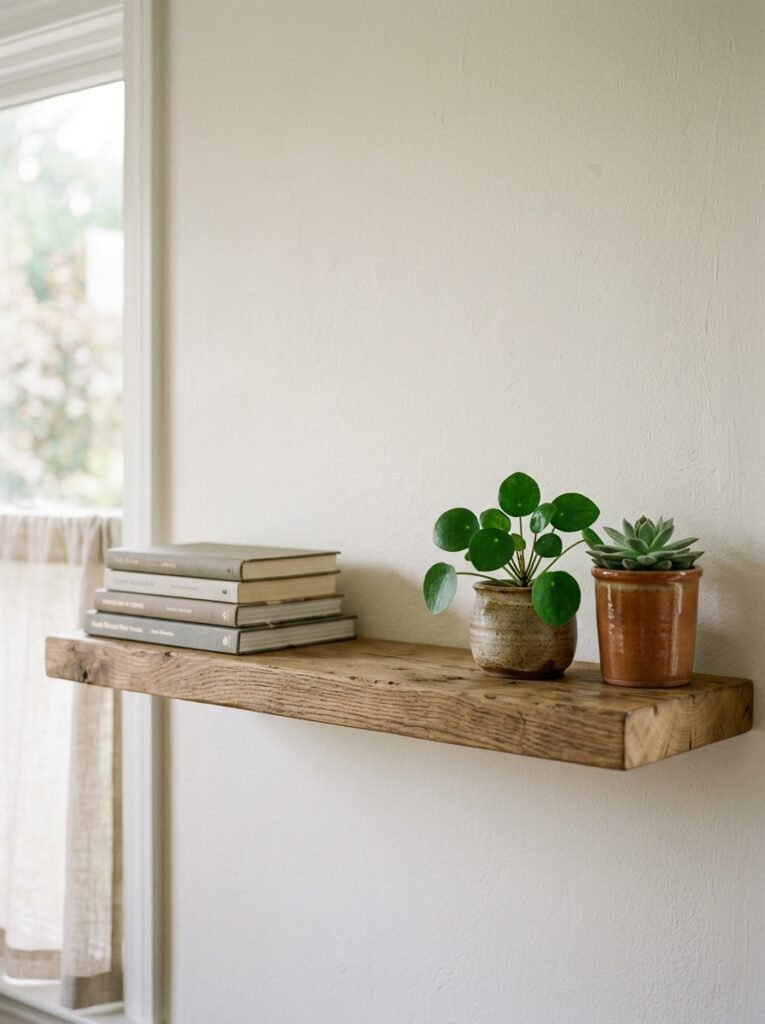
The mistake: putting too many small plants on a shelf and not leaving any breathing room.
Empty space on a shelf IS the decor. It frames the things that are there. So if you’ve got five little cacti crammed onto a single shelf, they’re fighting each other for attention and nobody wins.
Pick two or three plants for a shelf, max. Mix in a non-plant object — a stack of books, a small sculpture, something with height and texture. And vary the pot heights even if the plants themselves are small. A small plant on a little pot stand next to a slightly bigger plant in a pot directly on the shelf — that variation does the work.
The plants that genuinely thrive on shelves, by the way, are ones that don’t need constant fussing. String of hearts. Small pothos cuttings. A little ZZ plant. Easy keepers that look intentional without demanding direct sun or twice-weekly watering.
—
9. What Happens When You Add a Plant to the Thing You Were Ignoring
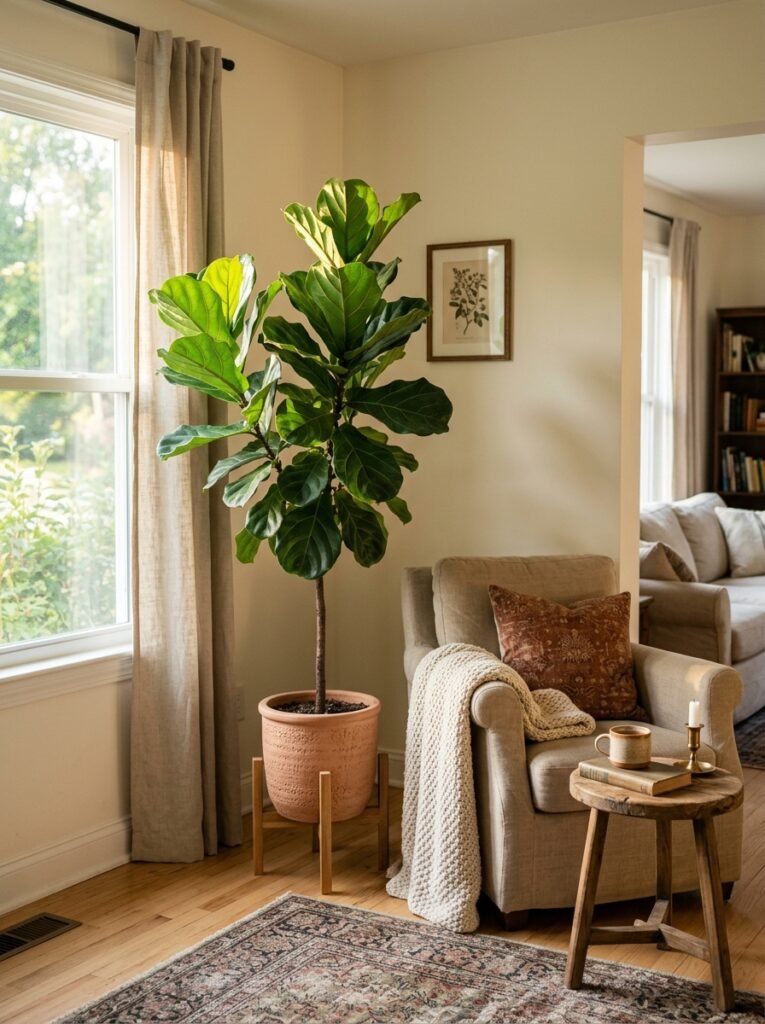
You know that awkward corner. Every living room has one. The one where the two walls meet and there’s just… nothing there. Maybe a lamp. Maybe a chair you never actually sit in.
A tall plant in that corner — and I mean TALL, like eye-level-when-seated tall — transforms it from a dead zone into a focal point. The room suddenly has four things worth looking at instead of three. The plant does the work that an expensive piece of furniture would do, for a fraction of the cost and with the added bonus of being alive and growing and occasionally making a new leaf, which is honestly a little thrilling every time.
—
10. The Low-Light Lie and Which Plants Can Actually Handle Your Dark Living Room
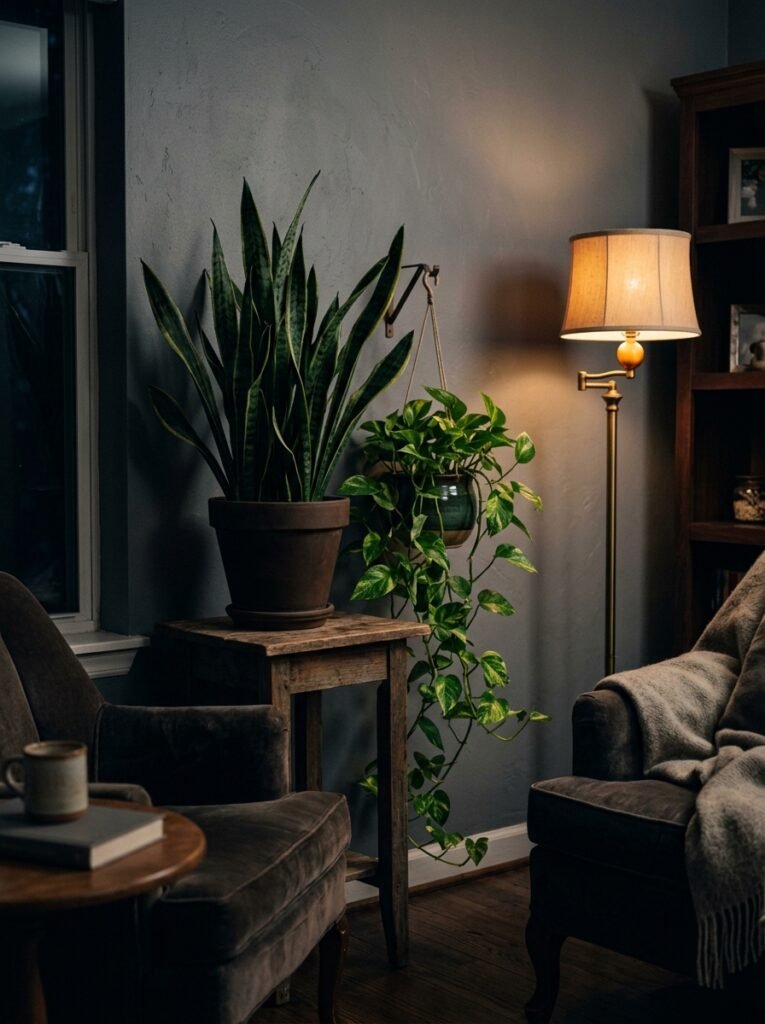
Real talk: most living rooms in the UK especially don’t get enough natural light for the plants that everyone wants. Fiddle-leaf figs. Calathea. Crotons. They want light you don’t have.
But there are plants that genuinely don’t care. Snake plants will grow in near-darkness — slowly, but they’ll grow. Pothos is practically unkillable in low light. Peace lilies will not only survive but FLOWER in a darker room, which feels like magic when it happens.
The key is matching the plant to the actual light in your room, not the light you wish you had. Grab your phone, open the camera, and point it at your window mid-morning. If it brightens up dramatically, you’ve got decent light. If the screen barely changes, you’re in low-light territory and you should shop accordingly.
“Match the plant to the light you actually have, not the light you wish you had.”
—
11. Pots as Part of the Furniture Story (Not an Accessory)
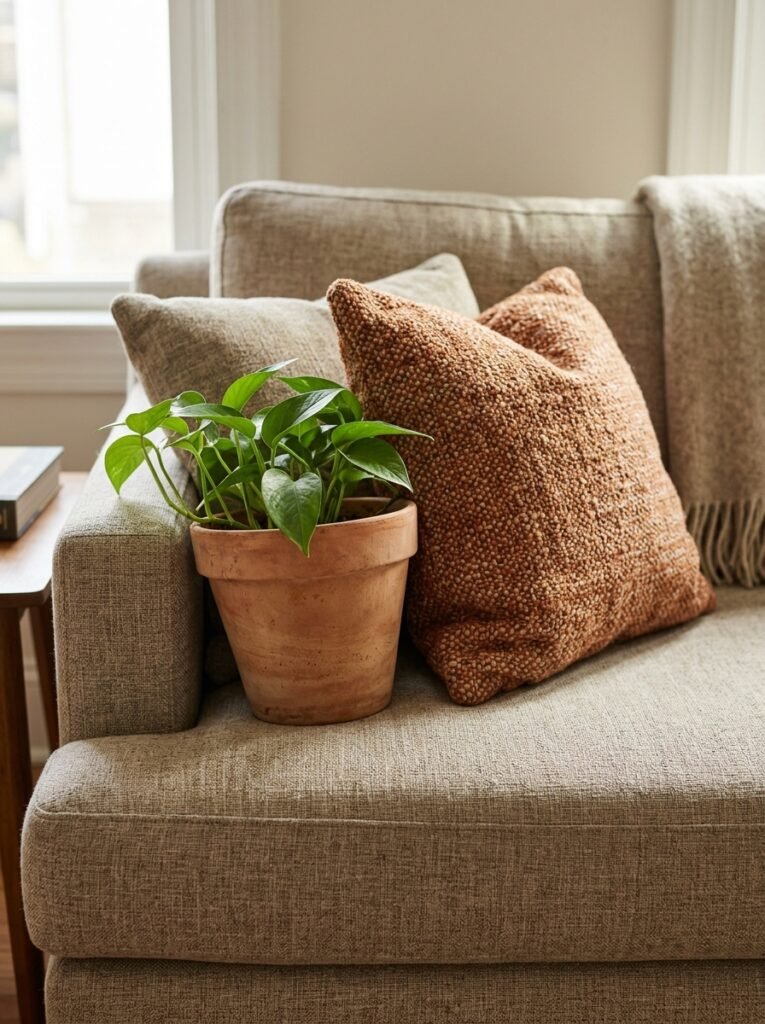
This is the mindset shift that took my living room from “nice plants” to “oh this is styled.” I started treating pots the way I treat cushions and throws — as part of the color and texture story of the whole room.
So when I added a new pot, I’d hold it next to my sofa. Next to a cushion. Next to the bookshelf. Did it fit? Not in a matching way — in a belongs-here way. Same energy. Same general warmth or coolness of tone.
Pots that look like they belong in the room make the whole room look pulled together. Pots that look like they came from a completely different house — even if the plant is beautiful — quietly undermine everything else.
And honestly, you don’t need many. Three or four really good pots, well chosen, do more than a dozen random ones.
—
12. The Last Thing to Add (Most People Skip This)
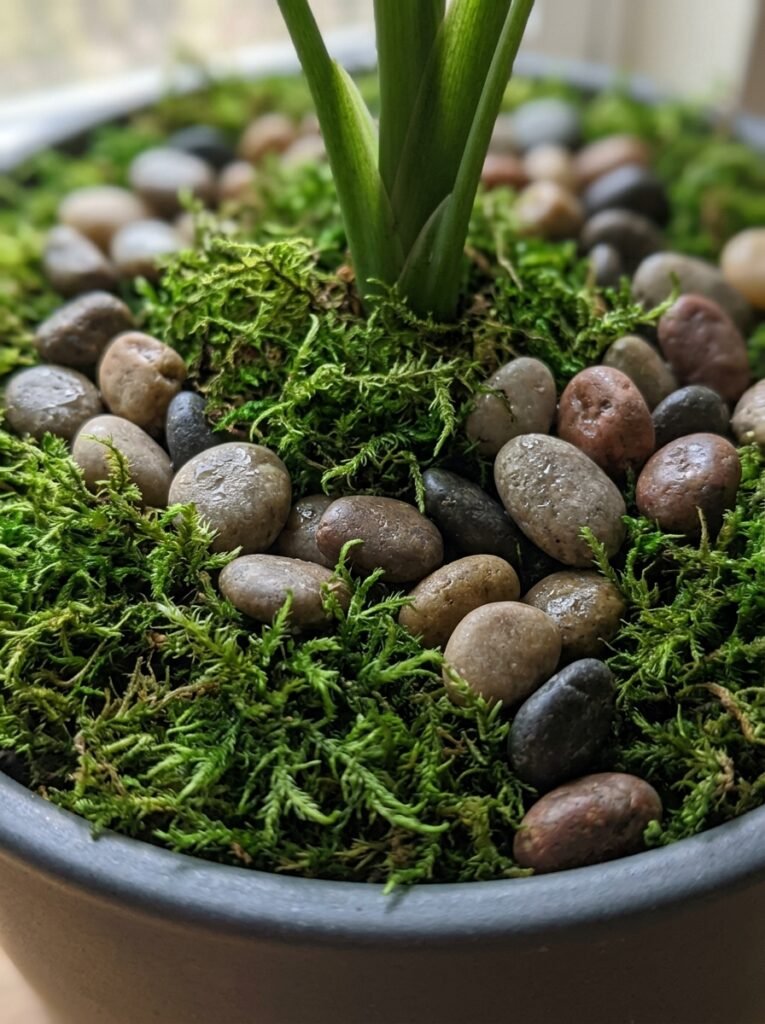
Moss. Or stones. Or a little layer of something on top of the soil.
Not gonna lie, this one sounds extra. But here’s what it does: it hides the ugly potting soil, which often dries out and cracks and goes grey and looks a bit grim. A thin layer of preserved moss, or a handful of smooth river pebbles, or even just some decorative sand on top of the soil — it makes the whole pot look finished. Like someone cared about every detail, right down to the bit most people ignore.
It’s the equivalent of ironing just the collar of a shirt. Nobody sees the rest but somehow the whole thing looks more put-together.
—
❓ FAQ
Q: What are the best indoor plants for a living room with not much natural light? A: Snake plants, pothos, and peace lilies are your best bets — they genuinely handle low light without sulking. ZZ plants are also nearly indestructible and look polished even without direct sun. Just avoid anything labeled “needs bright indirect light” if your room faces north or is shadowed by other buildings.
Q: What size pot should I use for my living room plant? A: A general rule is to choose a pot that’s about one to two inches wider than the plant’s current root ball, or for decorative purposes, roughly a third of the plant’s total height. Going too large actually causes problems because excess soil holds moisture and can cause root rot — so bigger isn’t always better when it comes to the actual growing pot.
Q: How do I style plants in a living room without it looking messy? A: Vary height, vary texture, and don’t crowd them. A few well-placed plants with considered pots look far more intentional than lots of small plants scattered around. Group odd numbers with different heights, leave breathing room on shelves, and make sure at least one plant has proper scale for the room — something large enough to anchor the space.
—
💭 Final Thoughts
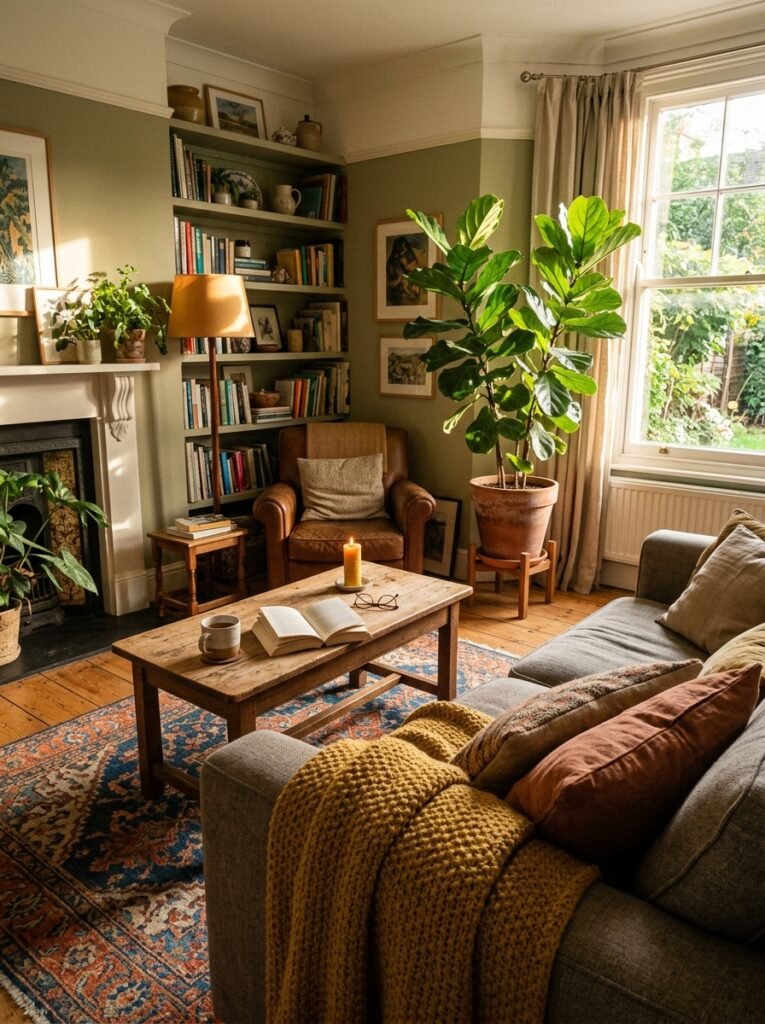
Plants changed my living room in ways I genuinely didn’t expect. Not because they’re trendy or because someone told me to get them, but because they make a room feel inhabited in the best possible way — like someone lives here, likes being here, and takes a little bit of care about it. The right pot, the right spot, a thin layer of moss on top. It adds up.
What’s the one spot in your living room that’s been quietly bugging you for months?