
Dark Feminine Minimalism: The Bedroom Aesthetic That’s Finally Getting the Credit It Deserves
My friend walked into my bedroom last spring and went completely quiet for a second. Then she said, “It feels like sleeping inside a secret.” I didn’t know how to explain it either, but that was exactly the point.
—
1. What “Dark Feminine Minimalist” Actually Means (Because Most People Get It Wrong)
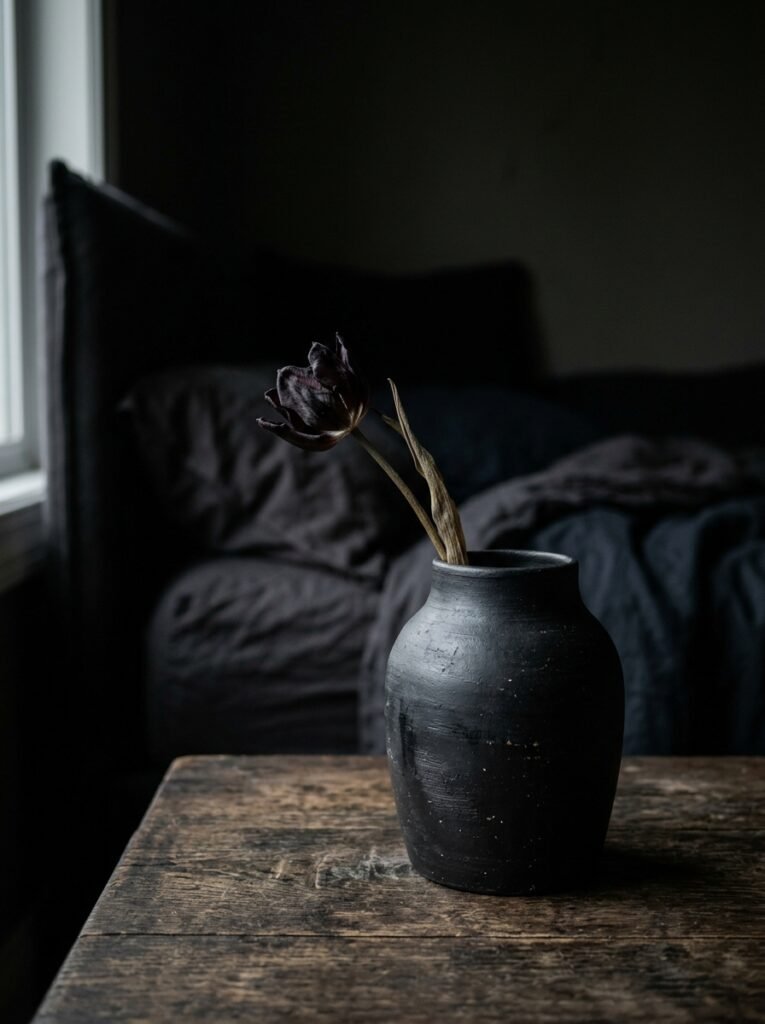
People hear “dark feminine” and picture Gothic canopy beds draped in velvet with skulls on the nightstand. And “minimalist” makes everyone think stark white walls and one sad plant. Put them together and people panic.
But that’s not it at all.
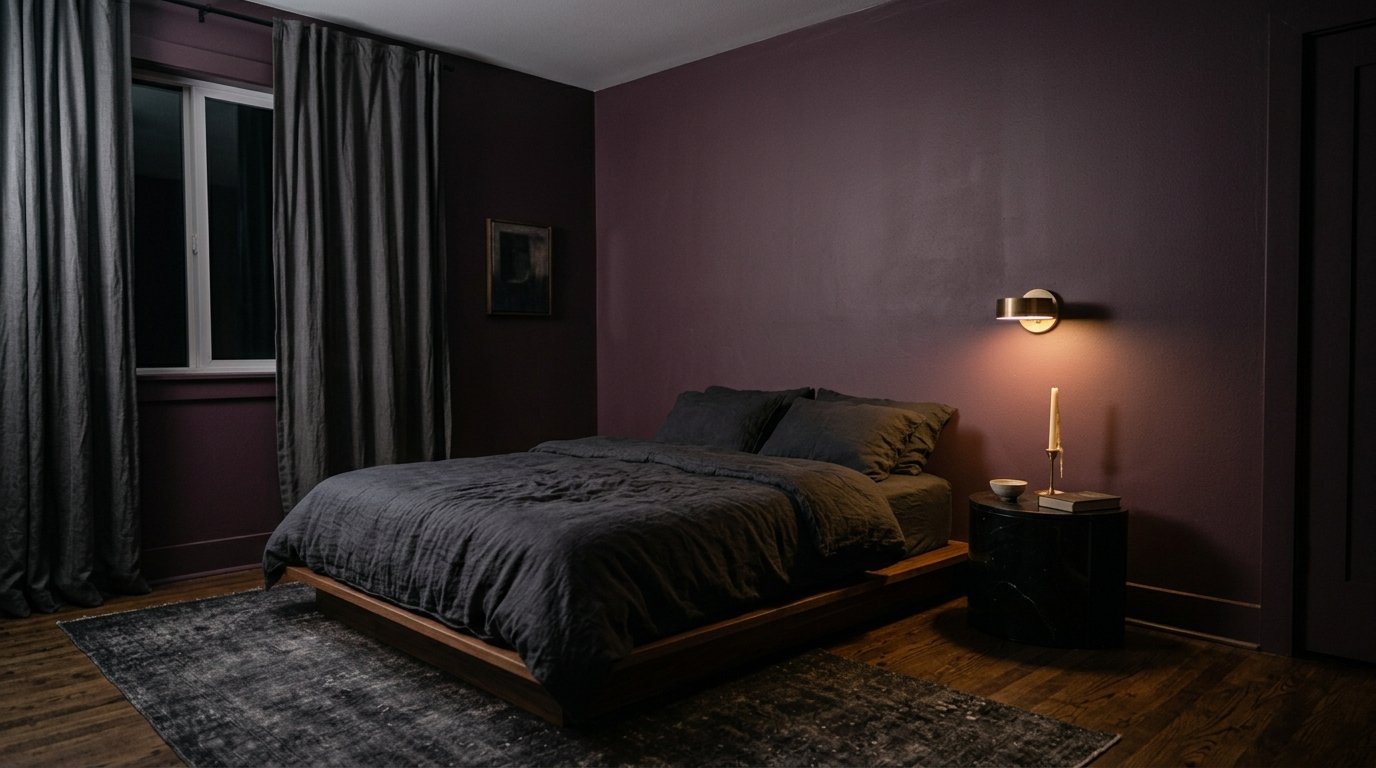
Dark feminine minimalism is restraint with depth. It’s choosing fewer things but making sure each one carries weight. The color palette leans moody — deep plums, dusty charcoals, warm espresso, faded mauve. Not black for drama’s sake, but darkness that feels deliberate. Intentional. Almost editorial.
The feminine piece isn’t about florals or softness necessarily. It’s about sensuality in texture, in curve, in the way a room makes you feel when you walk in at night and the only light comes from one candle on the dresser. It’s a bedroom that looks like it belongs to someone with taste and, honestly, a lot of inner life.
Minimalism here means you’re not cramming in every beautiful thing you own. You’re editing. Hard. You’re choosing the piece that earns its place over the piece that just fills space.
“A dark feminine bedroom isn’t decorated — it’s curated. There’s a difference, and you feel it the moment you walk in.”
—
2. The Wall Color Conversation Nobody Wants to Have
You’re going to have to commit.
That’s the uncomfortable truth. Dark feminine minimalism doesn’t work if you paint three walls charcoal and leave one white because you’re nervous. It reads as indecisive, and the whole energy collapses.
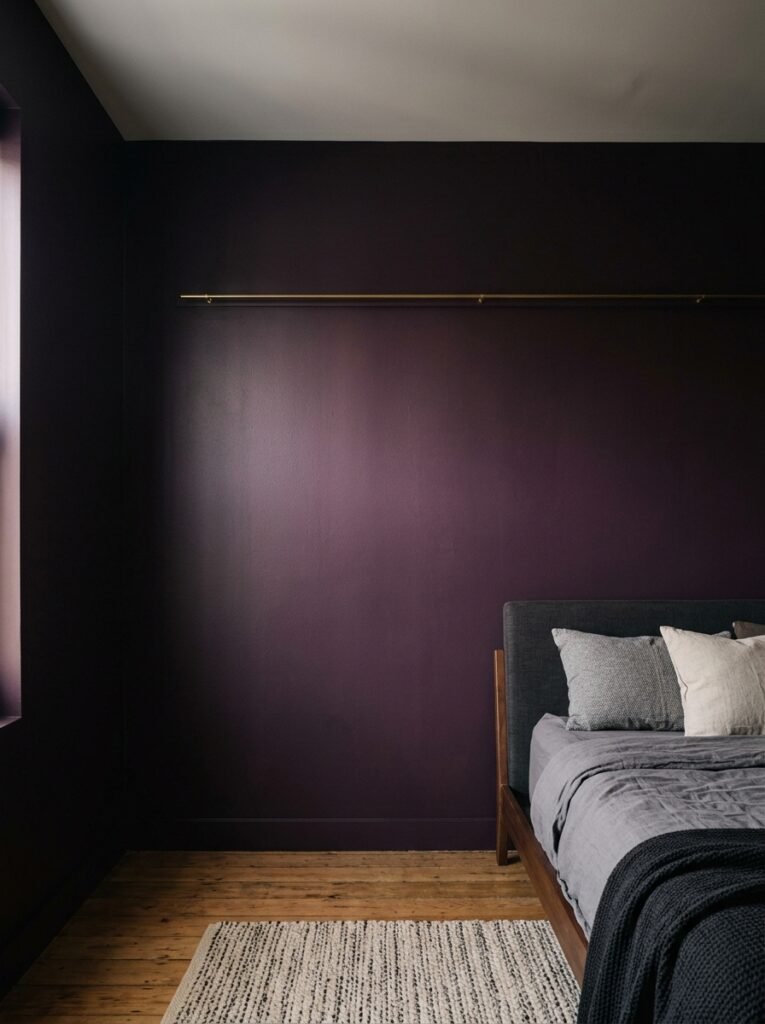
The colors that actually work — and I’ve stared at a lot of paint chips — are the ones that sit between two feelings at once. A green so dark it reads as black in low light but shows its true color in the afternoon. A dusty plum that’s purple in sunlight and almost grey at night. A warm taupe so deep it feels like the room exhaled.
If you’re renting or genuinely can’t commit to a full wall color, here’s what actually works: a large-scale fabric wall hanging in a dark, muted tone can do a surprising amount of heavy lifting. It’s not a cheat — it’s an art decision. But don’t go half-in on the color story. Pick a direction and stay in it.
—
3. The Bedding Rule That Changes Everything
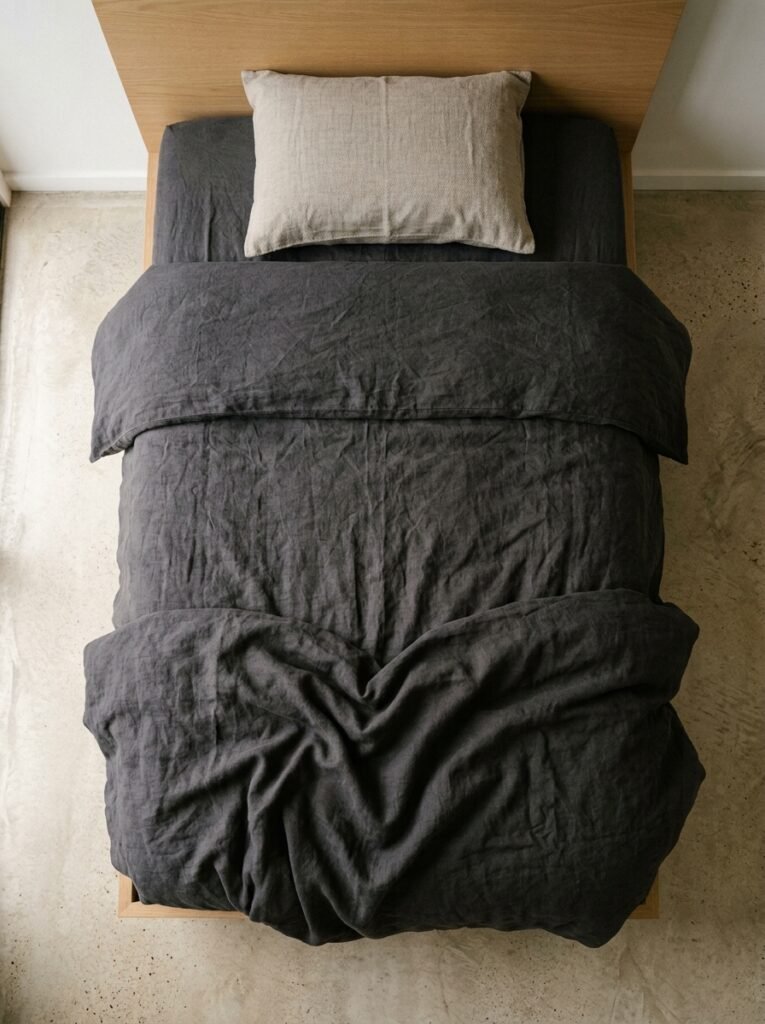
Most people buy dark-toned bedding and pile it with bright white pillows because they’re scared of going too far. Understandable. But it creates visual noise — your eye bounces between contrast points instead of settling.
The rule I swear by: stay within a two-tone range, and let texture do all the work.
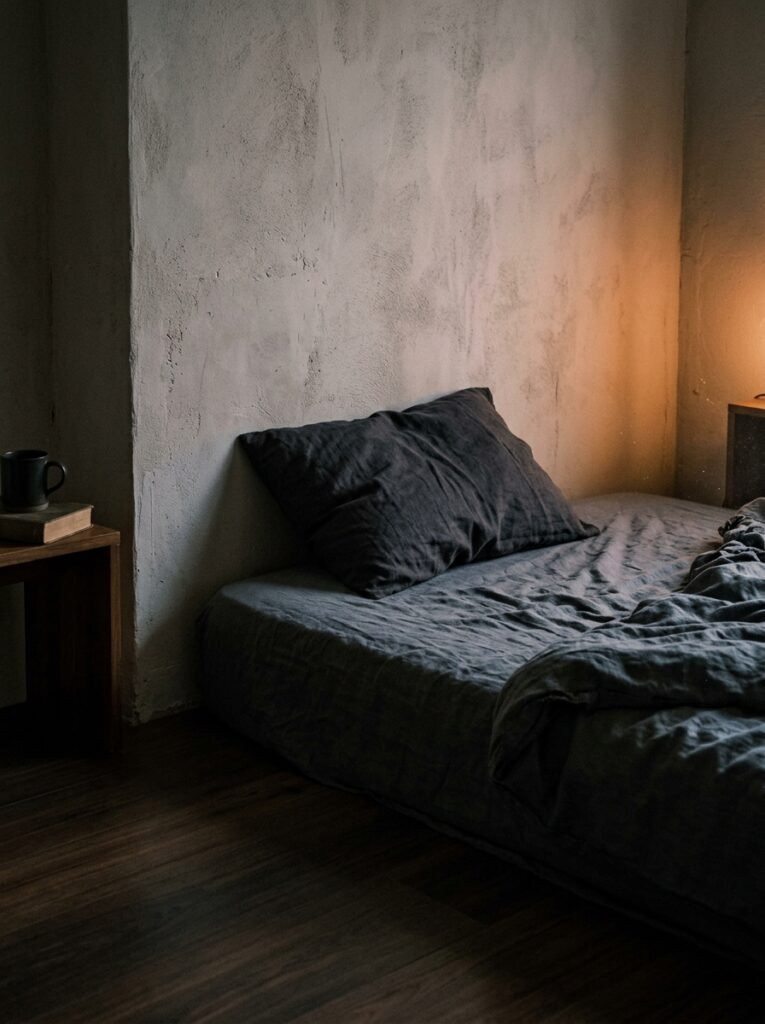
So — dark charcoal linen duvet. A throw in a slightly lighter charcoal, maybe with a subtle weave pattern. Pillowcases in the same deep tone but a different fabric — a bit of sheen against the matte linen. That’s the whole palette. Three versions of almost the same color, but they look completely different because of how light hits the surface.
Satin pillowcases in a deep plum, by the way. Still underrated. They photograph beautifully and feel extraordinary against your face at 11pm, which should count for something.
—
4. Lighting That Feels Like It Was Designed by Candlelight
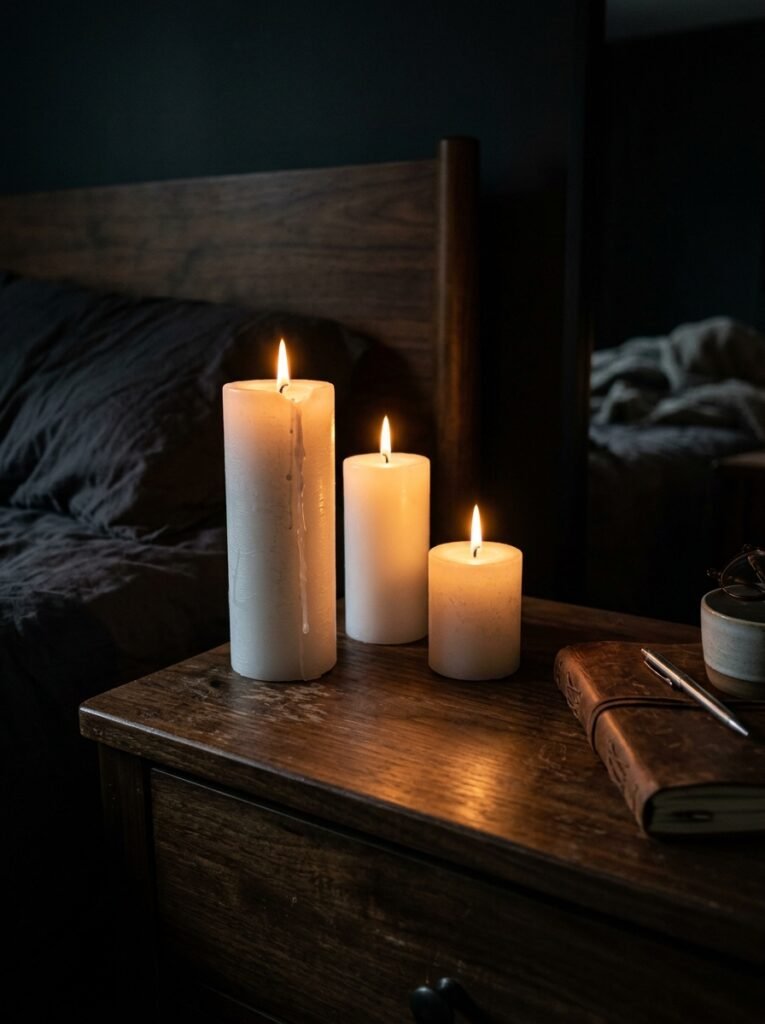
Overhead lighting is the enemy of this aesthetic. Full stop.
You don’t want a bright ceiling fixture flooding your entire bedroom with cool white light. That’s a hotel bathroom, not a dark feminine sanctuary. What you want is layers of warm, low light that you control.
A small sculptural lamp on the nightstand with an amber-tinted bulb. A floor lamp in the corner that pools light downward, not outward. If you have a dresser, a tiny warm lamp there too — just enough to make that corner glow at night like something from a painting.
Dimmer switches. Get them. Worth every penny of the installation cost, and honestly they’re pretty easy to fit yourself if you’re at all handy.
The goal is that at 9pm, your bedroom looks completely different from how it looks at 9am. Both should be beautiful. The 9pm version should feel almost theatrical — but not trying to be. Like it just happened that way.
—
5. The Furniture Silhouette Question Nobody Asks Enough
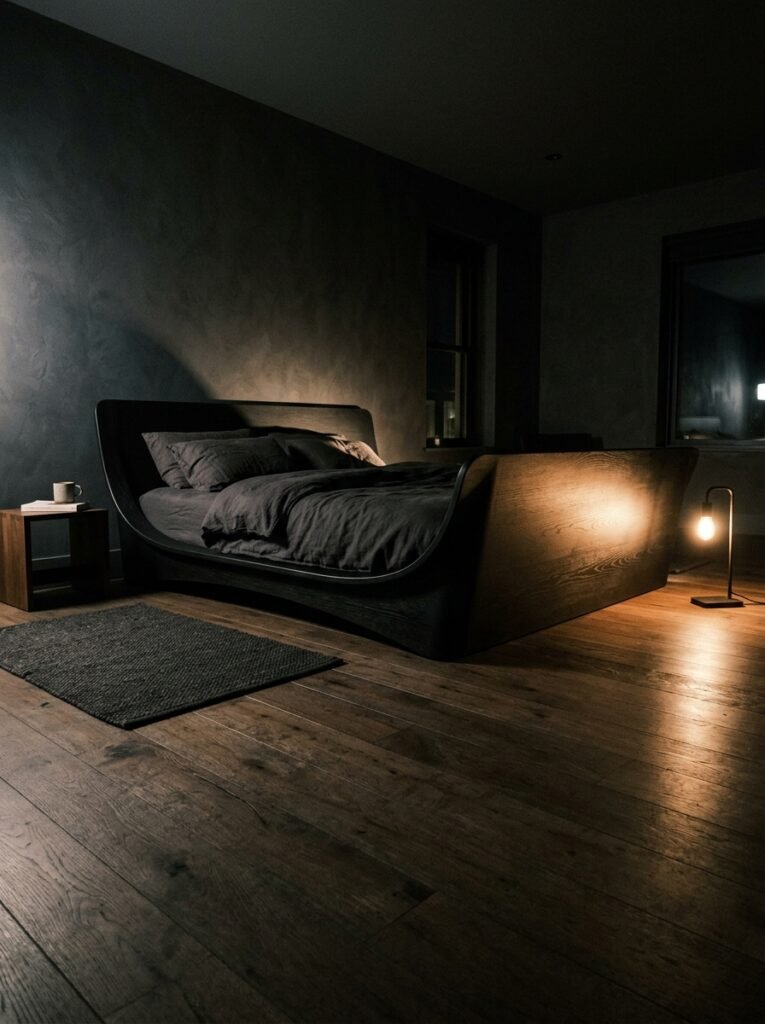
Here’s something I didn’t think about when I started pulling this look together: silhouette matters more than finish.
You can have a light wood bed frame and still achieve this aesthetic if the silhouette is right — if it’s low to the ground, clean-lined, a little architectural. Or you can have a dark walnut frame that still feels wrong because it’s too fussy, too chunky, too ornate.
Dark feminine minimalism tends to want furniture with:
- Low profiles (low beds, long dressers, nothing towering)
- Clean but not harsh edges — a slight curve somewhere, even if everything else is angular
- A sense of weight without bulk — solid-feeling without dominating the room
That last one is hard to articulate, but you know it when you see it. It’s the difference between a nightstand that looks planted and one that looks like it wandered in from a different room.
“Low furniture doesn’t just look better in this aesthetic — it changes how the room feels to be in. It slows you down. Makes the ceiling feel higher.”
—
6. The One Textile You’re Probably Missing
Curtains. Specifically — floor-length curtains in a heavy, light-blocking fabric that pools very slightly on the floor.
Not blinds. Not short curtains that end at the window sill. Not sheers.
Long, heavy curtains that go from ceiling to floor (hung high — always hang them high, like four inches below the ceiling) in a dark or deeply muted tone. Charcoal linen that blocks out morning light. Deep slate velvet that makes the room feel like it has walls within walls.
The pooling is important. Just an inch or two of extra fabric on the floor. It’s the detail that makes a room look designed rather than just decorated. It’s the thing editors do in photo shoots that nobody points at directly but everyone feels.
If your windows are small, this trick visually enlarges them. If they’re large, it makes the room feel dramatic in the best way. It genuinely doesn’t have a bad use case.
—
7. Scent Is Part of the Aesthetic (Yes, Really)
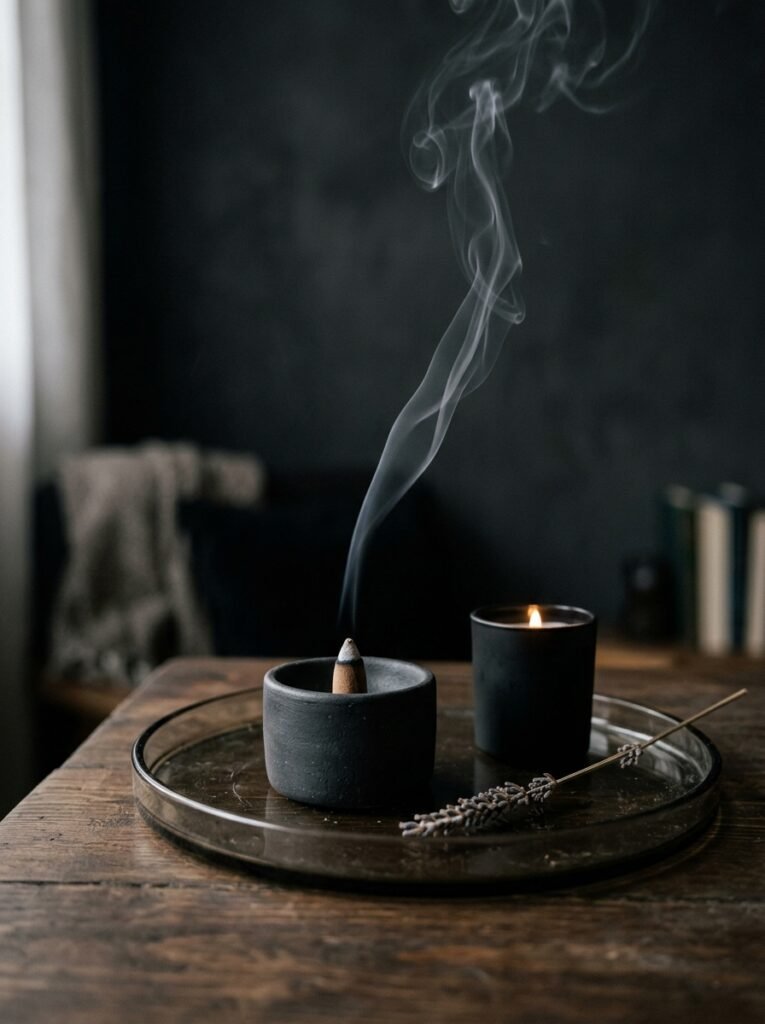
I’m serious about this one. Not gonna lie, when I first started thinking about bedroom aesthetics as something multi-sensory it felt a bit extra. But bear with me.
A dark feminine minimalist bedroom that smells like nothing — or worse, like synthetic linen spray — feels incomplete. The scent of the room is part of the atmosphere. And this particular aesthetic has its own scent vocabulary.
Sandalwood. Black amber. Vetiver. Smoked oud. Warm cedarwood. These are the notes that make a dark, moody room feel coherent. Not florals (unless they’re very dark florals — a deep rose with tobacco underneath). Not citrus. Not anything that reads as “clean laundry.”
One well-chosen candle or a reed diffuser in a dark glass vessel on the dresser does the job. You’re not filling the room with scent, you’re hinting at it. The way the room ALMOST smells like something, and you’re not quite sure what.
—
8. Mirrors: One, and Make It Count
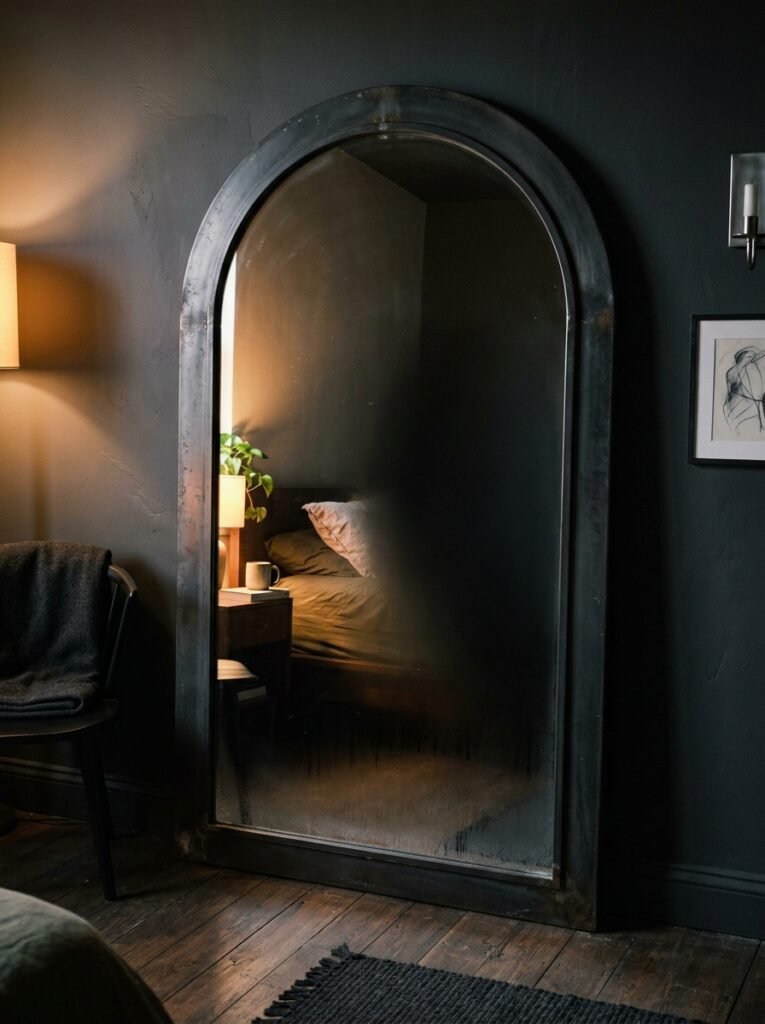
Not a whole gallery of small mirrors. Not a plain rectangle from any flat-pack store. One mirror. Chosen like it’s art.
In a dark feminine minimalist bedroom, a mirror does two things: it bounces light around a room that’s intentionally low-lit, and it adds a graphic element to a wall that doesn’t need clutter. A round mirror with a thin dark metal frame. An arched mirror, floor-length, leaning against the wall at a slight angle. A vintage-feeling bevelled mirror with a bit of aged patina that makes it look like it came from somewhere interesting.
The leaning floor mirror is, I think, one of the most underused tools in bedroom design. It fills vertical space without hanging anything. It makes the room feel taller. And in a dark, spare room, a large mirror leaning in the corner creates this beautiful depth — you’re not sure where the room ends.
—
9. Plants That Actually Belong in This Aesthetic
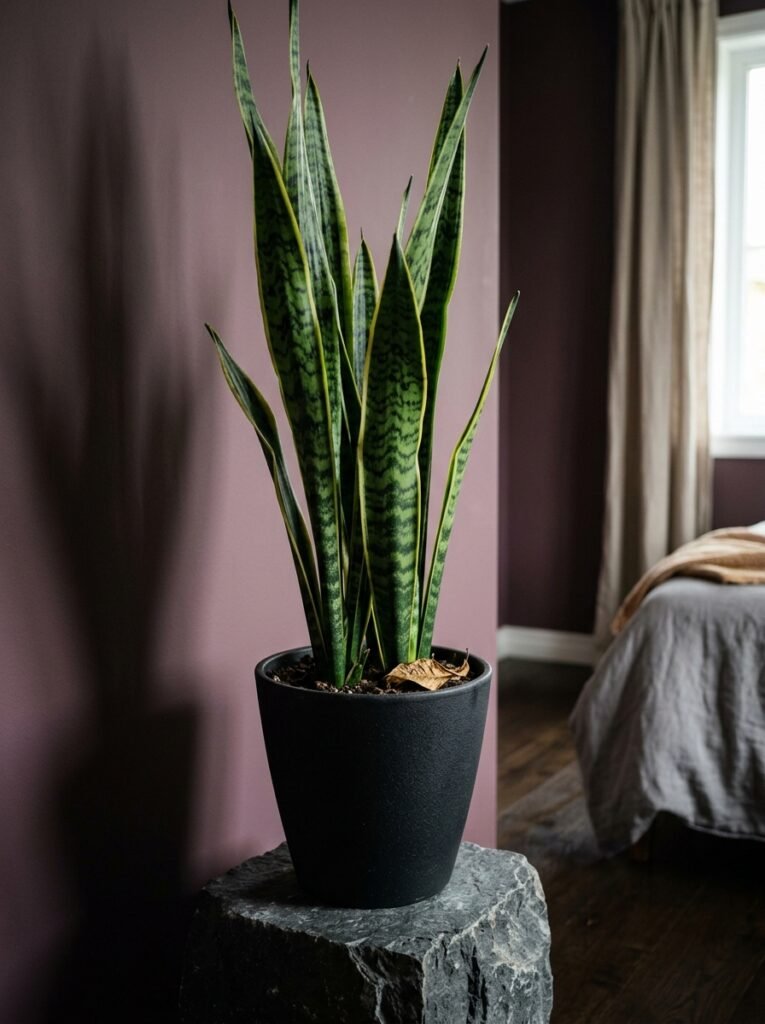
Not all plants fit. That sounds ridiculous to say, but it’s true.
A bright, cheerful succulent arrangement in a terracotta pot — wonderful plant, wrong room. In a dark feminine minimalist space, you want plants that lean dramatic. A single snake plant in a matte black or deep terracotta pot. A dark-leafed plant like a burgundy rubber tree or a black prince echeveria. One large trailing plant — pothos works fine — in a dark, simple vessel where the vine becomes the visual element, not the pot.
The key is: one or two plants, placed with real intention, not scattered around for “green.” The pot matters as much as the plant. A beautiful plant in the wrong container is a missed opportunity.
—
10. How to Edit Your Existing Stuff Into This Aesthetic
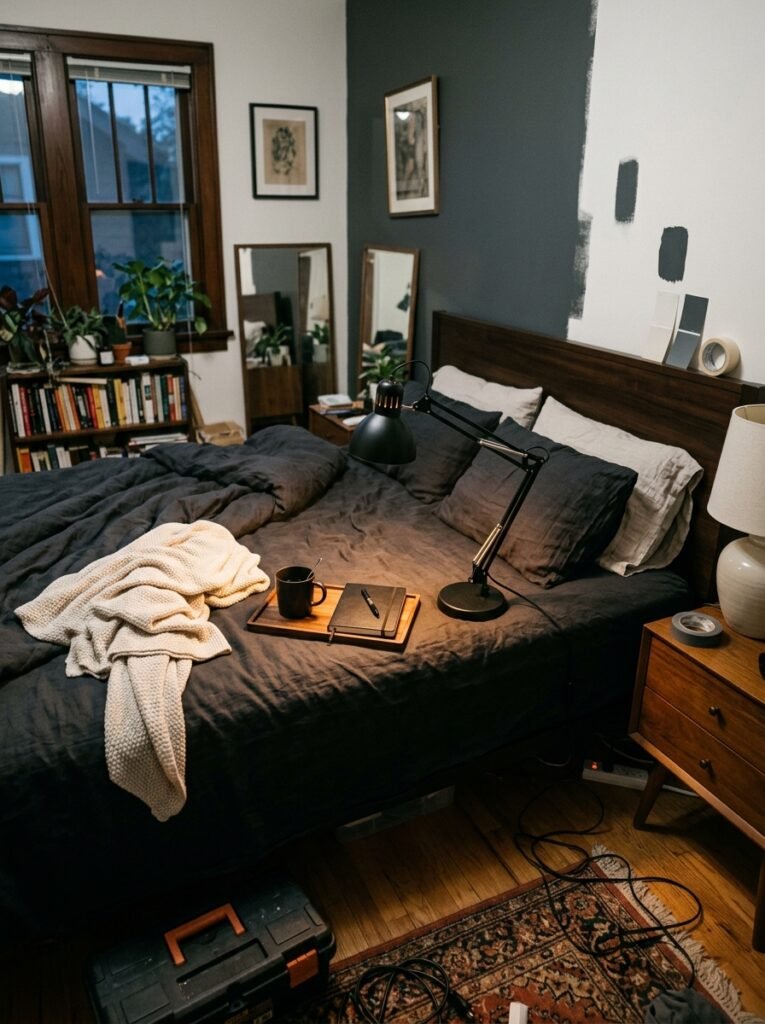
You don’t have to start from scratch. That’s the good news.
Walk around your bedroom and look at everything you own through one filter: does this add weight and depth, or does it add noise?
Anything that reads as bright, cheerful, or casual probably needs to go — or be moved to another room. A couple of lighter-colored items can stay if they earn their place through interesting shape or texture. A white ceramic vase can work if the form is sculptural enough. A pale throw can stay if the texture is interesting enough to anchor it.
What you’re doing is a purge followed by a permission slip. Purge the filler. Then give yourself permission to keep the three or four things you ACTUALLY love, even if they don’t match perfectly. Dark feminine minimalism isn’t a strict formula — it’s a sensibility. And sensibility has a little room for the unexpected.
“Edit until it hurts a little. Then put one thing back — the piece you love most. That’s usually the right number.”
—
11. The Biggest Mistake People Make With This Aesthetic

They make it cold.
They go dark and spare and forget to add warmth, and then they wonder why the room looks great in photos but feels uncomfortable to actually sleep in. Because a bedroom that feels like an art installation is just that — an installation. Not a sanctuary.
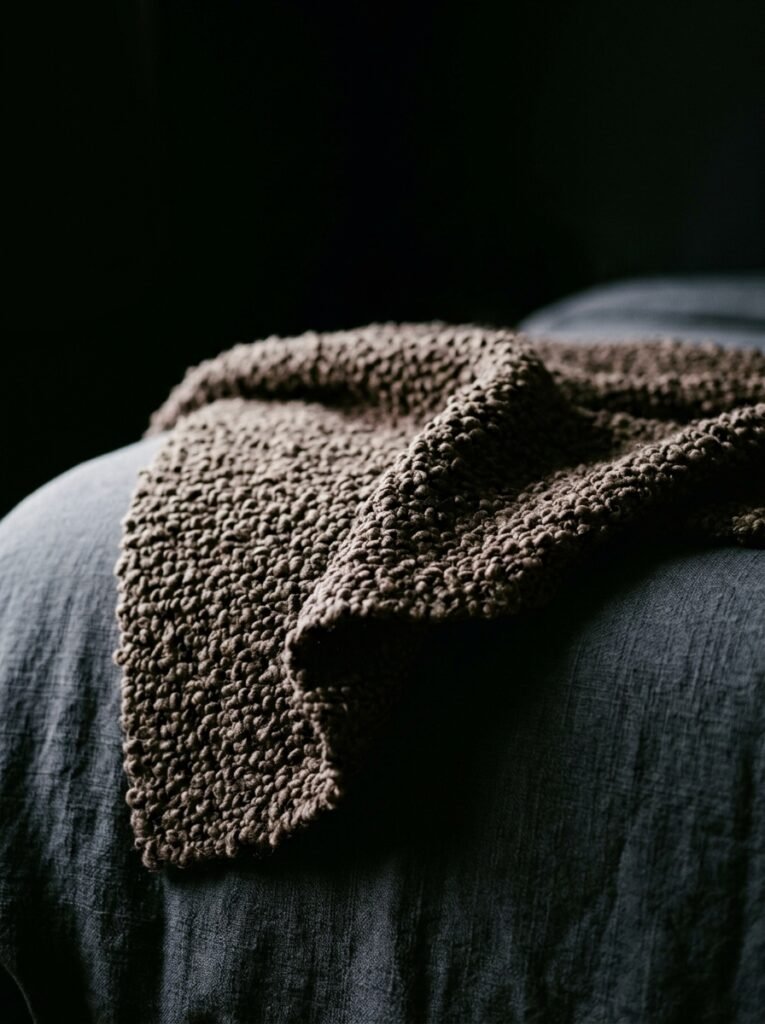
Warmth in a dark minimalist space comes from texture. A chunky knit throw folded at the foot of the bed. A sheepskin or boucle rug on the floor where your feet land in the morning. A wooden element — even just a small wooden tray on the nightstand — that breaks up too much metal and dark fabric. These are small things. But they’re the difference between a bedroom you want to live in and one that just looks good on a screen.
The amber light helps too, which is why I keep coming back to it. Cool light in a dark room feels clinical. Warm light in a dark room feels like somewhere you’d want to spend a Sunday morning doing nothing.
—
12. Where to Start When the Whole Thing Feels Overwhelming
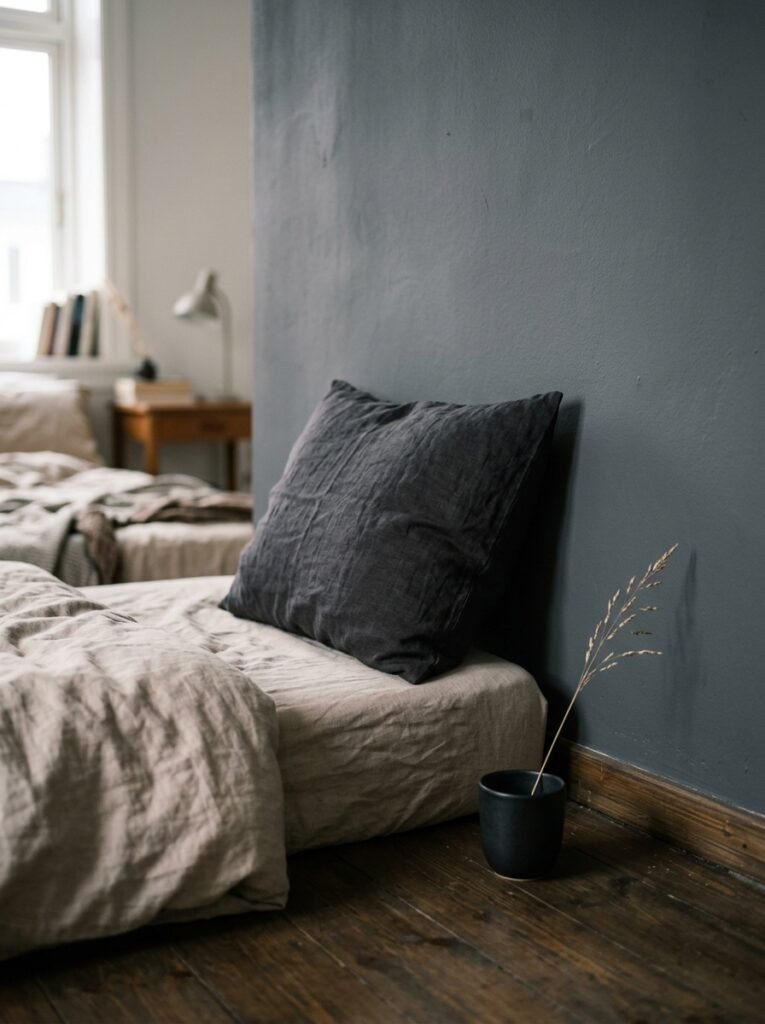
Pick one thing. Genuinely, just one.
The mistake is trying to do everything at once — paint the walls, replace the bedding, get new curtains, buy a new lamp, rearrange the furniture — and then giving up because it’s a lot. Or worse, spending a ton of money and getting something that doesn’t feel right because you didn’t give yourself time to sit with each change.
Start with the bedding. Or the curtains. Or one lamp. Make that one change and live with it for a week or two. Let your eye adjust. See what the next obvious step is. The room will start telling you what it needs, which sounds mystical but is actually just how decorating works when you slow down enough to pay attention.
Dark feminine minimalism is a slow aesthetic anyway. It’s not about the reveal — it’s about the accumulation of quiet, intentional choices that build a room with a genuine feeling. That takes time. And the process, honestly, is kind of the whole point.
—
❓ FAQ
Q: Can dark feminine minimalist bedrooms work in small spaces or will they feel claustrophobic? A: They can work beautifully in small rooms, but the key is getting the lighting right and keeping furniture genuinely low and sparse. Dark walls in a small room with bad lighting will feel heavy, but dark walls in a small room with warm, layered light often feel cozy and intentional rather than cramped. The low furniture rule matters more in a small space.
Q: What’s the best starting point if I’m renting and can’t paint the walls? A: Go big on the bedding and the curtains — both can be taken with you when you move, and both carry enormous visual weight. A single large-scale piece of art or a fabric wall hanging in a deep, muted tone can shift the mood of a room significantly without touching the walls. Focus your budget there first.
Q: Does this aesthetic work with warm-toned wood floors, or does it need dark floors? A: Warm wood floors actually work really well — they add exactly the kind of organic warmth that keeps a dark feminine room from feeling cold. Light grey or cool-toned floors can feel slightly disconnected, but a large dark rug bridges that gap nicely. Don’t stress the floor colour too much; it’s fixable with the right rug.
—
💭 Final Thoughts
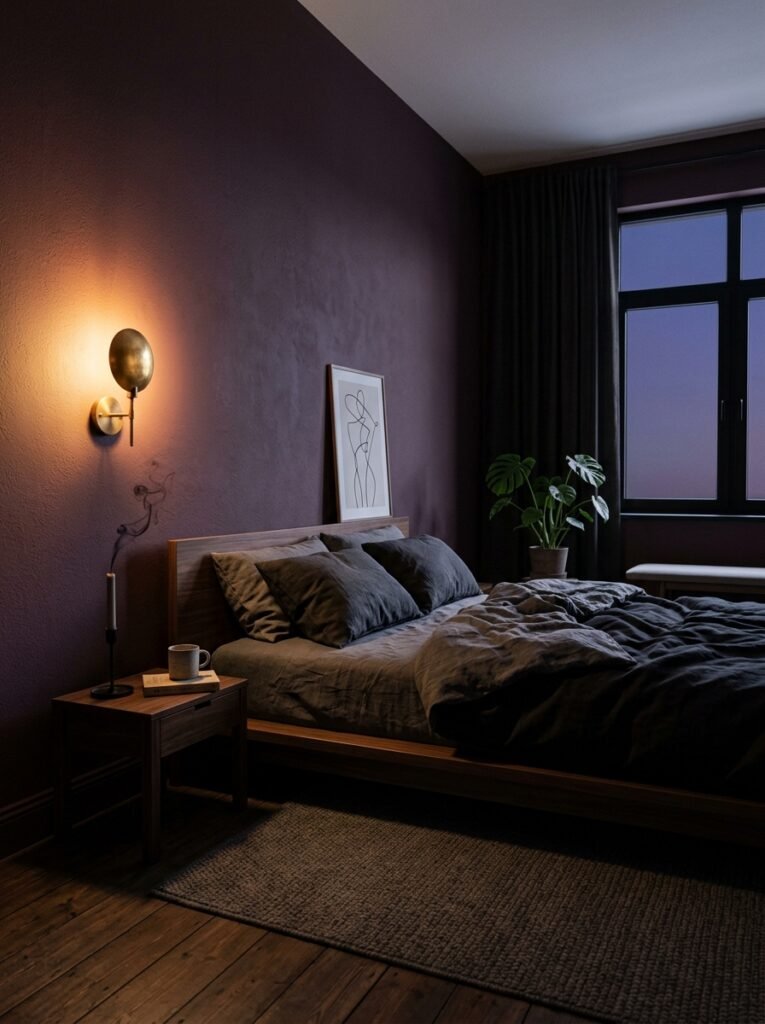
A bedroom should feel like something. Not just look like something — feel like it. Dark feminine minimalism gets that instinctively, which is probably why it keeps showing up on everyone’s saved boards regardless of whether they can name what they’re looking at.
The whole point is a room that holds you rather than impresses you. Quiet, layered, a little mysterious — the kind of space where you close the door at night and the rest of the world actually recedes.
What one change would make your bedroom feel more like a place you actually want to be?