Why Modern Farmhouse Kitchens Are Having a Serious Moment (And How to Actually Get the Look Right)
My friend texted me a photo last week. Her kitchen, mid-renovation, exposed beams and all, with the caption: “is this too much or not enough?” And honestly? It was BOTH. But in the best possible way.
That’s kind of the whole thing with modern farmhouse kitchens. They’re a push and pull. Rough and smooth. Old and new. Get the tension right and it looks like it evolved naturally over decades. Get it wrong and it looks like a showroom no one actually cooks in.
So let’s talk about how to get it right.
—
1. The Feature That Makes or Breaks the Whole Aesthetic (Hint: It’s Not the Cabinets)
Everyone fixates on the cabinets. The shaker doors, the color, the hardware. And yes, those matter. But the thing that actually anchors a modern farmhouse kitchen? The ceiling.
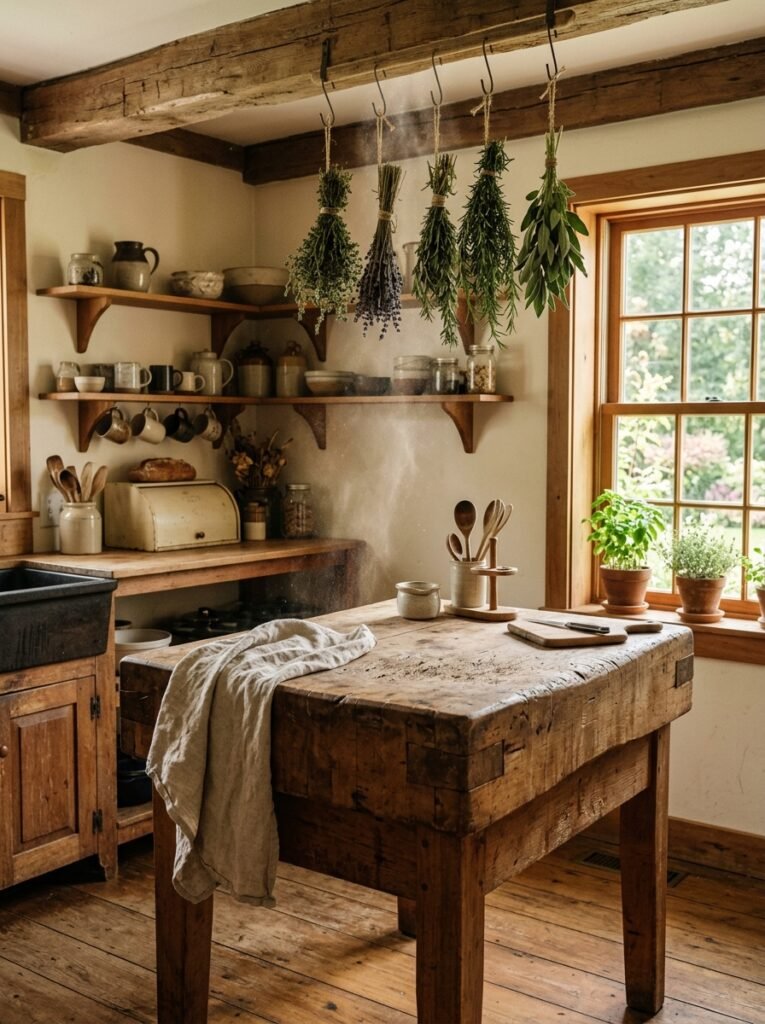
Exposed wooden beams — or even just the illusion of them — do something that no paint color or pendant light can replicate. They give the room history. Weight. That sense that this space has been here longer than you have, and it’ll be here long after you’re gone.
Now, not everyone has a period property with original beams hiding behind plasterboard. I get it. Faux beams have come a long way. Done well, with the right stain and enough spacing to look structural rather than decorative, they can absolutely hold their own. The key is going darker than you think you need to. Pale, honey-toned beams on a white ceiling just look like craft project. Deep walnut or weathered grey oak? That’s the move.
“The ceiling is the part people forget about. Add something up there and the whole room shifts.”
—
2. Why Shaker Cabinets Still Work (Even Though Everyone Has Them)
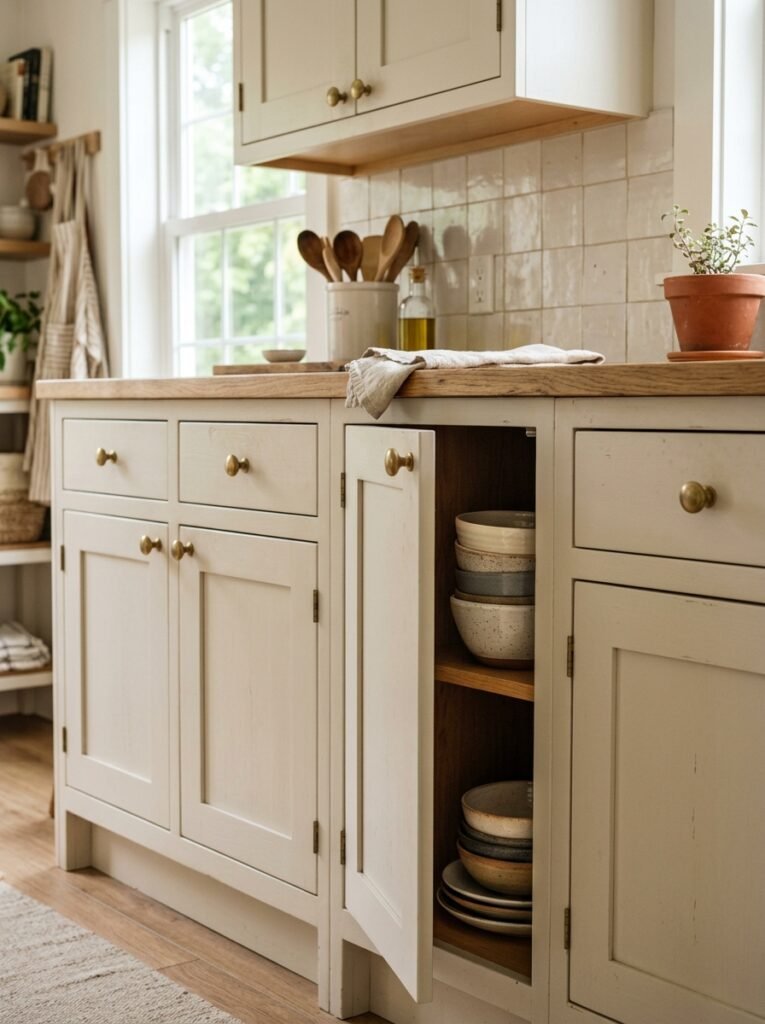
Okay, I know. Shaker cabinets feel ubiquitous at this point. You’ve seen them everywhere. But there’s a reason they’ve stuck around, and it’s not because designers got lazy.
The flat recessed panel is genuinely timeless. It’s got enough detail to feel crafted without being fussy, and in a modern farmhouse context, it bridges that gap between utility and beauty really well. The farmhouse side wants something that looks like it was made by hand. The modern side wants clean lines. Shaker delivers both.
Where people go wrong is the COLOR. Not the style. If your shaker cabinets are bright white and nothing else is bringing warmth into the space, the kitchen ends up feeling clinical. Cold. More like a lab than a farmhouse.
The palette that keeps coming up — and I mean keeps coming up — is soft sage, dusty olive, or muted navy on the lower cabinets, with off-white or warm cream on the uppers. That contrast does a lot of heavy lifting. It visually grounds the room, makes the ceiling feel higher, and adds enough color to feel considered without overwhelming the space.
Side note — if you’re in a smaller kitchen, all one color is actually fine. Trying to do two-tone in a galley kitchen just creates visual chaos.
—
3. The Color That Keeps Showing Up in Every Beautiful Farmhouse Kitchen Right Now
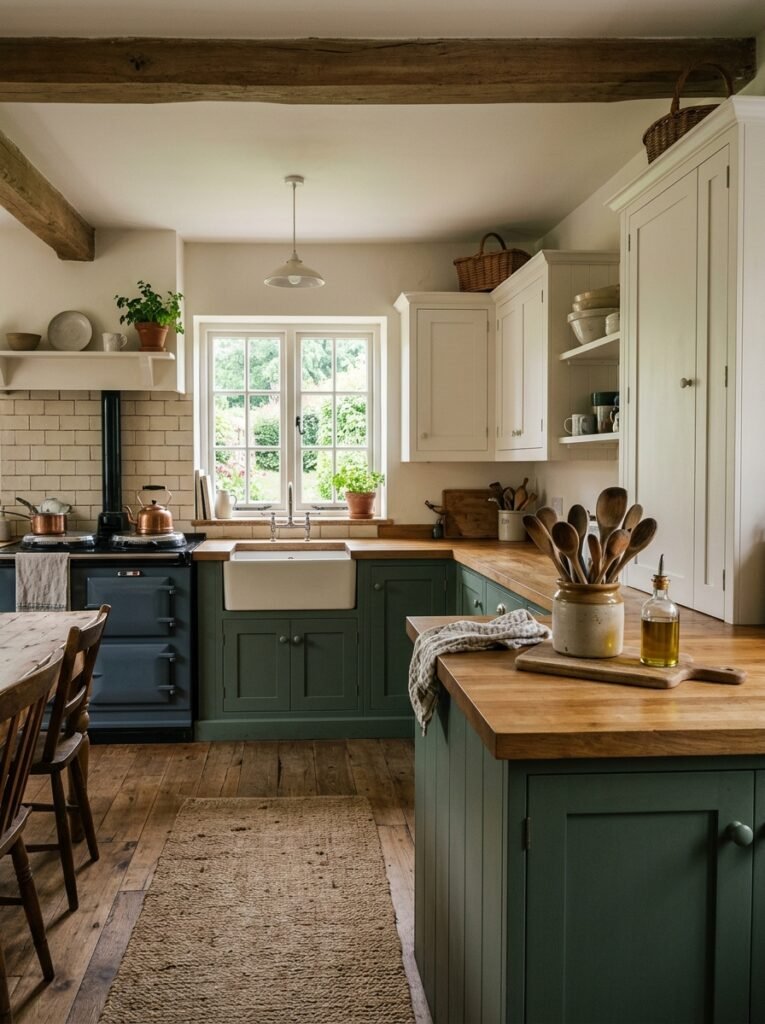
It’s not white. It’s not grey (thank goodness, grey’s had its moment and it’s tired). It’s a warm, slightly greenish, kind of dusty shade that sits somewhere between sage and putty and I honestly can’t describe it precisely which is maybe why it works so well.
These muted, botanical-adjacent tones work because they read as natural. They belong next to wood and stone and aged brass. They don’t fight with the textures in the room. And in both morning light and evening lamplight, they shift and breathe in a way that flat white never will.
For UK readers specifically — these shades work brilliantly in older terraces and cottages where the light is lower and cooler. They warm the room without making it feel dark.
For US readers in newer builds where you’ve got higher ceilings and more light flooding in? Go slightly cooler on the undertone or it can tip into muddy. There’s a fine line.
—
4. The One Rule That Makes Any Farmhouse Kitchen Feel Intentional Rather Than Chaotic
Here’s where I have a strong opinion. Ready?
Don’t try to do everything at once.
The farmhouse aesthetic CAN accommodate exposed brick AND open shelving AND a Belfast sink AND wooden countertops AND hanging copper pans AND vintage textiles all in the same room. But only if each element has BREATHING ROOM. Cram it all in and it stops feeling lived-in and starts feeling like a prop set.
Pick three or four things that matter to you most and let those lead. Let everything else support. If the beams are the star, the shelving should be simple. If the sink is the focal point, the hardware should be understated. If the open shelving is the thing you’re really excited about, the walls around it should stay quiet.
“The farmhouse kitchen that looks effortless usually has one person behind it who made very deliberate edits.”
Restraint is the secret ingredient here. And it’s genuinely harder to achieve than it sounds.
—
5. Belfast Sinks vs Apron-Front Sinks — and Why It Actually Matters Which One You Choose
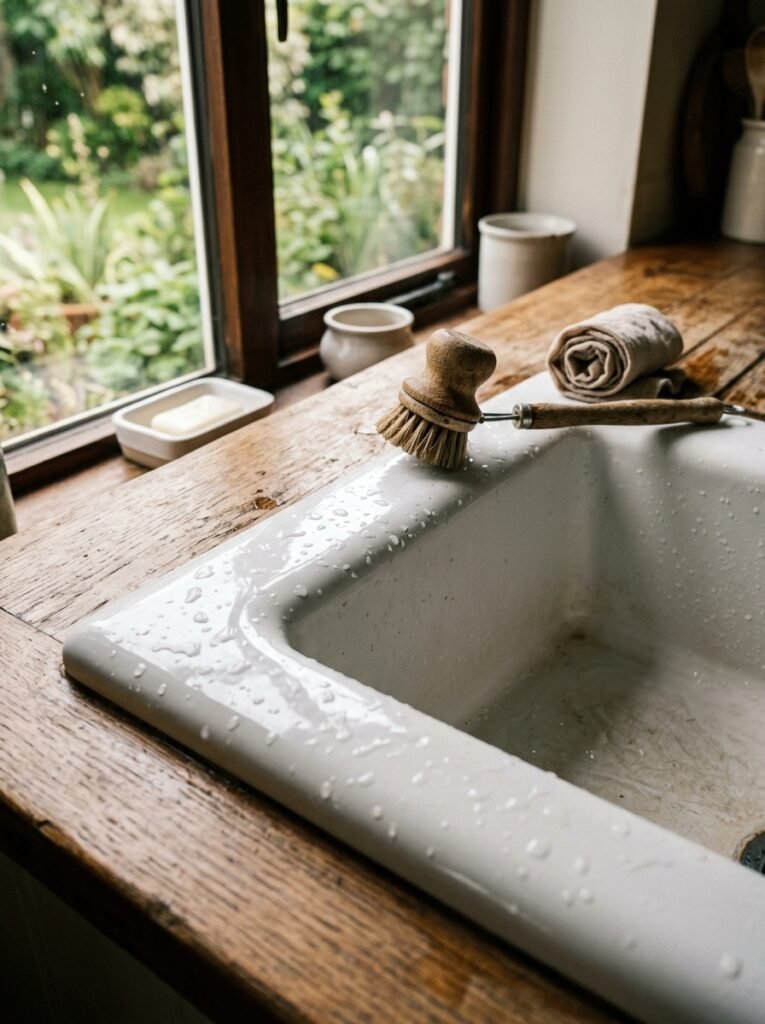
This comes up constantly and I think it matters more than people realize, not just aesthetically but practically.
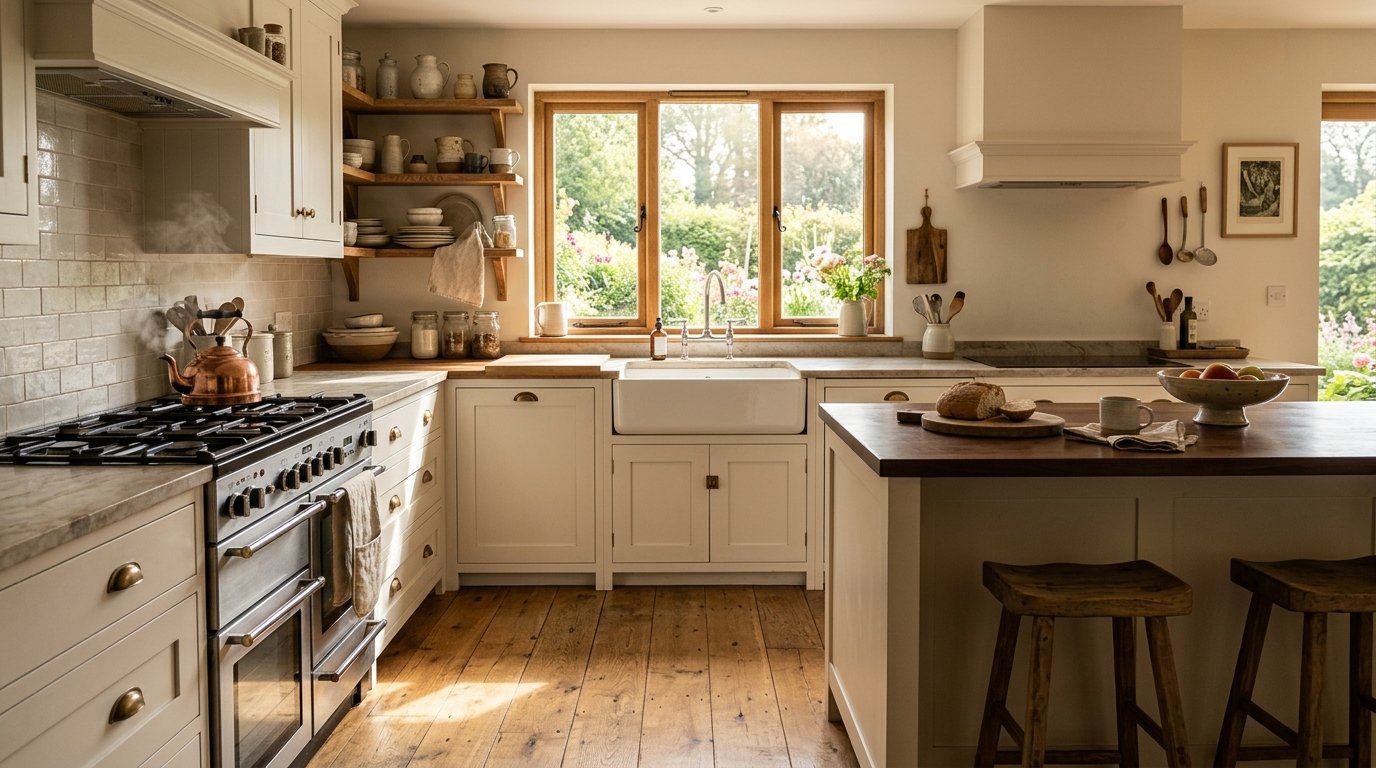
A traditional Belfast sink — the deep, thick-walled ceramic one — has a really specific look. It’s chunky and utilitarian and undeniably British in its origins. It suits older kitchens, lower countertops, and spaces with a lot of stone or tile. It wants to sit in a run of painted cabinetry with turned feet or corbels below it.
An apron-front sink (what most Americans call a farmhouse sink) tends to be shallower, often comes in fireclay or enameled cast iron, and sits flush with or slightly proud of the cabinet face. It’s more versatile. It reads as slightly more modern.
If you’re doing a kitchen that leans into the rustic side of the farmhouse aesthetic — flagstone floors, rough plaster walls, heavy beams — the Belfast sink fits perfectly. If your version of farmhouse is cleaner, more Scandinavian-influenced, mixing white oak with matte black hardware? The apron-front gives you more visual flexibility.
Neither is wrong. But knowing WHY you’re choosing one matters.
—
6. The Hardware That Costs Almost Nothing But Changes Everything
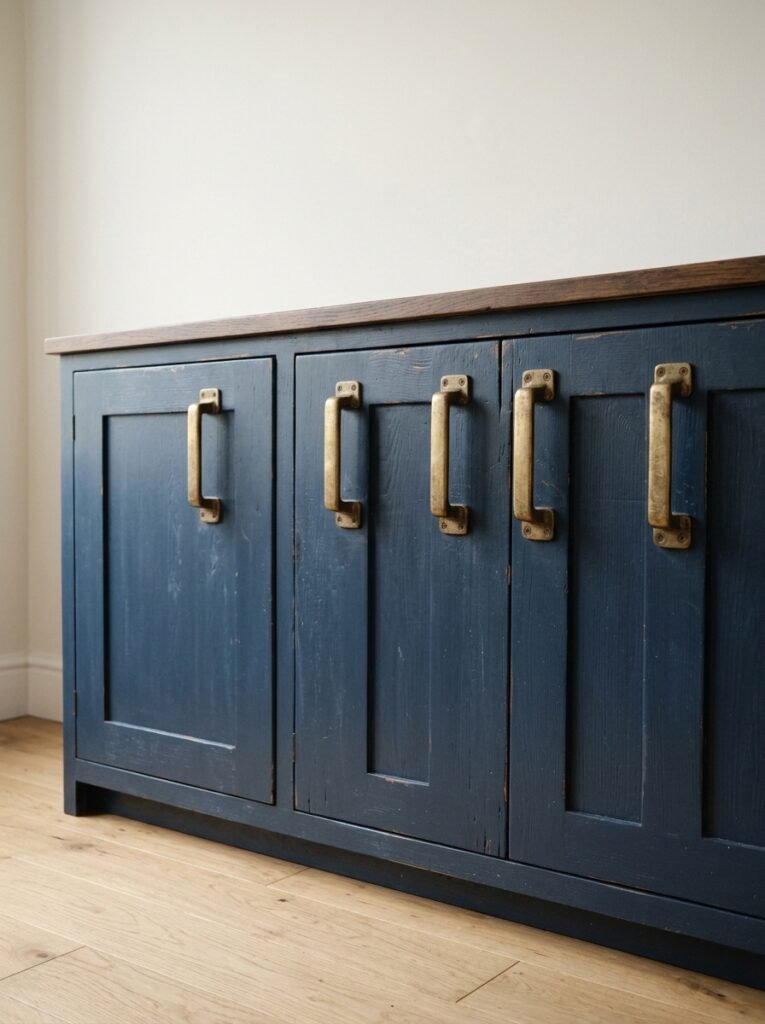
Okay this is one of my favorite conversations because cabinet hardware is criminally underrated as a design tool.
You can take a perfectly decent kitchen and make it feel completely transformed just by changing the handles and knobs. And in a farmhouse kitchen specifically, hardware is doing a LOT of narrative work. It’s one of the quickest ways to signal which direction your farmhouse is going — warmer and more rustic, or cooler and more contemporary.
For the warmer, more traditional farmhouse: unlacquered brass, aged bronze, or hand-forged iron. The slight imperfection in those finishes is a feature, not a flaw. They’ll patina over time. They’ll look better in five years than they do now.
For the cleaner, more modern farmhouse: matte black is still the one. Slim bar pulls on the uppers, cup pulls on the lower drawers. It adds an architectural crispness that stops the space from feeling too soft.
Mix metals if you’re confident, but keep it to two. Three starts to feel like you couldn’t make a decision.
—
7. Open Shelving — the Design Choice People Either Love or Abandon After Six Months
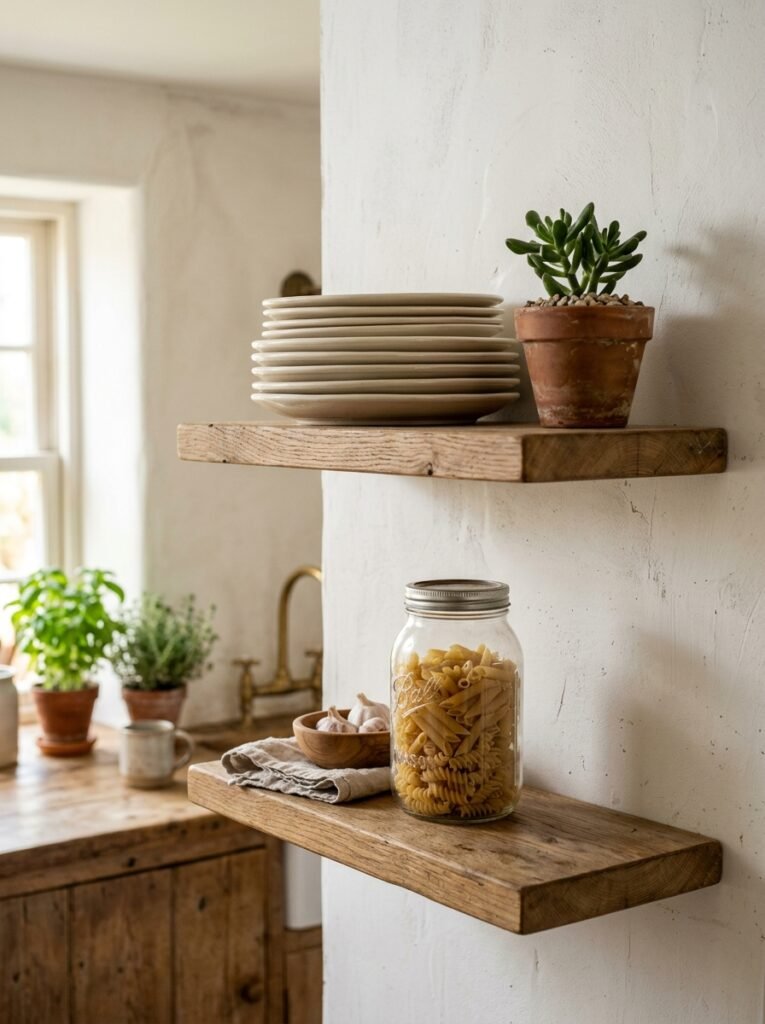
I’ll be real with you here. Open shelving looks absolutely beautiful in photos and it requires an ongoing commitment that some people just don’t want to make. That’s not a criticism — it’s just true.
If your everyday kitchen life involves a lot of mismatched containers, kids’ snacks, random appliances, and that bread bin you keep meaning to replace? Open shelving might work against you. Because what open shelving really does is display your editing choices, not your objects.
But when it works — when you’ve got a set of simple linen-glazed bowls, a few cookbooks with beautiful spines, some dried herbs hanging from a hook, good olive oil in a decent bottle — it looks incredible. Genuinely. There’s a warmth to it that closed cabinets can’t replicate.
My honest take: do one run of open shelving above a counter you actually USE and love. Keep the rest closed. That compromise gives you the look without the constant maintenance pressure.
—
8. Countertops — the Decision That’s More Complicated Than Anyone Tells You
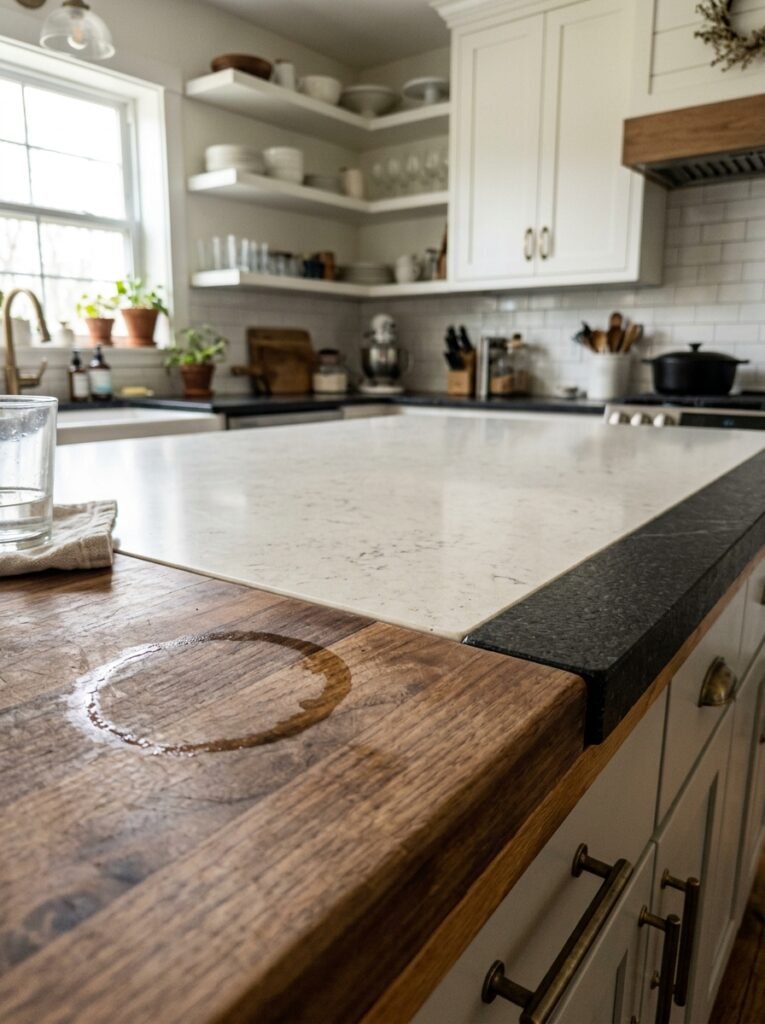
Wood. Marble. Concrete. Butcher block. Quartz with a marble-style veining. There’s a lot of options and everyone has an opinion.
Here’s mine.
Wood and butcher block fit the farmhouse aesthetic the most naturally but they do need maintenance. Oiling, resealing, being careful with standing water. If you cook a lot and you use your kitchen hard, that’s something to factor in. I’ve seen gorgeous butcher block worktops that aged beautifully and others that looked neglected and sad within a year.
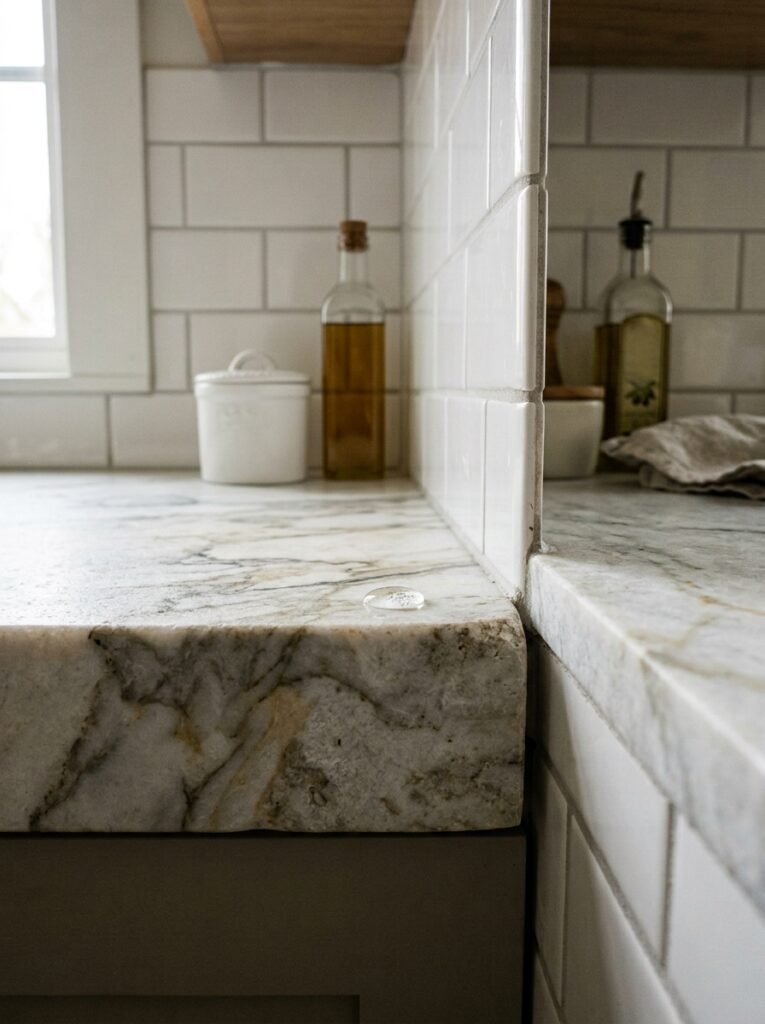
Marble is stunning. It’s also porous and will stain and you’ll either love that lived-in quality or spend your entire life anxious about it. Or maybe that’s just me.
Quartz in a matte heron grey or a warm cotton white gives you the look of stone with practically no maintenance, which is why it’s become so popular. Not gonna lie, in a busy family kitchen it’s probably the most realistic choice.
Concrete has its fans. It’s genuinely beautiful and genuinely high-maintenance and I respect the commitment it takes to keep it looking right.
—
9. The Lighting Setup That Makes a Farmhouse Kitchen Feel Like Somewhere You Actually Want to Be
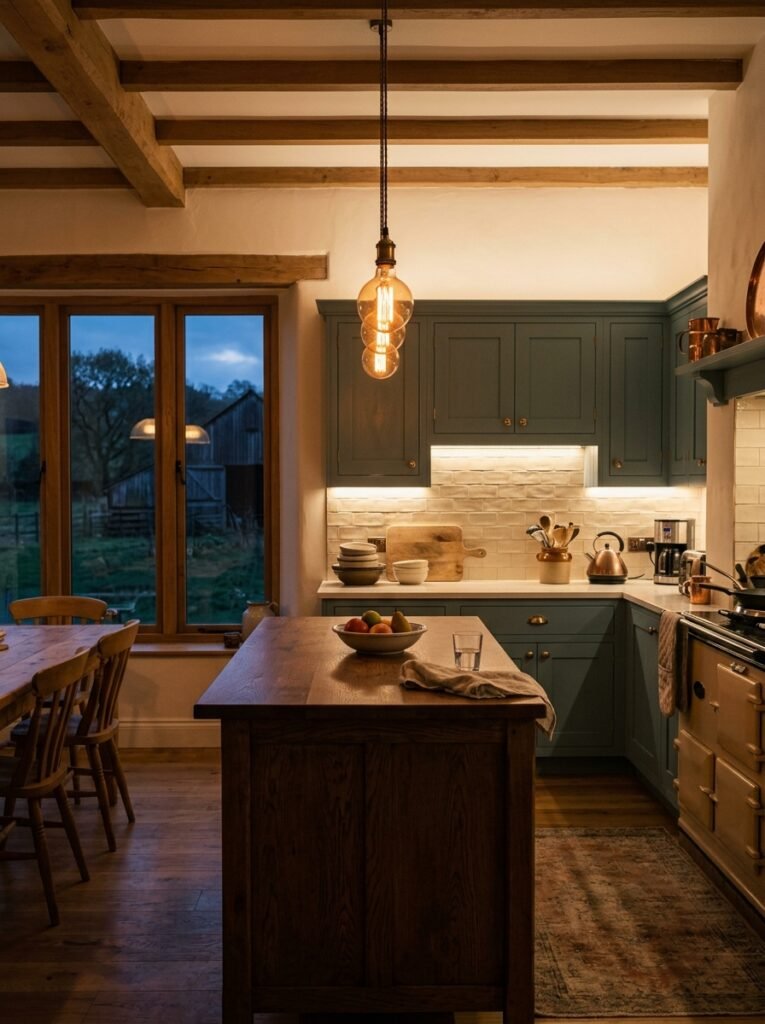
Not overhead fluorescents. Please. Not ever.
Pendant lights over an island or dining table are the obvious starting point — and for good reason, they anchor the space and create that cozy pool of light that makes a kitchen feel inhabitable rather than functional. For farmhouse aesthetics, ribbed glass pendants, woven rattan shades, or simple aged-metal lantern shapes all work well. Avoid anything too sleek or minimal — it’ll fight with the warmth you’re building everywhere else.
But here’s what people miss: under-cabinet lighting. That warm strip of light spilling onto the countertop at 7pm, when dinner’s almost done and everything smells like garlic and herbs, changes the entire feeling of the room. It makes it feel intentional. Like someone thought about how this kitchen would actually be used.
Add a few wall sconces if you can, even just one or two. Layered lighting in a kitchen is a whole different experience from single overhead lighting. Dramatically different.
“You’re not lighting a kitchen. You’re lighting an experience. There’s a difference.”
—
10. The Floor That Grounds the Whole Room Without Shouting About It
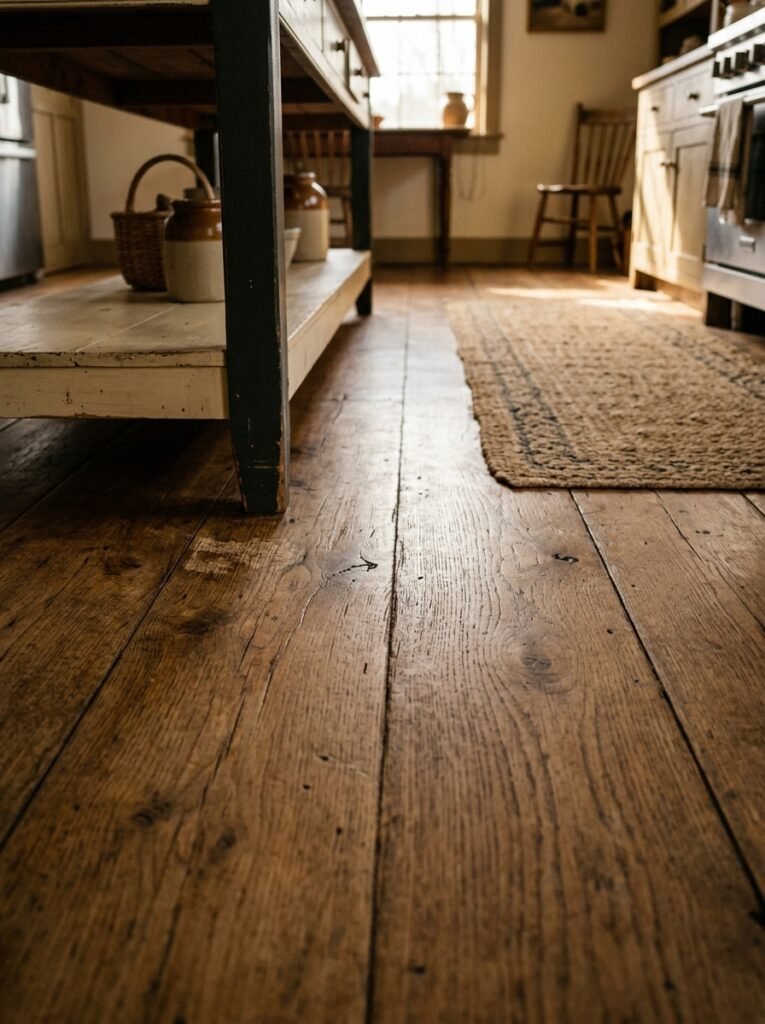
The floor’s job is to hold everything together. And in a modern farmhouse kitchen, it has to do that while feeling textured and natural rather than flat and generic.
Large-format stone or stone-effect porcelain tiles in a warm limestone or sandstone tone are probably the most versatile option. They’re durable, they’re easy to clean, and they read as genuinely earthy underfoot without being precious about it. Lay them in a simple grid or a brick-style offset pattern — nothing too intricate, the kitchen has enough going on.
Original flagstone, if you’re in an older property and lucky enough to have it, should be preserved and celebrated. Nothing will ever look quite like real flagstone that’s been walked on for a century.
Wooden floors can work beautifully too — wide-plank oak in a lighter, more natural finish rather than a dark lacquered stain. Just be prepared to be more careful around the sink and dishwasher area. Water and wood are not best friends.
—
11. The Small Additions That Signal “This Person Actually Thought About This”
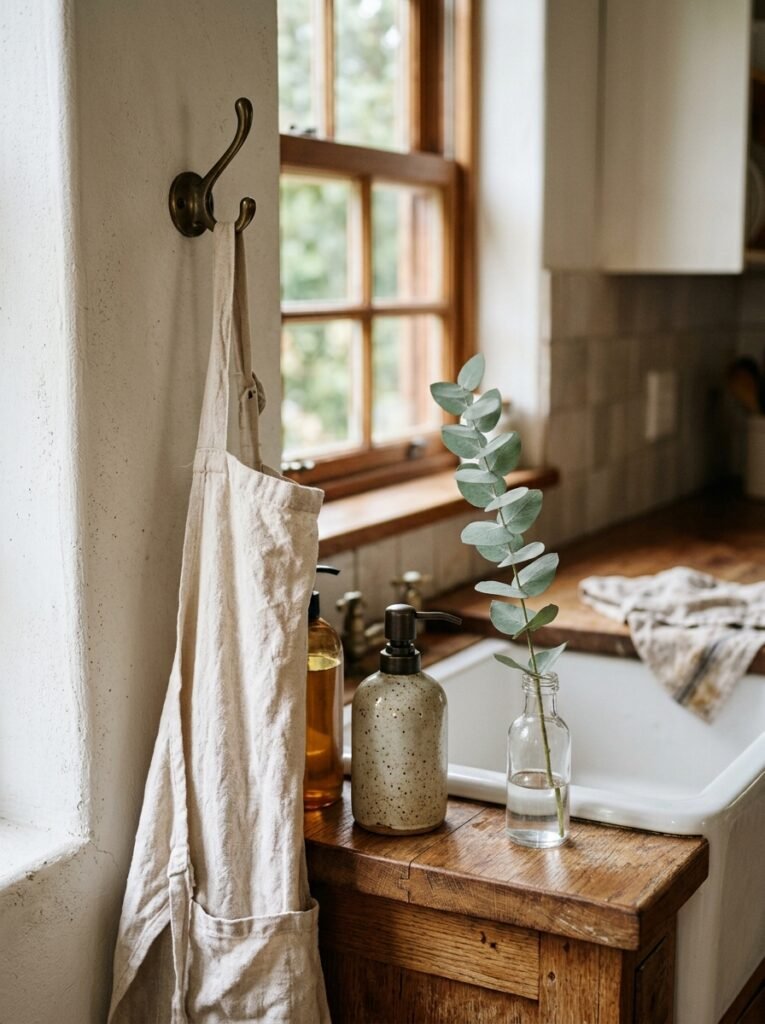
Okay this is the stuff I love. The small decisions that separate a kitchen that looks styled from a kitchen that looks designed.
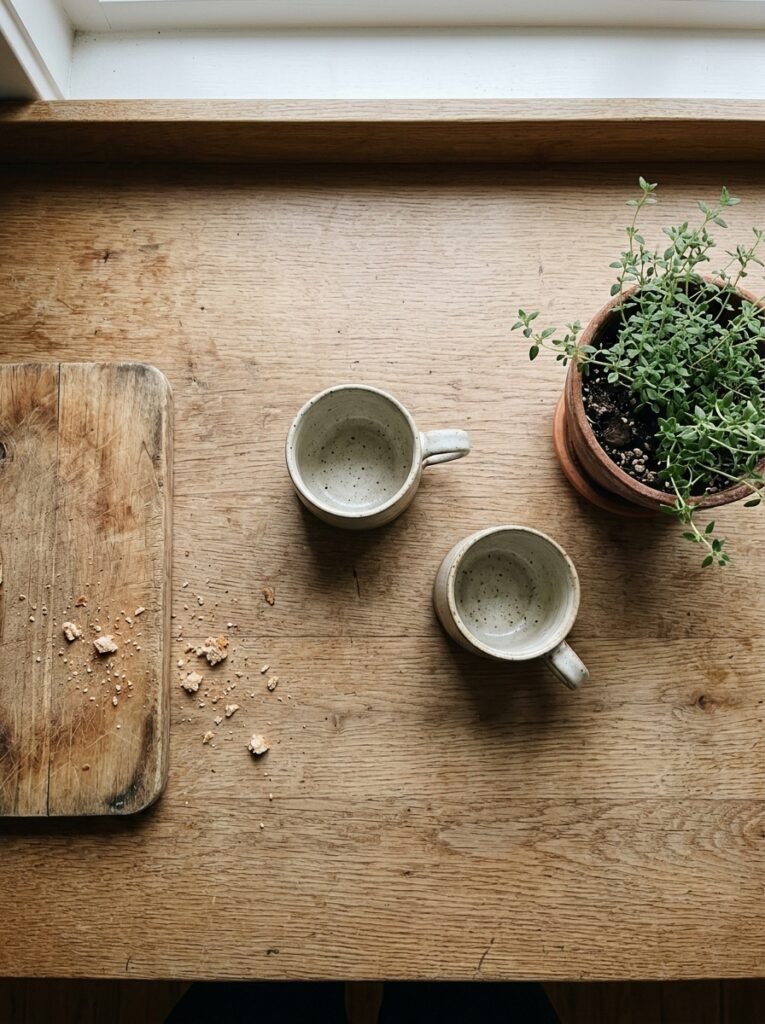
A vintage wooden bread board propped against the splashback. A small potted herb plant on the windowsill — not a neat matching row, just one, slightly leggy, actually being used. A linen tea towel draped over the oven handle rather than folded flat. A ceramic jar of wooden spoons next to the hob that’s genuinely a bit overstuffed and imperfect.
These things signal use. They signal that someone LIVES here and thinks about beauty in a casual, unstudied way. That’s the whole ethos of the farmhouse kitchen, really — function and beauty existing in the same breath.
A woven trivet on the counter even when nothing’s on it. A jar of dried flowers from three weeks ago that are slightly past their best but still lovely. The slight worn patch on the floorboard in front of the sink.
Don’t stage it. Just curate it, a little.
—
12. The Version of This That Actually Works for Real Life (Not Just Instagram)
Here’s the thing no one says loudly enough: the most beautiful farmhouse kitchens on Pinterest are usually photographed without a family living in them.
The real version — the one that’s going to make you happy every day — has to accommodate the coffee machine, the kids’ stuff, the pile of post, the fruit bowl that always has one slightly elderly banana in it. And that’s FINE. That’s actually good.
Because the farmhouse kitchen, at its core, is about a kitchen that feels like the center of a home. A place where people gather, where things get made and eaten and talked about. Where the lighting’s warm and the space has history and it doesn’t feel precious or untouchable.
You don’t need to do everything on this list. Pick the things that resonate with how you actually live. Get the bones right — the ceiling, the sink, the lighting, the palette. Let the rest accumulate naturally over time.
The kitchens that feel the most real always look like they took years to get that way. Sometimes they did. Sometimes someone just made really smart choices.
—
❓ FAQ
Q: How do I make a modern farmhouse kitchen work in a small or narrow space? A: Focus on two or three signature elements rather than trying to include everything — a Belfast or apron-front sink, some aged hardware, and a single run of open shelving can establish the aesthetic without overcrowding. Keep the palette light and warm, use vertical space, and resist the urge to add texture everywhere. Restraint is your biggest asset in a small kitchen.
Q: Is the modern farmhouse style still on trend or is it becoming dated? A: It depends entirely on how you’re doing it. The heavily staged, word-art-on-the-wall version has definitely peaked. But a kitchen with genuine character — natural materials, warm lighting, a bit of history — that’s not a trend, that’s just a good kitchen. Focus on quality materials and things that actually mean something to you and it’ll feel current for years.
Q: Can modern farmhouse work in a newly built home with no original features? A: Absolutely, and sometimes it’s easier than working in an older property because you’re starting from scratch. Add warmth through materials — wooden floors, a stone or ceramic sink, natural fiber textiles — and borrow architectural interest with faux beams or shiplap if the proportions support it. What you’re recreating is a feeling, not a historically accurate restoration.
—
💭 Final Thoughts
A farmhouse kitchen, done well, isn’t really about style. It’s about a feeling — the sense that the kitchen is the warmest room in the house, the one everyone drifts toward without being asked. You build that with light and texture and a few really good decisions and then you leave room for real life to fill in the rest.
What’s the one thing in your kitchen that you’d change first?