The Garage That Finally Made Me Stop Apologizing for It
My neighbor walked in to borrow a ladder two years ago and I literally stepped in front of the door to block her view. That’s how bad it was.
—
1. Why Garages Stay Chaotic (And It’s Not Laziness)
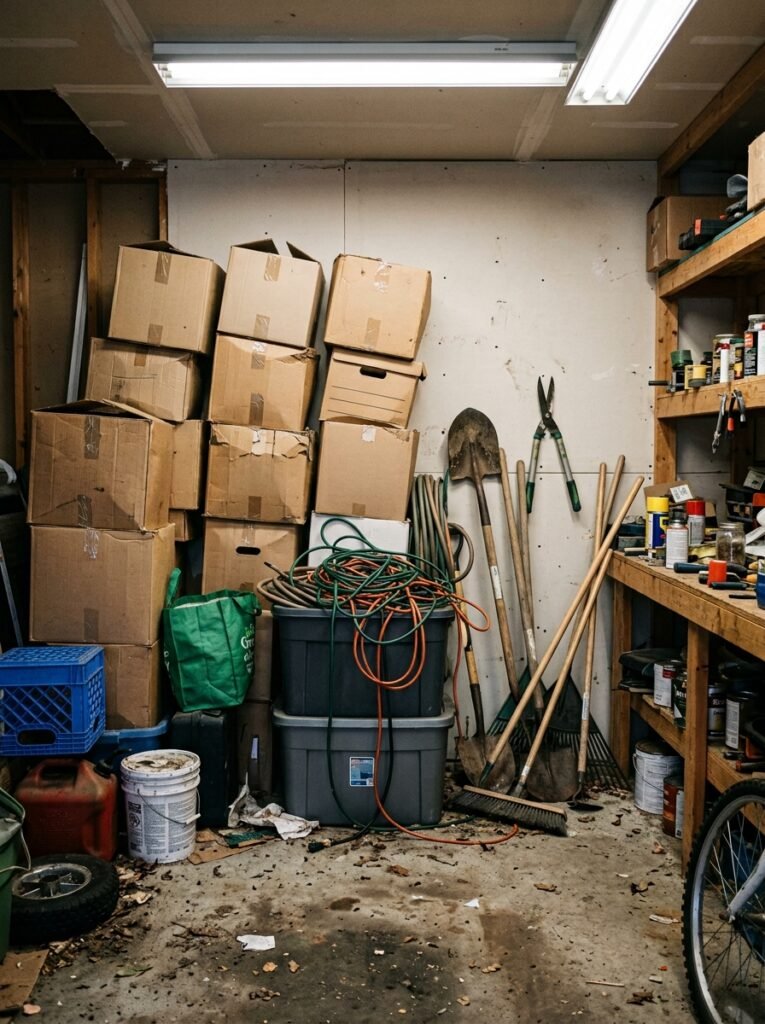
Here’s the thing nobody says out loud: garages are hard to organize because they’re doing TOO many jobs at once. They’re a workshop and a mudroom and a seasonal storage unit and a parking space and sometimes a gym. All at once. No wonder everything ends up shoved in sideways.
The shift that actually helped me wasn’t buying more stuff — it was deciding what the garage was for. Like, actually for. In my case: car, gardening tools, sports gear, and a tiny workbench area. That’s it. Everything else needed a different home or needed to go.
Once I made that list, I could plan around real categories instead of just reacting to the mess. It sounds obvious and I know it does. But I genuinely didn’t do that step for years, and I can’t be the only one.
The zones idea is popular for a reason. It works.
2. The Wall Space That’s Been Wasted Above Your Garage Door

Okay, this one’s genuinely underused. The horizontal strip of wall above your garage door — between the top of the door frame and the ceiling — is almost always dead space. And in a lot of garages, that’s two or three feet of width across the ENTIRE back wall.
Long floating shelves up there are ideal for things you don’t need constantly. Holiday decorations. Camping gear. The big cooler that comes out four times a year. You want those items accessible but not in your way, and high shelves are perfect for exactly that.
The key is making them easy to reach with a step stool, not a full ladder. So don’t go too crazy with the height.
“The best garage storage doesn’t try to hide everything. It makes everything findable.”
If your ceiling’s lower — fairly common in older UK terraced houses where garages were retrofitted rather than designed — this might not work as dramatically, but even a single shelf above the door frame can absorb a surprising amount of clutter.
3. The Part of the Floor Plan Nobody Sketches Out First
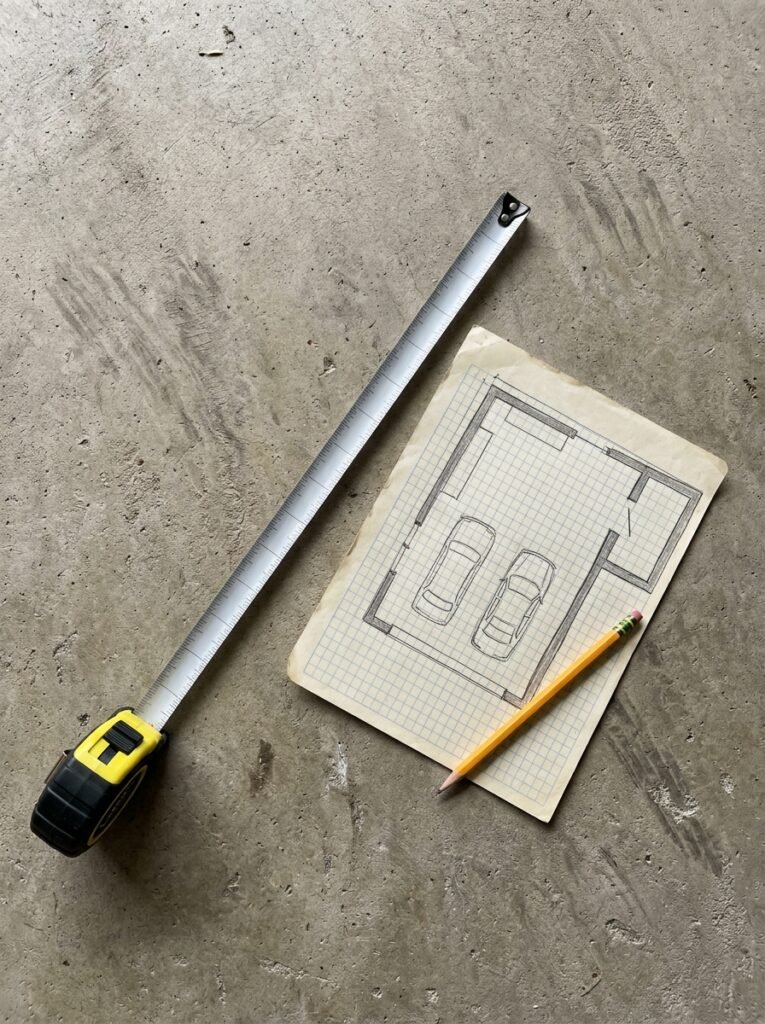
People buy storage before they measure. I know this because I did it twice.
You’ve got to know your floor-to-ceiling height, your wall width, and — critically — where your car door swings. Because nothing is more demoralizing than building a beautiful tool cabinet and then realizing you can’t fully open your driver’s side door without bumping it.
Map the car first. Sketch it out, even badly. Mark the door swing on both sides. Then work with what’s left. In a single-car garage that’s maybe 10 feet wide, that car door clearance can eat 18 inches of usable wall space on the driver’s side — and suddenly your storage plan changes completely.
Worth knowing before you start hauling shelving units in.
4. Pegboards Are Still Good (When You Stop Hanging Them Wrong)
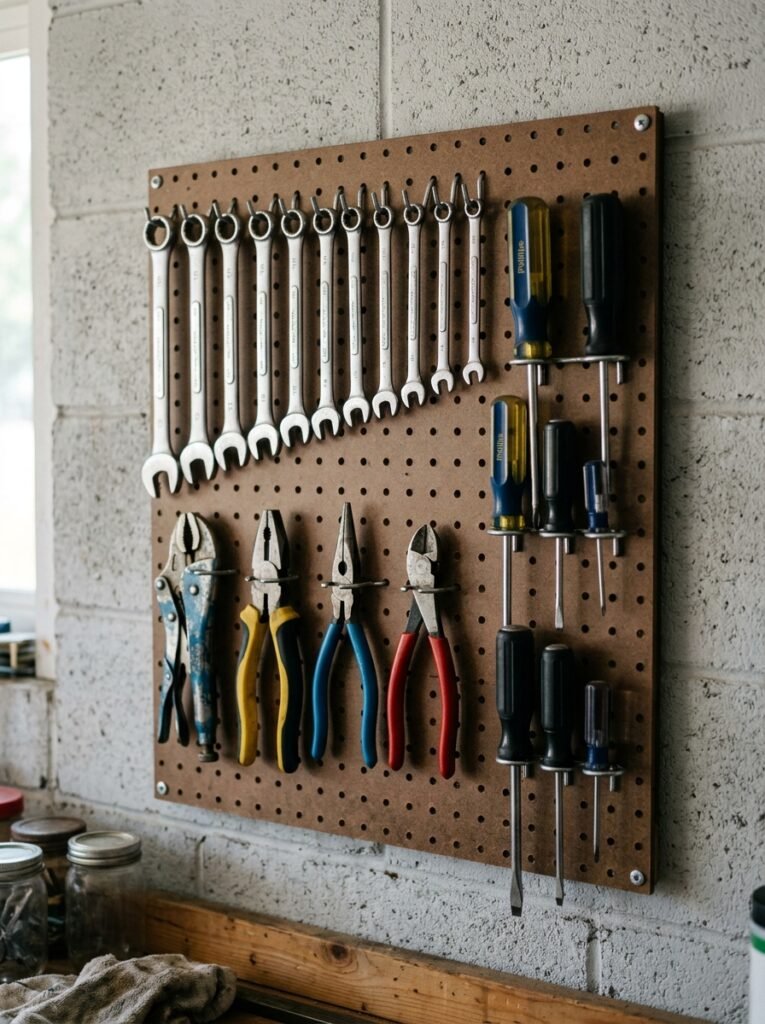
I know. Pegboard. Very 1987. But hear me out, because people keep dismissing them and then secretly installing them and then wondering why they didn’t do it earlier.
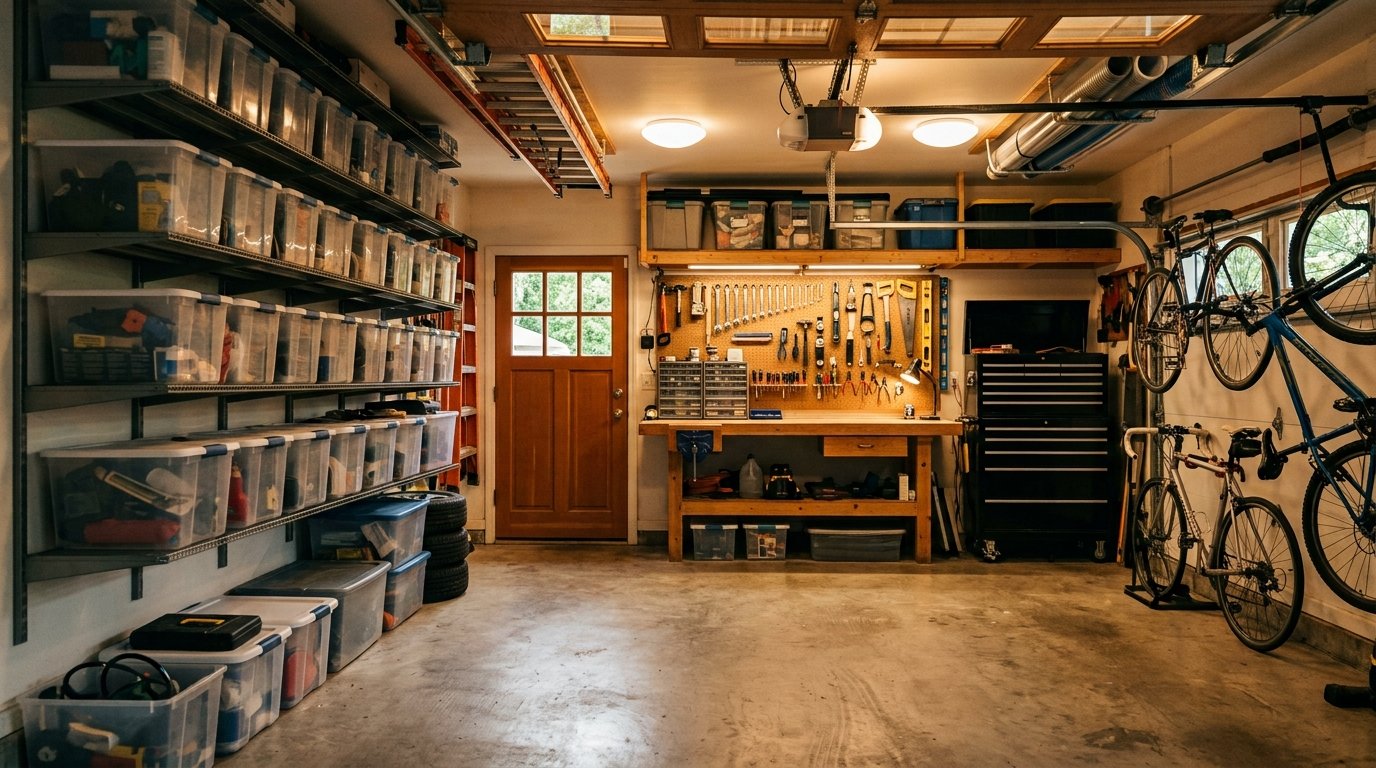
The mistake most people make is hanging a pegboard too low or against a wall where it competes with shelving. Put it at eye level, on the wall closest to where you actually do things — workbench area, near the car, wherever you’re always standing — and suddenly it clicks.
Hooks for long-handled tools. Small baskets for the bits and bobs (drill bits, sandpaper, fasteners, those mystery components you’re keeping “just in case”). A shelf bracket or two for things that need a proper surface.
The part that makes it look intentional rather than just functional: spacing. Don’t cram every hook in. Leave breathing room between tools, group similar things together, hang the handles all pointing the same direction. Thirty seconds of attention to those details and it stops looking like a jumble sale wall.
Color helps too. A dark charcoal or deep forest green pegboard does something very different to a garage than that classic raw wood beige.
5. The Ceiling Grid That Keeps Bikes Off the Floor Forever
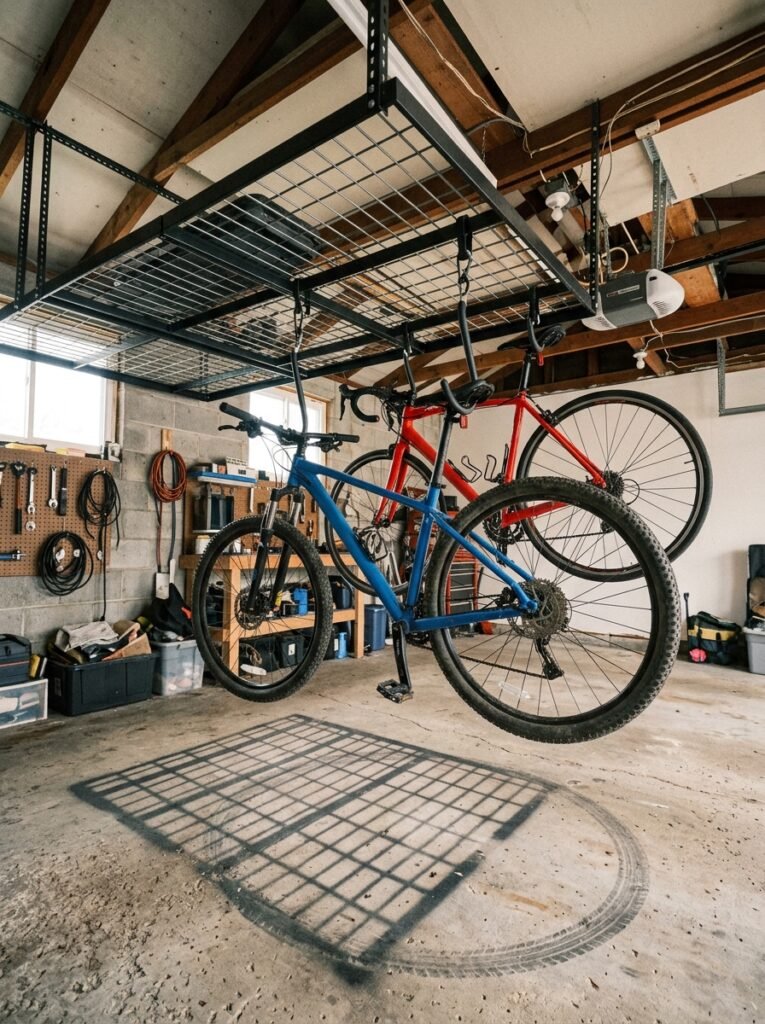
If bikes are the bane of your garage existence — and in a lot of UK households they are, because everyone’s got at least two — ceiling storage is the answer. Not a hook over a door. An actual overhead grid system.
The idea: a metal grid mounted to the ceiling joists, with adjustable straps or hooks hanging down. Bikes go up horizontally, wheels dangling, taking up zero floor space.
It sounds intimidating but it’s genuinely manageable with a couple of hours and a drill. The joists in most garages are perfectly happy carrying the weight of two or three bikes. Just locate them properly before you drill anything.
Same grid can hold kayak paddles, seasonal items in bags, even surfboards if you’re near the coast. The ceiling is some of the most valuable storage real estate in any garage and the majority of people never use it.
“Once the bikes go up, the whole floor opens up and suddenly everything else has room to breathe.”
6. Clear Bins vs. Labeled Opaque Bins: The Debate That Actually Matters
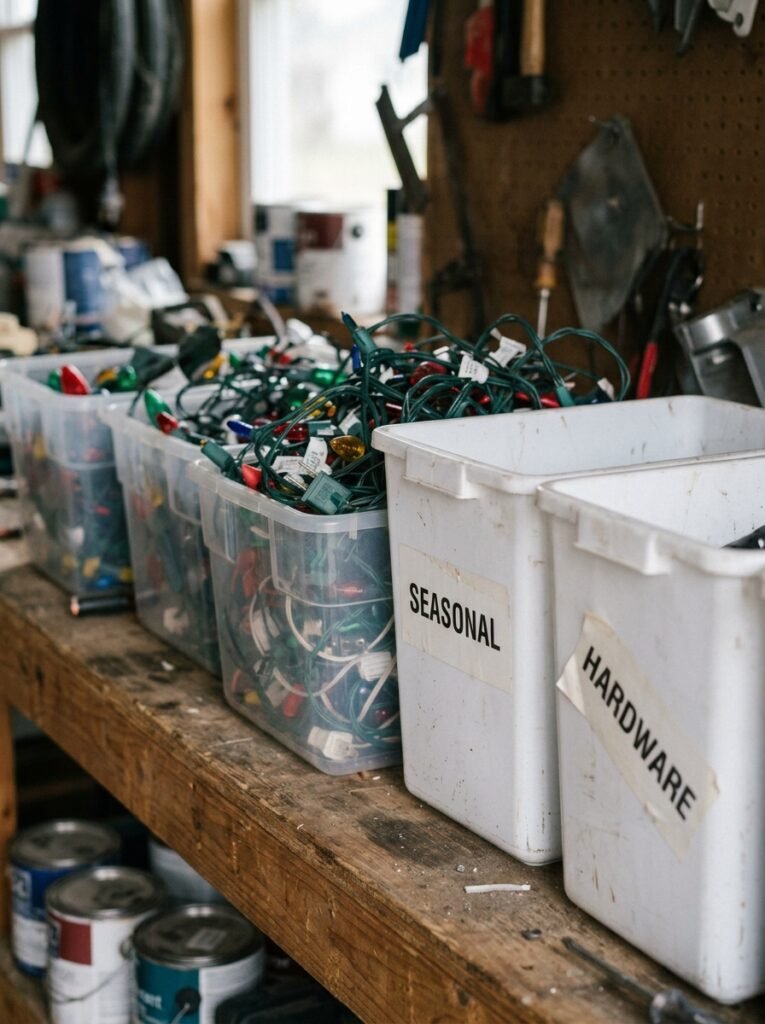
Strong opinion incoming. Clear bins win in most categories.
The reason people love labeled opaque bins aesthetically is completely valid — they look tidier, they match, they give that satisfying uniform look. But in a garage, in practice, you’re going to want to see what’s inside without lifting the lid and reading a label you maybe forgot to update.
Sports equipment? Clear. Car supplies? Clear. Garden chemicals? Clear so you know at a glance what’s there and what’s running low.
The exception: seasonal decor. Labeled opaque bins for Christmas decorations, Halloween props, whatever you’ve got — because you’re only accessing them twice a year anyway, and the uniform look actually serves you here since they’re often stored where everyone can see them.
One more thing. Bin size consistency matters more than most people think. Mixed sizes on a shelf look chaotic even when everything’s organized inside them. Pick two or three sizes and stick with them.
7. The Slim-Profile Solution for That Awkward Strip Between the Studs
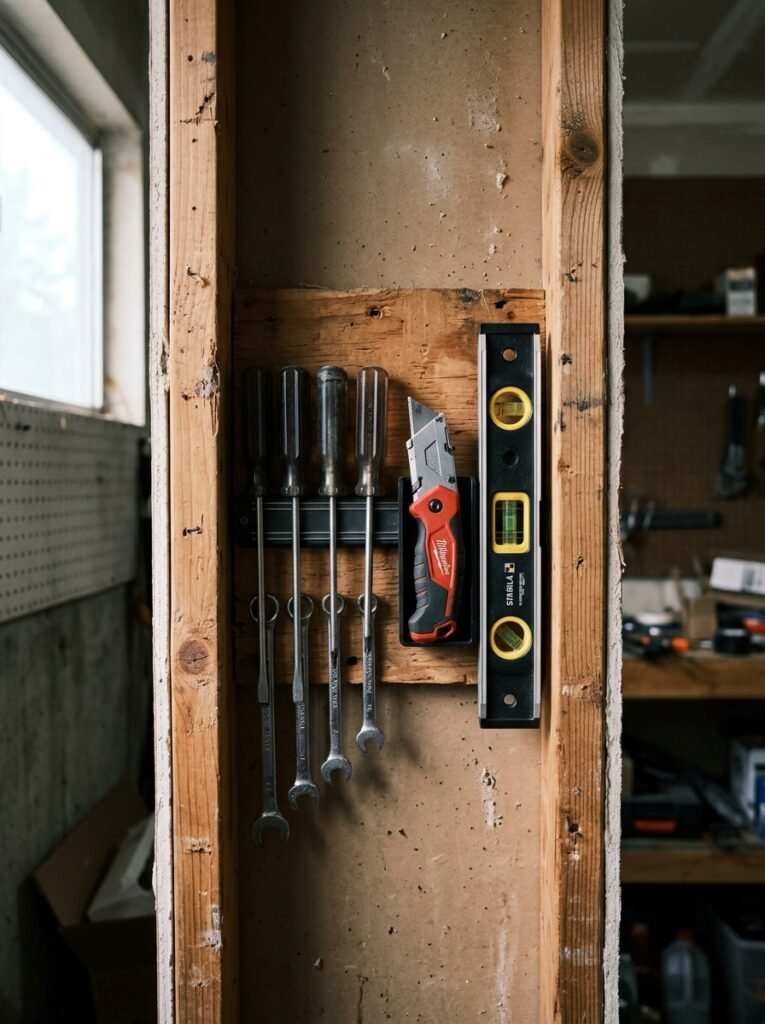
In unfinished garages where the wall studs are exposed, there’s a genuinely underrated trick: build or buy shallow shelving that fits exactly between the studs. We’re talking maybe 3.5 inches deep — enough for spray cans, small bottles, rolls of tape, a few tools.
It’s like built-in storage that doesn’t eat into your floor space at all. The depth is limited, yes. But for the items that live on those shelves it’s actually ideal, because you can see every label face-on and nothing gets buried behind anything else.
British garages with exposed blockwork can’t do this quite the same way, but freestanding slim shelving units — 4 to 6 inches deep — serve the same purpose and sit flat against the wall without projecting far into the space.
Slim doesn’t mean sacrificing capacity. It means everything on that shelf is findable.
8. The Workbench Setup That Doesn’t Require Quitting Your Day Job to Build
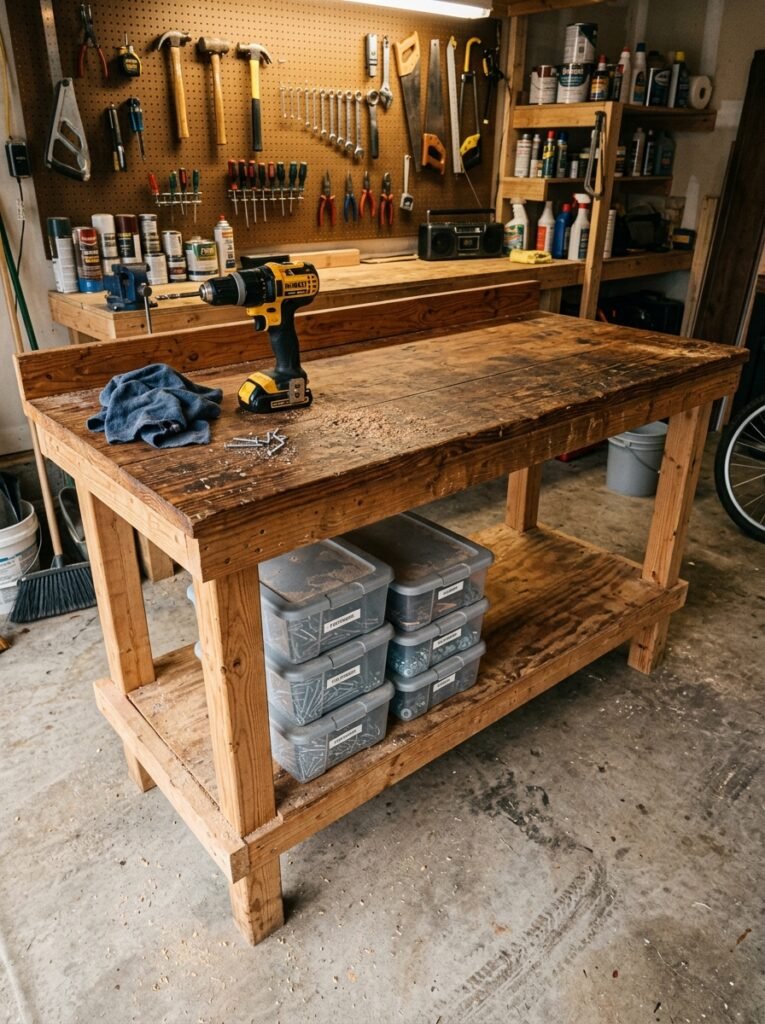
A lot of garage workbenches look like passion projects from people who had six free weekends and a full workshop to build them in. Which, great for them. But for everyone else?
A solid-core door blank on top of two filing cabinets. That’s a workbench. It’s stable, it’s got a hard surface that can take punishment, and the cabinets give you drawer storage underneath. I’m not joking, this is genuinely one of the better setups I’ve seen.
Or — and this one is particularly good for smaller UK garages where space is TIGHT — a fold-down wall-mounted bench. It hinges flat against the wall when you don’t need it and drops down when you do. You lose nothing when it’s up. You gain a full work surface when it’s down.
The one thing a workbench needs that people always forget to plan for: good light directly over it. Not general garage lighting. A focused light source right above where your hands are going to be. An LED strip under a shelf above the bench is cheap and genuinely transforms usability.
“The workbench isn’t just where projects happen. It’s where the whole garage system pays off.”
9. What to Do With the Weird Dead Corner by the Side Door

Every garage has one. That diagonal corner space near a side entrance or the corner where two runs of shelving meet awkwardly and neither is quite deep enough to be useful.
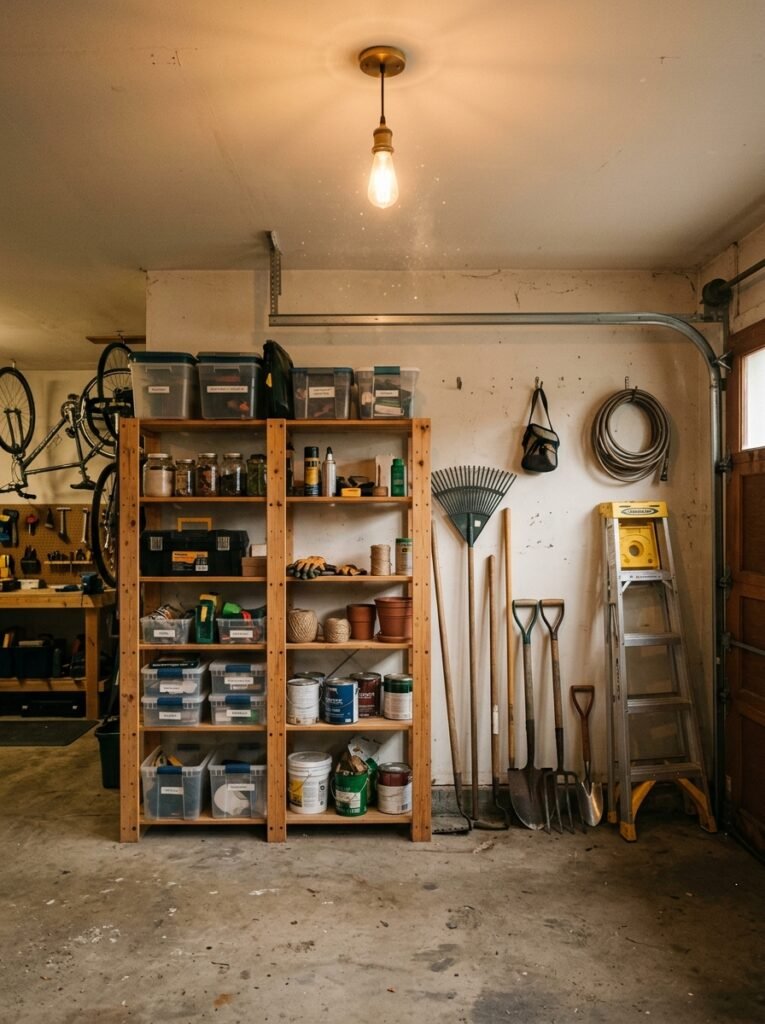
Tall narrow units — the kind sold as pantry organisers or larder units — fit brilliantly in these corners and hold more than you’d think. Cleaning supplies, motor oil, extra lightbulbs, the random collection of extension leads that multiplies when you’re not looking.
Alternatively, a corner where walls meet at 90 degrees can take a triangular shelf unit. Flat pack ones are available in most home stores. They’re not always the most beautiful thing in the world, but in a garage, function wins.
One thing that actually IS both functional and reasonably nice-looking: a wire rack with wheels in that corner. Rolling it out occasionally is far more useful than fighting with stuff that’s wedged into a static corner unit.
10. The Color on the Floor That Changes How Everything Looks
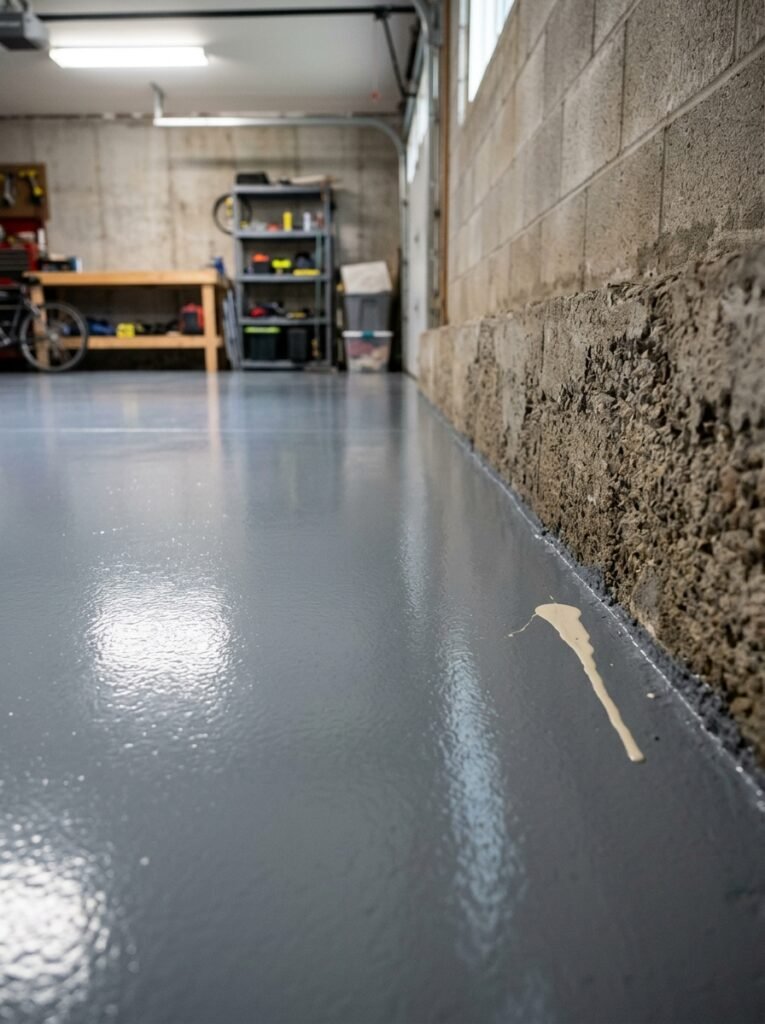
This one’s optional but genuinely transformative — and I’m aware I said I wouldn’t use that word, so I’m taking it back. Let’s say: it makes a surprising difference.
Garage floor paint or epoxy coating. Not the sticky stuff that peels in six months. The proper two-part epoxy that you prep the floor for and actually cures hard.
A clean, solid floor in even just a mid-grey makes the entire garage look intentional. Suddenly your storage doesn’t look like organized chaos in an unfinished space — it looks like an actual room you planned. Spills wipe up. Dust is visible and sweepable. The car looks cleaner on it.
In UK climates where damp and condensation are a constant concern, a sealed floor also helps with moisture rising through concrete. Practical AND it looks good. Both at once.
11. The Label System That You’ll Actually Maintain After Month Two
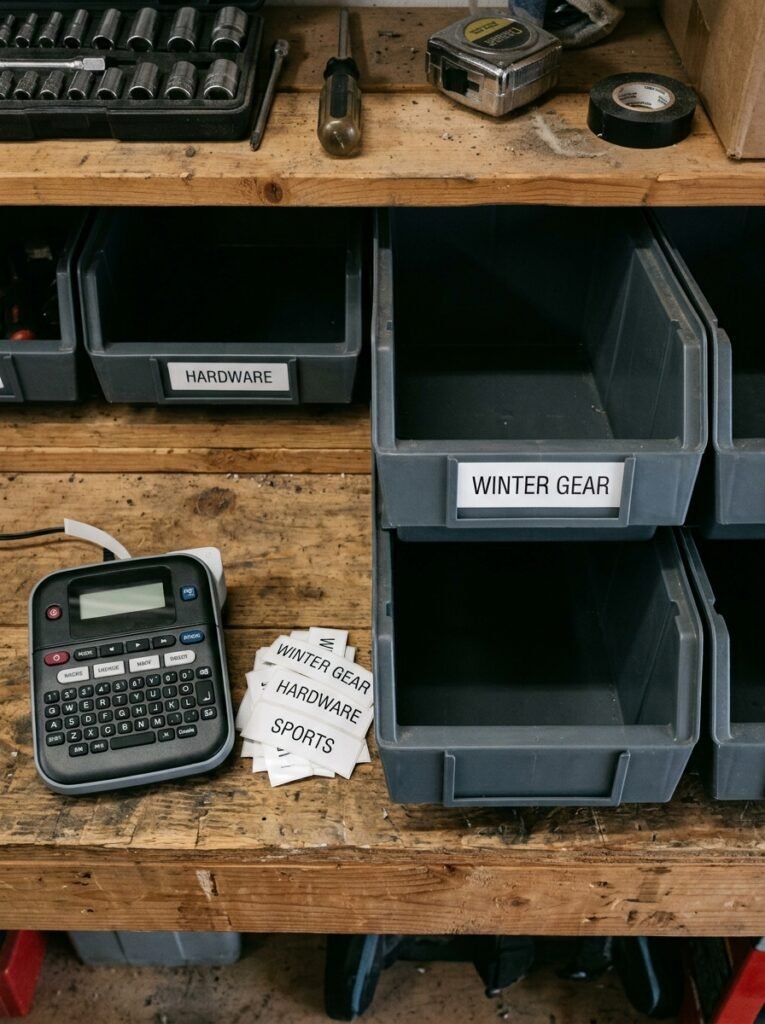
Here’s where most organization systems fall apart. You set it all up beautifully, everything’s labeled, the bins are sorted. Then three months later you grab something in a rush, put it back anywhere, and the whole thing quietly starts collapsing.
The label system that works long-term is the one with the lowest possible friction to update. Which means: a label maker you keep accessible (not packed away in a drawer), or chalkboard labels where you can re-write without reprinting, or — honestly, this is underrated — just masking tape and a Sharpie.
It doesn’t have to be Pinterest-perfect to be functional. The label that reads “CAR STUFF” in my slightly chaotic handwriting has survived two years of heavy use because it was easy to make and it’s fine.
If you have kids, involve them in labeling their section. They’re more likely to use a system they helped create, and also it’s kind of a fun Saturday activity if you frame it right.
12. The Difference Between a Garage That’s Organized and One That Stays That Way
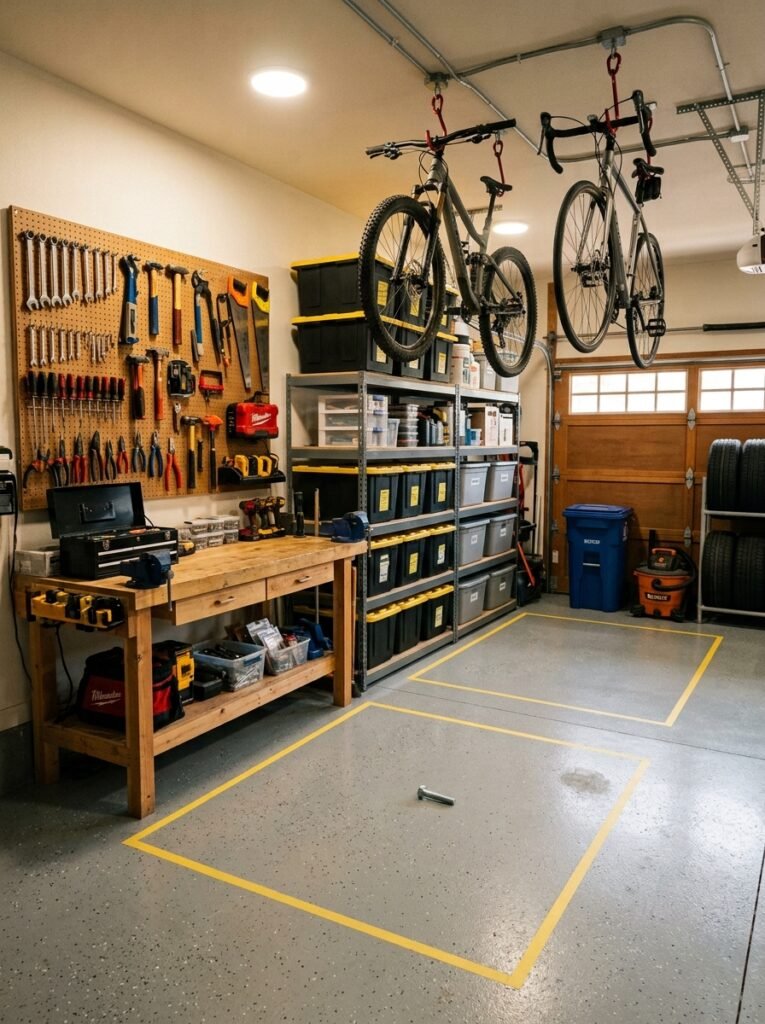
Organization is a project. MAINTENANCE is a system.
The garages that stay tidy aren’t maintained by people with more discipline. They’re maintained by people who made putting things back easier than just setting them down. Hooks at the right height. Bins with lids you don’t have to fight. A clear floor path where the habit of walking back to hang something feels natural.
The single best thing you can add to a garage system — and this sounds almost too simple — is a small shelf or hook right at the entry point. The thing you grab most often, be it keys, a torch, the dog’s lead, your gardening gloves, should live right there. In reach without thinking. Because if you have to walk six feet into the garage to find something you need every single day, you’ll start just putting it down at the door, and then there’s something at the door, and then two things, and you know how this goes.
One entry point. One habit hook. Genuinely changes the daily flow of the whole space.
—
❓ FAQ
Q: How do I start organizing a garage that’s completely overwhelming? A: Don’t try to organize what’s there — sort first, then organize. Take everything out of one zone (just one), sort into keep/donate/trash, and only bring back what belongs in that zone. Do one zone per weekend if needed. Trying to organize in place just moves the chaos around.
Q: What’s the best flooring option for a UK garage with damp issues? A: Two-part epoxy floor paint is the most durable, but prep matters — the concrete has to be clean and dry before application. If you’ve got active damp rising through the floor, sort that first (a DPM membrane or DPC treatment), otherwise any coating will fail. Interlocking rubber or PVC tiles are a good intermediate option if you’re not ready to commit to full epoxy.
Q: Can I really store bikes on the ceiling safely? A: Yes, as long as you’re attaching to actual ceiling joists, not just the plasterboard or drywall between them. Use a stud finder, check the joist spacing, and use proper load-rated hardware. Most residential ceiling joists can comfortably hold 50+ lbs, so two bikes is typically fine. When in doubt, check with a handyman or builder before drilling.
—
💭 Final Thoughts
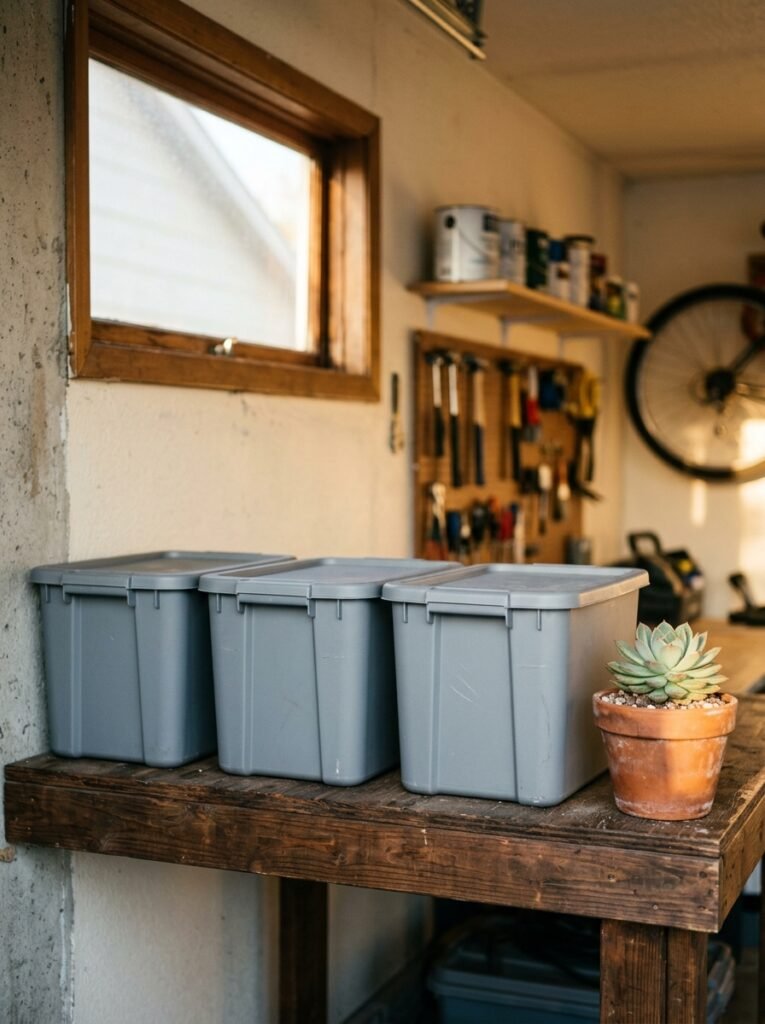
The garage doesn’t have to be a showpiece. It just has to stop being the place you mentally apologize for every time someone gets near it.
Once the systems click — even imperfect, sort-of-finished systems — you’ll notice you actually go in there more. Tools get used. Projects happen. The space starts working for you instead of quietly generating low-level stress in the background.
So what would you use a properly organized garage for, if you actually had one?