The Small Laundry Room Layout Mistakes That Are Making Your Space Feel Impossible (And What to Do Instead)
My friend walked me through her laundry room last spring and I genuinely couldn’t figure out why it felt so bad. The machines were there. The shelves were there. Everything technically worked. But standing in that little eight-foot room felt like being trapped inside a bad decision.
Turns out, it wasn’t any one thing. It was everything — in the wrong order, at the wrong height, in the wrong spots.
—
1. The Reason Your Laundry Room Feels Claustrophobic Even When It’s Not That Small
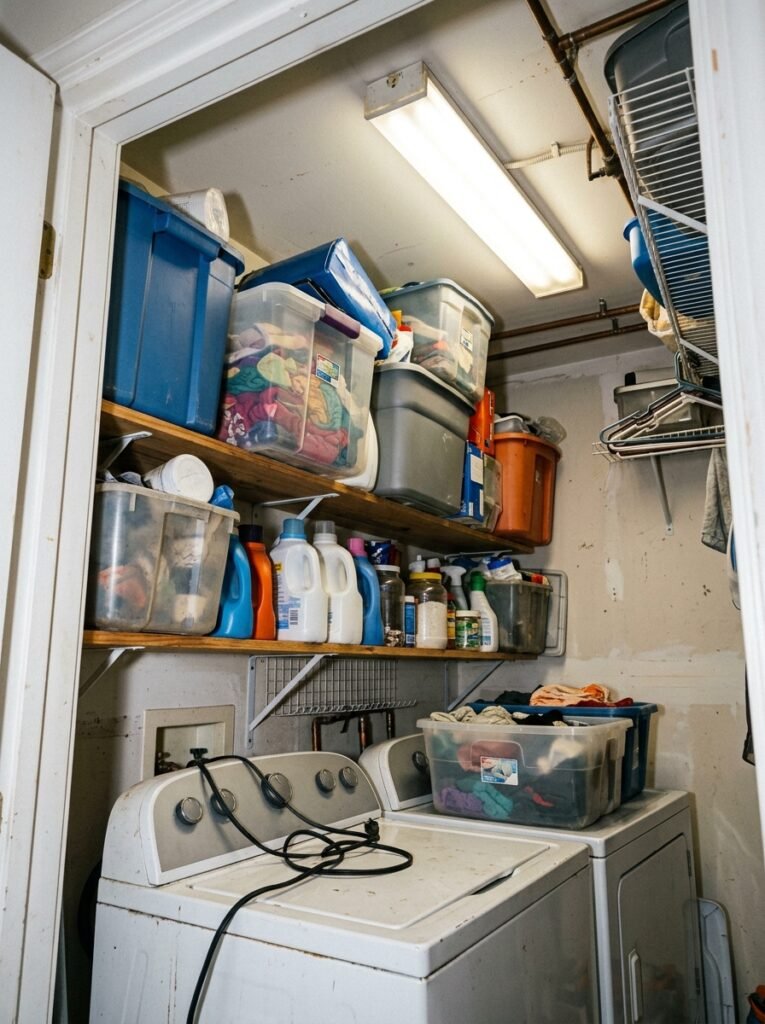
Here’s what nobody says out loud: the room isn’t the problem most of the time. The layout is. I’ve seen genuinely tiny laundry closets that felt calm and functional, and I’ve seen full laundry rooms that felt like chaos. The difference is almost always whether the person planned for how they actually USE the space, not just how they’d STORE stuff in it.
Movement matters. You need a zone where you can stand and sort, a zone where things go in and come out, and a zone where clean stuff lands while it waits. When those three zones overlap or compete, everything feels cramped. And that frantic, stressful energy you feel when you’re doing laundry? Probably not the chore itself. Probably the layout.
Start by standing in your laundry room with nothing in your hands and just noticing where you naturally want to stand, where you turn, what your hands reach for. That instinct is your layout plan. Work with it, not against it.
—
2. The Stacking Question That Divides Every Small-Space Person I Know
Stack or side by side. That’s the fight.
Side-by-side machines give you a countertop across the top — genuinely useful for folding. But they eat floor space horizontally, and in a narrow room, that can mean you’re basically standing in the machines while you use them.
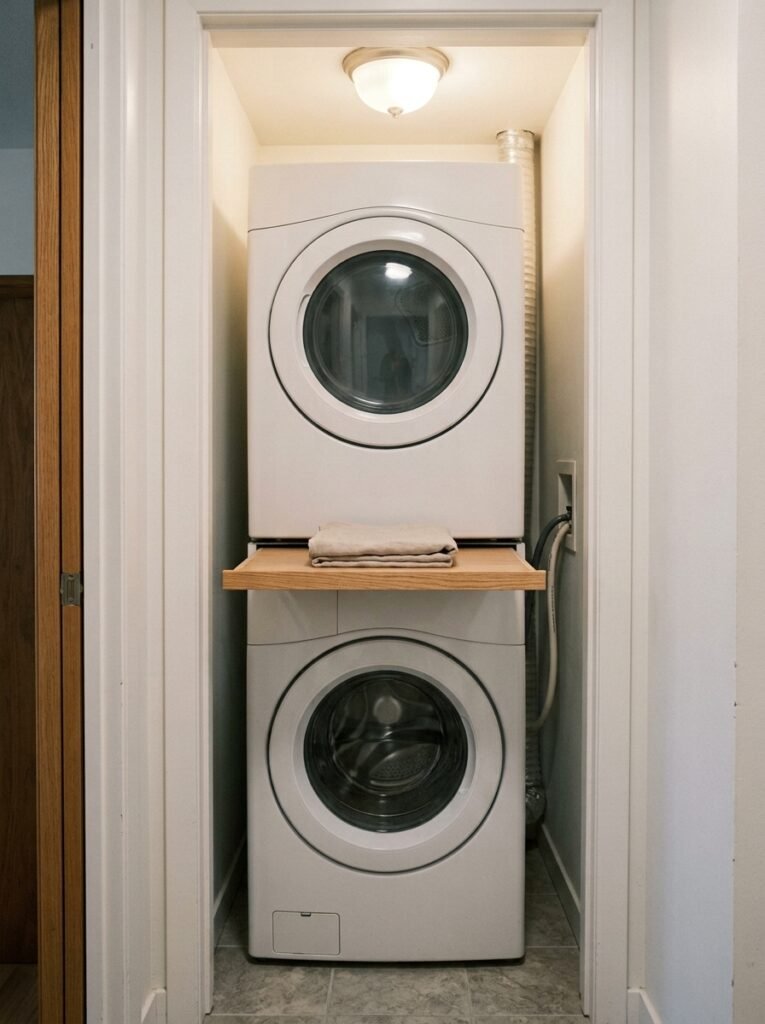
Stacking goes vertical, which is brilliant for tight rooms, but you lose the folding surface and the dryer is either at awkward-crouching height or awkward-reaching height depending on which way you go.
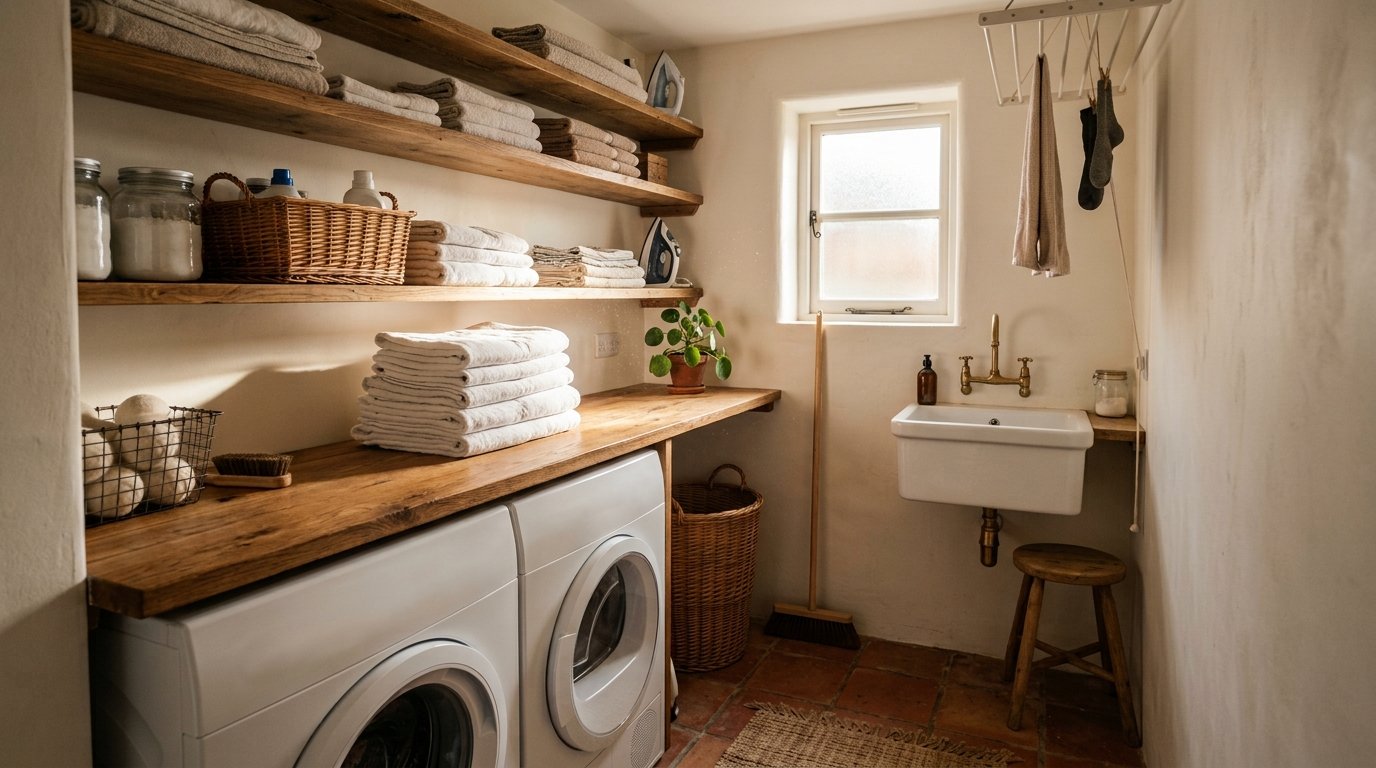
My actual opinion? Stack, and build the folding surface somewhere else. A narrow wall-mounted fold-down shelf does the job and takes up zero space when it’s not in use. There are also versions you can build yourself for very little money — basically a hinged board with two brackets and a latch. That’s it. And when it’s up against the wall, it looks intentional, not improvised.
“The folding surface you build yourself will almost always work better than the one you bought, because you’ll put it exactly where you need it.”
British homeowners especially — if you’ve got one of those stacked washer-dryer combos that sits in a kitchen alcove or under the stairs, this applies to you even more. The wall-mounted fold-down is basically made for those setups.
—
3. What Goes Above the Machines (And It’s Not What Most People Put There)
Shelves. Everyone says shelves. Sure, yes, shelves are useful, but most people put them in the wrong place and at the wrong height and then wonder why they never actually use them.
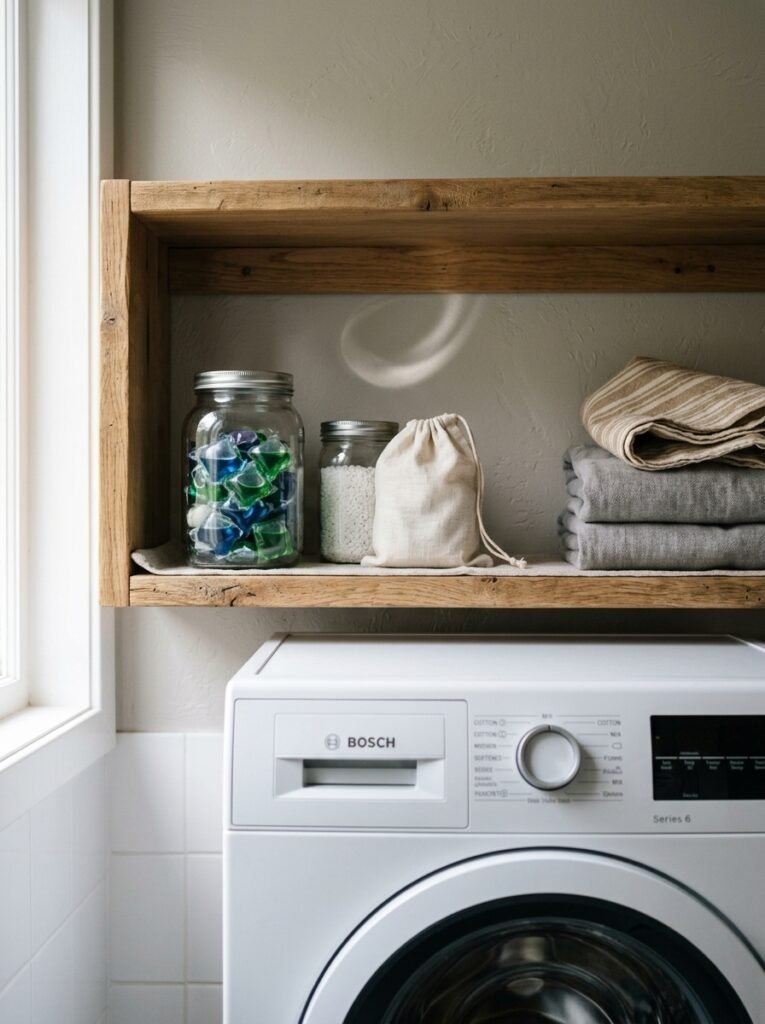
The shelf directly above a front-loading machine needs to sit high enough that you can open the door fully without it hitting anything. Sounds obvious. Almost nobody actually measures this before drilling. The number is usually around 24–26 inches above the top of the machine, depending on your door swing radius.
What goes there? Not decorative baskets you’ll never touch. Not products you use once a month. What goes there is what you reach for every single laundry cycle. Detergent. Dryer sheets or wool balls. Stain remover. That’s it. Keep the stuff you use daily at eye level or just below, and put everything else higher up or in a cabinet with a door so you don’t have to look at it.
Also — and I feel strongly about this — if there’s any wall space above your machines at all, install a rod or a hook bar up there. Somewhere to hang things straight from the dryer. Shirts that can’t go in the dryer get hung the second they come out of the washer. Game changer for wrinkles, and it costs almost nothing.
—
4. The Floor Plan That Works in an Awkward Galley-Style Space
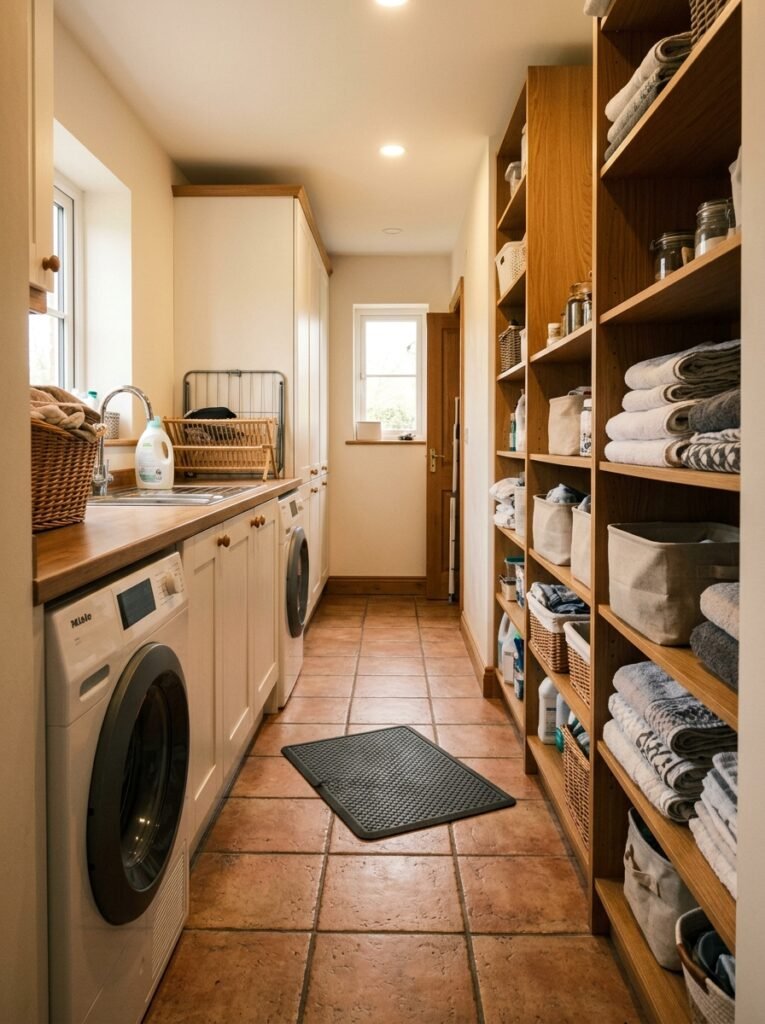
A lot of laundry rooms are galley-shaped — longer than they are wide, with machines on one side and a wall on the other. This feels impossible but it’s actually kind of a gift.
That opposite wall? It’s prime real estate. A floor-to-ceiling cabinet or shelving unit on the opposite wall from the machines turns a galley laundry room into a genuinely organized space. Keep the aisle wide enough to work in — at least 36 inches if you can manage it, though I’ve seen people make 30 inches work — and the cabinet opposite gives you storage for everything that doesn’t belong directly at the machines.
This is where your extra detergent lives. Cleaning supplies. The ironing board if you’ve got a wall-mounted version. The laundry bags. Extra hangers.
One thing that helps a LOT in galley layouts: keep everything at the same visual height or close to it. Mixing tall cabinets with short baskets with medium shelves with random stuff at varying heights looks cluttered even when nothing technically IS cluttered. Visual consistency makes a small space read as organized.
—
5. The One Rule That Makes Any Tiny Laundry Room Feel Intentional
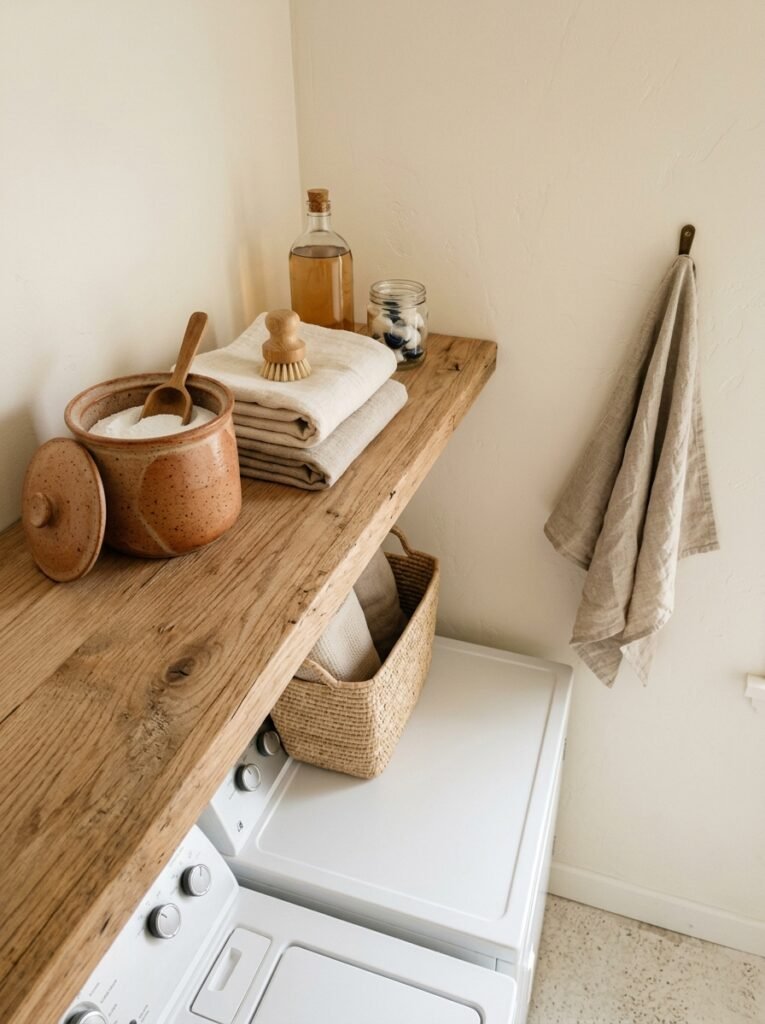
One color for everything you can control.
I don’t mean paint everything white (though honestly, I don’t hate that). I mean: pick one color for your storage baskets, one material for your shelf bins, and one finish for your hardware. When the containers match, a small space feels curated instead of cobbled together.
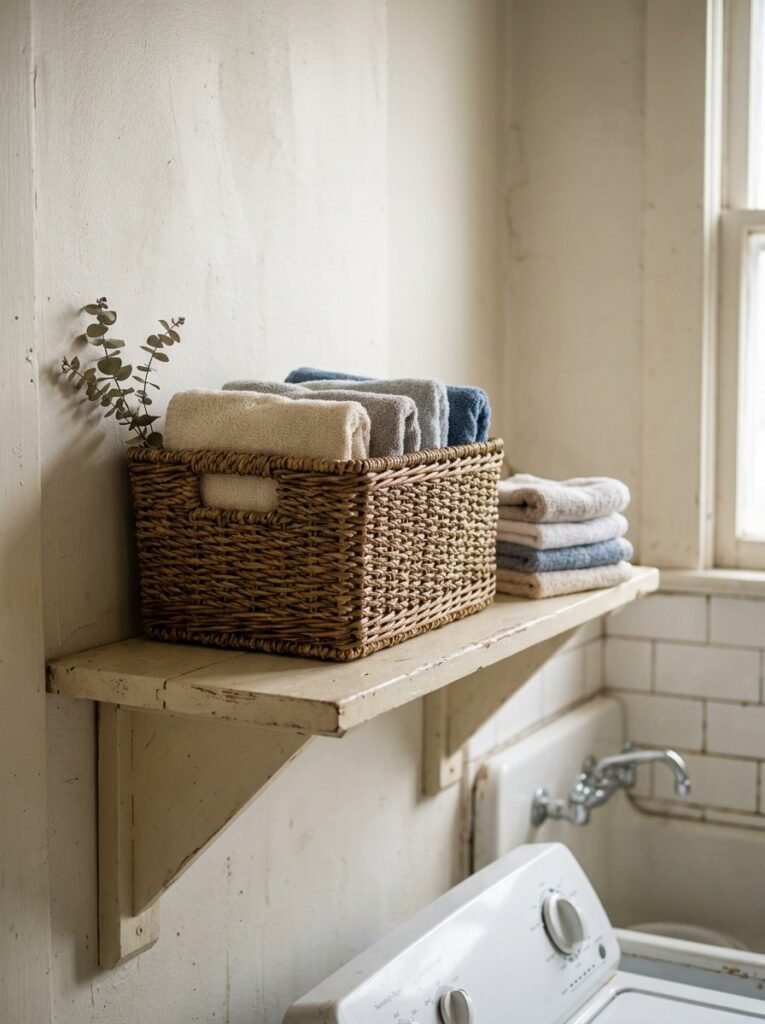
This doesn’t have to be expensive. Wicker baskets in the same natural shade, all the same size, stacked or lined up — that looks like a magazine photo. A mix of random plastic bins and wire baskets and cardboard boxes all from different places? That looks like a storage unit.
“A small room doesn’t need to be fancy. It needs to be consistent. Those two things aren’t the same.”
The other part of this rule is: the floor. If you’ve got any choice at all about your floor, go light and keep it simple. A pale grout tile or a light vinyl plank makes the floor disappear visually. A dark or busy floor makes the room feel smaller. Even a small light-colored woven mat in front of the machines makes a difference — something that defines the space without demanding attention.
—
6. Where to Put the Ironing Board If You Have Absolutely No Room for an Ironing Board
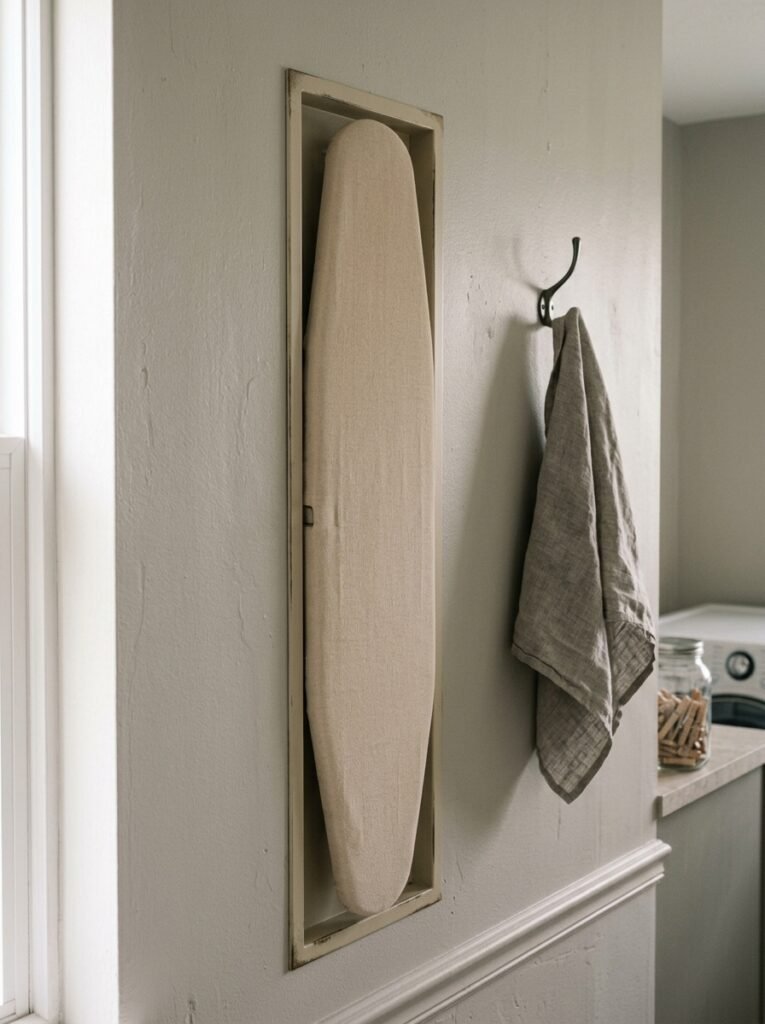
Wall-mounted. That’s the answer, and I won’t argue about it.
There are wall-mounted ironing boards that fold completely flat and look like a small cabinet door when they’re closed. The ones that mount inside a narrow door-height cabinet are genuinely clever — you open the door, pull the board out, use it, fold it away. Takes up maybe four inches off the wall when closed.
If even that’s too much, the kind that hangs on the back of a door works too — not as sturdy, but functional. The over-door ones hook on and fold flat, and they work on most standard interior doors.
What doesn’t work: leaning the full-size ironing board against the wall, telling yourself you’ll find a better solution later, and then tripping over it for the next six years. Not judging, just saying I’ve seen this in almost every laundry room that has the ironing board problem.
—
7. The Lighting Situation That Nobody Talks About But EVERYONE Should Fix First
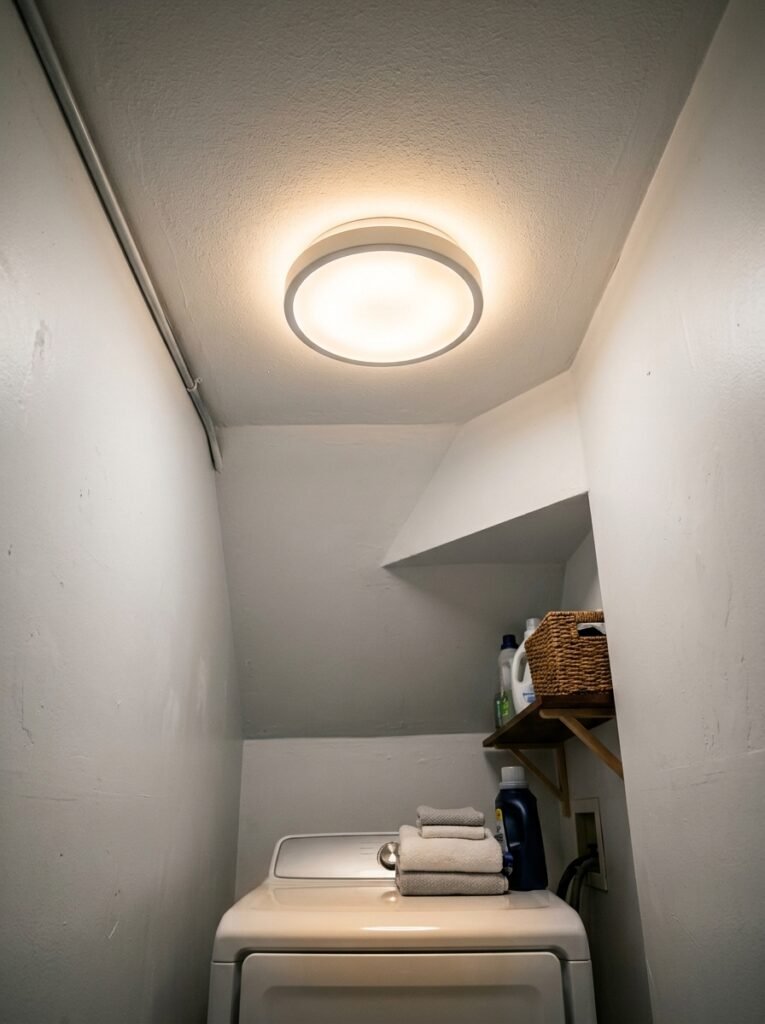
Laundry rooms are usually an afterthought in terms of lighting. One overhead fixture, often a sad single bulb or a builder-grade flush mount that throws yellow shadows everywhere.
This is a problem for a practical reason: you need to see stains. You need to see what setting the machine is on. You need to read product labels. Bad lighting makes all of that harder, which means more errors, which means more laundry. The lighting is not a decorative choice — it’s a functional one.
Add an under-shelf light strip if you’ve got shelving. Peel-and-stick LED strips are easy to find, inexpensive, and they plug into any standard outlet. Put them under the shelf above your machines and suddenly the whole front-loading area is lit properly.
If you’re doing any kind of real renovation, add a second light source — ideally on the opposite side from the overhead so you’re not working in your own shadow. Even a simple plug-in wall sconce does this.
And if you’ve got a window? Don’t block it. I’ve seen people put shelves in front of laundry room windows and then wonder why the room feels grim. Natural light in a laundry room is a luxury. Protect it.
—
8. The Color That Keeps Showing Up in Every Beautiful Small Laundry Room Right Now
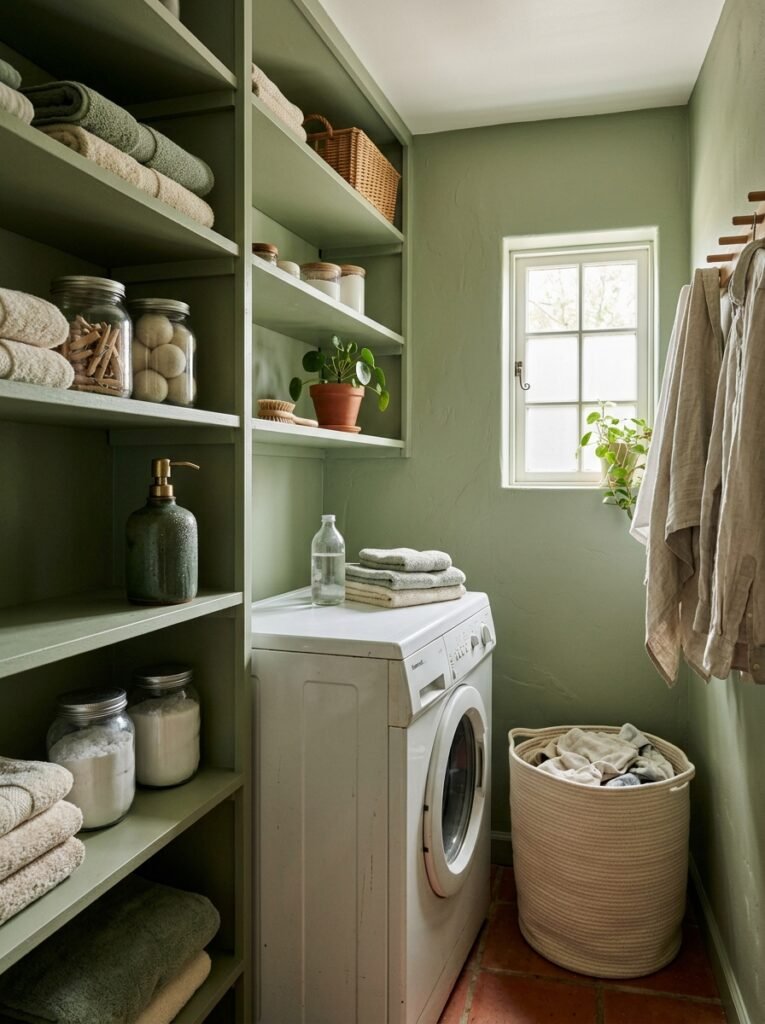
Sage green. Warm cream. Dusty terracotta. Soft navy.
Not white. I know, I know. White laundry rooms look incredible in photos. But in practice, white shows every scuff, every detergent splash, every splash of fabric softener that missed the machine and hit the wall. If you’ve got kids or you do a lot of laundry, white walls are a decision you’ll regret by week two.
The colors that are actually performing well in small laundry rooms right now are the soft, warm-neutrals-with-a-hint-of-something-interesting category. Sage green reads calm. Warm cream feels cozy without being stark. Dusty terracotta is a little unexpected and a lot beautiful.
The trick in a small room is to go slightly darker than you think you should on the walls. I know that sounds counterintuitive — won’t it make the room feel smaller? Sometimes. But a small room that’s all pale and washed out can feel emptier and sadder than a small room with a bit of depth and warmth. Paint a sample on two walls and live with it for a day before you decide.
“A small room with a confident color feels like a choice. A small room with a timid color feels like you didn’t finish.”
—
9. The Sink Problem and Whether You Actually Need One
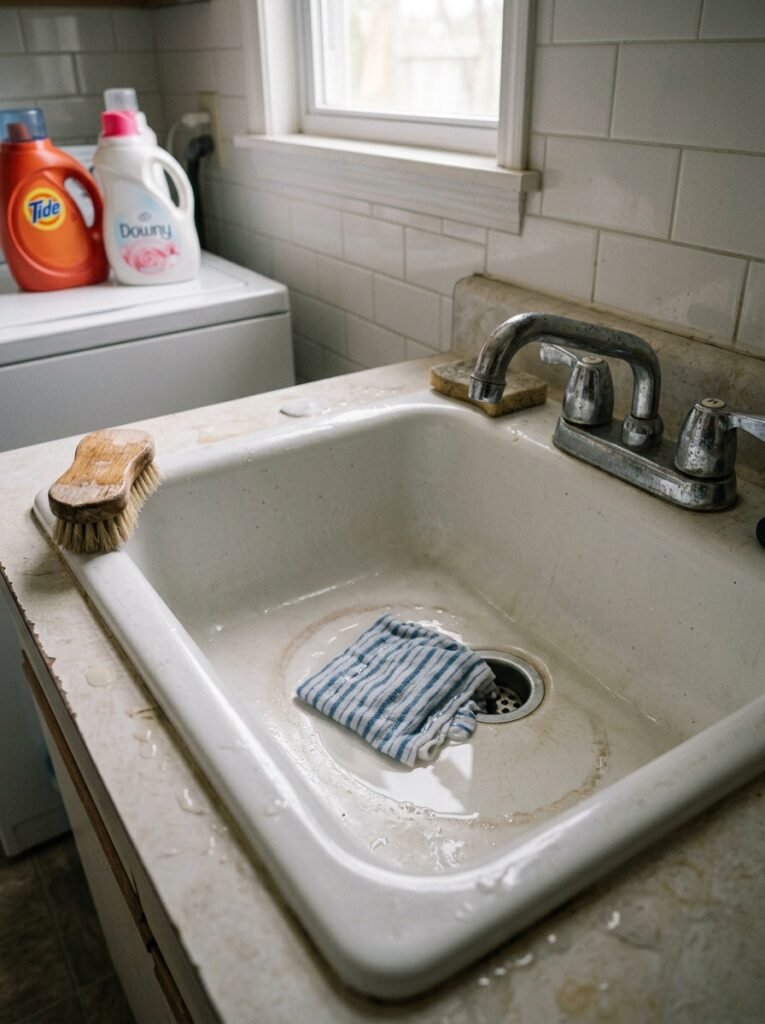
If you already have a utility sink in your laundry room, use it and love it. It’s genuinely useful — hand-washing, soaking, rinsing, cleaning grimy stuff that shouldn’t go in the machine.
If you don’t have one and you’re trying to decide whether to add one: it depends. In a genuinely tiny laundry room — I’m talking under 40 square feet — a sink eats a disproportionate amount of space and counter edge. If you don’t hand-wash regularly and you have a nearby bathroom or kitchen sink, you can probably skip it.
But if you hand-wash often, if you have kids, if you garden, if you have pets — the utility sink earns its space fast. Go for the shallowest model that still functions properly. Deep utility sinks are nice but they take up way more room than you’d think, and a shallower sink does 90% of the same work.
—
10. The Hidden Storage Trick That’s Right Behind Your Laundry Room Door
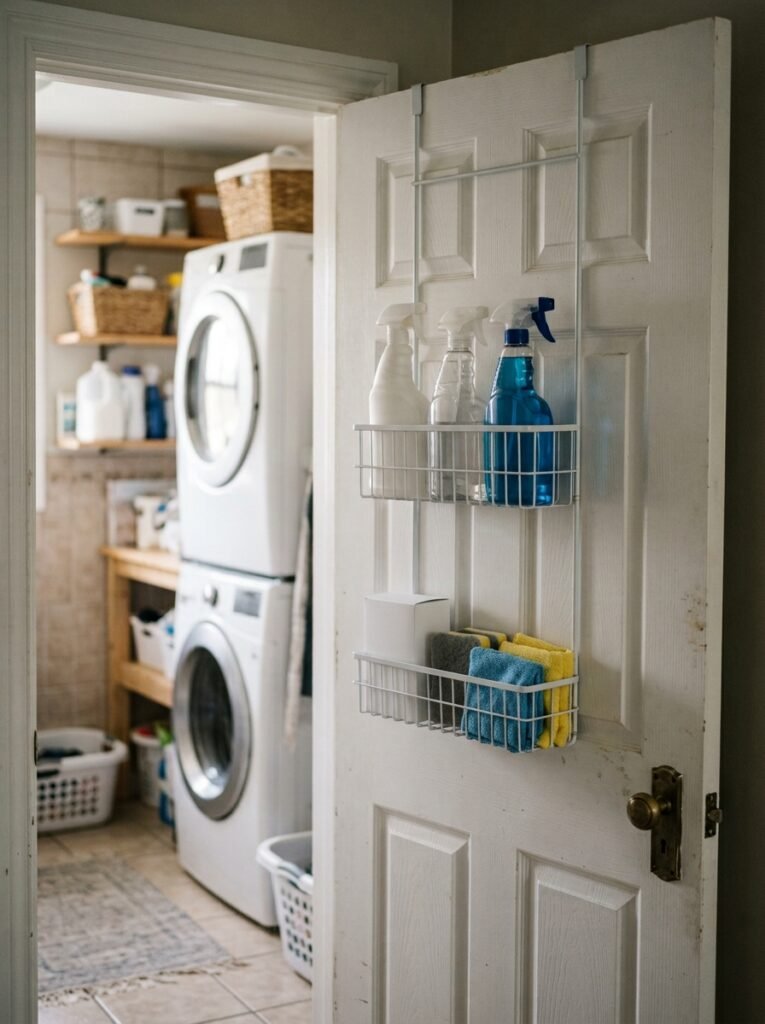
The back of the laundry room door is basically a free wall that most people completely ignore.
An over-door organizer — the kind with clear pockets or small bins — is perfect for all the small things: spare buttons, safety pins, stain remover pens, mesh laundry bags, dryer balls that roll away every time, spare coins that came out of pockets. The stuff that always ends up on the counter or on top of the machine because there’s nowhere else for it.
Alternatively: a few sturdy hooks on the back of the door for hanging items in progress. A damp shirt that needs to dry. A garment waiting to be hand-washed. A tote bag you use to carry laundry between rooms.
The back of the door is not glamorous. But it’s there, it’s functional, and using it well means all that small clutter has a home that isn’t the top of your machine or the floor.
—
11. The Thing About Hampers That Most People Get Wrong
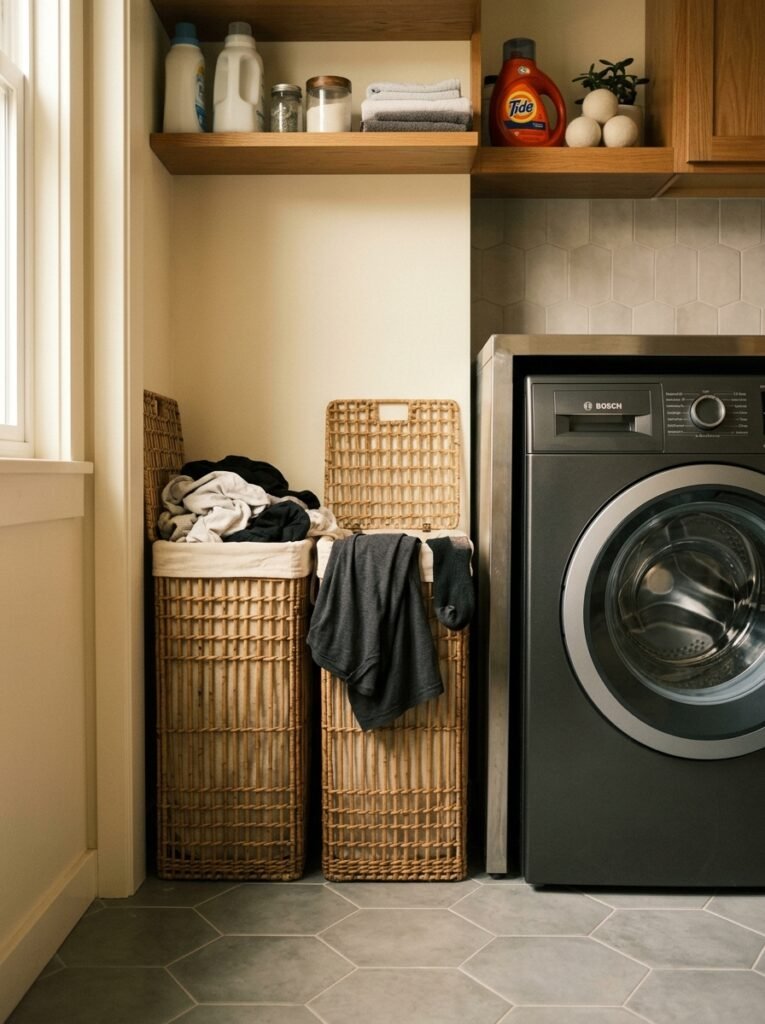
Multiple hampers. Not one.
The goal in a laundry room isn’t to have a place to dump laundry — it’s to have laundry already sorted by the time you start a load. If you’re sorting at the machine, that’s extra steps, extra time, extra fumbling.
Two slim hampers side by side — one for darks, one for lights — sorted from the start means you can just grab a hamper and load the machine. Done. This works best if the hampers live right where people naturally drop laundry, which might be in the laundry room or might be in a bedroom or hallway, depending on your house.
In the laundry room itself, a small pull-out sorting system built into a cabinet works really well for tight spaces. There are pull-out hamper frames designed to fit inside standard cabinet openings — they hold two or three canvas bags and take up very little floor space. They look clean, everything’s contained, and sorting becomes automatic.
—
12. The Layout Decision You Should Make Before Anything Else
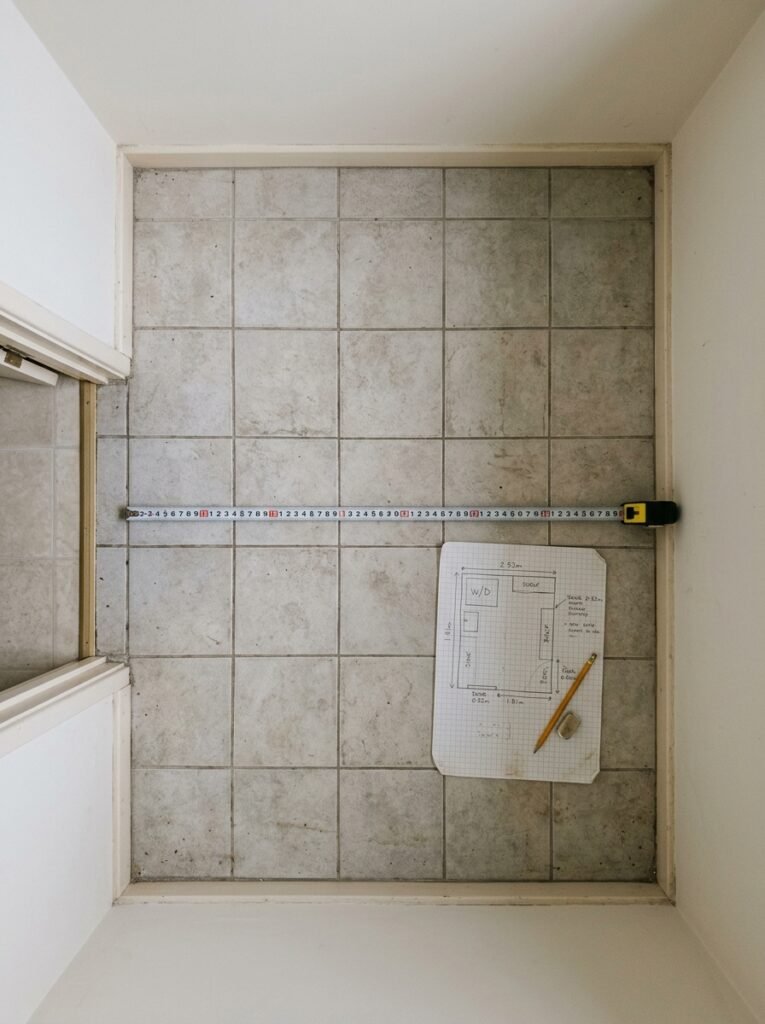
Before you buy anything. Before you choose a color. Before you look at one more photo of a beautiful laundry room that makes you feel bad about yours.
Map out your workflow.
Not the layout — the workflow. Physically walk through what you do from the moment you pick up a laundry basket to the moment the clean clothes are put away. Where do you carry the basket from? Where do you set it down? Where do you sort? Where do you fold? Where do things go when they’re done?
Write it down if you’re a visual person, or just do it slowly and notice every moment where you have to reach awkwardly, turn in an uncomfortable way, set something on the floor because there’s nowhere to put it. Those are your problem spots. Fix those first.
A beautiful laundry room that doesn’t fit your actual routine will still drive you crazy. A less-beautiful room that fits how you actually live will make your life measurably easier, and you’ll end up loving it more anyway.
—
❓ FAQ
Q: What’s the minimum floor space needed for a functional laundry room? A: You can genuinely make a laundry space work in as little as 25–30 square feet if you stack your machines and use vertical wall storage strategically. The key constraint isn’t usually total square footage — it’s aisle width. You need at least 30 inches in front of the machines to open doors and load comfortably, and 36 is better.
Q: Should I use open shelving or closed cabinets in a small laundry room? A: Closed cabinets make a small laundry room look calmer because they hide the visual noise of products and supplies. Open shelving works if you’re very disciplined about keeping things uniform and tidy — and I mean very disciplined, because everything’s always on display. Most people find closed doors reduce stress more than open shelving does, even when the shelving looks lovely at first.
Q: How do I make a laundry room in a rented flat or apartment feel less depressing without big changes? A: Focus on what you CAN change: over-door organizers, peel-and-stick lighting strips, coordinated baskets and bins, and a small mat or rug in front of the machines. A plug-in wall sconce adds warmth without any wiring. A few plants on a shelf — if the light supports it — make a surprisingly big difference. These are all removable, which means they’re renter-friendly and they work.
—
💭 Final Thoughts
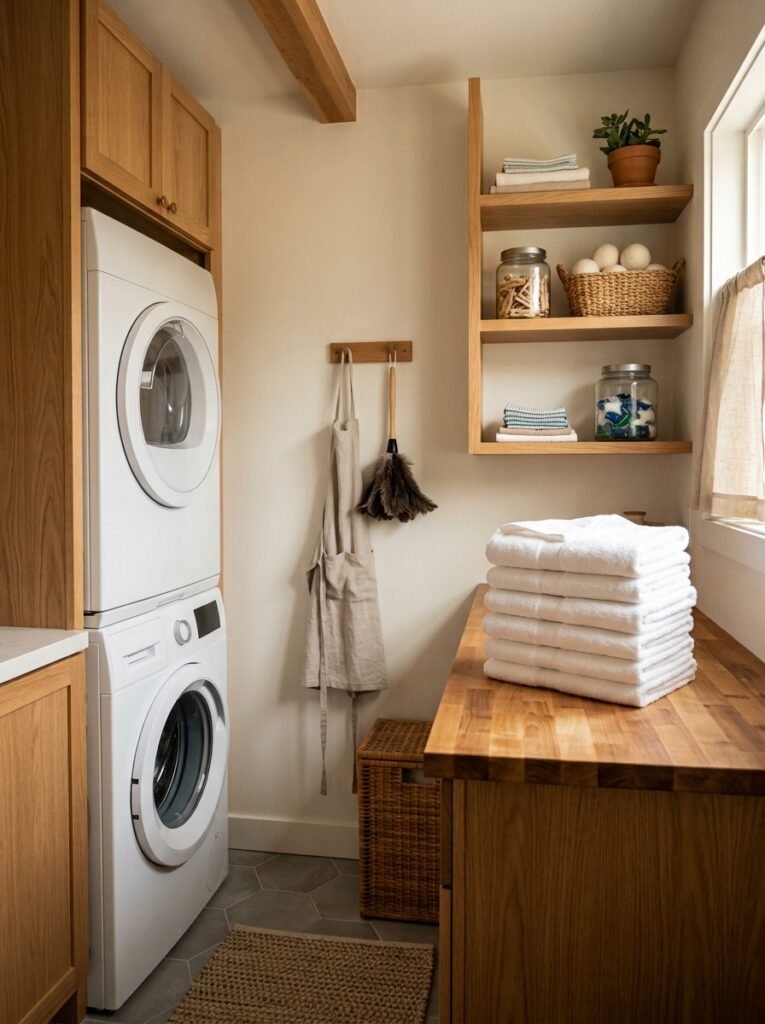
The best laundry room isn’t the one with the custom cabinetry and the marble countertop and the Instagram-worthy row of matching bottles. The best laundry room is the one that makes you dread laundry slightly less — where things are where you expect them, the light is good, and you don’t feel like you’re battling the space just to get a basic task done.
That’s honestly not a high bar, and you don’t need a renovation budget to clear it.
So — if you could fix just one thing about your laundry room tomorrow, with whatever you’ve already got at home, what would it be?