Your Front Door Is the First Gift You Give This Christmas — Here’s How to Actually Make It Special
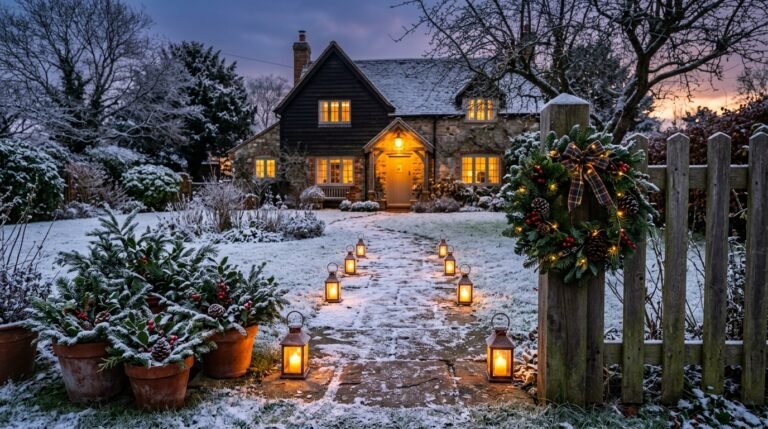
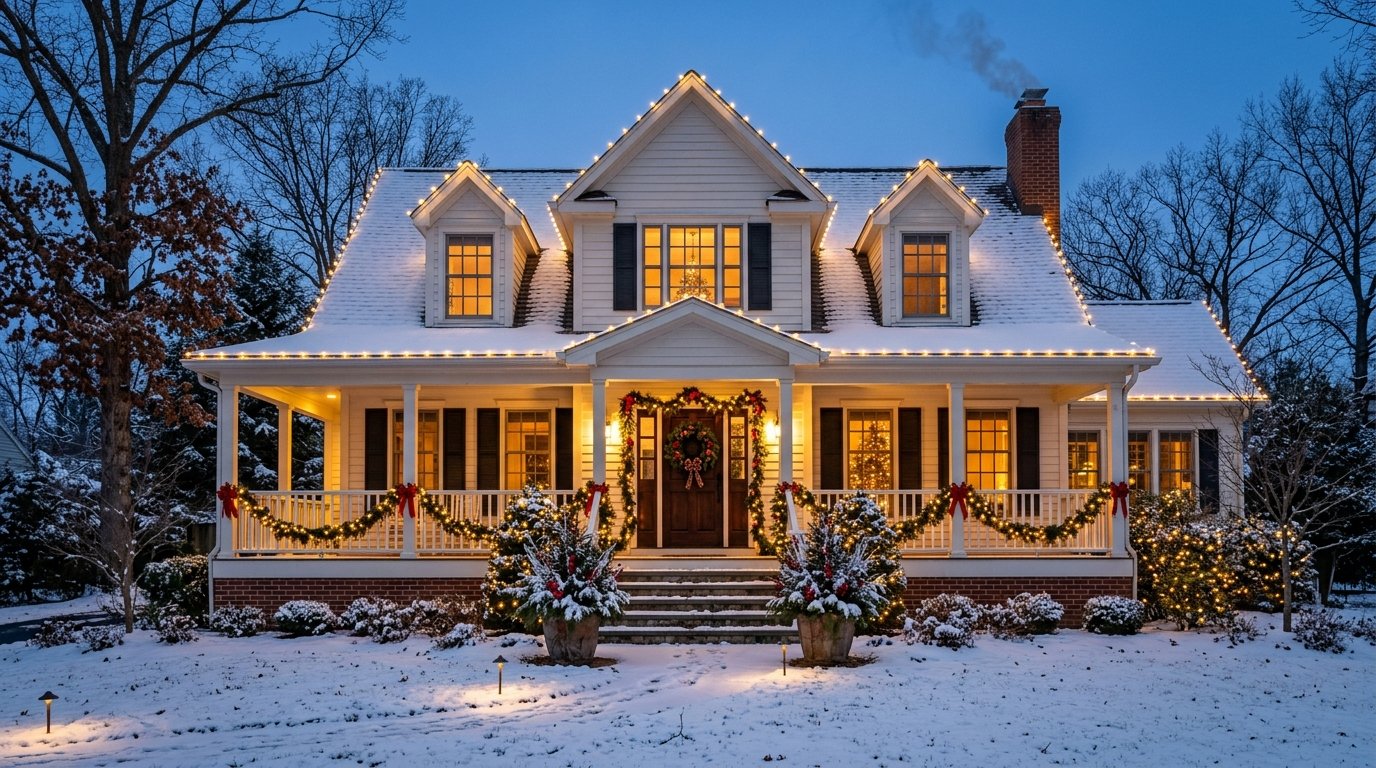
My neighbor did something last year that stopped me mid-walk. Just stopped me. She’d wrapped every single window frame in thin white lights — not the buzzing, blinking kind, the steady warm kind — and hung a single oversized wreath on the front door with nothing else. No inflatable. No flashing reindeer. Just that. And I stood there on a cold December evening thinking, how is something so simple so completely arresting?
That’s what good exterior Christmas decor does. It doesn’t try to do everything. It commits to something.
—
1. The Window Light Trick That Makes Your Whole House Look Like a Christmas Card
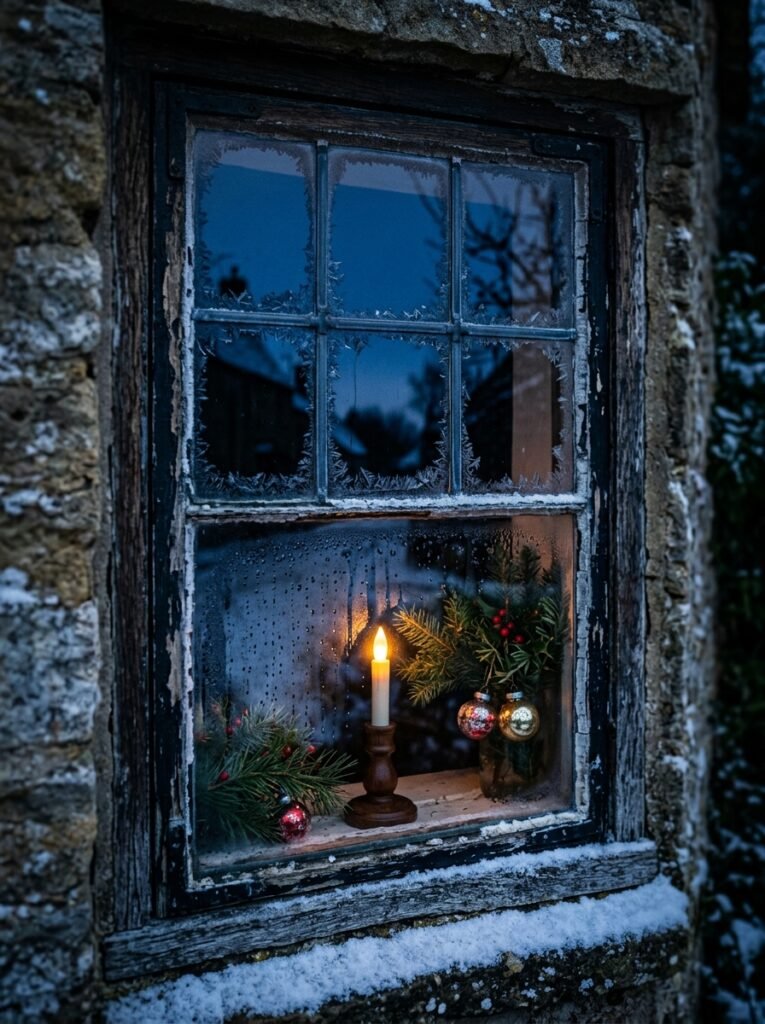
Here’s the thing about outdoor lighting that nobody really talks about: it’s not the volume that matters, it’s the placement. Wrapping your gutters in icicle lights is fine. It’s expected. But running a clean line of warm white lights around your window frames — the actual frames, tight and close — does something completely different to the face of your house.
It makes every window look lit from within. Like something beautiful is happening inside.
You don’t need much. One strand per window is usually enough, and if you’ve got casement windows or sash windows (very common in older UK homes), the frame itself acts as a natural guide. US ranch-style homes with wider windows benefit from doubling the strand along the sill for a little extra glow.
The key is warm white, not cool white. Cool white reads clinical. Warm white at dusk — that amber-leaning 2700K tone — looks like candlelight from the street. That’s what you’re going for.
“It’s not the volume that matters. It’s the placement.”
—
2. Why Your Wreath Is Probably the Wrong Size (And What to Do About It)
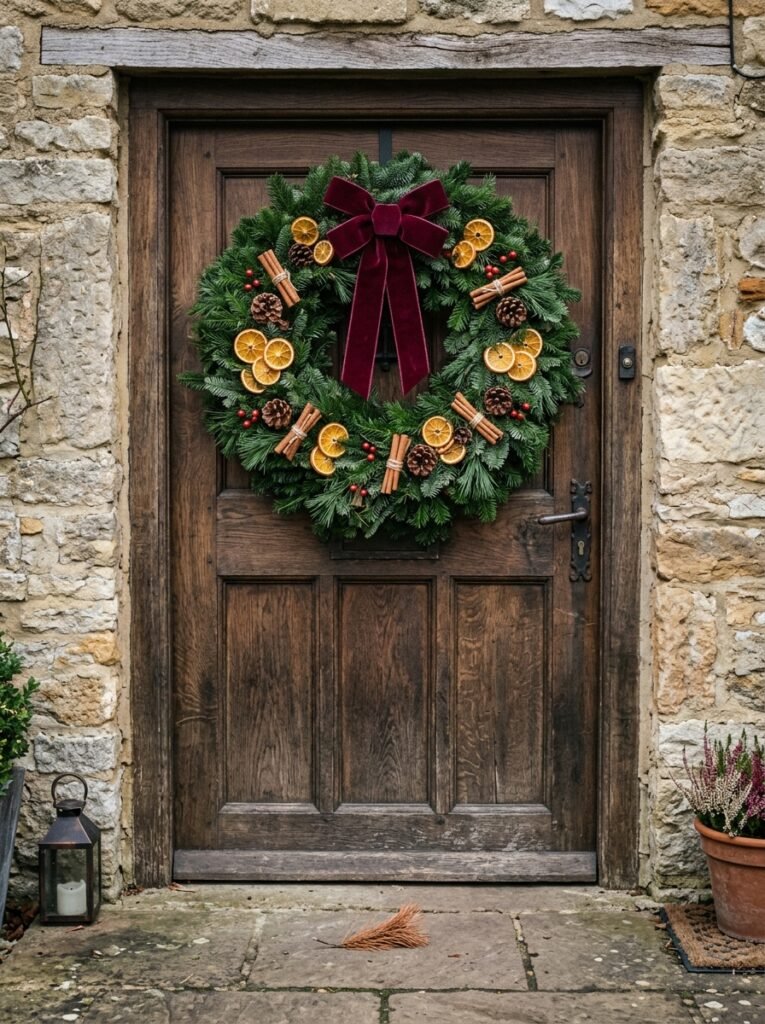
I’ll just say it: most wreaths are too small for the front door. They look lost. A standard 12-inch wreath on a full-size door reads like a Post-it note on a billboard.
Go bigger than feels right. A 24-inch wreath is the minimum for a standard door, and honestly a 28- or 30-inch wreath is often what actually fills the space properly. If you’re in the UK and you’ve got a Victorian or Edwardian front door with a transom window above — go even bigger, or consider hanging a second smaller wreath in the transom separately.
Now, the ribbon. A thick velvet ribbon in burgundy, forest green, or deep navy tied in a proper bow (loops that are actually generous, not sad little ears) changes the whole mood. Wired velvet ribbon holds its shape in cold, damp weather. Worth every penny.
And if you’re feeling brave? Ditch the bow entirely and hang something unexpected from the bottom instead — a cluster of dried orange slices, a bundle of cinnamon sticks, a small vintage bell. Something with texture and a little weight that moves slightly in the wind.
—
3. The Potted Plant Formula That Garden Centers Don’t Tell You About
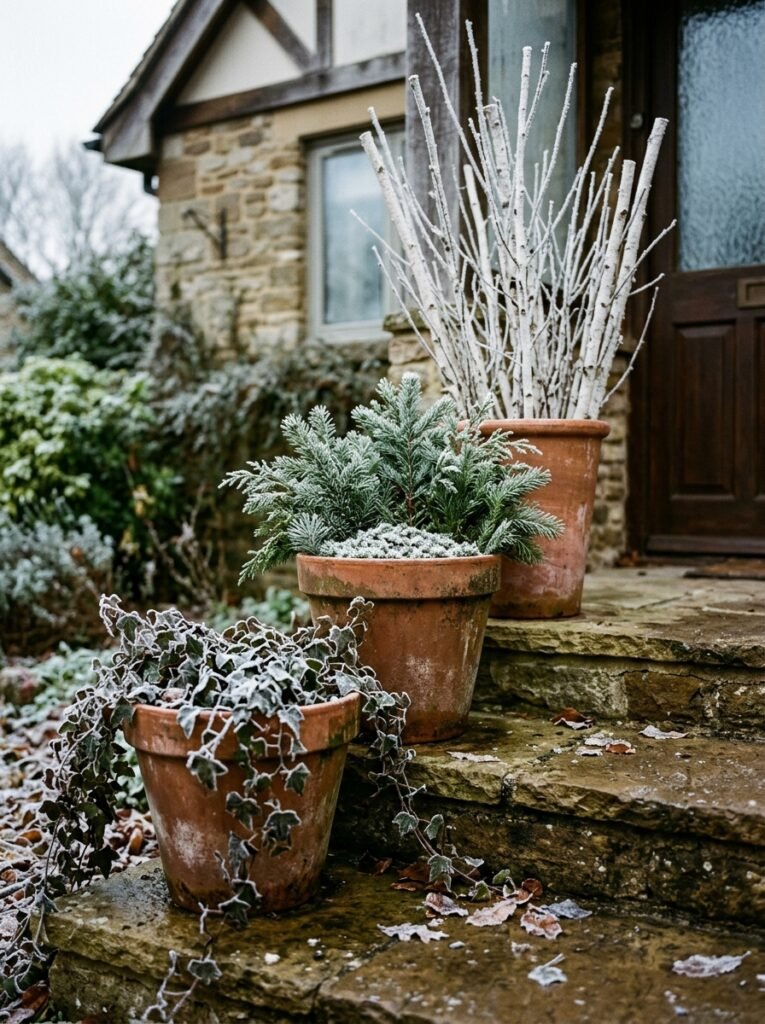
Two large planters flanking the front door. You’ve seen it. Maybe you’ve tried it and been vaguely disappointed because it looked kind of… fine. Here’s the formula that actually works, and it’s called “thriller, filler, spiller” — though you can ditch the cutesy name, the principle is real.
Thriller: the tall, dramatic center piece. A slim evergreen, a bundle of birch branches sprayed white, a tall stem of dried lunaria. Something with height.
Filler: the mid-level bulk. Frosted eucalyptus, pine branches, holly sprigs, clusters of artificial berries in deep red or gold. You’re building texture and volume here.
Spiller: something that drapes or falls forward slightly over the pot edge. Trailing ivy, a loop of eucalyptus, a few sprigs of something feathery. Just enough to soften the pot edge and make the whole thing look intentional rather than just… planted.
Add a few short pillar candles (in lanterns, please, not just raw flame outside) or battery-operated fairy lights tucked into the base, and you’ve got something that photographs beautifully and actually looks even better in person at night.
—
4. The One Door Color That Christmas Decorations Almost Always Fight With
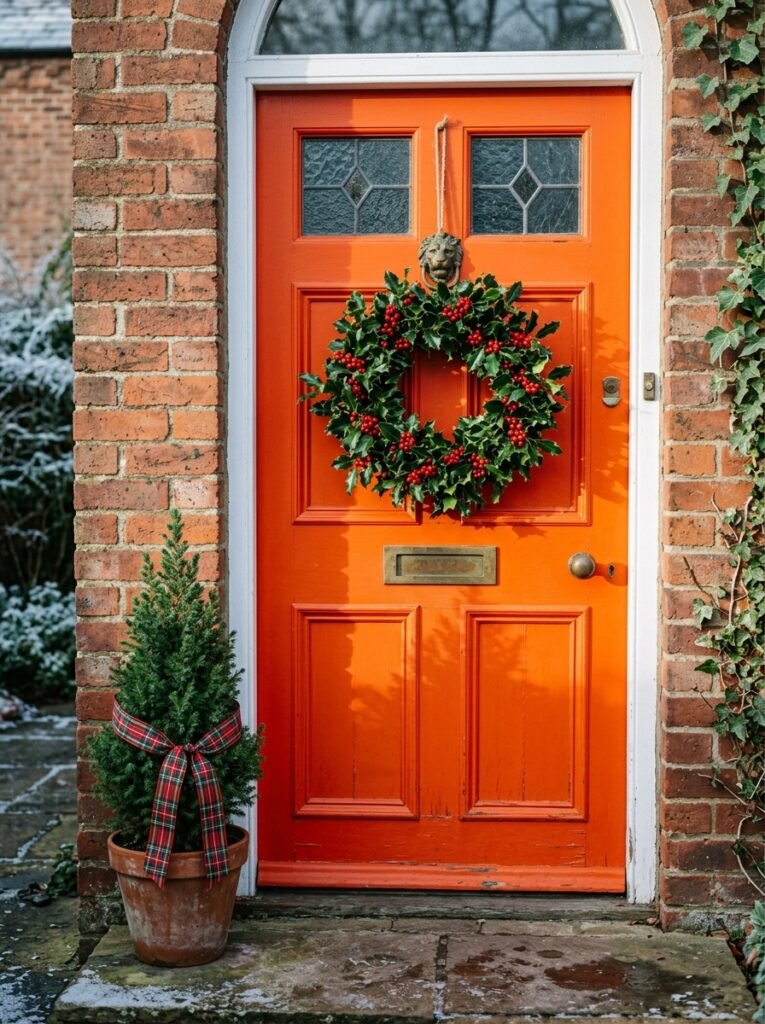
Red doors. I know. People love a red front door. And most of the time it’s genuinely striking. But here’s something I noticed after styling a few different front entrances: a red door and a traditional Christmas wreath with red berries? They fight. The reds are never quite the same tone, and the whole thing looks muddy and confused from the street.
If you’ve got a red door, lean hard into contrast. A wreath with lots of white, cream, eucalyptus silver-green, or deep navy ribbon. Or go completely unexpected — a wreath made almost entirely of dried botanicals, bleached pinecones, and buff-colored wheat stalks. It reads sophisticated, it doesn’t compete, and honestly it photographs MUCH better in that golden afternoon December light.
“A wreath should complement your door, not compete with it for attention.”
—
5. What British Homes Get Right That American Homes Often Miss
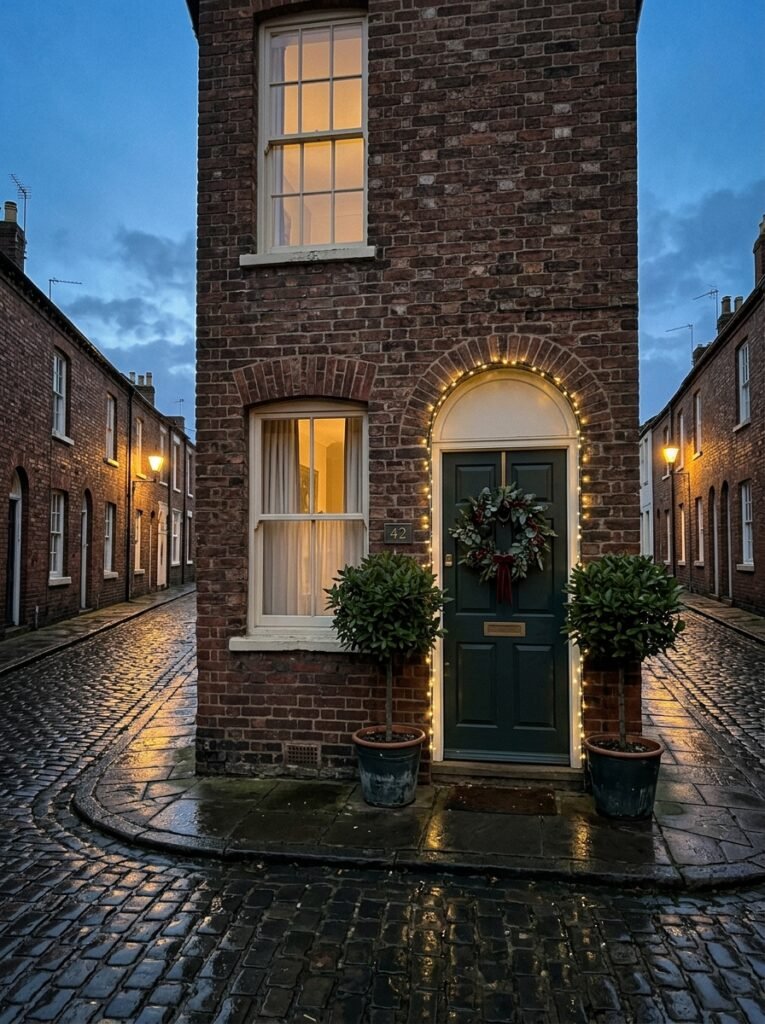
So this is a generalization, obviously. But there’s something I’ve noticed scrolling through Pinterest boards on both sides of the Atlantic. British exterior Christmas styling tends to be quieter and more botanical — lots of fresh greenery, berried branches, natural textures — while American front porches often go bigger, bolder, and more playful.
Neither is wrong. But if you’re an American homeowner looking to add a bit more elegance without losing the festive energy — borrow from the British playbook a little. A bunch of fresh holly with deep berries from the garden. A simple kissing ball of mistletoe hung from the porch ceiling. A doormat that’s more interesting than it sounds: chunky coir, nothing printed on it, just texture.
And if you’re in the UK and you want a bit more of that full, warm, American-porch energy — a pair of galvanized metal buckets packed with mixed greenery and small red lanterns either side of the door is a very easy first step. You’re adding volume without going inflatable.
—
6. Garland That Actually Stays Where You Put It (Even in British January Rain)
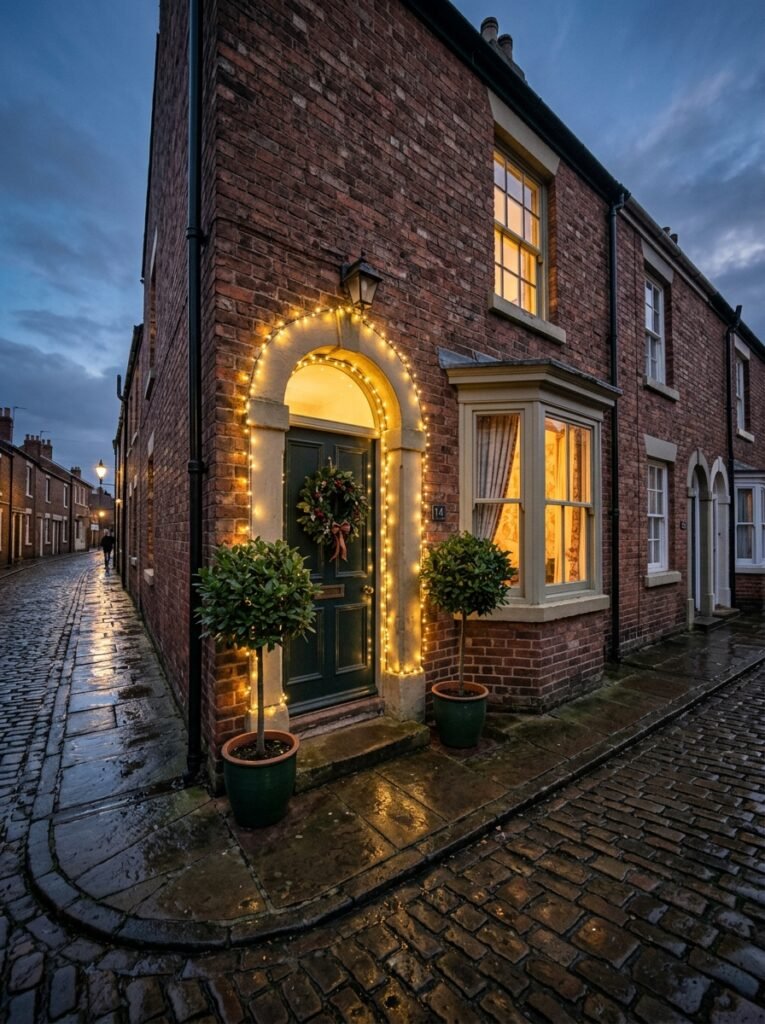
Fresh garland is beautiful for about twelve days and then it starts to look funereal. Dried or high-quality faux garland, done right, is honestly the more practical choice for most people — especially if you’re in the UK where December and early January are doing their absolute worst weatherwise.
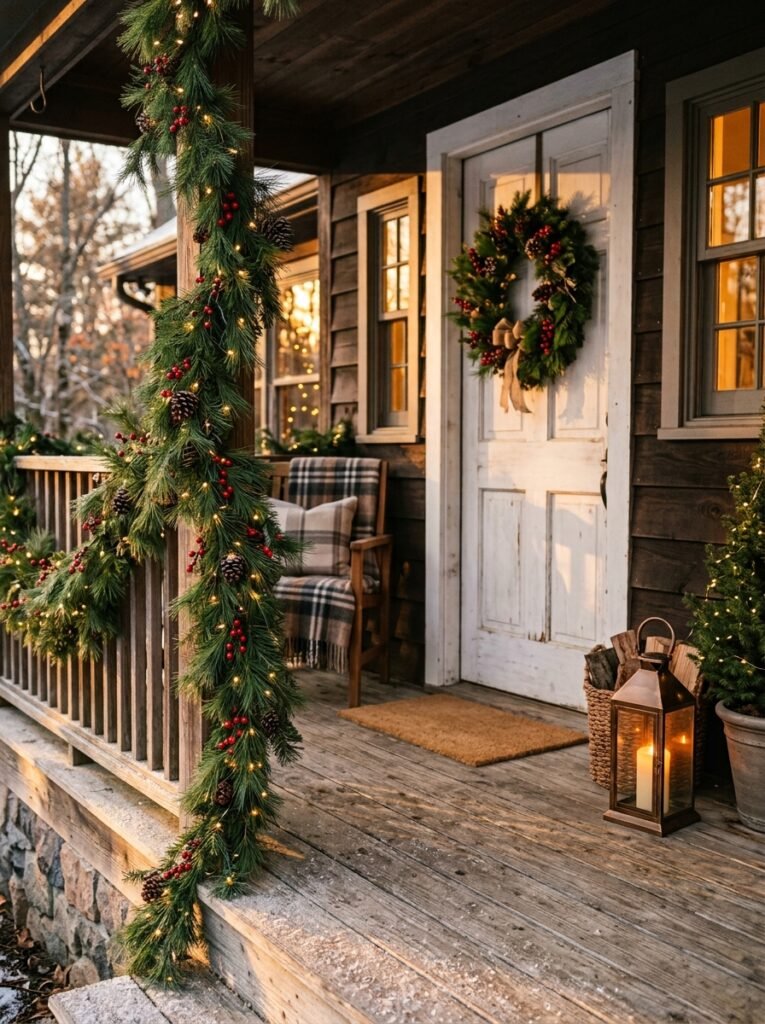
The trick to making faux garland look real is layering. You start with your base garland and then you tuck things into it — fresh holly sprigs, eucalyptus stems, small dried orange slices, little clusters of cranberries on picks. The base gives you the structure and the tucked elements give you the scent, the texture variation, and the organic unpredictability that makes it read as something real and considered.
Use cable ties or small S-hooks instead of twist ties to attach it to railings. Twist ties rust and snap in the rain. For brick or stone houses (very common in the UK), small adhesive hooks rated for outdoor use hold garland above a doorframe without drilling anything. They actually work if the surface is clean and dry before you apply them.
—
7. The Underrated Power of a Lit Outdoor Lantern
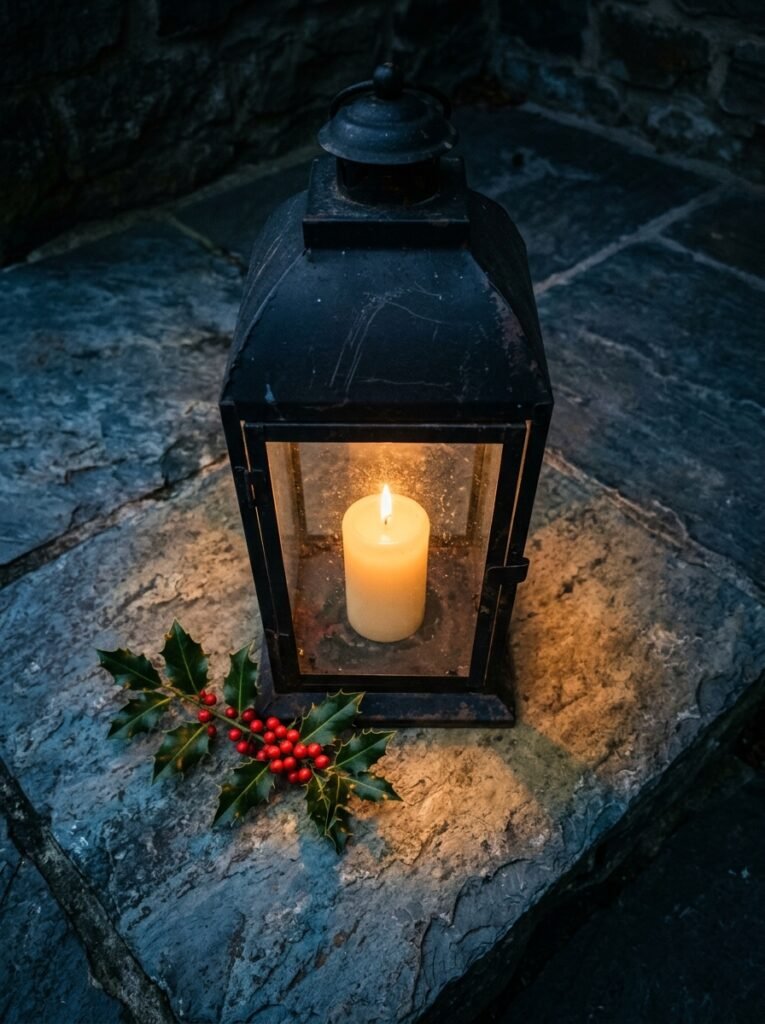
I became a little obsessed with outdoor lanterns about two winters ago, not gonna lie. There’s something about a large lantern — the kind with a matte black or aged bronze frame — sitting on a porch step or beside a planter that just signals welcome in a way nothing else quite does.
Inside: a cluster of pillar candles at different heights. Or battery LED candles if you don’t want to think about wind and fire, which, fair. A few sprigs of fresh rosemary or pine tucked around the base of the candles. Maybe a small dusting of fake snow inside the base of the lantern — that white crumbly kind, not spray.
The light it gives off isn’t bright. It’s barely anything, technically. But at 5pm on a dark December afternoon when you’re walking up to a house that has that amber glow coming from a lantern on the step? It’s the most welcoming thing.
You can usually find gorgeous ones at antique markets, garden centres, or even charity shops if you’re lucky. They last for years if you bring them in between seasons.
—
8. Frosted Branches in a Barrel: The Idea That Looks Hard But Isn’t
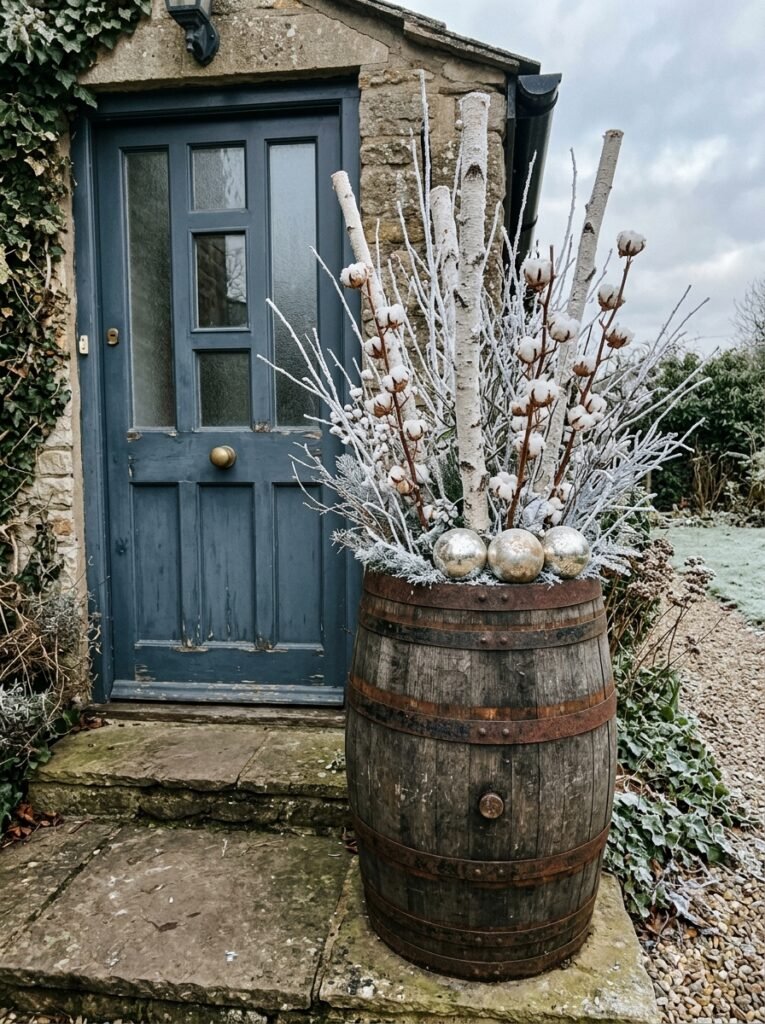
This one intimidated me until I tried it. And now I do it every year.
You get a wide, squat planter or a galvanized metal barrel (even a large terracotta pot works). You fill the base about halfway with sand or gravel for stability. Then you push in tall, bare branches — silver birch is perfect, but any interesting branch with good lines works — in a loose fan shape.
Spray the top half of the branches with white or silver craft spray paint and while it’s still tacky, dust them lightly with biodegradable fake snow. Let it dry. Add a few wrapped small gift boxes tied with ribbon half-buried in the sand at the base, and tuck some pine sprigs around the edges.
That’s it. It looks like something from a boutique hotel entrance. It costs very little. And it’s genuinely one of those things that people will ask you about.
“Bare branches and a can of white spray paint. That’s genuinely all it takes.”
—
9. The Case for Skipping the Inflatable (Or Not — But Here’s the Deal)
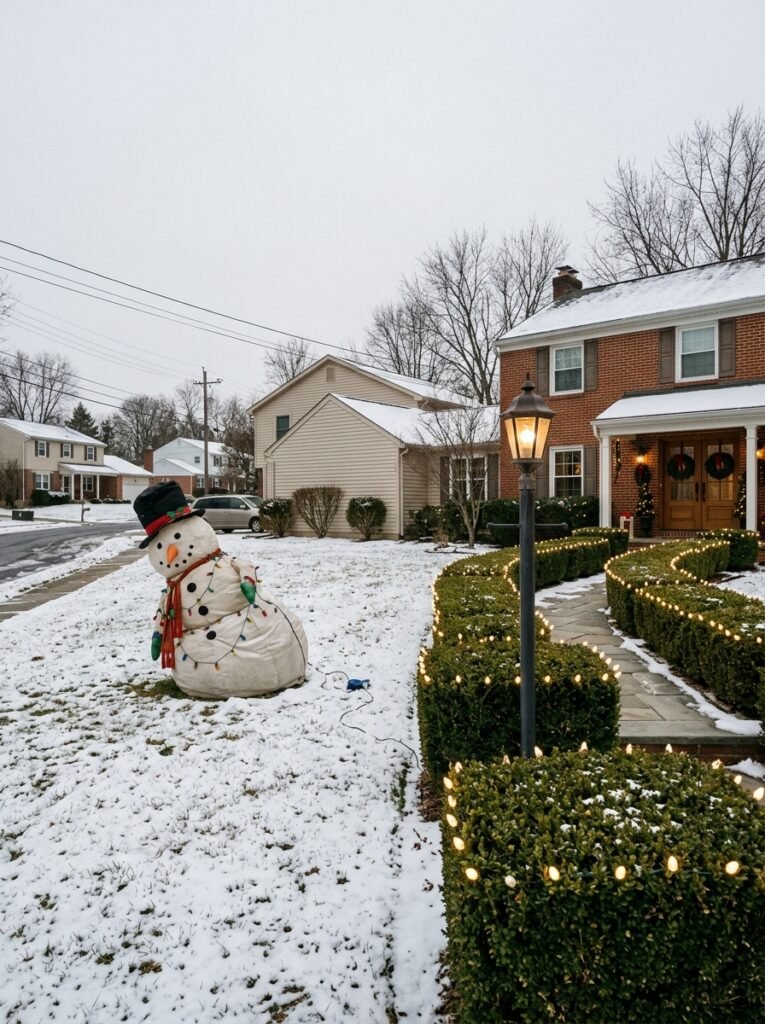
Okay, I’ll be diplomatic. Inflatables are fun. If you’ve got kids, if your neighborhood goes all-in, if you LOVE them — do your thing. There’s no decor police.
But if you’re trying to achieve that “Pinterest-worthy” exterior that photographs beautifully and feels cohesive? Inflatables make it harder. They tend to pull the eye away from the overall picture and toward themselves. Everything else you’ve done carefully just disappears.
If you want scale and drama without inflatables, try oversized bows on your lamppost or mailbox. Or a large metal star ornament hung from a shepherd’s hook in the front garden. Or — and this is one of my favorites for US homes with wider front porches — a row of matching lanterns or luminaries along the porch steps, all lit, all the same height. The repetition creates visual impact that’s actually MORE dramatic than a single inflatable, just in a quieter way.
—
10. Mailbox and Lamppost Styling That Ties the Whole Front Yard Together
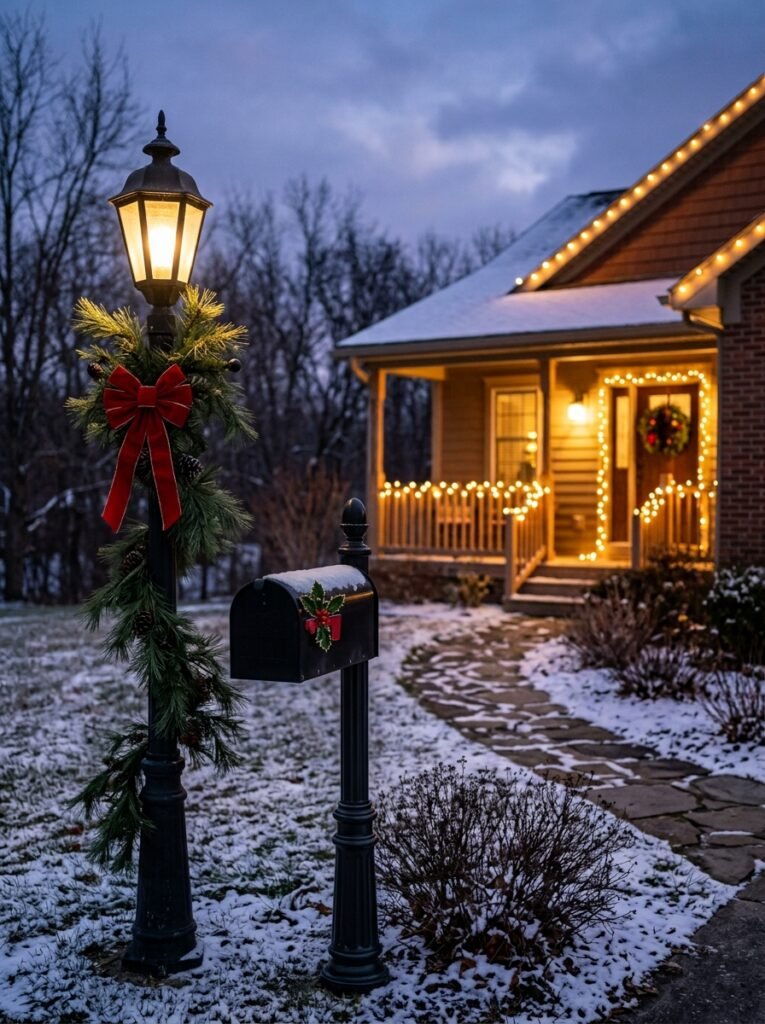
This is the detail that gets skipped. Always. And it’s the detail that makes a really polished exterior look finished rather than just decorated.
Your mailbox and lamppost are out there by themselves looking a bit left out. Fix that.
For the lamppost: a simple loop of garland spiraling up from base to top, secured with waterproof cable ties, topped with a bow or a small wreath hung just below the light itself. Takes twenty minutes and changes the whole look of the yard from the street.
For the mailbox: a small fresh or faux wreath hung from the door, a sprig of holly tucked under the flag, a red ribbon tied around the post. Small gestures. But they extend the decor out from the house and make the whole front yard feel considered, not just the front door.
—
11. The Lighting Temperature Chart You Didn’t Know You Needed
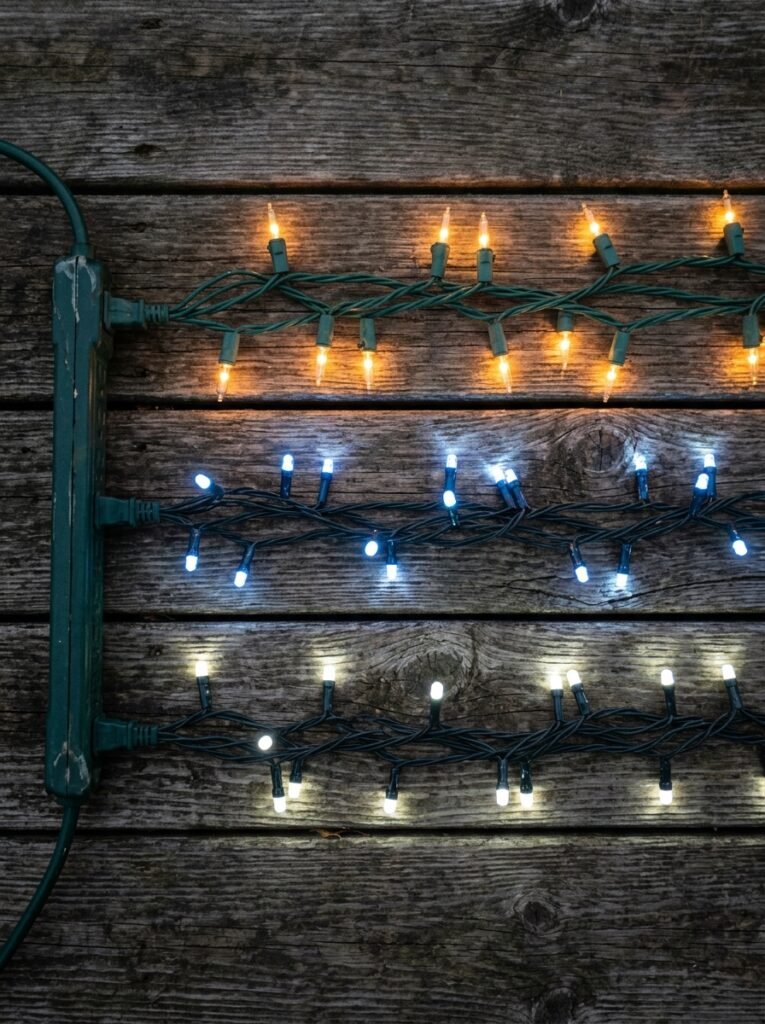
Mixing lighting temperatures outside is the fastest way to make your exterior look unintentional, and most people do it without realizing.
Cool white lights (around 6000K) look crisp and bright. Warm white (2700-3000K) looks amber and cozy. Multicolor is multicolor — it’s a whole different category.
The rule isn’t that you can’t mix. The rule is that you have to CHOOSE. Pick one temperature and stick to it everywhere — window frames, roof line, trees, pathway markers, all of it. When everything is the same temperature, the house looks unified and intentional. When you’ve got cool white on the gutters and warm white on the windows and multicolor in the bushes, it reads chaotic even if each individual element is fine.
Warm white is almost always the right answer for a classic, cozy look. Cool white works beautifully for a more modern, minimal house. Multicolor is pure nostalgia and works brilliantly when you commit to it FULLY.
—
12. The Last Thing to Put Up Is the One People Remember Most
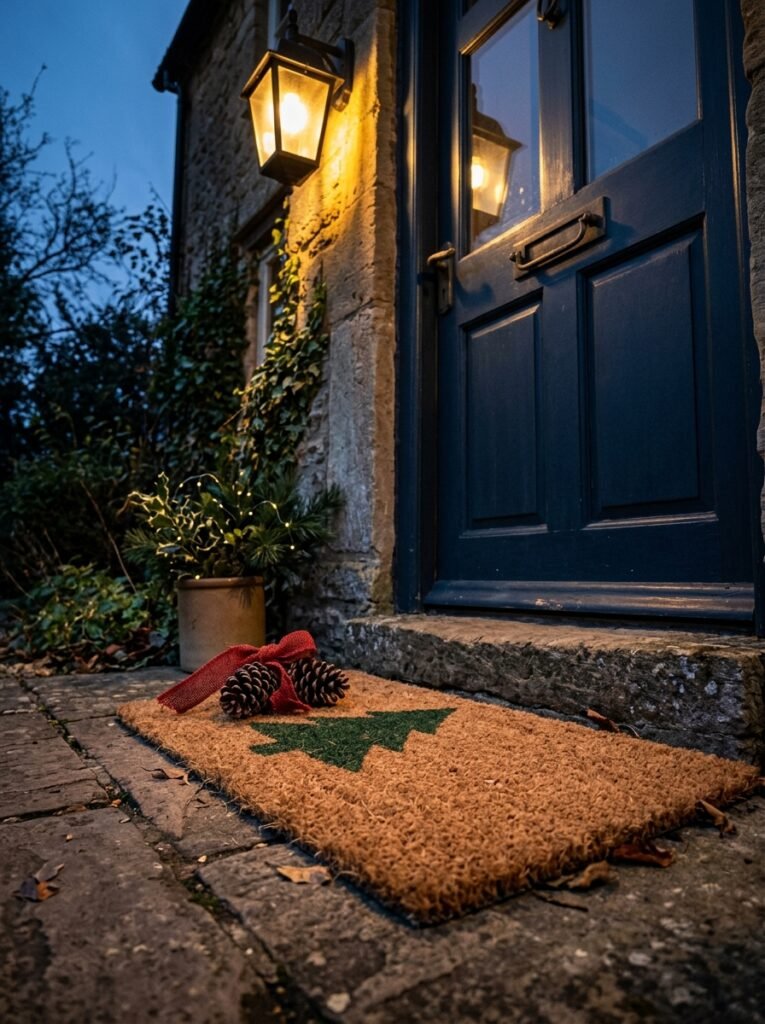
Here’s something I genuinely believe: the single most memorable thing about beautiful exterior Christmas decor isn’t the lights or the garland or the wreath. It’s the front door mat.
Which sounds absurd. But think about it. Every single person who comes to your door looks down when they step up. And a beautiful, thick, natural-fiber doormat — plain coir or one with a subtle woven pattern — sitting under everything else grounds the whole display. It says this was all intentional. It says even the thing you stand on was thought about.
Conversely, a ratty old mat with a faded “WELCOME” under a stunning garland and perfect wreath and gorgeous potted planters is like wearing a beautiful coat with stained trainers. People won’t say anything. But they’ll notice.
Replace the mat. Get a chunky one. It’s the last thing you put up and the first thing everyone sees.
—
❓ FAQ
Q: How do I keep outdoor wreaths looking fresh in cold and wet weather? A: For real greenery, give the cut stems a quick spritz of water every few days and keep the wreath out of direct wind if possible. A light misting of hairspray or floral sealant slows moisture loss. Realistically, fresh wreaths look their best for about ten to fourteen days in UK winter conditions — plan to put them up closer to mid-December if you want them to last through the 25th.
Q: What’s the best way to hang outdoor lights without damaging the brickwork or rendering? A: Outdoor adhesive clips rated for exterior use work surprisingly well on clean, dry surfaces and leave no marks. For rooflines and gutters, plastic gutter clips that hook over the edge are the safest option — no nails, no screws. If you need to run lights along a stone or brick wall, removable outdoor velcro strips (the heavy-duty weatherproof kind) grip well and peel off cleanly in January.
Q: Can I mix different styles of exterior Christmas decor, or does it all need to match? A: Mix freely, but mix within a color palette. If your ribbon is burgundy velvet and your planters have red berries, keep your lanterns in aged bronze or black — not silver. Color cohesion covers a lot of style differences. The combination of rustic, traditional, and natural textures almost always works together outdoors as long as the color story is consistent.
—
💭 Final Thoughts
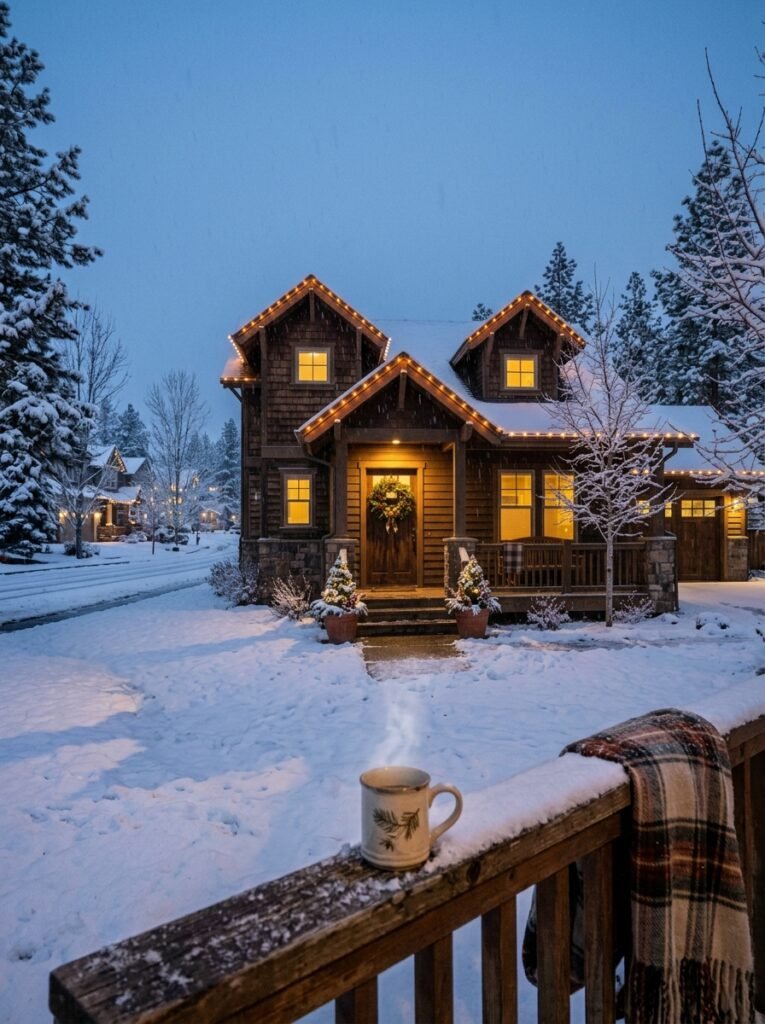
There’s no version of this that has to be expensive or elaborate. Some of the most beautiful exteriors I’ve ever scrolled past — or stopped in front of on an actual street in December — were just confident and consistent. A single good decision, repeated. Warm light everywhere at the same temperature. One natural material running through all of it.
Your house’s exterior is doing the work before anyone even rings the bell. What do you want it to say?