The Tiny Laundry Room Glow-Up Nobody Talks About (But Everyone Needs)
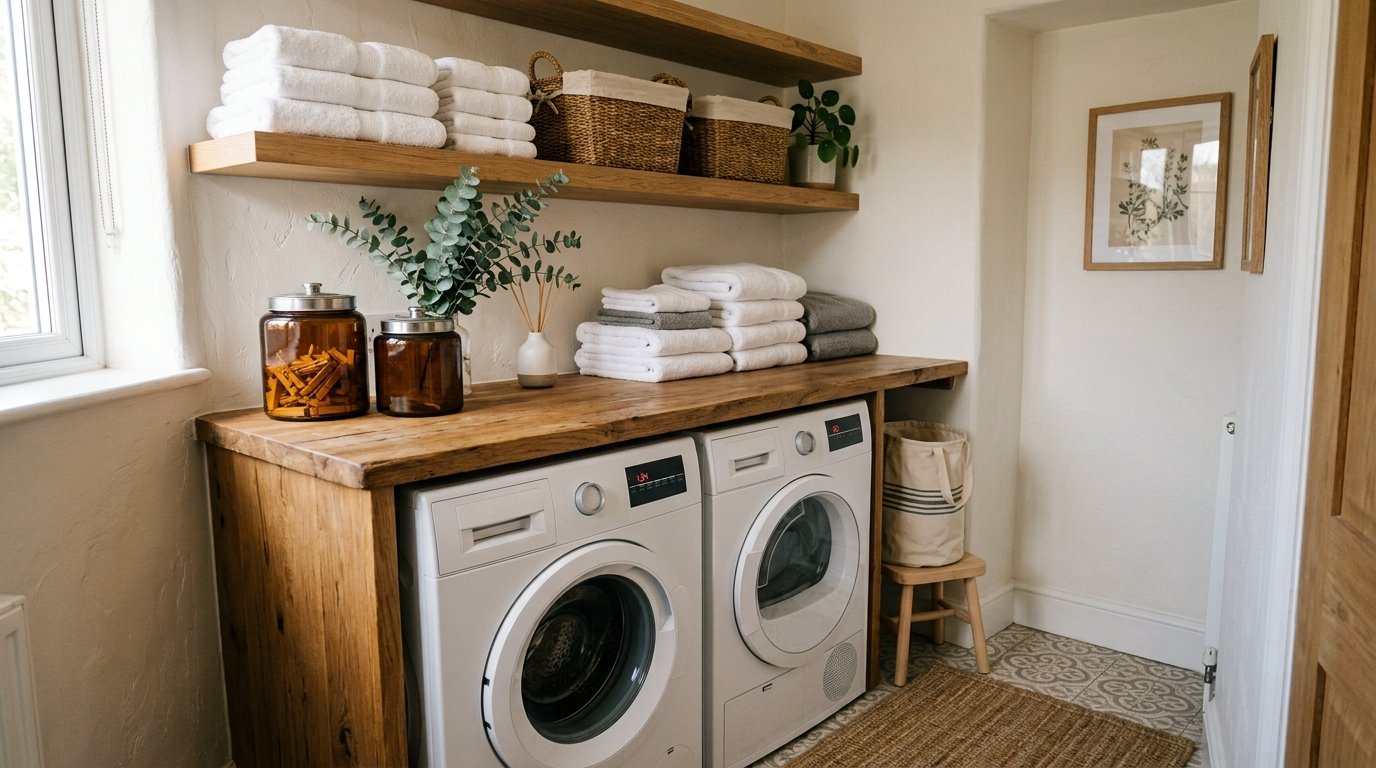
My friend Sarah walked into my laundry room last spring and said, “Wait — this is actually… nice?” She sounded genuinely confused. Like she’d expected a damp closet and gotten something else entirely.
That reaction. That’s what we’re going for.
—
1. The First Thing to Fix Isn’t What You Think It Is
Everyone jumps straight to storage. I get it — you open a tiny laundry room door and the first thought is where does everything go. But the first fix is almost never shelves. It’s lighting.
Bad lighting in a small space doesn’t just make it dark. It makes it feel like a cave you’re being punished in. A single harsh overhead bulb turns a room into somewhere you rush through. And when you’re already not thrilled about doing laundry, that energy doesn’t help.
Swap the overhead for something warmer. Even one plug-in wall sconce or an LED strip tucked under a shelf changes the entire mood. I put up a small light with a warm 2700K bulb and suddenly the space felt like it had been repainted. It hadn’t. Nothing else changed. Just the light.
That’s the fix nobody pins but everybody needs.
2. The Stacking Decision That Actually Doubles Your Square Footage
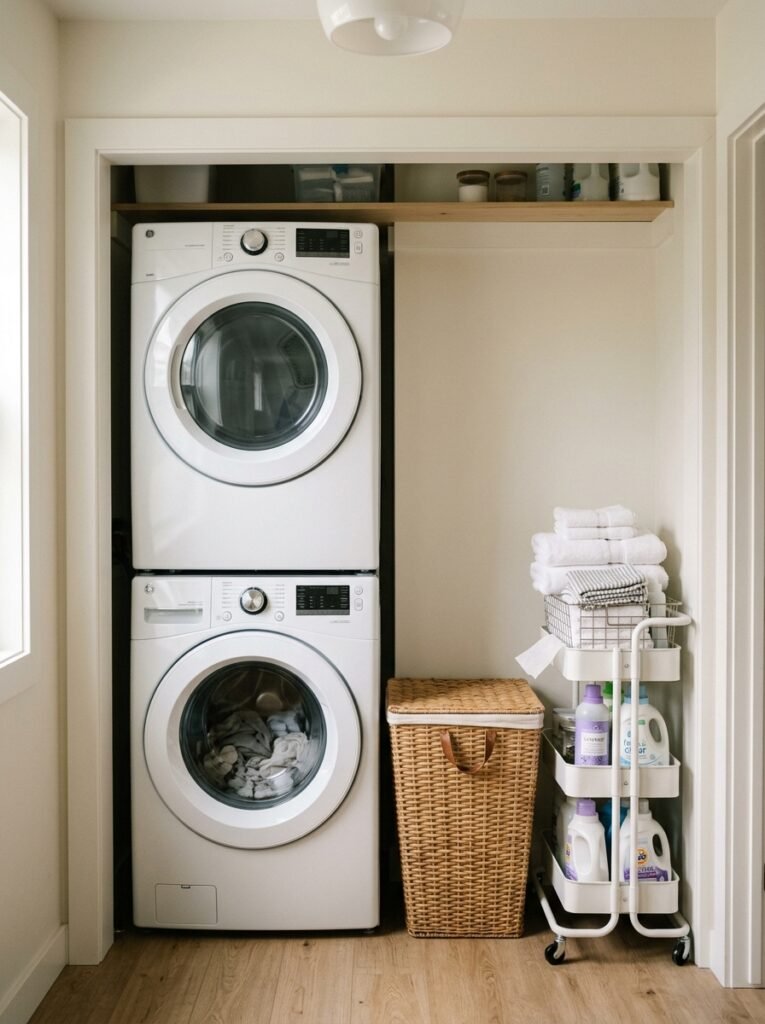
If you haven’t stacked your washer and dryer yet and you have a choice — just do it. I know, I know, some people have strong feelings about side-by-side. But vertically stacked appliances can hand you back an entire counter’s worth of floor space, and in a tiny laundry room, floor space is currency.
“In a tiny laundry room, floor space isn’t a luxury — it’s the whole game.”
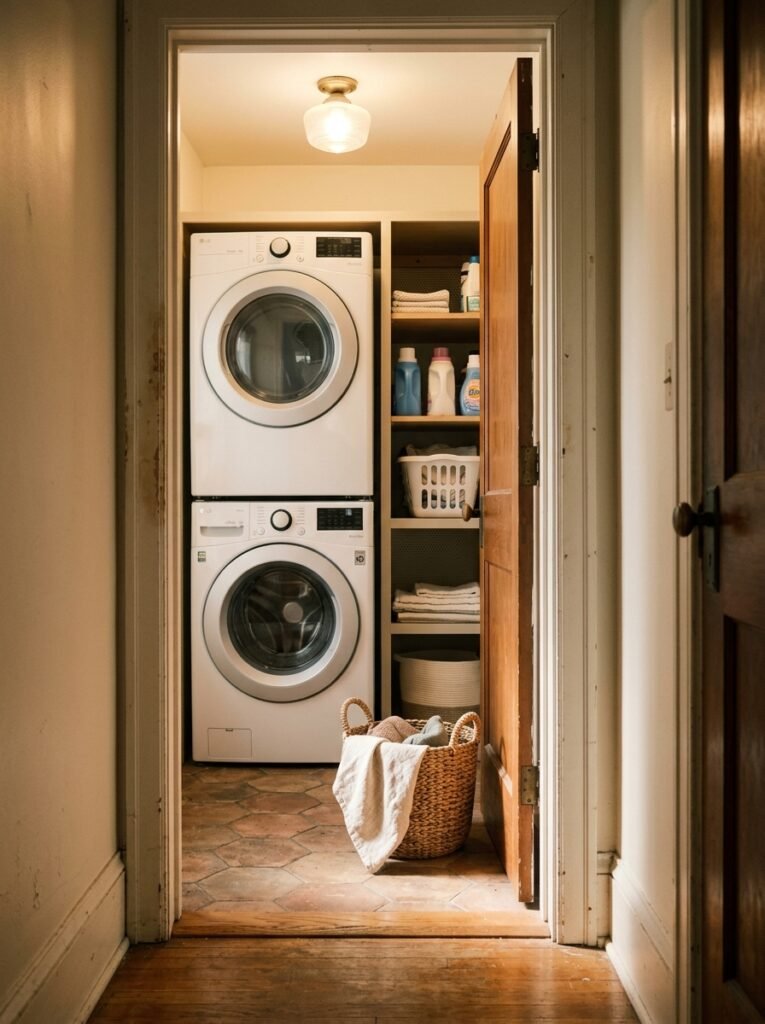
Once those machines are stacked, that freed-up wall space becomes whatever you need it to be. A folding counter. A hamper nook. A little shelf for detergent and dryer sheets. The room stops feeling like a room built around appliances and starts feeling like a room that just happens to have appliances in it.
Big difference.
3. The Wall Space Above Your Machine That’s Doing Absolutely Nothing Right Now
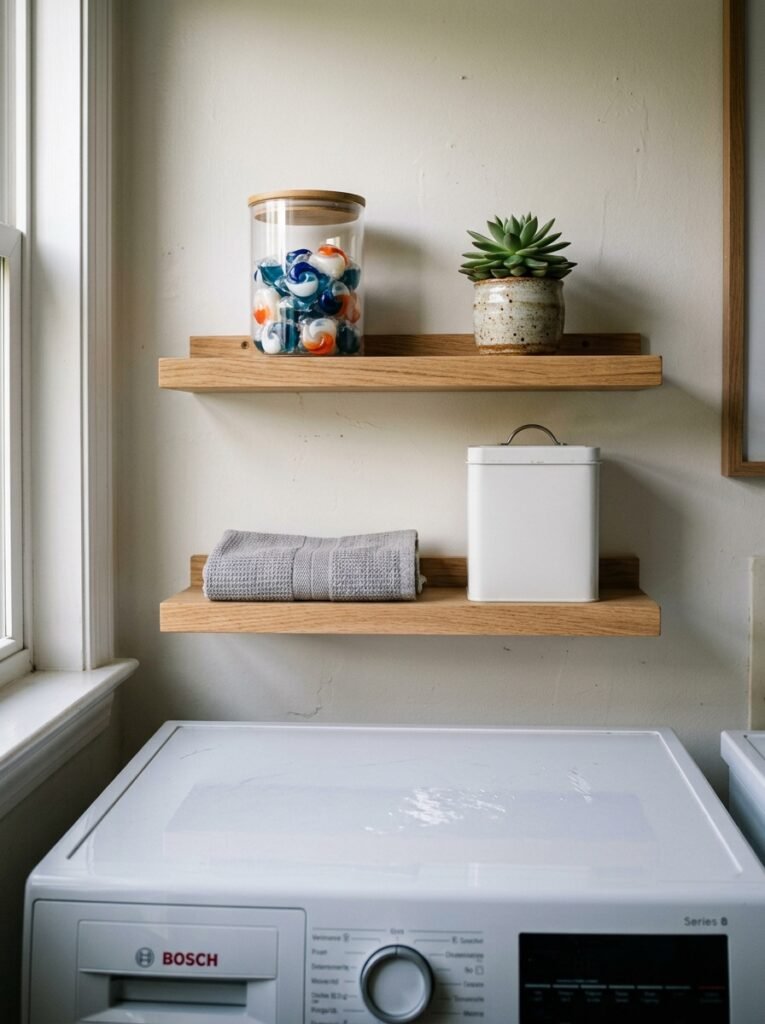
Look up. Seriously, go look if you can. There’s probably eighteen inches to two feet of wall between the top of your appliances and the ceiling that’s just… existing. Doing nothing. Collecting exactly zero value.
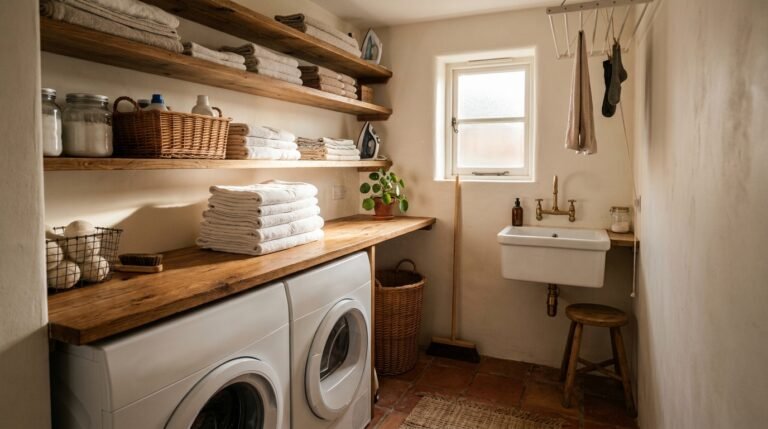
Open shelves up there are a revelation. Not deep ones — eight to ten inches is enough. Stack your detergents, your fabric softener, a little basket for loose change from pockets (because we all fish that out eventually). If the shelving looks a bit utilitarian, add one small trailing plant and two seconds later it looks intentional.
Closed cabinets work too if you prefer things hidden. Either way, that vertical real estate is basically free storage you already paid for when you bought the house. It’s just waiting for you to use it.
4. The Color That Makes a Cramped Laundry Room Feel Like It Has Its Own Personality
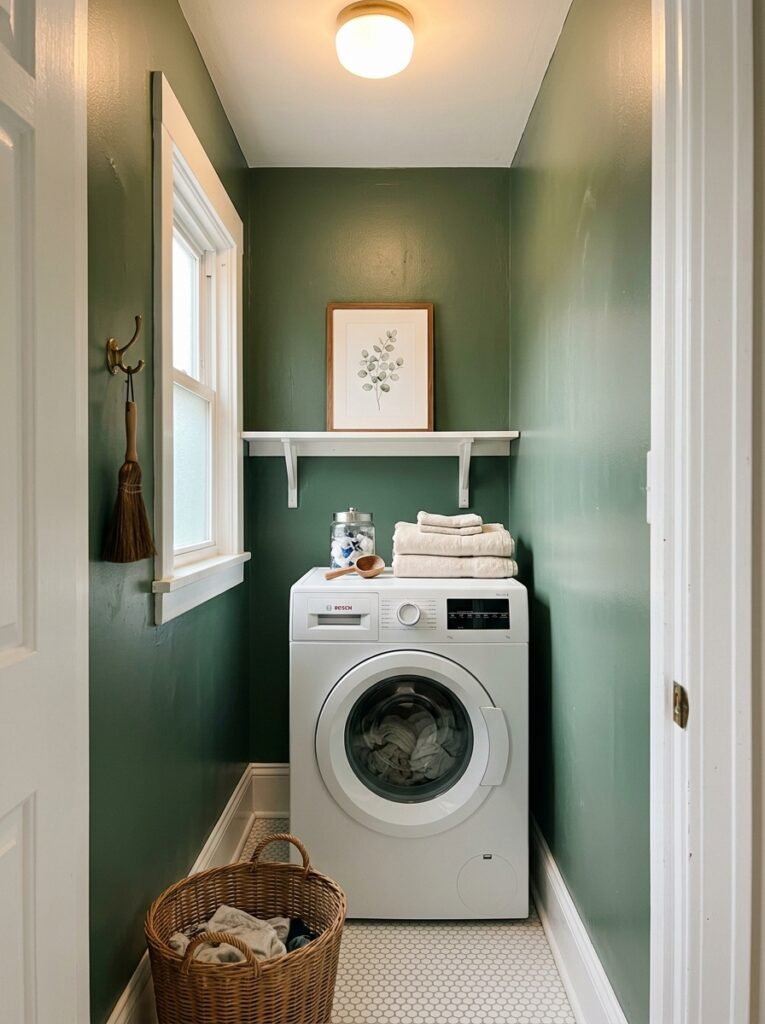
Okay, hot take: don’t paint it white.
White is safe. White is fine. But tiny rooms done in white tend to feel like — honestly — a blank void you can’t quite warm up. They’re not bad, they’re just not doing anything interesting.
A dusty sage green? That muddy terracotta that keeps showing up in every beautiful home right now? Even a deep charcoal if you’re brave? Those colors do something. They make the room feel chosen rather than forgotten.
I went with a muted blue-green in my own space and the difference was dramatic. The room stopped feeling like an afterthought and started feeling like it was on purpose. Visitors notice. They always say something. They can’t quite put their finger on what it is, but they notice.
One wall. That’s all it takes if you don’t want to commit to all four.
5. Why a Folding Station is Non-Negotiable Even When You Have No Room for One
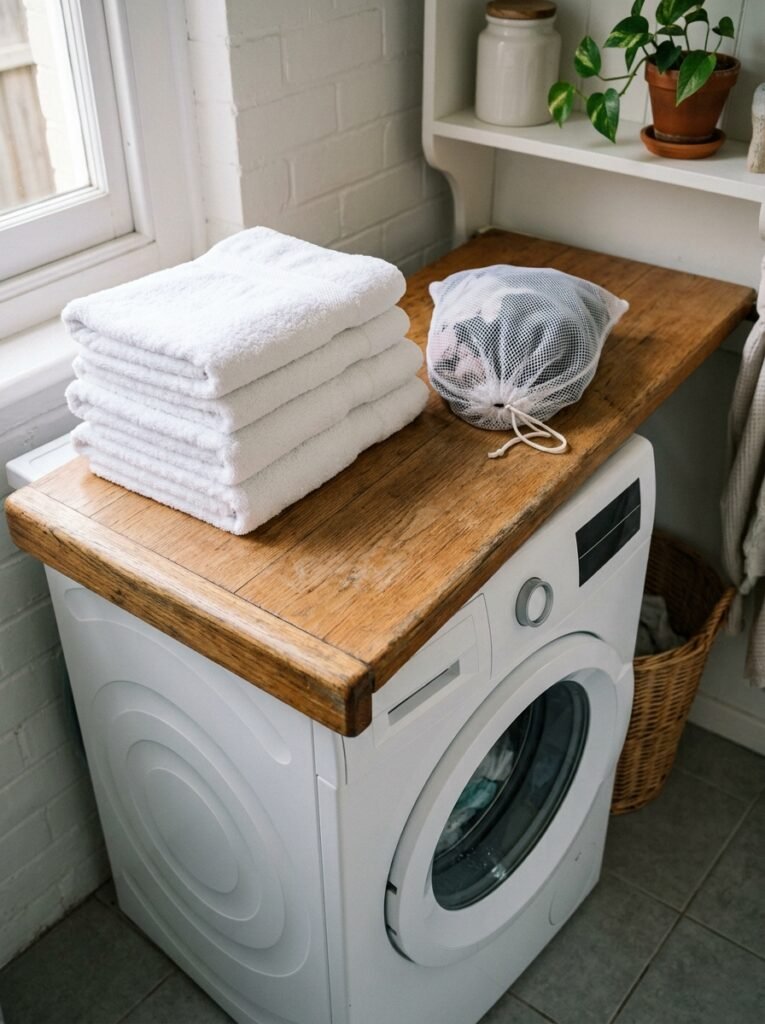
This is where I’ll push back a little because I know what you’re thinking: “I don’t have space for a folding station.” And maybe you don’t, in the traditional sense. But here’s the thing — you don’t need a big dedicated counter. You need a surface. Any surface.
A wooden board that folds down from the wall on hinges. A pull-out shelf hidden inside a cabinet. Even the top of a front-loading washer if it’s at the right height. The point is somewhere flat to fold so you stop leaving laundry in the basket for four days because you can’t be bothered doing it on your bed.
The folding station matters because it changes how you move through the task. Everything gets done in one place, in one go, instead of getting dragged to another room. Small rooms are actually GREAT for this because everything’s within arm’s reach already.
6. The Small Addition That Makes It Feel Like a Room (Not a Utility Closet)
A rug.
Honestly, just a rug.
I sound like I’m oversimplifying, but there’s something deeply psychological about putting a rug in a functional room. It signals — to your brain, to anyone who walks in — that someone cared. That this room is meant to be in, even briefly. A washable cotton rug in a stripe pattern or something with a bit of texture underfoot turns “utility closet” into “small room with personality.”
“A rug signals to your brain that someone cared about this space. That goes a long way.”
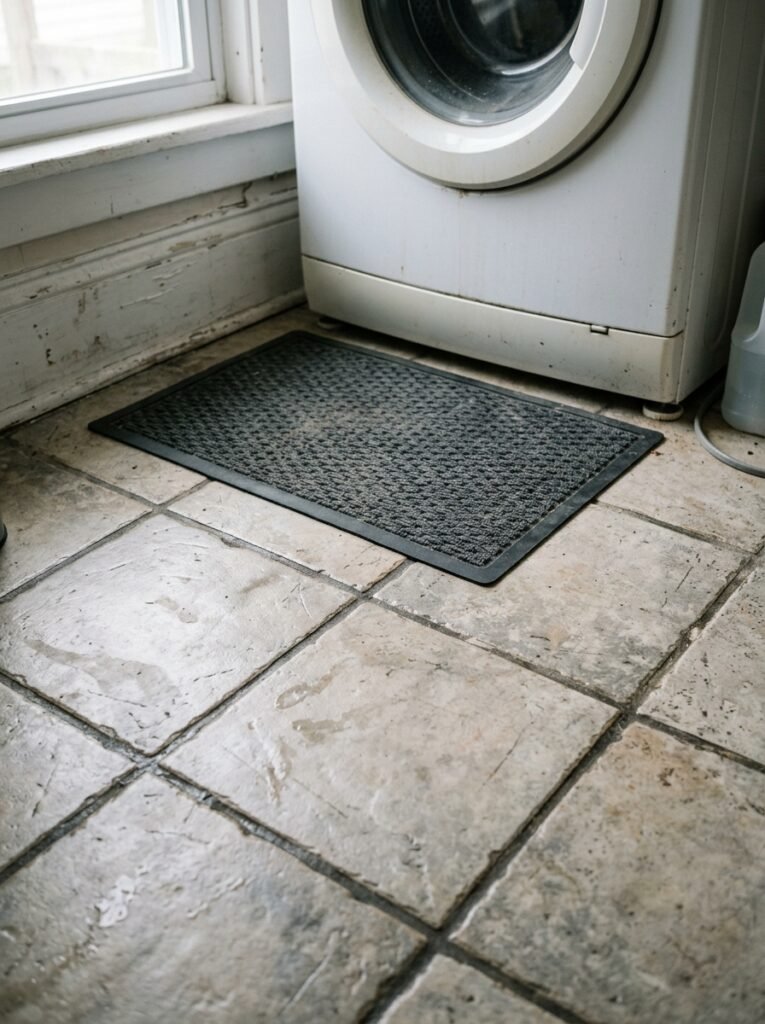
Washable is important, obviously. This is a laundry room. Things spill, things splash. But you knew that. Get something you can throw in the wash and don’t overthink the pattern — anything beats bare cold tile.
7. Hidden Storage That Looks Like Décor (The Best Kind of Trick)
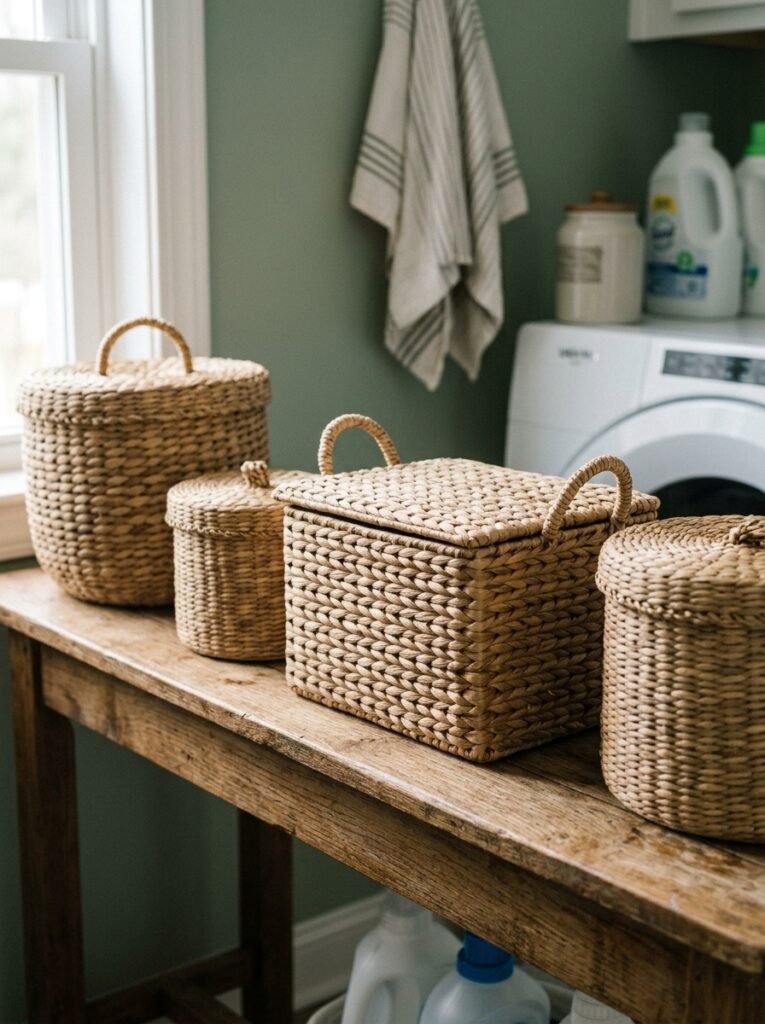
The goal is storage that doesn’t LOOK like storage. Because nothing makes a tiny room feel more overwhelmed than objects that are clearly just there to hold other objects.
Wicker baskets on a shelf — filled with supplies, but they look like a styling choice. A tall ceramic jar for longer items. A small lidded tin for dryer sheets. A hook rail that looks considered rather than slapped up. These things are working hard while looking like they’re just hanging out.
Side note — hooks are genuinely underrated. A row of simple hooks on the back of the door for reusable tote bags, delicates that can’t go in the dryer, or even a spare apron you want nearby. The back of a door is prime real estate and most people treat it like it doesn’t exist.
8. The Dryer Sheet Alternative That Accidentally Improves the Whole Vibe
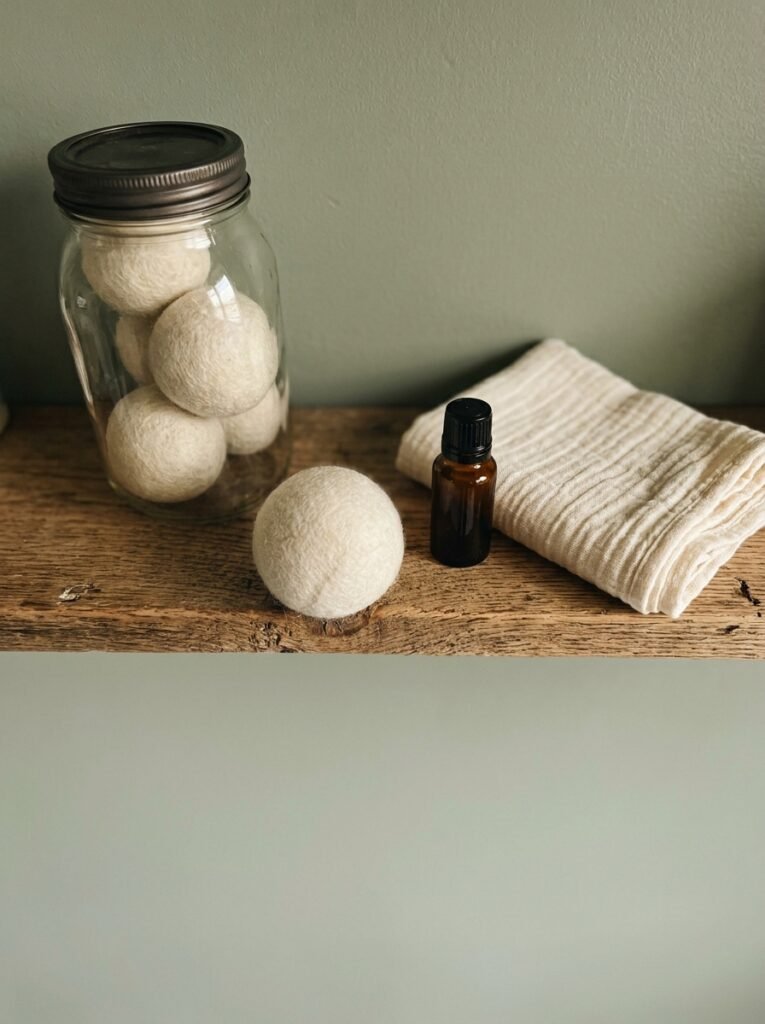
Wool dryer balls. I switched to these ages ago for mostly practical reasons, but the unexpected bonus? They look cute in a little bowl on a shelf. Like, weirdly cute. A pile of natural wool balls in a woven dish looks intentional in a way that a box of dryer sheets on a shelf absolutely does not.
And if you add a few drops of an essential oil to them before tossing them in, the whole room smells amazing when the dryer runs. Lavender is the obvious choice. But bergamot is better, and not everyone picks bergamot.
Or maybe that’s just me.
9. Making the Most of a Door — Any Door, Inside or Out
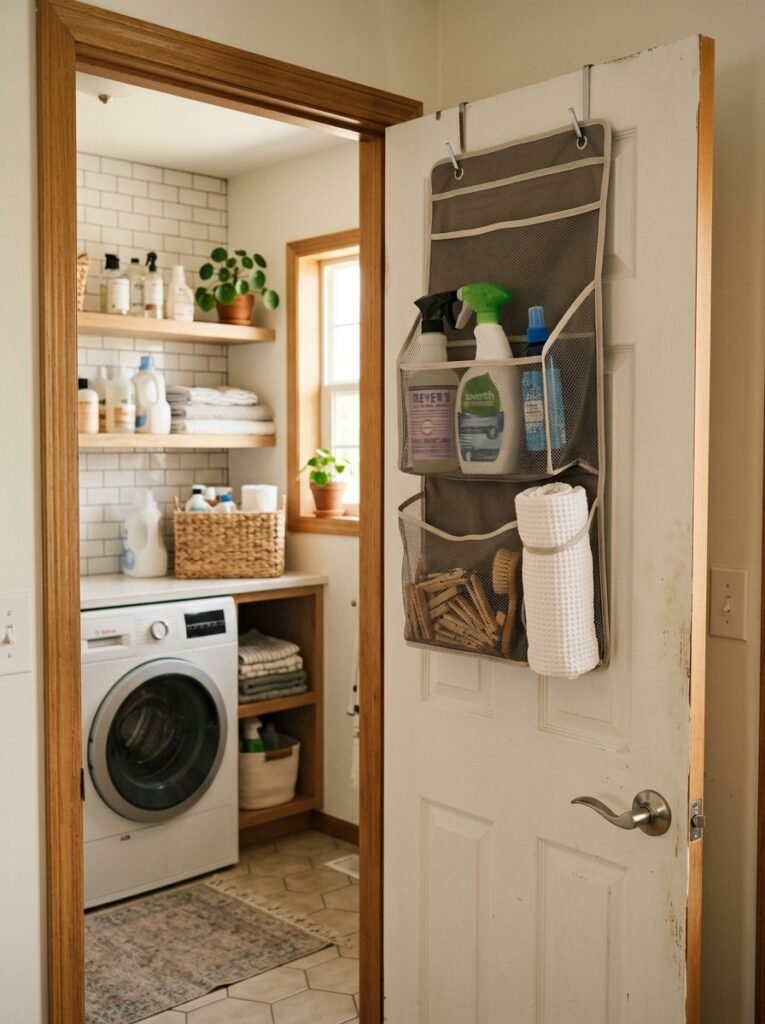
Whether your laundry room has a door that opens in, opens out, or is a bi-fold situation that barely clears the machine — that door is useful. Almost nobody uses it.
An over-door organizer with pockets works for ironing supplies, small spray bottles, a lint brush, the random things that don’t have a home. If it’s an inward-opening door, hang a small mirror on it. I know that sounds odd, but a mirror in a small utility space bounces light around, makes the room feel about fifty percent larger, and takes up zero floor space. Interior designers do this trick in bathrooms all the time. There’s no reason it can’t work in a laundry room.
If you’re in the UK and working with what’s basically a laundry cupboard — this door strategy is even MORE important. Every square centimetre counts.
10. The Ironing Board Problem (And the Three Ways People Actually Solve It)
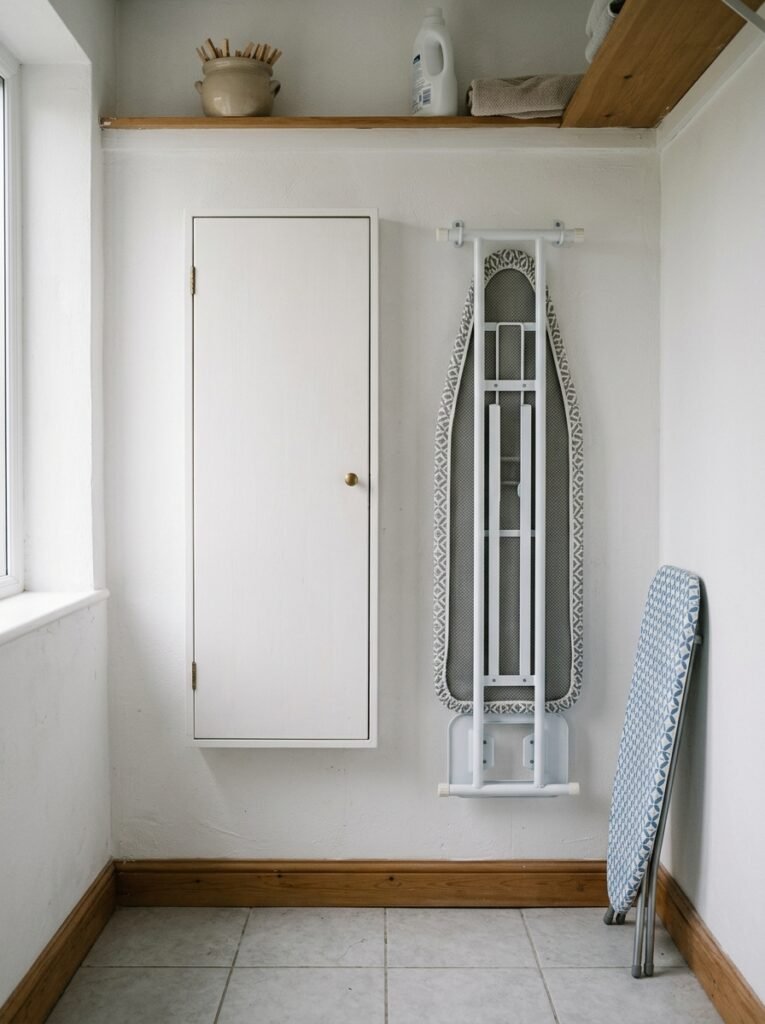
The ironing board is the nemesis of small laundry rooms. It’s huge when you need it and still somehow in the way when you don’t. So let’s talk real solutions.
First: wall-mounted fold-down ironing boards are genuinely brilliant. They fold flat against the wall and open when you need them. Some are built into cabinetry, some just mount to a standard wall. This is my actual favorite solution.
Second: the built-in ironing board inside a cabinet, which looks seamless and sleek and requires a bit more commitment but is wildly satisfying.
Third: the over-door ironing board that hangs on the back of a door and stays there. Not as slick as the built-in versions, but if you’re renting or not ready to drill into walls, it works. It genuinely works.
Don’t just lean it against the wall and call it a plan. That’s not a plan, that’s a procrastination strategy and we’ve all done it.
11. The One Rule That Makes Any Tiny Laundry Room Feel Intentional
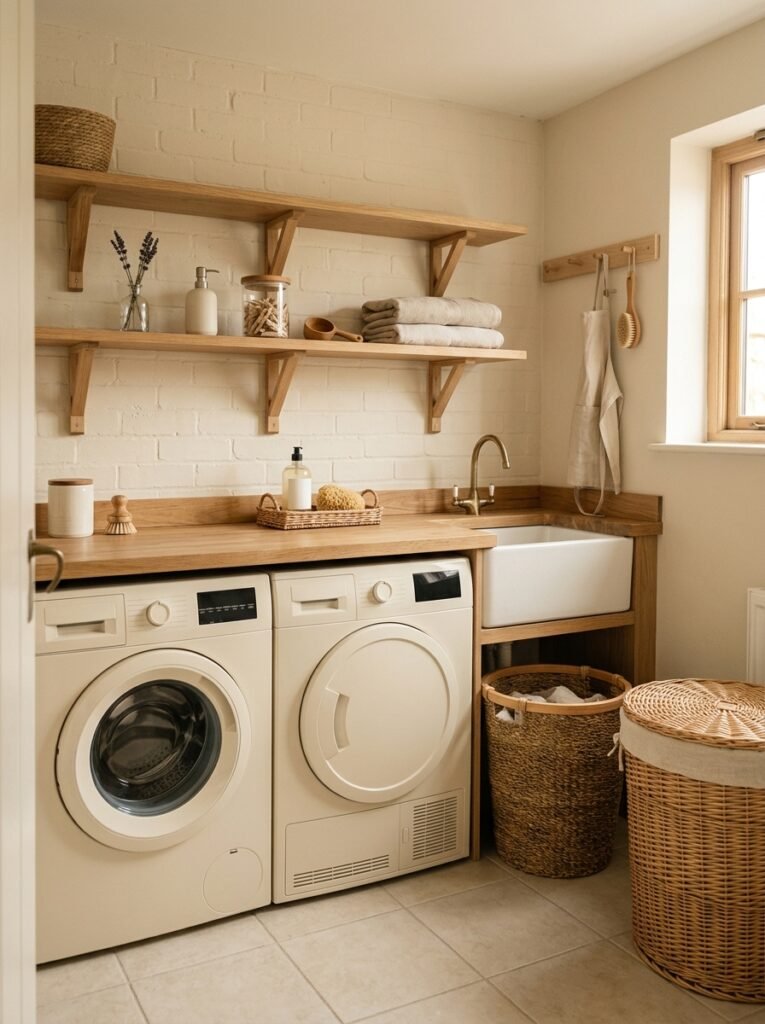
Here it is.
Every object in the room needs to either earn its place or earn its look. Preferably both.
That means if something’s useful but ugly — hide it. If something’s decorative but useless — it’d better be really decorative. And if something is both ugly AND pointless? Out. Just out. Small rooms cannot afford passengers.
“Every object in a tiny room needs to earn its place. There’s no room for passengers.”
This rule sounds harsh and it kind of is, but applying it changes everything about how a cramped space feels. You walk in and there’s no visual clutter draining your energy. Just clean surfaces, thoughtful storage, and a few small things that make you actually like being there.
That’s the whole goal, honestly.
12. The Finishing Touches That Take Ten Minutes and Do 80% of the Work
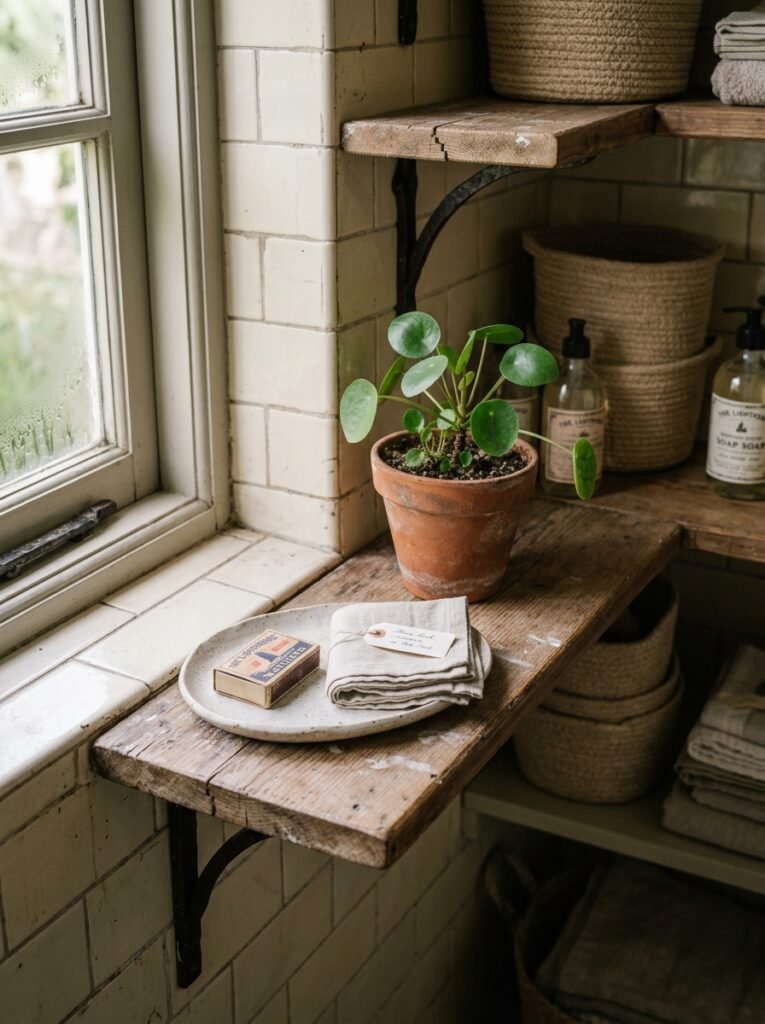
Here’s the thing about small laundry rooms — they respond dramatically to small changes. You don’t need to renovate. You need a few well-placed choices.
A tiny framed print on the wall. Something funny, something pretty, whatever. The point is a frame on a wall says “room” not “utility space.” One trailing pothos or trailing ivy on a shelf — they don’t mind humidity, they look like a styling choice, and they make the air a bit better too. Decanting your detergent into a clean glass or ceramic container so it doesn’t scream “chore” every time you look at it.
These are the kinds of details that make people stop in the doorway and go “wait — this is actually nice?” Like they expected a damp closet and got something else entirely.
Which, again, is the whole point.
—
❓ FAQ
Q: How do I make a laundry closet (not even a full room) feel less claustrophobic? A: Lighting and vertical space are your two biggest levers. Get a warm LED strip under your shelves, use every inch of wall height, and if there’s a door, use the back of it. A small mirror on the inside of the door works especially well in tight spaces — it reads the room as larger without any structural changes.
Q: What’s the best flooring for a tiny laundry room that’s also budget-friendly? A: Peel-and-stick vinyl tiles are genuinely underrated for this. They’re water-resistant, affordable, and have gotten much better looking over the last few years — you can find versions that convincingly mimic stone or wood. Add a washable rug over the top and you’ve got a floor that looks considered without a big spend.
Q: Is it worth adding a utility sink to a tiny laundry room if there’s barely space for one? A: Depends entirely on how you use the room. If you hand-wash delicates, deal with stains before they set, or do a lot of craft or gardening work, a small utility sink earns its square footage fast. If you’re mostly just running the machines and folding — skip it and use that space for storage instead. There’s no right answer, it’s purely about your actual habits.
—
💭 Final Thoughts
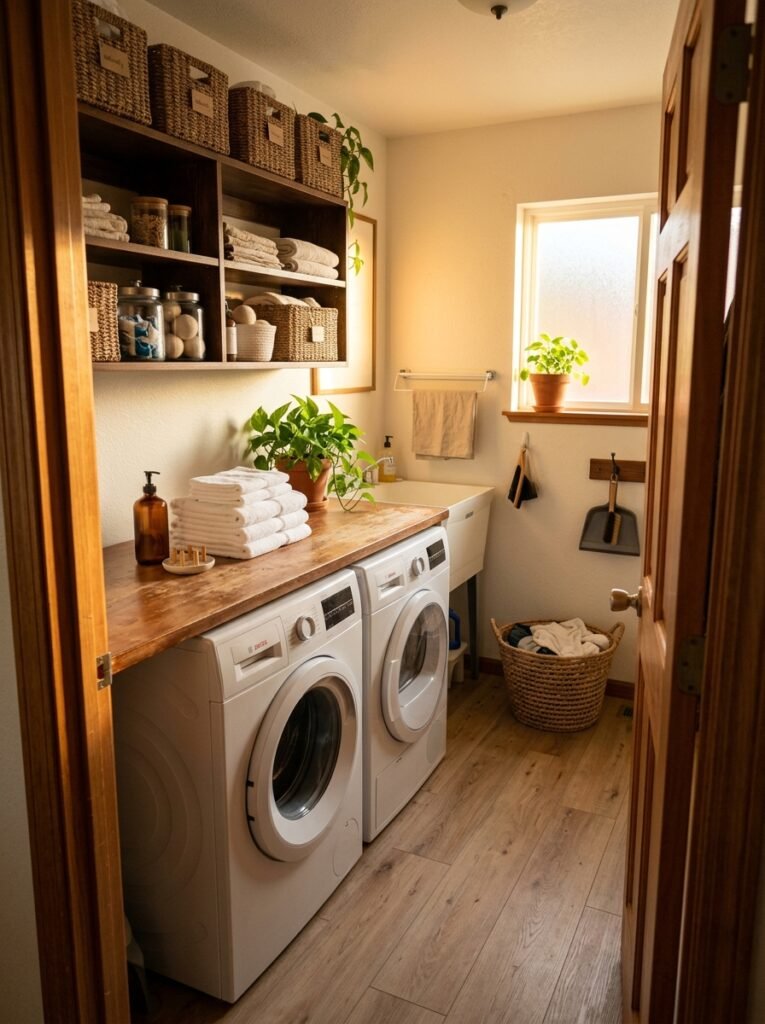
Tiny laundry rooms have this reputation for being hopeless. Like they’re just something to endure. But honestly? A small room with intention behind it beats a big room with no thought in it every single time.
You don’t need to gut the space. You need lighting, smart vertical storage, one or two choices that make it feel like somewhere a person actually cared about, and a willingness to clear out everything that’s just taking up room without giving anything back.
The transformation, when it comes, tends to surprise people. Including you.
So — what’s the one thing in your laundry room right now that’s just there, not earning its keep?