
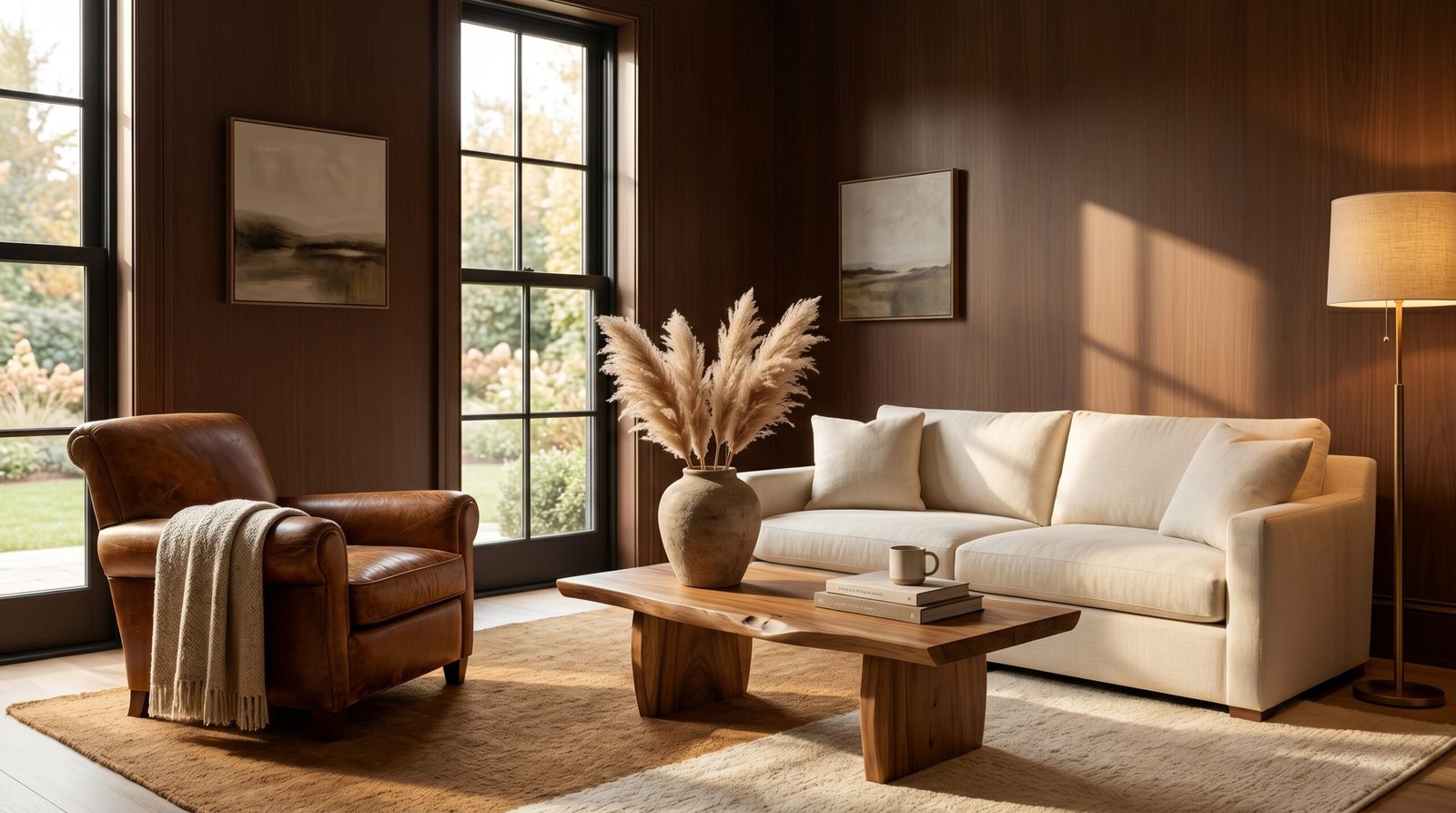
Brown Walls Living Room: Why This Earthy Shade Might Be the Most Comforting Design Decision You Ever Make
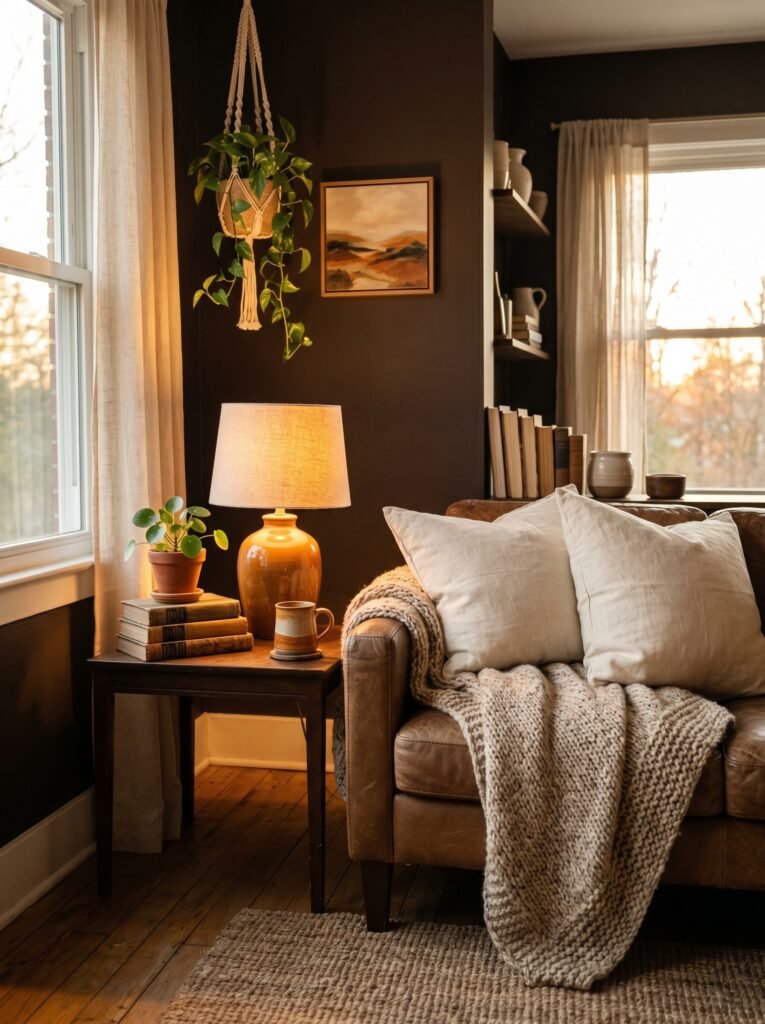
There’s a moment — maybe you’ve experienced it — when you walk into a room and feel your shoulders drop. The noise in your head quiets. Something in the space just holds you. Chances are, that room had brown walls. Warm, grounded, deeply human brown walls that made the whole world feel a little softer and a little more okay.
—
1. The Quiet Comeback of Brown — Why This Color Refused to Stay Gone
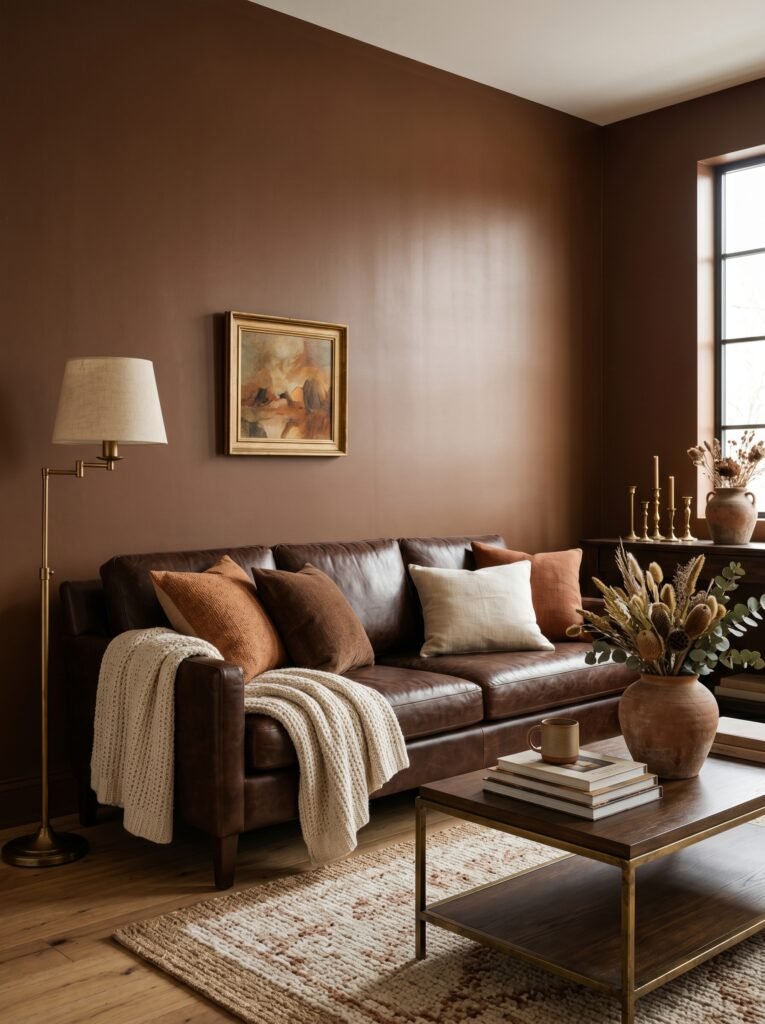
For years, brown was the color designers warned you away from. “Too dark,” they said. “Too heavy.” We chased cool whites, pale greys, and washed-out greiges instead — and somewhere along the way, our living rooms started feeling a little… clinical. A little anonymous.
But brown never actually left. It waited. And now it’s everywhere — on mood boards, in designer showrooms, pinned by the millions on Pinterest boards titled “cozy” and “warm home” and “dream living room.” Brown is back, and this time it isn’t the muddy, builder-grade brown of outdated carpet. This is rich, intentional, deeply layered brown — the color of espresso, of aged leather, of freshly turned earth after rain.
“Brown doesn’t try to impress you. It just wraps around you like the best room you’ve ever been in.”
The reason this shade resonates so deeply in 2024 and beyond is rooted in something more than trend cycles. After years of minimalism and sterile spaces, people are craving warmth again. They want their homes to feel inhabited — curated but lived-in, beautiful but also deeply comfortable. Brown walls deliver exactly that.
—
2. Understanding Brown: It’s Not One Color — It’s a Whole Spectrum
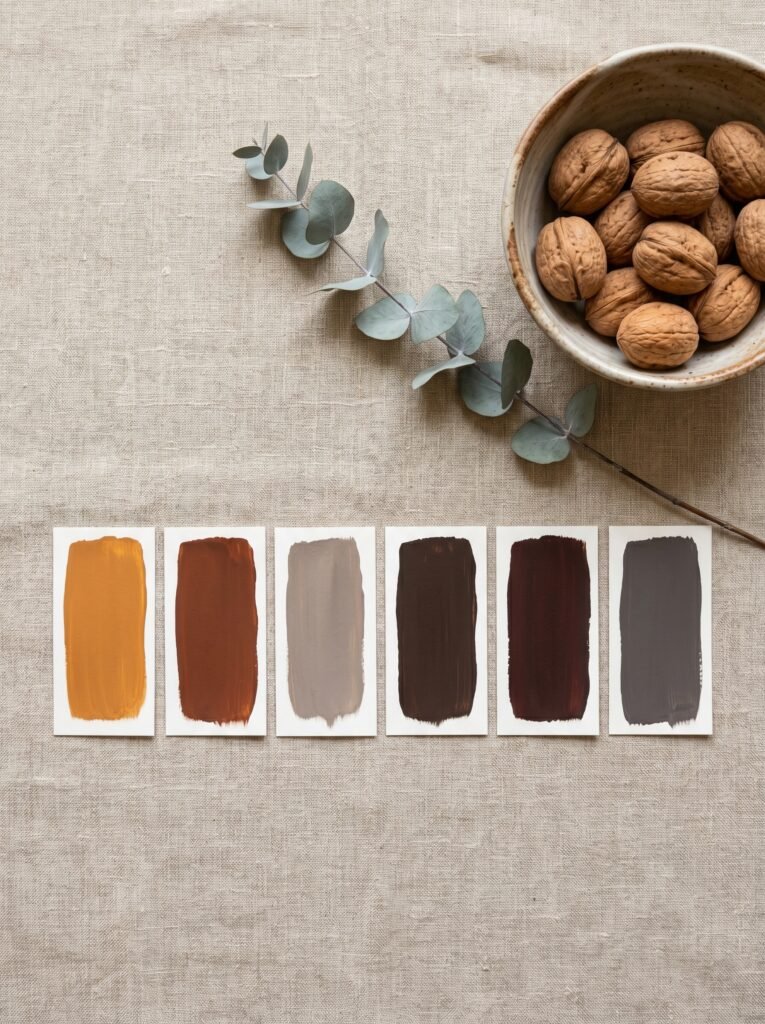
Here is where most people make their first mistake with brown: they treat it like a single, flat decision. But brown is actually one of the most layered, complex color families in the entire design palette. Before you ever pick up a paint brush, you need to understand what kind of brown is calling to you.
There’s warm brown — the kind that leans into reds and oranges, like terracotta’s more sophisticated cousin. Think burnished amber, deep cinnamon, rich walnut. These shades make a room feel golden and alive, especially in afternoon light. Then there’s cool brown, which drifts toward grey and taupe — mink, driftwood, slate-tinged chocolate. These feel more contemporary, more restrained, but no less cozy.
And then there are the deep, almost-black browns — espresso, dark mahogany, bitter chocolate — that act almost like a neutral but with tremendous depth and drama. These are the shades that make people gasp when they see a finished room, because no one expected brown to look that sophisticated.
Understanding your brown is the first and most important step. The undertone changes everything — how the color behaves in natural light, what furniture it flatters, which textiles feel at home against it.
—
3. The Light Question: How Natural Light Transforms Your Brown Walls
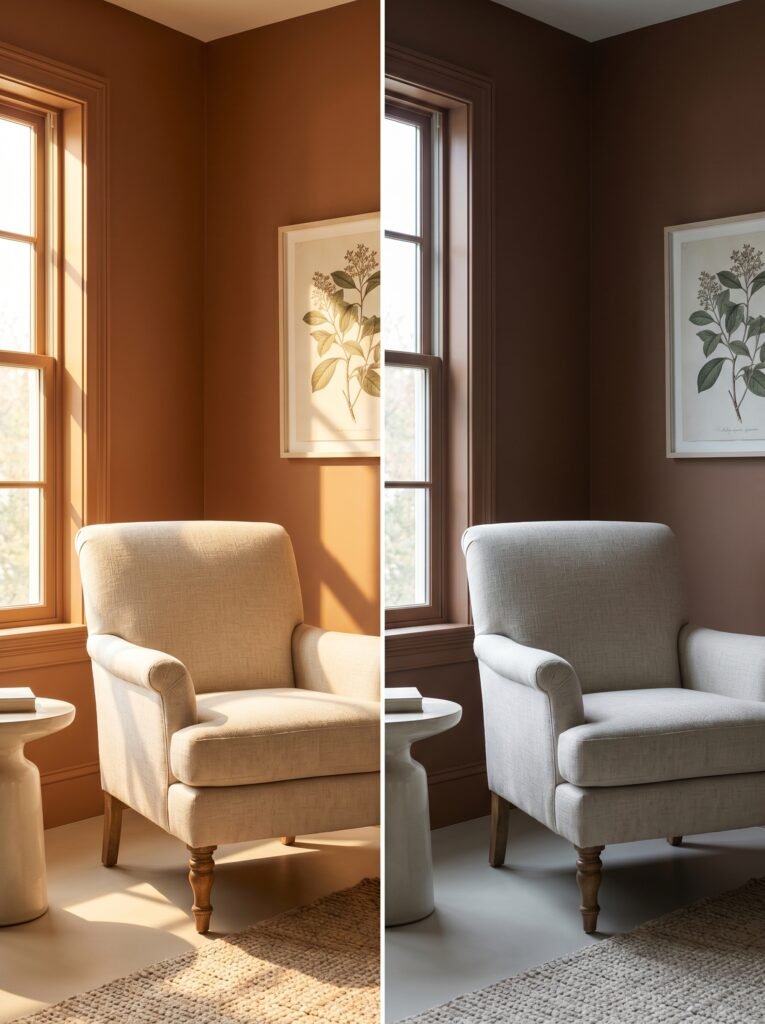
Ask any experienced interior designer and they’ll tell you: brown is a chameleon. A warm caramel brown in a north-facing room can feel surprisingly cool and melancholy — almost grey — while that same shade in a sun-drenched south-facing room glows like honey. Getting your brown right means understanding not just the paint chip, but the light that will live alongside it.
Before committing, paint large swatches — at least 12 inches by 12 inches — and observe them at different times of day. Watch what happens at 7am when morning light slants in. Watch it at noon when the sun is high and flat. Watch it at golden hour. Watch it under your evening lamps. Brown is one of those colors that genuinely transforms across the day, and that quality is part of its magic — but it needs to be understood, not left to chance.
Rooms with limited natural light don’t need to avoid brown. They simply need lighter, warmer variants of it — a soft caramel, a creamy mocha — paired with thoughtful artificial lighting. Warm-toned bulbs (2700K to 3000K color temperature) are your best friend with brown walls, amplifying the coziness without making the space feel dim.
—
4. The Psychology of Brown: Why This Color Makes You Feel the Way It Does
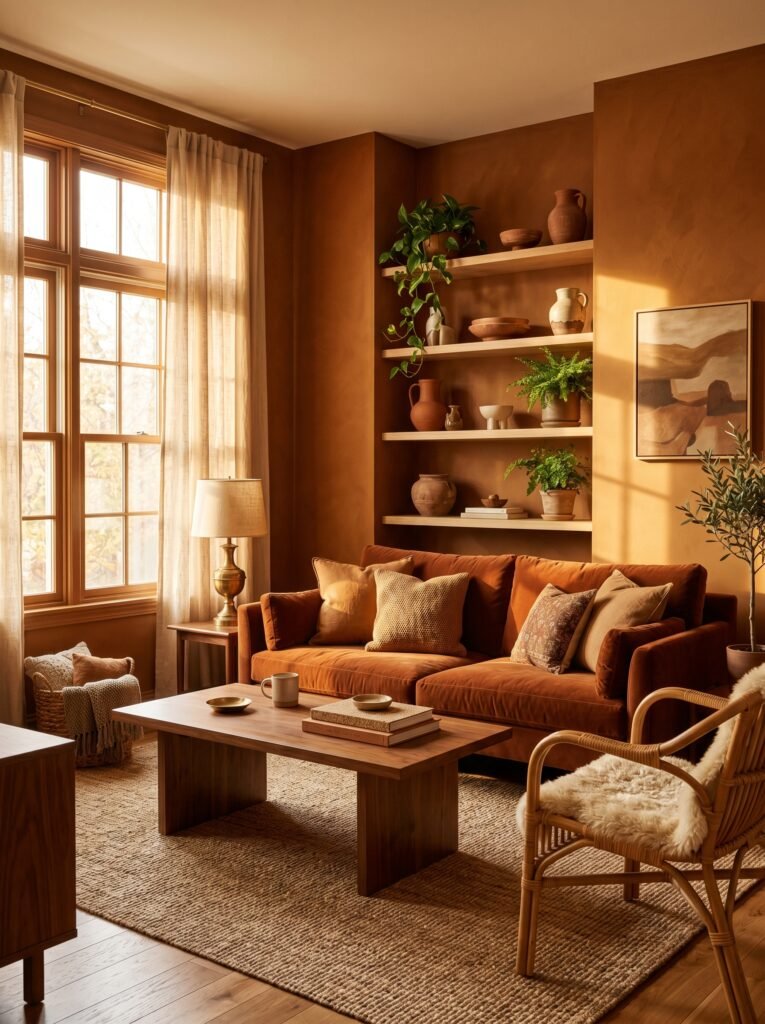
Color psychology is a genuine science, and brown occupies a fascinating place in it. Brown is the color of earth, of wood, of natural materials that humans have built shelter from for thousands of years. On a deeply instinctual level, brown signals safety. It signals permanence. It says: you are in a solid, reliable, protected place.
That’s why a brown living room doesn’t just look cozy — it feels cozy in a way that goes beyond aesthetics. Visitors walk in and relax. Conversations become easier. People stay longer. There’s a psychological warmth baked into the color that no amount of throw pillows can replicate if the walls themselves are fighting against it.
Brown also communicates groundedness and reliability — qualities that resonate especially now, when so much of life feels fast and unstable. Choosing brown for your living room is, in a subtle way, an act of intentionality. It’s saying: this home is a refuge. This is where the outside world doesn’t follow you.
—
5. Choosing Your Exact Shade: A Room-by-Room Breakdown
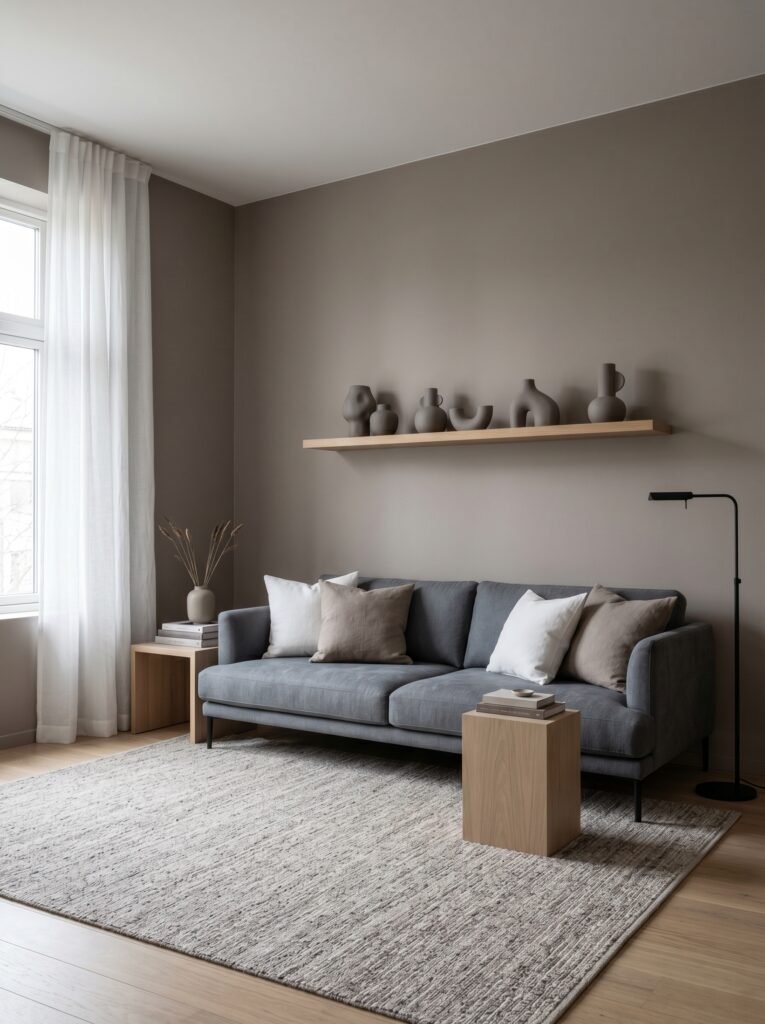
The living room is a unique space — it’s where you host, relax, connect, and decompress, sometimes all in the same evening. That versatility means the brown you choose needs to work hard across moods and moments.
For smaller living rooms, lean toward mid-tone browns — think warm taupe, soft caramel, or latte tones. These read as brown without closing the room in, especially when paired with lighter ceilings and well-chosen lighting. The key here is creating warmth without weight.
For larger, open-plan living areas, you can go deeper and more dramatic. A rich chocolate or deep walnut on a feature wall — or even all four walls — creates a sense of intimate enclosure within a large space, making it feel considered and cozy rather than overwhelming and vast.
For an open-plan living room that flows into a dining area or kitchen, consider using brown as a unifying thread: the same warm shade running through both spaces, with furniture and textiles doing the work of differentiating zones.
“The right shade of brown doesn’t make a room feel smaller. It makes it feel intentional.”
—
6. Furniture That Falls in Love with Brown Walls
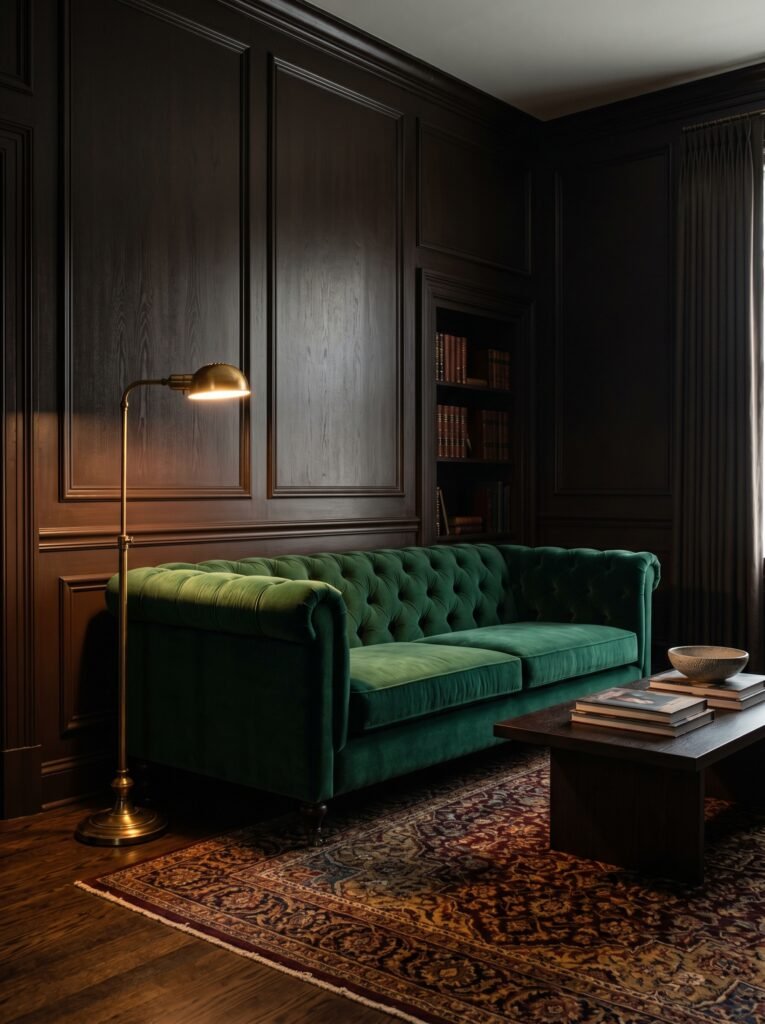
One of the most delightful surprises of a brown-walled living room is how forgiving it is when it comes to furniture. Unlike stark white walls — which can clash with certain wood tones or make colored sofas feel jarring — brown walls create a warm, enveloping backdrop that plays beautifully with a wide range of furniture styles and finishes.
Cream and off-white sofas look luminous against brown walls, providing contrast without coldness. Burnt orange or rust-toned upholstery feels like a natural extension of the palette — earthy, collected, effortlessly styled. Forest green is extraordinary against brown: think of a deep green velvet sofa against a chocolate wall, and you’ve essentially recreated the inside of the most beautiful old library you’ve ever been in.
Natural wood furniture — light oak, warm walnut, rattan — sings against brown walls because the tonal relationship is harmonious without being matchy. And if you want to go bold, consider black metal accents: side tables, lamp bases, picture frames. Against brown walls, black reads as crisp and grounding rather than harsh or cold.
—
7. The Art of Layering Textures in a Brown Living Room
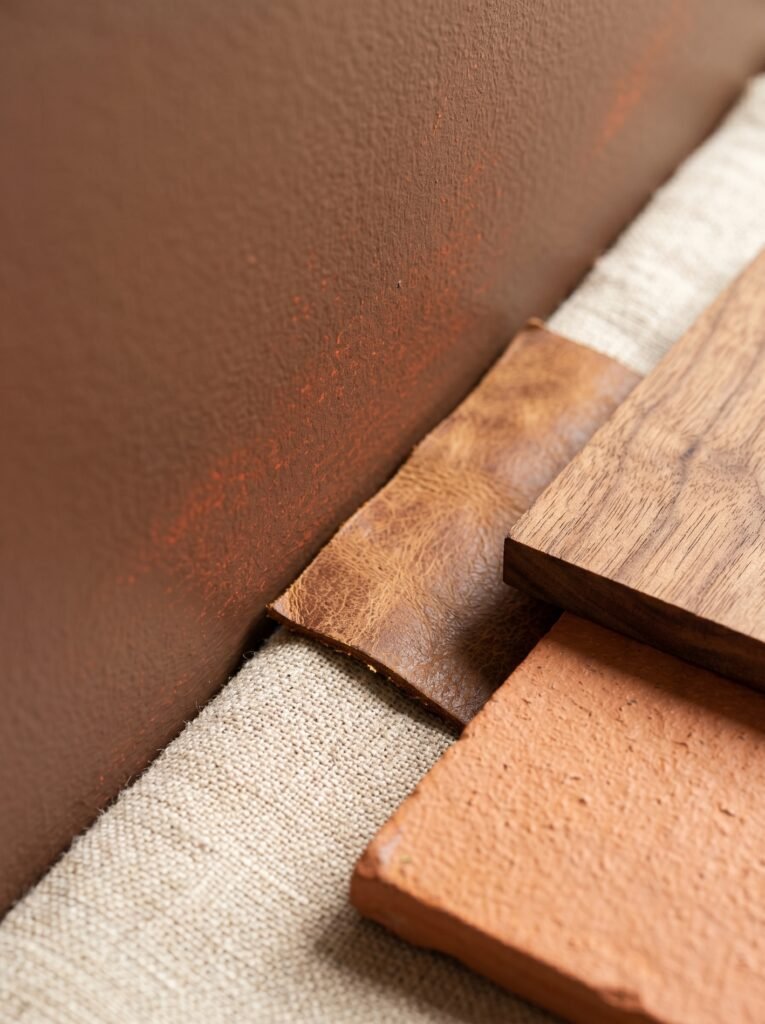
Brown walls are a permission slip to go full texture. Because the palette is rooted in nature, natural, tactile materials feel completely at home here — and the more you layer them, the richer and more curated the space feels.
Start with your largest textiles: a wool or jute rug, a linen or velvet sofa. Then build upward — chunky knit throws draped over armrests, silk or cotton cushions in complementary tones, a boucle accent chair. The goal is to create a space where every surface invites touch, where the room looks as good to run your hands across as it does to photograph.
On the walls themselves, don’t be afraid to add texture beyond the paint. Woven wall hangings in natural fibers, framed botanical prints, aged wood floating shelves — these layers pull the eye around the room and make the brown feel considered rather than plain.
—
8. Lighting a Brown Living Room: The Detail That Makes or Breaks Everything
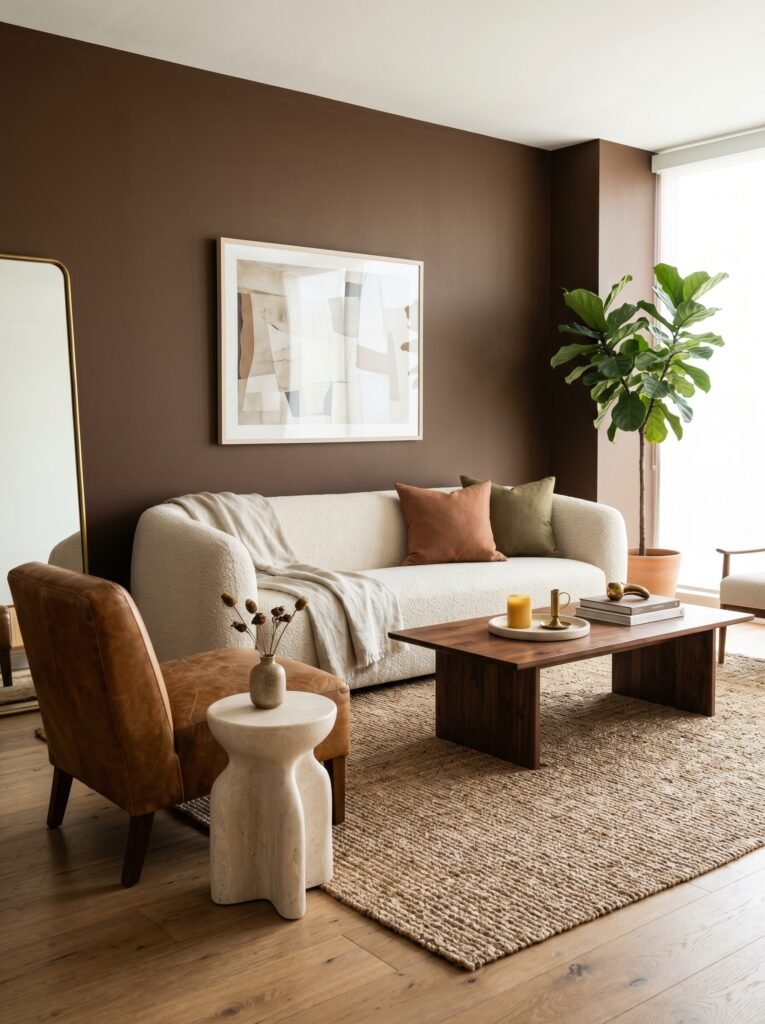
If there is one non-negotiable in a brown living room, it is this: the lighting must be warm, layered, and generous. Brown walls absorb light more than pale walls do, which means you need to work with your lighting plan rather than leaving it as an afterthought.
Layer three types of light: ambient (overhead or recessed), task (reading lamps, table lamps), and accent (picture lights, floor uplights). Each layer serves a different purpose, and together they create the kind of warm, dimensional glow that makes a room feel like it belongs in a magazine — or more importantly, like it belongs in a home you never want to leave.
Candles deserve their own mention here. In a brown living room, candlelight is transformative. Even a cluster of simple tea lights on a coffee table creates a warmth that no overhead fixture can replicate. Brown walls seem to catch and amplify flickering light in a way that genuinely feels magical on a quiet evening.
—
9. Accent Colors That Make Brown Walls Pop Without Overpowering Them
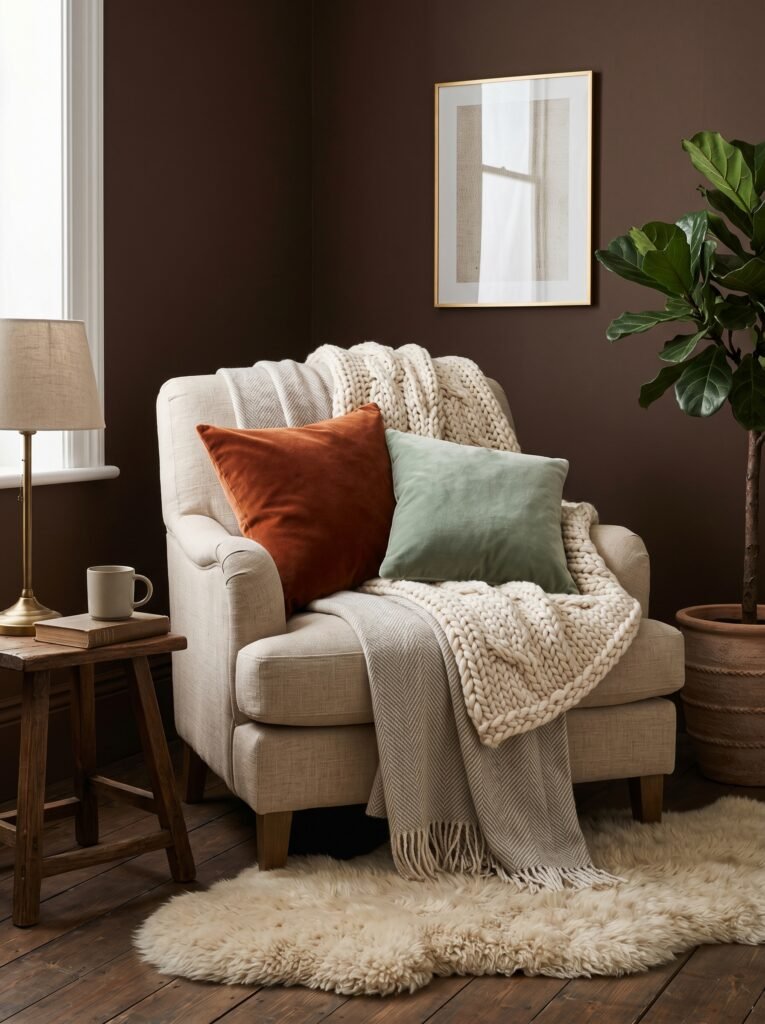
Brown’s earthy neutrality makes it one of the most versatile backdrops for accent colors, but the choices you make here will define the entire mood of the room. Getting your accents right is as important as choosing the brown itself.
For a warm, autumnal feel: layer in terracotta, burnt orange, deep rust, and golden yellow. These colors share brown’s warm undertones and create a room that feels gathered from the earth — rich, layered, undeniably cozy.
For a more contemporary, sophisticated mood: reach for cool sage green, dusty blue-grey, or muted teal. These cooler accents provide beautiful contrast against warm brown walls without creating visual tension — they balance the warmth without canceling it out.
For drama and elegance: pair brown with black and brass. This combination — warm brown walls, deep black accents, and gleaming brass hardware or light fixtures — hits a note of refined luxury that feels both current and timeless.
“Brown doesn’t need bold color to feel complete. But when you add the right accent, everything suddenly snaps into focus.”
—
10. Art and Décor on Brown Walls: What to Hang and How

Brown walls create a backdrop that makes art feel gallery-worthy. Light-framed pieces — think gold, brass, or natural wood frames — look stunning against deep or mid-tone browns, the contrast lending the work a luminous quality. Dark-framed art works beautifully too, especially against lighter brown walls, where it creates a crisp, collected look.
For subject matter, lean into nature: botanical illustrations, landscape photography, abstract pieces in earthy tones. These feel organically connected to the brown palette and create a cohesive visual story. That said, don’t be afraid of bold, colorful art against brown walls — a vibrant painting or photograph can become a true focal point when the walls behind it are warm and grounding.
When it comes to gallery walls, brown is forgiving and flexible. Mix frame sizes, orientations, and even a few three-dimensional elements like small shelves or woven wall art. The warmth of the wall color unifies even an eclectic mix of pieces, making the arrangement feel curated rather than chaotic.
—
11. Brown Walls in Small Living Rooms: Breaking the Rules Beautifully
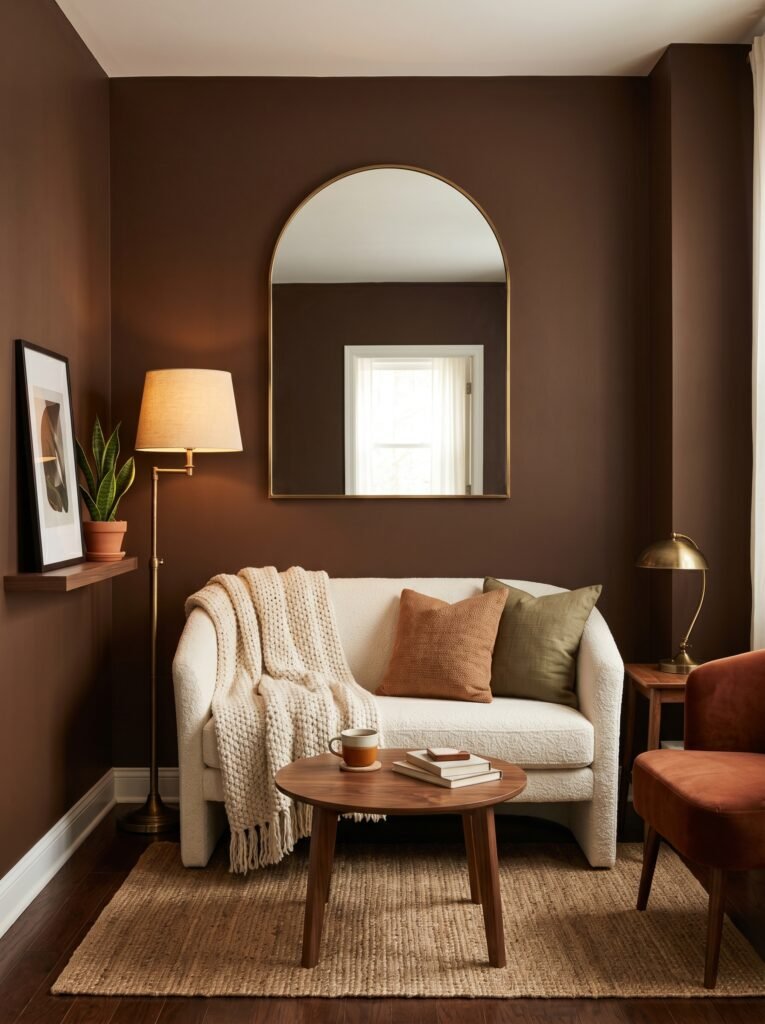
Here’s a design truth that surprises almost everyone: dark brown walls in a small living room don’t always make it feel smaller. Handled correctly, they can make it feel more intimate and intentional — like a beautifully appointed study or a cozy library nook that you’d actually choose to spend time in.
The secret is in the supporting elements. Keep your ceiling light — white or a warm cream. Use mirrors strategically to bounce light and create the perception of depth. Choose furniture with slim, visible legs rather than pieces that sit heavy on the floor; this keeps the visual field open. And light the room generously with multiple warm-toned sources.
A small brown living room that’s well-lit, well-layered, and well-curated doesn’t feel cramped. It feels like the best room in the house — the one where every guest gravitates and nobody wants to leave.
—
12. Making Brown Feel Modern: The Styles That Work Best Right Now
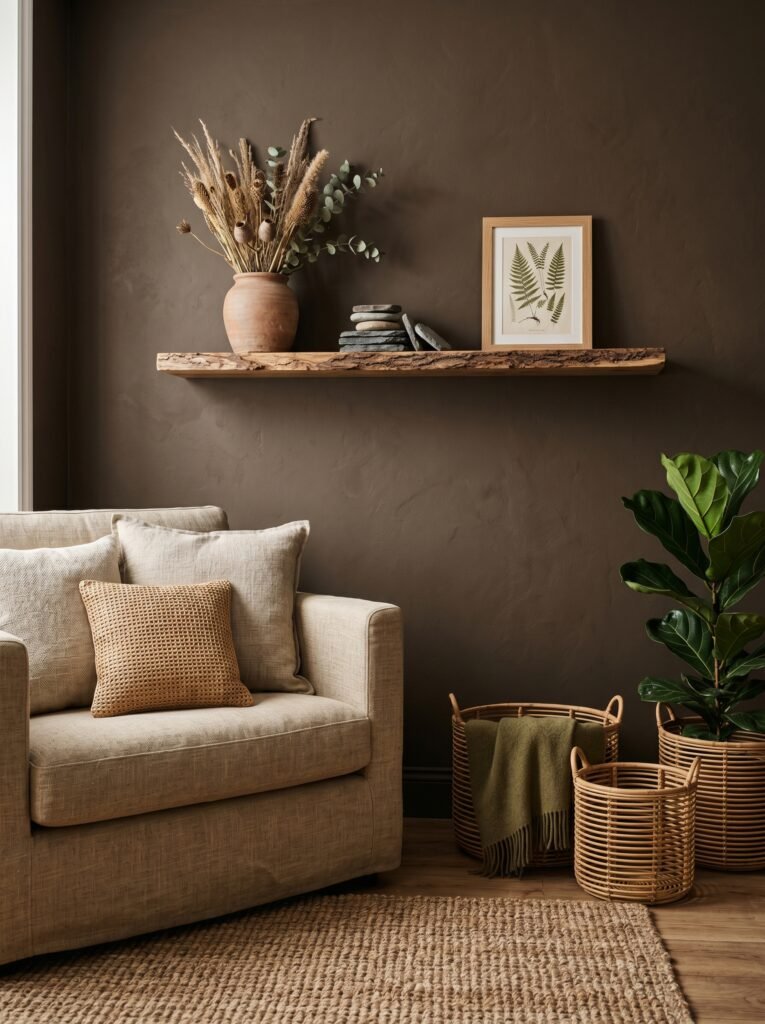
Brown walls have found a natural home in several of the most influential interior design movements happening right now, and understanding these styles can help you shape your own vision into something genuinely current and personal.
Japandi — the beautiful fusion of Japanese minimalism and Scandinavian warmth — is tailor-made for brown walls. Think clean lines, natural wood, negative space, and a palette of warm neutrals. Brown walls in a Japandi living room feel refined and restful, with every object earning its place. The organic, nature-forward feel of this style and the grounded quality of brown are deeply aligned.
Biophilic design, which incorporates natural materials, living plants, and organic forms into interior spaces, pairs extraordinarily well with brown walls. The earth tones create a backdrop that makes greenery pop and natural materials sing. A brown living room filled with plants, stone, wood, and natural textiles feels like a space consciously designed for human wellbeing.
And then there’s the broader “cozy maximalism” movement — warm, layered, collected rooms that feel personally curated rather than showroom-perfect. Brown walls are practically the foundation stone of this aesthetic: rich, warm, welcoming, and utterly unconcerned with being minimal.
—
🌿 How to Take Care of Your Brown-Painted Walls
Flat or matte brown paints look beautiful but scuff more easily than satin or eggshell finishes, so for a high-traffic living room, choose at minimum an eggshell finish — it wipes clean without losing that soft, sophisticated look.
Touch up chips or scuffs promptly, and keep a small amount of your original paint stored properly (sealed tightly, stored at room temperature). Brown shades can be notoriously difficult to match perfectly once the original paint has been mixed, so that leftover paint is more valuable than you think.
Keep walls dust-free with a soft, dry microfibre cloth — especially in rooms with textured paint finishes, where dust settles into the texture and dullens the color over time. A gentle wipe-down every few weeks keeps the richness of your brown looking its best.
Avoid harsh chemical cleaners on painted walls. For marks or scuffs, try a slightly damp cloth with a tiny drop of mild dish soap — always test in an inconspicuous corner first, and dry the area immediately after.
Finally, be mindful of direct sunlight over long periods. UV light can shift the undertone of even high-quality brown paints — particularly those with red or orange bases. Quality paint with UV-resistant properties, or soft filtering window treatments, will protect your color long-term.
—
❓ FAQ
Q: Will brown walls make my living room look too dark? A: Not necessarily. The key factors are the shade of brown you choose, your room’s natural light levels, and how you layer your artificial lighting. Lighter, warmer browns in well-lit rooms glow beautifully, while deeper shades work best with generous, layered warm lighting. It’s less about avoiding dark shades and more about compensating thoughtfully for their light-absorbing quality.
Q: What is the best white for trim and ceiling in a brown living room? A: Warm whites work best — look for whites with cream, yellow, or pink undertones rather than cool, blue-toned whites, which can clash with warm brown’s undertones. Shades like Benjamin Moore’s White Dove, Sherwin-Williams’ Alabaster, or Farrow & Ball’s All White are consistently beautiful alongside brown-toned walls.
Q: Can brown walls work in a rented home if I can’t paint? A: Absolutely. Large-scale brown peel-and-stick wallpaper panels have become remarkably high quality and are a brilliant option for renters. Alternatively, you can create the feel of a brown-walled room through large rugs, drapes, and upholstered pieces in warm brown tones — the effect is more layered than paint alone, and entirely reversible.
—
💭 Final Thought
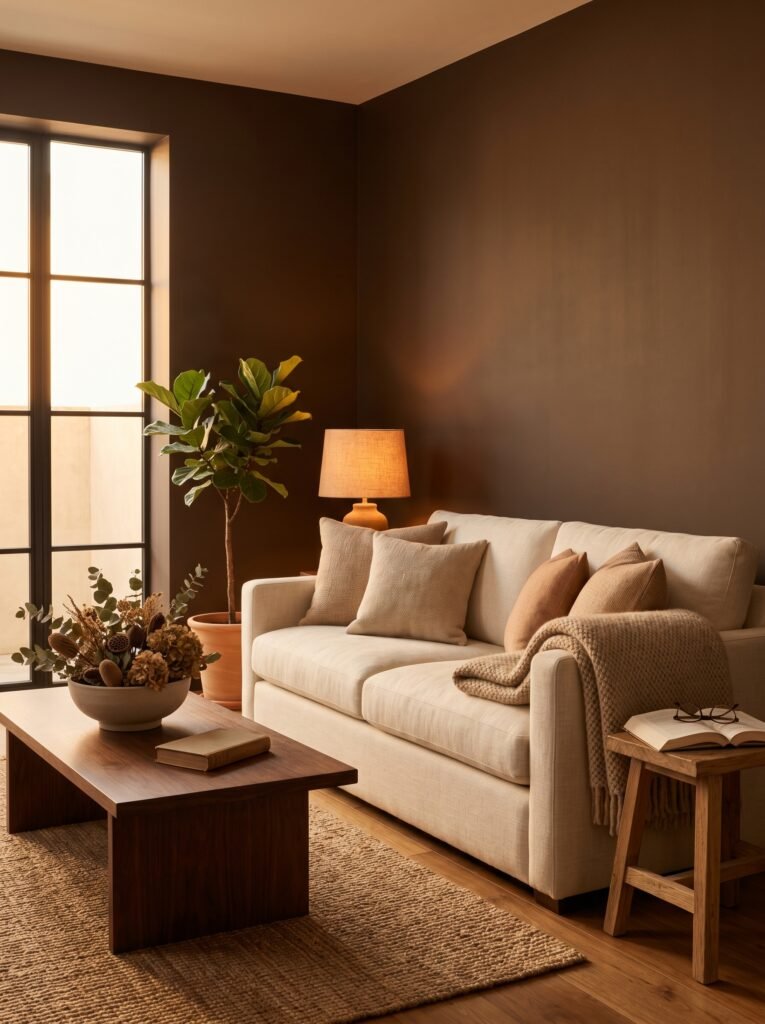
There’s something quietly radical about choosing brown for your living room in a world that’s constantly chasing the next bright, bold thing. It’s a choice that says: I want my home to feel like a place I actually live — warm, real, grounded, and deeply mine. Brown walls don’t just change how a room looks. They change how the room feels to be in, and eventually, how you feel when you come home.
So here’s the question worth sitting with: what would it mean for your home — and for you — to finally walk into a room that makes your shoulders drop?