
The 80s Living Room Revival: Why This Bold, Velvet-Soaked Decade Is Taking Over Our Homes Again
There’s something happening in living rooms across the country — a quiet rebellion against the cold minimalism of recent years, a hunger for color, warmth, and unapologetic personality. The 80s living room aesthetic is back, and honestly? It never should have left.
—
1. What Actually Defined the 80s Living Room (It’s More Than You Think)
Most people hear “80s living room” and immediately picture neon pink walls and geometric carpet. And yes — those existed. But the full picture is so much richer than that cultural shorthand suggests. The 1980s were a decade of extraordinary contrast in interior design. On one side, you had the maximalist explosion of color, pattern, and drama. On the other, a quieter thread of Art Deco revival, warm earth tones, and plush, enveloping furniture that made a room feel like a sanctuary.
What unified it all was intention. Rooms in the 80s weren’t designed to look minimal or effortless — they were designed to make a statement, to feel lived-in and luxurious at the same time. Furniture was oversized and inviting. Fabrics were tactile — velvet, brocade, chenille. Accessories were layered with purpose, not randomness.
The living room was the centerpiece of the home. It was where you displayed who you were.
“The 80s living room wasn’t just a space — it was a personality, loud and proud and fully committed.”
2. The Color Palette That Made Jaws Drop (And Still Does)
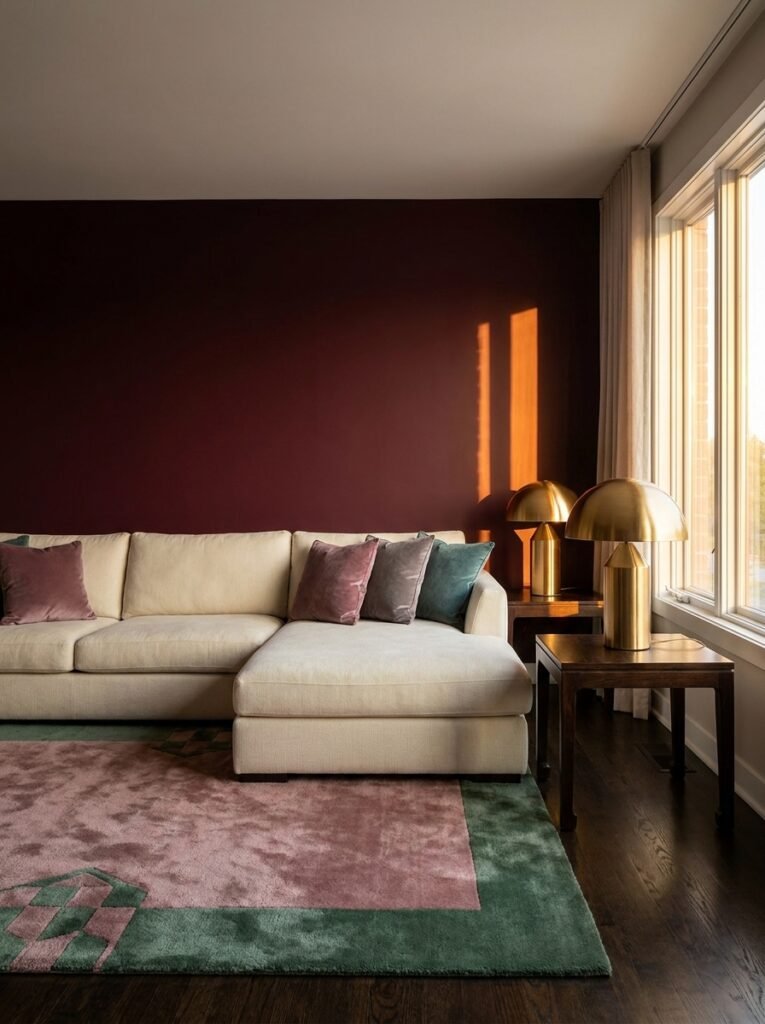
Color was the defining language of the 80s living room, and it was spoken fluently and fearlessly. We’re talking about deep jewel tones — emerald green, sapphire blue, burgundy, and plum — often anchored by a warm neutral base of cream, caramel, or dusty rose. These weren’t accidental combinations. They were bold, deliberate, and emotionally charged.
Mauve — that muted, dusty pink-purple — became one of the most iconic hues of the decade. Pair it with teal or forest green and you have an instantly recognizable 80s palette that somehow feels completely fresh today. The reason it works is simple: these colors are warm. They make a room feel inhabited, cozy, and full of life in a way that gray and white simply cannot.
Don’t overlook the power of contrast, either. The 80s loved a bold accent wall long before accent walls became a trend. A deep burgundy wall behind a cream sectional sofa, with brass accents catching the light — that’s a living room that commands attention.
If you’re nervous about going full-throttle with color, start with throw pillows or a statement rug. You’ll be surprised how quickly a single bold color choice transforms the entire energy of a room.
3. The Furniture That Made You Sink In and Never Want to Leave
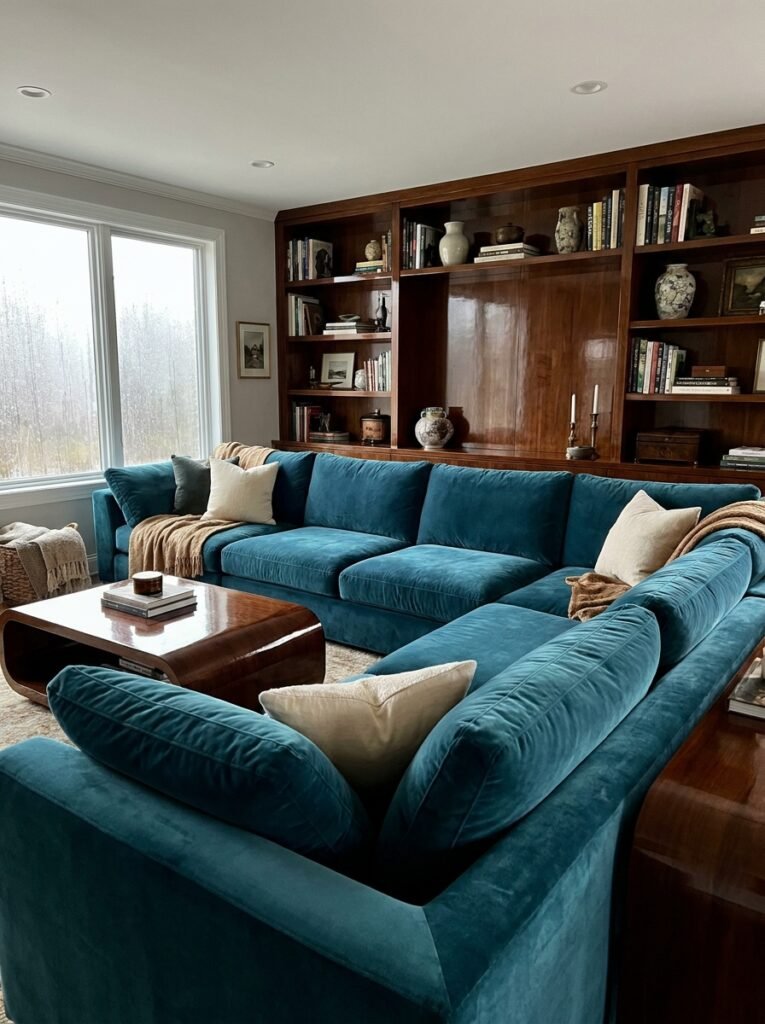
Imagine walking into a living room on a rainy Saturday afternoon — the kind of day where the light is soft and gray outside, and everything inside feels warm and close. You’re immediately drawn to the sofa: oversized, deeply cushioned, upholstered in a rich teal velvet. You sink into it and feel, genuinely feel, like the room is holding you.
That was the 80s living room at its best.
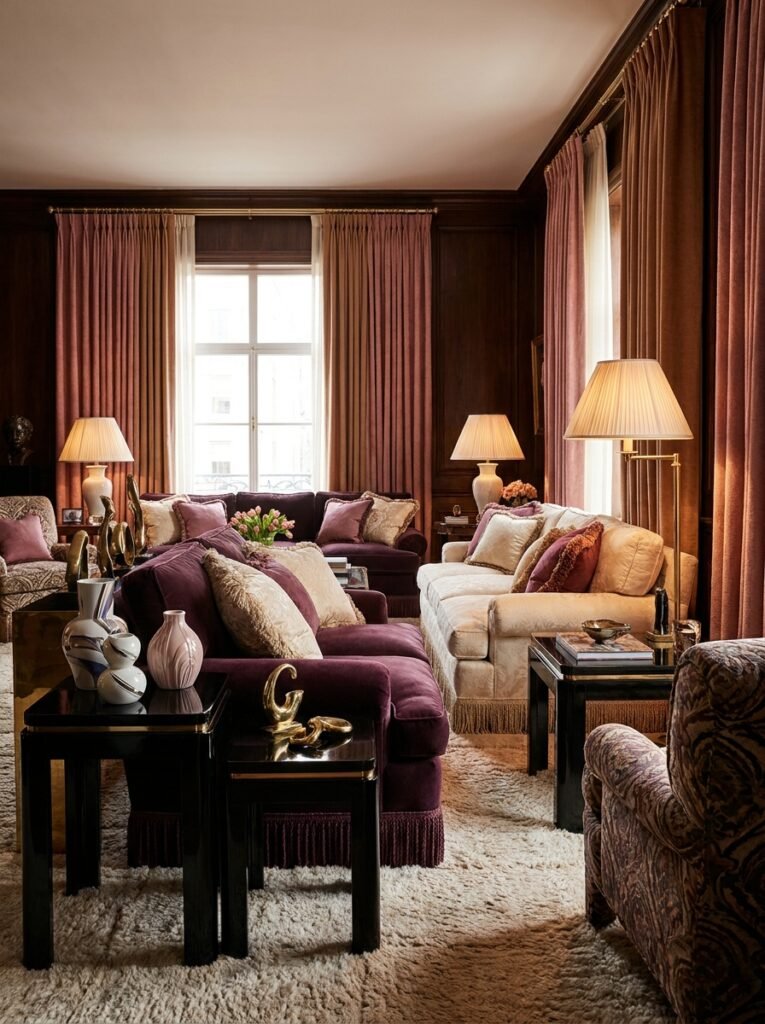
Furniture from this era had physical weight and presence. Sectional sofas were enormous — not in a sloppy, casual way, but in a deliberate, “this is the throne room” kind of way. Curved edges appeared on everything from couches to coffee tables, softening rooms that might otherwise feel angular. Lacquered finishes on side tables and entertainment centers added a glossy, high-contrast sophistication.
The entertainment center itself deserves a moment of appreciation. Built-in units that spanned entire walls, housing the television, VCR, stereo system, and a carefully curated collection of books and decorative objects — this was the defining piece of furniture in 80s living room design. It was functional architecture.
4. Patterns That Were Never Afraid to Speak Up
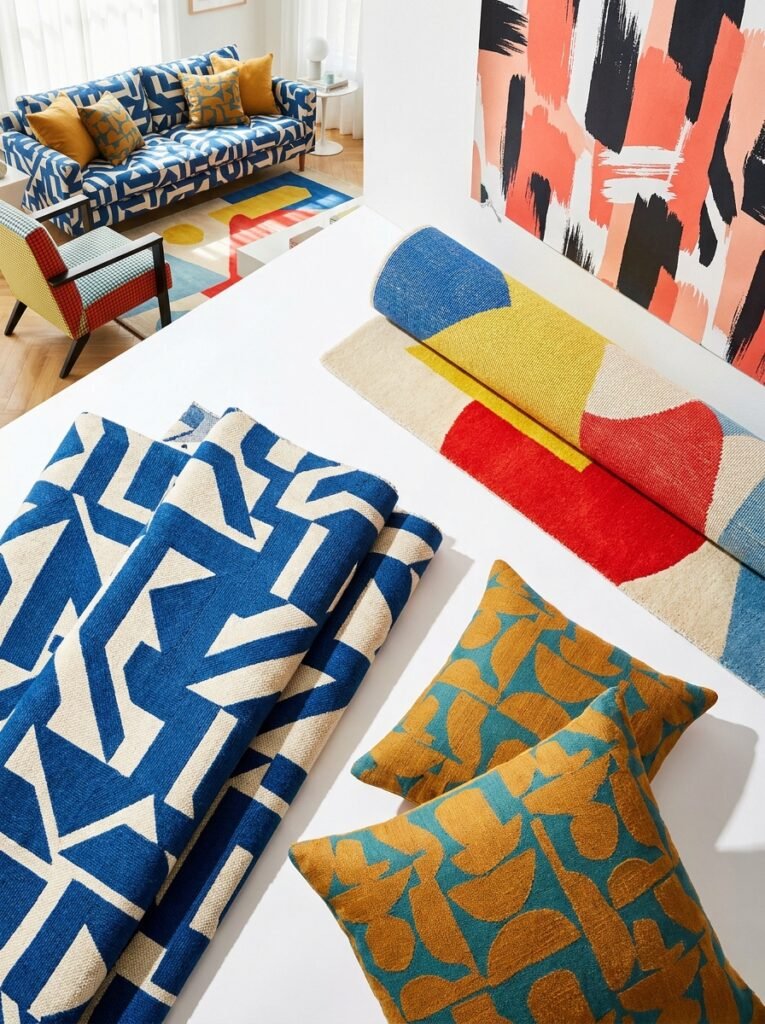
The 80s said yes to pattern in a way that modern design has almost entirely abandoned. Geometric prints, abstract shapes, bold stripes, and Memphis Design-inspired graphics were everywhere — on upholstery, wallpaper, rugs, and throw pillows. Mixing patterns wasn’t a mistake; it was the point.
Memphis Design, born from the Milan-based design collective founded by Ettore Sottsass in 1981, became arguably the most influential aesthetic movement of the decade. Characterized by bright colors, asymmetrical shapes, and a deliberately playful rejection of “good taste,” Memphis Design challenged every assumption about what a living room should look like. Its influence rippled through everything from furniture silhouettes to graphic patterns on fabric.
The key to making mixed patterns work — then and now — is to vary the scale. Pair a large geometric print with a smaller repeating pattern. Keep at least one dominant color consistent across patterns. The result feels curated and intentional rather than chaotic.
5. The Role of Brass, Glass, and Mirrored Surfaces
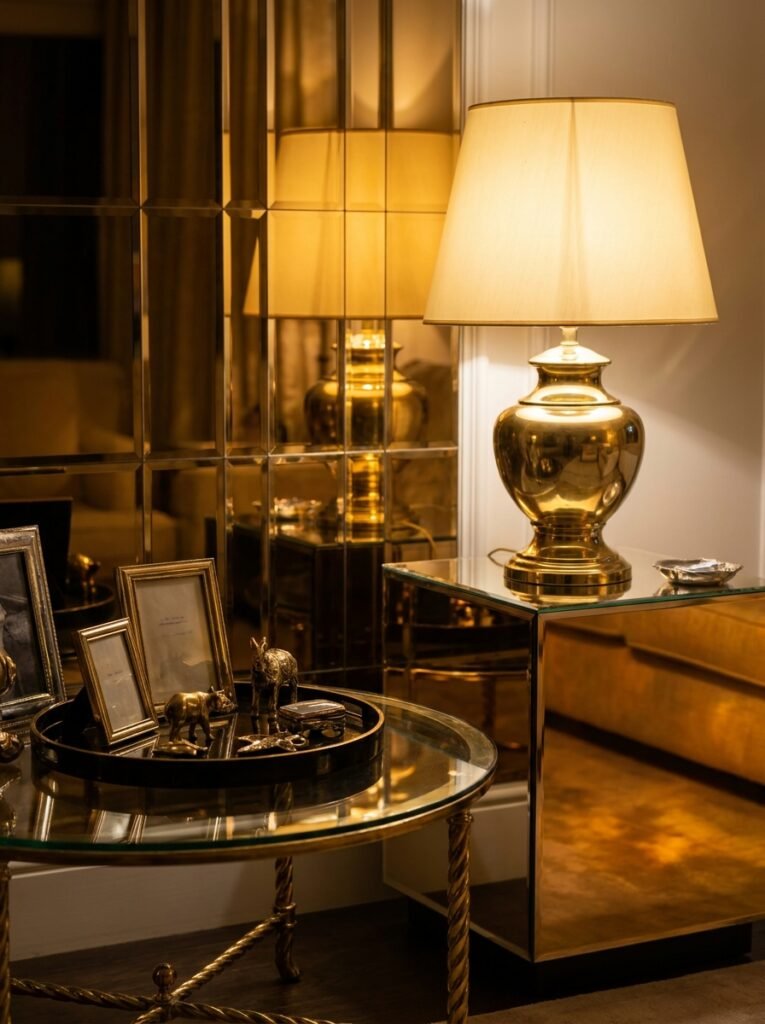
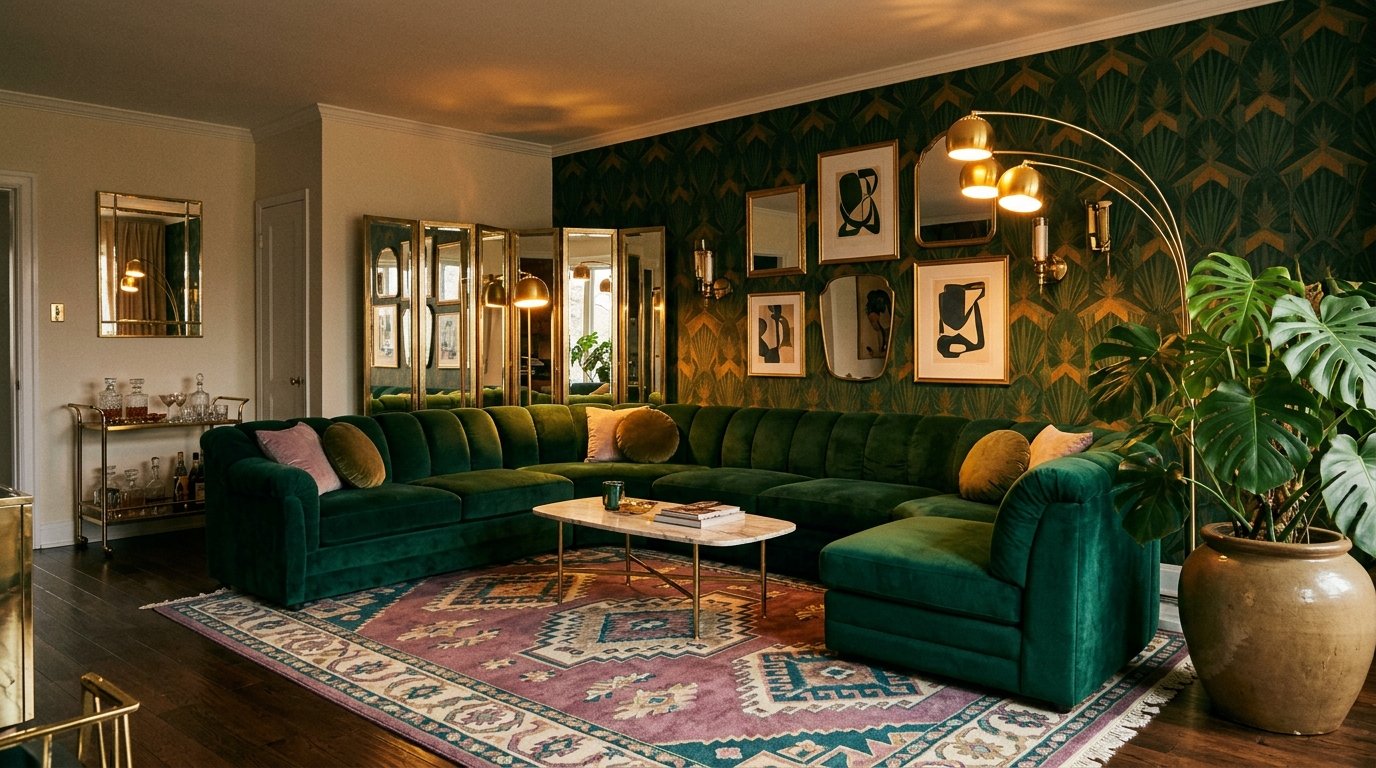
If velvet was the tactile signature of the 80s living room, brass was its visual fingerprint. Warm, golden, and unapologetically showy, brass appeared on lamp bases, picture frames, cabinet hardware, coffee table legs, and decorative accessories. After years of being replaced by chrome and brushed nickel, brass is having a full-scale comeback — and interior designers are celebrating.
Glass and mirrored surfaces were equally central to the 80s aesthetic. Mirrored side tables, glass-top coffee tables, and mirrored wall panels were used with great intention: to bounce light around a room, to create a sense of depth and expansion, and to add a touch of glamour that felt genuinely luxurious.
“Brass doesn’t whisper — it announces. And sometimes, a room needs exactly that kind of confidence.”
The combination of brass and mirrored surfaces creates a light-play that is genuinely beautiful in the evening, when lamps cast warm pools of golden light across reflective surfaces. It’s atmospheric in a way that matte finishes simply can’t replicate.
6. Wallpaper: The Bold Choice That Changed Everything
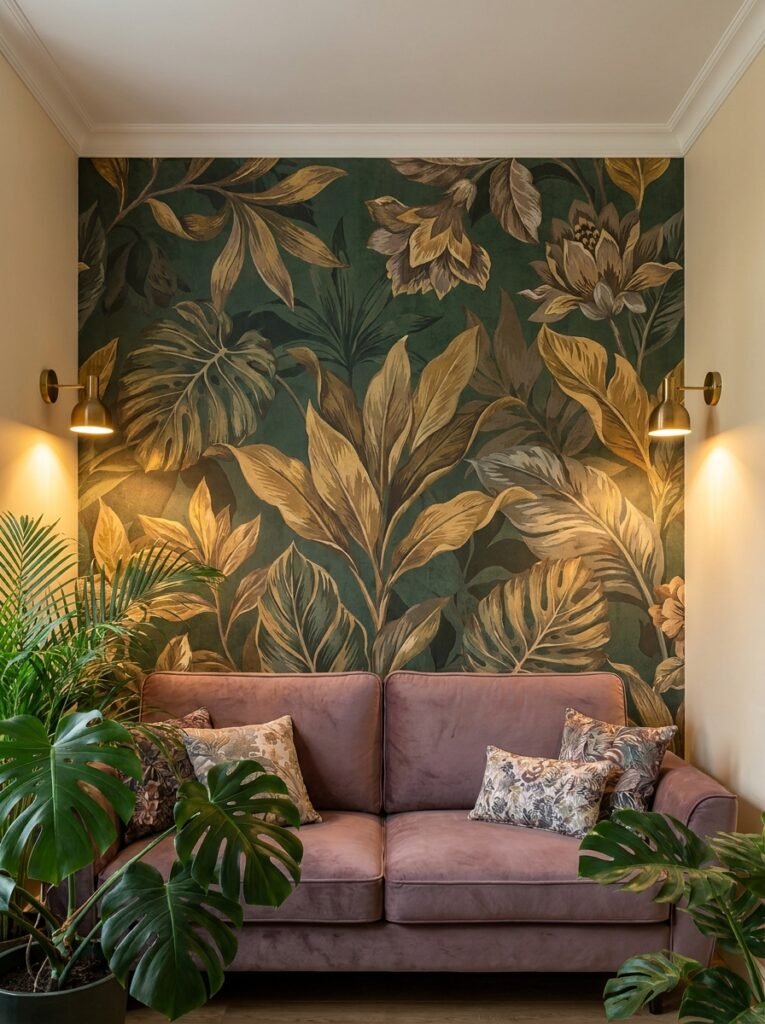
The 80s living room loved wallpaper the way a baker loves butter — unreservedly and without apology. Geometric patterns, tropical prints, abstract brushstroke designs, and bold florals transformed flat walls into full design statements.
Today’s interior designers are returning to wallpaper with enthusiasm, and the 80s-inspired patterns leading the charge are the most exciting. Think oversized botanical prints in deep greens and ochre. Think abstract marbling in black and gold. Think geometric repeating patterns in mauve, teal, and cream.
One of the most powerful applications of 80s-inspired wallpaper in a modern living room is the feature wall — a single wall behind the sofa or fireplace given a dramatic pattern while the surrounding walls remain in a complementary solid tone. This approach captures all the visual drama of 80s design while keeping the space from feeling overwhelming.
7. Lighting That Set the Mood Like Nothing Else
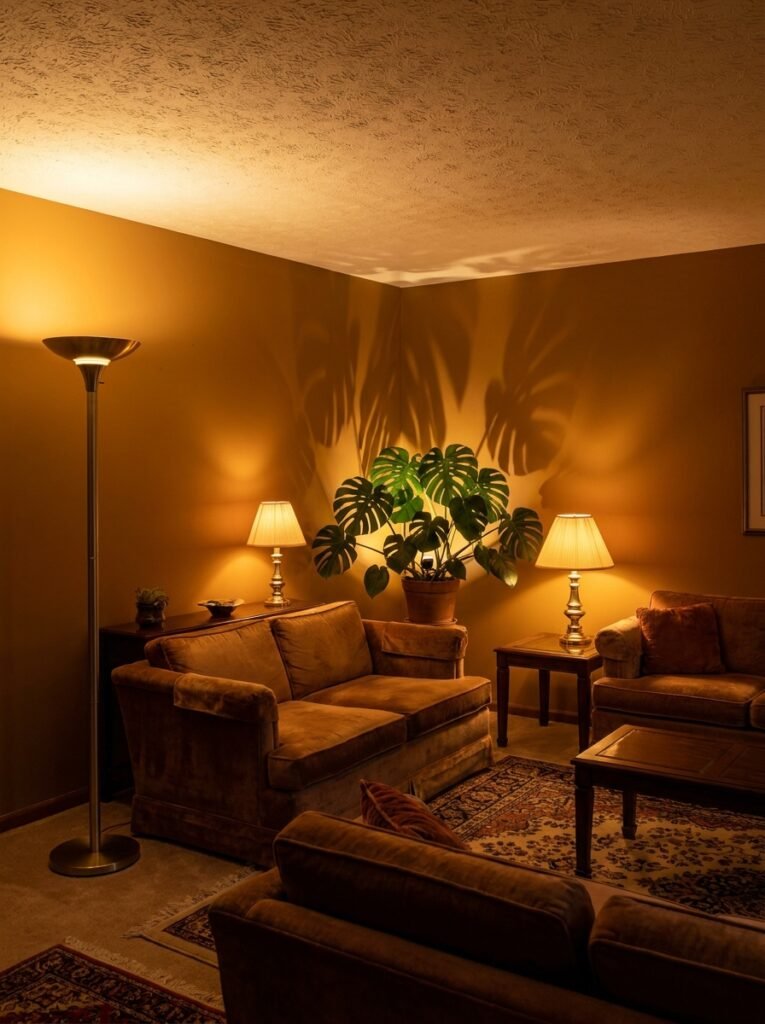
The 80s understood something about lighting that feels genuinely wise in retrospect: overhead lighting is rarely the answer. Living rooms in this era were layered with floor lamps, table lamps, uplighters, and even neon accents — all working together to create a warm, multi-dimensional atmosphere rather than the harsh uniformity of a single overhead fixture.
Torchiere floor lamps with halogen bulbs became iconic fixtures of the decade. Their upward-directed light created a warm ambient glow that filled rooms with soft illumination. Paired with table lamps in brass or ceramic bases, the lighting in an 80s living room felt intentional and theatrical in the best possible way.
If you’re recreating this look today, the principle is straightforward: layer your light sources, go warm with your bulb temperatures (2700K–3000K), and never rely on a single overhead fixture to do all the work. Add a statement floor lamp. Put your lamps on dimmer switches. Let the room breathe and glow at different intensities depending on the time of day.
8. Plants, Plants, and More Plants (The 80s Were Obsessed)
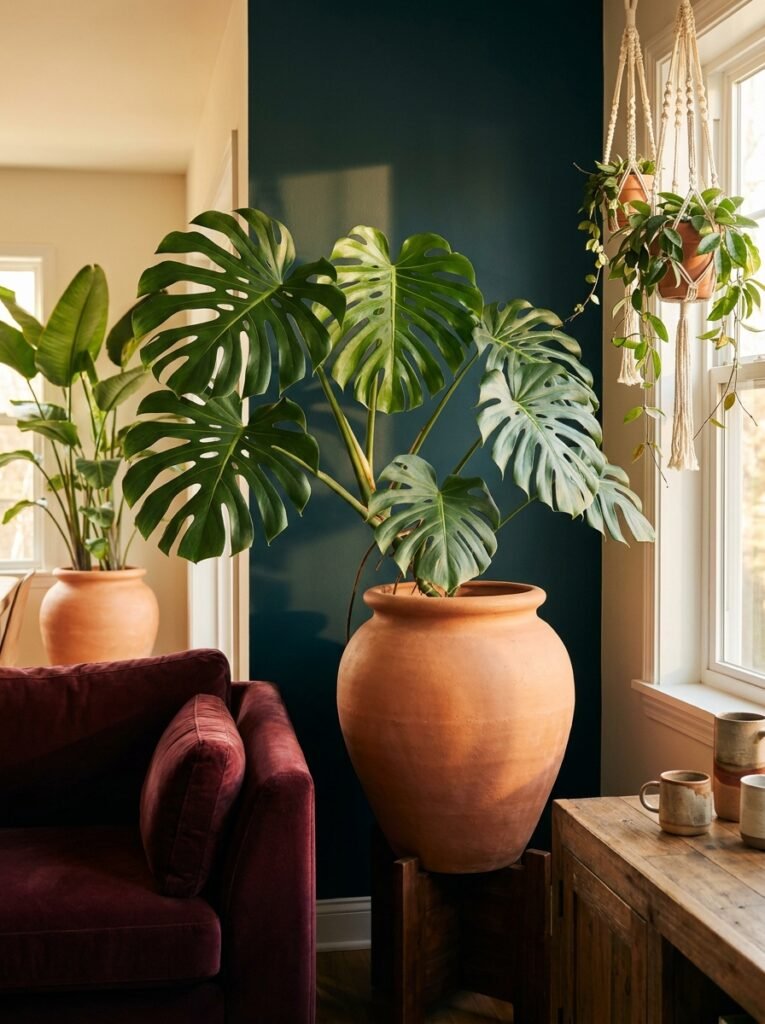
Long before “plant parent” became a social media identity, the 80s living room was already deeply committed to the drama of indoor greenery. Large tropical plants — monstera, fiddle-leaf figs, bird of paradise, and snake plants — were central design elements, not afterthoughts.
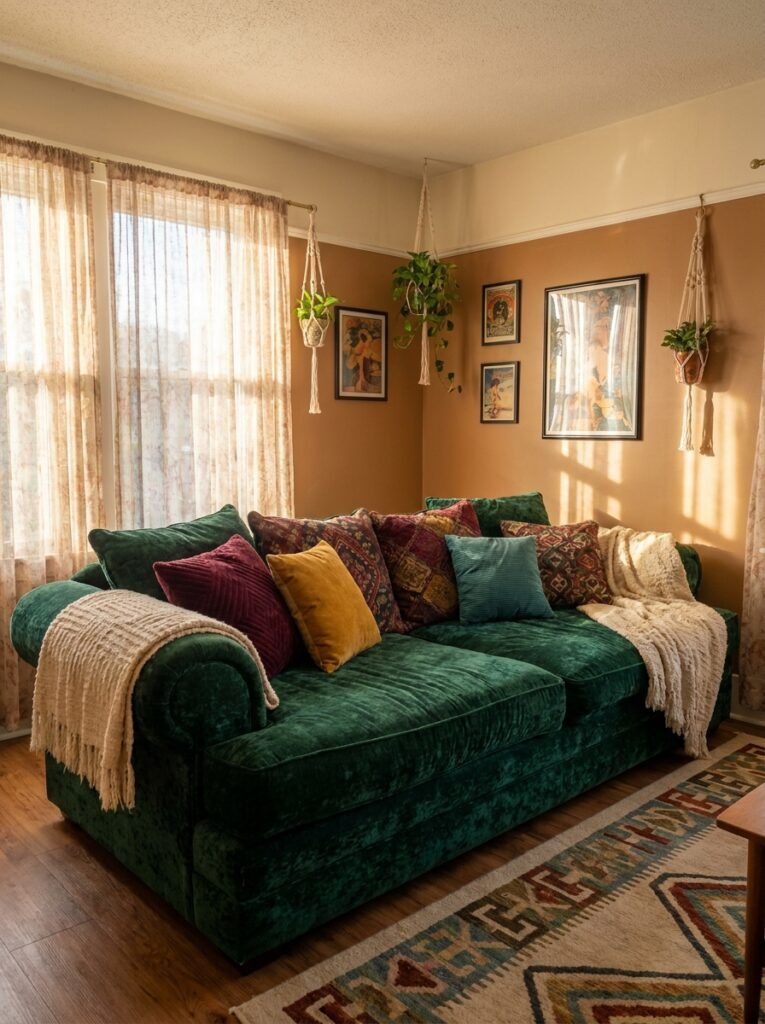
The scale mattered enormously. A single large plant in an oversized ceramic pot in a rich earth tone added a living, breathing architectural element to a room. Hanging plants in macramé holders (yes, the macramé trend was very much alive in the early 80s) added vertical interest and softness to rooms that might otherwise feel too structured.
The combination of lush green foliage against a jewel-toned wall or a richly patterned sofa is one of the most visually satisfying combinations in interior design. It’s warm, organic, and deeply inviting — the visual equivalent of a deep breath.
9. The Art of the Gallery Wall, 80s Style
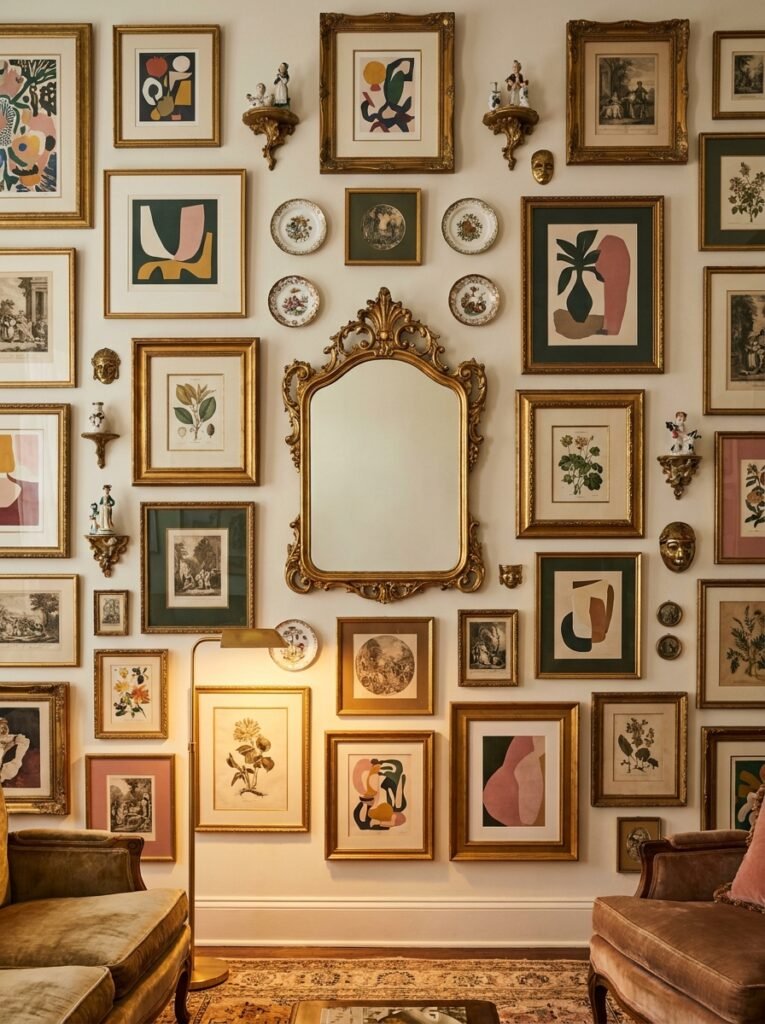
The 80s living room gallery wall was not the carefully curated, evenly spaced, Instagram-perfect arrangement we know today. It was something wilder and more personal — a layered, close-packed collection of framed prints, mirrors, decorative plates, and personal photographs that told the story of the family who lived there.
Frames were often mismatched but unified by a consistent finish — typically gold or brass. Subjects ranged from abstract art prints to botanical illustrations to family portraits to purely decorative objects. The effect was rich and deeply personal, like a page from someone’s visual diary.
“A gallery wall done right doesn’t just fill space — it tells a story that no furniture can.”
To recreate this effect today, start by choosing a cohesive color story for your artwork rather than matching frames perfectly. Layer in a mirror or two for reflective interest. Don’t be afraid to include objects with three-dimensional depth, like a small wall-mounted shelf or a decorative wreath. The goal is abundance without clutter — and there’s a real art to finding that balance.
10. Textiles and Layering: The Secret to That Cozy 80s Warmth
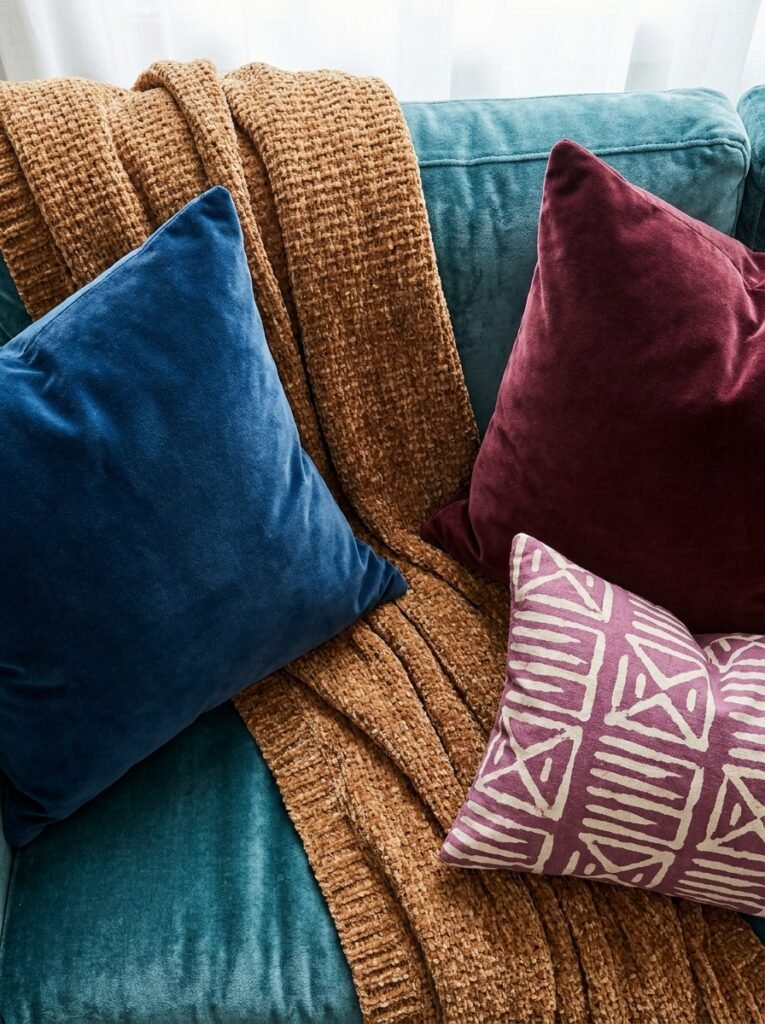
Walk into an 80s living room in full bloom and the first thing you’ll notice isn’t the furniture or the color — it’s the warmth. That warmth comes almost entirely from the layering of textiles. Thick area rugs anchored the seating area. Throw blankets in chenille or plush velvet draped over the back of sofas. Cushions in multiple sizes, textures, and patterns were piled with generous abundance.
This approach to textile layering is one of the most accessible ways to bring the 80s living room aesthetic into a modern home without committing to a full renovation. A single velvet sofa, a richly patterned area rug, and an assortment of layered throw pillows can transform a room’s entire energy in an afternoon.
The key is to commit. Half-hearted layering looks unintentional. Full, generous layering looks deliberate and beautiful.
11. How the 80s Living Room Translates Into Modern Spaces
The exciting thing about the 80s revival isn’t that designers are recreating these rooms note for note — it’s that they’re distilling the essence and translating it into contemporary language. The maximalism has been refined. The color is more intentional. The furniture silhouettes borrow the curves and scale without the dated details.
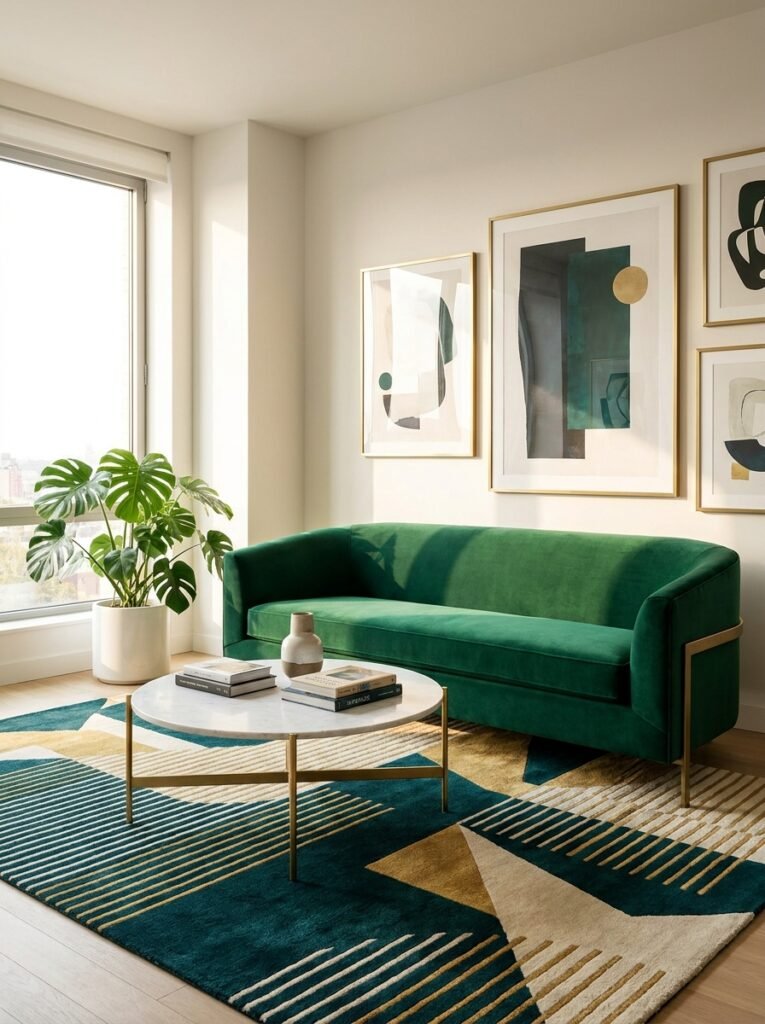
A modern 80s-inspired living room might feature a curved velvet sofa in deep emerald green, paired with a marble-top coffee table on brass legs, a boldly patterned area rug, and a gallery wall mixing abstract prints with gold-framed mirrors. The bones are unmistakably 80s. The execution feels completely fresh.
The key distinction is editing. The original 80s living room sometimes erred on the side of too much. The modern interpretation knows when to stop — it captures the spirit of abundance and personality without tipping into visual chaos.
12. Why the 80s Living Room Resonates So Deeply Right Now
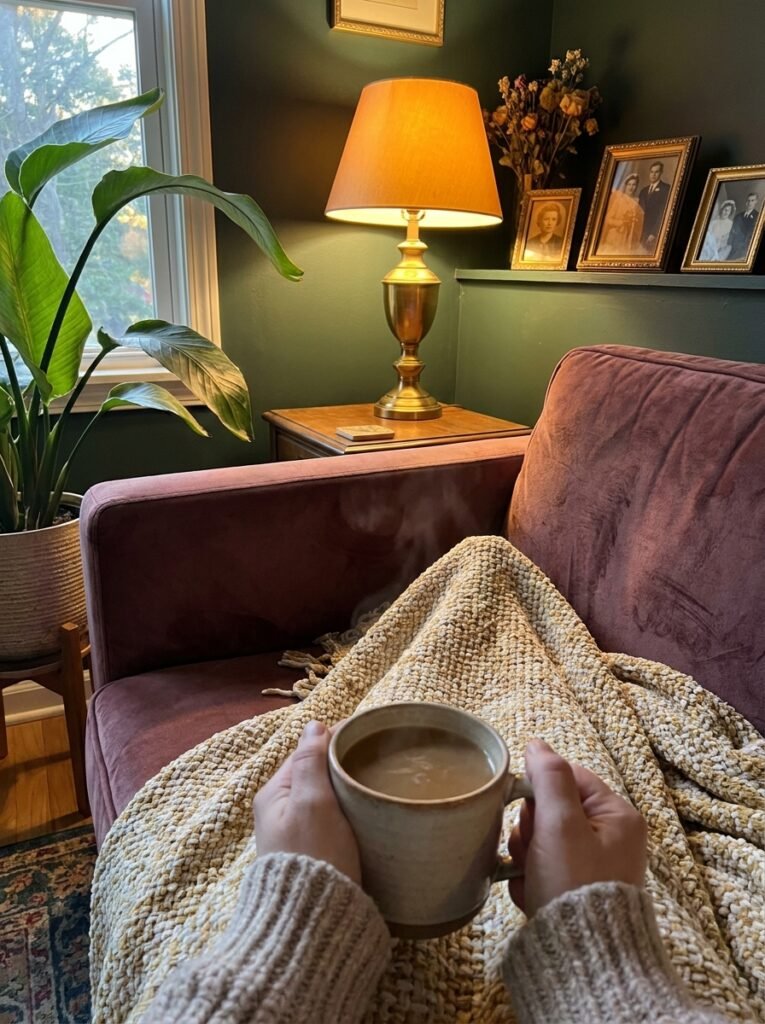
There’s a reason this revival is happening now, and it goes deeper than trend cycles. After years of pared-back, neutral, minimalist interiors — beautiful in their own right, but often feeling cold and impersonal — people are hungry for homes that feel like them. Homes that are warm, expressive, a little bit dramatic, and deeply comfortable.
The 80s living room offers all of that in abundance. It says: this is who I am, and I’m not apologizing for it. It prioritizes comfort and atmosphere over restraint and perfection. It invites you to sit down, sink in, and stay awhile.
In a world that often feels rushed and impersonal, designing a living room with this much warmth and intention feels like an act of genuine self-care — for yourself and for everyone who enters your home.
—
🌿 How to Create Your Own 80s-Inspired Living Room
Bringing this aesthetic to life doesn’t require a full renovation or a bottomless budget — it requires intention and a willingness to commit to personality. Start with your sofa, since it anchors the room; if you can invest in one velvet or brocade upholstered piece in a jewel tone, it will do more work than any other single element.
Layer in brass accessories gradually — a lamp here, a picture frame there, cabinet hardware in a warm gold finish. These small changes accumulate into a cohesive atmosphere faster than you’d expect. Add a statement area rug with a geometric or abstract pattern, and let it drive your secondary color choices throughout the room.
Don’t neglect your walls — even a single bold paint color or a feature wall of patterned wallpaper can shift the entire feeling of a space. And finally, embrace your plants. One large monstera or bird of paradise in a ceramic pot adds the organic warmth that ties the entire look together without a single additional purchase.
The most important rule: choose things you genuinely love, not things you think you should love. The 80s living room was always, at its heart, about authentic self-expression.
—
❓ FAQ
Q: Is the 80s living room aesthetic too dated to work in a modern home? A: Not at all — in fact, the opposite is true. The key is to borrow the spirit of the era rather than reproducing it exactly. Jewel tones, velvet textures, brass accents, and layered textiles all feel genuinely current when applied with a modern editing eye.
Q: What are the most important elements to include for an authentic 80s living room look? A: Focus on three core elements: a rich, deeply saturated color palette (think emerald, mauve, teal, or burgundy), plush upholstered furniture with curved lines, and warm brass or gold metallic accents throughout. Get those three things right and the rest will fall naturally into place.
Q: How can I incorporate 80s style on a tight budget? A: Secondhand and thrift stores are your greatest allies here — 80s furniture is abundant in the resale market, often at very low prices, and frequently in excellent condition. Focus on finding one statement piece, then build around it with affordable accessories like throw pillows, candles, and framed prints in warm gold frames.
—
💭 Final Thought
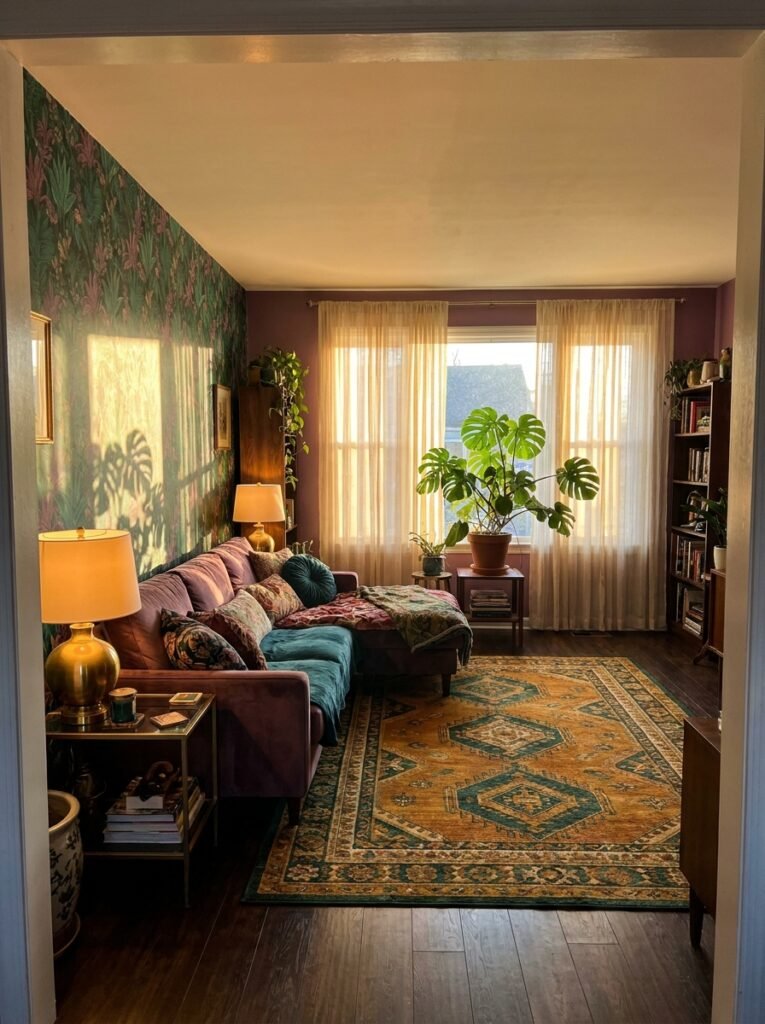
The 80s living room, at its truest, was never really about a decade — it was about the deeply human desire to create a home that felt fully alive. It was color as courage, texture as comfort, and abundance as joy. As we design our spaces today, perhaps the most meaningful thing we can borrow from that era isn’t a specific palette or furniture style, but that same fearless commitment to making our homes feel like us.
So here’s the question worth sitting with: if your living room could speak for who you truly are — without apology, without restraint — what would it say?