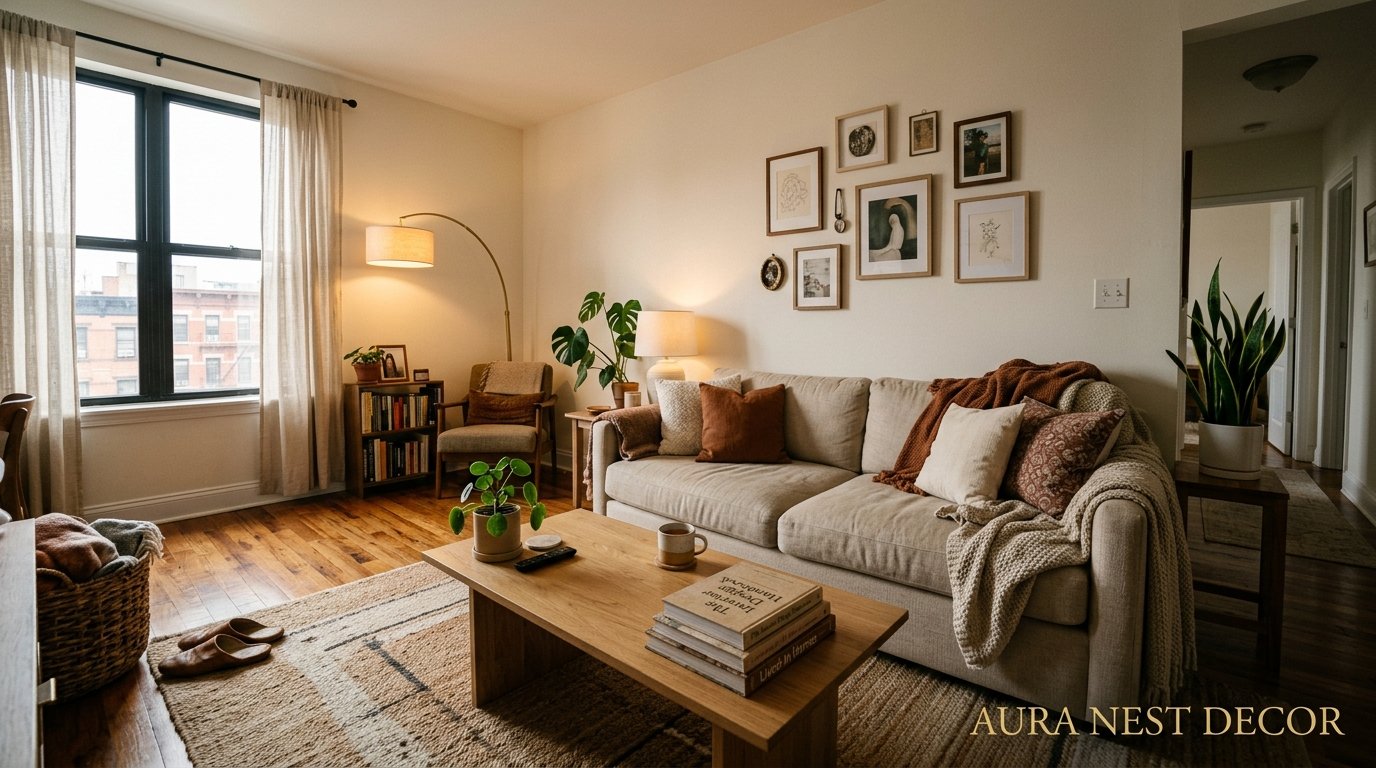
The Apartment Living Room Glow-Up That Doesn’t Require a Single Hammer
You scroll past it every day. That Pinterest living room with the perfect light and the throw blanket that looks accidentally placed. And your actual apartment living room is… fine. But you know it could be more.
Here’s the thing — it really can be.
—
1. The Rental Wall Problem Nobody Talks About Honestly
Okay so let’s just say it out loud: white rental walls are soul-crushing. There, I said it. You’ve got four flat magnolia or eggshell walls, zero personality, and a landlord who’d sooner take your deposit than let you breathe on the plaster. And somehow you’re supposed to make this place feel like HOME?
You can. But not by ignoring the walls — by working with them in ways that don’t require a single nail gun.
Peel-and-stick wallpaper has gotten genuinely good, by the way. Not the sad bubbly stuff from 2015 — the kind that actual interior designers are using now and photographing for shelter magazines. One accent wall behind your sofa in a dark olive or deep terracotta does something dramatic. It anchors the room. Suddenly the sofa isn’t just floating in a beige void.
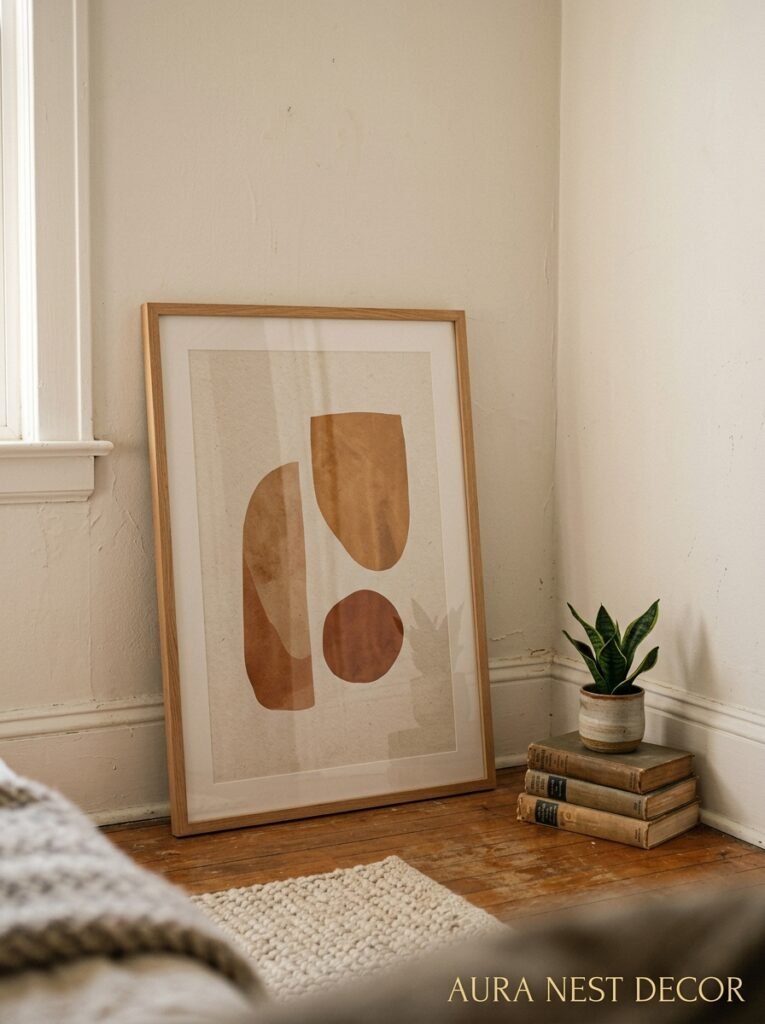
But if wallpaper still makes you nervous (totally valid, some tenancy agreements are vague and terrifying), lean into large-scale art. Not a gallery wall with fifteen tiny frames — one oversized piece, hung with Command strips rated for the weight. A single huge abstract in earthy tones. Or a vintage-style botanical print that hits near the ceiling. Big art makes a room feel considered, not decorated.
And honestly? Leaning art against the wall — actually leaning it on purpose — reads way more designer-brained than it has any right to.
“One brave wall is worth a dozen carefully curated shelves.”
2. The Sofa You Already Have Isn’t the Problem
I can’t tell you how many people are out here thinking they need a new sofa when what they actually need is a different relationship with the sofa they’ve got. Hear me out.
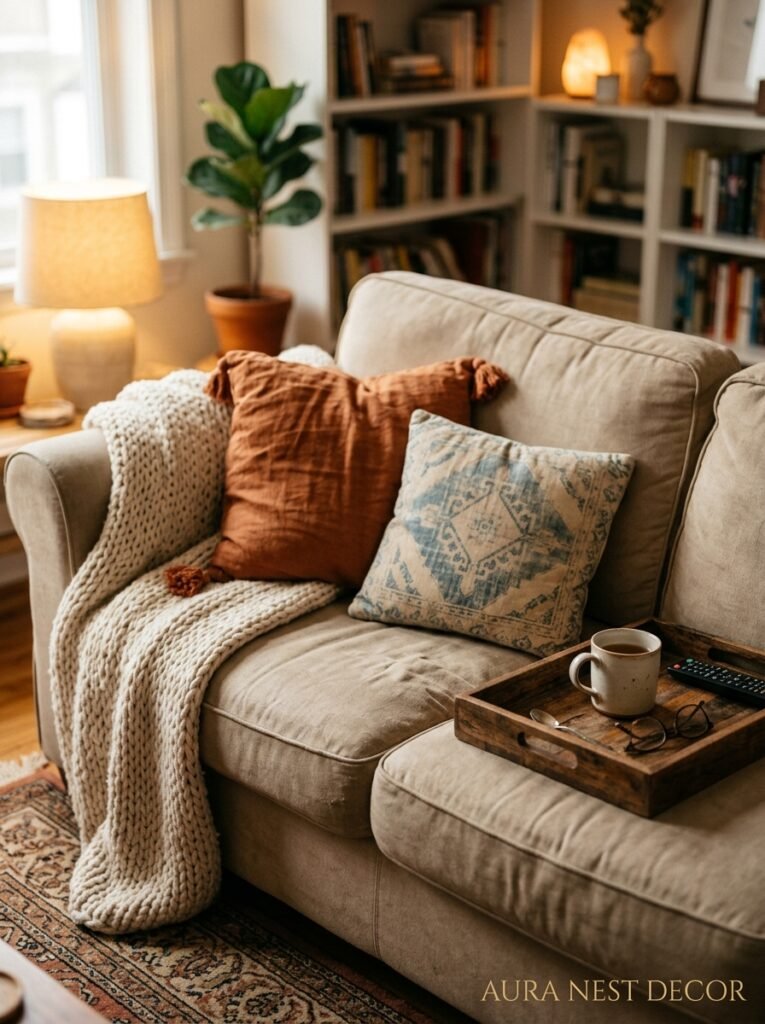
A throws-and-pillows intervention costs maybe $40 and takes twenty minutes, and the results are genuinely embarrassing compared to leaving the sofa bare. The trick most people get wrong? They buy everything in the same color family. Safe, yes. Interesting, no. You want at least one pillow that creates mild tension — a rust against a grey sofa, a deep navy against a cream one. That slight “wait, does this work?” moment is exactly what makes a room feel styled instead of assembled.
The texture thing is real too. A waffle-knit throw reads completely differently from a chunky boucle one, even if they’re the same color. Layer them. Yes, both on the sofa at once, you’re allowed. Nobody is coming to arrest you.
If you have a truly tragic sofa — scratched leather, pill-y fabric, something a previous version of you bought in a hurry from a clearance section — a sofa cover can work. The ones made from washed linen or cotton twill, not the slippery ones that end up crumpled by 4pm. A loose-fit linen slip cover in natural or white makes almost any sofa look vaguely Provençal and intentional.
3. Why Your Apartment Lighting Is Making Everything Look Worse
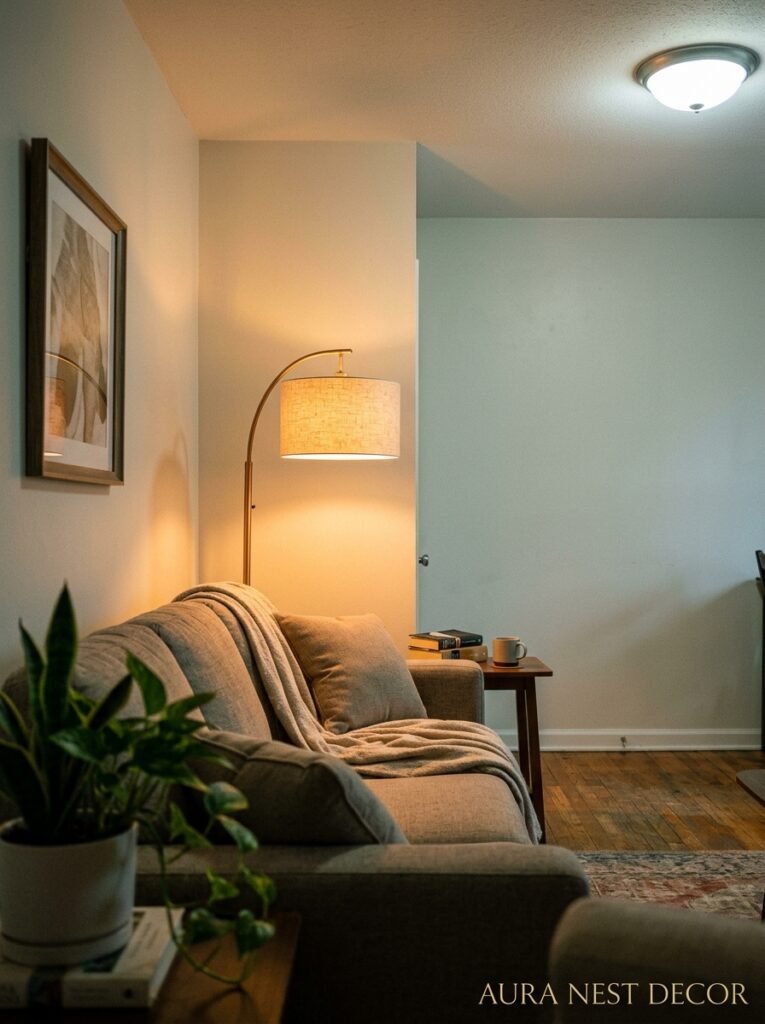
This is maybe the single most overlooked thing in apartment decorating and it drives me a bit mad honestly. The overhead light. That one fixture, usually a sad flush-mount situation in the center of the ceiling, casting flat cold light over everything. People leave it on all night and wonder why their apartment doesn’t feel cozy.
Turn it off. Or at least, stop relying on it.
Layer your light sources instead — floor lamp in one corner, a small table lamp on a side table, maybe a plug-in sconce on the wall if you’re feeling adventurous. The goal is pools of warm light rather than one flat overhead wash. The amber glow of an Edison bulb at 7pm does more for a living room than any piece of furniture, I’m convinced.
Bulb temperature matters way more than people realize. 2700K is warm and golden. 4000K is cool office lighting. Check what you’ve currently got in your lamps right now — I’d bet at least one of them is wrong for a cozy room. Swap it. Seriously, this is a $4 fix that changes everything.
Candles count too. Not just for the flicker — though yes, obviously — but because having lit candles changes YOUR energy in the room. You sit differently when there are candles. It’s psychological and I refuse to apologize for saying it.
4. The Rug Size Rule That Almost Nobody Follows (And Should)
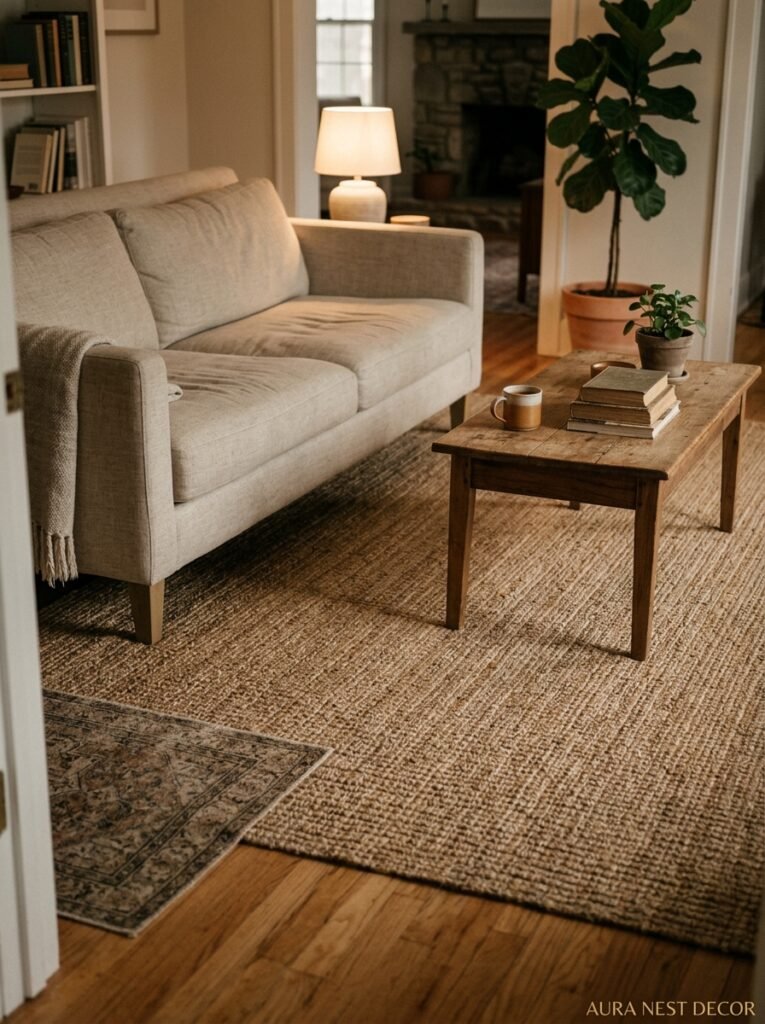
Every interior designer says the same thing and every apartment dweller ignores it and then wonders why their living room looks a bit sad. The rug is too small. It’s ALWAYS too small.
A rug that only goes under the coffee table and nothing else isn’t anchoring your furniture. It’s floating in the middle of the room like a little island of carpet. The sofa legs — at least the front two — need to be ON the rug. The rug needs to be big enough that your seating arrangement is visually grouped together, like it belongs.
For most apartment living rooms, that means going to at least 8×10 feet, often bigger. Which sounds huge and expensive. But here’s where it gets interesting — you don’t need to spend a fortune. Ruggable, IKEA, Wayfair, Dunelm if you’re in the UK — there are genuinely decent large rugs at prices that won’t make you cry. And a large cheap rug styled well almost always looks better than a small expensive one.
Layering rugs is also a thing, and it’s very much an apartment person’s best friend. A large sisal or jute underneath, a smaller patterned or vintage-style rug on top. It adds warmth, it adds visual interest, and if one gets a coffee stain at some point, you’ve only lost the smaller one.
“A rug that fits changes the whole conversation the room is having with itself.”
5. The Coffee Table Approach Nobody Pins But Everyone Should Try
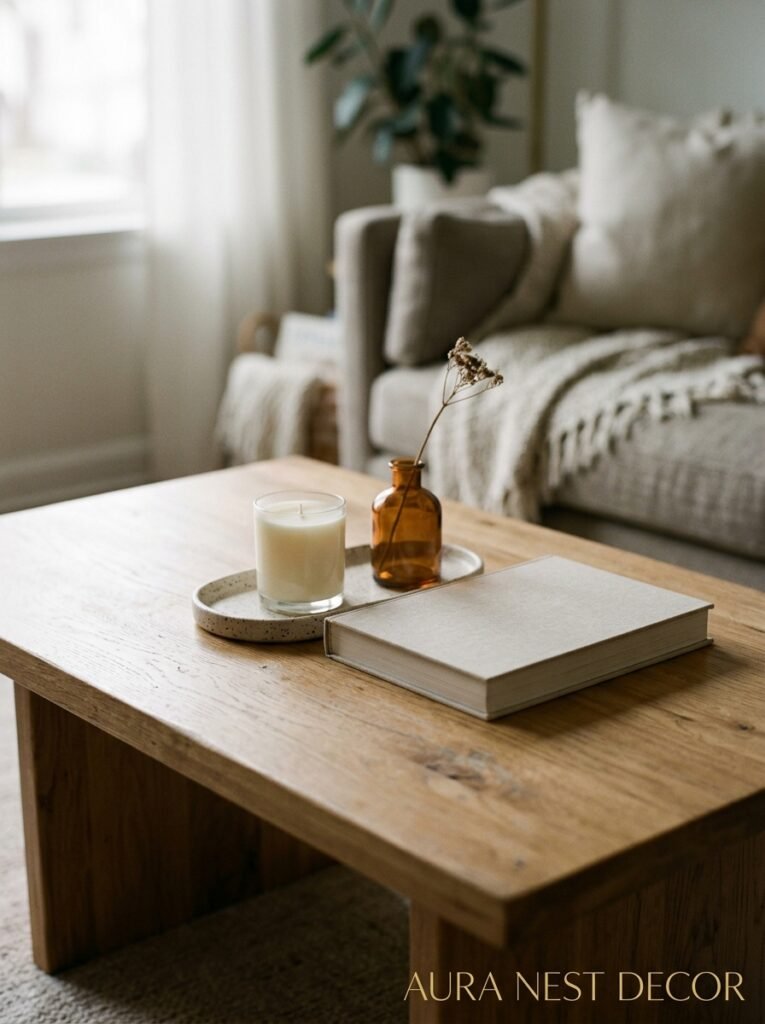
You know what’s having a major quiet moment right now? Unusual coffee tables. Not unusual as in “this costs $2,000 and arrived from an Italian designer,” but unusual in the sense of: not a traditional rectangular wooden table with a glass top.
A stack of books with a tray on top. An old leather ottoman. A set of nesting tables that you can pull apart when you need actual space. A large woven basket, upside down, with a marble or wooden tray on top. These things look cool, they’re functional, and they tell a story about the person who lives there.
The current coffee table arrangement that’s all over my Pinterest feed — and honestly, I’m obsessed with it — is a round travertine or stone-look table with nothing but one interesting object on it. One candle. One sculptural bowl. That’s it. The restraint is the whole point.
Most people overload their coffee tables with too much stuff and then the stuff becomes visual noise. Edit it down to three things max and make sure each one has a different height. A tall candle, a medium stack of books, a low tray. Done.
6. Plants That Actually Survive in a North-Facing Apartment (For Real This Time)
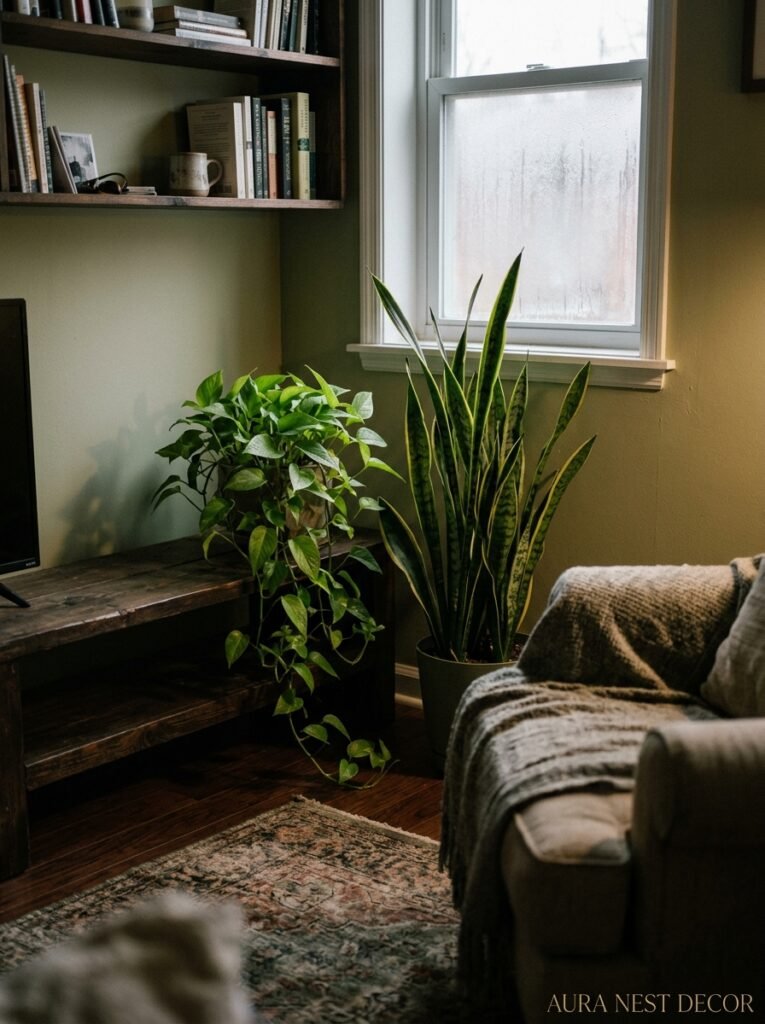
Not gonna lie, I’ve killed more plants than I care to admit. The peace lily that I thought was “low-maintenance.” The fiddle leaf fig that hated me personally. So I’m not here to tell you to buy expensive drama plants and then grieve them slowly.
What actually works in low-light apartments? Pothos. Snake plants. ZZ plants. Heartleaf philodendrons. These are genuinely unkillable in a way that sounds like an exaggeration and isn’t. You could forget to water a ZZ plant for three weeks and it’s FINE. It doesn’t even look annoyed.
The trick with apartment plants isn’t variety — it’s grouping them. Three or four plants clustered together in a corner have much more visual weight than six plants scattered around a room at random. A big floor plant (rubber tree or monstera if you’ve got some light, a large snake plant if you don’t), a mid-height one on a plant stand, a trailing one on a shelf. That corner now has presence.
And side note — the pot matters more than people think. A beautiful terracotta or matte black pot on a good wooden stand makes even a £3 supermarket houseplant look intentional. The container is doing a lot of the work here.
7. The Bookshelf Styling Trick That Takes About Six Tries Before It Works
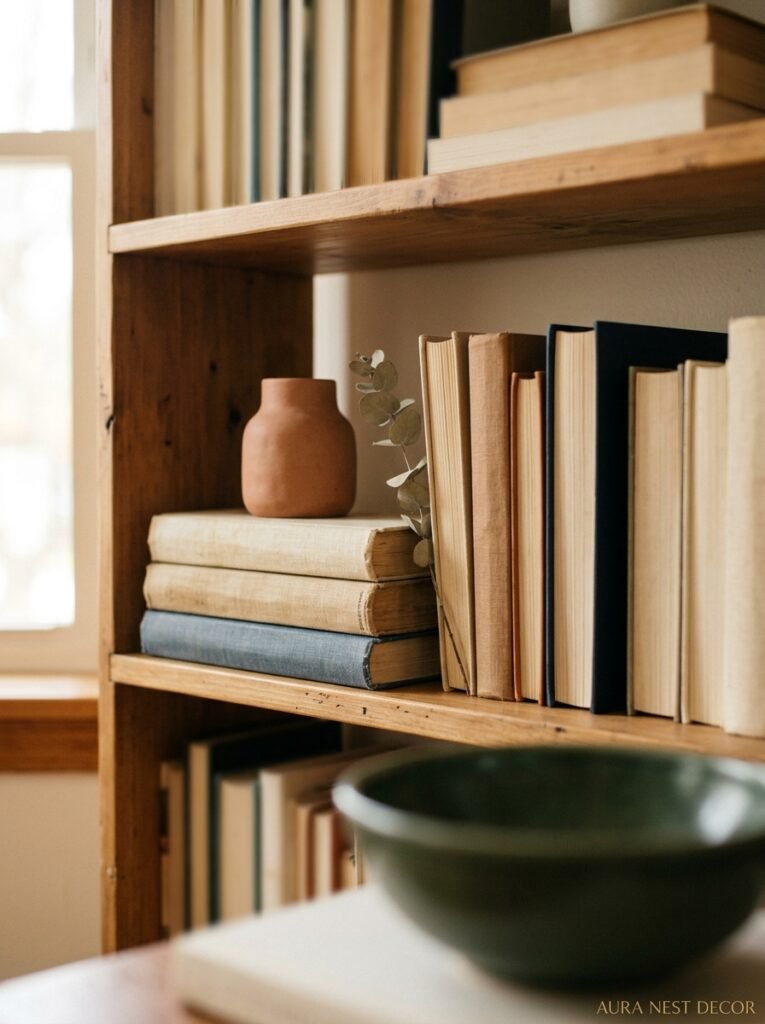
There’s a reason bookshelf styling is its own entire Pinterest category — it’s harder than it looks, and the difference between a bookshelf that looks curated and one that looks cluttered is surprisingly small. I’ve redone mine so many times. Anyway.
What finally clicked for me: books are NOT decoration. Well, they are. But they shouldn’t ONLY be books. The thing that makes a bookshelf look styled is the ratio — roughly 60% books, 40% objects. A small plant, a candle, a framed photo, a little sculptural thing you picked up somewhere. These break up the spines and create visual variety.
Also — and this sounds weird — face some books outward. Not all of them. Just a few, scattered around, showing their covers. It breaks the uniformity in a way that horizontal stacking alone doesn’t.
The color thing: grouping books loosely by color (not obsessively, just roughly) makes a shelf look a lot more intentional. Warm tones on one shelf, cooler ones on another. You don’t need to decant them by shade like a paint swatch, just roughly. It works.
“A bookshelf should look like someone interesting lives there, not like they’re about to be catalogued.”
8. Small Living Room Furniture Arrangement Rules That Actually Apply in Real Life
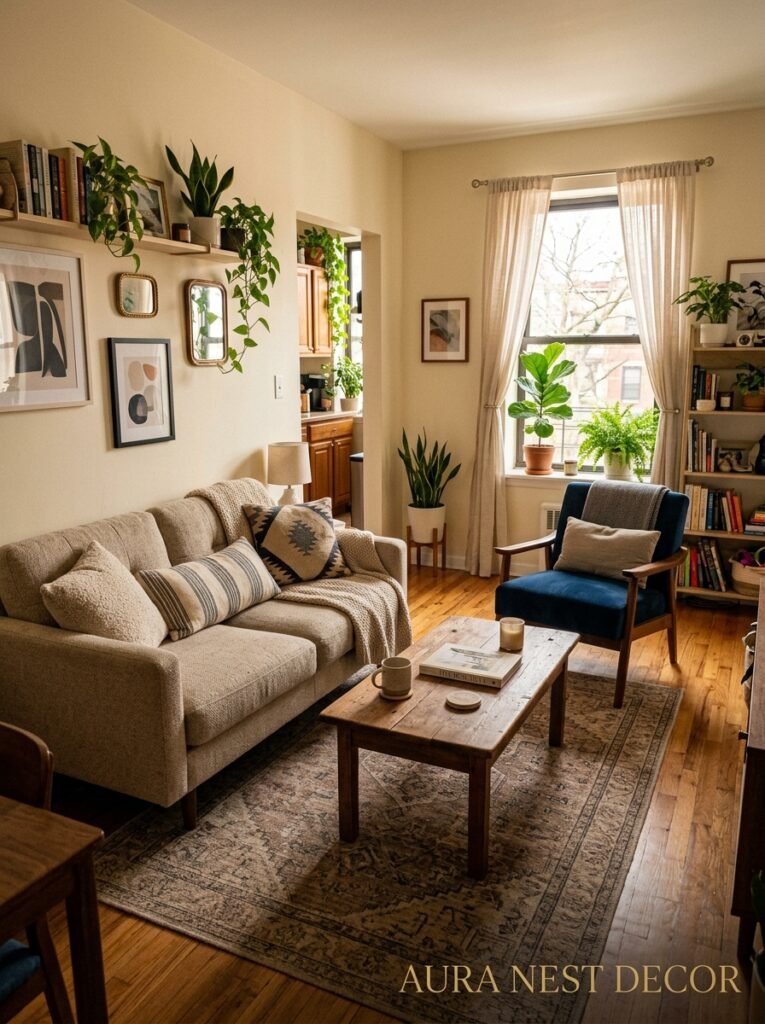
Here’s something that sounds counterintuitive but is completely true: pushing all your furniture against the walls makes a small room feel smaller. I know. It feels like it should create more space in the middle. It doesn’t. What it creates is a weirdly empty center with furniture that looks stranded.
Float your sofa. Pull it away from the wall by even six inches. Put a narrow console table or a shelf behind it if you can. Create zones rather than a perimeter. A small apartment living room with floating furniture and a defined rug zone feels like a room someone designed. A room where everything’s pushed to the walls feels like you’re waiting for a school dance.
For tiny rooms specifically — under 12 feet in either direction — the trick is making sure you have at most one large piece of furniture and then smaller, lighter pieces around it. A big sofa plus two big armchairs in a small room is too much. A big sofa plus one chair and a pair of small side tables reads as balanced. Choose your one anchor and let everything else be lighter.
Leggy furniture is your friend in small spaces. A sofa on legs, a chair on tapered legs, a coffee table that sits up a bit rather than sitting flush to the floor — you can see the floor under these pieces, which creates visual space. It just does.
9. The Color That Keeps Showing Up in Every Apartment Living Room That Looks Good Right Now
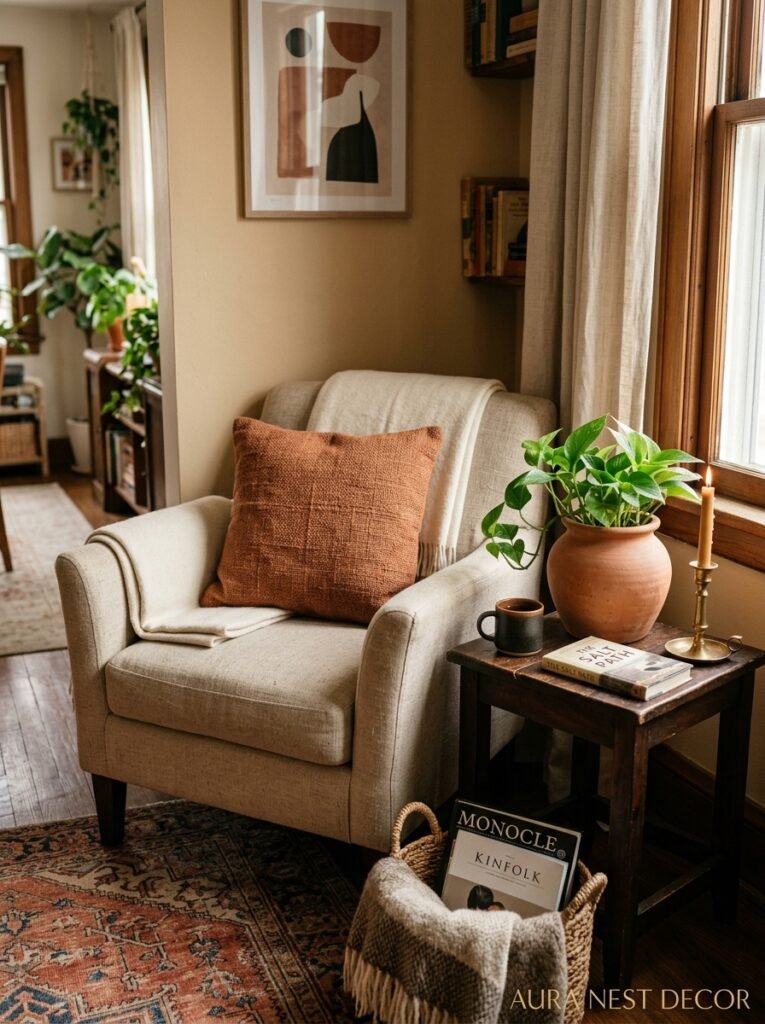
I’ve been noticing it everywhere and I finally paid attention. Warm terracotta, deep rust, dried-clay tones. Not orange exactly — something earthier, quieter. It’s in the throw pillows, in the vases, in one painted wall in apartments that are otherwise quite neutral.
It works because it’s warm without being loud. It plays beautifully against the neutrals — cream, beige, warm white, mushroom grey — that most rental apartments are already dressed in. And it has this organic quality that feels completely at home next to natural materials: rattan, jute, wood, linen.
You don’t need to commit to it in a big way. A terracotta throw. A rust-toned vase on the bookshelf. A cushion in that burnt clay tone. That’s enough for the color to register as intentional rather than accidental.
In the UK especially, I’ve seen this color show up against soft teal and sage green and honestly that combination is stunning — earthy and rich and somehow both modern and old. If you’ve got green curtains or a green wall in your apartment, a terracotta accent does something really good.
10. The Art Arrangement That Looks Pinterest-Ready Without Being Precious
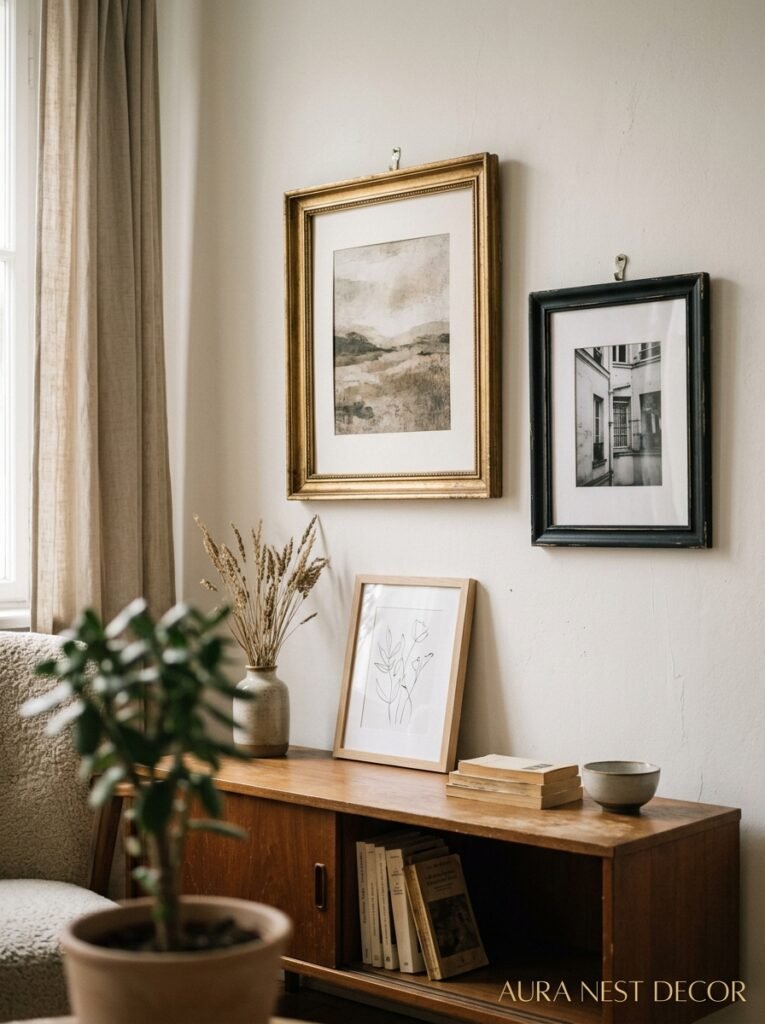
Gallery walls have had their moment — they’re not gone, but the way they’re being done has shifted. The tightly curated, evenly spaced grid of matching frames? That’s feeling a bit 2018. What’s landing now is looser. Different frame sizes. Different frame finishes. A mix of actual art and more functional-looking things — a small mirror, a pressed plant, a page torn from a beautiful magazine.
The trick to making it look intentional rather than chaotic is to pick two or three consistent elements and then let everything else vary. Maybe all the frames are either black or natural wood — but the sizes and content are all different. Or maybe the content is all botanical — but the frames are mismatched. One anchor, everything else breathes.
Floor-leaning is still very much the move for large pieces. One big canvas or framed print just leaning against the wall under a sconce or lamp. And stacking two or three smaller pieces in front of and slightly overlapping the larger one. This works in an awkward corner, next to a fireplace, behind a sofa. It looks like you styled it without trying too hard. Which is always the goal.
11. Making a Rental Apartment Feel Like It Has a Personality (When It Really Really Doesn’t)
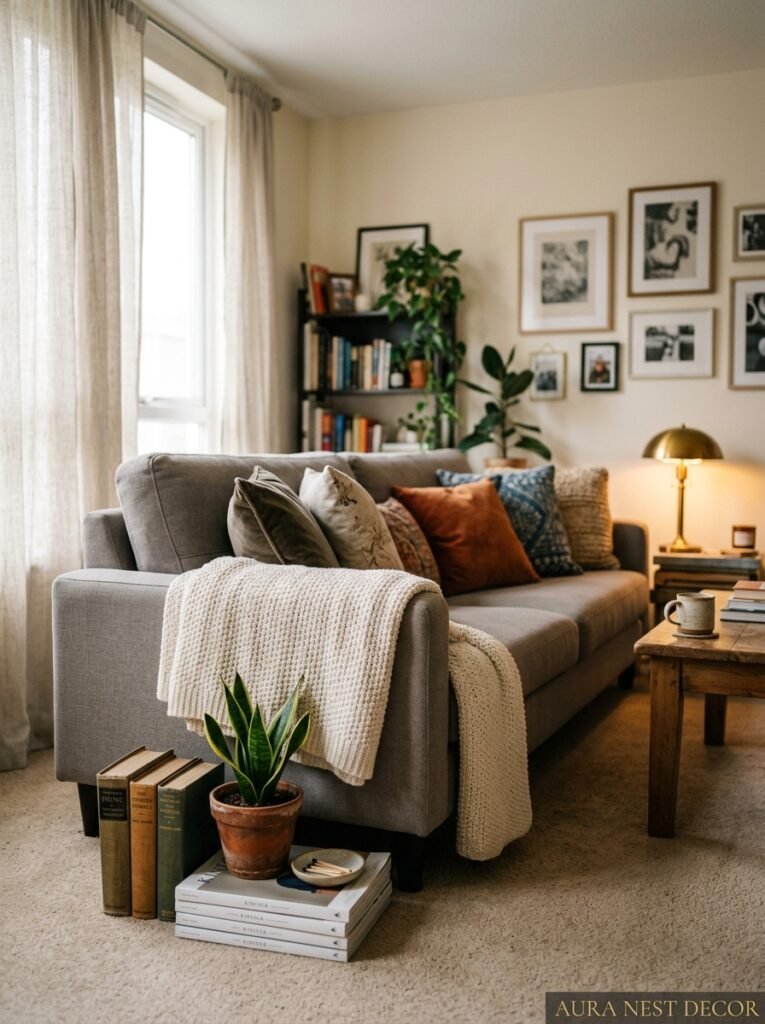
Standard rental apartment: white walls, beige carpet, chrome fittings, hollow-core doors. Zero personality. You’ve got maybe six months left on the lease and no idea what’s next. How much do you invest?
More than zero. Way more than zero, actually.
Because the thing is — the vast majority of what makes a room feel personal and alive has nothing to do with the permanent fixtures. It’s the textiles (you take those). It’s the art (you take that). It’s the books and the plants and the lamps and the rugs and the objects on the shelves. All of it is movable. None of it is wasted money.
The mistake is treating the apartment as temporary and therefore not worth investing in. You live there NOW. Your everyday environment shapes your mood constantly, in ways you probably don’t consciously track. A living room you love to come home to isn’t a luxury. It’s a really practical thing to build.
Buy the lamp. Get the rug. Hang the art with Command strips and take it all with you when you leave. The landlord gets their magnolia walls back and you take everything that made it feel like you.
12. The One Thing Every Beautiful Apartment Living Room Has That Nobody Mentions
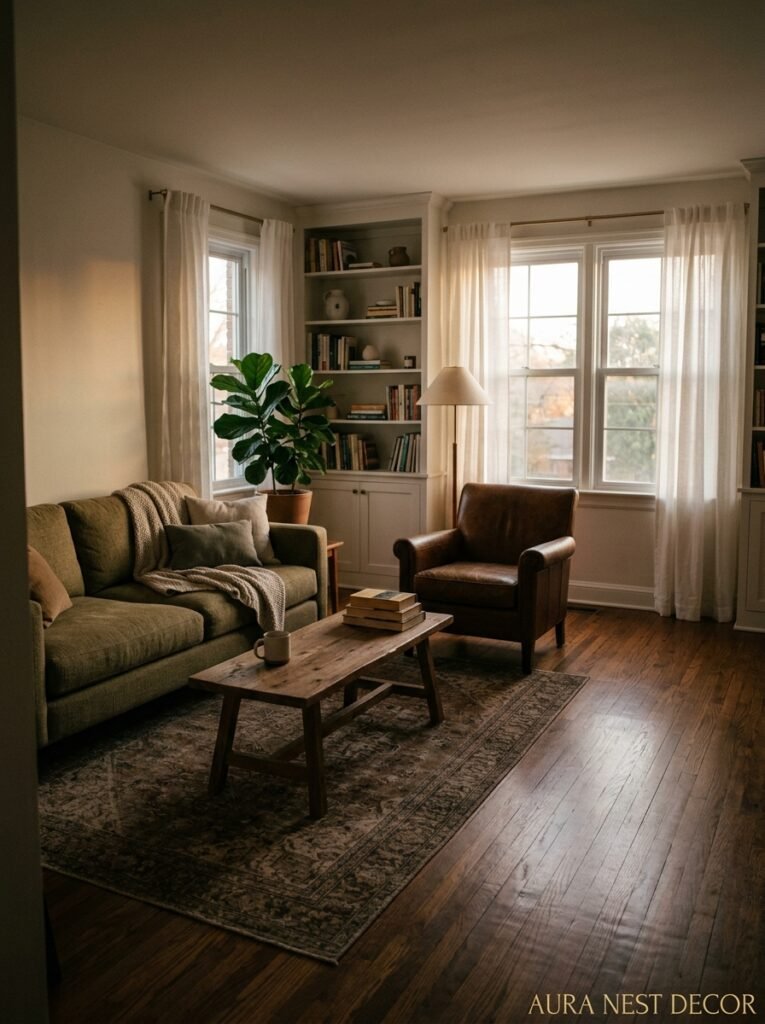
It’s not the sofa. Not the rug. Not even the light, although the light is doing a lot.
It’s something personal. One thing in the room that makes no design sense whatsoever but makes complete personal sense. The vintage tin your grandmother gave you, sitting on the shelf next to the design books. The weird abstract painting you bought for $20 at a car boot sale that somehow keeps showing up in your photo backdrops. The very specific mug you always leave on the side table without thinking about it.
The rooms that read as genuinely lived-in and beautiful have that. A trace of an actual person. Not a showroom, not an Airbnb, but someone’s HOME. And that’s something no amount of budget or Pinterest hours can fake.
You have things that are already yours. Put them in the room on purpose.
—
❓ FAQ
Q: How do I make my small apartment living room look bigger without knocking down walls? A: Float your furniture away from the walls, invest in one large rug rather than multiple small ones, and choose furniture with legs so you can see the floor underneath. Mirrors help, especially one large one rather than several small ones — place it opposite a window if you can.
Q: What’s the best way to add color to a rental apartment without painting? A: Textiles do most of the work — throw pillows, blankets, a colorful rug. Then art, plants, and decorative objects. Peel-and-stick wallpaper on one accent wall is also genuinely renter-friendly now, especially the higher-quality linen-texture versions that photograph beautifully.
Q: How do I make my living room look more expensive on a tight budget? A: Fix the lighting first — warm bulbs and layered light sources cost very little and change everything. Then declutter ruthlessly. A spare room with good lighting consistently looks more expensive than a full room with bad lighting. After that, one large piece of good art and a properly sized rug will do more than twenty small purchases.
—
💭 Final Thoughts
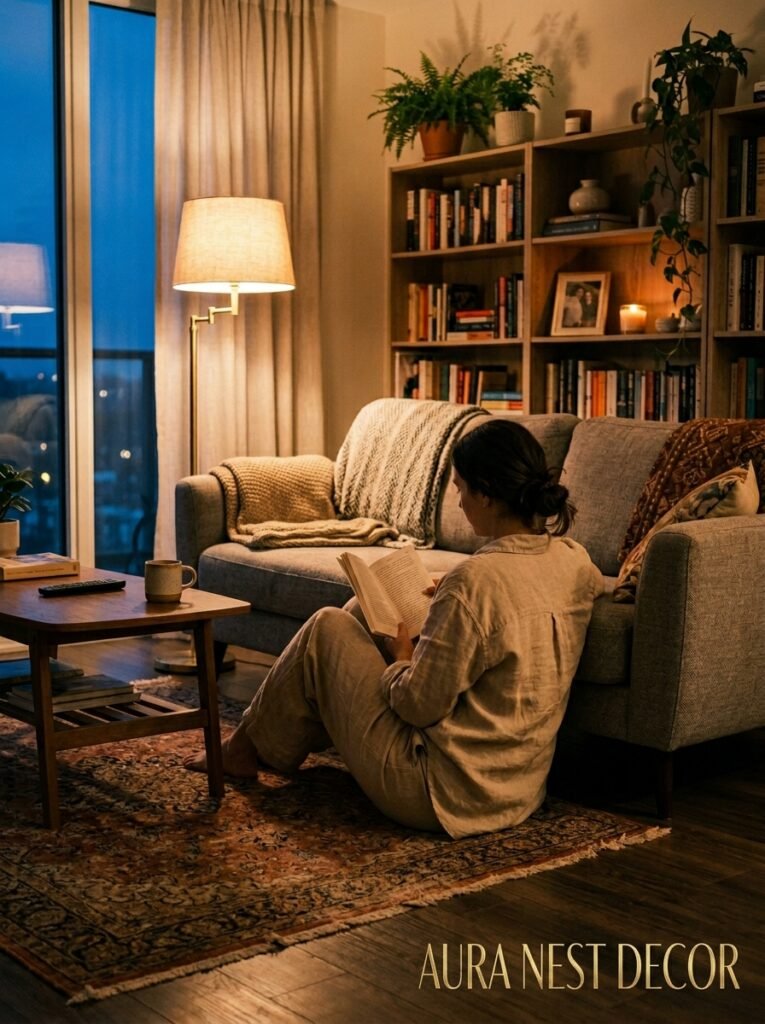
Your apartment living room doesn’t need to wait until you own a place, or until you have more money, or until everything is figured out. It needs you to make a few brave, intentional choices with what you’ve already got — and maybe one good lamp.
Every room I’ve ever loved had something slightly wrong with it. A too-low ceiling. A weird alcove. A window in the wrong place. The beauty was in what the person did with that instead of pretending it wasn’t there.
What’s the one thing in your living room you’ve been ignoring because you don’t know what to do with it?