The Boho Living Room That Doesn’t Look Like You Tried Too Hard (Even in a Tiny Space)
You walked into someone’s apartment once and just stopped. Couldn’t immediately say why. Something about the layered textures and the low light and the fact that it felt genuinely lived-in — not staged, not Pinterest-perfect in that hollow way. That’s boho done right. And here’s the thing: that apartment was probably not that big.
—
1. Why Small Rooms Are Actually Better for Boho (No, Really)
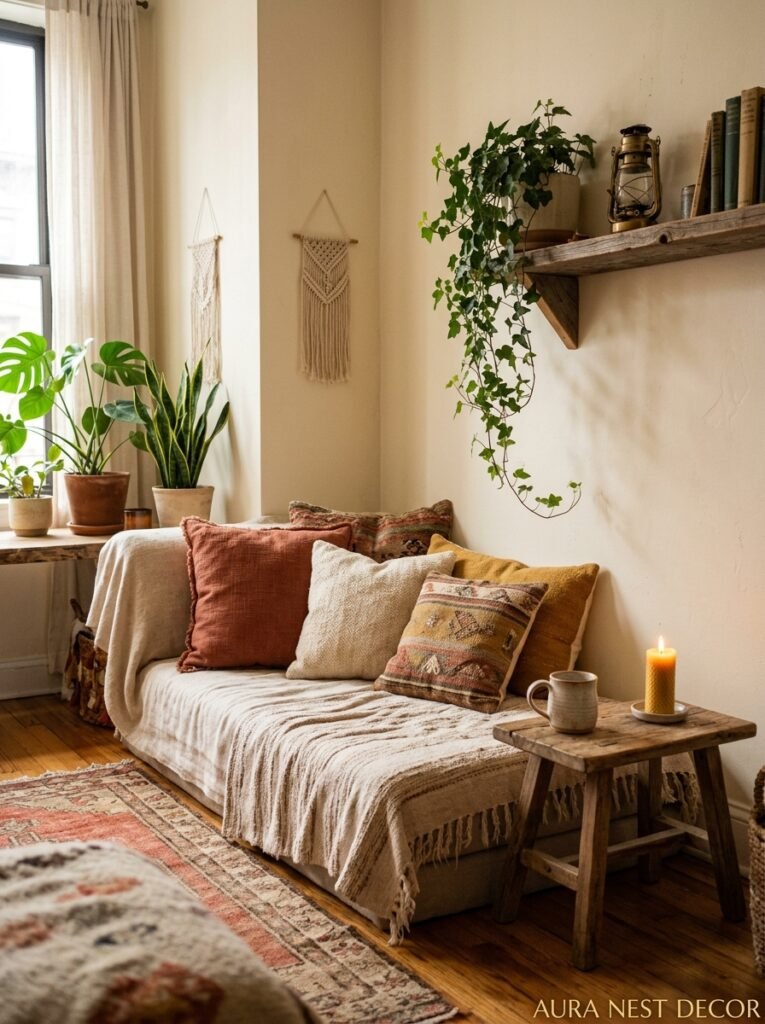
Boho thrives on intimacy. It wants you close to things — close to the woven wall hanging, close to the stacked floor cushions, close enough to smell the candle burning on the low table. Big rooms can actually swallow boho whole. The layering loses its punch when everything’s spread too far apart.
So don’t apologize for your square footage. Work it.
Small rooms force you to be intentional. Every corner matters. Every surface is a decision. And that’s kind of perfect for a style that’s all about curation over consumption — or at least, that’s the version of it I actually like. Not the version where you just buy a lot of stuff.
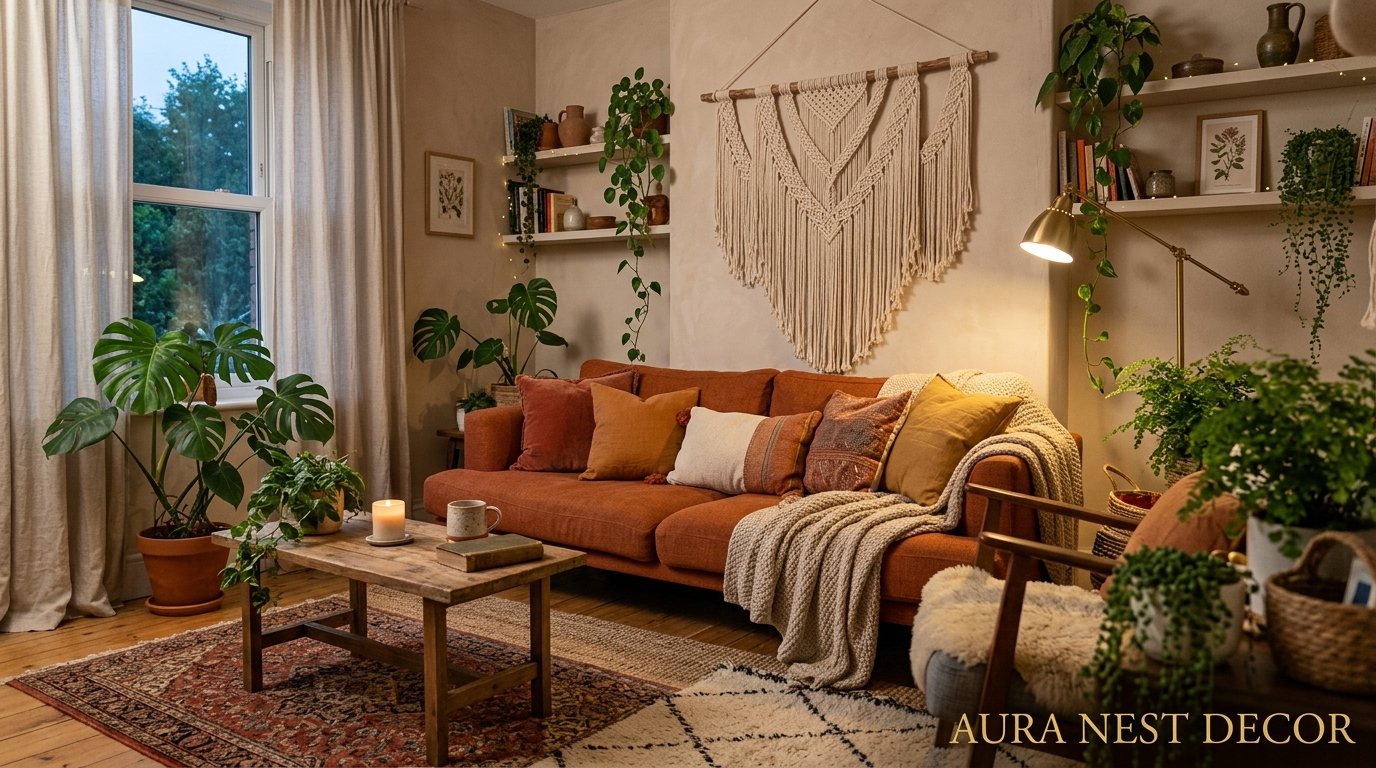
The intimacy of a compact space makes boho feel MORE immersive, not less. When you sit down and there’s a vintage brass lamp to your left, a jute rug under your feet, and a plant basically leaning into your shoulder — you’re IN it. That’s the vibe. And it’s easier to achieve when the walls are closer.
“Big rooms lose the plot. Small rooms get the whole story in one glance.”
—
2. The Floor Is Not Wasted Space — It’s Where Boho Actually Lives
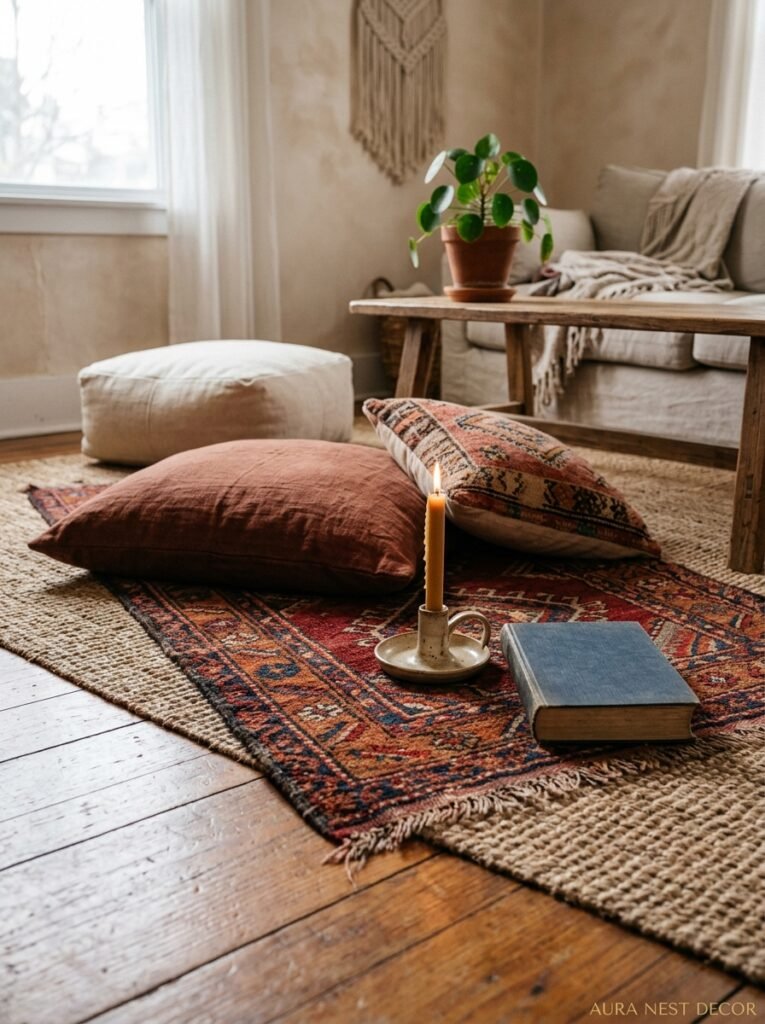
Here’s something that changes everything for a small living room: stop thinking vertically. Drop your eye line. The floor is prime real estate.
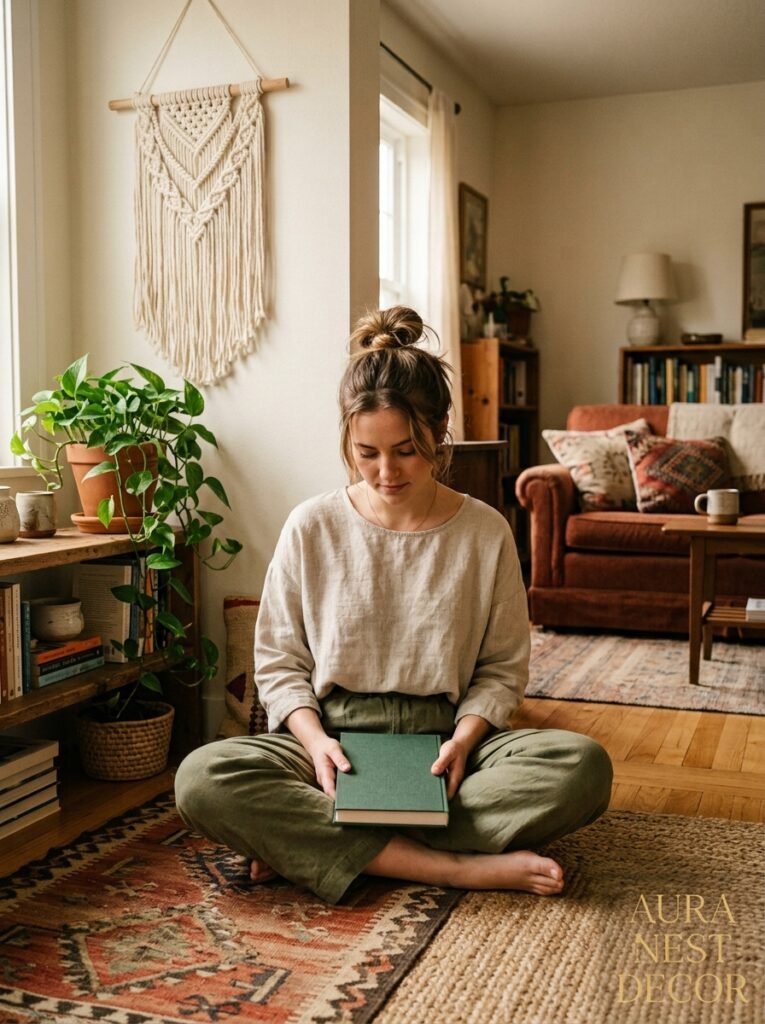
Floor cushions, low poufs, a flat stack of art books with a candle on top — this stuff does something really specific. It makes the room feel like a world of its own, with its own logic. When you lower your seating arrangement even slightly, the ceiling feels higher. The room breathes. I don’t fully understand the physics of it, but it absolutely works.
In the UK especially, where Victorian terraced houses have those tall skinny living rooms, going low is a revelation. It counterbalances the proportions. And in American apartments with the standard eight-foot ceilings, it just creates a sense of ease, like the room stopped trying.
Get a low-slung sofa if you can. Or a sofa with short legs. Pair it with one or two floor cushions in different textures — a velvet one, a woven kilim one. Not matching. Definitely not matching.
—
3. The Color That Keeps Showing Up in Every Beautiful Boho Room Right Now
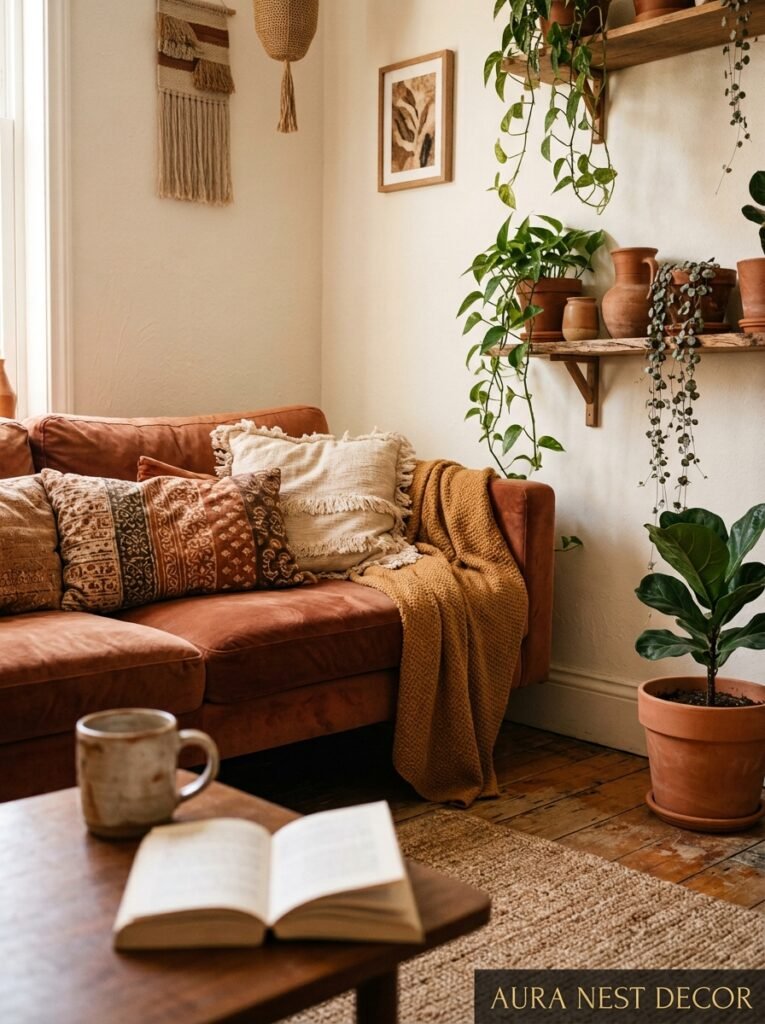
It’s terracotta, and I know you’ve seen it everywhere, but I genuinely don’t think it’s over. The reason it keeps showing up is because it does something really specific with natural light — it warms up everything around it without dominating.
In a small room, you want color that gives depth without closing things in. That’s hard to find. Terracotta walls in a tiny living room shouldn’t work as well as they do, but they give the space this cave-like, cozy, you-never-want-to-leave energy. Side note — if full walls feel like too much, a single terracotta-toned throw draped over a cream sofa does about 80% of the same work.
Other shades that are genuinely earning their place right now: dusty sage, off-white that’s almost sand, deep rust, and this murky olive green that’s hard to name but immediately recognizable. Combine two of these and you don’t need a third. Boho color doesn’t need to be complicated — it needs to feel sun-bleached and a little aged, like it’s been through something.
—
4. One Rug Isn’t Enough (But Three Might Be Too Many)
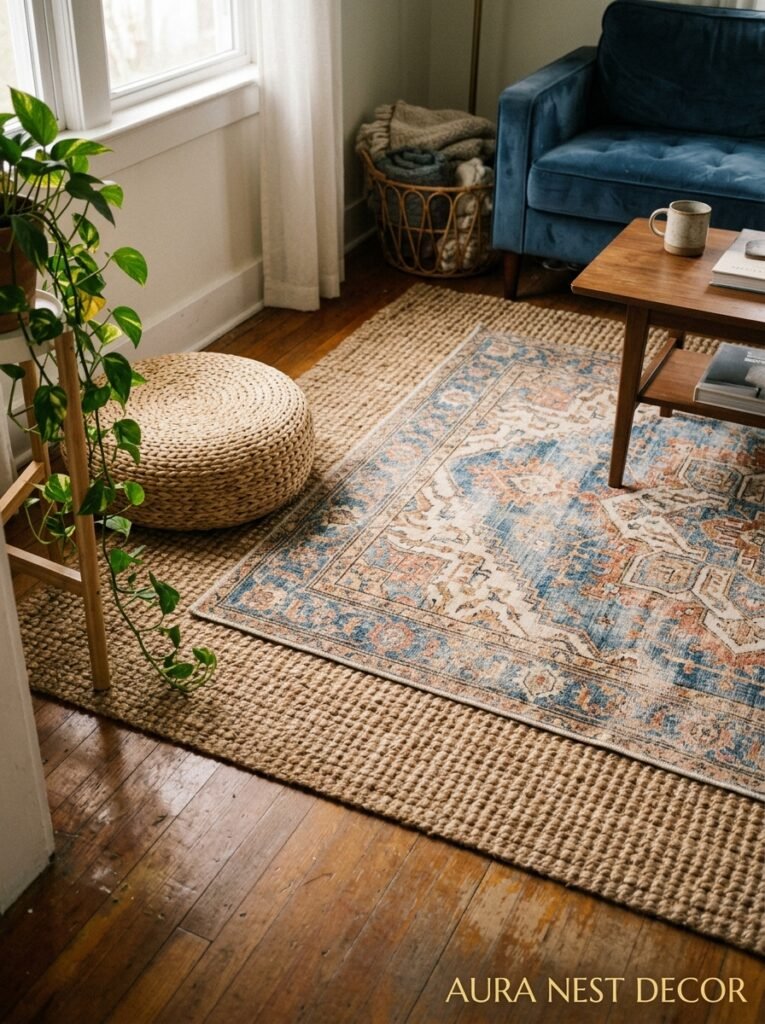
Two rugs. That’s the answer for a small boho living room. Layer a flat-woven kilim or dhurrie over a larger natural fiber base — jute or seagrass — and suddenly your floor has texture and story instead of just… floor.
The big one anchors the room. The layered one creates a focal point, usually under the coffee table or in front of the sofa. Together they define the space in a way that a single rug never quite does.
Now, in a SMALL room, you actually want the base rug to be bigger than you think. Furniture legs on the rug, not floating around it. This is one of those rules that sounds counterintuitive — why would I put a large rug in a small room? — but the alternative (tiny rug, furniture floating on bare floor) makes the room look timid and unfinished. Don’t do it.
For the layered rug on top, worn vintage is better than new. A slightly faded Persian-style kilim from a charity shop or an Etsy vintage seller will look a thousand times better than a brand new one. The wear is the point.
“A worn rug doesn’t look old. It looks earned.”
—
5. Plants That Actually Work in Low Light (Because Most Boho Rooms Don’t Get That Much Sun)
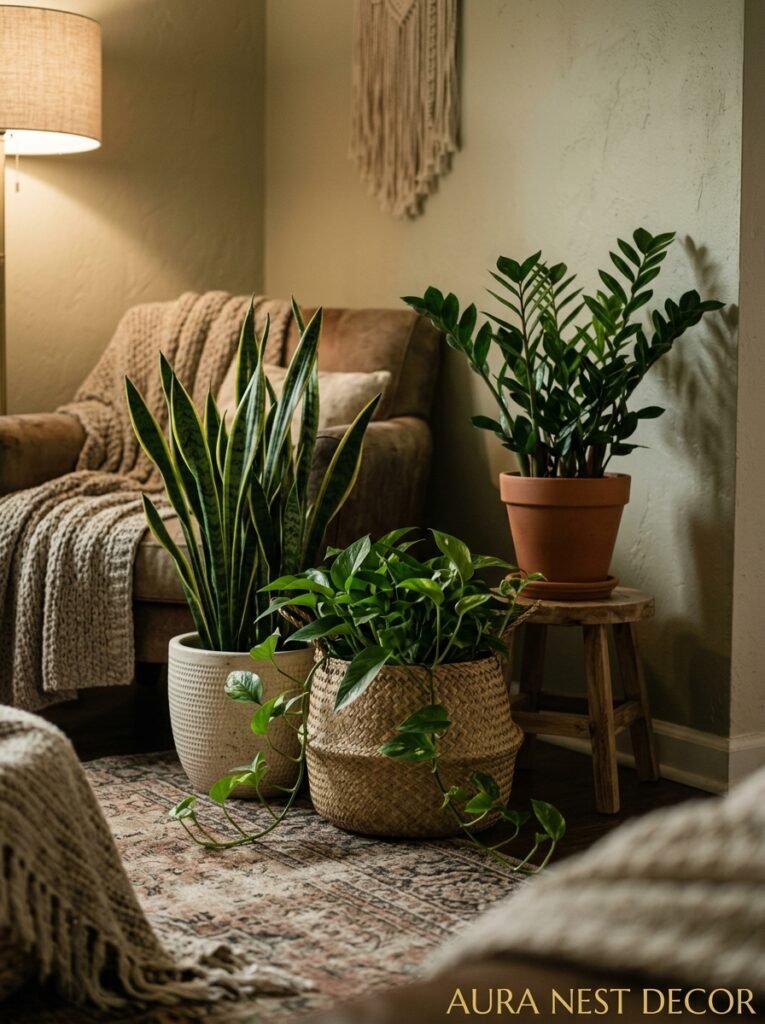
Not gonna lie — I’ve killed my share of plants. The ones that survived in my north-facing living room taught me everything I know about what actually works.
Pothos. Always, always pothos. They trail, they drape, they grow into the corners and the shelves and they genuinely thrive on neglect. Put one on a high shelf and let it hang. It’ll reach three feet down within a year and it looks INTENTIONAL, like you trained it there.
ZZ plants are doing a lot of work in boho rooms right now — those dark, waxy leaves contrast beautifully with natural linen and warm woods. They’re nearly indestructible.
But my actual vote for the most boho plant is a monstera in a terracotta pot. The big dramatic leaves, the natural imperfection of the splits, the fact that it takes up floor space and creates a genuine presence in the corner — it’s doing what a piece of furniture does, but alive. In a small room, one large plant like this often works better than five small ones scattered around. It makes a decision. The room respects that.
—
6. The Shelf Styling Approach That Doesn’t Look Like a Store Display
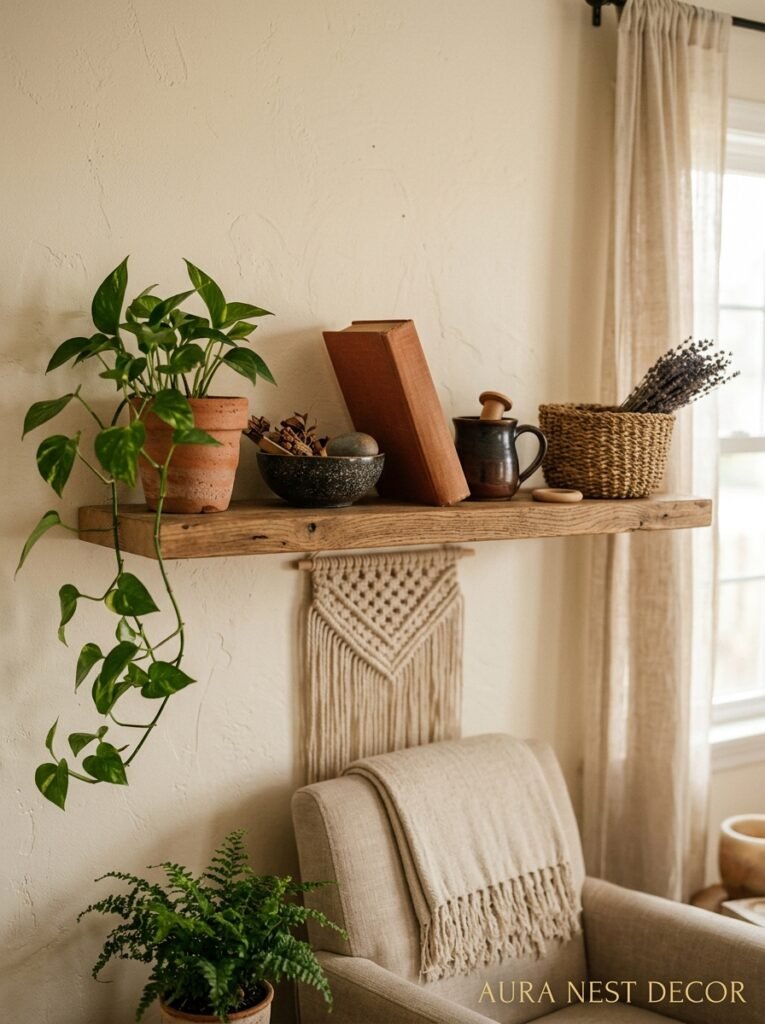
Okay, the problem with most styled shelves is symmetry. Everything balanced, spaced evenly, at the same height. It looks fine, technically, but it also looks like someone was nervous. Boho shelving is confident and a little chaotic.
Stack some books horizontally, lean others vertically. Put a small plant between them. Then a random object — a little clay bowl from a market, a piece of driftwood, a vintage bottle. The items don’t have to relate to each other. They just have to coexist.
The other thing that makes shelves look actually human: empty space. Not every inch filled. One shelf with just three objects and some deliberate breathing room looks more styled than a shelf packed edge to edge. Leave gaps. Trust them.
In a small living room, wall shelves also help enormously with storage while keeping the floor clear — which is what you need. Open shelving at eye level keeps a small room feeling airy. Go higher if you want to store stuff you don’t need to look at, or lower for things you use daily. Just don’t line every shelf the same way.
—
7. The Lighting Mistake That’s Making Your Small Boho Room Look Smaller
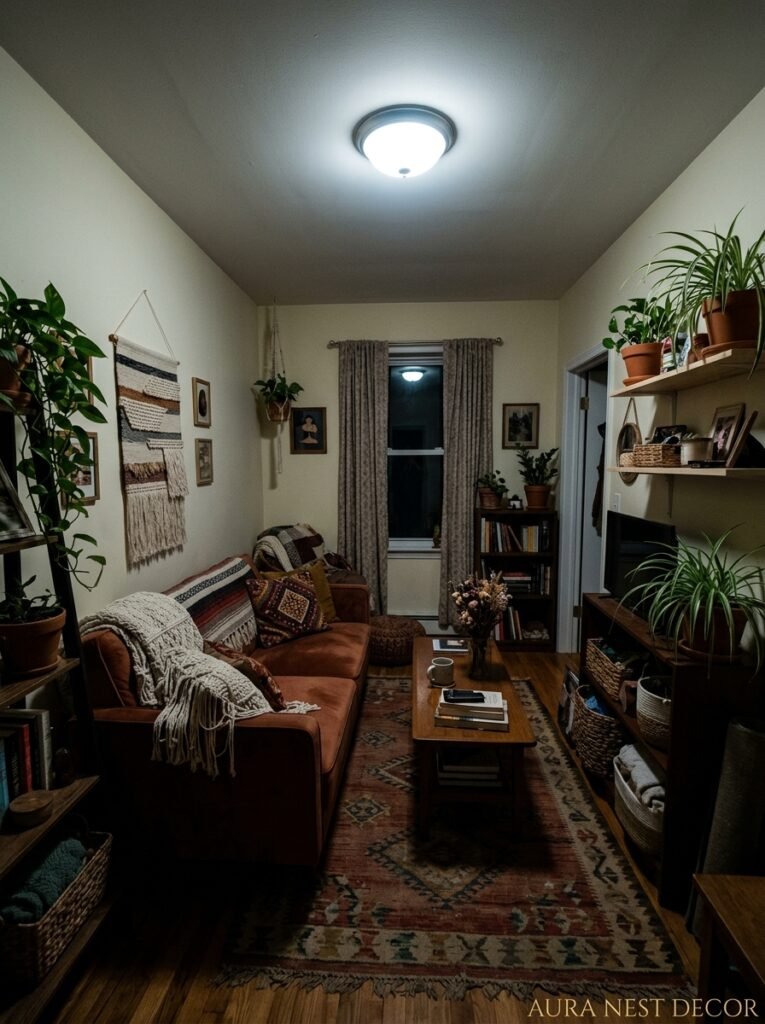
One overhead light. That’s the mistake.
I don’t care if it’s a beautiful rattan pendant — if it’s the only light source in the room, everything else looks flat and the corners go dark and the whole thing loses depth. Boho lighting is about layers too.
You want at least three light sources at different heights. Something low, like a floor lamp with a linen shade or a table lamp on a side table. Something at mid-height, like a wall sconce or a smaller pendant. And a few candles or LED candle lights on lower surfaces for that last layer of warmth.
The amber glow of an Edison bulb at 7pm next to a woven macramé hanging is genuinely one of the best things you can create in a living room. Don’t settle for cold white light in a boho space — it kills everything. Warm bulbs only. 2700K or lower. This is non-negotiable.
“The corner lamp you almost didn’t buy is doing 40% of the work in the room.”
—
8. How to Do Macramé Without Making Your Room Look Like 2015
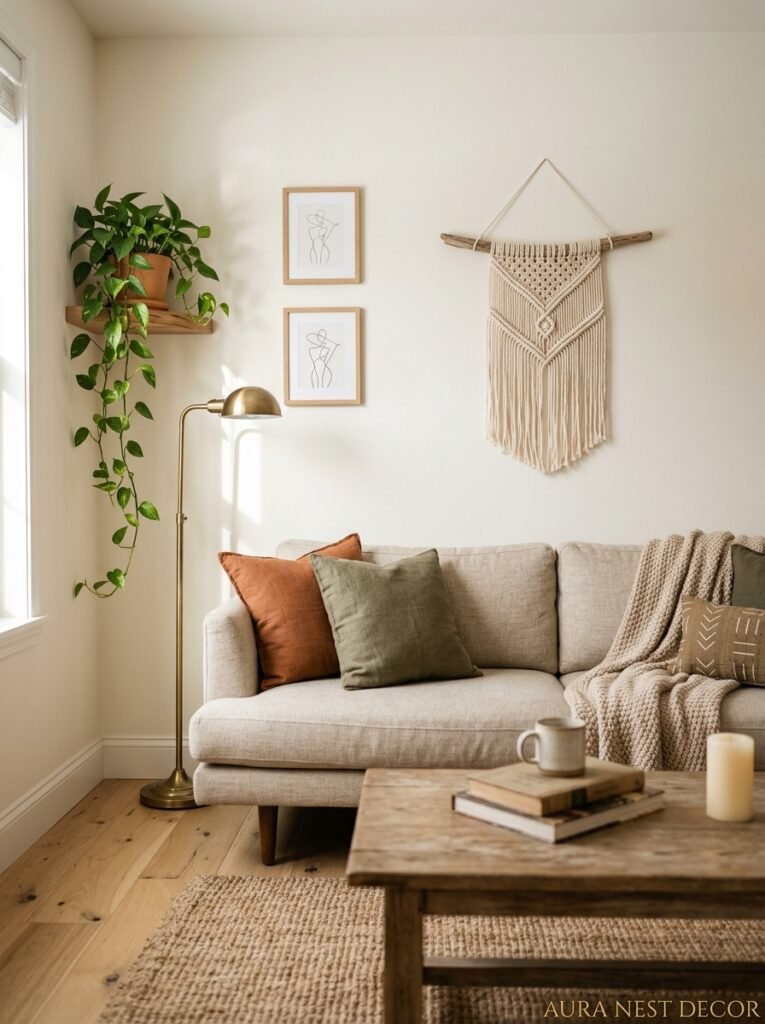
It’s back. Or it never fully left, honestly — it just got better. The macramé that’s working right now is either very large and textural as a single statement piece, or very small and simple as part of a gallery wall arrangement. The medium-sized, overly knotted, perfectly symmetrical stuff is where it starts looking dated.
One large-scale fiber art piece above a sofa is genuinely stunning in a small room because it draws the eye UP and creates a sense of height. Choose something with organic, irregular edges rather than clean geometric borders. The imperfection is what makes it feel contemporary rather than retro.
Alternatively — and this works brilliantly in UK Victorian homes with lovely high ceilings — hang a long, narrow wall hanging in a tall, slim frame of space, maybe between two windows or on a chimney breast. It uses vertical height without taking up floor space, which is exactly what you need.
—
9. The Gallery Wall Formula That Works for Any Small Wall
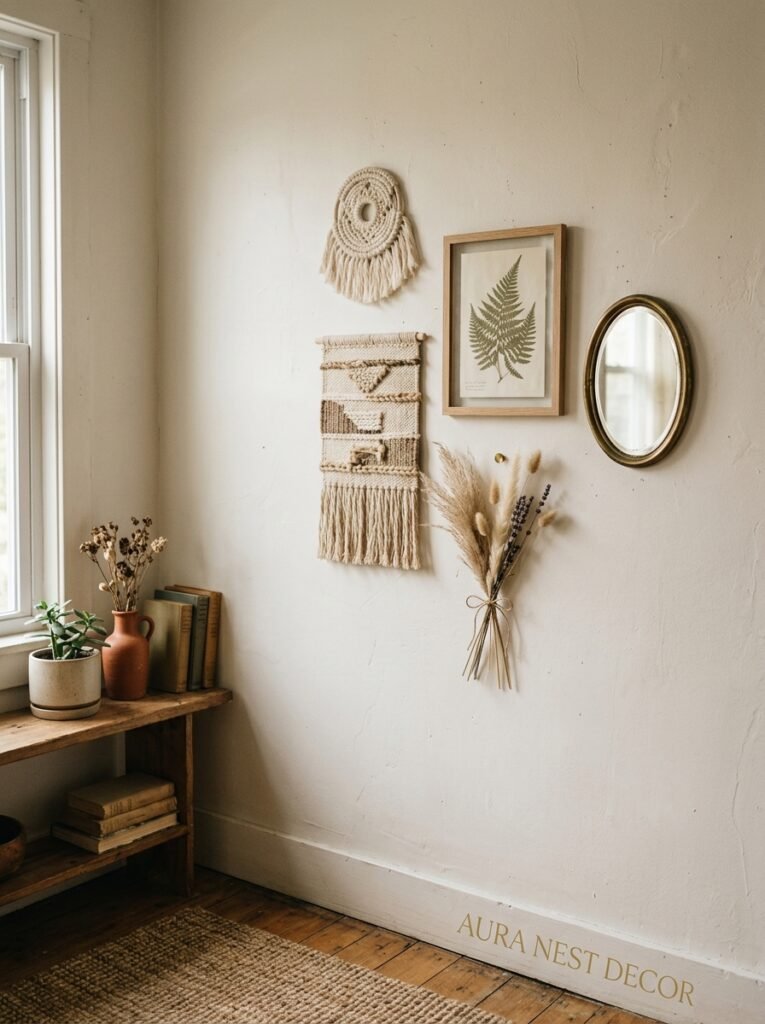
Pick one anchor piece that’s larger than everything else. Put it slightly off-center. Then build out around it, leaving more space between some frames than others — not equal gaps, irregular ones.
Mix frame styles but stay within a color family for the frames themselves: all black, or all natural wood, or all an oxidized brass/gold tone. Mixed frame colors make small walls look busy and nervous. Mixed frame SIZES and shapes are fine, good even.
The actual content of the gallery wall in a boho room should feel personal and slightly eclectic — a botanical print, a piece of abstract art, a black and white photo, maybe a small woven piece or a pressed leaf in a simple frame. None of it has to match. All of it should feel chosen, not curated-for-Instagram.
—
10. Throw Pillows: The Editing Problem No One Talks About
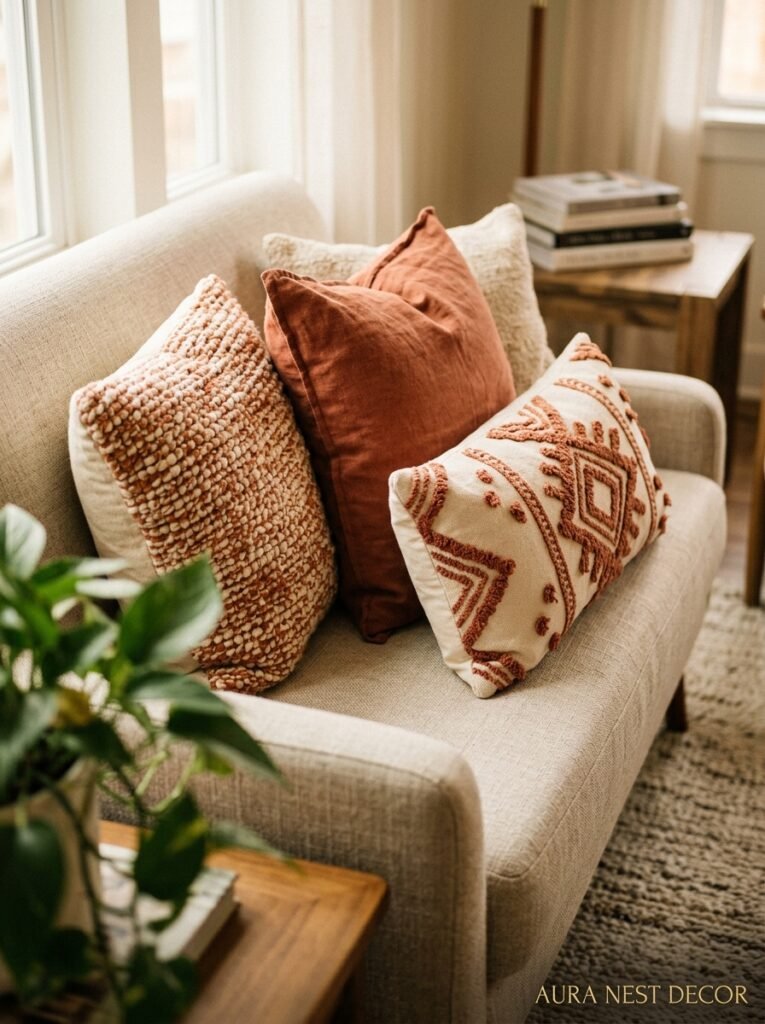
Everyone buys too many. Including me, probably.
The issue isn’t buying them — it’s not editing. A small sofa genuinely only needs three to four pillows maximum, and they should vary in size. One large (about 22-24 inches), two medium, maybe one lumbar. That’s it. Any more and you can’t sit down without moving a pile of pillows first, which immediately kills the relaxed energy you’re trying to create.
For boho specifically: texture over pattern, most of the time. A chunky knit, a Moroccan-inspired woven, a velvet in a deep warm tone — these work together without competing. If you do patterns, keep one statement pattern and everything else quieter. The patterned pillow is the loudest person in the room. It doesn’t need backup.
—
11. The One Rule That Makes Any Tiny Boho Room Feel Intentional
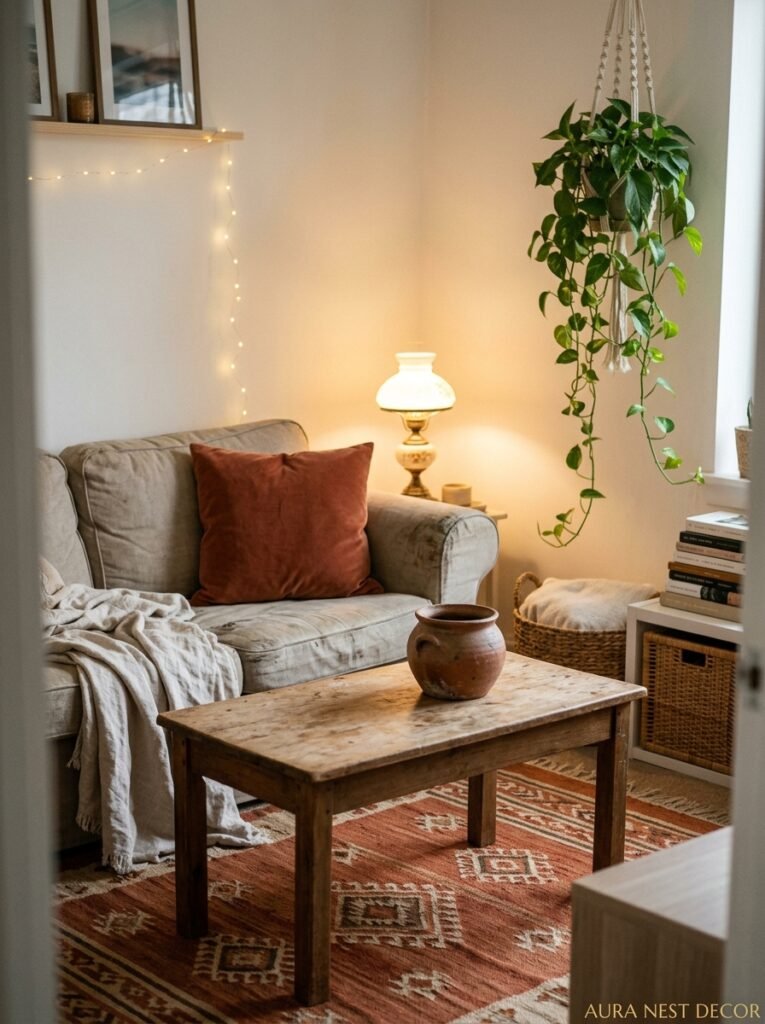
Have one thing that’s unexpected.
Not weird for the sake of it. But one thing that makes someone stop and ask about it. A vintage wooden ladder leaning against the wall holding blankets. A cluster of mismatched candlesticks on the floor in a corner. A single, oversized ceramic pot — the kind that’s clearly handmade and slightly imperfect — just sitting on the floor by the sofa.
The unexpected thing signals that the room was curated by a human with taste and opinions, not assembled from a single style guide. It’s the thing that makes the room feel genuinely personal rather than recreated from a mood board, which is ironic given how much time I spend making mood boards.
Small rooms can carry one bold, weird, surprising thing. In fact, they benefit from it more than large rooms do — because that one thing becomes the personality of the whole space.
—
12. Shopping Boho on a Real Budget (Because Not All of Us Can Afford Anthropologie Prices)
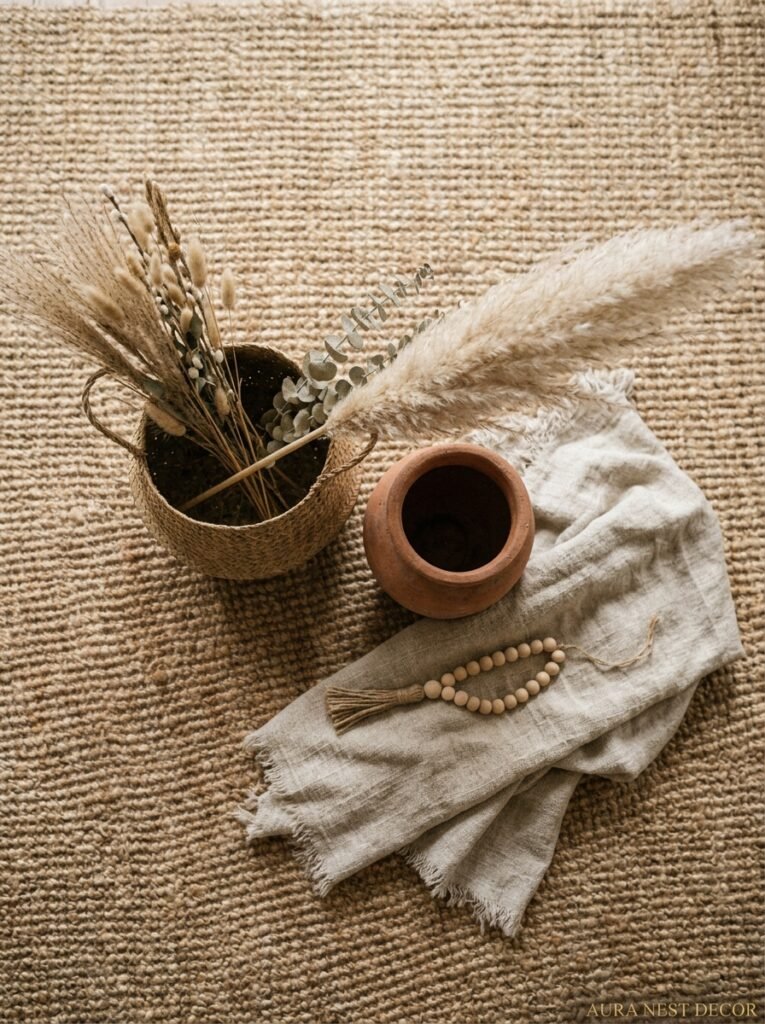
eBay and Facebook Marketplace for vintage. I cannot stress this enough. Brass candlesticks, kilim rugs, rattan side tables, wooden bowls — all of this exists in abundance on resale platforms, and it’s almost always better quality than new equivalents at the same price.
In the UK, charity shops (Oxfam, BHF, PDSA) in wealthier areas often have genuinely beautiful pieces — linen cushion covers, framed botanical prints, decorative ceramics. Worth the trip.
In the US, Goodwill Outlet stores — the ones where stuff is sold by the pound — are worth knowing about if you’re patient and don’t mind digging. Also Etsy for handmade ceramics and fiber art from independent makers, which tends to be more reasonably priced than the big retail alternatives and actually helps real people. Anyway. The point is boho specifically rewards secondhand shopping because the slightly worn, slightly imperfect, eclectic-by-necessity quality of thrifted finds is exactly what the style is built on.
You don’t need to spend a lot. You need to be choosy.
—
❓ FAQ
Q: How do I make a boho living room feel cozy without making it feel cluttered? A: The key is editing. Boho isn’t about having a lot of stuff — it’s about having the right stuff, placed with intention. If something doesn’t add texture, color, or story, it probably doesn’t need to be there. Clear surfaces aren’t un-boho. They’re breathing room.
Q: What’s the best boho style for a small UK Victorian terraced house living room? A: Lean into the architecture. High ceilings are perfect for tall fiber art and hanging plants. Tiled or wooden floors are a gift — layer rugs over them. Keep furniture low to counterbalance the height, and use the chimney breast as your main feature wall rather than fighting it.
Q: Can boho work with rented apartments where I can’t paint the walls? A: Absolutely. A large-scale wall hanging or gallery arrangement covers a lot of wall and transforms the room visually without a single nail hole that matters. Rugs and low furniture do more than wall color anyway, honestly. Removable peel-and-stick wallpaper has also gotten genuinely good in the last few years if you want to commit a little more.
—
💭 Final Thoughts
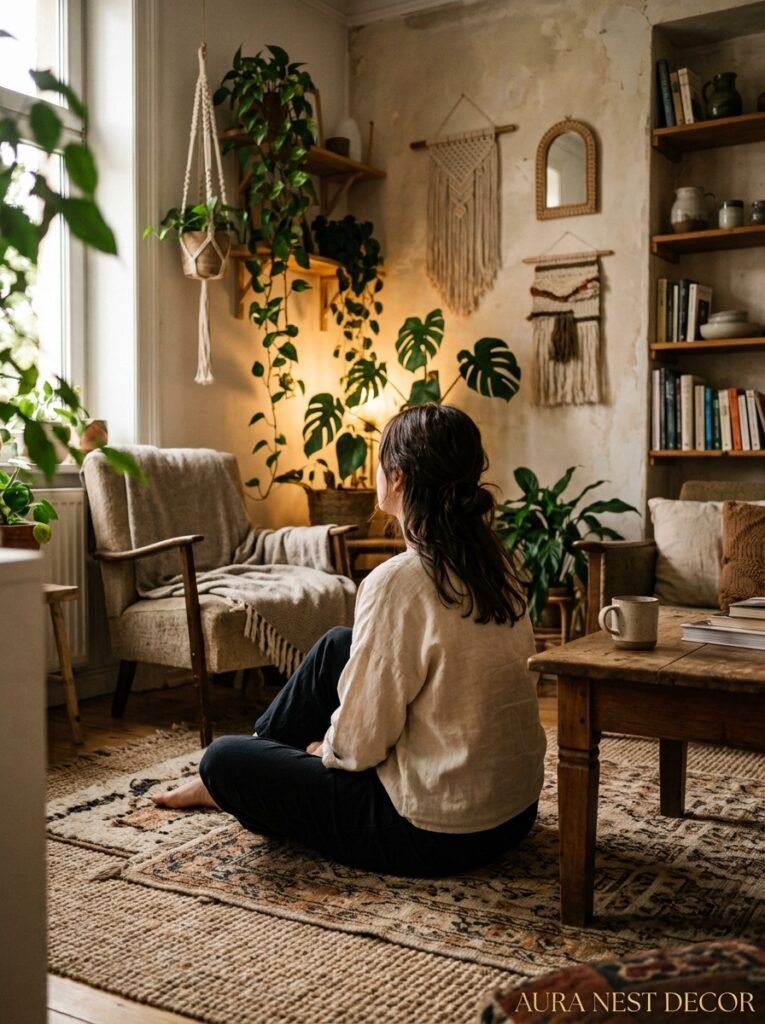
The best boho rooms I’ve ever seen had one thing in common: they didn’t look like someone’s idea of a boho room. They looked like someone’s life, expressed through objects they loved enough to keep. Small spaces just make that story easier to read.
Start with what you already own. Edit it. Add one thing at a time. What would you put in a room if you knew no one else was going to photograph it?