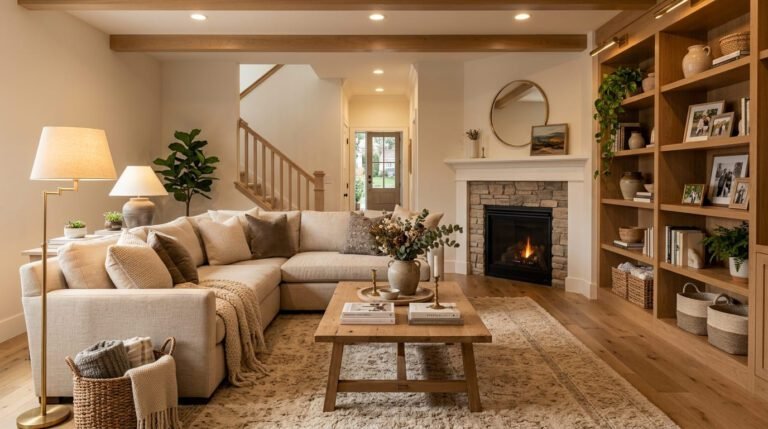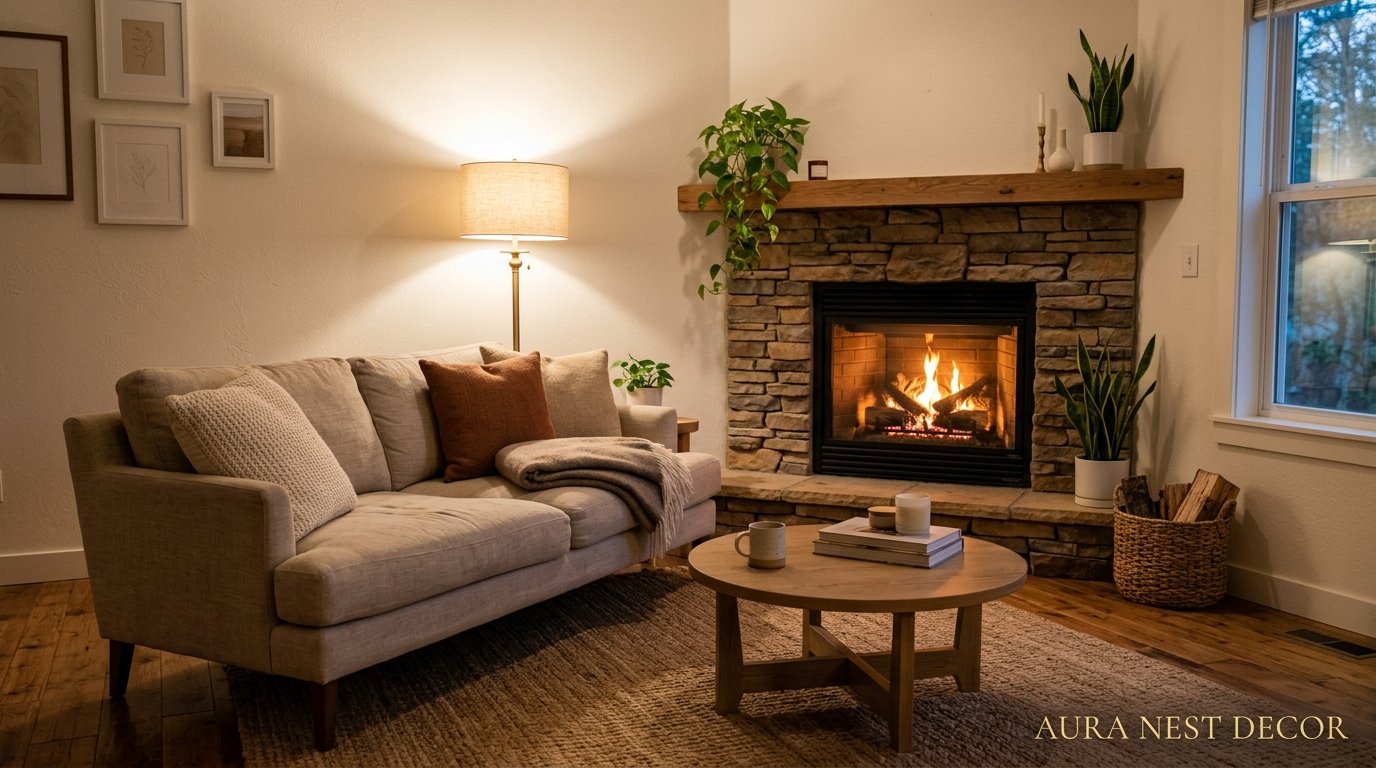
The Corner Fireplace Living Room That Made Me Rethink Everything I Knew About Layout
You walk into a room and something feels different. The furniture doesn’t face the obvious wall. The eye travels somewhere unexpected. And then you see it — the fireplace, tucked into the corner, doing something no center-wall fireplace ever could.
—
1. Why Corner Fireplaces Make Decorators Actually Nervous (And Why That’s the Point)
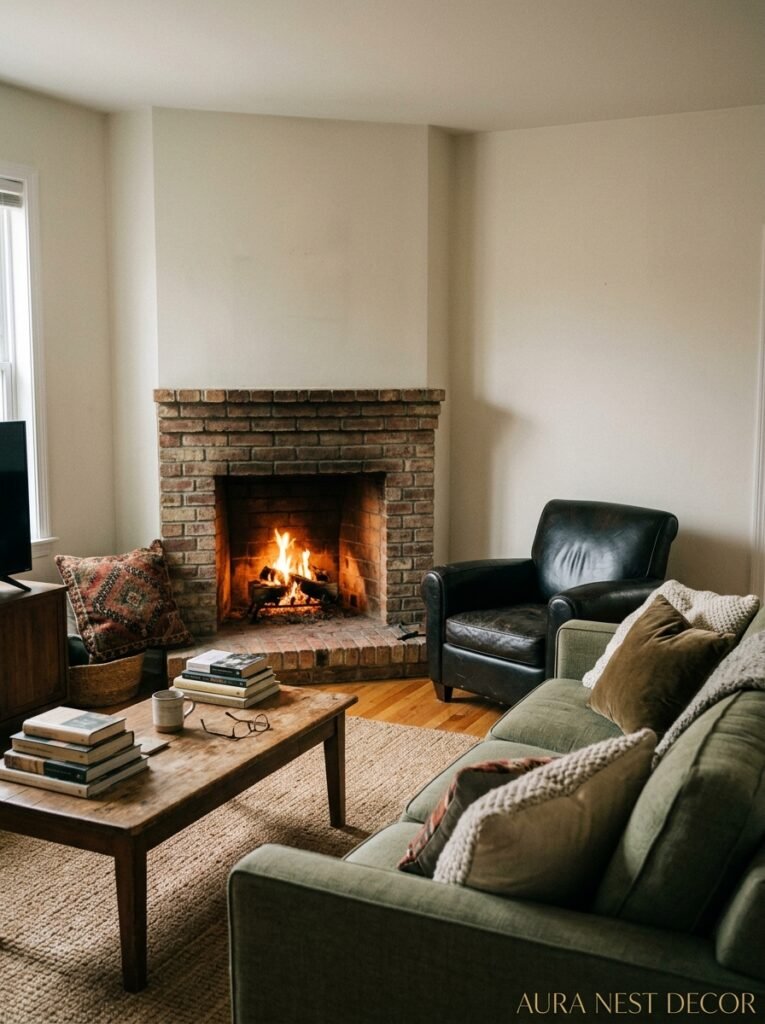
Here’s the thing nobody tells you when you’re shopping for a home or renovating one: a corner fireplace is genuinely harder to work with than a straight-wall one. And that’s exactly why so many people get it wrong, and why the ones who get it RIGHT look absolutely incredible.
A traditional fireplace sits flat against a wall. You put a sofa across from it. Done. The room basically arranges itself. But a corner fireplace? It demands that you think diagonally, which is not how most of us were taught to think about rooms. We’re wired for parallel lines. Right angles. Things that line up neatly.
A corner fireplace doesn’t care about any of that.
What it DOES do is create this incredibly dynamic focal point that draws your eye from anywhere in the room. You don’t have to be sitting directly in front of it to feel connected to it. That’s actually rare. Most fireplaces are generous to one seat, maybe two. A corner fireplace can warm the whole room, visually and literally, because it radiates outward into the space instead of just projecting from one flat surface.
The nervousness designers feel? I think it’s healthy. It means they’re taking it seriously.
—
2. The Diagonal Rule That Changes Everything About Corner Fireplace Layouts
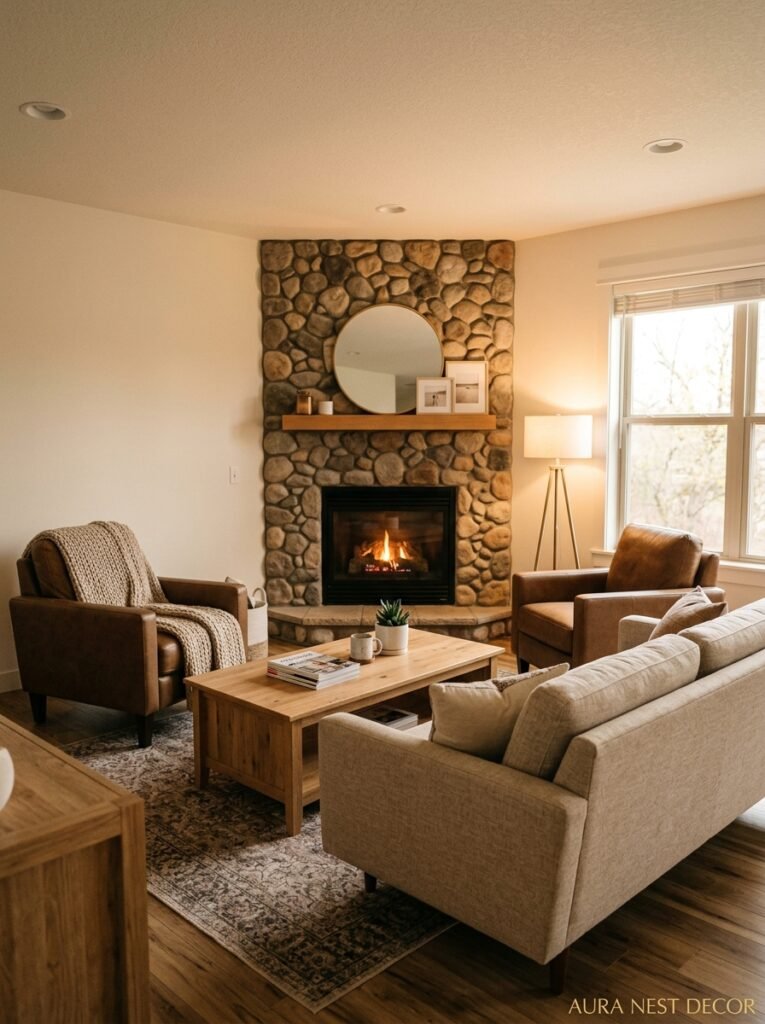
Forget what you know about furniture placement for a second.
With a corner fireplace, your sofa does not sit parallel to the wall. It sits at an angle — or it faces the corner directly. The trick is that you’re creating a conversation zone that treats the fireplace as the apex of a triangle, not the backdrop of a line. Pull your main sofa on a slight diagonal toward the fire. Then bring in an armchair or a loveseat to flank it. Suddenly the whole room exhales.
I’ve seen people fight this for years. They keep trying to push everything back against the walls because it “feels safer.” The room ends up looking like a waiting room. When you angle in toward a corner fireplace, the space actually feels bigger, not smaller, even though you’re technically pulling furniture away from the walls. It’s counterintuitive and it WORKS.
The one rule I’d give anyone: draw an imaginary line from the center of your fireplace to the center of your main seating. That line is your room’s spine. Every other piece of furniture should support it or respond to it. Don’t fight it.
British homes especially — those Victorian and Edwardian terraces with the narrow living rooms — sometimes get a corner fire tucked in the back corner, and honestly it’s a gift. It frees up your longest wall for something else entirely.
—
3. The Mantel Problem (And the Surprisingly Good Solutions Nobody Posts About)
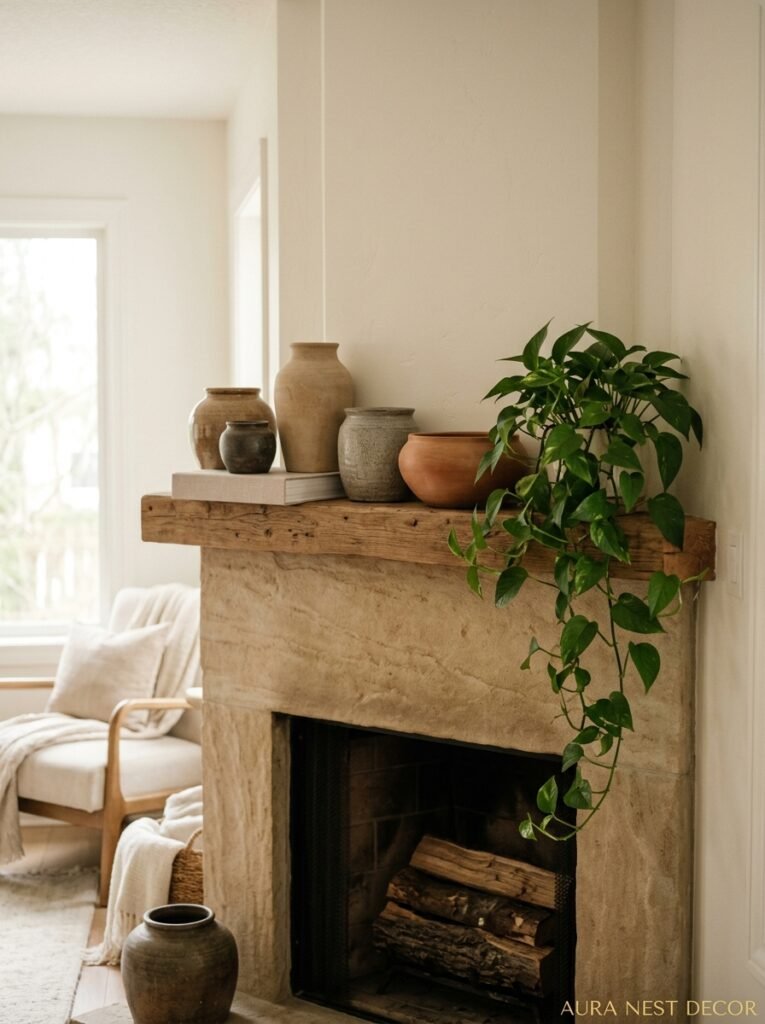
Corner fireplace mantels are a specific kind of puzzle.
A standard mantel sits flat, projects forward, gives you a nice shelf to style. A corner mantel wraps — and that’s where people freeze up. What do you put on it? How do you style something that exists on two planes at once?
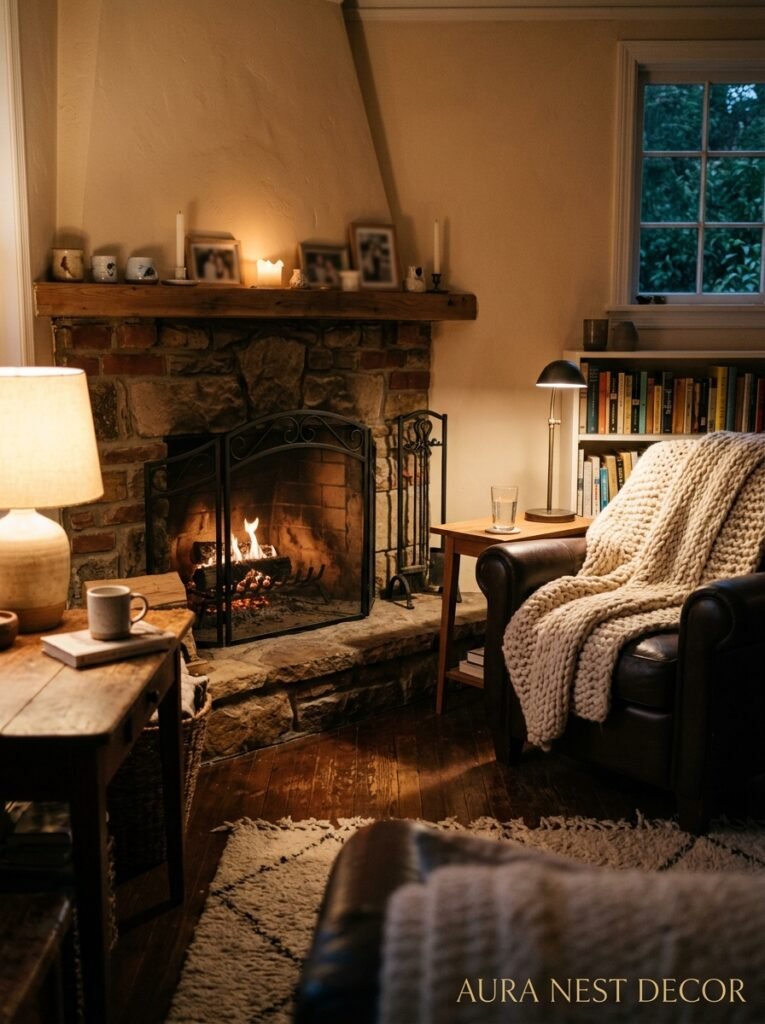
First: don’t try to style both sides equally. That’s the mistake. Pick your dominant side, the one most visible from where people usually sit, and treat that as your primary display surface. The other side gets one thing, maybe two. A small plant. A candle. Let it breathe.
For the actual mantel objects, think about vertical interest on a corner piece more than you would on a flat one. A tall vase, a piece of artwork leaning against the wall above it, a mirror angled to catch the room — these work beautifully because they pull the eye UP and outward, which is what you want. You’re basically working with the corner to create a sense of depth that a flat mantel just can’t do.
Oh, and the over-mantel mirror question. Yes, usually. But the angle matters. A square mirror centered above a corner fireplace can look a bit awkward. Try a tall rectangular one, or better yet, lean a large piece of art rather than hanging anything at all. Something about the lean feels intentional on a corner fireplace in a way it sometimes doesn’t elsewhere.
—
4. What the Best Corner Fireplace Rooms Have That You Can’t Buy at a Furniture Store
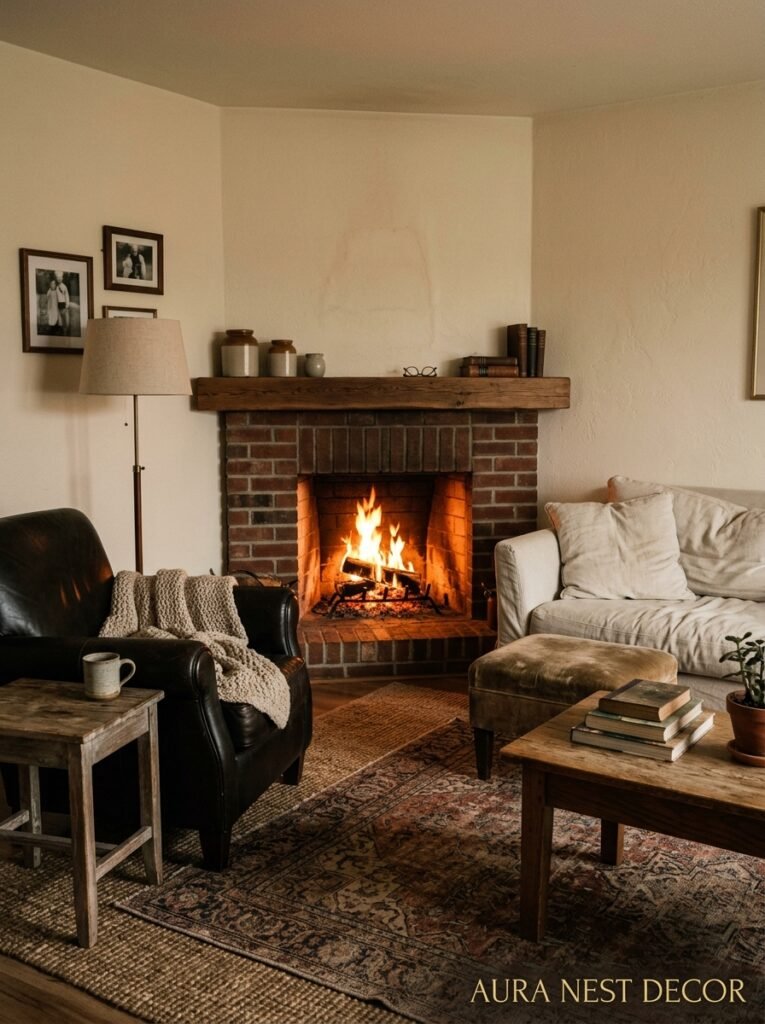
It’s a feeling more than a thing.
The rooms that photograph beautifully, the ones that get repinned hundreds of thousands of times — they all have this quality of settledness. Like the furniture has always been there and could never be anywhere else. And that quality comes from one decision made early: committing to the corner as the center of gravity.
A lot of people hedge. They put the TV on the corner wall near the fireplace, then face the sofa toward the TV instead, and now the fireplace is just… there. Decorative. Ignored. The room loses its whole soul.
“A corner fireplace only works as a focal point if you actually let it be one.”
The rooms that get it right have decided what the room is FOR. It’s for sitting by the fire. Everything else — the TV, the bookcase, the side tables — serves that purpose rather than competing with it. Sounds obvious. Almost nobody does it.
—
5. The Lighting Secret That Makes a Corner Fireplace Look Ten Times Better at Night
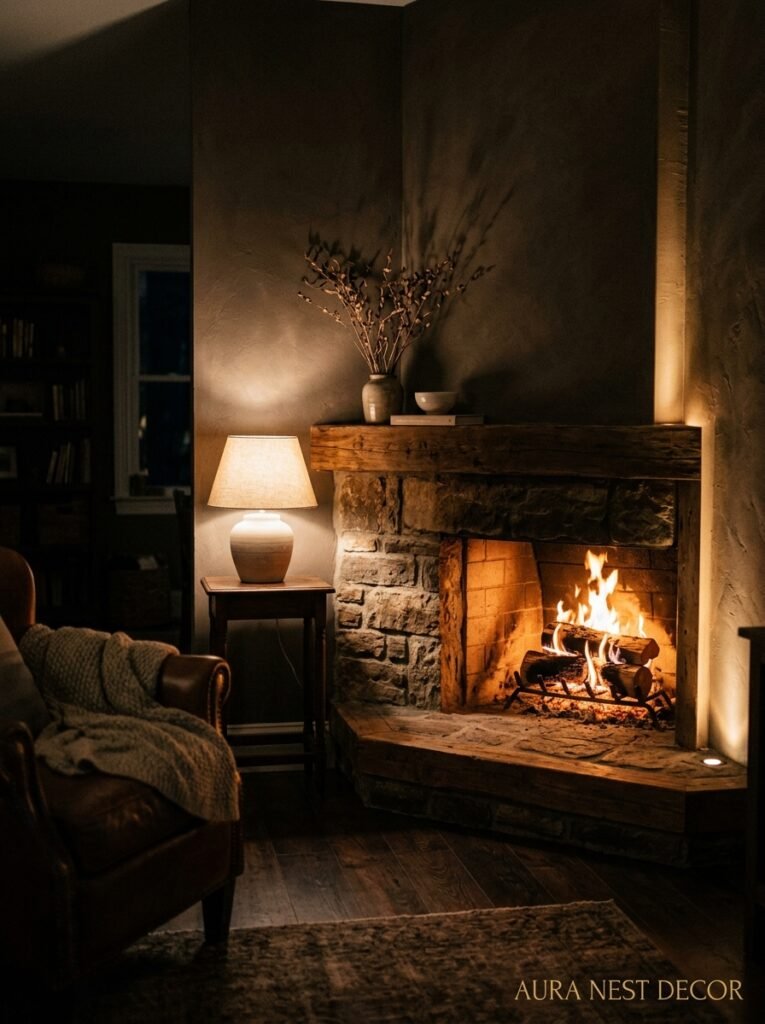
Overhead lighting is the enemy of the corner fireplace.
I know that’s a strong statement. But hear me out. When you’ve got a warm fire flickering in the corner and a flat LED ceiling light blazing overhead, the fire becomes invisible. It’s outcompeted. The room loses all its atmosphere and you’re left wondering why your supposedly cozy fireplace doesn’t feel cozy at all.
The fix is layered lighting, and specifically, pulling it low and warm. A floor lamp behind or beside the main sofa. A table lamp on each side table. Maybe a small spotlight directed at the mantel if you want to show off your styling. The goal is to get your ambient light sources down at eye level or below, so that when the fire’s going, it becomes the brightest thing in the room.
In terms of bulb color — 2700K is the sweet spot. That’s the amber-gold tone that looks like candlelight. 3000K starts to feel a bit clinical. 2200K can feel almost orange in the wrong space, but next to a real fire? It’s stunning. Try it once and you’ll never go back to cool white bulbs in a living room.
British readers: if you’ve got a period property with picture rails and you’re not using them to hang pendant lights or wall sconces at mid-height, you’re leaving so much atmosphere on the table. Just saying.
—
6. The Color Conversation You Need to Have With a Corner Fireplace Wall
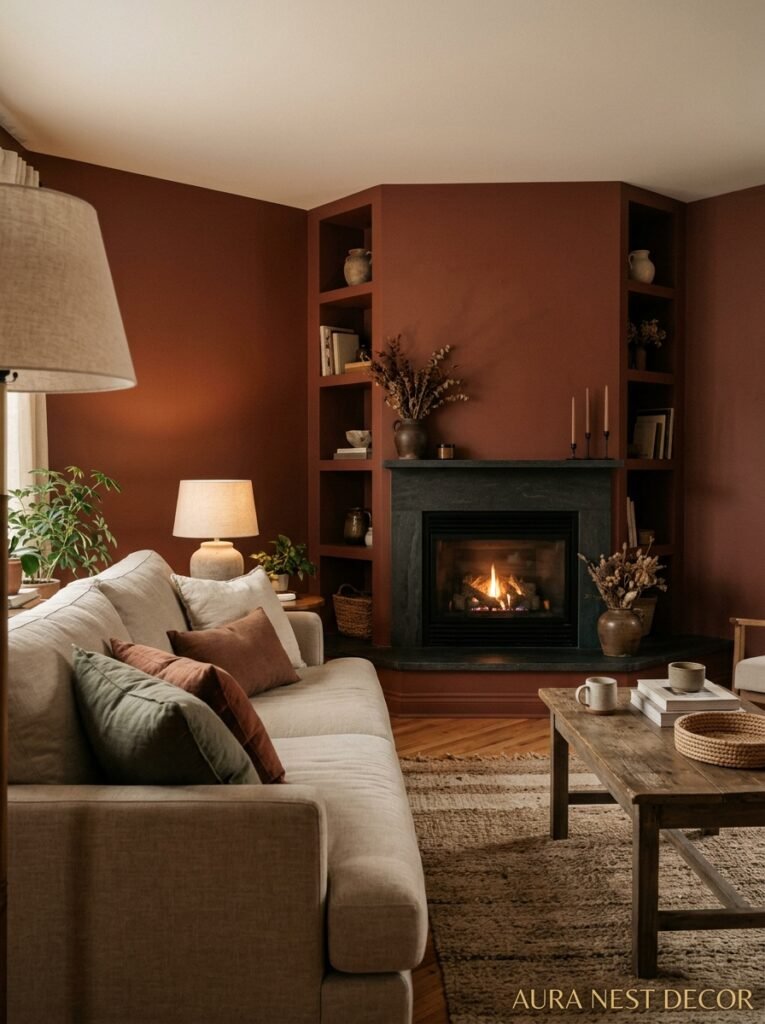
Two walls meet in a corner. Two walls that might be completely different colors in a painted room, or completely the same. This is where people either nail it or accidentally create an optical illusion that makes the room feel lopsided.
My take, and I’ll stand by it: paint both corner walls the same color, always. Even if the rest of the room is a different shade. Even if it’s just the same shade in a different finish. When those two planes are unified, the corner reads as a single architectural feature. When they’re different, your eye keeps trying to figure out where the room “starts” and it never settles.
The colors that photograph best on corner fireplace walls are surprisingly dark. Deep olive. Charcoal. That dusty terracotta that’s been everywhere lately. Dark walls behind and around a fire don’t make a room feel smaller — they make the fire glow like something alive. The contrast is everything.
And if you’re renting or just not ready to commit to dark walls, a warm white with a hint of yellow (not a stark, bright white) does the same job on a smaller scale. It catches the firelight without fighting it.
—
7. When the TV Has to Live in the Same Room as the Corner Fireplace
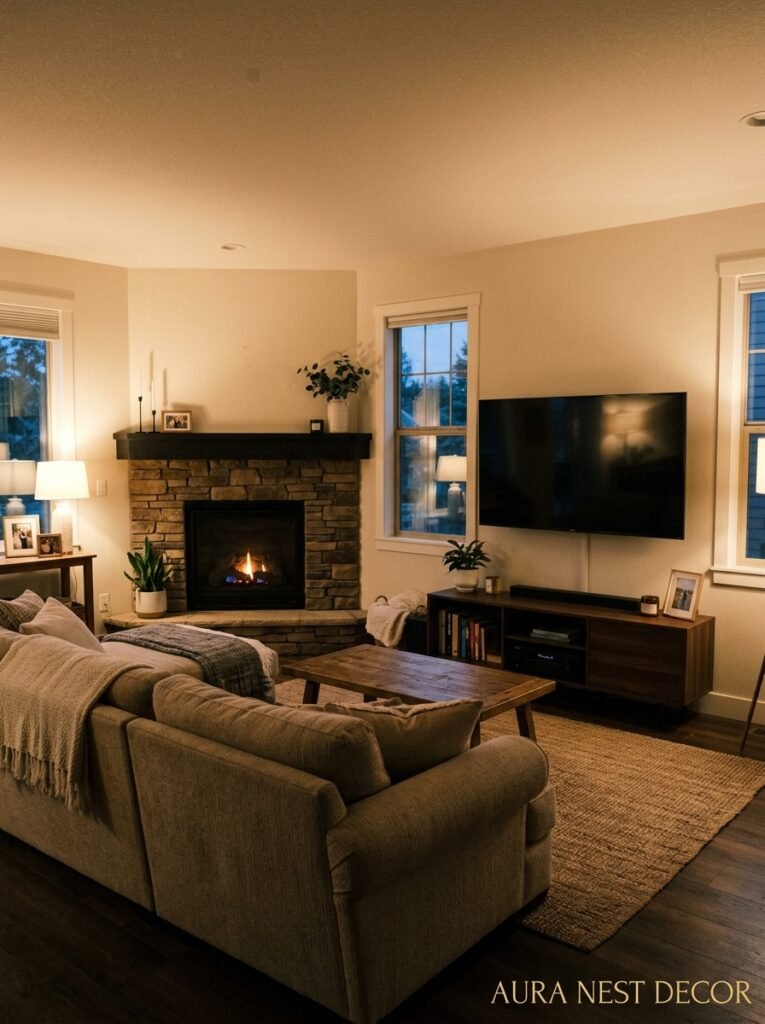
This is the question I get asked more than any other. Where does the TV go?
Because the honest answer is: not directly next to the fireplace on the corner wall. That arrangement forces you to choose between looking at the TV and looking at the fire, and you end up doing neither comfortably. Neck craning. Weird angles. Everyone in the house quietly resenting the room layout but nobody saying why.
There are a few options that actually work. A media console on the wall OPPOSITE the fireplace — so the sofa sits between them and you can look either direction. Or a TV mounted slightly higher on one of the adjacent walls, not the corner, which lets you orient seating toward the fire and glance up at the TV without the full neck-crane.
Some people go with a pull-out or swing-arm TV mount that can be tucked away. Genuinely love this solution for corner fireplace rooms. It signals that the fire is the main event and the TV is a guest.
“Your room should be designed for how you live on a Tuesday night, not just how it looks in photos.”
Be real with yourself. If you watch TV every single evening, don’t sacrifice that. But think about whether the TV truly needs to dominate the room visually. A cabinet with doors. A pull-out. These are your friends.
—
8. The One Rug Size Mistake People Keep Making in Corner Fireplace Rooms
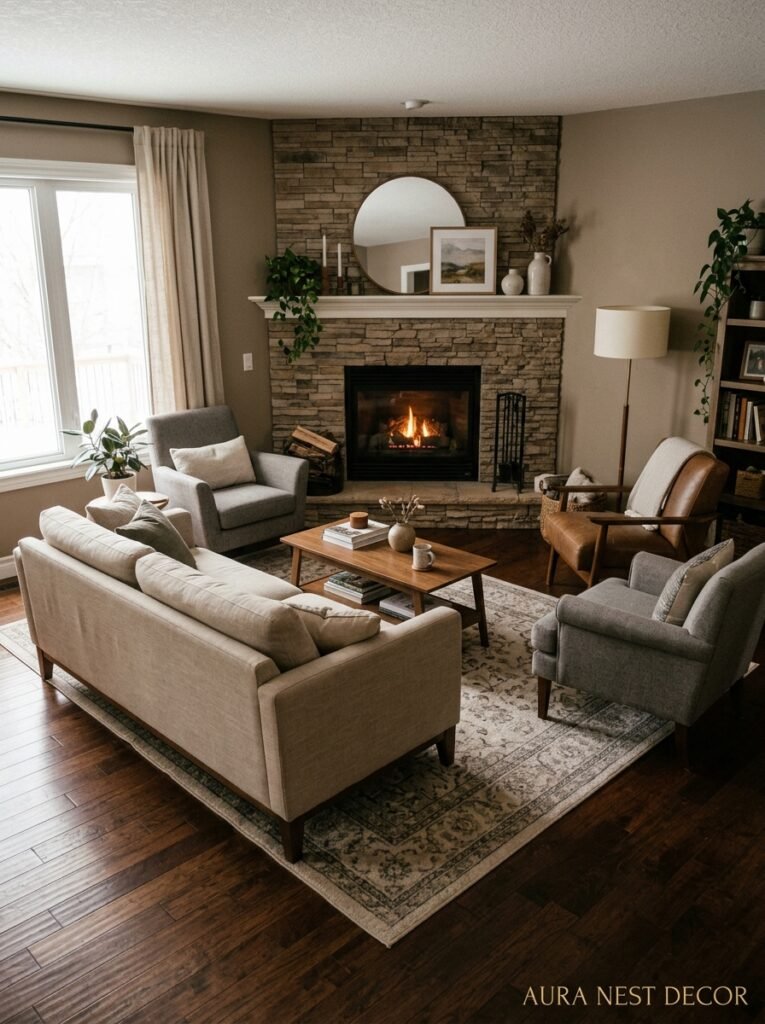
Too small. Almost always too small.
When the furniture is angled toward a corner, the rug is doing extra work. It’s not just anchoring a seating group — it’s essentially drawing an invisible shape that tells your eye “this is the zone, this is where life happens.” A rug that’s too small creates a floating effect. Individual pieces of furniture look unconnected to each other, and the corner fireplace ends up looking like it wandered in from another room.
The rule I use: if your sofa legs aren’t at least partially on the rug, the rug is too small. Full stop. In a corner fireplace layout, I’d actually push further — you want the rug to extend toward the hearth, not stop five feet back from it. You’re trying to create the feeling that the rug and the fire are in the same conversation.
For shape: rectangular works fine if your furniture is on a mild angle. But honestly? A large round rug in a corner fireplace room is magic. It echoes the radiating warmth of the corner itself. It softens all those diagonal lines. Don’t sleep on the round rug option.
—
9. The Forgotten Wall: What to Do With the Space Beside a Corner Fireplace
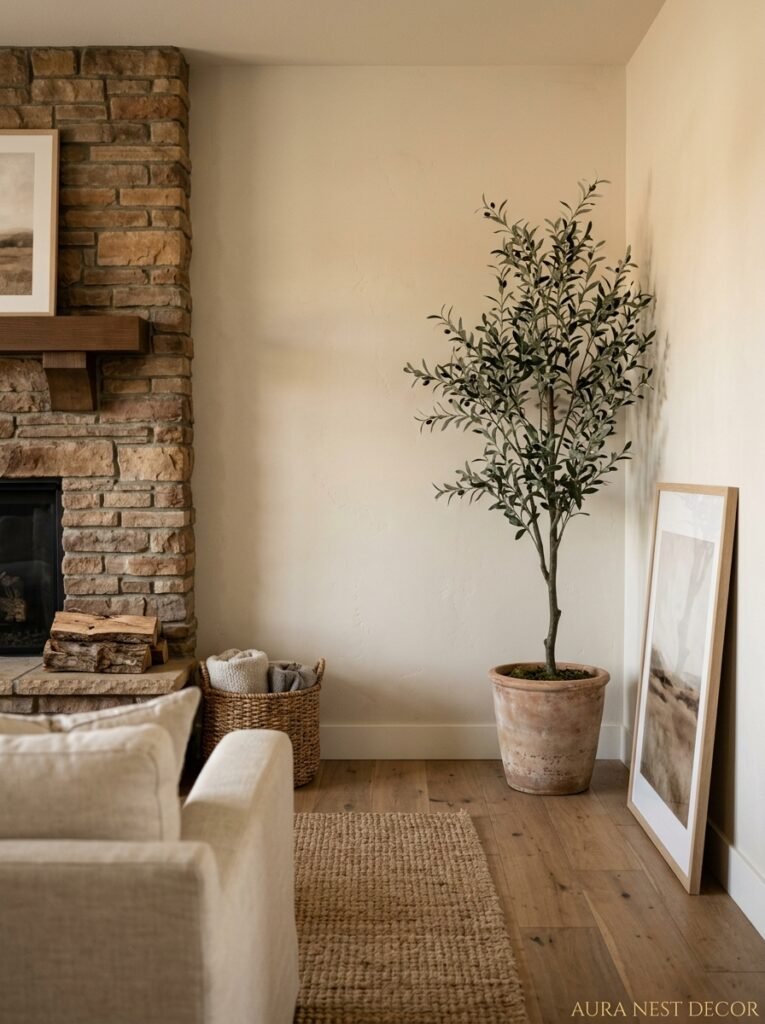
Here’s something almost no one talks about. When your fireplace is in the corner, you free up your main walls for something genuinely interesting. And most people just… put a sofa against it. Or nothing.
But that freed-up wall? That’s where the personality of the room lives now.
A floor-to-ceiling bookcase on the wall opposite the corner fireplace is a combination that I think is close to perfect. The warmth and flicker of the fire, the quiet weight of books — it’s a visual and emotional balance that’s hard to beat. Or a gallery wall that runs longer than you’d normally do, because you finally HAVE the space for it.
In smaller rooms, especially UK living rooms where square footage is genuinely tight, consider a slim console table against that free wall with a large mirror above it. The mirror bounces the firelight around the room and makes everything feel less enclosed. It’s one of those tricks that works almost every time.
—
10. Why Symmetry Is Overrated in a Corner Fireplace Room
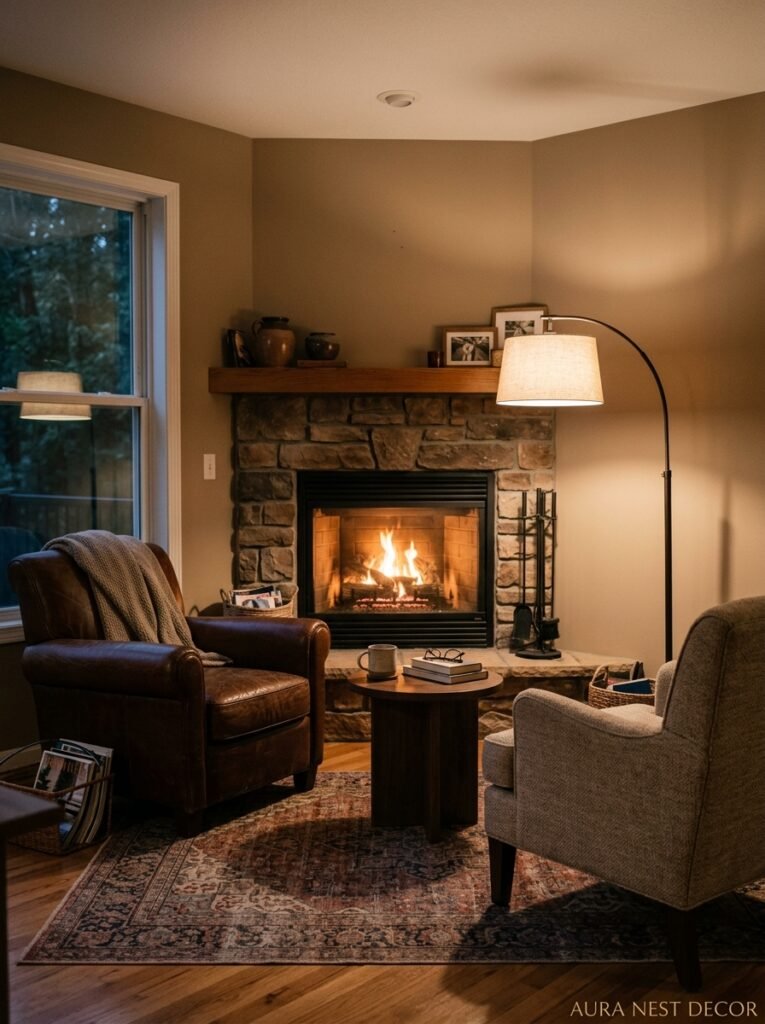
Symmetry is reassuring. It’s tidy. It photographs well. And in a corner fireplace room, chasing it will quietly ruin everything.
Because the corner is inherently asymmetrical. It breaks the room’s grid. And when you fight that by forcing perfectly matched side tables, identical armchairs on both sides, evenly spaced sconces — you’re creating visual tension rather than resolving it. The room looks like it’s trying too hard.
Let one side be different. An armchair on the left, a taller floor lamp on the right. A low side table on one end, a stack of books and a throw on the other. The slight imbalance actually reads as confidence. It says someone with taste lives here, not someone who’s following instructions.
This is, genuinely, one of the hardest things to give yourself permission to do. We are trained from birth to make things even. Resist it. Your corner fireplace is already doing the interesting thing — let your accessories relax.
—
11. The Style Pairings That Work Best With a Corner Fireplace (And a Few That Really Don’t)
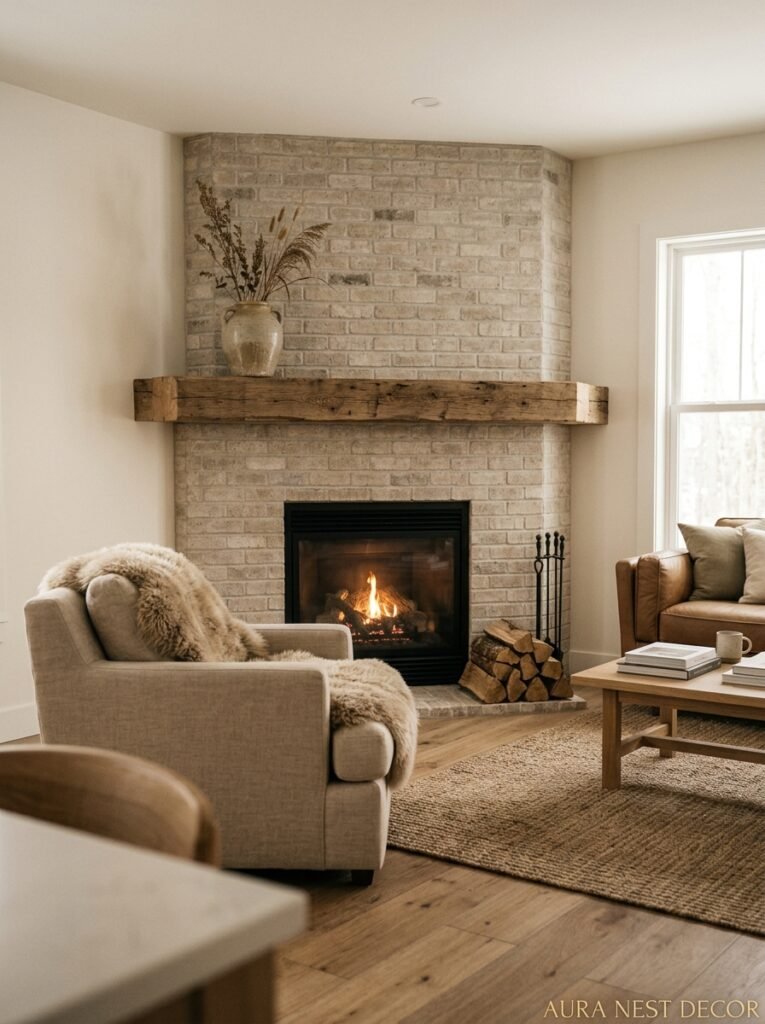
Corner fireplaces have a natural personality. They’re a bit dramatic. A bit bold. They don’t do “minimalist” especially well, and they feel slightly lost in a very contemporary all-white room.
What they love: warm, lived-in styles. Cottagecore. British country house. American craftsman. Eclectic bohemian. Even a moody, jewel-toned maximalist approach works incredibly well because the corner fireplace is already making a statement and you’re just continuing the conversation.
What doesn’t click as naturally: very stark Scandinavian minimalism. Ultra-modern spaces with all hard edges and no softness. The fireplace ends up looking like a set piece rather than something integral to the room.
But honestly — I’ve seen people make it work in every style. The common thread in the ones that succeed is that they embraced the drama of the corner rather than trying to minimize it. Lean into what it is.
—
12. The Small Details That Pull a Corner Fireplace Room Together
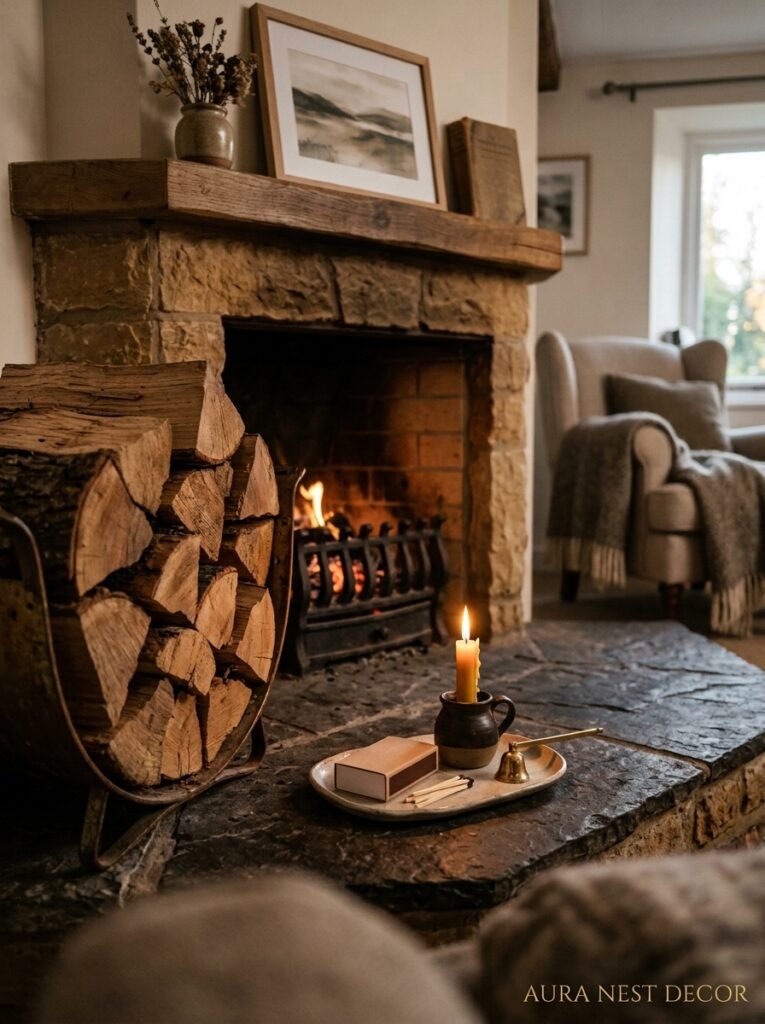
This is the stuff you don’t see in the before photo. Only the after.
A hearth rug layered over your main rug — just a small wool or jute one right in front of the fire — creates incredible depth and frames the fireplace without you having to do anything structural. It’s such a cheap way to make the whole corner feel intentional.
Logs. Even if your corner fireplace is gas, a log store nearby isn’t just practical — it’s textural. The roughness of stacked wood next to the smoothness of a tiled or stone hearth is one of those combinations that just photographs. Very Pinterest. Very real.
Candles on the mantel when the fire isn’t lit. This one seems obvious but you’d be surprised how many people leave a cold fireplace just… cold. Two or three candles at varying heights bring the corner back to life even on a warm evening when you don’t need the heat.
And finally — a throw draped over the arm of the sofa closest to the fire. Not folded neatly. Casually. Like someone just got up from under it. That single detail makes the whole room feel inhabited.
—
❓ FAQ
Q: Can I mount a TV above a corner fireplace? A: Technically yes, but it’s rarely ideal. The height puts the screen above comfortable eye level, and the heat from the fire can affect the TV over time. If you do go this route, use a tilting wall mount so the screen angles downward, and check your fireplace’s heat output first. Most designers would point you toward a different wall for the TV instead.
Q: What’s the best furniture arrangement for a small living room with a corner fireplace? A: In a small room, a loveseat angled toward the fire plus one good armchair is usually enough — don’t try to squeeze in a full three-seater. Keep the walkway clear on at least one side of the seating group. A small round coffee table rather than a rectangular one keeps the space feeling open. And resist pushing everything against the walls; it makes small rooms feel smaller, not bigger.
Q: Do corner fireplaces work with open-plan layouts? A: Really well, actually. The diagonal nature of a corner fireplace helps it read as a zone anchor in an open plan. You can use the seating arrangement it creates to define the “living” area without needing a wall or partition. It naturally separates the room in a way that feels organic rather than imposed.
—
💭 Final Thoughts
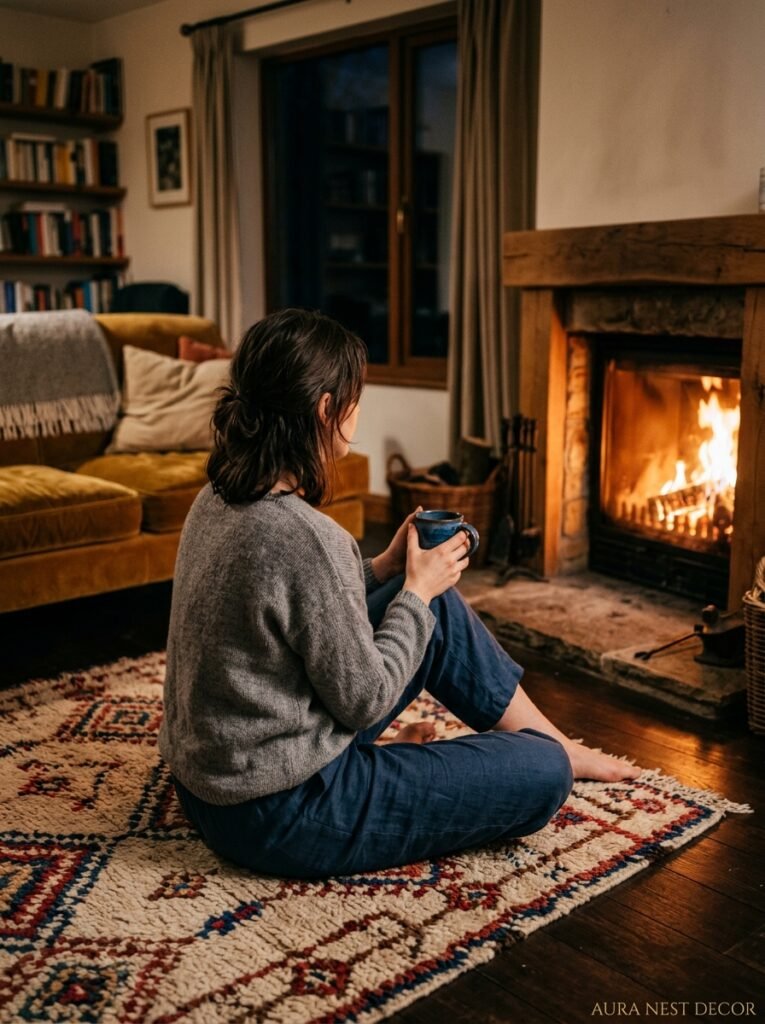
A corner fireplace isn’t a design challenge to be solved. It’s an invitation to stop arranging a room the safe, predictable way and actually think about what you want the space to feel like. Get the layout right, let the fire be the main event, resist the matching-everything impulse — and you’ve got something genuinely special on your hands.
There’s a reason these rooms keep showing up on everyone’s saved boards. They feel warm and considered and a little bit unexpected, all at once. And that’s pretty hard to pull off.
So — is your corner fireplace the focal point of your living room, or is something else quietly stealing its thunder?