The Cozy Boho Living Room You’ve Been Pinning For Years — Here’s How to Actually Pull It Off
You know that feeling when you walk into someone’s home and everything just settles? The air smells like cedar and old books, the rugs are layered in a way that looks effortless but clearly wasn’t, and somehow it’s both cluttered and calm at the exact same time. That’s what bohemian done right actually feels like. And it’s a lot more achievable than the Pinterest boards make it look.
—
1. The Rug Situation: Why One Is Never Enough
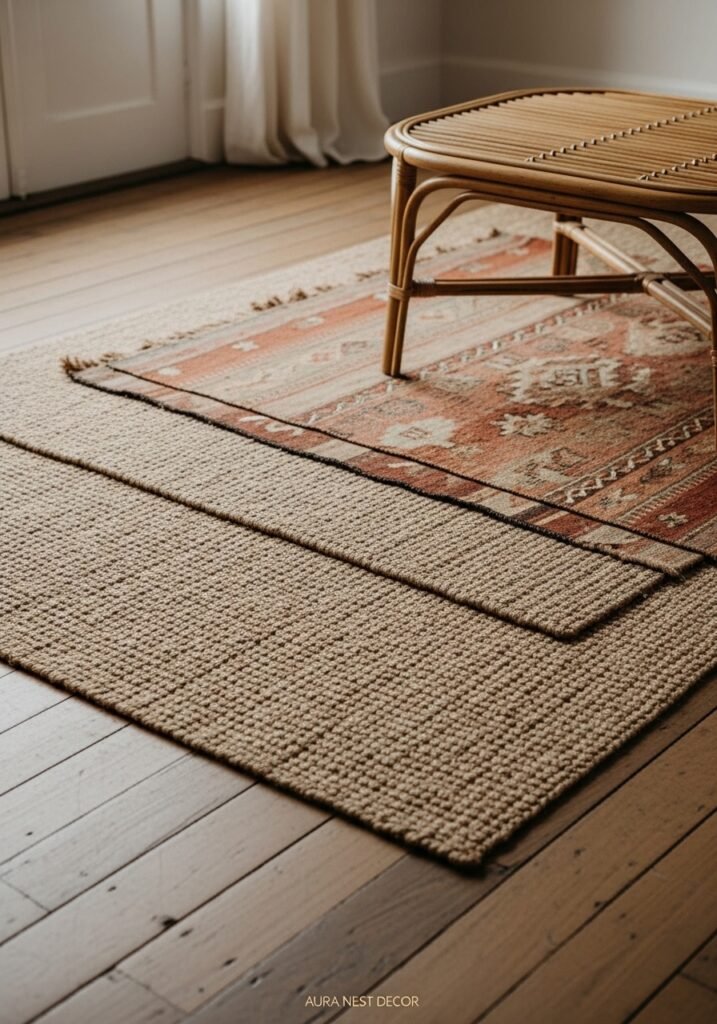
Start with the floor. Seriously, before you touch a single wall or wrestle with throw pillows, sort out your rugs, because this is where most boho living rooms either click or fall apart.
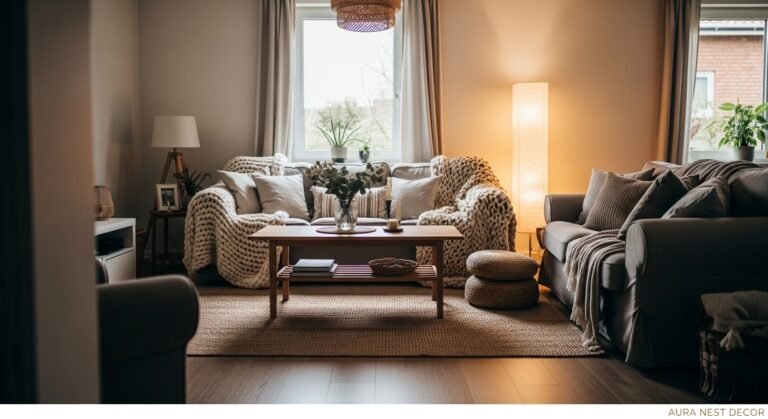
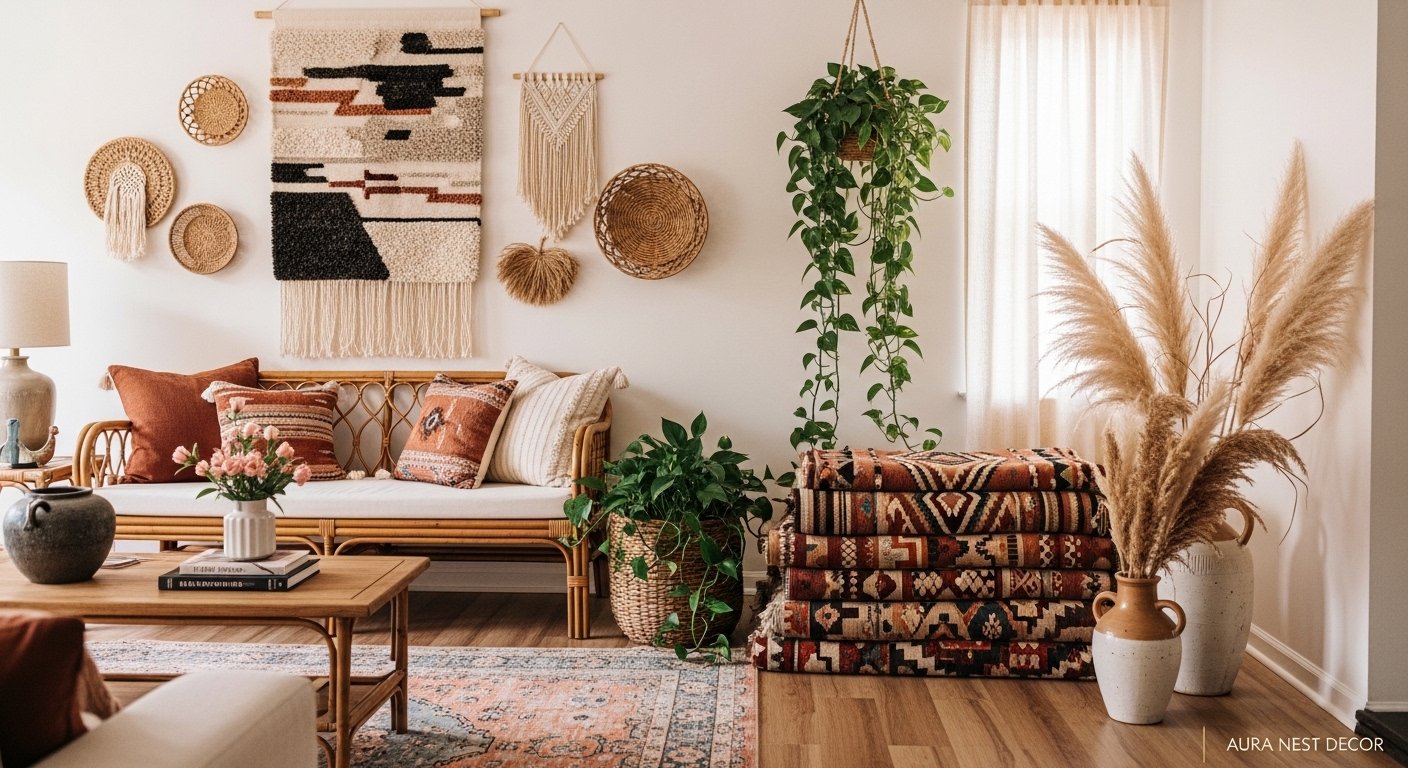
The layering thing isn’t just aesthetic — it creates zones. A larger neutral jute or sisal rug goes down first. Something textured, something humble. Then a smaller patterned rug on top, slightly off-center, maybe with fringe, maybe with a geometric print in terracotta or dusty rose. The offset is the point. You don’t want it to look like you measured.
I know it sounds like a lot but honestly, once you do it, you’ll never go back to the single-rug approach. There’s something about layers underfoot that makes a room feel lived-in and warm even before you’ve lit a single candle.
In the UK especially, where living rooms tend to be smaller and a bit more formal in their bones, layering rugs is genuinely the fastest way to shake off that “show home” stiffness. In the US, where open-plan living rooms can feel a bit soulless if you’re not careful, layered rugs define the sitting area beautifully without needing walls or furniture to do the work.
Don’t worry too much about matching. Boho doesn’t match — it harmonizes. There’s a difference.
“The rug you’re afraid to buy is probably the one that’ll make the whole room.”
2. The Color Your Living Room Is Secretly Asking For (Hint: It’s Terracotta)
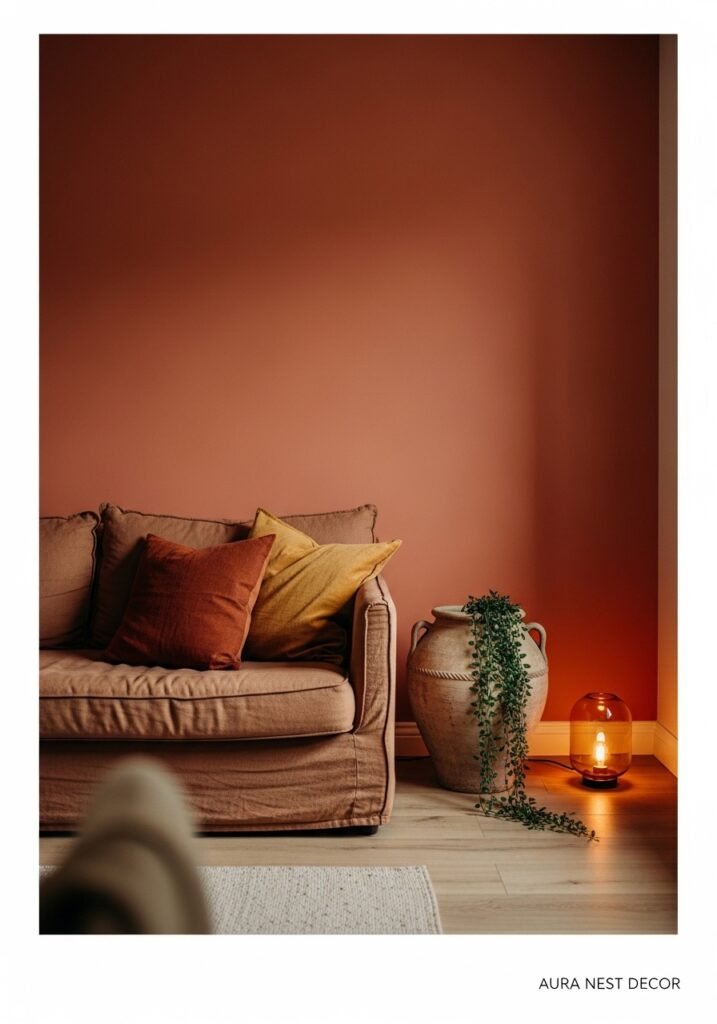
Not orange. Terracotta. There’s a whole conversation to have there because people confuse them constantly and they don’t behave the same way in a room AT ALL.
Terracotta is earthy and muted, kind of dusty, and it does this thing where it looks completely different in morning light versus evening light — which is exactly what you want in a cozy space. In the morning it reads almost like a warm neutral. By 7pm with low lamplight going, it’s rich and cave-like in the best possible way.
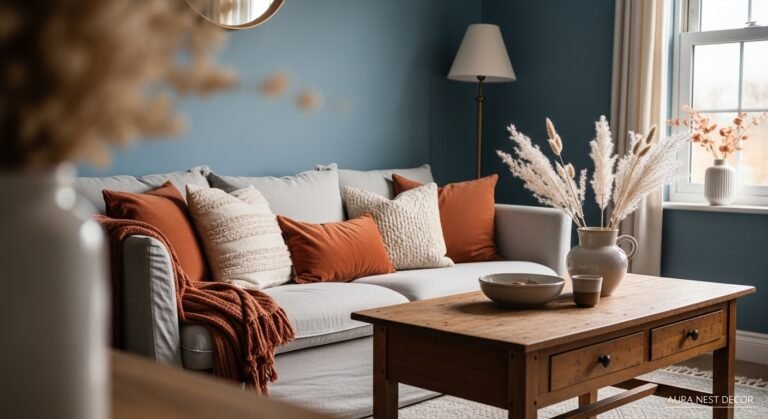
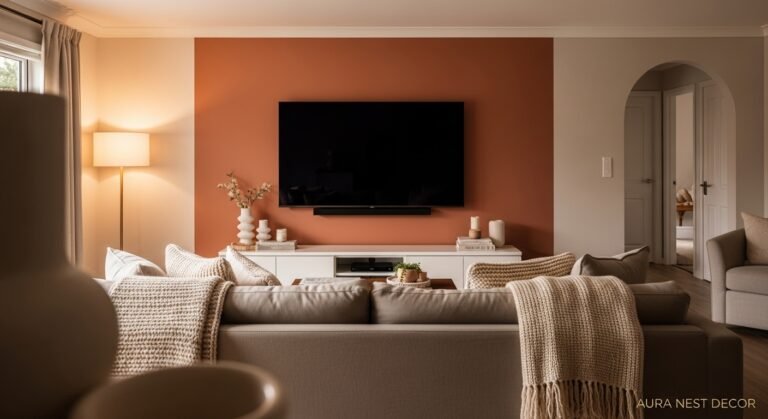
You don’t have to paint the whole room. A single terracotta wall behind the sofa is plenty. Or honestly, just bring it in through cushions, a throw, a ceramic vase or two. Even a small terracotta-painted pot with trailing pothos counts.
Pair it with warm whites, off-whites, raw linens. Add in some olive green or dusty sage. Maybe one hit of mustard if you’re feeling brave. This palette is everywhere on Pinterest right now but it’s not a trend in the way that, say, millennial pink was a trend. Terracotta’s been in homes in Morocco, Spain, Mexico, and the American Southwest for literally centuries. It’s not going anywhere.
Side note — if your sofa is grey and you’re worried about clashing, don’t be. Terracotta and grey are actually kind of magic together. Warm and cool, earthy and modern. Works every time.
3. What Woven Wall Art Does That Paint Simply Can’t
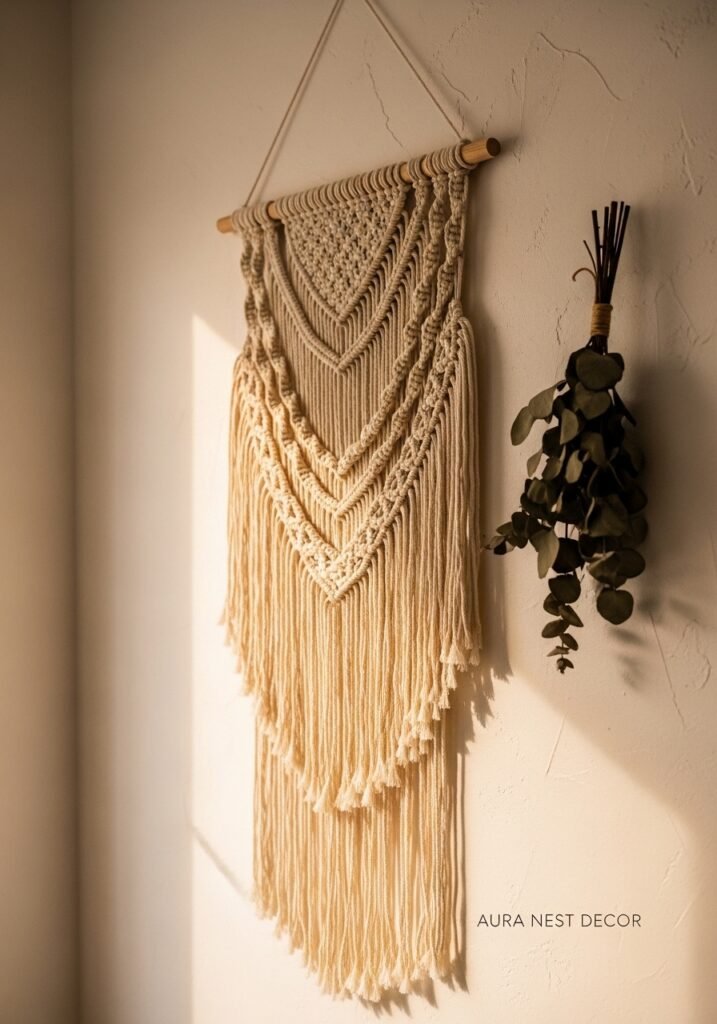
There’s something about texture on walls that changes how a room FEELS, not just looks. And in a boho space, woven wall hangings do a job that no framed print can replicate.
They absorb sound a little. They add depth. They make a wall look intentional in this very relaxed, unfussy way. A chunky macramé piece above a sofa, or a woven tapestry in neutral cotton and jute, brings that handmade quality that’s basically the backbone of bohemian style.
Now, I know macramé got a bit oversaturated a few years back — every Etsy shop in the world was selling the same knotted wall hanging — but it’s evolved. The better pieces now are more sculptural, more modern in their proportions even while using traditional techniques. Look for ones with interesting negative space, or ones that incorporate wood, beads, or dried botanicals.
In smaller UK living rooms, one statement piece does more than a gallery wall. In bigger American spaces, you can afford to cluster a few different sizes and textures together. Either way, the key is to let it breathe. Don’t crowd it.
And please, I’m begging you — hang it lower than you think you should. Art that floats near the ceiling is one of the most common decorating mistakes and it looks disconnected from everything below it.
4. The Sofa Dilemma: What to Do When Yours Is the Wrong Vibe
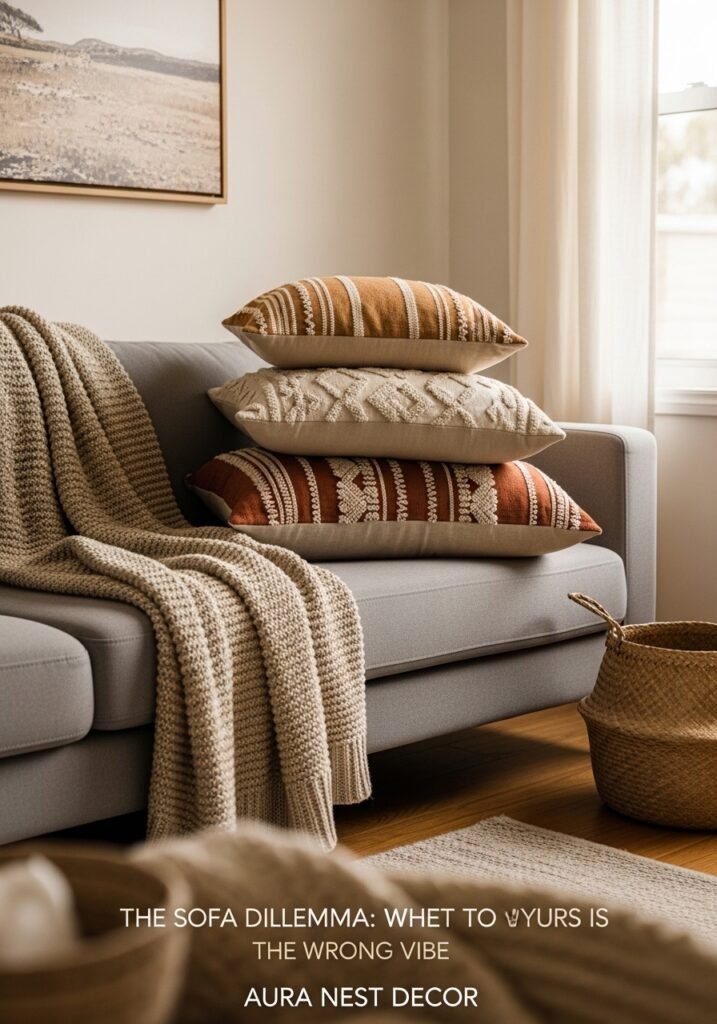
Not everyone can buy a new sofa. That’s just the reality. But here’s the thing — in a boho room, the sofa being “wrong” is almost an advantage, because boho is fundamentally about layering until the original piece is barely the point anymore.
Got a stiff grey sectional? Fine. Drape a chunky knit throw over one arm, leaving it slightly messy. Pile on cushions in mismatched sizes — linen, velvet, embroidered cotton, nothing matching, everything in the same general warm palette. Put a sheepskin over the back cushions on one end.
The effect should look like you sat down, got comfortable, and things just… accumulated around you in a pleasant way.
If you’re shopping for a sofa with boho specifically in mind, go for a low-profile style — something closer to the floor. Vintage-style sofas with tapered legs work beautifully. Natural fabrics only: linen, cotton, bouclé. Velvet in a deep jewel tone can work too — a deep plum or rust velvet sofa in a boho room is genuinely stunning and honestly quite daring.
“The sofa’s the one piece you can’t fully hide — so either commit to it or commit to covering it.”
5. Why Plants in Boho Rooms Hit Different Than in Any Other Style
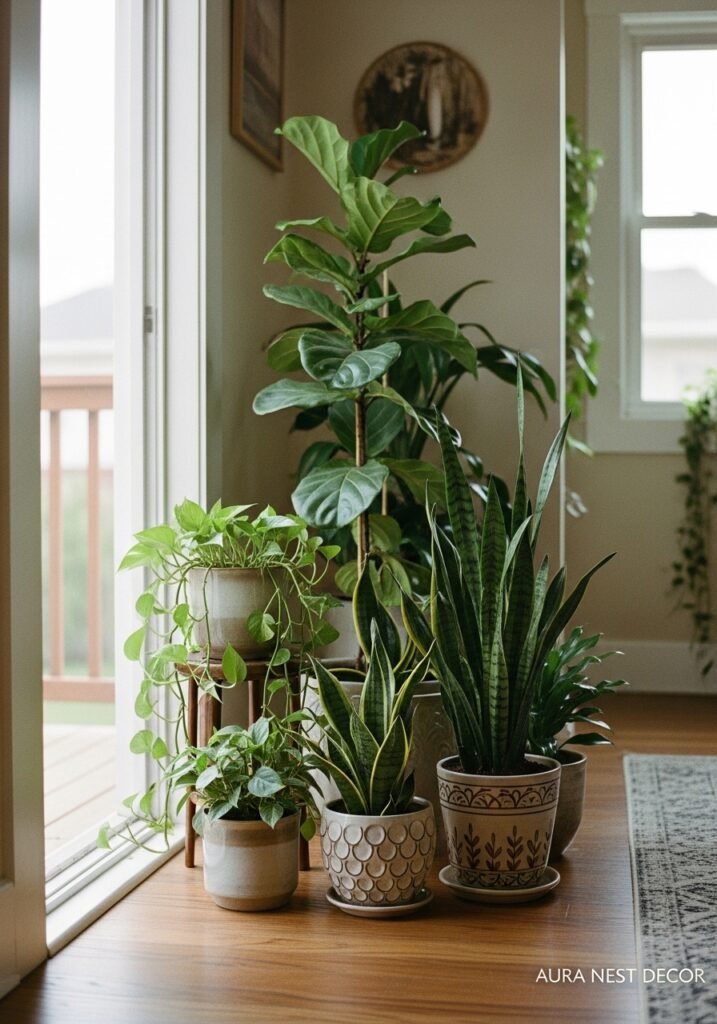
Every interior style incorporates plants these days but boho genuinely needs them. Not just for aesthetics. They do structural work in a bohemian room.
A tall fiddle leaf fig or a tree-like olive in a terracotta pot anchors a corner and gives the room vertical interest without a floor lamp or a bookcase. Hanging plants in macramé planters add movement — there’s something almost alive about the way they sway — and trailing plants over shelves and windowsills create that lush, slightly wild quality that’s central to the whole boho feeling.
Don’t overthink the species. Pothos, trailing tradescantia, monstera, spider plants — they’re popular because they’re forgiving and they grow FAST. In British homes where light can be genuinely brutal from October through March, pothos and ZZ plants are basically indestructible. In sunnier American rooms, you’ve got more options.
Put them at different heights. On the floor, on a stool, on a shelf, hanging from the ceiling. That variety of height is what makes a plant collection feel like a jungle corner rather than a garden center display.
6. The Lighting Formula That Makes Any Room Feel Like a Hug
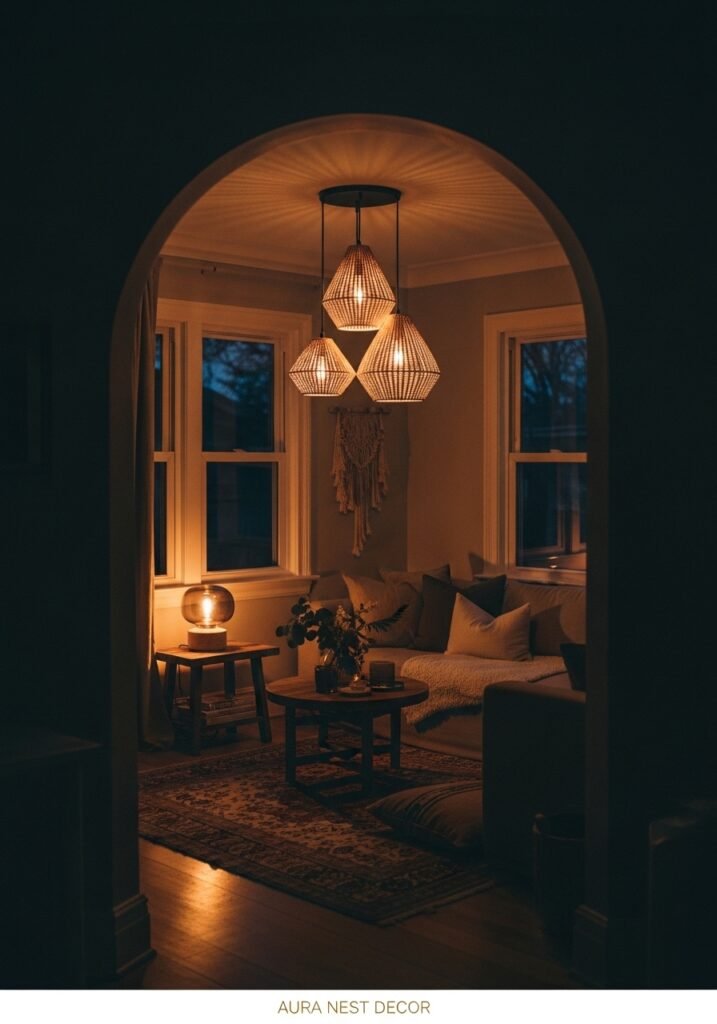
Overhead lighting is not your friend. I say this with love but TURN IT OFF.
The overhead fixture — especially in UK homes where the central ceiling rose rules everything — is almost always too harsh, too direct, and too bright for the cozy boho atmosphere you’re after. Use it to navigate the room when needed, then replace it with layers.
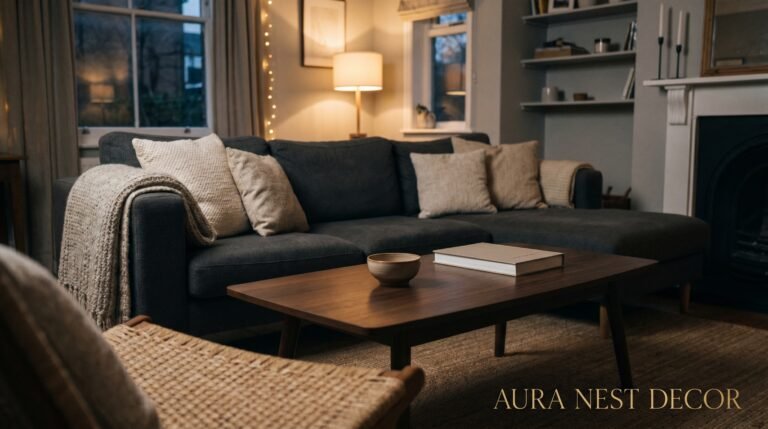
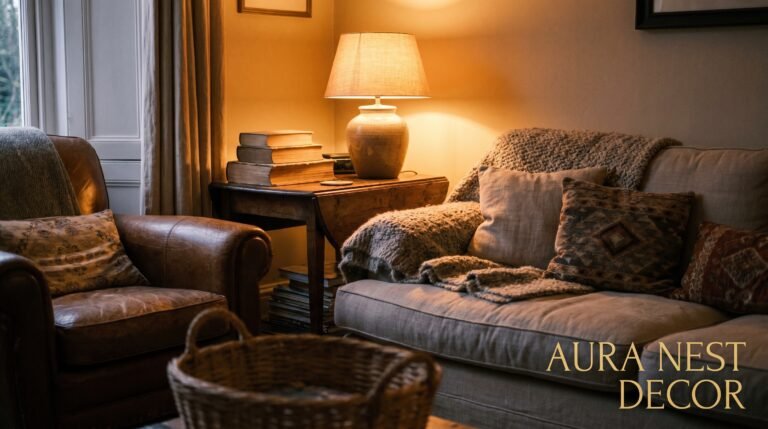
Floor lamps with warm amber bulbs. Table lamps on side tables, on the floor beside a plant, on top of a stack of books — yes, that’s a thing, and it looks amazing. String lights along a high shelf or wrapped around a mirror. Candles, obviously. Lots of them. Pillar candles in varying heights on a wooden tray, tealights in little glass holders on the coffee table.
The rule: multiple low light sources always beats one bright overhead one. Always. In both the US and UK, warm-toned LED bulbs (around 2700K color temperature) are the closest thing to actual candlelight and they’ll make every single thing in your room look better, including you.
And fairy lights aren’t just for Christmas. Don’t let anyone tell you otherwise.
7. The Art of the Boho Bookshelf (This Is Not About Organization)
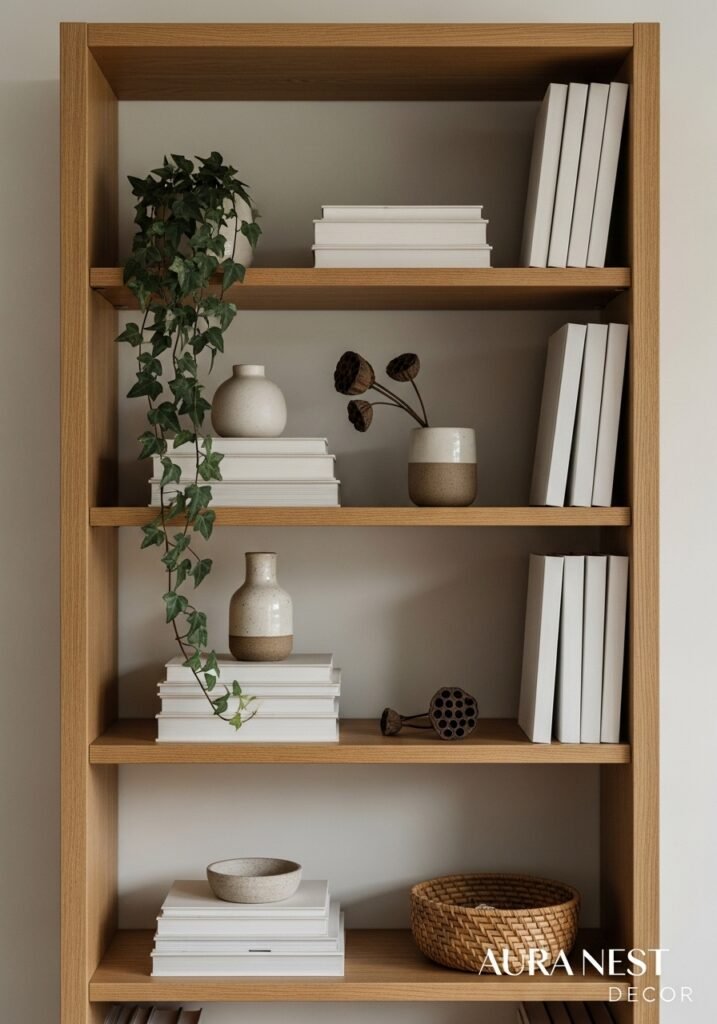
Boho shelves aren’t organized. That’s the point and it’s sort of a relief, honestly.
You want books, sure, but not all spines facing out in neat rows. Some books stacked horizontally, some vertical. A small plant tucked in. Candles. A little woven basket. A ceramic figure. That interesting piece of driftwood you picked up on a walk. A framed photograph leaning against the back of the shelf rather than hung on a nail.
The key is that everything on the shelf should mean something to you. That’s actually a core boho principle — it’s not a style you can buy wholesale and install like flat-pack furniture. It accretes. It happens gradually, as you collect things from travels, markets, charity shops, family members, that one brilliant vintage market you stumbled onto in a town you’d never been to before.
“Boho shelves tell a story. The trick is making sure it’s yours.”
British charity shops are an absolute goldmine for this, by the way. So are American thrift stores and estate sales. Handmade, imperfect, slightly odd things — that’s your shopping list.
8. Cushion Stacking: The Unspoken Rules That Nobody Mentions
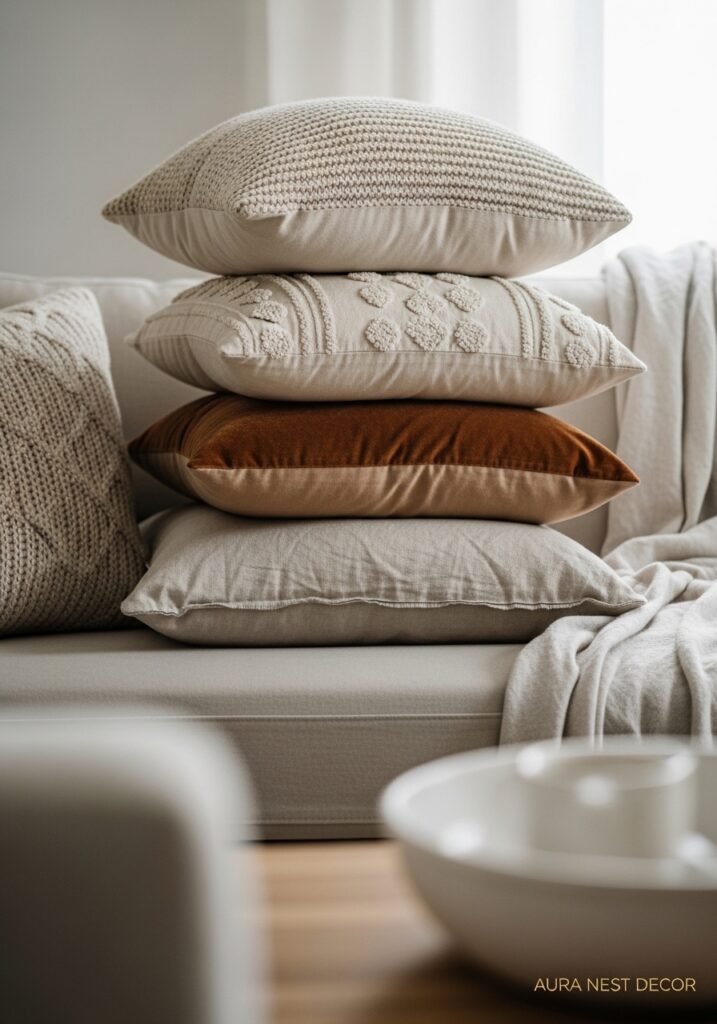
There are exactly zero actual rules. But there are patterns that work and ones that really don’t.
The ones that don’t: matching sets of four from the same collection in the same size, all lined up. It looks like a hotel. A nice hotel, maybe, but a hotel.
The ones that work: different sizes from large to small — a couple of big square cushions at the back, a rectangular lumbar cushion in front, one small accent cushion slightly off to the side. Mixing textures is essential. Velvet beside cotton linen beside something with a rough woven texture beside an embroidered or printed one. Colors should share a family but not be the same — think different values and saturations of the same warm palette.
Don’t be afraid of quantity. Boho cushions aren’t meant to look sparse. They’re meant to look like abundance. Like somewhere you’d actually want to collapse into after a long day.
And please — don’t display all your cushions when you’re using the sofa and then pile them on a chair. Just leave them where they fall. Slightly disheveled is the whole point.
9. The Coffee Table Isn’t Just a Table — It’s the Room’s Heartbeat
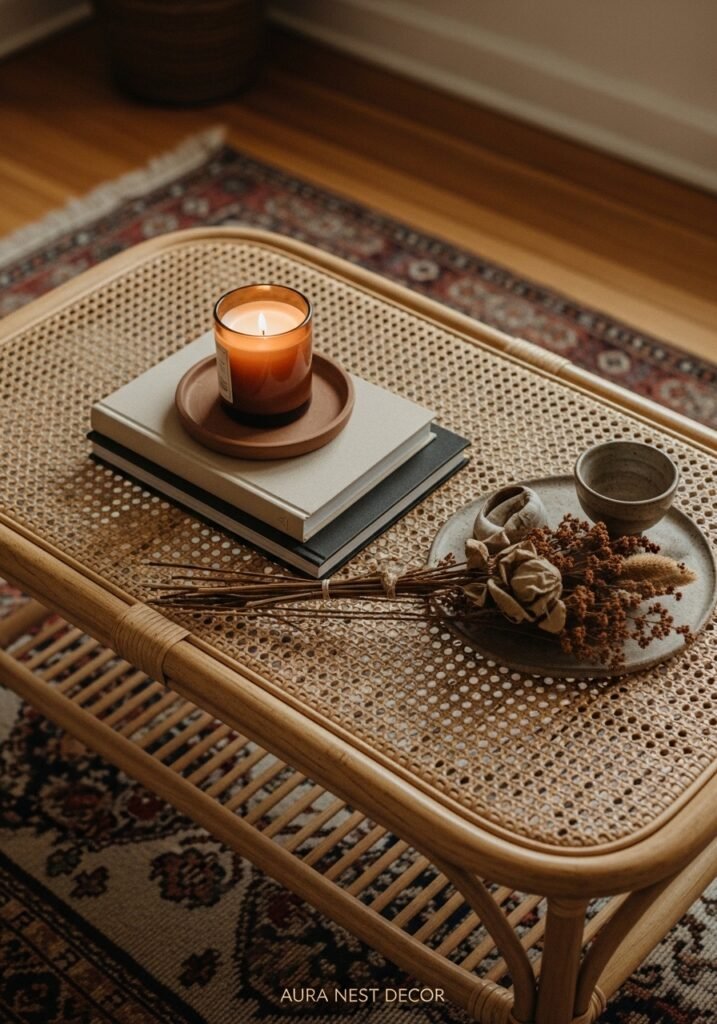
Seriously. The coffee table styling in a boho living room is doing so much work that it deserves its own moment.
Start with a wooden tray — ideally raw or lightly stained, something with grain visible. On it: a cluster of candles in different heights, maybe a small succulent or a little vase of dried pampas or eucalyptus, and one meaningful object. A smooth stone. A piece of coral. An incense holder.
Off the tray: a stack of coffee table books (face-up so you can see the covers), a larger plant nearby, maybe a woven coaster or two left slightly casually. Not posed. Just placed.
The difference between a styled coffee table and an overdone one is restraint on the individual items even while there’s generosity in the overall number. Each thing should have a reason to be there, even if that reason is just “it’s beautiful.”
10. Vintage Mirrors and Why Every Boho Room Needs at Least One
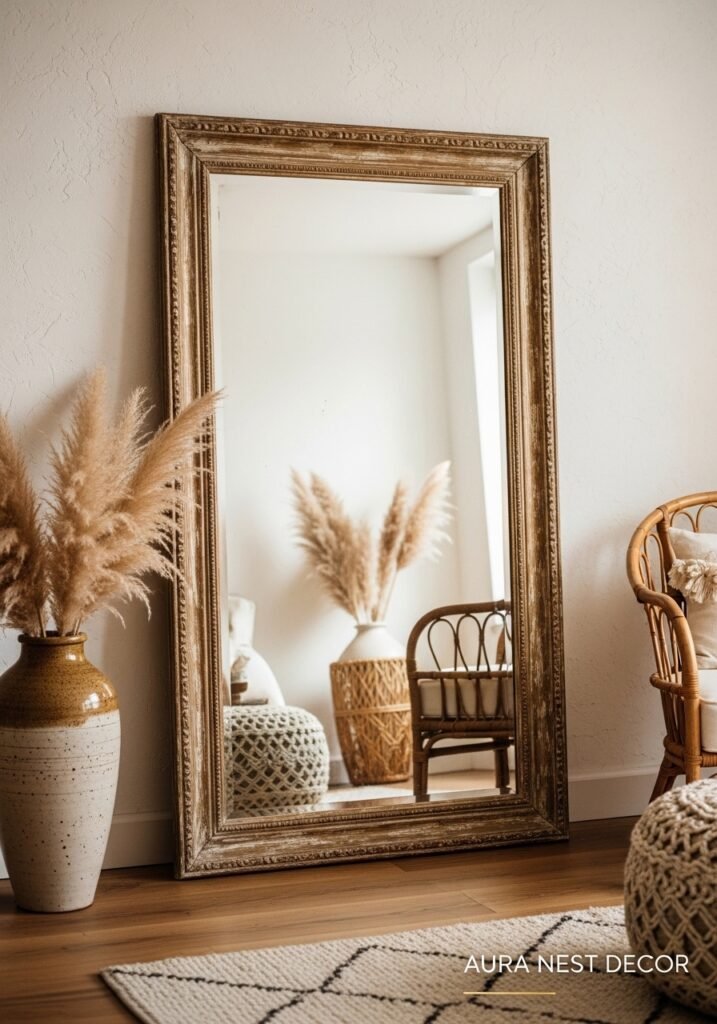
Not a plain rectangle from a big box store. Something with character. A round mirror with a rattan or carved wooden frame. An arched mirror leaning against the wall. A sunburst mirror in a warm metallic. An antique mirror with slightly foxed glass that makes the reflection a little dreamy.
Mirrors do double duty in a boho room: they reflect light (crucial in both north-facing British sitting rooms and in any room where you’ve replaced overhead lighting with lamps) and they act as decor in their own right.
Leaning a large mirror against a wall rather than hanging it looks more casual and more intentional at the same time, which is a very boho paradox and I love it. It also means you can move it without patching holes.
Go vintage where you can. UK readers — check eBay, local Facebook Marketplace, or any antique market. US readers — estate sales, Craigslist, antique malls. You will find something better and more interesting than anything in a chain store for the same price or less.
11. The Thing Dried Botanicals Do That Fresh Flowers Can’t
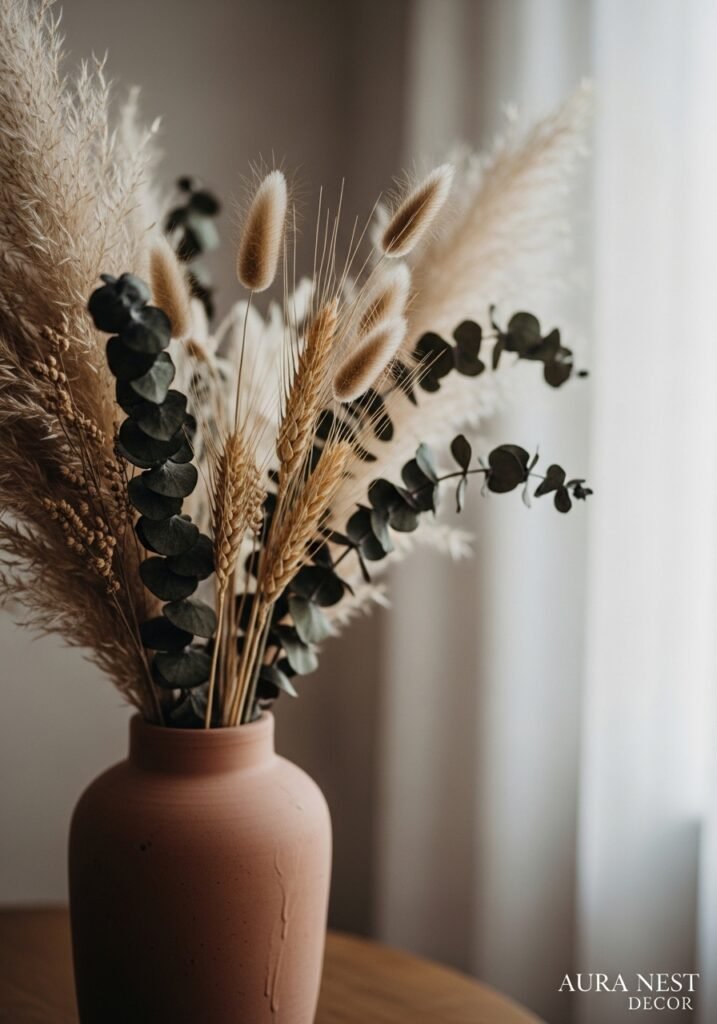
There’s a romance to dried flowers that fresh ones don’t quite capture. Pampas grass in an earthenware vase. Dried lavender bunches hanging from a hook. Cotton stems in a tall ceramic. Bundles of dried herbs on a shelf.
They don’t wilt. They don’t need water. And they have this dusty, sun-bleached quality that’s absolutely central to the boho aesthetic — like something from a summer that ended a long time ago but left beautiful things behind.
Dried botanicals are everywhere right now and they’re genuinely affordable. Pampas grass in particular has become almost synonymous with the boho look — some people think it’s overdone, but honestly, when it’s styled properly in a tall floor vase with a few other natural textures around it, it still works beautifully.
Mix species where you can. Dried lunaria (the silvery coin plant) beside pampas beside some dried globe amaranth is a combination that’s not on every mood board yet but absolutely should be.
12. The Final Layer: Smell, Sound, and the Stuff You Can’t See in a Photo
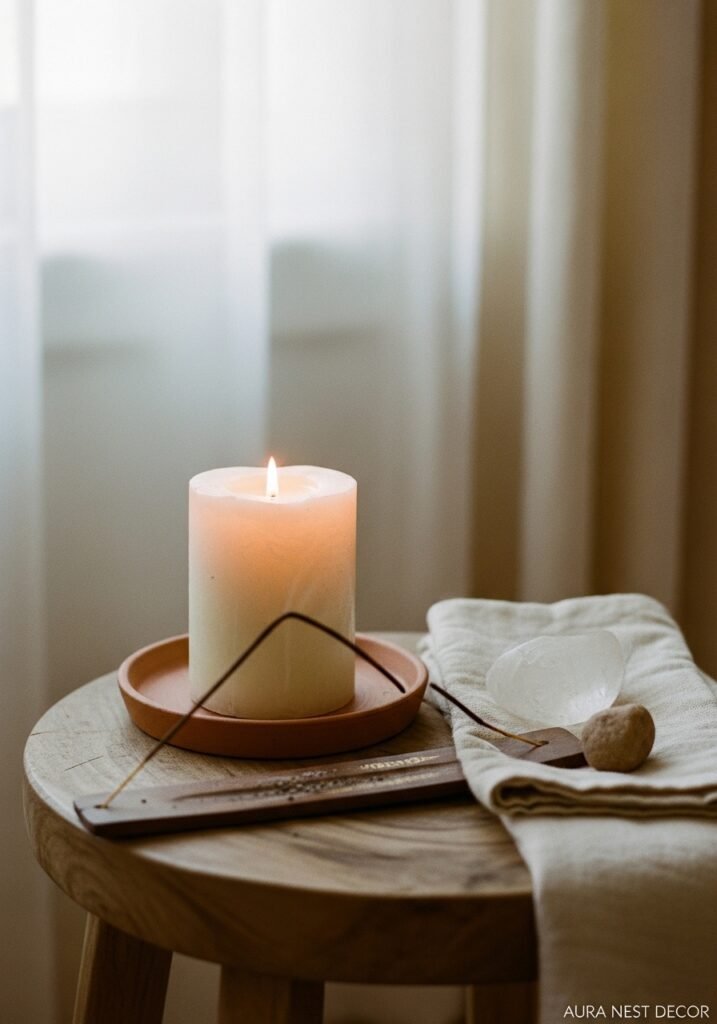
Here’s the bit that Pinterest can’t actually show you, which is maybe why it’s the most overlooked.
The WAY a room feels when you walk in isn’t just visual. It’s the smell of the candle you always burn on Sunday afternoons — that particular blend of sandalwood and amber you’ve had for three years. It’s soft music playing from somewhere you can’t quite locate. It’s the weight of a blanket that’s been washed so many times it’s like being held.
Boho style, at its root, is about sensory abundance. It’s maximalism with meaning. And the homes that do it best aren’t just beautifully styled — they’re deeply inhabited.
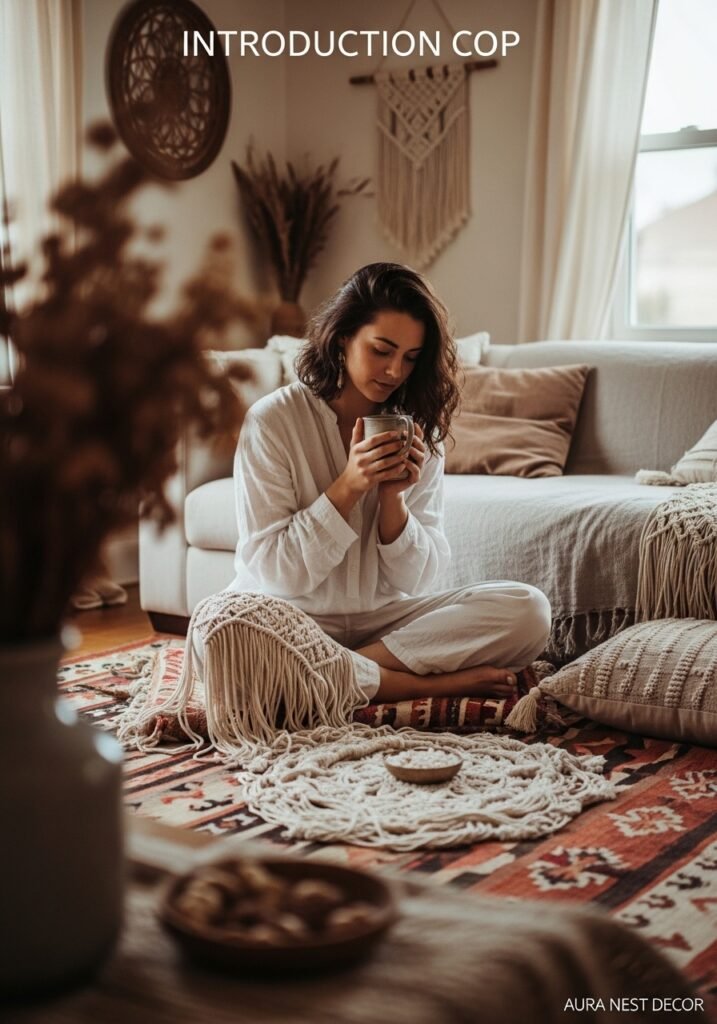
Light incense. Put on something slow. Make tea and sit in the corner of the sofa where the cushions have molded to your shape.
That’s not staging. That’s actually the goal the whole time.
—
❓ FAQ
Q: How do I make my living room feel boho without it looking messy or cluttered? A: The key is that every item should feel intentional, even if it looks casual. Start with a cohesive warm color palette and natural textures — jute, linen, wood, ceramic — and let things accumulate gradually rather than buying a whole “look” at once. Curated abundance reads as boho; random clutter just reads as clutter.
Q: Can I do boho style in a small UK living room? A: Absolutely, and honestly a smaller room can feel cozier and more enveloping when done well. Focus on one or two statement pieces — a layered rug, a woven wall hanging, a great floor lamp — rather than trying to do everything. Keeping the color palette tight and warm prevents it from feeling overwhelming.
Q: Where’s the best place to find affordable boho decor in the US and UK? A: Thrift stores, charity shops, estate sales, and Facebook Marketplace are genuinely your best sources for the most interesting pieces at the lowest prices. For new items, Etsy is brilliant for handmade and vintage-style pieces. In the UK, Dunelm and H&M Home have solid boho-adjacent options at reasonable prices. In the US, World Market and TJ Maxx are worth checking regularly.
—
💭 Final Thoughts
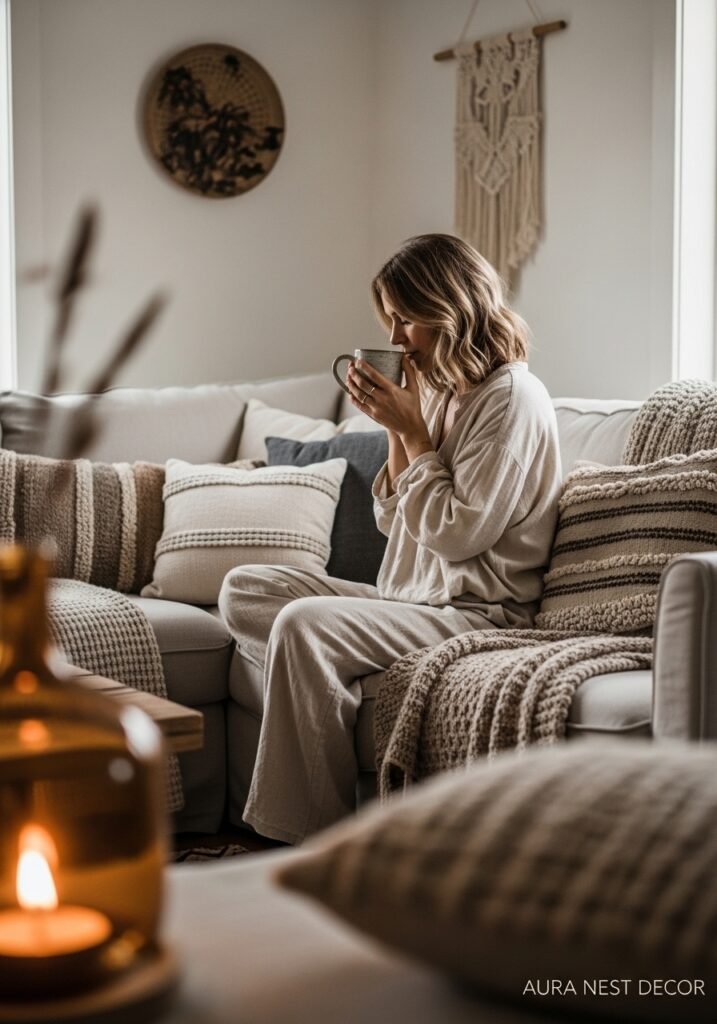
You don’t have to do all of this at once — and you probably shouldn’t. The best boho rooms develop over time, layer by layer, as you find things you love and figure out where they want to live. Start with the rug and the lighting and let the rest come.
The question worth sitting with is: does your living room feel like YOU yet?