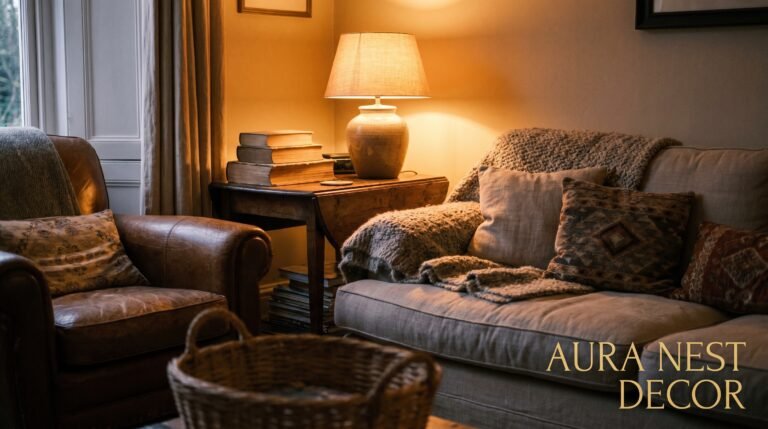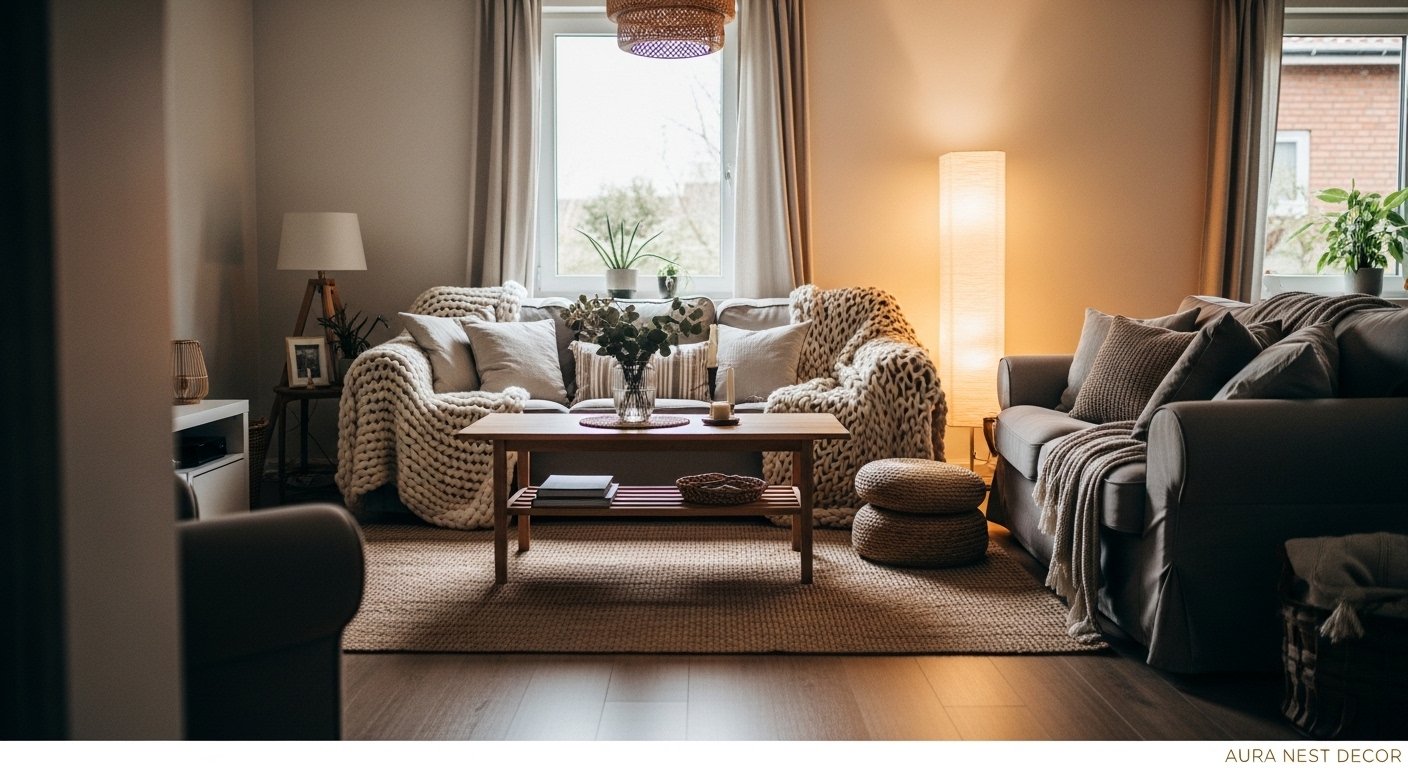
The IKEA Living Room Glow-Up That Actually Feels Cozy (Not Like a Showroom)
You know that specific feeling when you walk into someone’s living room and just… exhale? Everything feels soft and considered, there’s a candle lit somewhere, and nothing matches perfectly but somehow it all works. That’s the vibe we’re chasing — and honestly, most of it came from IKEA.
—
1. Why IKEA Gets a Bad Rap for “Cozy” (And Why That’s Wrong)
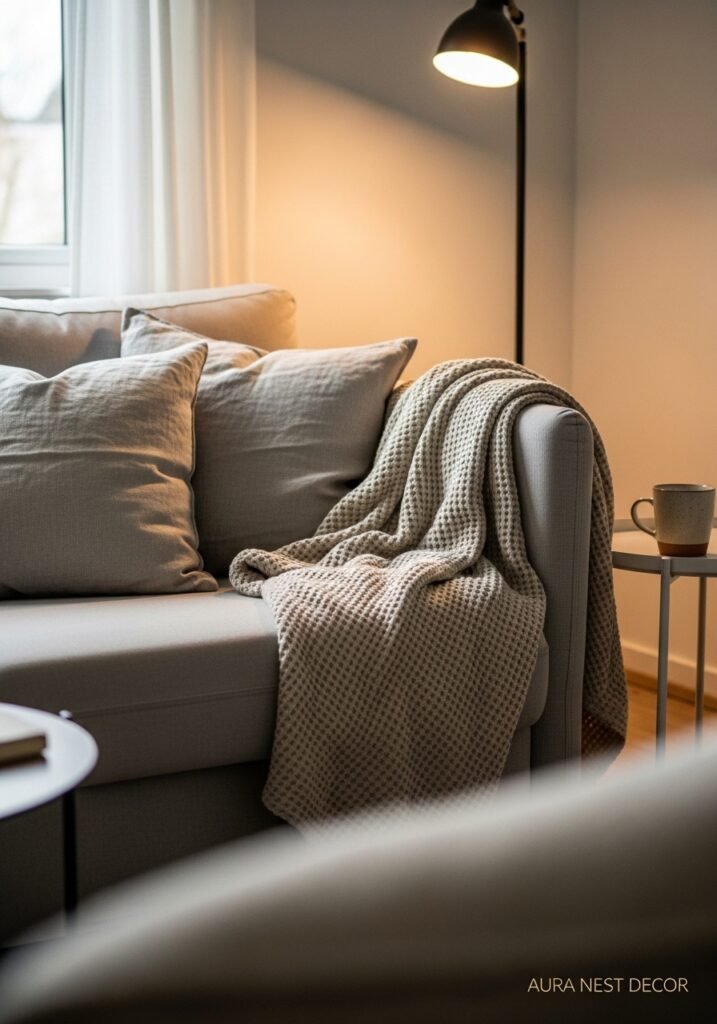
There’s this weird snobbery about IKEA that I’ve never fully understood. People act like buying a KALLAX shelf means you’ve given up on having a real home. But here’s the thing — the problem was never the furniture. The problem was buying it, assembling it, and placing it exactly where the little diagram suggested, with nothing else around it, in a room that echoes.
IKEA pieces are, a lot of them, genuinely beautiful. The shapes are clean. The wood tones are warm when you let them be. The Stockholm sofa, the POÄNG chair, the ridiculously underrated BESTA units — these aren’t pieces you need to hide, you just need to style them like you actually live there. Like someone real picked them up and brought them home.
Cozy doesn’t come from expensive furniture. I’d argue it doesn’t come from furniture at all. It comes from how a room feels at 8pm with the overhead light switched off, when you’ve got a lamp going in the corner and there’s something on the stove. That’s the goal. And IKEA, layered right, gets you there.
Don’t let anyone convince you otherwise.
“Cozy isn’t a price point. It’s a decision you make at the lamp aisle.”
—
2. The Lamp Situation: Your Living Room Probably Has Too Many Overheads
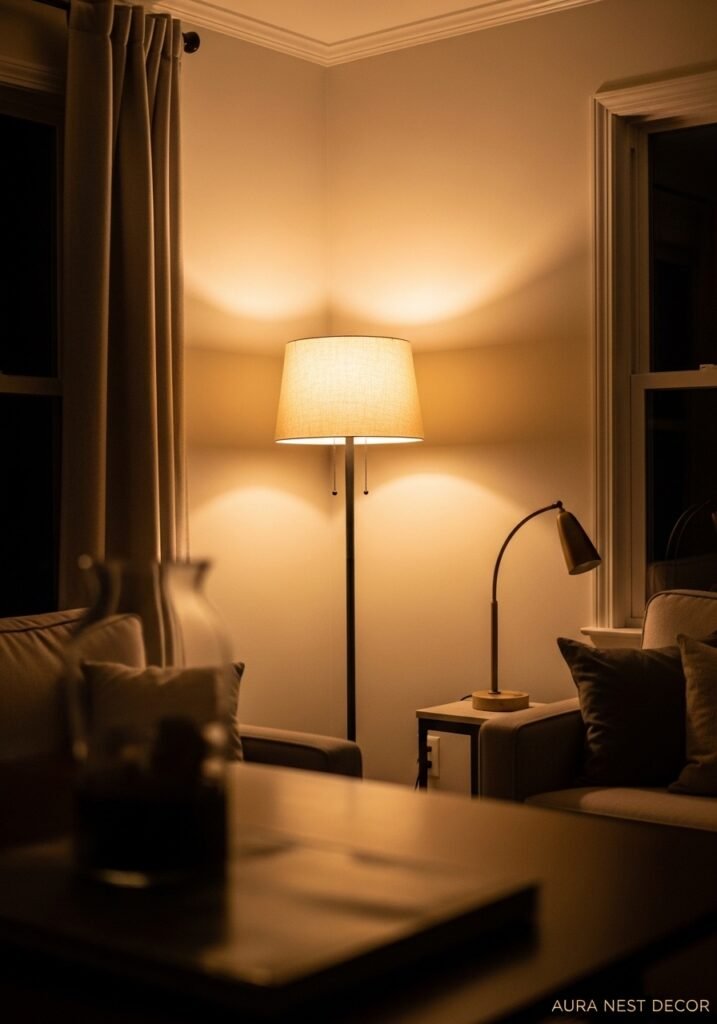
Okay, harsh truth. If the main — or only — light source in your living room is a ceiling fixture, that’s where the problem starts. Overhead lighting is functional. It’s what you use when you’re looking for your keys or cleaning up a spill. It’s not what you leave on when you’re trying to relax.
IKEA’s lamp range is genuinely great, and it’s gotten so much better over the last few years. The SINNERLIG pendant in bamboo is one of my all-time favorites — it casts this dappled warm light that looks completely different depending on the time of day. The RANARP floor lamp is everywhere right now and it’s everywhere for a reason: matte black, adjustable arm, works in basically any style of room.
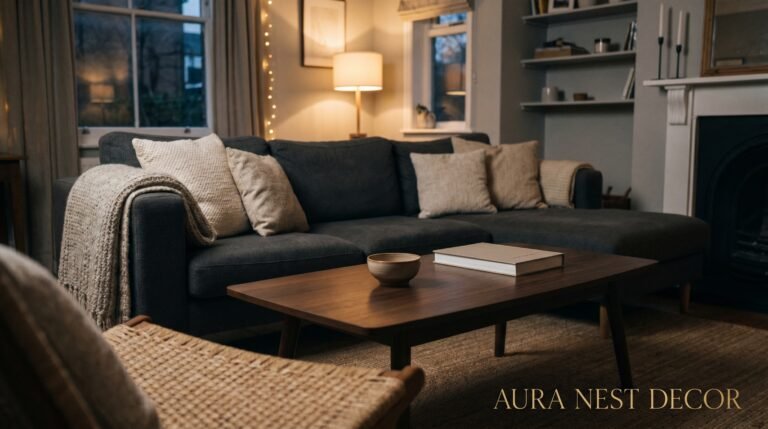
The rule I’d give anyone trying to make a room feel cozier is this: you want at least three light sources that are not the ceiling. A floor lamp, a table lamp, and something ambient — a string of lights over a shelf, a LED candle, something low and warm. The amber glow of an Edison-style bulb at 7pm changes the entire personality of a space. I’m completely serious about that.
Also, warm bulbs. Not daylight. Warm white, around 2700K. This is non-negotiable and I will die on this hill.
—
3. The Color That Keeps Appearing in Every Cozy IKEA Living Room Right Now
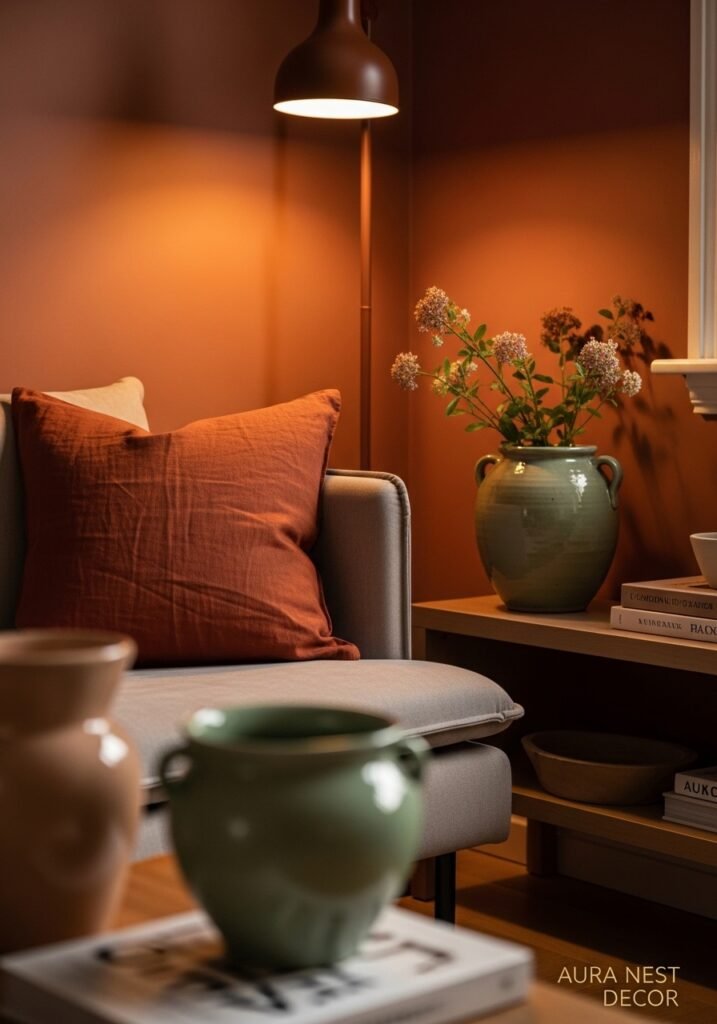
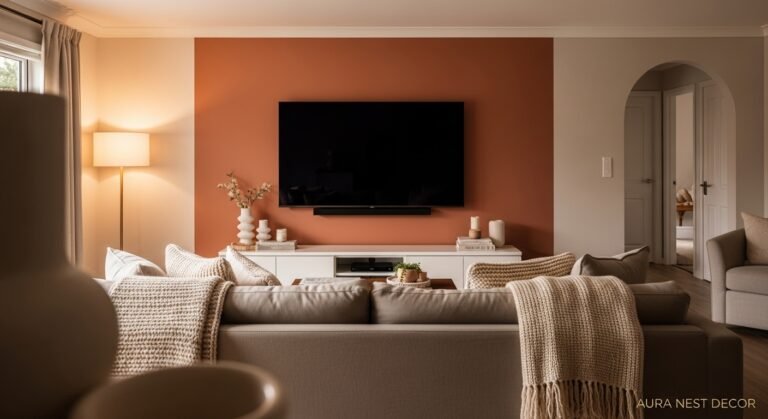
It’s not beige. Or — well, okay, it IS kind of beige, but not the sad, noncommittal beige of the early 2000s. It’s more like oat. Or warm linen. Or that very specific creamy white that you can’t quite put a name to but immediately recognizes as “right.”
IKEA has leaned hard into this warm neutral territory with upholstery, rug options, and now the RÅVAROR sofa covers and FINNALA range. The difference between this palette working and just looking washed out is TEXTURE. You cannot do a warm neutral room without texture. A flat cream sofa against a flat cream wall is flat. Add a chunky throw, a linen cushion, a jute rug, and suddenly the whole thing breathes.
And if warm neutrals really aren’t your thing? Deep sage green has been having a very long, very well-deserved moment. A KIVIK sofa in a deep grey-green, with warm wood accents and a terracotta pot or two nearby — it’s one of those combinations that feels timeless without being boring. Not gonna lie, I’ve re-styled my living room around this exact idea twice. Possibly three times.
—
4. Rugs Do More Than You Think (Especially This One from IKEA)
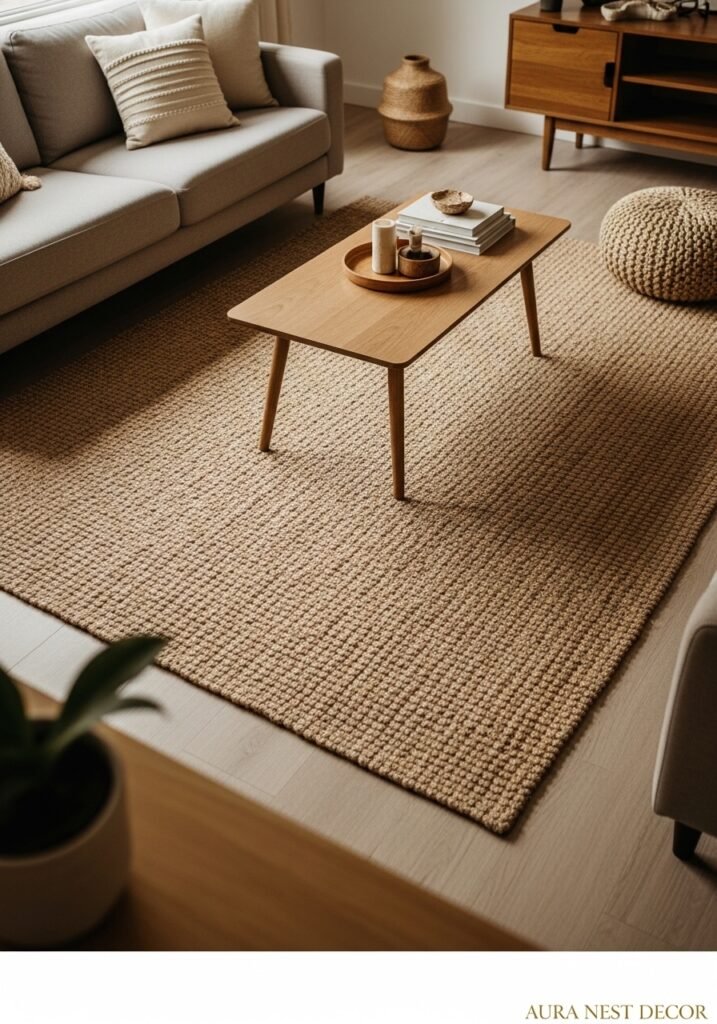
A rug doesn’t just sit on your floor and look nice. It defines the room. It tells your furniture where to be. It determines whether your seating area feels like a real, intentional gathering space or just a collection of chairs that happen to be near each other.
The STOENSE. That’s the one. It’s a low-pile, slightly textured rug in the most perfect shade of off-white and it’s been in my living room for longer than I want to admit. It photographs beautifully — which matters for Pinterest obviously — but more than that, it makes bare feet happy, which is the actual point. The KOLDBY cowhide is another one worth considering if you want a bit of edge in an otherwise soft, neutral room.
Size matters enormously here. Go bigger than you think you need. The most common mistake is a rug that’s too small — it ends up looking like a bathmat that wandered into the wrong room. Ideally, the front legs of your sofa and chairs should sit ON the rug. The whole seating arrangement should feel anchored by it. When in doubt, go up one size.
“The rug is the room’s spine. Get it right and everything else falls into place.”
—
5. The BILLY Bookcase Method That Actually Looks Intentional
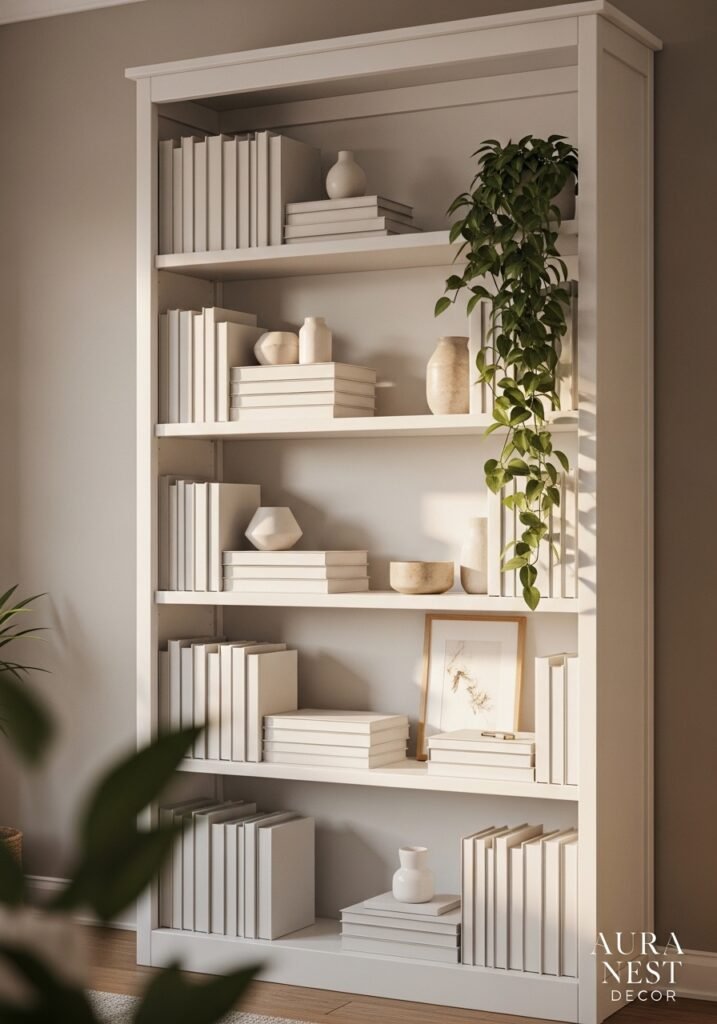
Everyone has a BILLY. Or several BILLYs. The question is whether yours looks like a storage solution or like a feature you actually planned.
The secret — and it’s not really a secret anymore but it’s still worth saying — is to not fill it to capacity. Leave gaps. Mix books with objects: a small plant, a candle holder, something with an interesting shape. Lay a few books horizontally to create little platforms. Put something slightly unexpected in there, like a small framed photo or a single ceramic jug.
And don’t color-coordinate your books by spine. I know it looks good in photos, and I know I’ve done it, but it makes your bookcase look like a prop rather than a real reflection of what you read. Real bookcases are a little messy. They tell a story.
Add the BILLY extension unit on top and suddenly you’ve got floor-to-ceiling shelving that looks completely bespoke. Paint the back panel of the shelf in a contrasting color — dusty green, soft terracotta, deep navy — and it looks like a piece that cost four times as much. This trick is everywhere in interior design right now and for good reason.
—
6. Throwing Textiles at the Problem (In a Good Way)
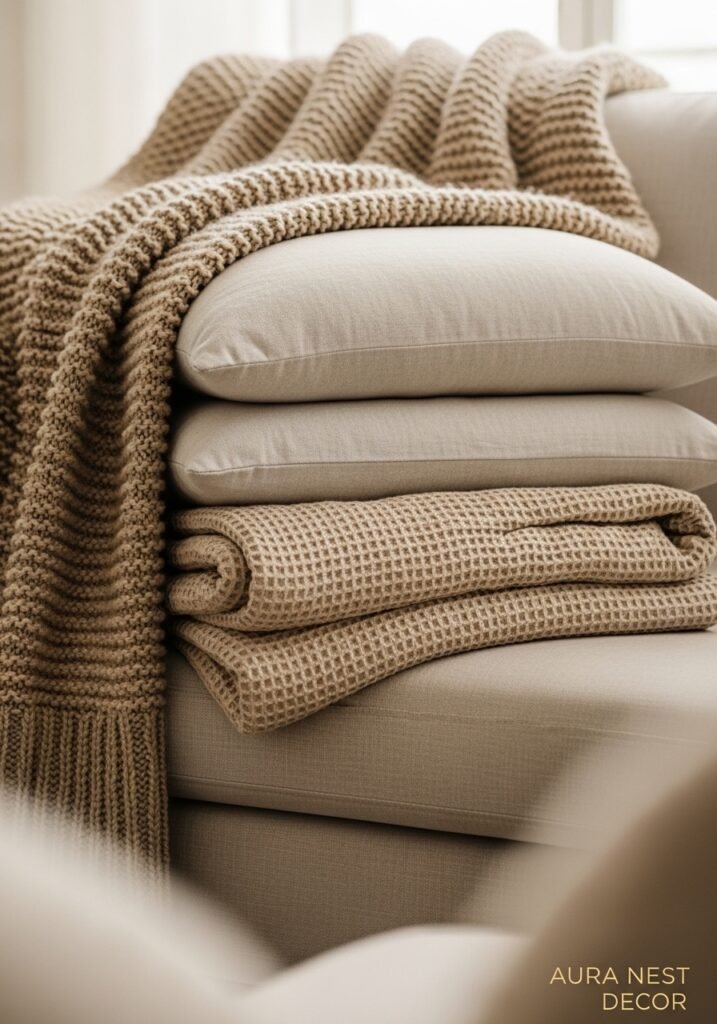
Throws and cushions get a bad name from those “over-styled” rooms where everything’s been so perfectly arranged it looks like no one is actually allowed to sit there. But used right, textiles are how a IKEA sofa becomes your sofa.
The GURLI throw is soft and comes in the kind of colors that work with everything — dusty lilac, warm beige, pale grey. The PLOMMONTRÄD cushion covers have this subtle woven texture that photographs well but more importantly feels substantial in your hands. These things matter. You want cushions that don’t go limp after a week.
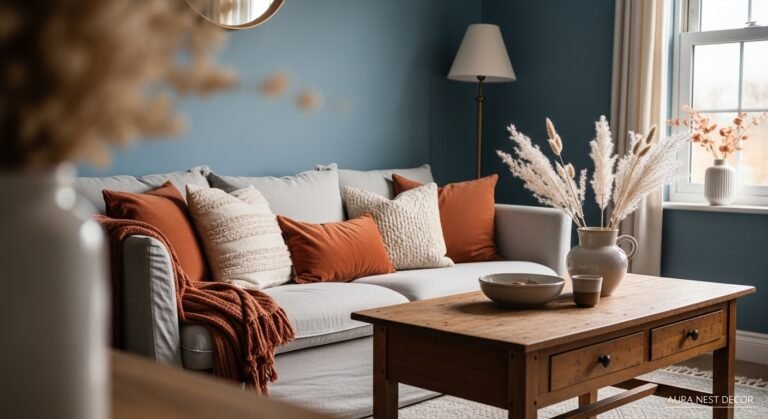
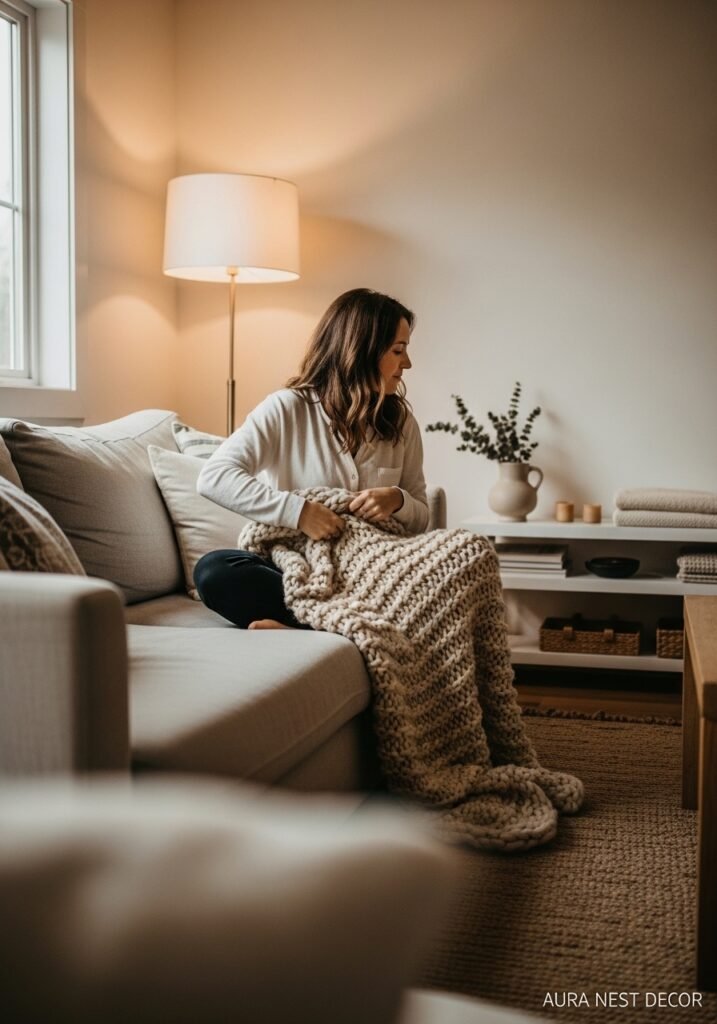
Layer them without overthinking it. Two or three cushions of different sizes and slightly different textures. A throw that’s actually thrown — not folded in thirds and placed with a ruler, but draped casually over one arm. The goal is “someone sat here recently,” not “someone staged this recently.”
Side note — don’t underestimate the POÄNG chair for cosiness. Add a sheepskin from RENS over the seat and you’ve got the most inviting corner in your entire house. I’ve genuinely fought with people over that chair.
—
7. The Coffee Table Styling That Stops the Scroll
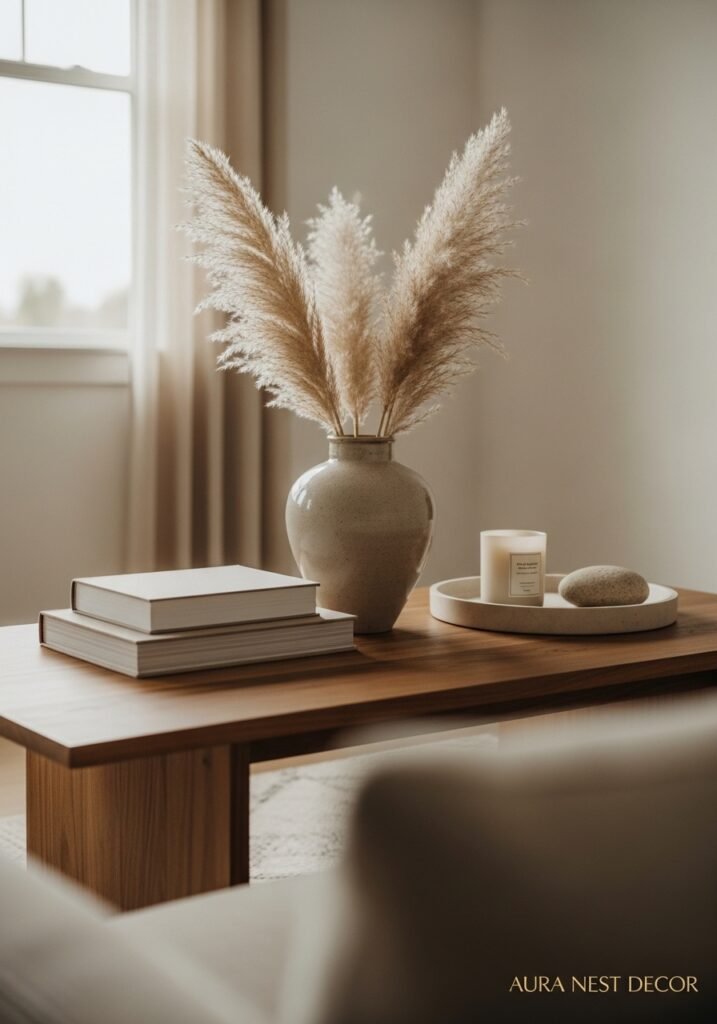
Pinterest coffee table photos are a whole genre unto themselves and it’s a genre I’ve spent an embarrassing amount of time studying. Here’s what I’ve figured out: the best ones have height variation, a living thing, and one item that doesn’t obviously “belong.”
The STOCKHOLM coffee table from IKEA has beautiful walnut veneer and legs that are just the right height — not too low, not so tall it feels formal. Style it with a stack of books (a couple of thick ones on the bottom, a smaller one on top), a candle in an interesting vessel, and a small plant — a succulent, a trailing pothos, anything with a bit of life. Then add the thing that doesn’t belong. A piece of pottery you brought back from somewhere. A weird little sculpture. Something that makes a person go “huh, what’s that.”
Because that’s the question that makes a room memorable. Not “where did you get that sofa” but “wait, what IS that thing on your coffee table.”
“The best rooms have one thing in them that takes a second to figure out.”
—
8. Plants: Which Ones Actually Survive a British or American Living Room
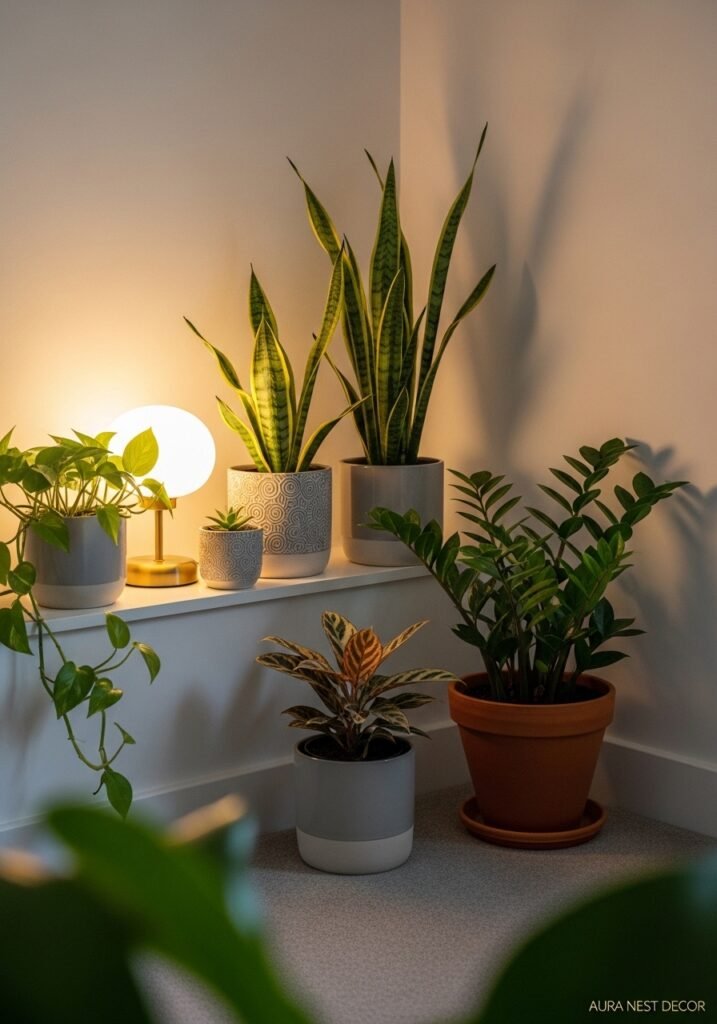
Let’s be real about this. Not all of us have great natural light. Most British living rooms don’t face south. A lot of American apartments have windows that look directly into another building. We still want plants.
IKEA stocks a decent range of low-light tolerant options. But if you’re buying plants there — the pothos, the ZZ plant, the snake plant — please, please put them in a proper pot. The plastic nursery pot stays. The plastic nursery pot goes inside a nice ceramic pot or a woven basket. The FÖRENKLAD pot covers are fine. The terracotta-style BLOMNING range is genuinely lovely. Or honestly just go to TK Maxx / TJ Maxx if you’re in the US and spend £8 on something with a bit more character.
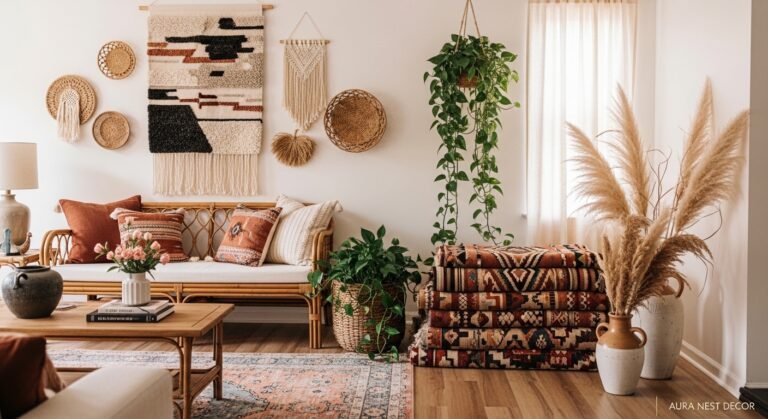
In terms of what actually survives: snake plants are practically immortal, pothos will grow in a dark cupboard if you let them, and a ZZ plant will tolerate neglect that would kill literally anything else. Add a monstera if you have a bright corner — they grow fast, they look dramatic, they photograph beautifully and they’re genuinely hard to kill.
—
9. The One Rule for Small Living Rooms That Makes Everything Feel Intentional
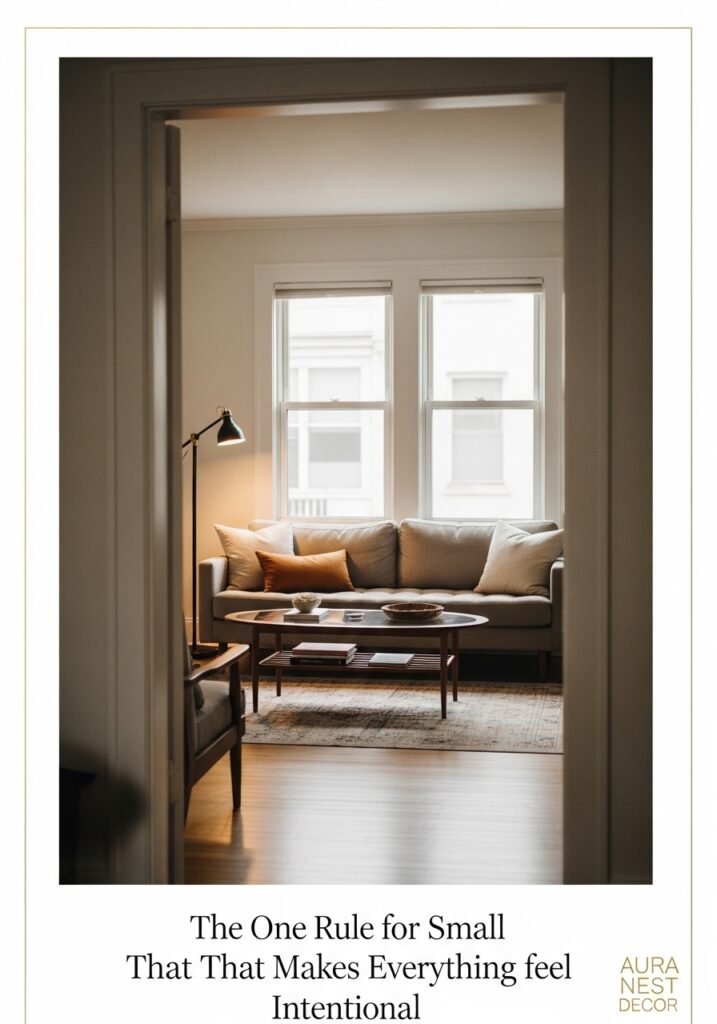
Here it is: don’t push all your furniture against the walls.
I know it feels like it creates more space. It doesn’t. What it actually does is create a weird empty patch in the middle of the room that no one knows what to do with, and it makes the seating feel disconnected, like people are sitting in a waiting room.
Pull the sofa in slightly. Even 8 or 10 inches from the wall. Float the furniture around a central point — the coffee table, the rug. It creates a sense of intimacy that you just don’t get when everything’s hugging the perimeter. In a small living room, intimacy IS cozy. That’s the goal.
Mirrors also do something genuinely useful in small spaces — not just reflecting light but making a room feel more layered and complex. The HOVET mirror from IKEA is huge and gorgeous and looks significantly more expensive than it is, which is a sentence I enjoy saying about any piece of furniture.
—
10. The Shelf Corner That Looks Like You Hired an Interiors Person
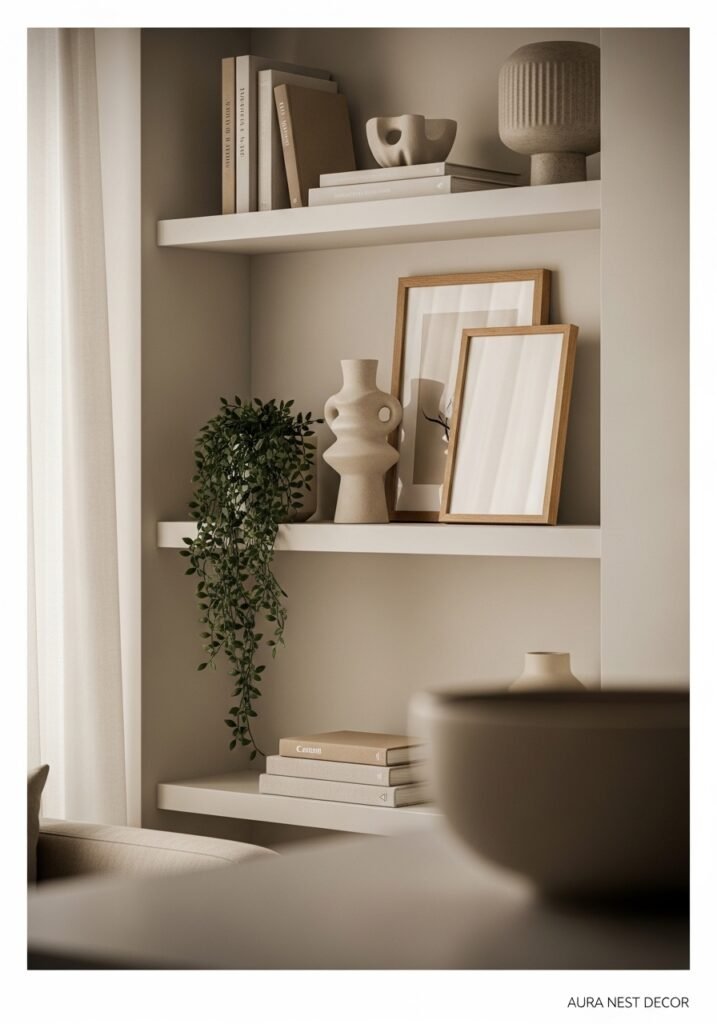
You know the corner I mean. The one where someone’s stacked a few interesting shelves, hung a large print or two, put a floor lamp in the gap, and somehow made what was just a corner into the most photographed spot in their house.
IKEA’s EKET shelving system is perfect for this. The cubes come in different sizes and depths and you can arrange them asymmetrically — which is KEY. Symmetry reads as formal. Asymmetry reads as lived-in. Mount three or four EKET cubes in an irregular arrangement — not perfectly aligned, slightly offset — and suddenly you’ve got a wall installation that looks completely intentional.
Add a leaning print or a framed piece of art on the floor nearby. Put a floor lamp — the HEKTAR is brilliant for this, adjustable and a bit industrial without being cold — in the corner behind or beside it. Trail a plant down from one of the higher shelves. The whole thing costs less than you’d expect and looks like it cost much more.
—
11. Scent Is a Design Element and You’re Not Using It Enough
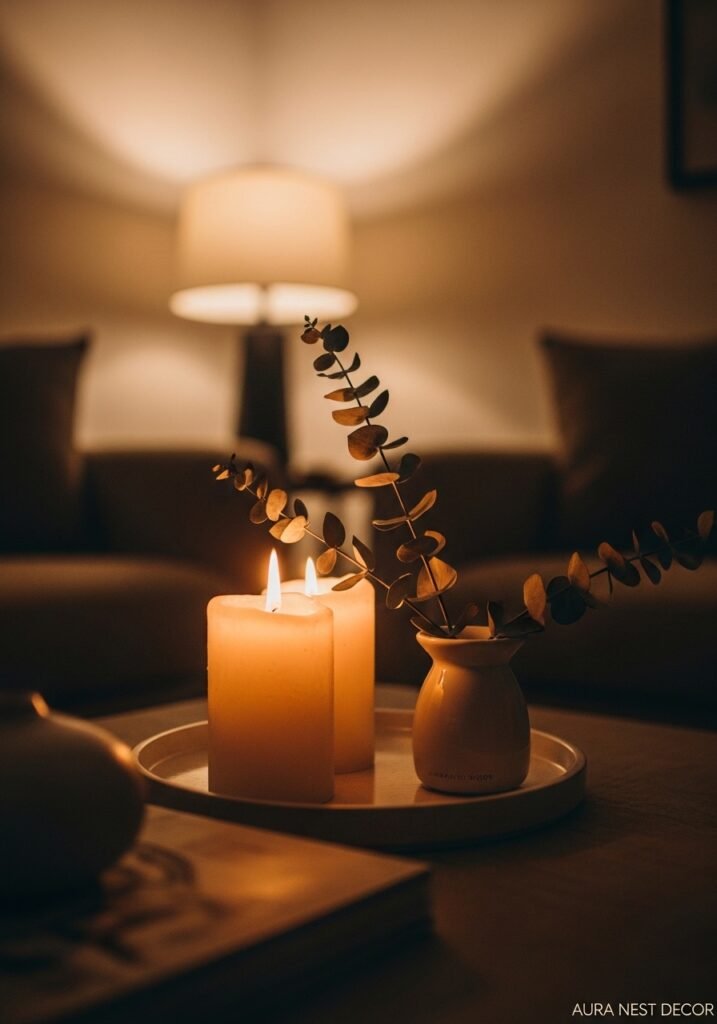
This one goes on the list because I genuinely think it’s underrated in interior design conversations. People think about what a room looks like. They don’t always think about what it smells like. But scent is POWERFUL. It’s arguably the fastest route to “cozy.”
IKEA’s candle range is solid — the ADLAD soy candles in particular burn cleanly and the scents aren’t overpowering. Warm sandalwood, sweet vanilla, something faintly resinous — these are the scents that make a room feel inhabited and welcoming rather than just clean and neutral.
A consistently scented home is a memorable one. When someone walks into a room that smells like cedar and warm wax, something happens in their brain before they’ve even registered the furniture. That’s the invisible layer of interior design that no one talks about enough. Get a candle you actually love and light it whenever you’re in the room. Make it part of the ritual.
—
12. The Final Thing That Makes an IKEA Living Room Feel Like Yours
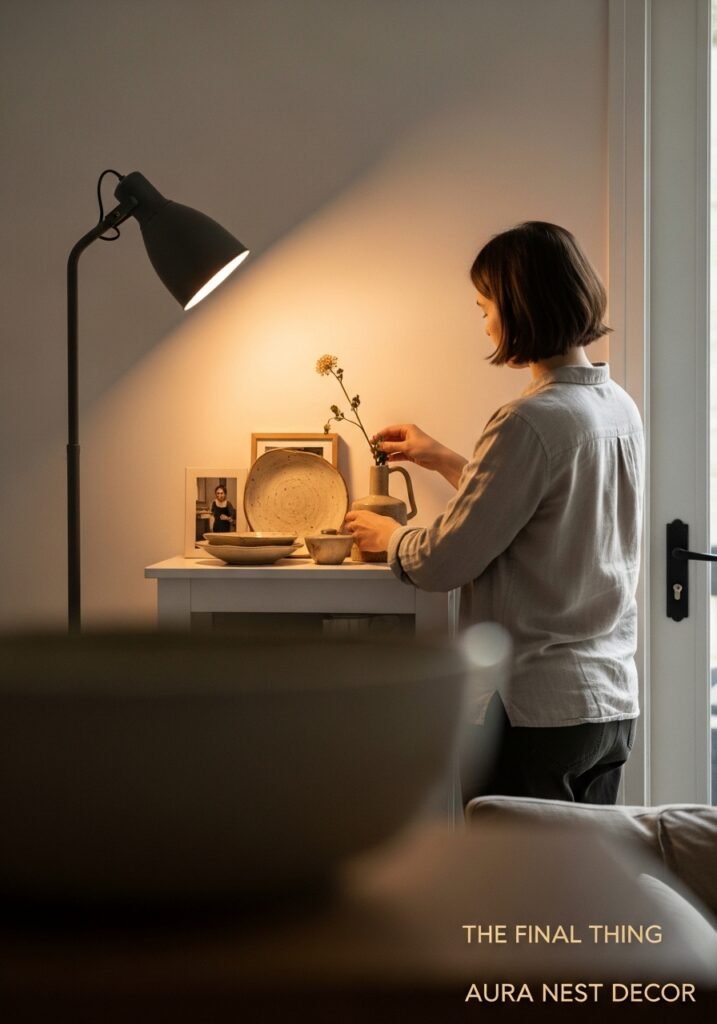
It’s the stuff that isn’t from IKEA.
Hear me out. IKEA is brilliant for the bones — the sofa, the shelves, the rugs, the lamps. But the things that make a room feel genuinely personal, the things that make someone look around and think “I could never exactly replicate this” — those come from elsewhere. A market. A charity shop. A holiday. A family member.
A chipped ceramic pot that you love irrationally. A throw blanket that your grandmother knitted. A framed print that means something to you specifically. A stack of books with actual cracked spines. These things are what IKEA can’t sell you and what no one can copy.
The best cozy living rooms on Pinterest don’t look like shops. They look like they belong to someone. That’s the difference. Layer the IKEA pieces well, use the lamp tricks and the rug rules and the shelf arrangements — and then add the things that are just yours. Irreplaceable, a little weird, completely specific. That’s where cozy lives.
—
❓ FAQ
Q: What’s the best IKEA sofa for a cozy living room? A: The KIVIK and FINNALA are both great — the FINNALA especially, because the cushions hold their shape and the covers are washable. If you’ve got a smaller space, the LANDSKRONA is worth a look too. Pair any of them with a chunky throw and you’re most of the way there.
Q: How do I make a small IKEA living room feel less cramped? A: Fewer pieces, better positioned. Resist the urge to push everything against the walls — pull the sofa in slightly, anchor it with a large rug, and use a tall mirror to add depth. Light matters enormously in small rooms too; a good floor lamp in the corner will open the space up more than you’d expect.
Q: Can IKEA furniture actually look expensive and intentional, or does it always look like IKEA? A: It absolutely can look intentional, but it rarely looks that way straight out of the flat-pack. The tricks that work best are: mixing IKEA pieces with non-IKEA items, going slightly off-script with the styling, using warm bulbs instead of bright overhead lighting, and adding texture through rugs, plants, and textiles. Context is everything.
—
💭 Final Thoughts
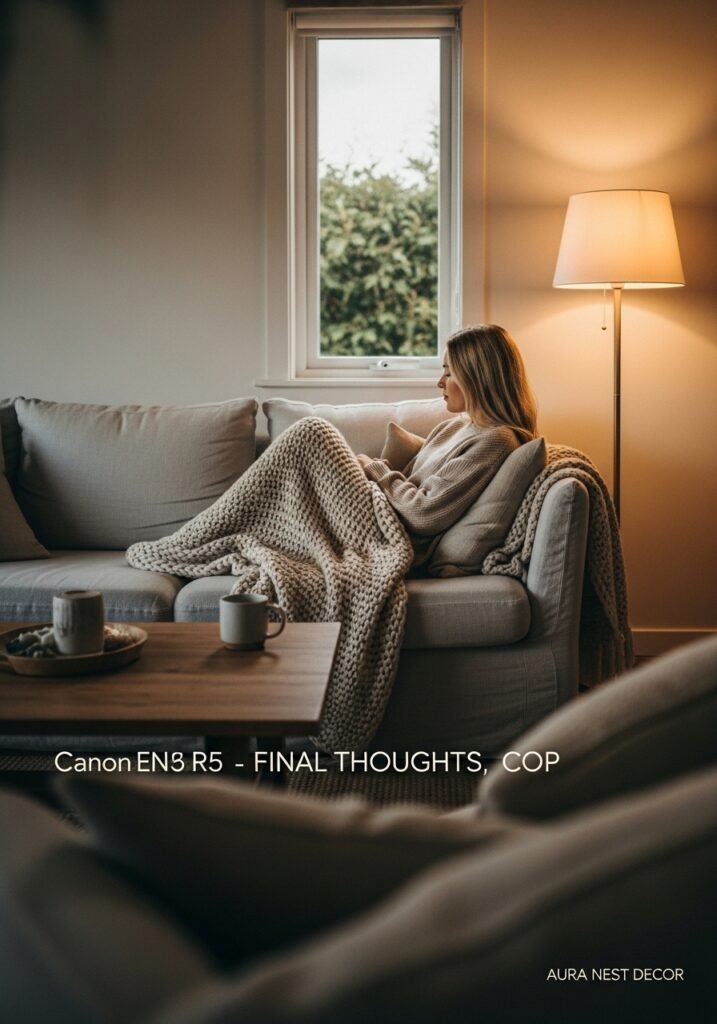
Making an IKEA living room feel cozy isn’t about spending more or buying better furniture — it’s about paying attention to the things that most people rush past. The light, the scent, the rug size, the one strange object on the coffee table that no one can quite explain. None of this is complicated. All of it takes about one afternoon to get right.
And honestly? The rooms I find most beautiful always have something slightly imperfect in them. A lamp that’s technically in the wrong place. A plant that’s outgrown its corner. A throw that’s never quite folded.
So what’s the one thing in your living room that’s completely yours, the thing no interior design guide told you to put there?