
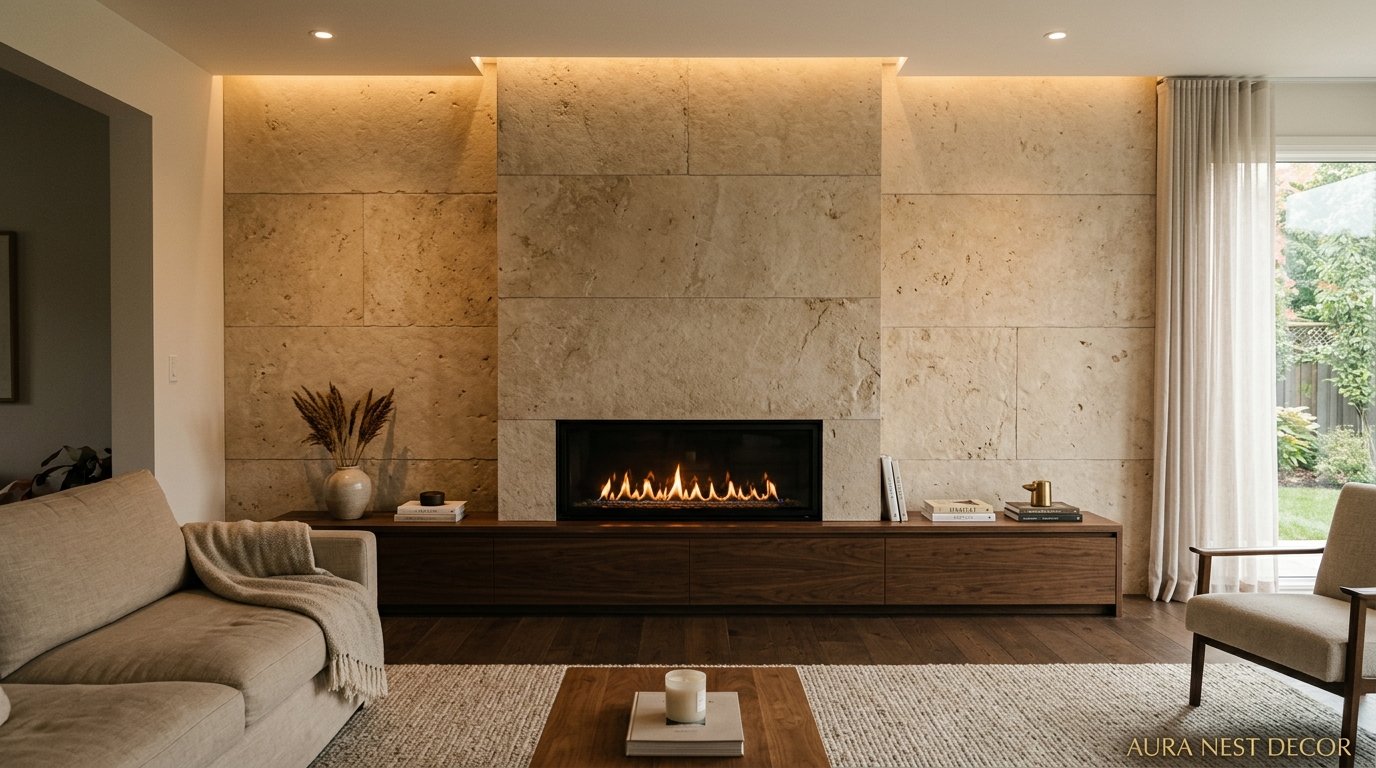
The Fireplace Wall That Makes Every Other Wall in Your House Feel Like It’s Trying Too Hard
You know that moment when you walk into someone’s living room and the fireplace wall just stops you? Not because it’s flashy. Because it’s right. That’s what we’re chasing here.
—
1. Why the Fireplace Wall Has Become the Most Talked-About Feature in Modern Homes Right Now
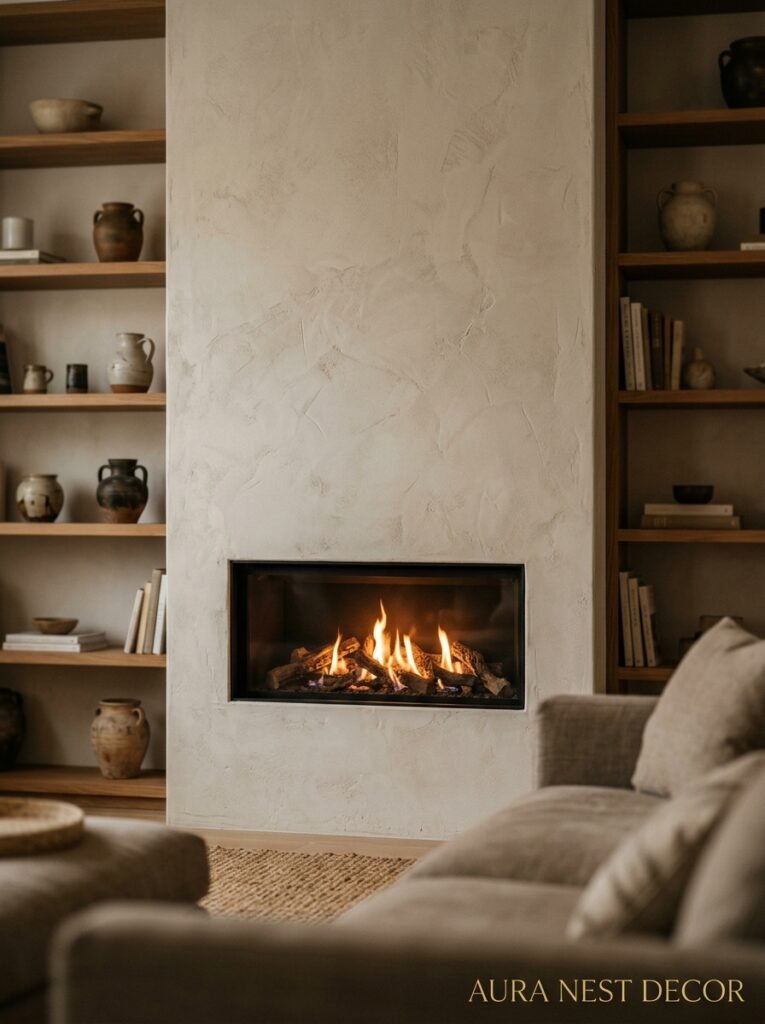
There’s something happening in living rooms across the US and the UK, and it’s not subtle. The fireplace wall — not just the fireplace, the WHOLE wall — has officially become the design obsession that’s replacing gallery walls, shiplap, and every other trend that felt fresh for about eighteen months before it got exhausting.
And I think I know why. After years of open-plan everything, airy minimalism, and spaces that looked great in photos but felt weirdly cold to actually live in, people want a focal point. A reason to sit down. A wall that says this is the center of things.
The modern fireplace wall does that without being heavy or traditional or fussy. It can be sleek and linear. It can be warm and textured. It can be the most architectural thing in your home without feeling like a museum. That’s a hard trick to pull off, honestly, and it’s why people are so obsessed with getting it right.
Side note — if you’ve been saving fireplace inspo on Pinterest for more than a year and still haven’t pulled the trigger, this is your sign. Not because you should rush it. Because you’ve clearly already got strong opinions about what you want.
“A fireplace wall isn’t just a design choice — it’s a decision about where your whole life in that room happens.”
2. The Surround Material That’s Quietly Edging Out Marble in Every Design-Forward Home
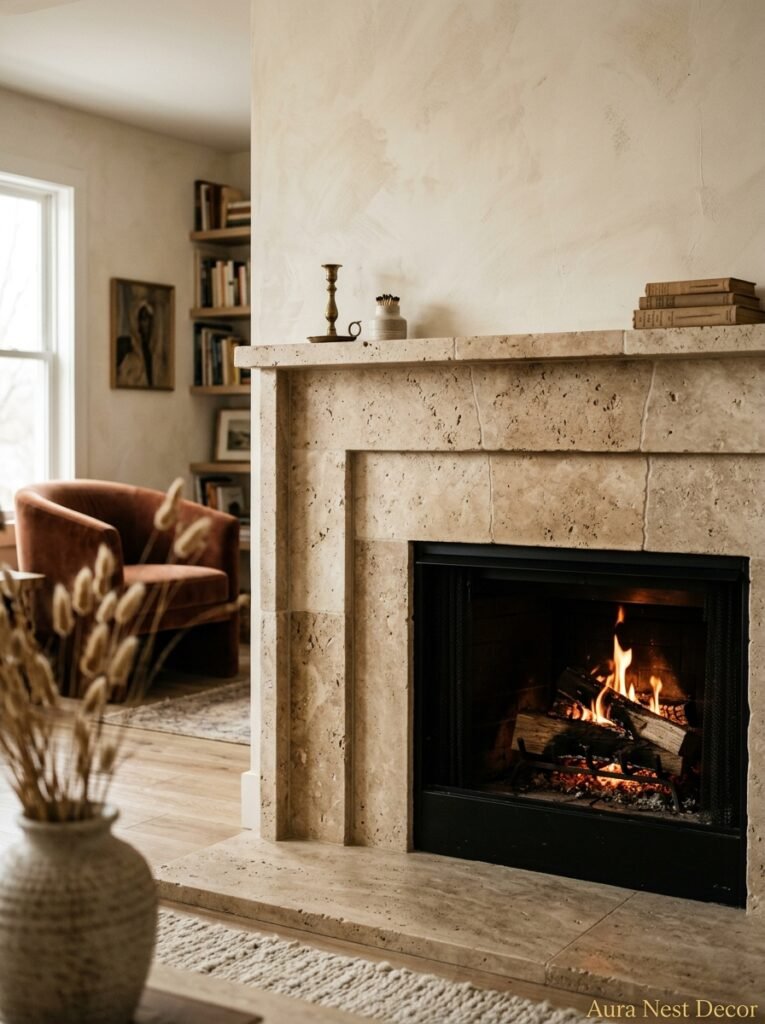
Marble had its moment. Still beautiful, still classic, but honestly? Limewashed plaster, honed limestone, and fluted stone are the surrounds showing up in every project I’m seeing right now that makes me catch my breath a little.
Fluted stone especially. There’s something about those vertical grooves that makes a fireplace look like it was always supposed to be there — like it grew out of the wall instead of being added to it. It’s contemporary but not cold. Sculptural but not dramatic. It works in a Georgian terrace in Islington and it works in a new build in Nashville, which is genuinely rare for any material.
Honed limestone is the quieter option, and I think it’s actually the better one for most people. It doesn’t compete. The color is warm without being yellow, the texture catches the light without making a statement about it, and it ages beautifully — which you can’t say about everything.
If you’re in the UK, you’re probably already seeing this everywhere. UK interiors have been ahead on this one for a while, particularly in the kind of calm, neutral, “considered” living rooms that British design does better than almost anyone. If you’re in the US, the aesthetic is arriving fast, particularly in coastal California and the northeast.
3. The Color Behind the Fireplace That Changes the Mood of the Entire Room
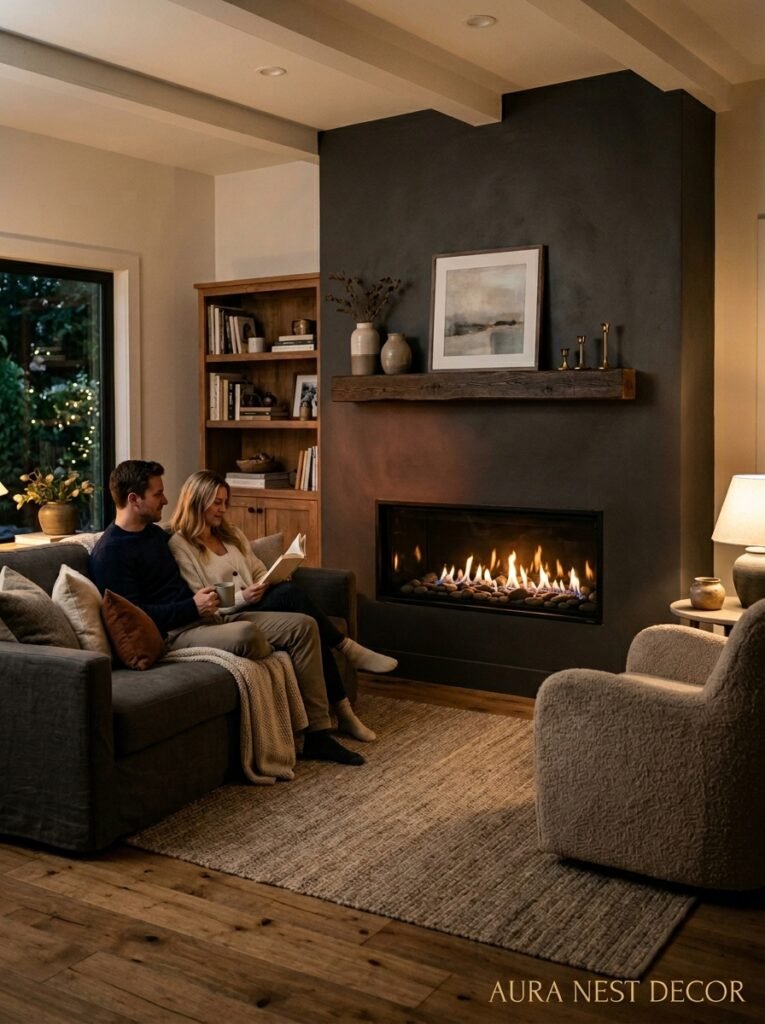
Here’s the thing about painting or paneling the fireplace wall a different color from the rest of the room — it’s not a rule, but when it works, it WORKS in a way that makes every other wall look like a placeholder.
The specific colors I keep coming back to. Deep charcoal. Dusty terracotta. A really particular shade of blue-gray that’s not quite navy and not quite slate. These don’t just accent the fireplace — they make it feel like the wall has a temperature. You look at a charcoal fireplace wall and you already feel warmer, which is kind of wild when you think about it.
What doesn’t work — and I feel strongly about this — is going too dark on a wall that doesn’t get much light. I’ve seen it. The fireplace disappears into the wall, you lose all the texture and detail, and suddenly your cozy focal point feels like a void. If your room is north-facing or smaller, go a shade or two lighter than your gut instinct.
The other move I love, particularly in older homes, is limewashing the entire fireplace wall — just that wall — in something chalky and uneven and slightly imperfect. It’s not for everyone. But if it’s for you, you’ll know immediately.
4. Built-Ins on Either Side: Why Getting the Proportion Wrong Ruins Everything
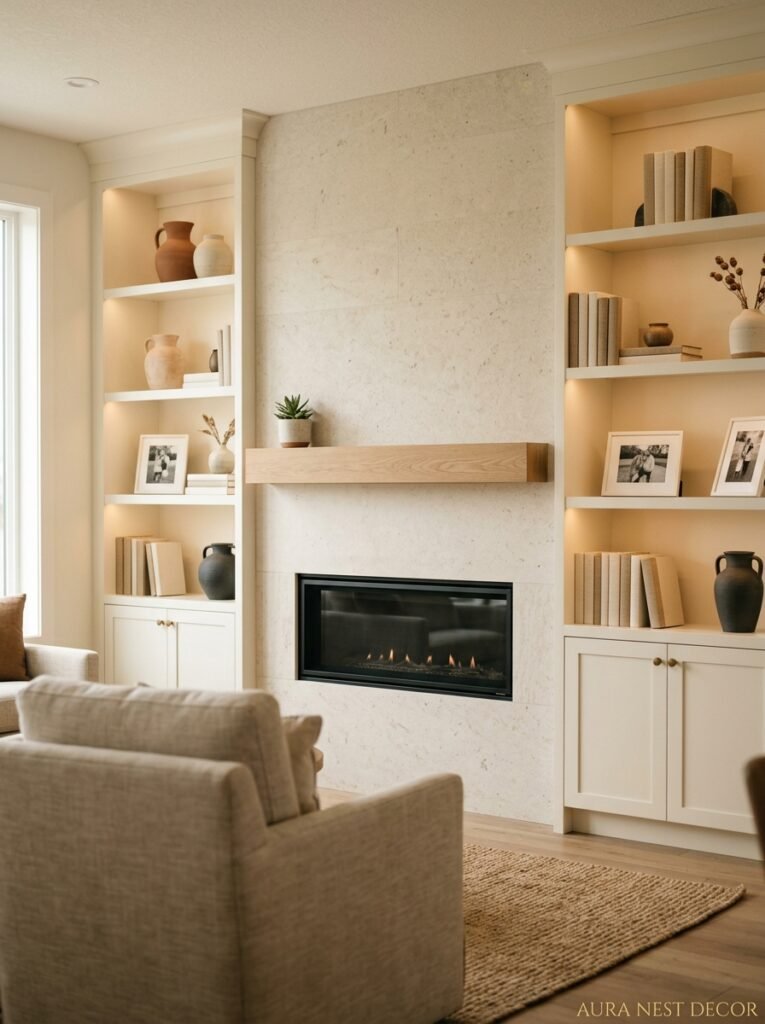
Built-in shelving flanking a fireplace is one of those ideas that seems like a guaranteed win. And it can be. But the proportion thing is real and I don’t think people talk about it enough.
If the built-ins are too tall, they dwarf the fireplace and you lose the focal point entirely. If they’re too shallow, they look like an afterthought — like you ran out of budget or nerve halfway through. The sweet spot is built-ins that are roughly the same height as the fireplace surround, or just slightly taller, with depth enough to hold actual books (not decorative box sets, REAL books, the kind with cracked spines and dog-eared pages).
The styling inside the built-ins matters almost as much as the structure. I’d argue more. A beautifully proportioned built-in stuffed with too many things looks chaotic. Leave gaps. Let things breathe. Put one interesting object where you’d expect three.
In terms of finish, the trend that’s sticking around is painting the built-ins the same color as the wall behind them so they feel architectural rather than furniture-like. It makes the whole wall feel designed rather than decorated. There’s a difference.
“The built-ins aren’t storage. They’re the frame. Everything you put in them is the painting.”
5. The Mantel Styling Mistake That Almost Everyone Makes at Least Once
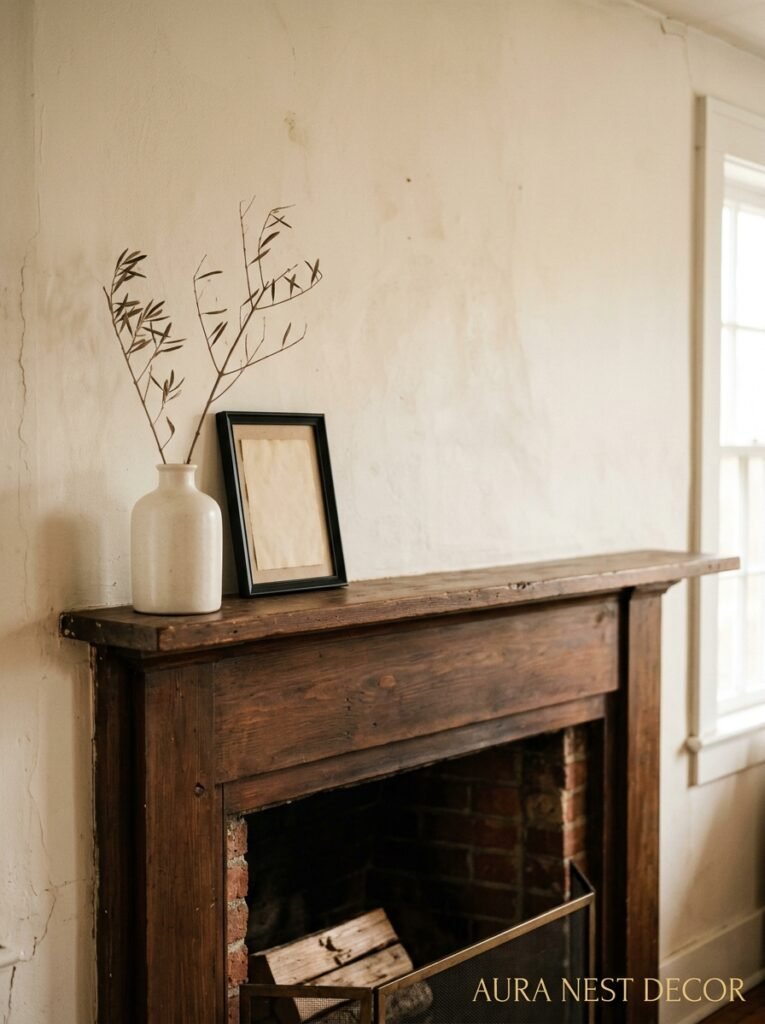
Too much symmetry. That’s it. That’s the mistake.
A perfectly mirrored mantel — matching candlesticks, centered mirror, identical vases — looks like a product display. And I say this having done it myself in a previous flat, confidently, only to realize months later that it looked like a very nice shop I didn’t particularly want to live in.
The better approach is almost-symmetry. One tall thing on one side, one low thing on the other. A large piece of art that’s offset slightly rather than perfectly centered. A single candle next to something organic — a branch, a piece of coral, a weird vintage jar you found at a car boot sale. The eye reads it as “designed” rather than “arranged,” which sounds like the same thing but feels completely different.
British homes often get this right instinctively, maybe because there’s such a strong tradition of mixing antiques with modern pieces. American homes sometimes struggle with the urge to match everything, which I understand — it feels safer — but it tends to flatten the whole composition.
Don’t overthink it. Put three things up. Step back. If it looks like a symmetry exercise, take one thing away.
6. Linear vs. Traditional: How to Know Which Fireplace Shape Is Actually Right for Your Room
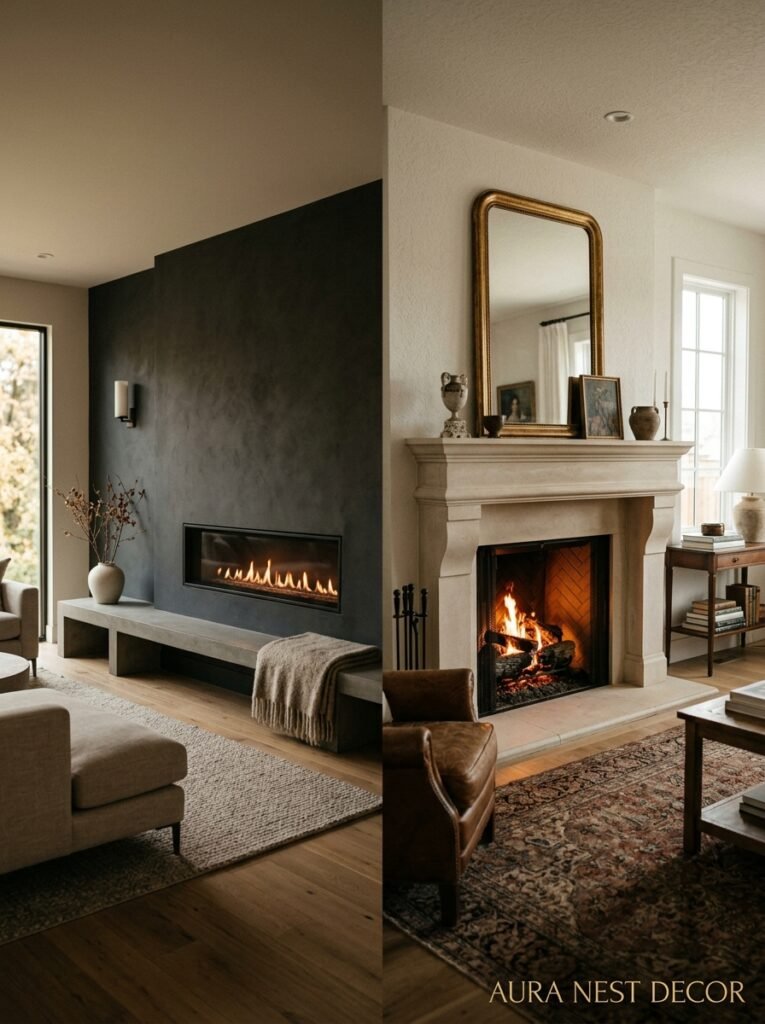
The linear fireplace — wide, low, almost more like a slot in the wall than a traditional hearth — is having a massive moment. And it IS beautiful. But I want to be honest about when it doesn’t work, because I think people see it in a beautifully photographed modern home and assume it’ll translate everywhere.
It tends to look stunning in rooms with high ceilings, generous square footage, and a very clean, minimal aesthetic overall. In a lower-ceilinged room with more furniture, more texture, more stuff, it can feel oddly disconnected — like it belongs in a different house.
Traditional arched or rectangular fireplace shapes are underrated right now, probably because they’ve been around forever, but they have a warmth and a groundedness that linear fireplaces sometimes lack. A traditional surround in a modern material — fluted plaster, polished concrete, raw steel — is often a more interesting choice than a linear fireplace in a conventional setting.
The question to ask yourself: does my room have the bones for linear, or am I trying to force it? Be honest. The room usually already knows.
7. The Hearth Detail That Interior Designers Keep Specifying and Homeowners Keep Overlooking
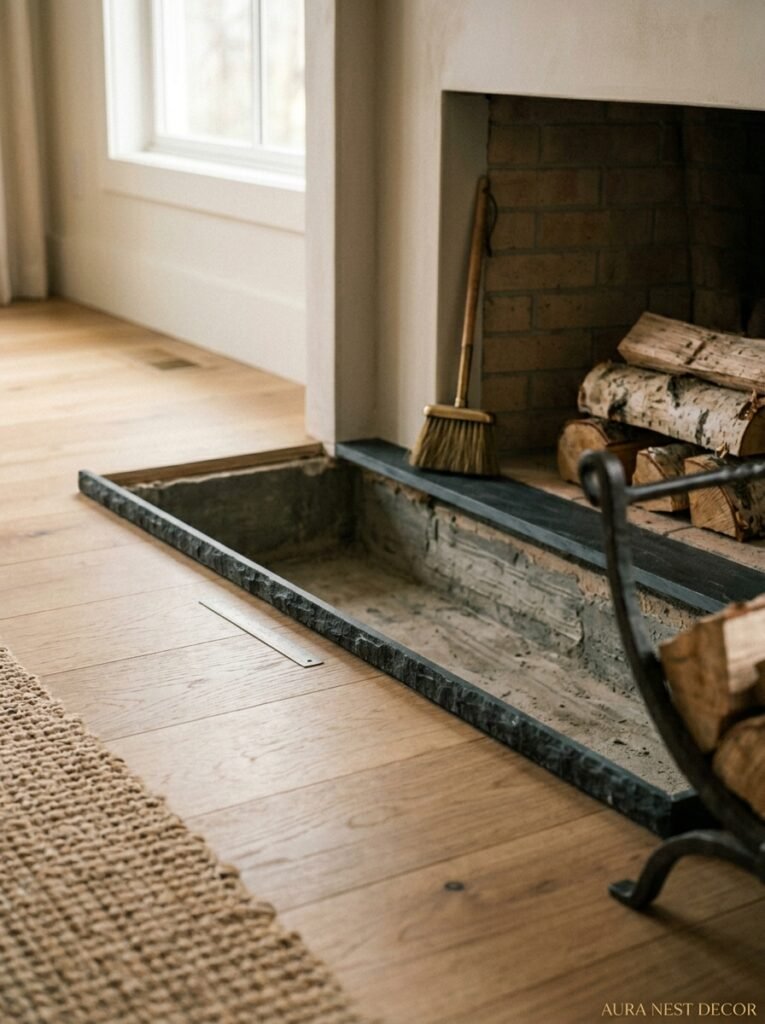
The hearth. The actual floor in front of the fireplace.
I’d estimate 80% of homeowners either don’t think about it at all or tile it in something that clashes with everything else in the room. Which is a shame, because a well-designed hearth is what grounds the whole wall and makes it feel truly finished.
The details that keep appearing in really well-designed living rooms right now: a hearth that extends further than you’d expect — sometimes 18 to 24 inches in front of the firebox — in a material that echoes something elsewhere in the room. If your kitchen has honed marble, bring a slab of it down to the hearth. If you’ve got a limestone surround, continue it into the floor.
Reclaimed brick set in a herringbone pattern is having a quiet revival too, particularly in the UK where there’s a stronger tradition of it. It reads as modern when it’s surrounded by contemporary materials. Somehow. Don’t ask me to explain that one.
The other thing — and this is small but it matters — is keeping the hearth clear. Not empty, necessarily, but uncluttered. A single log holder. A beautiful set of fire irons. That’s it. The hearth doesn’t need to be styled, it needs to breathe.
“The hearth is the floor of the most important wall in your house. Don’t treat it like an afterthought.”
8. What to Do When You Don’t Have a Real Fireplace and You’re Tired of Pretending a TV Counts
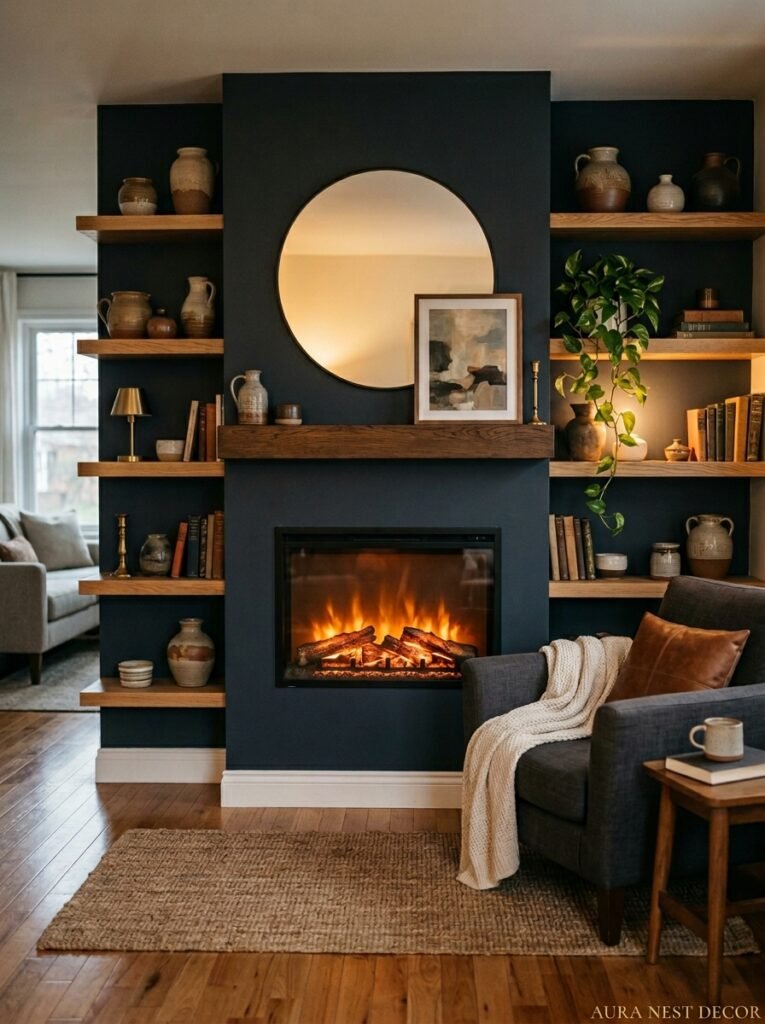
Electric fireplaces have come so far. I’ll just say it plainly because a few years ago that sentence would have felt embarrassing to type.
Modern electric inserts, particularly the ones with water vapor flame effects, are genuinely convincing in a way that older electric fires absolutely weren’t. The flame movement is irregular in the right way, the glow is warm rather than orange-cartoon, and some of them produce real heat. The technology caught up to the aesthetic.
The trick to making an electric fireplace look intentional rather than apologetic is the same as making a real one look good: it’s ALL about the surround and the wall treatment. A beautiful plaster surround, a deep textured wall behind it, proper built-ins — the fireplace insert itself is maybe 30% of what you’re looking at. Invest in the architecture around it, not just the appliance inside it.
Same principle applies in UK homes where a lot of older fireplaces have been blocked up. A reclaimed surround from an architectural salvage yard, a good electric insert, the right wall treatment — nobody’s checking the flue.
9. The TV-Above-the-Fireplace Debate, Settled (Sort Of)
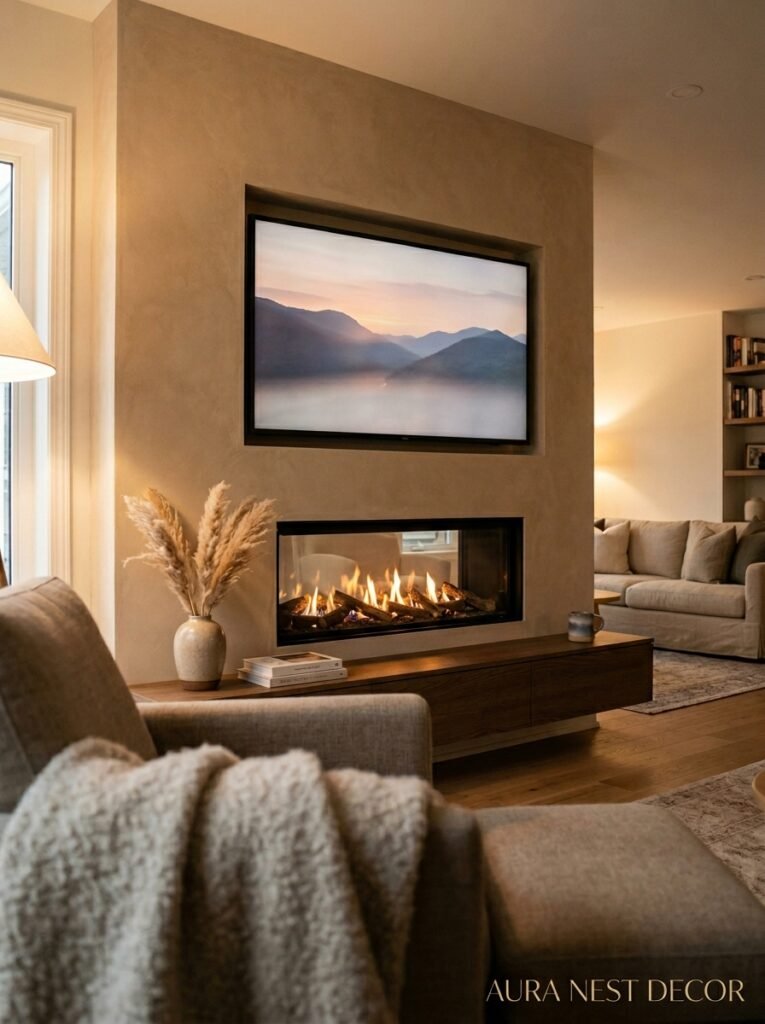
Okay. People feel STRONGLY about this and I’ve gone back and forth myself, so let me tell you where I’ve landed.
Mounting a TV above a fireplace is ergonomically awkward — you’re craning your neck upward, the heat can affect the screen over time, and design-wise it often makes the whole wall feel like it’s competing with itself. These are real concerns and I’m not dismissing them.
But. In a lot of real homes, with real furniture layouts and real constraints, it’s the only arrangement that actually works. And when it’s done well — TV recessed slightly into the wall, fireplace below, the whole thing framed as one composed unit rather than two separate things fighting for attention — it can look genuinely considered.
The key is commission, not compromise. If the TV is going above the fireplace, design the wall around that decision from the start. Don’t add the TV to a finished fireplace wall. Build the wall knowing the TV is part of it.
What I’d push back on is the mounting height. Most people mount it too high. If it’s going above the fireplace, get it as low as the surround allows. The difference between 8 inches of clearance and 18 inches of clearance is the difference between a designed choice and a practical afterthought.
10. The Lighting That Does More for a Fireplace Wall Than Any Other Single Change
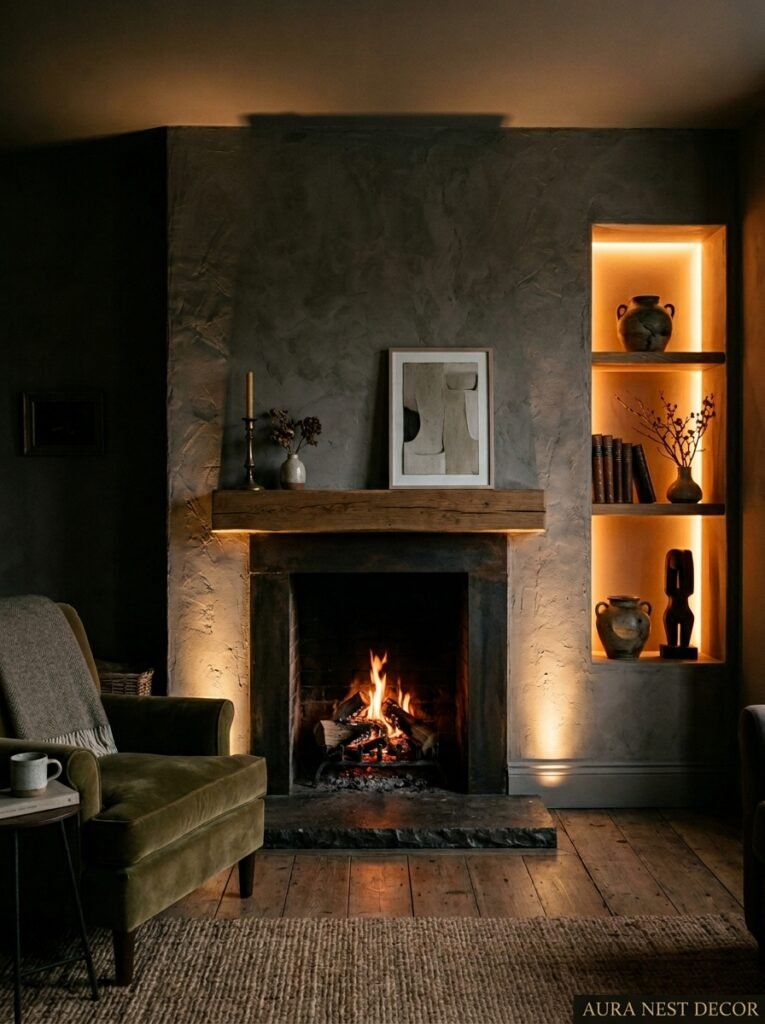
Recessed ceiling lights pointed AT the fireplace wall. That’s it. That one change.
Most people light their living rooms from the center of the ceiling, which gives you flat, even, serviceable light that makes everything look slightly like an office. Aim a couple of recessed spots directly at the fireplace wall — at the surround, at the shelving, at whatever is happening on that wall — and suddenly the whole room has depth, shadow, dimension.
The amber glow of an Edison bulb at 7pm, aimed at a textured stone surround. That specific thing. It does more for a room than a renovation.
Sconces on either side of the fireplace are the other move I keep recommending because they add warmth at the right height. Eye level. Where you actually want light when you’re sitting down. A lot of homes have their light sources too high, which gives you great illumination for the ceiling and slightly sad light for the humans.
11. The Specific Furniture Arrangement Around a Fireplace Wall That Keeps Getting Pinned Over and Over
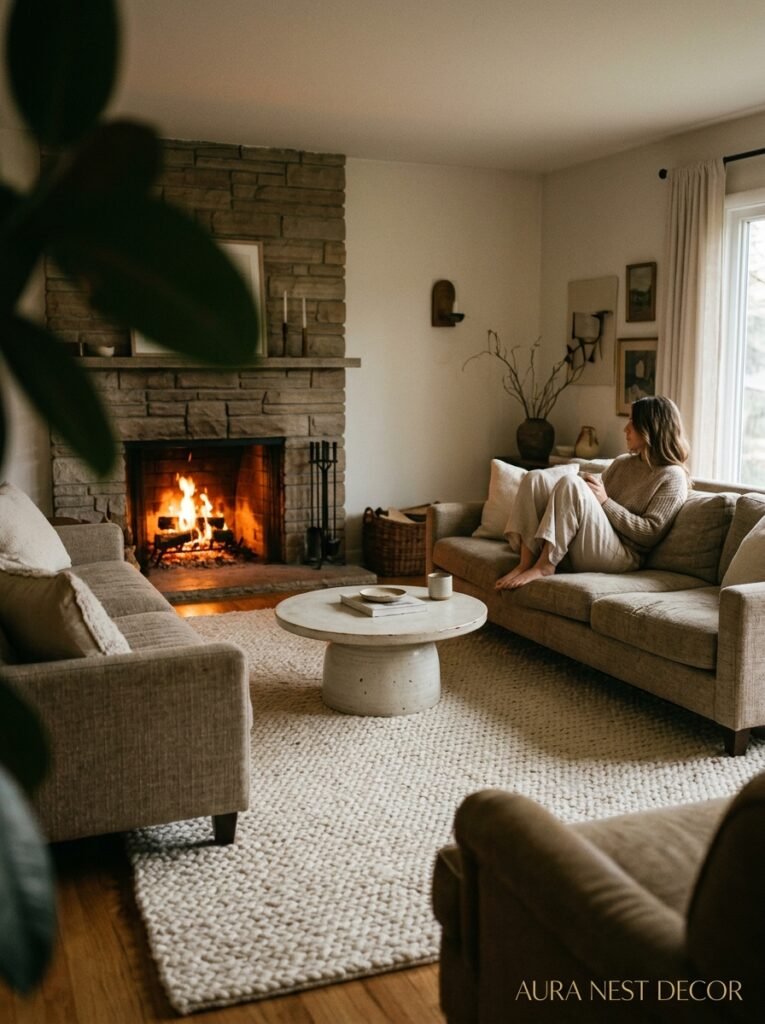
Two sofas facing each other across a coffee table, both oriented toward the fireplace, with enough space between them to actually move around. That’s the arrangement. It’s not complicated.
What makes it feel current rather than traditional is the asymmetry you introduce within it. Maybe one sofa is a classic tuxedo shape and the other is a lower, more casual sectional piece. Maybe one side has an armchair and a floor lamp instead of a second sofa. The basic geometry stays the same — conversation focused on the fireplace — but the pieces themselves don’t match.
What kills it is when furniture is pushed too far away from the fireplace trying to make a small room feel larger. It usually does the opposite — the room just feels disconnected. Pull things in. Closer than feels comfortable. It almost always works better.
12. The One Material Combination That Keeps Showing Up in Every Fireplace Wall I’m Saving
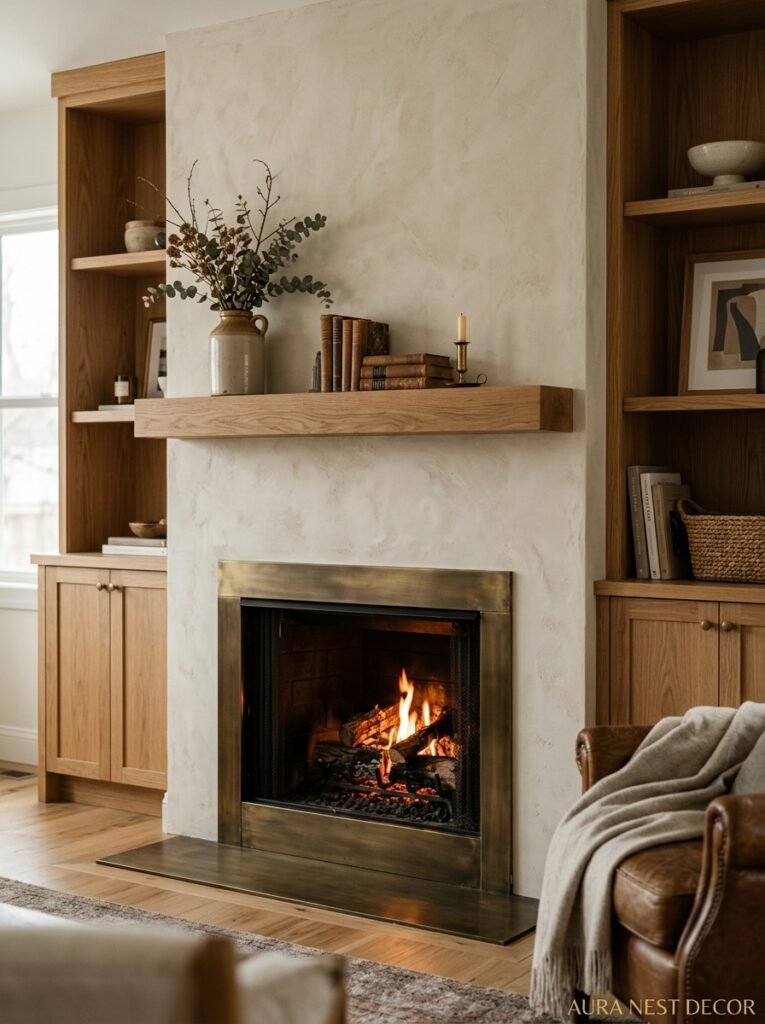
Raw oak with matte plaster. Every time.
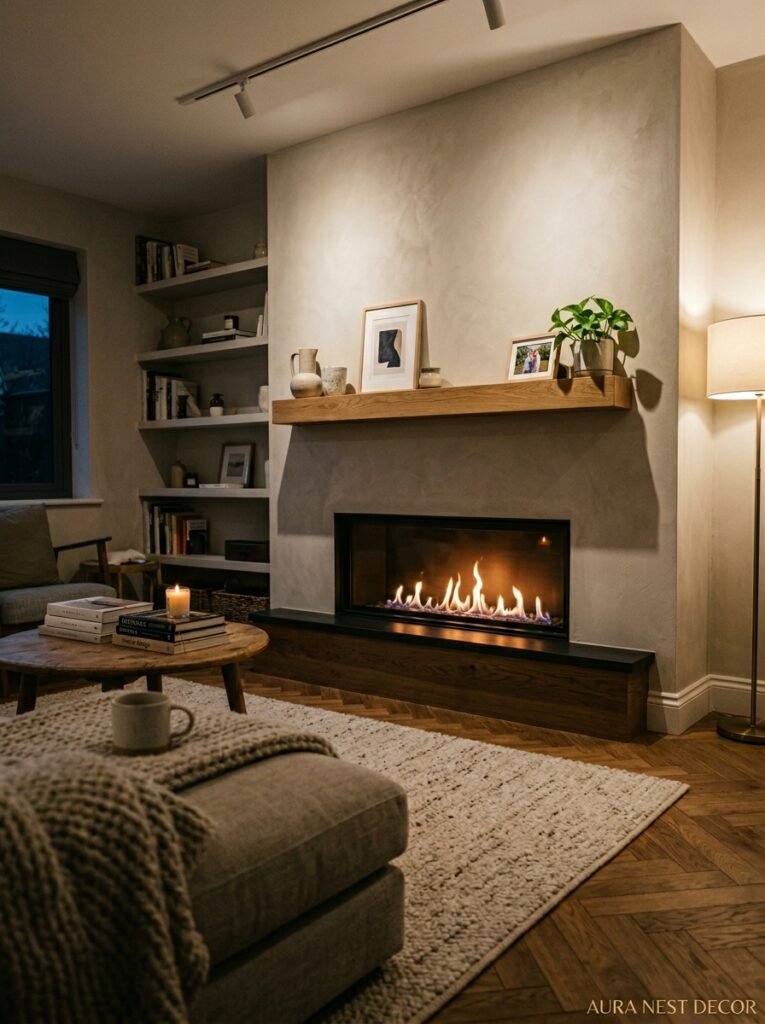
I keep saving images of it and I can’t stop. There’s something about the grain of raw or lightly oiled oak against the slight imperfection of a plaster wall — whether that’s limewash, Italian polished plaster, or just a well-done matte paint — that feels completely right for this moment. Not trendy. Just right.
In practice, this might mean oak-faced built-in shelving against a limewashed wall. Or an oak mantel shelf floating above a plaster surround. Or oak flooring that runs right up to a hearthstone, with a plastered chimney breast above it.
The combination works because it’s warm without being rustic, modern without being cold, and natural without being literally wallpapered in plants. Which is not nothing.
If you’re not ready to commit to a full wall treatment, start with a single oak shelf above the firebox. It’s a small thing and it changes everything.
—
❓ FAQ
Q: What’s the most affordable way to update a dated fireplace wall without a full renovation? A: Honestly, paint and a new mantel shelf. Limewashing or painting just the chimney breast in a contrasting color costs almost nothing and makes the whole room feel intentional. A floating oak shelf above the firebox — you can source these for well under $200/£150 — adds warmth and something to style around. You don’t need to touch the surround at all.
Q: Is it okay to mount a TV above a fireplace in the UK where ceilings are lower? A: In a lot of UK homes, especially Victorian and Edwardian terraces with lower ceiling heights, mounting the TV directly above the fireplace can work surprisingly well because the proportions are already more compact. The main thing is mounting height — get it as low as possible above the surround and keep everything on the same wall rather than competing with it.
Q: What’s the most timeless modern fireplace surround material if I don’t want to redo it in ten years? A: Honed limestone or a simple plaster surround. Both are completely classic in a way that isn’t trend-dependent — you could dress them up or down, paint around them, change the mantel styling entirely, and they’d still look right. Fluted stone is beautiful right now but I’d keep an eye on how it ages before committing to it as a forever choice.
—
💭 Final Thoughts
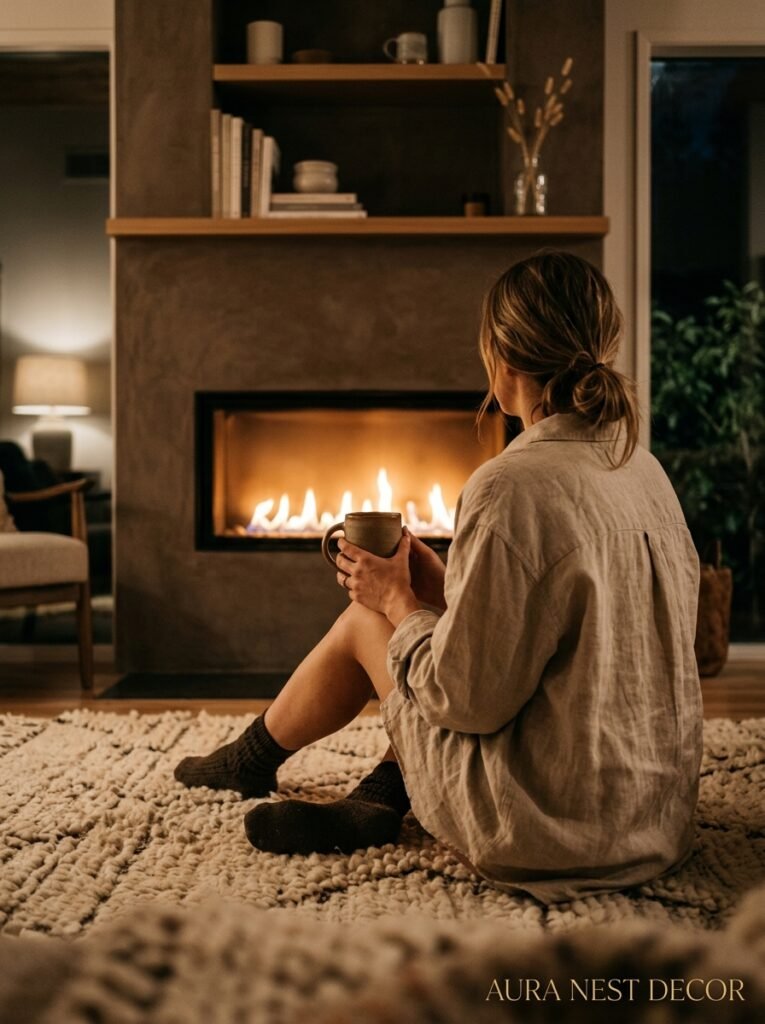
The best fireplace walls I’ve ever walked into didn’t feel designed. They felt found, like whoever lived there had simply made a series of quiet decisions over time and ended up with something that was completely theirs. That’s the goal — not a Pinterest board brought to life, but a wall that actually belongs to your room, your house, your particular way of being at home.
The thing is, that feeling is completely achievable. It just requires caring about the details that nobody else is going to notice consciously but that everybody feels.
What’s the one change you’d make to your fireplace wall if cost wasn’t the first thing you thought about?