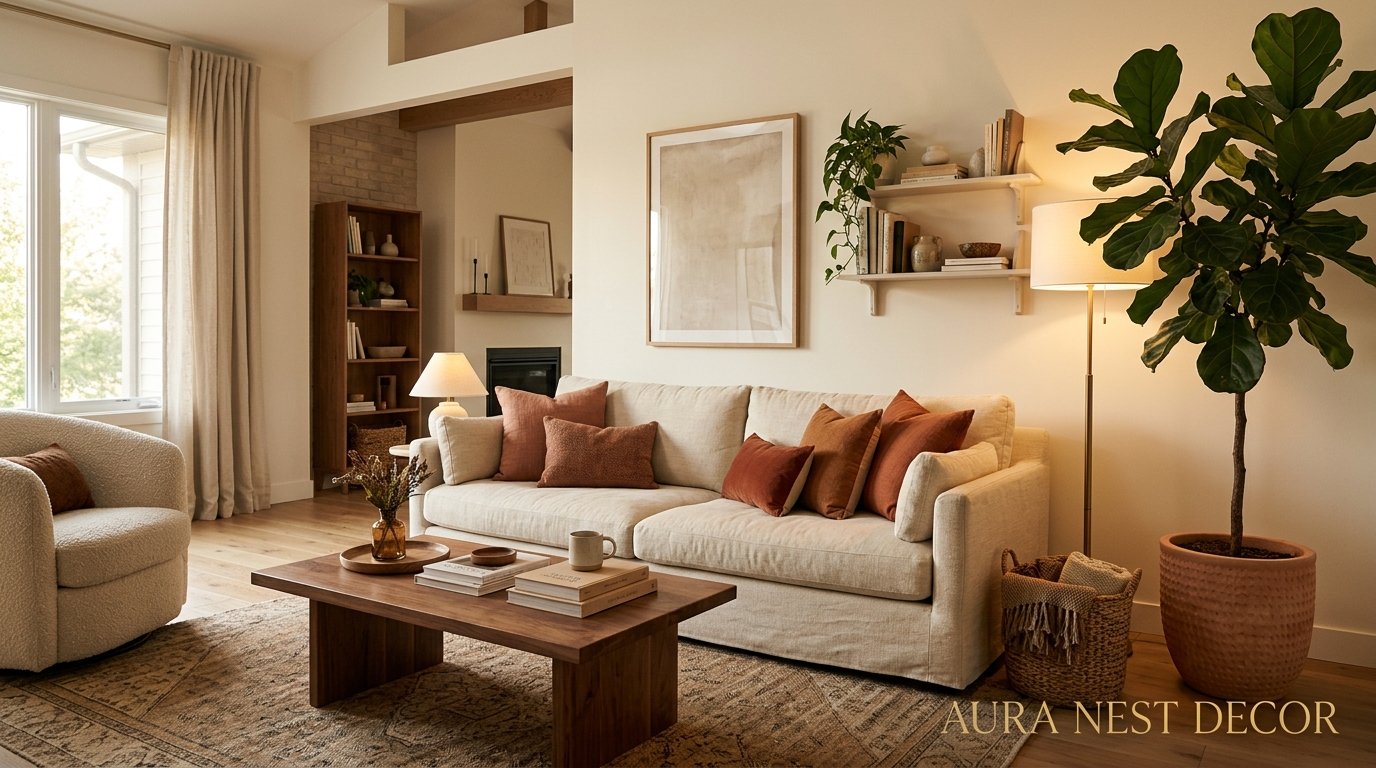
Why Every “Warm Modern” Living Room That Actually Works Breaks One Rule You’ve Been Following
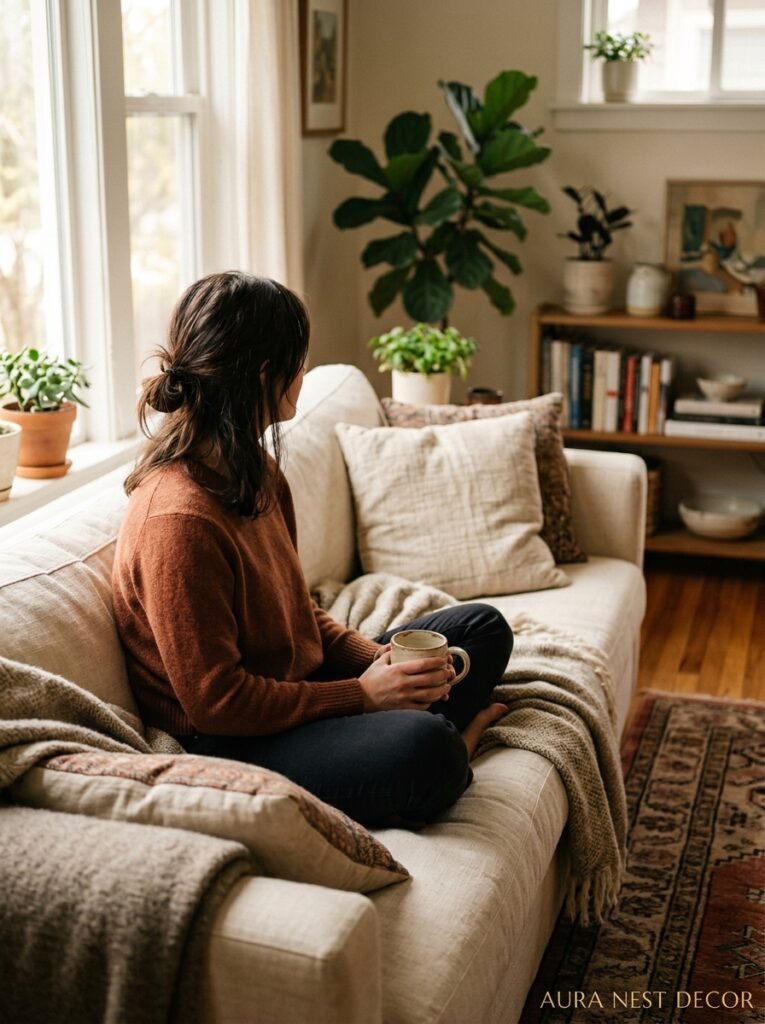
You know that moment when you walk into someone’s living room and immediately want to cancel your own plans, sink into their sofa, and never leave? That’s the feeling. And it’s not an accident, and it’s not expensive — but it does require unlearning something almost every design guide tells you to do.
—
1. The Myth of the “Cohesive Color Palette” (And What to Do Instead)
Every Pinterest board, every design blog, every well-meaning friend who watched one too many home renovation shows will tell you: pick three colors and stick to them. Keep it cohesive. Stay consistent. And honestly? That’s exactly why so many modern living rooms feel cold.
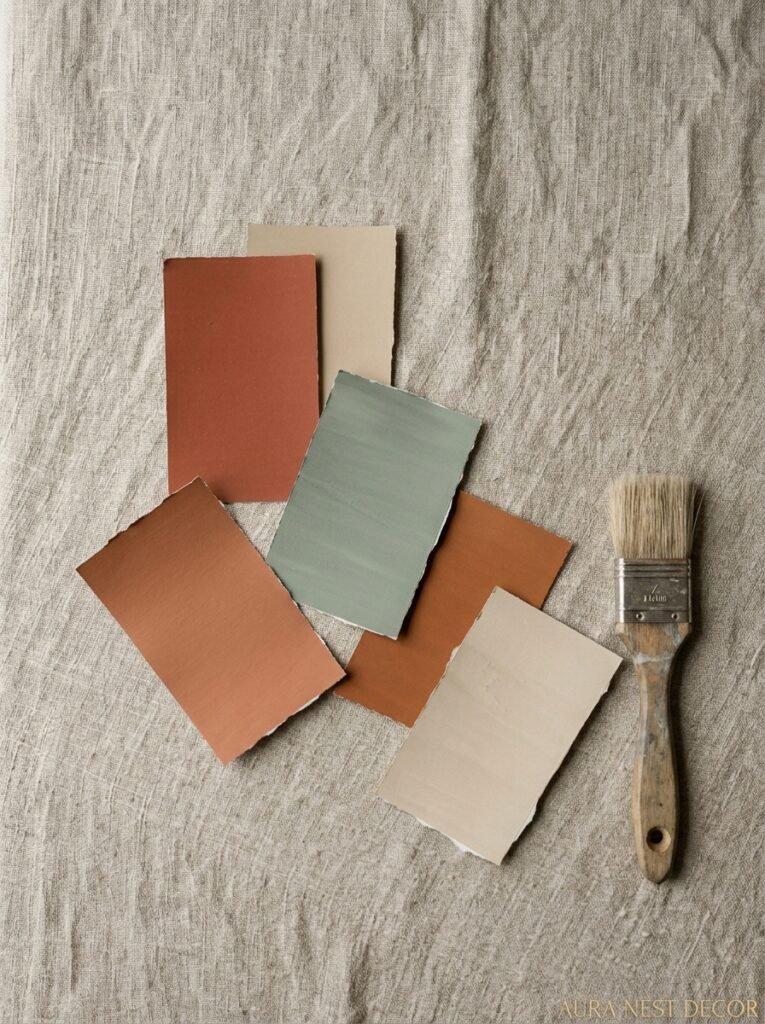
Real warmth doesn’t come from color matching. It comes from color layering — and those are completely different things.
Here’s what I mean. A warm modern living room usually has a BASE color that reads as neutral — think warm white, oat, deep charcoal, even a dusty sage. But then it has DEPTH. A terra cotta pillow. A rust-colored throw that’s slightly too bold. A lamp that’s almost caramel. None of these “go together” in the way a Pinterest grid suggests they should. But in person? They feel like the room took a breath.
The rooms I can’t stop saving on Pinterest share one trait: something slightly off. A navy chair in an otherwise warm-toned room. A weathered brass candleholder next to something obviously brand-new. That tension is what makes a space feel real, not staged. Staged feels cold. Imperfect feels like home.
So the rule to break? The three-color rule. Pick a mood instead.
“A room built around a mood will always feel more alive than one built around a palette.”
—
2. The Sofa Decision You’ll Regret If You Play It Safe
Let’s talk about the sofa, because this is where most people lose their nerve and I completely understand why. It’s expensive. It’s large. It stays for a decade. So people play it safe and go gray. Pale gray, medium gray, cool gray. And then they wonder why the room feels like a dentist’s waiting area.
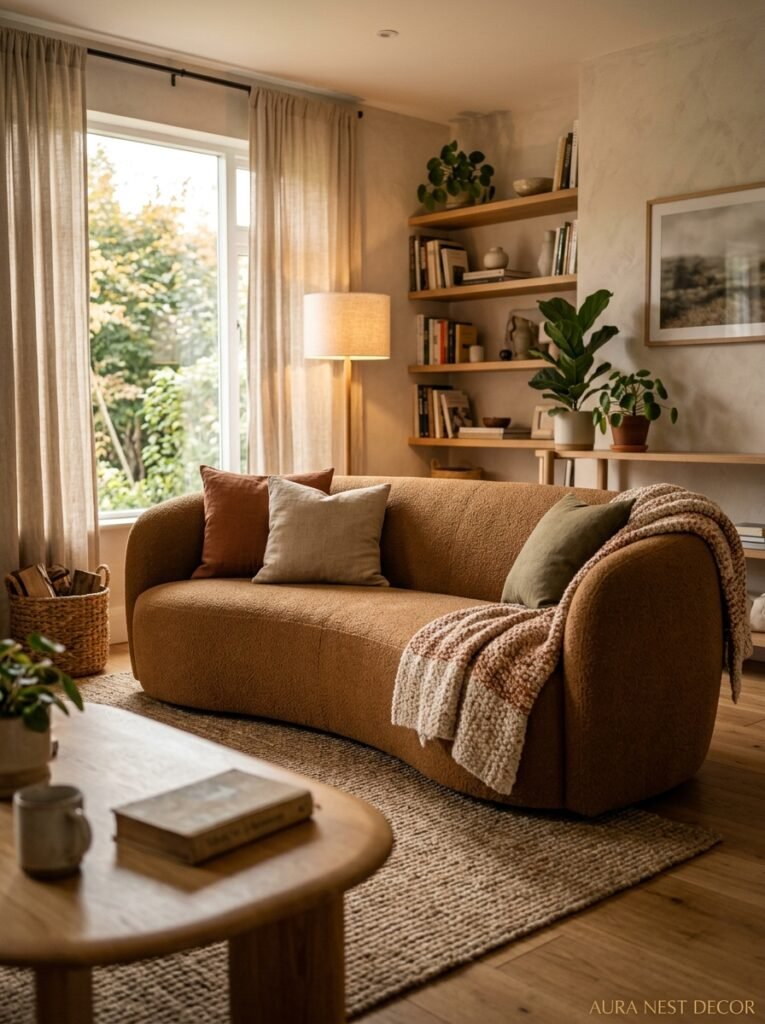
For a warm modern living room, the sofa doesn’t have to be a statement piece in a loud way — but it needs WARMTH. Camel leather is having a serious moment and for good reason. It works in a Victorian terrace in Bristol AND a newer build in Nashville. It catches light differently throughout the day. It looks expensive and also slightly lived-in from day one.
If leather isn’t your thing (it’s not mine, honestly, I run hot and the squeaking drives me insane), look at boucle in a warm off-white or oat tone, or a deep moss green velvet. The velvet option is more commitment but nothing — NOTHING — makes a room feel warmer in winter than a velvet sofa with good throw pillows piled on it.
And if you already have a gray sofa, don’t panic. This is fixable. Warm it up with layered textiles in burnt orange, terracotta, or even a deep plum. The sofa recedes when the accessories are doing their job.
—
3. The Color That Keeps Appearing in Every Warm Modern Room That Stops Me Mid-Scroll
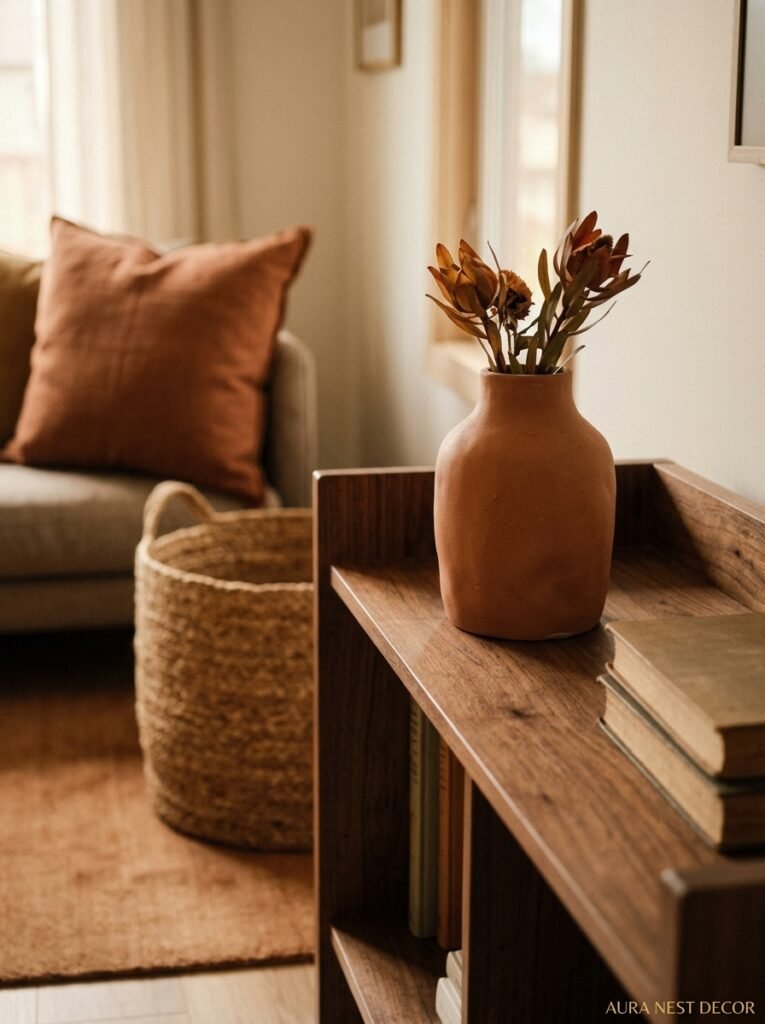
Terracotta. I know, you’ve heard it. But I want to explain WHY it keeps working, because it’s not a trend at this point — it’s genuinely one of the most versatile tones in interior design, especially for warm modern spaces.
Terracotta isn’t just orange. It’s got brown in it, and sometimes almost a dusty pink undertone depending on the light. That complexity is what makes it so useful. It plays nicely with cool neutrals without fighting them. It warms up a room without making it feel like a Spanish villa (unless you want that, in which case, GO OFF).
The trick with terracotta in a warm modern space is to keep it quiet. Don’t paint every wall, don’t buy every accessory. One terracotta ceramic lamp base. A throw in a slightly washed-out version of the color. Maybe a small piece of art. It should feel like the room has been kissed by it, not soaked.
I’ve seen it work beautifully against dark wood furniture, against warm white walls, even against charcoal — that last combination always catches me off guard and I’m always impressed. The contrast is high but somehow the warmth wins.
—
4. Lighting Isn’t a Category, It’s a Conversation Your Room Is Having With Itself
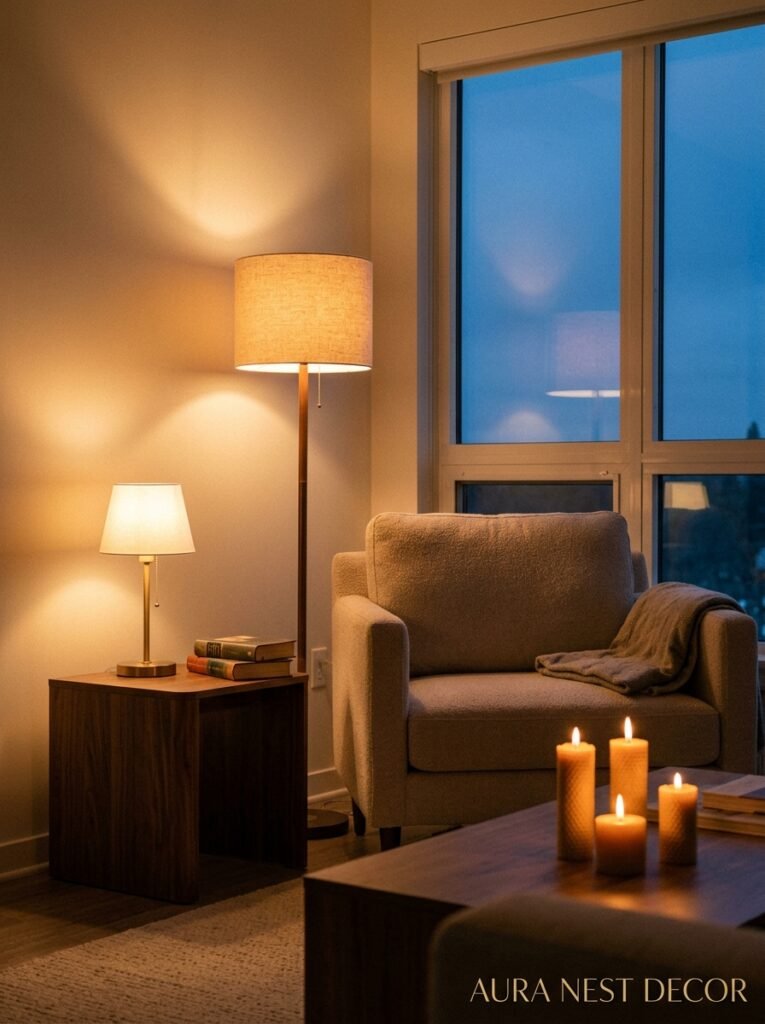
Here’s where I’ll probably say something that sounds dramatic: most living rooms have completely wrong lighting and that’s why they don’t feel warm.
Not wrong as in broken. Wrong as in: overhead lights on full blast at 7pm. That flat, surgical brightness. It makes everyone look slightly unwell and it makes your room look like a hotel conference space. I don’t care how beautiful your furniture is — overhead lighting at full brightness will kill it.
Warm modern living rooms layer light. Floor lamp in a corner throwing a pool of amber. Table lamp on the sideboard. Candles, if you’re that person (I try to be, I’m not always). The overhead light, if it’s on at all in the evening, is dimmed way down — just enough to navigate the room.
The actual COLOR of the bulbs matters too. Warm white, around 2700K. Not “soft white” which can read a bit yellow on some walls. Specifically warm white. Edison bulbs do something genuinely magical in a glass pendant or an exposed-bulb lamp. The amber glow of an Edison bulb at 7pm in winter when it’s dark outside and you’ve got a candle going on the coffee table — that’s the FEELING you’re going for. Not a design look. An actual feeling.
“You can’t buy warmth with furniture. But you can accidentally sell it with the wrong light bulb.”
—
5. The One Rule That Makes Any Small Living Room Feel Intentional Instead of Cluttered
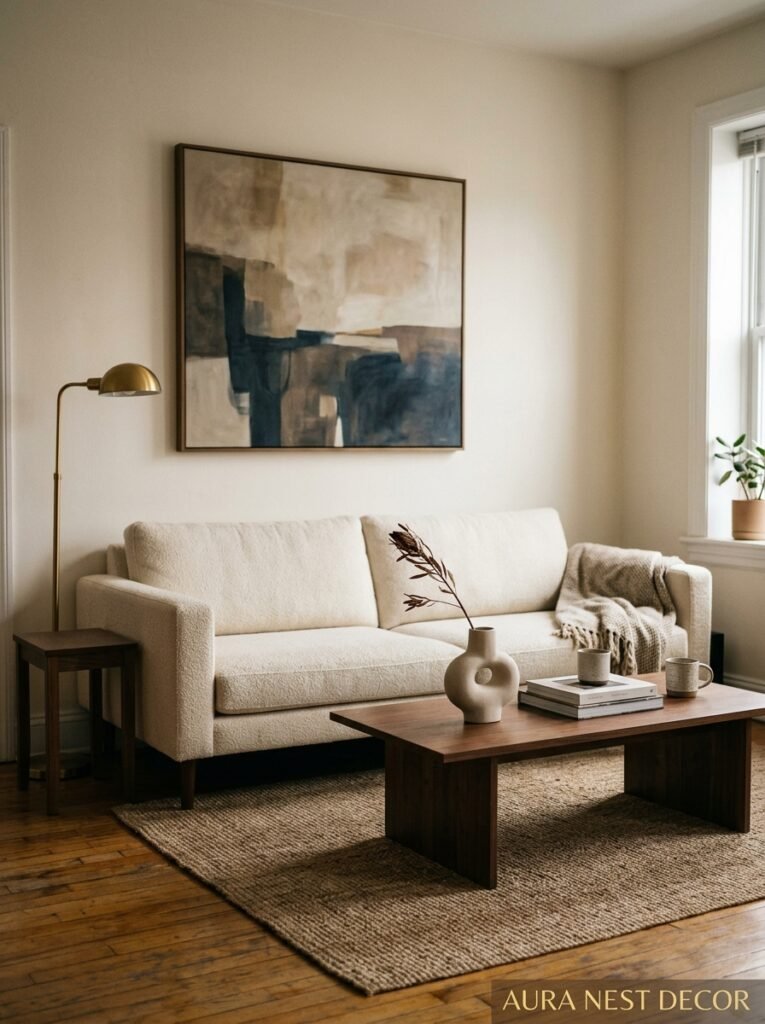
Scale. Everything comes down to scale, and most small living rooms get it completely wrong by going too small with everything — furniture, art, rugs — thinking that smaller items will make the room feel bigger. They don’t. They make it feel fussy and fragmented.
One large piece of art looks intentional. Six small pieces of art in a gallery wall look amateur unless you REALLY know what you’re doing with spacing and framing. A large rug that goes almost wall to wall makes a small room feel like a considered space. A rug that stops three feet from every wall makes the room look like the furniture is floating and nobody decided where anything should go.
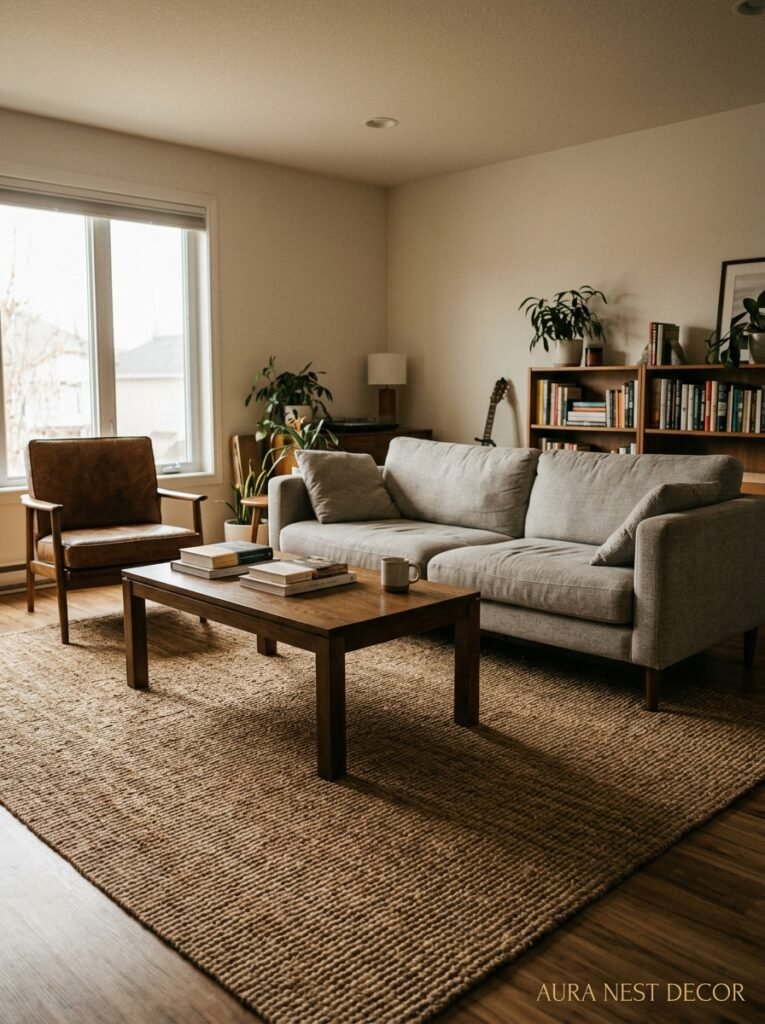
In a warm modern living room, the rug is HUGE. Bigger than feels right when you’re standing in the store. The front legs of every sofa and chair should sit on the rug — that’s the rule. If the rug is only under the coffee table, it looks like a bath mat someone put in the wrong room.
For small living rooms specifically: one large sofa plus one interesting chair is better than a full three-piece suite. Give things space to breathe. Let there be a bit of floor visible. That negative space isn’t emptiness — it’s the room exhaling.
—
6. What No One Tells You About Wood Tones (And Why They’re the Secret Ingredient)
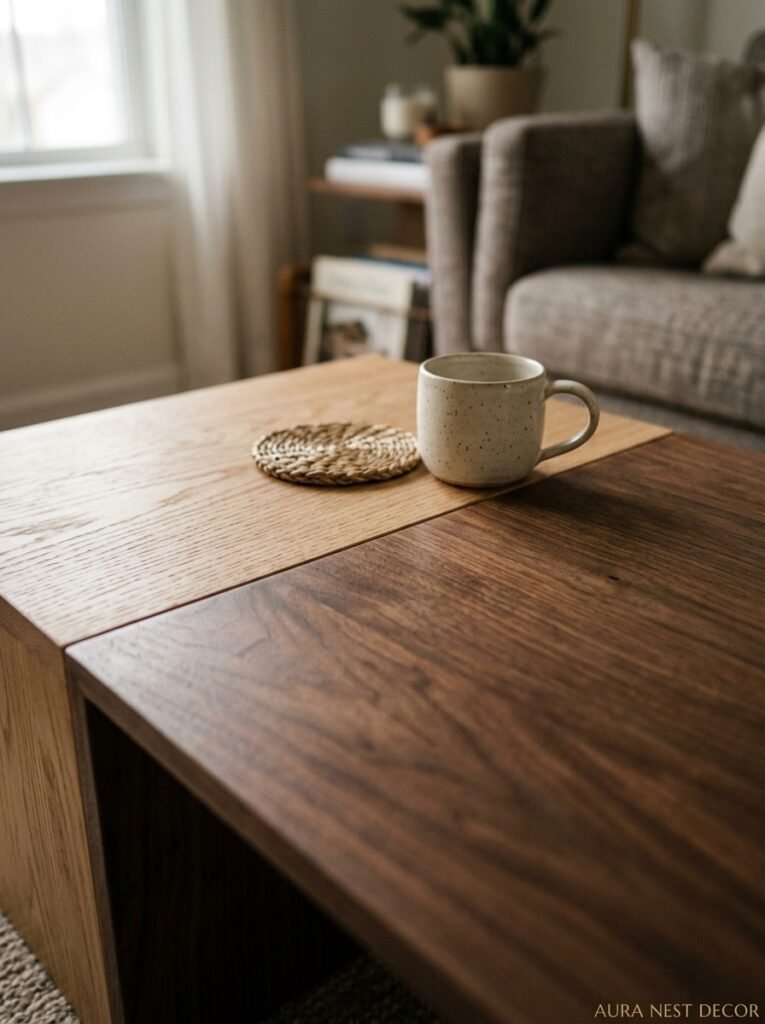
Wood tones. Not a single design guide gets specific enough about this and it drives me slightly mad.
There are warm wood tones and there are cool wood tones. Oak, walnut, and mango wood are warm. Ash and some pines run cool. And the difference in a room? Significant. For a warm modern living room, you want warm wood tones — not necessarily matching, but harmonizing.
This is the thing: you don’t need all your wood furniture to be the same species or finish. But they should all lean warm. A walnut coffee table, a lighter oak side table, and some rattan accessories — all warm-toned, all slightly different, and the room feels collected and interesting. Swap that oak table for a painted gray piece and suddenly the whole room cools down in a way that’s subtle but feels OFF.
Rattan, wicker, and natural fiber furniture (like a rattan accent chair or a jute storage basket) are incredible for adding warmth without adding visual heaviness. They’re textured and light and they bring something almost tactile to the room even when you’re just looking at a photo of it. That’s why they photograph so well.
Side note — real wood beats faux wood laminate every time in photographs. I don’t know why this is but it is, and Pinterest is a visual platform, and if you ever photograph your space, real wood just catches light in a way that laminates never do.
—
7. The Textile Stack: Why Your Room Feels Cold Even Though You Have Pillows
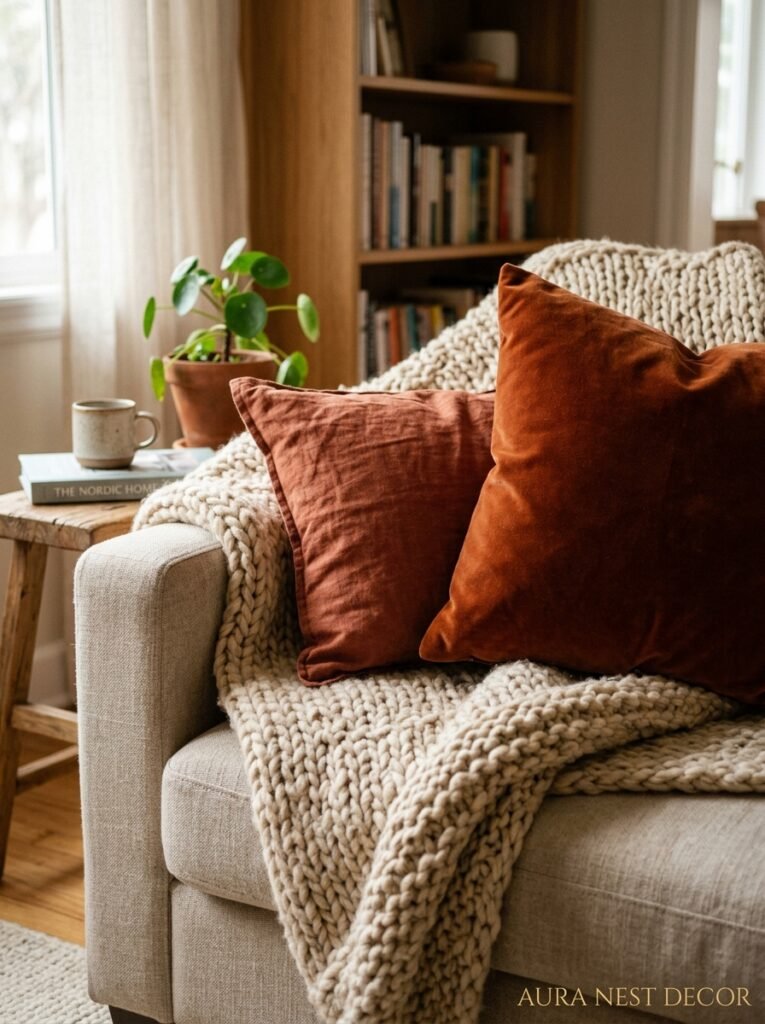
You have pillows. You have a throw. So why does the room still feel cold?
The answer is usually QUANTITY and VARIETY of texture. Not just color. Texture.
A warm modern living room has textiles doing multiple different things at once. A chunky knit throw is completely different to a linen pillow cover, which is completely different to a velvet cushion, which is different again from a woven basket. The eye moves between all of them. They create what I can only describe as visual warmth — the same way a fireplace does, but through texture instead of heat.
If all your cushions are the same fabric in slightly different colors, that’s the issue. You need: one chunky or textured thing (boucle, chunky knit, jacquard). One soft matte thing (linen, cotton canvas). One slightly shiny or smooth thing (velvet, faux silk). They don’t have to be expensive. Primark Home, IKEA, and TK Maxx (that’s TJ Maxx for my American readers) all do genuinely good cushion covers.
And the throw. The throw has to be DRAPED like someone actually left it there, not folded over the arm of the sofa like it’s a guest towel. Slightly askew. Pulled partway off. This is so simple and it makes such a big difference to how lived-in and inviting the room reads.
“Texture does the emotional work that color alone never can.”
—
8. The Gallery Wall That Doesn’t Look Like Everyone Else’s
I want to be real with you: most gallery walls look almost identical. Black frames, a few prints from Society6, an IKEA RIBBA gallery package, maybe a dried pampas grass print. I’ve done it. It’s not BAD. But it doesn’t make your room feel like YOUR room.
For a warm modern living room, the gallery wall — if you’re going to do one — needs mixed media and mixed frame finishes. A warm brass frame next to a wooden frame next to a thin black frame. A small mirror mixed in (seriously, this changes everything). A textile piece — a small macramé, an embroidered hoop, something with dimension.
And here’s something I think about a lot: the art itself matters more than the arrangement. If you put beautiful, meaningful art in a slightly imperfect arrangement, it looks curated. If you put generic art in a perfect grid, it looks like a showhome and not in a good way.
Family photos in interesting frames mix beautifully with art prints. Don’t be told that’s not sophisticated. It’s HUMAN, which is always more interesting.
—
9. The Coffee Table Is Doing Too Much (Or Not Enough) — Here’s the Balance
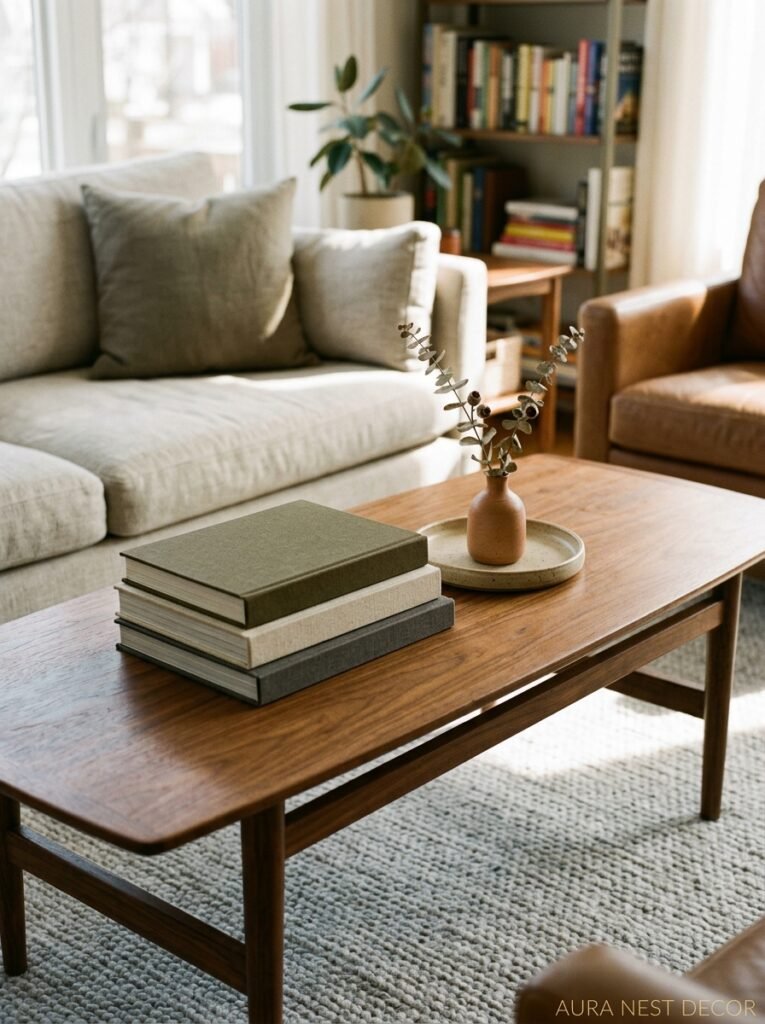
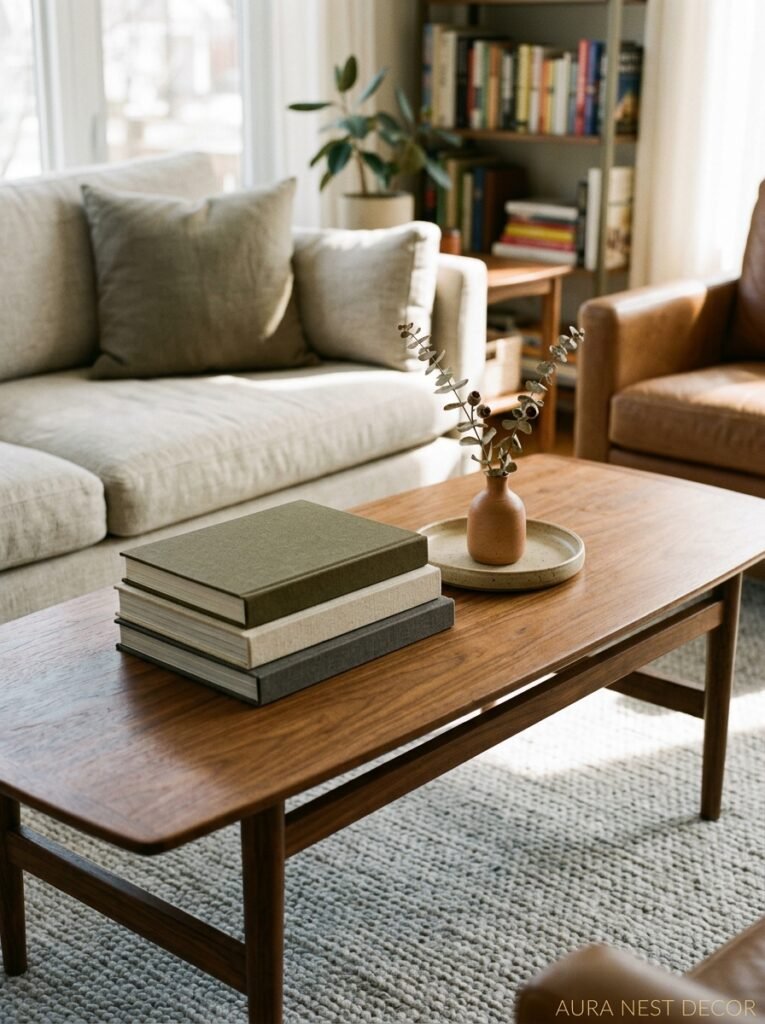
Coffee table styling is one of those things where there’s a very thin line between curated and chaotic, and most rooms land on the wrong side of it.
For a warm modern living room, the coffee table is a surface where a few things live, not a display shelf. Think: a stack of two or three genuinely interesting books (not coffee table books you’ve never opened displayed purely for status — or, okay, those too, but mix them). A small plant, ideally something trailing or sculptural. A candle. One object that has meaning to you — a piece of pottery from a market, a stone, a small sculpture. That’s it.
If there’s a tray, use it — it corrals things and makes the table look intentional. The tray should be natural materials: rattan, wood, hammered metal. Not mirrored. Mirrored is too cool for a warm modern room and I will die on this hill.
The empty space on the coffee table IS part of the styling. Leave some. It reads as confidence.
—
10. Plants and the Specific Reason Everyone’s Pothos Isn’t Helping Enough
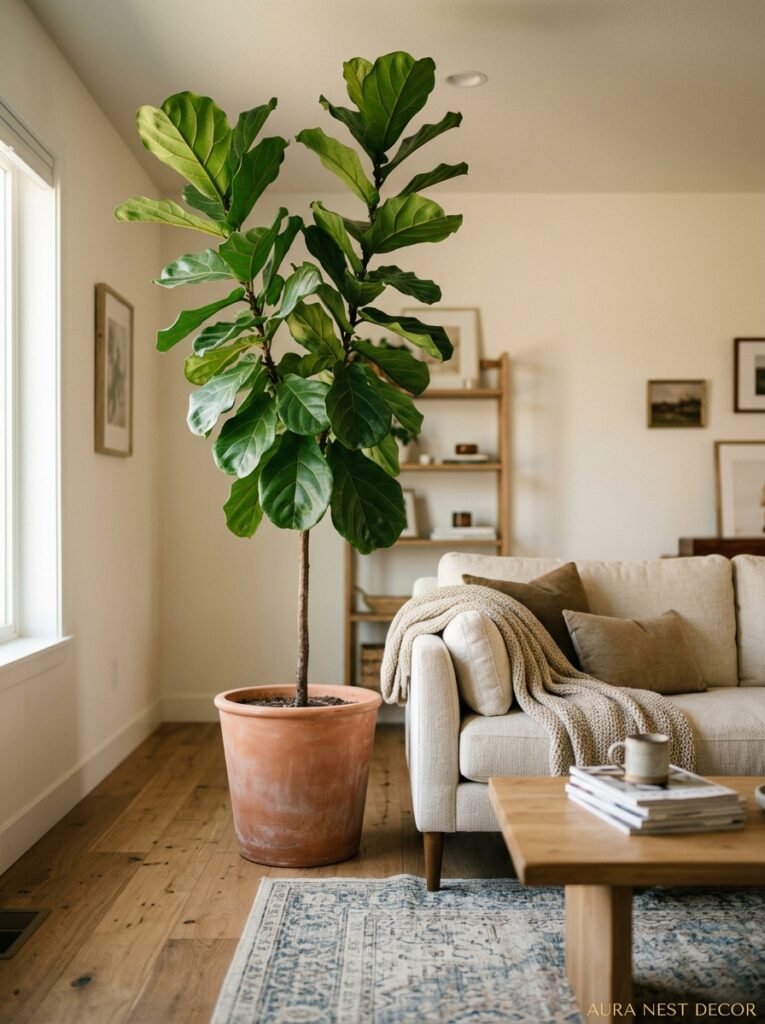
Okay, plants. Yes, you need them. But which plants and how you display them matters more than just having a pothos on a shelf somewhere.
For warmth specifically, I’d argue that a LARGE plant — one substantial, floor-standing plant like a fiddle leaf fig, an olive tree, a bird of paradise — does more for the warmth and life of a room than ten small plants scattered around. The scale again. One thing that makes an impression.
For the warm modern living room, planters matter too. Terracotta (there it is again). Woven baskets as plant pot covers. Ceramic in matte earthy tones. Not chrome, not glossy white, not plastic anything if you can help it.
Trailing plants on shelves and above cabinets are incredible because they bring life to spaces that are usually just storage or display. A pothos or a string of pearls trailing down from a floating shelf does something genuinely alive to a room that even the best styling can’t replicate.
—
11. The Art of Mixing New and Old So It Looks Like You Meant To
This one might be the most important thing I say in this entire article.
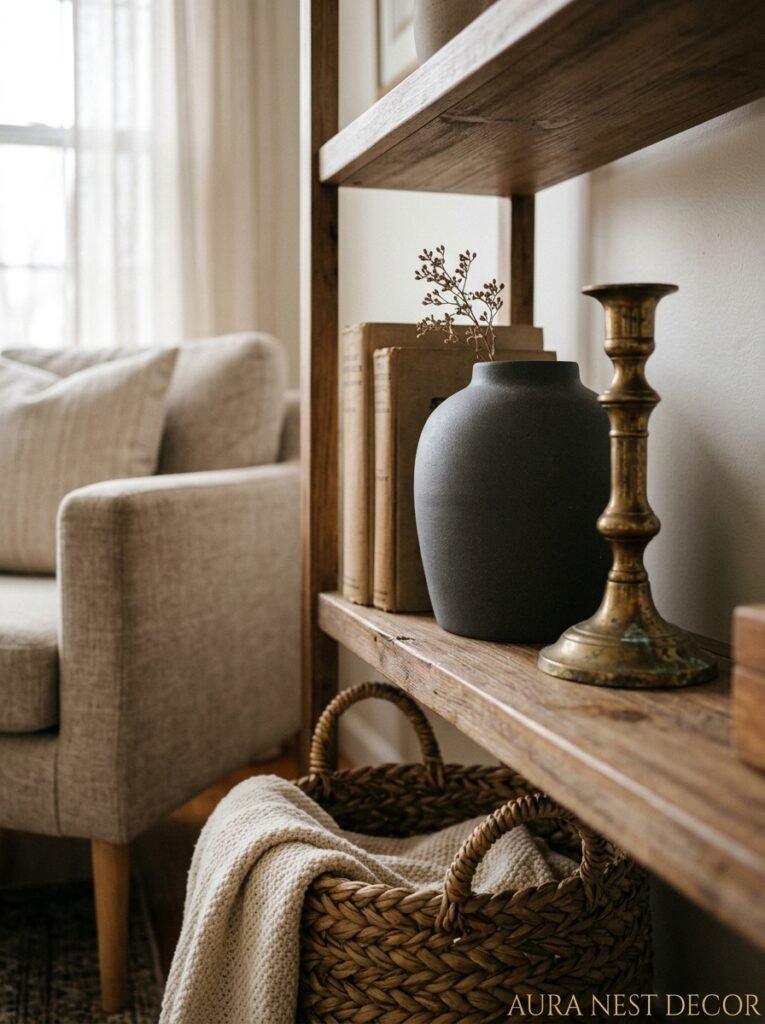
A room full of brand-new things, no matter how carefully chosen, looks like a showroom floor. It has no soul. It doesn’t feel lived-in or loved. The warmest, most interesting living rooms always have SOMETHING old in them — and I don’t mean antiques you spent a fortune on. I mean: a vintage lamp from a charity shop. A piece of furniture that belonged to someone. A rug that’s slightly worn. A mirror with a slightly aged frame.
The contrast between something genuinely old and something new makes both things look more interesting. The new thing looks more deliberate. The old thing looks more chosen. Together they suggest a person with a history, which is the most interesting thing a living room can say about its owner.
In the US you’ll find incredible pieces at thrift stores, estate sales, Facebook Marketplace. In the UK, charity shops, car boot sales, and eBay are full of exactly the right kind of pieces — solid wood furniture from the 60s and 70s that’s ugly in isolation and perfect in context.
Don’t be precious about the mix. Old and new should look slightly surprised to find themselves together.
—
12. The Thing That Pulls the Whole Room Together (It’s Not What You Think)
Scent. Not literally — but kind of literally.
A room that SMELLS good feels warm before you even process the visual. I know this sounds like I’ve gone off the rails, but hear me out. A warm modern living room engages more than just the eye. Candles, a diffuser, dried herbs, a bowl of something fragrant — these are invisible design choices. A room that smells like warm amber and cedar on a winter evening is warm before you’ve even turned a single lamp on.
But the thing I ACTUALLY mean is: edit ruthlessly. The final thing that pulls a warm modern living room together is what you REMOVE. That extra thing on the shelf. The throw that doesn’t quite work. The lamp you keep because you paid for it even though it’s slightly wrong. The piece of art you’re not sure about.
Take it out. Live without it for a week. The room will be quieter and that quiet will feel like warmth.
That’s the secret. Warmth isn’t about adding more. It’s about keeping only what belongs.
—
❓ FAQ
Q: What’s the best paint color for a warm modern living room? A: Warm whites and off-whites are the safest starting point — look at Farrow & Ball’s “Skimming Stone” or “Elephant’s Breath,” or Benjamin Moore’s “White Dove” if you’re in the US. The key is to avoid anything with a blue or green undertone, which will always read cold regardless of how it looks on a swatch.
Q: How do I make a modern living room feel warm without losing the clean, minimal look? A: Texture is your answer — not more stuff, but more texture in what you already have. Swap out flat-weave cushion covers for boucle or linen. Add a jute rug under a more minimal furniture arrangement. Layer warm lighting. The room stays clean, it just starts breathing.
Q: Is warm modern a real design style or just a Pinterest aesthetic? A: It’s genuinely a real approach that sits between Scandinavian minimalism and the warmer, earthier tones of wabi-sabi or organic modern. It’s not one defined style so much as an intention — modern lines, warm materials, human imperfection. Which is probably why it works so well in real homes.
—
💭 Final Thoughts
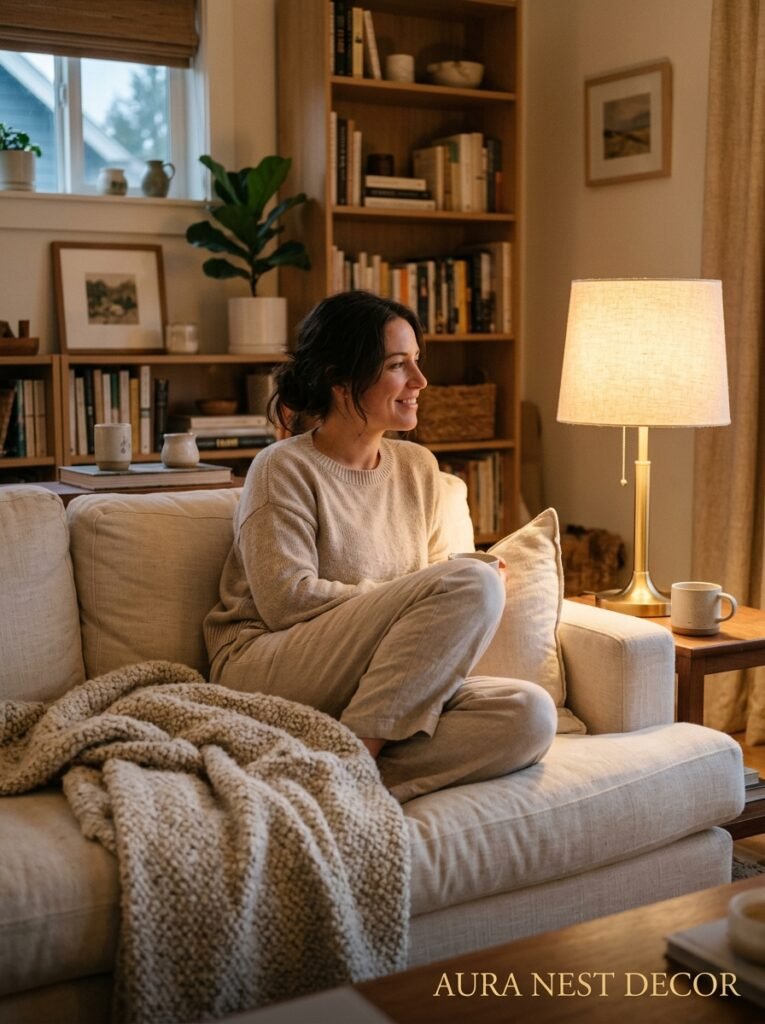
The warm modern living room isn’t a look you finish and then protect. It’s a room that keeps getting more itself over time, as you add things that matter and take away things that don’t. Start with light, get the textiles right, bring in something old, and then mostly just trust how the room feels rather than how it photographs.
What’s the one thing in your current living room that you’re keeping out of habit rather than love?