The Garage Glow-Up Nobody Talks About (But Everyone Secretly Wants)
My neighbor knocked on my door in November and asked if she could see inside my garage. Not the car. Not the tools. The room. That’s when I knew something had shifted.
—
1. Why Your Garage Feels Like Giving Up Right Now

You know that feeling when you open the garage door and immediately look away? Like your brain just quietly agrees not to deal with it today?
That’s not laziness. That’s a design problem.
Most garages are treated like a junk holding zone between your real life and the bin lorry. And because nobody “decorated” them, nobody expects anything of them. So they collect things. Old paint tins, a bike nobody rides, three folding chairs for a party that happened in 2019. The visual noise just… stacks up.
But here’s the thing — a garage has square footage. Real square footage. And in the US, the average two-car garage is around 400 square feet. In the UK, even a single garage runs about 150 to 180 square feet. That’s not a closet. That’s a room somebody forgot to finish.
The reason it feels like giving up is because it IS half-finished. Nobody decided what it was supposed to be. So it became everything and nothing.
That ends today.
—
2. The First Decision That Changes Everything Else

Before you buy a single shelf or a single tin of floor paint, you have to answer one question.
Is the car staying or going?
This sounds obvious but most people skip it entirely and end up with a weird hybrid space that doesn’t fully work as a garage OR as anything else. If the car’s staying, you’re designing around it — and that’s totally fine, it just means your storage and style choices need to coexist with a moving vehicle. If the car’s NOT staying, you’ve basically just unlocked a bonus room and the design possibilities go completely sideways in the best way.
“The second you stop thinking of it as a garage and start thinking of it as a room with a large door, everything clicks.”
I’d say 70% of the best garage transformations I’ve ever seen on Pinterest started with this decision made cleanly and early. The other 30% look like someone tried to have it both ways and got stuck halfway through.
—
3. The Floor Situation Nobody Warns You About

Bare concrete is not a vibe. I’ll say it.
It’s cold, it’s dusty, it absorbs stains like it’s trying to collect them, and it makes everything placed on top of it look accidental. The floor sets the tone for literally everything else in a room, and garages are no exception.
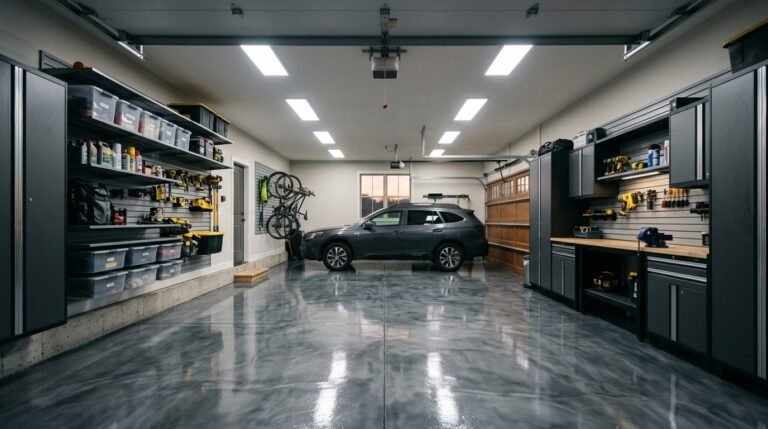
The good news is you’ve got options, and they’ve gotten genuinely good. Epoxy floor coating is the one everyone talks about — it’s durable, wipeable, comes in loads of colours, and you can do it yourself over a long weekend if you’re patient. In the US, the grey or charcoal varieties are having a serious moment. Over in the UK, I’m seeing people go warmer — slate tones, warm beige epoxy, even a sort of dusty terracotta that should not work but absolutely does.
If you want something softer underfoot (and you’re not parking a car in there anymore), interlocking rubber or foam floor tiles are a genuinely good call. They come in woodgrain finishes that look way better than you’d expect and are actually comfortable if you’re spending real time in the space.
Whatever you pick — do the floor first. Before anything else. You will thank yourself.
—
4. The Wall Colour That Makes a Garage Look Intentional
Most garage walls are either bare concrete block, unfinished drywall, or whatever vaguely off-white paint was leftover from 2011. All of those options communicate the same thing: nobody decided.
Deciding — even choosing ONE wall colour — immediately signals that this space was thought about.
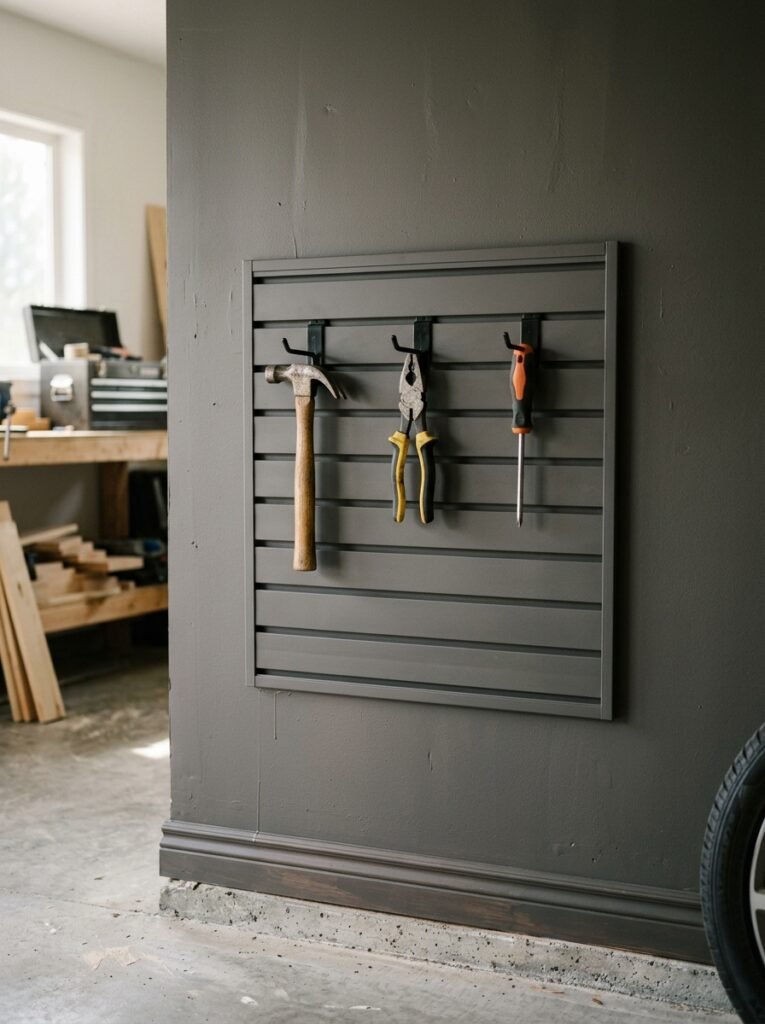
For darker garages with not much natural light, I’d push you toward a warm off-white or a soft greige. Not because it’s safe, but because it bounces what little light there is and makes the space feel cohesive. For garages that get decent daylight (lucky you), a deep moody colour on the back wall — charcoal, navy, or even a forest green — creates that workshop-meets-editorial aesthetic that looks incredible in photos and even better in person.
Side note — don’t paint the ceiling white if the walls are dark. It creates this weird cap effect. Match the ceiling to the walls, or go one shade lighter. It reads as intentional instead of unfinished.
—
5. Shelving That Looks Like You Meant It
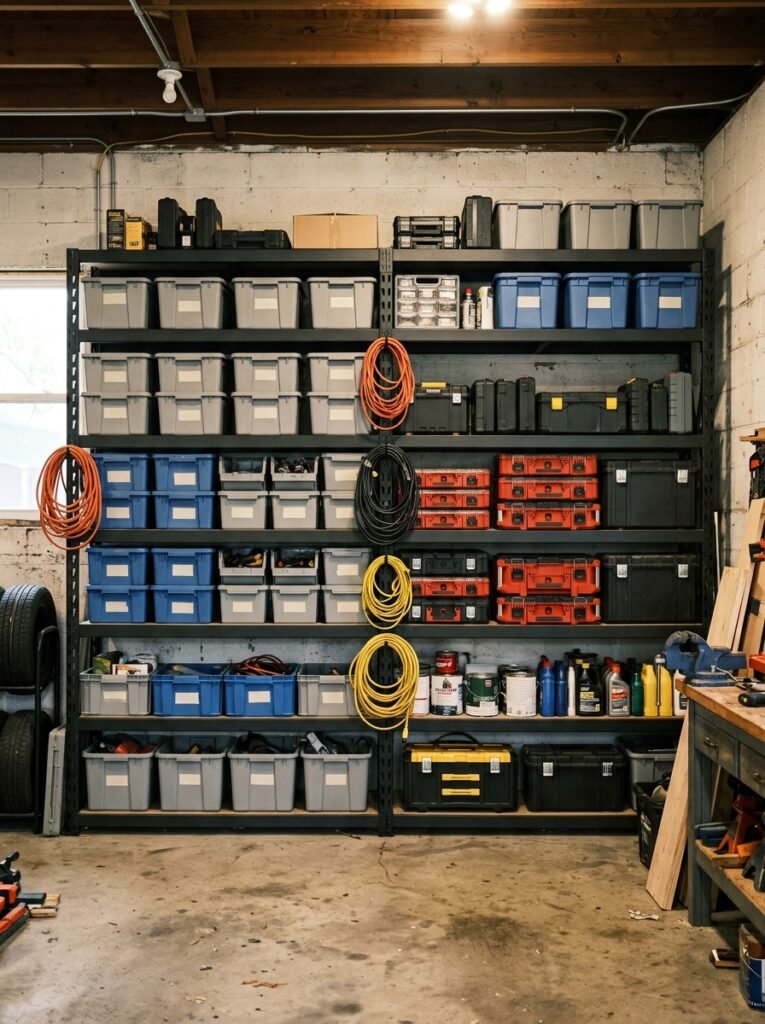
Here’s what most people do: they buy the cheapest freestanding metal shelving unit, shove it against a wall, and pile things on it with zero system. And then they wonder why the garage still feels chaotic.
The fix isn’t expensive shelving. It’s CONSISTENT shelving.
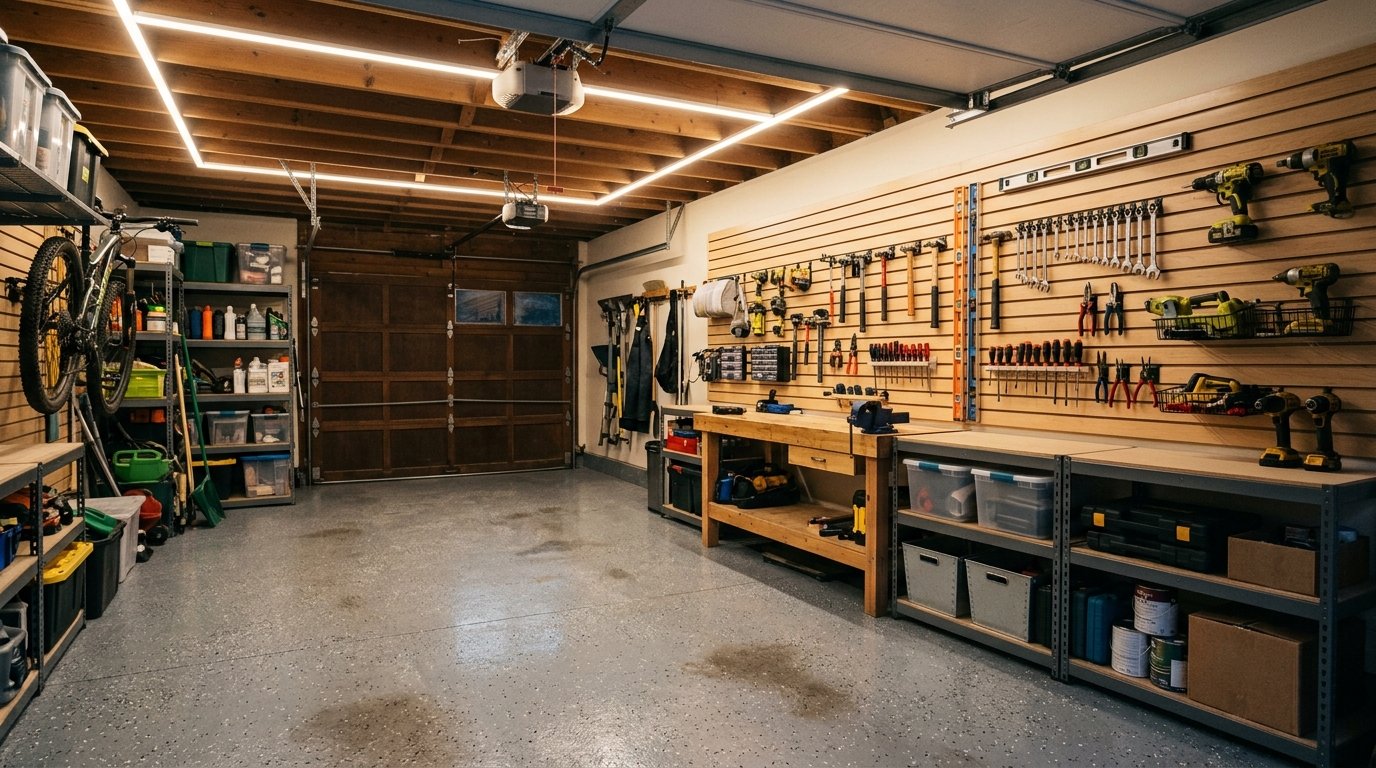
Pick one aesthetic and stick to it. Industrial pipe shelving on black brackets looks cohesive with raw concrete walls. White painted plywood floating shelves look clean and almost Scandinavian if you style them properly. Open wooden pegboard systems are having a major moment right now and honestly deserve the hype — they’re flexible, they look intentional, and they turn your tools into part of the visual.
“A pegboard full of well-organized tools is genuinely one of the most satisfying things a room can contain.”
What kills the look is mixing. A metal shelf next to a wooden shelf next to a wire rack is visual chaos, and no amount of labelled bins fixes it. Buy one style. Get more of that style. Done.
—
6. Lighting Is Doing More Work Than You Think
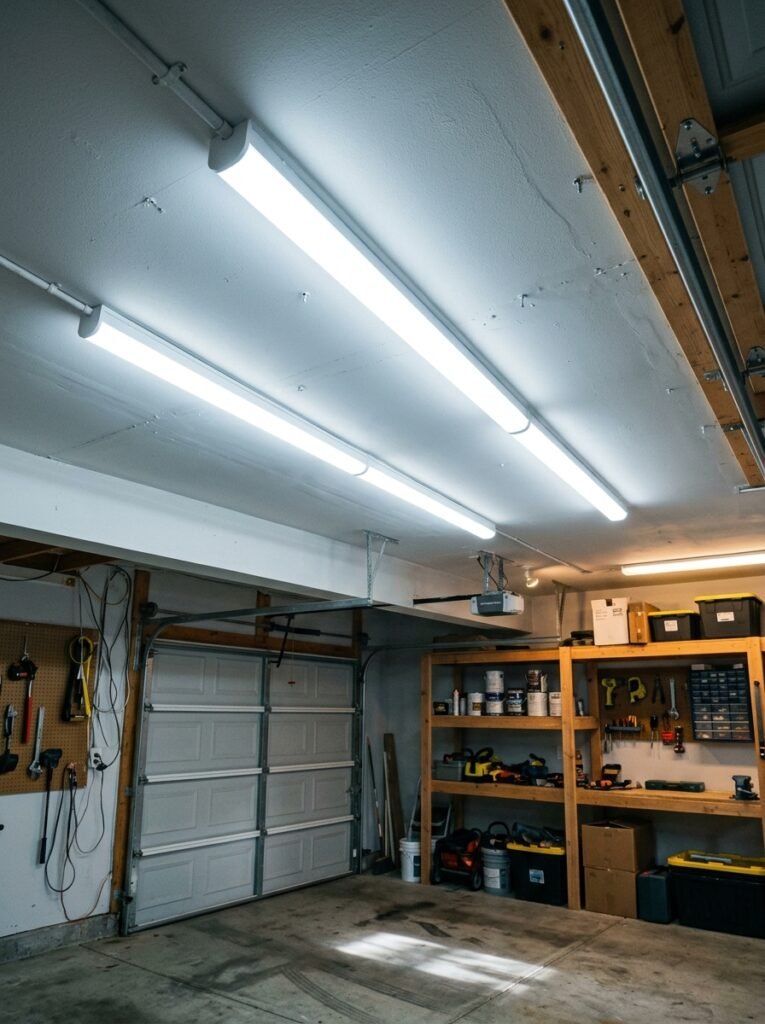
I cannot stress this enough. Garage lighting is TERRIBLE almost universally and it’s making everything harder.
The default is usually a single overhead fluorescent strip that casts that greenish, institutional light which makes your skin look slightly unwell and makes every surface look flat and grim. It’s functional in the worst possible way.
Swap it out. Seriously. Even just switching to LED panel lights with a warm colour temperature (look for 3000K instead of 5000K) will make the whole space feel different instantly. Add a couple of plug-in wall sconces if you’ve got finished walls — that’s not excessive, that’s layered lighting, and it works as well in a garage as it does in a living room.
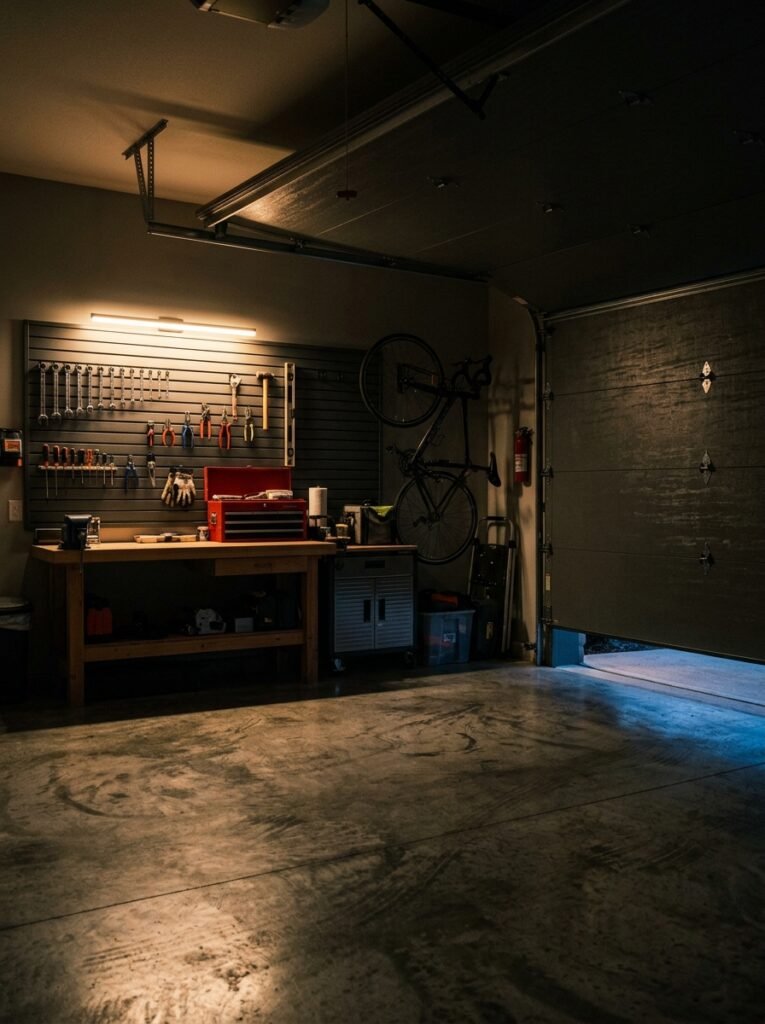
If you’re converting to a workshop or hobby studio, get proper task lighting over the work surface. Under-shelf LED strips, an angled work lamp, a few clip-on spotlights. Layers. Always layers.
And if the garage has a window — highlight it. Don’t cover it with shelving. Let that natural light do its job.
—
7. The Ceiling Grid Trick That Makes Small Garages Feel Bigger
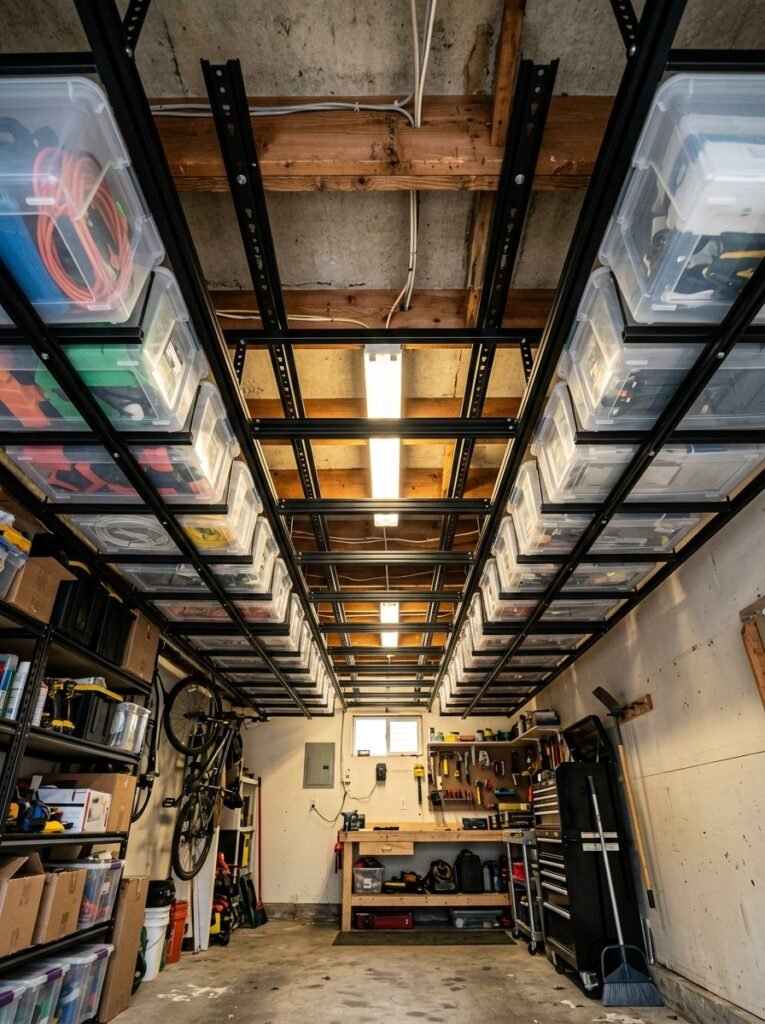
This one is properly underrated and I think about it more than is normal.
If your garage ceiling is low (very common in UK garages especially), the instinct is to try to decorate vertically — tall shelves, high pegboards, things that pull the eye up. And that does work, kind of.
But the trick that ACTUALLY works is drawing the eye ACROSS rather than up. A ceiling-mounted grid system — essentially a metal grid hung about 8-10 inches below the ceiling — gives you overhead storage for flat, light items like sports equipment, seasonal stuff, folding tables. But more than that, it defines the space from above. It gives the room a “lid.” And weirdly, rooms with a defined lid feel larger than rooms that just sort of… end at some uncertain height.
It’s counterintuitive. But it genuinely works. I’ve seen it make a single-car garage feel like twice the space.
—
8. The Part Where You Actually Deal With the Stuff

Okay. We have to talk about the stuff.
Because no amount of beautiful lighting or intentional wall colour matters if there are loose batteries and three broken umbrellas and a box of Christmas ornaments sitting on the floor.
The most important thing I can tell you is this: categories before containers. Don’t go out and buy matching bins and labels and those satisfying clear stackable boxes before you know what you’re actually storing. Because you’ll buy the wrong sizes and the wrong number and you’ll end up with more visual noise than you started with.
Sort first. Keep, donate, throw away. Be brutal. Then figure out what you actually need to store, and THEN go find the right containers for those specific things.
One more thing — and this is a personal bug bear of mine — labels. Use them. Consistent labels on consistent containers is the single most underappreciated styling tool in a garage. It makes the space look like an adult lives there. It sounds fussy but it isn’t.
—
9. Why a Workbench Can Be the Focal Point Instead of an Eyesore
Hear me out.
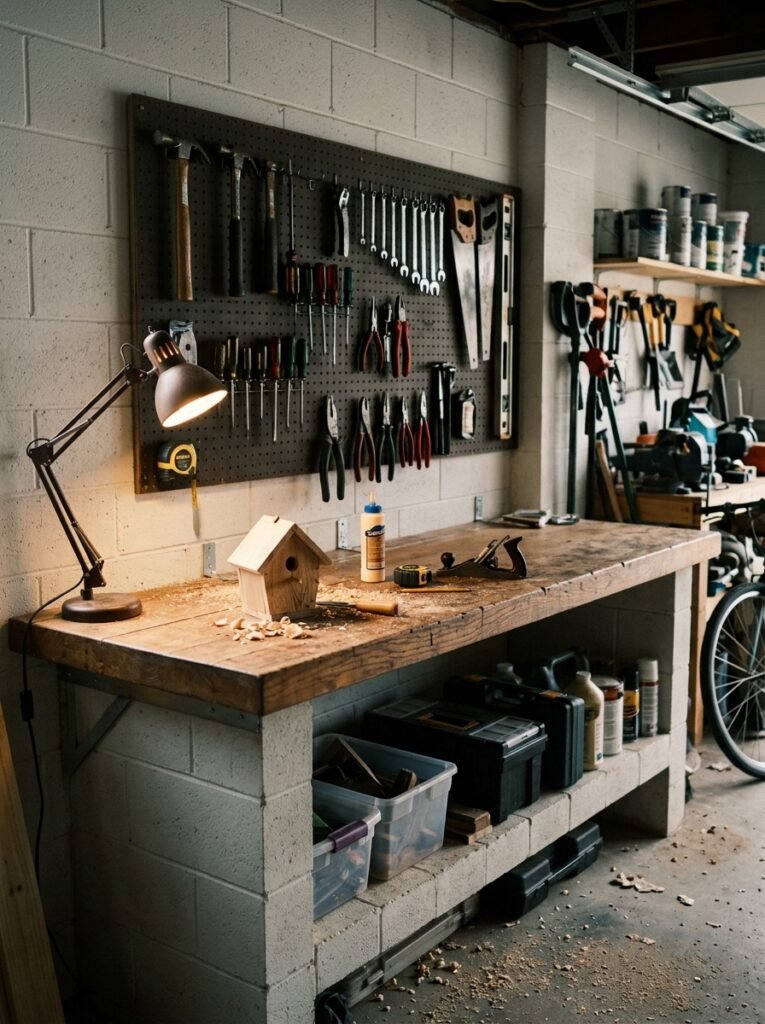
A properly built workbench — good solid surface, well-organized tools hanging above it, maybe a vintage stool pulled up to it — is one of the most visually compelling things a garage can contain. It has purpose. It has history. It communicates something about the person who lives there.
The problem is most workbenches are just old doors balanced on sawhorses with random stuff dumped on them. Which is fine functionally! But visually it reads as chaos.
If you invest in nothing else, invest in the workbench. Get a proper surface — thick butcher block looks incredible, or a painted MDF top in the same colour family as your walls. Mount your most-used tools above it in a neat grid. Keep the surface clear except for what’s actively in use.
“The workbench is the kitchen island of the garage. Make it beautiful and the whole room follows.”
—
10. The Garage Gym That Doesn’t Look Like a Hotel Basement
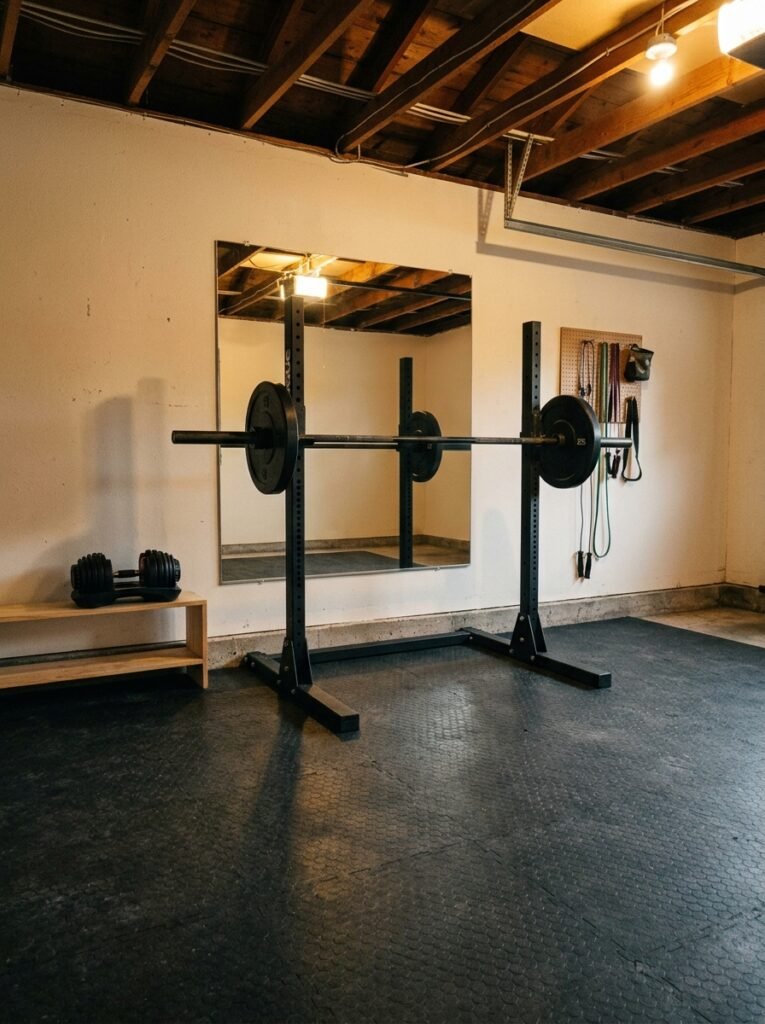
A lot of people are turning their garages into home gyms right now, and most of them look like a hotel basement. Strip lighting, rubber mats that don’t quite fit, one mirror balanced against the wall. Functional. Grim.
The ones that look actually good follow a few consistent rules. The floor is sorted first — solid rubber tiles, laid properly, edge to edge. There’s a mirror that’s actually mounted, not just leaning. There’s a motivating colour on at least one wall, something with energy — a deep red, a strong blue, even a crisp black.
The equipment is organized when not in use. Weights on a proper rack, bands hung on hooks, mats rolled and stacked. It sounds basic but in a garage gym it’s the difference between “I actually want to come in here” and “I’ll do it tomorrow.”
And for the love of everything, get a speaker up on the wall or a shelf. Not a tiny Bluetooth speaker sitting on the floor. Something that sounds like you mean it.
—
11. Small UK Garage? The One Rule That Saves Everything
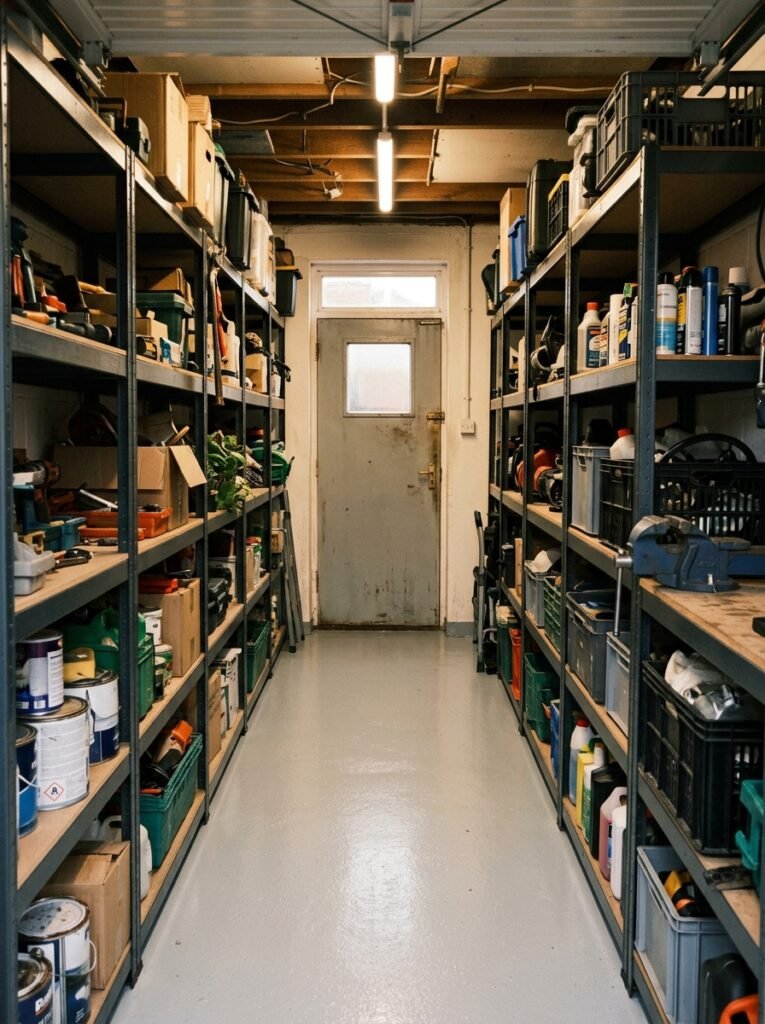
UK garages are just… smaller. There’s no getting around it. A lot of British single garages won’t even comfortably fit a modern car anymore — we’re talking 8 feet wide in some cases.
But small doesn’t mean hopeless. It means every single decision has to pull double duty.
The one rule: NEVER use floor space for storage if you can use wall space instead. Floor storage in a small garage is basically just an obstacle course. Hooks, wall-mounted rails, overhead grids, floating shelves — all of it keeps the floor clear, and a clear floor makes a small space feel dramatically larger.
Beyond that — don’t fight the size. Lean into it. A tiny, perfectly organized workshop with a sloped ceiling and a pegboard wall full of tools is not a compromise. It’s genuinely cool. Some of the most beautiful garage conversions I’ve ever saved on my Pinterest boards are UK garages that embraced their limitations and worked with them.
Small and intentional beats large and chaotic every single time.
—
12. The Details That Signal “This Was Designed” to Anyone Who Walks In
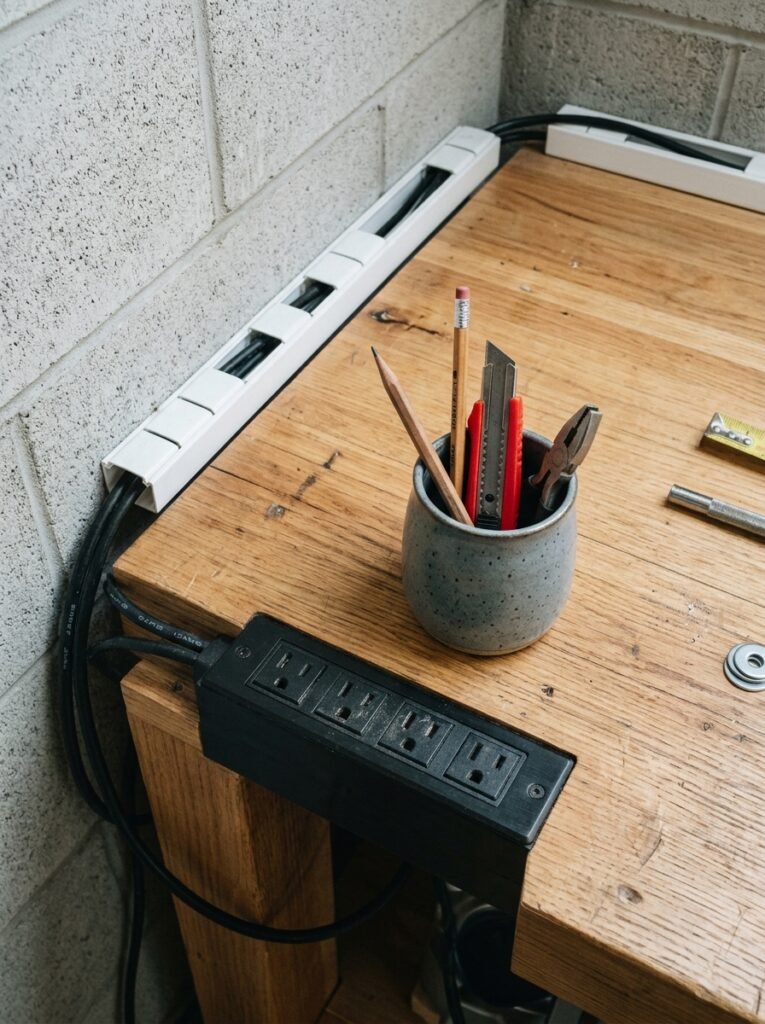
It’s the small things. It always is.
A ceramic mug hanging on a hook near the workbench. A trailing plant on the top shelf (pothos and spider plants are practically indestructible in low light, just so you know). A framed print — just one — that connects the garage to the rest of your home’s aesthetic. A woven basket for the dog’s outdoor toys instead of a plastic bin. A small rug near the entry door if you’ve done a full conversion.
None of these things are expensive. But they’re the difference between a garage that looks like a project and a garage that looks like a PLACE. A destination, even. Somewhere you’d actually want to spend time.
Because that’s the goal, isn’t it? Not storage. Not parking. A space that feels like it belongs to someone who thought about it.
And now you have.
—
❓ FAQ
Q: How much does it roughly cost to transform a garage on a modest budget? A: It really depends on what you’re starting with and how much you DIY, but a lot of people do a solid transformation for somewhere between $500–$1,500 in the US or £400–£1,200 in the UK. Floor paint and wall colour are the biggest visual bang for your buck. Shelving and lighting eat more of the budget but are worth prioritizing early.
Q: Can I insulate a garage myself, or do I need a contractor? A: Rigid foam board insulation on the walls is very doable as a DIY project, and it makes a MASSIVE difference to the comfort of the space — especially important if you’re using it as a gym, studio, or workshop. The garage door itself is trickier; there are insulation kits designed for it, but whether they work well depends a lot on the door type you have. For anything involving your exterior walls or roof, it’s worth at least getting a professional opinion first.
Q: What’s the best way to make a garage conversion feel connected to the rest of the house? A: Repeat one element from your home’s interior — a paint colour, a material, a style of hardware. It doesn’t need to be identical, just related. If your kitchen has black fixtures, use black hooks in the garage. If your living room has warm wood tones, bring a wooden shelf or workbench surface into the garage. That visual thread is what makes it feel like a considered extension of your home rather than a separate project.
—
💭 Final Thoughts
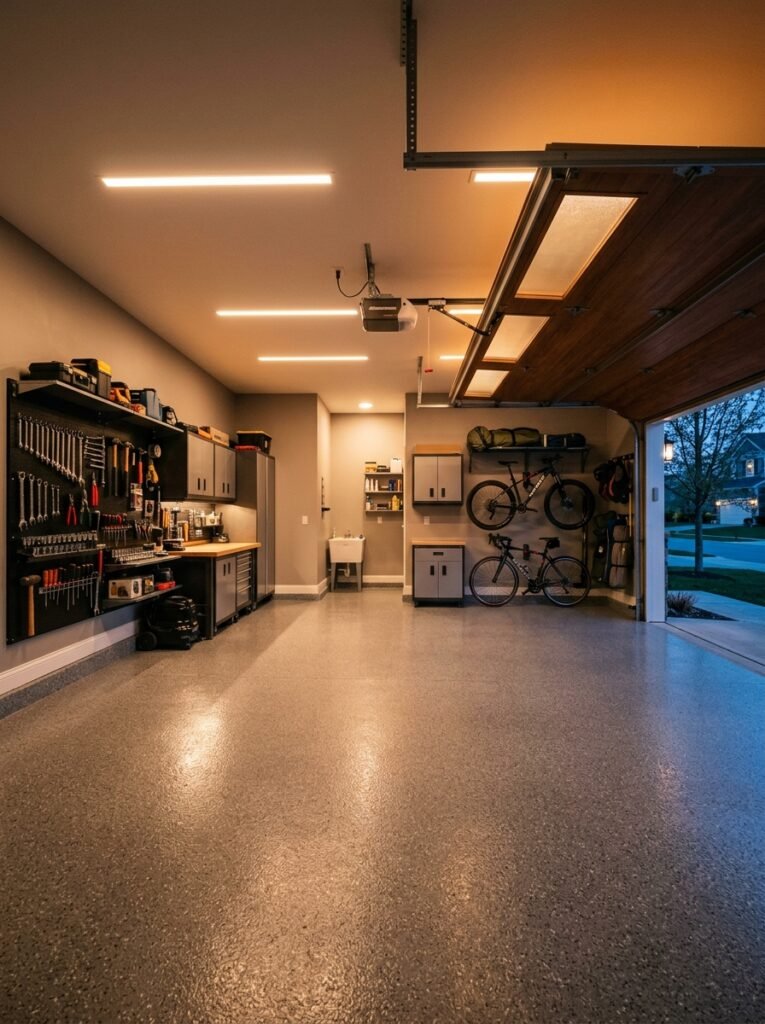
The garage might be the most honest room in a house — it shows exactly how much energy you’ve had left over after everything else. But that also means fixing it hits differently. When it’s right, it genuinely changes how you feel about coming home.
Even small changes land hard in a space that started from nothing.
What would you use the space for if it actually felt worth being in?