The Living Room Ceiling Most People Are Too Scared to Touch (And Why That’s a Mistake)
You walk into a room and something just feels different. You can’t place it immediately. Then you look up — and it hits you. The ceiling is doing something. Something intentional.
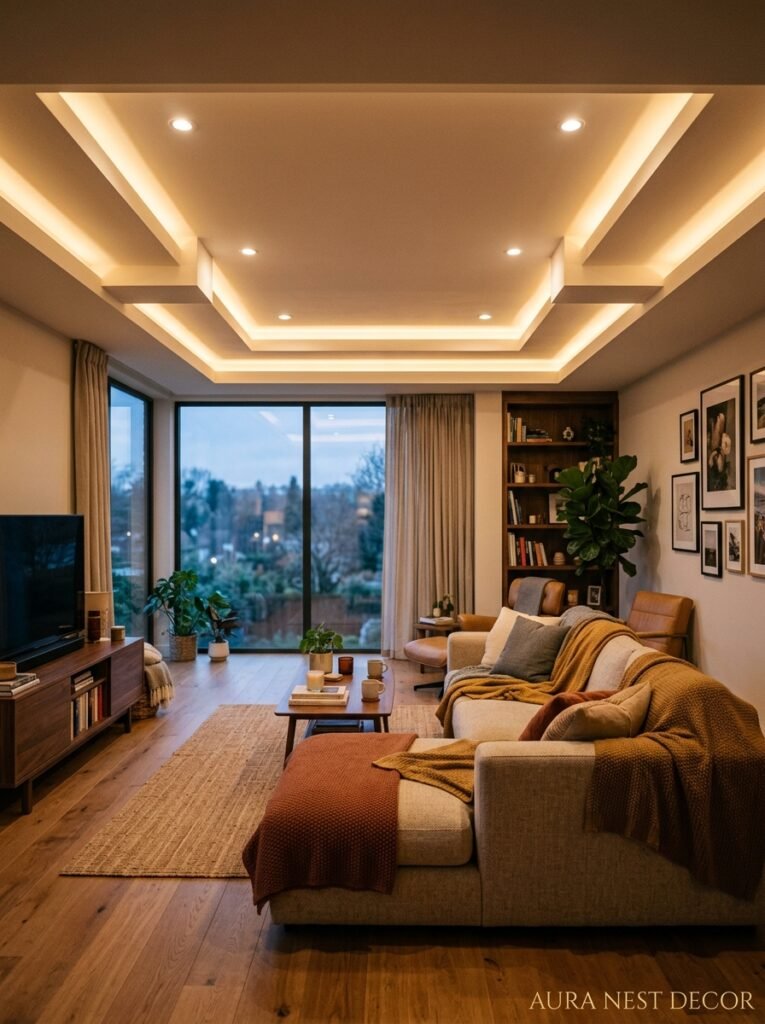
That’s a false ceiling. And it might be the most underused design move in residential interiors right now.
—
1. Wait, What Even Is a False Ceiling? (And Why the Name Is Slightly Misleading)
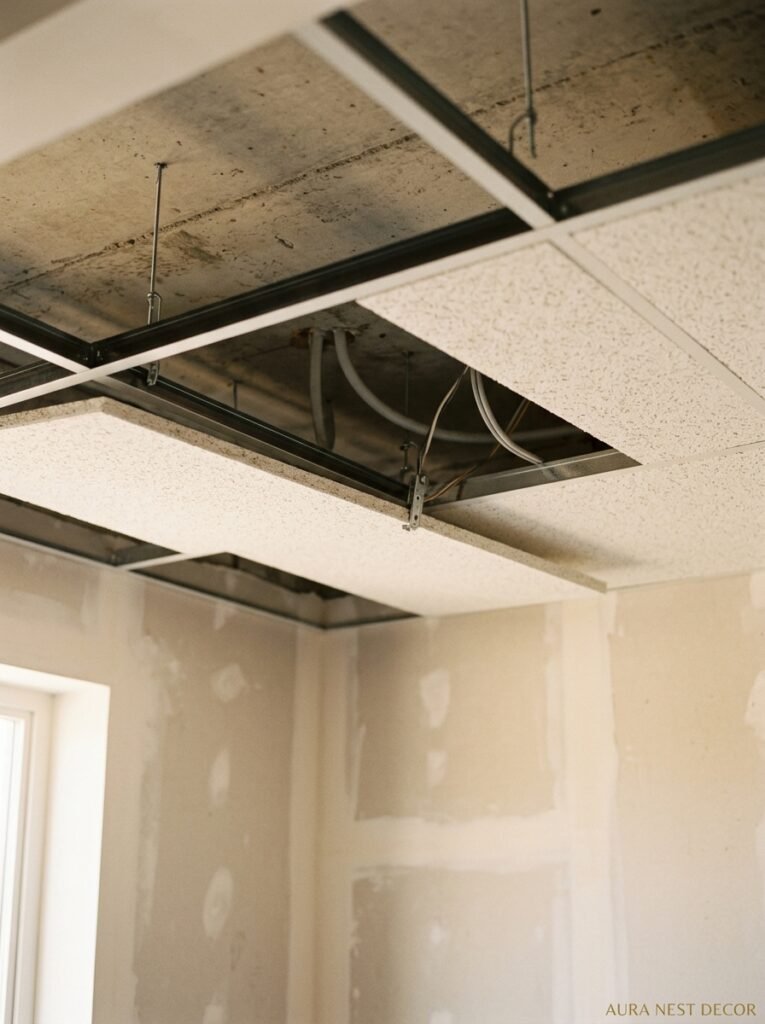
So here’s the thing — the name “false ceiling” makes it sound like a trick, like you’re hiding something shameful. And sometimes you are. But mostly? It’s just a second ceiling installed below the structural one, and it opens up a genuinely surprising number of possibilities.
In the US, you’ll also hear it called a drop ceiling or suspended ceiling. In the UK, it’s often just called a dropped ceiling or ceiling cladding, depending on what material’s involved. The basic idea is the same everywhere: you create a new ceiling surface that sits lower than the original, and that gap in between is where the magic happens — literally, because that’s where you can tuck lighting, sound insulation, cables, AC units, all sorts of things that normally have nowhere to hide.
But here’s what I want to be clear about from the start. This isn’t just a utilitarian fix. A false ceiling in a living room isn’t the same thing as those grim suspended tile grids you see in office buildings. Not even close. Modern false ceilings can be plasterboard with recessed lighting, curved and sculptural, wood-paneled, fabric-wrapped, coffered, layered — the range is honestly kind of wild once you start looking. I’d been scrolling Pinterest for about an hour one afternoon and genuinely forgot what I’d originally gone there to find, because the ceiling ideas were that good.
And the living room is where this decision matters most, because that’s the room that sets the tone for everything else in your home.
“A false ceiling doesn’t just change how your room looks — it changes how it feels to be inside it.”
—
2. The Reason Your Living Room Feels a Bit Off (And It Probably Has Nothing to Do with the Furniture)
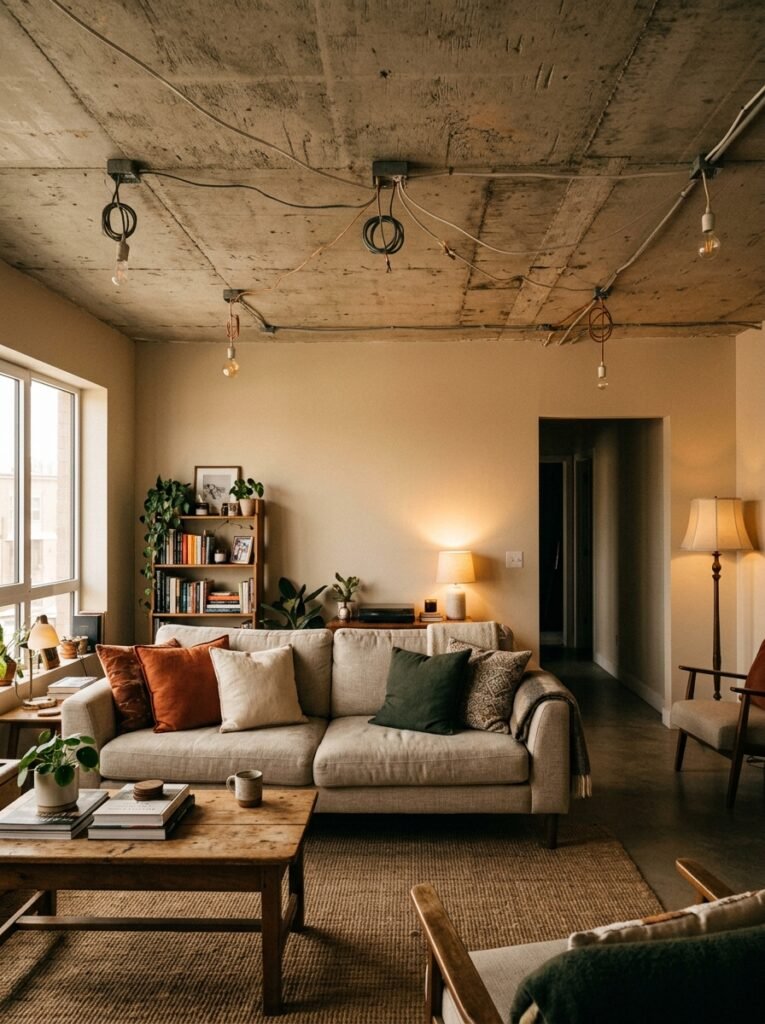
Here’s something designers talk about that nobody really tells you when you’re just trying to fix up your home: proportion. Specifically, the relationship between ceiling height and the rest of the room.
A lot of older UK terraced houses and American ranch-style homes have ceilings that are technically fine — maybe 8 feet, maybe a touch higher — but they don’t feel right with the space. The room is either too wide for the height, or there’s a big awkward ductwork situation that you’ve been ignoring for three years. (Just me? Probably not.)
A false ceiling fixes proportion problems quietly. You can lower part of the ceiling to create a cozy defined zone — say, above the sofa conversation area — and leave the rest higher. This is called a partial false ceiling or a ceiling feature, and it’s genuinely one of the cleverest tricks in residential design. It makes your brain think the room has more structure than it actually does. The sitting area feels intentional rather than just a rug placed vaguely in the middle of a room.
Also — and this surprised me when I first learned it — a slightly lower ceiling can make a room feel MORE comfortable, not less. There’s research on this. Humans tend to feel cozier when the ceiling isn’t looming at a height that makes the space feel like a hotel lobby. Dropping it by even 12 to 18 inches over a seating area can shift the whole atmosphere.
—
3. The Lighting That Lives Inside a False Ceiling Changes Everything
Okay this is the part I get genuinely enthusiastic about, so bear with me.
Recessed lighting is probably the most common reason people install a false ceiling, and it is SO worth doing well. When you’ve got recessed downlights set into a false ceiling — properly spaced, on a dimmer, with warm-toned bulbs — the quality of light in your living room becomes something else entirely. Not just brighter. Actually better.
The amber glow at 7pm when you’ve got the dimmers low and a candle or two going — there’s a reason every luxury hotel room you’ve ever envied used exactly this combination. The light comes from multiple soft points rather than one harsh overhead source, which means no weird shadows, no single harsh glare, just this kind of diffused warmth that makes everyone in the room look good and feel relaxed.
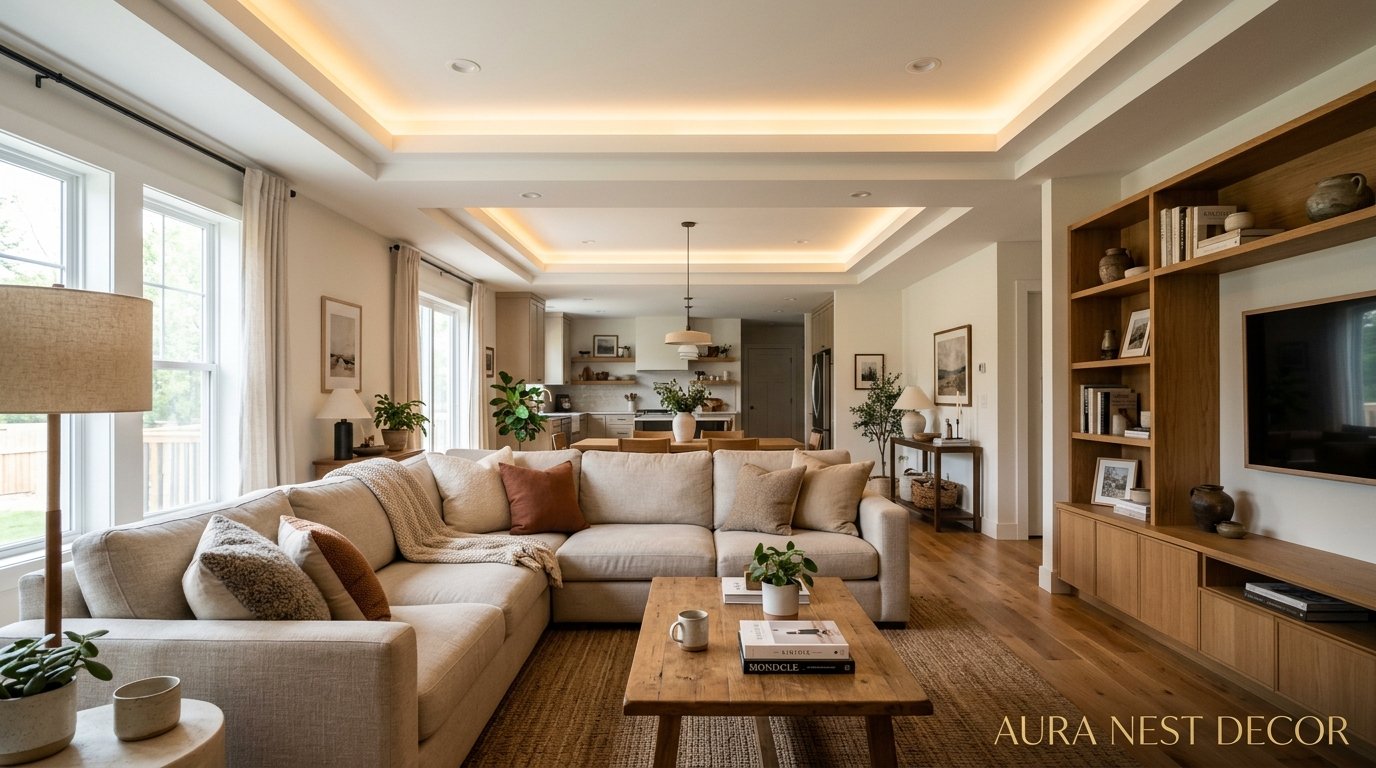
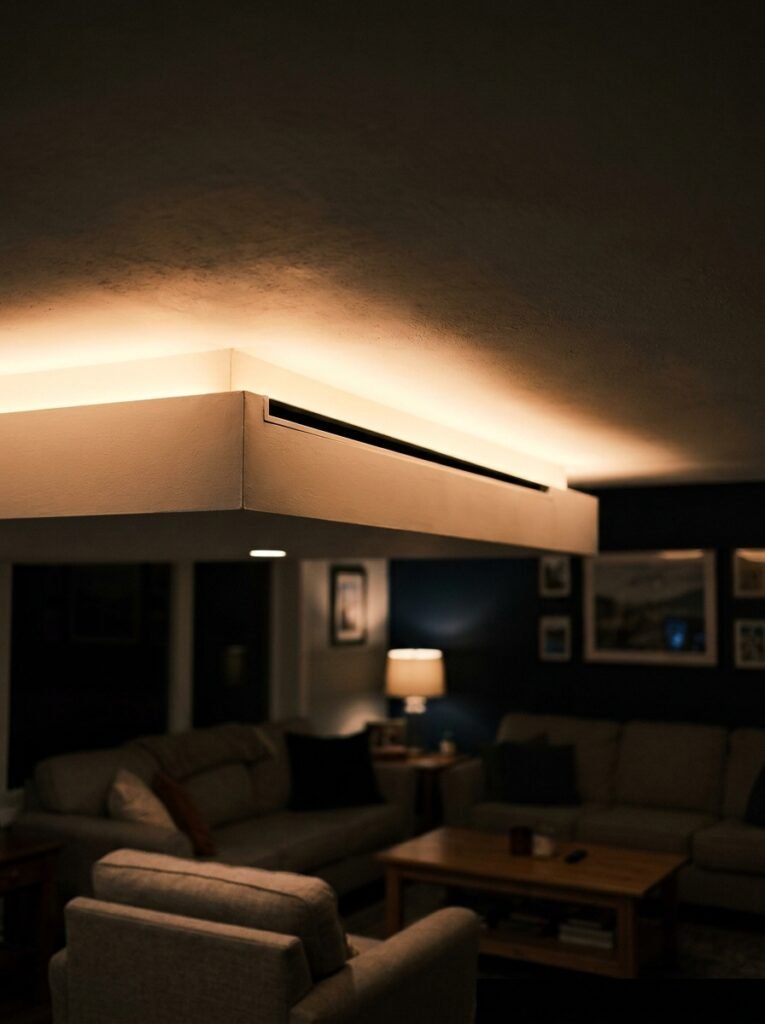
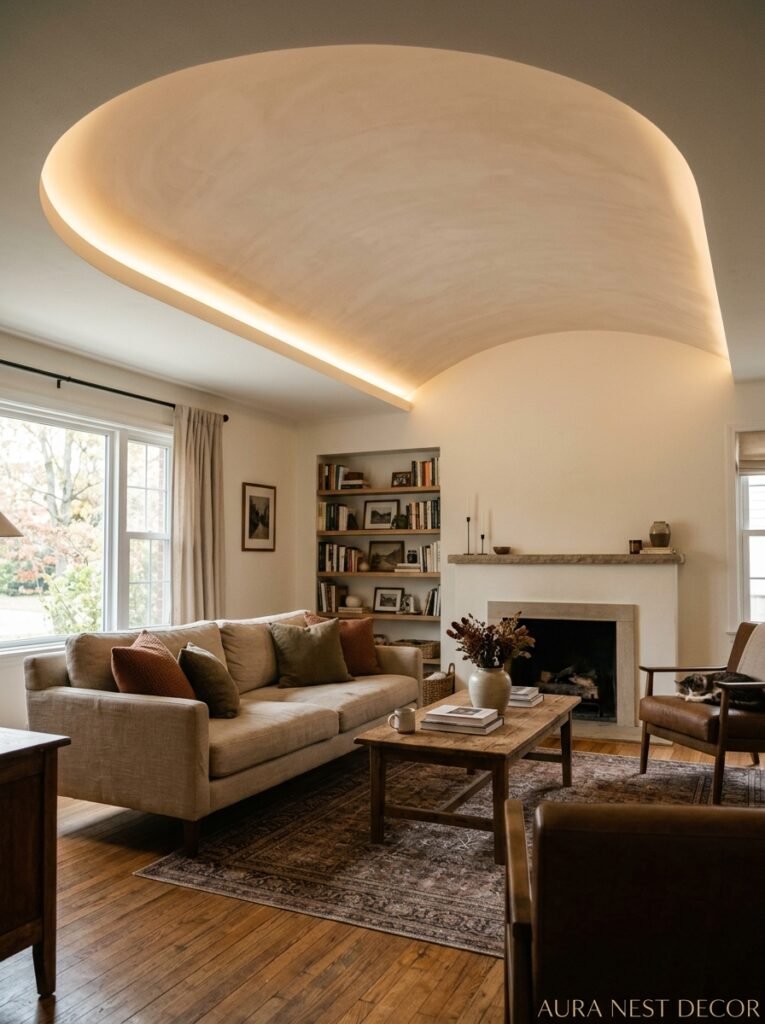
But here’s what I think most people miss: it’s not just about the recessed lights themselves. A false ceiling lets you do cove lighting — which is hidden LED strip lighting inside a recessed edge around the ceiling perimeter. The light glows upward or outward from a hidden source, and you never see the bulb itself. Just this soft halo of light around the top of the room. It looks expensive. It’s not that expensive. But the effect is properly stunning, especially in the evenings.
If you’re doing this, warm white (around 2700K–3000K) is the way to go for a living room. Cooler tones (4000K+) look harsh in a home context unless you’re going for a very specific contemporary look.
—
4. The Ceiling Shape Nobody Expects (But Everyone Loves Once They See It)
Multi-level. That’s the move.
A single flat false ceiling is fine. A stepped or layered false ceiling — where different sections sit at different heights — is actually interesting. And it’s not as hard to pull off as it looks.
The classic version involves a border panel around the ceiling perimeter that sits slightly lower than the central section. This frames the room the way a picture frame frames a painting. It draws the eye. It makes the ceiling itself a design feature instead of just the thing you painted white and forgot about.
“The moment you stop treating the ceiling as dead space is the moment your whole living room clicks into place.”
You can do this in plasterboard (drywall, if you’re American), which gives you a really crisp contemporary look. Or you can do it in wood — real timber, MDF, or even bamboo — which brings in warmth and texture that a flat plaster ceiling just can’t give you. A lot of Scandinavian-influenced interiors are doing this right now and it looks genuinely beautiful: natural wood false ceiling panels running across part of the room, combined with white walls and warm lighting. Cozy without being cluttered.
Coffered ceilings are another option — these are false ceilings made up of a grid of recessed panels, kind of like a waffle pattern overhead. Very traditional, very stately. They work brilliantly in older Victorian or Edwardian homes in the UK, and in American craftsman or colonial-style houses. They give a room gravitas in a way that’s hard to achieve otherwise.
—
5. What a False Ceiling Actually Costs (Honest Numbers, Not Fluffy Estimates)

Right, let’s be practical for a second.
In the US, a basic plasterboard false ceiling professionally installed in a standard living room (roughly 15×15 feet) typically runs anywhere from $1,500 to $4,000 depending on your region, complexity, and whether you’re adding lighting. Add cove lighting or multi-level design and you’re looking more at $4,000 to $8,000. That sounds like a lot, I know. But compare it to a kitchen renovation or a bathroom redo, and a ceiling overhaul is actually pretty reasonable for the visual impact it delivers.
In the UK, the rough equivalent in pounds tends to range from £800 to £3,000 for a basic installation, going up from there for anything involving integrated lighting or feature design. London adds a premium — obviously — but in the Midlands, the North, or Scotland you can often find very competitive rates.
DIY is possible but genuinely not easy. False ceilings involve framing, drywall or paneling, electrical work if you’re adding lights, and finishing — and mistakes in ceiling work are both visible and expensive to fix. Most people I’d recommend getting at least two or three quotes, because prices vary a lot.
The one thing I’d say: don’t cut corners on the lighting integration. It’s awkward and annoying to retrofit lighting after the ceiling’s already been installed.
—
6. The Small Living Room Situation (Because Not Everyone Has a Sprawling Open Plan)
I hear this concern a lot. “My living room is small — won’t a false ceiling make it feel even lower and more cramped?”
Not if you do it right. Promise.
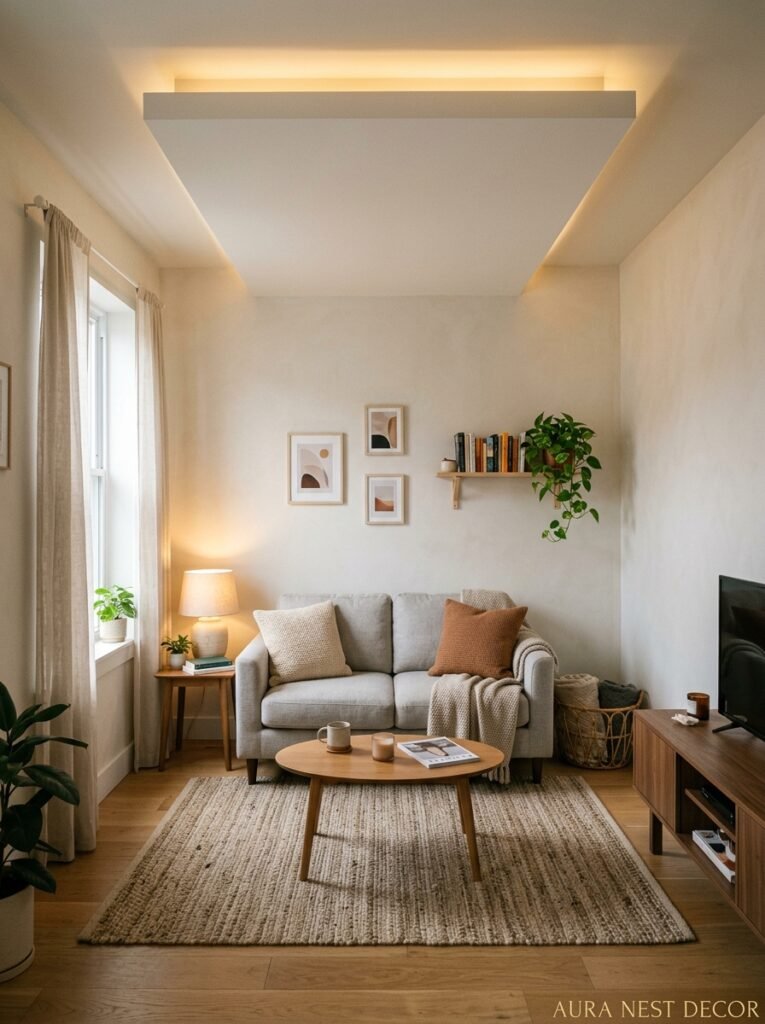
In a small room, the trick is to be strategic. A full false ceiling that drops the entire room by a foot? That might feel a bit cave-like, yeah. But a perimeter-only false ceiling — where just the edges come down and the centre stays at original height — does something counterintuitive: it makes the middle of the room feel taller by contrast. Your eye reads the lower edge as a frame, and the higher centre as generous. It’s a bit like wearing a necklace that draws attention to your collarbone — the contrast creates the impression.
Cove lighting in a small living room is, honestly, one of the best investments you can make. That soft upward glow makes the ceiling feel like it’s receding rather than pressing down on you. I’ve seen this done in a compact London flat sitting room — probably 11×12 feet — with a perimeter cove and warm LED strips, and it felt like twice the room.
Keep the ceiling colour consistent with the walls if the room is small. Or go slightly lighter. The last thing you want is a dark ceiling in a small room, unless you’re going for a very deliberate moody effect and you know what you’re doing.
—
7. The Materials You Can Use (And the One I’d Skip)
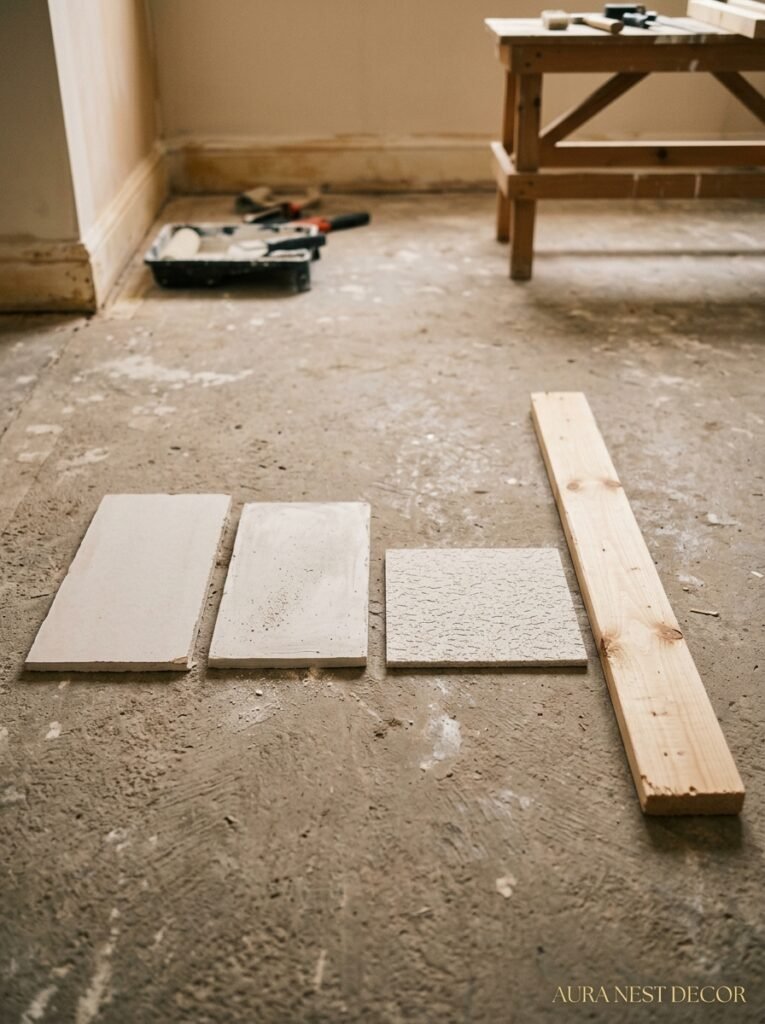
Plasterboard is the classic — smooth, paintable, gives a seamless finish. It’s what most people default to and for good reason. Durable, professional-looking, works with any interior style.
Gypsum is essentially the same thing in different packaging — lots of UK and US suppliers use the term interchangeably.
Wood paneling is having a genuine moment right now. Tongue-and-groove pine, oak veneer panels, MDF with routed grooves — all of these are showing up in living rooms and they look genuinely warm and characterful. Wood adds acoustic benefits too. Slightly less echo.
PVC panels are where I’d pump the brakes, honestly. They’re cheap, they’re easy to install, and they look cheap. That very faint plastic sheen is almost impossible to disguise, and they tend to yellow over time. In a bathroom maybe. In your living room? I’d really try to avoid it.
“The ceiling you choose tells people more about your taste than the sofa does. Nobody expects you to put thought into it — which is exactly why it works.”
Stretch fabric ceilings exist — a membrane stretched across a frame, often with backlit options — and they look extraordinary in the right space. Very sleek, very modern. Not cheap, not DIY-friendly, but genuinely stunning if you have a very contemporary interior and the budget to match.
Metal grid systems (the office-style drop ceilings) have no business in a residential living room. I said what I said.
—
8. How Color Actually Works on a False Ceiling
Most people default to white. White is fine. White is safe. But there are options that are much more interesting.
A very pale warm grey on a false ceiling reads as almost-white in natural daylight but adds just enough depth to stop the ceiling from looking like a blank void. This works especially well with off-white or cream walls — you get a subtle layering effect.
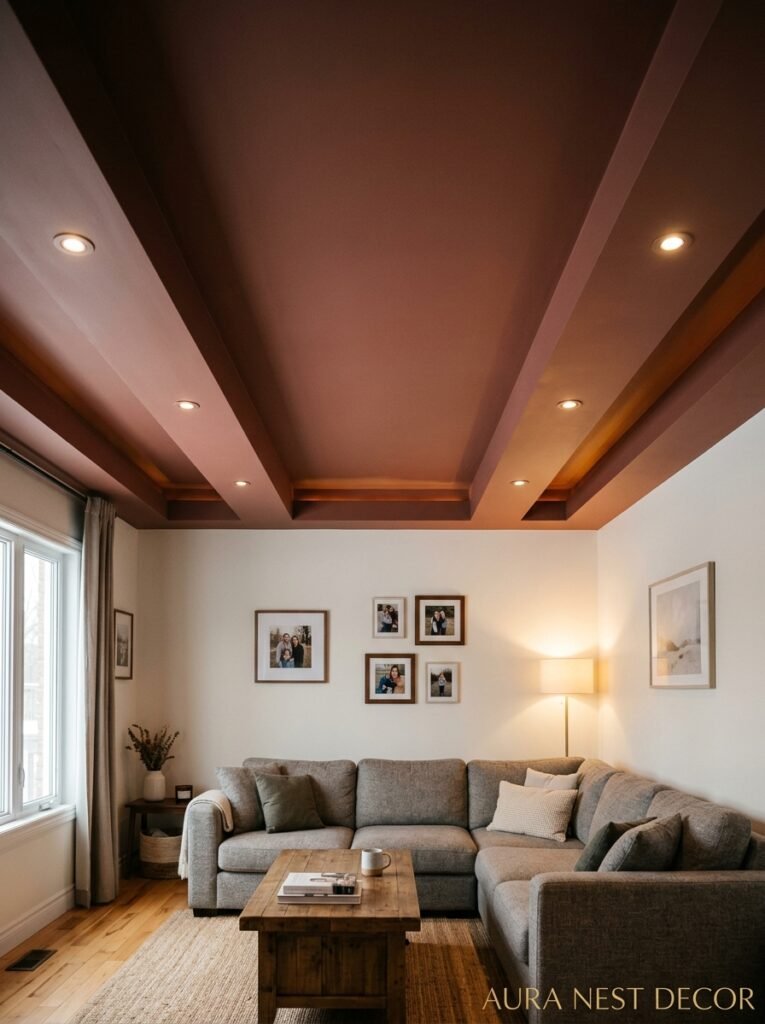
Going dark is a bold move that pays off in specific situations. A deep navy, forest green, or charcoal ceiling above a neutral living room creates this feeling of shelter — like you’re sitting under something intentional and protective. It genuinely does work. The room feels more settled. More deliberate. The risk is making a small room feel claustrophobic, so save the dark ceiling for rooms with decent proportions and adequate artificial light.
Ceiling medallions or painted geometric patterns on a false ceiling are worth considering if you’re going for a maximalist or eclectic interior. It’s a commitment, for sure. But I’ve seen it done in a Victorian terrace with a bold William Morris wallpaper situation and it was completely, magnificently over the top in the best way.
One rule: whatever color you choose for a partial false ceiling feature, make sure it coordinates with something else in the room. A random dark panel floating over your seating area looks unmoored. Tie it to the rug, the curtains, a throw. Give it something to talk to.
—
9. The Acoustic Thing (That Nobody Talks About But Really Should)
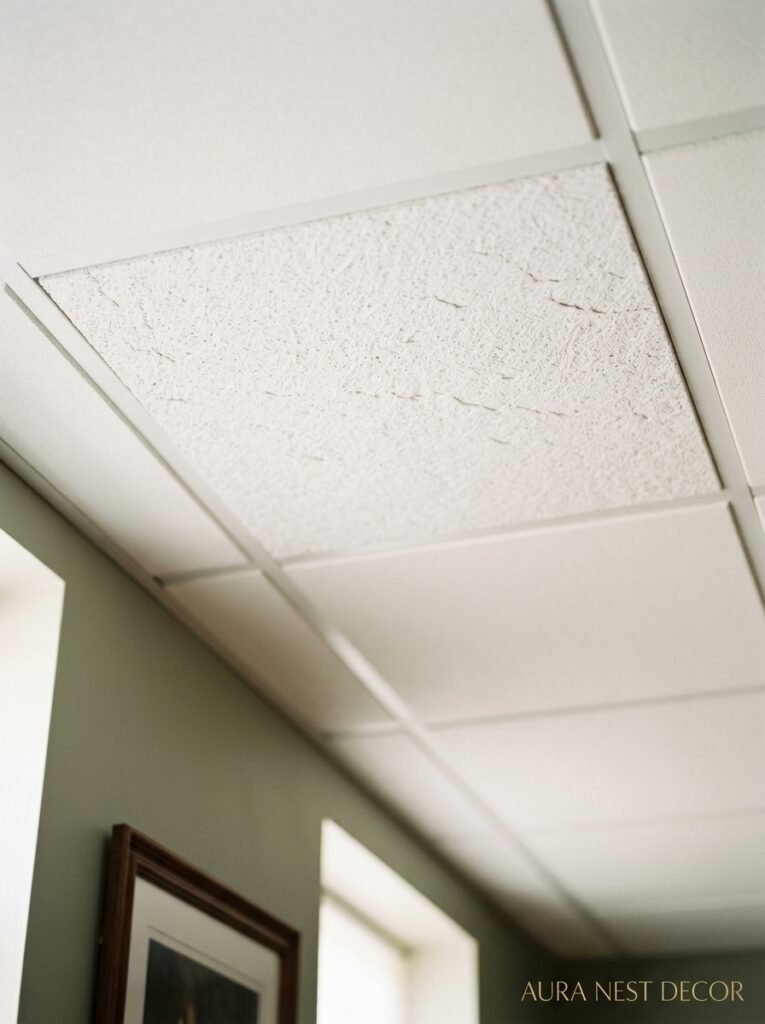
Here’s a genuinely useful fact that gets overlooked in all the aesthetic conversation: false ceilings can dramatically improve the acoustics of your living room.
Sound bounces. Hard, flat surfaces — like a standard plaster ceiling — send sound careening around the room, which is why some living rooms feel noisy even when they’re not particularly busy. The gap between a false ceiling and the structural ceiling above can be filled with acoustic insulation, which absorbs a significant amount of sound. And the false ceiling surface itself, if it’s a textured or perforated material, absorbs even more.
This matters especially if you’ve got an open-plan living space — which is basically every modern American home and a huge number of UK new-builds. Open plan is beautiful and it is LOUD. A false ceiling with acoustic insulation above a seating zone can genuinely make conversation easier, make TV-watching more pleasant, and reduce the sense of chaos that large open spaces can sometimes create.
It’s worth having a conversation with your contractor about acoustic performance alongside the aesthetic choices. It’s not either/or.
—
10. The False Ceiling Trend That’s Everywhere on Pinterest Right Now
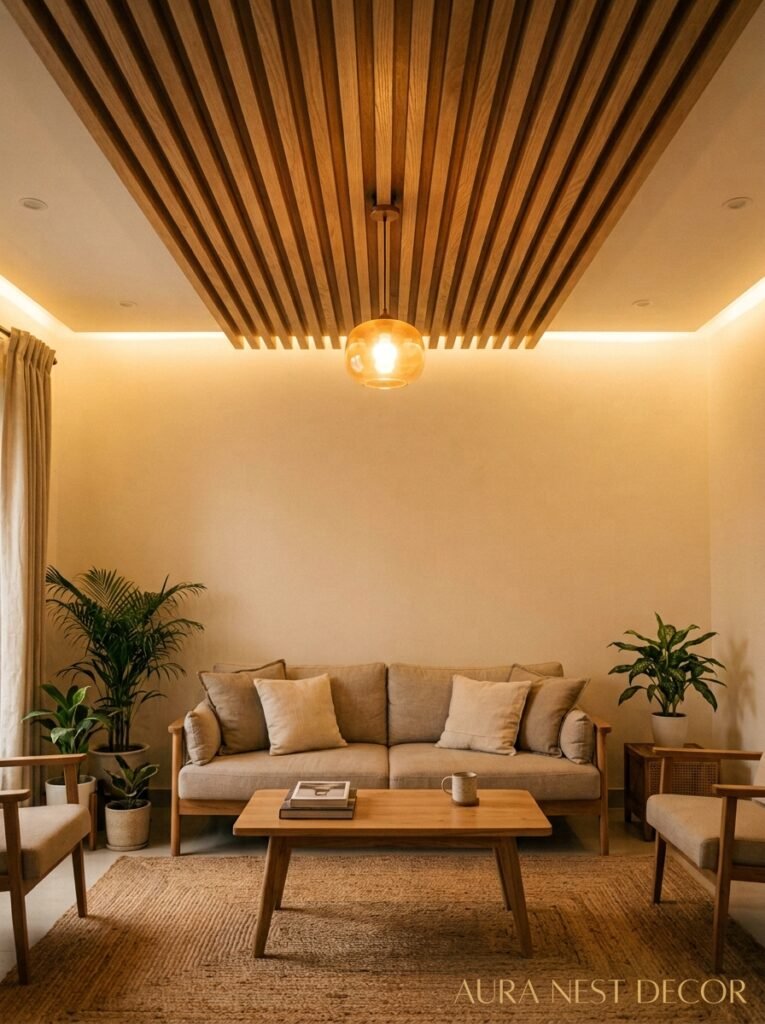
Japandi-influenced false ceilings. I keep seeing these and they’re really, really good.
It’s the combination of Japanese minimalism and Scandinavian warmth — which sounds like a design school thesis but in practice it just means: clean lines, natural materials, deeply considered proportions, a palette of warm neutrals and soft wood tones. And the false ceiling in a Japandi living room tends to be a partial wood panel ceiling — usually real oak or a convincing veneer — covering maybe a third or half of the ceiling, combined with warm recessed lighting and walls kept very simple.
The effect is this quiet, grounded coziness that doesn’t try too hard. Nothing is decorative for the sake of it. Everything has a reason. But it still feels warm and lived-in rather than cold and architectural.
The key details if you want this look: the wood grain should run in one direction only (usually along the length of the room), the lighting should be warm white and dimmable, and you should resist the urge to add anything else to the ceiling — no medallions, no crown moulding, nothing fussy. Let the wood do the work.
—
11. What to Think About Before You Book a Contractor

A few things I’d genuinely consider before committing.
Your ceiling height to start with. If you’ve got standard 8-foot ceilings, dropping even 6 inches can start to feel noticeable, especially in a room where you stand up frequently. Think about your tallest household member and whether a slightly lower section will bother them day-to-day. And then — lighting placement. Recessed lights need to be positioned with the furniture layout in mind. A recessed downlight directly above a sofa is not ideal — you’ll always feel like you’re sitting under a spotlight, and shadows fall weirdly on faces. Position lights toward the edges of seating areas rather than directly above them.
Air conditioning vents, sprinklers, smoke detectors — all of these need to be accommodated in the design and can’t just be covered over. Your contractor should be routing around or incorporating these from the start. If they’re not bringing it up, bring it up yourself.
And check with your local authority or building regulations office — especially in the UK — about whether any permits or approvals are required. In most residential situations it’s straightforward, but if you’re in a listed building or a leasehold flat, there may be restrictions.
—
12. The Detail That Separates a Good False Ceiling from a Brilliant One
Finishing.
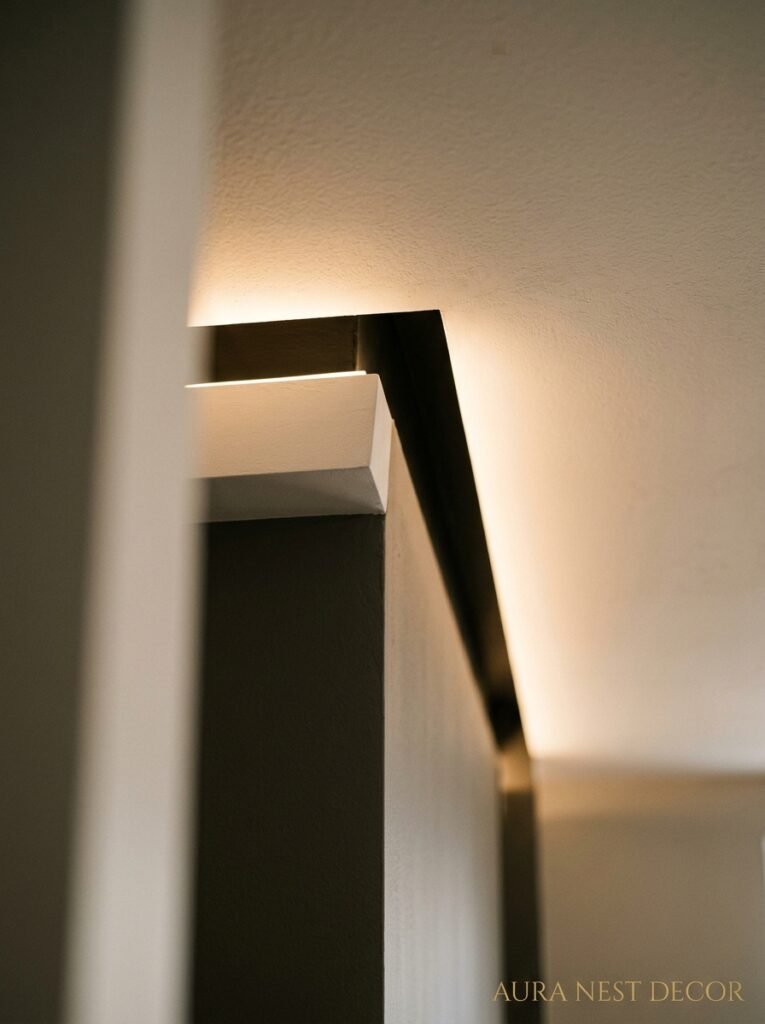
I’ve seen so many false ceilings — in real life, in magazine shoots, on Pinterest — that are a perfectly decent design idea undermined by sloppy finishing. The joint where the false ceiling meets the wall. The way the edge is handled where two different ceiling heights meet. The paint line. These details are what separate a ceiling that looks professional from one that looks like a competent but amateur DIY weekend project.
If you’re going plasterboard, invest in good plastering and at least two coats of ceiling paint. That skim coat — where the plasterer hand-smooths the surface — makes an enormous difference to how the finished ceiling looks under different lighting conditions. Especially cove lighting, which is basically designed to reveal every imperfection in a ceiling surface. Don’t skip it.
The transition detail between ceiling levels — the vertical face where one height steps down to another — this should have a clean, sharp corner with a proper bead. It’s a small thing. It matters a lot.
The best false ceilings are the ones you stop noticing as a feature and just start experiencing as the room.
—
❓ FAQ
Q: Will a false ceiling make my living room feel smaller? A: Not necessarily — it really depends on the design. A partial or perimeter false ceiling can actually make a room feel more proportioned and cozy rather than cramped. Cove lighting in particular makes ceilings feel like they’re receding upward. The key is working with your existing ceiling height and not dropping the whole room if you’re already on the lower end.
Q: How long does it take to install a false ceiling in a living room? A: For a standard room, most professional installations take between two and five days — including framing, boarding, plastering, and finishing. If you’re adding integrated lighting or working with a more complex multi-level design, expect closer to a week. You’ll need the room empty during the work, and there will be dust. Quite a lot of dust.
Q: Can I install a false ceiling in a rented home? A: In most cases, no — structural changes like this require landlord permission in both the US and UK, and a false ceiling would almost certainly count as a structural alteration. If you’re in the UK and living in a leasehold property, you’d need freeholder approval too. It’s honestly not worth the hassle or potential deposit implications without explicit written permission.
—
💭 Final Thoughts
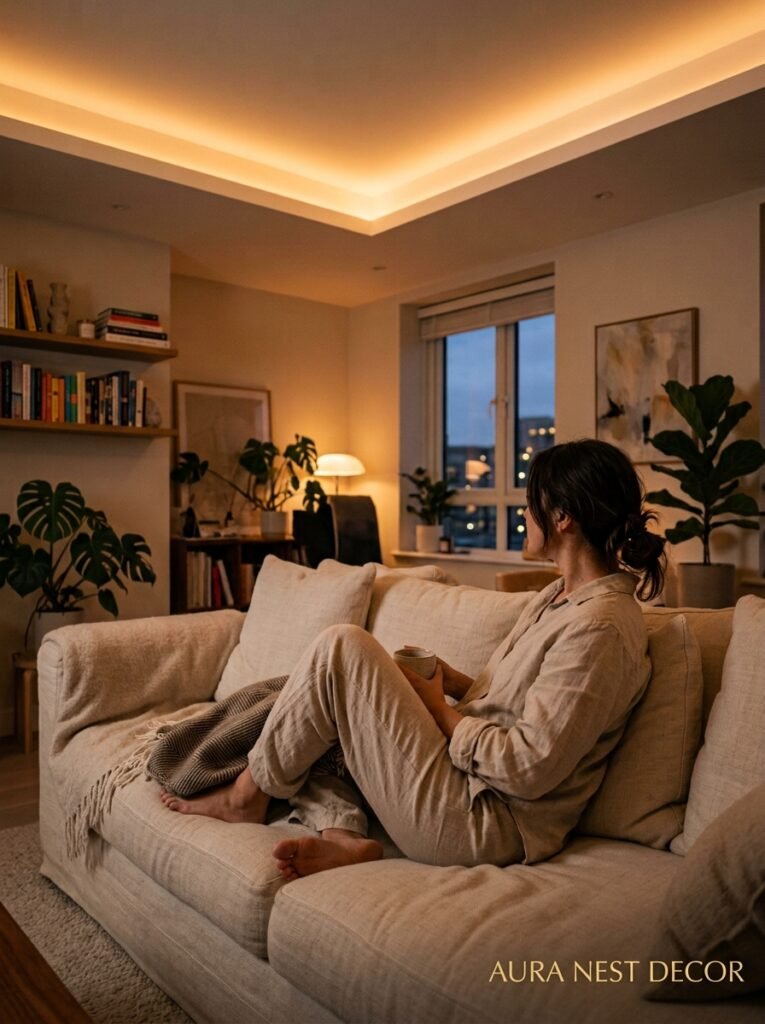
A false ceiling is one of those changes that people don’t expect to care about and then can’t imagine living without. It’s quiet, it’s considered, and when it’s done well it just makes your whole living room feel like it was designed — intentionally, by someone who actually thought about it.
I think that’s what we’re all after, really. Not perfection. Just intention.
What’s the one thing about your living room ceiling that’s been quietly bothering you?