The Living Room Glow-Up Nobody Told You Was This Simple
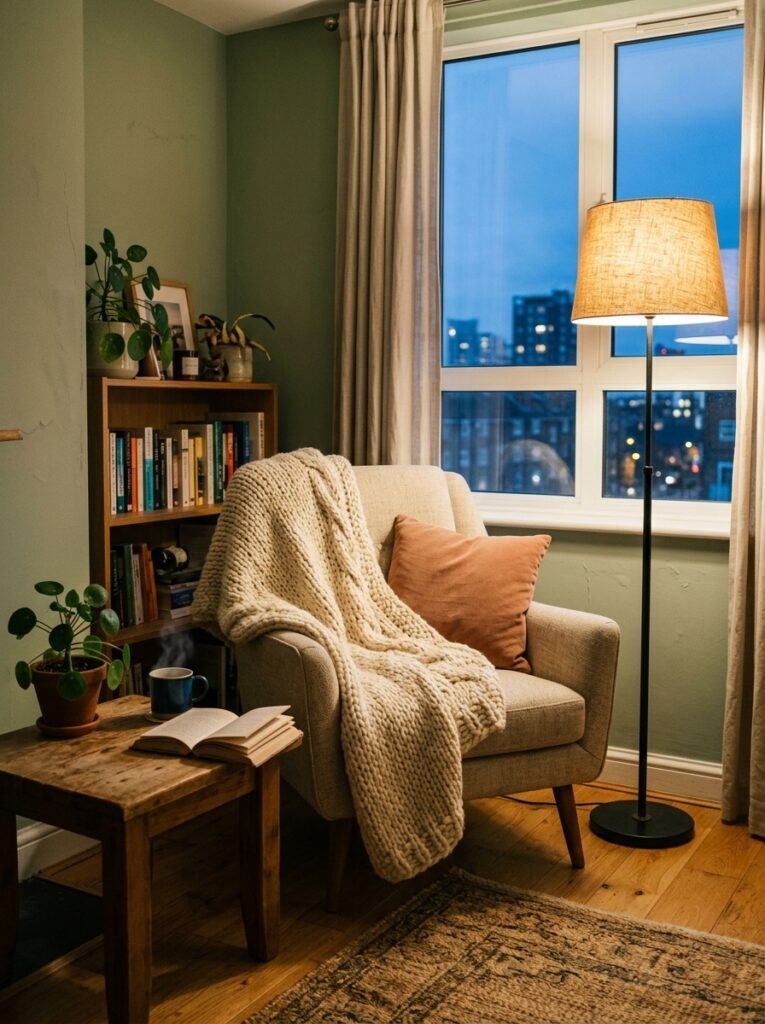
My friend called me last week, mid-spiral, because she’d just moved into a new apartment and her living room looked “like a waiting room but sadder.” Her words. And honestly? I’ve been there. We’ve all been there — that specific hopeless feeling when you’re staring at four beige walls and a sofa that technically fits but somehow makes the whole room look smaller.
But here’s the thing she didn’t realize: she already had almost everything she needed. She just didn’t know how to USE it.
—
1. The First Mistake Almost Every Apartment Dweller Makes (And It’s Not the Sofa)
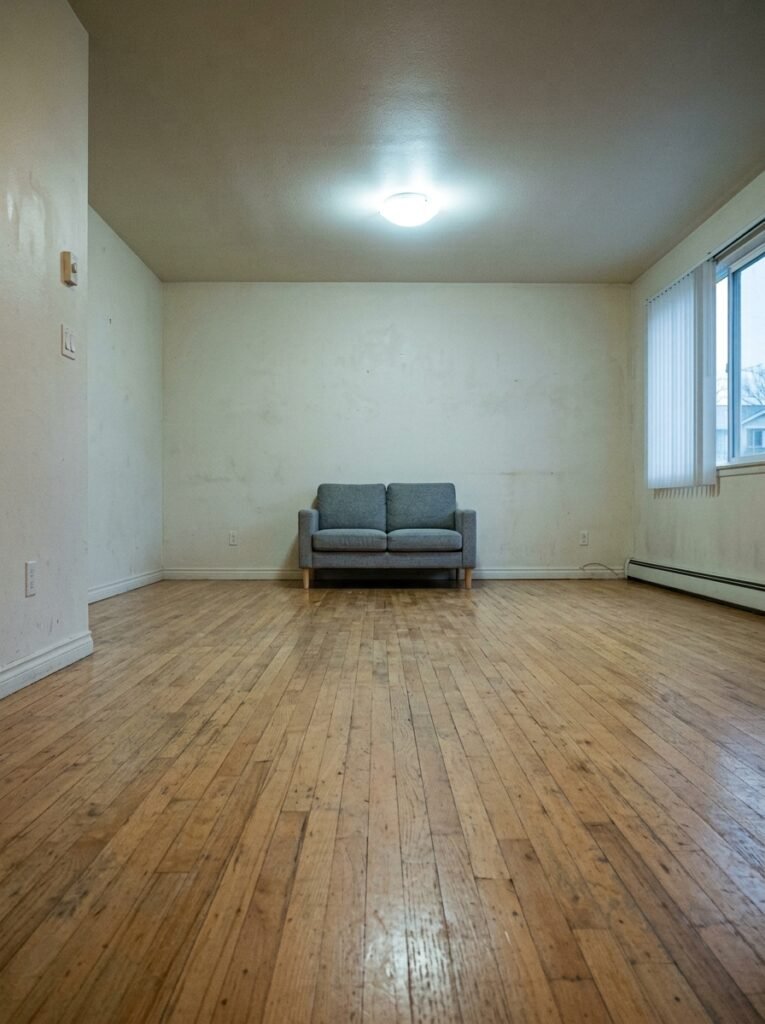
Furniture placement. That’s it. That’s the mistake.
People spend hours agonizing over throw pillows and paint colors when the entire room feels off because every single piece of furniture is pushed flat against the wall. It happens in apartments constantly — the logic being that you’ll “create more space.” But you won’t. You’ll create a room that feels like a waiting room. Sound familiar?
The fix is almost embarrassingly simple. Pull your sofa a few inches — or even a foot — away from the wall. It immediately makes the room feel more intentional, like someone who knows what they’re doing lives here. Float your furniture toward the center of the room, create a conversation zone, let some breathing room live between the pieces and the walls. The space doesn’t shrink. It actually expands somehow. I still can’t fully explain the physics of it, but it works every single time.
Don’t push everything against the wall. Just don’t.
2. The Color That Keeps Showing Up in Every Stunning Small Living Room Right Now
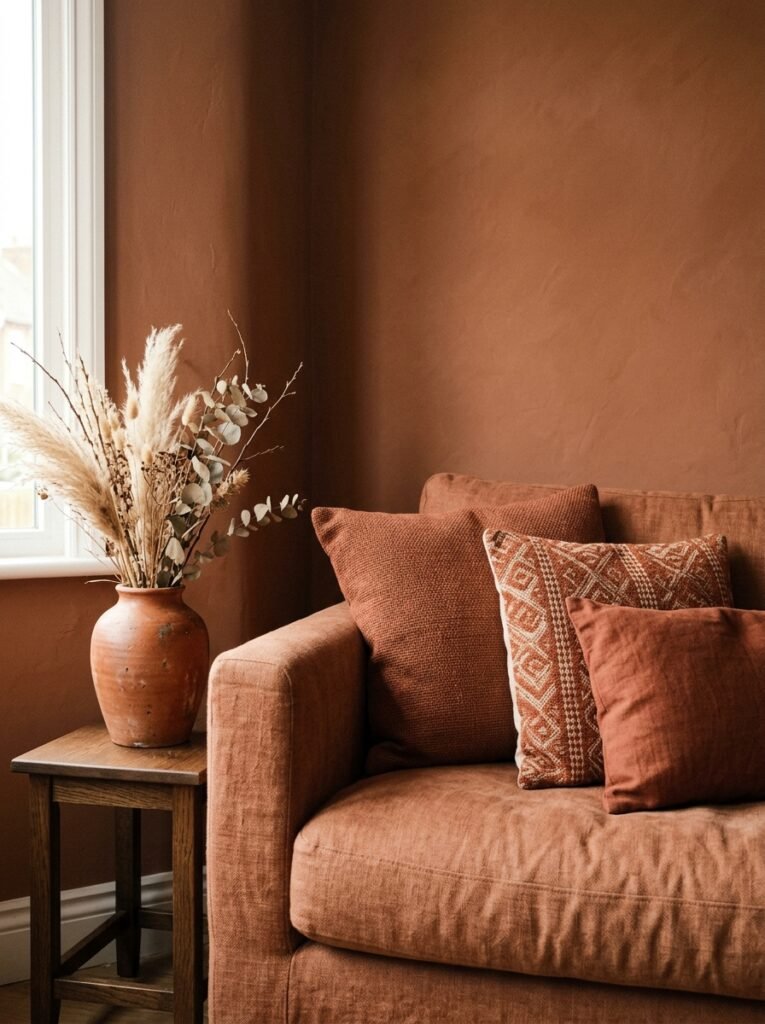
Not beige. Not greige. Not “warm white.”
It’s terracotta. Or rather, it’s the idea of terracotta — that dusty, earthy, slightly muted red-orange that makes a room feel like it’s been lived in for decades in the best possible way. You don’t have to paint the walls (though if you can, do it). A terracotta-toned throw, a couple of rust-glazed ceramic vases, even a vintage-style rug with those warm ochre and brick tones — it all reads the same way.
“Terracotta doesn’t decorate a room. It warms it. There’s a difference and you feel it the second you walk in.”
What I love about this color story is that it works across SO many styles. Minimalist apartment with white walls? Terracotta pops beautifully. Maximalist, layered, vintage-heavy space? It blends right in. It’s one of the few colors that genuinely flatters almost every light condition, which matters in apartments where you don’t always get to choose which way you’re facing.
Side note — if terracotta feels too bold for you right now, start with ONE object. A single rust-colored candle holder. See how the room responds.
3. Lighting: Why Your Living Room Still Feels a Bit Sad at 6pm
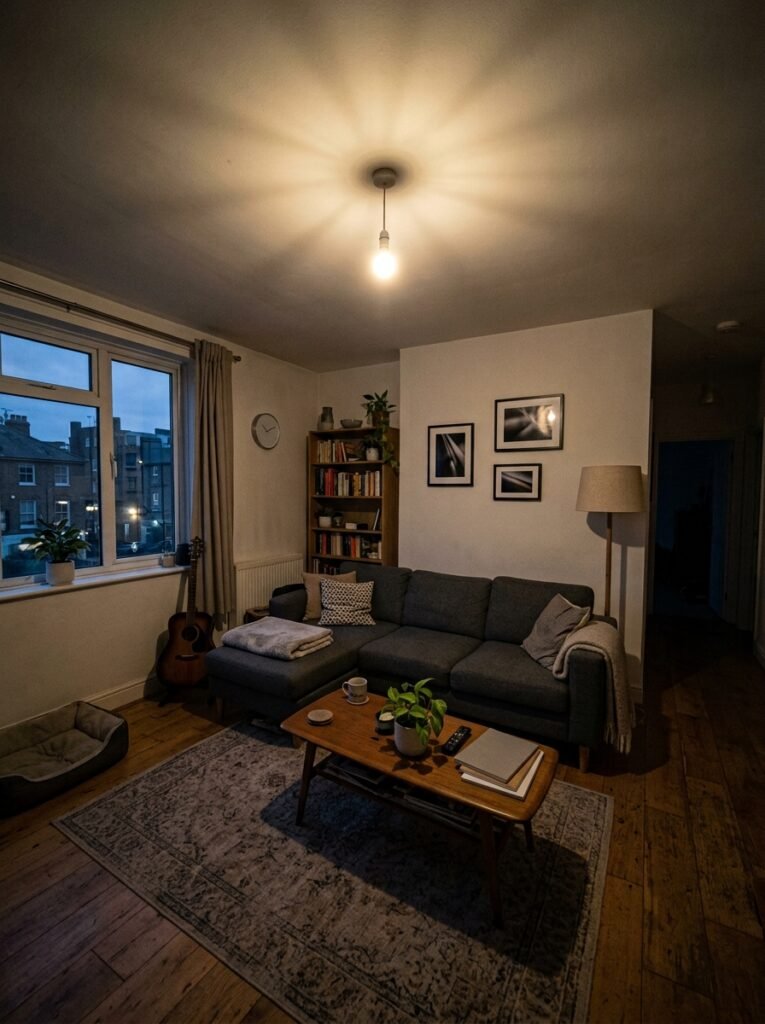
Here’s something nobody really tells you when you’re decorating: overhead lighting is almost always the villain.
That flat, bright ceiling light in most apartments — the one that makes everything look like a grocery store — is working AGAINST you. It flattens the room, it kills the mood, and it makes even beautiful furniture look cheap. And yet most people just leave it on every evening and wonder why the space never feels cozy.
The answer is layers. Specifically, low light sources. A floor lamp tucked into a corner throws that gorgeous amber pool of light across the floor that makes everything feel intimate. A table lamp on a side table or bookshelf adds warmth at eye level. Even a cluster of candles on the coffee table changes the room’s entire personality after dark.
You don’t have to spend much. A simple arc floor lamp with a warm-toned bulb will do more for your apartment than most furniture upgrades. The bulb temperature matters more than people realize — look for 2700K, which is that golden, slightly amber tone as opposed to the cooler, bluish white that most standard bulbs emit.
4. The Rug Size Rule That Changes Everything (Seriously, Write This Down)
Too small.
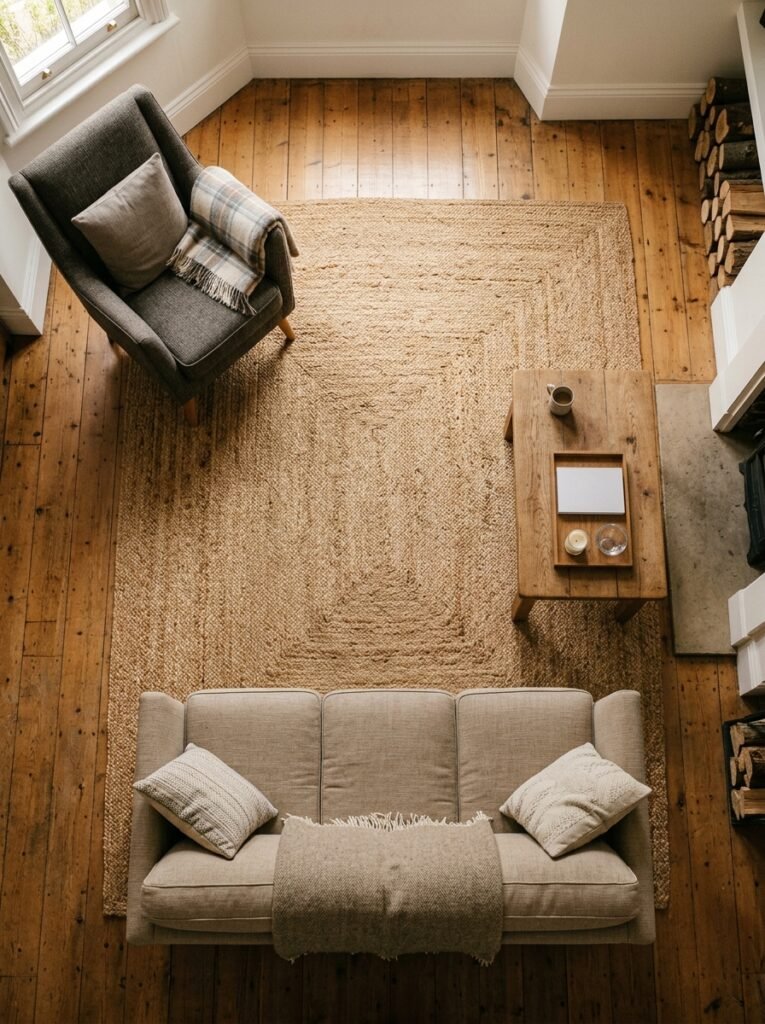
That’s the answer to why the rug in your living room isn’t working. Almost every rug in almost every apartment I’ve ever been in is too small for the space. People buy a rug, think “that looks about right,” put it under the coffee table, and then spend years wondering why the seating area still feels kind of unfinished.
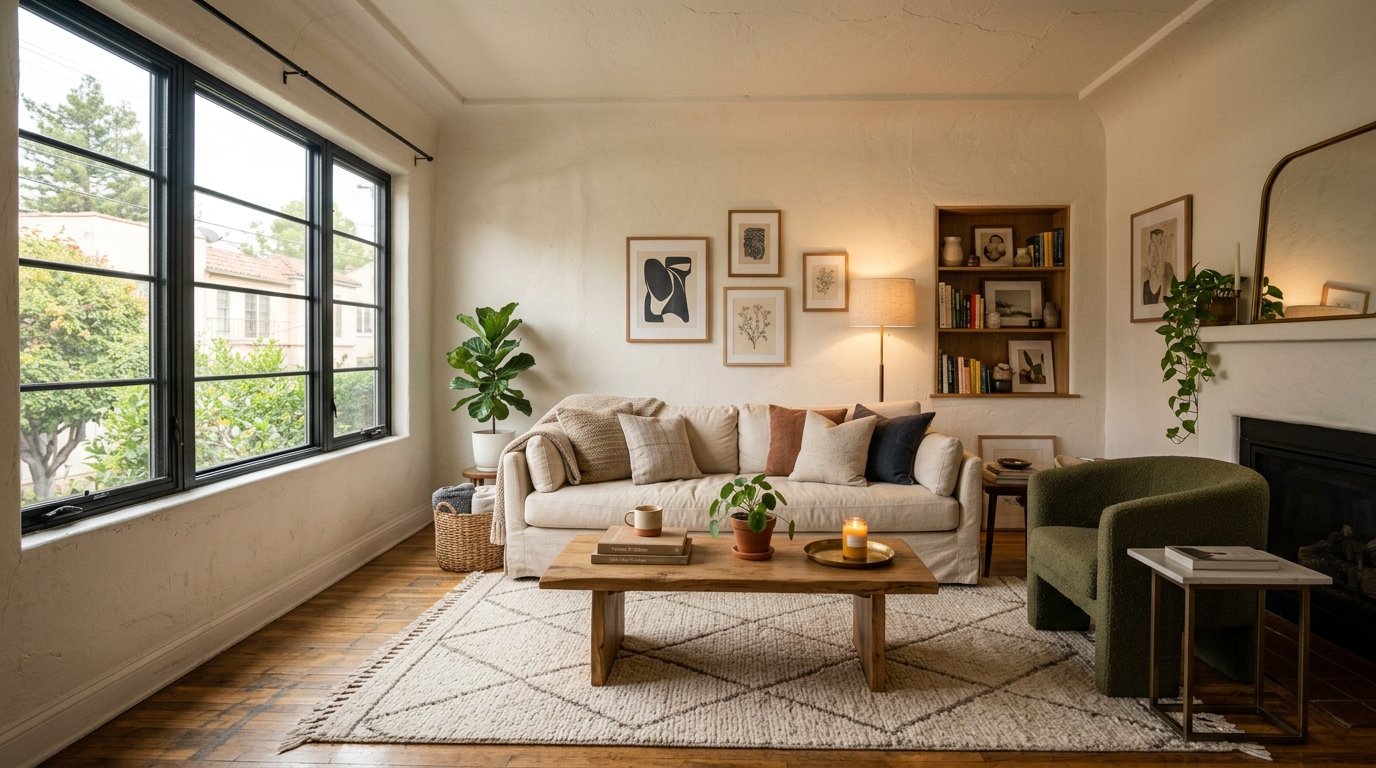
The front legs of every piece of seating furniture should sit ON the rug. Not near it. Not adjacent to it. On it. The rug is what anchors the seating zone and signals to your brain that this is a deliberate, contained space — not just furniture floating around. When the rug is too small, everything floats. The eye doesn’t know where to settle.
In most apartments, this means going bigger than feels comfortable when you’re in the shop. Genuinely bigger. A rug that seems enormous on the showroom floor is usually about right for a normal living room.
A woven jute rug in a large size, by the way, is one of the best-value investments you can make in this space. Textural, neutral, works with everything, and it photographs beautifully for anyone who cares about that sort of thing.
5. One Wall, One Statement: How to Stop Your Apartment From Feeling Like a Gallery Reject
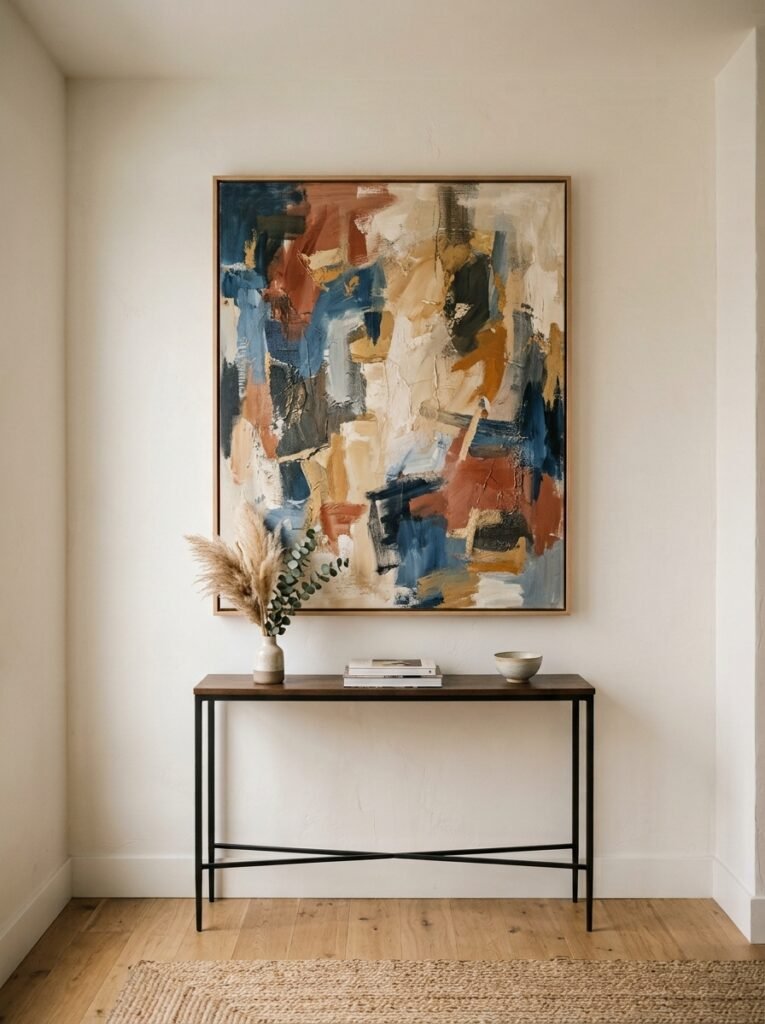
Gallery walls are wonderful. They’re also incredibly easy to get wrong, which is why so many apartments have that slightly awkward collection of frames that feel like they were installed on a Sunday afternoon and immediately regretted.
The secret isn’t the frames or the art. It’s the commitment.
Pick ONE wall. Go big. Don’t spread art across multiple walls trying to fill space — concentrate the impact. A large single print above the sofa, framed in something with visual weight (a chunky dark wood frame, a thin brass frame, a matte black frame against a light wall) will do more than six small prints scattered around.
“A room doesn’t need more art. It needs the right art in the right place, and then everything else should breathe.”
If you want a gallery wall, go proper gallery wall — really commit to the cluster, overlap the frames slightly in your arrangement, mix sizes dramatically. But then leave the other walls mostly alone. Contrast is the thing that makes it land.
6. Plants: The Ones That Actually Survive Apartment Life (And Actually Do Something Design-Wise)
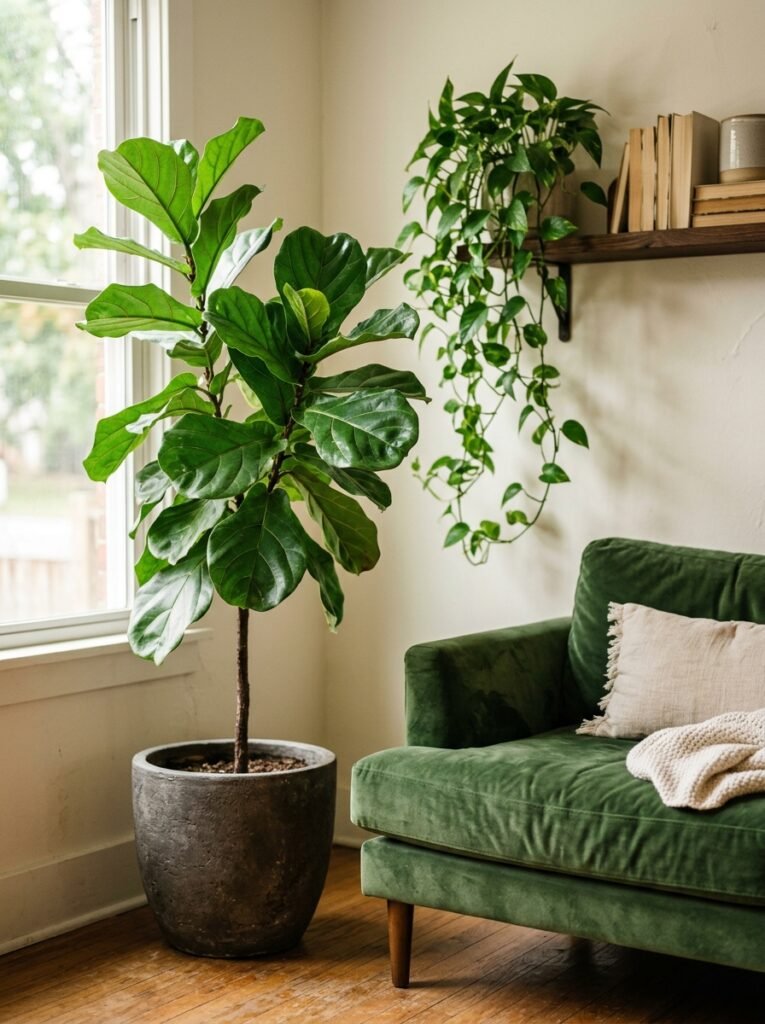
I’m not going to tell you to get a fiddle leaf fig. Not because they’re not beautiful — they are — but because apartment light conditions are genuinely harsh and most people end up with a slowly dying tree in the corner within three months, which does the opposite of what you want aesthetically.
What actually works, design-wise AND practically:
A trailing pothos on a high shelf, letting the vines drape down. It’s almost embarrassingly easy to keep alive and the movement it creates is something no art print can replicate. A large-leafed monstera if you’ve got decent indirect light — the architectural quality of those leaves reads as genuinely intentional decor. Or, honestly, a cluster of small succulents on a tray on the coffee table, kept very tight and very deliberate (scattered randomly they just look like clutter, but grouped together they read as a styled moment).
Plants do something subtle but real for a room — they confirm that someone lives here, that the space has breath and life. It’s hard to quantify and easy to feel.
7. The “No, That’s Clutter” Edit That Hurts a Little but Fixes a Lot
Not gonna lie — this is the part most people skip.
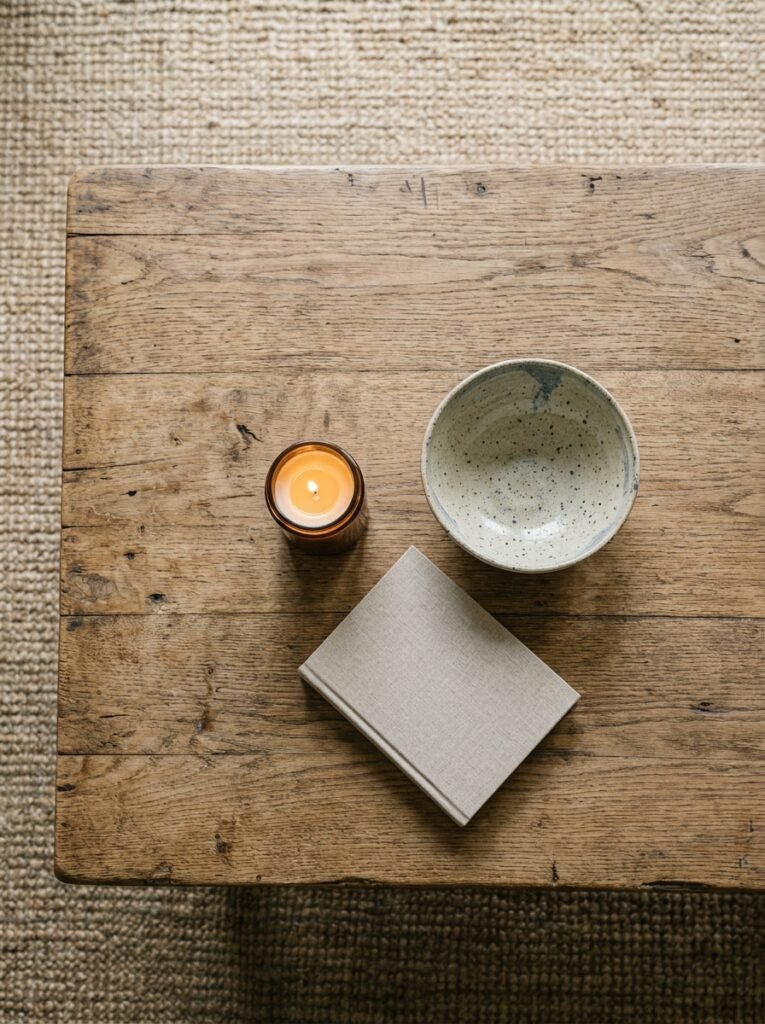
Every beautiful living room you’ve ever pinned has one thing in common that nobody really talks about in the caption: the stuff that ISN’T there. The remote controls stuffed into a drawer. The stack of magazines that actually went in the recycling. The throw blanket that’s folded and placed rather than just dropped. The absence of random charger cables and takeaway receipts and yesterday’s coffee cup.
This isn’t about being a minimalist. It’s about editing. There’s a distinction.
You can have a warm, layered, maximalist living room full of texture and color and things you love. But every surface should be curated rather than accumulated. Take everything off your coffee table. Then put back only what earns its place visually — a candle, a small stack of two or three books with the spines turned or the covers showing, maybe one small object that means something. Then stop. The restraint is the style.
8. The Throw Pillow Math Nobody Tells You About
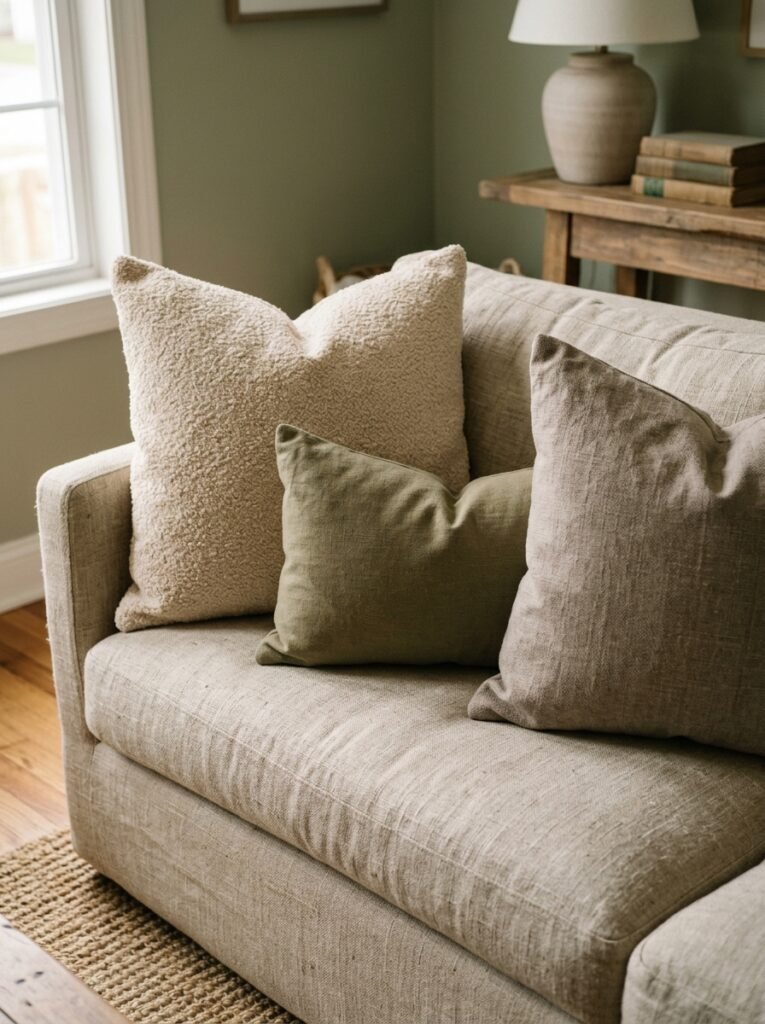
Two is usually not enough. Five is often too many. And the SIZE matters more than the pattern.
In a typical apartment sofa, three to four pillows tends to be the sweet spot — but only if you’re mixing sizes. A pair of larger 20-inch cushions at each end, a smaller lumbar pillow in the front center. That’s a simple formula that works in almost every configuration. But what makes it actually look good is the texture mixing.
Not pattern mixing — texture mixing. A linen-look cushion next to a chunky knit next to something with a slight sheen or embroidery. The patterns can all be fairly quiet (they don’t need to be wildly different) as long as the surfaces feel different to the eye. That contrast is what reads as “styled” rather than “just bought cushions.”
Also — and this one stings a little — if your throw pillow inserts aren’t full enough, none of this matters. Flat, deflated cushions look sad regardless of their covers. Go up a size on the insert, or find feather-filled ones. It’s a small change with a disproportionate visual impact.
9. What Your Coffee Table Is Missing (Hint: It’s Probably Height)
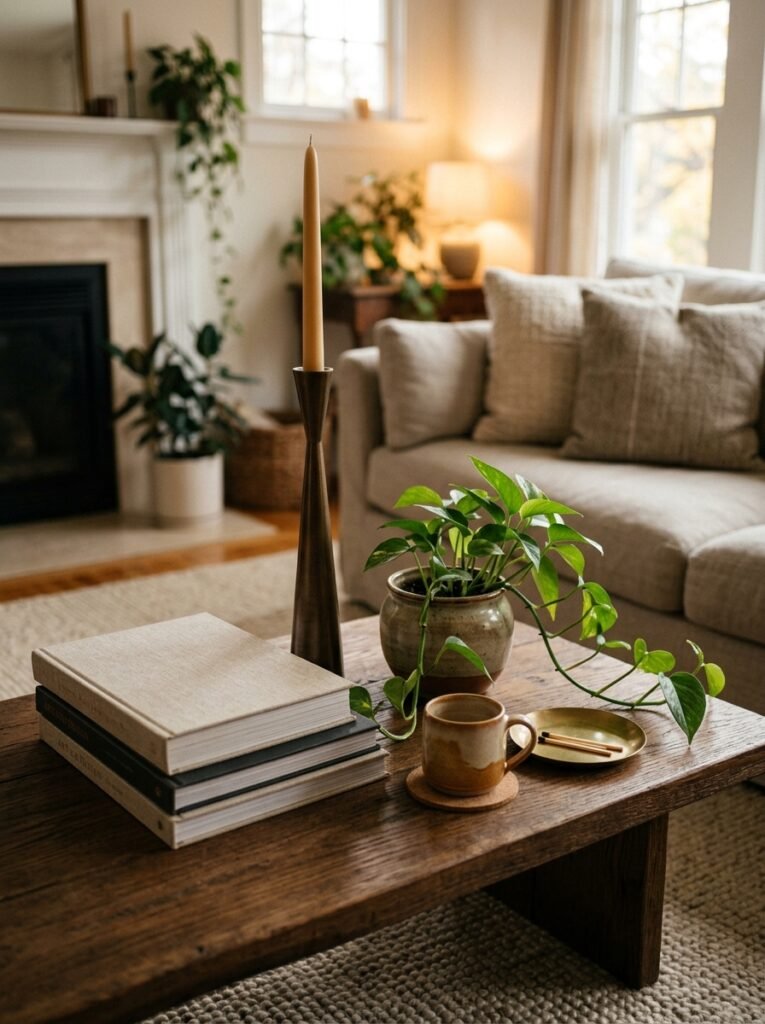
Everything on a coffee table tends to be flat. Books, a candle, a coaster, a remote. All at the same low level.
Add something tall. One object with height — a bud vase with a single dried stem, a small sculptural object, a candlestick. It creates visual movement upward and stops the tabletop from looking like it’s just been laid out for a yard sale. You don’t need much. One tall element per tray or cluster is usually plenty.
“The coffee table isn’t just a surface. It’s the most central piece of real estate in the room. Treat it like it matters.”
Trays are also genuinely one of the most useful styling tools in a living room. They contain, they organize, they instantly make a collection of random objects look like a deliberate arrangement. A round rattan tray or a lacquered rectangular tray on the coffee table gives you a contained zone to style within, which makes editing much easier.
10. The One Rule That Makes Any Tiny Apartment Living Room Feel Intentional
Visual triangles.
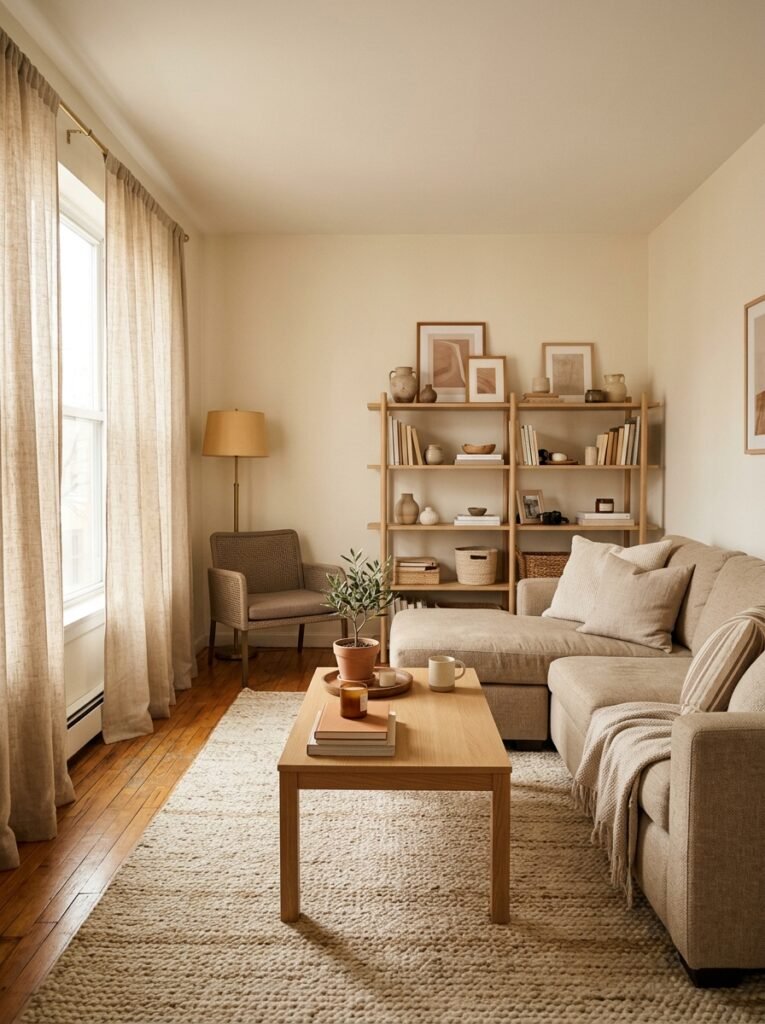
I know that sounds slightly intense, but stay with me. When you’re arranging any surface or shelf or corner of a room, the eye is most satisfied when it can trace a triangle across the arrangement — something tall on one end, something medium in the middle, something small on the other end. Not literally a triangle. Just the sense of variation in height that creates movement.
This applies to shelf styling, mantle styling, tabletop styling, even how you arrange plants in a corner. Flat-flat-flat reads as boring. Tall-medium-short reads as curated. It’s such a small shift in thinking but it’s kind of a revelation once you see it.
Same principle works across the room itself. One tall floor lamp, a medium-height sofa back, a lower coffee table. Your eye should travel, not just land flat.
11. The Underrated Power of a Single Scent in a Living Room
Okay, this one’s a bit different from furniture arranging, but bear with me.
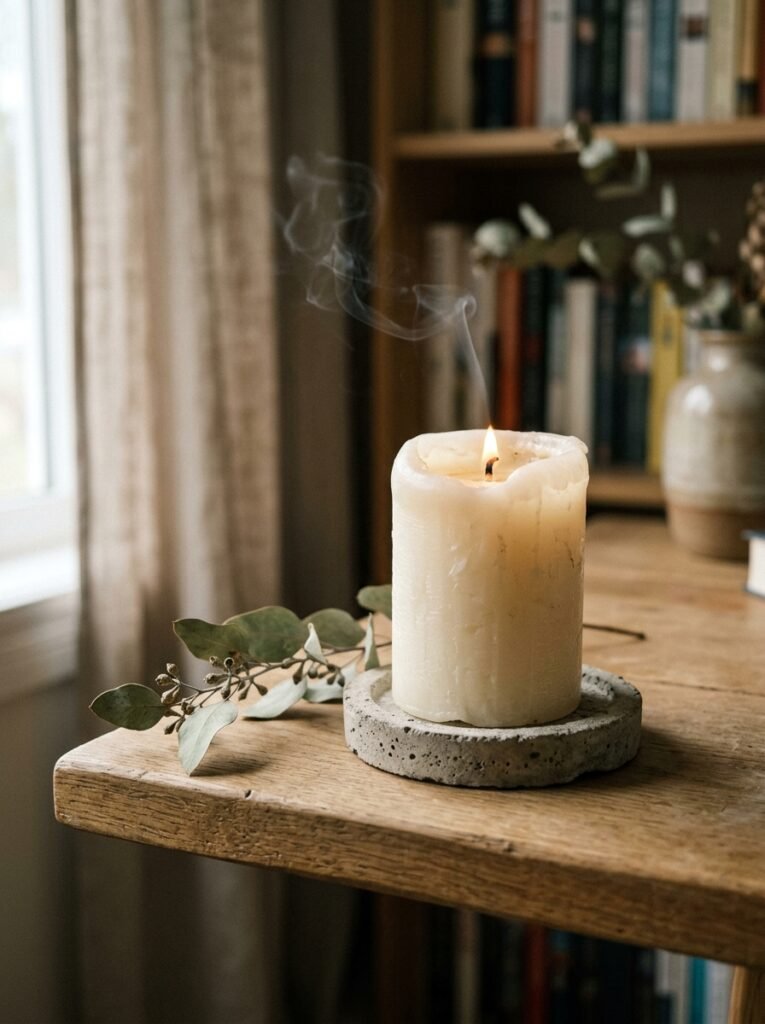
A living room can be styled perfectly and still feel incomplete if it doesn’t have a signature scent. Not a heavy, overpowering perfume — just a quiet, consistent warmth that greets you when you walk in. A single good candle with a woody or slightly smoky base note (sandalwood, vetiver, cedar, something in that family) does this better than anything else.
Or rather, or maybe it’s the opposite, honestly — some rooms suit something greener. A fig leaf scent, or something faintly herbal. The point is to PICK one and be consistent with it. The sense of smell is wildly underused in home decorating, and a room that smells right feels finished in a way that’s almost impossible to put into words.
It doesn’t have to be expensive. One candle, burned regularly. That’s it.
12. What “Your Style” Actually Looks Like Once You Stop Copying Pinterest Exactly
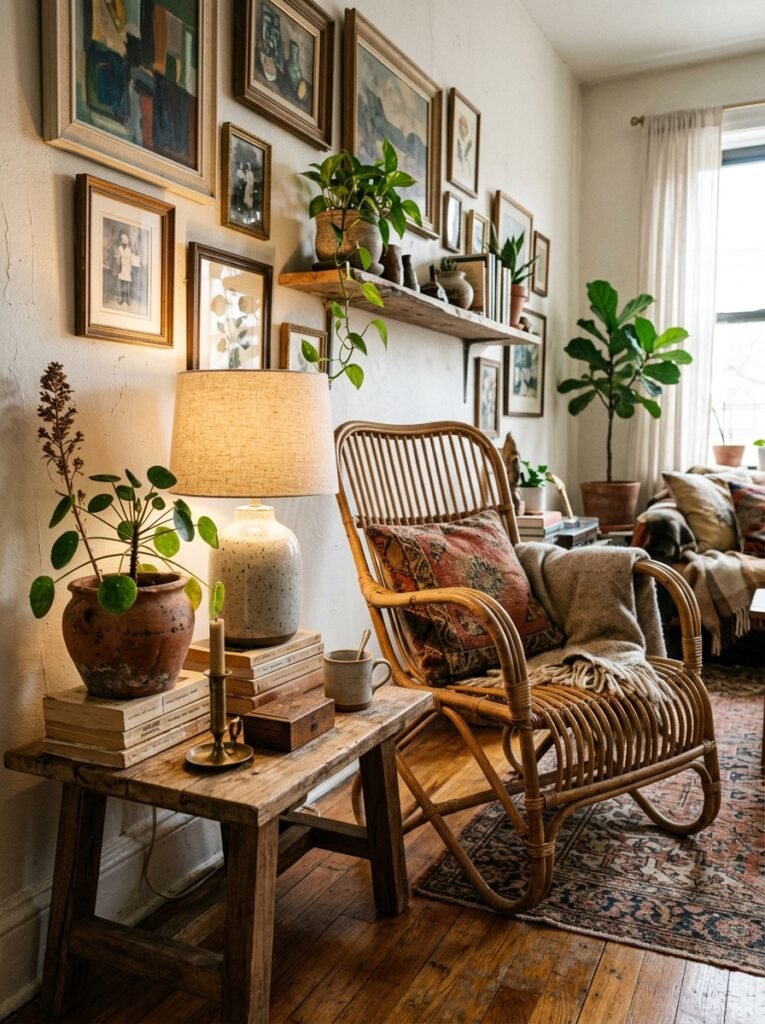
Here’s where I’ll probably get slightly controversial.
Pinterest is incredible for inspiration and almost useless as a blueprint. Every image you’ve saved was shot in specific light, with professional styling, in a space that probably doesn’t look anything like that in real life. The rooms you’re pinning were constructed for a camera, not for living in.
Your actual style lives somewhere in the overlap between what you’ve kept through multiple moves, what you’re immediately drawn to in other people’s homes, and what makes you feel relaxed rather than impressed. That’s the version you’re chasing — not the version that would photograph well. Although honestly, if you follow the principles in this article, it’ll probably photograph pretty well too. Just saying.
Style isn’t something you achieve. It’s something you accumulate, slowly, by paying attention to what actually feels like you.
Start there. Fix the furniture placement first. Layer the light. Get a bigger rug. And then just… see what the room wants to be.
—
❓ FAQ
Q: How do I make a rented apartment living room feel less temporary without losing my deposit? A: Focus on what you can take with you — rugs, lighting, cushions, plants, art that hangs with small hooks. These have massive styling impact and zero permanent effect on the walls. A good floor lamp and a large rug can completely transform a rental living room with zero risk to your deposit.
Q: What’s the best way to make a small living room feel larger without knocking down walls? A: Fewer, larger pieces of furniture actually read as more spacious than lots of small ones. A big sofa, one large rug, and clear pathways will feel more open than a room full of smaller furniture trying to “save space.” Also — mirrors. A large mirror on the wall opposite your best light source doubles the perceived depth of the room instantly.
Q: How much should I spend on a living room refresh before it becomes a whole renovation? A: More than you’d expect on a rug (it’s the foundation), less than you think on art (prints in good frames are fantastic), and prioritize lighting over almost everything else. You can completely transform a living room for a few hundred dollars or pounds if you focus on the right things — furniture placement costs nothing, and that’s where most rooms go wrong first.
—
💭 Final Thoughts
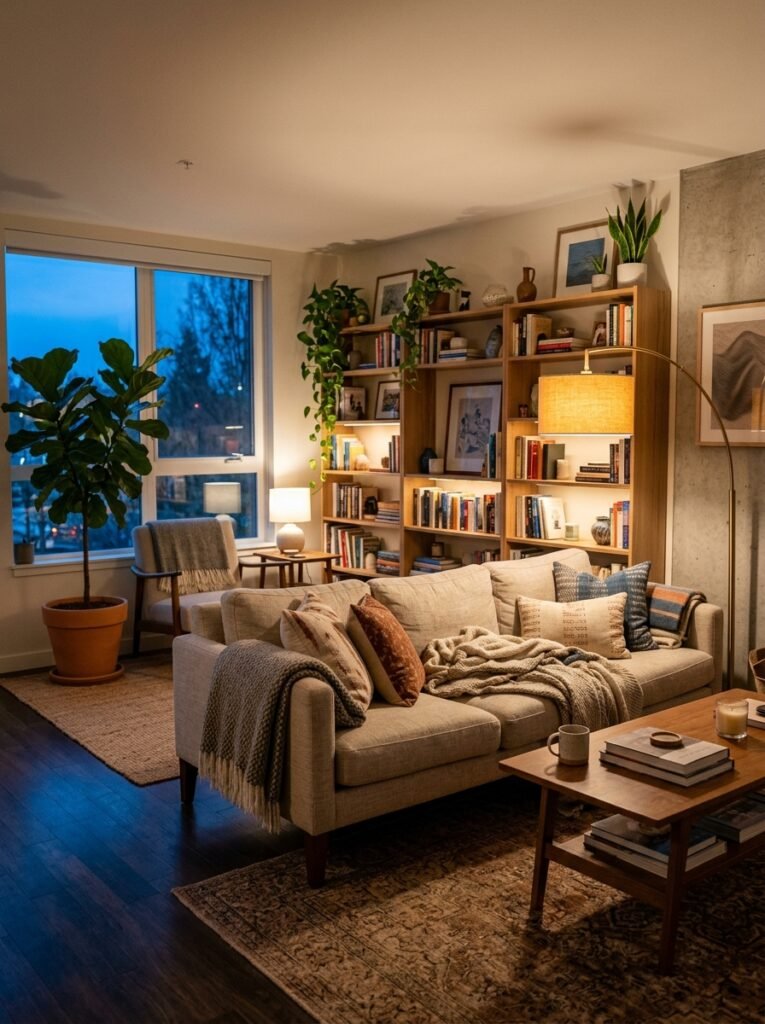
The living room you want probably isn’t far off from the one you already have. It’s mostly a matter of moving things, removing things, and adding light in the right places. Nothing about this has to happen all at once, and honestly the rooms that feel the most personal usually came together over a year or two of slow, deliberate adding.
What’s one thing in your living room that’s been quietly bothering you for months — and have you actually done anything about it yet?