
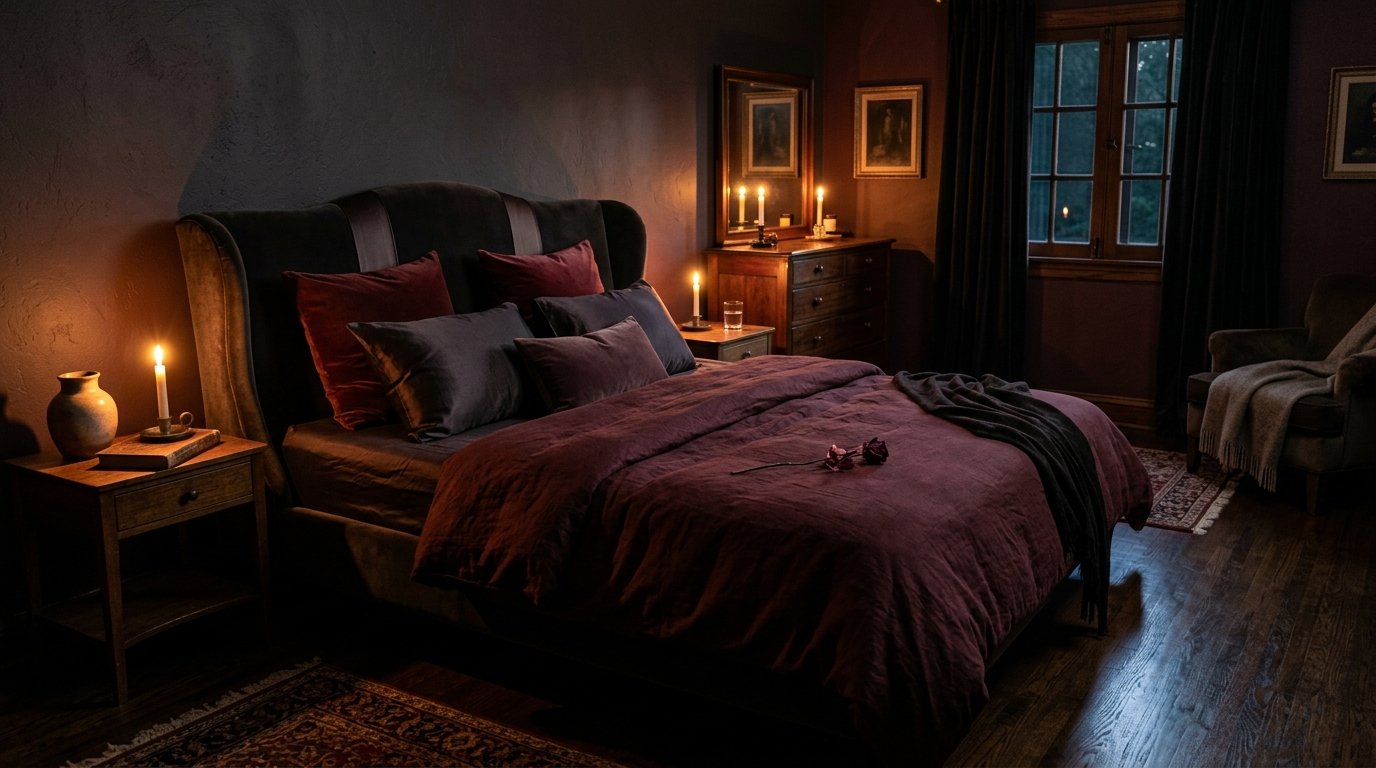
Dark Feminine Bedroom Ideas That Actually Feel Like You, Not a Pinterest Mood Board
My friend Cassie walked into her bedroom one evening and said, “I feel nothing in here.” White walls, beige linen, one sad throw pillow. And I knew exactly what she meant.
—
1. The Mood You’re Actually Going For (It’s Not “Goth Adjacent”)
Dark feminine isn’t Halloween. It’s not the absence of light or the presence of black-everything. It’s closer to that feeling you get walking into a candlelit restaurant at 8pm — you exhale, your shoulders drop, something relaxes in your chest that you didn’t know was tense.
That’s the target.
The palette tends to pull from deep plums, dusty roses, burgundy, aubergine, forest green, and warm charcoal. Not necessarily all at once. But the common thread is richness — colours that have weight to them, that hold the eye instead of bouncing it around. A room that doesn’t apologize for being dramatic.
And honestly? It photographs beautifully, which I’m sure has nothing to do with why it’s trending.
The key mistake people make is thinking “dark” means “heavy.” Done right, a dark feminine bedroom feels airy in a low-lit, velvet-curtain kind of way. The heaviness is the point. You want the room to hold you.
“Dark feminine isn’t a colour scheme. It’s a feeling — and getting that wrong turns a bedroom into a cave.”
—
2. The Wall Colour That Changes Everything at Twilight
Pick the wrong dark wall colour and it’ll look like a funeral parlour in daylight. Pick the right one and it shifts all day — different at 7am when light barely touches it, completely transformed at 9pm when the lamp comes on.
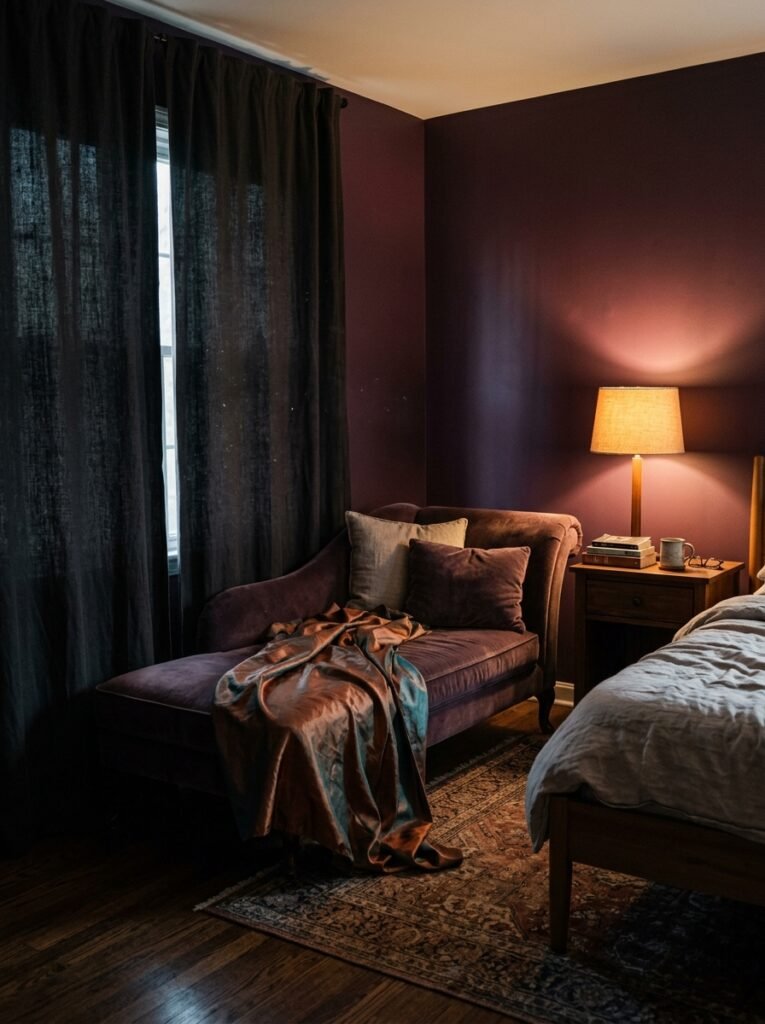
Deep plum is the one I keep coming back to. Not purple, not violet. Plum — that almost-brown, almost-wine shade that looks nearly black in photos and absolutely stunning in person. It has enough warmth in it that it doesn’t feel cold, even on overcast British afternoons.
Dusky sage green is the sleeper hit of dark feminine design right now. It’s soft enough that it doesn’t dominate but rich enough that it reads as intentional, not washed-out.
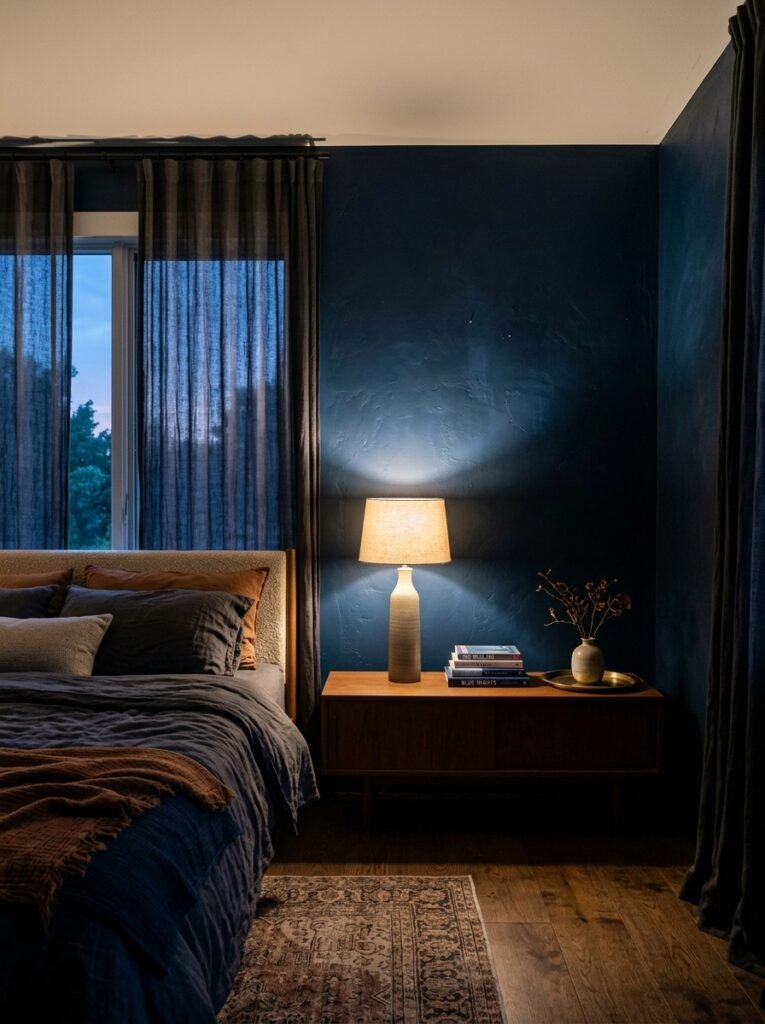
If you want something that feels more dramatic, go for a proper deep navy or a forest green with grey undertones. These work especially well in rooms with at least one window that gets decent morning light, because the contrast when sun hits them is STUNNING. Like, genuinely catch-your-breath beautiful.
Avoid going pure black unless you have very high ceilings and genuinely good natural light. Otherwise it’s not moody, it’s just oppressive.
—
3. Why Your Ceiling Deserves the Same Attention as Your Walls
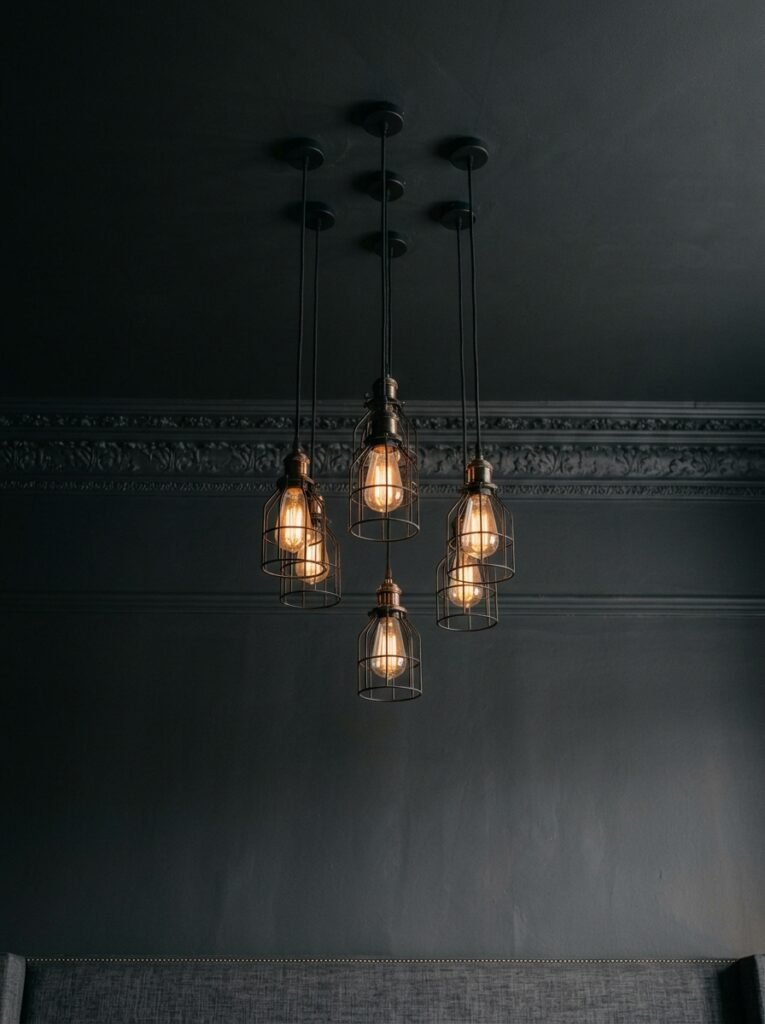
Everyone forgets the ceiling. And I get it — it’s the ceiling, it’s just kind of there. But in a dark feminine bedroom, the ceiling is a huge missed opportunity.
Paint it the same colour as your walls and you get this cocooning effect that feels genuinely luxurious. Like you’re inside something rather than just surrounded by it. This works especially well with deeper tones — dusky rose, charcoal, deep teal — because the room starts to feel like one continuous exhale of colour rather than four walls with a white lid slapped on top.
If that feels too committed (fair), try going one shade lighter than your wall colour on the ceiling. It adds depth without making the room feel smaller.
The other option — and this one is a bit maximalist but worth considering — is a ceiling with texture. A limewashed ceiling in a warm terracotta or dusty rose. It photographs like nothing else.
—
4. Fabric Is Doing Heavy Lifting Here — Choose Accordingly
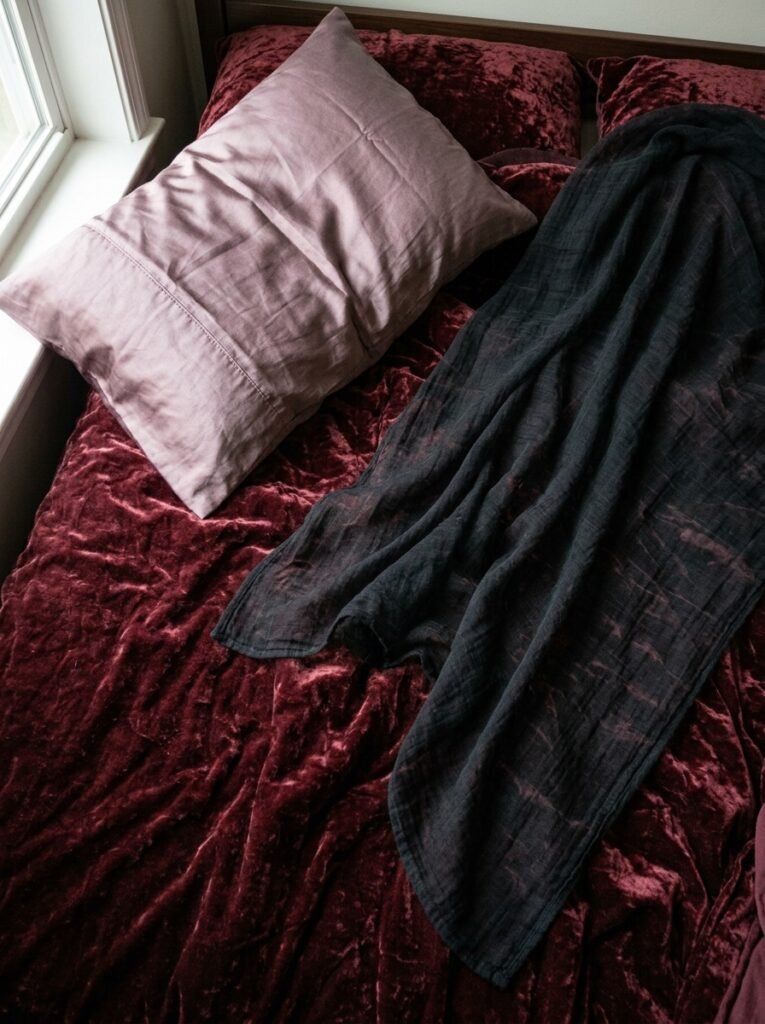
A dark feminine bedroom with bad fabric choices is just a dark bedroom. The whole soft, luxurious, almost-decadent quality of this aesthetic lives in what you’re touching, what’s draped, what’s layered.
Velvet is non-negotiable. I don’t make the rules. Whether it’s a velvet headboard, velvet throw pillows, or velvet curtains — you need at least one velvet moment in the room. That slight sheen it has, the way it catches light differently depending on which direction the fabric is brushed. Nothing else does that.
Linen still works here, but it needs to be the crumpled, slightly imperfect kind. Think linen duvet covers in deep mushroom brown or dusty blush. Not crisp. Not hotel-style. Lived-in.
Satin or silk-feel pillowcases in jewel tones — deep burgundy, midnight blue, forest green — are the easiest and cheapest way to add that “I put thought into this” quality without changing anything structural.
And curtains. Long curtains, floor-to-ceiling, that puddle slightly at the bottom. That’s it. That’s the move that takes a bedroom from “nice” to “I want to live in here forever.”
—
5. The Lighting Setup That Makes Any Bedroom Feel Like a Different Planet
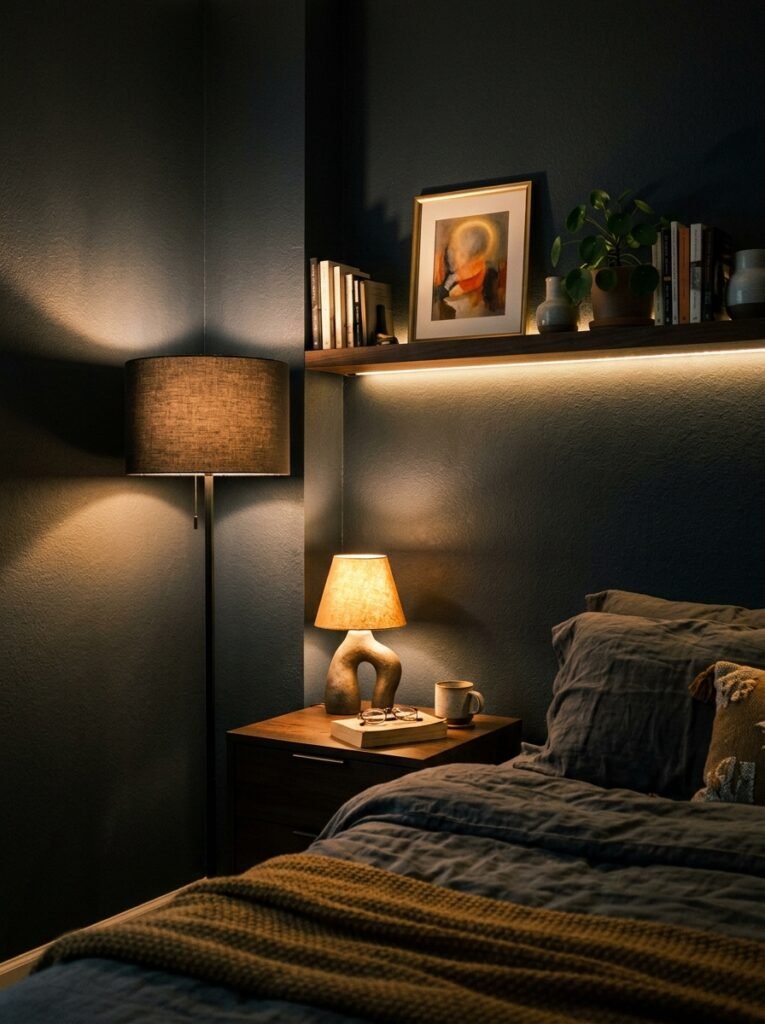
Overhead lighting is the enemy of a dark feminine bedroom. Harsh, clinical, strips all the atmosphere right out. If you have an overhead light, put it on the lowest possible setting or just… stop using it as your primary light source.
What you want instead is layers. And specifically, warm layers.
Wall sconces on either side of the bed — the kind with fabric shades in cream or blush, angled slightly downward. The amber glow at 10pm when everything else is off is something genuinely worth designing around.
A table lamp with a linen or rattan shade on the dresser. Not for reading, just for the glow. The effect it creates across a dark wall is basically free art.
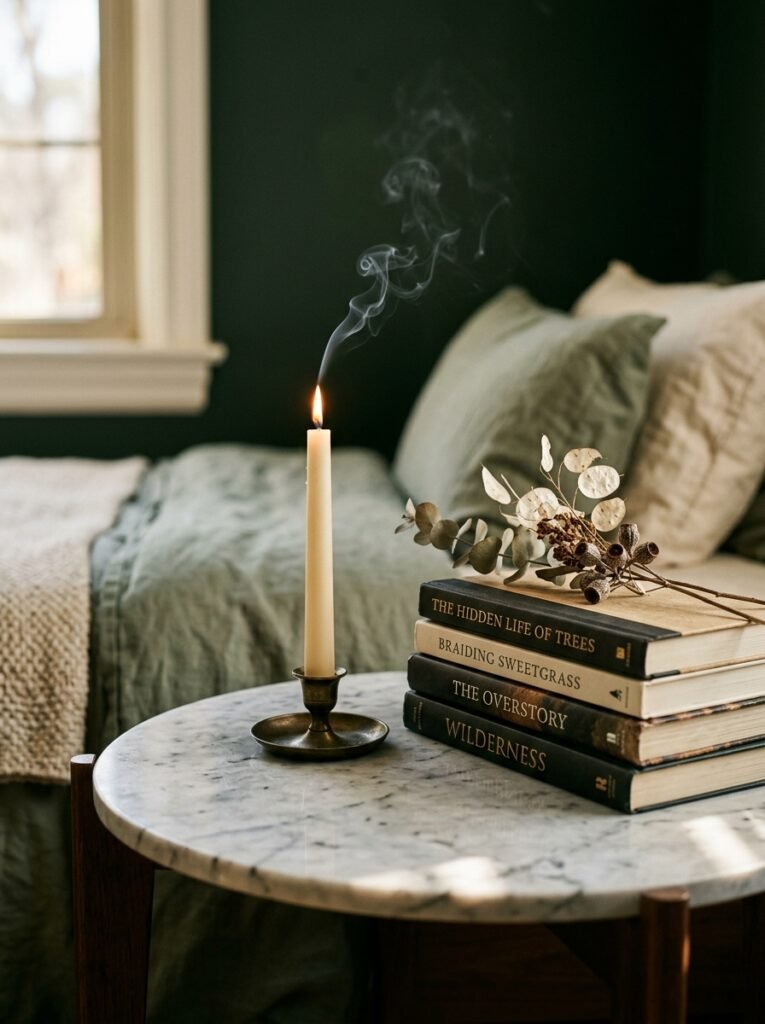
Candles, obviously. Not just as decoration — actually lit, actually doing their job. A cluster of pillar candles on a vintage-style tray on the windowsill or bedside table changes the entire atmosphere of a room in a way that no lightbulb ever will.
“Lighting in a dark bedroom isn’t about seeing clearly. It’s about feeling something. There’s a difference.”
Side note — dimmer switches are one of the highest ROI changes you can make in a bedroom. Genuinely underrated.
—
6. The Headboard That Does All the Work for You
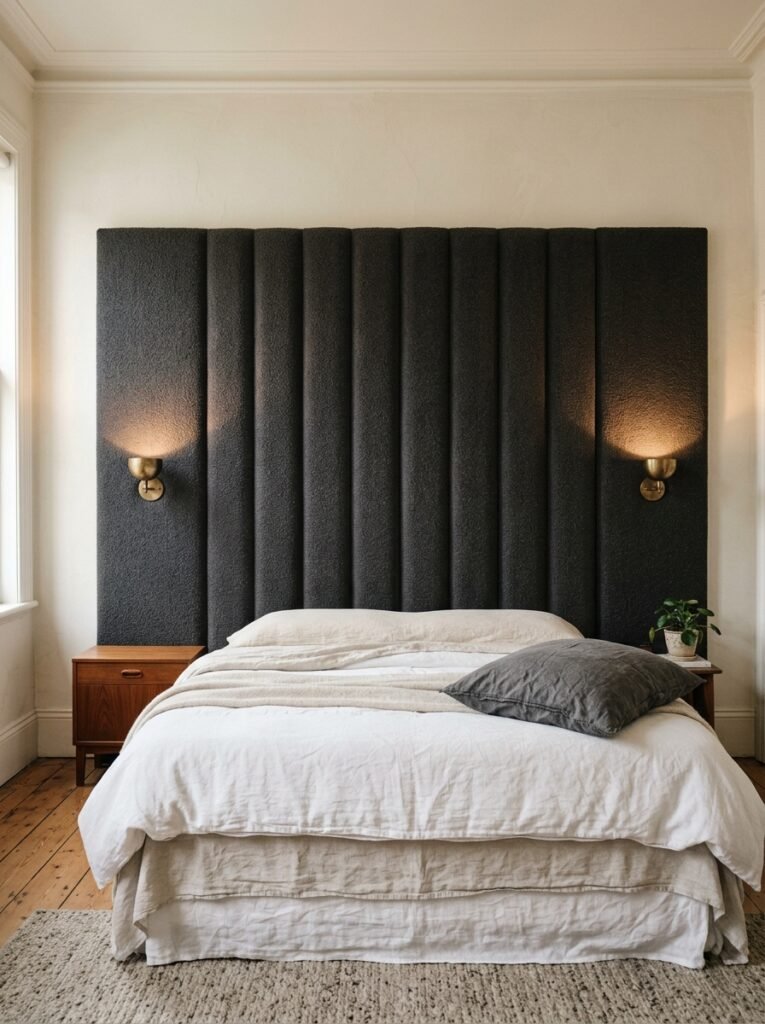
If you’re going to splurge on ONE thing in a dark feminine bedroom, make it the headboard. Because it’s the first thing you see when you walk in the room, it’s in every Instagram photo you’ll ever take in there, and it sets the tone for everything else.
Tall, upholstered, tufted headboards in deep jewel tones are exactly what they sound like — expensive-looking, dramatic, and worth every penny. A velvet headboard in dusty plum or deep teal against a similarly dark wall creates that layered, tonal look that feels deeply intentional without being matchy-matchy.
Arched headboards are having a moment and I understand why. The soft curve at the top adds a slightly romantic, almost medieval quality that fits dark feminine perfectly.
If you’re renting or working with a tight budget, a fabric headboard slipcover is a real thing that exists and it’s genuinely good. You can find them in velvets and linens, and they transform a basic frame in about twenty minutes.
—
7. Mirrors: Not Just for Checking Your Outfit
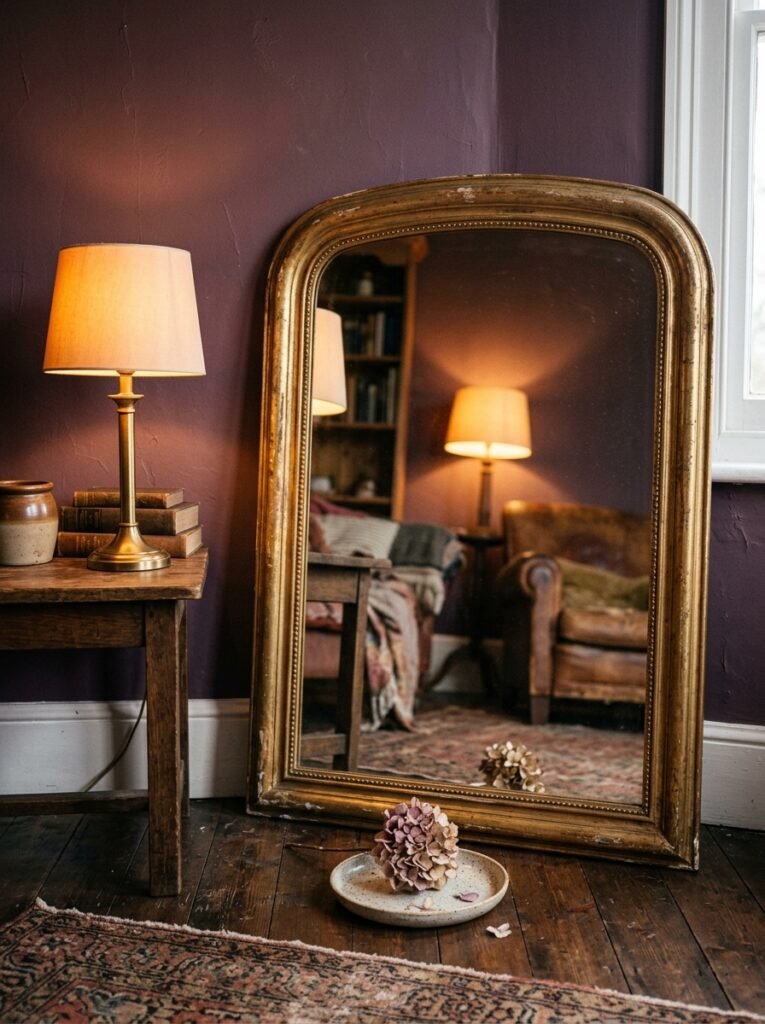
In a dark bedroom, mirrors serve a function beyond vanity (no pun intended). They bounce light around in a way that keeps the room from feeling flat, and in deeper colour palettes, that matters.
An oversized floor mirror leaning against the wall is a classic move and still a good one. The frame matters — antique gold, dark bronze, or an ornate black finish all work. Stay away from chrome or anything too modern and shiny; it reads wrong in this aesthetic.
A cluster of smaller vintage-style mirrors on one wall is slightly more maximalist but incredibly effective. The kind with slightly foxed glass that has that aged, imperfect quality. Not perfectly symmetrical. Arranged like they were collected over time, because they should be.
Arched mirrors, again. The arch shape keeps coming up in dark feminine design and it’s not arbitrary — it softens everything around it, creates that slightly gothic-but-romantic quality without committing to anything too literal.
—
8. Plants That Actually Belong in a Dark, Moody Room
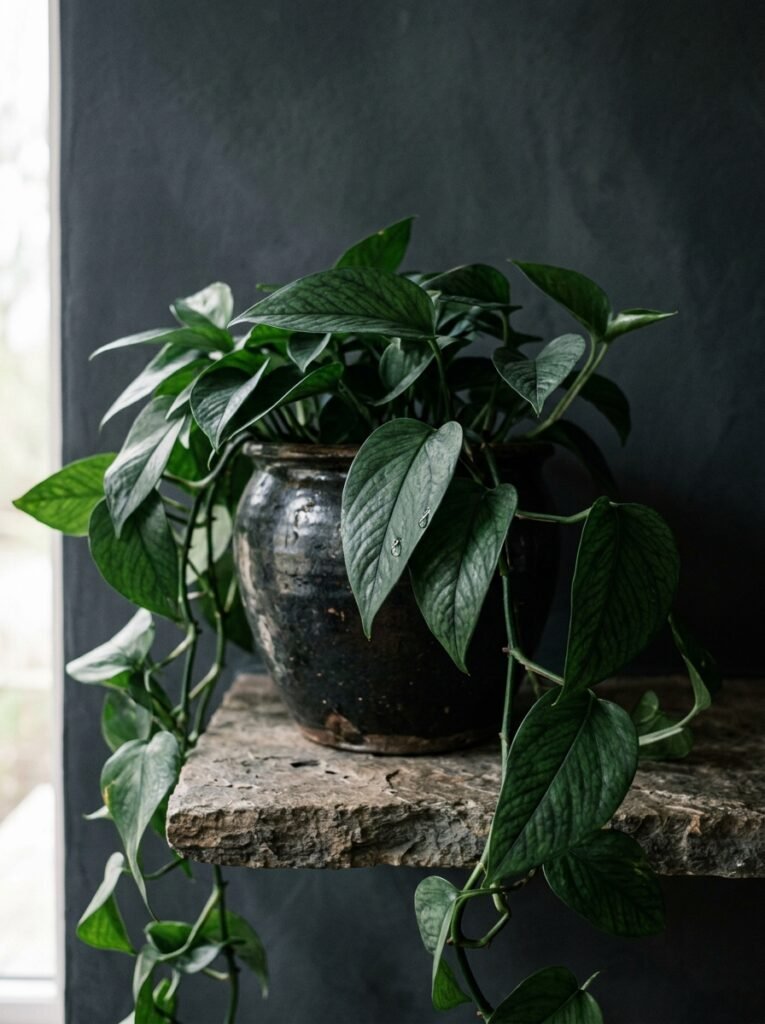
Not every plant works here. A bright, cheerful succulent on a dark plum windowsill looks like it wandered in from a different room entirely.
Dark feminine bedrooms call for plants with drama. Things with dark leaves — burgundy rubber plants, black-leafed elephant ears if you can find them, dark-stemmed snake plants. The contrast of deep green or near-black foliage against a moody wall is genuinely striking.
Trailing plants in dark hanging pots work well — something that cascades a little, like pothos or heartleaf philodendron. There’s something romantically overgrown about a trailing plant in a moody bedroom that fits the whole mood perfectly.
Dried flowers are having a revival and I’m into it, mostly because they’re VERY low maintenance and they photograph beautifully. A tall vase of dried pampas, dark dried roses, or eucalyptus on the dresser fits without effort.
—
9. The Rule About Rugs That Nobody Tells You
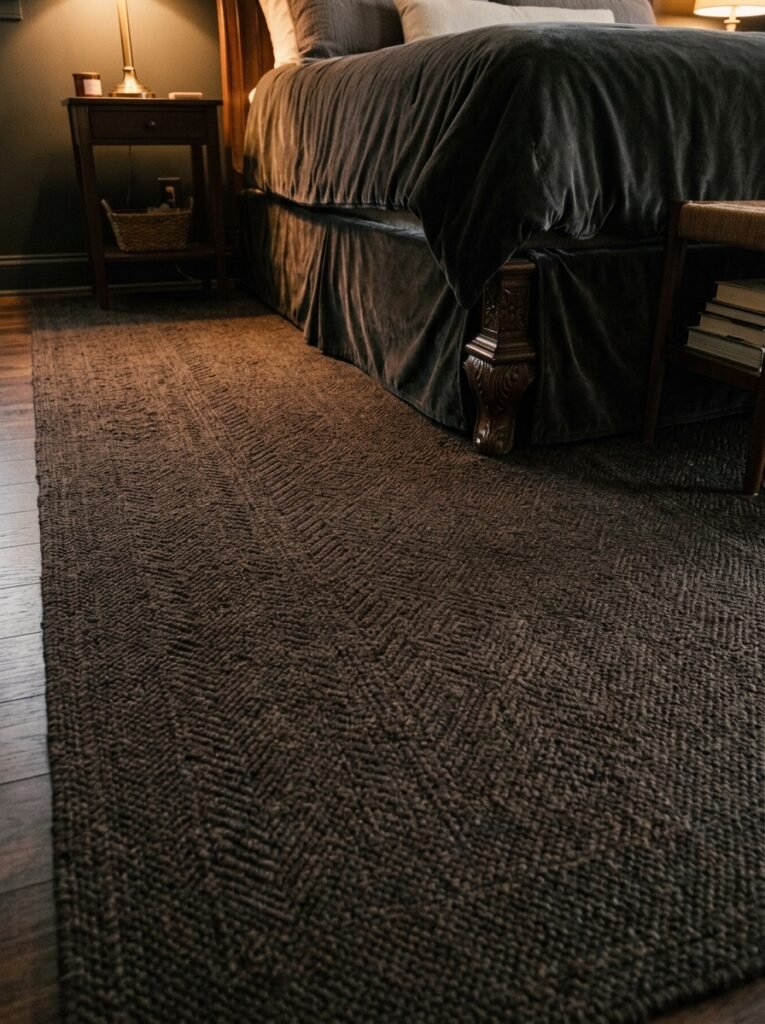
In a dark feminine bedroom, the rug is grounding — literally and aesthetically. It’s often the one element that stops the room from feeling like it’s floating in its own moody void.
Deep-pile rugs in charcoal, ivory, dusty rose, or dark forest tones work best. The texture matters as much as the colour here — you want something that looks soft in photos and IS soft when you get out of bed at 7am.
Here’s the thing nobody tells you: a lighter rug in a dark room isn’t a mistake. An ivory or cream high-pile rug against dark floors and dark walls creates a contrast that grounds the space and draws the eye down in a way that feels deliberate. It also photographs gorgeously.
A jute or seagrass rug works if the rest of the room is rich enough in texture — it adds an organic, slightly natural element that stops everything from feeling too heavy.
Size matters. The rug should be large enough that you can step off the bed onto it from all sides. Nothing kills a bedroom’s atmosphere like a rug that’s three sizes too small, floating in the middle of the room like a confused doormat.
“A too-small rug is the single fastest way to make a beautiful bedroom look unfinished. Buy one size bigger than you think you need.”
—
10. Scent as a Design Element (Yes, Really)
This sounds a bit out there, maybe, but stay with me.
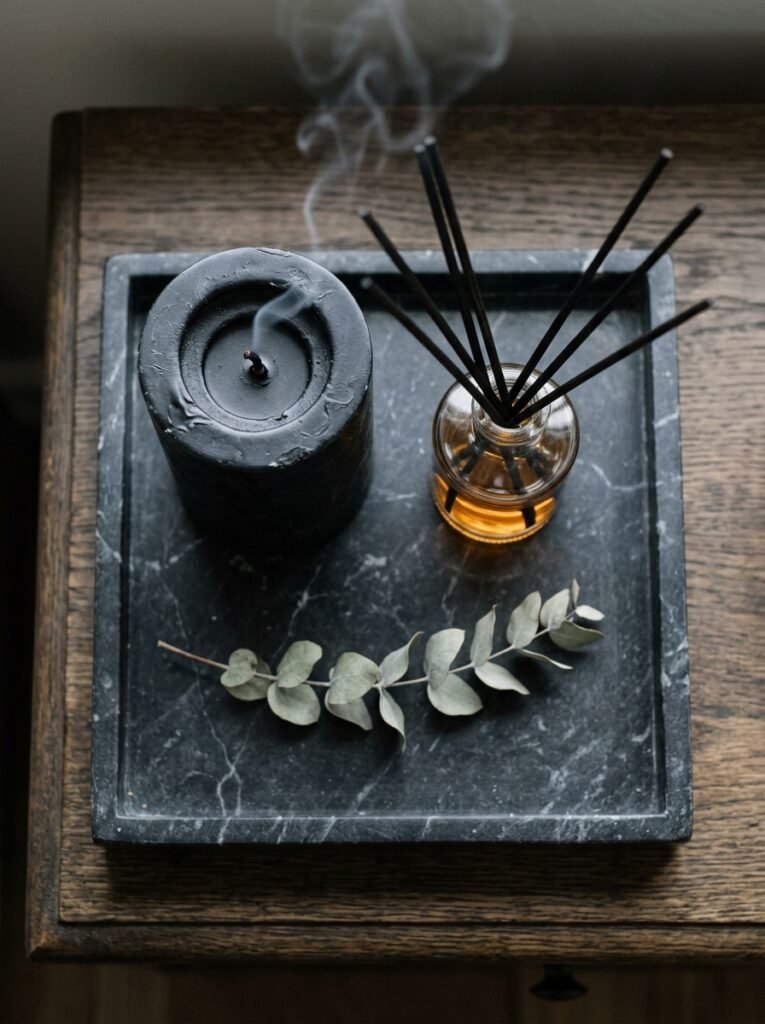
A dark feminine bedroom should smell like itself. Not clean-laundry-neutral. Not that weird artificial vanilla that comes from cheap plug-ins. There should be an actual scent that belongs to the room — and when you walk in, you feel it before you see it.
Black cherry and oud candles. Dark amber. Sandalwood with a floral top note — gardenia or dark rose. These are the scent families that actually belong in a room like this and reinforce the whole mood rather than fighting it.
A reed diffuser on the dresser means it’s constant rather than occasional, which honestly works better in a bedroom than candles you have to light and remember to blow out.
If you burn incense, this is the room for it. Just — good incense, not the cheap stuff. The difference is enormous.
—
11. Vintage Finds That Complete the Look Without Looking Themed
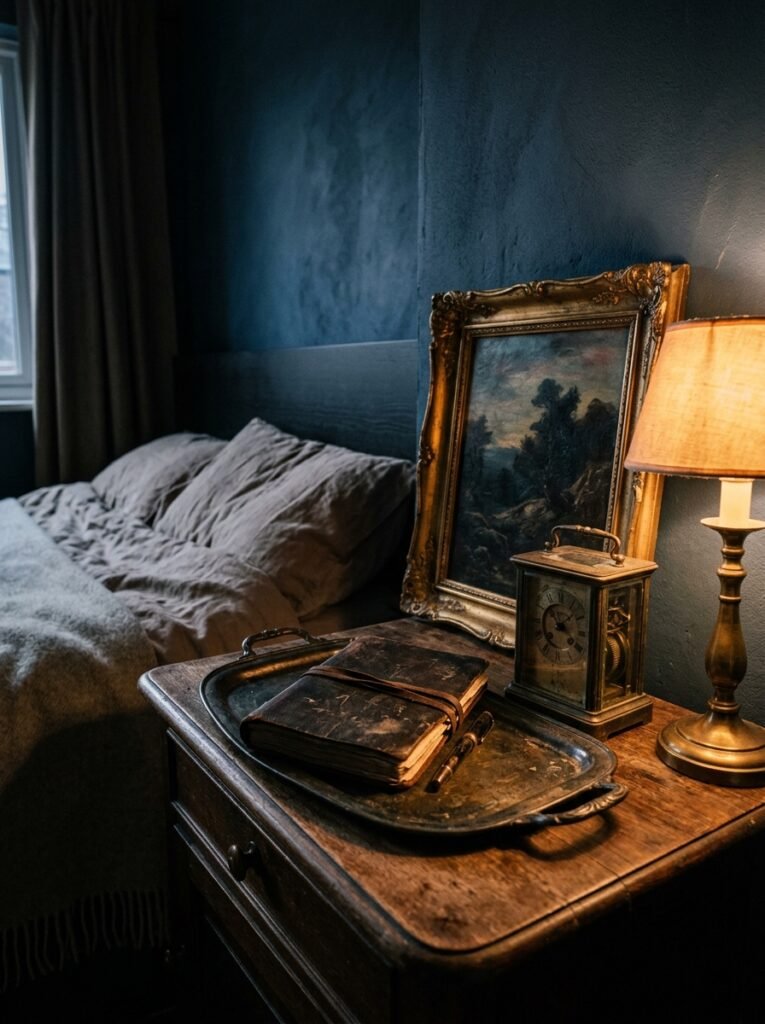
The thing that separates a genuinely beautiful dark feminine bedroom from something that looks like a themed hotel room is the personal objects. The pieces that couldn’t have been assembled by anyone other than you.
Vintage candlesticks in brass or pewter. A small oil painting in a heavy gilt frame — landscapes or portraits, not abstract, for this aesthetic. Stacked old hardbacks with beautiful spines on the bedside table. A dark velvet jewellery tray. An antique-looking clock. Little perfume bottles clustered together on a mirrored tray.
None of this needs to be expensive. Car boot sales, charity shops, and online vintage markets are honestly the best sources for this stuff. The aged quality of genuinely old objects is something no reproduction can replicate.
What you’re going for is the feeling that the room evolved. That things were brought in because they were loved, not because they matched.
—
12. How to Commit Without Repainting When You’re Renting
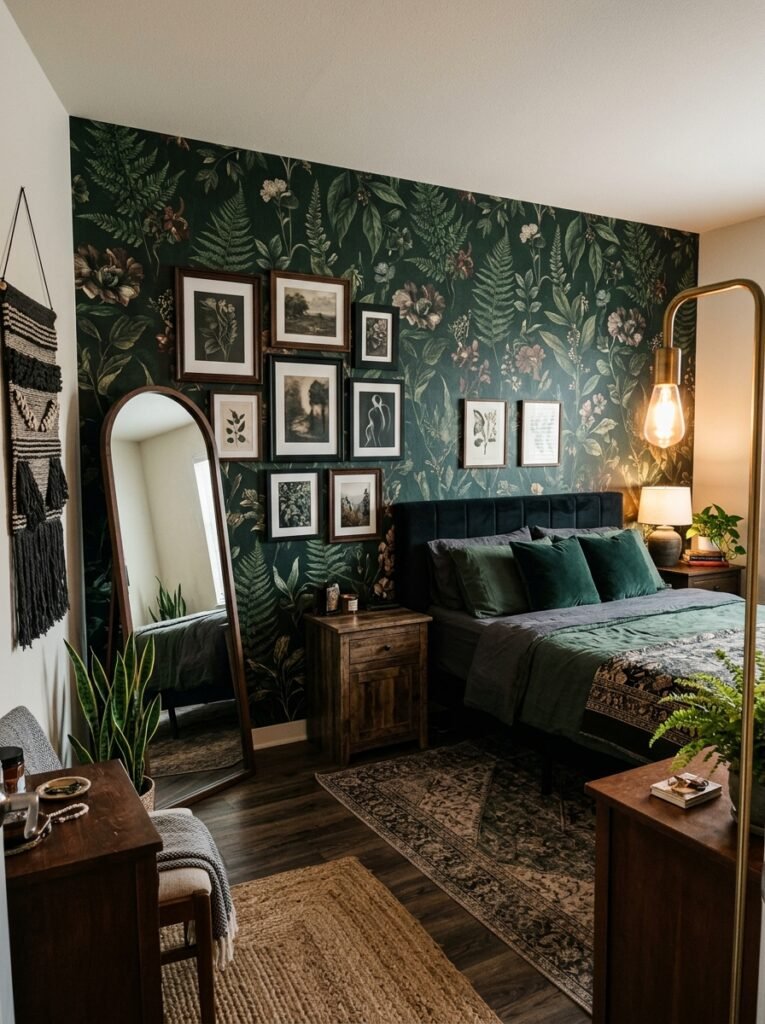
Full commitment to dark walls isn’t always an option — UK renters especially know this pain. White walls and a bright, open kitchen that photographs terribly and costs a fortune to put back. I hear you.
But you can get there without touching the walls.
Dark, floor-to-ceiling curtains. Full stop. The most transformative change you can make in a rented bedroom without any permanent alteration is hanging long, dark velvet or linen curtains from a tension rod or removable hook curtain track. Done.
Dark bedding completely changes the visual temperature of a room. Dusky plum, deep forest, charcoal — when the bed is the focal point, dark bedding does most of the work.
A dark room divider or decorative screen can add depth and separate a corner without any commitment. Leaning art against walls rather than hanging it. A dark bookcase filled with dark-spined books. All of it layered together gets you close.
And honestly? A good ambient light situation — lamp at the dresser, string lights around the headboard, candles in the evening — will make even the most relentlessly beige rented bedroom feel intimate and intentional after dark.
—
❓ FAQ
Q: Can a dark feminine bedroom work in a small room without making it feel claustrophobic? A: Yes, and actually sometimes better than in large rooms. The key is in the lighting and the use of mirrors. Wall sconces instead of table lamps save space, an oversized mirror bounces light, and keeping furniture low-profile prevents the room from feeling crowded. Small and dark can feel intentionally cocooning rather than cramped.
Q: What’s the difference between dark feminine and just a dark bedroom? A: The texture, the softness, and the layering. A dark bedroom is just a room painted dark. Dark feminine has velvet, has layers of warm light, has organic shapes and romantic details — it feels deliberate and sensory, not just dim.
Q: Does dark feminine work if I share the bedroom with a partner who’s not into it? A: More often than you’d think. The dark feminine palette has enough warmth in it — deep greens, warm plums, rich browns — that it doesn’t read as exclusively feminine to most people. Lean into the velvet and the low lighting and the vintage touches, and it often lands as just “sophisticated” to a reluctant partner. That said, compromise on at least one neutral element — a warm grey rug or natural linen — and you’ll get there.
—
💭 Final Thoughts
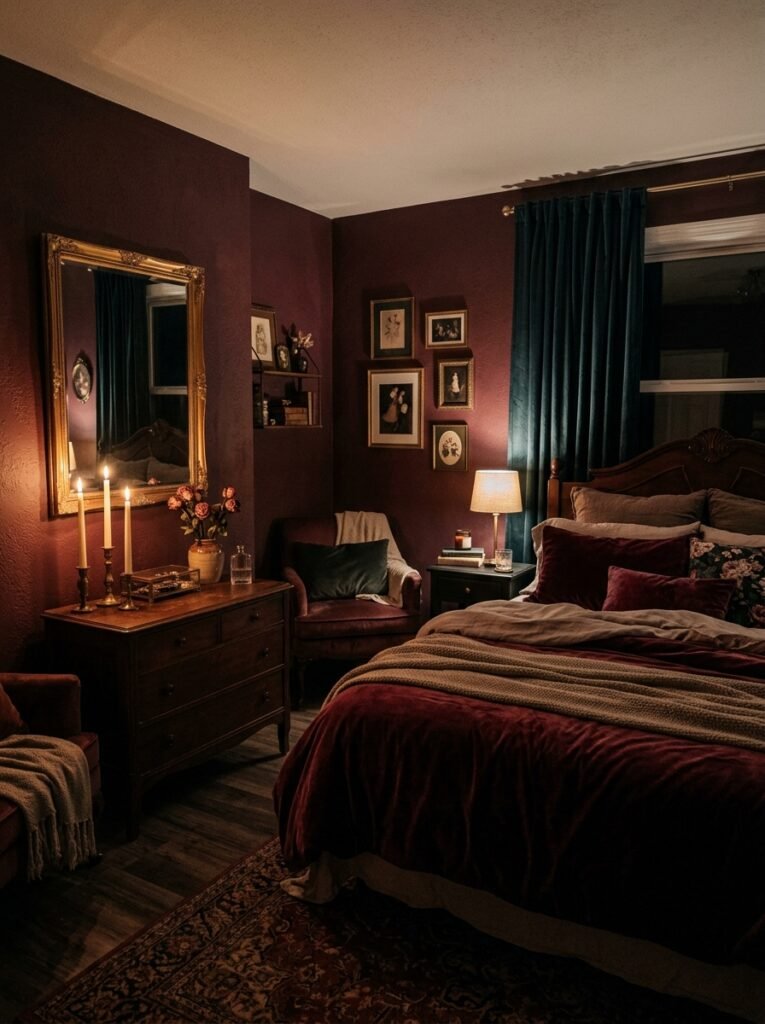
There’s something genuinely freeing about designing a bedroom that has no interest in being approved of. No bright whites to keep clean, no carefully neutral palette trying to please everyone. Just colour and texture and warmth and a room that, when you walk into it at the end of a long day, actually gives something back to you.
Cassie painted her walls deep plum six months ago. She still talks about it.
What would your bedroom feel like if it stopped apologizing for itself?