
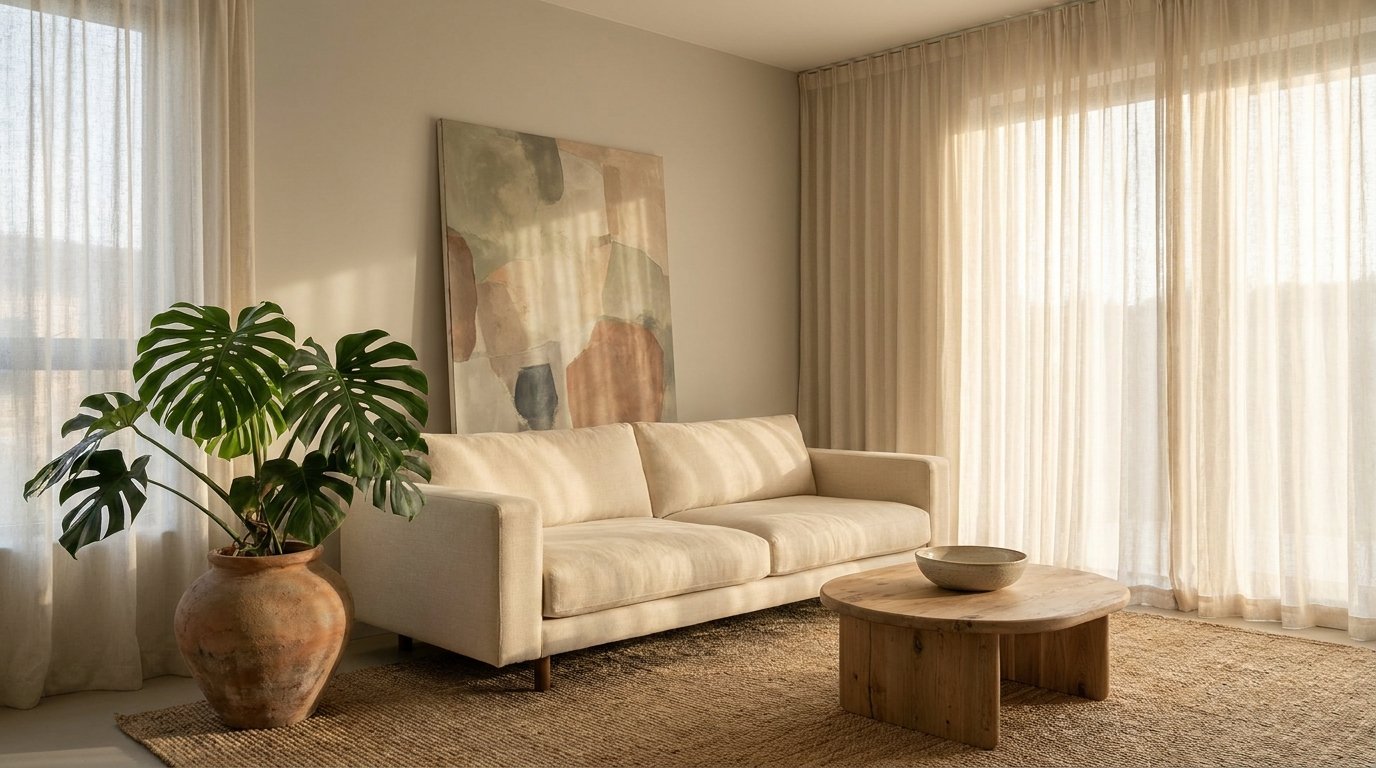
The Minimalist Living Room: How Less Space Became the Most Peaceful Place in My Home
There’s a moment — and maybe you know exactly what I’m talking about — when you walk into a cluttered room and feel your shoulders rise toward your ears without even realizing it. The minimalist living room isn’t just an aesthetic. It’s a quiet revolution against the noise we’ve let collect around us, and once you experience it, there’s truly no going back.

—
1. What “Minimalist” Actually Means (And What It Doesn’t)

Let’s clear something up right away, because the word “minimalist” carries a lot of misplaced baggage. When most people hear it, they picture a cold, sterile space — a white couch on a white floor beneath a white wall, with a single orchid placed so precisely it looks afraid to bloom. That’s not minimalism. That’s an anxiety attack in interior form.
True minimalist design is about intention. It’s the deliberate decision to surround yourself only with what serves you — what you genuinely use, genuinely love, and genuinely need. A minimalist living room can have warmth, texture, color, and personality. It simply refuses to let chaos masquerade as comfort.
The difference between a sparse room and a minimal room is feeling. A sparse room feels empty. A minimal room feels like a deep exhale.
“Minimalism isn’t about owning less. It’s about making space for what matters most.”
Think about it this way: your living room is the first place you collapse after a long day. It’s where Sunday mornings happen over coffee, where friends pile in for movie nights, where your kids build forts between the couch cushions. That room deserves to feel like a sanctuary, not a storage unit with a television.
—
2. The Psychology Behind Why Less Clutter Means Less Stress
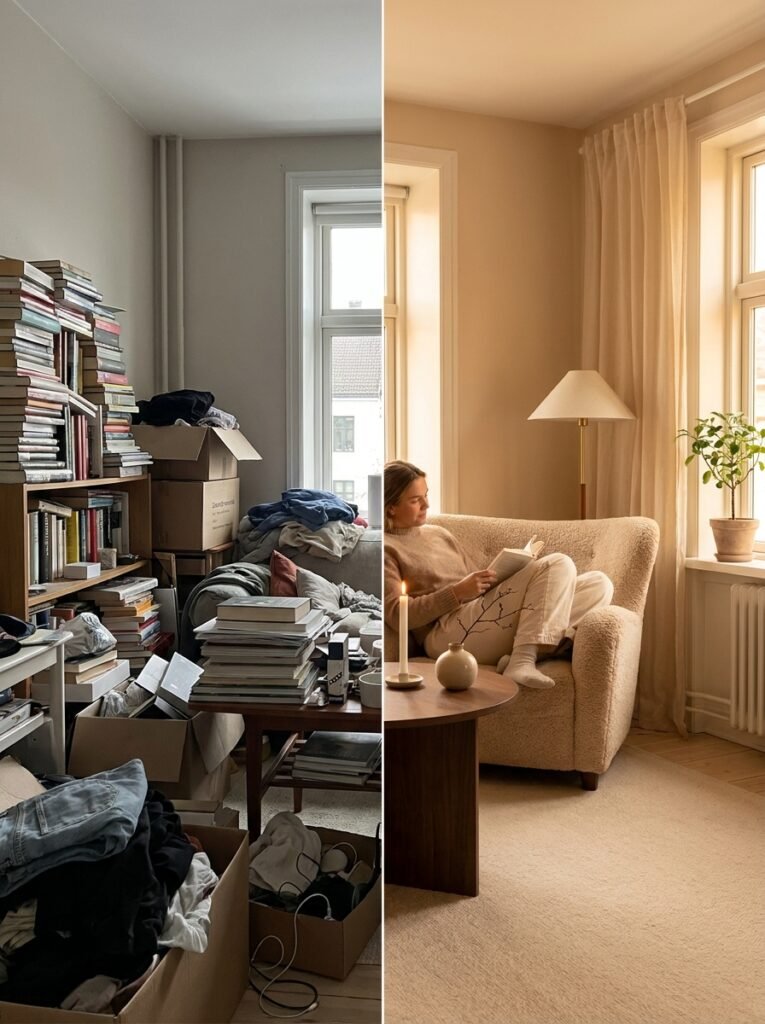
This isn’t just an aesthetic philosophy — the science backs it up completely. Researchers at Princeton University found that visual clutter competes for your brain’s attention, even when you’re not consciously looking at it. Your brain, trying to process everything in its environment simultaneously, burns cognitive energy just by being in a cluttered space.
That low-grade exhaustion you feel at the end of the day? Some of it is your room working against you.
A minimalist living room removes that constant mental noise. When your eye has room to rest — on a single beautiful painting, a thoughtfully placed plant, a clean surface — your nervous system actually settles. Cortisol levels drop. Breathing slows. The room itself begins to feel like self-care.
Interior designers have understood this for decades. The principle of “negative space” — the intentional emptiness around objects — isn’t just an artistic concept. It’s a psychological tool. White space in a room gives your mind the same relief that white space gives your eyes on a page of dense text. It lets everything else breathe.
—
3. Choosing the Right Color Palette Without Losing Warmth
Color is where people get nervous. They assume minimalism means white walls and nothing else, so they either dive in too starkly or abandon the idea entirely. There’s a whole beautiful world between sterile white and sensory overwhelm.
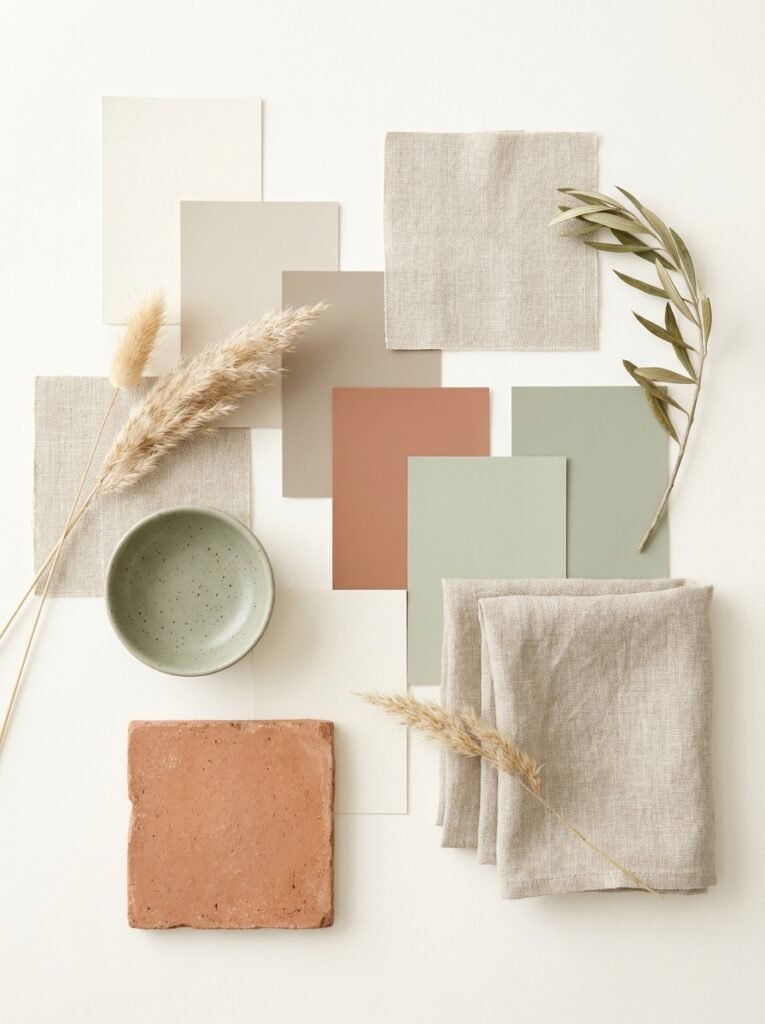
The most inviting minimalist living rooms tend to lean on what designers call a “warm neutral” base — think creamy whites, soft greiges (grey-beige), warm taupes, and dusty terracotta. These tones have enough visual warmth to feel livable while still providing the clean backdrop that makes a room feel open and calm.
From that base, you’re building a palette of two or three complementary tones at most. A soft sage green pillow here. A terracotta ceramic bowl there. A throw in oatmeal linen draped casually — not artfully arranged — over the arm of a chair. The key word is restraint. Not absence. Restraint.
If you love bold color but want to embrace minimalism, go ahead — just do it intentionally. One deeply saturated wall behind a simple sofa. One statement chair in forest green or dusty blue. The rule isn’t “no color.” The rule is “one color at a time, chosen on purpose.”
—
4. The Sofa Is Everything — Choose It Like You Mean It
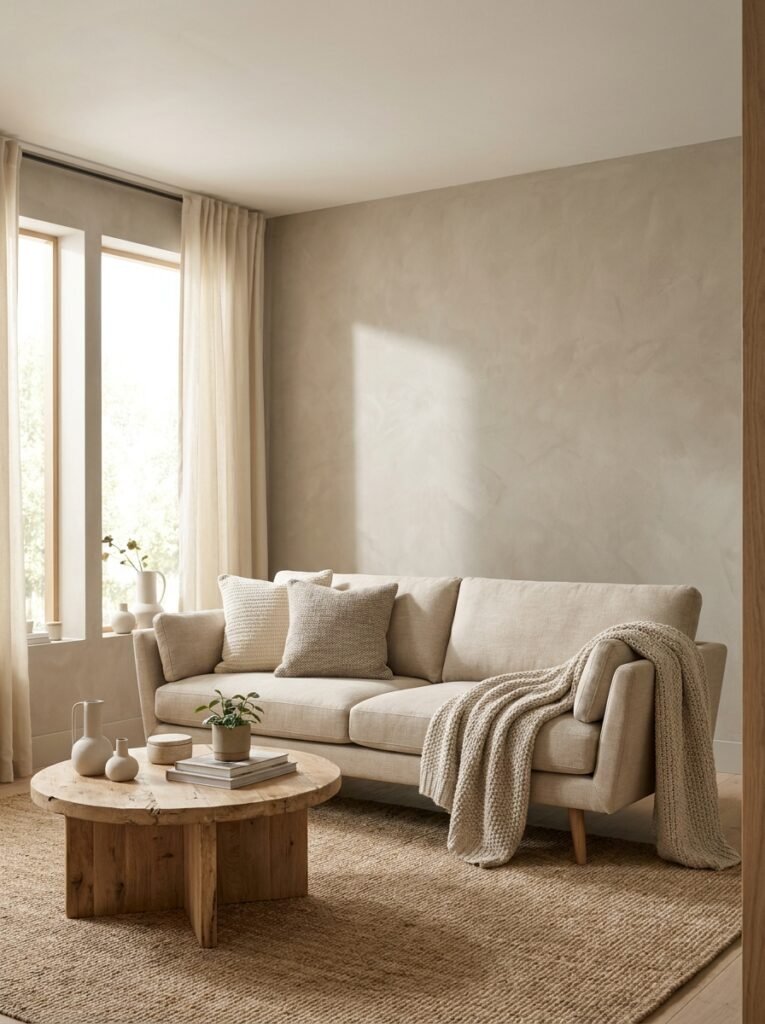
In a minimalist living room, every piece of furniture carries more visual weight than it would in a busier space. There’s nowhere to hide a mediocre sofa beneath throw pillows and accumulated stuff. Your sofa is the anchor. Choose it like your peace of mind depends on it — because in a way, it does.
Look for clean lines over ornate detailing. A low-profile sofa keeps the room feeling open and airy without sacrificing comfort. Avoid button tufting, rolled arms, or heavy carved legs if you want to maintain that calm, uncluttered silhouette. A simple slope-arm design in a solid, textured fabric — bouclé, linen, cotton velvet — will serve you beautifully for years.
Sizing matters enormously here. In a minimalist space, an oversized sofa that crowds the room will destroy the entire effect. Measure your space carefully — and then leave more breathing room than you think you need. Negative space isn’t wasted space. It’s the entire point.
—
5. Why Furniture Arrangement Can Transform a Room Overnight
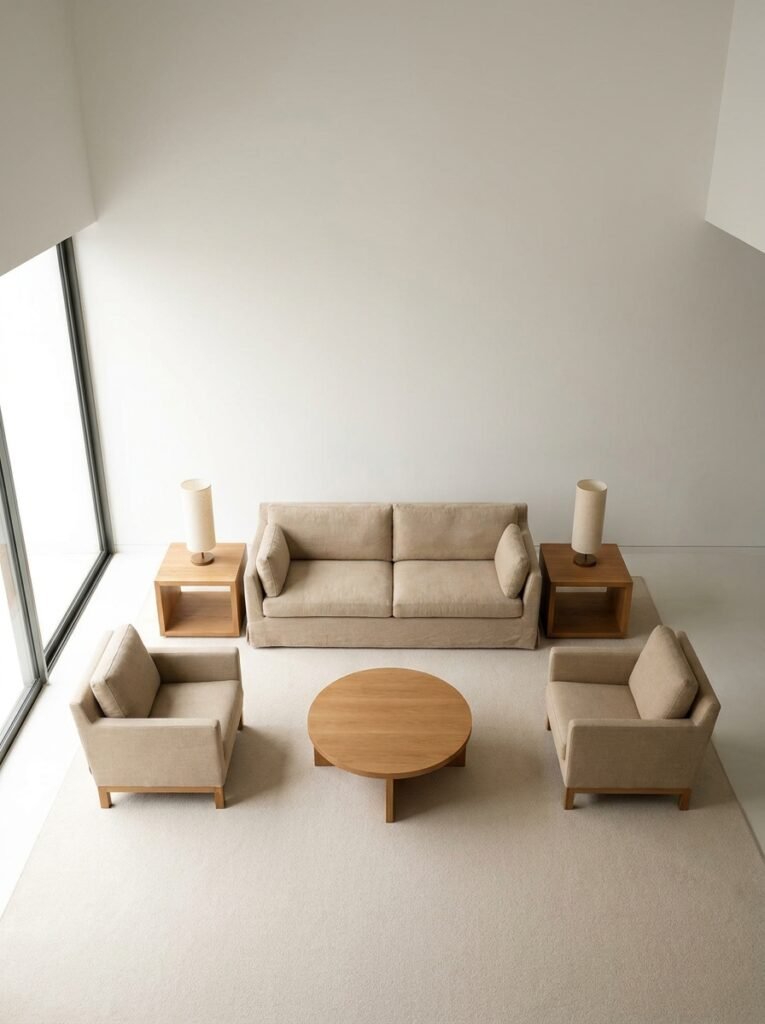
You can have a perfectly curated collection of minimal furniture and still have a room that feels wrong — and often, the culprit is arrangement. The way you position pieces in relation to each other and to the architecture of the room changes everything about how it feels to be in it.
The most common mistake in living rooms is pushing all furniture against the walls, which actually makes a room feel smaller and more disconnected. Floating your sofa slightly away from the wall — even just a foot — creates a sense of depth and draws the eye inward rather than around the perimeter.
“The space between your furniture is just as important as the furniture itself.”
Establish a clear focal point — whether that’s a fireplace, a large window, or a thoughtfully hung piece of art — and arrange seating to face and honor it. Keep traffic flow in mind; there should be natural, unobstructed pathways through the space. A room that’s easy to move through feels open and calm even if it’s not particularly large.
Symmetry, used thoughtfully, creates instant visual calm. A pair of chairs flanking a sofa, two identical side tables, matching lamps — these repetitions give the eye a clear, logical path to follow, which registers in the brain as order and ease.
—
6. Storage That Disappears Into the Design
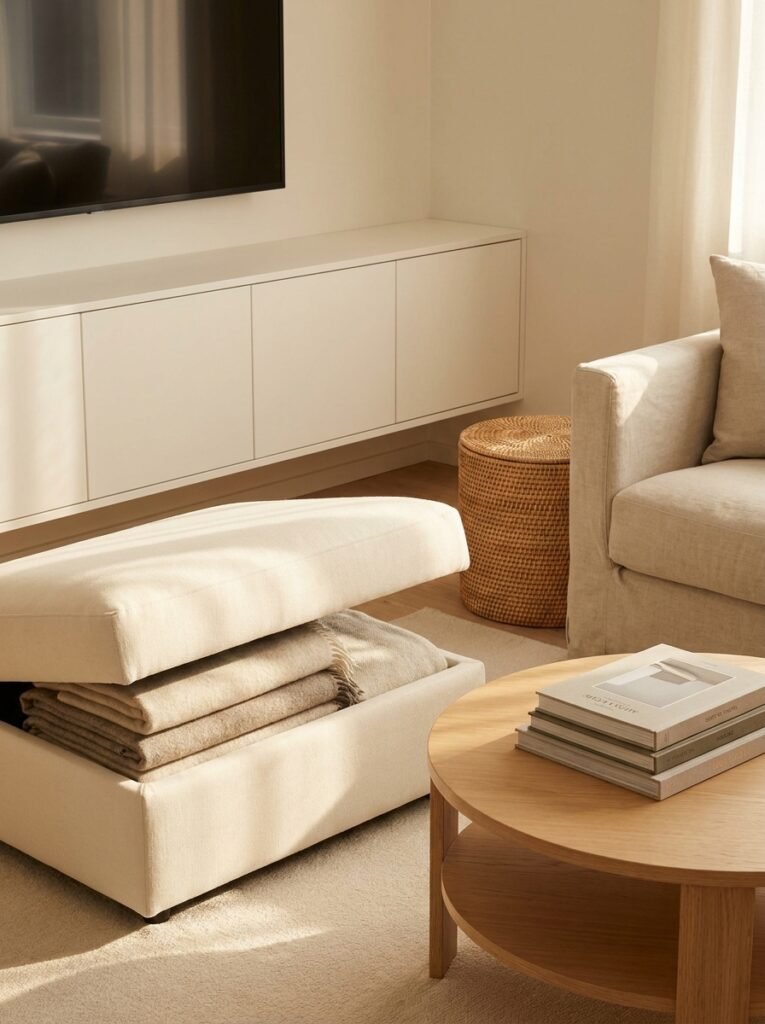
The quiet secret of every beautiful minimalist living room? Tremendous storage. The difference between a minimal room and a bare room is that the minimal one has thought carefully about where everything lives when it’s not in use. Remotes, books, blankets, chargers, toy cars left by small people — all of it needs a home.
Built-in cabinetry is the gold standard, but it’s not accessible to everyone. The next best option is furniture that does double duty. An ottoman with interior storage. A coffee table with a lower shelf. A floating media unit with closed doors rather than open shelving.
The rule here is simple: if it can be hidden, hide it. Not because your belongings are shameful, but because visual simplicity is the goal. When everything has a place and is in it, the room looks maintained even on your most chaotic days.
Open shelving can work beautifully in a minimalist space — but it requires real editing. A single curated row of books, two or three objects of varying height, one plant. The moment a shelf becomes a landing zone for miscellaneous items, the whole effect collapses.
—
7. Lighting — The Invisible Design Element That Changes Everything
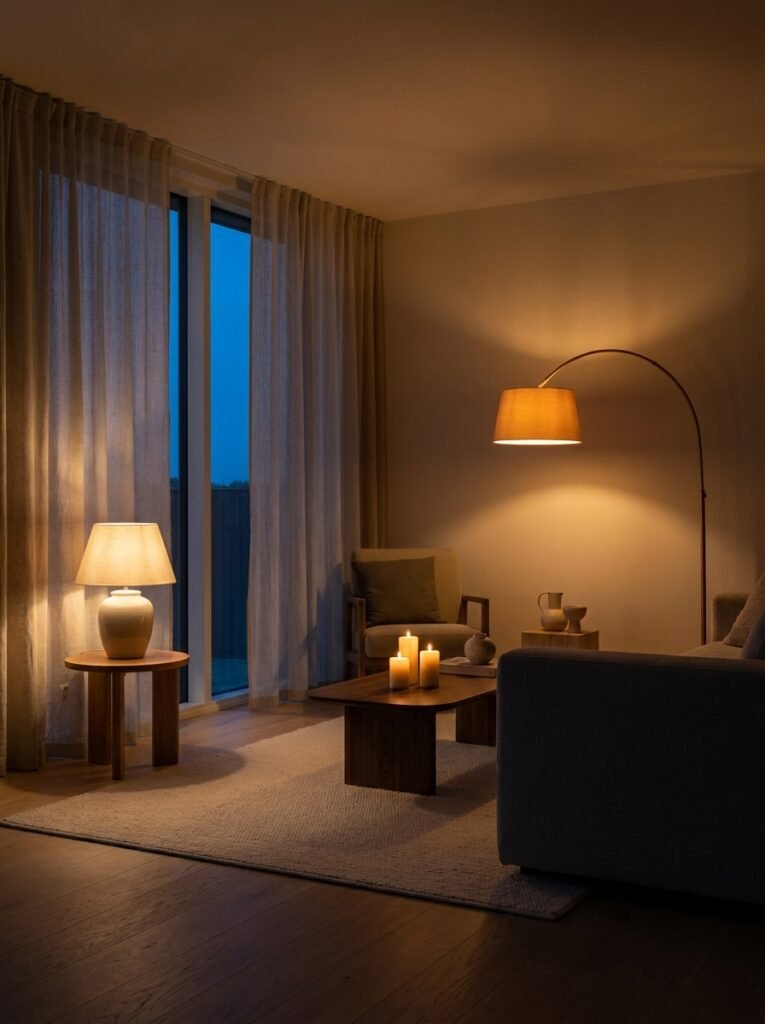
Walk into any truly beautiful room and notice how naturally warm and inviting it feels. Chances are, the lighting is doing most of the work. In minimalist living rooms especially, lighting becomes a primary design tool rather than an afterthought.
Harsh overhead lighting is the enemy. A single bright ceiling fixture floods a room with flat, unflattering light that makes even the most beautiful space feel institutional. Layer your lighting instead — ambient, task, and accent. A floor lamp in the corner creates warmth and a sense of intimate pooling. A table lamp on a side table adds depth. Candles on a coffee table (real or flameless) introduce a flicker of life that no overhead light can replicate.
Dimmer switches are one of the highest-value upgrades you can make in a living room for relatively minimal cost. The ability to shift from bright afternoon functionality to soft evening ambiance at the turn of a dial is genuinely transformative — it’s like having two different rooms in one.
Natural light, of course, is the ultimate luxury. Keep window treatments simple — sheer linen panels, simple roller shades, or nothing at all where privacy isn’t a concern. Let the light pour in and change the room with the hours of the day.
—
8. Plants: The One Thing a Minimalist Room Should Never Skip
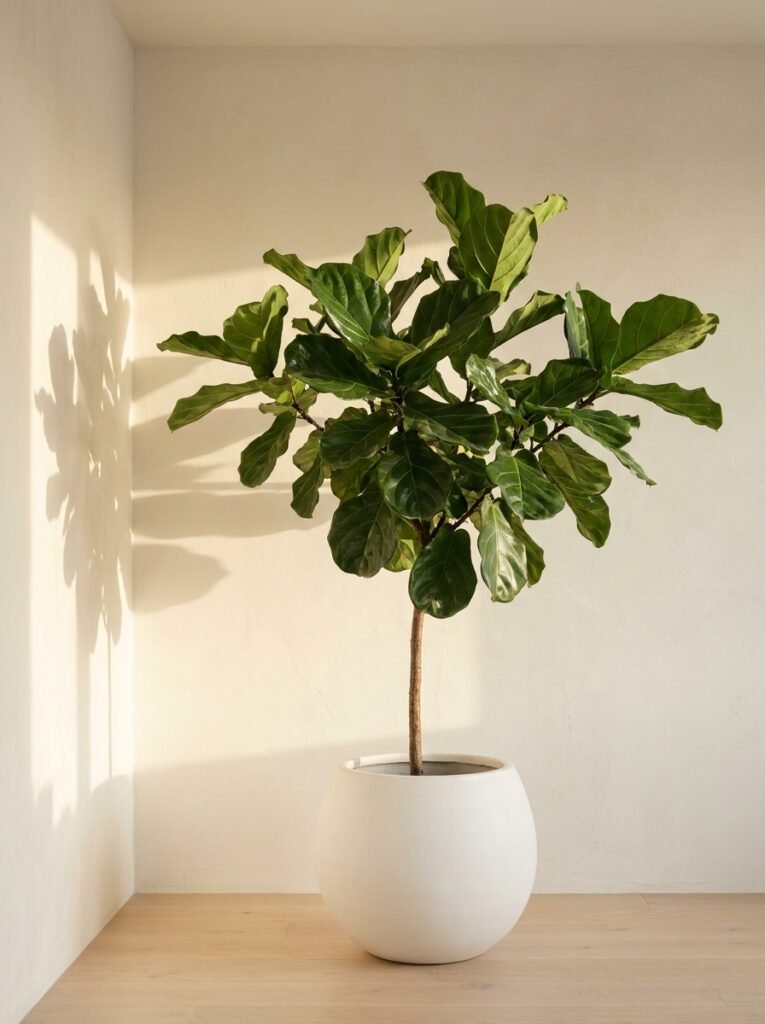
There’s something that happens when you bring a plant into a clean, simple space — the whole room comes alive in a way that no decorative object quite manages. Plants introduce organic shape in a world of right angles, color that changes with the seasons, and a quiet reminder that something living shares the room with you.
For minimalist spaces, the selection and placement of plants matters as much as the plants themselves. A single large statement plant — a fiddle leaf fig, a monstera, a sculptural olive tree — does far more for a room than a collection of small pots scattered across every surface. Scale is your friend. One magnificent plant commands attention and contributes structure. Dozens of little ones just add visual noise.
Place plants where they’ll receive appropriate light and where they’ll create the most visual impact — a tall plant in an empty corner, a trailing plant on a high shelf, a single stem in an architectural vase on the coffee table. Let them grow in the direction they want, and resist the urge to over-style them. Their natural form is the whole point.
—
9. Textiles: The Art of the Thoughtful Layer
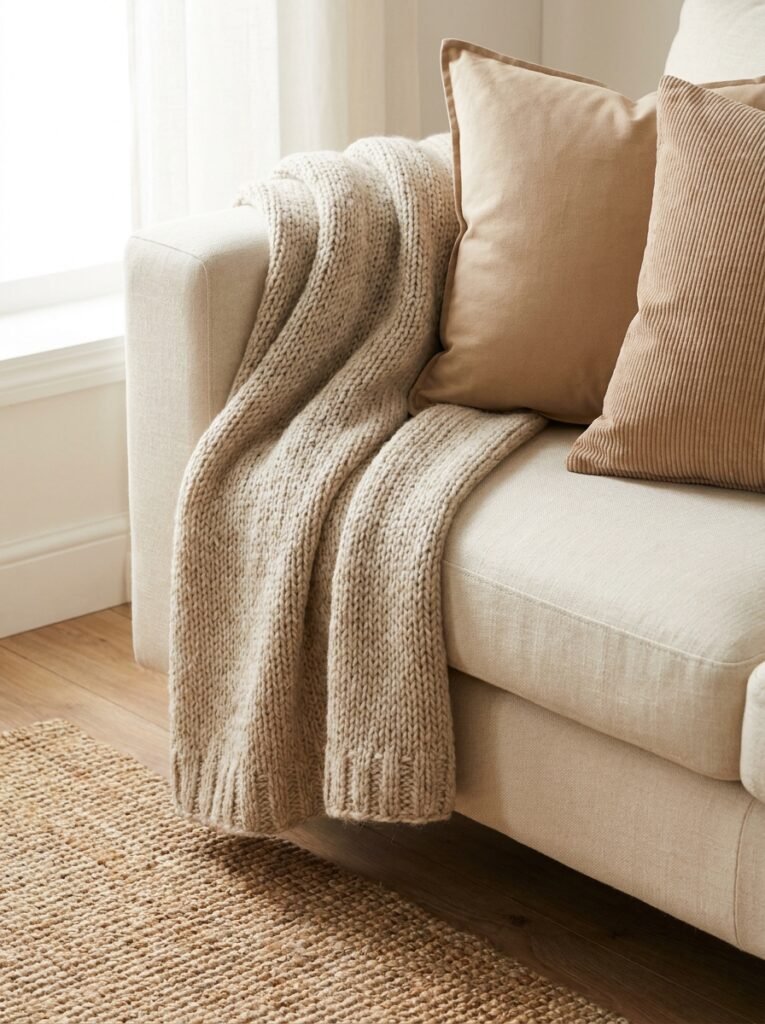
If color palette and furniture create the skeleton of your minimalist living room, textiles are the thing that gives it a pulse. The right rug, the right throw, the right pillows — these are the elements that make the difference between a room that looks designed and a room that feels lived in.
The rug is foundational, both literally and visually. In a minimal room, it defines the seating area and anchors everything above it. Go bigger than you think you need — a rug that’s too small looks like a postage stamp and makes the room feel smaller, not larger. Ideally, all the front legs of your seating should rest on the rug, creating a unified zone.
“One perfect textile beats ten mediocre ones every single time.”
For throws and pillows, resist the urge to accumulate. Two or three pillows on a sofa — in varying textures rather than competing patterns — is enough. A single throw, draped in that casual-but-considered way that looks effortless (and takes practice), adds warmth without weight. Natural fibers like linen, cotton, and chunky wool bring tactile richness to a paired-back space in a way that synthetic fabrics simply can’t replicate.
—
10. Art in a Minimalist Space: One Brave Choice
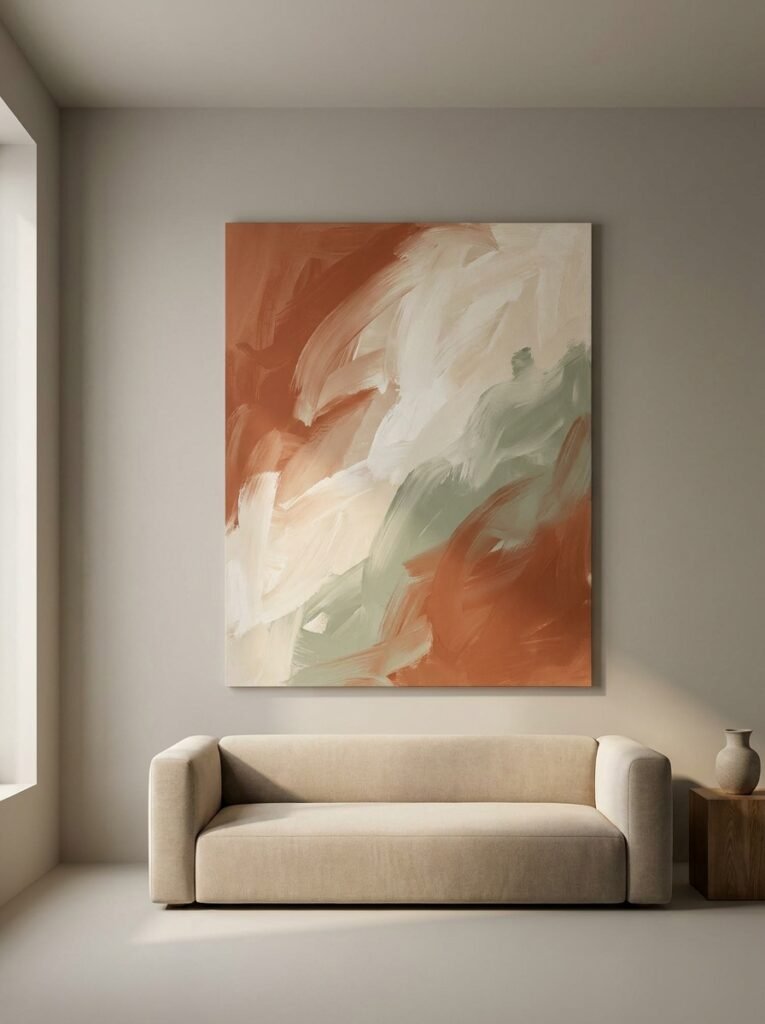
This is where so many people stumble when designing a minimalist living room — they either hang nothing, or they fill every wall with a gallery that negates the entire effect. The answer lives in the brave middle ground: one meaningful piece of art, hung with confidence.
Oversized art works beautifully in minimal spaces. A single large canvas or print — hung slightly higher than convention suggests, at a scale that feels almost too big — creates a powerful focal point that the rest of the room can organize itself around. It stops the eye. It tells a story. It makes the room feel considered and intentional without cluttering the visual field.
The subject of the art matters less than the way it makes you feel. Minimalism doesn’t require abstract art or muted photography. A vibrant landscape, a bold botanical print, a simple line drawing — any of these can work if they genuinely move you. The rule is one, not a genre.
—
11. The Minimalist Mindset: Editing Is a Skill You Can Learn
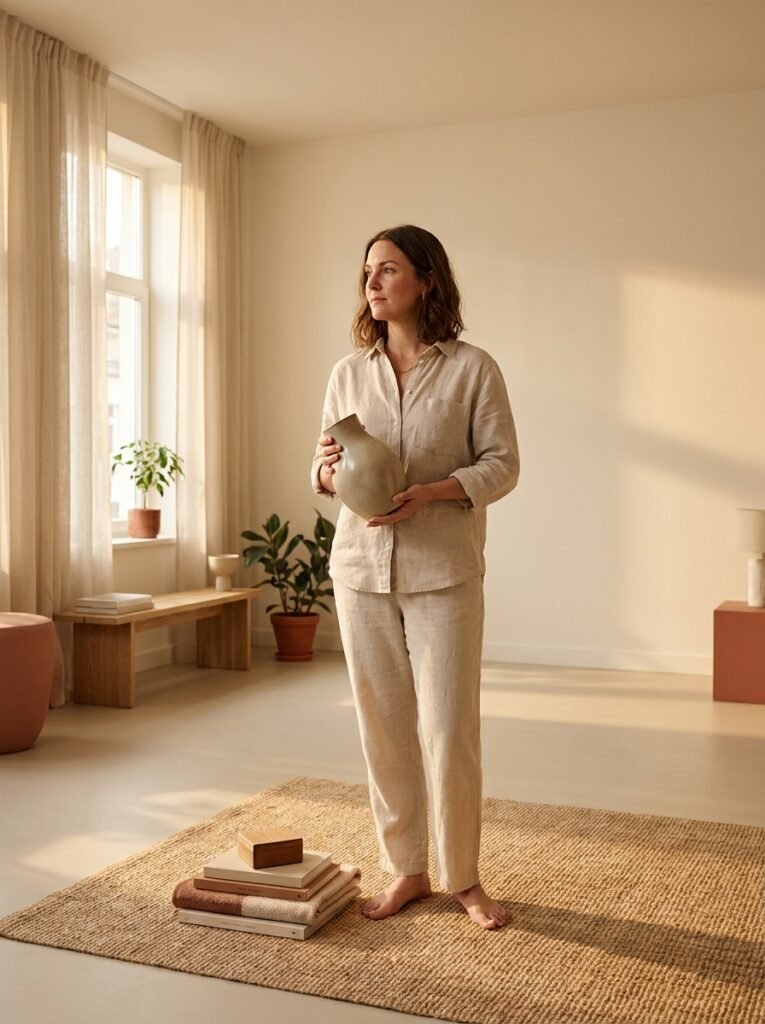
Here’s something nobody tells you about designing a minimalist room: it’s not a one-time event. It’s an ongoing practice. The room will accumulate — life will accumulate — and the maintenance of that beautiful emptiness requires regular, gentle editing.
Think of it as a seasonal ritual rather than a chore. Every few months, walk through your living room with honest eyes. What hasn’t been touched in weeks? What’s occupying space without earning its place? What do you walk past without ever noticing anymore? These things can go — donated, stored, or simply released.
The goal isn’t ruthless minimalism that leaves you feeling deprived. It’s a room that stays aligned with the life you’re actually living, not the hypothetical life all those accumulated objects represent. You don’t need seventeen decorative objects to prove you have good taste. You need three that you love completely.
—
12. Small Living Rooms That Prove Size Has Nothing to Do With It
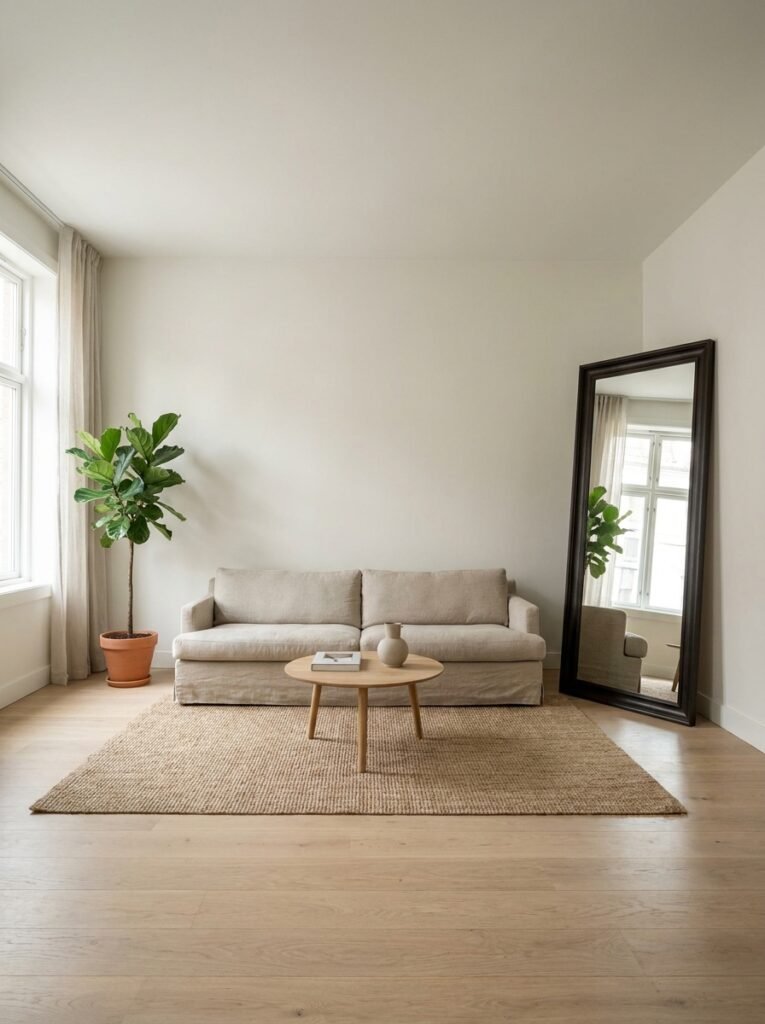
The most liberating thing about minimalist design is what it does for small spaces. A tiny living room, embraced rather than fought against, can become the most intimate and beautiful room in a home. Minimalism and small spaces were made for each other.
The small-room rules all lean toward the same principles that minimalism already champions: light colors that expand, furniture scaled to the room rather than aspirationally oversized, ruthless editing of what stays, and strategic mirrors that multiply the sense of space without adding visual noise.
A single large mirror — leaning casually against a wall or hung prominently — reflects both light and depth into a small room in a way that feels almost architectural. It’s one of the highest-impact changes you can make in any compact space, and it costs far less than square footage.
In a small minimalist living room, every element is visible and contributing. There’s nowhere to hide and no need to. When the room is edited down to only what matters, even the smallest space feels like exactly enough.
—
🌿 How to Build Your Minimalist Living Room — Practically and Sustainably
Starting from scratch feels overwhelming, so don’t. Instead, begin with what’s already there and work backward. Clear one surface completely — just one — and sit with how that single change makes the room feel. That feeling is your north star.
From there, work through your space in categories rather than zones. Tackle all the textiles at once: which serve you, which you’ve stopped seeing, which you genuinely love? Then move to decorative objects. Then to furniture. The process takes time, and it should. Rushing produces a room that looks stripped rather than intentional.
Invest in quality where it’s visible and economize where it isn’t. A beautiful, lasting sofa and a cheap side table is a far better strategy than six pieces of furniture at the same mediocre price point. The centerpieces of a minimalist room carry everything.
Finally, give yourself permission to leave space empty. The instinct to fill every corner, every shelf, every wall is one we’ve been culturally trained into. Resist it gently. The empty corner isn’t a failure of design — it’s an invitation for the eye to rest.
—
❓ FAQ
Q: Can a minimalist living room still feel cozy and warm? A: Absolutely — and this is the most important thing to understand about minimalist design. Warmth comes from texture, natural materials, layered lighting, and living plants. A room with a linen sofa, a chunky wool throw, warm-toned walls, and candlelight can be deeply cozy and completely minimal at the same time. Coldness comes from poor material choices and insufficient lighting, not from simplicity.
Q: How do I maintain a minimalist living room with kids or a busy household? A: The key is invisible storage — baskets, ottomans with lids, cabinetry with doors — so that clearing up at the end of the day is a matter of five minutes rather than an overwhelming project. With children especially, having designated, beautiful storage for their things (a woven basket for toys, a hook for bags) makes putting things away feel natural rather than punitive. Minimalism with kids isn’t about perfection; it’s about having a system that resets easily.
Q: Do I need to buy all new furniture to create a minimalist living room? A: Not at all. Minimalism is fundamentally about editing and intention, not purchasing. Start by removing — take out the pieces that don’t serve the room and live without them for a week. You’ll quickly discover what the room actually needs versus what it’s simply accumulated. What remains can often be rearranged, recovered, or simply reconsidered to create a much more minimal effect without spending anything at all.
—
💭 Final Thought
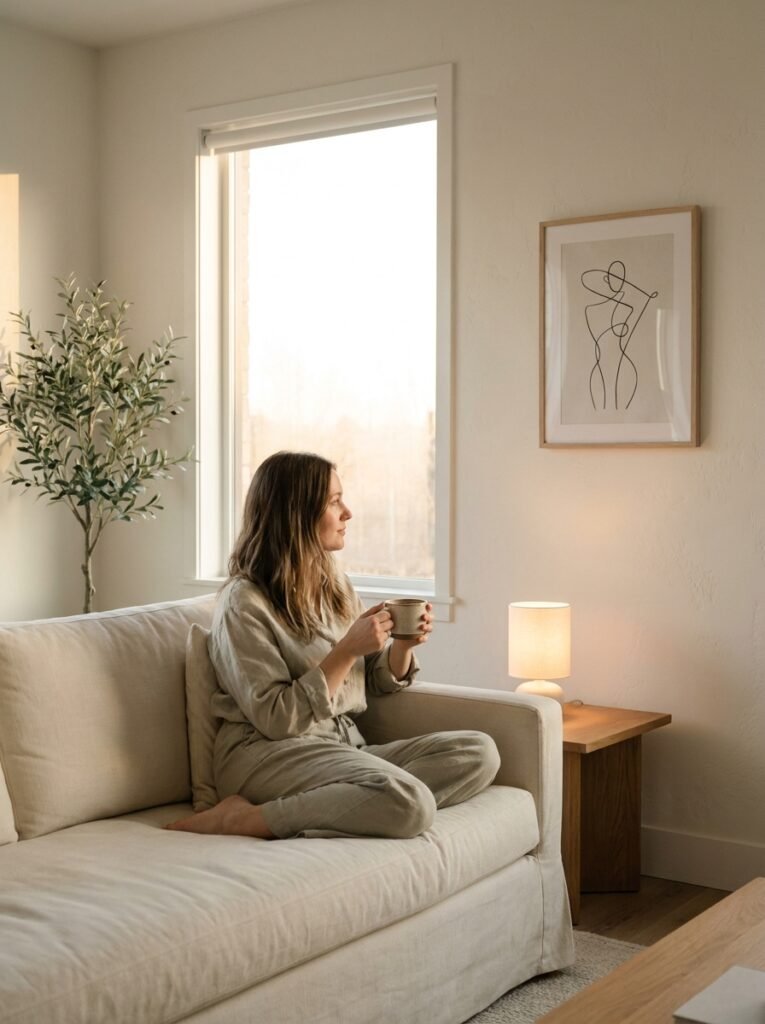
A minimalist living room is less a design style and more a daily decision — the choice to protect your peace, to prioritize what actually brings you joy, and to stop apologizing for the empty space that lets you breathe. It’s the room that says, quietly and without drama, this is enough, and enough is everything.
The objects you keep become more visible, more meaningful, more cherished precisely because they’re not competing for attention. Your home becomes a place you genuinely want to return to, not just a space you live inside.
So here’s the question I’ll leave with you: if you cleared your living room down to only the things that truly matter to you, what would you put back — and what would you finally be ready to let go?