
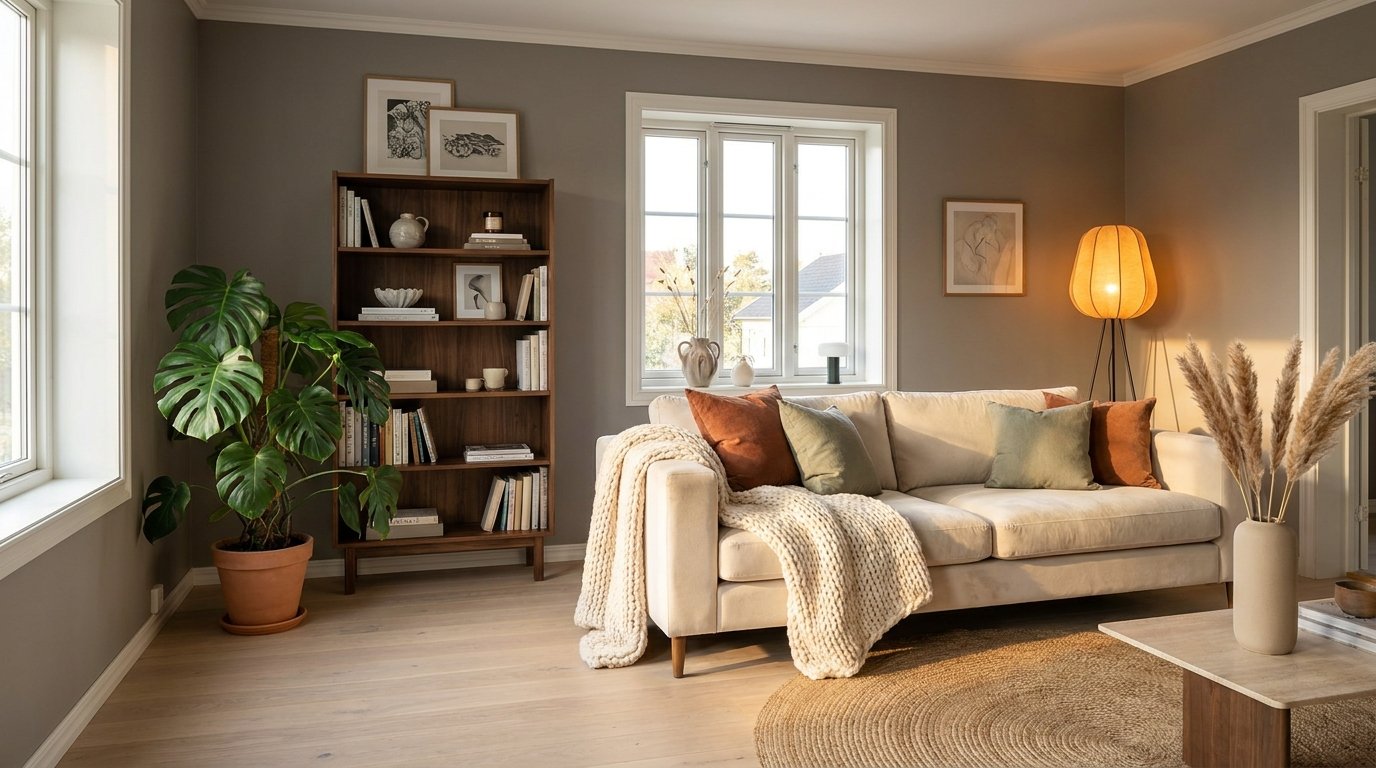
The Grey Living Room That Changed How I Feel About Coming Home
There’s something almost magical about a grey living room done right — the way it holds light in the morning, shifts to something moody and warm by evening, and somehow makes every person who walks into it exhale just a little deeper. Grey isn’t just a color. It’s a feeling.
—
1. Why Grey Is the Most Emotionally Intelligent Color You Can Choose for a Living Room
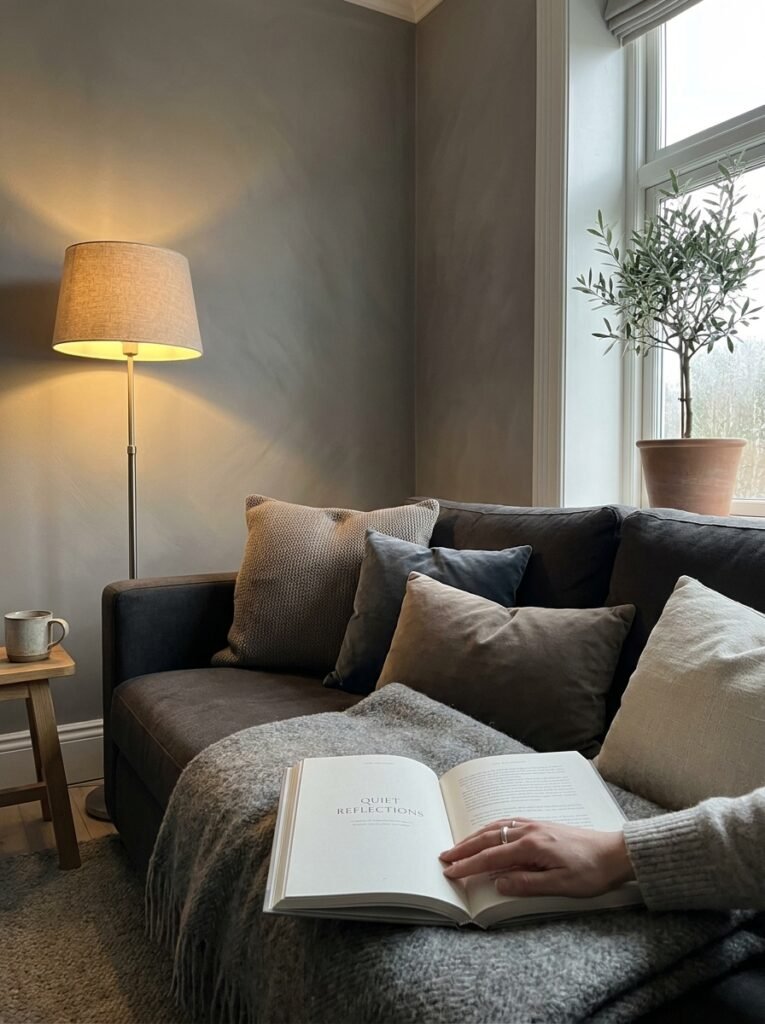
Before you dismiss grey as safe, predictable, or cold, consider this: grey is the only neutral that can whisper and shout at the same time. It sits quietly in the background, letting your furniture, your art, and your people become the story of the room. Walk into a beautifully designed grey living room and you’ll notice something unexpected — you feel calm, but not bored. Grounded, but not heavy. It’s the psychological equivalent of a deep breath.
Color psychology tells us that grey activates a sense of stability and maturity. It doesn’t demand attention the way a bold red or yellow might, but it holds a room together with remarkable confidence. For a living room — a space that needs to simultaneously host movie nights, Sunday morning coffee rituals, heated family debates, and quiet reading afternoons — that kind of emotional versatility is genuinely rare.
The reason so many interior designers return to grey again and again isn’t laziness or lack of imagination. It’s wisdom. Grey is the most adaptable canvas in decorating. Warm greys with undertones of taupe and beige feel like a cashmere sweater. Cool blue-greys feel like a gallery in the best possible way. Dark charcoals feel like a luxury hotel. The range is staggering — and within that range, there’s a version of grey that is completely, perfectly yours.
“Grey doesn’t play it safe — it plays it smart, and there’s a profound difference.”
2. The Undertone Secret That Separates Stunning Grey Rooms from Sad Ones
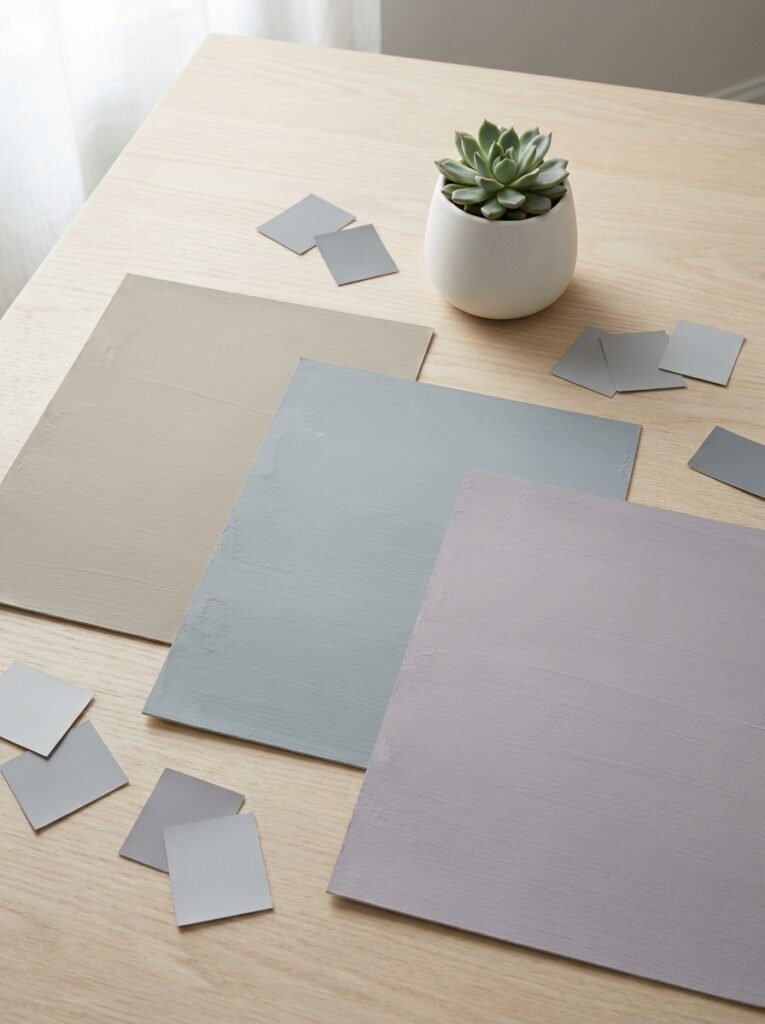
Here is the truth that paint companies don’t always make obvious enough: not all greys are created equal, and the wrong grey can make your living room feel like the inside of a filing cabinet. The secret weapon every successful grey living room relies on is understanding undertones.
Every grey paint has a hidden personality. Some lean warm — pulling toward beige, taupe, or even blush pink. Others lean cool — tipping toward blue, green, or purple. Hold a paint chip up to your wall and stare at it for a full minute. Then step back. That thing you’re noticing — that slight color beneath the grey — that’s your undertone, and it will behave completely differently depending on your natural light.
In a north-facing room that gets cool, bluish light all day, a grey with blue undertones can feel stark and clinical. But bring in a warm grey — one that hints at sand or linen — and suddenly that same room feels like a Scandi hygge dream. In a south-facing room drenched with golden light, even a cool grey will warm up beautifully. The light does the work for you.
Some of the most loved grey paint shades by designers include Agreeable Grey and Accessible Beige by Sherwin-Williams for warm undertones, Repose Grey for its beautiful balance, and Hale Navy-adjacent blue-greys for rooms that can handle drama. Farrow & Ball’s Purbeck Stone and Elephant’s Breath are cult favorites for a reason — they shift like living things throughout the day.
The takeaway? Always, always test your grey on a large swatch on the actual wall before committing. Observe it in morning light, afternoon light, and lamplight at night. Grey is a shape-shifter, and you need to see its full personality before you invite it to live with you permanently.
3. What Kind of Grey Living Room Are You Actually Dreaming Of?
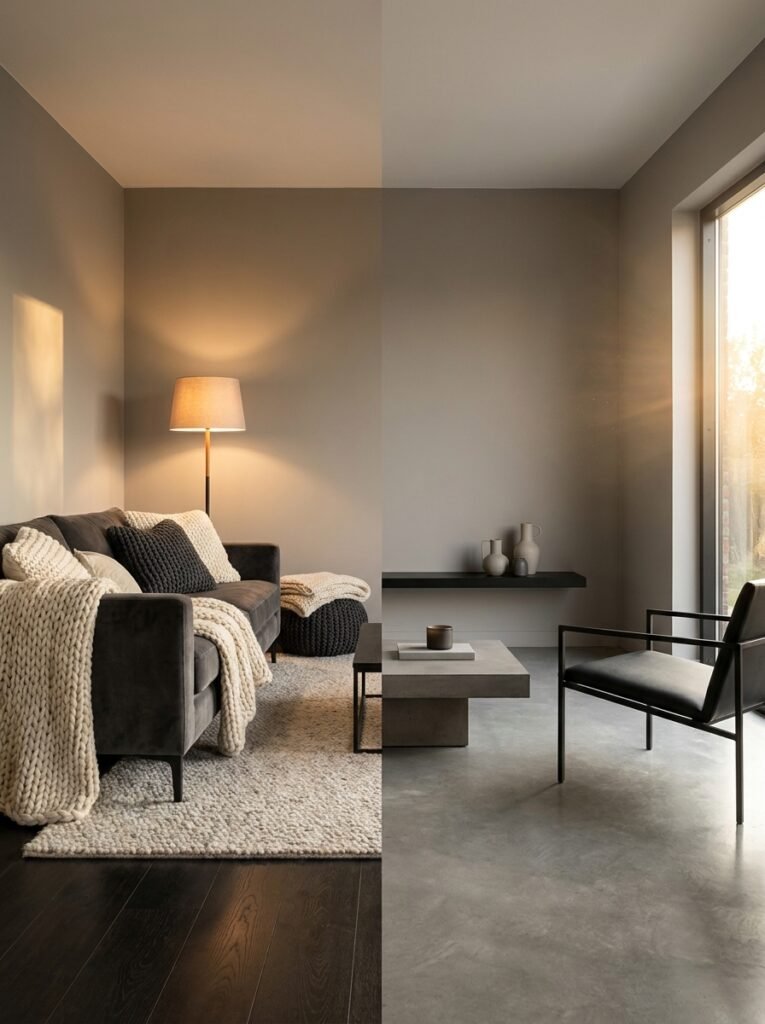
This is the question worth sitting with before you buy a single throw pillow or paint a single wall. Because “grey living room” is not one thing — it’s an entire universe of possibilities, and the version that makes your heart race might be completely different from the one your best friend is obsessed with on Pinterest.
There’s the modern minimalist grey room — clean lines, low-profile furniture, concrete or white oak floors, black metal accents, and a curated sense of deliberate emptiness. It feels like breathing room made visible.
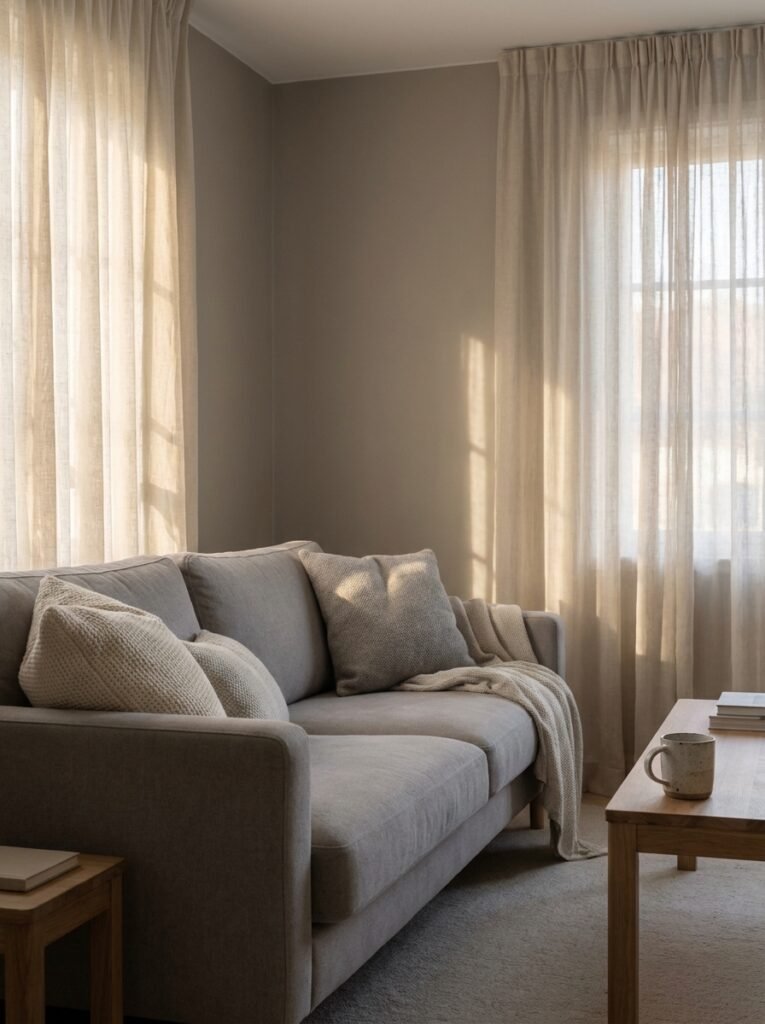
Then there’s the cozy layered grey — the one that makes you want to wrap yourself in a blanket and never leave. This version stacks textures: a chunky knit throw on a velvet sofa, sheepskin on a worn leather chair, linen curtains pooling on a pale wood floor. The grey is warm, the layers are abundant, and the whole room whispers stay.
There’s also the bold charcoal statement room — dark walls, high contrast, dramatic lighting, gold or brass accents that pop like jewelry. This is the grey living room that photographs beautifully and makes guests stop talking mid-sentence when they walk through the door.
And then there’s the classic transitional grey — timeless, sophisticated, works with everything, offends no one, and still somehow feels like you. Think a medium warm grey on walls, cream sofa, navy and terracotta accents, and real plants everywhere.
Knowing which of these speaks to you changes every decision that follows.
4. The Furniture Pairings That Make Grey Rooms Look Effortlessly Expensive
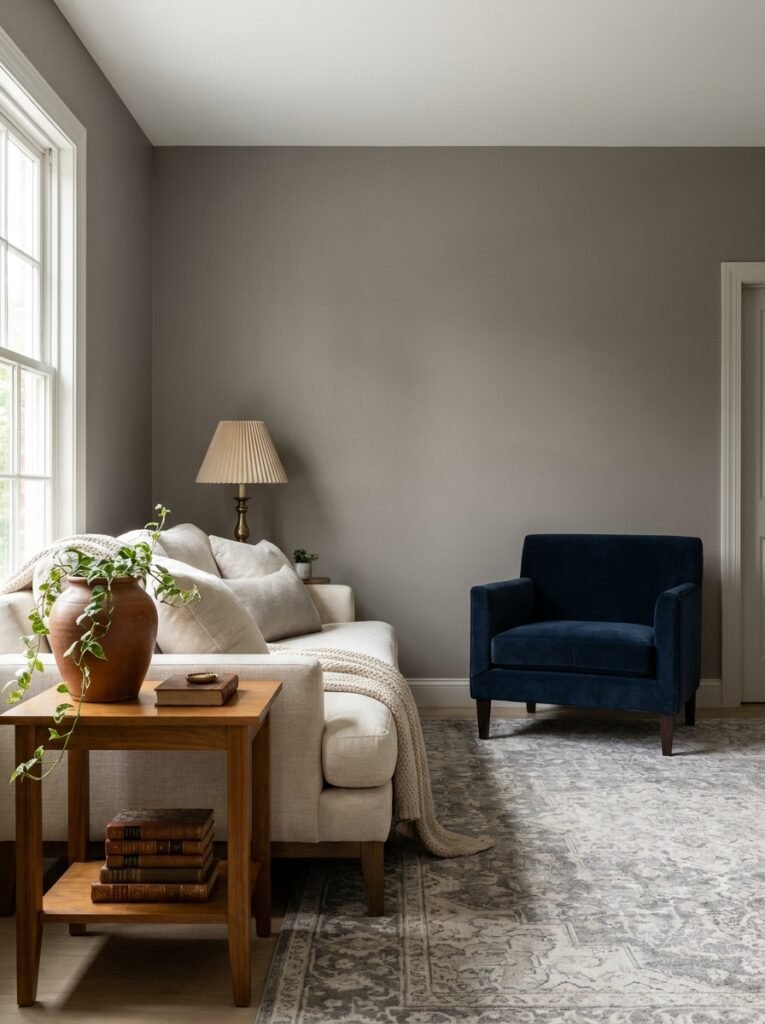
Grey is a patient and generous host to furniture — it lets almost every wood tone, fabric, and metal finish shine. But some combinations are genuinely transcendent.
Warm honey oak or walnut wood against a cool grey wall creates a contrast that feels rich and intentional. The warmth of the wood keeps the cool grey from feeling distant, and the result is a room that feels both contemporary and deeply livable. Aged brass or brushed gold hardware and fixtures add a layer of luxury that feels earned rather than showy.
A cream or ivory sofa against a medium grey wall is one of the most elegant combinations in interior design — timeless in the way that a white shirt with well-cut trousers is timeless. It never feels dated because the balance of light and neutral is just fundamentally pleasing to the human eye.
Navy and grey together deserve their own appreciation post. Navy blue accent chairs, a navy throw, or even navy and white striped cushions against a grey backdrop create a room that feels coastal without being cliché, and sophisticated without trying too hard.
For those willing to be braver: terracotta and grey is having a serious moment and for excellent reason. The warmth and earthiness of terracotta cushions, ceramics, or a woven rug against grey walls creates a palette that feels both grounded and alive.
“The right furniture pairing turns a grey room from quiet to unforgettable.”
5. How Lighting Completely Transforms a Grey Living Room
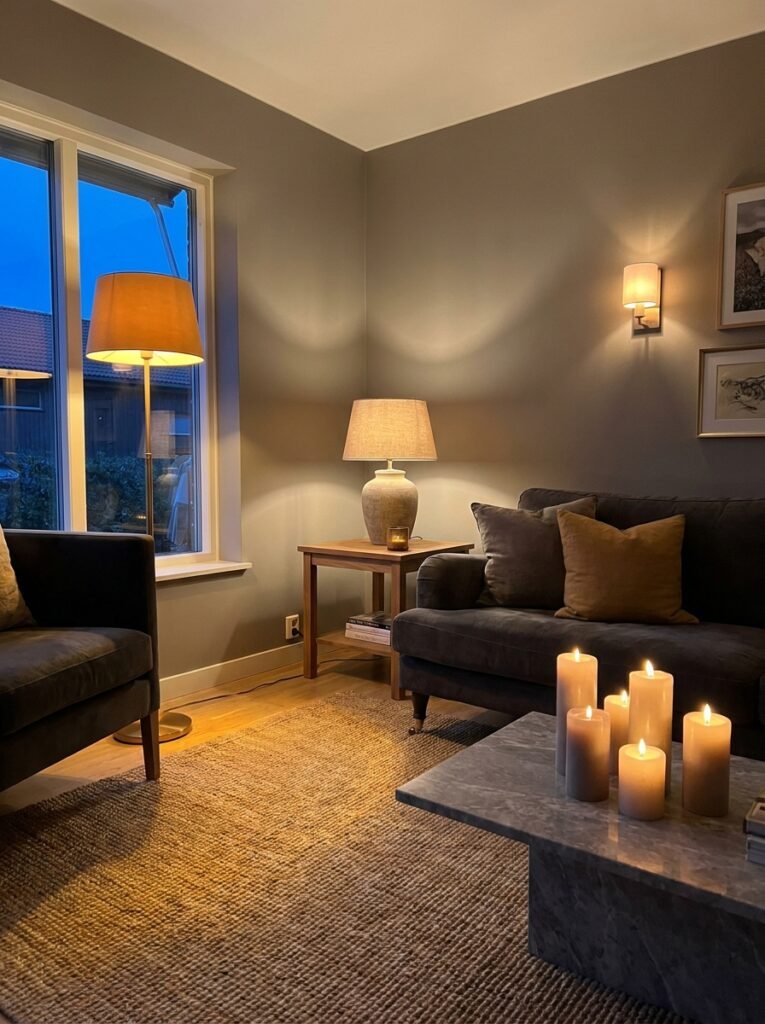
If you walk away with one truly life-changing piece of advice from this article, let it be this: lighting is not an afterthought in a grey living room — it is the most important design decision you will make. Grey is light-sensitive in a way that bolder colors simply aren’t. It changes character entirely depending on how it’s lit.
Overhead lighting alone is almost never enough. A single ceiling light in a grey living room creates a flat, dull, slightly institutional look that no amount of beautiful furniture can fully rescue. What grey rooms need is layered lighting — multiple light sources at different heights, each serving a different purpose and mood.
Start with ambient lighting (your overhead source), then add task lighting (a floor lamp beside the sofa, a table lamp on the side table), and finally add accent lighting — wall sconces, picture lights, or LED strip lights behind a bookshelf. This creates depth, warmth, and dimension that makes your grey walls glow rather than sit flat.
Warm-toned bulbs (around 2700K–3000K) are your best friend in a grey room. They add a golden quality to the light that counteracts any tendency toward coldness. Cool white bulbs (4000K and above) can make a grey room feel like a dentist’s waiting room at night, no matter how beautiful your paint choice.
Candles, whether real or high-quality LED, add a quality of light that is genuinely irreplaceable. A cluster of varying-height candles on a grey coffee table at dusk does something to a room that nothing else quite replicates.
6. Textures Are the Secret Language of a Cozy Grey Living Room
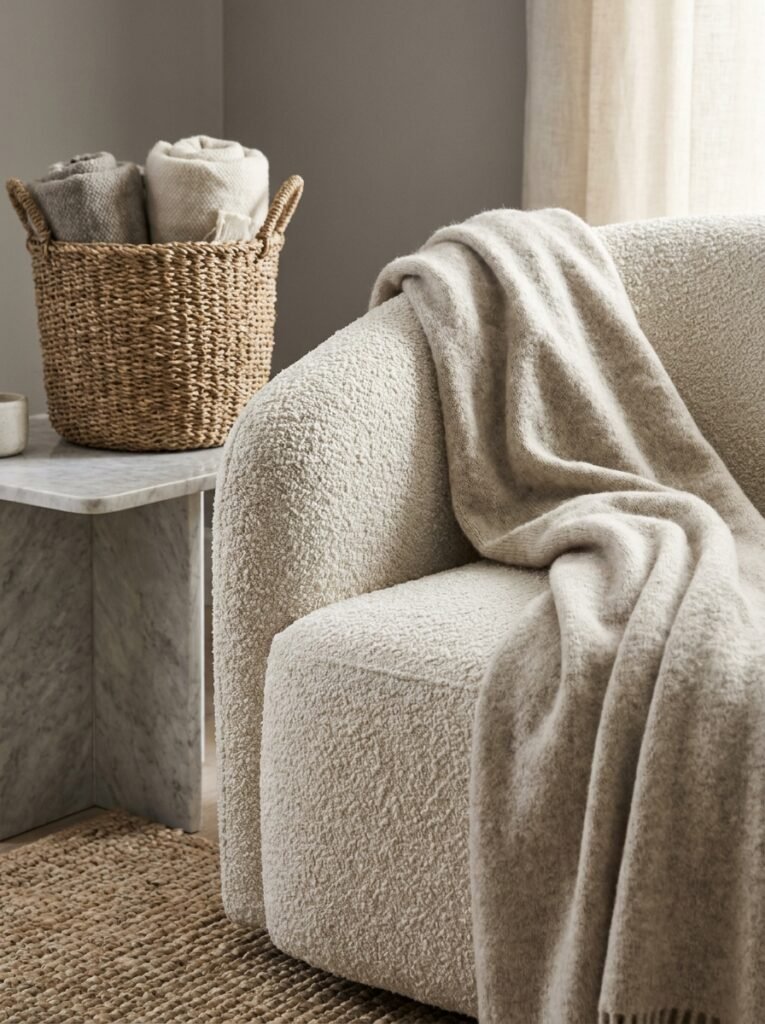
If color is what draws the eye, texture is what draws the hand — and ultimately, what makes you decide whether a room feels cold or warm, bare or lived-in, designed or home.
Grey, more than almost any other color, relies on texture to come alive. A flat, single-texture grey room can feel sterile and unwelcoming. But layer in velvet, linen, chunky knit, leather, jute, shearling, and smooth ceramic, and the same grey palette becomes deeply sensory and irresistible.
Think about the journey your hand would take moving through your living room: the slight nap of a velvet cushion, the softness of a merino throw, the roughness of a woven basket, the smooth coolness of a marble side table. That tactile variety is what makes a room feel rich — not expensive, but rich in experience.
A single bouclé armchair in an ivory or cream can be the transformative piece in a grey living room. Bouclé’s loopy, textured surface catches light in a way that adds an organic softness that photographs beautifully and feels wonderful to sit in.
Rugs are perhaps the single most impactful texture you can add. A large, soft area rug in a warm cream, sage green, or even a deep rust orange grounds the room, defines the seating area, and immediately makes the space feel complete. A grey room without a rug often feels unfinished — like a sentence without a period.
7. Plants That Look Breathtaking Against Grey Walls
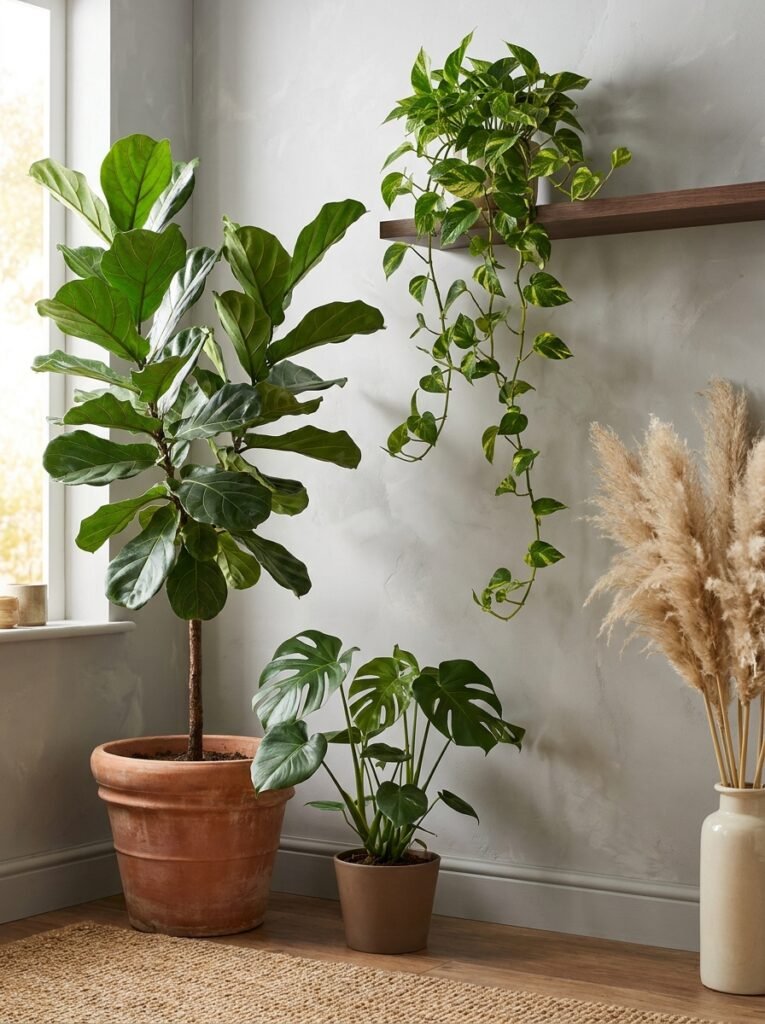
There is no faster way to make a grey living room feel alive than plants — real, actual, living plants. And the good news is that grey is one of the most plant-flattering backdrops in existence. The contrast between cool grey and lush, saturated green is genuinely beautiful.
Large statement plants with architectural qualities work especially well. A fiddle-leaf fig, a monstera deliciosa, or a tall snake plant in a white or terracotta pot against a grey wall creates a moment that feels both designed and organic. The sheer scale of a large plant also adds a visual softness that balances the hard lines of furniture.
For those less confident with plant care, a cluster of lower-maintenance options — pothos trailing from a shelf, a ZZ plant in a corner, a collection of succulents on a window sill — still adds the necessary life and color contrast that makes grey walls sing.
Dried pampas grass has become a mainstay in grey living rooms for good reason — its soft, feathery plumes in warm cream and blush tones are the perfect textural complement to grey, and it requires zero watering.
8. The Art of Layering Cushions and Throws in a Grey Living Room
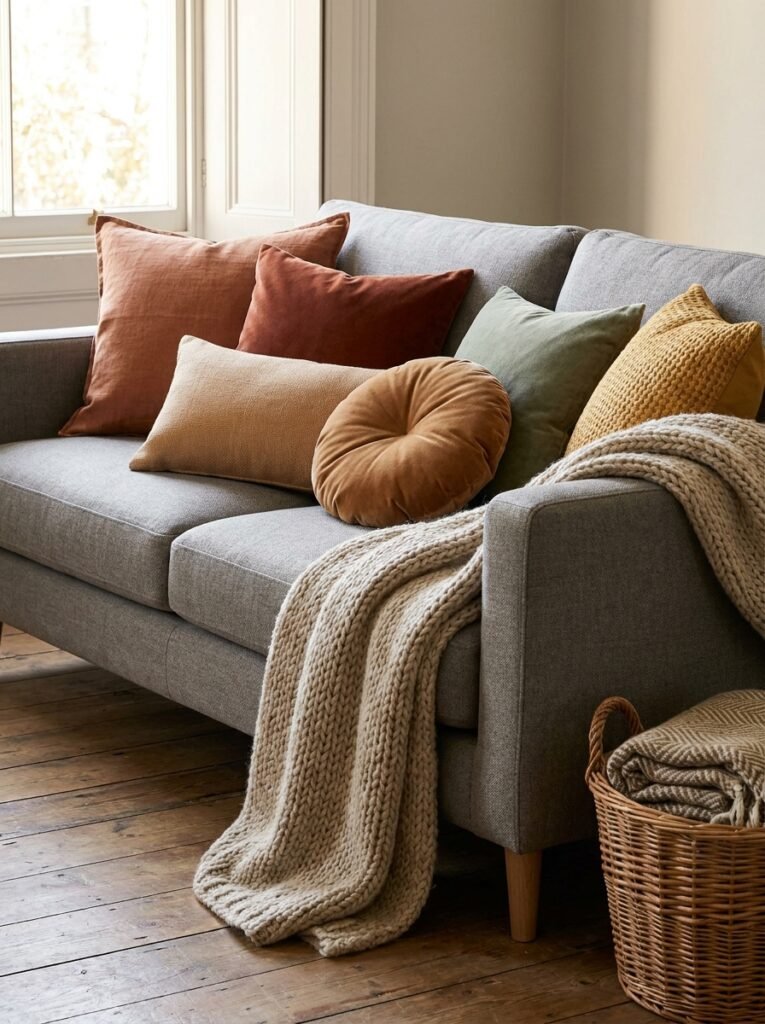
Cushions and throws are how a grey living room communicates its personality most immediately. They’re also the most cost-effective way to completely shift the feeling of the room with the seasons or whenever you need a refresh.
The formula that interior stylists use is deceptively simple: vary the size, shape, and texture of your cushions before you even think about color. Mix square and rectangular. Mix smooth and textured. Mix patterned and solid. Then choose a color story that adds contrast and warmth to your grey base.
For a grey sofa: terracotta, rust, mustard, blush pink, and sage green all work beautifully as accent colors. For a cream or ivory sofa against grey walls: navy, forest green, deep teal, and charcoal all add depth and sophistication.
The throw blanket is arguably more important than the cushions. Draped casually over the arm of a sofa or piled in a basket by the couch, a beautiful throw communicates warmth and comfort before anyone has even sat down. Chunky knits in natural wool tones, soft woven cotton throws in earthy stripes, and faux fur throws in cream or grey all work magnificently.
“A throw blanket on a grey sofa is a standing invitation to stay a little longer.”
9. Grey Living Room Flooring: What Works and What Absolutely Doesn’t
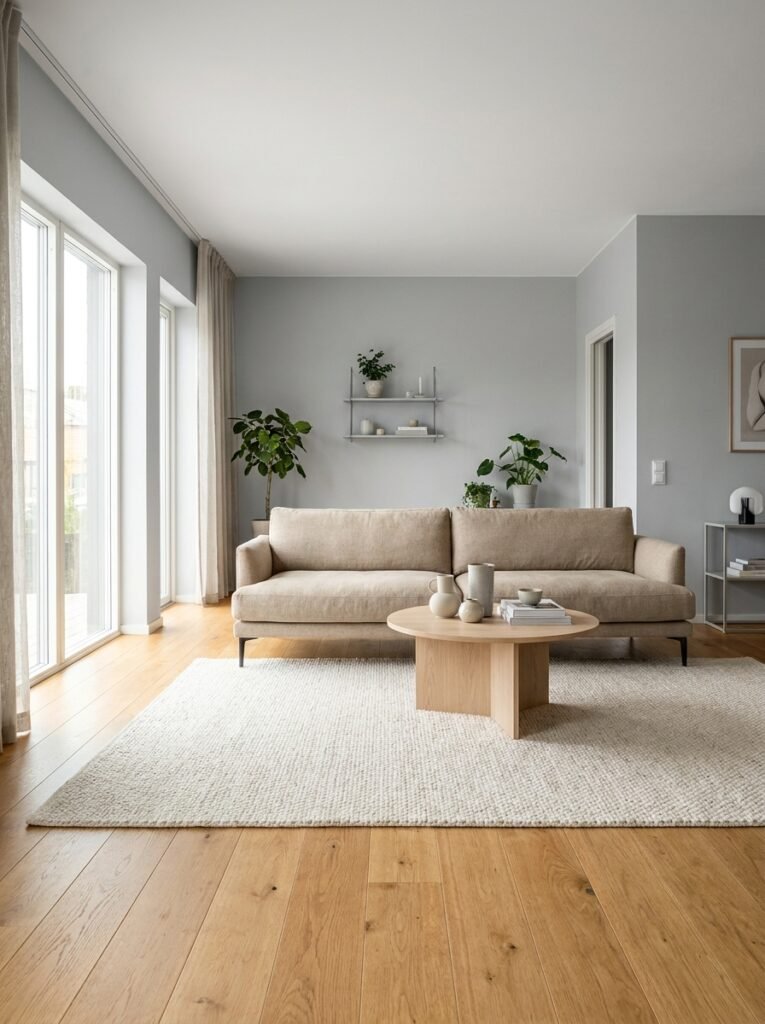
Flooring can make or break a grey living room — and it’s also often the element people overlook when planning their design. The good news is that grey plays well with most flooring options. The important thing is understanding how the undertone of your grey walls will interact with the tone of your floor.
Warm honey oak flooring — one of the most popular flooring choices globally — pairs beautifully with cool or neutral greys because the warmth of the wood balances the coolness of the wall. This is one of the most harmonious combinations in Scandinavian and modern farmhouse design.
Dark espresso-toned wood floors paired with light grey walls create a dramatic, striking contrast that feels luxurious and bold. It’s the combination that shows up in high-end boutique hotels and beautifully designed apartments in cities like Copenhagen and New York.
White-washed or bleached oak floors pair with grey in a way that feels bright, airy, and coastal-Scandi — perfect if you want your grey living room to feel luminous rather than moody.
What tends to work less well: grey walls with very cool, grey-toned tile or grey flooring, unless you are deliberately going for a monochromatic, architectural look with warm accents to prevent the room from feeling clinical. Grey on grey without enough contrast or warmth in the other elements can read as heavy and cold.
10. Budget-Friendly Ways to Create a Designer Grey Living Room
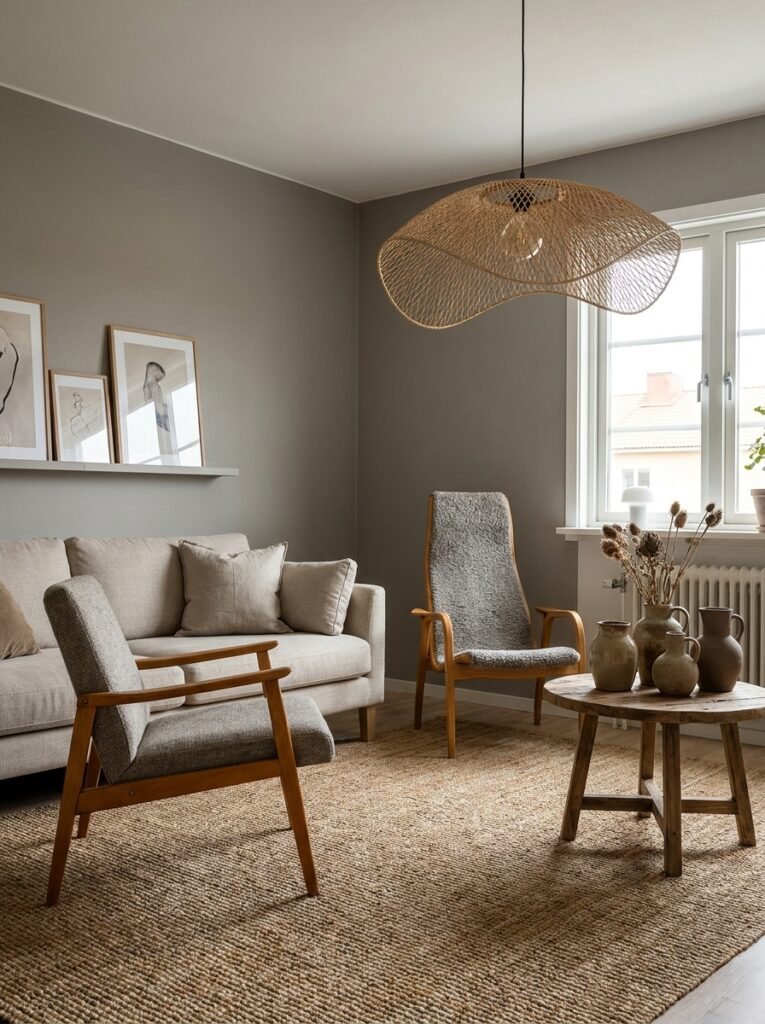
Here’s something worth saying clearly: a stunning grey living room does not require a designer budget. Some of the most beautiful grey rooms I’ve ever seen were created on genuinely modest spending, because grey is a fundamentally generous backdrop — it makes inexpensive furniture look more considered, and it makes thrifted finds look intentional.
Start with paint. It is the highest-impact, lowest-cost change you can make to any room. A freshly painted grey room with thoughtful existing furniture will outperform an expensively furnished room with outdated or mismatched wall color every single time.
Secondhand and vintage furniture shopping is particularly rewarding in a grey-walled room because the neutral backdrop lets you mix periods and styles without chaos. A mid-century armchair next to a contemporary sofa reads as curated, not mismatched, when grey is holding it all together.
Swap out cushion covers seasonally rather than buying entirely new soft furnishings. A fresh set of cushion covers in a new color story (and they’re often under $20 each) can make a two-year-old living room look like it was just designed.
Invest in one quality piece — a beautiful rug, a genuinely excellent sofa, a stunning light fixture — and let everything else support it. In a grey room, one hero piece is enough to elevate the entire space.
11. Seasonal Grey: How to Refresh Your Living Room With Every Season

One of the greatest joys of a grey living room is how effortlessly it transforms with the seasons. Because grey itself doesn’t declare a season — the way a white room screams summer or a deep navy room feels inherently autumnal — it invites seasonal story-telling through the accessories and textiles you layer on top.
In autumn: bring in deep rust, burnt orange, and warm caramel through cushions, throws, candles, and ceramic vases. Add dried botanicals, a bowl of pinecones, and warm amber lighting. Your grey room will feel like a harvest moon made interior.
In winter: layer more. Add a faux fur throw, add more candles, add a string of warm white lights. Bring in deep forest green and deep burgundy accents. Warm the floor with a thick, plush rug and stack books by the fireplace. A grey room in winter is where hygge was born.
In spring: lighten up. Swap heavier throws for linen, bring in fresh flowers — tulips in terracotta pots, a bunch of white ranunculus on the coffee table — and let the natural light back in by removing heavier drapes for sheer linens.
In summer: bring in blue. Sky blue, aqua, and denim tones alongside white and natural materials like rattan and jute make a grey living room feel breezy and refreshed.
12. The Small Details That Make a Grey Living Room Feel Like It Was Designed With Love
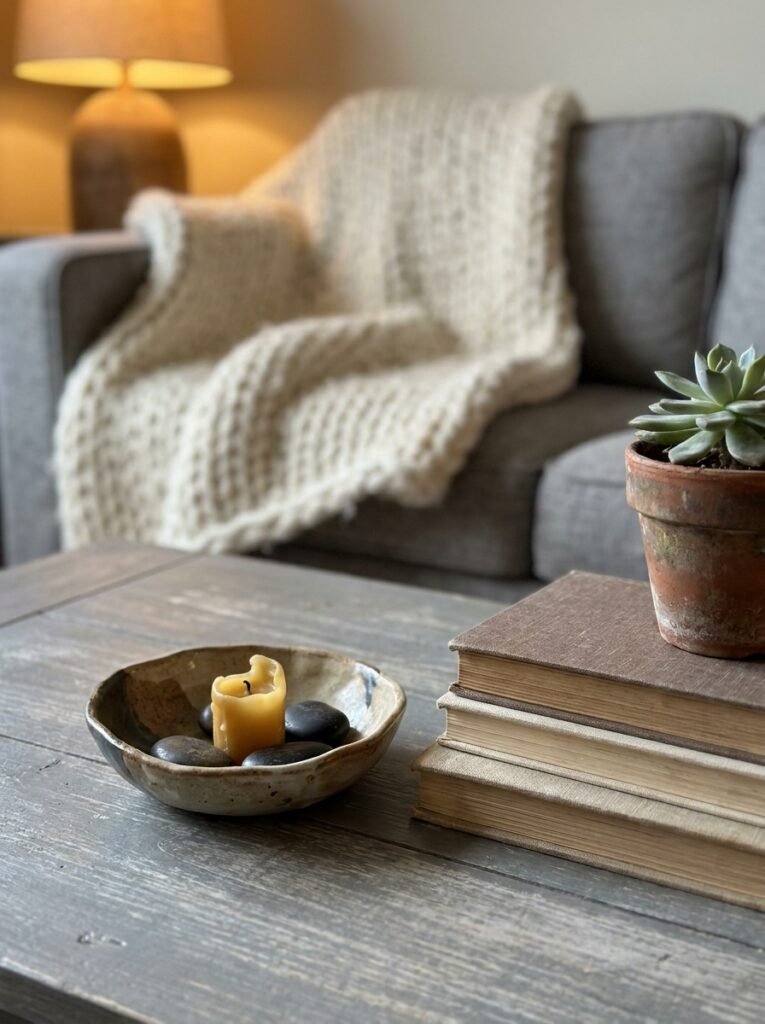
A truly beautiful grey living room isn’t built in a single shopping trip or an afternoon of painting. It grows — over time, through small additions and intentional choices, through inherited pieces and discovered objects and gifts that matter. And it’s the small details that ultimately separate a room that looks designed from a room that feels loved.
Books stacked horizontally on a shelf in a grey room add a layer of organic, intellectual warmth that nothing else quite replicates. A small ceramic dish on the coffee table that holds a candle stub and a few smooth stones tells a story about who lives there. A single framed piece of art that means something to you — not because it matches the room perfectly, but because you love it — gives the entire space a soul.
A handmade ceramic mug left on a side table. A small succulent that a friend gave you. A throw that was your grandmother’s. A lamp you found at a Sunday market. These are the things that transform a grey living room from beautiful to irreplaceable — the things no interior designer, no matter how talented, can specify for you.
—
🌿 How to Take Care of Your Grey Living Room
A grey living room, like any beautifully designed space, asks for a small amount of regular care to keep it feeling intentional and alive rather than dull and tired.
First, clean your walls more regularly than you might think to — grey paint shows handprints, scuffs, and dust marks more readily than very light or very dark colors. A damp microfiber cloth does the job on most latex paints without damaging the finish.
Rotate your soft furnishings seasonally — not just for style, but to prevent uneven fading and wear. Cushion covers, throws, and even small rugs benefit enormously from being rotated and occasionally washed or aired outside.
Tend to your plants consistently, because nothing ages a beautifully designed room faster than struggling or dying plants. If you’re not confident with care, choose low-maintenance varieties that genuinely thrive on neglect — snake plants, ZZ plants, and pothos are almost impossible to kill.
Reassess your lighting every six months or so. Bulbs shift in color temperature as they age, and a room that felt warm and golden when you first designed it can become subtly cooler and flatter over time. Replacing old bulbs with fresh warm-toned LEDs takes ten minutes and can make a room feel brand new.
Finally — edit regularly. Grey living rooms are at their most beautiful when they feel curated and intentional, not accumulated. If something no longer serves the room or makes you happy when you look at it, it’s okay to let it go.
—
❓ FAQ
Q: Is a grey living room too cold for a cozy, family-friendly home? A: Absolutely not — and this is perhaps the most common misconception about grey. The key is choosing a warm grey (one with beige, taupe, or blush undertones), layering with soft textures like velvet, wool, and chunky knit, and using warm-toned lighting. A thoughtfully styled grey living room can be among the warmest, most inviting spaces imaginable.
Q: What accent colors work best with grey living room walls? A: Grey is famously versatile and pairs beautifully with a wide range of accent colors. Terracotta, rust, and burnt orange add warmth and earthiness. Navy and deep teal add sophistication and depth. Blush pink and cream add softness and femininity. Sage green and forest green add life and organic freshness. The choice depends on the mood you want to create — grey supports them all.
Q: How do I prevent my grey living room from looking dated in a few years? A: Choose a timeless, well-balanced grey (avoiding very trendy undertones that feel of-the-moment) for your permanent elements — walls, large furniture, flooring. Then let trends live in your easily changeable accessories: cushions, throws, vases, and artwork. This way, the foundation of the room stays relevant while you can refresh the personality as your taste evolves.
—
💭 Final Thought
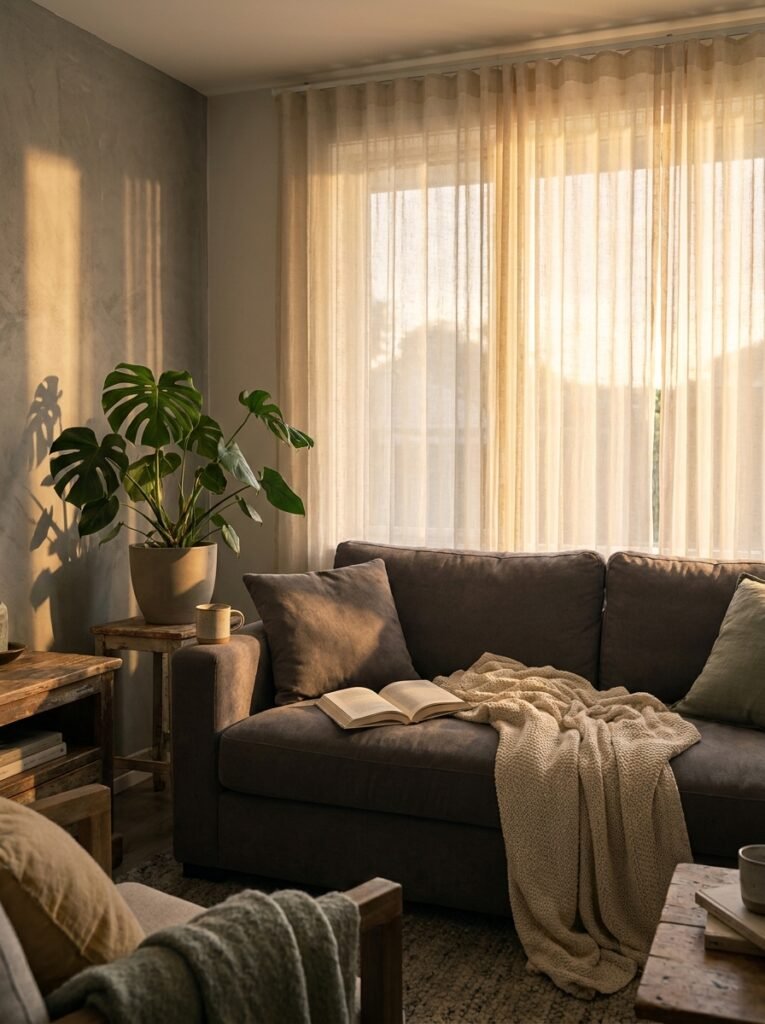
A grey living room, at its heart, is a room designed for real life — for the full, complicated, beautiful spectrum of days you will actually live in it. It holds morning coffee and midnight movies, dinner parties and solo evenings, the noise of family and the quiet of solitude, with equal grace. It doesn’t ask you to perform a lifestyle. It simply holds you.
So as you think about your own grey living room — whether you’re starting from scratch, refreshing what you have, or just dreaming — ask yourself this: what kind of room do you want to come home to, and what does that room need to make you feel, the moment you walk through the door?