
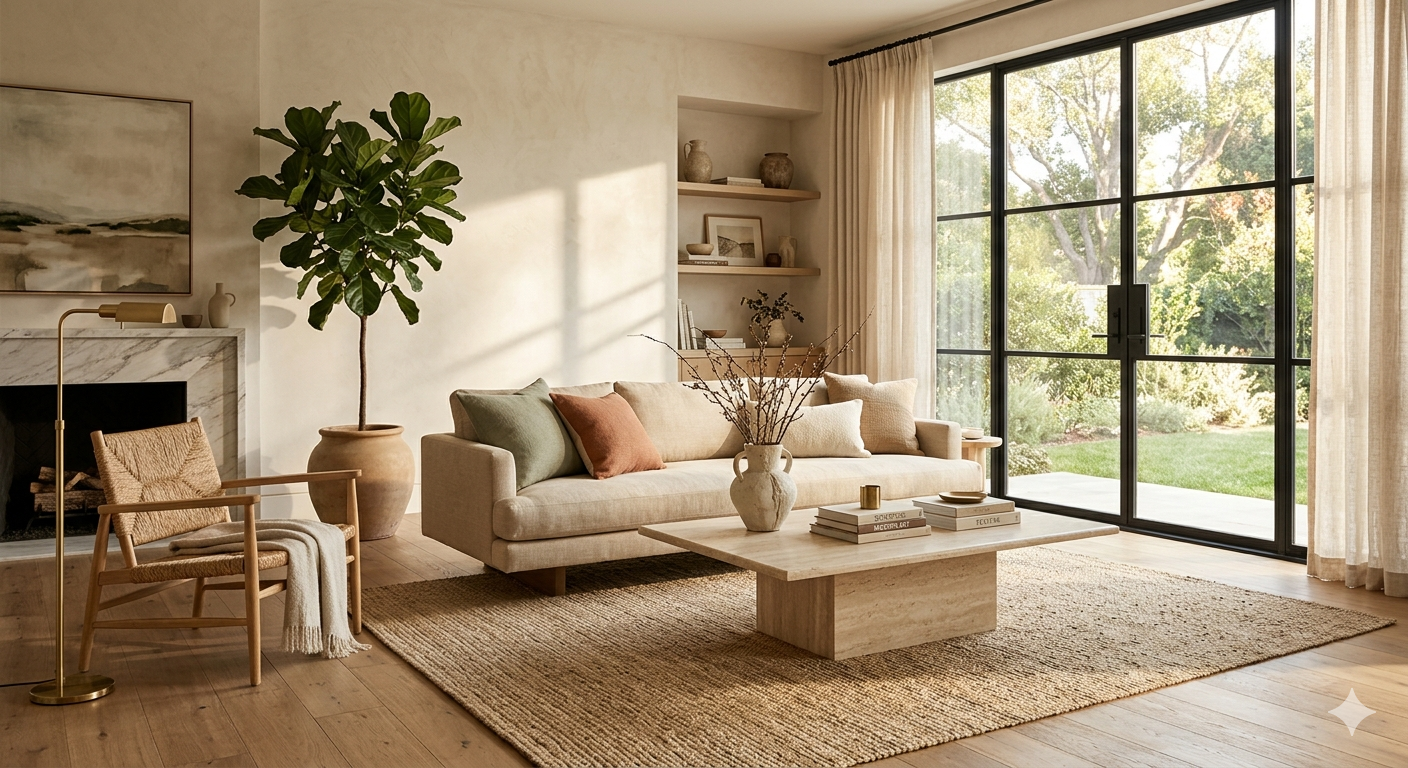
The Modern Living Room Design Guide That Will Make You Fall in Love With Your Home Again
There’s a specific kind of magic that happens when you walk into a living room that just works — where the light falls softly across thoughtfully chosen furniture, where every corner feels intentional but never stiff, where you exhale without even realizing you needed to. That room exists for you, too. It just needs a little direction, a little courage, and the right ideas to bring it to life.
—
1. What “Modern” Actually Means — And Why Most People Get It Wrong
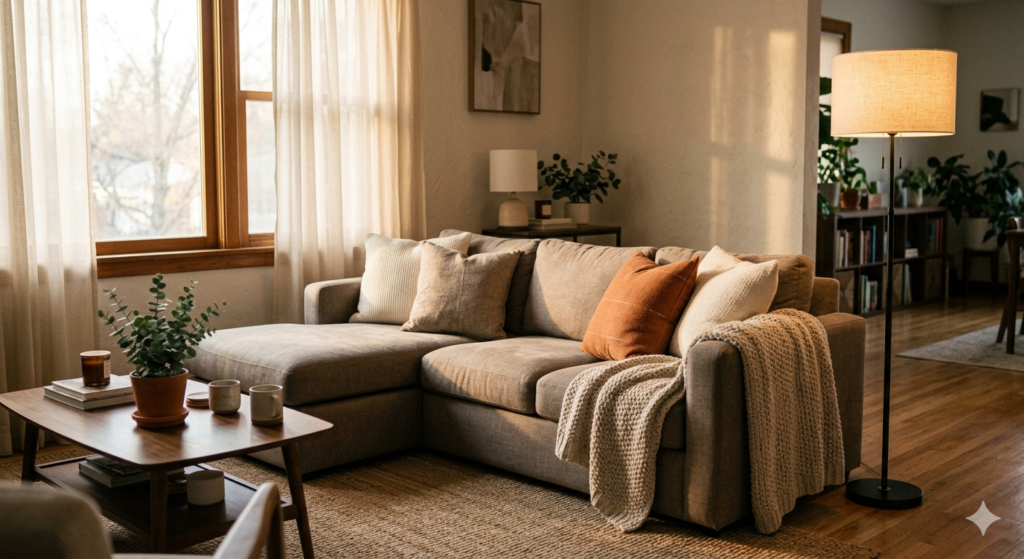
Here’s the truth nobody tells you: modern design and contemporary design are not the same thing. Modern design is actually a specific aesthetic movement rooted in the early-to-mid 20th century — think clean lines, functional form, and a philosophy that beauty should never come at the expense of practicality. Contemporary design, on the other hand, is simply whatever is trending right now. When most people say they want a “modern living room,” they mean a blend of both — clean, current, livable, and quietly beautiful.
Understanding this distinction matters because it changes how you shop, how you plan, and how you make decisions. You stop chasing every fleeting trend and start building something with genuine staying power. A truly modern living room doesn’t scream for attention. It earns it — through proportion, palette, and the kind of restraint that takes real confidence to pull off.
“Modern design isn’t about having less — it’s about choosing better.”
The good news? Getting this balance right doesn’t require an interior designer or a limitless budget. It requires clarity about what you want to feel when you walk into that room. Start there, and everything else follows.
2. The Foundation You Can’t Skip: Getting Your Layout Right First
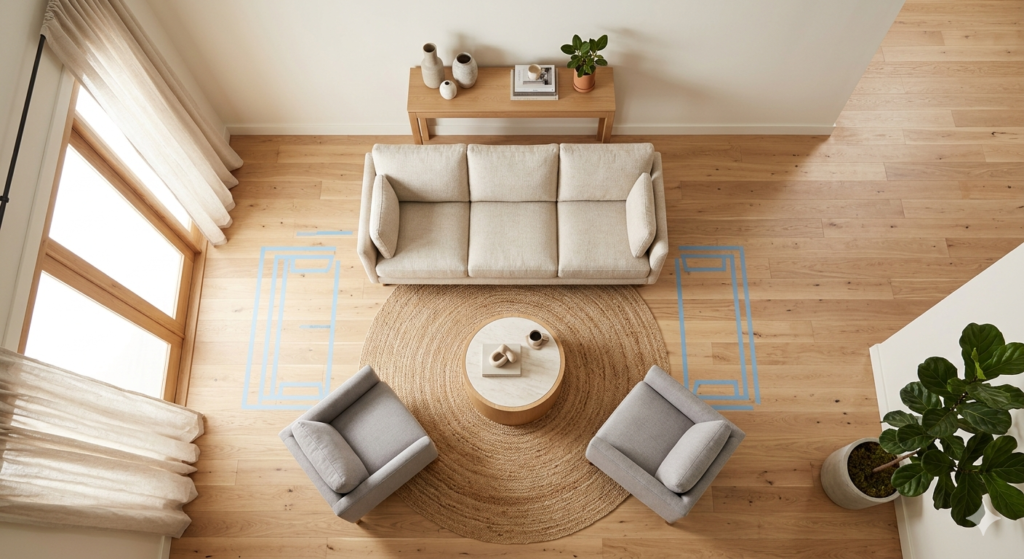
Before you fall in love with a sofa or bookmark a coffee table, you need to talk about layout — because even the most stunning furniture becomes frustrating in the wrong arrangement. The most common mistake people make in modern living room design is pushing all the furniture against the walls. It feels safe, it feels like it creates more space, but it actually makes a room feel cold, hollow, and disconnected.
Modern design thrives on conversation zones. Pull your seating inward. Allow breathing room on all sides. A sofa floating a few inches from the wall with a console table behind it suddenly transforms a flat, predictable space into something layered and intentional. Your living room should feel like a place where people naturally want to gather — not a waiting room with better cushions.
Measure twice, plan once. Use painter’s tape on the floor to map out furniture placement before you buy anything. This single step — free, low-effort, and endlessly underrated — will save you from expensive mistakes and rearrangement frustration. Think about traffic flow, natural light sources, and the room’s focal point, whether that’s a fireplace, a gallery wall, or a dramatic window.
3. The Color Palette That Changes Everything (Without Requiring a Full Repaint)
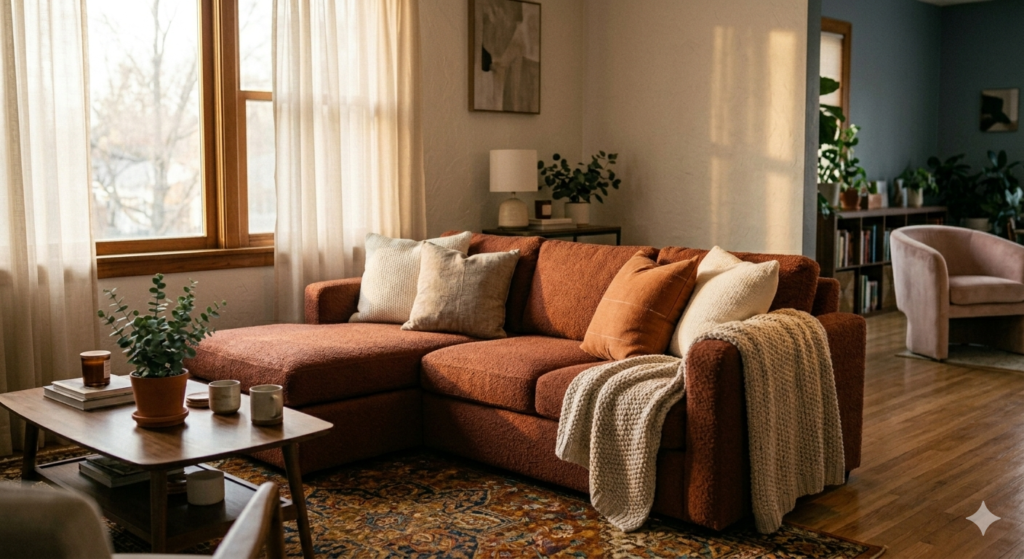
Color is the soul of a room, and modern living rooms understand this deeply. The modern palette tends to favor neutral foundations layered with intentional accents — warm whites, soft greiges, deep charcoals, and rich earthy tones that feel grounded rather than clinical. But here’s the subtle art: modern doesn’t mean colorless.
Think of your walls as the backdrop and your furnishings as the performance. A warm white wall lets a terracotta sofa sing. A deep slate accent wall makes a blush armchair feel surprisingly bold. The key is temperature — warm neutrals (creamy whites, sandy beiges, warm taupes) create an inviting, cozy atmosphere, while cooler neutrals (pale grays, blue-whites, soft sage) feel more expansive and architectural.
If repainting feels like too big a commitment right now, color can enter your living room through textiles, artwork, and accessories. A single large-format painting, a richly colored throw draped over your sofa, or a vintage-style rug in deep jewel tones can completely redefine how your space feels — without touching a single wall. Color isn’t decoration. It’s communication.
4. Choosing a Sofa That’s Both Beautiful and Built to Last
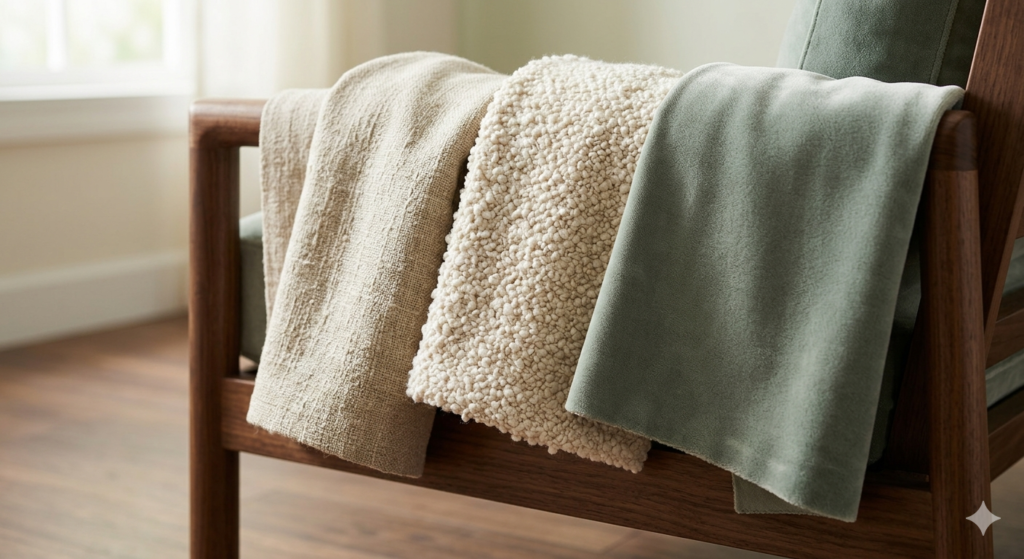
Your sofa is the anchor of your living room — the piece everything else orbits. Choosing it well is one of the most important design decisions you’ll make for this space, and in a modern living room, the criteria are specific. You’re looking for clean lines without heavy ornamentation, quality upholstery that ages gracefully, and a silhouette that feels contemporary without being cold.
Linen, boucle, and performance velvet are three of the most popular modern sofa fabrics right now — and for good reason. Linen has a lived-in, European quality that softens the sharper edges of modern design. Boucle (that beautiful, textured loop-pile fabric) adds warmth and dimension while remaining effortlessly current. Performance velvet brings richness and color depth with the durability to survive real everyday living.
Neutral tones — warm oatmeal, soft sage, deep charcoal, dusty terracotta — tend to have the longest visual lifespan. They’re easy to style around, and they won’t feel dated in three years when something trendier falls out of fashion. Invest here. This is not the place to cut corners on quality, because a beautiful sofa in a mediocre fabric will frustrate you every single day you sit in it.
5. The Art of Layering Textures Without Creating Visual Chaos
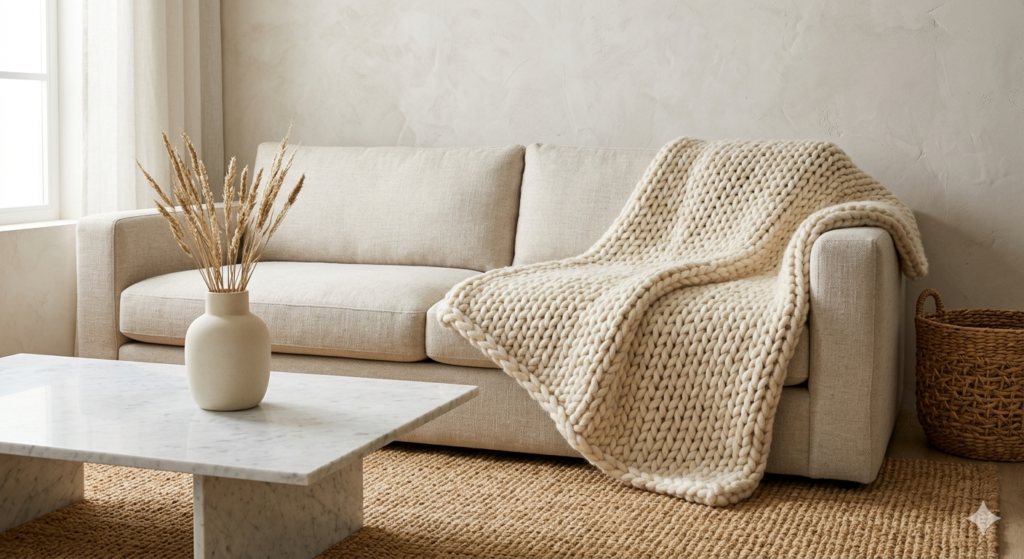
If color is the soul of a room, texture is its heartbeat. Modern living room design could easily feel stark or sterile — all clean lines and pale tones — if it weren’t for the warmth that texture introduces. The trick is layering deliberately, choosing materials that complement rather than compete.
Imagine a light linen sofa paired with a chunky wool throw, a smooth marble coffee table, a jute rug underfoot, and a matte ceramic vase catching the afternoon light. Each element has a distinct tactile quality, but they all speak the same language — natural, honest, quietly beautiful. That’s the goal.
“Texture is what makes a room feel lived in, loved, and genuinely yours.”
Rule of thumb: aim for at least four different textures in your living room. Soft (textiles, cushions, throws), hard (stone, metal, glass), organic (wood, wicker, jute), and matte (ceramic, plaster, linen). When these four categories are present and balanced, the room feels complete — full of life without feeling cluttered.
6. Lighting That Transforms a Room From Flat to Breathtaking
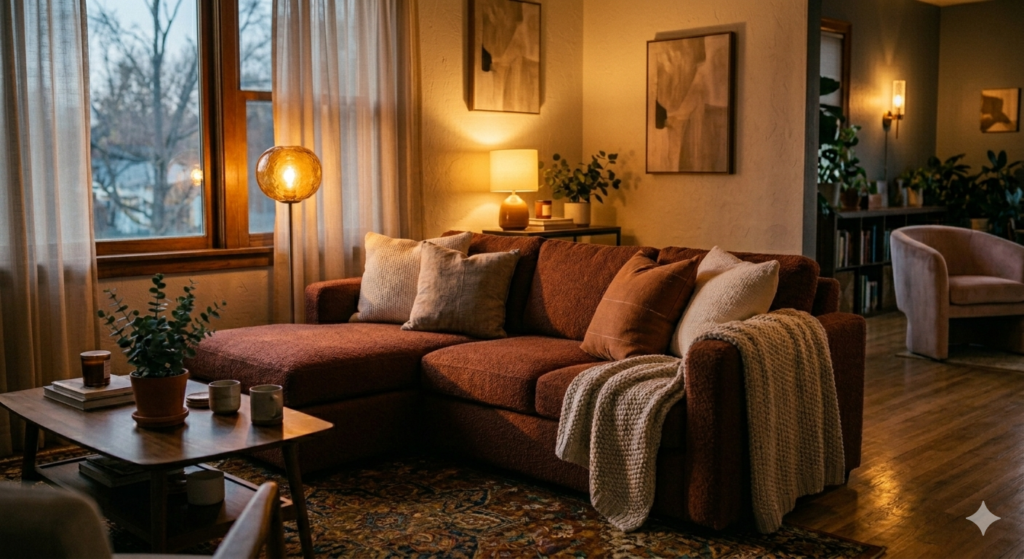
Lighting might be the single most underestimated element in interior design. People spend thousands on furniture and art, then light the whole room with a single overhead fixture — and wonder why it never feels quite right. Great lighting is layered, intentional, and transformative in a way that’s difficult to fully explain until you experience it.
Modern living rooms benefit from at least three layers of light: ambient (the overall illumination of the space), task (focused lighting for reading, working, or specific activities), and accent (lighting that creates mood, highlights architectural features, or draws attention to art). Floor lamps, table lamps, wall sconces, and pendant lights each play a different role, and the best-designed living rooms use a combination of several.
Warm bulbs — 2700K to 3000K — are essential in a modern living room that you want to feel inviting rather than clinical. The light temperature affects not just how you feel in the space, but how the colors, materials, and textures in the room actually appear. Swap out cool, harsh bulbs for warm ones, add a dimmer switch where possible, and watch your living room transform in ways that no new furniture purchase ever could.
7. Coffee Tables and Side Tables: The Unsung Heroes of Modern Design
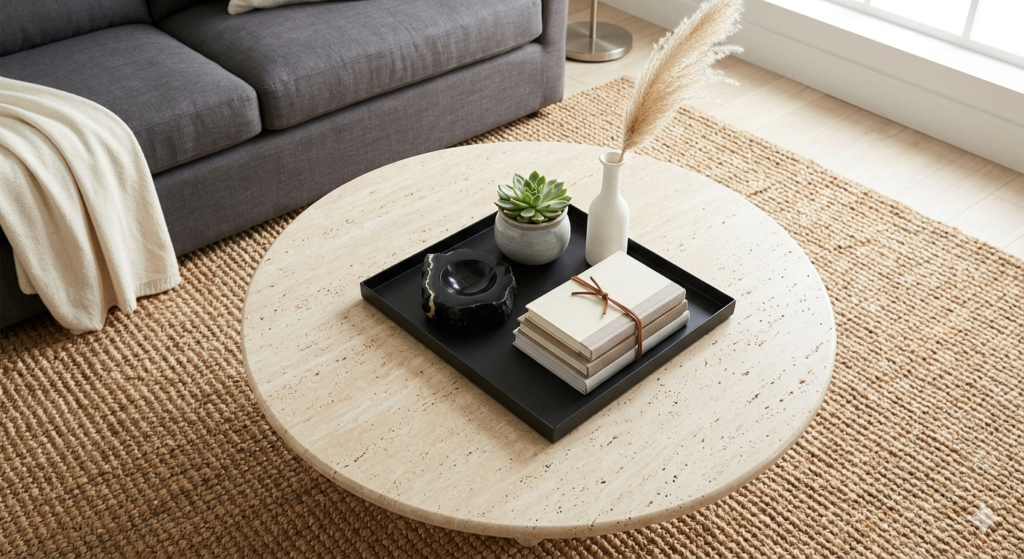
Nobody writes passionate articles about coffee tables, but perhaps they should. In a modern living room, the coffee table is doing serious aesthetic heavy lifting — it grounds the seating arrangement, adds visual weight to the center of the room, and serves as the primary surface for styling. Choose it with the same care you’d give to a sofa.
Modern coffee tables favor materials like marble, travertine, solid wood, metal, and glass. Rectangular and round forms are both versatile, but in smaller spaces, round coffee tables allow for better traffic flow and a softer visual quality. The height matters, too — your coffee table should sit roughly the same height as your sofa cushions, making it genuinely functional and not just decorative.
Styling the coffee table is its own small art form. A well-styled coffee table might include a stack of beautiful books, a sculptural object or vase, a small plant, and a tray to contain the arrangement. The tray is key — it creates visual order, grouping disparate items into a cohesive vignette. Less is more here. Resist the urge to fill every inch.
8. Bringing Nature Indoors: The Role of Plants in Modern Living Rooms
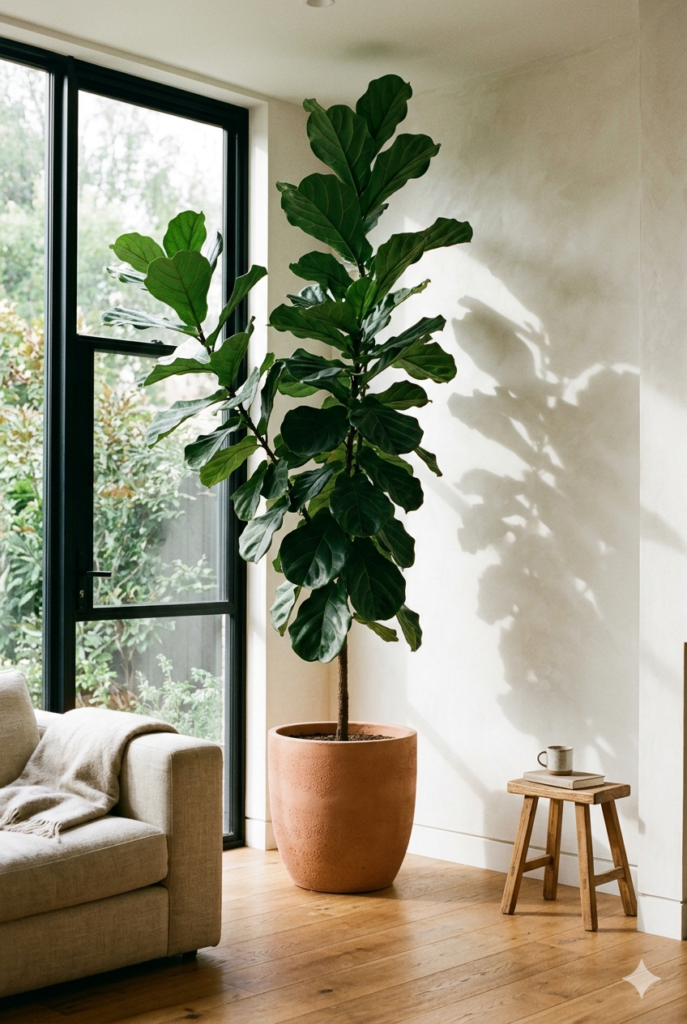
There’s something about the presence of a living plant that no styled shelf or curated art collection can replicate. Plants bring oxygen, movement, color, and a quiet sense of aliveness to modern spaces — and they’ve become an essential element of contemporary interior design for very good reason.
In a modern living room, scale matters when it comes to plants. A single large-format plant — a fiddle leaf fig, an olive tree, a monstera, a tall snake plant — makes far more visual impact than a dozen small ones scattered around. One statement plant in a quality ceramic or terracotta pot can function almost like a piece of sculpture, adding verticality and organic texture to a room that might otherwise feel too controlled.
For those without a green thumb, there are genuinely beautiful low-maintenance options: pothos, ZZ plants, snake plants, and cacti all thrive in a wide range of conditions. The goal isn’t a perfect plant; it’s the presence of something alive and growing. That quality — soft, imperfect, natural — is exactly what modern design needs to feel human rather than showroom-polished.
9. The Gallery Wall Done Right: Art That Speaks Before You Do
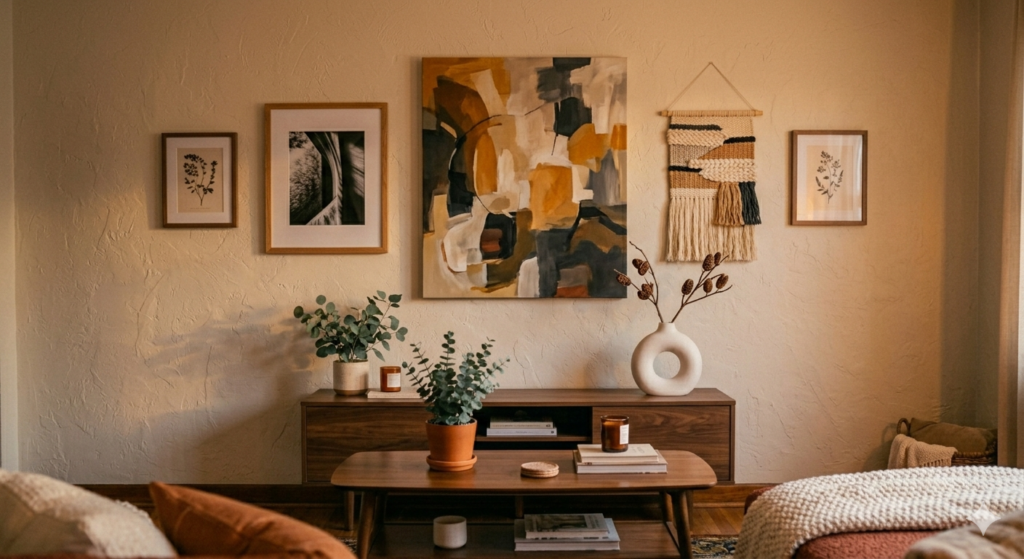
A living room without art often feels somehow unfinished — like a sentence without a period. Art is personal, it’s expressive, and in a modern living room, it’s an opportunity to introduce both color and character in a way that furniture alone simply cannot. But a gallery wall done poorly is worse than no art at all.
“The right piece of art doesn’t just fill a wall — it reveals something true about the person who chose it.”
Modern gallery walls tend to favor a curated, intentional approach over the maximalist “more is more” philosophy. Three to five pieces in a cohesive palette, varied in scale, with consistent or complementary framing — this is the formula that works. Mix photography with abstract prints, add a small sculptural element or a woven wall hanging, and let the arrangement breathe rather than crowd.
One powerful approach: the single large-scale art piece. Rather than a gallery wall, one oversize painting or print above a sofa or console table can anchor an entire room with confidence and clarity. Go bigger than feels comfortable. Art that’s too small for a wall reads as timid; art that fills the space reads as intentional and self-assured.
10. Storage Solutions That Are as Beautiful as They Are Functional
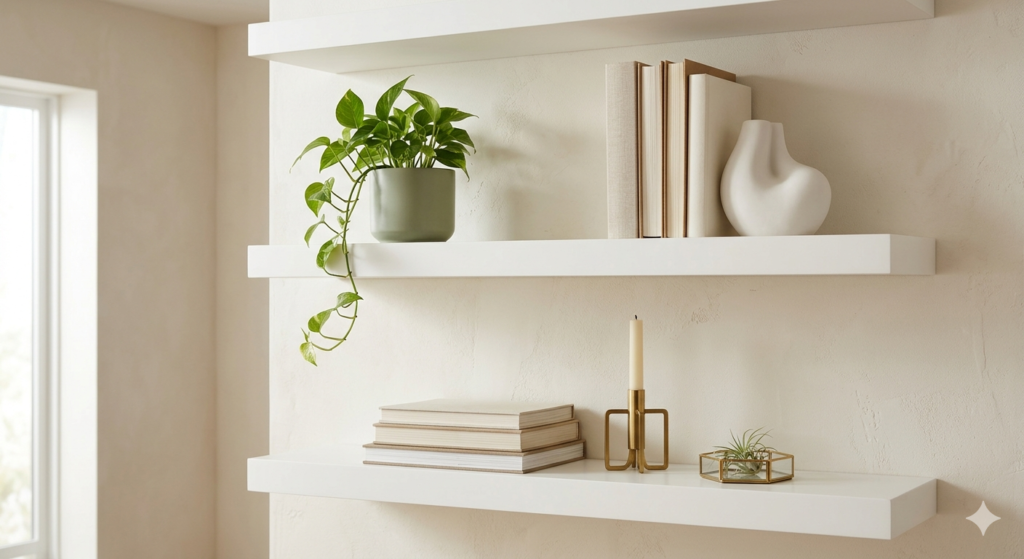
Modern living rooms have a complex relationship with clutter. The aesthetic favors clean, open surfaces — but real life involves remote controls, books, blankets, and the beautiful chaos of actually inhabiting a space. The solution isn’t to hide everything or to live in performative minimalism. The solution is thoughtful, beautiful storage.
Floating shelves styled with a deliberate mix of books, objects, and negative space are a hallmark of modern living rooms. The negative space — the empty, breathing room between objects — is just as important as what you place on the shelf. Avoid filling every inch. Let your objects have room to exist.
Ottoman storage, built-in cabinetry with clean-line handles, and media consoles with closed storage all help maintain that visual calm that modern design depends on. The rule of thumb: one-third of your shelf or surface space should be empty. It’s the restraint that makes the rest of the room feel curated rather than crowded.
11. Small Modern Living Rooms: Design Strategies That Actually Work
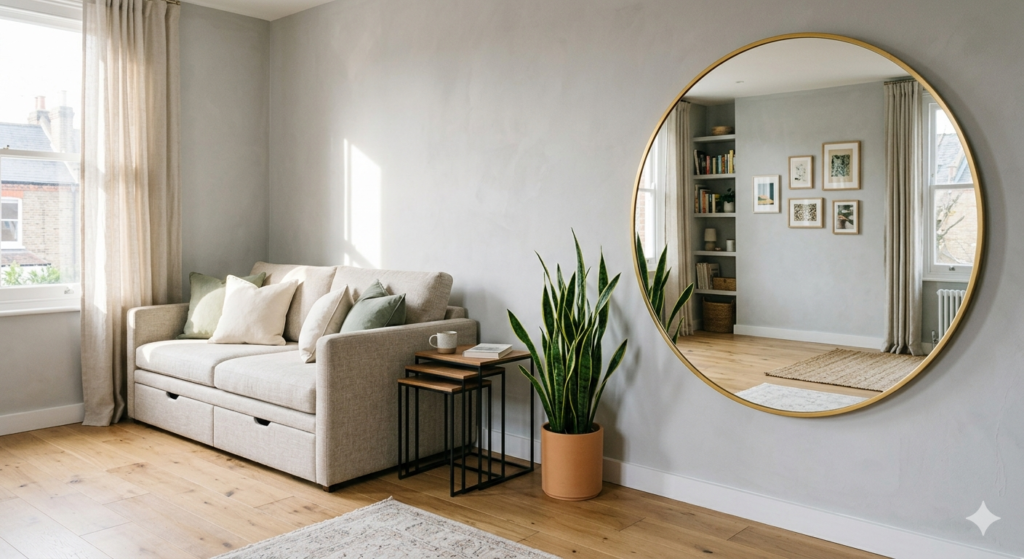
A small living room is not a compromise — it’s an opportunity. Some of the most beautiful, perfectly designed living rooms in the world are compact, and they work because every single element has been chosen with intention. Small modern living rooms thrive on a few key principles that larger rooms don’t need to follow quite as strictly.
Mirrors are your most powerful ally in a small space. A large mirror on a primary wall doubles the perceived depth of a room and reflects both light and the carefully chosen objects within it. A single, well-placed oversized mirror can make a small living room feel genuinely expansive — not as a trick, but as a genuine design tool that has been used by professionals for centuries.
Multifunctional furniture — a sofa with a chaise that doubles as a guest bed, a coffee table with hidden storage, nesting side tables that tuck away when not needed — allows small spaces to serve big lives without visual chaos. In small modern living rooms, the quality of each piece matters even more than in larger spaces. There’s nowhere to hide a poor choice when the room itself demands your full attention.
12. The Personal Touches That Keep Modern Design From Feeling Cold
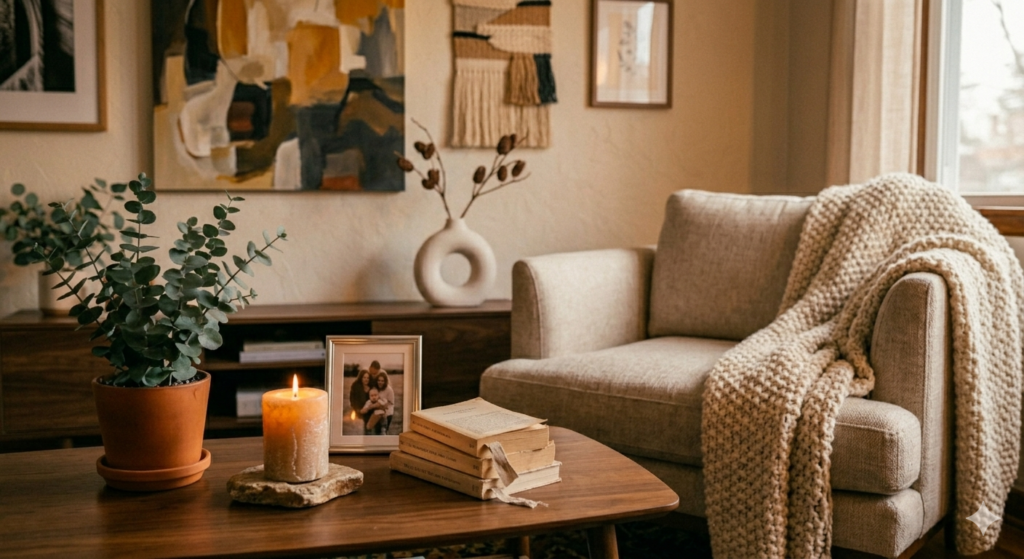
Here is perhaps the most important thing to understand about modern living room design: the goal is never a room that looks like a showroom. The goal is a room that looks like you — refined, intentional, clean — but unmistakably, warmly human. The personal touches aren’t afterthoughts. They’re the whole point.
A stack of books you’ve actually read. A blanket draped imperfectly over the arm of a chair. A photograph of someone you love, simply framed, sitting on a shelf. A candle in a scent that means something to you. These details — small, quiet, deeply personal — are what transform a beautifully designed room into a genuinely beloved home. Don’t be so seduced by the aesthetic that you design yourself out of your own space.
Modern design, at its best, is a framework for clarity. It removes the noise so the signal — your taste, your warmth, your life — can come through more clearly. Let it do that work, and then step into it fully. Let your living room tell the truth about who you are and what you love.
—
🌿 How to Take Care of Your Modern Living Room
Maintaining a modern living room isn’t about keeping it pristine and untouched — it’s about keeping it intentional. Every few months, do a reset: remove everything from shelves and surfaces, edit ruthlessly, and restyle with fresh eyes. You’ll be amazed how often this simple practice reveals that you’ve been holding onto things that no longer serve the space.
Invest in quality textiles and clean them properly — check care labels, rotate cushions regularly, and spot-clean upholstery before small stains become permanent stories. For wood and marble surfaces, use appropriate cleaners and coasters consistently. These small habits extend the life of your most important pieces by years.
Introduce seasonal refreshes through textiles and plants rather than wholesale redesigns. Swap a linen throw for a chunky wool one as autumn arrives. Bring in a new plant, a seasonal scent, a different set of cushion covers. Modern design is a living thing — let it breathe and evolve with you rather than treating it as something fixed and finished.
—
❓ FAQ
Q: What is the most important element of a modern living room? A: Layout and lighting are arguably the two most foundational elements — even the most beautiful furniture fails in a poorly arranged room with bad lighting. Get these right first, and every other design choice will feel easier and more rewarding.
Q: How do I make a modern living room feel warmer and less cold? A: Warmth comes from texture, natural materials, warm-toned lighting, and personal details. Layer a chunky throw over your sofa, bring in a jute or wool rug, swap cool bulbs for warm ones around 2700K, and add at least one living plant. These changes alone can completely transform the emotional temperature of a modern space.
Q: Can I achieve a modern living room on a budget? A: Absolutely. Focus your budget on one or two quality anchor pieces — typically the sofa and a rug — and supplement with secondhand finds, DIY art, and affordable textiles. Modern design’s emphasis on restraint and simplicity actually makes it one of the more budget-friendly aesthetics to achieve authentically.
—
💭 Final Thought
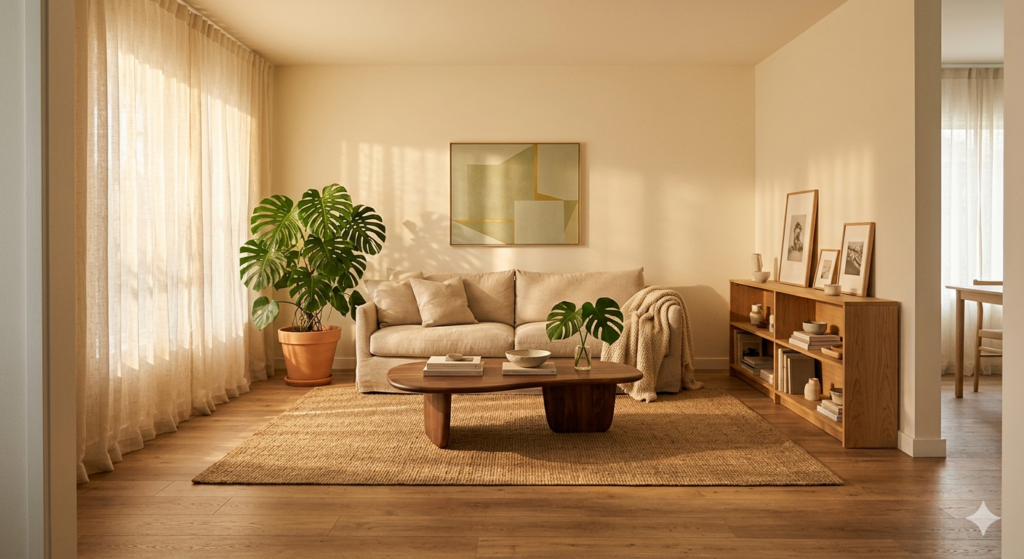
A modern living room, done well, is one of the most generous gifts you can give yourself — a space that holds you at the end of a long day, that quiets the noise, that reminds you that beautiful and functional are not opposites. The room you’ve been dreaming of isn’t as far away as it might feel right now. It begins with a single decision, a single rearrangement, a single beautiful object placed with intention.
So tell me — what’s the one thing in your living room right now that you’ve always wanted to change, but kept putting off?