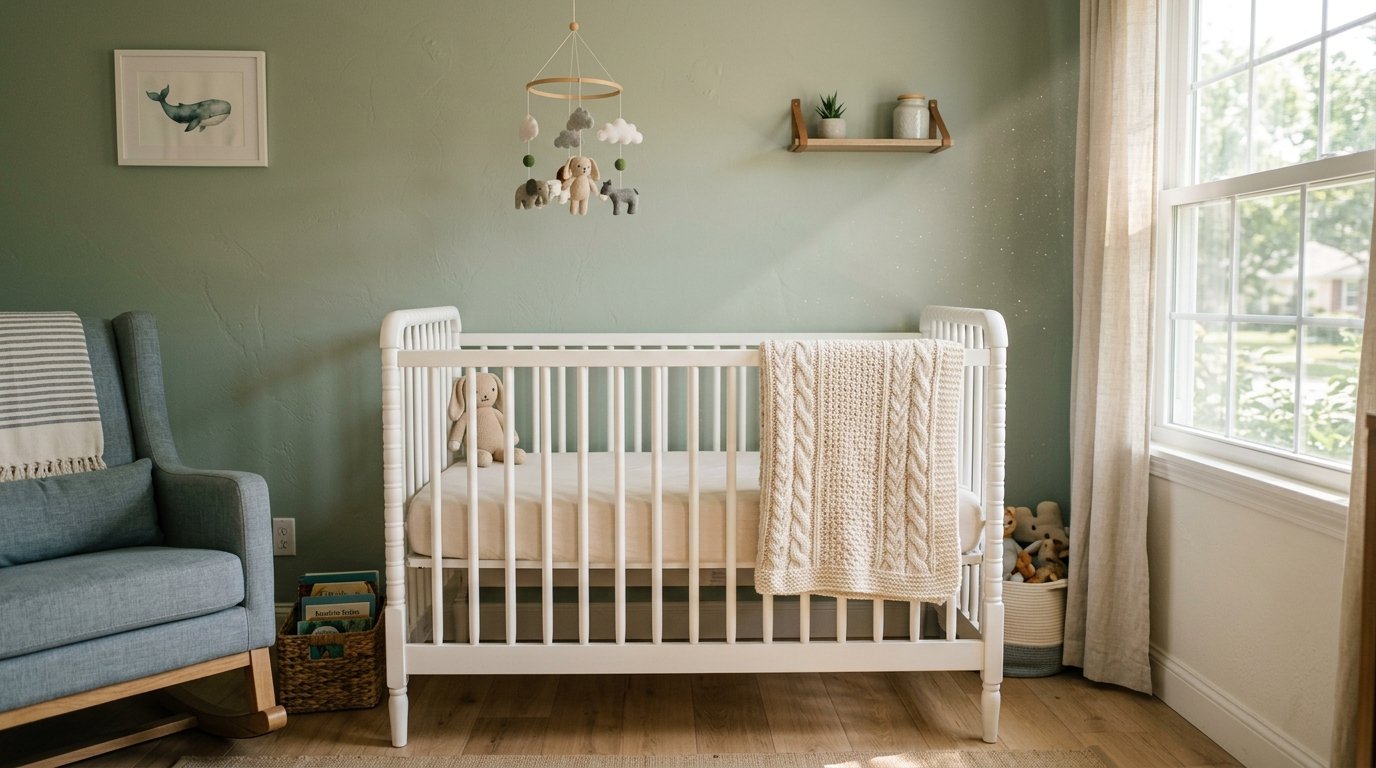
The Newborn Room Details Nobody Talks About (But Every Parent Gets Obsessed With)
My friend called me at 10pm on a Tuesday to ask whether she should paint the nursery walls sage or clay. Her baby was due in six weeks. She’d already ordered three rugs and returned two of them. And honestly? I completely understood.
There’s something about designing a newborn’s room that breaks your brain in the best possible way. It’s the one space where you’re decorating for a person who can’t tell you what they want, for a version of life you haven’t lived yet.
—
1. The Wall Color That Looks Wrong on the Swatch and Right on the Walls
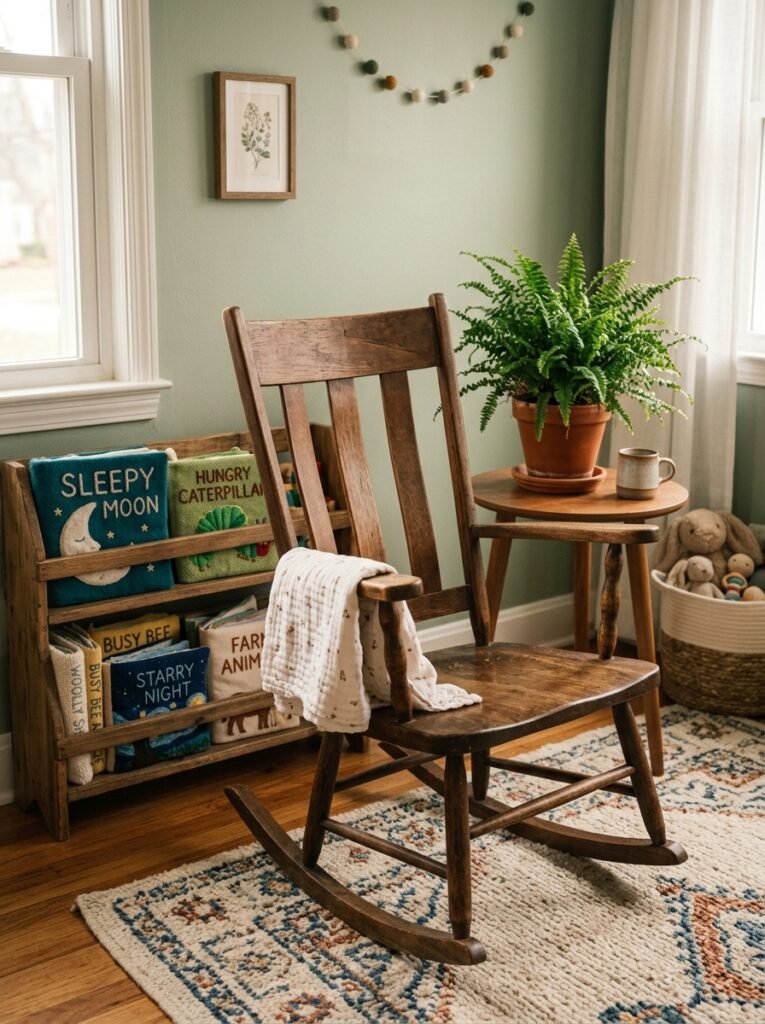
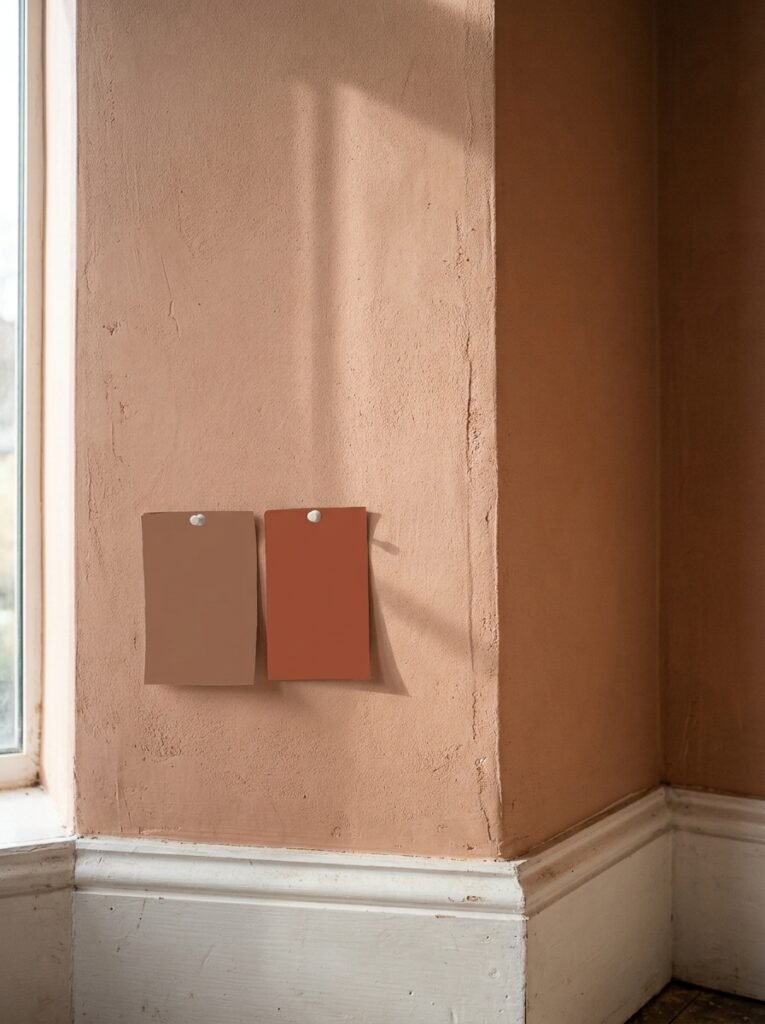
Here’s the thing nobody tells you: nursery wall colors behave differently than any other room in your house. Because most nurseries are smaller, with one window, the light in there is doing something specific all day long — softer in the morning, almost nonexistent by 3pm in winter, and then that strange warm shadow during the nighttime feed that becomes oddly precious.
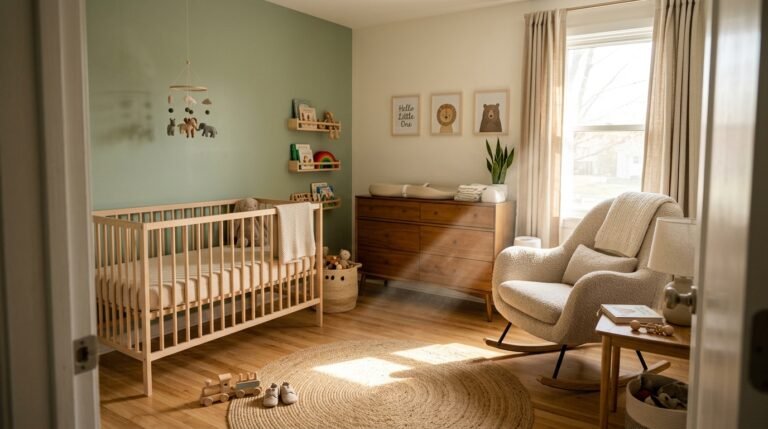
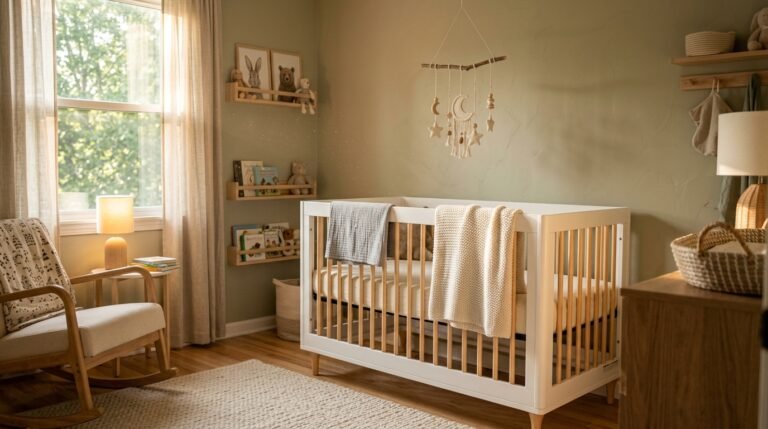
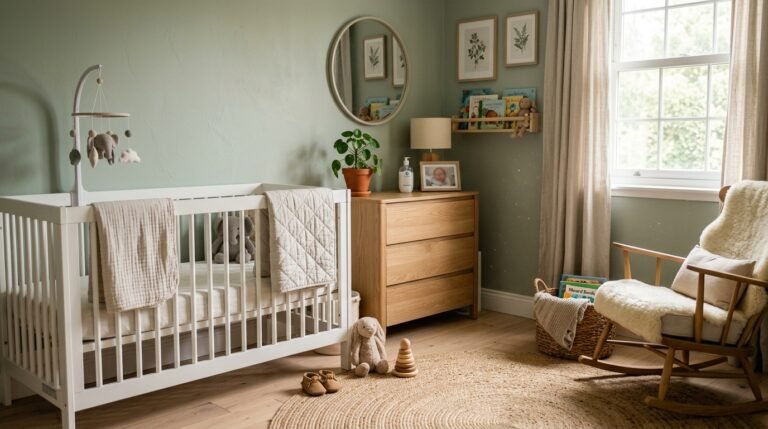
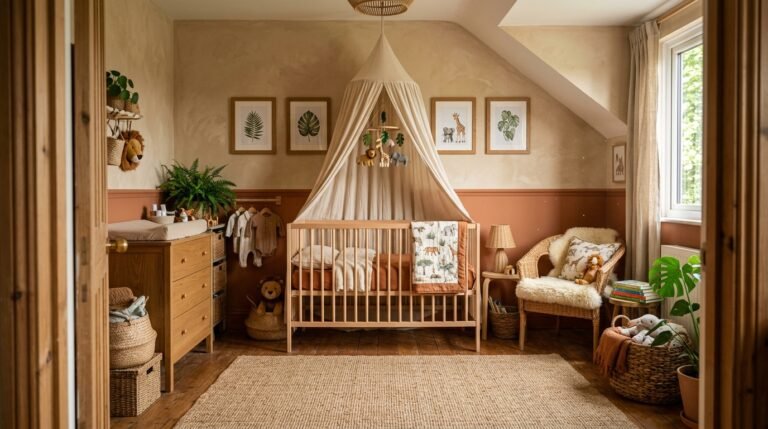
Pale clay reads beige on the swatch. On the wall, at 2am with a dim lamp on, it goes the softest terracotta. Sage, same story — on the swatch it looks almost gray, but in a north-facing room it pulls green in a way that feels like someone wrapped the whole room in linen.
Don’t paint in the daytime and judge it. Live with a large test patch for three days. Check it at night with whatever lamp you’re actually using. That’s the version your baby is going to know best anyway — because so much of those early weeks happens after dark.
“The color your baby sees most isn’t the bright midday version. It’s the lamp-lit 3am version. Design for that.”
2. Why So Many Nurseries Feel Wrong — and the Quiet Fix
There’s a reason some nurseries look gorgeous on Pinterest and feel a bit off in real life. It’s ceiling height, or rather, the lack of attention to it. We put all the design energy on the walls and the furniture and completely ignore the fact that a baby spends a lot of time on their back. Looking up.
A bare white ceiling with a cold overhead light fixture is genuinely the first thing your newborn is going to stare at for hours. Worth thinking about, right? A warm-toned ceiling paint — something barely-there cream or a very light warm gray — changes the entire feel of a room without anyone being able to pinpoint why. Add a simple, pretty pendant light with a fabric shade instead of a bare bulb or recessed light and you’ve basically solved it.
And if your room is small, painting the ceiling the same color as the walls is one of those design moves that sounds weird until you do it. Then it’s obvious. The room feels cocooned. Which is kind of exactly what you want.
3. The Furniture Trap That’s Very Easy to Fall Into
Everyone wants matching furniture sets. The cot, the dresser, the wardrobe, all in the same finish. It makes sense on paper. And then you put it all in the room and it looks like a showroom. A little cold. A little too coordinated.
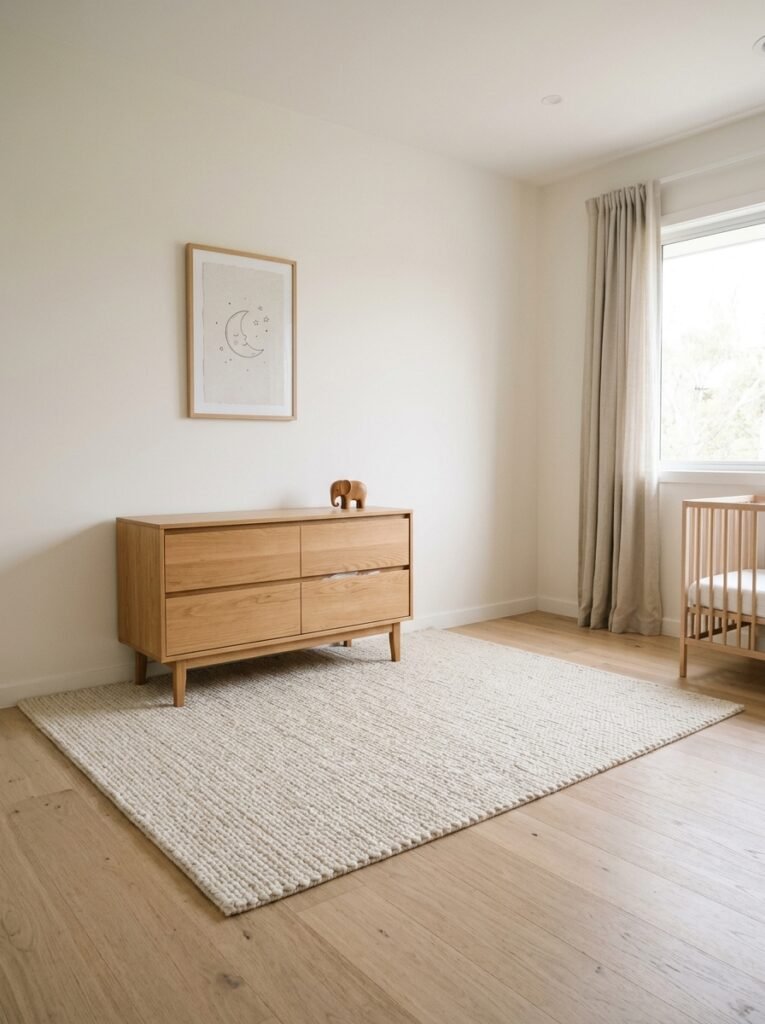
Mix the wood tones. Genuinely. A white-painted cot next to a warm oak dresser next to something with a darker stained finish — your eye doesn’t read this as chaos, it reads it as real. As lived-in. As a room that was actually thought about rather than clicked into a cart in one sitting.
The one piece worth spending proper money on: the nursing chair or glider. Not because of the aesthetics, though that matters too, but because you will spend an UNREAL number of hours in that chair. In the dark. While someone is eating very slowly. Get something with armrests at the right height and lumbar support you can actually feel. The color can be nice but the comfort is non-negotiable.
4. What “Soft Lighting” Actually Means in a Room You’ll Use at 3am
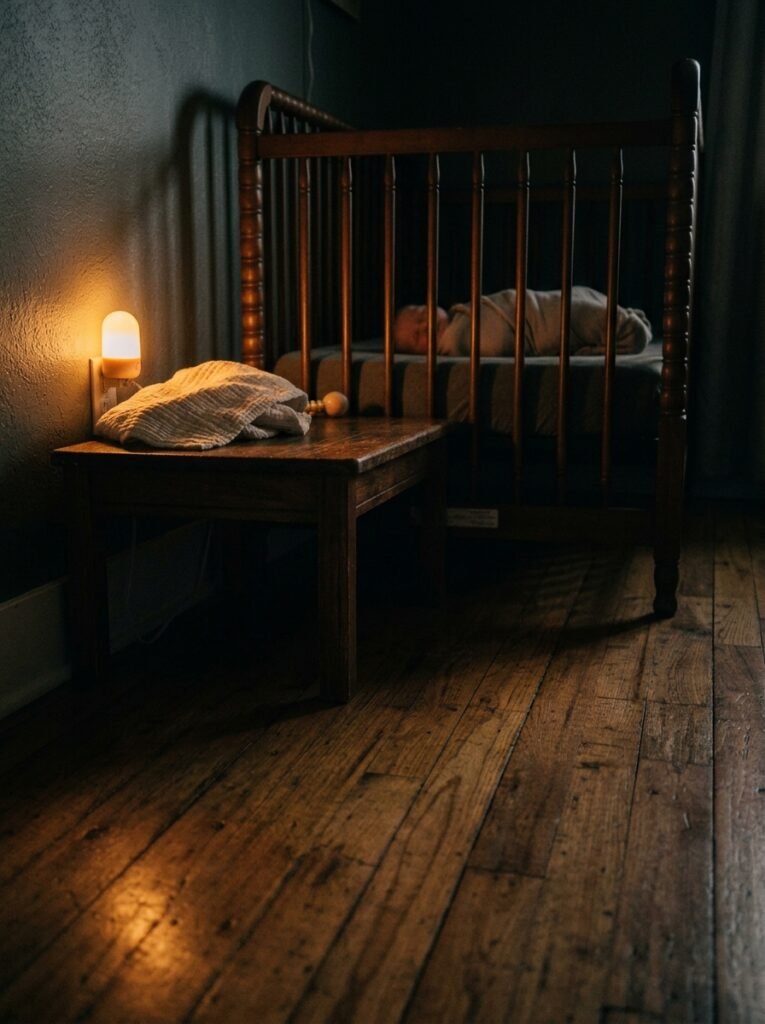
Okay, “soft lighting” is one of those phrases that gets thrown around like everyone knows what it means. But let me be specific about what actually works in a nursery.
You need at least three light sources in a newborn’s room. An overhead for actual daytime function — changing nappies, finding the dummy that rolled under the cot, seeing what you’re doing. A table lamp or wall-mounted lamp near the nursing chair that’s warm-toned and dimmable. And then something very low, almost floor-level or baseboard-level, for those middle-of-the-night moments when you don’t want to wake either of you up fully.
A plug-in nightlight in amber — not white, not blue, AMBER — near the floor is one of those things that sounds like a small detail and turns out to change your whole night. Blue light signals morning to the brain. Amber doesn’t. Your baby’s sleep cycles will thank you even if they can’t say so.
5. The Floor Decision Everyone Rushes and Then Regrets
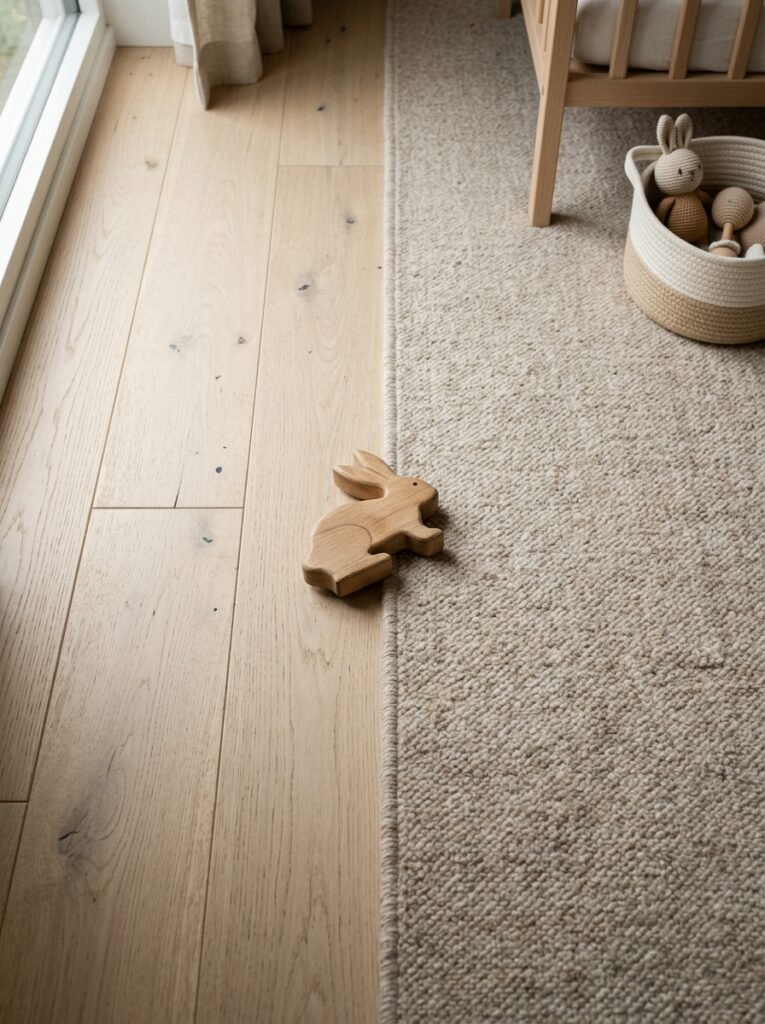
Carpet or hard floor? Everyone has opinions on this. Here’s mine, for what it’s worth.
Hard floors are easier to clean. Yes. But if you’re going to be sitting on the floor of that room — and you will, a lot, doing tummy time, playing, collapsing next to the cot at 4am because you’re too tired to walk back to your own room — hard floor is cold and unforgiving in a way that gets old fast.
A large, washable rug over hard floor is genuinely the best of both worlds. Not a decorative rug you love and will be devastated to ruin. A washable one. Some of them are surprisingly beautiful now, woven in muted natural tones, thick enough to sit on comfortably.
“Get a rug you won’t cry over when the nappy situation escalates. Because it will escalate.”
If you do have carpet already, honestly? Don’t stress about it. A good carpet in a nursery is actually lovely underfoot during night feeds. Just keep a small mat near the changing area for anything that might spill or splash — and something will.
6. The Smell of the Room (Which Nobody Puts on a Mood Board But Should)

This is the one nobody talks about and it’s low-key one of the most important things. Newborns have an extraordinary sense of smell — it’s one of their primary ways of recognizing their parents and feeling safe. But beyond what they smell, YOU are going to walk into this room hundreds of times, and the ambient smell of the space is going to get wired into your memory permanently.
Avoid fresh paint smell for as long as possible — paint a few weeks early if you can. Let it fully off-gas. Skip synthetic air fresheners entirely. What works: a very light natural candle in the room for a few minutes when you’re there and fully awake (never near the baby, obviously, and always extinguished before they’re in the room). Unscented or lightly scented drawer liners in the dresser. Clean, simple, barely-there.
Some parents swear by a small muslin cloth kept near where they sleep, then tucked near the baby in their sleep space so the baby can smell them. That’s not a design tip exactly, but side note — it WORKS.
7. Storage You’ll Actually Use vs. Storage That Just Looks Good on Instagram
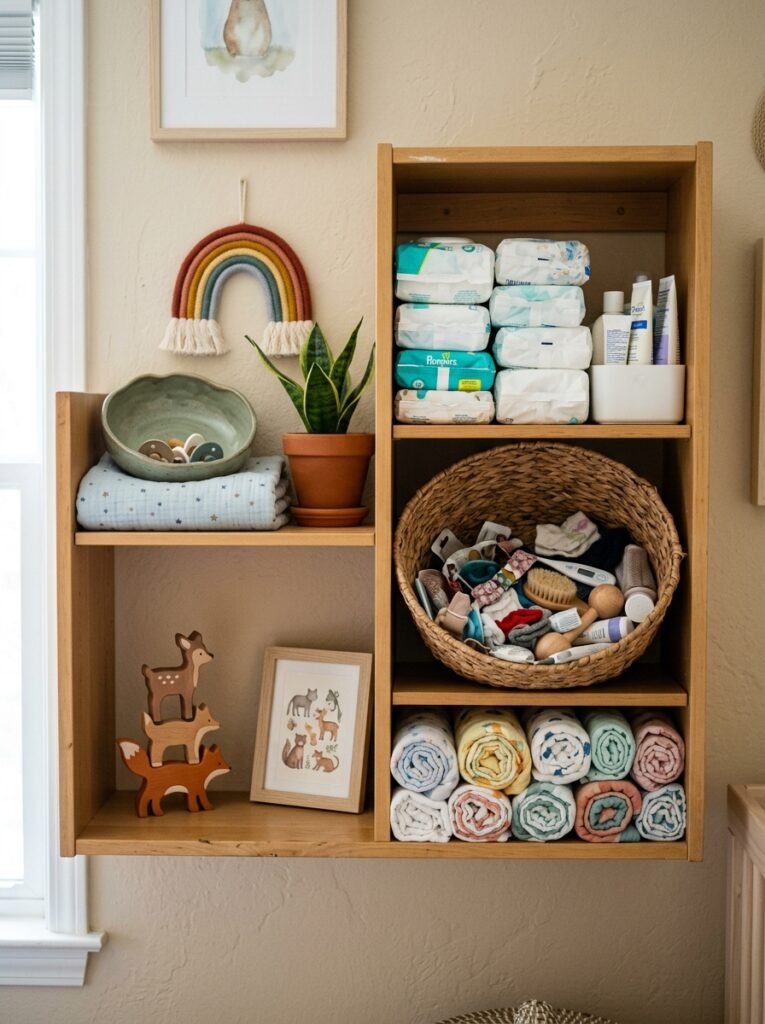
There’s a version of nursery storage that exists entirely for photos. Open shelves with perfectly arranged tiny shoes and color-coordinated board books and a little plant. And sure, that looks beautiful. It really does.
Then the baby arrives and you need eight thousand muslins accessible at three in the morning.
Real storage for a newborn room needs to be layered. Deep drawers for clothes sorted by size — because you’ll go through multiple sizes in the first six months and need to rotate easily. A dedicated changing station with a flat surface, a waterproof mat, and everything within arm’s reach because you will NEVER be able to step away, not even for a second. A bin or laundry basket that’s open-top and right there, not across the room.
The decorative stuff can happen on a higher shelf where you want it. But the functional layer has to be sorted first. Get that wrong and all the beautiful styling in the world won’t save you.
8. The One Textile Choice That Changes the Whole Room
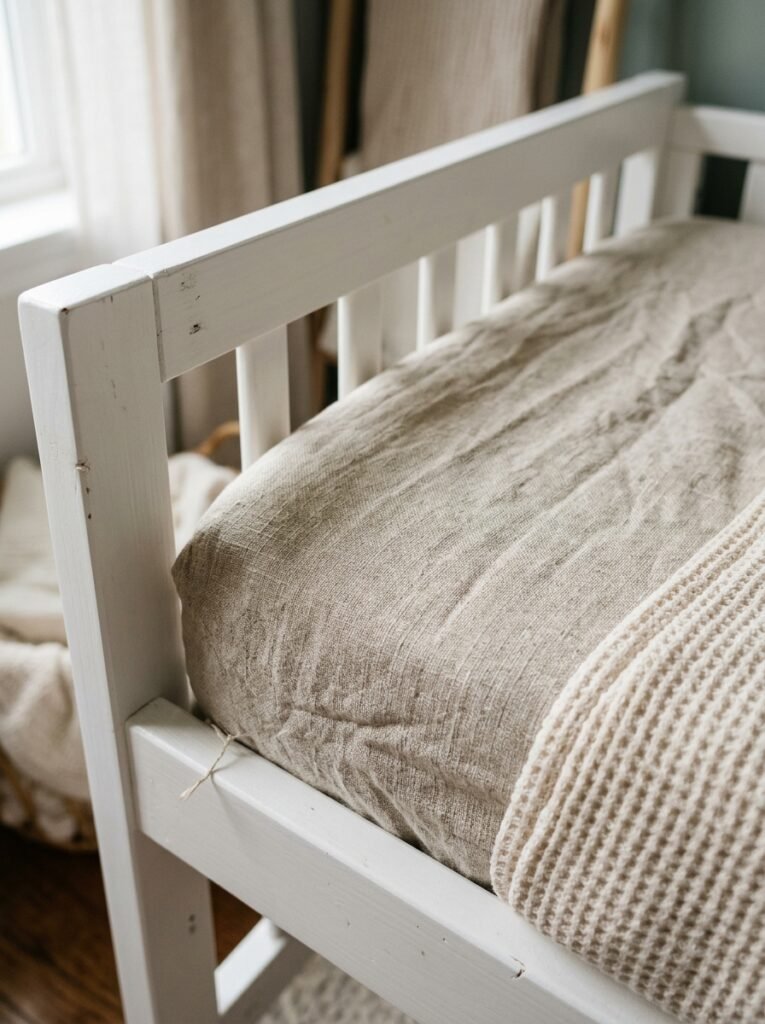
If there’s one thing in a nursery that carries more visual weight than anything else, it’s the window treatment. And most people either ignore it completely (white blinds, done) or over-do it with blackout curtains that are fine but boring.
Here’s what I’d push you toward: a soft, unlined cotton or linen curtain in a tone that’s slightly warmer than the wall, with a proper blackout blind fitted behind it. You get the softness and the movement and the beautiful light during the day, and actual darkness for naps and night.
Sheer curtains over a blackout roller? Underrated. The diffused light during daytime naps is gentler, the room still feels beautiful, and the full blackout is there when you need it. It’s one of those combinations that feels like a lot but takes up less visual space than heavy curtains.
9. The Gallery Wall vs. One Big Piece Argument (I Have a Take)
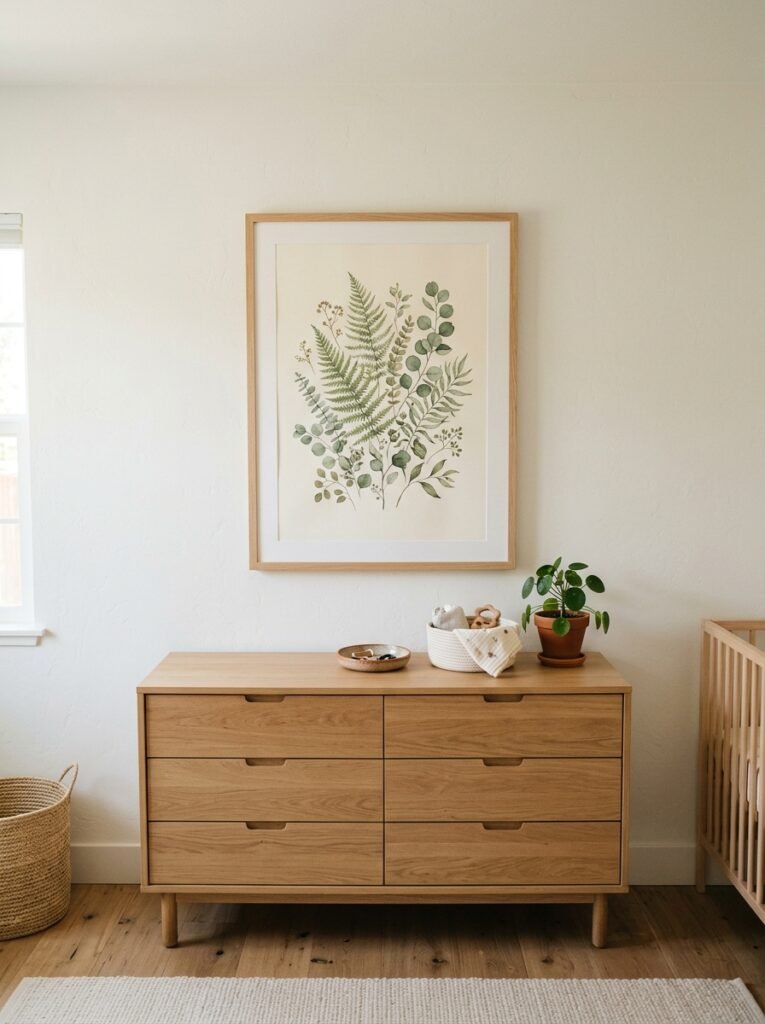
Gallery walls in nurseries look beautiful in planning. Lots of sweet little prints, mix of frames, a bit of whimsy. Then you’re hammering at 32 weeks pregnant or wrangling a toddler while trying to get things level.
One big piece. That’s my vote. One really good-sized print or painting above the cot — something with color you genuinely love, not just something that “goes with” the room. Something you’d frame anywhere in your house.
The cot wall is the backdrop for most of your newborn photos anyway. You’ll look at that wall in hundreds of pictures. Make it count.
“The cot wall is the backdrop for most of your newborn photos. Make it something worth looking at a thousand times.”
A few smaller things elsewhere — a small framed piece on the dresser, something on a floating shelf — but the main wall: one statement. Simple. And you can hang it with exactly two holes.
10. Why the “Neutral Baby Room” Trend Isn’t Actually Neutral
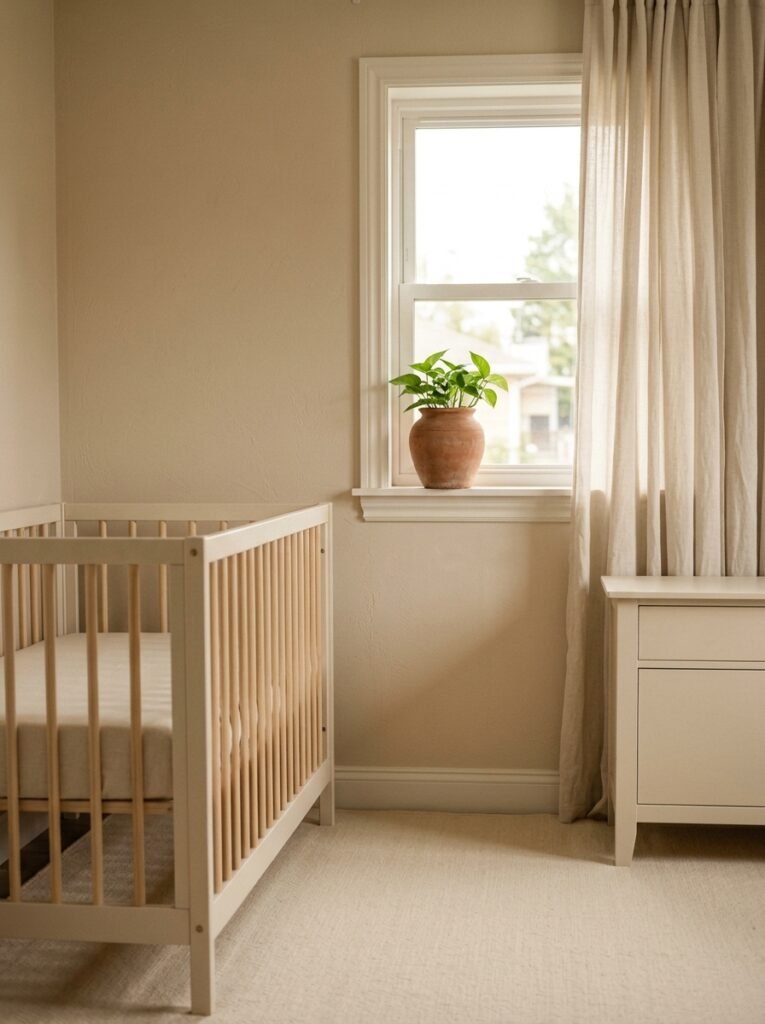
The all-neutral nursery — white, cream, natural wood, linen — is everywhere right now. And I love it, I do. But let me say something slightly unpopular.
Babies can see high contrast from birth. Black and white patterns. Bold shapes. The neutral, serene aesthetic you’re creating is partially for the baby and mostly for the parents. Which is completely valid — you’re the one living in that room too, your wellbeing matters.
But if you can work in some genuine contrast somewhere — a black-framed mobile above the cot, a bold graphic print on one shelf, a dark throw folded over the chair — you’re giving a newborn’s developing vision something to actually work with. You can do both. Calm room, one or two high-contrast moments. They’re not at odds.
11. The Temperature Thing That Sounds Fussy But Isn’t

Room temperature for a newborn is one of those things that sounds like boring safety advice but genuinely affects everything — how they sleep, how you sleep, whether you’re constantly rewrapping or stripping layers at 2am.
The guidance for both US and UK parents is typically around 68°F (20°C) as a target. Not a rule carved in stone, but a useful anchor. The practical design tip here is ventilation. A room that looks gorgeous but is poorly ventilated gets stuffy fast, especially in a small space with a warm little body in it.
If you can, position the cot away from both the radiator or heat vent AND the window draft. The middle ground is the right ground. And if you don’t have a way to monitor the room temperature, a simple digital thermometer on the dresser — nothing fancy — is one of the most useful things in the room. Honestly.
12. The Last Thing You Put in the Room Should Be Something Just for You
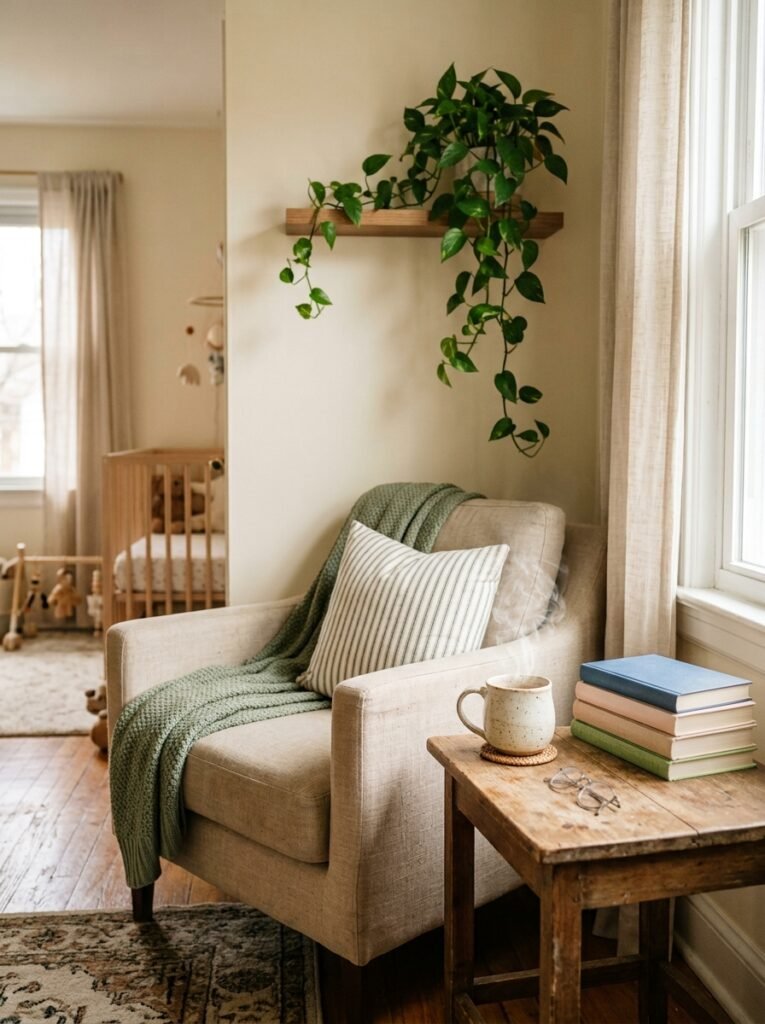
This sounds sentimental, I know. But hear me out.
When you’ve done all the practical things — the storage, the lighting, the blackout blind, the washable rug — add one thing that has nothing to do with function and everything to do with how you want to feel in that room. A framed photo of someone you love. A small piece of art you’ve had for years that just somehow felt right in there. A plant you actually like (a trailing pothos on a high shelf is very hard to kill and looks genuinely lovely). Something that means something to you.
Because you’re going to spend a lot of time in this room. Late nights, early mornings, quiet moments that you’ll remember for the rest of your life. The room should feel like YOURS a little bit too. Not just designed for someone else’s arrival.
That one personal thing? It makes the room feel ready in a way that no furniture set can.
—
❓ FAQ
Q: What’s the best paint finish for a nursery? A: Eggshell or satin — not flat. Flat paint is beautiful but you can’t wipe it down, and the wall near the changing area WILL need wiping down. An eggshell gives you that soft, not-too-shiny finish with actual washability.
Q: Do I really need blackout curtains for a newborn? A: For daytime naps, genuinely yes. Newborns don’t have a developed circadian rhythm yet and a darker room helps reinforce the difference between day sleep and night sleep over time. Full blackout isn’t always necessary but it’s rarely the wrong call.
Q: How far in advance should I have the nursery ready? A: Most people aim for six to eight weeks before the due date. That gives you time to live with the space, swap anything that doesn’t feel right, wash all the textiles, and let any paint or new furniture off-gas fully. Don’t leave it to the last two weeks — you won’t have the energy and you’ll panic-buy things you don’t love.
—
💭 Final Thoughts
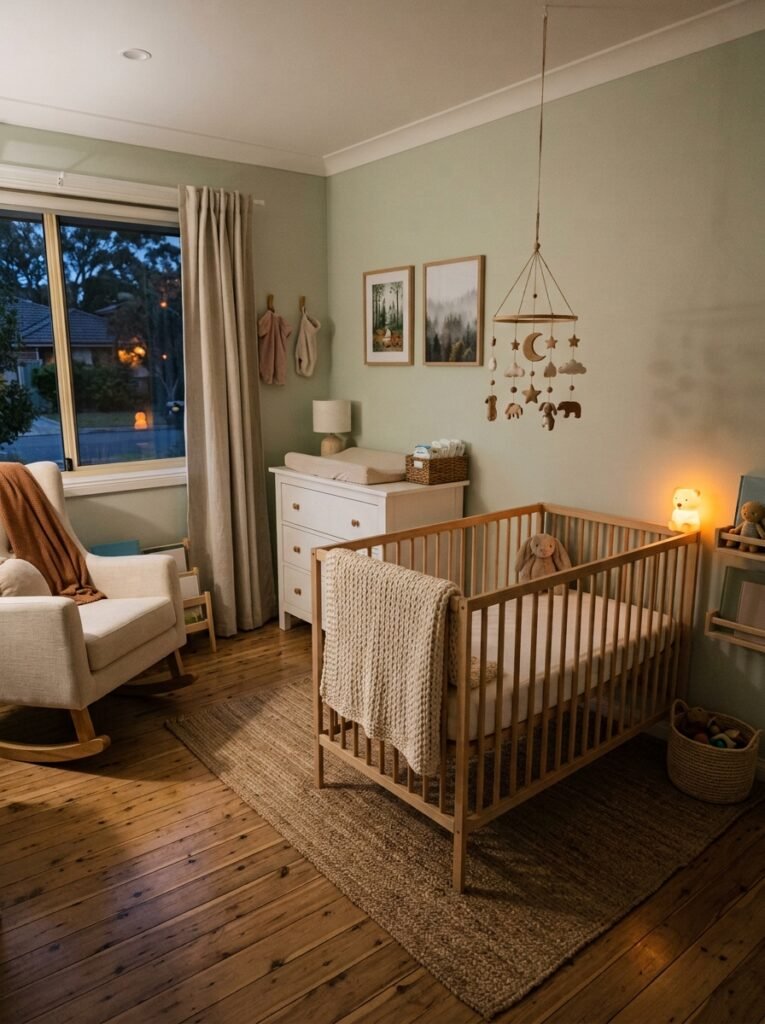
The most beautiful nursery I’ve ever seen had mismatched furniture, a well-loved rocking chair, and a drawing a five-year-old did of their new sibling, framed and hung slightly crooked above the dresser. None of it was styled. All of it was right. You’re not decorating for a magazine shoot — you’re making a room for the most significant arrival of your life. Get the light right, get the storage working, and then make it feel like home. The rest will take care of itself. What’s the one detail you keep going back to, the thing you can’t quite decide on?