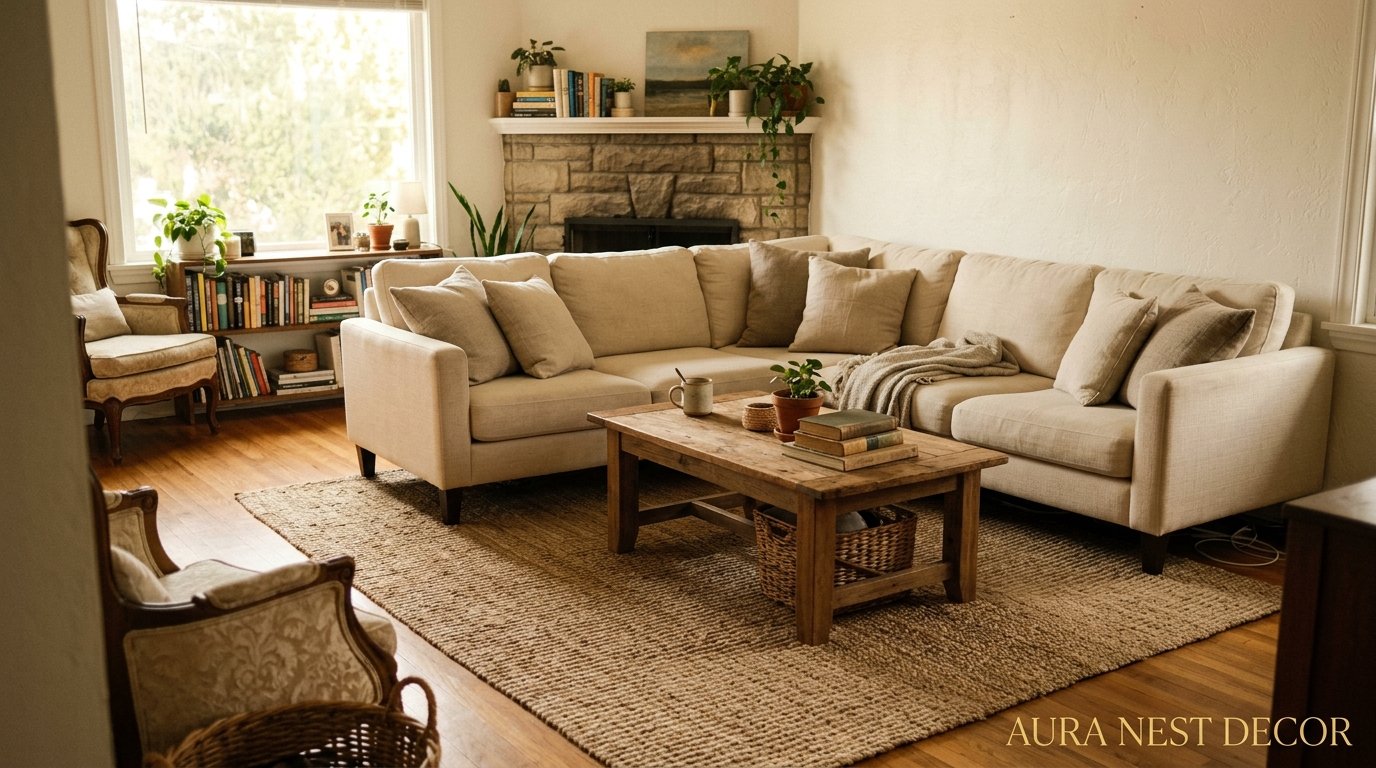
The Rug Size Mistake That’s Making Your Living Room Look Smaller (And How to Fix It)
You picked a beautiful rug. Neutral tones, gorgeous texture, maybe a little fringe. And somehow the room still feels… off. Like something’s floating when it shouldn’t be. Nine times out of ten, it’s not the rug — it’s the size.
—
1. Why Everyone Keeps Buying Rugs That Are Way Too Small
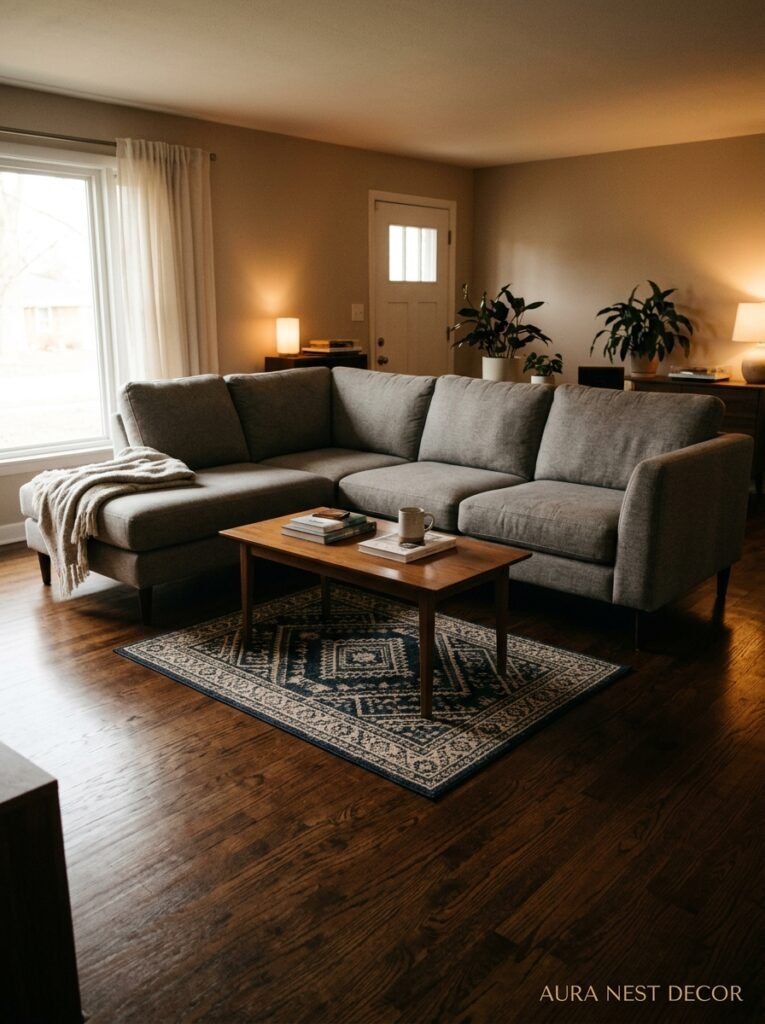
This is the single most common living room mistake I see on Pinterest, in home tours, in real houses I visit. A rug that’s basically the size of a welcome mat, sitting politely under a coffee table while all the furniture looms around it like strangers at a party. It looks lost. Timid. Like the room is apologizing for itself.
Here’s what happens: you’re standing in a rug shop (or scrolling online, which is honestly worse for sizing) and a 5×8 looks big. It IS big. It’s a big rug! But then you get it home and your sofa eats it alive and the whole thing looks like a postage stamp on your floor.
The reason it happens is that we don’t instinctively account for how much floor a sofa actually commands. A standard three-seat sofa is often 84–90 inches wide. Add your armchairs, your coffee table, the space you actually walk through — and suddenly a 5×8 isn’t even covering the footprint of your seating arrangement, let alone anchoring it.
So. Start bigger than you think you need. That’s the first rule, the only rule that matters before any of the other rules, and I know everyone says it but almost nobody actually listens.
“A rug that’s too small doesn’t just look wrong — it makes the whole room feel accidental.”
2. The Three Sizes You’ll Actually See and What They’re Each For
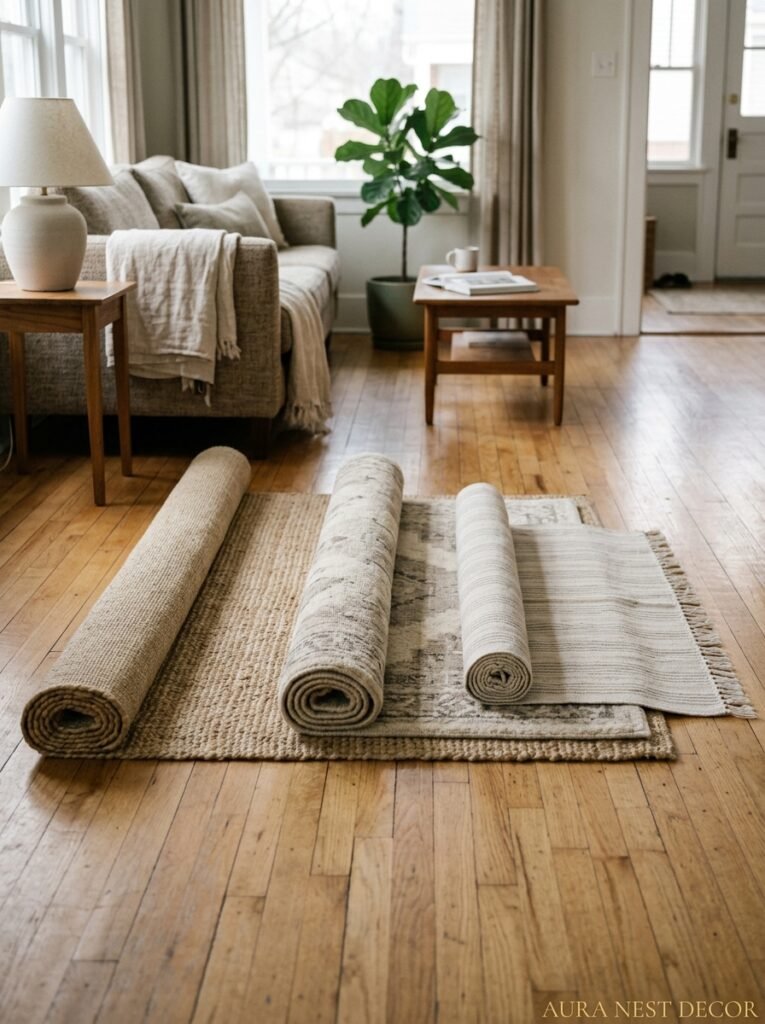
Let’s just be practical about this for a second. Most rugs come in a handful of standard sizes, and they’re not interchangeable. A 5×8 is not a smaller version of an 8×10. They do completely different jobs.
5×8 (or 160x230cm in the UK) — This works in a small living room where your sofa is more of a loveseat situation, or in an apartment where the whole living zone is compact. Front legs of the sofa on, back legs off. That’s how you make it work. If ALL legs are off, the room will look wrong, I promise.
8×10 (or 200x290cm) — This is the sweet spot most people should be buying. Front legs of every major piece of furniture sit on the rug. The coffee table is fully on it. There’s about 18 inches of bare floor between the edge of the rug and the wall, which is the exact amount that makes a room look intentional rather than accidental.
9×12 (or 230x300cm) — This is for big rooms. Proper big. If you have a sofa AND two armchairs AND a sectional and they’re all in conversation with each other across a large space, this is your size. All legs on. Full commitment.
The in-between sizes — 6×9, 7×10 — exist and can work, but they’re awkward to shop for and harder to get right. Stick to the standards when you can.
3. The “All Legs On vs. Front Legs On” Debate, Settled
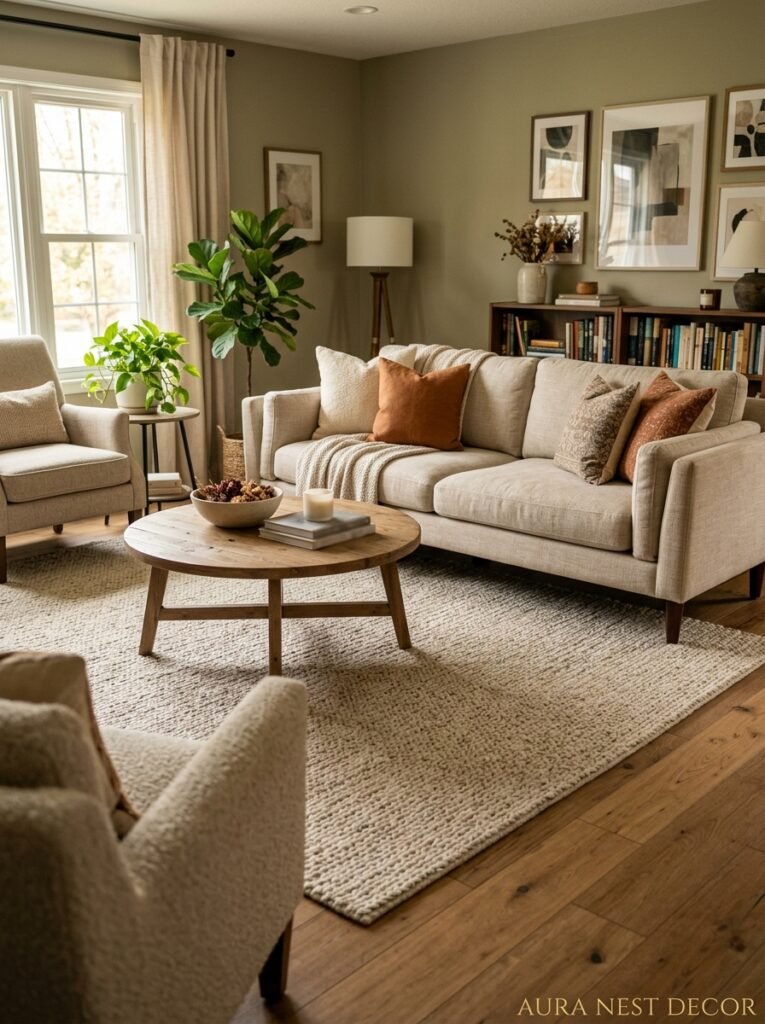
Okay so there’s this ongoing argument in the interior design world about whether all furniture legs should sit on the rug or just the front ones. And I’m going to give you a real answer rather than the cop-out “both work!” answer.
Front legs on is MORE forgiving. It connects furniture to the rug without requiring a giant rug to cover the full footprint of every single piece. For most normal-sized living rooms, this is what you should be aiming for. The front two legs of your sofa rest on the rug. Same with your armchairs, if you have them. The coffee table is fully on the rug. Everything feels visually connected.
All legs on is more dramatic and more expensive because you need a MUCH bigger rug to pull it off. We’re talking 9×12 minimum for most rooms. But when it’s done right? Stunning. The whole seating arrangement looks like it belongs together, like the furniture was designed to live in that exact configuration.
What actually doesn’t work — the combination that makes rooms look confused — is having SOME furniture with front legs on and one random armchair with NO legs on. Or a coffee table that’s half on and half off. Commit. Pick a placement rule and apply it consistently to every piece.
4. The Measurement You Need to Take Before You Buy Anything
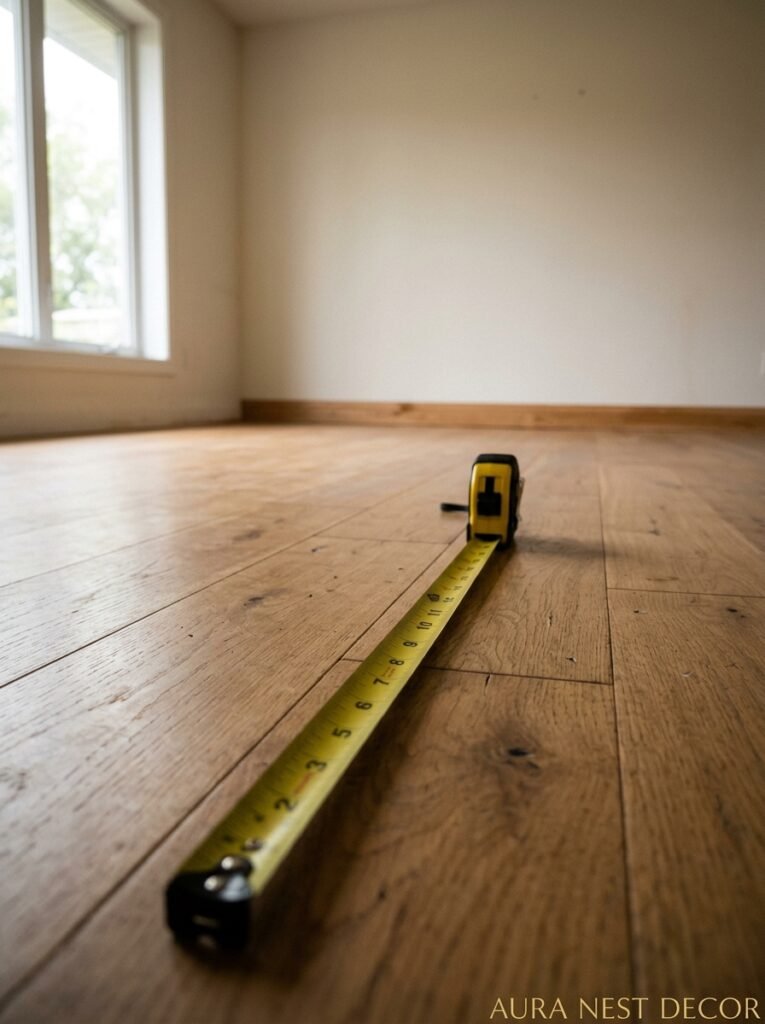
I cannot stress this enough. Get off Pinterest for five minutes and go get a tape measure.
The number you’re looking for isn’t the overall room dimensions — it’s the footprint of your seating arrangement. Measure from the outside edge of one sofa arm to the outside edge of the opposite armchair. Then measure front to back, from the front of your sofa to the back of whatever sits across from it. Write those numbers down.
Your rug should ideally be at LEAST as wide as the widest piece of furniture in your arrangement, and long enough that front legs of seating on all sides can rest on it comfortably. Add about 12-18 inches beyond that in all directions and you’re landing in the right zone.
In the UK, a lot of older terraced and semi-detached homes have living rooms that run long and narrow — sometimes only 11 or 12 feet wide. For these rooms, a standard American 8×10 might actually be TOO wide and crowd the walls. A runner-style or 6×9 can work better here, oriented lengthwise down the room. Don’t force American proportions into a Victorian layout and wonder why it doesn’t feel right.
“Measure your furniture arrangement, not just your floor — those are two completely different numbers.”
5. How Rug Shape Can Actually Fix a Weird-Shaped Room
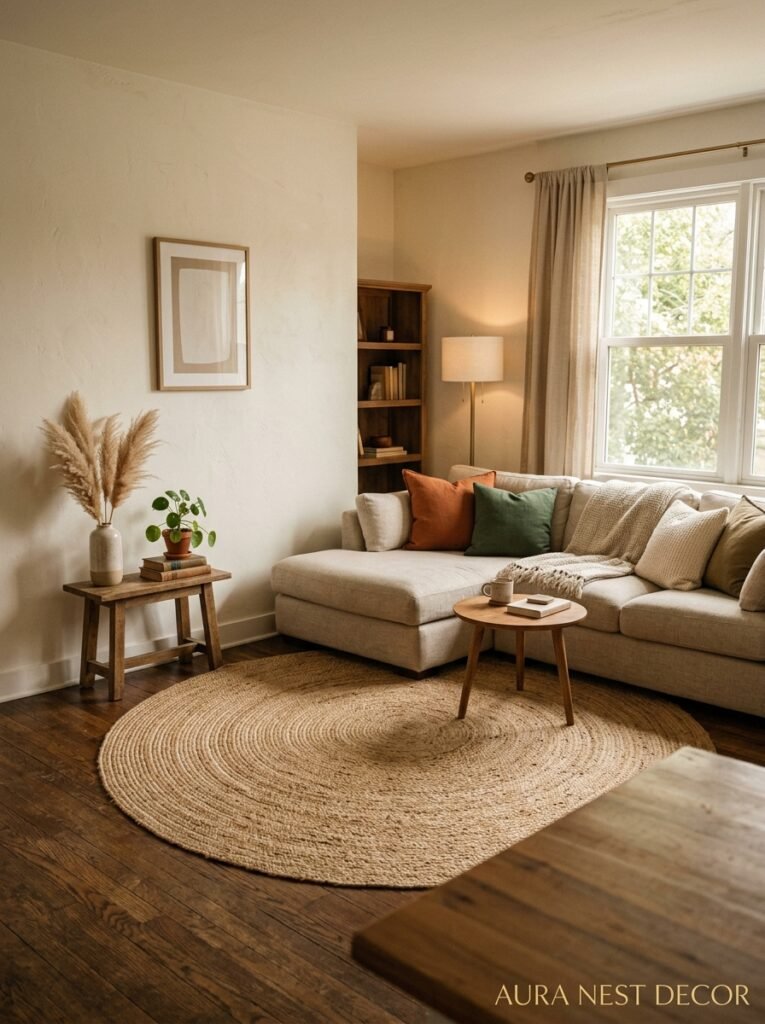
Everyone goes straight for rectangle. Which is fine! Rectangle is reliable. But shape is doing work in a room, and ignoring it is leaving a tool on the table.
Round rugs are having a serious moment right now and honestly they deserve it. A round rug in a square room creates instant softness. It breaks up the boxy feeling that some modern living rooms have, especially in newer builds. If you’ve got a square room where the furniture is pushed back around the edges and the center feels empty, a big round rug — we’re talking 8 feet in diameter minimum — changes the whole energy. It pulls you toward the center. It makes the room feel curated rather than just furnished.
For long, narrow rooms (I see you, classic UK terrace house), a rectangular rug placed lengthwise is your friend. Don’t put it crosswise just because that’s how you’ve always seen rugs laid. Orient it the direction the room moves and everything will breathe better.
Oval rugs are sort of underrated, honestly. They have the softness of a round rug but with the directionality of a rectangle. A 6×9 oval can work in spaces that are too small for a big rectangle but too long for a true circle. Worth considering.
6. The Color and Pattern Rules Nobody Actually Tells You About
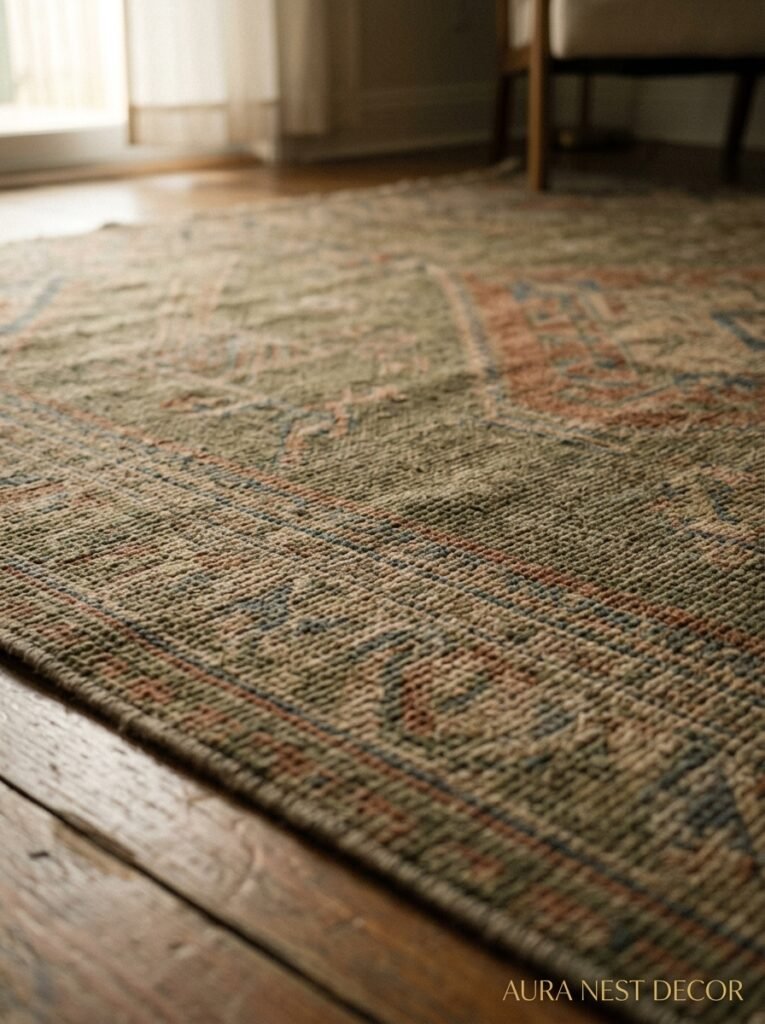
Okay this isn’t strictly a sizing issue, but since you’re already measuring and reconsidering, let’s talk pattern scale because it’s connected.
A bold geometric pattern on a rug makes the rug look SMALLER than it is. No, really. Strong contrast and tight patterns draw the eye inward and make a rug read as smaller and busier than it actually measures. If you’ve got a 8×10 in a strong black-and-white geometric and the room still looks small, this might be why.
A large, low-contrast pattern or a solid rug does the opposite — it reads as larger, more expansive, the way a monochrome outfit makes your legs look longer. So if you’re working with a smaller room where you genuinely cannot fit a big rug, a soft, low-contrast rug in a light tone will do more heavy lifting than a busy pattern.
Side note — and this is just my opinion, take it or leave it — warm-toned rugs make a room feel more inviting in ways that cool-toned rugs just don’t, especially in evening light. A cream rug under warm bulbs looks like caramel and honey. A grey rug under the same bulbs can look a bit cold. Something to think about when you’re choosing.
7. What the 18-Inch Rule Is and Why It Actually Matters
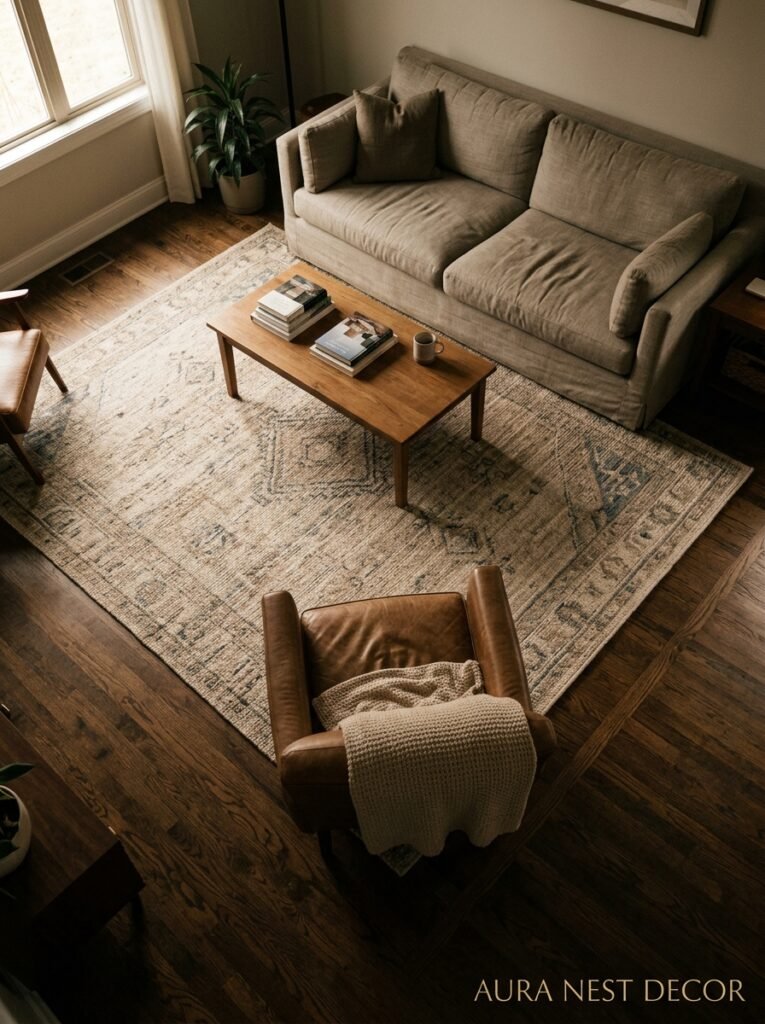
I mentioned this briefly but it deserves its own proper explanation because once you know it you’ll see it everywhere.
The rule is: leave 18 inches of bare floor between the edge of your rug and the wall. That border of exposed floor is what makes the rug look like a design choice instead of wall-to-wall carpeting that ran out of budget. Too little border (like 6 or 8 inches) and the rug looks like it’s straining to reach the walls. TOO much border — say, 3 feet of bare floor on each side — and the rug looks lonely and small.
Eighteen inches. That number gets thrown around a lot but it’s genuinely reliable. In UK living rooms where the space might be slightly smaller, you can get away with 12 inches. Less than that and you’re in awkward territory.
There are exceptions. In very large, open-plan living rooms — the kind you see in new-build American homes or open-concept conversions — you might want 24 inches of border so the rug doesn’t feel like it’s crowding the walls. The point is the border should feel balanced and deliberate. You should look at it and think “yes, that’s exactly where that should stop,” not “was that where they wanted it to end?”
“That strip of bare floor around your rug isn’t empty space — it’s the frame that makes the whole thing work.”
8. The Sectional Sofa Problem (Because It’s Different)
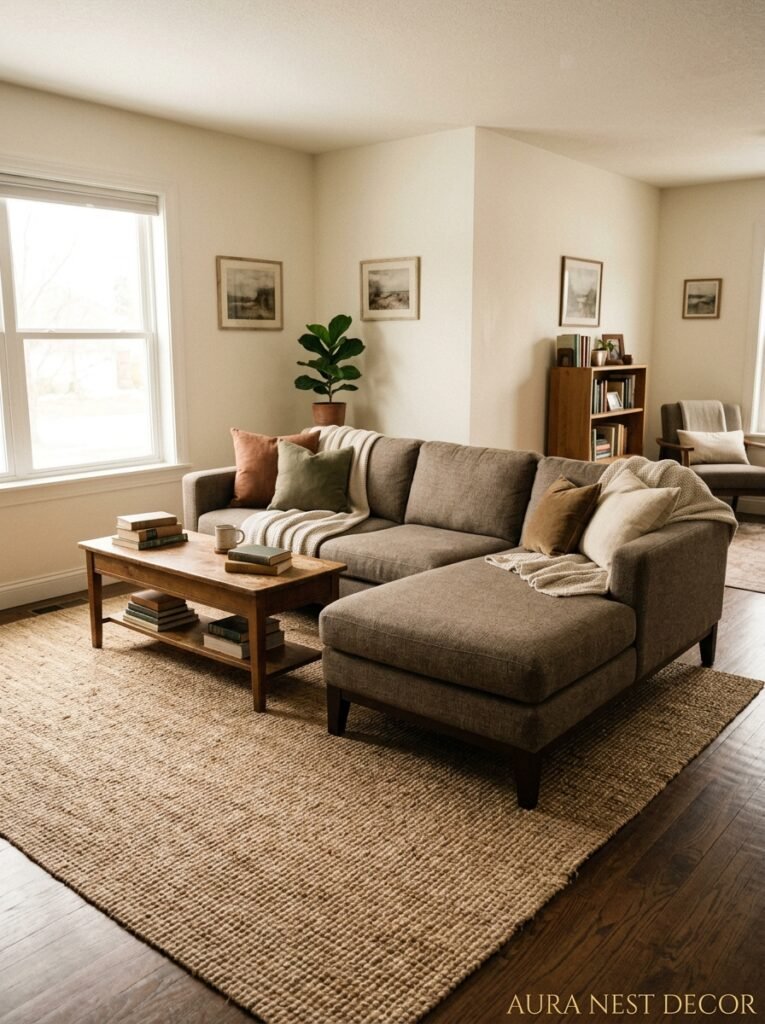
Sectionals break all the normal rules and I want to talk about it because they’re everywhere right now — in the US especially, a big L-shaped sectional is basically the default living room setup in any home built after 2005.
The issue is that an L-shaped sectional has a weird, asymmetric footprint. A rectangular rug placed under it almost always hangs off in one direction or doesn’t reach far enough in another. And because sectionals are usually very large, you think you need a correspondingly giant rug when actually the approach is different.
For a sectional, what you want is to have the rug sit under the LONGER part of the L, with the front legs of the longer section resting on it and the full coffee table on it. The shorter return piece of the L doesn’t need to be on the rug — it defines the corner of the arrangement, which is enough visual anchoring. This usually means a 9×12 works better than trying to go even bigger.
Or — and I love this approach — put a large round rug in the open corner of the L. It fills that empty interior space beautifully and you don’t have to fight the asymmetry at all.
9. Budget Reality Check: When the “Right Size” Costs More Than You Have
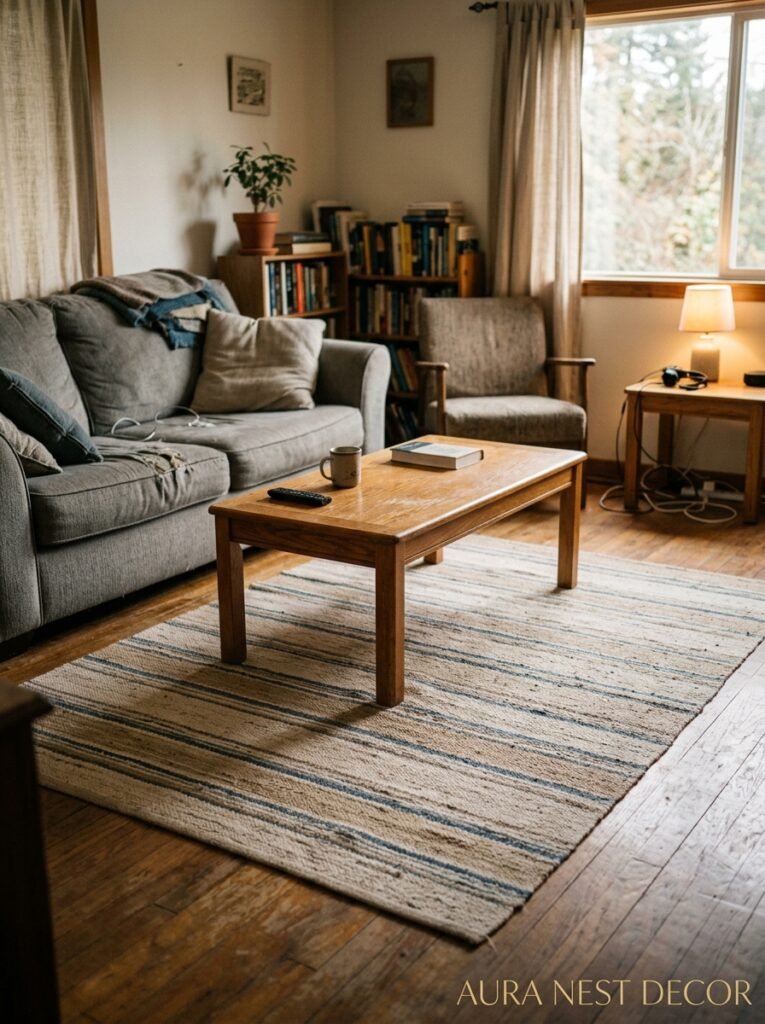
Let’s be honest. A quality 9×12 rug can cost anywhere from $400 to genuinely ridiculous money. And sometimes your room needs a 9×12 but your budget is solidly 5×8 territory. What do you do?
First option: wait. I mean it. A too-small rug is worse than no rug. I’ve lived with bare floors for months while saving up for the right size and the room looked MORE intentional than when I had a sad little 5×7 trying to anchor a large sofa.
Second option: layered rugs. A large natural-fiber rug (jute, sisal, seagrass) in the right size is usually much cheaper than a patterned or plush rug of the same dimensions. Buy the jute layer as your base, then layer a smaller, prettier rug on top. You get the visual footprint of a large rug with the style of a smaller one. It’s a proper design trick, not a cheat.
Third option: consider IKEA’s Stockholm or Persisk rugs — they actually come in large sizes at relatively reasonable prices. Not a sponsorship, just reality. And in the UK, John Lewis often runs sales on their rug range that make larger sizes accessible.
10. Apartment Living and the Specific Grief of Open-Plan Spaces
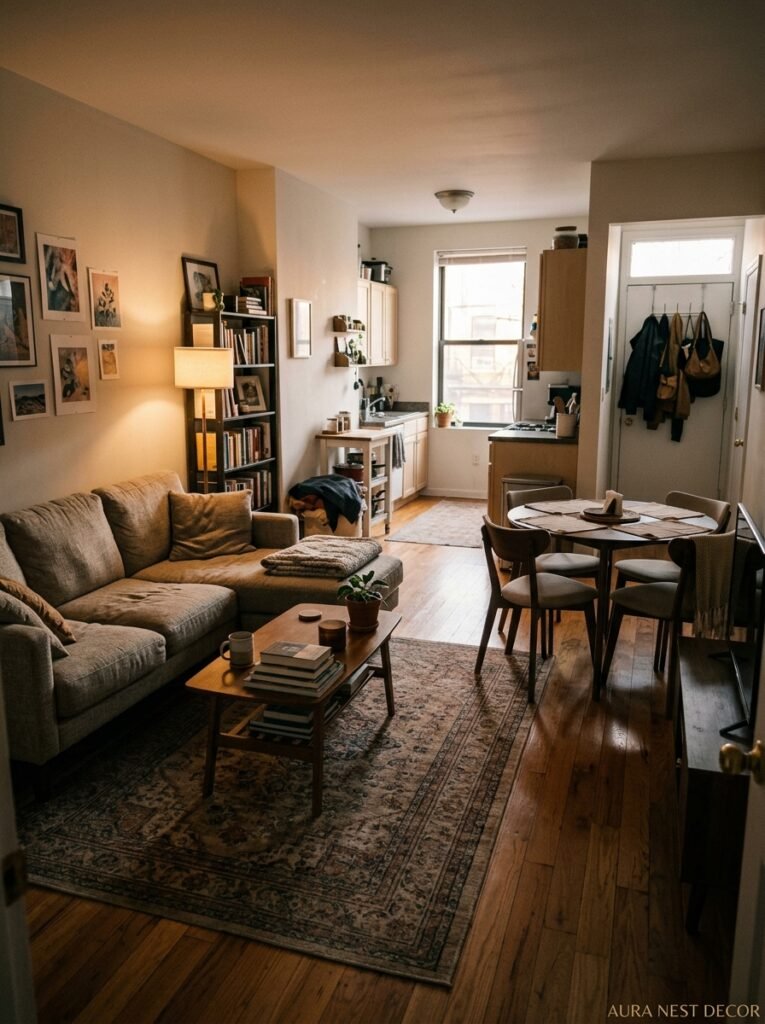
Open-plan living rooms — where the living area, dining area, and sometimes kitchen all flow into one big space — are a different challenge entirely. And they’re everywhere, both in American apartment buildings and in UK flat conversions.
The mistake here is treating the whole space as one rug zone. It’s not. Each zone — living, dining — needs its own rug. Two separate rugs define two separate areas within the open space and actually make the whole floor plan feel more organized. It’s weirdly counterintuitive, because you’d think more rugs would mean more visual clutter, but it does the opposite.
Keep the rugs in the same color family or at least the same tonal range so they talk to each other. You don’t want one warm-toned Moroccan-style rug in the living zone and a cool grey flatweave in the dining zone — they’ll fight each other all day long.
For studio apartments specifically — like, a genuinely tiny studio — a single large rug that covers most of the main living area actually makes the space feel bigger by creating visual continuity. Counterintuitive again, but true.
11. The Rug Pad Thing (Please Don’t Skip This Section)
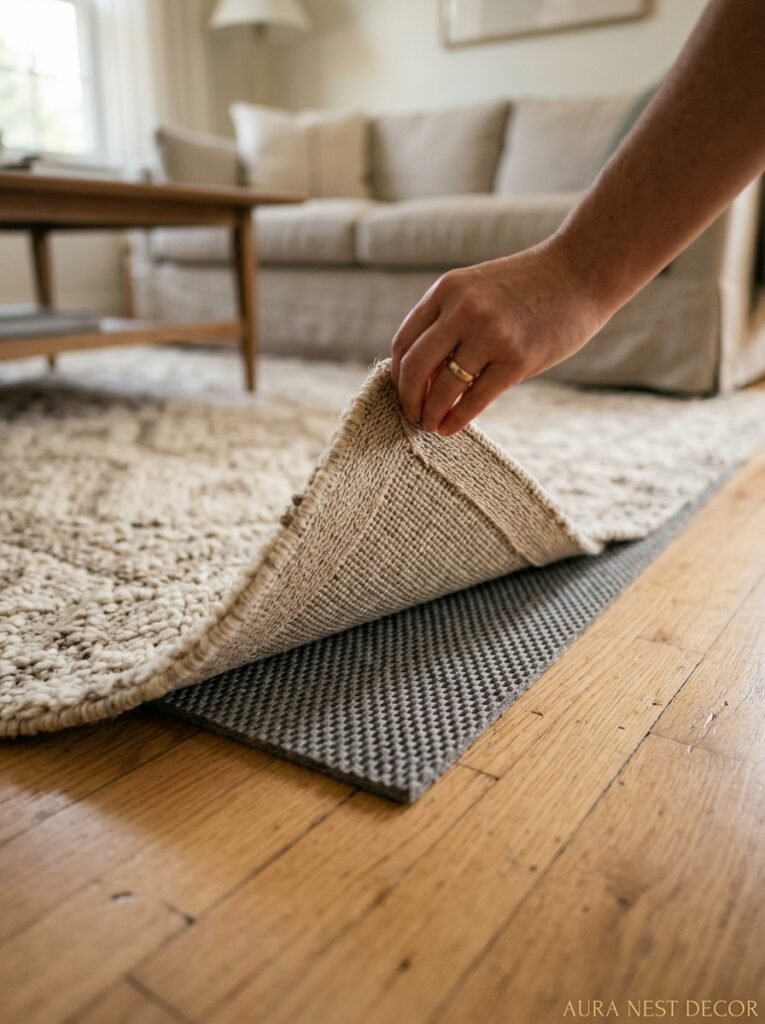
Everyone skips this. Don’t skip this.
A rug pad does three things: it stops the rug sliding (a safety issue, especially on hardwood), it adds cushion underfoot, and — this is the part nobody talks about — it makes the rug look BETTER because it lifts it slightly and gives it a more substantial, expensive feeling.
Get a rug pad that’s about 2 inches smaller on all sides than your rug so it doesn’t peek out. On hardwood floors, a felt-and-rubber combination pad is ideal. On carpet, a rubber or grip pad alone is fine — you don’t need the extra cushion since the carpet already provides it.
In the UK, where old houses often have original floorboards that can be uneven, a thicker felt pad can genuinely smooth out the feel underfoot and prevent the rug from buckling in weird ways. Proper useful bit of kit, honestly.
12. How to Actually Test a Size Before You Buy
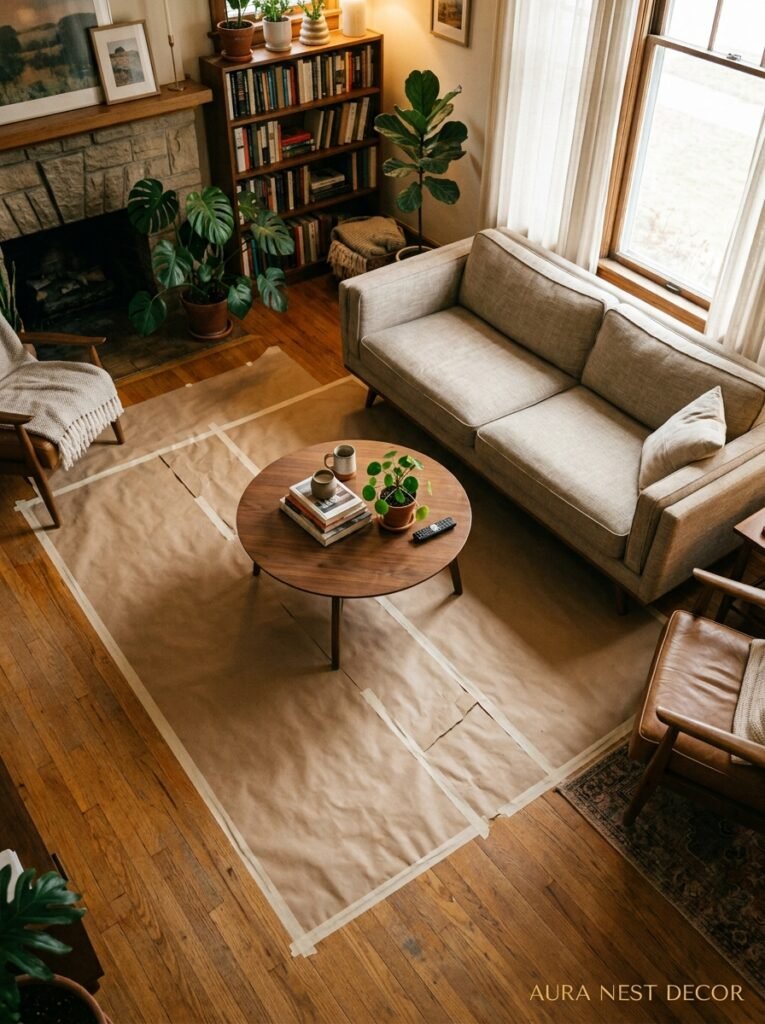
Here’s the trick I use and I genuinely can’t believe more people don’t know it. Before you buy any rug, tape out the size on your floor with painter’s tape. Blue tape, masking tape, whatever you’ve got. Tape out the exact dimensions and then LIVE with it for a day. Put your furniture back. Walk around it. Sit on your sofa and look at it. Have a cup of tea and stare at it for a while.
This sounds silly but it changes everything. You’ll know within about 30 seconds whether the size is right or if it feels too small or — occasionally — too large. And you can adjust before spending real money.
I once did this and realized the rug size I’d been absolutely certain about for weeks was about a foot too narrow. Went up to the next size and the room completely transformed. Two inches of tape saved me from buying the wrong thing.
—
❓ FAQ
Q: What size rug do I need for a 12×15 living room? A: For a room that size, an 8×10 is usually your best bet — it’ll give you that 18-inch border on most sides and fits a standard three-seat sofa arrangement comfortably. If you have a large sectional, consider stepping up to a 9×12, especially if you want all legs on the rug.
Q: Can a rug be too big for a living room? A: Yes, technically, though it’s much rarer than going too small. If your rug is so large that it leaves less than 8 inches of floor showing on any side, it starts to look like failed wall-to-wall carpet. The sweet spot is still that 12-18 inch border. That said, going slightly too big is almost always a smaller problem than going too small.
Q: What’s the best rug size for a small UK living room? A: A lot of UK living rooms in Victorian or Edwardian terraces are quite narrow — often 10-12 feet wide. A 6×9 placed lengthwise often works better than an 8×10 in these rooms because it doesn’t crowd the side walls. Front legs of the sofa on the rug, about 12 inches of border on the long sides, and you’re in good shape.
—
💭 Final Thoughts
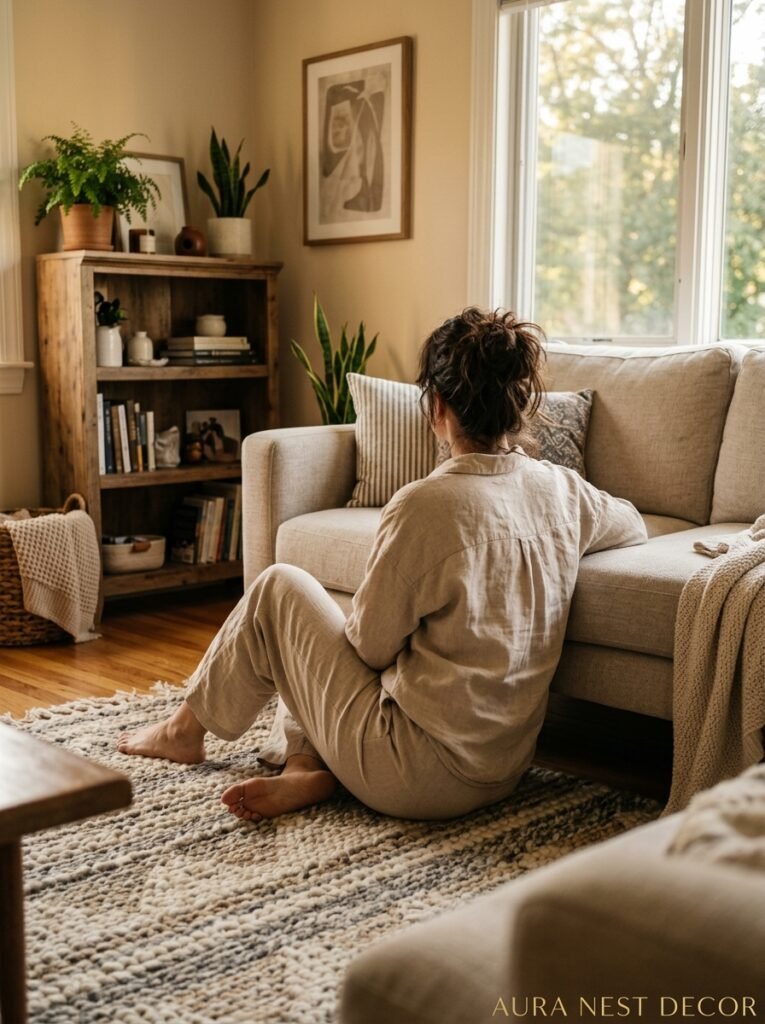
The right rug size isn’t just a design rule — it’s the thing that makes a room finally feel finished, the way a full stop completes a sentence. Get it right and you stop noticing the rug entirely, which is exactly the point. Everything just settles.
Go tape out a size on your floor tonight before you buy anything. I really mean it.
And when you’re standing there looking at that taped-out rectangle, thinking “is this actually right?” — what does your gut say?