
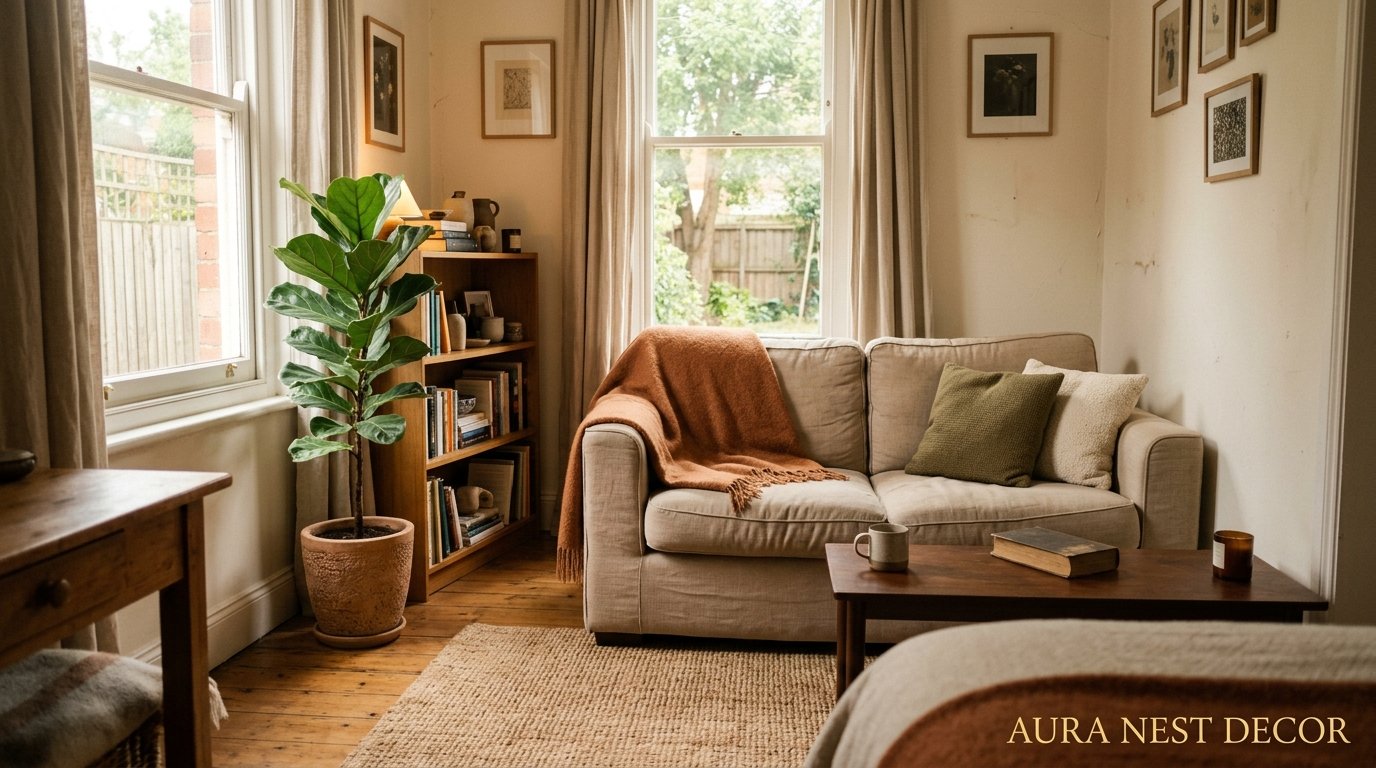
The Small Living Room Glow-Up You Didn’t Know You Needed (No Gut Renovation Required)
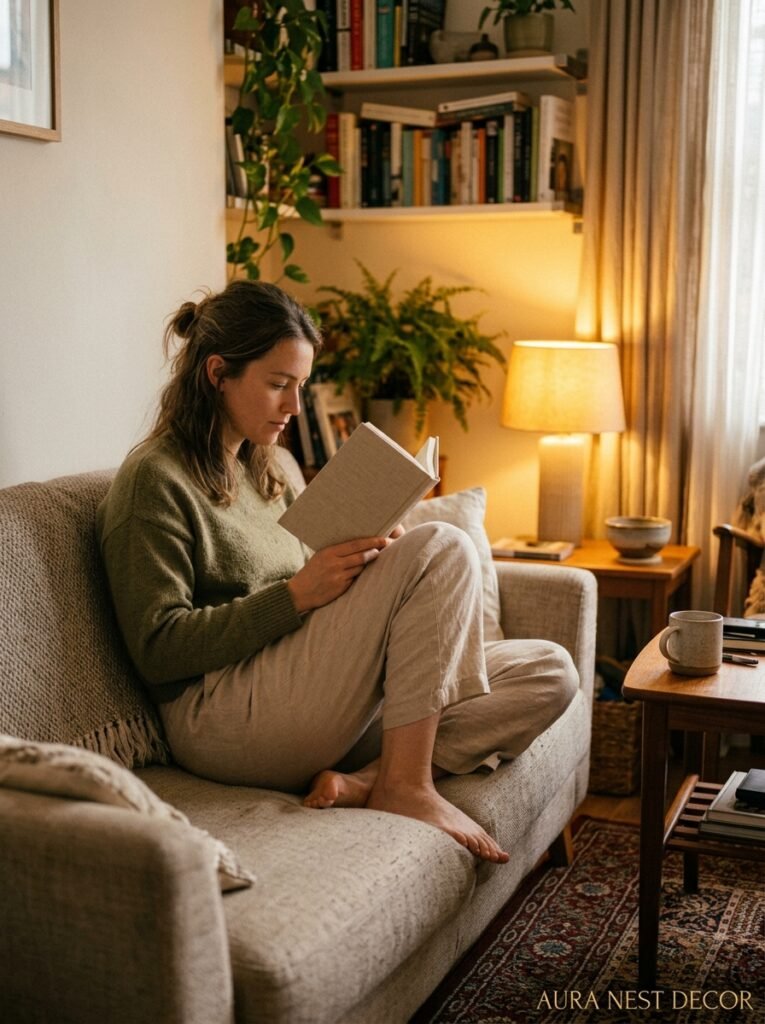
You sit down on the sofa and the room just… closes in. Too much stuff. Not enough breathing space. And somehow it’s both cramped AND lacking personality, which honestly feels like an unfair combination.
Here’s what I know: you don’t need a bigger flat or a bigger budget. You need to think differently about the space you’re already in.
—
1. The Sofa Placement Mistake Almost Everyone Makes First
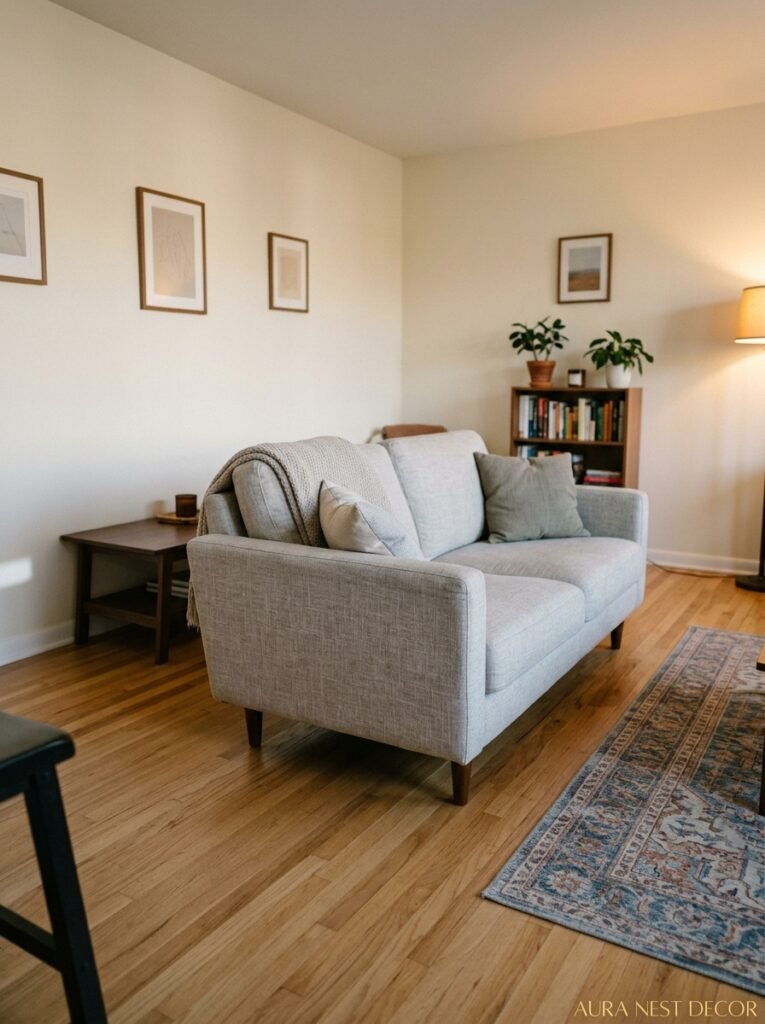
Most people push the sofa against the wall. Feels logical, right? More floor space. But that actually makes a small room feel flatter and more corridor-like, like a waiting room you didn’t ask to live in.
Pull it forward. Even a foot. Even eight inches. Something shifts when the sofa floats slightly away from the wall — the room suddenly reads as intentional. There’s air behind it. The space becomes a room instead of a rearranged collection of furniture you’re navigating around.
I know it feels counterintuitive. You’re losing floor space to gain psychological space, and that swap sounds bad on paper. But this is one of those things you have to try to believe. The depth behind the sofa creates a visual buffer, makes the walls feel further away. You can tuck a slim console table in that gap if you’re worried about wasted space — actually makes the arrangement look more considered, not less.
And while we’re talking sofas: color matters. A heavy dark sectional in a small room isn’t always wrong, but a mid-toned neutral in a streamlined silhouette — low arms, clean lines — will hold the room differently. The eye doesn’t snag on it. It settles.
“The sofa isn’t just furniture. It’s the sentence the room is built around.”
—
2. Why One Good Lamp Beats Four Overhead Lights Every Single Time
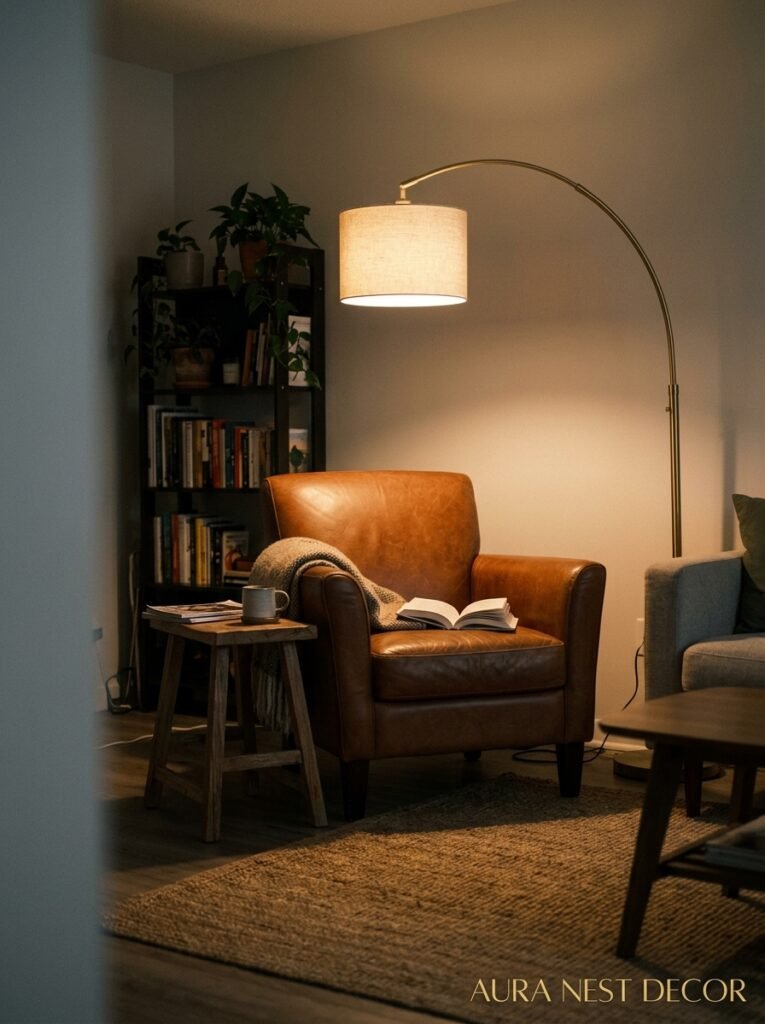
Ceiling lights are practical and joyless. There, I said it.
In a small space, harsh overhead lighting emphasizes every corner, every bit of clutter, every slightly-too-close wall. It doesn’t do anyone any favors. What does work is a single really GOOD lamp positioned at seated eye level — the kind that casts a warm pool of amber around itself at 7pm and makes everything within five feet of it feel cozy and considered.
This doesn’t have to be expensive. A thrifted ceramic base with a new shade can be absolutely stunning. What you’re looking for is warm-toned bulbs (2700K is the sweet spot, not gonna lie), a shade that diffuses rather than directs, and a position that creates what designers call “layers” — basically just meaning you’ve got light at different heights rather than one flat wash from above.
Side note — plug-in wall sconces are massively underused in small living rooms, especially in the UK where rewiring isn’t always an option. A fabric-shaded sconce on each side of a window or above a sofa? Game-changing. Takes five minutes to install. Doesn’t require an electrician. Don’t know why more people aren’t doing this.
The other thing: candles. Even unlit ones on a tray add warmth and the suggestion of coziness. Lit, obviously, they do something no electric light can quite replicate. Something about the movement of the flame. It’s visceral.
—
3. The Color That Keeps Showing Up in Every Beautiful Small Living Room Right Now
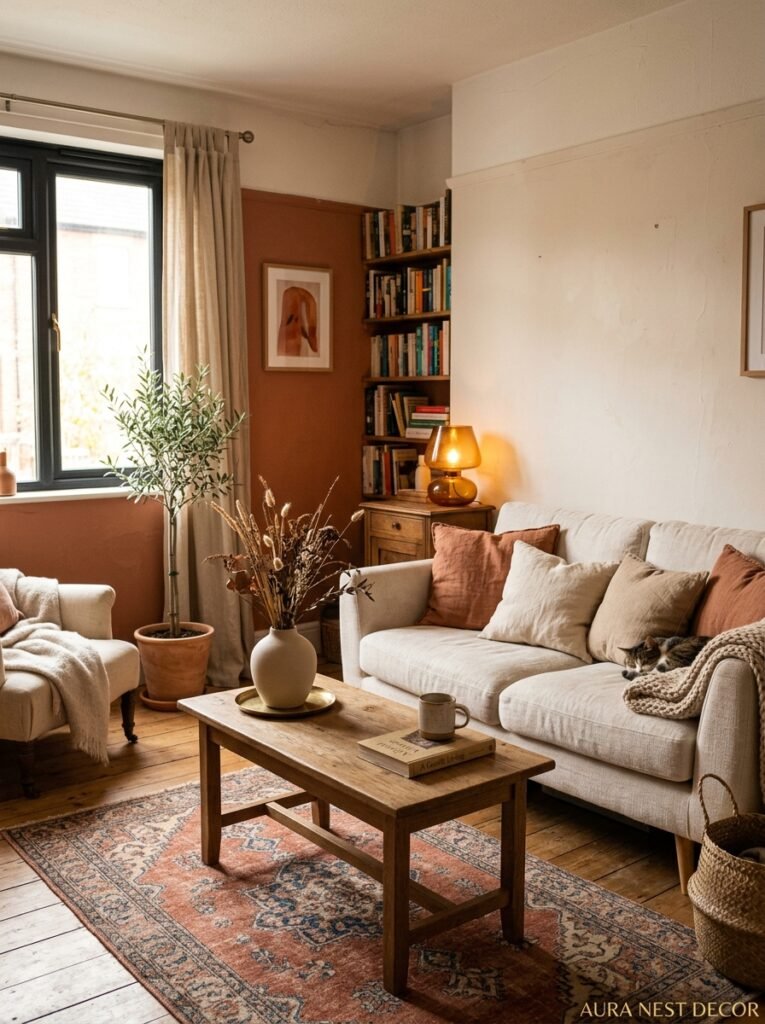
It’s not white. Well — it’s not just white.
What’s been everywhere lately is warm off-white with a slightly clay or pinkish undertone. Shades like Farrow & Ball’s “Elephant’s Breath” or Benjamin Moore’s “White Dove” — nothing stark, nothing sterile. The walls recede without being blank. The room feels light without feeling clinical.
But here’s my actual opinion: if you’ve got a small living room with good natural light, don’t be scared of a moody color on ONE wall. A deep sage, a dusty blue, a terracotta-ish warm brown on the chimney breast or the wall behind the sofa can make a tiny room feel deliberately intimate rather than just… small. The difference is intention. You’re not stuck in a box; you’ve created a den.
The mistake is going dark on all four walls without the lighting or contrast to balance it. That’s when it actually does start to feel claustrophobic. One feature wall, good lighting, light-toned furniture in front of it — that combination works almost every time.
If you’re renting and can’t paint, removable peel-and-stick wallpaper has gotten genuinely good. Not all of it, but the linen-textured and subtle pattern options can add so much without committing to anything permanently.
—
4. Mirrors That Work and Mirrors That Just… Don’t
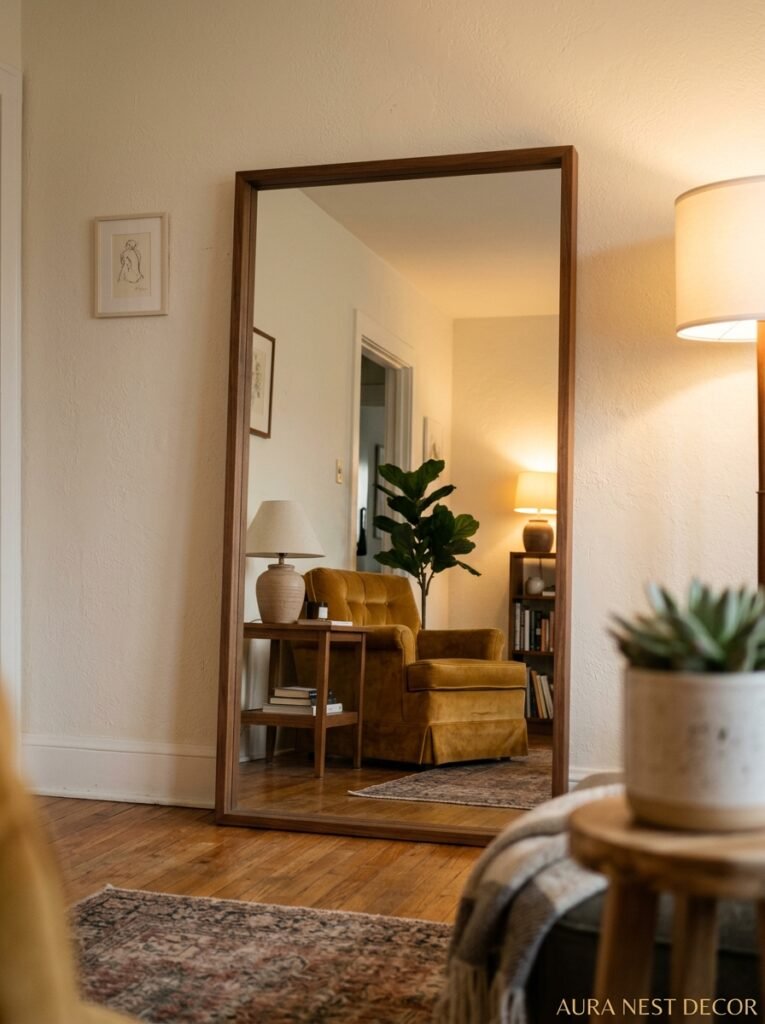
A mirror doubles your light. You’ve heard this. Everyone’s heard this. But there’s a specific WAY to use a mirror in a small living room that most people get slightly wrong.
First: size. Bigger is almost always better. A small mirror on a big wall does nothing — it just sort of floats there, a decorative afterthought. A large mirror, ideally above the fireplace or behind a sideboard, creates the illusion of a whole extra space behind it. Your eye travels into the reflection and the room feels like it continues.
Second: what it reflects. Position a mirror so it bounces natural light around the room or reflects something beautiful — a plant, a lamp, a window. If your mirror is reflecting a blank wall or the back of your TV unit, you’ve wasted it.
Third: lean it. A leaned mirror (on the floor, against a wall, casually propped behind a sideboard) looks warmer and more lived-in than a hung mirror in a small living room. There’s something about the slight angle and the casual positioning that reads as styled rather than strategic. Same result, better vibe.
“A mirror isn’t decoration. It’s a whole extra room you didn’t have to pay rent on.”
—
5. The One Rule That Makes Any Tiny Room Feel Intentional
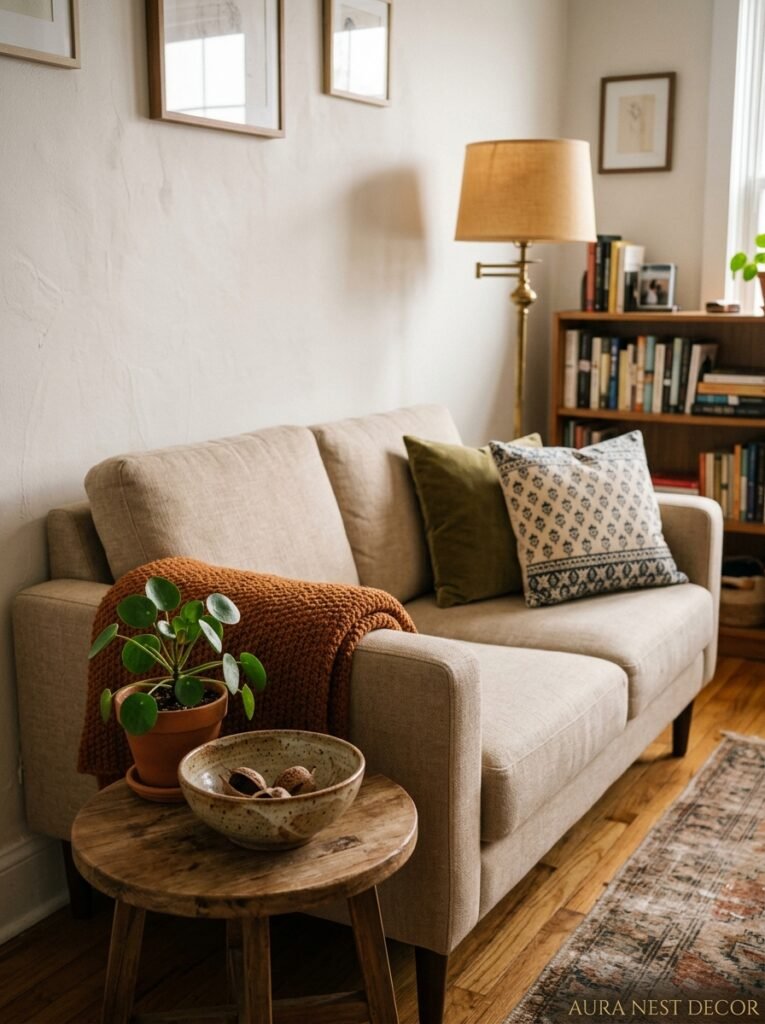
Edit. Then edit again.
I know “declutter” sounds obvious and possibly slightly judgmental, and I don’t mean throw everything away. What I mean is: small spaces can’t support the same amount of visual information as large ones. Every item you put on display has to earn its place, because in a small room, everything competes for attention at once.
The rule I use: if I can’t remember WHY that object is on that shelf, it probably doesn’t belong there. Not a harsh rule. But a useful one.
What works in small living rooms is fewer, better things. One large vase instead of five small ones. One really interesting piece of art instead of a gallery wall that overwhelms the scale of the room. A plant that’s genuinely a design element — something with structure, like a fiddle leaf fig or a rubber plant — rather than three tiny succulents on a windowsill that read as afterthoughts.
The other part of this rule: keep the floor clear. Whatever you do on walls and surfaces, keep the floor uncluttered. Visual weight lives low, and a floor covered in poufs, stacked books, baskets, and trailing cables will shrink the room faster than anything else.
—
6. Shelving That Actually Adds Space Instead of Eating It
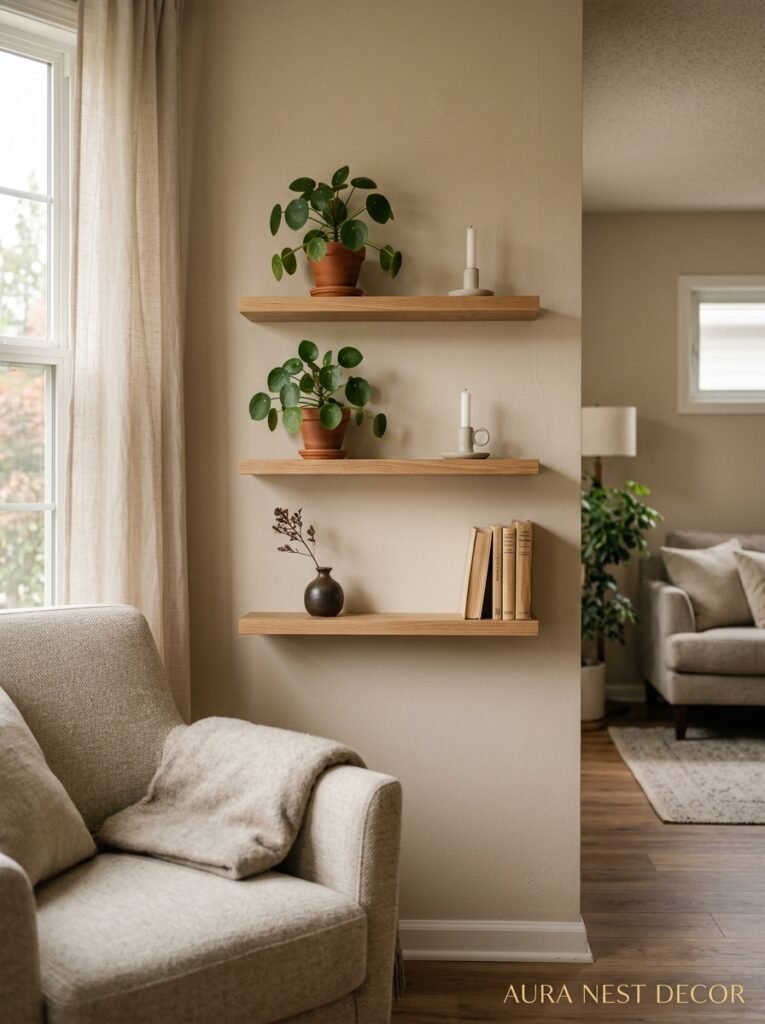
Here’s the shelf move that changes everything in a small room: go VERTICAL.
Floor-to-ceiling shelving — proper floor-to-ceiling, not stopping awkwardly at the 5-foot mark — draws the eye upward and makes the ceiling feel higher. This is not a new idea, but people consistently don’t commit to it enough. The shelves have to actually reach the ceiling to get the full effect. Stopping short looks like an oversight.
What goes on those shelves matters too. In a small room, built-in or IKEA Billy bookcases (which, honestly, still hold up) look best when they’re a mix: some books (spines out or turned around for a tonal look if you want something calmer), some objects, some empty space. Yes, empty space. A shelf where everything is packed to the edge reads as storage. A shelf with deliberate gaps reads as decor.
And color-coordinate your books. Sounds fussy, I know. But grouping books by color — even loosely, even just keeping the warm-toned spines together and the dark ones together — creates visual calm on a surface that could otherwise feel chaotic.
—
7. Why Your Rug Might Actually Be Making the Room Look Smaller
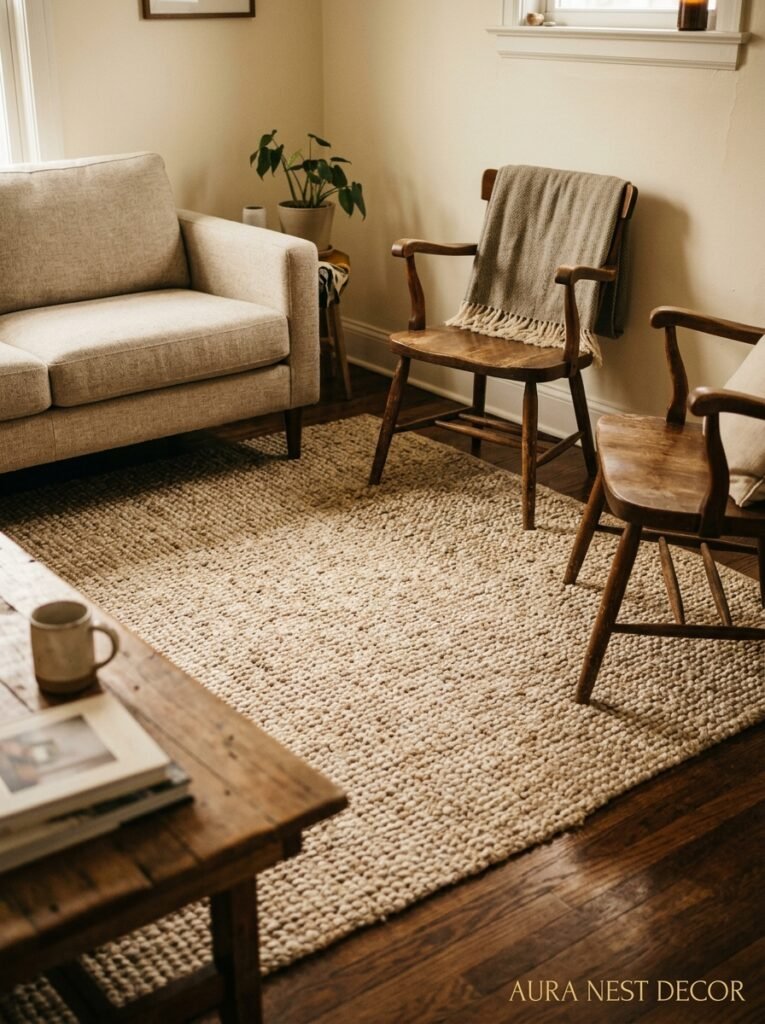
The rug is too small. I’d bet on it.
This is probably the most common small-space mistake I see on Pinterest and in homes. People buy a small rug thinking it won’t overwhelm the room, and instead it makes the furniture look like it’s floating on separate islands. The floor reads as choppy and disconnected.
In a small living room, the rug should be large enough that the front legs of ALL the main furniture can sit on it. Not just the sofa. All of it. That anchoring — connecting all the pieces — is what makes the seating area read as a defined zone rather than just a collection of furniture that happens to be in the same room.
If a bigger rug isn’t in the budget right now, try layering. A natural jute base layer with a smaller patterned rug on top is a very good look and often cheaper than buying one large statement rug. It works especially well in rooms with warm wood tones or earthy color palettes.
“The rug is the grammar of the room. Get it wrong and nothing else reads correctly.”
—
8. The Curtain Trick That Stretches Every Ceiling You’ve Got
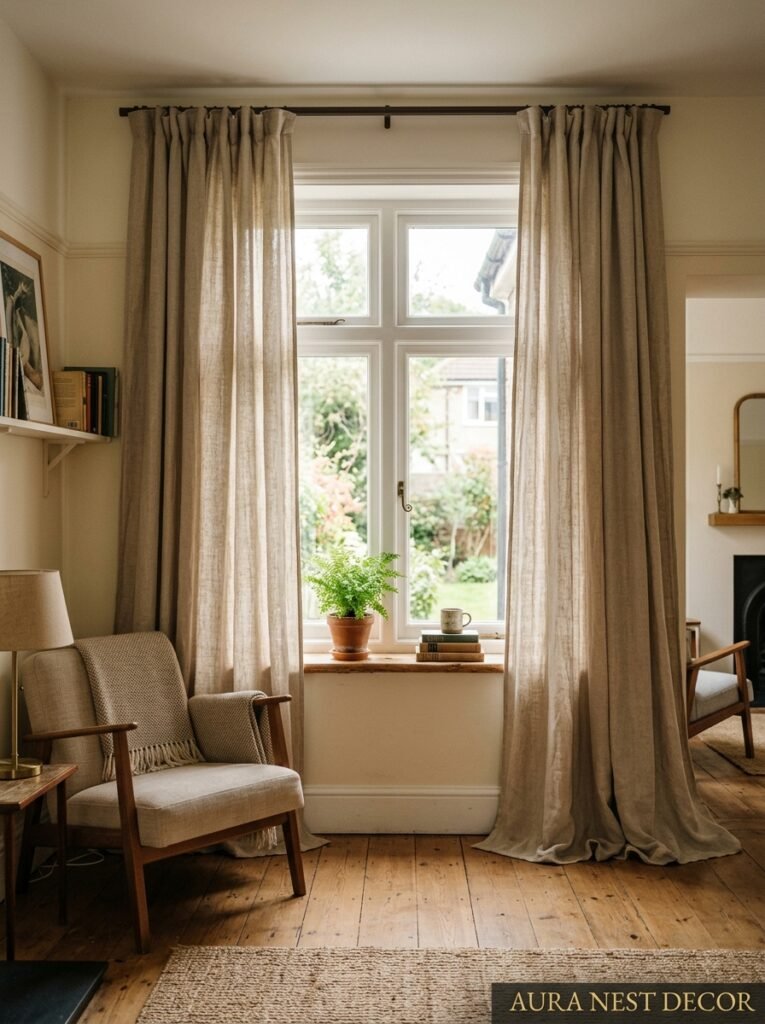
Hang curtains HIGH. And wide.
Not at window level. Not even a few inches above — actually HIGH, close to the ceiling, with the rod extending well beyond the window frame on each side. This is one of those tiny tweaks that makes visitors think you’ve renovated when you’ve just bought a longer curtain rod.
When curtains run from ceiling to floor they visually stretch the room vertically. When the rod extends beyond the window it makes the window itself look bigger, and lets more light in because the fabric isn’t blocking the glass when the curtains are open. Both of those things are exactly what a small room needs.
Fabric choice matters. Light linen — the kind that’s slightly wrinkled on purpose, slightly organic — works in nearly every small living room. It filters light beautifully during the day and doesn’t add visual weight. Avoid heavy blackout-style curtains in a small room unless you TRULY need them for sleep, because they eat light and make the window look smaller than it is.
—
9. The Coffee Table That Won’t Swallow Your Whole Living Room
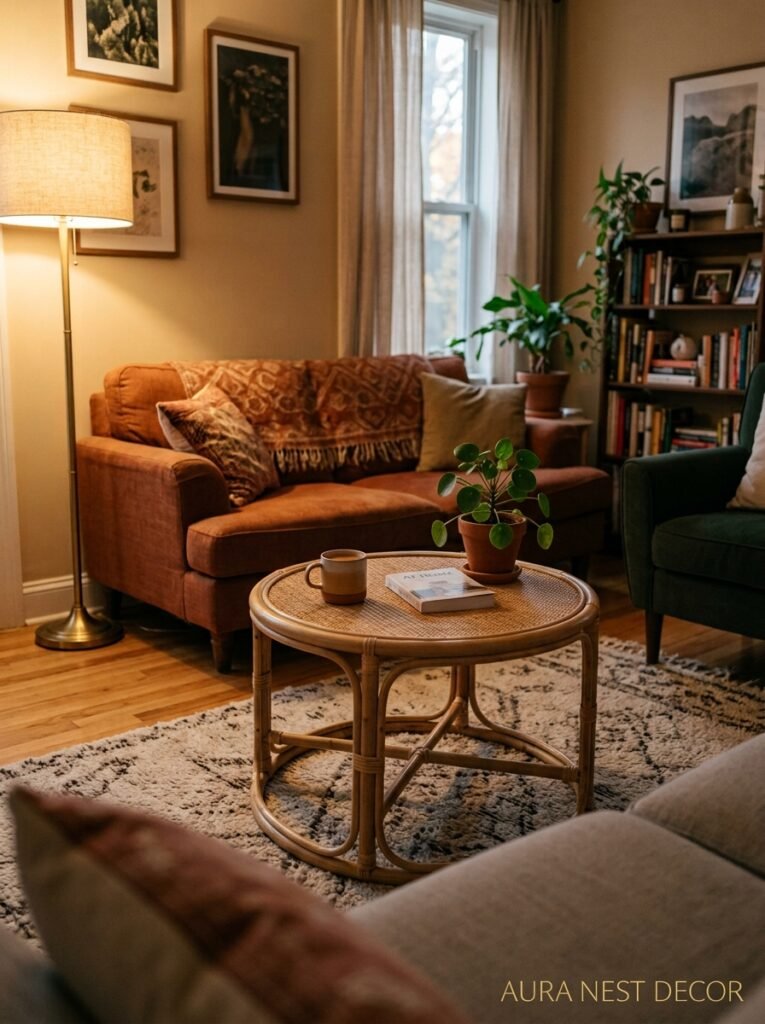
Glass. Rattan. Or nothing at all.
A solid, heavy coffee table in a small living room eats the visual floor space alive. Your eye sees it as a block, a barrier. But a glass-topped table essentially disappears — the floor reads as continuous underneath it, the room feels more open. Same goes for a rattan or woven-cane style table, which has visual lightness even though it’s solid.
The “nothing at all” option is underrated. A tray on the floor. A stack of good coffee table books. A large decorative bowl or a marble slab on small legs. You don’t NEED a coffee table. Not having one can feel strangely freeing in a small space — suddenly you’ve got three feet of floor that doesn’t belong to anything.
Side tables instead of a coffee table is another move. Two small side tables flanking the sofa instead of one central piece. More flexible, easier to tuck away, and it doesn’t bisect the room the same way.
—
10. Plants That Work Hard (and the Ones That Just Sit There)
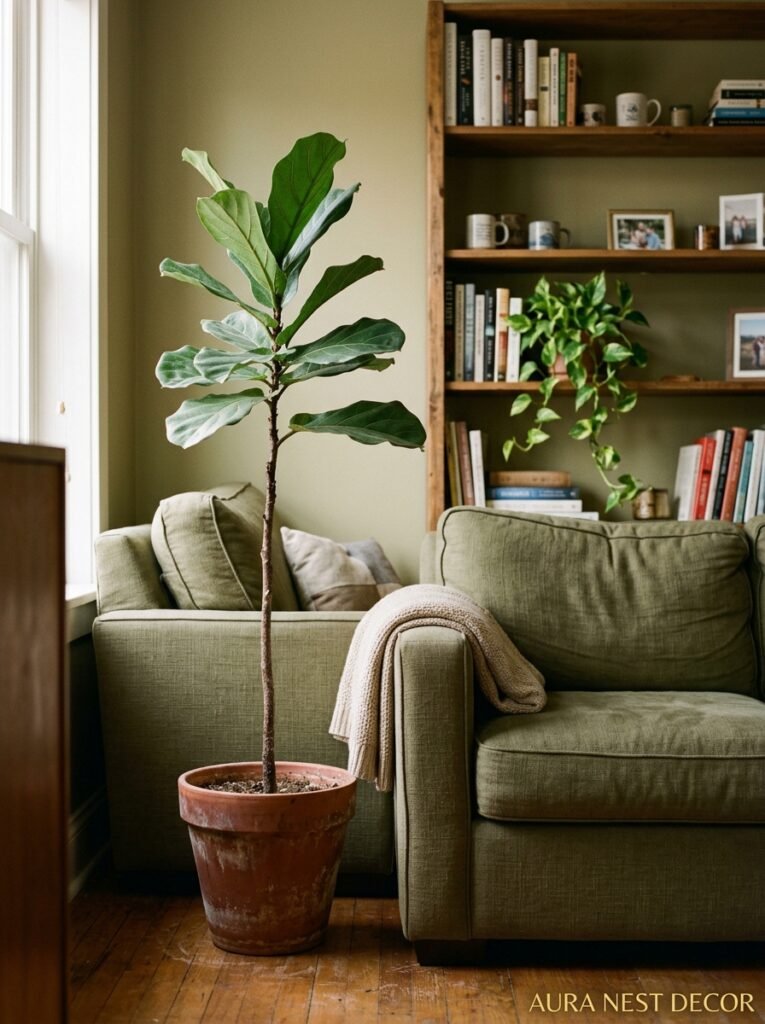
Not all plants are equal in a small room. A fiddle leaf fig in the corner? Architectural. Purposeful. It becomes a design element. A cluster of small pots on a windowsill? Visual noise, mostly.
In a small living room, plants should do something. Either they fill a height gap (tall plant in an empty corner — genuinely one of the most useful things you can do), or they add a trailing element that draws the eye (pothos draped from a high shelf does this beautifully), or they’re a bold, interesting single specimen that acts like sculpture.
Also: fake plants have gotten GOOD. Not the dusty plastic ones from fifteen years ago. The current generation of faux olive trees and faux trailing pothos from places like IKEA or H&M Home are convincing enough that no one’s going to notice unless they touch them. If you don’t have great natural light, there’s absolutely no shame in it.
—
11. The Small Styling Detail That Makes a Room Feel Lived-In (Not Staged)
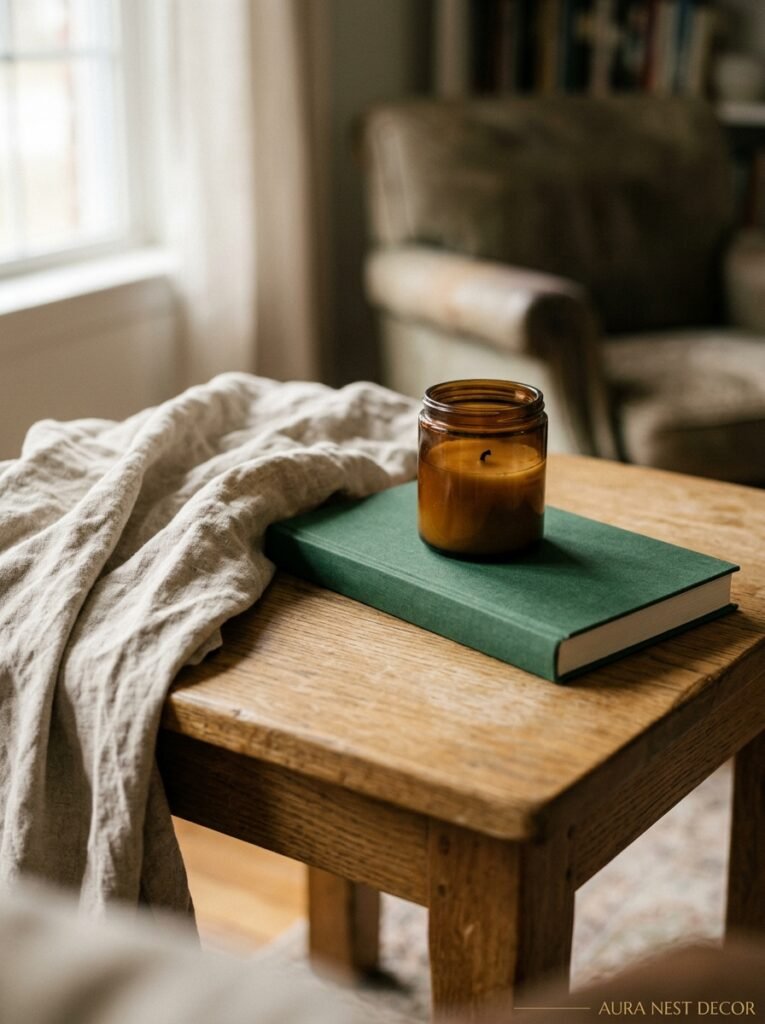
Books. Actual books, left slightly casually. A throw that looks like someone just used it rather than something folded with a ruler. A small tray on the coffee table with maybe three things on it — a candle, a small plant, something personal.
Staged rooms look like nobody lives there. And in small spaces that effect gets amplified because there’s nowhere for warmth to hide behind.
The thing that makes small living rooms feel genuinely inviting is the sense that someone real made choices about this space. A painting that’s slightly too big for where it’s hung. A vintage lamp that doesn’t perfectly match anything else. A throw pillow in a fabric that’s different from the rest.
Coherence is good. But rigidity makes a room feel cold. Let one thing be a little bit off, a little bit personal, a little bit “I found this and loved it and I don’t care if it matches.” That’s what people remember when they leave.
—
12. The Bit Nobody Tells You About Small Space Decor
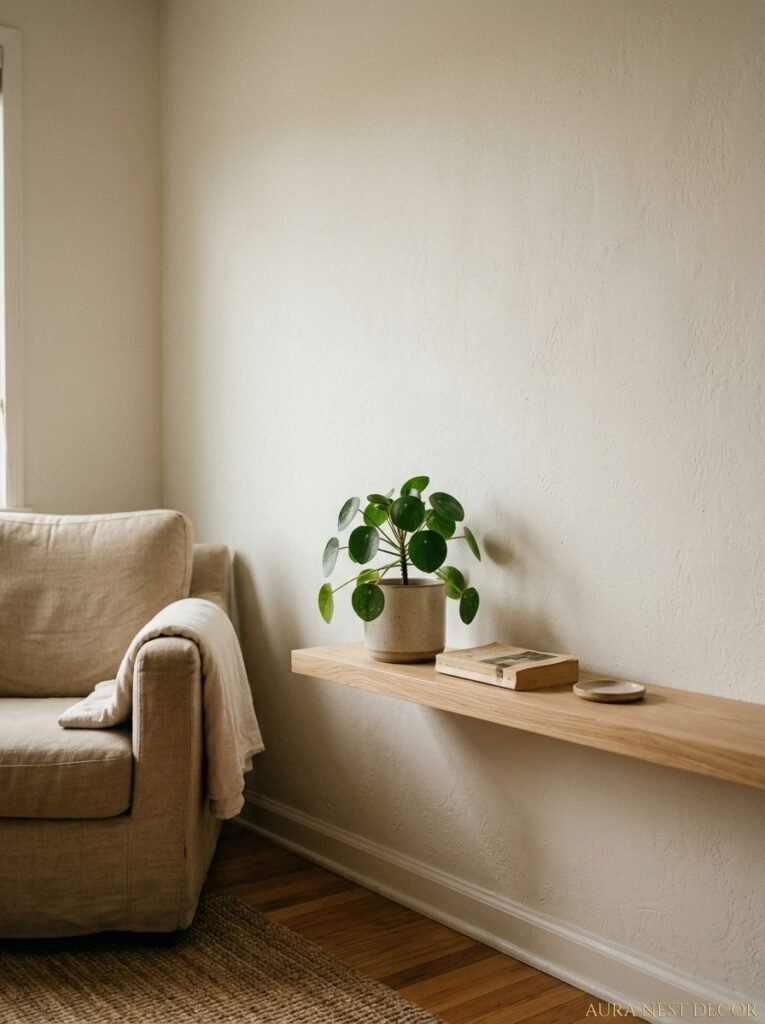
You’re allowed to change your mind. A lot.
Small rooms are actually IDEAL for experimenting because rearranging them takes twenty minutes, not an afternoon. Move the sofa. Try the rug in a different position. Swap the lamp to the other corner. These aren’t permanent architectural decisions; they’re just furniture.
The best small living rooms I’ve ever seen — in real life, on Pinterest, in the corner of someone’s Victorian terrace in Peckham or a cozy apartment in Prospect Heights — were rooms that felt worked-out. You could tell someone had tried things, changed them, tried again. Not rooms that looked like they’d been assembled from a single catalogue page.
Don’t wait until it’s perfect to enjoy the room you’re in. Sit in it. Light a candle. Decide what bothers you. Fix that one thing. That’s the whole process, honestly. Just repeated until you love it.
—
❓ FAQ
Q: What’s the best sofa size for a small living room? A: Measure before you do anything else. A two-seater or a smaller three-seater with slim arms and low back tends to work better than an oversized L-shape, which can dominate a small room completely. If you can, choose a sofa with legs rather than one that sits directly on the floor — the visible floor underneath creates a sense of openness.
Q: Can I have a gallery wall in a small living room without it feeling cluttered? A: You can, but scale it down and keep it tight. A small cluster of three or four frames in a contained arrangement on one wall works better than an sprawling gallery across multiple walls. Stick to a consistent frame color and don’t mix too many frame sizes — the tidier the arrangement, the better it reads in a smaller room.
Q: Should I use the same color on all the walls in a small room? A: It often works better to do so, yes — but choose the right color. A warm off-white or a soft mid-tone (not too dark) on all four walls creates a sense of envelope that can actually feel cozy rather than tight. The exception is a single feature wall in a deeper color, which can make a room feel deliberately intimate instead of accidentally small.
—
💭 Final Thoughts
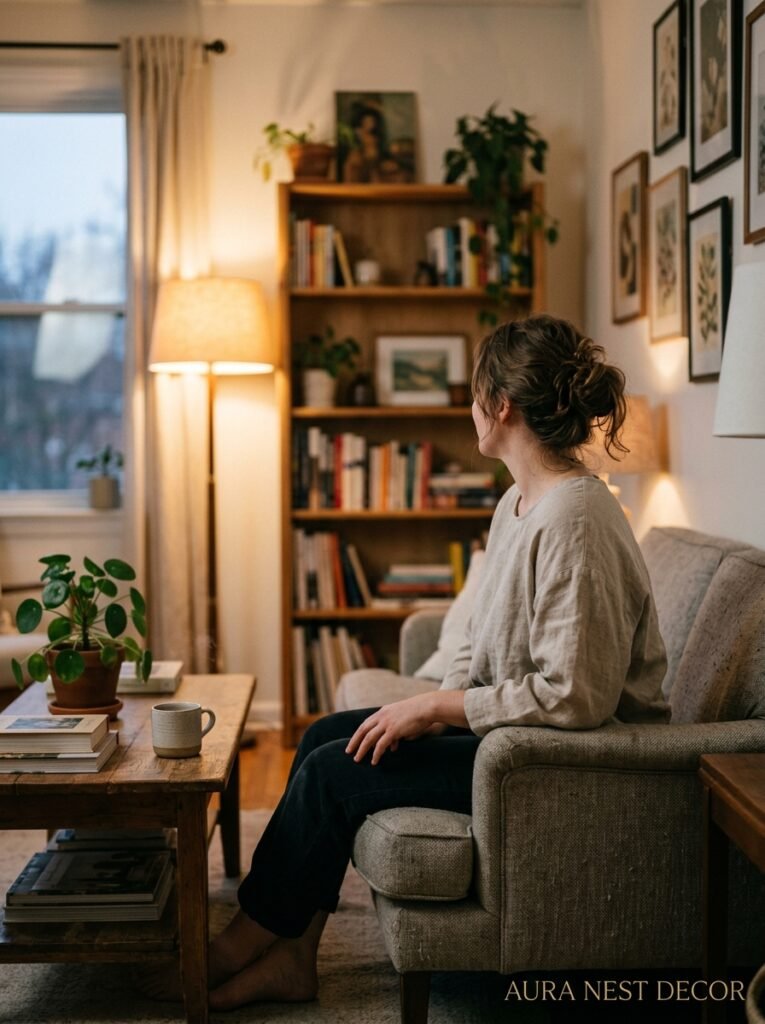
A small living room isn’t a design problem to solve — it’s a design constraint to work with, and honestly, constraints make for better rooms. The most beautiful spaces I know aren’t big. They’re edited, warm, specific, and clearly loved.
The room you’ve got is enough to work with. You might just need to look at it a little differently.
What’s the one thing in your living room that’s been bothering you for months that you haven’t gotten around to fixing yet?