
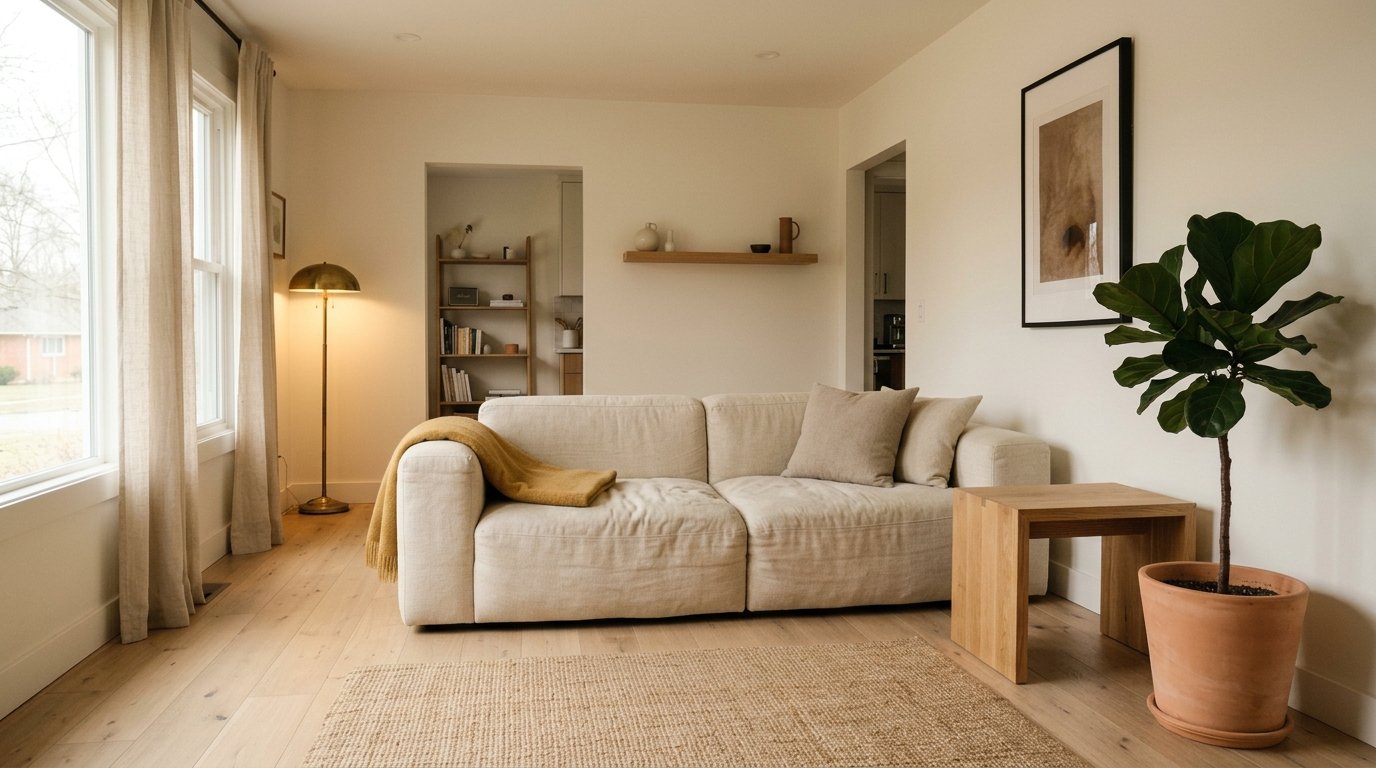
The Tiny Living Room Rules I Ignored for Years (And What I Do Instead)
My last flat had a living room roughly the size of a generous walk-in wardrobe. I’m not exaggerating — you could stand in the middle and touch both walls if you stretched. And for the first year and a half, I made every single mistake possible in there.
—
1. Why “Make It Look Bigger” Is the Wrong Goal Entirely
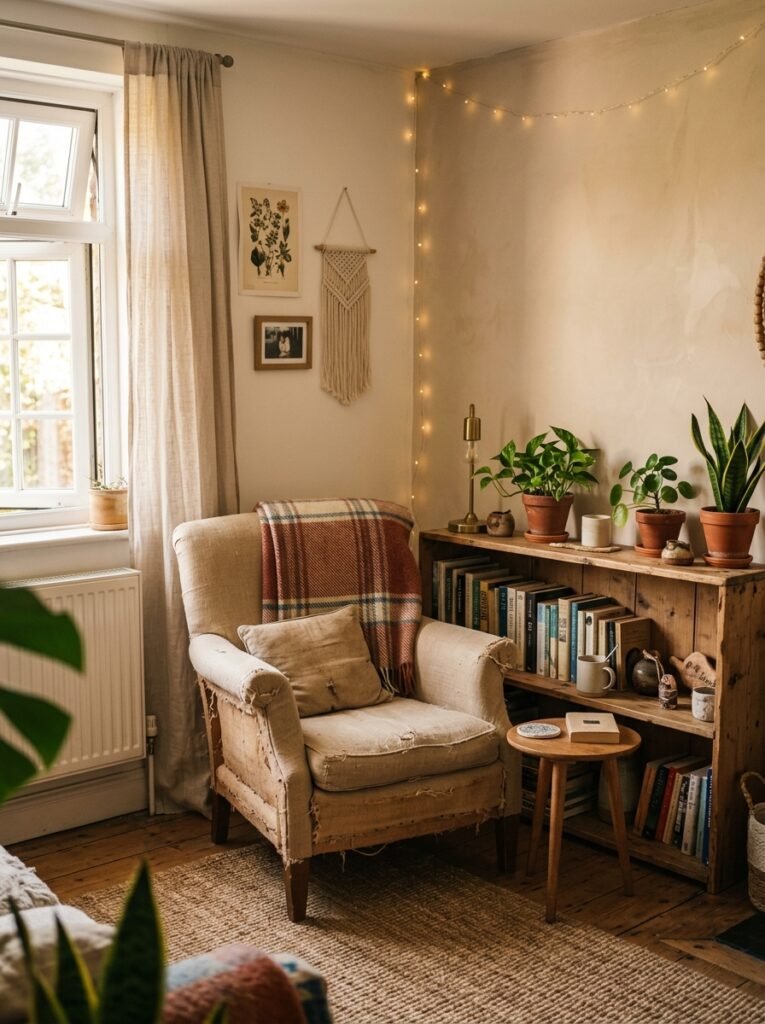
Here’s the thing nobody says out loud: you don’t actually want your small living room to look big. You want it to feel good to be in. Those are completely different things.
I spent so much time chasing the illusion of space — pale walls, nothing on the floor, furniture pushed against every wall — and the room looked like a doctor’s waiting area. Technically spacious, emotionally dead. No one wanted to sit in there, including me.
The shift happened when I stopped trying to fake square footage and started thinking about what makes a room feel LIVED IN and worth staying in. Cozy isn’t a consolation prize for small. It’s actually easier to get right in a tiny space than in a sprawling one, because everything is close together and you can control the atmosphere without much effort at all.
“Cozy isn’t a consolation prize for small. It’s actually the thing big rooms spend a fortune trying to fake.”
So before you read another word: let go of “bigger.” Think “better.” That’s the whole article, honestly.
—
2. The Sofa Mistake That’s Quietly Ruining the Whole Room
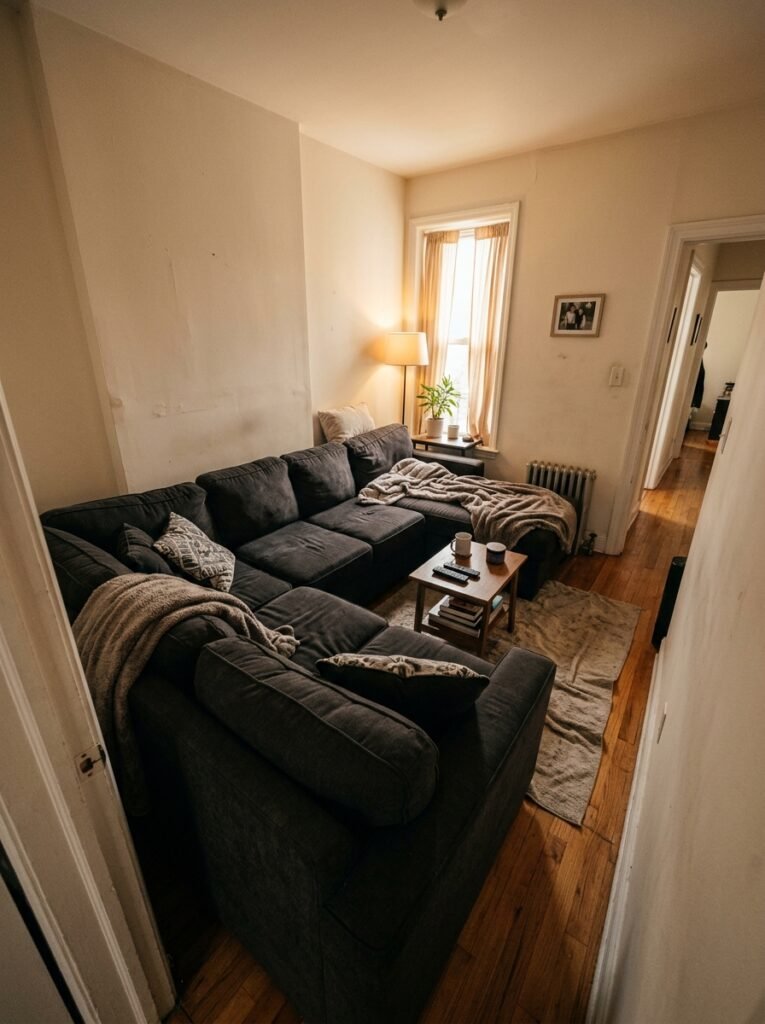
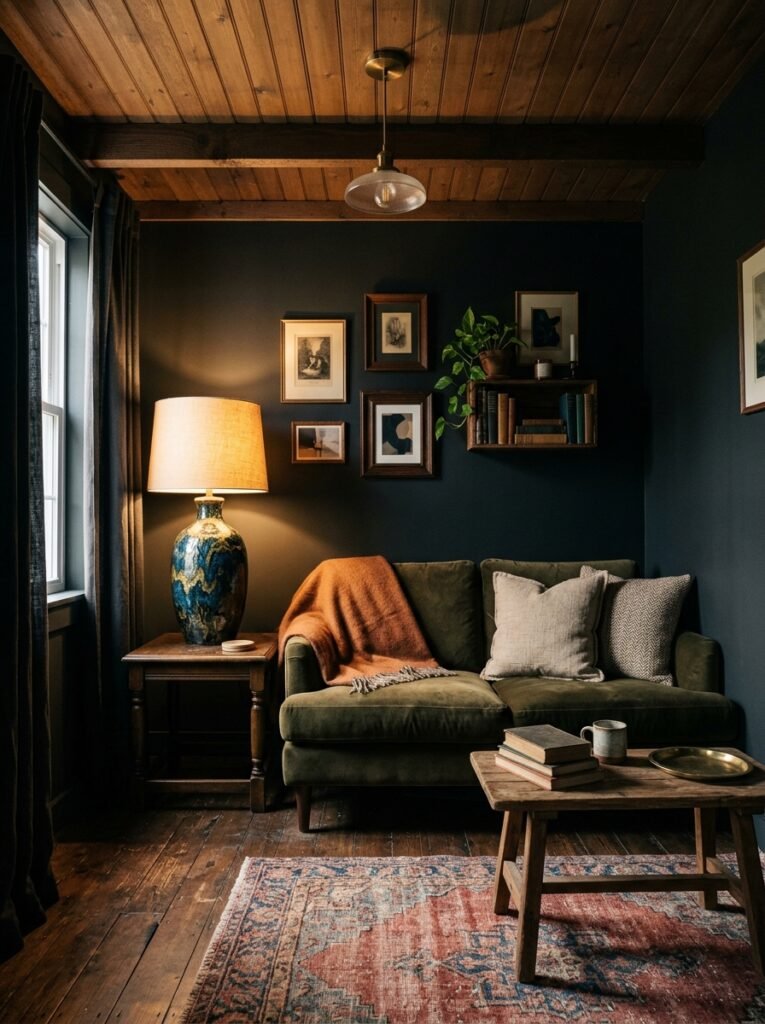
Pull your sofa away from the wall. I know. I know you don’t think you have room. Do it anyway.
Even six inches makes the room feel more intentional, less like furniture pushed to the edges of a storage unit. When a sofa floats even slightly, the eye reads it as a choice rather than a compromise. And that’s the whole secret to small-space decorating — everything needs to read as deliberate.
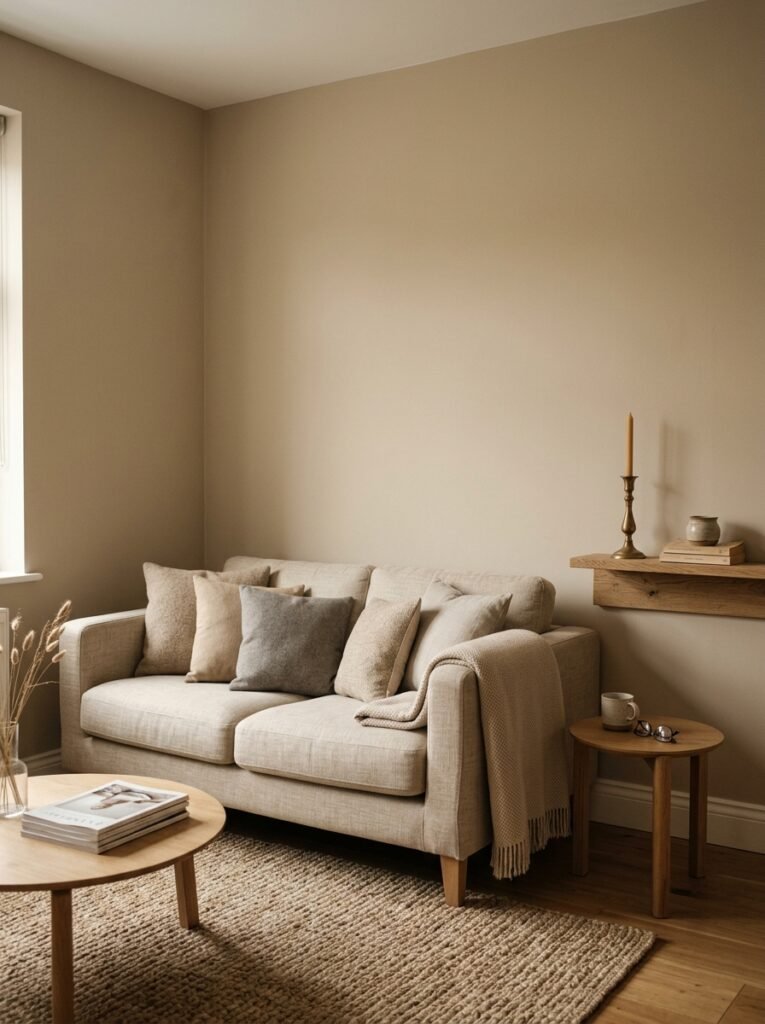
Here’s what I’d actually pick for a tiny living room: a low-profile sofa in a mid-tone neutral. Not white (you’ll stress about it constantly), not charcoal (it can eat the room), but something warm — a biscuit, a clay, a faded olive. Low-slung furniture makes ceilings feel taller without you doing anything else. It’s kind of a cheat code.
And if you only have room for a sofa and one armchair, make the armchair count. Pick something with a different silhouette — curved where the sofa is straight, or a vintage shape where the sofa is modern. One interesting chair does more for a small room than a matching set that goes nowhere.
—
3. The Color That Keeps Showing Up in Every Beautiful Tiny Room Right Now
Not white. Not grey. Not the safe, predictable “open it up” palette that interior design guides have been pushing for twenty years.
It’s deep, warm terracotta. Or dusty sage. Or that specific shade of off-white that’s almost blush — sort of peachy, sort of pink, neither one exactly. The warm colors.
And here’s why it works: in a small room, a warm wall color makes the space feel like a choice, like someone made this room on purpose. A cold, pale wall in a tiny space just looks like you ran out of budget or nerve. Warm tones bring the walls in — yes, technically closer — but they do it in a way that feels intentional and wrapping, like you’re inside something rather than rattling around in it.
I painted my small living room a deep terracotta last autumn. People kept asking if I’d extended it.
I hadn’t. Nothing changed except the color. But suddenly the room felt designed instead of just occupied.
—
4. The One Rule That Makes Any Tiny Room Feel Intentional
One big thing. Not lots of little things.
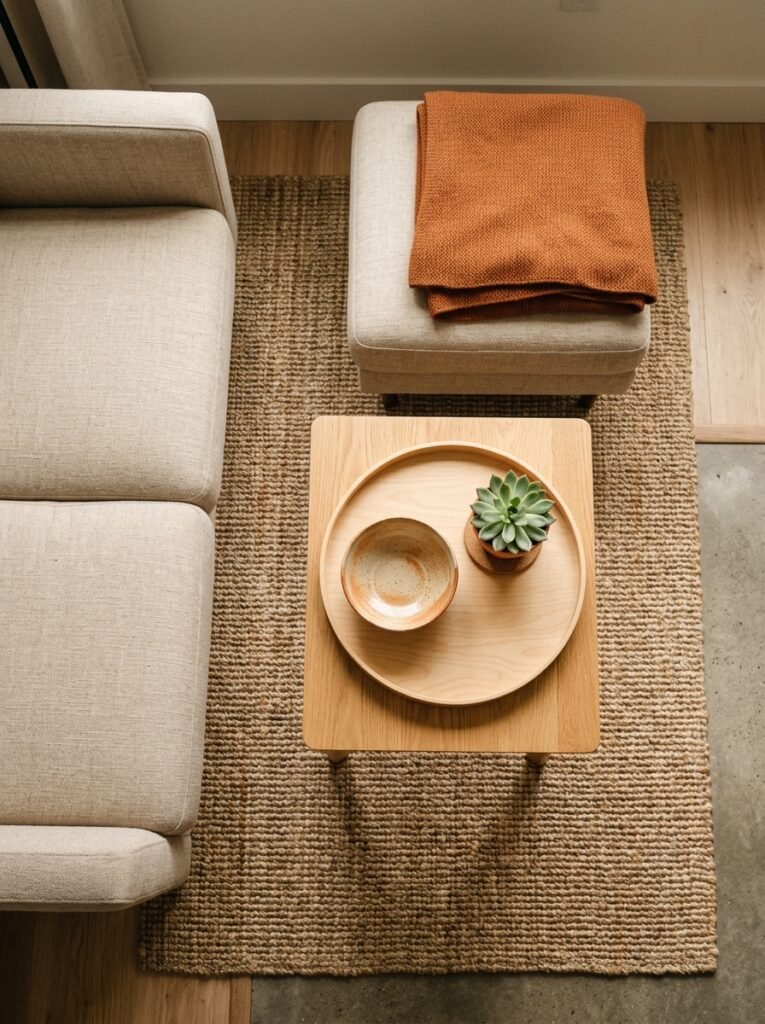
This is the rule I wish someone had tattooed on my arm before I went to a Sunday car boot sale and came home with seventeen small ceramic pieces. One large piece of art, one substantial plant, one meaningful object on the coffee table. That’s it.
Small rooms get cluttered visually so fast, and the culprit is almost always accumulation of similar-sized small things. Your eye doesn’t know where to land. It just bounces around and gets tired. But put one large framed print on a wall — something that takes up at least two-thirds of the wall’s width — and suddenly the whole room has an anchor. Everything else can be quieter because that one thing is doing the heavy lifting.
Same goes for plants. One big fiddle-leaf fig or trailing pothos in a substantial pot beats six little succulents on a shelf every single time in a small space. Every. Single. Time.
—
5. Rugs That Ground the Room Instead of Choking It
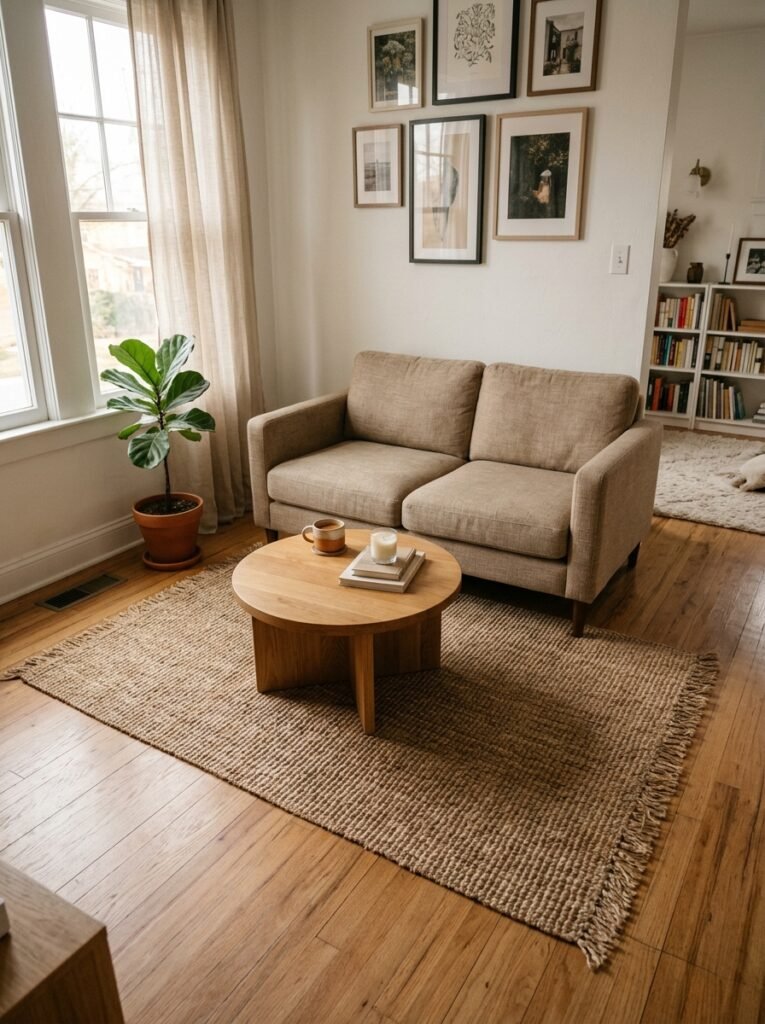
Go bigger than you think. This is almost universal advice in small-space decorating and it’s almost universally ignored, so I’m going to say it with some force.
A rug that’s too small makes a room look like it has a postage stamp in the middle of it. A rug that’s too big? Barely a problem. The sofa legs should sit ON the rug. The coffee table should sit ON the rug. If you’re laying a rug down and only the coffee table fits on it, you need the next size up.
Texture matters more than pattern here. A woven jute rug, a low-pile wool in a warm natural shade, a faded kilim with a bit of age to it — these add visual warmth without adding visual noise. Busy patterns in a tiny room can look crowded. Texture, though, you can feel even when you look at it, and it adds depth without complication.
Side note — if you’ve been renting and always avoided rugs because of damage deposits, a good natural-fiber rug on a proper underlay does nothing to the floor underneath. Been there, stressed about that unnecessarily for three years.
—
6. Lighting Is the Thing You’re Probably Getting Wrong
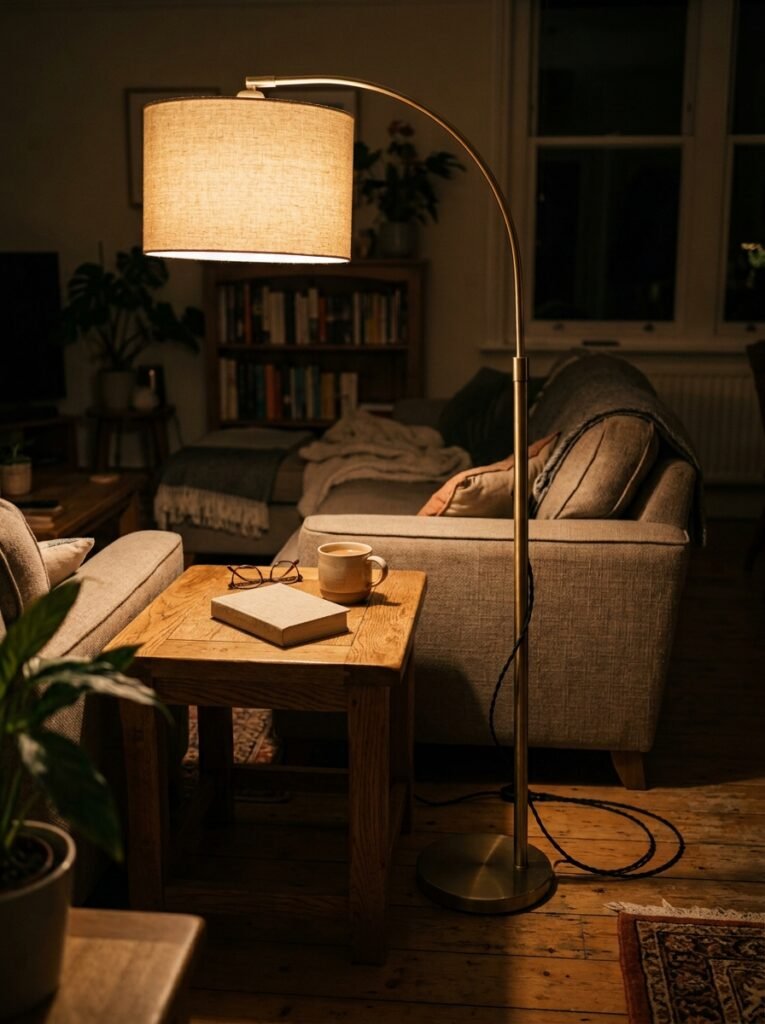
Not one overhead light. Please, not just one overhead light.
An overhead light alone in a small living room is the design equivalent of a fluorescent tube in a bathroom — it leaves nowhere to hide and no atmosphere to speak of. The room just looks small and functional. Which it is, but we’re trying to make it feel like more than that.
The amber glow of an Edison bulb at 7pm, coming from a floor lamp in the corner — that’s the light you want. Add a small table lamp on a side table or console. If you can, put one lamp behind the sofa on a shelf or windowsill for that backlit, layered effect that Instagram interiors always have and that’s actually simple to recreate.
Dimmers. If you can add a dimmer switch, add a dimmer switch. The single best upgrade I’ve ever made in a small living room, full stop. A dimmed warm light at 40% makes any room feel like an evening worth staying in.
“The amber glow of an Edison bulb in the corner at 7pm — that’s the whole mood. The rest of the room just follows.”
—
7. Shelving That Doesn’t Make the Room Feel Like a Storage Unit
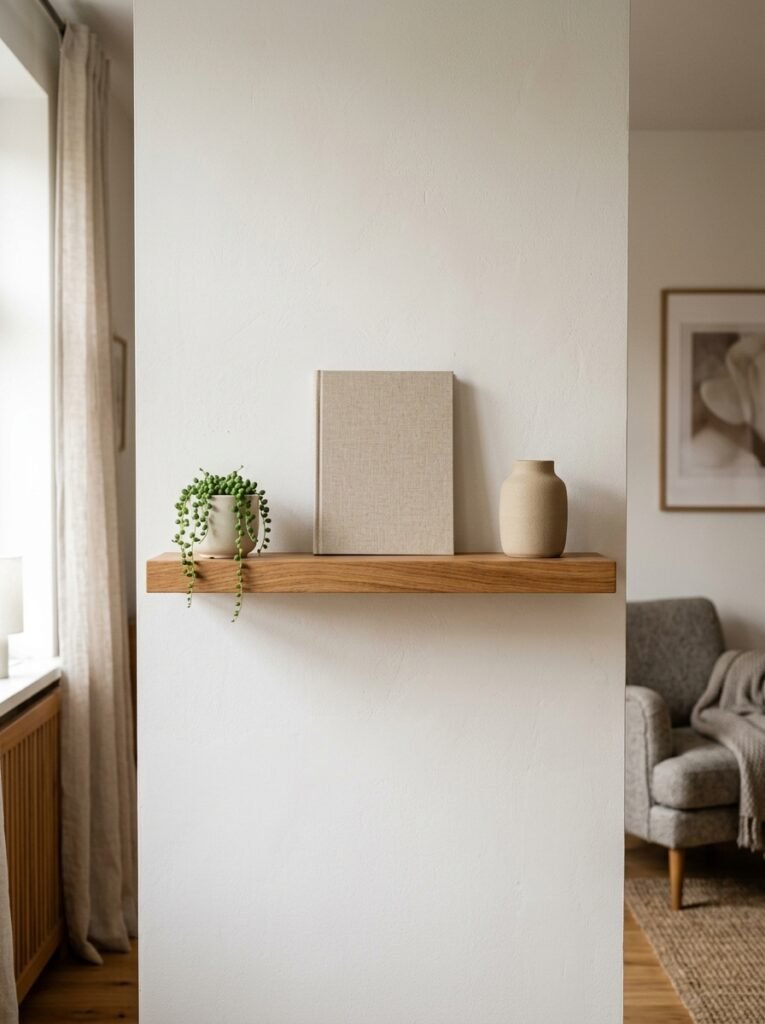
Floating shelves done badly look like a Tetris game exploded on your wall. You know the ones — mismatched heights, too many objects, no breathing room, a random trailing plant dangling off the end like it gave up.
Done right, shelving in a small living room is some of the most useful real estate you have. The trick is restraint and intention. Fill shelves to about two-thirds full, maximum. Leave actual empty space because the empty space is part of the arrangement — not a thing you forgot to fill.
Mix books (facing forward occasionally, not just spines out) with one or two objects. A small vase. A framed photo leaning at an angle. Something with height variation. And make the shelves themselves feel cohesive — if you’ve got five different shelf styles and colors on one wall, it reads as chaos rather than character.
Tall shelves are better than wide ones in a small room. They draw the eye upward, which adds perceived height. And don’t be afraid to go nearly floor-to-ceiling — a full wall of shelving, done with care, makes a tiny living room feel more like a library nook than a storage problem.
—
8. The Coffee Table Question Nobody Asks But Everybody Should
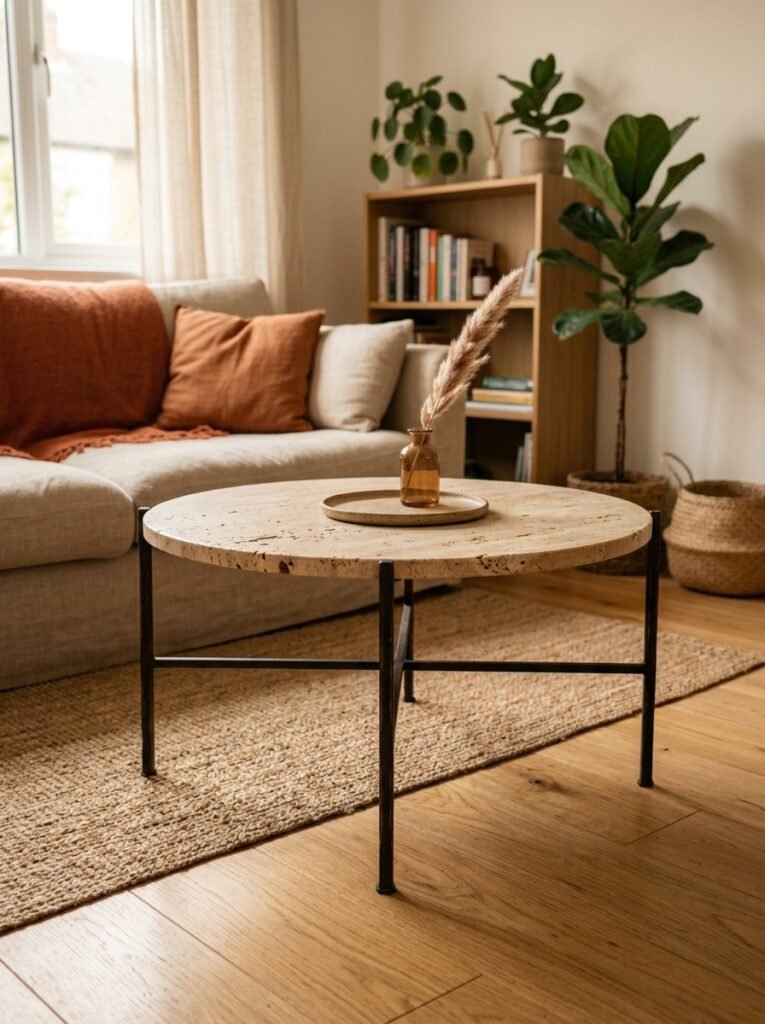
Do you actually need a coffee table?
Hear me out. In a very small living room, a standard rectangular coffee table can eat 30% of the floor space and make the whole seating area feel impossible to move through. You end up shuffling sideways to get to the sofa and knocking your shin on it every morning.
Alternatives that work better: a small round side table pulled up to the sofa. Two small nesting tables that slide apart when you need them. A large tray on an ottoman that doubles as a footrest — better still. An oversized woven basket that holds blankets and acts as a surface with a tray on top.
The point is that the traditional coffee-table-in-the-center setup was designed for rooms that have the square footage to absorb it. In a small living room, you’ve got options. Better options, honestly.
—
9. Mirrors That Actually Help (Versus the Ones That Just Exist)
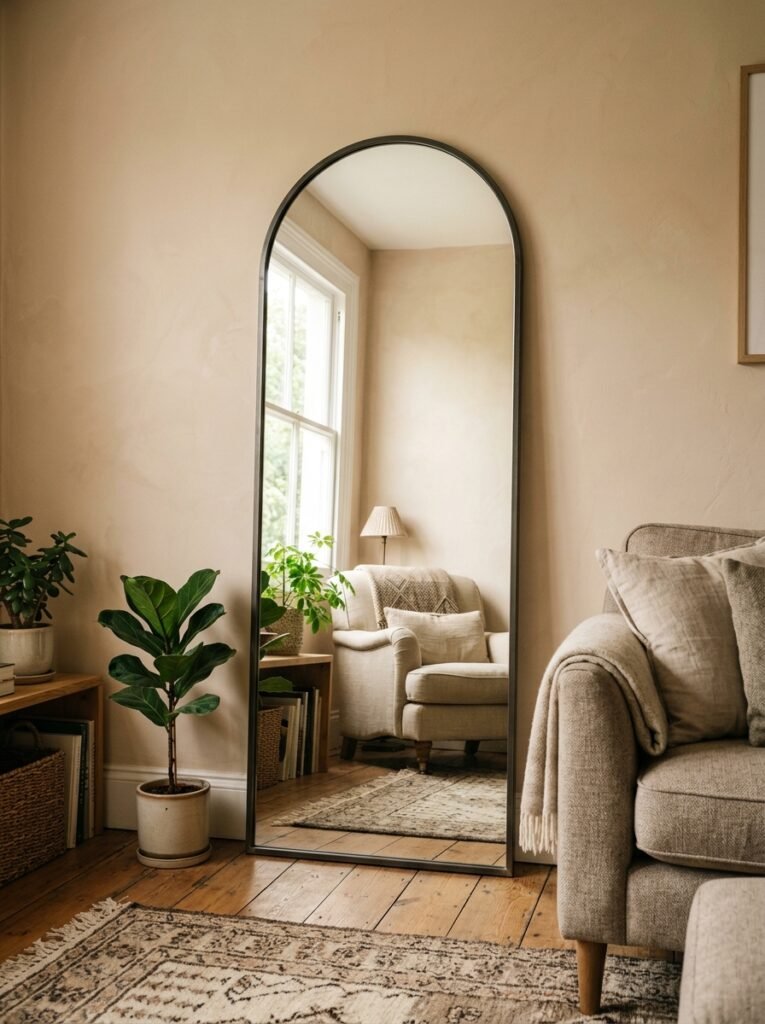
A mirror in the wrong spot just shows you your own sofa back. Or your own confused face every time you walk in.
The right spot for a mirror in a small living room is opposite a window, or angled toward a light source. Then it bounces light around the room instead of just reflecting a static wall back at you. That’s where the “mirrors make rooms feel bigger” thing actually comes from — it’s not the mirror, it’s the reflected light. Without a light source to work with, a mirror just decorates.
Shape matters too. Arched mirrors are having a serious moment and for good reason — the curved silhouette softens a room full of right angles (which most small living rooms are, entirely) and adds a bit of drama without taking up floor space. A large leaning mirror in a corner can change the whole feel of a small room in a way that feels much bigger than its footprint suggests.
—
10. Curtains Hung in the One Way That Changes Everything
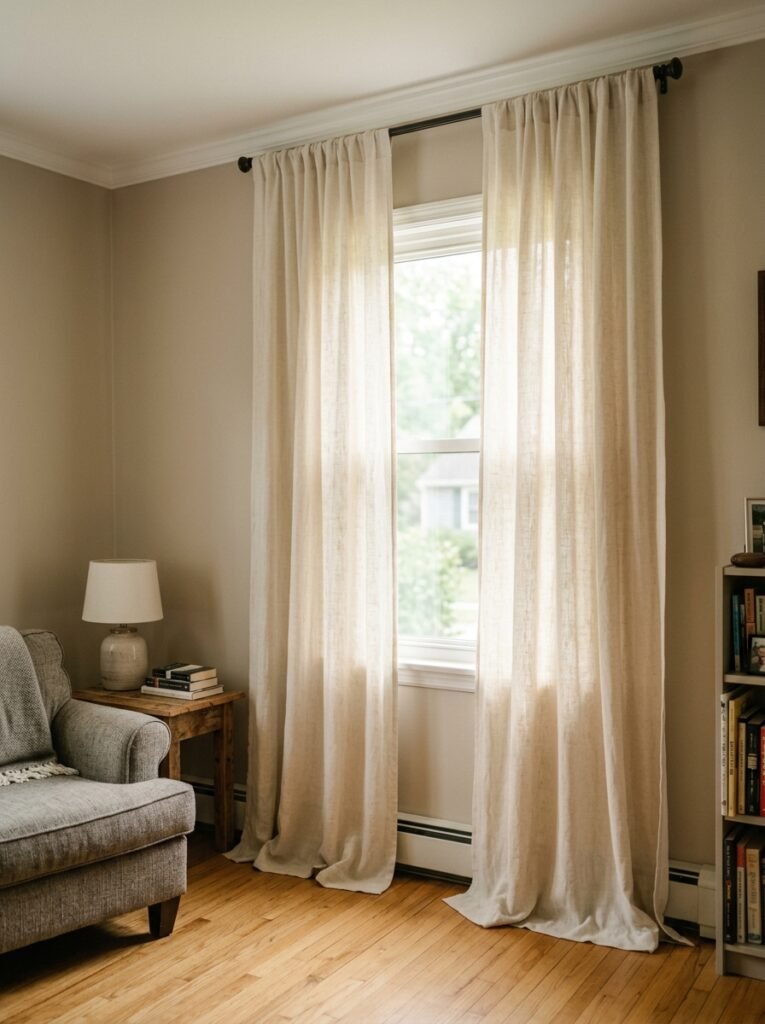
High and wide.
Hang your curtains as close to the ceiling as you can get them, not just above the window frame. And extend the curtain rod past the window on both sides — at least 8-10 inches either way, ideally more.
This makes the window look enormous, even if the actual window is modest. It frames the room rather than the window. And when the curtains are open, all that light isn’t being blocked by fabric, so the room gets genuinely brighter.
Linen curtains in a warm natural tone — undyed, slightly textured — are perfect for a small living room. They’re not precious. They move nicely. They let light through without being sheer. And they work in virtually every small-space color palette from warm white through terracotta through dusty blue-green.
“Hang them high, let them pool slightly — curtains should look like a choice, not an afterthought.”
—
11. The Tiny Detail That Makes People Think You Hired a Designer
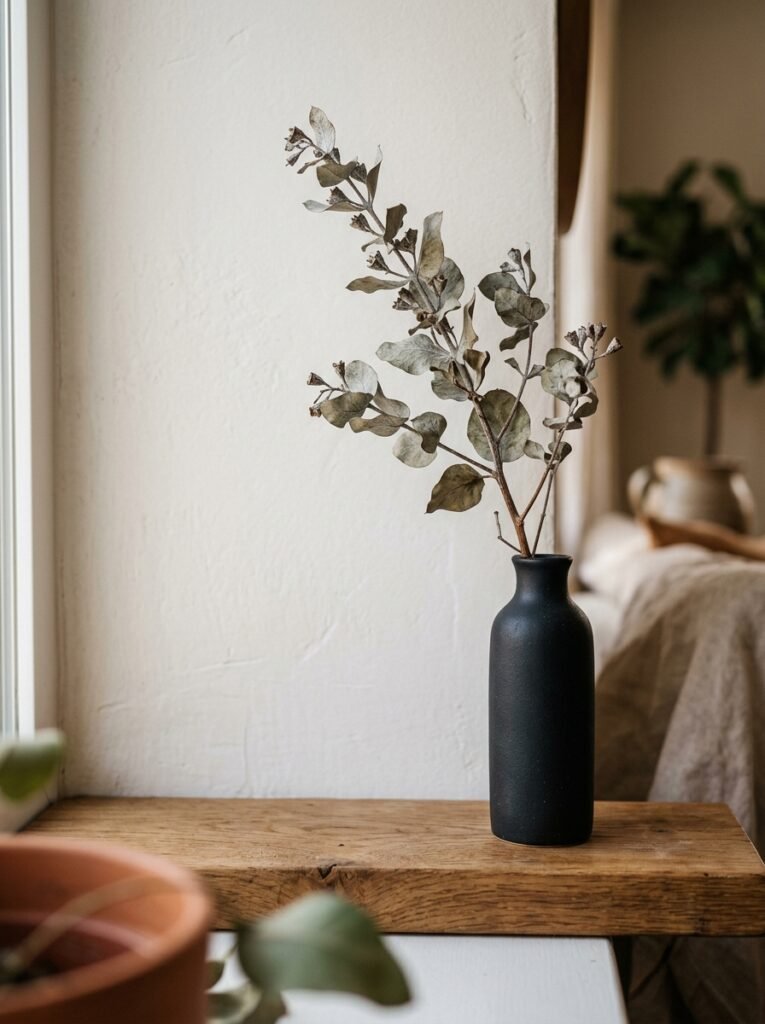
Books, but styled. Not stored.
There’s a difference between shoving books on a shelf in whatever order they came out of boxes and actually thinking about them for a moment. Turn some horizontal to create a little plinth for an object. Group by color loosely — you don’t have to go full rainbow, just put the earth tones together and the darker spines together. Leave a few turned face-out because the cover might be beautiful.
Same energy applies to the objects on your coffee table (or tray). Three things max: something tall, something small, something textural. A candle, a small bowl, a book with a good cover. That’s the formula. People walk into rooms like this and say “it just feels so put together” without being able to articulate why. It’s because every surface has been curated to exactly the right density, not stuffed and not empty.
It takes maybe fifteen minutes to rethink a shelf or a tray. It looks like someone spent a lot of money.
—
12. The Part Where Minimalism Actually Means Something
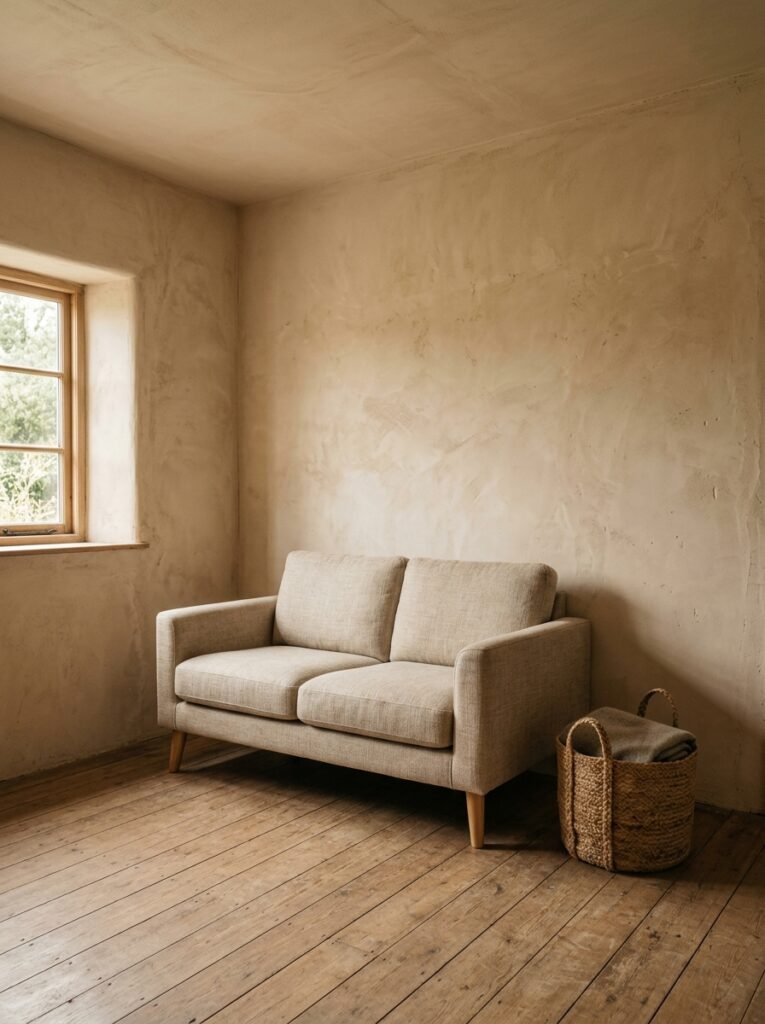
Minimalism in a tiny living room doesn’t mean stark. It doesn’t mean cold. And it definitely doesn’t mean beige everything and one sad plant.
It means: only what earns its place. That lamp that flickers and you’ve been meaning to fix? Gone. The throw that’s pilled and sad? Gone. The picture that’s not quite right for the wall but you haven’t bothered to replace? Find something you actually love, or leave the wall empty — honestly, an intentional empty wall reads better than a picture that’s just there.
The warmth in a minimalist tiny living room comes from texture and quality, not quantity. One really beautiful throw. One candle that smells incredible and looks good even unlit. A plant that’s actually thriving, not surviving. A rug that feels amazing underfoot.
When you get this right — when the room has exactly what it needs and nothing it doesn’t — small stops being a limitation and starts being something you’d miss if you moved somewhere bigger. I’ve been in that bigger space now for two years. And I still think about that tiny living room, and how it felt at 7pm with the lamps on and nowhere else I needed to be.
—
❓ FAQ
Q: What’s the best sofa size for a very small living room? A: If you’re working with a room under roughly 120 square feet, look at two-seater sofas rather than three-seaters — but make sure they have low, slim arms so they don’t visually dominate. A compact two-seater with a good deep seat can feel more comfortable than a three-seater you’re constantly climbing over.
Q: Should I avoid dark colors in a small living room? A: Not at all. Dark walls can make a tiny room feel cozy and intentional rather than just small. The key is pairing dark walls with warm lighting and enough textural variation (different fabrics, materials, surfaces) so the room has depth rather than just feeling dim.
Q: How do I make a small living room work when it’s also a dining space? A: Define the zones clearly without physically separating them — a rug under the seating area and a pendant light over the dining area do that job well. Keep furniture profiles slim and choose a dining table that can fold or extend, so you’re not sacrificing space you need daily for occasions that only happen occasionally.
—
💭 Final Thoughts
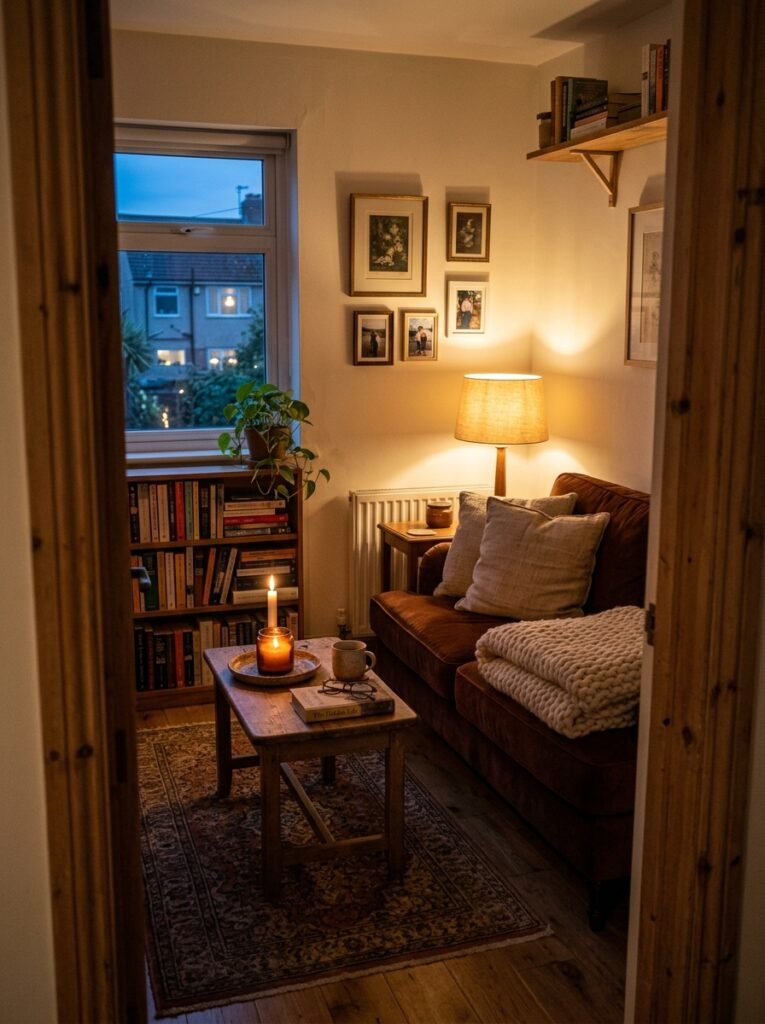
The rooms that stay with you aren’t the biggest ones. They’re the ones that felt like someone made them exactly for a specific life and a specific hour of the day. A tiny living room, done with intention, can be that. And it almost always costs less to get right than a bigger space does.
What’s the one thing in your small living room that isn’t earning its place?