
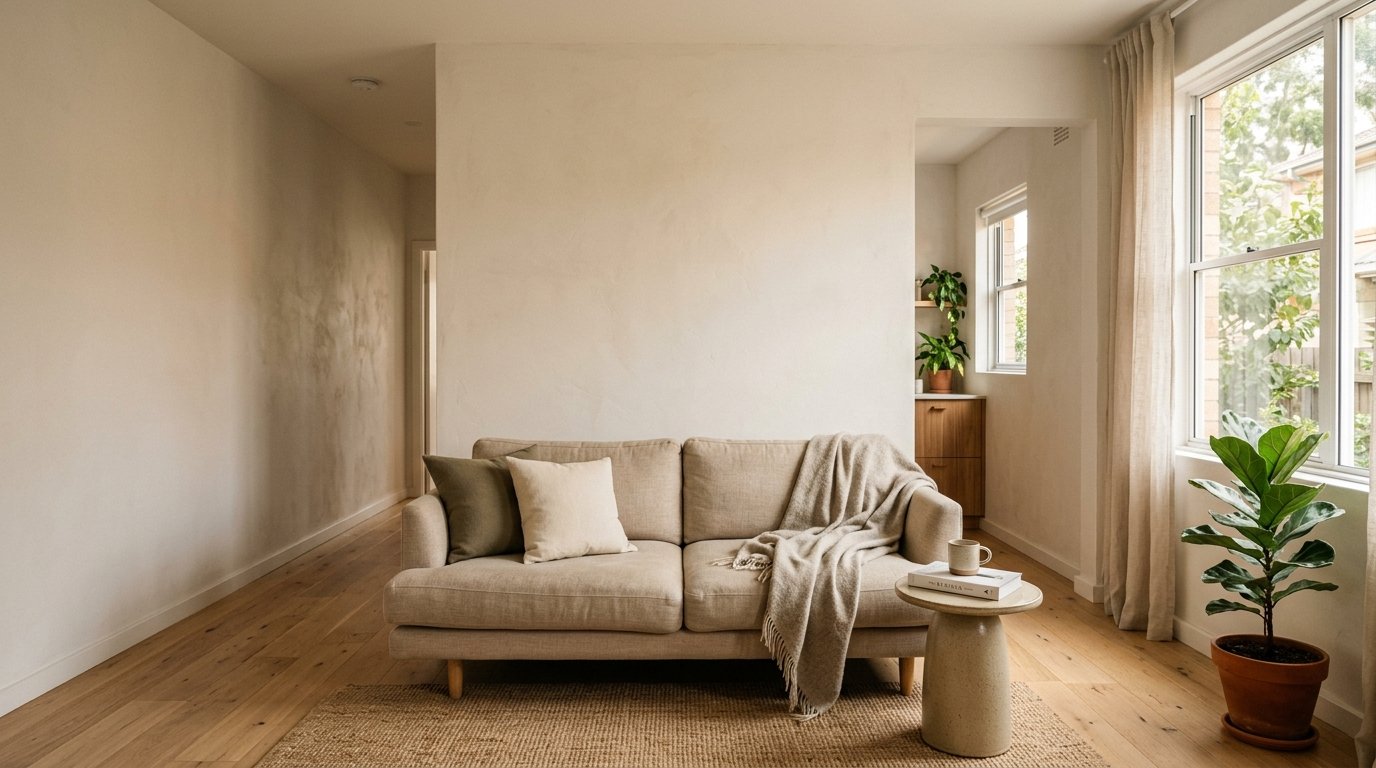
The Small Living Room Isn’t the Problem — Your Expectations Are
My friend looked at my flat and said, “But where does everything go?” And I said, “That’s the whole point. Nothing needs to go anywhere.”
That was three years ago. I’ve been rethinking small living rooms ever since.
—
1. Why “Minimalist” Doesn’t Mean What Pinterest Made You Think It Means
Let’s clear this up right now. Minimalist doesn’t mean cold, empty, or sad. It doesn’t mean one grey couch facing a blank wall while you sit in silence questioning your choices.
It means intentional. Every single thing in the room is there on purpose, and nothing else is.
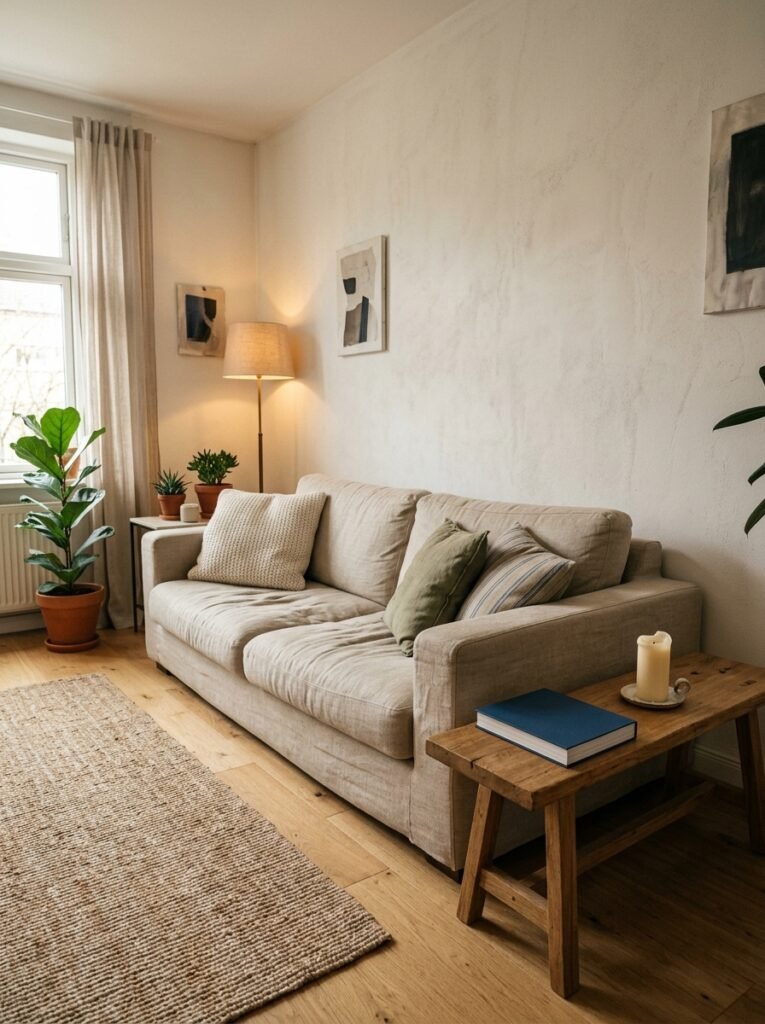
The problem is we’ve been shown these beautifully staged, filtered spaces that look like nobody actually lives in them. And real minimalism — the kind that works in a small house, in an actual life — looks a bit different. There’s a novel on the side table. There’s a throw blanket you actually use. Maybe one slightly imperfect plant that’s doing its best.
That’s fine. That’s the whole deal, honestly. You’re not decorating a showroom. You’re making a room that feels genuinely good to be in. Those are not the same project.
“Minimalism in a small space isn’t about having less — it’s about noticing every single thing you do have.”
—
2. The Furniture Mistake Almost Everyone Makes in a Small Living Room
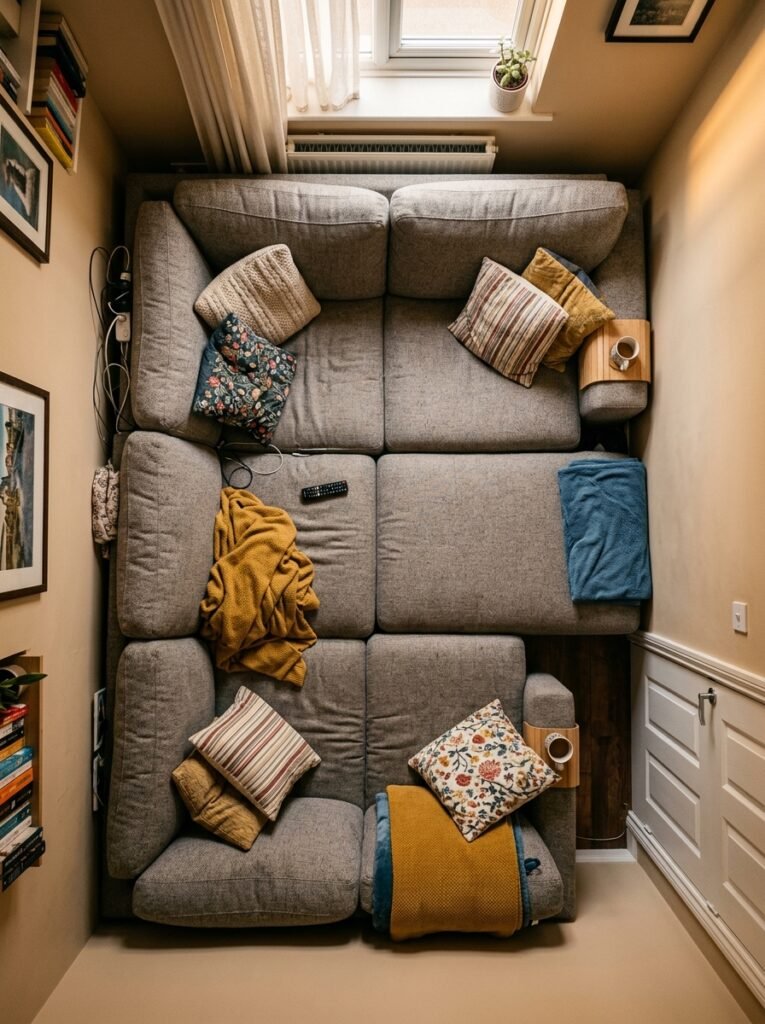
Buying small furniture for a small room. I know. Sounds logical. It’s wrong.
Or — okay, it’s not completely wrong, but it’s much more complicated than that. One small sofa, one small chair, one tiny coffee table, and you’ve created a room that feels like a collection of apologetic little objects. Nothing anchors anything. The whole space feels provisional, like you’re camping.
What actually works is choosing ONE piece that’s confident. Big enough to mean it. A sofa that actually fits two people comfortably and looks like it knows it belongs there. Build around that. Keep everything else pared back and lower to the ground so the eye has somewhere to rest and somewhere to travel.
Low furniture — low-profile sofas, floor cushions, a flat coffee table — draws the eye downward and makes ceilings feel higher. It’s a genuinely useful trick and you’ll notice the difference immediately.
—
3. The Color That Keeps Showing Up in Every Beautiful Small Living Room Right Now
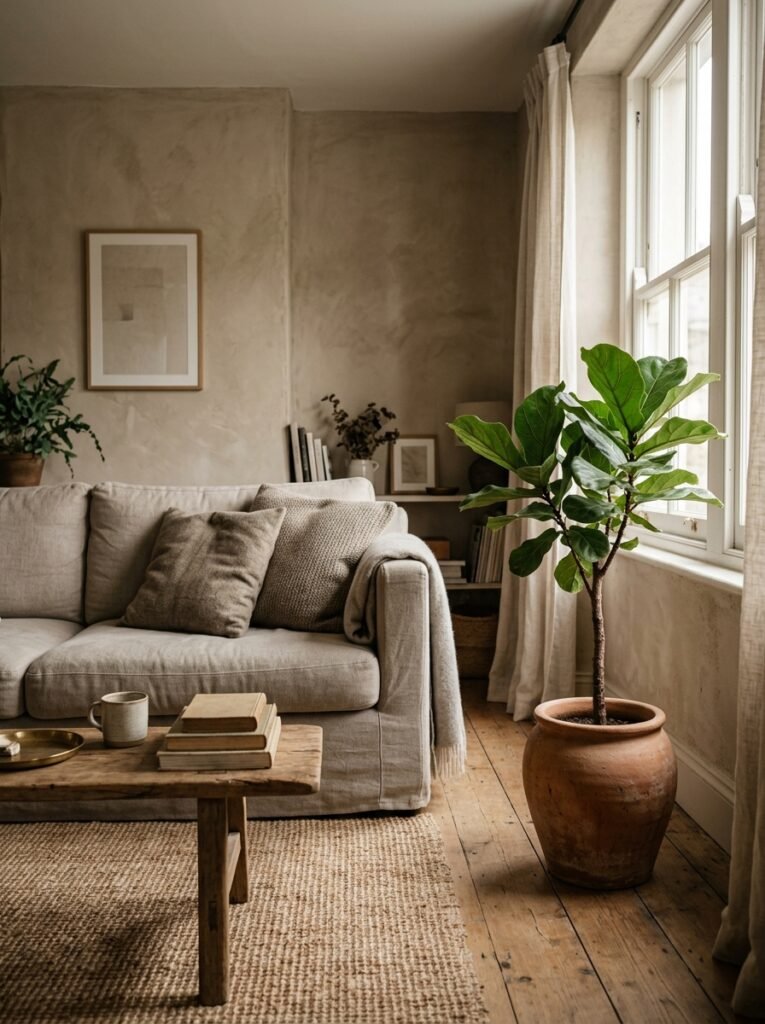
It’s not white. It’s not the soft greige everyone did for a decade.
It’s this quiet, slightly warm off-white with just a suggestion of clay in it. Not pink. Not beige exactly. Something in between, depending on the light in your specific room. In morning light it looks almost linen-pale. By 5pm it goes faintly golden. At night under a lamp it gets genuinely cozy.
The reason it works so well in small rooms is that it doesn’t fight for attention, but it’s not sterile either. It has a little life. Your furniture looks intentional against it. Your textures — a woven throw, a matte ceramic lamp, a linen cushion — actually read as interesting instead of disappearing.
White walls are fine, but they’re unforgiving. Every scuff, every shadow, every bit of furniture that’s not perfectly curated shows up hard. That slightly warm undertone gives you a bit more grace to work with.
Side note — if you’re renting and can’t paint, this is exactly what warm-toned textiles are for. Stack your soft furnishings in those clay and oat tones and your walls will sort of… shift to meet them. It genuinely works.
—
4. What to Do With the Wall Your Eye Goes to First
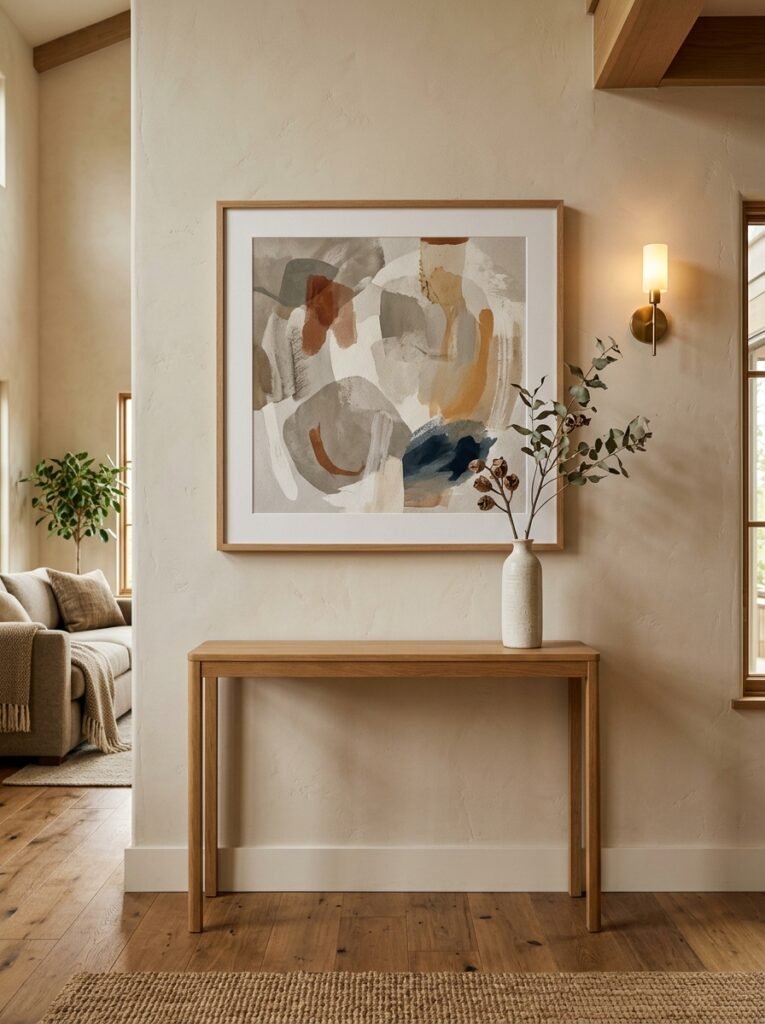
Every small living room has one. The wall you see the second you walk in, or the one you’re facing when you sit down. This wall is doing so much work and most people waste it.
Not in a maximalist way. In a deliberate, intentional, slightly surprising way.
One large piece of art hung lower than you think you should hang it. Or a single large round mirror — not the gallery wall with fourteen different frames, just one round mirror, slightly off-center, hung so it catches daylight and bounces it somewhere interesting. Or even just a shelf with three things on it, specifically chosen, with actual breathing space between them.
The goal is for the eye to have one clear, settled place to land. In a small room, visual clutter is physical clutter. When your eyes can’t rest, the room doesn’t feel restful, no matter how tidy it actually is.
Less on that focal wall than you want to put. Always.
—
5. The One Rule That Makes Any Tiny Room Feel Intentional
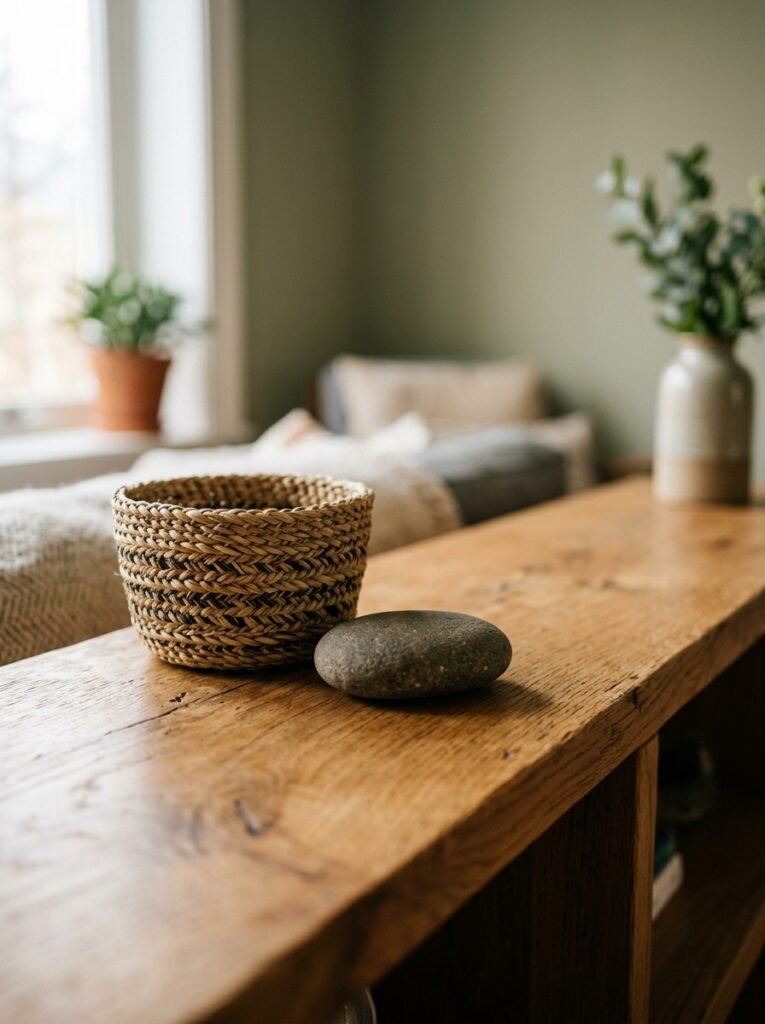
Everything at one height except one thing.
Sounds weird. Stick with me. In small spaces, when you have lots of objects at lots of different heights — a floor lamp, a tall plant, a stack of books, some candles, a high shelf — the room reads as chaotic even when it’s technically tidy. Your eye doesn’t know where to land. It just bounces around.
So here’s what you do. Keep most of your objects low — coffee table level, side table level, things that sit and feel grounded. Then choose ONE tall vertical element. One floor lamp with a slender profile. One fiddle leaf or tall narrow plant. One.
That single tall element acts like an exclamation point. It draws the eye up, it adds height, but because it’s the ONLY thing doing that, it feels purposeful instead of cluttered. It makes the room feel like you made decisions. And in small-space minimalism, feeling like you made decisions is basically everything.
—
6. Rugs Are Doing Way More Work Than You’re Giving Them Credit For
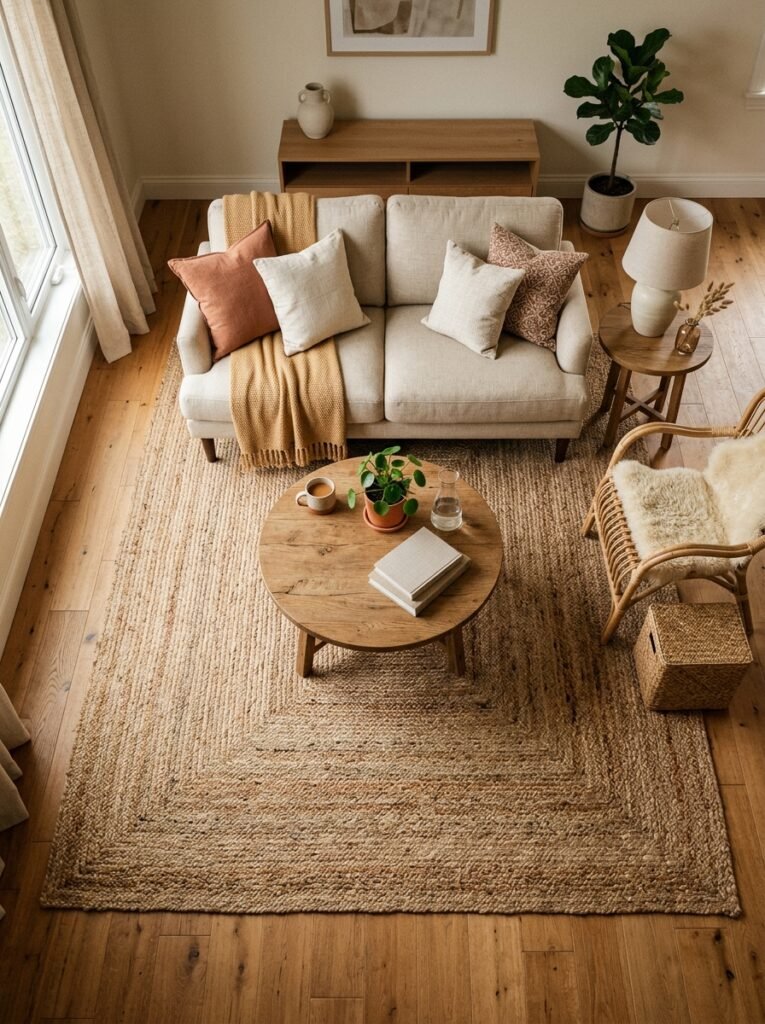
A rug defines a space. In an open plan room or a small living area that’s trying to be multiple things at once, the rug is telling the eye “this is the living room. This is where that starts and ends.”
The wrong rug makes a small room feel cramped and bitty. The right one makes it feel curated, grounded, complete.
“Go bigger than you think. If the rug doesn’t reach under the front legs of your sofa, it’s too small — and it’s making your room look smaller.”
Most people buy rugs that are too small. It’s one of the most common mistakes in small space decorating. A rug that floats in the middle of the room, not touching anything — it shrinks the whole space visually.
Front legs of your sofa on the rug. Or if you can manage it, all four legs. The room will immediately look pulled together in a way that’s hard to explain but impossible to miss once you’ve seen it.
For texture: something woven, something with a little pile, something matte and natural. Not a shiny synthetic rug. In a minimalist room especially, the texture of a natural fiber rug is doing a huge amount of the cozy work.
—
7. Why Every Small Living Room Needs Exactly One Thing That Has No Practical Purpose
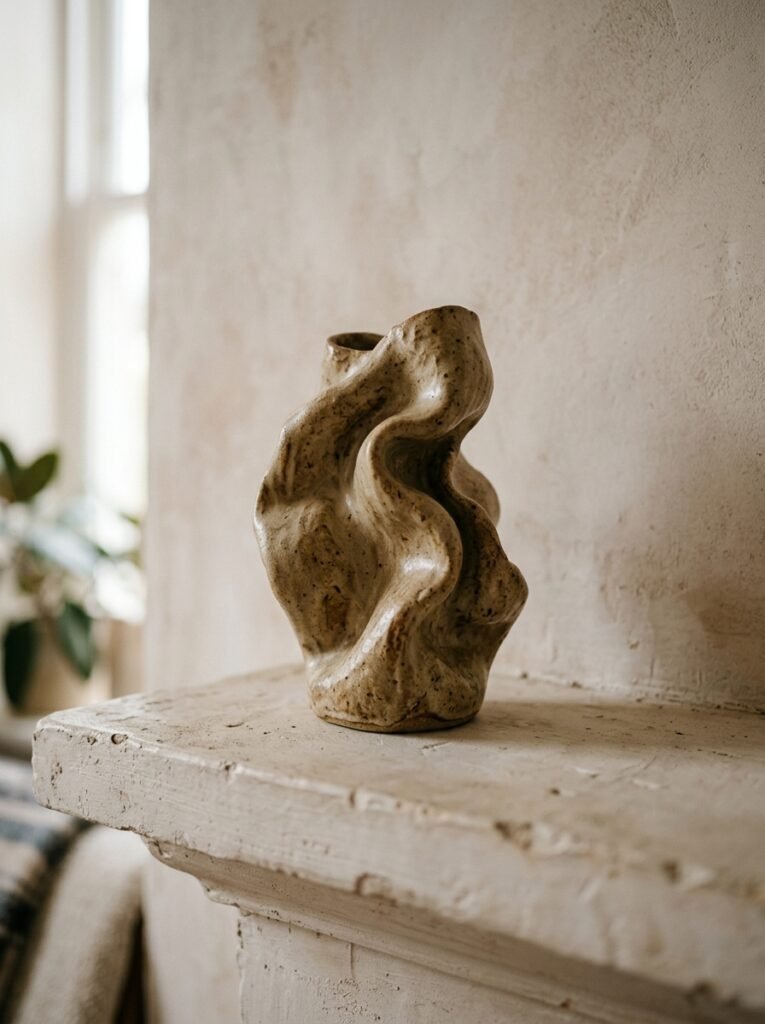
Hear me out.
When everything in a small minimalist room is useful — every surface, every object, every shelf — the room starts to feel efficient rather than lived in. It feels like a very nice studio apartment that was staged to sell.
You need one thing that’s just beautiful. Or just meaningful. Or just interesting. A small sculpture you found at a market that you’ve never been able to explain. A ceramic bowl in a color that makes you happy every single time you walk past it. A dried branch in a glass vase, if that’s your thing. Something with no function.
That one useless beautiful thing is what makes the room feel like yours. And in a small space especially, a room that feels like yours feels bigger than one that doesn’t. Or maybe it’s the opposite, honestly — maybe the room size stops mattering entirely. Either way, you stop noticing it.
—
8. Lighting Is the Cheapest Way to Make a Small Room Feel Like a Different Room
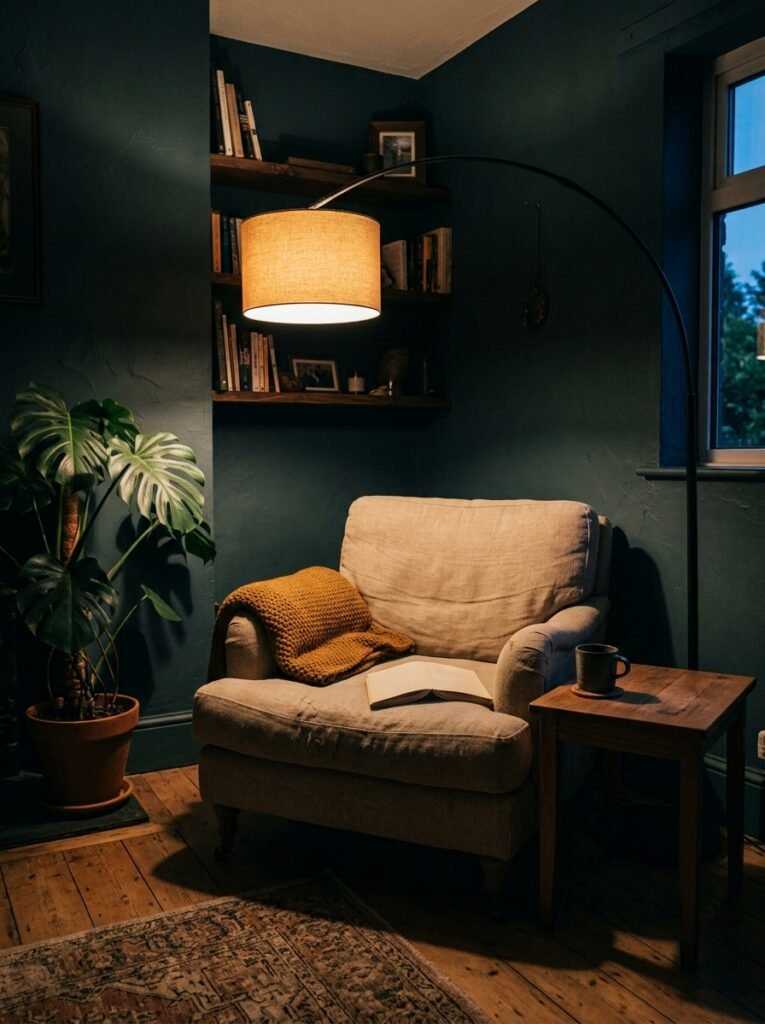
Not talking about a big renovation. Not talking about rewiring.
I mean: ditch the overhead ceiling light as your primary source and add one lamp. Just one, to start. An Edison bulb at low wattage, set at about eye level when you’re sitting. That’s it. That one change will make your small living room feel warmer, more intimate, more like somewhere you’d actually want to spend an evening.
Overhead lighting flattens everything. It removes shadows. And in a small room, removing shadows actually makes the space look smaller because nothing has any depth. Low, ambient light from a lamp or two creates pools of warmth. The corners go slightly soft. The room feels like it has dimension.
String lights work too, surprisingly. Not in a chaotic teenage-bedroom way — but a single strand along a shelf or around a window frame gives off this gentle, golden light that’s really hard to replicate any other way. Works especially well in the evening in November when British winter is doing what British winter does.
—
9. Storage You Can Actually See Vs. Storage You Should Really Hide
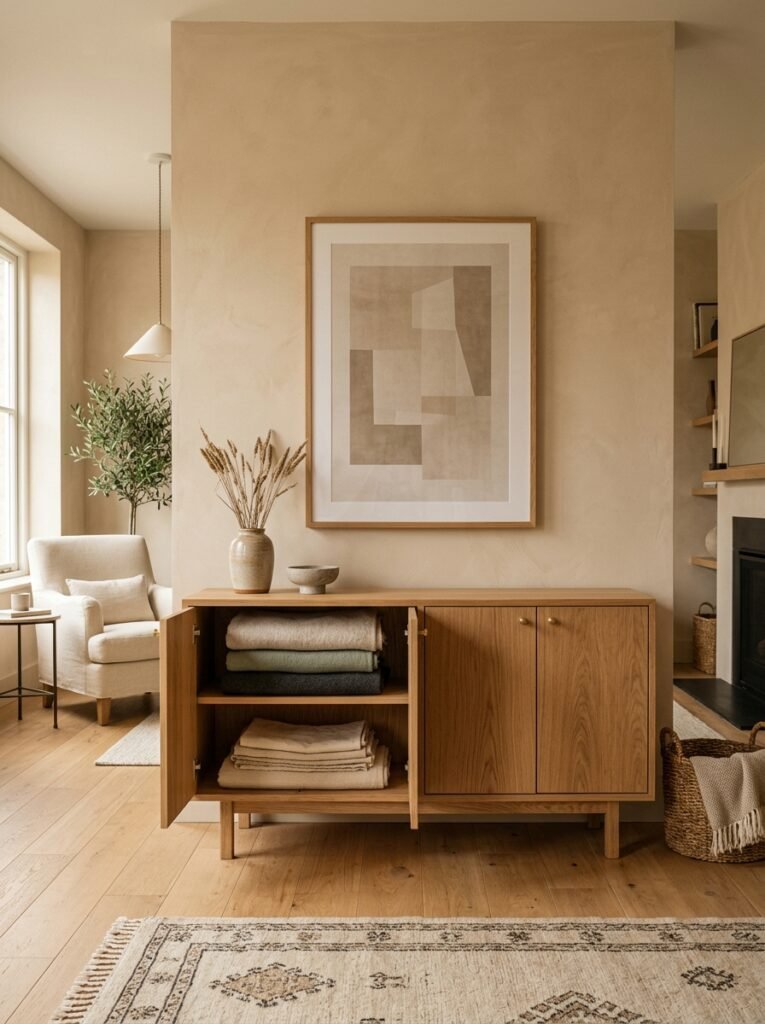
This is where people get into trouble with minimalism in small rooms. They think they need to hide EVERYTHING. They buy a million lidded baskets and boxes and the room starts looking like a storage room that’s trying to look like a living room.
Some things should be visible. If your books are beautiful — keep them on an open shelf, arranged by color or by size or just by how they feel, not alphabetically like a library. If your throw blankets are lovely, fold them over an arm. If your candles are interesting shapes, put them somewhere.
But cables? Hidden. Random mail? Hidden. That pile of stuff that’s been waiting to go upstairs for three weeks? Hidden or dealt with. The visual noise of objects-in-progress makes a small room feel chaotic in a way that’s disproportionate to how much stuff is actually there.
The rule I use: if I’d be okay with a guest seeing it, it can be visible. If I’d mentally explain or apologize for it when someone came over, it goes away.
—
10. Mirrors Don’t Work the Way You Think They Do in Small Rooms
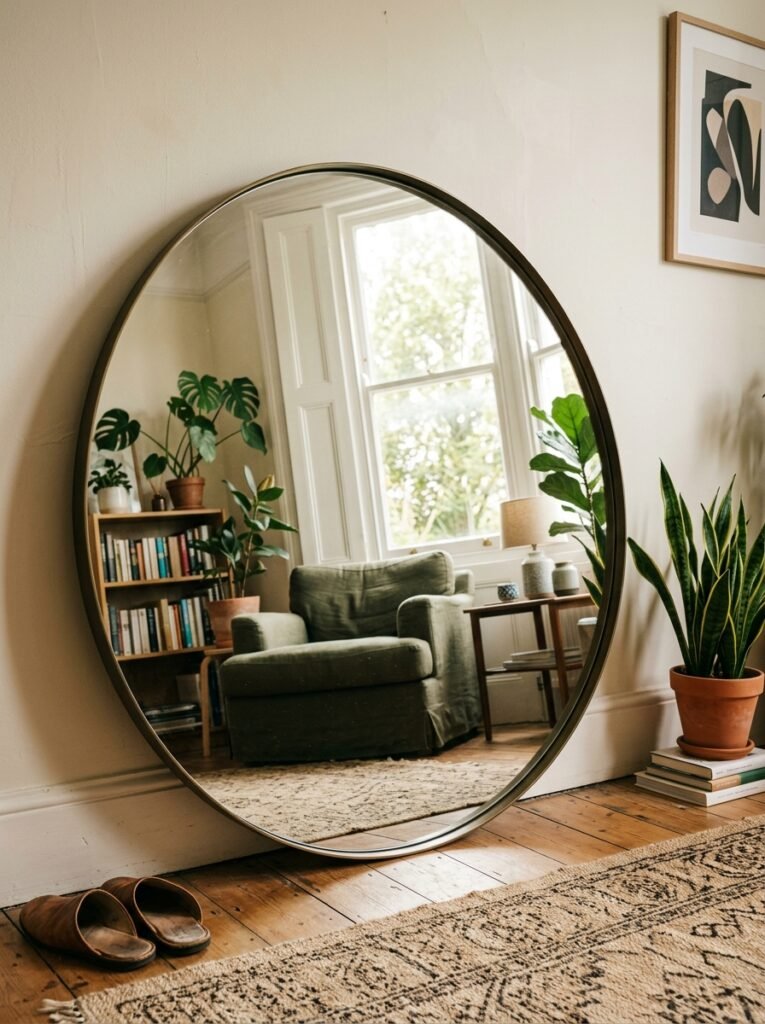
Everyone says “put a mirror in a small room to make it feel bigger.” True, kind of. But where you put it matters enormously and most people get this wrong.
A mirror hung on the wall opposite your window doubles the daylight in the room. That’s the one that actually works. Natural light reflected back into the space makes it feel genuinely larger, airier, more alive. That’s the real trick — it’s not about the reflection of the room itself, it’s about the light.
A mirror hung on a random dark wall just shows you a slightly dim reflection of your room. It doesn’t do much. It might even emphasize the smaller aspects, depending on what it’s reflecting.
One large round mirror, opposite the best window in the room. That’s the placement. Don’t overthink it beyond that.
—
11. The Plant Situation (Because There’s Always a Plant Situation)
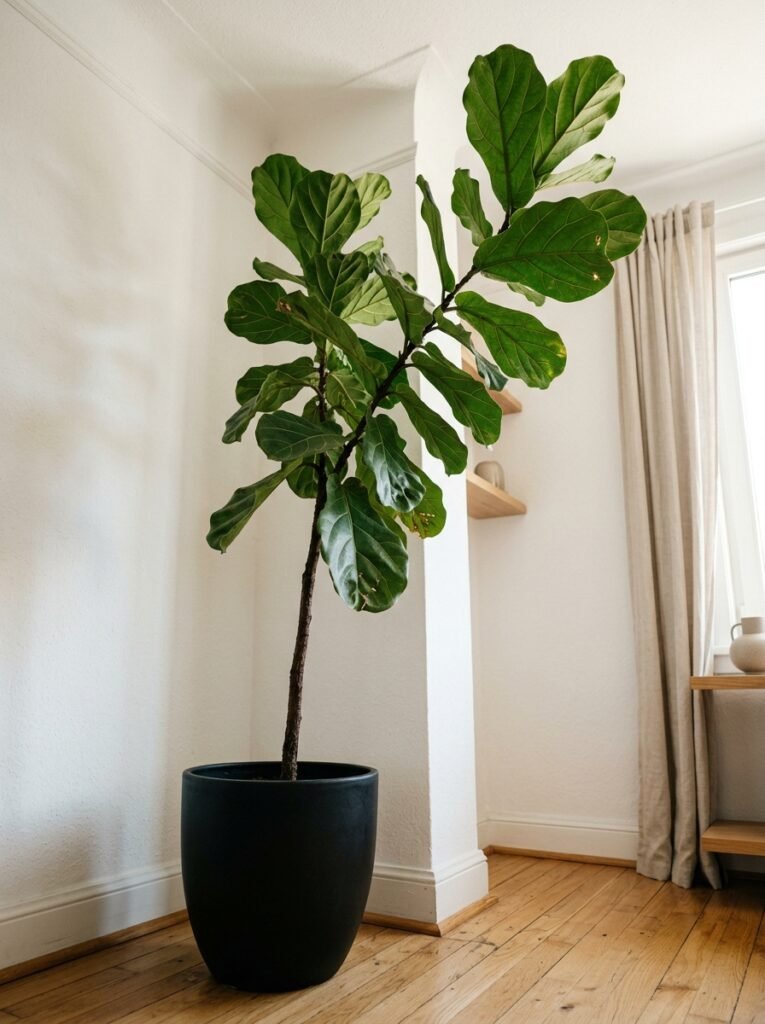
Minimalism doesn’t mean no plants. But it might mean fewer plants than you have.
One confident plant beats six struggling ones. In a small living room especially, a single large potted plant — something with big, sculptural leaves if possible — adds greenery, life, and that organic softness that a minimalist room NEEDS to feel warm instead of sterile. And it looks intentional. Six small plants in different pots on different surfaces looks like you haven’t decided what you want yet.
Not that there’s anything wrong with that. But if you’re going for a pulled-together small-space minimalist look, one statement plant is going to do more for you than a collection.
The exception is trailing plants on a shelf. One shelf, one type of trailing plant, letting it go. That actually works beautifully and reads as a deliberate choice rather than accumulation.
“A single large plant in the corner of a small living room does what no amount of decoration can — it makes the space feel like something is actually living there.”
—
12. What the Best Small Minimalist Living Rooms All Have in Common
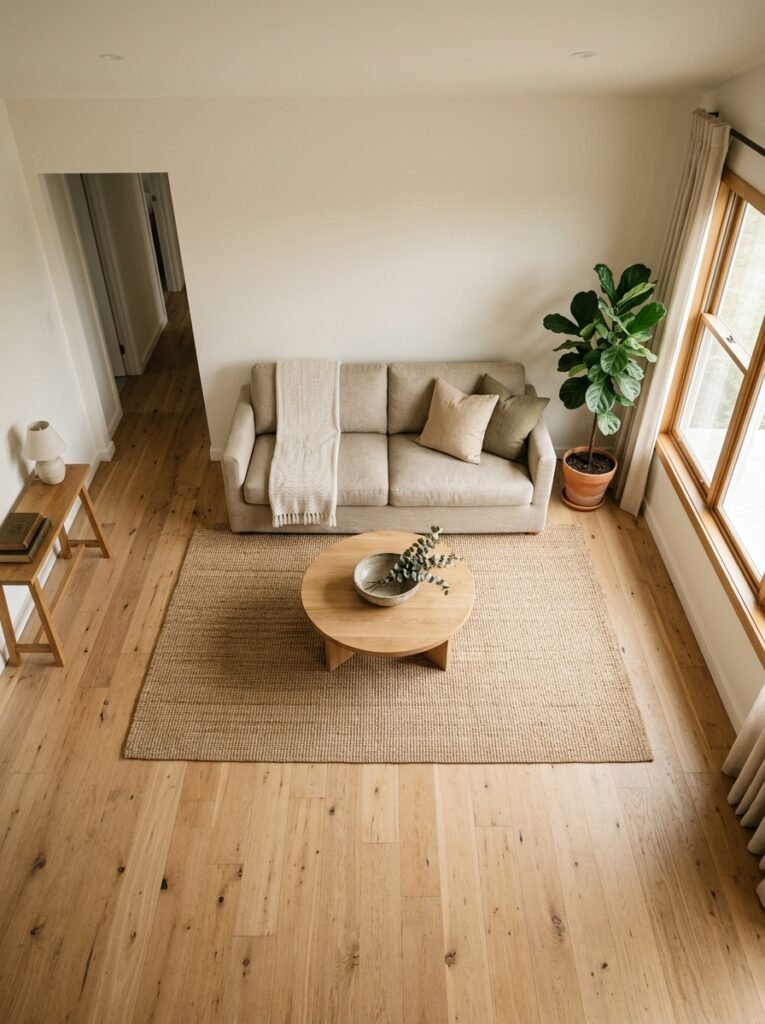
It’s not a specific style, color, or piece of furniture. It’s a feeling.
They feel like someone made choices. Real choices, not just “this was affordable and it fit.” They have texture where they need warmth, they have space where they need breath, and they have one or two things that are genuinely interesting to look at.
They don’t look like they’re trying to look bigger. That’s the thing. The ones that are desperately trying to appear larger — the mirrors everywhere, the light furniture, the everything-pale — they feel apologetic about their size. The rooms that are actually wonderful feel like their size is a feature. The coziness is intentional. The intimacy is the whole point.
A small living room can be one of the most genuinely lovely rooms in a house. You just have to stop trying to pretend it’s a different room, and start making it the best version of exactly what it is.
—
❓ FAQ
Q: How do I make a small living room look bigger without spending a lot of money? A: The two highest-impact free or low-cost changes are lighting and decluttering. Swap overhead lighting for one or two low lamps, and clear any surfaces that have passive accumulation on them — things that landed there and never left. Those two things alone change how a room reads more dramatically than most furniture updates.
Q: What’s the best sofa for a small minimalist living room? A: Something low-profile, in a solid neutral, with slim or barely visible legs. Raised legs let you see the floor underneath, which adds visual space. Avoid anything with thick, rolled arms or heavily tufted upholstery — in a small room it starts to feel overpowering. A two-seater or compact three-seater in a tight linen or boucle fabric tends to work really well.
Q: Can a small living room have a minimalist look if I have kids or pets? A: Yes, but you have to be strategic about storage. The goal shifts from “own fewer things” to “have a place for everything and actually use it.” Baskets, closed console storage, a coffee table with drawers — anything that lets you reset the room quickly at the end of the day. The minimalist aesthetic is more about what the room looks like at rest than what it looks like in active use.
—
💭 Final Thoughts
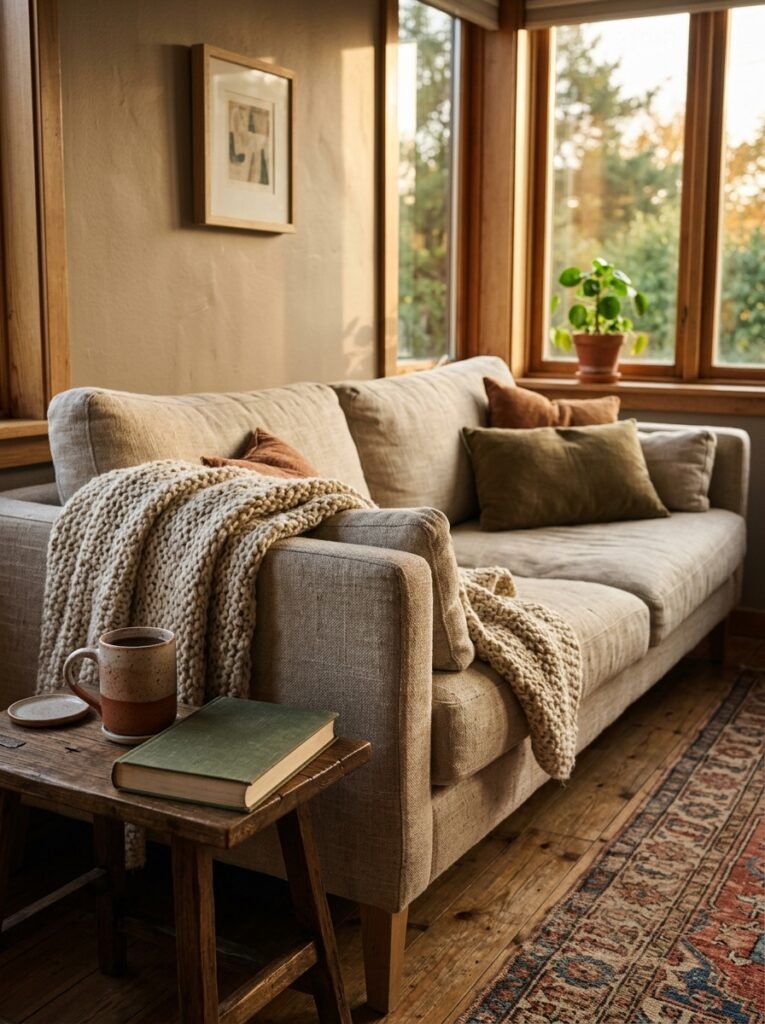
Small living rooms have this quality that larger ones sometimes don’t — when you get them right, they feel like a room that’s wrapping around you. Intimate in a way you can’t manufacture in a big space no matter how hard you try.
The best version of yours isn’t a bigger room. It’s this one, but braver. Fewer things, better chosen, more deliberately placed.
What’s the one thing in your living room right now that you kept out of guilt rather than love?