
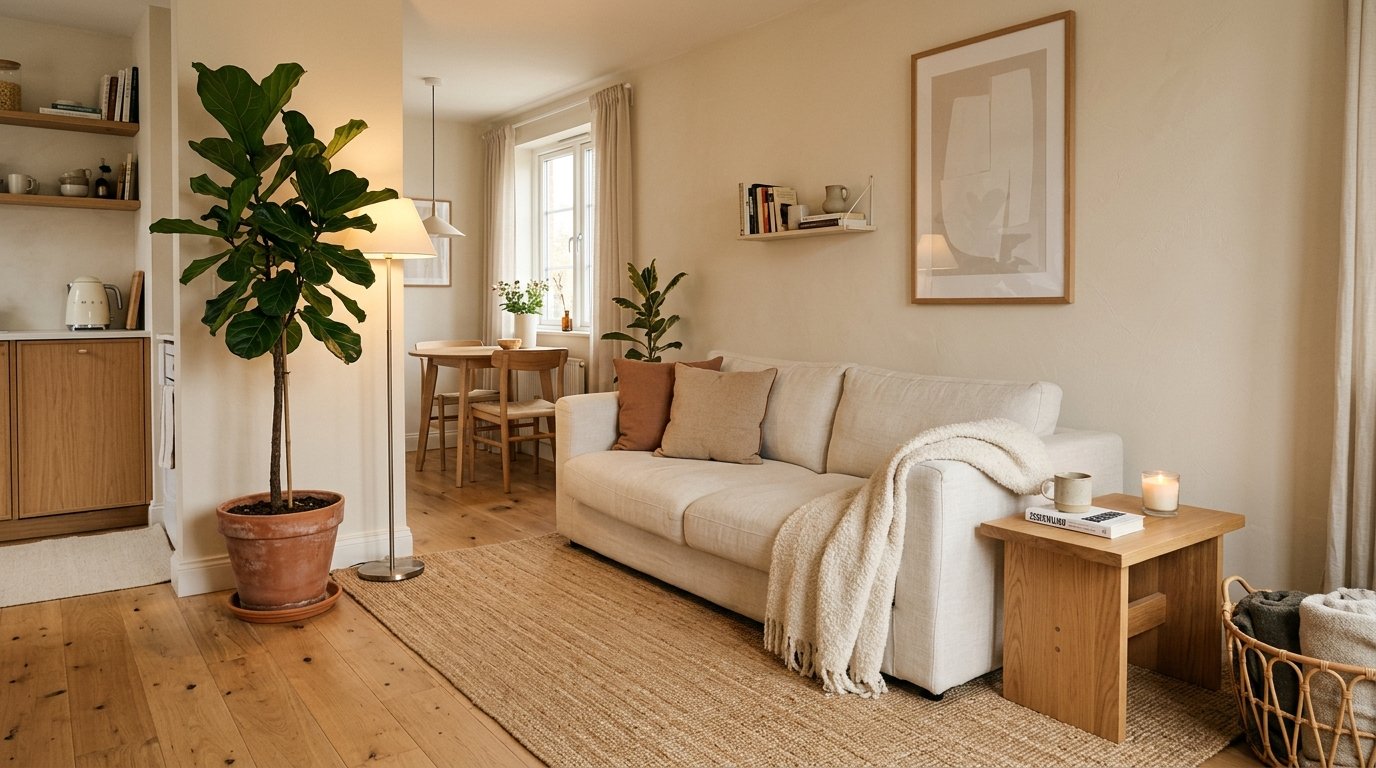
The Living Room That Feels Bigger Than It Is (And Why Yours Already Has That Potential)
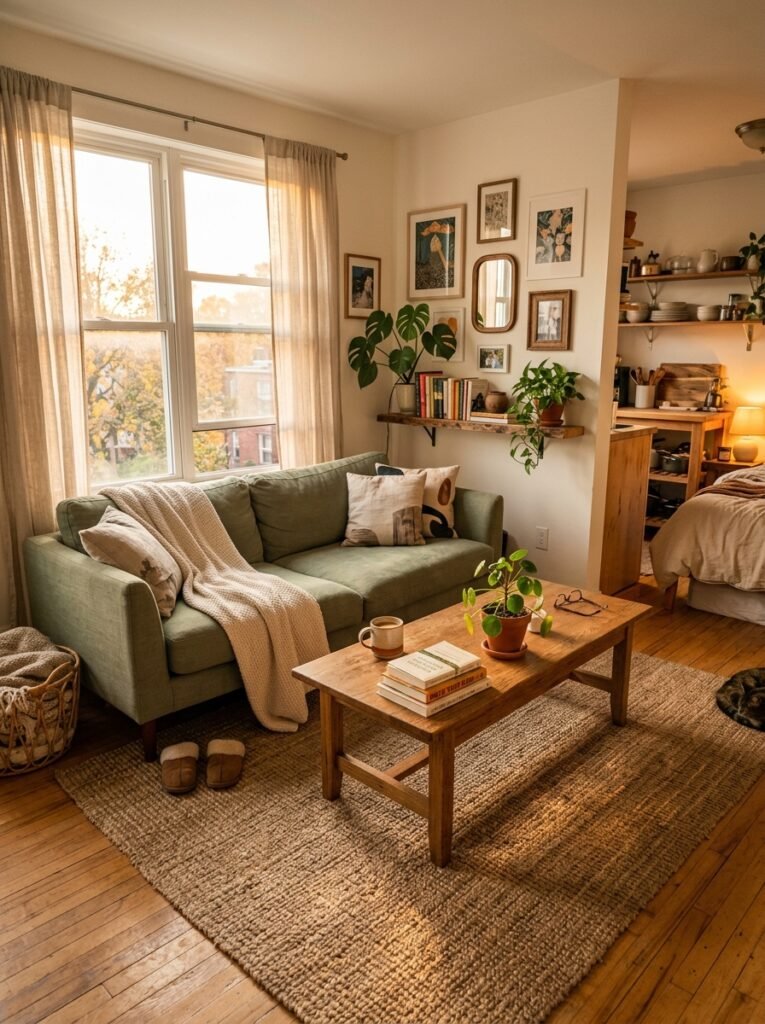
My friend called me from her new studio flat last spring. First words: “I can’t do this. There’s nowhere to put anything.” She wasn’t being dramatic. The whole place was maybe 350 square feet, and she’d just moved in with a sofa that was, objectively, too big for it.
We talked for two hours. And by the end of that conversation — me pacing my own living room, sketching nothing on a scrap of paper — we’d figured it out. Mostly.
—
1. The First Thing You’re Probably Getting Wrong (It’s the Rug)
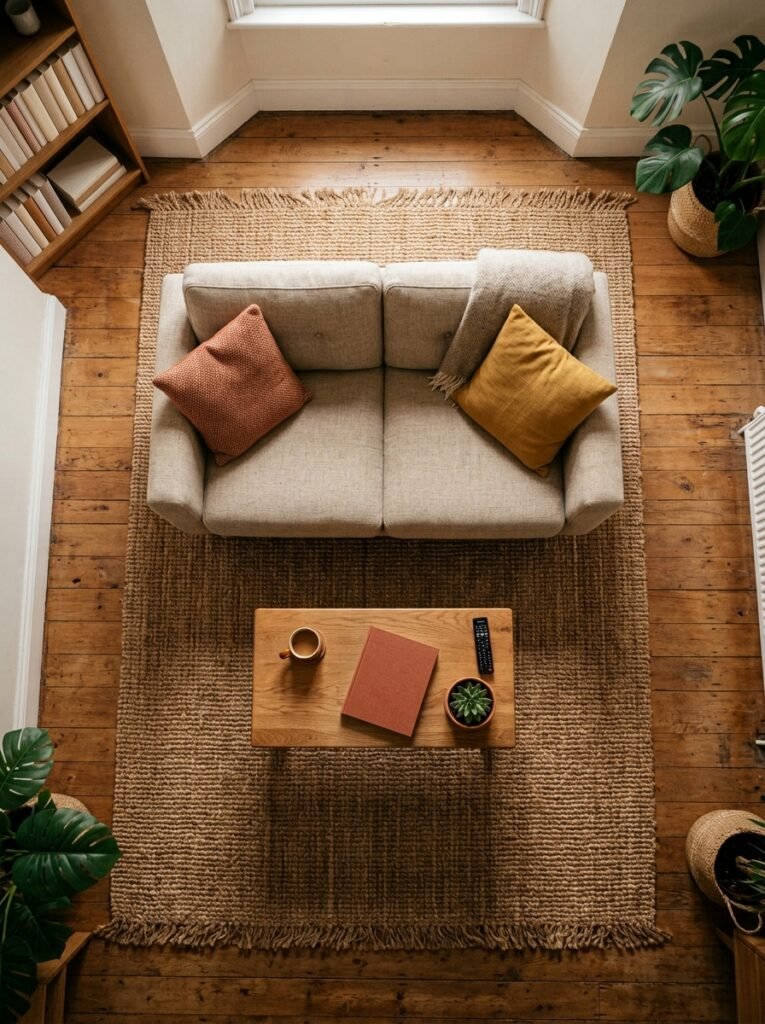
Too small. The rug is almost always too small.
I know why this happens. You see a small room, you buy a small rug. Feels logical. But a tiny rug in a small room actually shrinks the space visually, because your eye reads it as a separate little island, disconnected from everything else. The furniture floats. Nothing belongs to anything.
Here’s what works: go bigger than feels right. Front legs of the sofa on the rug at minimum. All four legs if the room allows. The rug should anchor the space, not decorate a corner of it.
For a cozy studio, a large woven jute rug in a natural oatmeal tone is honestly one of the best decisions you can make. Warm, grounding, and it doesn’t fight with anything. Or go for a low-pile vintage-style rug with some faded pattern — it adds age and character, which is exactly what a stark white studio is missing.
The rug is the floor’s foundation. Get that right and the rest of the room starts making sense.
—
2. The Color That Keeps Showing Up in Every Beautiful Tiny Living Room Right Now
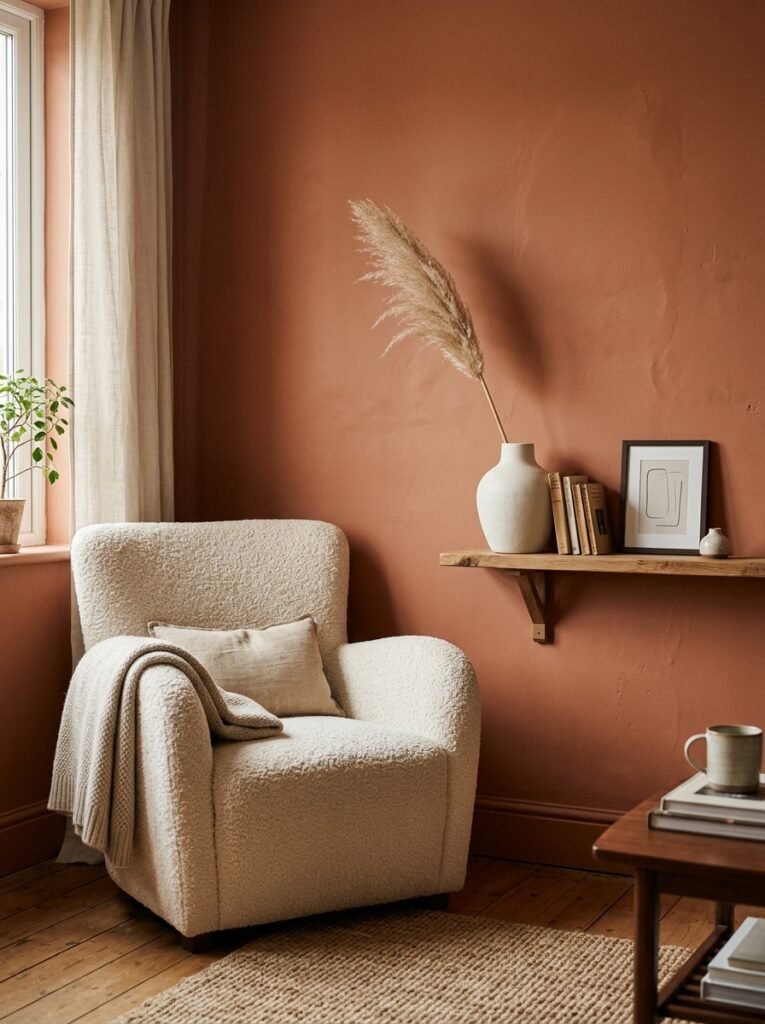
It’s warm white. But not the cold, clinical kind — not anything that looks like a hospital corridor. I’m talking the creamy, slightly yellowed whites that feel like they’ve been lived in for a century. Whites that lean toward linen, toward bone, toward the inside of an old paperback.
“If your walls look bright white under a lightbulb, they’re probably the wrong white for a cozy room.”
These warmer neutrals do something interesting — they hold light without reflecting it aggressively. The room glows instead of glaring. And in a small studio, that glow is the whole ballgame.
Pair warm white walls with deeper, richer accents: a terracotta pillow, a dusty sage throw, one piece of wooden furniture that’s almost honey-colored. Suddenly you’ve got a room that feels curated rather than sparse.
Some people go the opposite route — deep, moody walls in dark green or navy — and it works brilliantly too. But that’s a different kind of cozy, more dramatic and deliberate. If you’re not confident in that direction yet, warm white with rich accents is the safer starting point and genuinely beautiful.
—
3. Why Your Furniture Is Probably Fighting Your Floor Space
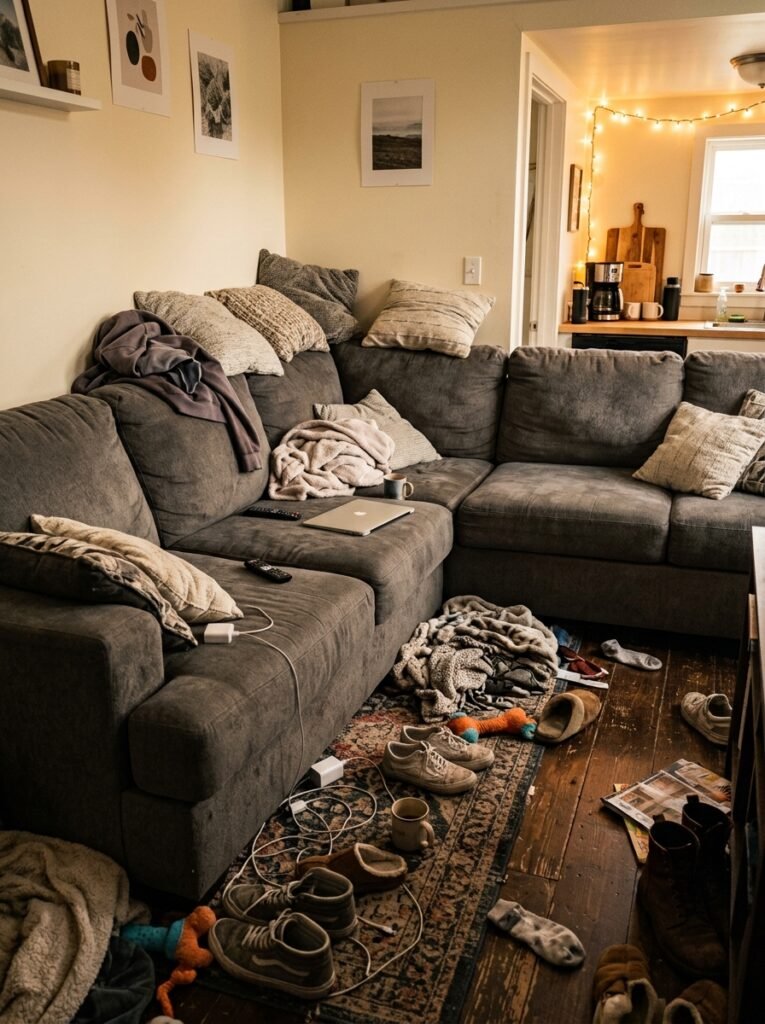
There’s a way furniture can feel aggressive in a small room. Overstuffed arms, high backs, dark finishes, chunky legs — it all adds visual weight. And visual weight is different from actual weight. A small sofa can feel enormous if it’s upholstered in a dark, heavy fabric and shoved against three walls.
Furniture with exposed legs breathes. That’s the honest answer. When you can see the floor underneath a sofa or armchair, the room reads as more open. It’s a simple visual trick and it works every single time.
If you can, choose a sofa in a light fabric — linen, a soft cotton blend, something in a natural oatmeal or pale grey. Keep the silhouette low and slightly streamlined. Not minimal to the point of cold. Just not aggressive.
And then: resist the pull to push every piece of furniture against the wall. I know that’s counterintuitive. It feels like it should create more floor space. But a sofa floating a few inches from the wall with a narrow console table behind it often makes a room feel more intentional, more designed. More spacious, somehow.
—
4. The Lighting Setup That Makes People Think Your Apartment Is Twice the Size
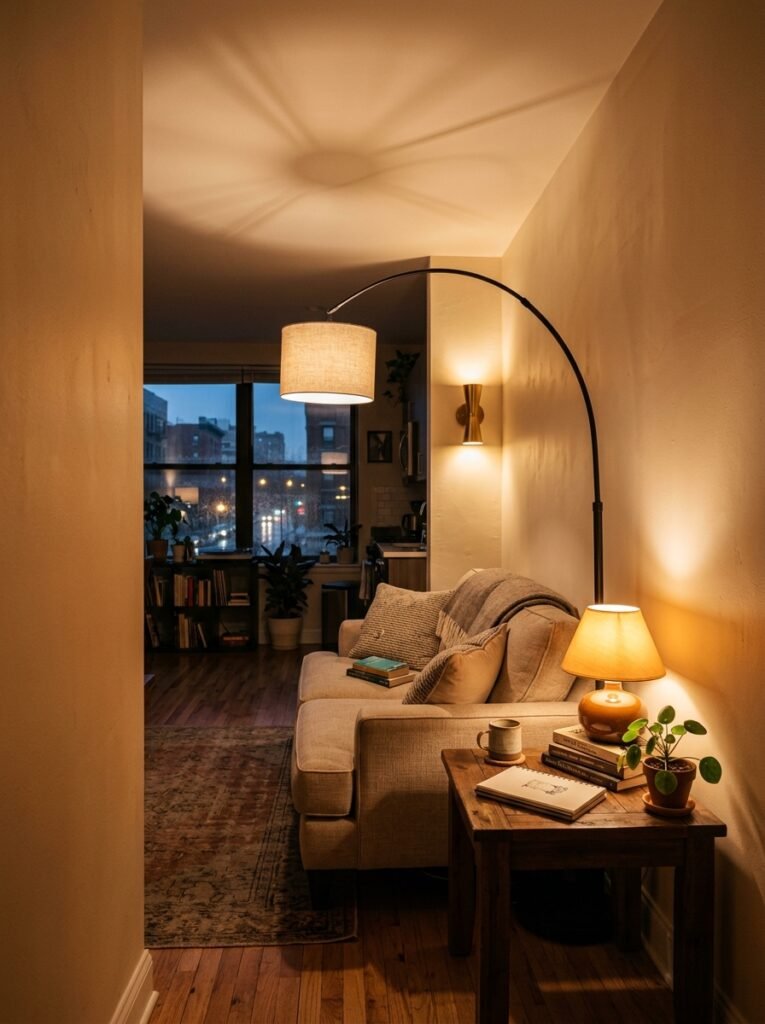
Overhead lighting is a trap in studio apartments. One ceiling fixture, usually positioned somewhere unhelpful, casting a flat light that flattens the room along with it. It’s the interior design equivalent of unflattering.
Lamps. Multiple lamps. Different heights.
A floor lamp in one corner, a table lamp on a side table, maybe a small plug-in sconce mounted near a shelf. The amber glow of a warm-toned bulb at 7pm, hitting a wall at a low angle — that does more for a small living room than almost anything you can spend money on.
What this does is create zones. Even in a studio, pools of different light make the brain read separate areas: here’s the sitting area, here’s the reading nook, here’s the corner with the plant. The room feels like it has more going on. Because it does.
“Flat overhead light makes a room feel small. Layered lamp light makes it feel designed.”
Use bulbs on the warmer end of the spectrum — 2700K is the sweet spot. Anything cooler and you’ve accidentally created a dentist’s waiting room.
—
5. The One Rule That Makes Any Tiny Room Feel Intentional
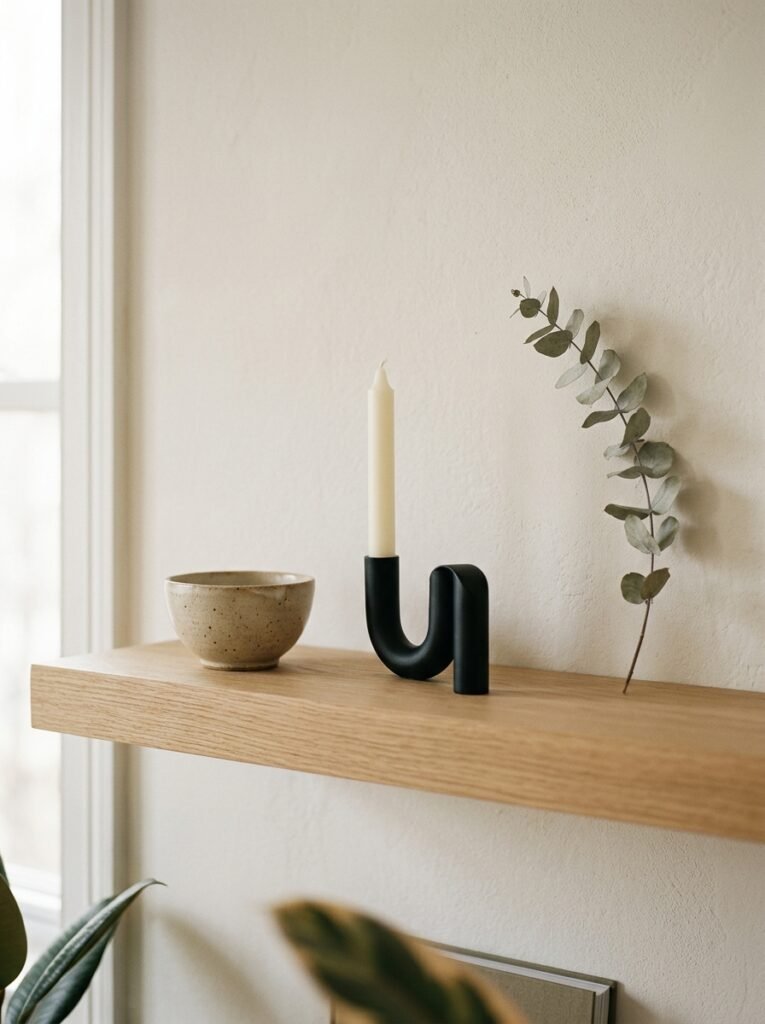
One anchor piece. That’s the rule.
Every small living room that feels good has one thing in it that grounds the whole space. Not twelve things competing for attention. One. A beautiful vintage armchair. A kilim-style rug in faded persimmon and cream. A large simple mirror in an interesting frame. A bookshelf built around one really good photograph.
Pick the one thing and let everything else support it. When you don’t have a hero piece, every object competes for dominance and nothing wins. The room ends up feeling fussy and loud even if there isn’t that much stuff in it.
This is where I see people go wrong constantly — buying things they love individually that don’t actually work together. Every item is nice. The room is chaos. The anchor gives you a reference point: does this serve the thing I’ve already committed to, or does it fight it?
If it fights it, put it somewhere else or let it go. That’s harsh but it’s true.
—
6. Shelving That Earns Its Wall Space Instead of Eating It
Wall space is the only resource a studio apartment has in abundance, and most people waste it. One sad piece of art centered on a big blank wall, and then… nothing.
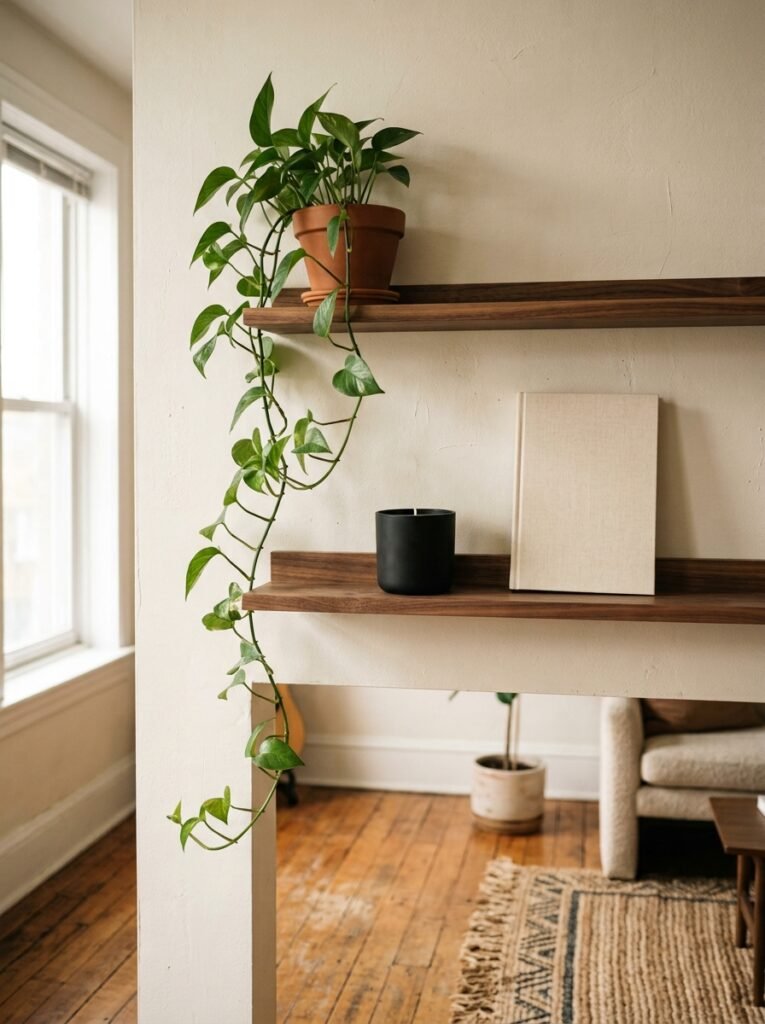
Go vertical. Shelves that run high rather than wide make the ceiling feel taller. A slim set of floating shelves, staggered up a wall, draws the eye upward. That’s a good thing. You WANT the eye to travel upward in a small room.
But the styling of those shelves matters as much as their placement. Keep it edited. Not empty — empty shelves read as unfinished. But not crammed either. A few books, a plant, a ceramic object, a small framed print leaning casually. White space between objects is not wasted space. It’s breathing room, and the room needs it.
Side note — one large piece of art will almost always beat a gallery wall in a small room. Gallery walls can work, but they require serious restraint and confidence to pull off in a tight space. One big, bold print? Instantly pulls focus, instantly makes the room feel intentional.
—
7. The Plant Placement Advice Nobody Seems to Give
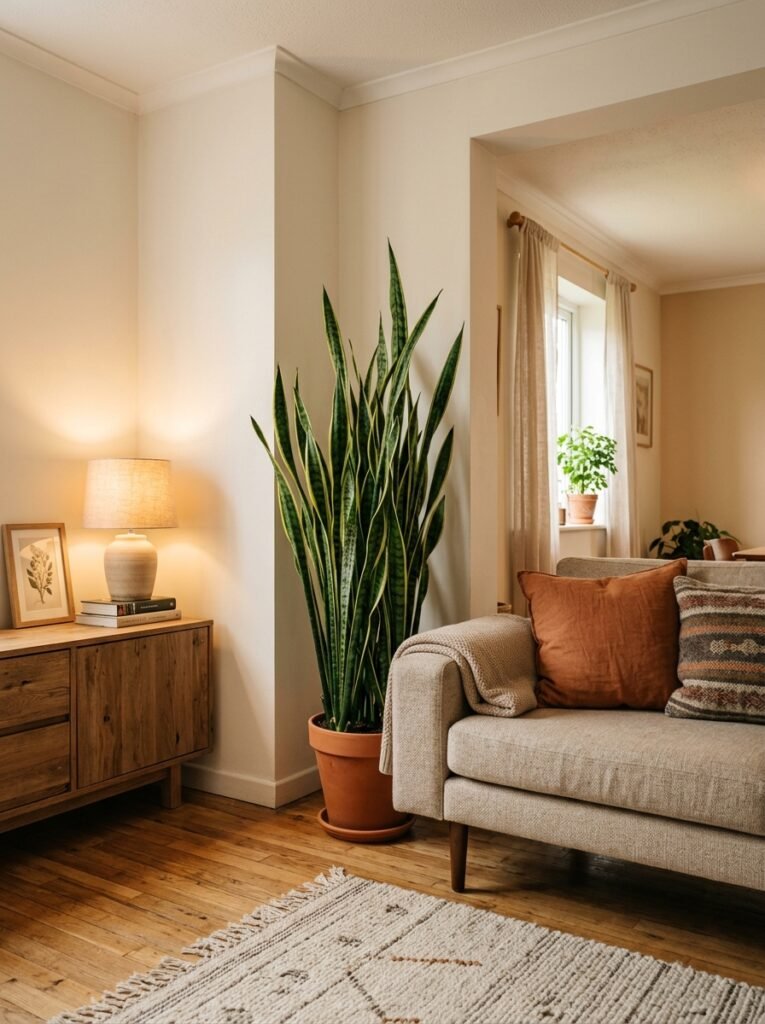
Most people put their plants where plants look pretty, not where plants work for the room. Fair enough. But there’s a more strategic approach.
A tall plant — something willowy and upright — in the corner of a room where the walls meet does something almost architectural. It softens that hard angle, adds height, and gives the eye a reason to scan upward. A monstera in a pale pot, reaching toward the ceiling in the corner near the window. Yes. Always yes.
Low trailing plants on a high shelf work differently — they bring movement and softness to a space that might feel too spare. And a single small plant on a coffee table, something really simple like a cutting in a bud vase, adds life without bulk.
Don’t cluster all your plants together unless you have a genuine jungle aesthetic going on and you’re committed to it. Scatter them. Let each one work for its spot.
—
8. Why Mirrors Are Overused, But Also Underused (Both Things Are True)
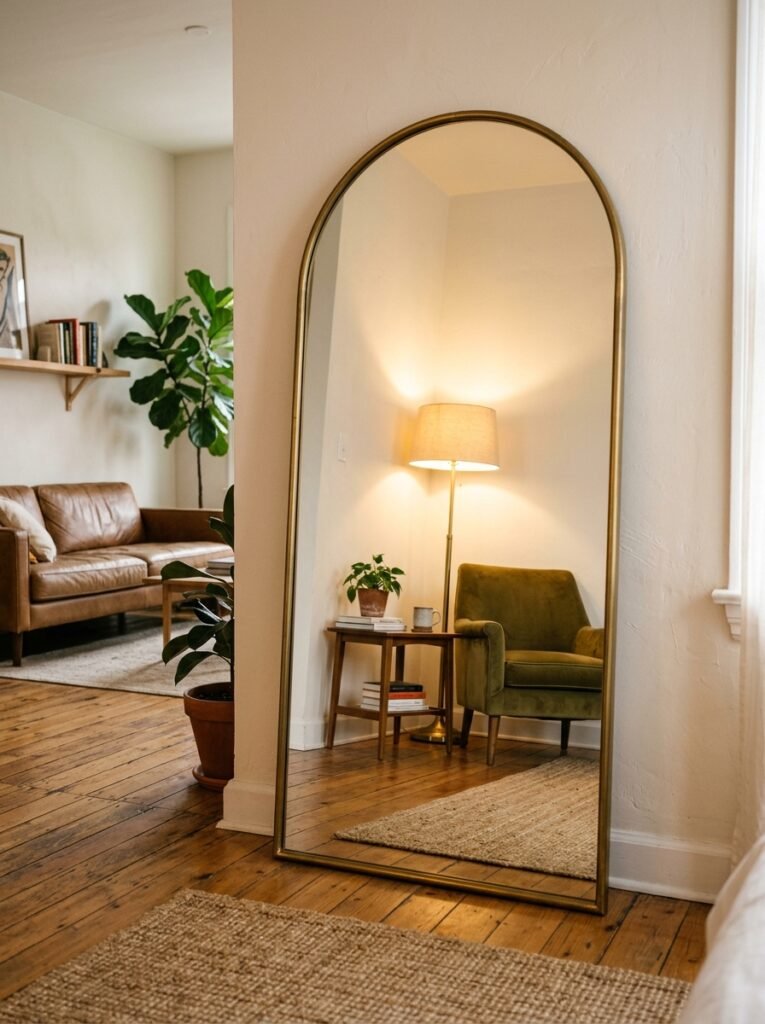
You’ve heard “use mirrors to make a room feel bigger” approximately nine thousand times. And it’s not wrong. But the execution is usually wrong.
A small mirror hung at eye level on a blank wall? Mostly useless. It reflects whatever’s directly in front of it, probably more blank wall.
A large mirror leaning against a wall? Much better. It reads more like a design choice and less like a functional object that got lost. A full-length mirror leaning casually in a corner reflects an entire slice of the room — light, furniture, ceiling — and tricks the eye into thinking the space continues.
“The mirror isn’t reflecting space. It’s reflecting light. Those are different things and one of them actually matters.”
Also: positioning a mirror across from a window — even a small one — is almost always a good idea. Natural light bounces around the room and the whole thing brightens up. It’s simple and it works.
—
9. The Coffee Table Mistake That’s Eating Your Living Room Alive
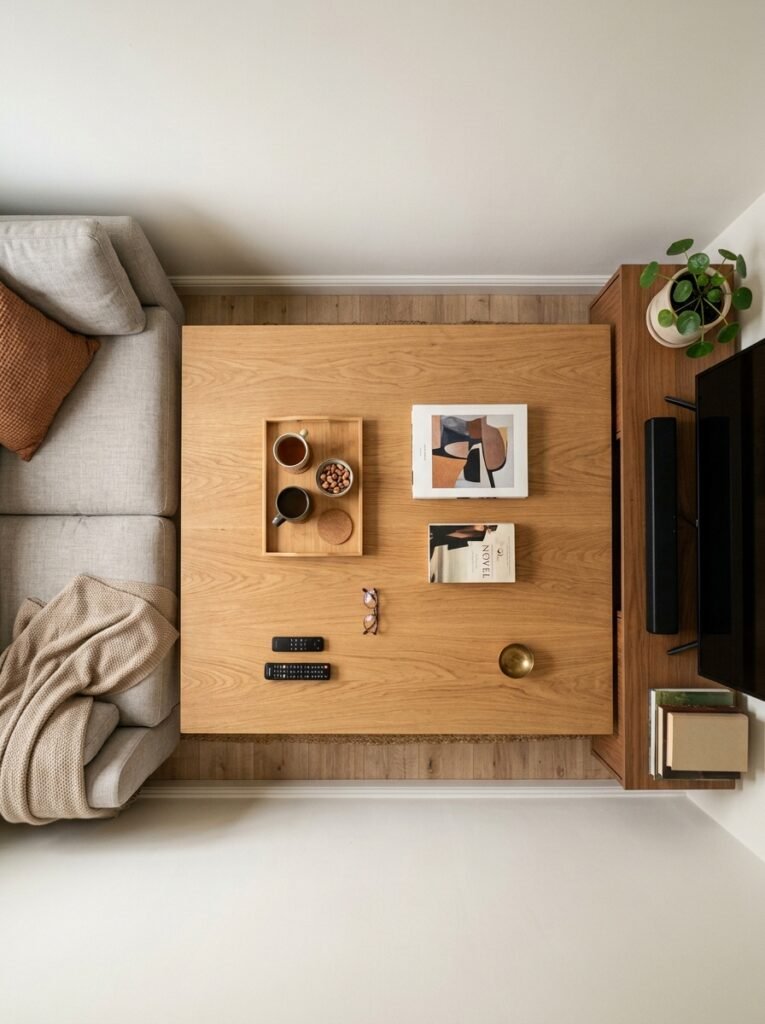
Large, solid coffee tables are furniture thieves. They take up floor space, block visual flow, and in a small room they can actually make the seating area feel like a maze to navigate.
Try a smaller table. Or two small ones. Or, honestly, try no coffee table at all for a few weeks and see what happens. A lot of studios work beautifully with a small side table pulled close to the sofa — enough surface for a drink and a book — and then open floor space in the center.
Nesting tables are brilliant for small spaces and I don’t know why they fell out of fashion. Pull one out when you need it, tuck them away when you don’t. Simple. Practical. Actually elegant if you find a good set in rattan or light wood.
Ottomans with storage inside are another solid move. Surface for drinks, storage for blankets and remotes, footrest, occasional extra seating. That’s four jobs. A solid wood coffee table does one.
—
10. The Color-Blocking Trick That Zones a Studio Without a Single Wall
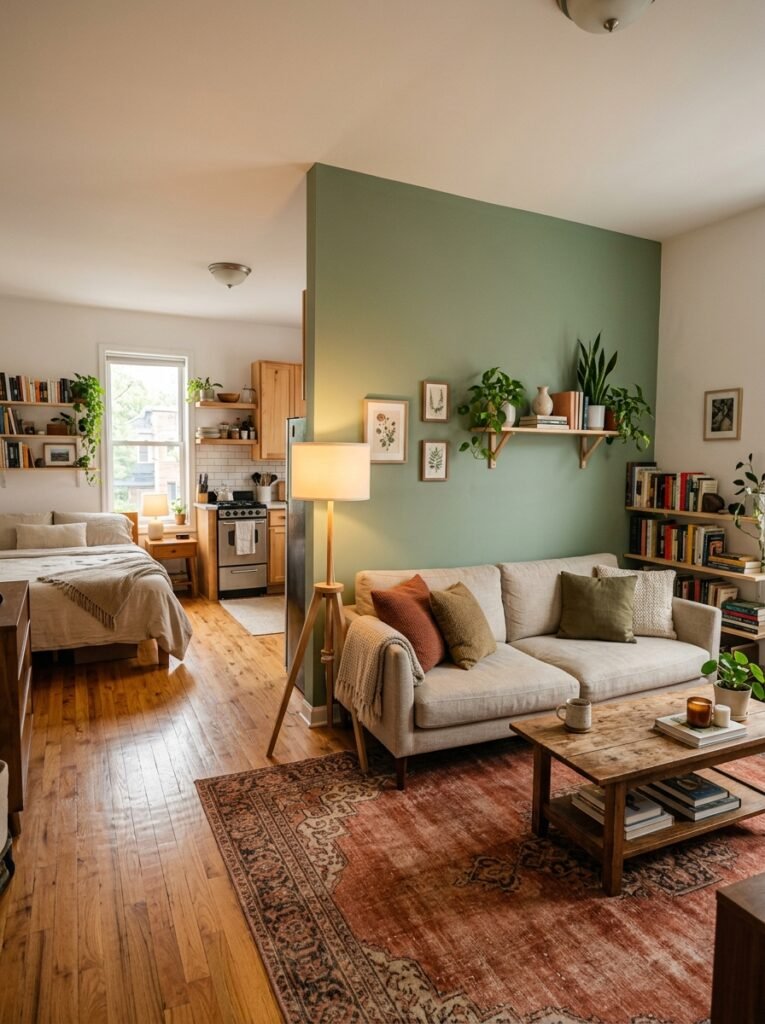
This one’s a little more advanced but genuinely exciting when it works.
In a studio where your living room IS also your bedroom, or your living room bleeds into the kitchen, color can create separation where walls can’t. Not bold stripes — nothing theatrical or exhausting. Just shifting the palette slightly between zones.
Warm terracotta and natural linen in the sitting area. Pale sage and white in the sleeping area. The transition doesn’t need to be dramatic. Even changing the color of one wall slightly, or the tone of the textiles, signals to the brain: different zone, different purpose.
It’s kind of like how you can tell you’ve moved from one room to another in an open-plan space, even before you look for furniture cues. The atmosphere shifts. You can create that intentionally, on purpose, with color alone.
—
11. What “Minimalist” Actually Means in a Home That People Live In
Not white. Not cold. Not the absence of personality.
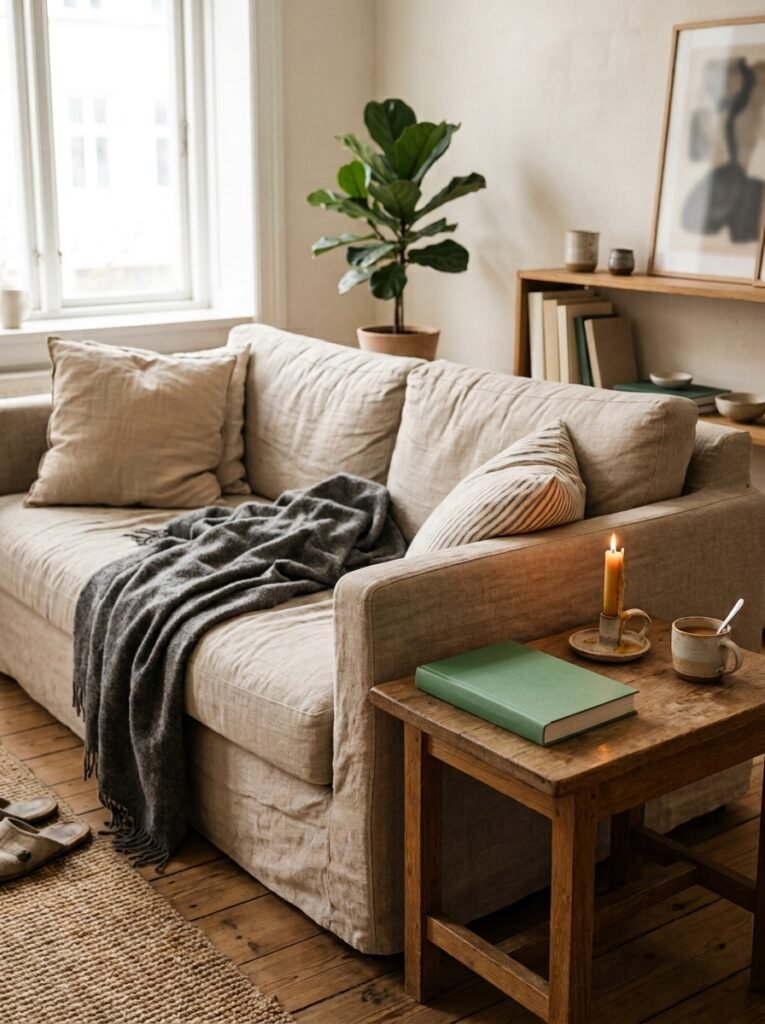
Minimalism in a real, lived-in home means keeping only things that are doing a job — either functional or emotional. A beautiful candle doing emotional work. A plant doing both. Three cushions doing functional and visual work. A bookshelf doing all of the above.
What it doesn’t mean: bare walls and one sad succulent and no throw blankets because they’re “clutter.” That’s not minimalism. That’s just an apartment that nobody feels comfortable in.
The version of minimalist that works for cozy small living rooms looks more like: enough to feel warm, not so much that the room is asking for your attention constantly. There’s a ceiling lamp I’d describe as the anti-minimalist trap — the one with seventeen different finishes, a shape that demands to be noticed, sitting in a room that’s already juggling too many elements. Pick one interesting object. Let the rest breathe.
Or maybe it’s the opposite, honestly — maybe you’re someone who feels more comfortable with more. In which case, layer deliberately. More with intention beats less with anxiety every time.
—
12. The Thing That Actually Makes a Small Living Room Feel Like Home
Not the furniture. Not even the layout.
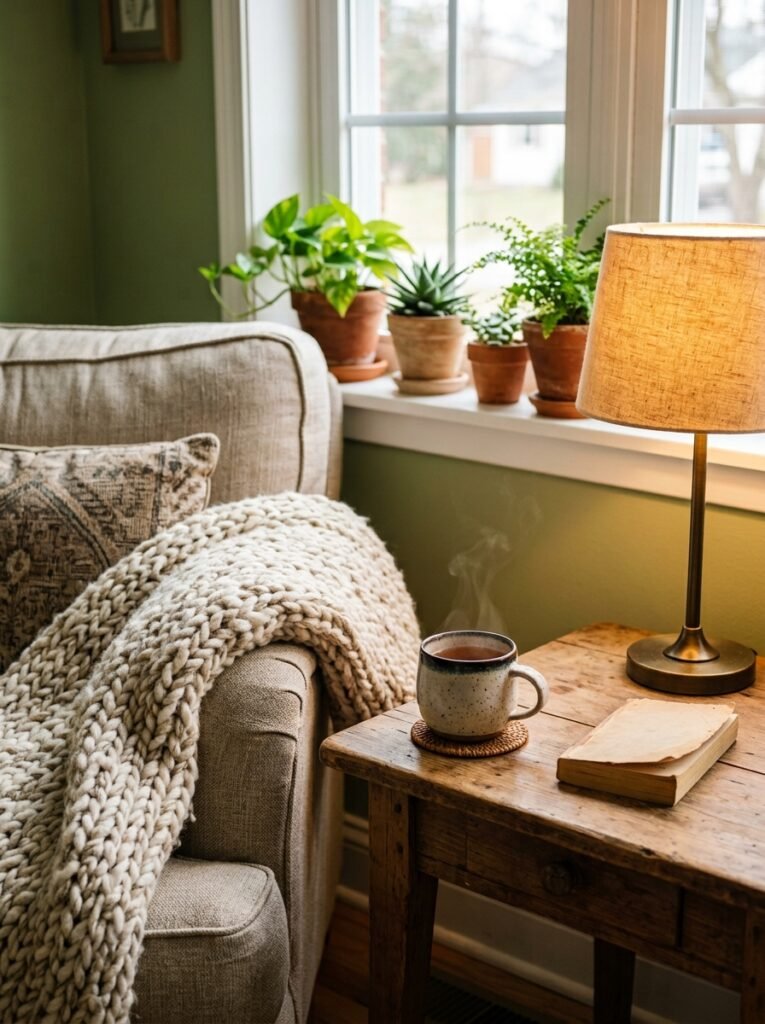
It’s the small things you can’t really explain. The stack of books you’re actually reading, not displayed ones. The blanket you threw over the arm of the sofa and didn’t fold back up. The mug you left on the side table because you’ll want another cup in an hour.
A room that feels like a home feels like someone actually lives there. And that’s harder to achieve in a staged, perfect studio than it sounds. When you’ve edited and curated and placed everything just so, sometimes the room loses the sense that a person chose it.
So leave the blanket. Keep the books out. Let the plants be a little messy.
Style the bones of the room with intention — the rug, the lighting, the layout. Then live in it. The patina of actual life is the last layer and it’s the one you can’t buy anywhere.
—
❓ FAQ
Q: How do I make my studio apartment living area feel separate from the rest of the space? A: Rugs are your best friend here — a defined rug under your seating area creates an immediate psychological “room” within the open plan. You can reinforce it with consistent lighting in just that zone, or a slight shift in textile colors. Even the angle of your sofa can suggest a boundary without a wall.
Q: What’s the best sofa size for a small living room or studio? A: Measure obsessively before buying anything. A two-seater or small three-seater almost always works better than a sectional in a studio — and look for something with a low back and exposed legs, which keeps the room feeling open. If you’re in the UK, a “compact” or “apartment-sized” sofa is usually listed as such by most retailers and it’s worth searching specifically for that.
Q: Can I do cozy and minimalist at the same time, or are they opposites? A: They’re not opposites at all — they just get treated that way. Cozy minimalism is about choosing fewer things but making sure each one is warm, tactile, and personal. Think natural textures (linen, jute, wood, ceramic), warm lighting, and a handful of objects you genuinely love. That’s it. The “minimal” part just means you’re not adding things that don’t serve the room.
—
💭 Final Thoughts
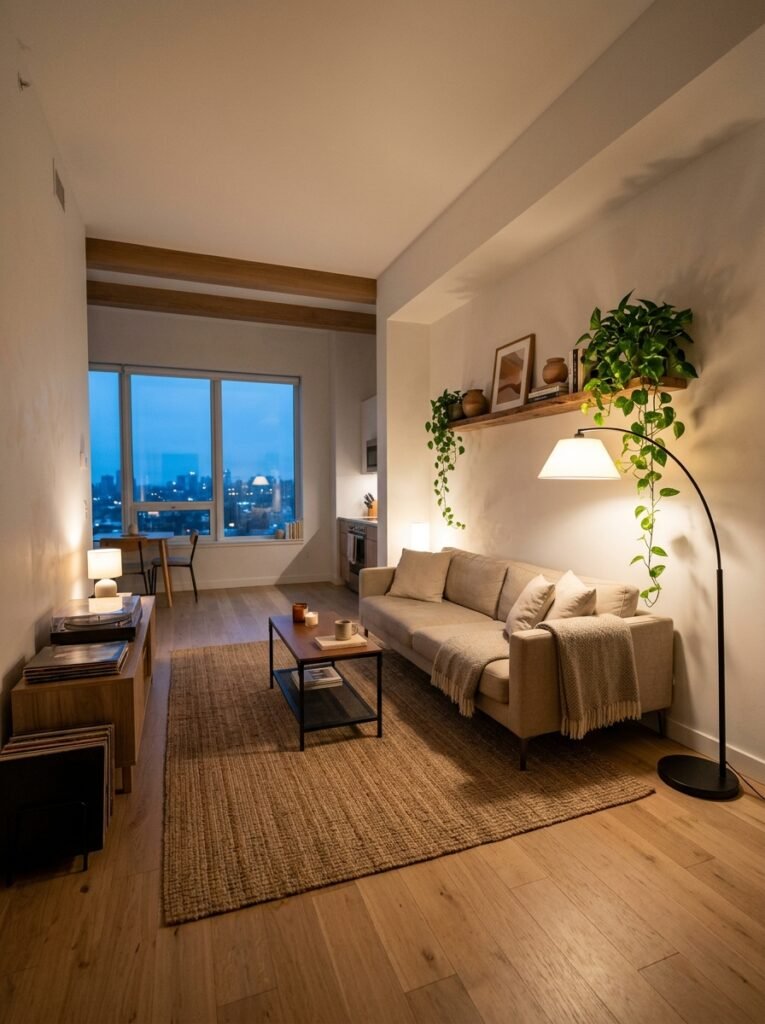
Small rooms aren’t a problem to solve. They’re a constraint, and constraints are actually clarifying — they force you to decide what actually matters. Every object in a studio apartment is a decision, which means every beautiful thing you choose is genuinely intentional.
That friend with the too-big sofa? She kept it. Moved it slightly, got a bigger rug, added three lamps and took out a bookcase. Her flat is one of the warmest, most beautifully lived-in spaces I’ve seen.
What’s the one thing in your living room right now that’s doing the most work — and does it deserve that spot?