
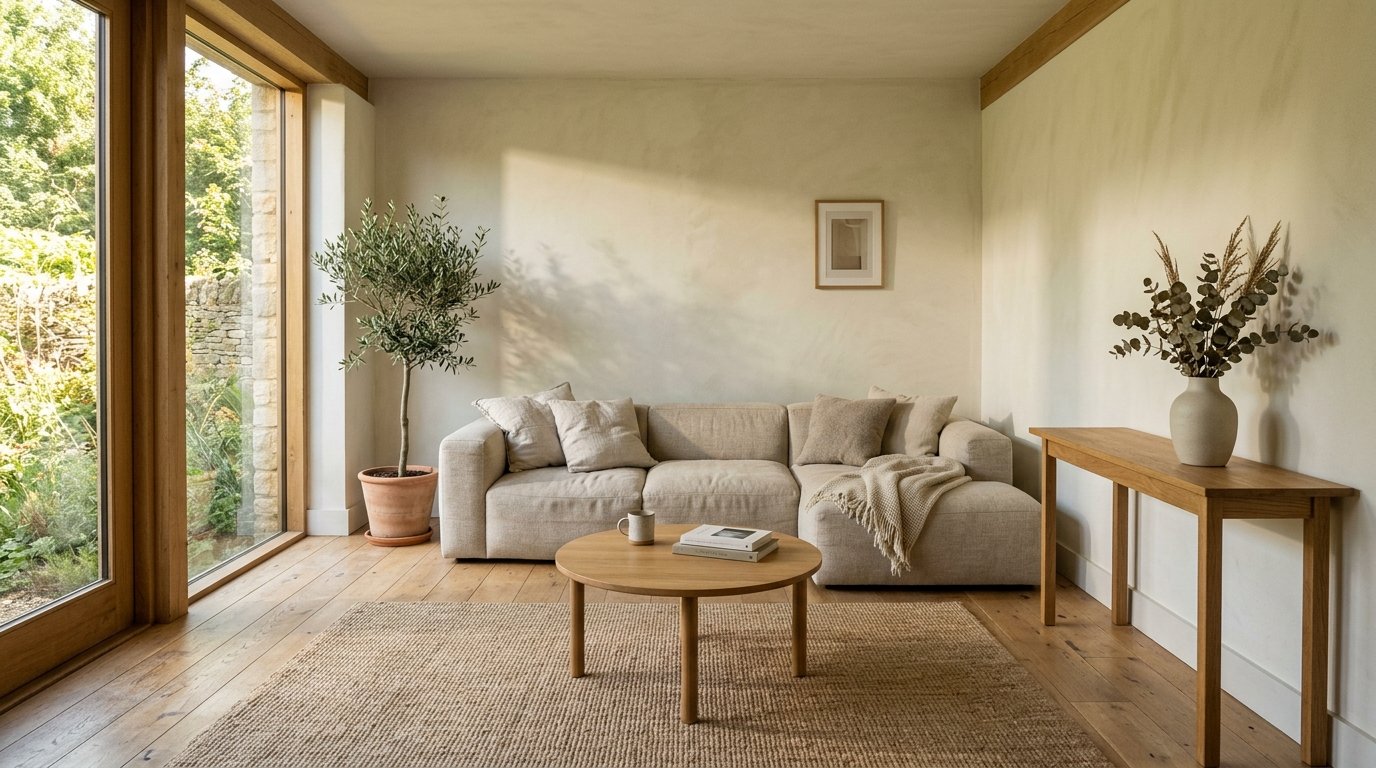
The Minimalist Living Room That Actually Feels Like Home (Not a Hotel Lobby)
My friend Sarah walked into her newly “minimalist” living room and said, out loud, “I feel like I’m waiting for a flight.” She’d followed every rule. White walls. Nothing on the shelves. One grey sofa. And it was genuinely miserable to sit in.
That’s the thing nobody talks about when they’re pinning minimalist inspo boards at midnight. You can strip a room down to almost nothing and still get it completely wrong.
—
1. The Difference Between “Minimal” and “Cold” Is About Three Small Decisions
Here’s what I’ve figured out after way too many furniture rearrangements: minimalism isn’t about owning less stuff. It’s about choosing deliberately. And cozy minimalism — which is a real thing, not a contradiction — comes down to texture, warmth, and just enough life in the room to feel human.
The three decisions that actually move the needle? Your light source. Your softest surface. And one thing that’s slightly imperfect.
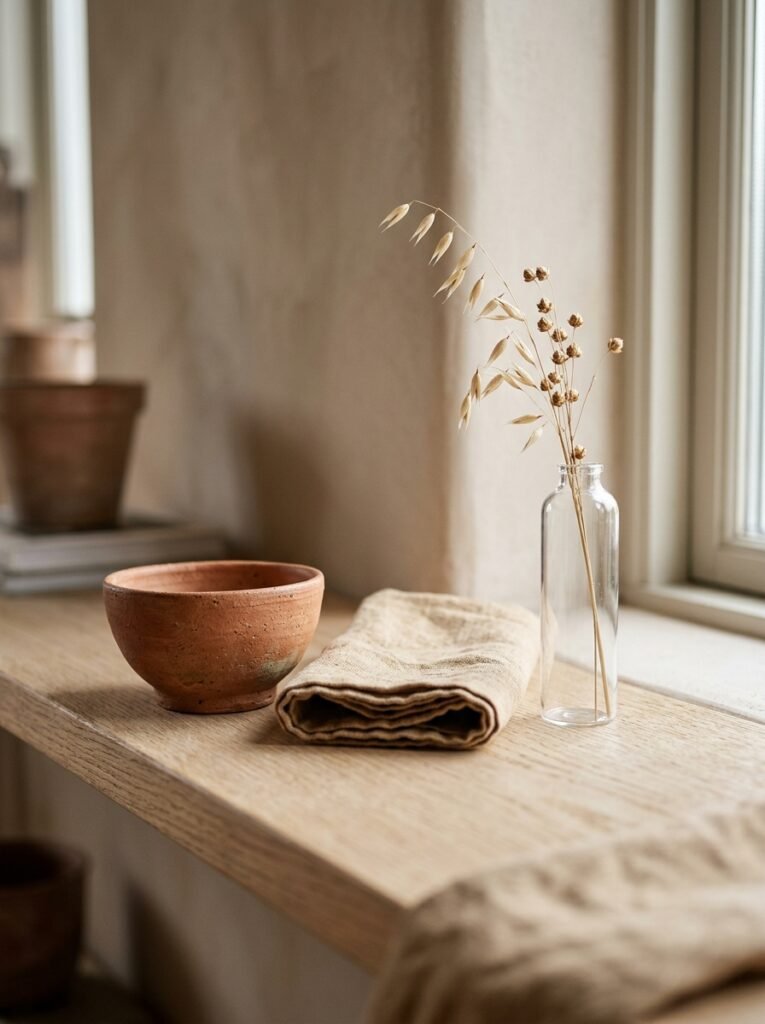
Not a gallery wall. Not twelve throw cushions. One imperfect thing — a slightly uneven handmade mug on the coffee table, a plant that’s leaning a little too far left, a book left open face-down. That tiny bit of lived-in energy does more for coziness than any throw blanket.
I know that sounds counterintuitive. But rooms that feel TOO intentional — where every object is perfectly symmetrical and every surface is pristine — make people nervous. Not relaxed.
—
2. Why Your Sofa Color Is Making You Feel More Anxious Than You Realize
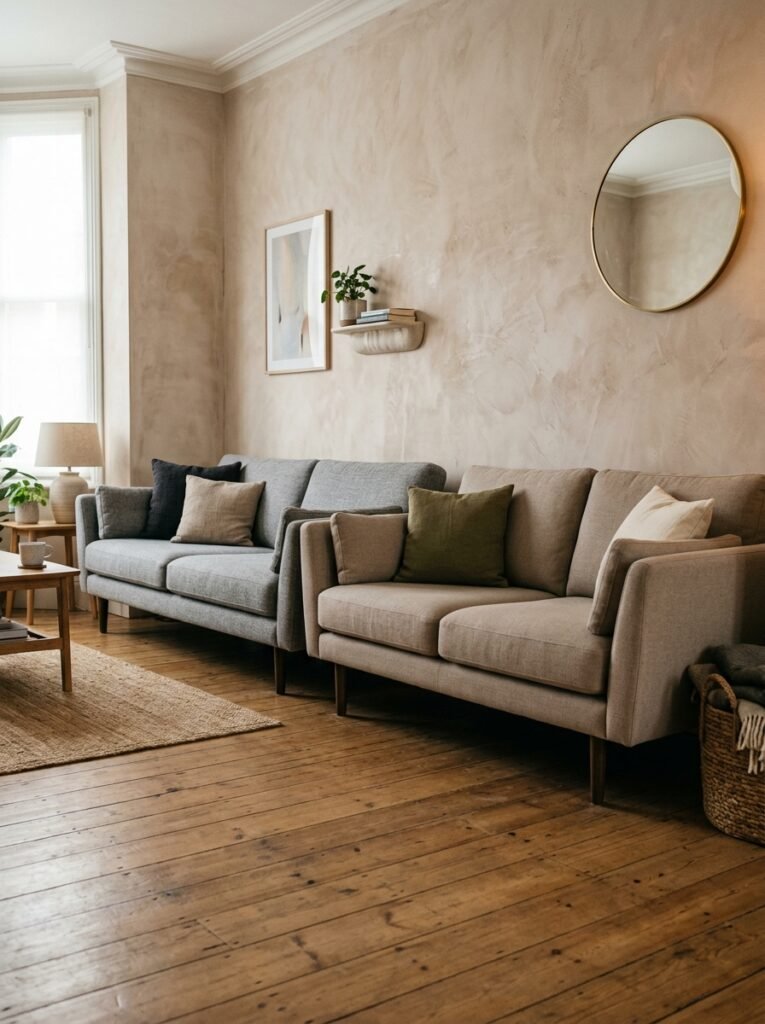
Grey sofas had a moment. A long one, actually. And they’re not bad, but if you’ve got grey walls AND a grey sofa AND grey curtains, your nervous system is working overtime to find something warm to land on, and it can’t.
The sofas I keep coming back to in rooms that feel genuinely cozy? They’re in colors with actual warmth baked in. Warm off-white. Dusty terracotta. Oatmeal. Even a deep forest green reads as cozier than mid-grey because it connects to something natural.
“Cozy minimalism isn’t about stripping everything out. It’s about making every single thing you keep do double the work.”
If you’re stuck with a cool-toned sofa — been there — the fix is in the textiles you layer on it. A chunky cream knit throw. A cushion in a warm rust or faded yellow. Something that gives your eye somewhere warm to rest.
And honestly? One cushion is enough. Maybe two. The “pile of twenty cushions” approach is the opposite of minimalist and it’s also just annoying when you want to actually sit down.
—
3. The Rug Mistake That Makes Even Beautiful Rooms Look Wrong
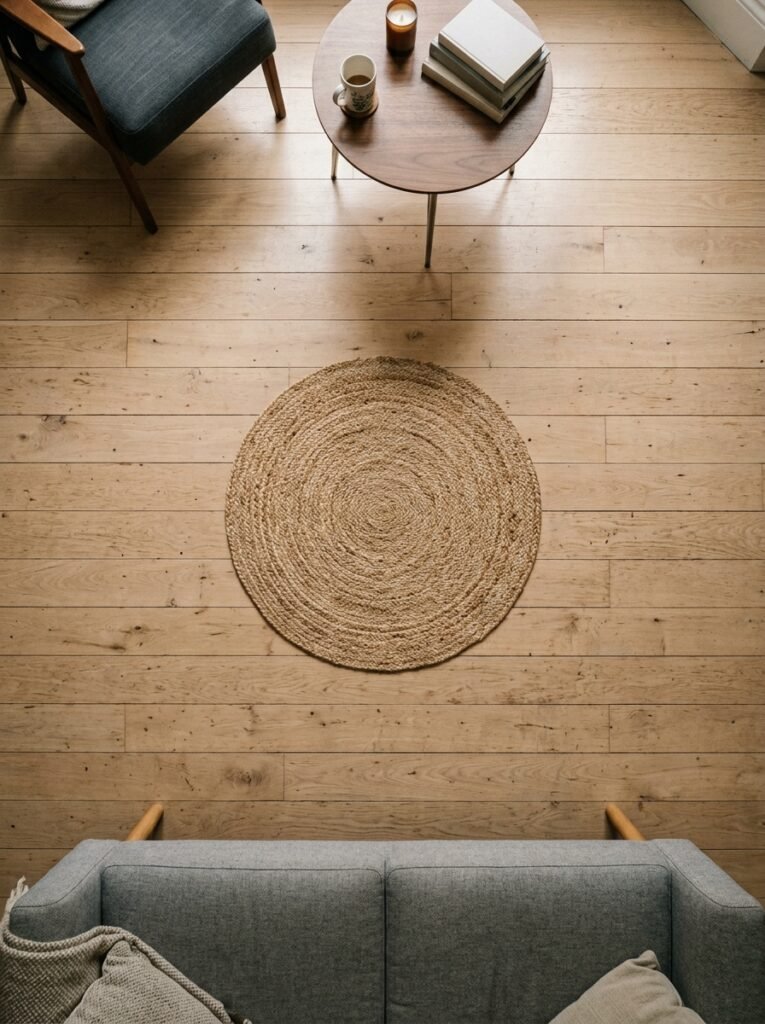
Too small. It’s almost always too small.
I’ve seen this in real homes, in design magazines, in Pinterest boards with six hundred thousand saves. The rug is so small it looks like a welcome mat that got confused and wandered into the living room.
The rule everyone gives you is that all the furniture legs (or at least the front legs) should sit on the rug. But for cozy minimalist spaces specifically, I’d push further: the rug should define the zone, not just sit under the coffee table. You want to feel it when you walk from the hard floor into the seating area. That physical transition tells your brain: this is a soft place. You can relax now.
For texture, woven jute and flat-weave wool are doing most of the heavy lifting in rooms I love right now. Not because they’re trendy — because they’re visually quiet enough to not compete with the rest of the room, but textural enough to add warmth without adding visual noise. That balance is hard to find and they nail it.
—
4. The Color That Keeps Showing Up in Every Cozy Minimalist Room Right Now
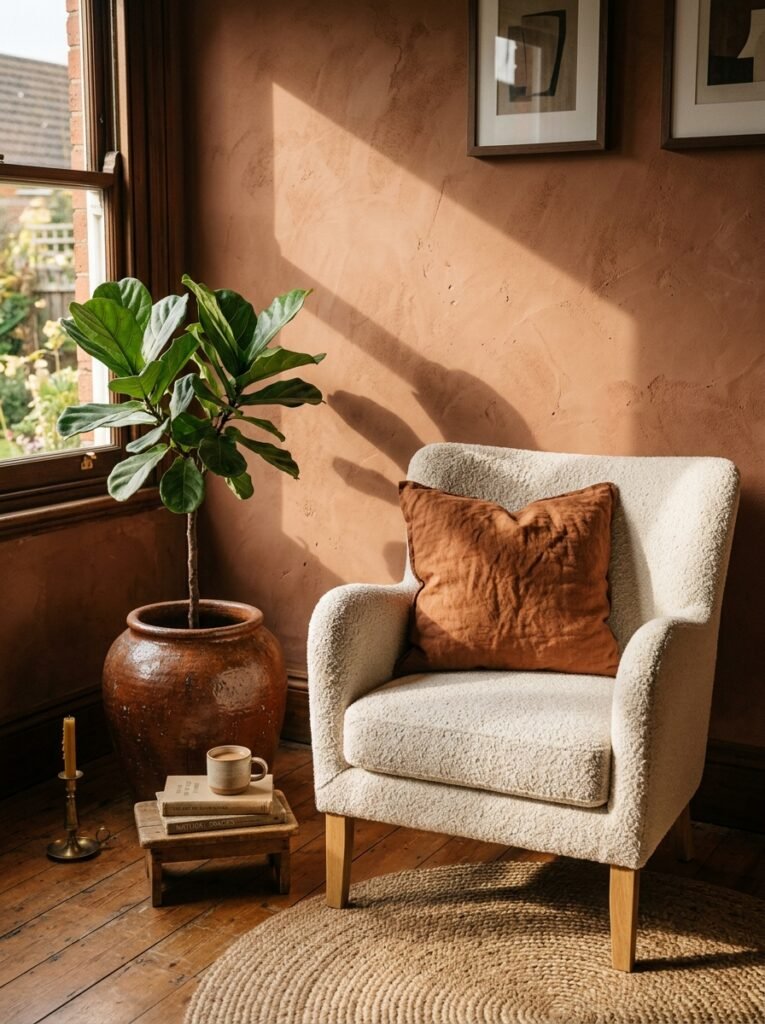
Warm white. But not just any warm white — the kind that has a tiny bit of pink in it, or a tiny bit of yellow. The kind that at 7pm, when the lamp clicks on, goes absolutely golden.
Cool whites don’t do this. Cool whites stay cool. They look clinical in the evening and flat in winter light (which, for UK readers especially, is most of the year). If you’re repainting and you’re not sure which white to pick, go warm. Always. You can soften a room that’s too warm far more easily than you can fix one that feels cold.
I’d pair warm white walls with wood tones — not orange pine from the 90s, but the kind of mid-tone, slightly ashy oak that photographs like a dream and ages beautifully in person. A wooden coffee table. A small side table. Even just a wooden tray on the shelf. It doesn’t take much.
—
5. Lighting Is Doing So Much More Than You’re Letting It
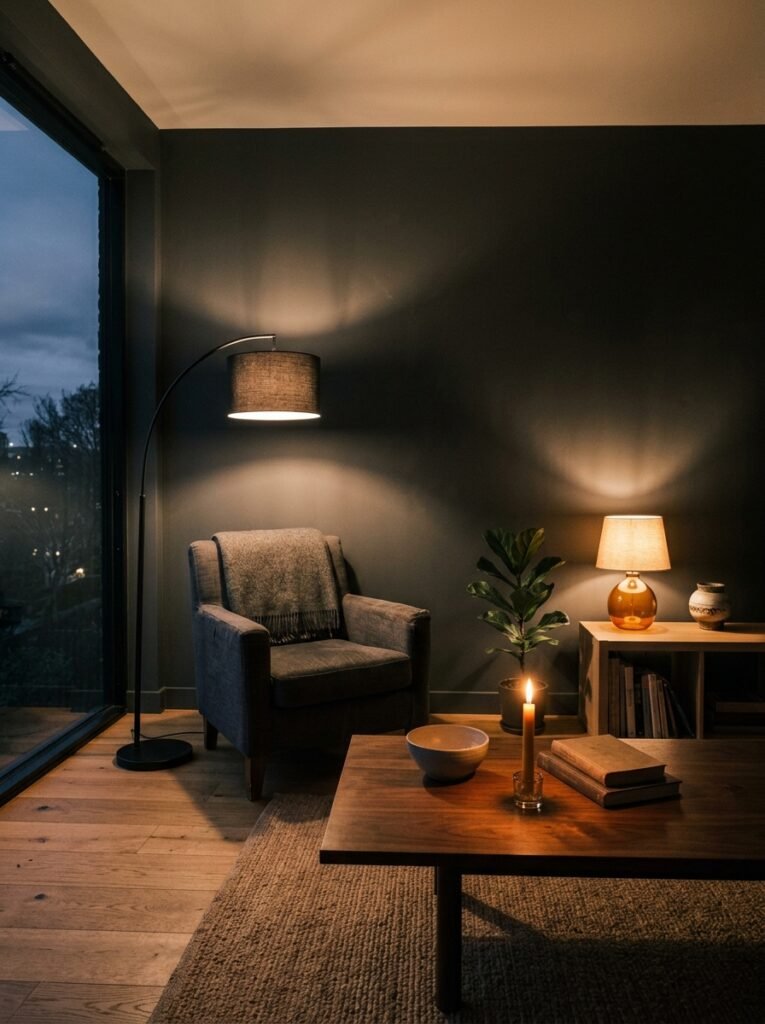
If you have one overhead light in your living room and nothing else, I say this with genuine care: that room cannot be cozy. It cannot. Overhead lighting flattens everything and it gives you the energy of an office on a Tuesday afternoon.
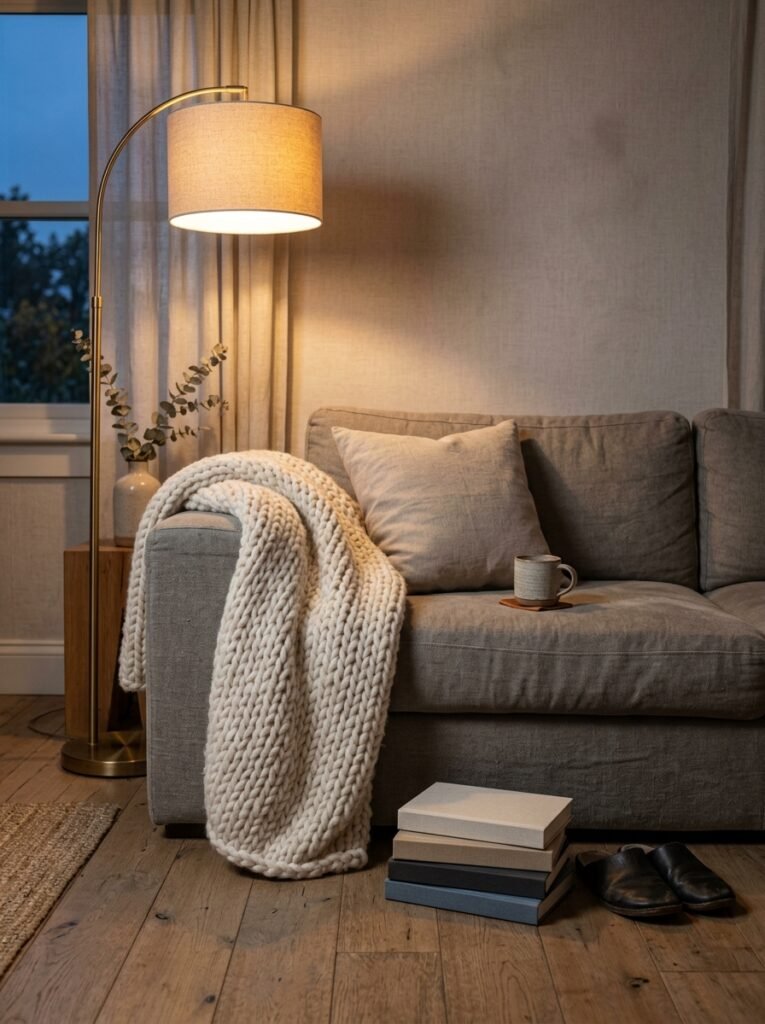
The rooms that feel warm and intimate at night? They’ve got multiple light sources all sitting at or below eye level. A floor lamp in the corner. A small table lamp on the side table. Maybe a candle or two on the coffee table. The light overlaps and it creates this layered, amber feeling that literally slows your heart rate down a little.
“Multiple low light sources don’t just look better — they physically change how a room feels to sit in.”
I’m not saying you need to rewire anything. Plug-in lamps exist and they’re wonderful. One decent floor lamp can transform a room’s evening energy entirely, and you’ll wonder why you ever lived without it.
Side note — warm bulbs, always. 2700K or below. The difference between a warm-toned bulb and a cool-toned bulb in a lamp is extraordinary and most people don’t know they can just swap them out.
—
6. The One Rule That Makes Any Tiny British or American Living Room Feel Intentional
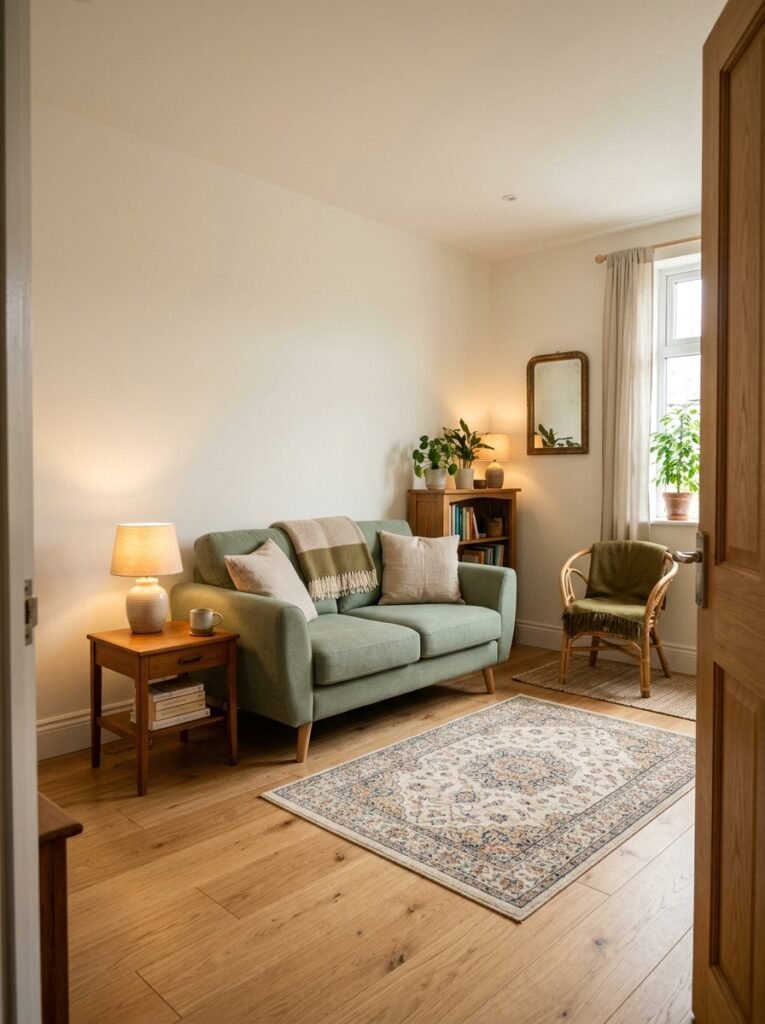
Leave space on purpose.
Not because you haven’t gotten around to filling it. On PURPOSE. A clear corner. An empty section of shelf. A wall with nothing on it. This is the thing that separates a cozy minimalist room from a cluttered room that happens to have neutral colors.
Empty space is what gives the things you DO have room to breathe. When everything is competing for your attention, nothing lands. But when there’s quiet around an object — even something simple like a single vase with one dried stem — it becomes something you actually notice and feel something about.
For smaller rooms, this matters even more. Smaller British terraced house sitting rooms and compact American apartment living rooms both benefit MASSIVELY from edited space. Don’t try to fill every corner. Let the room have room.
—
7. What to Actually Put on Minimalist Shelves (Without It Looking Like a Showroom)
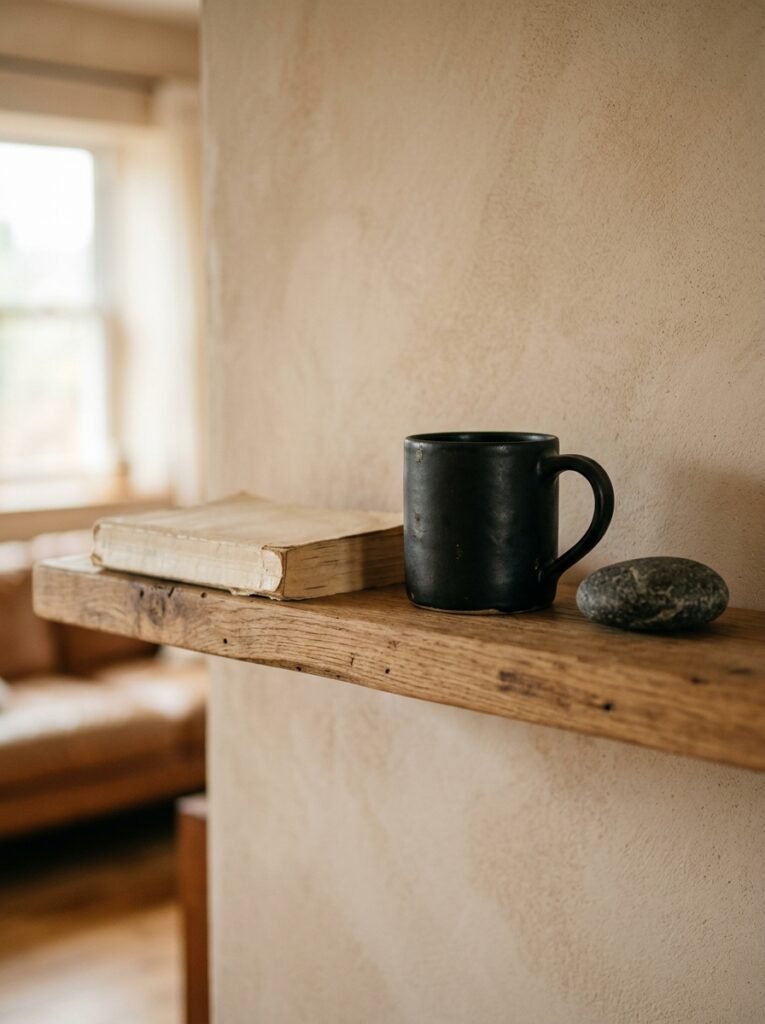
This is where people get really stuck. You’ve got shelves. You don’t want to fill them with stuff. But you also don’t want them completely empty because that looks sad.
Here’s my approach, and it’s not complicated:
- One thing with height — a tall vase, a slender plant, something that draws the eye upward
- One thing with texture — a small woven basket, a rough ceramic piece, a wooden object
- One thing that’s personal — a photo, a book you’ve actually read, an object that means something to you
That’s it. Three things per shelf zone, not per shelf. And some shelves can just have one thing, or nothing at all.
The mistake is arranging everything symmetrically. Real, lived-in minimalism is asymmetrical. Odd numbers. Things slightly off-center. It should feel chosen, not styled.
—
8. Plants That Don’t Die and Don’t Demand Attention (But Still Add So Much)
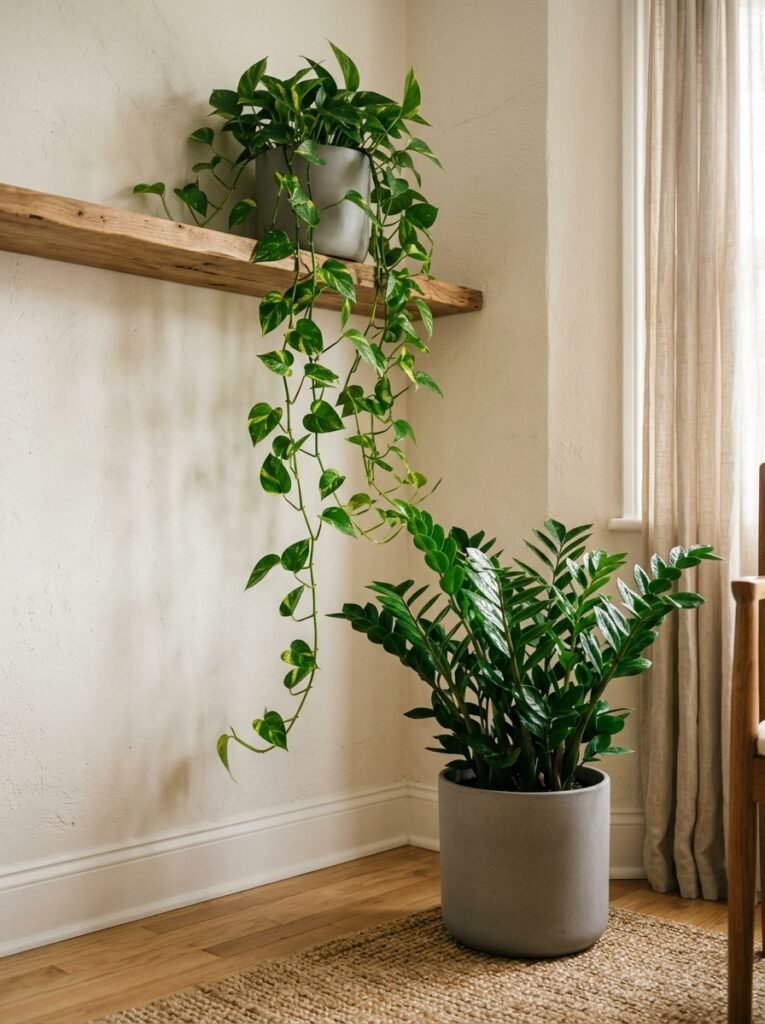
A room without any living thing in it is harder to make feel warm. I don’t know exactly why that is — maybe it’s biological, maybe it’s just visual — but it’s true.
The plants that work in minimalist spaces are the ones that don’t compete. Not a big dramatic fiddle-leaf fig (gorgeous, yes, also dramatic and a bit demanding). More like a small olive tree in a simple pot. A trailing pothos on a high shelf. A snake plant in the corner that you basically never have to water.
The pot matters as much as the plant, maybe more. Simple shapes. Matte finishes. Warm terracotta or cream or natural stone. Not shiny. Not patterned. The pot should disappear a little into the room, and the plant is just the soft, living thing sitting in it.
—
9. The Coffee Table Styling Approach That’s Harder to Get Wrong Than You Think
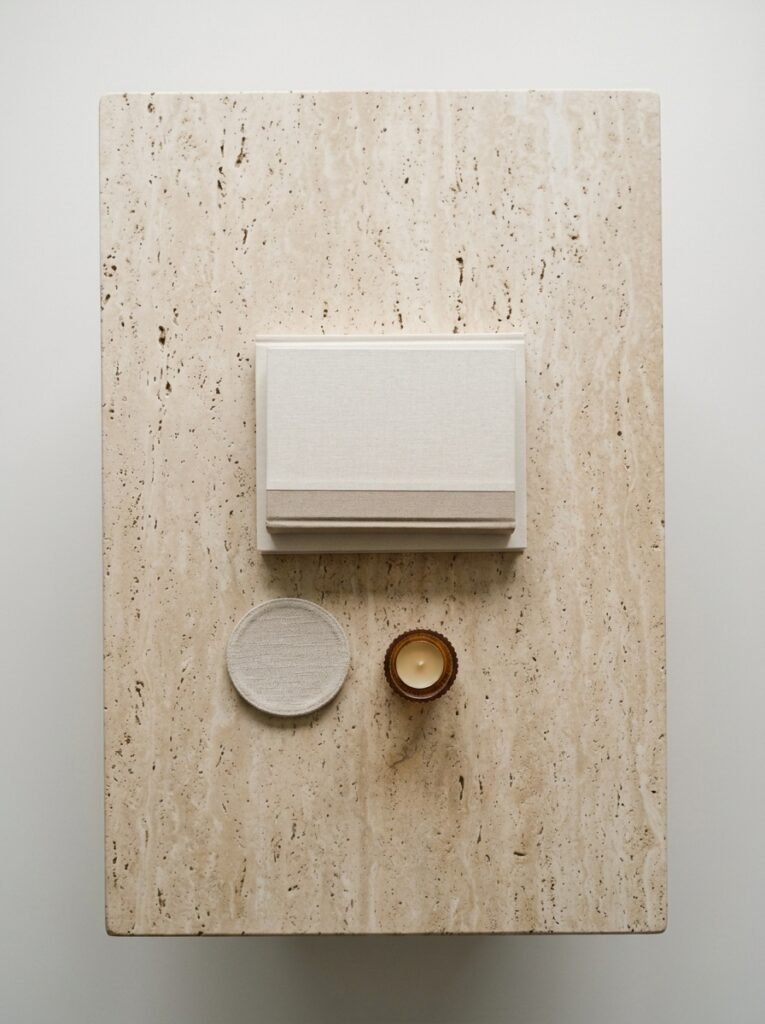
One tray. Everything lives in the tray.
A tray instantly organizes whatever’s on your coffee table and makes it look intentional even when it’s just a candle, a coaster, and whatever book you’re currently reading. The tray is doing all the heavy lifting. It’s creating a boundary, saying: this is where the things go.
“A tray on a coffee table is the visual equivalent of punctuation. Without it, everything just runs together.”
Keep it to three or four objects max inside the tray. One candle. One small stack of books (two, maybe three). Something with a little height or texture. Done. Genuinely done — you don’t need more.
—
10. Curtains: The Thing That’s Quietly Wrecking Your Room’s Proportions
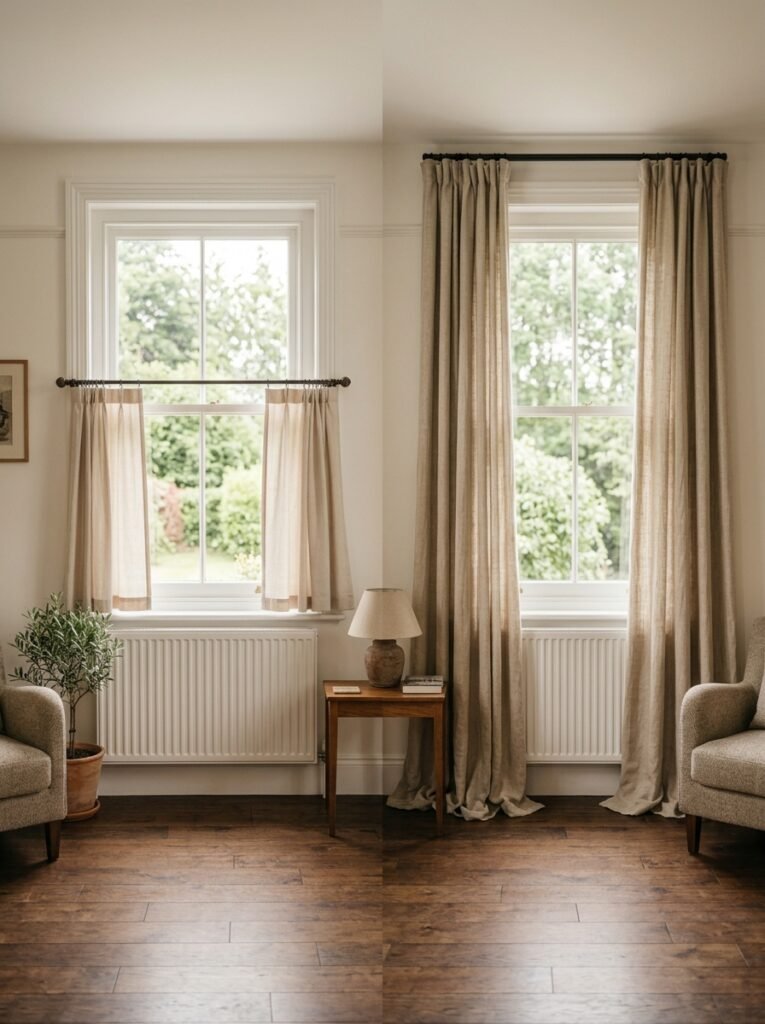
Short curtains. Curtains hung too close to the window frame. Curtains that don’t quite meet the floor. These are some of the most common living room mistakes and they make rooms feel smaller and less finished in a way people can’t always put their finger on.
Hang curtains from as close to the ceiling as you can get them. Let them pool very slightly on the floor or just graze it. And make them wide enough that when they’re open, they frame the window rather than covering part of it.
In a minimalist living room, where there isn’t much visual noise, curtains become a really significant design element. Linen — natural, undyed, slightly nubby linen — is the texture that works hardest for this look. It’s light enough to let in daylight, textural enough to add warmth, and relaxed enough that it doesn’t look stiff.
—
11. The Scent of a Cozy Room (Because This Doesn’t Get Talked About Enough)
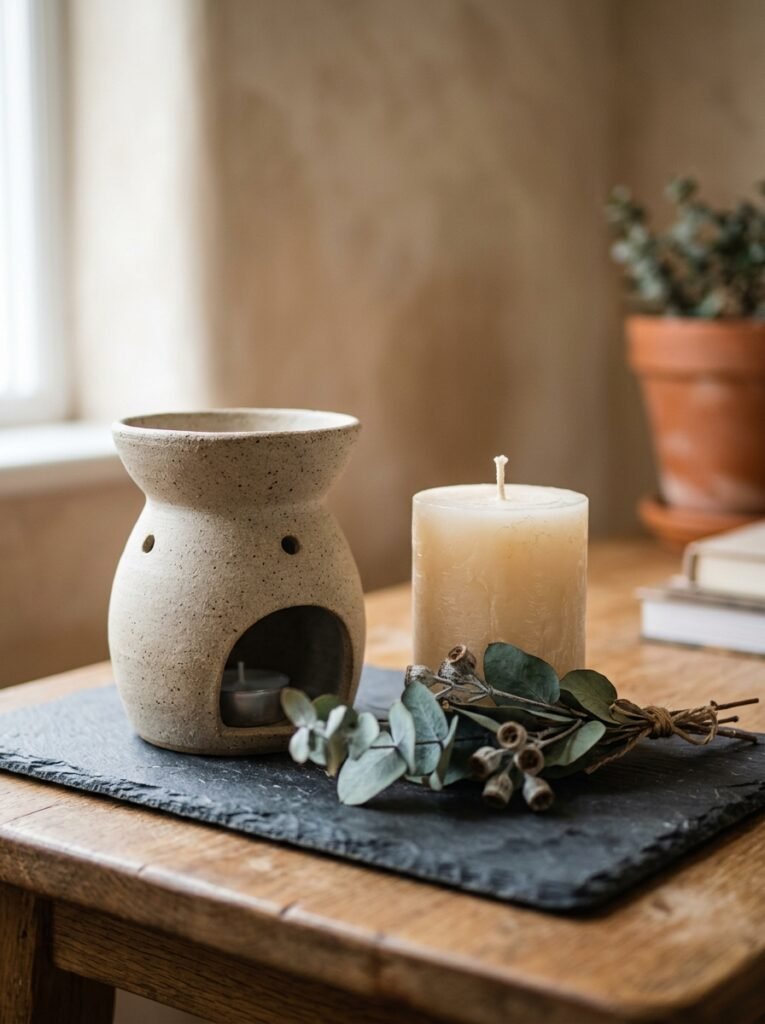
Okay, slightly left-field section, but bear with me. Smell is part of how a room feels. Genuinely. Rooms that feel cozy have a scent — not overwhelming, not synthetic, just present.
For a minimalist space, you want something clean and warm rather than sweet or floral. Sandalwood. Cedarwood. Warm vanilla with something woody underneath. A beeswax candle that just smells like itself when it burns. These scents sit quietly in the background rather than announcing themselves, which fits the whole ethos of the space.
And there’s something about the act of lighting a candle in the evening that signals: the room is ready. It’s a ritual and rituals make spaces feel inhabited. Warm.
—
12. The Last Thing to Add Is Always the Thing You Can’t Buy
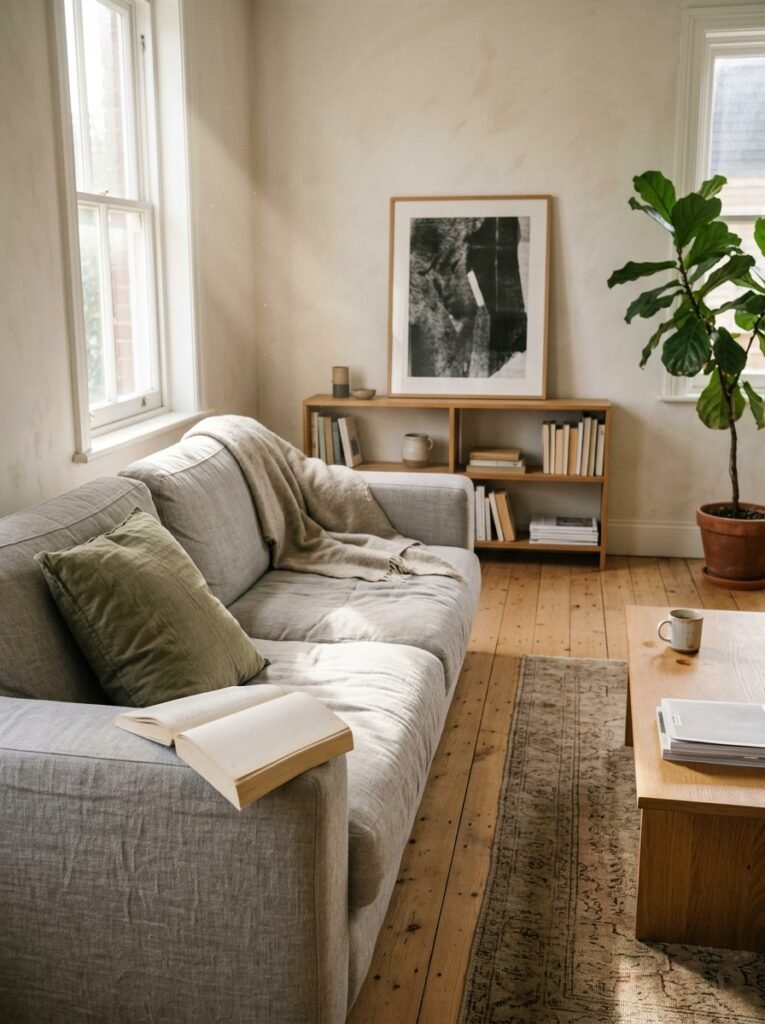
You can have every element right. The warm whites, the layered lighting, the linen curtains pooling on the floor, the single perfect plant in its terracotta pot. And the room can still feel like it’s waiting for something.
What it’s waiting for is YOU, actually in it. Using it. The book left on the sofa arm. The mug on the coffee table. The throw pulled slightly off-center because you were wrapped in it an hour ago.
Cozy minimalist rooms aren’t meant to stay perfect. The perfection is in the bones — the proportions, the textures, the warmth of the light. But the coziness arrives when someone actually lives there, and that part? Can’t be styled. Can’t be bought. It just happens when you stop worrying about the room looking right and start actually sitting in it.
—
❓ FAQ
Q: Can a minimalist living room really feel cozy, or do they always look cold? A: They absolutely can, but it takes intentional choices around warmth — specifically texture, lighting, and color temperature. The rooms that feel cold tend to have too many cool tones and only one overhead light source. Swap those two things and the whole feeling changes.
Q: How many decorative items should I have in a minimalist living room? A: There’s no magic number, but a useful gut-check is this: if you can’t tell why each item is there, it probably isn’t earning its place. One or two meaningful objects per surface area, plenty of clear space between them, and at least a few completely empty zones in the room.
Q: What’s the biggest mistake people make when trying to create a cozy minimalist living room? A: Going too cool and too bare at the same time. Minimalism doesn’t have to mean cold — but if you’ve got neutral walls, minimal furniture AND no warm lighting and no texture, you’ve crossed from calm into clinical. Add warmth back through textures (linen, wool, wood, rattan) and make sure your lighting is warm-toned and layered.
—
💭 Final Thoughts
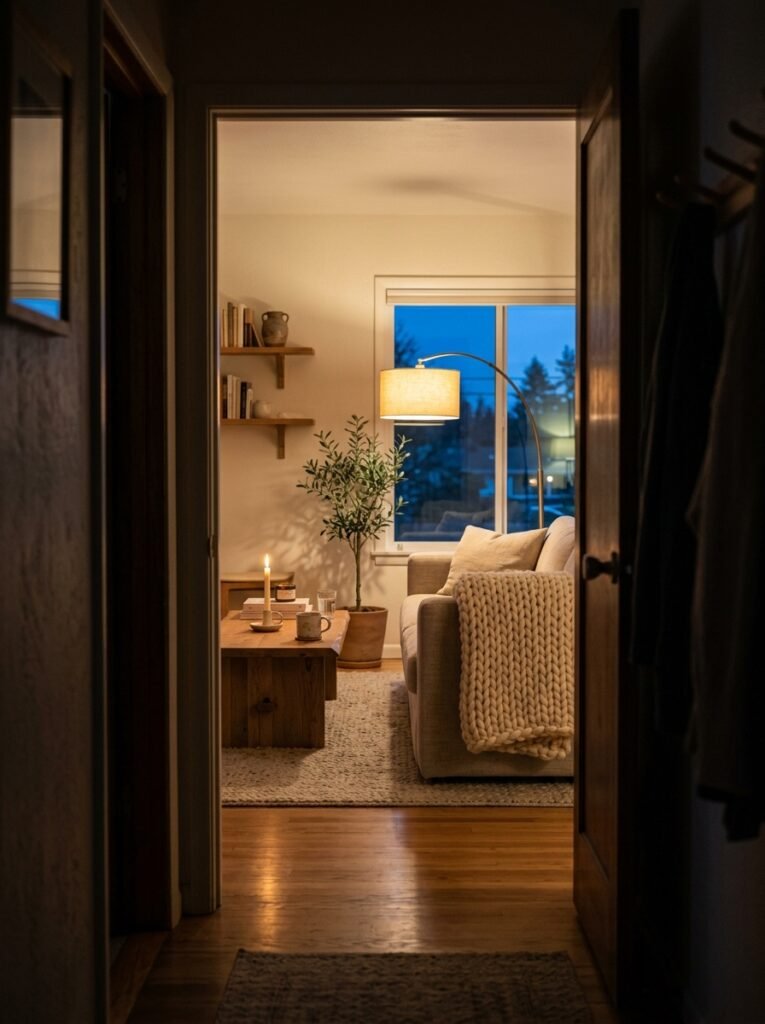
There’s a version of minimalism that’s about performance — the room that looks good in photos but feels uncomfortable to sit in. And there’s a version that’s actually about quiet. About walking in at the end of the day and feeling the room settle around you.
That second version is worth working toward. It’s not about having less; it’s about having things that are really, genuinely right. Does your living room feel like yours right now — or does it still feel like it belongs to some idea of what a room should look like?