
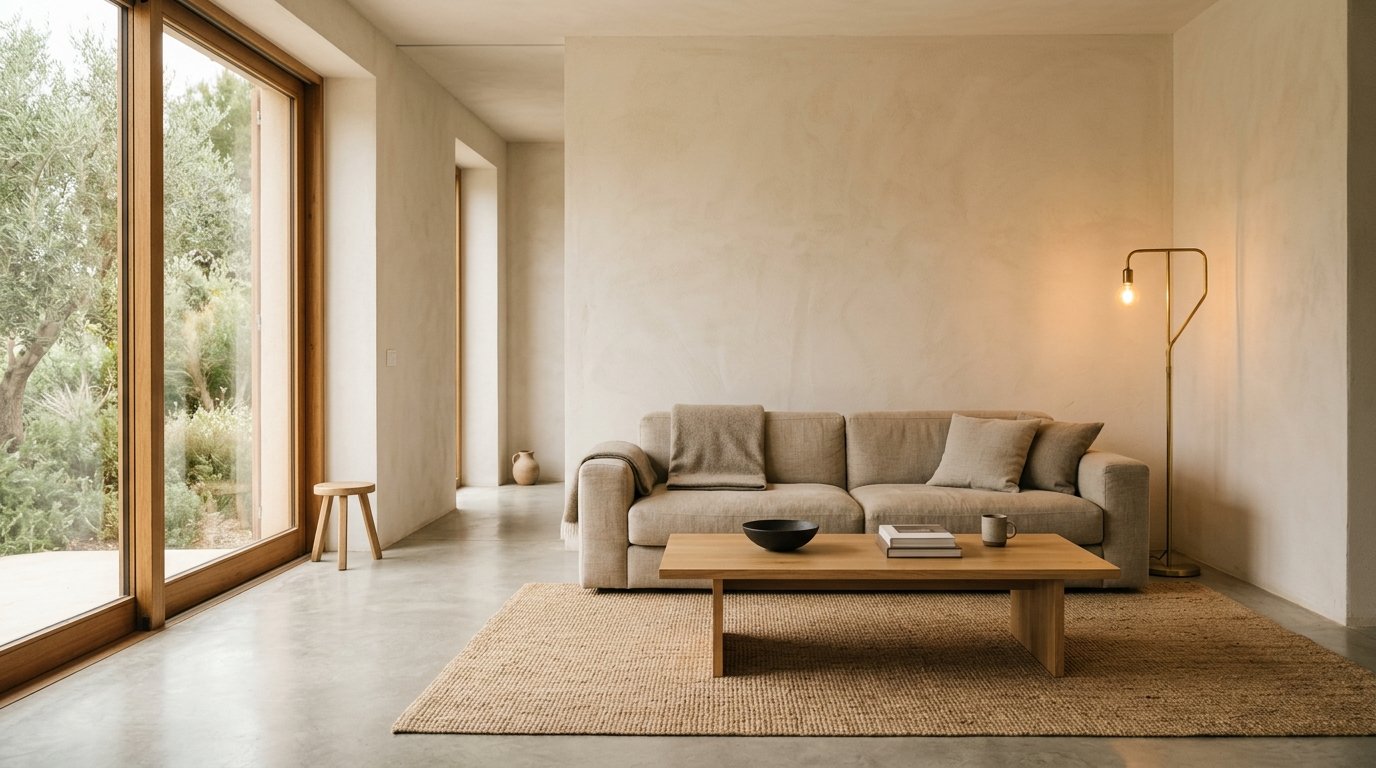
The Quiet Living Room: 12 Minimalist Ideas That Actually Feel Like Home (Not a Showroom)
My friend walked into my living room last spring and said, “It feels like I can breathe in here.” She didn’t say it looked expensive. She didn’t mention the throw or the rug or any of the stuff I’d agonized over. Just — breathe.
That’s the whole thing, right there.
—
1. The Wall Behind Your Sofa Is Doing Too Much Work
Most living rooms fail on one wall. The sofa wall. It becomes a Pinterest mood board gone wrong — a gallery of frames at weird heights, a floating shelf with seventeen small objects, maybe a clock, a mirror, a hanging plant, and somehow a word in metal letters that says “GATHER.”
Strip it back.
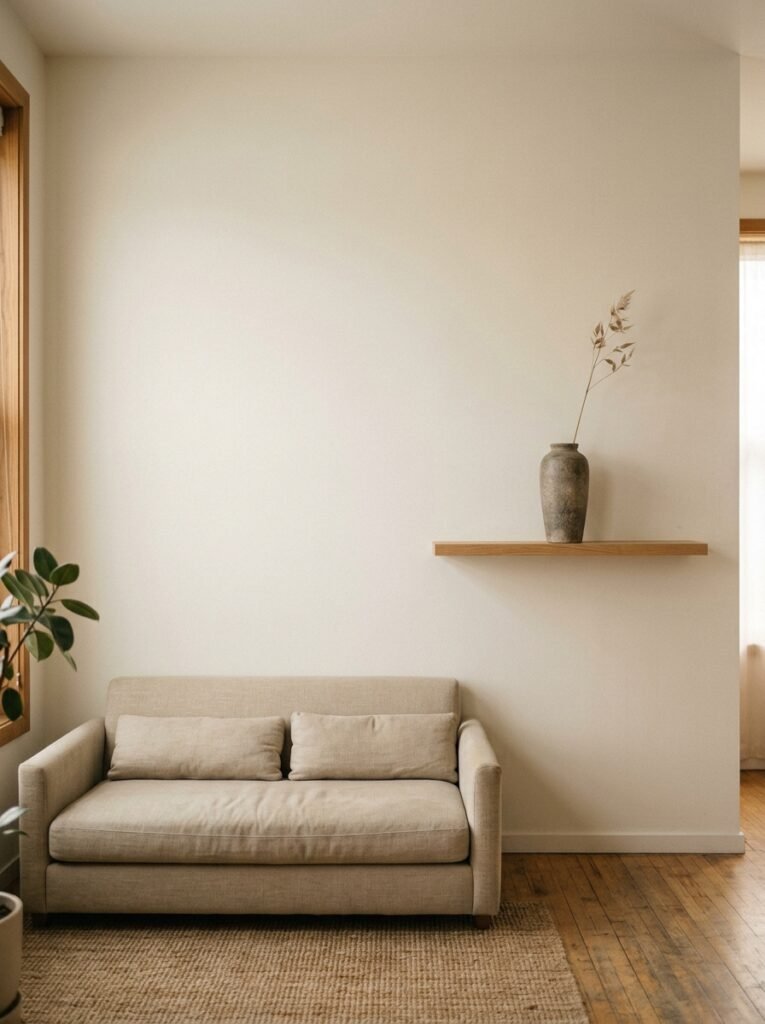
One piece. Maybe two if they’re closely related and genuinely connected — like a pair of prints that were bought together or a small shelf holding exactly one thing. The empty space around that focal point isn’t emptiness, it’s breathing room, and breathing room reads as intention.
I know it feels scary. It felt scary to me. You pull everything off and the wall looks raw and unfinished and you’re standing there holding a frame thinking, is this a mistake? Give it 48 hours. You’ll stop seeing the emptiness and start seeing the calm.
“The empty space around your focal point isn’t emptiness. It’s breathing room — and breathing room reads as intention.”
—
2. Neutral Doesn’t Mean Beige — It Means Quiet
Here’s where people get minimalism wrong. They think neutral means one color. Sand, cream, oatmeal, repeat forever. And then they wonder why the room feels lifeless.
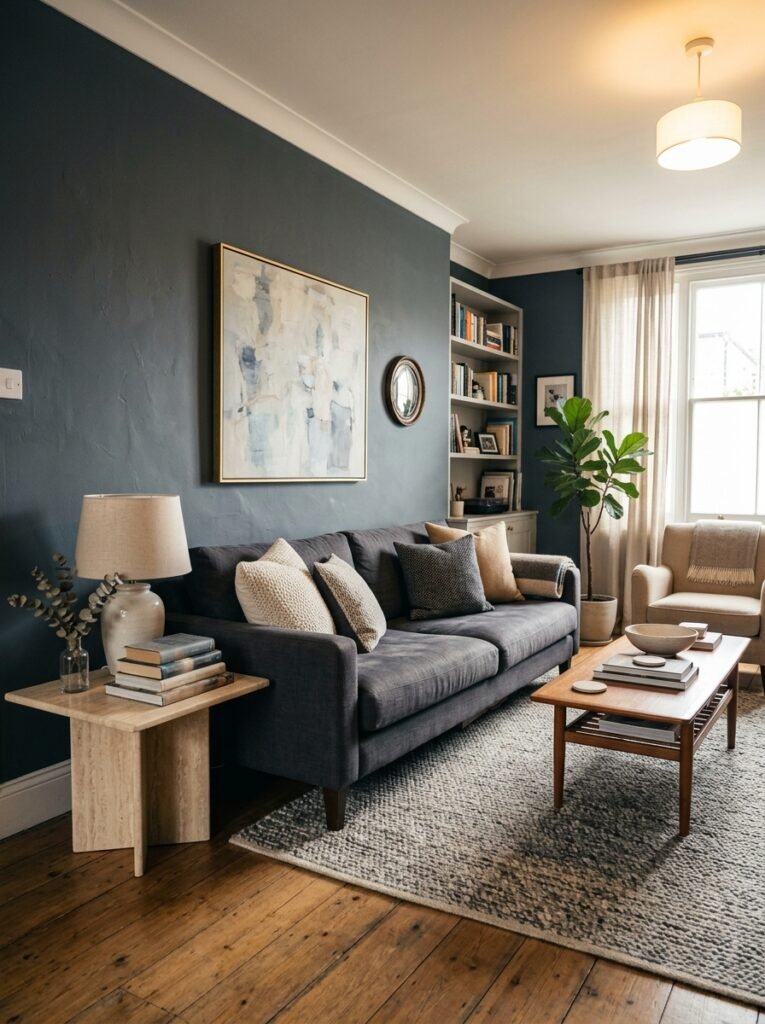
Quiet is different from boring. Quiet means no color is shouting. A deep warm charcoal wall can be neutral. A dusty sage green can be neutral. A terracotta-toned plaster finish — absolutely neutral, just not beige.
The rule I actually live by: can every color in the room have a conversation with every other color without anyone raising their voice? If yes, you’re in quiet territory. If the burnt orange pillow is fighting the cool gray sofa, someone’s being too loud.
British homeowners tend to get this instinctively — there’s something in the UK design sensibility that already leans toward muted, layered tones. American rooms sometimes go paler than pale and then wonder why nothing lands. Don’t fear depth. Fear clash.
—
3. One Textile Doing the Heavy Lifting (Instead of Six Doing Nothing)

I used to have so many throw pillows. So many. I had pillows on the pillows. And every time someone actually wanted to sit on the sofa, we had to do this whole choreography of removing pillows and stacking them somewhere and it was honestly kind of exhausting.
In a minimalist living room, one great textile does more than six average ones.
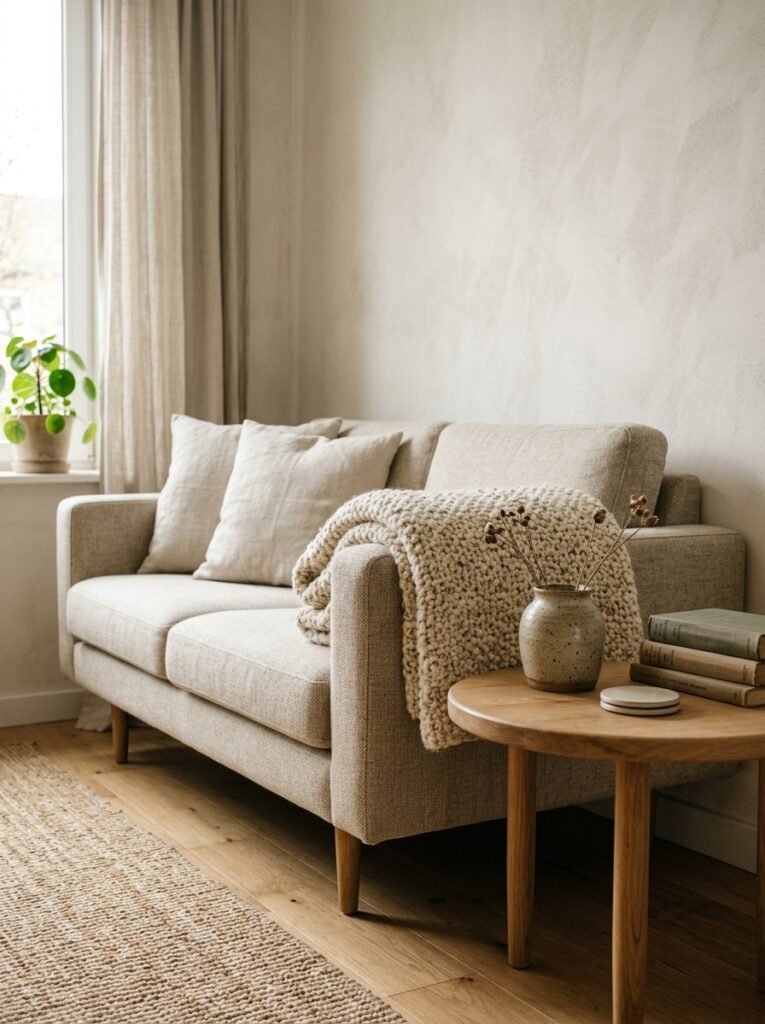
A chunky knit throw draped over one arm of the sofa. Or a single oversized pillow in a genuinely interesting linen. Something with actual texture you want to reach out and touch. The trick is quality over quantity, which sounds obvious but is genuinely hard to commit to when you’re standing in a home goods shop and everything looks appealing in the lighting.
One. Pick one. Let it be the thing.
—
4. The Coffee Table Rule That Changes Everything
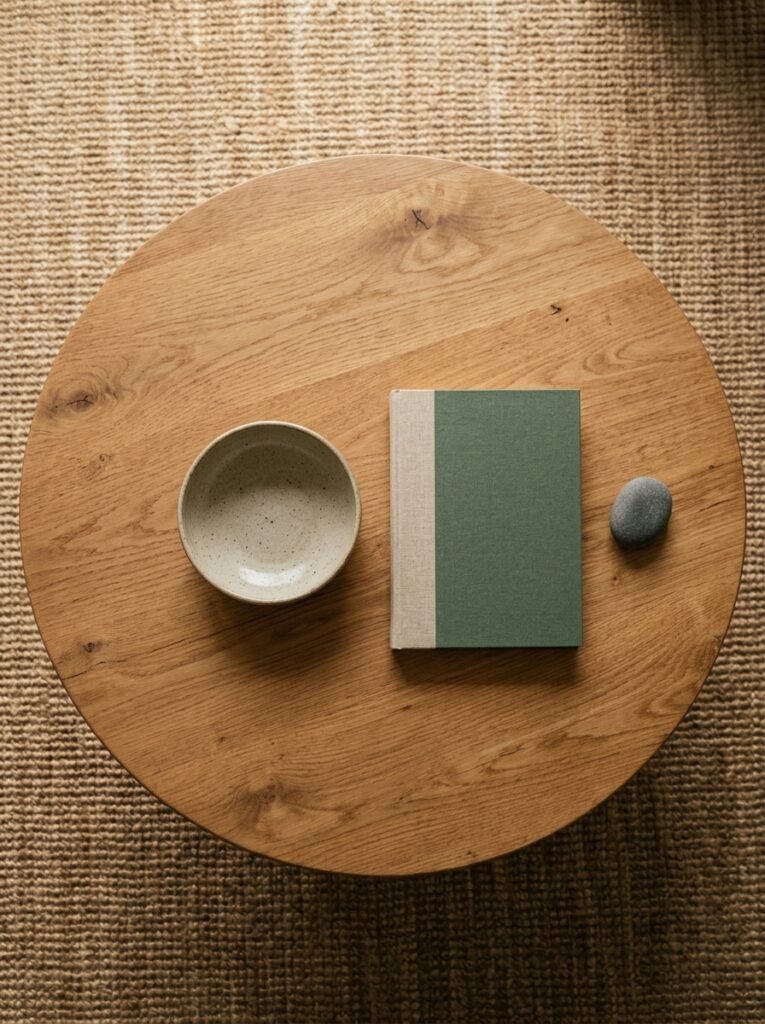
Your coffee table should hold three things maximum. And honestly? Two is better.
A small object with height — a stack of books, a single candle, something sculptural. And something low and grounding — a tray, a woven mat, a stone bowl. That’s it. Done. Resist the fourth thing. The fourth thing is always where it starts to unravel.
I cannot stress this enough: a styled coffee table with two or three intentional objects will ALWAYS look better than one covered in nine things, even if those nine things are individually beautiful. Context matters. Space matters. Negative space is not wasted space.
—
5. The Color That Keeps Showing Up in Every Beautiful Minimalist Room Right Now
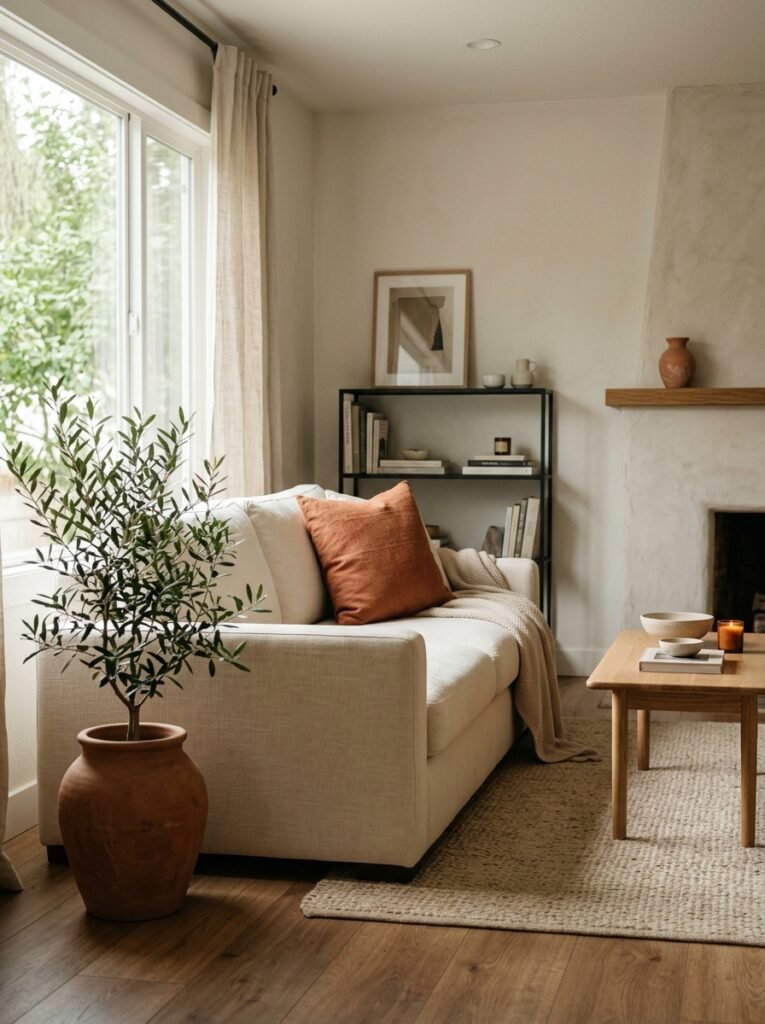
It’s not white. It’s not gray. It’s warm off-white with undertones you can’t quite name.
Sort of linen, sort of parchment, sort of the color of old paper left in the sun. It works because it reflects warm light beautifully — and not in a cold, clinical way. In the afternoon in a north-facing British living room or a sun-drenched American west coast lounge, it does something genuinely lovely.
Pair it with natural materials — actual wood, actual stone, actual linen — and it sings. Pair it with plastic and fast furniture and it looks exactly like what it is: a trendy paint choice trying to hold everything together.
The materials matter as much as the color. Maybe more.
“It’s not white. It’s not gray. It’s warm off-white with undertones you can’t quite name — and it does something genuinely lovely in afternoon light.”
—
6. Lighting Is the Furniture You Forgot to Buy
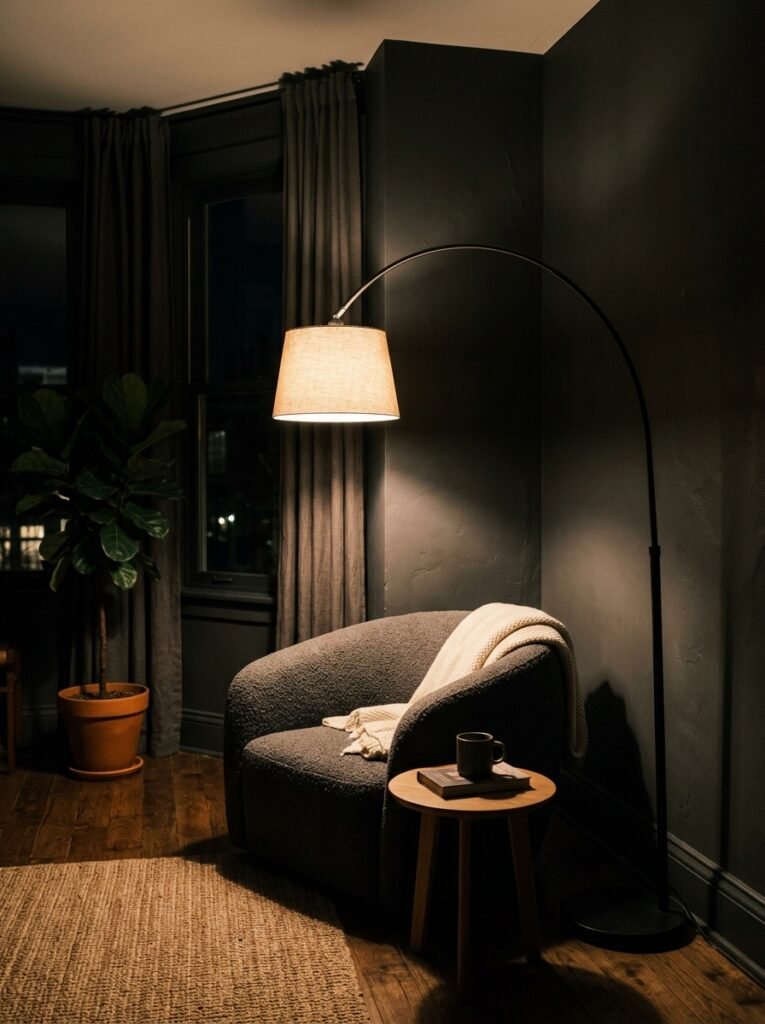
Most living rooms have one overhead light and a lamp from a superstore that cost forty dollars and it SHOWS. The overhead light flattens everything. The cheap lamp doesn’t reach the corners. And then people buy more stuff to make the room feel cozier when what the room actually needs is better light.
The amber glow of an Edison-style bulb at 7pm changes a room completely. Layer your light sources — one floor lamp, one table lamp, maybe a small accent light tucked behind a plant or on a low shelf. The key word is low. Light that sits at eye level when you’re seated is warmer and more inviting than light that blasts down from above.
Swap the bulbs too. Cold white bulbs in a minimalist room look like an operating theatre. Warm white, 2700K range. That’s the move.
Side note — if you can afford dimmer switches, get dimmer switches. They’re one of those low-effort high-impact changes that you’ll use every single day.
—
7. The One Rule That Makes Any Tiny British Terraced Room Feel Intentional
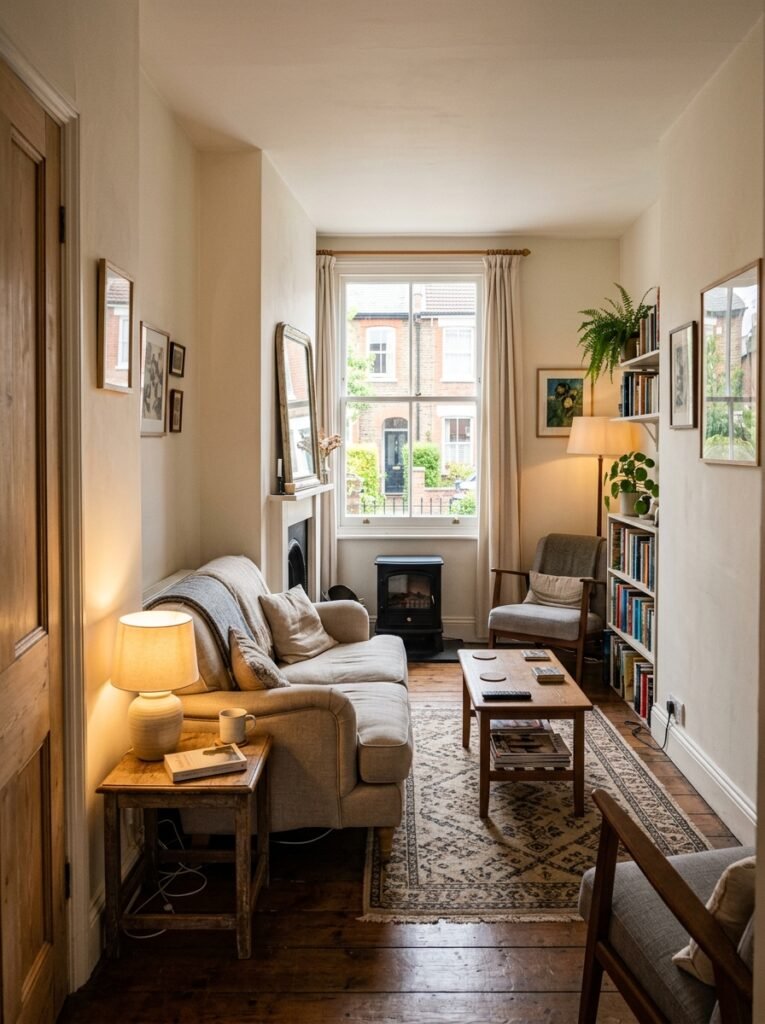
Fewer, larger pieces. Always.
The instinct in a small room is to go small with the furniture — smaller sofa, smaller rugs, smaller everything. And then the room fills up with these little-scale pieces that make it look cluttered and cramped. It’s counterintuitive but it’s real: a big rug that goes nearly wall to wall makes a small room feel like a choice. A small rug floating in the middle of the floor makes it feel like an afterthought.
Same with the sofa. One properly sized sofa that fits the room well beats a sofa and a loveseat and two accent chairs all crammed in together. Edit the seating. Trust the edit.
A woven jute rug, large enough that the front legs of every piece of furniture sits on it — that’s the version of this I’d start with. Grounds everything. Makes the whole room read as one intentional space instead of a collection of separate objects.
—
8. Plants — But Not the Way Everyone Tells You to Do It
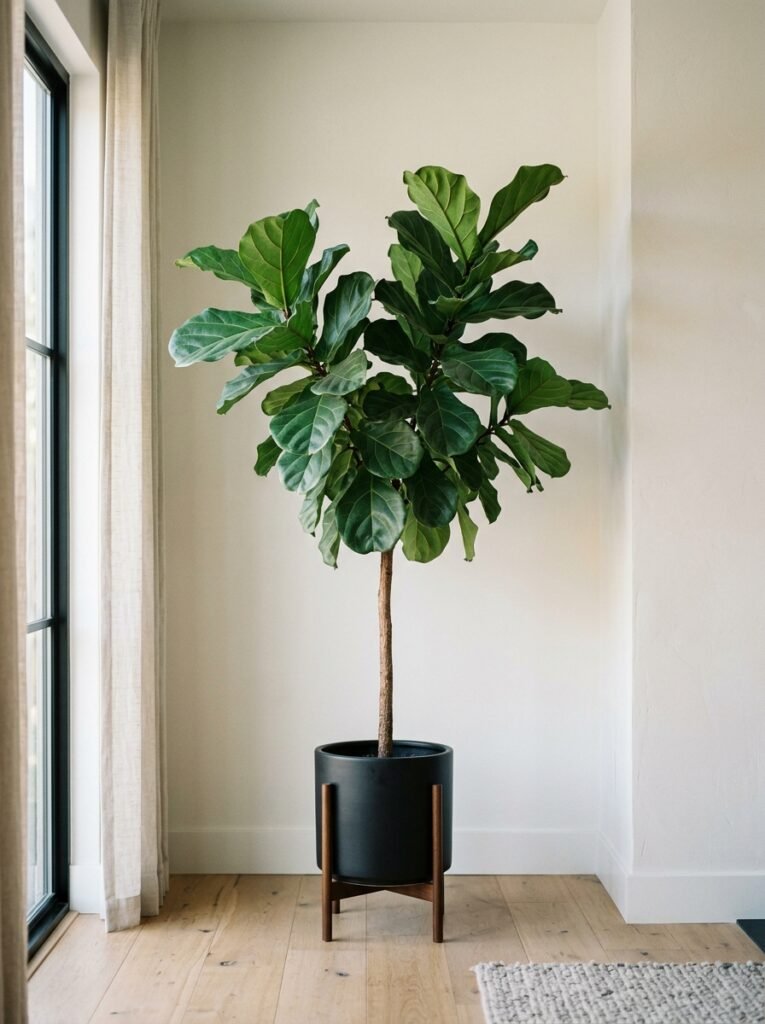
I’m not going to tell you to buy a fiddle leaf fig. I’m not gonna do it.
What I’ll say instead: one large plant in the corner of a minimalist room is more interesting than five small plants on a shelf. The big plant becomes part of the architecture. The shelf of small succulents becomes clutter that needs watering.
Think about scale. Think about silhouette — the shape a plant makes against a wall is as important as the wall art you’d hang there. And think about light. Nothing breaks the calm of a minimalist room quite like a dying plant. Or maybe it’s the opposite, honestly — a lush, well-tended plant is one of the few things that adds life without adding noise.
One. Make it count. Keep it alive.
—
9. The Bookshelf That Isn’t Trying to Be a Library
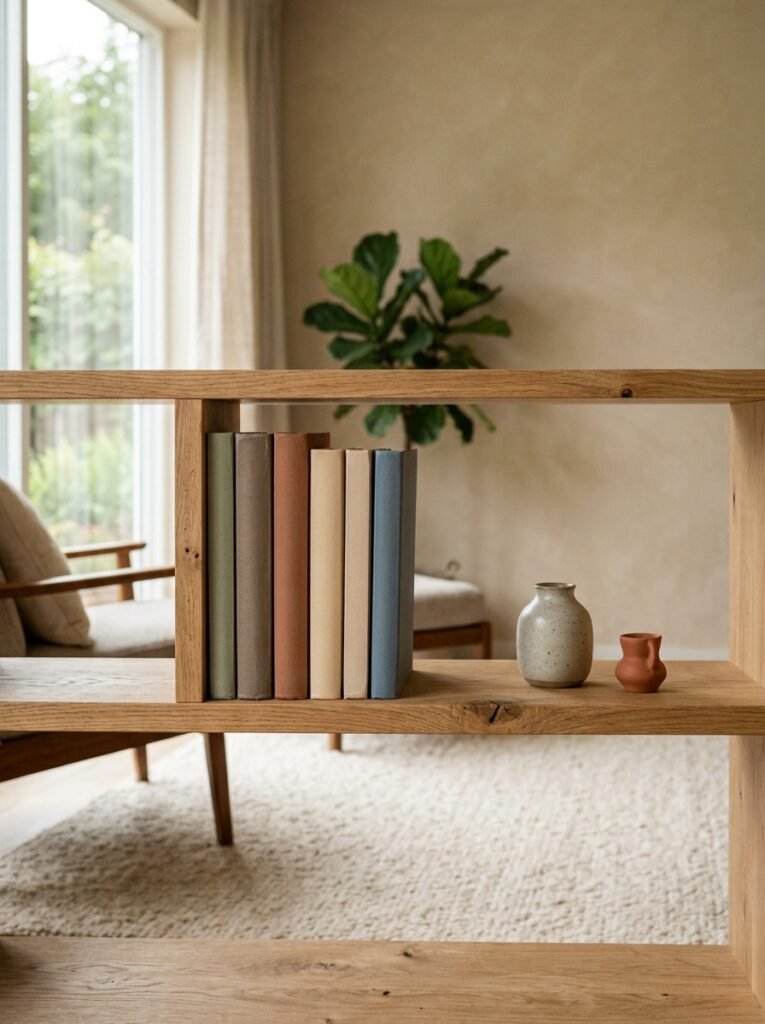
Books are allowed in minimalist rooms. Here’s the thing though — books in a minimalist room need editing.
Not every book you own needs to live on that shelf. Keep the ones that are genuinely yours — the ones you’ve read or intend to read or that mean something — and store the rest somewhere less visible. Then arrange them simply: by color, or all facing the same direction, or split between horizontal stacks and vertical rows, with small gaps between groups.
What you DON’T do is cram a bookshelf completely full with books vertical from one side to the other and fill every remaining space with small objects and photos and plants and this and that. It becomes visual noise. It’s exhausting.
A bookshelf that has intentional gaps and breathing room reads as curated. It tells a story about who you are instead of just displaying every object you’ve accumulated.
—
10. What to Do With the Television (Because Everyone Has One and Nobody Talks About It)
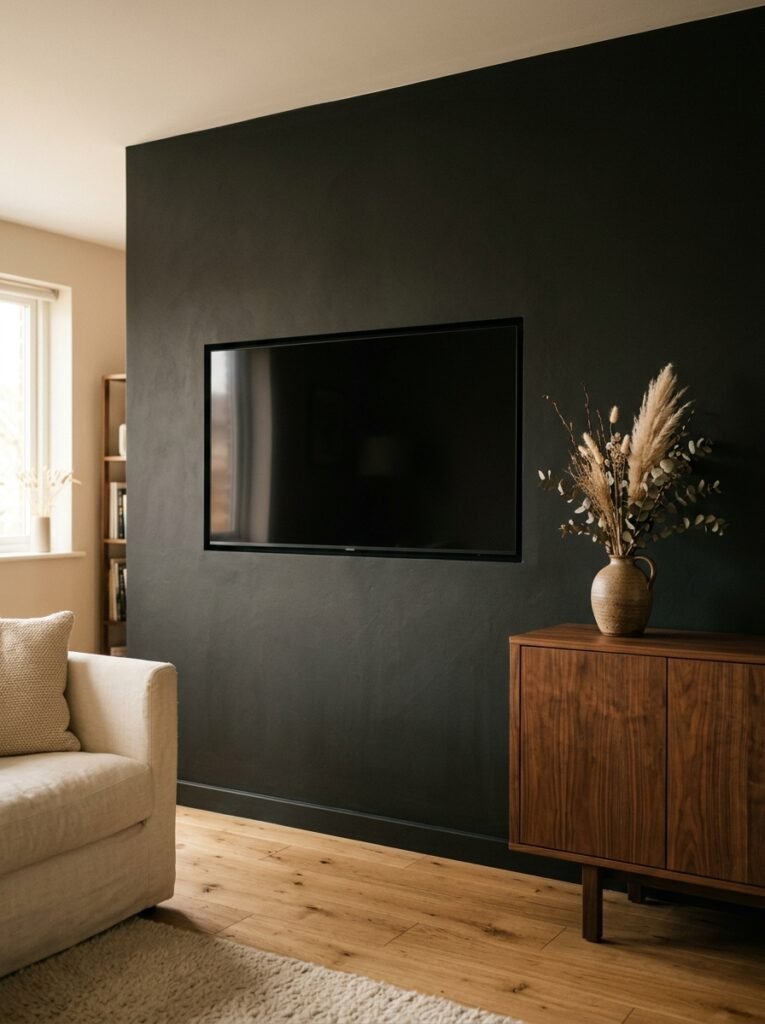
The television is the elephant in every minimalist living room.
Honest answer: it’s hard. TV’s are big and dark and reflective when they’re off and there’s no perfect solution. But there are better solutions. Mount it on the wall so there’s no chunky stand adding visual weight below it. Keep the area around it completely clear — no little soundbar sitting asymmetrically, no random router cable just trailing down the wall.
If you can run the cables inside the wall, do it. If you can’t, cable management channels in a color that matches the wall are the next best thing. It’s a small detail that makes a surprisingly big difference.
Some people go the route of framing it — building a simple recessed area or surrounding it with shelving that gives it context. That can work. What doesn’t work is just… letting it be the awkward giant rectangle that nobody acknowledges.
Acknowledge it. Plan for it. It’ll stop dominating the whole room.
—
11. The “Opposite of Clutter” Isn’t Empty — It’s Deliberate
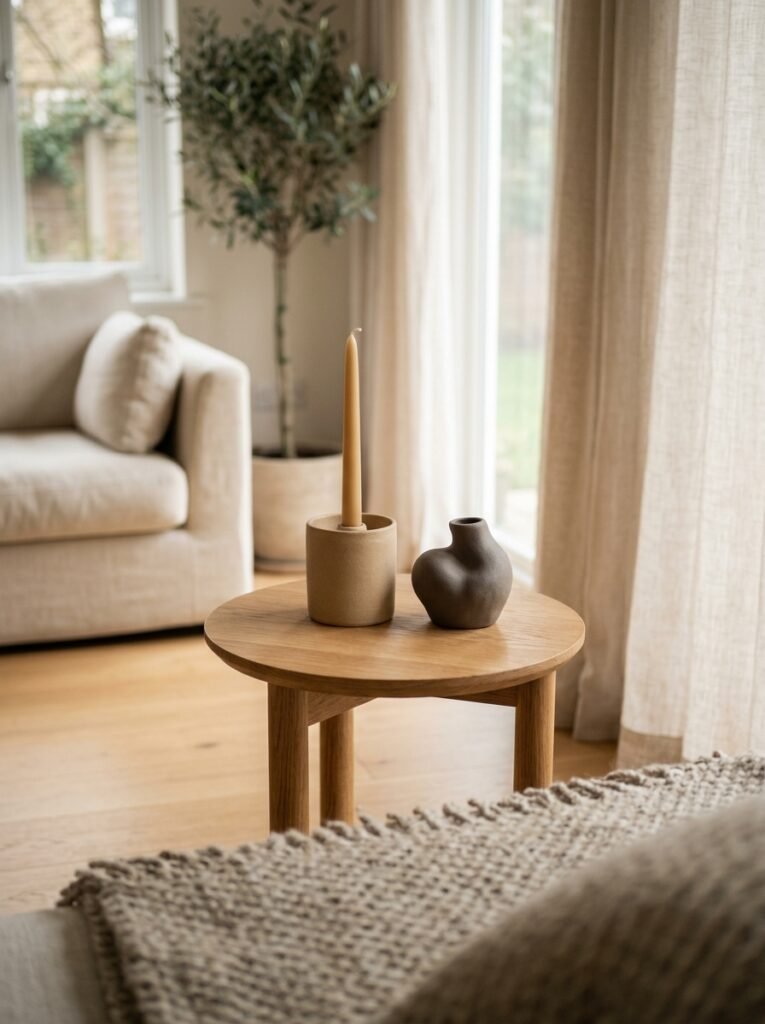
This is the thing nobody says clearly enough: minimalism doesn’t mean owning less. It means choosing more carefully.
You can have a full living room — rugs, art, cushions, plants, books — and it can still feel minimalist if everything was chosen with intention. And you can have an almost empty room that somehow still feels chaotic because the few things in it don’t relate to each other at all.
“Minimalism doesn’t mean owning less. It means choosing more carefully.”
What creates the feeling of minimalism isn’t absence. It’s coherence. It’s all the objects in a room feeling like they belong to the same family — similar materials, a consistent warmth or coolness of tone, things that seem like they grew from the same source.
That’s the edit. Not a count of how many objects, but whether they belong together.
—
12. The Last Five Minutes That Make the Room Look Like a Photo
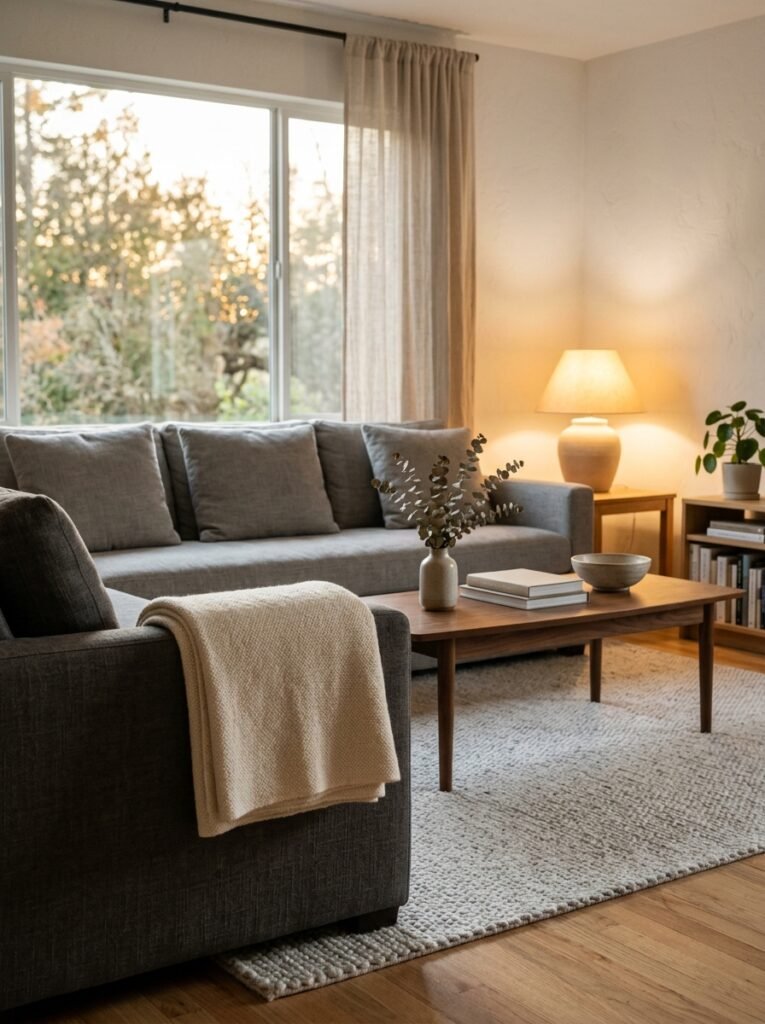
Here’s something practical and a little unglamorous: a minimalist room requires a quick daily reset.
Because everything is more visible. Because there’s less competing for attention, that one mug left on the coffee table or the blanket kicked into a weird heap is NOTICEABLE in a way it wouldn’t be in a maximalist room where everything is sort of visually equal.
Five minutes at the end of the evening. Fold the throw. Clear the table. Put one thing back where it lives. That’s it. The room rewards you immediately — you come downstairs in the morning and it already feels good, before the day starts, before coffee, before anything.
This is the part nobody pins on Pinterest, but it’s probably the most important part of actually living in a minimalist space rather than just admiring photos of them.
—
❓ FAQ
Q: How do I make a minimalist living room feel cozy and not cold? A: The biggest mistake people make is going too cool in their color and material choices. Warm your space up with natural wood tones, linen or wool textiles, and warm-white bulbs in your lamps — not overhead lighting. A room can be simple without being sterile, and texture is your best friend here.
Q: Can minimalism work in a small UK living room or does it need lots of space? A: Honestly, minimalism works better in small rooms. The principles of editing your objects, choosing fewer larger pieces, and keeping surfaces clear are especially effective when you don’t have much square footage to play with. A small room done right feels like a thoughtful little cocoon, not a crammed-in compromise.
Q: How do I start if my current living room is the opposite of minimalist? A: Don’t try to do it all at once. Start with surfaces — clear just one surface completely and live with it for a week. Usually you don’t miss anything you removed, and that confidence makes the next edit easier. Work outward from there, one area at a time, rather than overhauling the whole room in a weekend and burning out.
—
💭 Final Thoughts
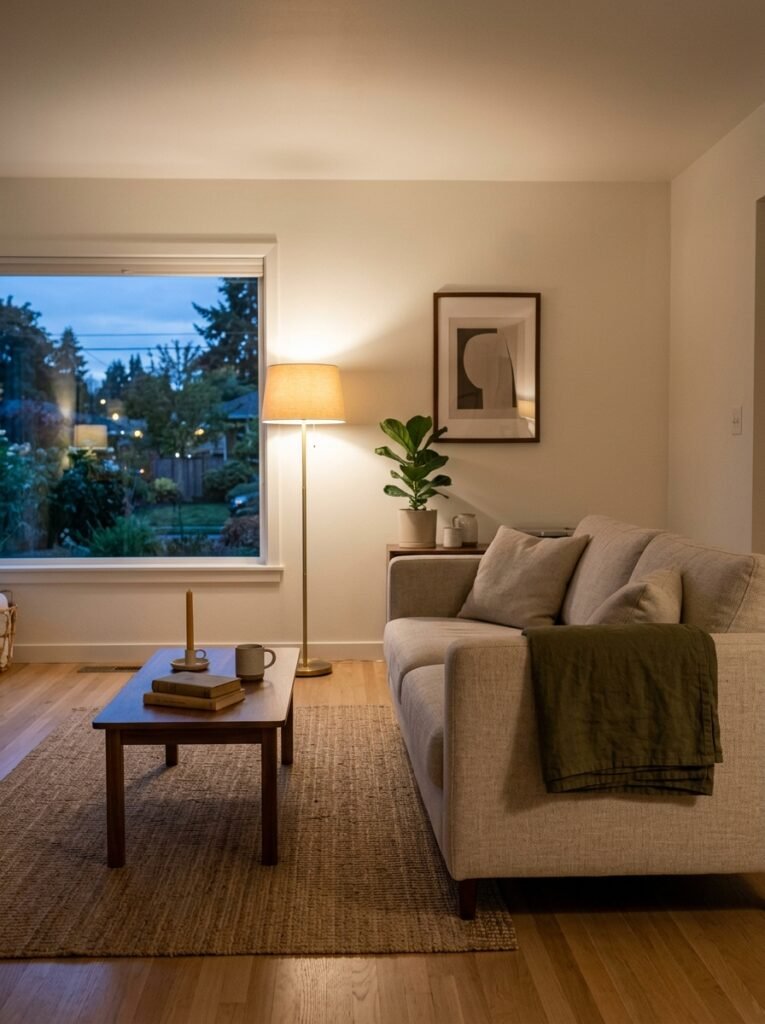
The living room that feels genuinely good to be in isn’t the one with the most carefully sourced objects. It’s the one where you can sit down on the sofa and your shoulders drop a little. Where you’re not visually processing fifty things at once. Where it feels like someone made decisions, and stood by them, and then left room for actual life to happen in the space.
That’s what your friend will notice when she walks in. Not the rug.
What’s the one thing in your living room right now that you know, if you’re honest with yourself, doesn’t really belong there?