
Wall Mirror Ideas for Your Living Room That Will Instantly Change How Your Home Feels
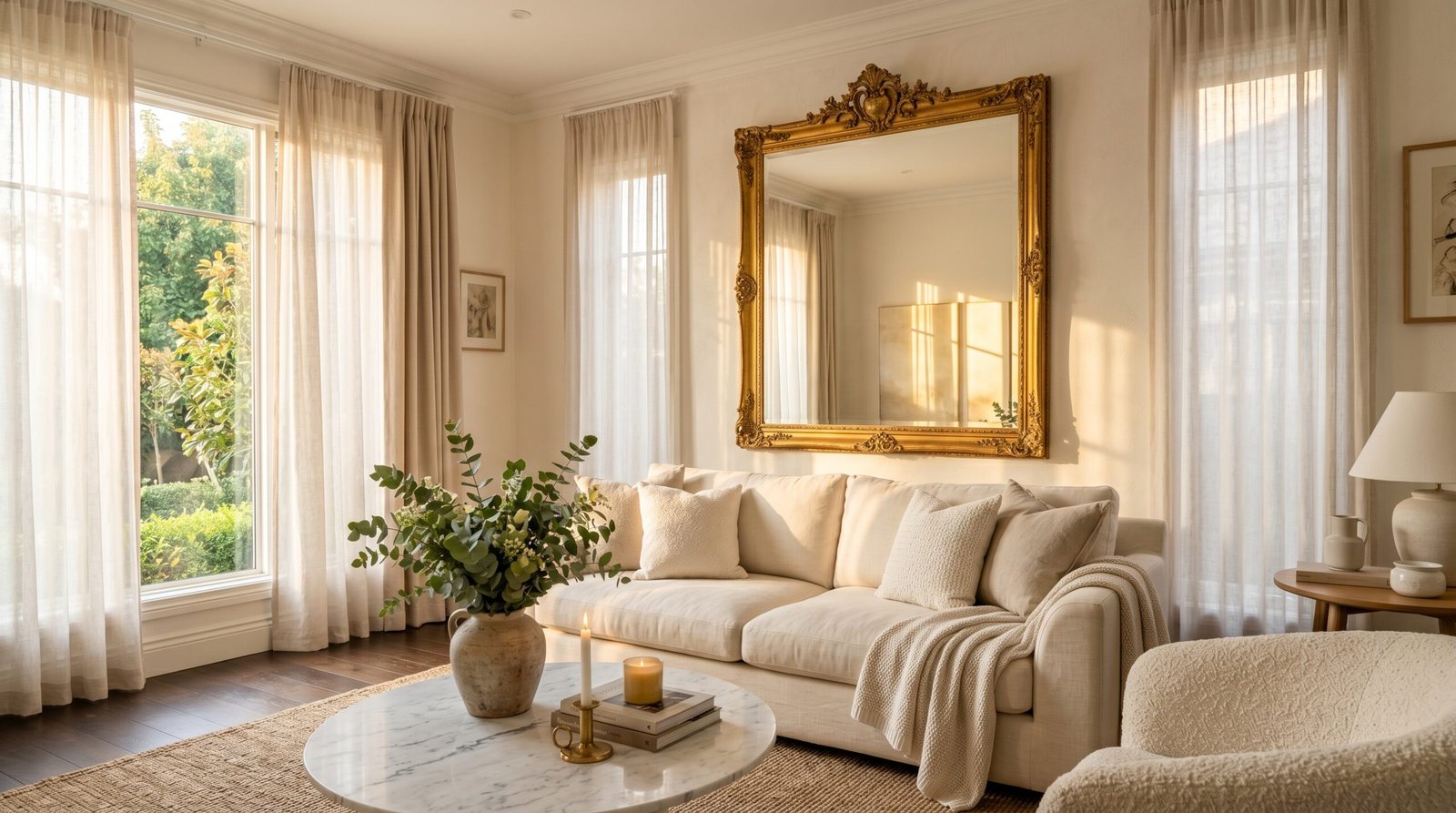
There’s a moment — you’ve probably had it — when you walk into someone’s living room and something just feels different. The room seems bigger, brighter, more alive. You look around trying to figure out why, and then you see it: a beautifully placed mirror catching the afternoon light, bouncing it across the room like it belongs there. That one design decision changed everything. These wall mirror ideas for living room spaces will help you recreate that magic in your own home.
—
1. Why Mirrors Are the Most Underrated Design Tool in Your Living Room
Most people think of mirrors as purely functional — something you glance into before heading out the door. But interior designers know a different truth entirely. A well-chosen, well-placed mirror is one of the most powerful and affordable tools you can use to transform a living room without touching a single wall color or buying a new sofa.
Mirrors do three things simultaneously: they add light, add depth, and add a layer of decorative interest that artwork alone can’t replicate. Think about what that means in practical terms. A dark corner becomes luminous. A small room begins to feel like it breathes. A plain, forgettable wall suddenly becomes a design focal point that draws the eye and holds it.
“A mirror doesn’t just reflect your room — it reimagines it entirely.”
The reason mirrors are so often overlooked is precisely because they seem simple. But simplicity, when applied with intention, is where great design lives. Whether your style leans toward maximalist gallery walls or clean Scandinavian minimalism, there is a mirror idea in this article that will make you look at your living room walls in a completely new way.
—
2. The Oversized Statement Mirror That Acts Like a Window
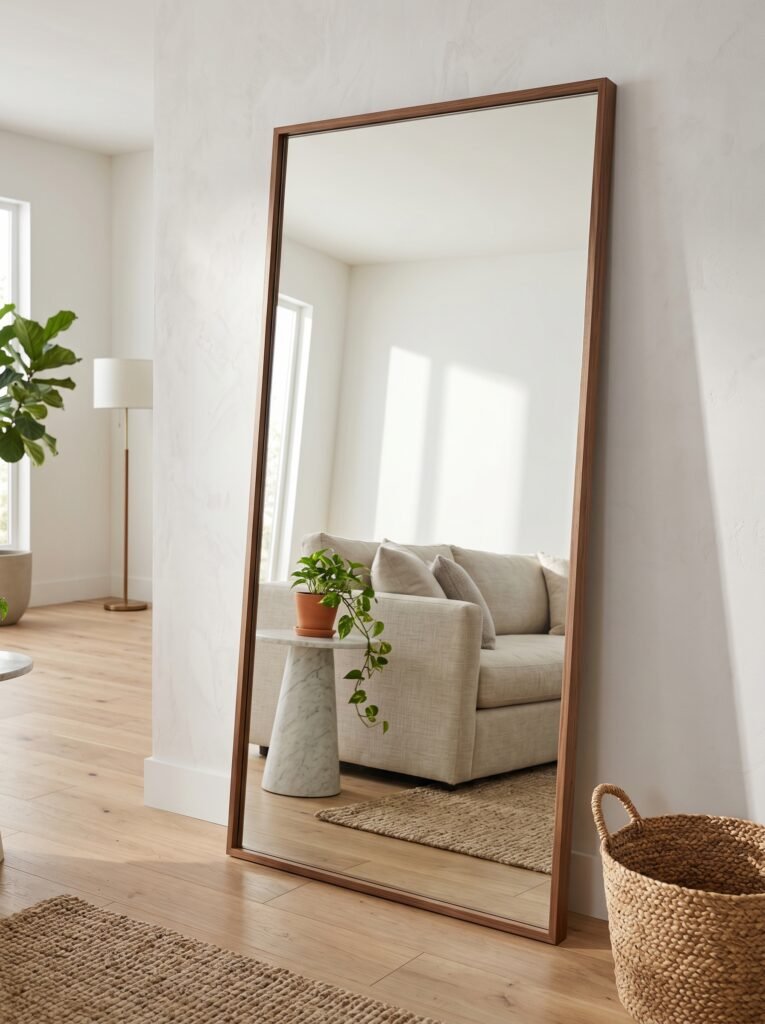
If you’ve ever scrolled Pinterest for more than five minutes, you’ve seen it: the enormous, floor-leaning mirror propped against a living room wall, looking effortlessly chic and deceptively casual. There’s a reason this look keeps circulating — it genuinely works.
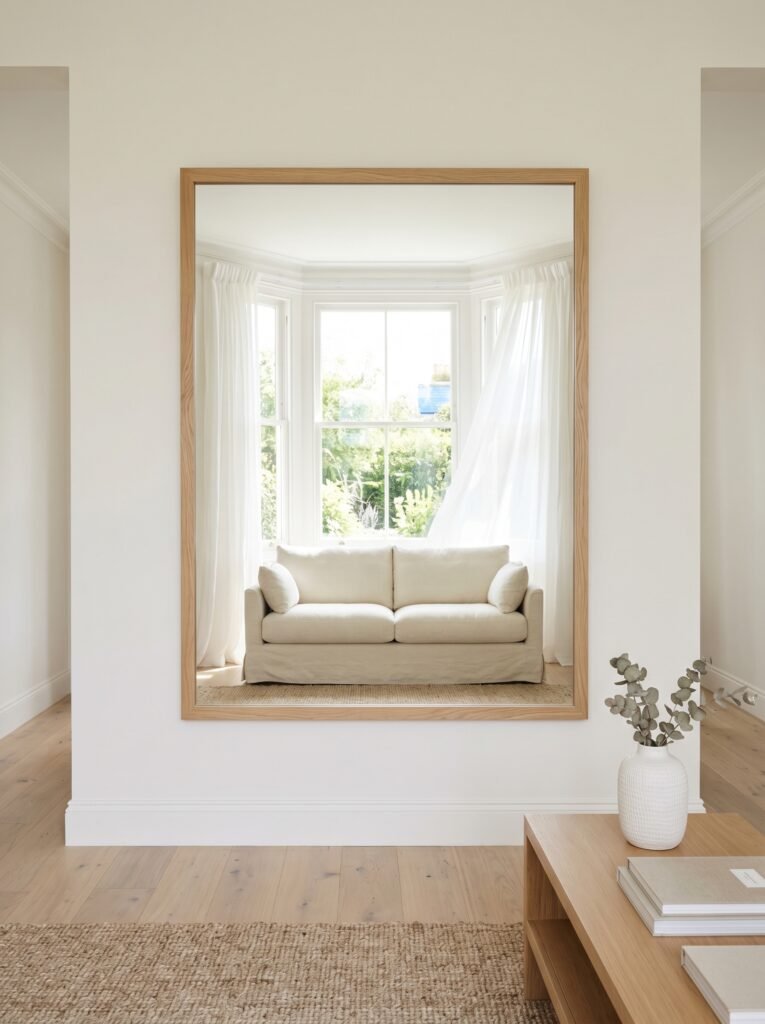
An oversized mirror, whether leaned or mounted, creates the illusion of an architectural feature that wasn’t there before. It mimics a window, bounces natural light, and gives the room a sense of openness that no amount of decluttering can fully achieve on its own. The key is scale. The mirror should feel almost too large — that’s when it crosses from furniture into statement.
For a living room with 9-foot or higher ceilings, a mirror that stretches from roughly 18 inches off the floor to about 72 inches tall will look proportionate and intentional. Pair it with a warm wood frame or a thin minimalist metal surround, and you have a piece that costs far less than a renovation but delivers renovation-level impact.
—
3. Grouping Small Mirrors Into a Gallery Wall That Feels Like Art
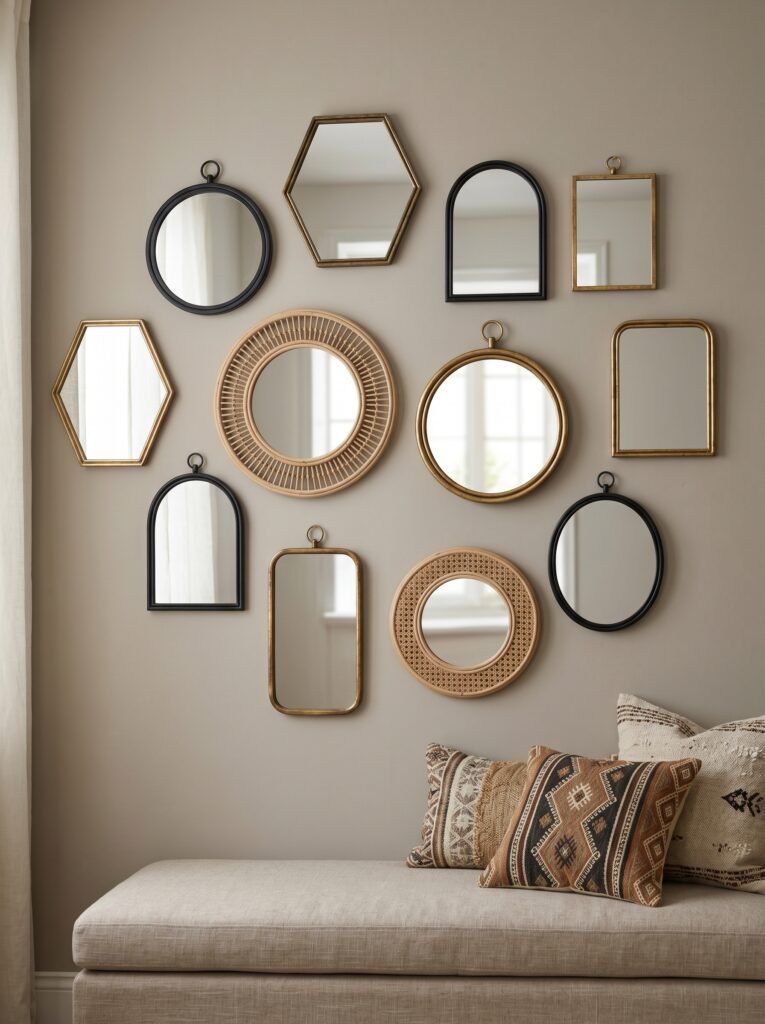
Not every mirror idea needs to be a single dramatic statement. Sometimes, the most beautiful mirror walls come from grouping many smaller mirrors together — different shapes, similar finishes — into a cohesive arrangement that reads as one bold design moment from across the room.
The secret to making a mirror gallery wall feel curated rather than cluttered lies in two things: consistent finish and intentional spacing. If every mirror shares a gold or brass finish, for example, you can mix round, arched, hexagonal, and rectangular shapes freely without the wall looking chaotic. Space them approximately two to four inches apart, and they begin to read as a single installation.
This approach is particularly wonderful for living rooms with long, horizontal walls that need visual interest but don’t have a natural focal point like a fireplace. A grouping of seven to nine mirrors in varying sizes, arranged in a loose organic cluster, creates a focal point from nothing — and at a fraction of the cost of a custom art installation.
—
4. The Arched Mirror Trend That Feels Timeless, Not Trendy
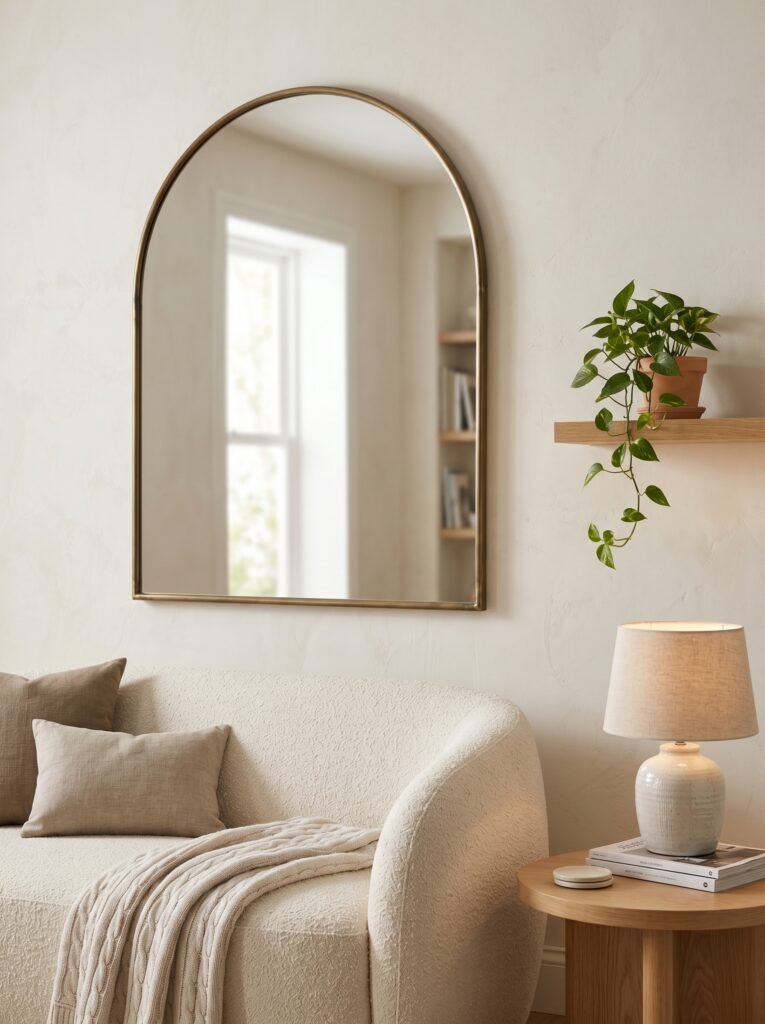
Arched mirrors have been having a long moment in interior design, and here’s the thing: they deserve it. Unlike some trends that feel forced or flavor-of-the-month, the arched mirror taps into something deeper — a classically proportioned shape that human eyes have been drawn to for centuries, from cathedral windows to doorways and grand entries.
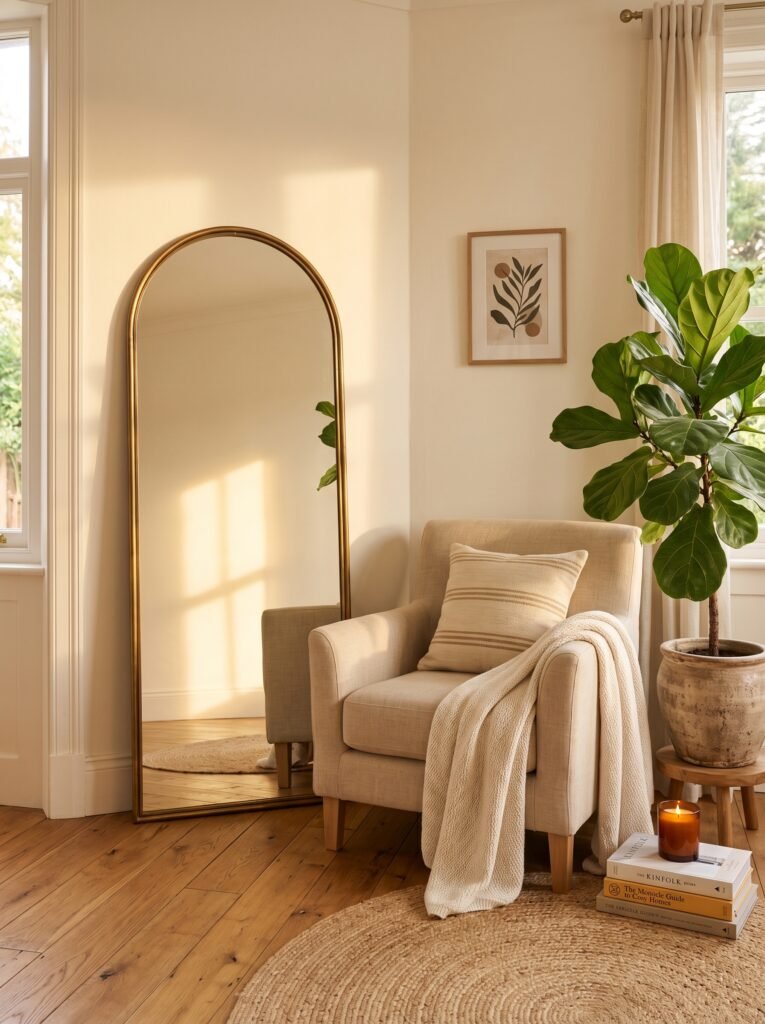
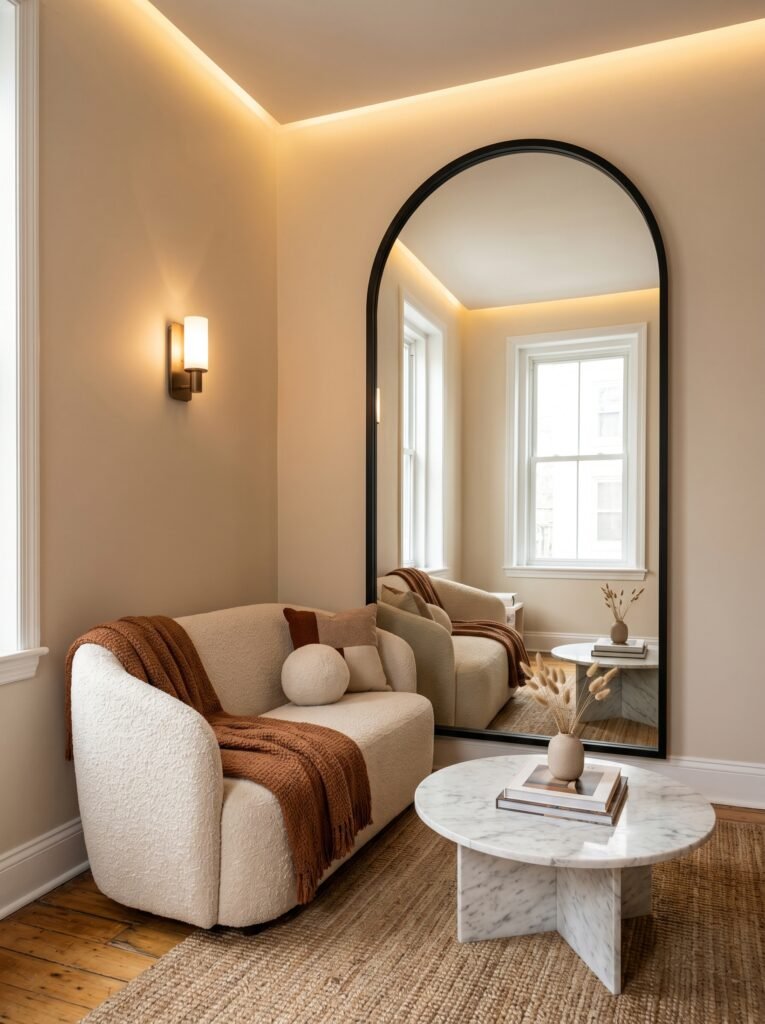
In a living room, a single large arched mirror placed above a console table or leaned beside a sofa creates a sense of quiet sophistication. The curved top softens sharp architectural lines, making even a boxy or modern room feel warmer and more livable. It’s the kind of detail that guests notice without quite knowing why the room feels so considered.
Choose a thin black or antique brass frame for maximum versatility across decorating styles. The arched mirror works in coastal rooms, in moody jewel-toned spaces, in light-filled minimalist rooms — it’s genuinely one of the most style-agnostic pieces you can invest in.
—
5. Placing Your Mirror to Maximize Natural Light Like a Designer
Here’s where intention separates a good mirror placement from a transformative one. The position of your mirror relative to your light source determines whether it floods your room with warmth or simply hangs there looking decorative.
The golden rule of mirror placement: hang or lean your mirror on the wall perpendicular to your window, not directly opposite it. When a mirror faces a window head-on, it reflects the window back at you — which can create glare and actually make the window feel smaller. When placed on the wall beside the window, the mirror catches and redistributes that natural light sideways across the room, creating a soft, even glow that makes the entire space feel more luminous.
“The right mirror in the right place doesn’t just reflect light — it multiplies it.”
In a living room with limited windows, this placement strategy can be genuinely life-changing. A large mirror on the wall adjacent to your main light source will essentially double the perceived brightness of the room without a single additional light fixture. It’s the kind of tip that sounds almost too simple until you try it and stand back in quiet disbelief at the difference.
—
6. Vintage and Antique Mirror Frames That Add Instant Character
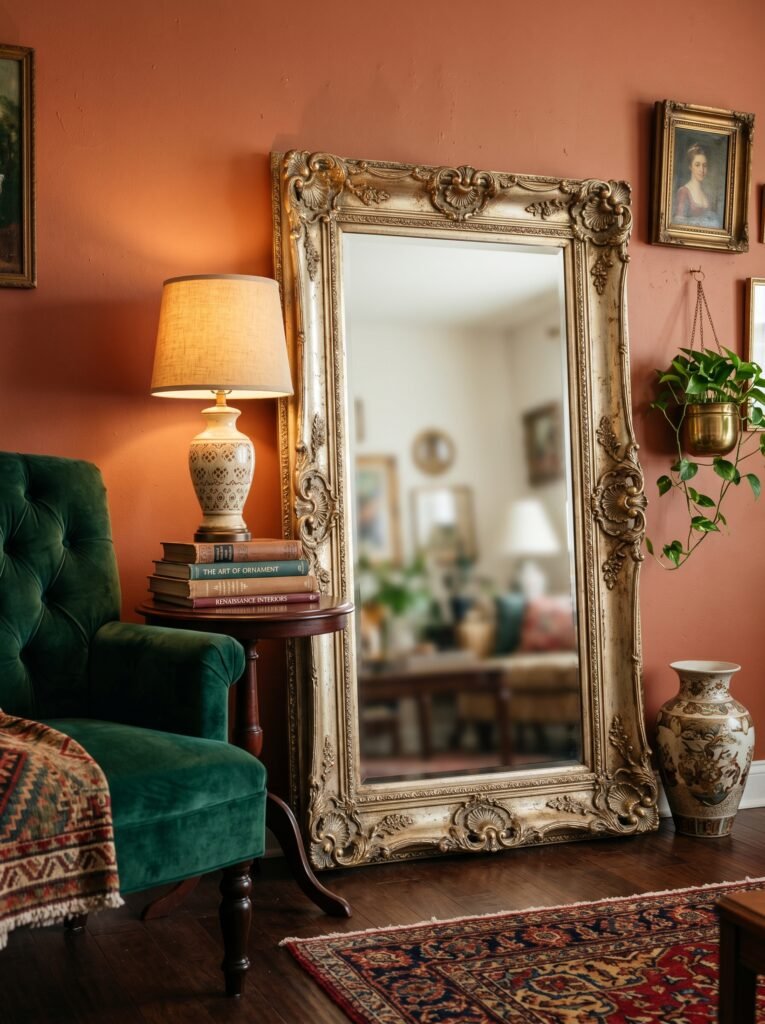
There is a warmth and a story that comes with a vintage mirror that a brand-new piece simply cannot replicate. The slightly tarnished gilt frame, the subtle foxing on an old mercury glass surface, the hand-carved wooden surround that shows decades of use — these details give a living room layers that even the most carefully curated modern space sometimes lacks.
Vintage mirrors can be sourced from estate sales, thrift stores, antique markets, and online resellers for far less than their visual impact suggests. A large ornate gold mirror that might cost hundreds at a home goods store can often be found at a fraction of the price with a little patience and searching. The imperfections — the small chips, the aged glass — are not flaws. They are the character.
In a contemporary living room, a single ornate vintage mirror creates a beautiful tension between old and new that feels intentional and deeply personal. It says that the room was assembled with thought and care, not simply ordered from one catalog.
—
7. The Sunburst Mirror That Brings Energy Into a Neutral Room
If your living room is built on a foundation of neutrals — warm whites, creams, soft grays, natural linens — a sunburst mirror is one of the most effective ways to inject energy and visual interest without disrupting that careful calm.
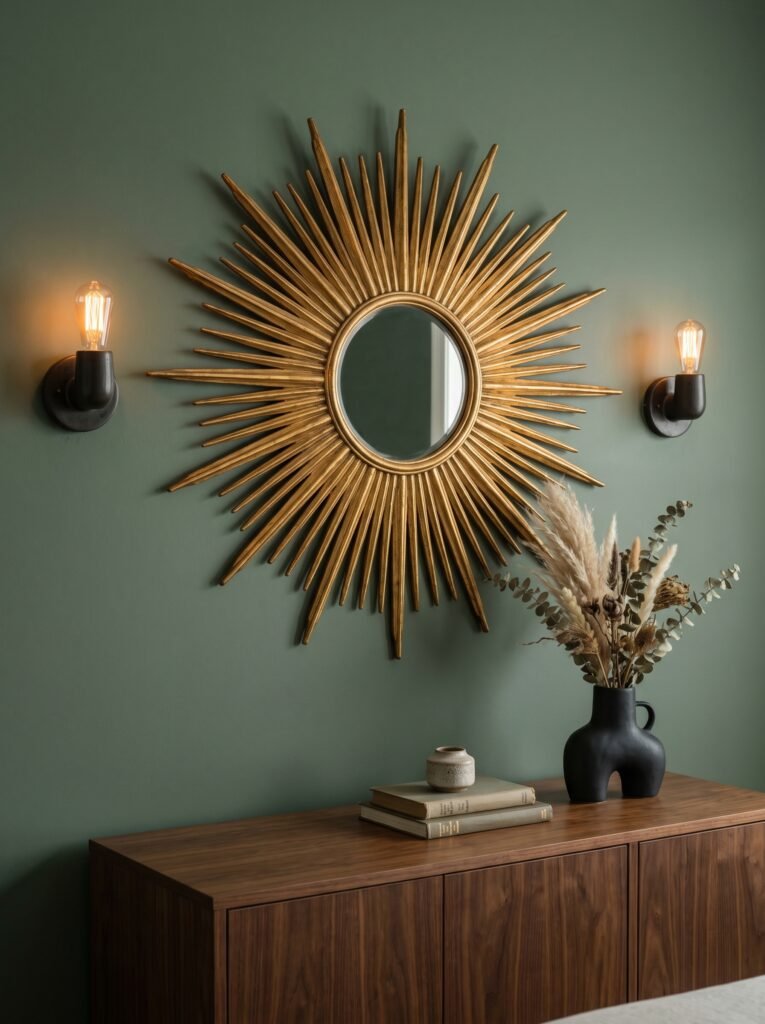
The sunburst, or starburst, mirror is a design classic for a reason. Its radiating spokes draw the eye immediately and create a sense of movement on an otherwise static wall. In a neutral room, a sunburst mirror in brass, gold, or warm bronze acts almost like a piece of sculptural art — it has dimension, shadow, and visual complexity that a flat framed mirror cannot offer.
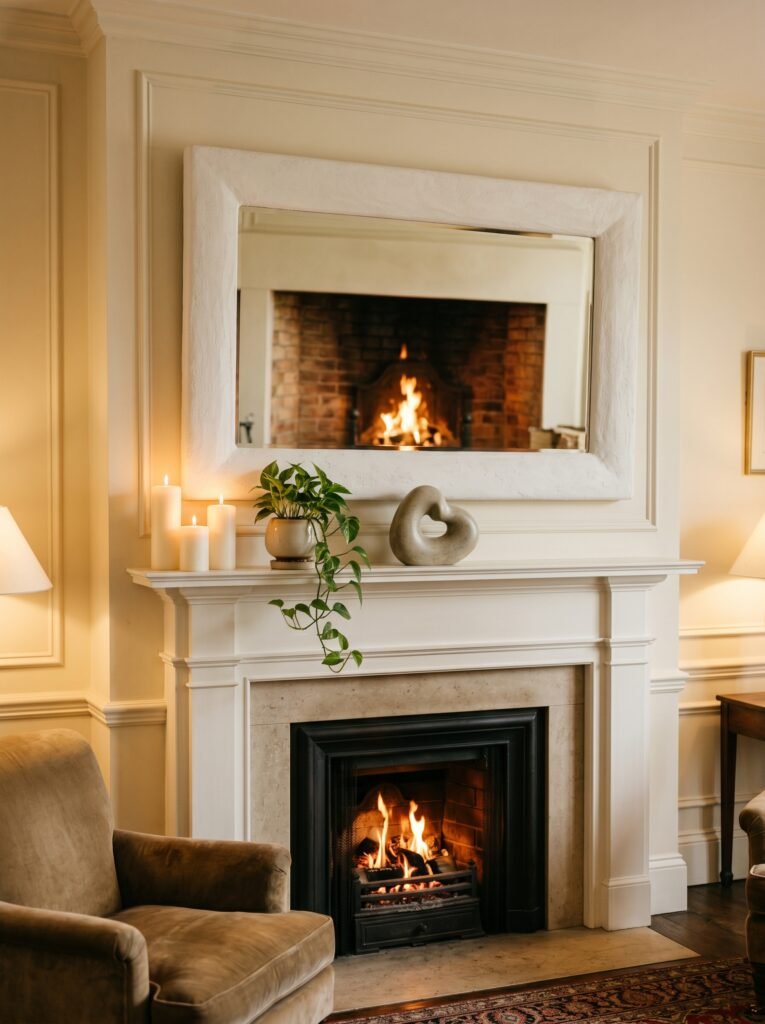
Place a sunburst mirror above a fireplace mantle, centered above a sofa, or between two windows for maximum impact. The symmetry of centering it on a wall gives it the authority of a focal point, while the organic, radiating shape keeps it from feeling too rigid or formal.
—
8. Floor Mirrors That Blur the Line Between Furniture and Art
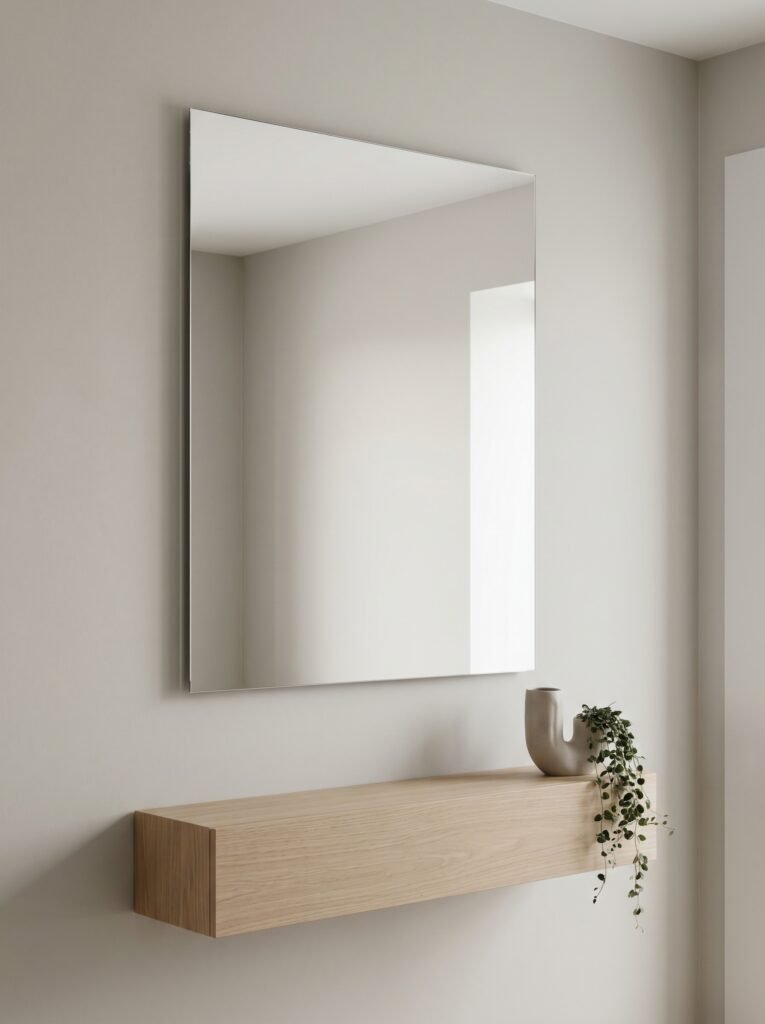
A floor mirror is not just a practical item for checking your outfit — in a living room context, it becomes a piece of furniture in its own right. Tall, lean, and intentionally undressed, a floor mirror leaned casually against a living room wall creates a layered, editorial quality that feels curated and effortless at the same time.
The styling around a floor mirror matters enormously. Lean a small plant or stack of art books against its base. Let it rest slightly off-center against the wall rather than perfectly positioned. These small imperfections communicate that the room was put together by a person with taste, not assembled by algorithm.
Floor mirrors work particularly well in narrow living rooms or in rooms where hanging heavy objects on the walls isn’t possible — apartments, rentals, or older homes with plaster walls that don’t take well to anchoring. They provide all the visual benefits of a large mounted mirror with zero commitment and maximum flexibility.
—
9. Mixing Mirror Shapes for a Living Room That Feels Collected Over Time
One of the hallmarks of a truly beautiful, lived-in living room is that it looks like it was built over years — like each piece was chosen because it was loved, not because it matched a set. Mixing mirror shapes is one of the fastest ways to create this feeling of a collected, personal space.
Try pairing a large rectangular mirror with a smaller round one nearby. Add a hexagonal accent mirror in a completely different corner. The unifying element should be the finish — keep all frames in the same metal tone or the same wood family — while the shapes are allowed to vary freely. This approach creates a visual rhythm across the room that feels organic and interesting rather than rigidly designed.
“A room that looks collected over time tells a story — and stories are what people remember.”
The round mirror, in particular, has a softening effect that balances the hard lines of furniture, window frames, and architectural corners. It’s worth having at least one circular mirror in any living room, even if only as a small accent piece.
—
10. Mirrored Wall Panels for a Dramatic, High-Impact Look
For those willing to go bold, mirrored wall panels — whether individual large-format mirrors arranged in a grid or an actual mirrored panel installation — create a dramatic, high-impact living room wall that feels genuinely luxurious.
This look works best in living rooms with strong natural light and at least one interesting architectural or decorative element to reflect. A mirrored wall that reflects your sofa, your gallery wall, or your window view essentially doubles the visual richness of the room, creating a sense of depth and complexity that few other design choices can match.
To keep the look sophisticated rather than overwhelming, limit the mirrored panels to one wall only and ensure the rest of the room is grounded in warm, natural textures — wood, linen, rattan, stone. The contrast between the reflective surface and the natural materials is what makes the space feel balanced and intentional rather than cold or excessive.
—
11. The Dark Frame Mirror That Anchors a Light, Airy Living Room
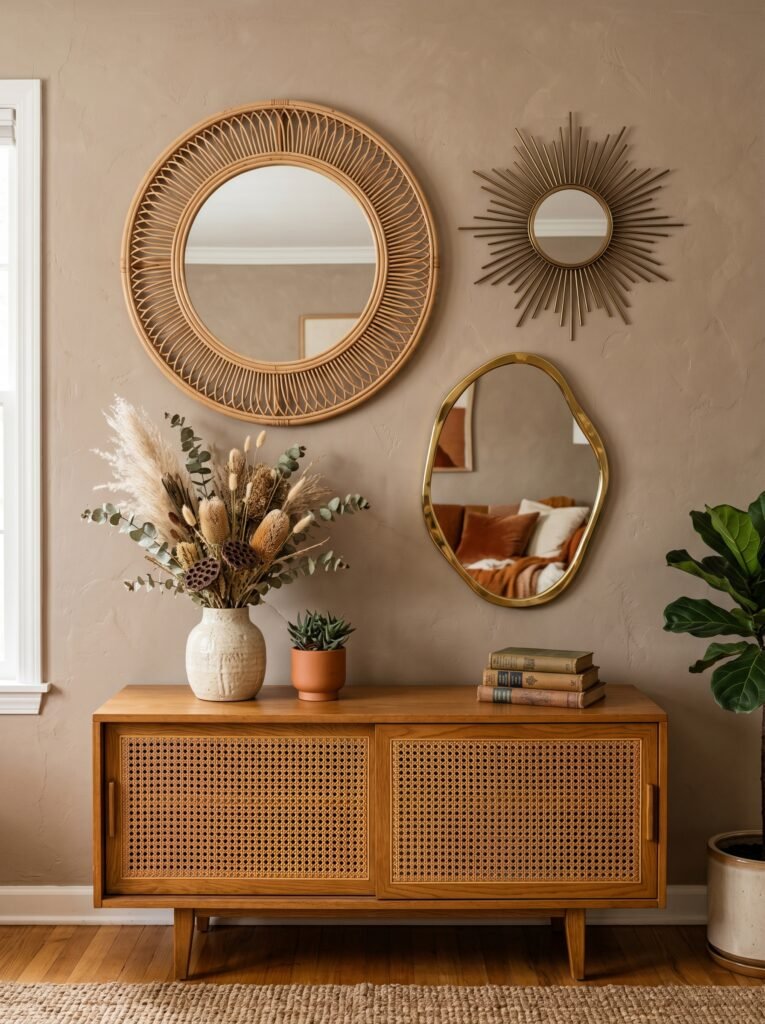
In a room filled with light walls, natural wood tones, and soft textiles, a mirror with a deep, dark frame — matte black, dark walnut, or charcoal — acts as an anchor. It gives the eye a place to land and rest, providing contrast that makes every other element in the room feel more intentional by comparison.
Dark-framed mirrors are having a sustained moment in interior design because they work across almost every decorating style. In a Scandinavian-inspired room, a matte black frame feels clean and deliberate. In a more eclectic, bohemian space, a dark distressed wood frame adds depth and warmth. In a coastal or California-casual room, it provides grounding contrast to all that white and blue.
The scale of a dark-framed mirror should be generous — this is not a piece to downsize. A small dark mirror in a light room can look unfinished or forgotten. A large one reads as architecture, as if the room were designed around it from the very beginning.
—
12. How to Style the Space Around Your Living Room Mirror
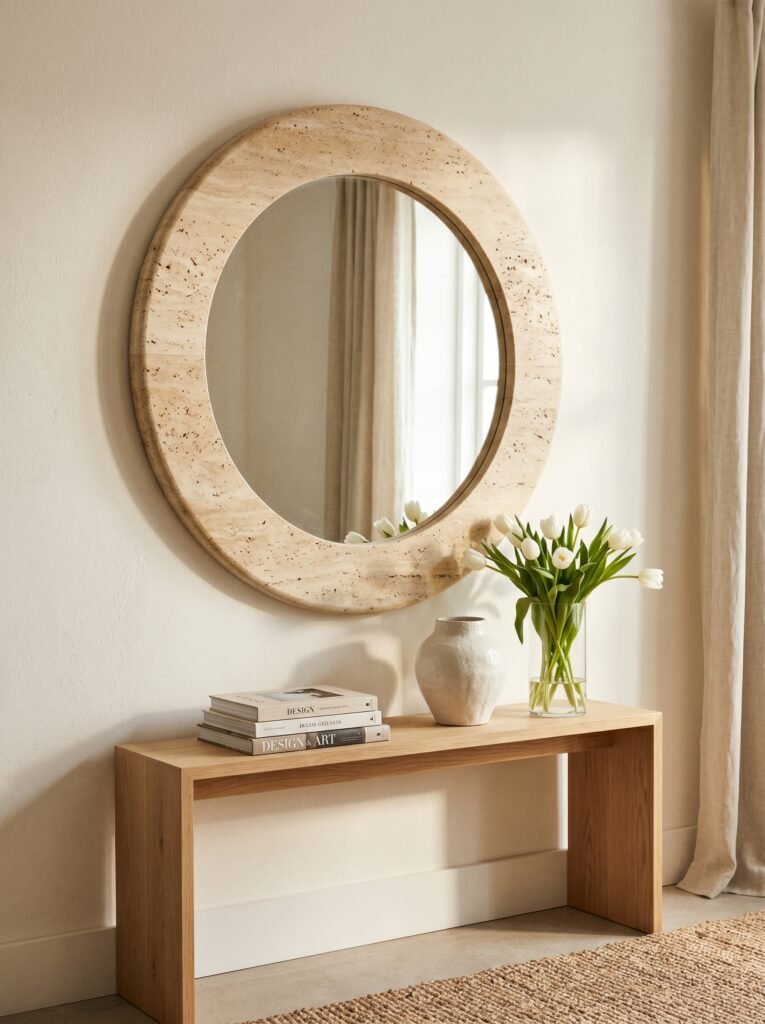
A mirror is never truly finished — it’s completed by what surrounds it. The styling choices you make around your mirror determine whether it looks intentional and beautiful or simply hung and forgotten.
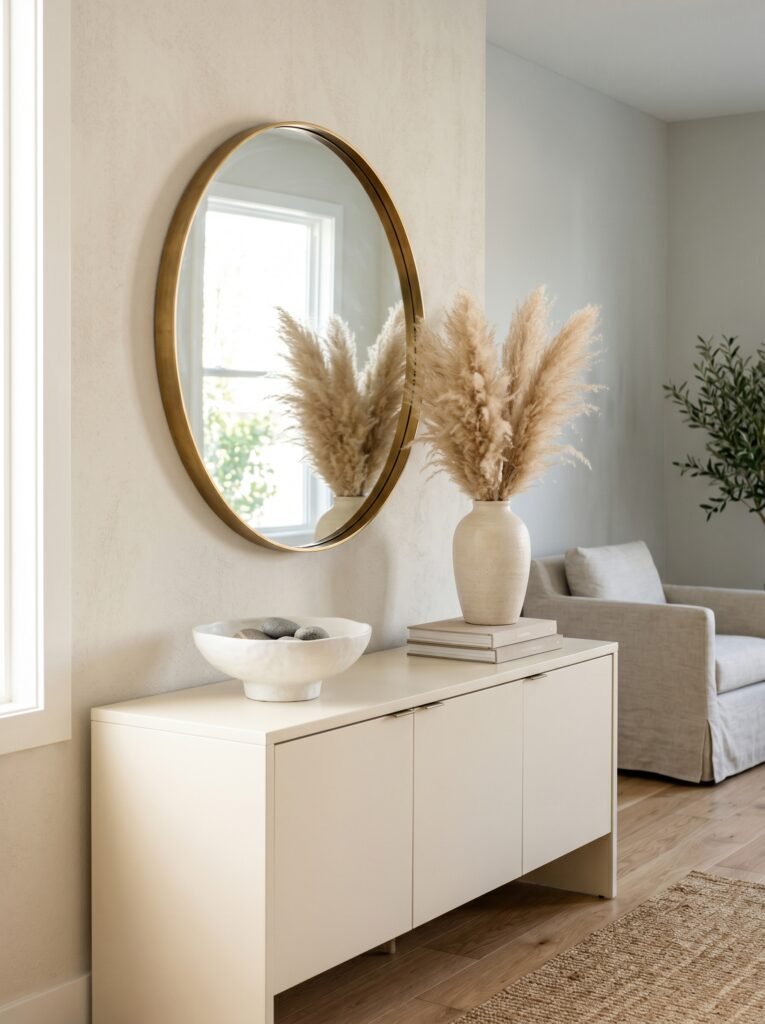
Above a console table, style a mirror with two asymmetrical objects on the surface below it — perhaps a tall vase on one side and a low stack of books on the other. This asymmetry feels natural and human. Along a sofa wall, flank your mirror with a pair of wall sconces or small framed prints that anchor it within the larger composition of the wall. On a mantle, let the mirror be the tallest element and layer in smaller objects at varying heights in front of it to create dimension and visual interest.
The golden rule is this: your mirror should always be in conversation with something. When a mirror floats in isolation on a plain wall with nothing around or below it, it looks like a mistake. When it’s given context — a surface, a plant, a sconce, a neighboring artwork — it becomes a design decision. And design decisions are what transform a room from a place you live into a place you love.
—
🌿 How to Care for Your Living Room Mirrors
Keeping your mirrors looking beautiful is simpler than most people think, but there are a few things worth knowing to protect both the glass and the frame over time.
First, clean the glass with a lint-free microfiber cloth slightly dampened with a mixture of equal parts water and white vinegar. Avoid spraying liquid directly onto the mirror — moisture that seeps behind the glass can damage the silver backing and cause those dark spots or foxing that, while beautiful on an antique piece, are frustrating on a new one.
Second, protect wooden or ornate frames from direct humidity. Living rooms near kitchens or in naturally humid climates benefit from occasional light dusting followed by a very light application of beeswax or furniture polish on wood frames to prevent drying and cracking. Metal frames simply need a dry dust and an occasional wipe with a slightly damp cloth.
Third, if you’re hanging a heavy mirror, always anchor it into a wall stud or use appropriate heavy-duty wall anchors rated for the mirror’s weight plus a safety margin. A mirror that falls not only damages itself but can cause real injury. Use the appropriate hardware, measure twice, and if in doubt, consult a handyman.
Fourth, consider the light it reflects carefully over the seasons. As the sun’s angle changes throughout the year, a mirror that casts beautiful light in summer may create harsh glare in winter. Don’t be afraid to adjust the angle or position seasonally.
—
❓ FAQ
Q: What size mirror should I hang above my sofa in the living room? A: A good rule of thumb is to choose a mirror that is roughly two-thirds the width of your sofa. This proportion feels balanced and intentional without overwhelming the furniture below it. For a standard 84-inch sofa, aim for a mirror between 48 and 56 inches wide, or use a grouping of smaller mirrors that together span that width.
Q: Can I put a mirror directly opposite a window in my living room? A: You can, but the effect may not be what you’re hoping for. A mirror placed directly opposite a window often reflects glare back into the room and can make the window appear smaller rather than amplifying the light. For the best light-enhancing effect, place your mirror on the wall perpendicular to the window so it captures and redistributes natural light across the room.
Q: How high should I hang a mirror on the living room wall? A: The center of the mirror should generally sit at eye level — approximately 57 to 60 inches from the floor to the mirror’s center point. This is the standard gallery-hanging height used by professional art installers and works beautifully for mirrors as well. If the mirror hangs above a piece of furniture like a console or sofa, leave between 6 and 8 inches of space between the top of the furniture and the bottom of the mirror frame.
—
💭 Final Thought
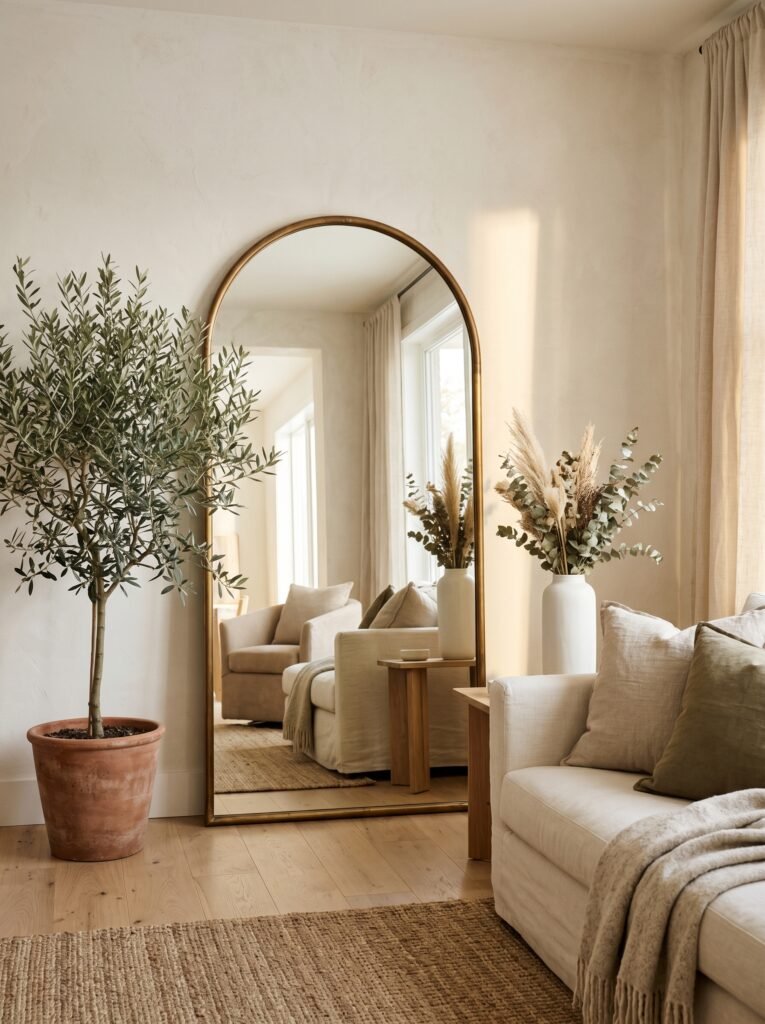
The most beautiful living rooms are not the most expensive ones — they are the most considered ones. A mirror, chosen thoughtfully and placed with intention, is one of those rare design investments that pays back in ways you’ll notice every single day: in the way morning light fills the room, in the way the space seems to exhale, in the way guests pause for a moment and say, there’s something about this room. So as you look at your own living room walls today, ask yourself this: what story do you want your space to tell — and is there one perfect mirror waiting to help you tell it?